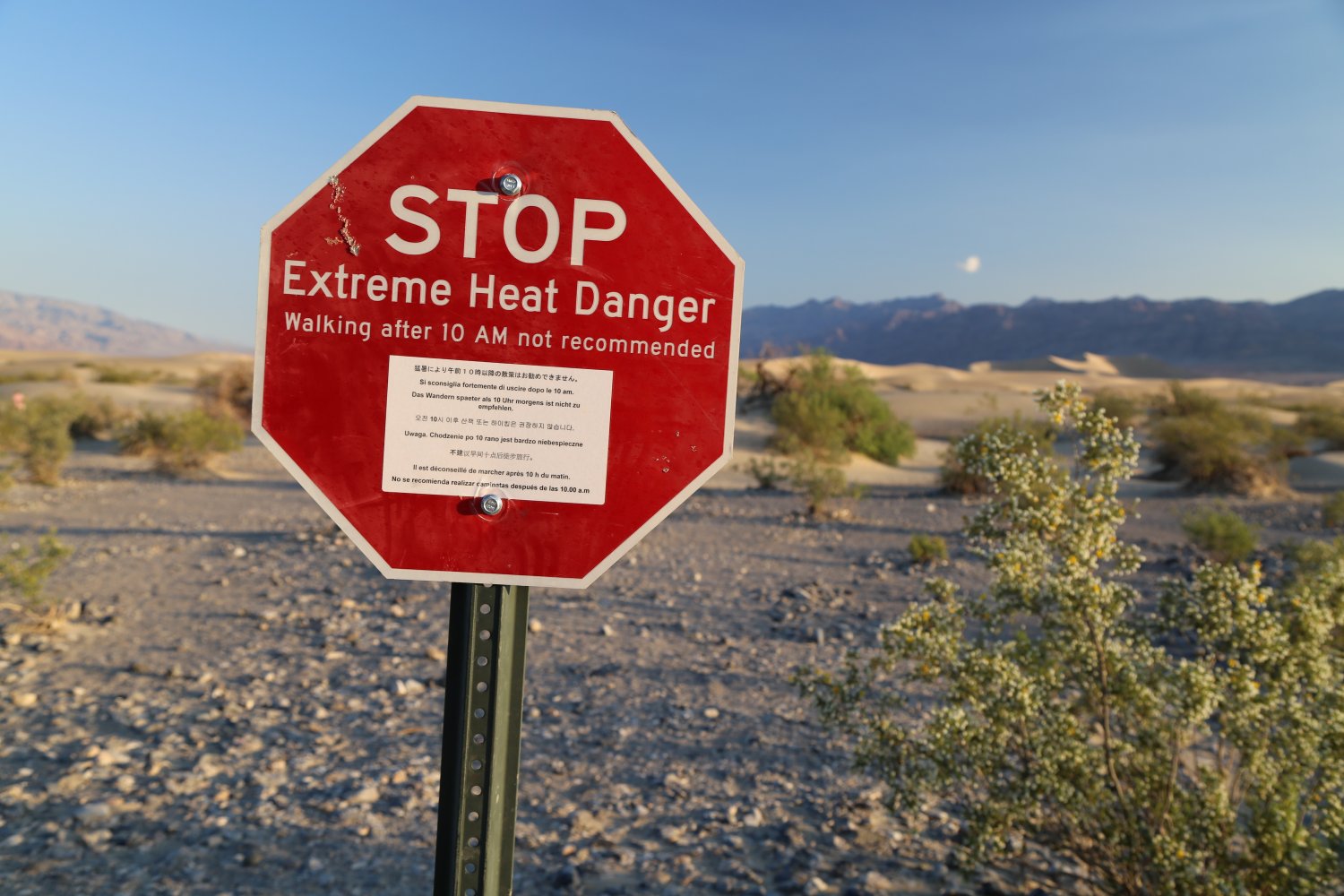
Mesquite Sand Dunes
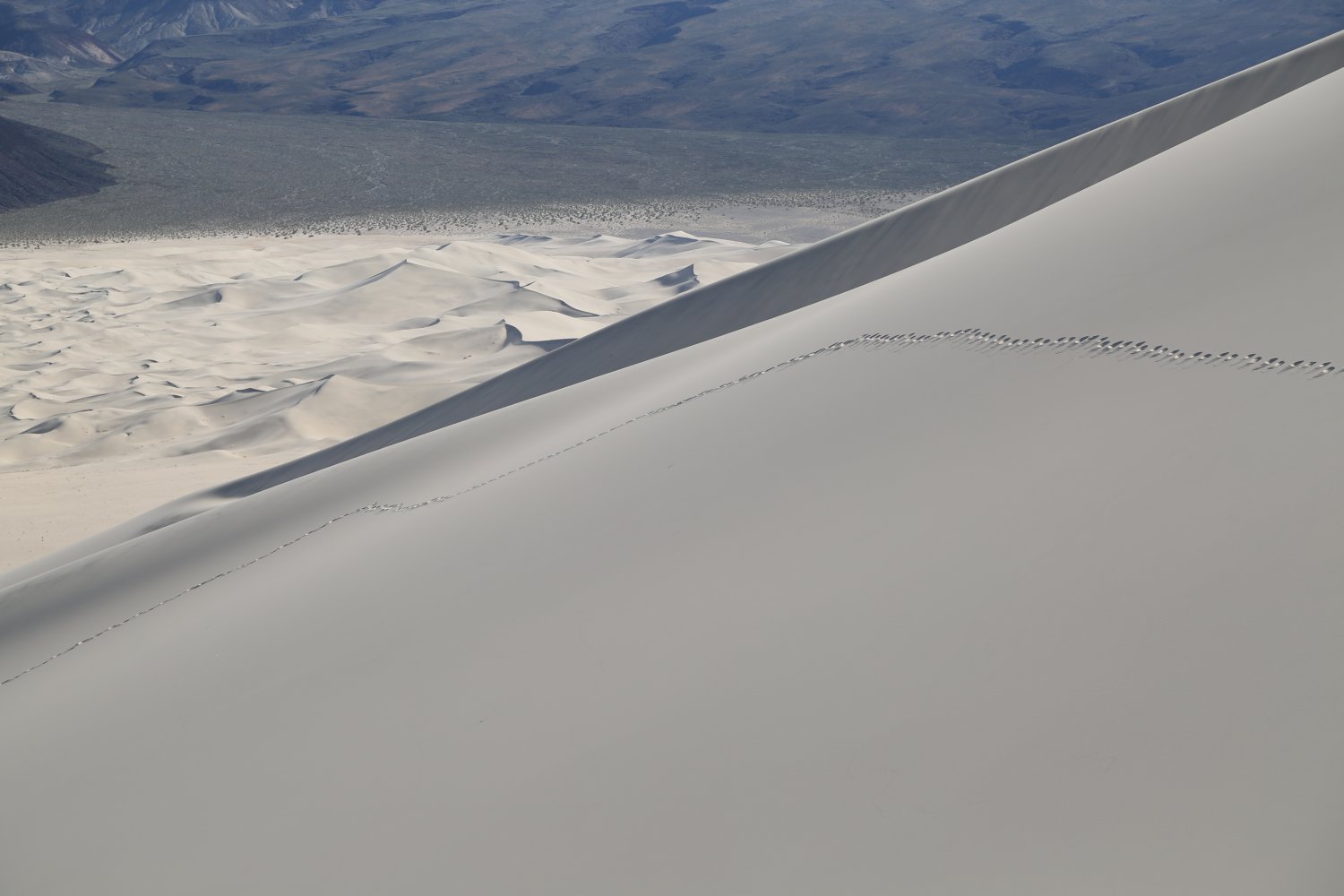
Eureka Sand Dunes
Additional heat related information: In the middle of the summer the night time low temperatures may not fall below 100 degrees (~ 38C). Try camping out in those temperatures! We have done it – its extremely hard to sleep and you wake up in sweat and you may feel trapped – feeling you are in an oven. We were the only ones at the huge Furnace Creek campground towards the end of July. The water from the campground faucets and other outdoor water facilities in the park are almost too hot to use – for drinking or washing! We have been in Death Valley where after 8pm the temperature is still well above 120 degrees – and before 9am the temperature is already above 110 degrees!
If you are looking to be in Death Valley during the absolute hottest times of the year you should go between the dates of July 10th and August 1st. Typically the hottest days will peak sometime in mid/late July although it can be damn hot anytime in July.

132 Degrees! No JOKE. It destroyed our SLR camera this day.
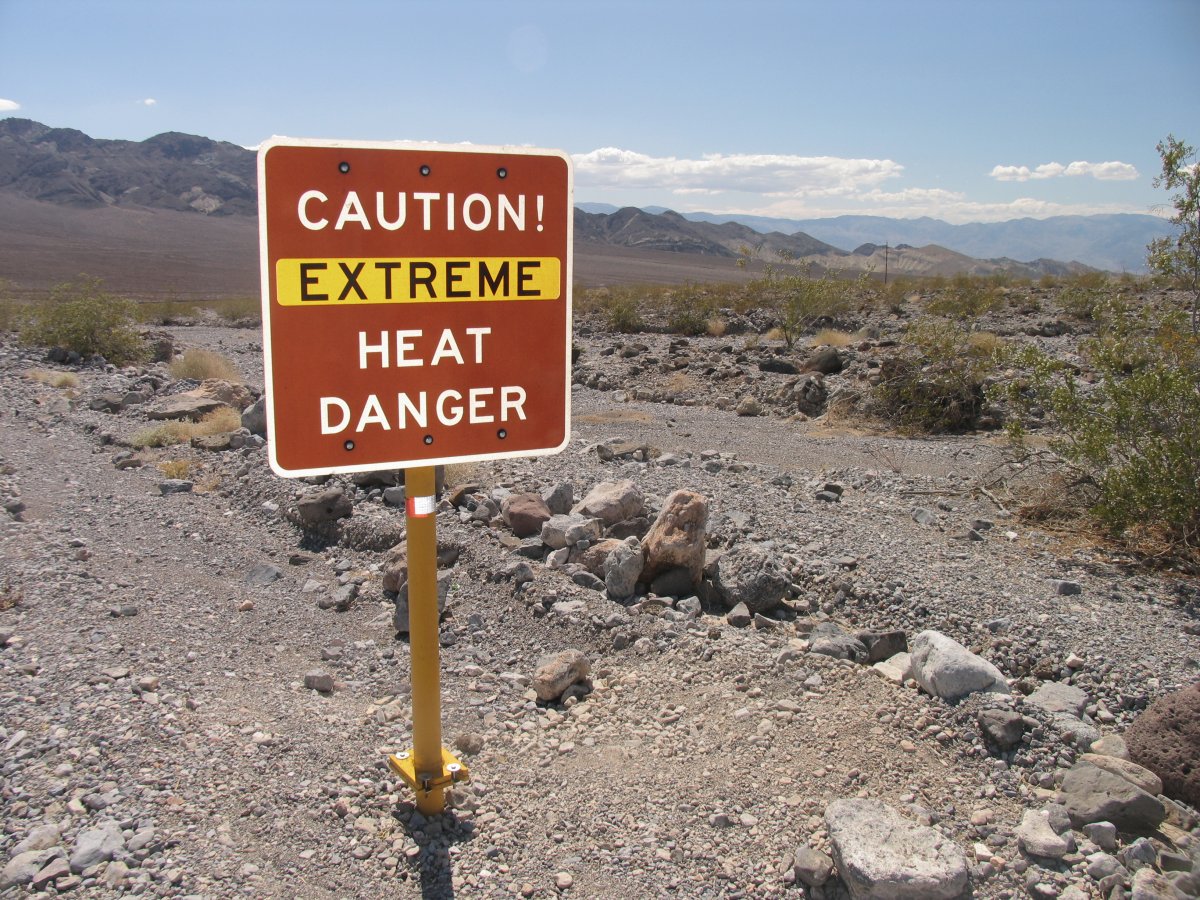
This warning sign means business!!
One fine July day in 1918, the low temperature recorded at Furnace creek was 110 degrees! One day in July in 2012, the low temperature was 107 degrees! Imagine trying to camp in that type of weather. There is no way you would be able to sleep at that temp. Trying to sleep out doors in 100+ degree weather overnight is hard enough.
When you read the Death Valley temperatures online or in your newspaper – know that this temperature is always recorded at Furnace Creek. Badwater, the lowest point in the western Hemisphere is 18 miles from Furnace creek and typically has temperatures that are 1-2 degrees hotter than Furnace Creek. In addition, the west side of Death Valley near and south of Badwater typically is the hottest area in all of Death Valley. With the reflective salt – the temperatures right on the salt plain in Badwater can truly soar. We saw someone frying an egg in a frying pan when the ambient temperature was 130+ degrees + on June 30, 2013.
And anyone who spends significant time in Death Valley will know that there are plenty of temperature micro climates – even in parts of the park lower then sea level. And there are bound to be super heated areas that never are officially measured during epic heat spells.
Simply driving up in elevation will decrease the temperature dramatically. For instance when its in the mid 120’s F in Furnace Creek, Scotty’s Castle at about 3000 feet elevation may be only around 110 degrees. There is a huge difference in feel between mid 120’s and 110 degrees.
If you really want to experience the heat, hike out to the Mesquite Sand Dunes on one of the mid 120 degree F days. The heat on the dunes is simply unbelievable as the sun radiates off all of those minute grains of sand.
Be careful where you put your hands and feet if you are in Death Valley during these temperatures. Rocks can be way to hot to handle, over 200 degrees F have been measured – and its a good idea not to wear open toed shoes/sandals into the sand dunes as the sand is unbelievably hot. At 200 degrees F, that is just shy of the boiling point of water at sea level under normal barometric pressure conditions!
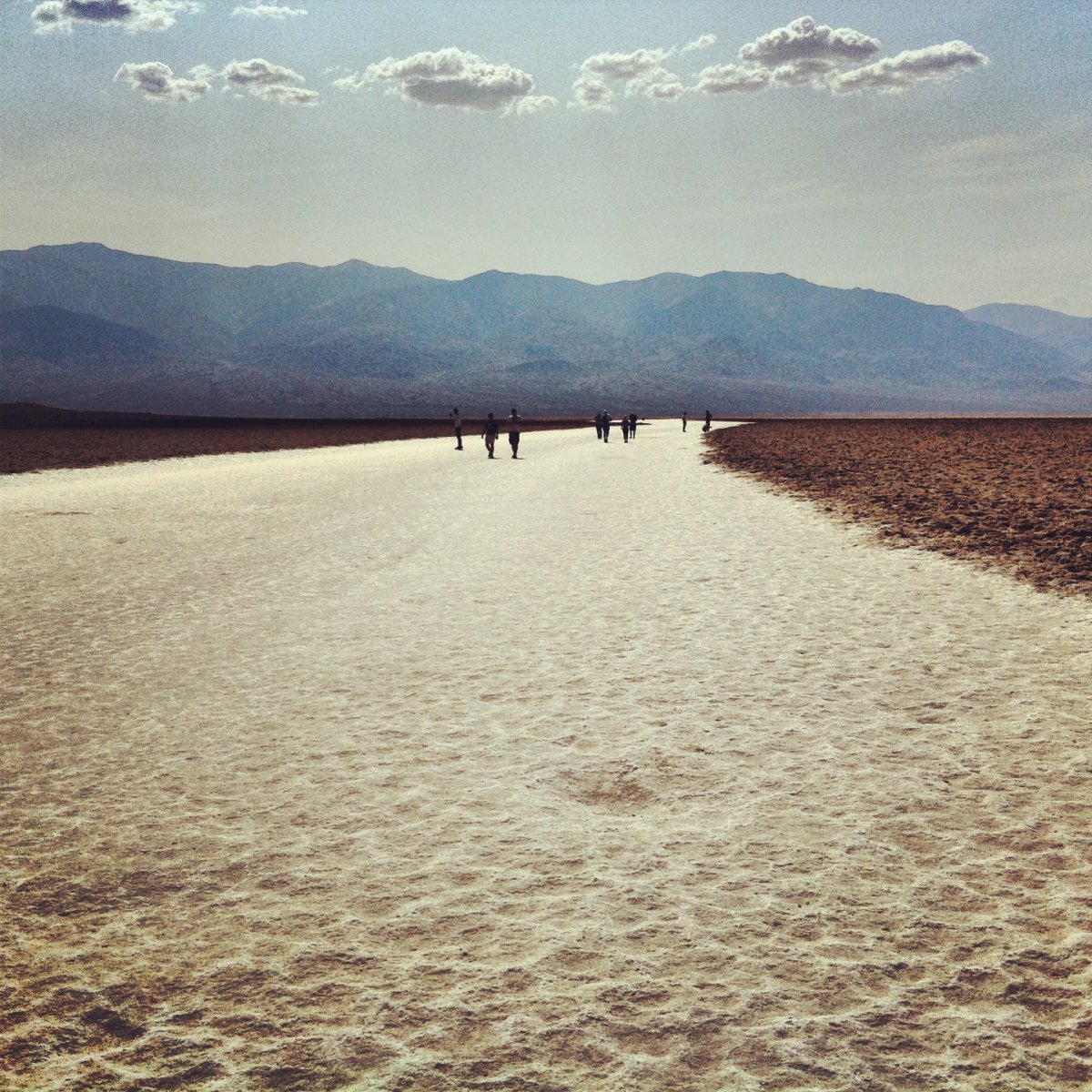
Badwater on an extreme heat day, 130 degrees Fahrenheit
If you are outside in extremely hot weather and there is even a slight breeze you will have a very hard time realizing that you are in fact sweating profusely. Its only after you enter a car or building and get out of the wind that you will find yourself covered in sweat….literally dripping. Because of this, you need to drink lots of water and sports drinks. I usually go with a ratio of about 3/4 water and 1/4 sports drinks. Heat exhaustion or heat stroke can strike quickly and suddenly usually with one or more of the following symptoms: skin that is cool or cold, sweating, dry mouth, fatigue or weakness, dizziness, headache, cramping muscles, an nausea. An excellent source for additional heat related symptoms can be found here: www.webmd.com/fitness-exercise/heat-exhaustion
Be sure your car is in good working condition and all the fluids have been recently checked. Also check your tires to be sure they are not too worn. There are road signs indicating you should turn off your air conditioning when climbing in elevation – newer cars don’t seem to have as much of a problem with over heating as older cars. Radiator water is located every several miles along some of the more steep roads in the park.
Also consider doing the majority of your driving at night – and your sightseeing during the early morning starting with when there is first light in the sky which in the summer is around 5am. High temperatures can cause your tires to have a lot of flexibility and you should take sharp turns in the road slower than normal.
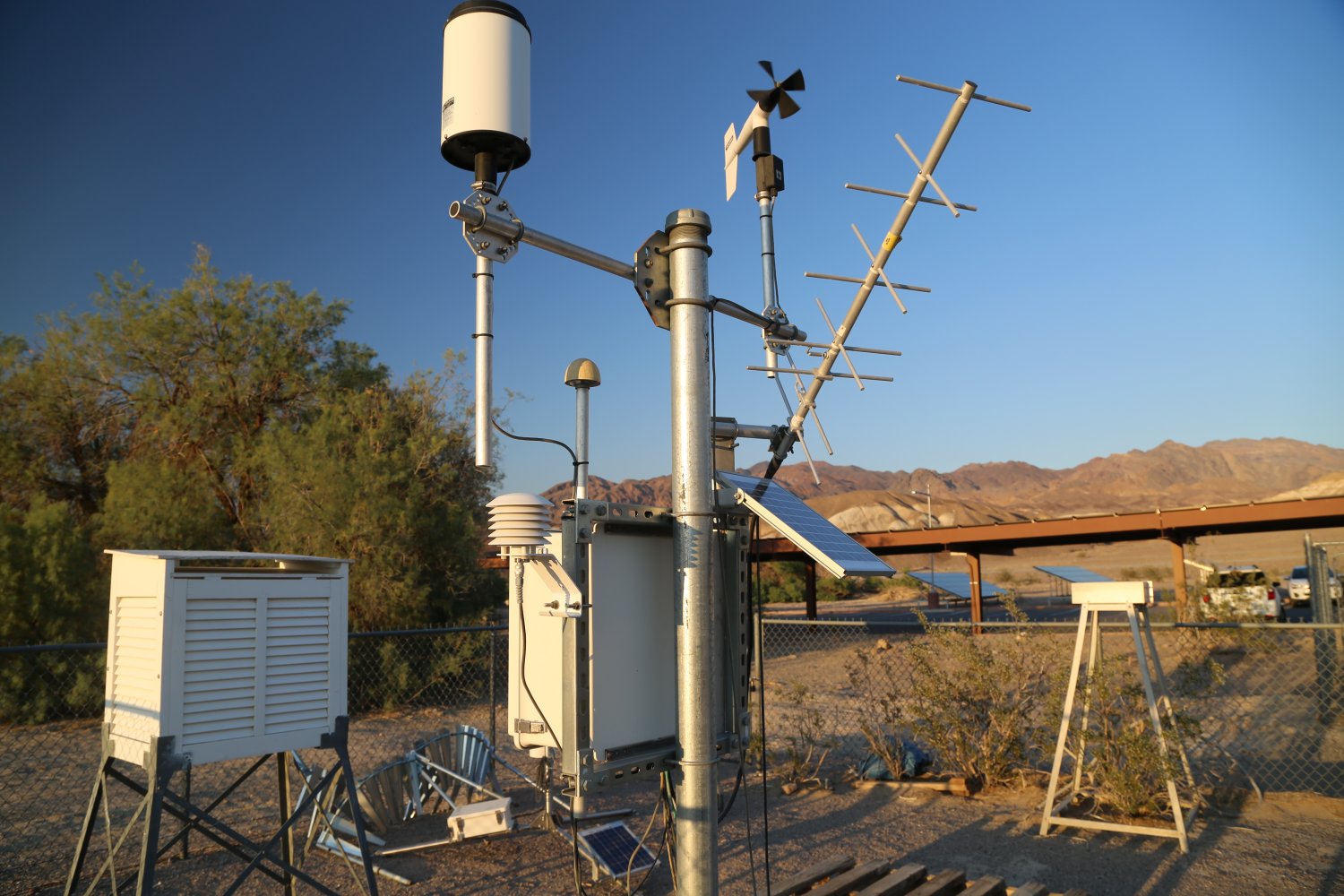
Official Weather Station, Furnace Creek
We were also in Badwater very soon after the high temperature at Furnace Creek and it was around 130+ there. Those in the know, know that where the official temperature is recorded at Furnace Creek isn’t the necessarily the hottest part of the park at that given time.
The Death Valley Climate Book
The National Weather Service maintains all Death Valley Temperature records – more information including PDF’s of temperatures. These official records are available here.
Our Experiences, June 30, 2013 – 129.2F (54C)
This is the warmest day we have experienced so far in Death Valley. Click here to read about experiencing this type of temperature!
Top 10 Highest Temperatures Ever Recorded in Death Valley
134F – July 10, 1913
131F – July 13, 1913
130F – July 12, 1913
129F – July 9, 1913
……….July 11, 1913
……….July 18, 1960
……….July 17, 1998
……….July 19, 2005
……….July 6, 2007
……….June 30, 2013
Wonderful place I was lucky enough to visit it I can confirm that at 5.30 pm the temperature was 50 degrees on the sand dunes. A crow in the parking lot was breathing through its open beak
The sand dunes really heat up! Don’t walk barefoot!