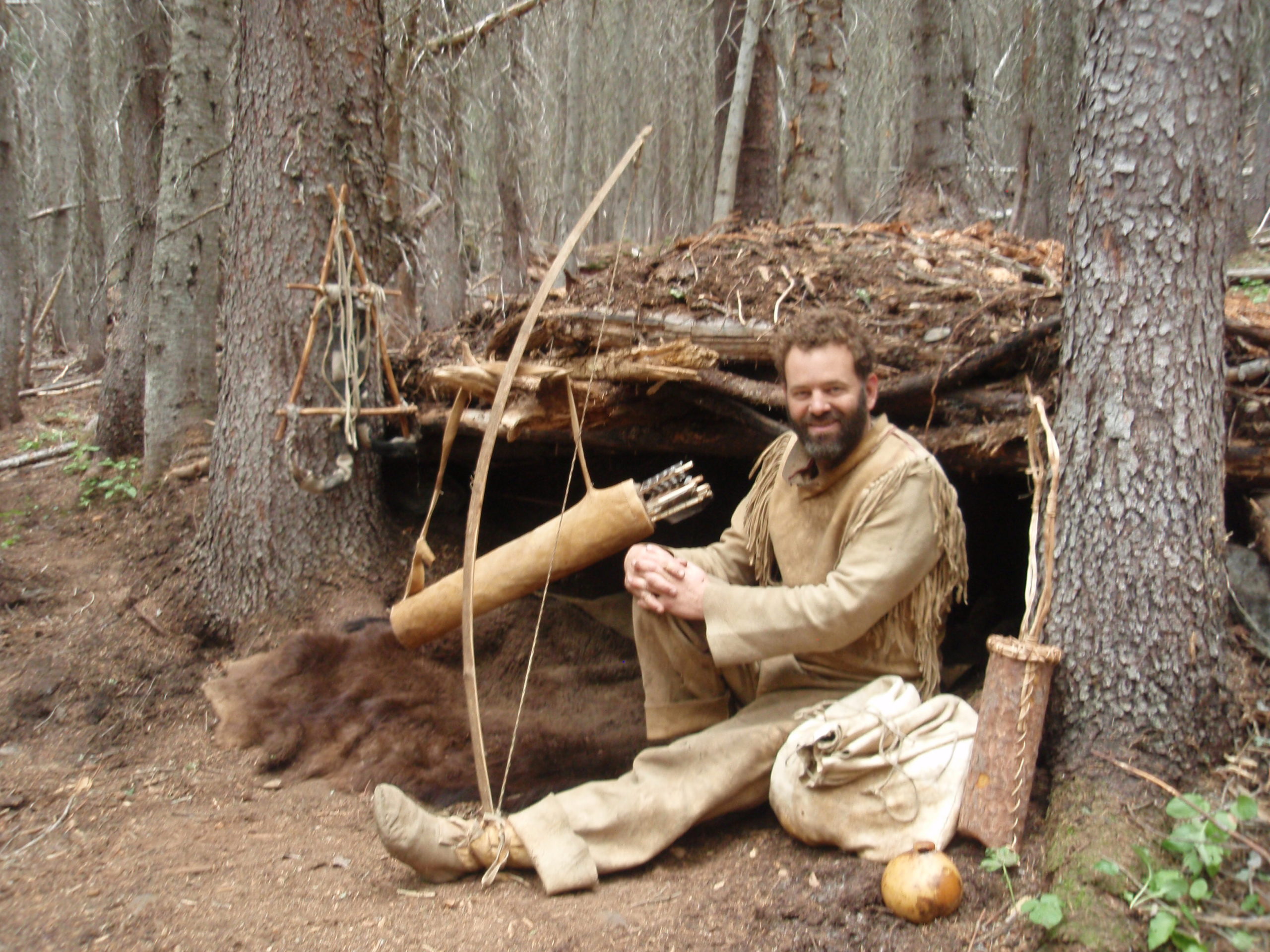
Thomas J. Elpel is a wilderness educator, author, and founder of Green University in Montana. He completed a five-month, self-supported expedition down the Missouri River. His work focuses on plant identification, survival skills, and sustainable living, blending hands-on experience with ecological awareness.
Q. What inspired you to start learning and teaching wilderness survival skills?
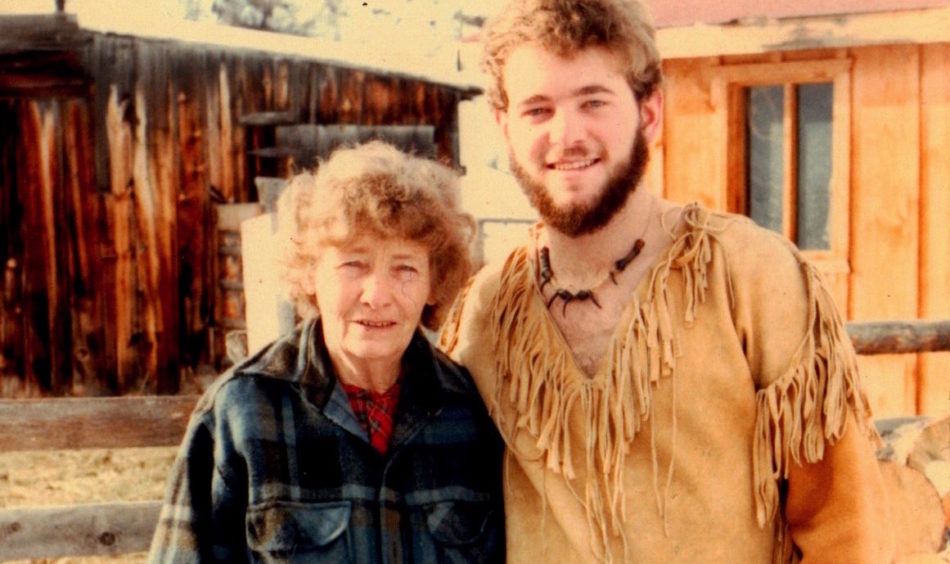
My grandmother mentored me in learning edible and medicinal plants. She cooked on an antique wood-fired cookstove and had a library of wilderness survival books, including Larry Dean Olsen’s Outdoor Survival Skills. Olsen founded the program that later become Boulder Outdoor Survival School, Inc. (BOSS). I had been practicing wilderness skills on my own, but my first serious dive into wilderness survival was a twenty-six-day walkabout in southern Utah with BOSS in 1984, when I was sixteen. The following year, my grandmother joined me for a trip to New Jersey to attend Tom Brown Jr.’s Tracker School. She was that kind of grandmother! Like her, I still cook on a wood-fired cookstove today.
Q. You teach wilderness survival, primitive skills, and sustainable living. Can you explain how learning survival and primitive skills can help us live a more sustainable life?
Our society has become so detached from the natural world that most people don’t have a good grasp of basic reality, such as how to quantify the energy consumed to heat a home. A house heated with a furnace will automatically stay warm in spite of poor insulation or a lack of weather stripping. But when you build a shelter from sticks, bark, and debris and heat it with fire, you quickly develop an intimate connection with your shelter and your fuel supply. You become acutely aware of air infiltration as well as the effort required to continuously collect firewood and break it into manageable pieces. This basic awareness results in a greater dedication to energy efficiency at home and a more intuitively informed stance on energy policy in general.
More than anything, primitive living provides a commonsense perspective of the modern world, where we have the same basic needs as in the wilderness, but have evolved much more complicated ways of meeting those needs. In society, we are conditioned to think about college, career, and paying rent or a mortgage to eternity as a path to secure our shelter, fire, water, and food. But it can be vastly easier to achieve those needs if we pursue them directly, avoiding decades of enslavement to a job.
Q. Have you come up with any unique survival tricks or skills on your own while figuring things out in the wilderness?
Inventing new ancient skills seems improbable, yet I introduced several minor skills that I had not previously seen recorded elsewhere.
For example, when you use hot coal to hollow out a cup from the end of a branch, the wood usually splits. But tree roots have a more porous structure that handles heat better, so they are less likely to crack. Cups made from roots rarely split, even after being soaked and dried many times. However, they can leak through the base unless you seal them on the inside or outside.
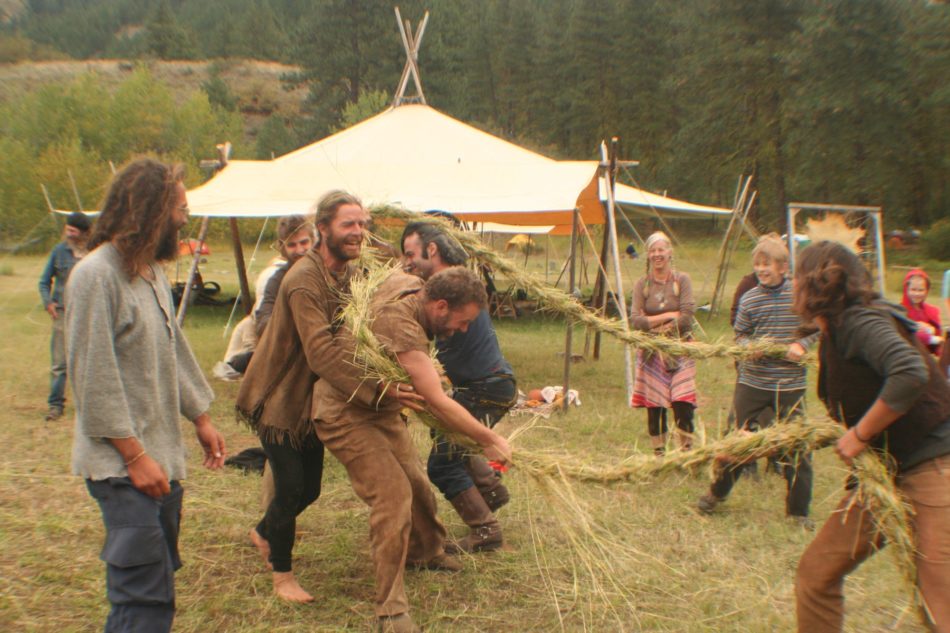
Also, I’d heard of grass ropes and rope-making machines, but not having made a device, I tried rope-making with two lines of students to hold and turn the grass. I found we could rapidly spin up long grass ropes for games of tug-o-war. I’m sure people must have used that technique in the past, but I hadn’t seen it before. It is fun to see this “new” skill spreading to nature schools and gatherings across the country.
Q. What are some of the biggest things you have learned from going long periods in the wilderness without any modern gadgets?
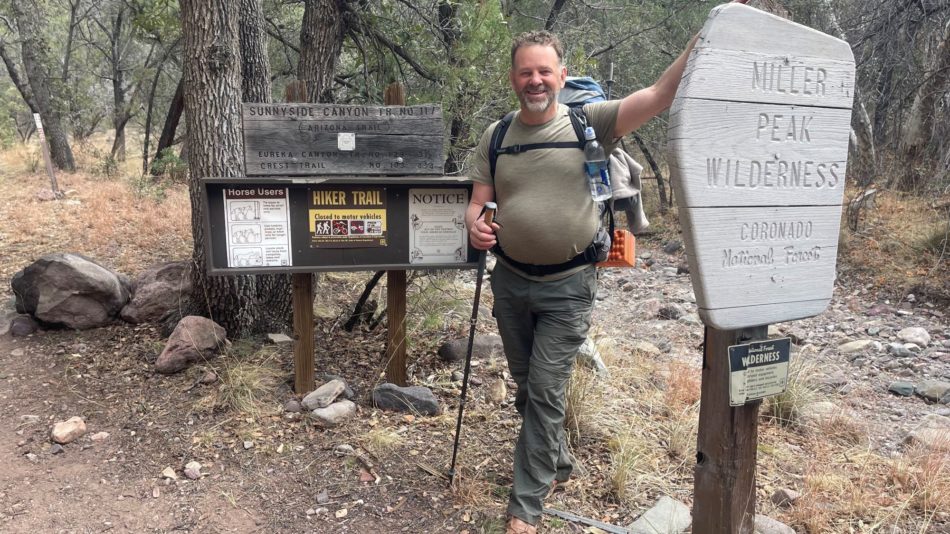
Long before mobile phones, I necessarily learned to read the landscape and navigate with or without maps, so I had a high level of geographic awareness. Thus, it was very different to do a more recent hike on the Arizona Trail following an app on a phone. If there was any question about which way the trail went, the app would immediately show whether or not we were still on the right track. Geography was reduced to an abstract line on the screen, and I didn’t grasp the larger picture as I would have in the past.
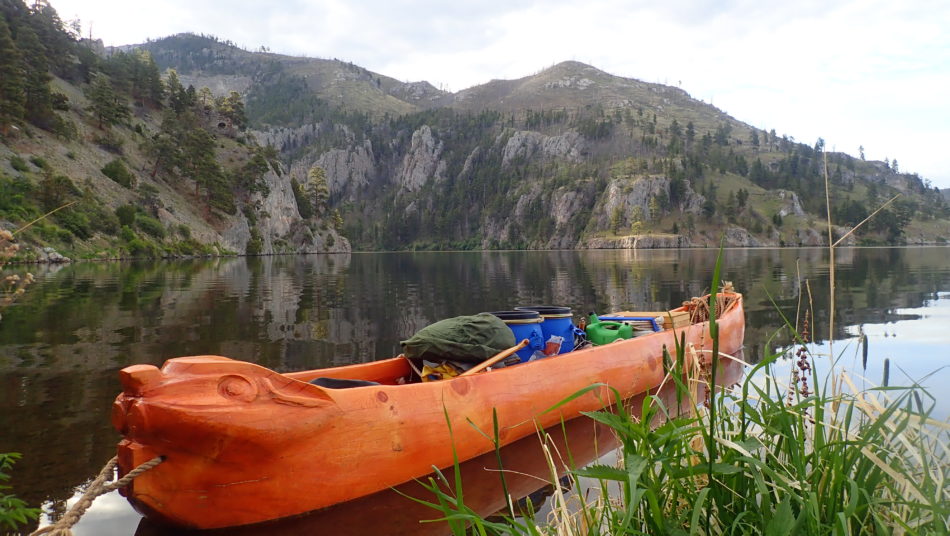
Q. You spent five months on a dugout canoe on the Missouri River. What was that experience like, and did you notice any conservation challenges or changes along the way?
Five months spent canoeing and camping was the best way ever to spend a summer!
We weren’t in a hurry, so we took the time to camp, hike, explore, botanize, and visit nearly every town and museum along the way. I felt like we really made an intimate connection with the land and history throughout the journey.
Reading the journals of Lewis and Clark and writing a newspaper column reminded me just how much the 2,300-mile river has been re-engineered in an astonishingly short time period. Approximately one-third of the Missouri has been dammed and converted to reservoirs, while another third has been straightened and channelized for shipping. The one-third of the free-flowing river that still remains consists of bits and pieces between the dams, and much of that is lined with houses, towns, or railroad beds. Very little of it resembled the river that Lewis and Clark encountered, yet all of it was astonishingly beautiful, far more so than I anticipated.
Q. You have founded the Jefferson River Chapter of the Lewis and Clark Trail Alliance to promote conservation and recreation. What accomplishments are you most proud of?
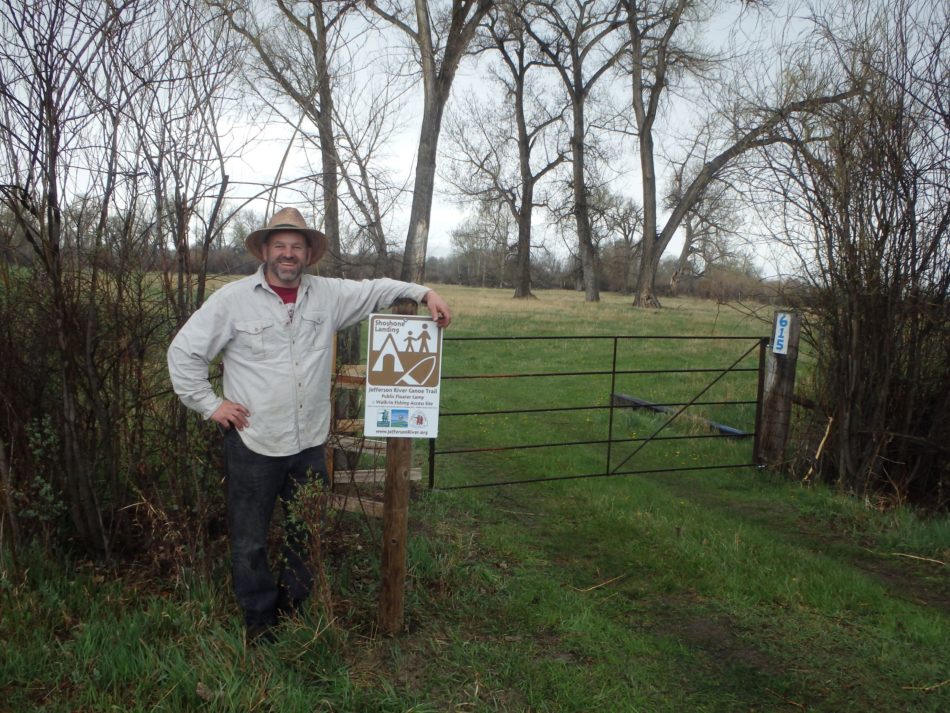
Our main project is the Jefferson River Canoe Trail. We named and claimed scraps of public land along the river as paddler campsites, and we have so far purchased three additional properties that are now open to the public as walk-in fishing access sites or paddle-in campsites. It is immensely satisfying to know that these parcels will be preserved for public access and won’t be developed as homesites overlooking the river.
Q. I know you have done the Conservation Trade-up Challenge too. What was the most challenging trade you had to negotiate?
I had heard about the trade-up challenge where a guy started with a red paperclip and traded it for something else and something else until the value grew so much that he traded for a house. I thought I could do something similarly by trading up a copy of my book Five Months on the Missouri River towards acquiring land for a campsite for the public on the Jefferson River Canoe Trail.
It’s a fantastic idea, but requires continuous dedicated attention to seek viable trades. In six trades, we went from a $36 book to a $5,000 five-day equine pack trip into the Absaroka-Beartooth Wilderness here in Montana. That’s great progress, but it has taken much longer than anticipated, and we do not yet know where the next trade will come from, so that’s our big challenge.
Q. Are there any conservation projects you are planning to pursue next?
A well-intended gentleman bought a vacant lot on the side of the hill here in my community of Pony, Montana. He gouged a building pad into the side of the hill, accessed by two ridiculously steep driveways. I enjoyed playing ping pong with him regularly, and when he decided to move, I bought the one-acre lot with the intent to reclaim the site and turn it into a small park overlooking the town. It provides access to 9 acres of adjacent public land, effectively making a 10-acre park. I diverted all of my available cash and credit towards the project, so the main challenge now is to figure out how to raise funds and buy myself out of the parcel, to make it permanently available to the public.
Q. Your message to our readers?
Throughout history, societies have sought social stability by artificially creating work to keep citizenry employed and busy. Today, most people are employed to consume wealth, rather than produce it. But it doesn’t have to be that way. Creating a truly sustainable lifestyle and finding a degree of financial freedom is actually relatively easy if you stay focused on the survival essentials of shelter, fire, water, and food. This path will help you to quit your job and follow your own dreams, achieving a level of personal freedom you never imagined possible.
All photographs credit: Thomas J. Elpel


Leave a Reply