In every inspiring natural creation there is a realism that speaks to you. In every moment on a mountain you find it more and more. You discover yourself in ways not possible through other means. This stays with you and guides you for the rest of your life. May everyone have this chance at least once. ~ Dave
Remember, the key to getting high is not “the herb”, but rather time spent acclimatizing ~ Dave
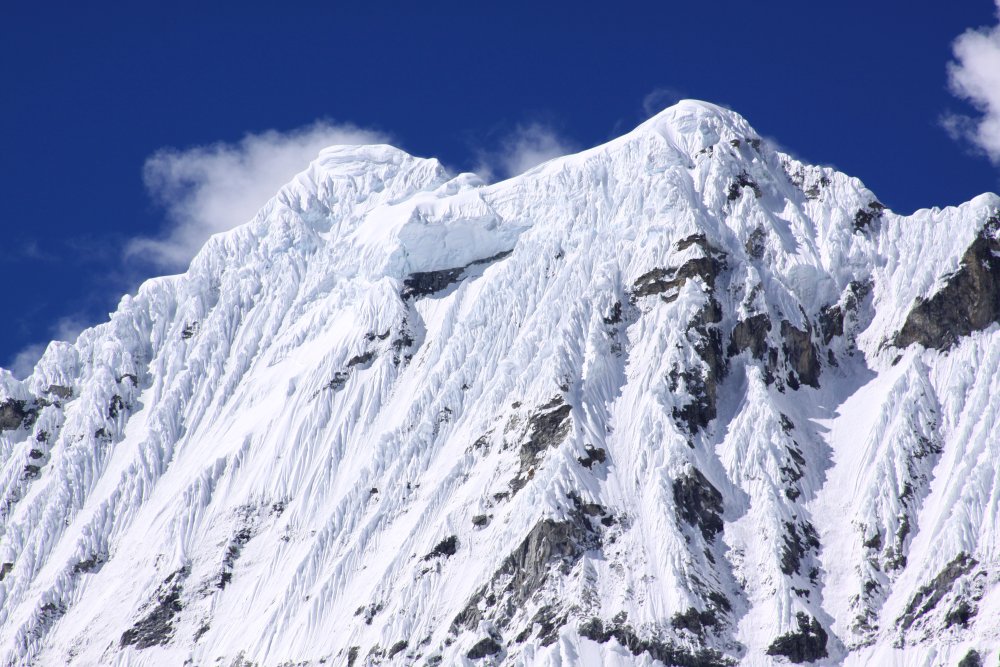

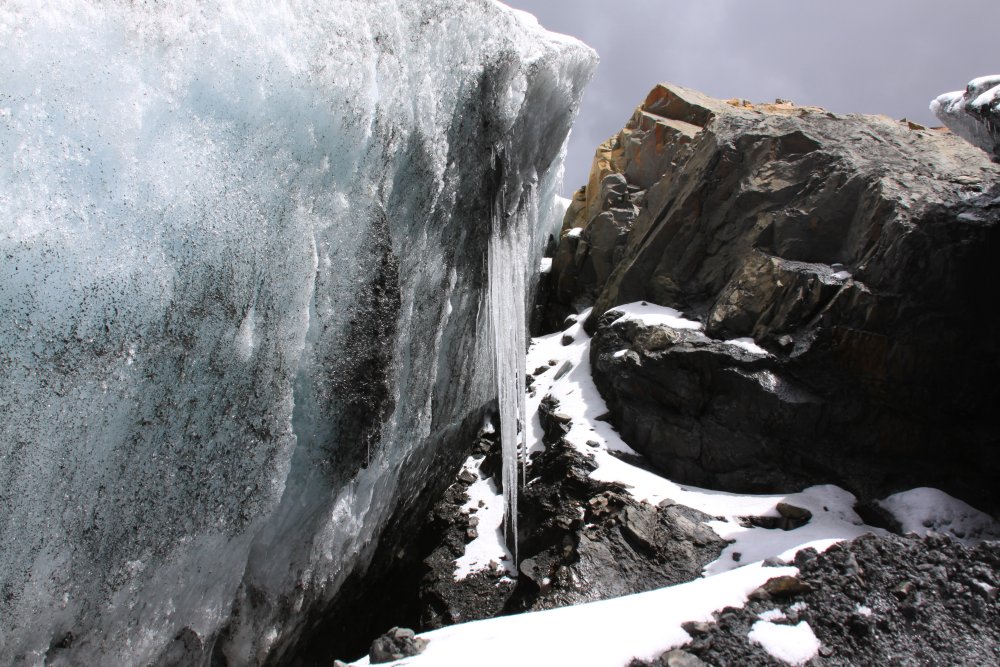
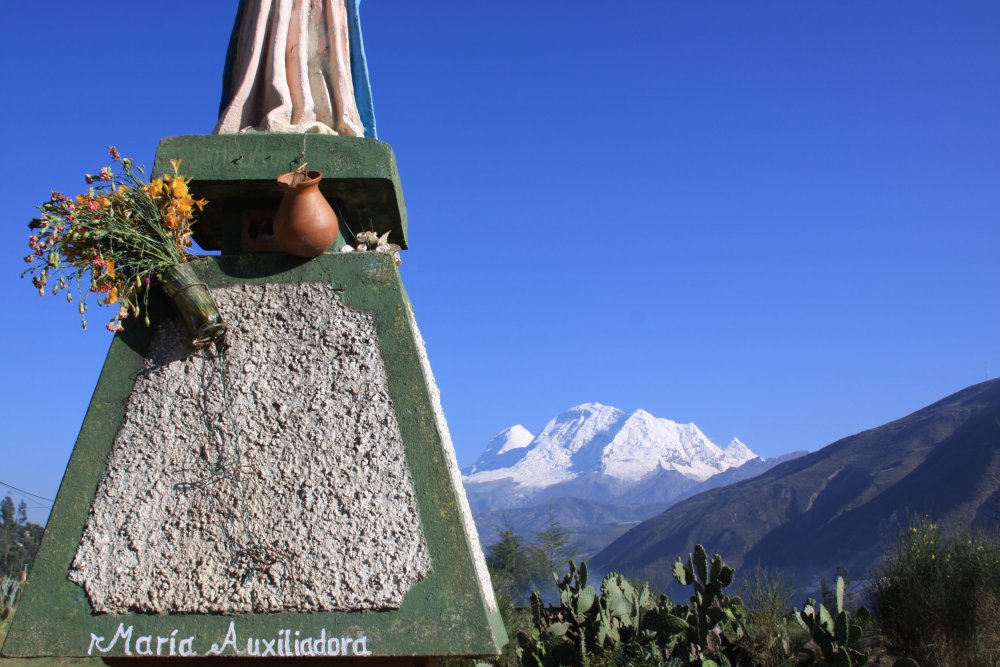
Huaraz (population 100,000) is the epicenter of climbing in the Peruvian Andes. This mountaineering city is the heart and soul of the Cordillera Blanca, or white mountain range, the greatest concentration of high peaks in all of the Andes. The Cordillera Negro or black mountain range sits, on the opposite side from the Cordillera Blanca and is named as such, because it is much lower then the Cordillera Blanca and typically not covered in snow.
Jagged glacier covered mountains tower into the sky reaching heights of well over 6,000 meters. People come from all over the world to climb and trek in these mountains. On a smaller scale, the Cordillera Blanca resembles the highest mountains in the world, which of course are the Himalayas.
And then there is the Cordillera Huayhuash, an inspirational panorama of breathtakingly beautiful jagged snow covered peaks that pierce the sky with their great height. Looking at these mountains is like looking at a beautiful woman – you can’t stop staring. Parts of the Cordillera Huayhuash were featured in the epic book and movie, Touching the Void one of the greatest documented mountaineering stories in the history of mountain climbing.
We recommend at least 8 to 10 days for trekking in this area *after* you have acclimatized to the altitude.
Huaraz, like Kathmandu in Nepal is an ideal stop for climbers beginning or ending their trips. With a number of mountaineering shops, climbing agencies and mountain climber specific hostels or hotels, Huaraz is an excellent place to meet other climbers. While not a large city, it is somewhat spread out. But one can walk to most everywhere in the center of town. Restaurants and hotels in Huaraz are typically very affordable.
The town and nearby valley suffered a terrible earthquake in May of 1970 and nearly all of Huaraz was destroyed. A huge chunk of snow and ice broke off from nearby mountains and created a massive mud avalanche which took out much of the city. One street has been preserved from before the earthquake – its worth checking out to see the difference in the older construction versus the newer. The main cathedral in the central square was still under construction a few years back – more then 40 years since the earthquake.
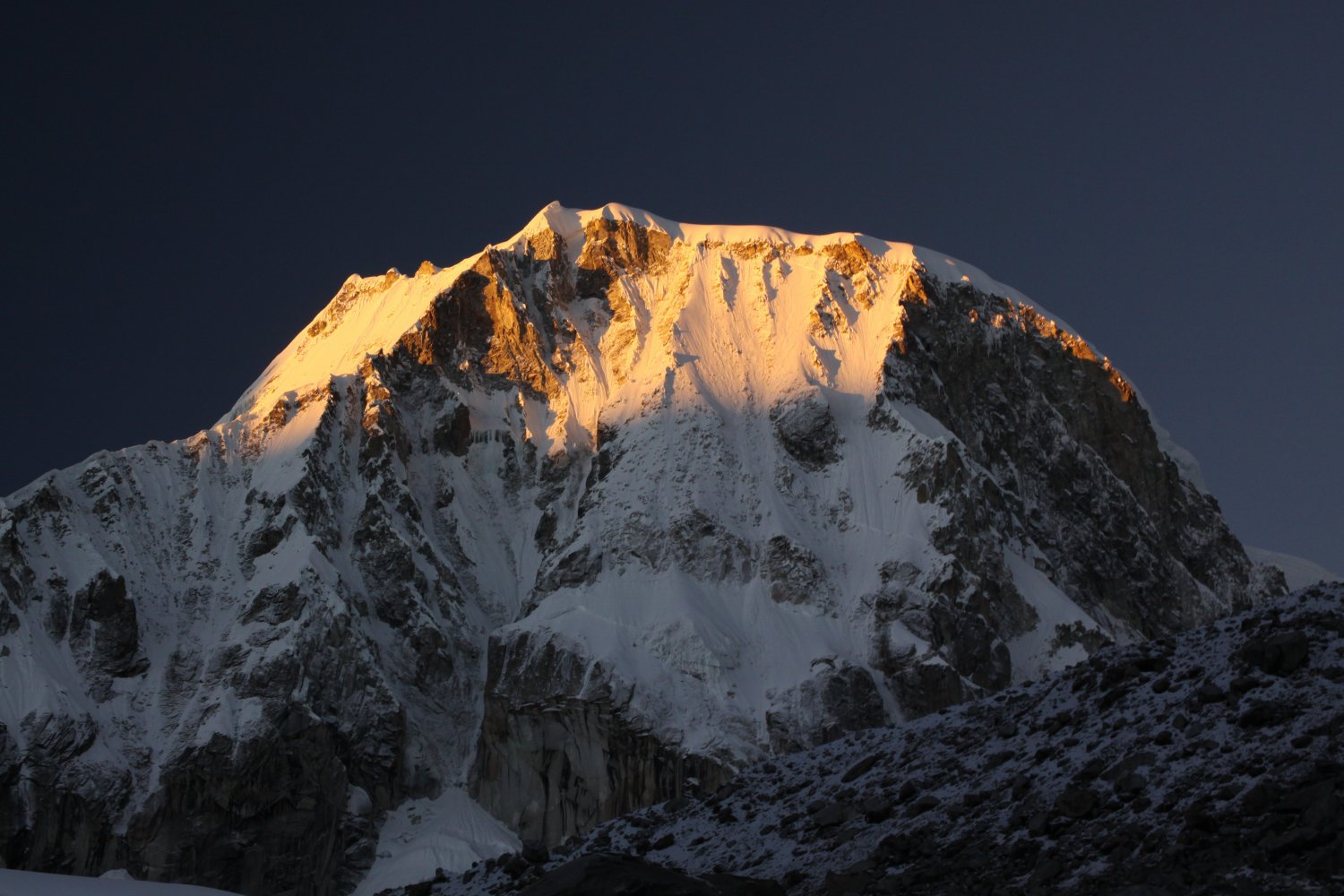 We highly recommended spending at least 3-4 days in and around Huaraz acclimatizing to the high elevation. If you are going to be climbing up to 6000 meters you will need additional days for acclimatization. Everyone reacts to altitude differently but if we are going to climb to over 20,000 feet we need 10-12 days acclimatization – hiking high and also sleeping high (this is based on lots of experience at this elevation). Take it easy the first few days.
The center of Huaraz is about 3100 meters (approximately 10,170 feet) and as a result some people find themselves short of breath and with a slight headache or nausea when first arriving in Huaraz. We cannot stress enough the benefits of taking your time to acclimatize and let your body adjust to the high elevation. We tend to get altitude sickness extremely quickly. We have used Soroche Pills before and have noticed some definite improvement.
Try going to 5300 meters on day 5 after coming from sea level – that’s not something we generally can do but with the Soroche pills we had no altitude problems other than shortness of breath. Supposedly these pills contain mostly just caffeine and aspirin. They are made in La Paz, Bolivia (our time in La Paz also involved terrible altitude sickness and other problems, but that is another story for another time) and can be purchased at most any pharmacy in Huaraz. For reference, these pills may also be called “Sorochin”.
The best climbing months in this part of Peru are June and July – these are also the busiest months in the mountains and in Huaraz. However there are a lot of mountains and aside from the primary shorter trekking routes, it never feels over crowded. During the climbing season, clear days and cold nights are the norm. May through September tend to be dry months. November to April are usually the wettest months in this part of the Andes.
This article is the culmination of multiple trips to Huaraz and highlights day trips, longer treks, mountain climbing and other outdoor activities as well as information about hotels, restaurants and guiding companies. Please read on …
Nice photos Dave!
What gorgeous photos! Love your descriptions here as well! Good blog!
Around Huaraz is wonderful and Chavin should be a must-see for any visitor to Peru. I think that having to start from scratch, along with its strong international community, gives Huaraz a modern and open-minded feel you don’t find in other Peruvian cities. Also it has amazing food, cafes (especially Cafe Andino and California Cafe) and fun bars. I’ve been to Huaraz three times now – it keeps calling me back.
I know the feeling of being called back by Huaraz and the nearby mountains – it has happened several times already and won’t be the last!
Thanks, I wish I could go back now with my new camera and more years of experience doing photography 🙂
Great post, im totally agree with this: Huaraz like Katmandu in Nepal is a great stop for climbers beginning or ending their trips. It is the main town that you will go through if you are planning any climbs or treks in the Cordillera Blanca region. Huaraz is an excellent place to meet fellow climbers whether its at the hostels or at the number of climbing agencies scattered throughout town. It is not a huge town and most everything is within walking distance of each other. Restaurants and hotels in Huaraz are typically very affordable.
Climbing the mountain is always the adventurous thing to do. But if you don’t have the courage you can’t do hiking. or even if you have phobia from height than you can’t do trekking. I love hiking, the world looks more beautiful from the height. Thanks mate for reminding me my hiking days, looking forward the another one.