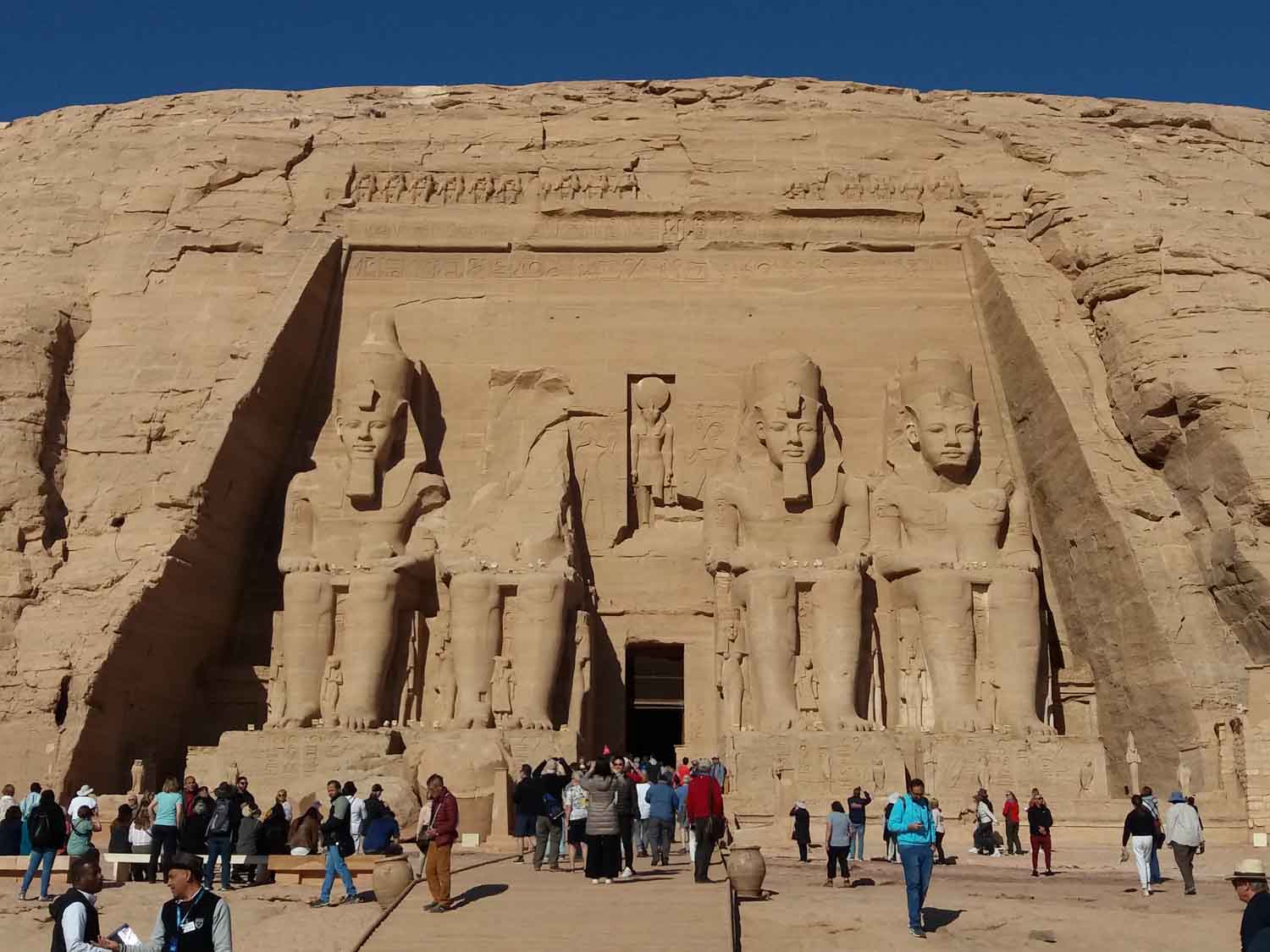
Abu Simbel
No trip to Egypt is truly complete without venturing south to the monumental temples of Abu Simbel. While Cairo, Luxor, and Aswan often steal the spotlight in a classic Egypt itinerary, this remote treasure near the Sudanese border is the place where Ancient Egypt’s grandeur is felt most intensely. Whether you’re planning a first-time journey through the country or returning to explore it more deeply, Abu Simbel deserves a dedicated spot on your route.
How to Get to Abu Simbel
Reaching Abu Simbel requires a bit of planning due to its remote location, but you have several reliable options depending on your time, budget, and travel style.
By Air (Fastest and Easiest)
The quickest way to reach Abu Simbel is by flying from Aswan Airport (ASW) to Abu Simbel Airport (ABS). EgyptAir operates daily flights, and the journey takes about 45 minutes. This option is ideal if you’re short on time or want to avoid long road travel. Once you land, the temples are just a short drive away. Many travelers choose to fly early in the morning and return to Aswan by midday.
By Road from Aswan (Most Popular Option)
Most visitors travel to Abu Simbel by road from Aswan, either on a private transfer or as part of a guided tour. The distance is roughly 280 km, and the trip takes about 3.5 to 4 hours each way.
-
Private cars/vans offer flexibility with departure times.
-
Group tours are more budget-friendly and typically include a guide and temple entrance.
The road is safe, modern, and straightforward, making this one of the most common ways to visit.
By Public Bus (Budget Option)
Although less known, there are public buses between Aswan and Abu Simbel that run in the early morning. This is the cheapest way to get there, but schedules can be inconsistent and buses may be crowded. It’s a good option for backpackers comfortable with a simpler, slower journey.
What the Visit to Abu Simbel Is Like
Visiting Abu Simbel is an experience that combines awe and the feeling of standing before something far older and grander than anything you’ve seen in Egypt so far.
After arriving at the site, you’ll walk along a wide path toward the sandstone cliff where the temples were carved more than 3,000 years ago—and later relocated block by block during the UNESCO rescue project of the 1960s.
The Great Temple of Ramses II
The first thing you’ll see is the Great Temple, dominated by four massive seated statues of Ramses II, each over 20 meters tall. Their scale is overwhelming, especially when you stand right below them.
Inside, the temple extends through a series of halls lined with pillars shaped like the king, intricate scenes of battles, offerings to the gods, and beautifully preserved hieroglyphs.
The innermost sanctuary is aligned so that twice a year the sun illuminates the statues within—a unique example of ancient architectural precision.
The Small Temple of Nefertari
A short walk away is the Temple of Nefertari, dedicated to the king’s wife and the goddess Hathor. Although smaller, many visitors find it just as impressive.
The facade shows six statues—four of Ramses II and two of Nefertari—standing at equal height, which is remarkable given the era’s conventions.
Inside, the carvings and artwork are delicate and exceptionally well-preserved, giving a more intimate perspective on daily and religious life.
Practical info
Time Needed and Visitor Flow
Most travelers spend 1.5 to 2 hours exploring both temples. The site is compact, easy to navigate, and well-marked. If you arrive early—especially with the first flights or early-morning convoys—you can enjoy the temples before the tour groups arrive, making the experience calmer and more personal.
Facilities
The complex includes a visitor center, restrooms, shaded areas, and a café. The temples sit in an open desert landscape, so expect strong sun and little natural shade.
What to Bring
Make sure to bring:
-
Water (there’s a café, but having your own is essential).
-
Sunscreen, hat, and sunglasses—there is very little shade.
-
Comfortable shoes for walking on sand and stone pathways.
-
A light jacket in winter, when early mornings can be surprisingly cool.
-
Cash for small purchases, tips, or the café—card acceptance is limited.
-
Your passport, if you’re traveling by road, as checkpoints may request it.
Best Time to Visit Abu Simbel
The best moment to visit Abu Simbel is early in the morning, ideally arriving before 9:00 AM. This is when temperatures are cooler and the site is still relatively quiet. If you come with the early flights or leave Aswan around 3:30–4:00 AM, you’ll enjoy the temples before most tour groups arrive.
Late morning and midday tend to be the busiest and hottest hours. Afternoon visits are possible too, especially for travelers arriving by road and staying overnight in Abu Simbel town, but light conditions are better earlier in the day.
Final Thoughts: Why Abu Simbel Belongs in Every Egypt Itinerary
Abu Simbel isn’t just another stop in Egypt—it’s a milestone. It’s where history, engineering, and raw scale come together in a way that’s hard to find anywhere else in the country.
The journey may require waking up early or adding an extra day to your itinerary, but the reward is immense. Standing beneath the colossal statues of Ramses II and stepping into the quiet, beautifully carved halls is one of those moments that stays with you long after the trip is over.
For anyone planning an adventure through Egypt—whether it’s a classic week-long route or a longer, more detailed exploration—Abu Simbel should be firmly on the list. It’s more than worth the effort.





Leave a Reply