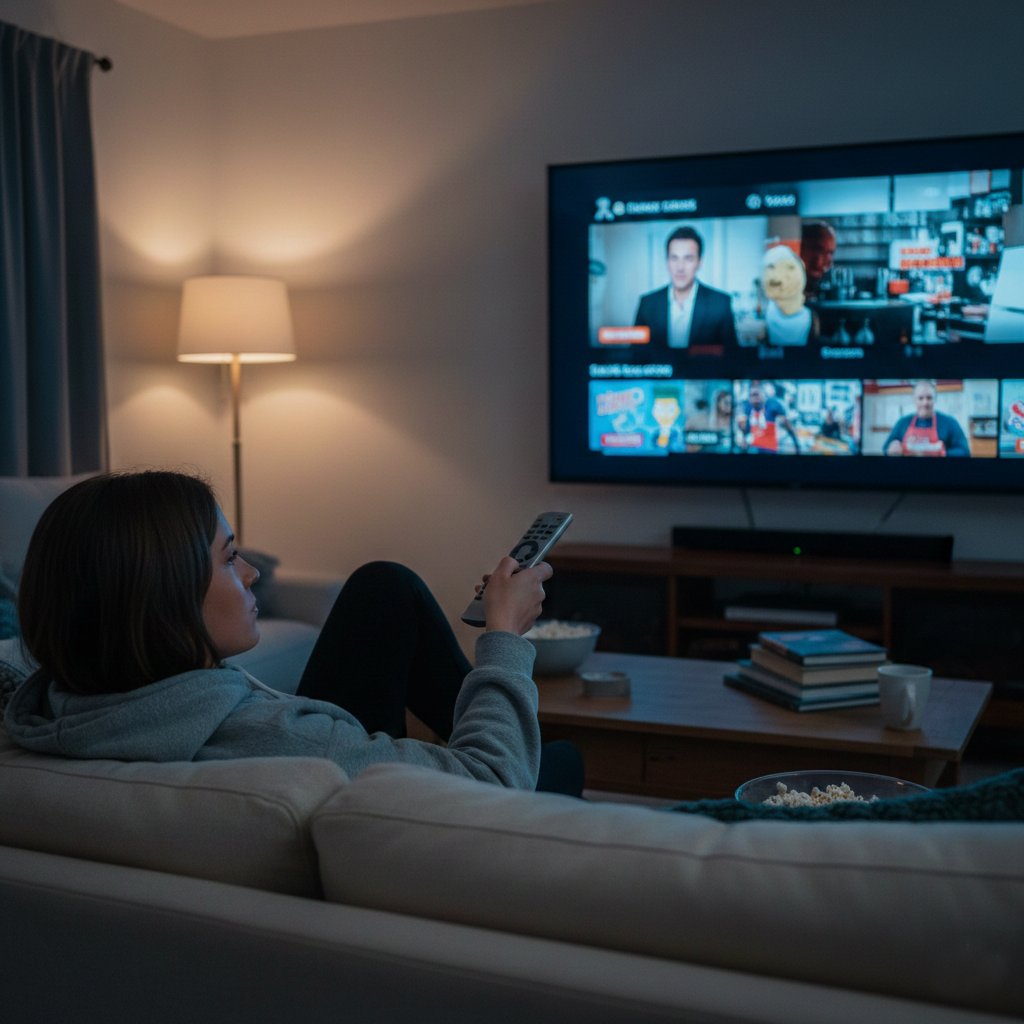
From Channel Surfing To Streaming-First Habits
Not long ago, watching TV meant waiting for a show to air at a specific time or buying physical discs. Streaming platforms changed that routine by putting huge libraries of movies, shows, music, and live streams in one place.
Today, viewers open a streaming app on a smart TV, phone, tablet, or game console and start watching within seconds. The same platforms remember where a viewer stopped, recommend similar titles, and sync progress across devices. Media consumption has shifted from planning the evening around a schedule to fitting entertainment into any free moment.
In Short: Streaming turned media from a scheduled event into an always-available background companion.
On-Demand Access and the End of Appointment TV
Traditional broadcast and cable channels forced audiences to organize their days around fixed time slots. Streaming platforms replaced that model with instant access, letting people start, pause, and resume content whenever it suits them.
Viewers now look for services that combine live action with community features, chat, and playful predictions. Fans who enjoy sports-themed social casino experiences can explore Sportzino social casino to see how a free-to-play platform brings sports, social features, and game-style engagement together in one place. This kind of constant, low-friction access mirrors the way streaming platforms keep audiences connected to their favorite shows and events.
As appointment viewing fades, audiences expect services to fit around their lives instead of the other way around. That expectation now extends beyond TV and movies to sports, gaming, and almost every other part of digital entertainment.
Binge-Watching and Personalized Playlists
One of the clearest changes brought by streaming platforms is the rise of binge-watching. Instead of waiting a week for a new episode, viewers often watch several episodes or even a whole season in a single sitting.
From Weekly Episodes To Full-Season Drops
Many services now release full seasons at once, so audiences can move through a story at their own pace. This approach encourages deeper immersion and creates shared cultural moments when entire communities talk about the same series over a weekend.
Algorithms That Keep Viewers Watching
Recommendation algorithms look at viewing history, time of day, and even device type to suggest what to play next. These personalized feeds keep viewers scrolling and streaming longer, sometimes without actively deciding what to watch at all.
How Streaming Is Changing Sports and Live Events
Streaming has also transformed how fans experience live sports, concerts, and events. Instead of being limited to a single TV broadcast, viewers can watch on phones during a commute or switch to a big screen at home. Many platforms layer in real-time stats, commentary, and chat to make live viewing feel more interactive.
- Multiple Viewing Angles: Viewers can switch camera feeds or watch highlights on demand.
- Interactive Overlays: Live scoreboards, timelines, and player data sit on top of the video.
- Flexible Schedules: Replays and condensed versions help people catch up on games they missed.
These options make live content feel closer to a video game or app than a traditional broadcast. The line between watching and participating grows thinner as viewers chat, react with emojis, and share clips in real time.
The Social Side of Streaming and Second-Screen Use
Streaming fits neatly into social media habits because people often watch while holding a second device. Viewers post reactions, join fan communities, and follow creators who talk about their favorite shows, teams, and personalities.
Short-form platforms like TikTok, Instagram Reels, and YouTube Shorts also act as gateways to longer content. A clip or highlight can inspire someone to start a full series or watch a live stream they would have missed otherwise. As a result, recommendations now flow both ways between streaming services and social platforms.
What Streaming Means for the Future of Media
Streaming platforms now shape when, where, and how people discover almost every type of media. From niche documentaries to global sporting events, more content reaches audiences through apps than through traditional channels.
At the same time, viewers face more choices, more subscription options, and constant recommendations competing for attention. That makes it important for people to set their own boundaries, choose services that match their interests, and take breaks from the endless scroll. However streaming continues to evolve, it is likely to remain the default way many people experience entertainment.
In Short: Streaming has turned media into a flexible, personalized service that follows viewers wherever they go.



Leave a Reply