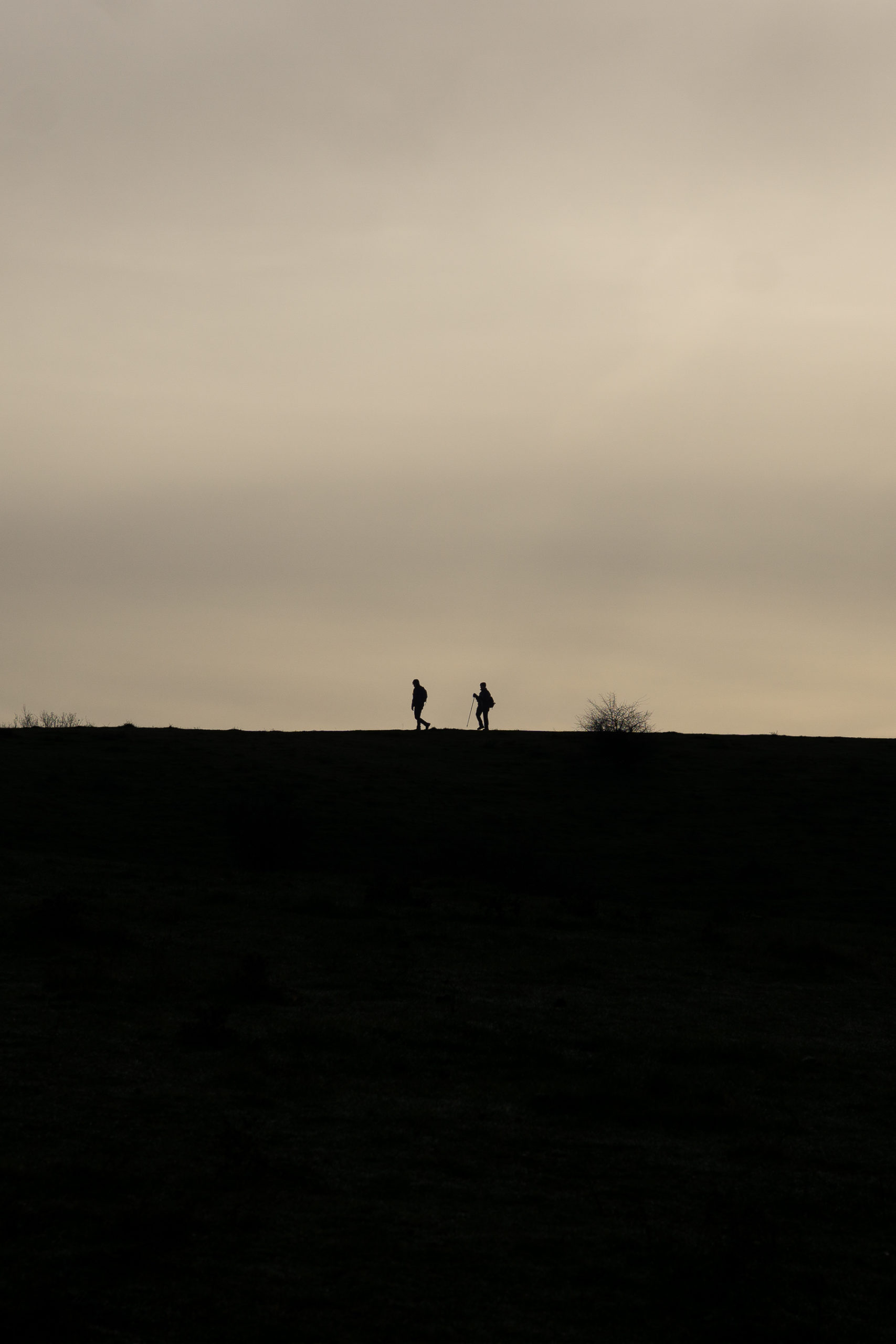
 The wind hit the ridge hard enough that I leaned forward to keep my balance. Ahead of me, a narrow path followed the crest of the mountain like a thread pulled tight between two regions of Italy. On one side lay Tuscany. On the other, Emilia-Romagna. As the clouds shifted, a deep blue circle suddenly appeared below the ridge: Lago Scaffaiolo.
At that moment it was hard to believe I was still in Tuscany.
Most travelers imagine Tuscany as vineyards, medieval villages, and leisurely afternoons tasting wine in the Val d’Orcia. But high above those rolling hills lies a wilder landscape that few international visitors ever see. Along the spine of the Northern Apennines, the forests give way to windswept ridges, glacial lakes, and mountain refuges where hikers stop for bowls of polenta and fresh pasta after long climbs.
If you are willing to leave the vineyards behind for a day or two, Tuscany reveals an entirely different personality.
The Tuscany Most Travelers Never See
For many visitors, Tuscany means cypress-lined roads, Renaissance cities, and fields of golden wheat. It is easy to forget that the region is bordered by a mountain chain that stretches the length of the Italian peninsula: the Apennines.
These mountains are not as tall as the Alps or the Dolomites. The highest peaks in this area rise to around 2,000 meters. But what they lack in elevation they make up for in atmosphere. The terrain often feels closer to the Scottish Highlands than to the stereotypical landscapes of central Italy: rolling uplands, open ridges, sudden clouds, and wide views that stretch for kilometers.
And unlike many famous alpine destinations, the Northern Apennines remain largely the domain of Italian hikers.
One of the best places to discover this hidden side of Tuscany is the area around Lago Scaffaiolo, a glacial lake located along the border between Tuscany and Emilia-Romagna within the Corno alle Scale Regional Park.
Forest Trails and the Ascent into the Apennines
The journey toward Lago Scaffaiolo often begins in the Abetone–Cutigliano area, a small mountain region that sits roughly between the cities of Pistoia and Modena. From here, hikers can access several trails that climb toward the Apennine ridge.
One of the most popular starting points is Doganaccia, where a network of marked paths leads toward the high plateau of the park.
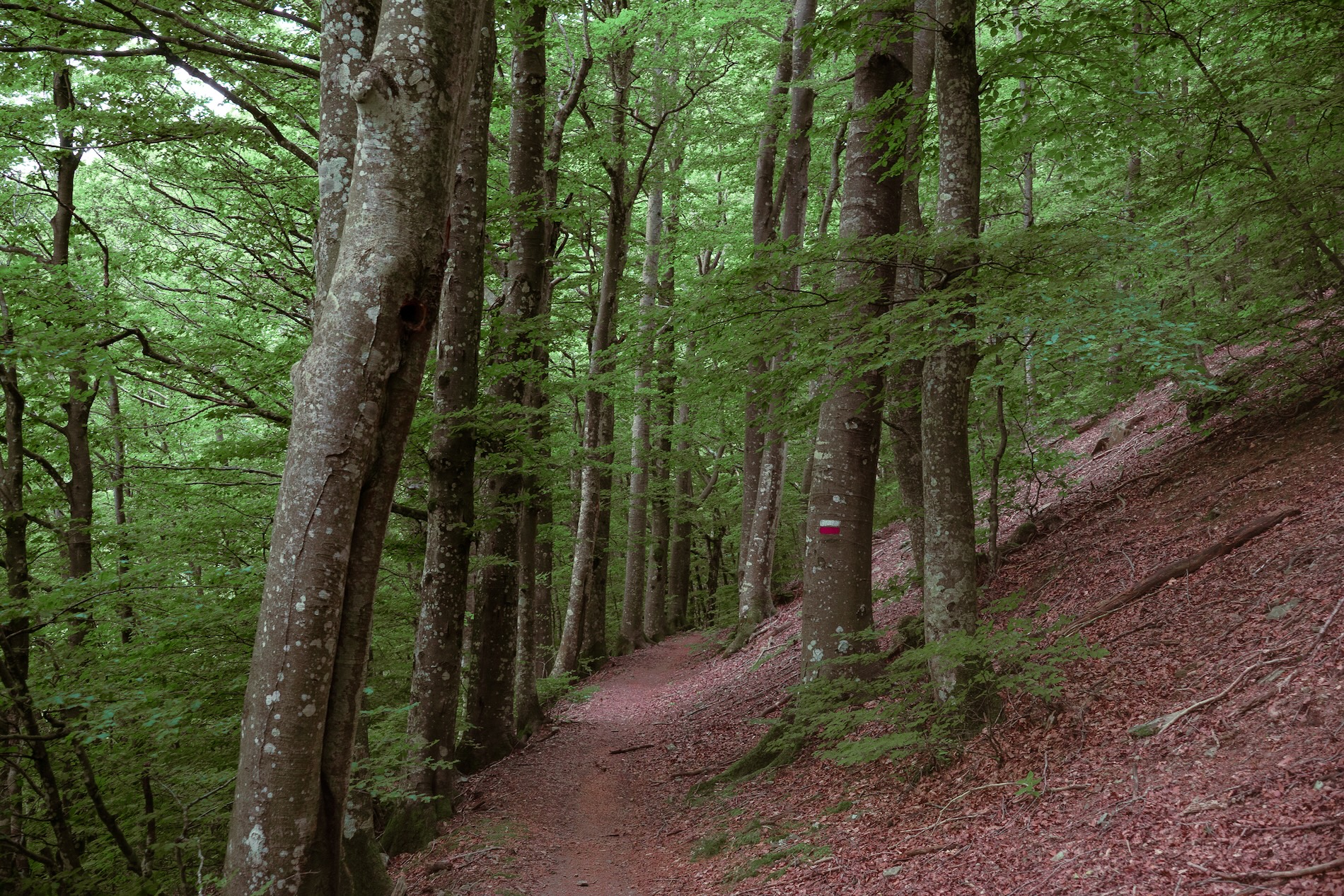 The first part of the hike passes through dense mountain forests dominated by beech trees. In autumn the leaves turn copper and gold, covering the trail in a soft carpet. In summer the canopy provides shade while the air remains cool even on hot Tuscan days.
A beech forest trail in the Northern Apennines marked with the red-and-white CAI trail signs used throughout Italy.
These red and white markings belong to the CAI — Club Alpino Italiano, Italy’s national alpine association. If you are familiar with CAI trail signs and carry a map, navigating the trails of the Apennines is relatively straightforward.
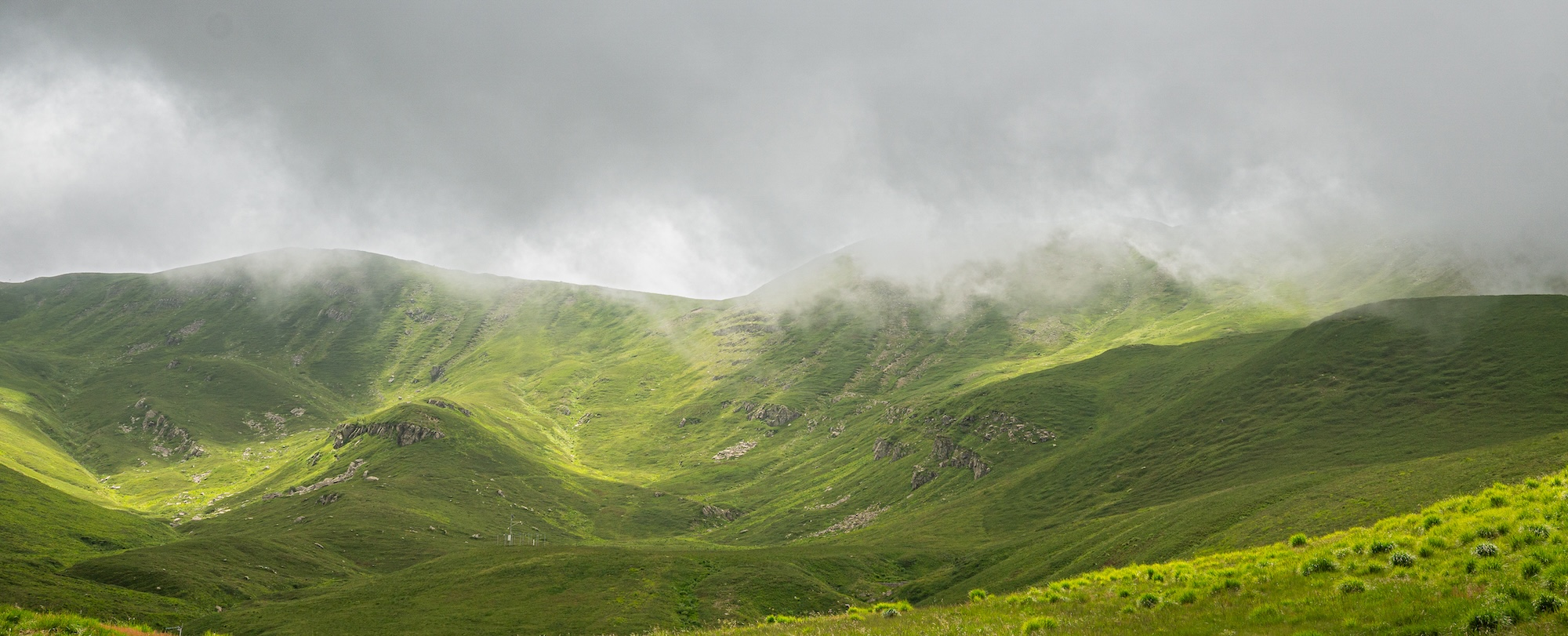 As the elevation increases, the forest begins to thin. The beech trees give way to patches of grassland and low shrubs. Eventually the trail emerges above the treeline, where the landscape opens dramatically.
Rolling upland terrain in the Northern Apennines that resembles the landscapes of the Scottish Highlands.
Standing there, surrounded by rolling hills and open sky, it becomes clear why many hikers compare this region to northern Europe. The wind moves constantly across the plateau, and the horizon stretches in every direction.
Wildlife and Wide Open Plateaus
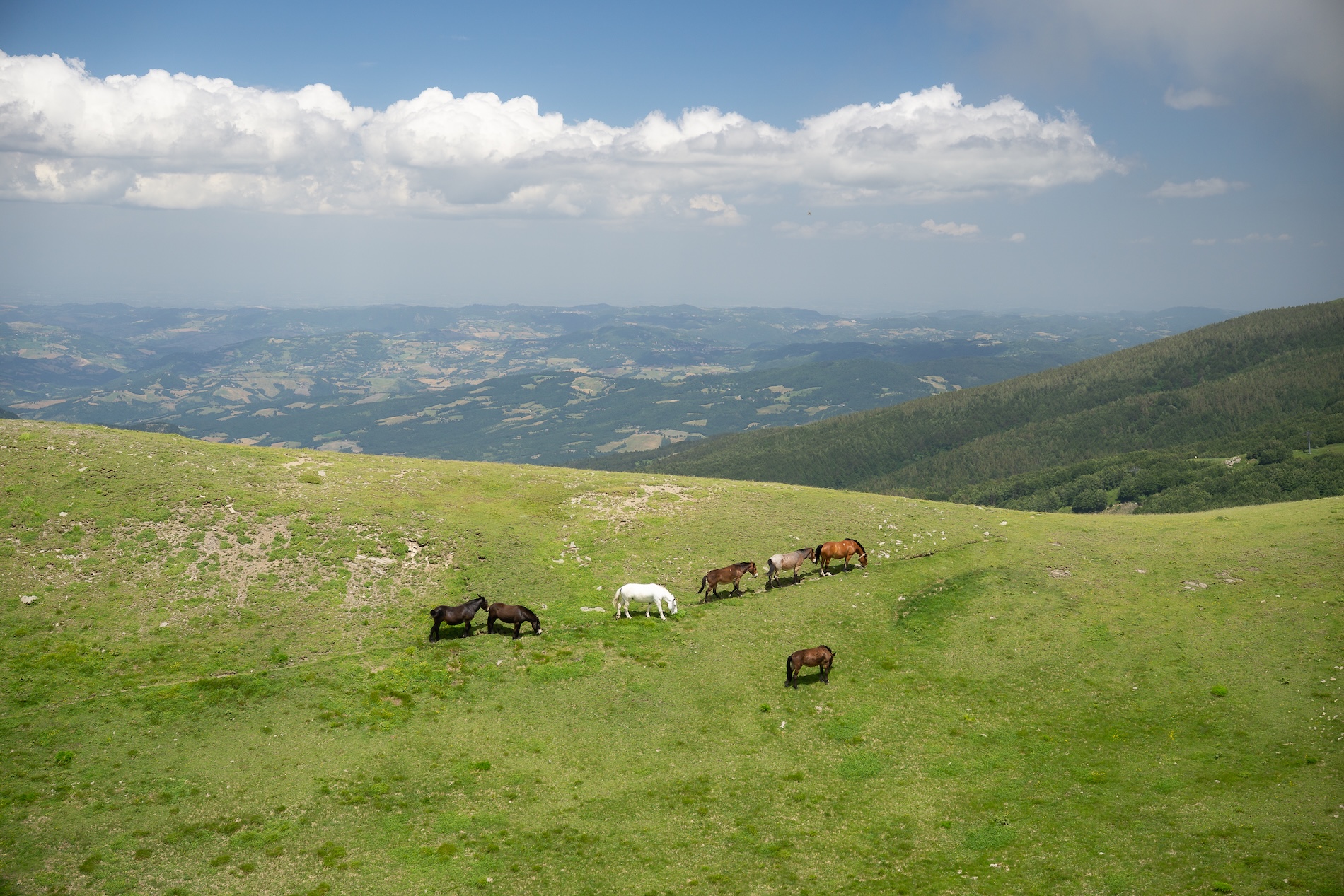 The open highlands of the Apennines are also home to wildlife that hikers rarely expect to encounter in Tuscany.
On several occasions I have come across small groups of wild horses grazing on the grassy slopes near the ridge. They move quietly across the plateau, barely noticing the hikers who pass along the trails.
Wild horses grazing on the grassy plateaus of the Apennine ridge.
Sheep and goats are also common in the area, tended by shepherds who bring their flocks to these high pastures during the warmer months.
Moments like this are a reminder that this landscape is still deeply connected to traditional mountain life.
Lago Scaffaiolo: A Glacial Lake on the Roof of Tuscany
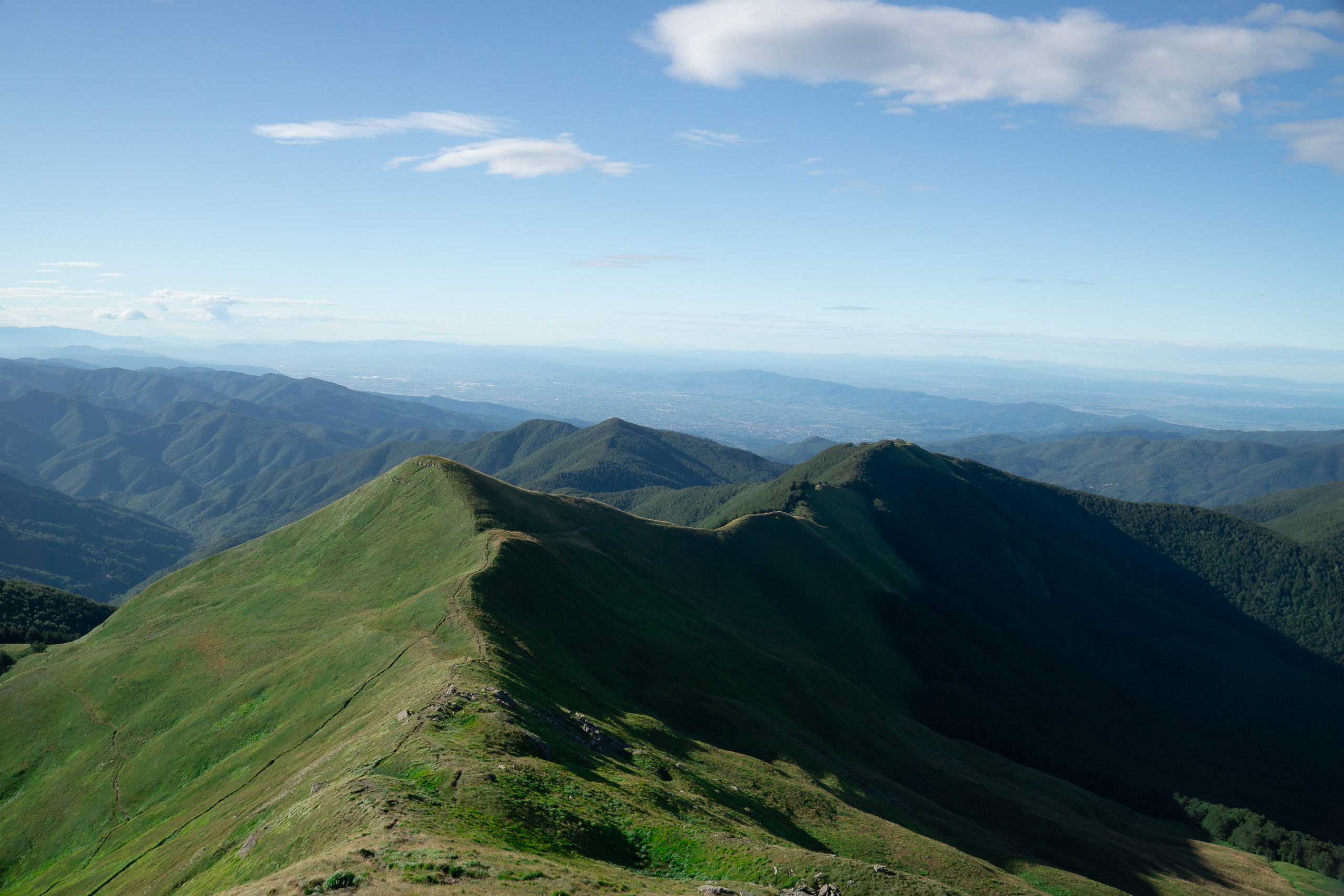 After the steady climb through forests and open slopes, the trail finally reaches the Apennine ridge. From here, the terrain flattens and the path runs along the crest of the mountains.
Walking along the ridge is one of the highlights of the hike. On clear days you can see deep into both Tuscany and Emilia-Romagna.
A narrow hiking path following the Apennine ridge near Corno alle Scale.
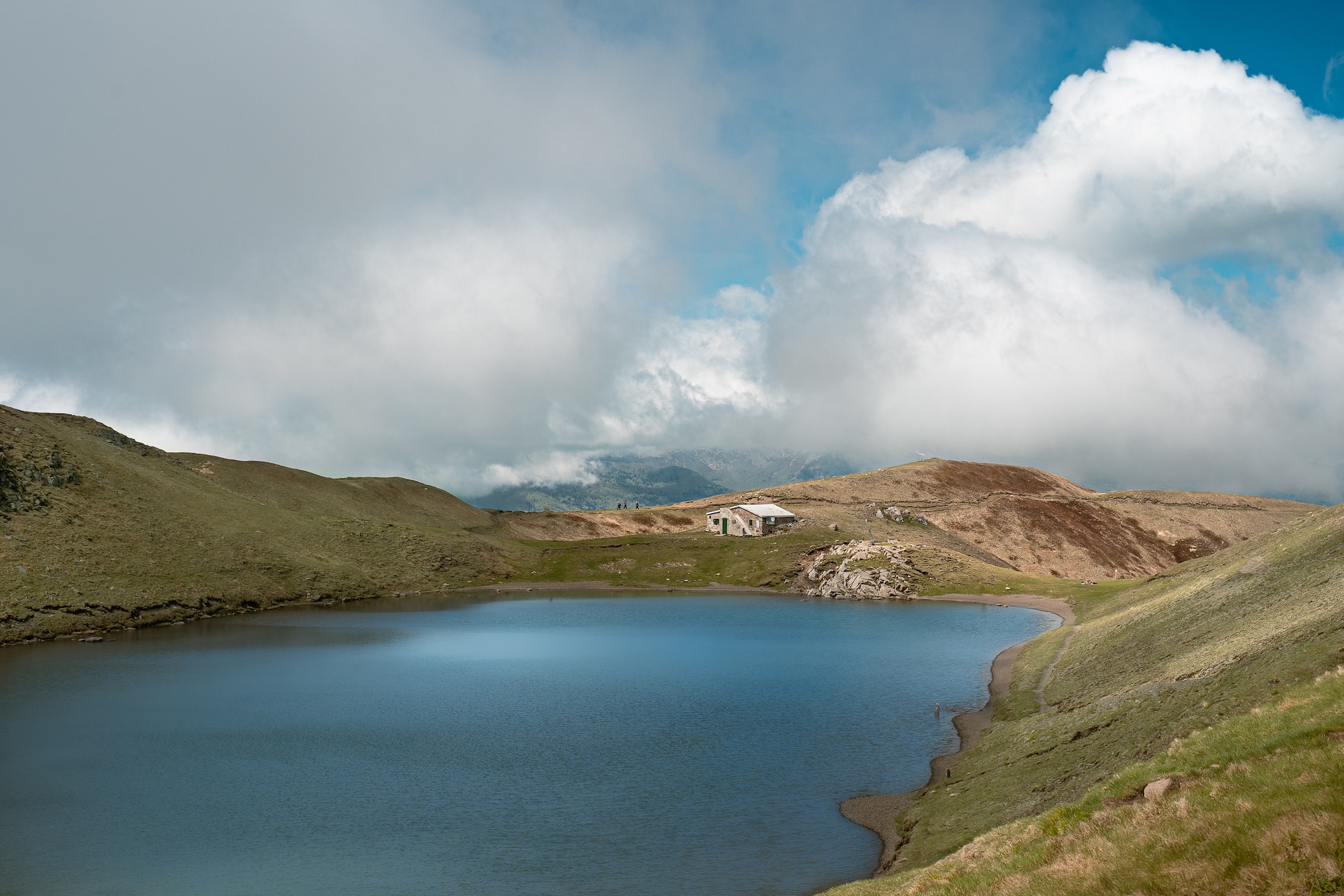 Sometimes the weather changes quickly here. Clouds can roll across the ridge in minutes, creating dramatic shifts of light and shadow.
Eventually the path curves gently downward and reveals the destination: Lago Scaffaiolo.
Lago Scaffaiolo, a glacial lake sitting at roughly 1,775 meters along the Tuscan–Emilian Apennine ridge.
The lake sits just below the ridge at around 1,775 meters above sea level. Its waters are often strikingly blue, reflecting the sky above the mountains.
In winter the lake sometimes freezes completely.
Reaching the lake after the climb feels particularly rewarding. The open landscape, the constant wind, and the sense of isolation create an atmosphere that is very different from the Tuscany most travelers know.
Rifugio Duca degli Abruzzi: A Mountain Refuge with Tuscan Flavor
Right beside the lake stands one of the most famous mountain refuges in the region:Rifugio Duca degli Abruzzi.
 Like many alpine huts across Europe, the rifugio serves as both shelter and restaurant for hikers exploring the area. Inside, wooden tables fill quickly with people resting after long climbs along the ridge.
But unlike the typical image of simple mountain food, the dishes here reflect the culinary traditions of Tuscany and Emilia-Romagna.
One of the most satisfying meals after a hike is a plate of polenta with porcini mushrooms.
Polenta with porcini mushrooms served at Rifugio Duca degli Abruzzi near Lago Scaffaiolo.
Another classic is fresh tagliatelle with porcini mushrooms, a dish that appears frequently in the mountain refuges of the Apennines during mushroom season.
Tagliatelle with porcini mushrooms, a traditional dish often served in Apennine mountain refuges.
Sitting inside the refuge with a warm meal while the wind blows across the ridge outside is one of those small moments that defines hiking in the Apennines.
Lago Nero: Another Hidden Lake of the Tuscan Mountains
Not far from Lago Scaffaiolo lies another beautiful glacial lake: Lago Nero.
Although the two lakes are geographically close, visiting them both in a single hike would require a long and demanding trek. Most hikers prefer to explore them on separate outings.
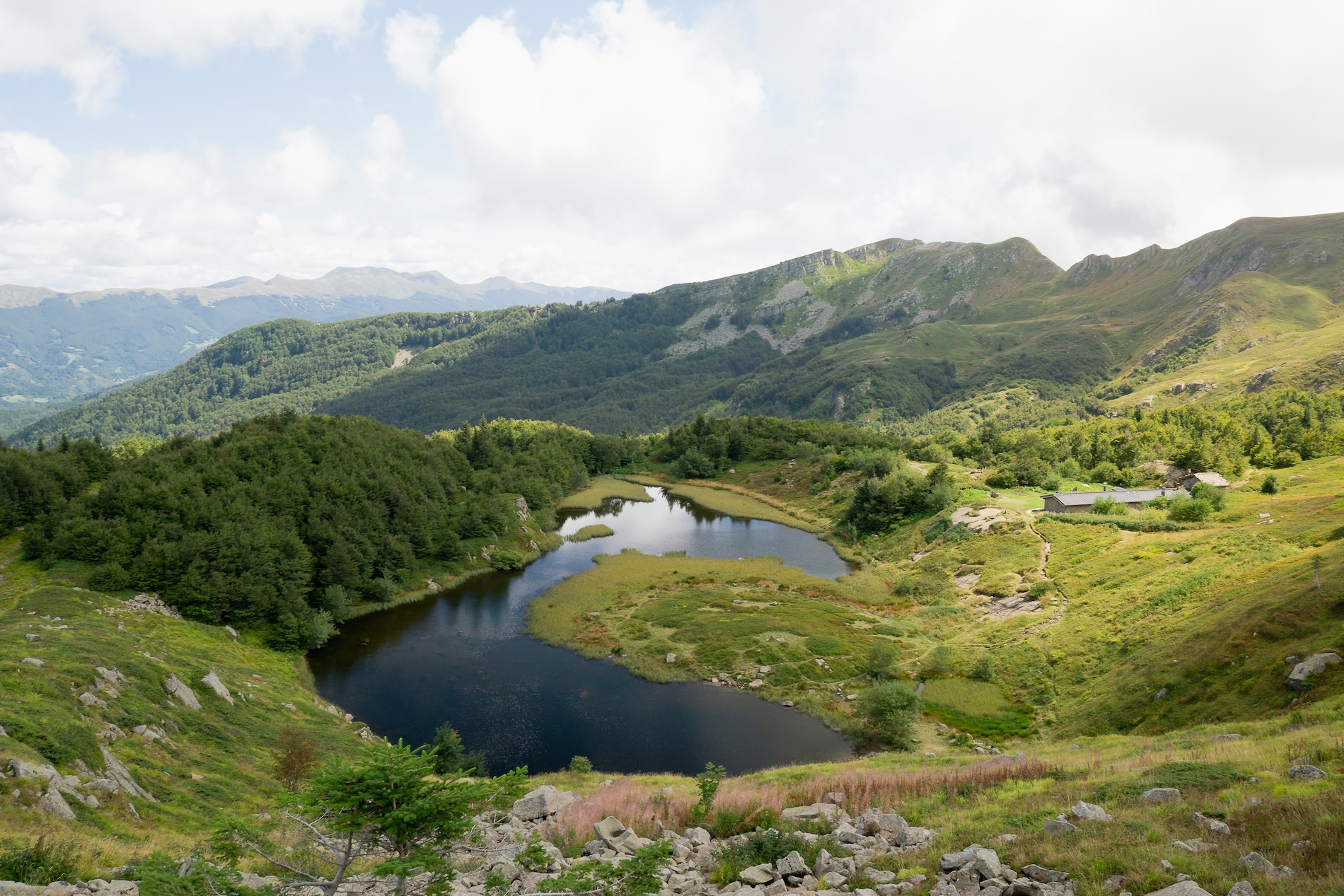
Lago Nero is commonly accessed from the Abetone area, starting near the Orto Botanico Forestale.
From there, a trail climbs through forest before emerging onto a high plateau where the lake appears beneath the surrounding peaks.
Lago Nero, a glacial lake located near Abetone in the Tuscan Apennines. The setting is quieter than Lago Scaffaiolo and often feels more secluded. Surrounded by forested slopes and rocky ridges, the lake is an excellent destination for a half-day or full-day hike.
When to Visit the Northern Apennines
The Apennines are beautiful throughout the year, but each season brings a different character to the landscape.
Spring transforms the mountains into bright green slopes as grasses and alpine plants return after winter.
Summer is one of the best seasons for hiking. Temperatures remain relatively cool compared to the Tuscan lowlands, and the constant wind along the ridges helps keep conditions comfortable. Because the sun exposure can still be strong at higher elevations, bringing a hat is recommended.
Autumn brings changing colors to the beech forests and excellent mushroom seasons in the mountains.
Winter can turn the entire area into a snowy landscape. When the lakes freeze and the grasses fade, the plateau sometimes looks almost otherworldly.
Practical Tips for Hiking to Lago Scaffaiolo and Lago Nero
Getting There
Both lakes are easiest to reach by car.
For Lago Scaffaiolo, many hikers begin in the Doganaccia area near Cutigliano, where trails lead directly toward the ridge.
For Lago Nero, the most common starting point is Abetone, particularly near the Orto Botanico Forestale.
Navigation
The trails are marked using the red-and-white CAI trail markers, which appear on trees, rocks, and signposts throughout the mountains.
Hikers familiar with CAI markings and carrying a map can generally navigate the routes without difficulty.
Do You Need a Guide?
Experienced hikers with basic navigation skills can explore these trails independently. However, hiring a local guide can make the experience easier, especially for visitors unfamiliar with the region.
A guide can also help you discover lesser-known trails and viewpoints that many hikers overlook.
Tuscany Above the Clouds
 By the time I left the ridge above Lago Scaffaiolo, the clouds had started to drift across the mountains again. The lake slowly disappeared behind shifting fog as I began the descent back toward the forests below.
Most travelers visiting Tuscany will never see this side of the region.
They will remember vineyards, medieval towns, and Renaissance art — all wonderful experiences in their own right. But high above those landscapes lies another Tuscany entirely: a place of wind, open ridges, glacial lakes, and quiet mountain refuges.
For hikers willing to explore the Northern Apennines, Tuscany doesn’t end at the rolling hills.
And up there, above the forests and vineyards, Tuscany feels like an entirely different world.
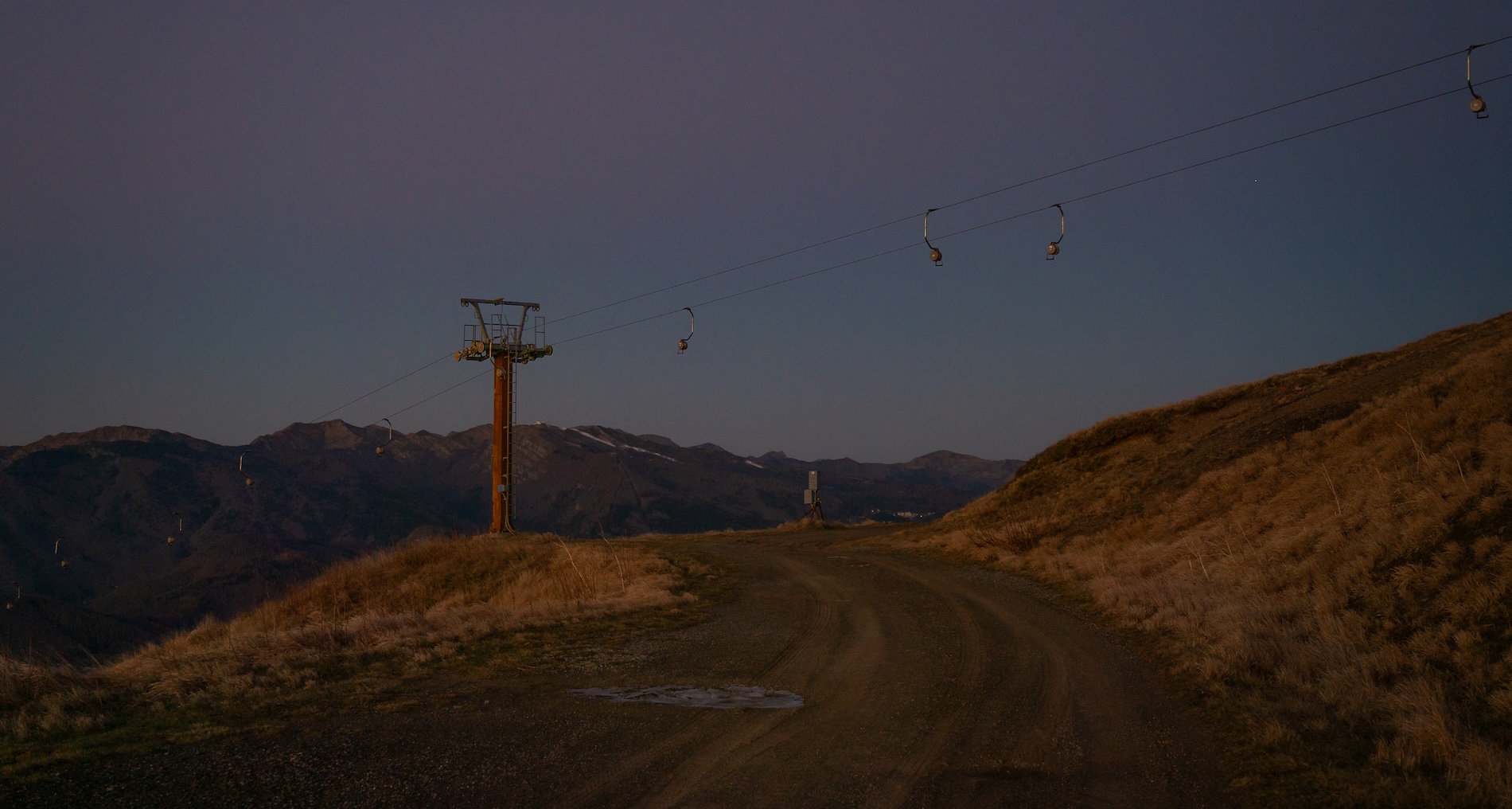
Path to Scaffaiolo Lake, in winter, during blue hour in the morning.
Related posts:
 Beyond the Rolling Hills: Discovering the Wild Heart of Tuscany in Acquerino
 Solo Trekking the Inca Trail: A Journey to Machu Picchu
 Comedy, Kayaking, Museums and Farmer’s Markets in Los Angeles
 Touring Tuscany: Where To Go And What To Do
 Citadelle LaFerrière – or how to keep the French out of Haiti
Leave a Reply