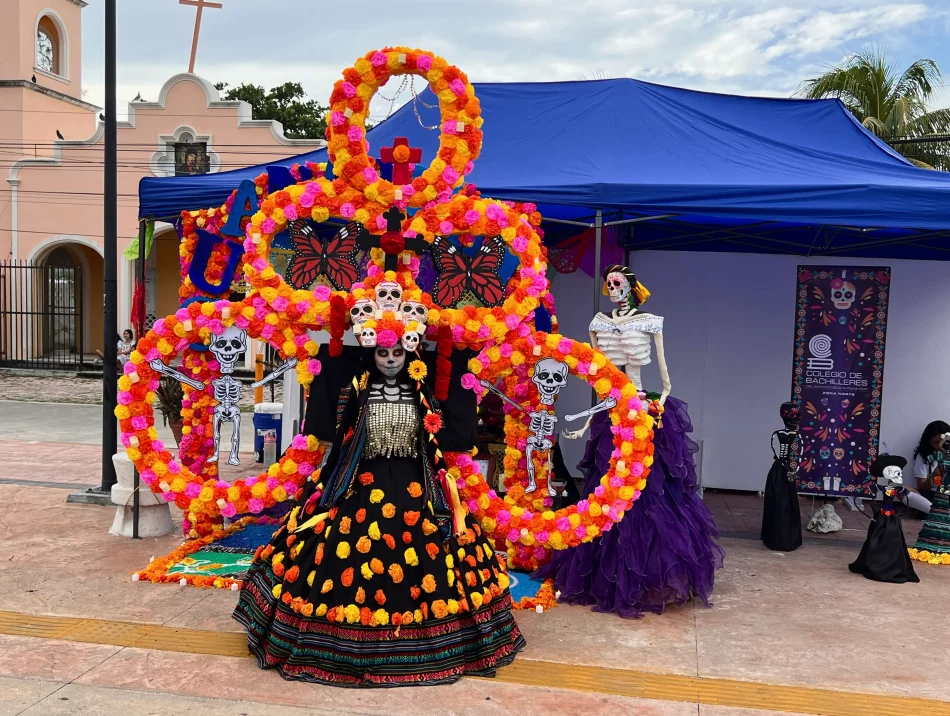
When we first moved to Cancun, Day of the Dead (Día de Muertos in Spanish) was one of those Mexican traditions we had been curious about for years. Our first real glimpse of it came through the opening sequence of the 2015 James Bond film Spectre, with Daniel Craig walking through a spectacular Día de Muertos celebration in Mexico City surrounded by skulls, costumes, giant skeletons and crowds of revelers. We remember watching it and thinking: we have to see this for ourselves one day. Then, after moving to Cancun, we finally did so—at Hanal Pixán in Puerto Juárez, a historic waterfront community on the northern side of Cancun and one of the city’s original neighborhoods. Today, many visitors know it as one of the places where ferries leave for Isla Mujeres.
What we found was much warmer and more communal than the film imagery had led us to expect. There was music, dancing, food, elaborate Catrinas and beautiful ofrendas, with people patiently explaining who they honored and why every object mattered. We have lived in Cancun ever since, and whenever we can, we return to the festival each year. Not only for its beauty, but because every visit helps us understand a little more about Día de Muertos.
What Hanal Pixán Means in the Yucatán Peninsula
In the Yucatán Peninsula, Día de Muertos has a distinctly Mayan expression: Hanal Pixán (ha-nawl peesh-awn), a name commonly translated as “food of the souls” from the Mayan language.
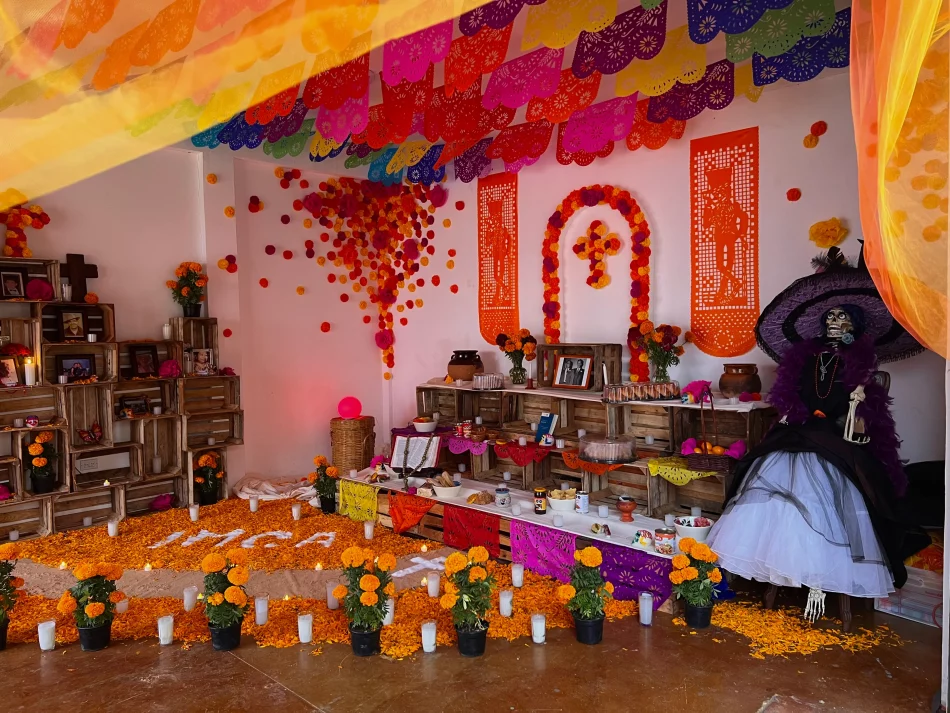
Traditionally observed from October 31 to November 2, Hanal Pixán is a time when families remember deceased relatives and prepare for their symbolic return. The days have different associations: October 31 is traditionally dedicated to children who have died, November 1 to deceased adults, and November 2 to all souls more broadly.
Food is at the heart of the tradition. Families prepare altars with photographs, candles, flowers, fruit, and dishes the deceased enjoyed, but one of the most distinctive foods is mucbipollo, or pib. It is a large tamal wrapped in banana leaves and traditionally cooked underground. It may be placed on the altar as an offering before being shared with the family.
That emphasis on food is built right into the name. Hanal means food, while pixán refers to the soul or spirit. For us, learning this made the festival in Cancun much easier to understand. What initially looked like a spectacular public celebration was connected to something much more intimate: families preparing food, building altars, and remembering particular people. And that contrast, between a lively public festival and a deeply personal family tradition, is one of the reasons we keep coming back.
What Hanal Pixán in Cancun Actually Feels Like
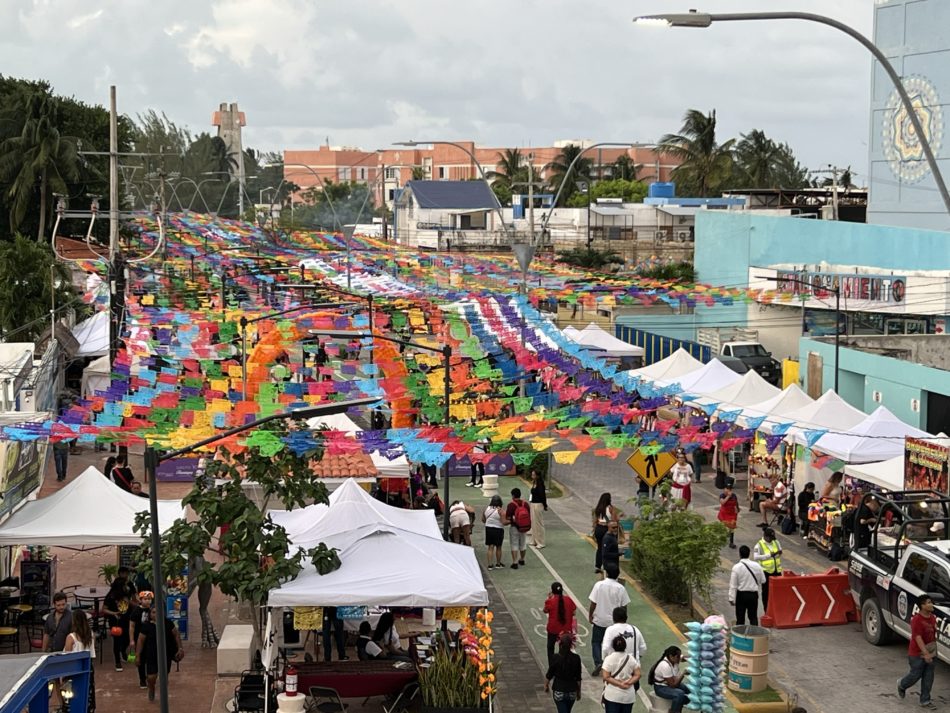
The first thing you notice in Puerto Juárez is that the celebration spills into the street. Rows of papel picado hang overhead; food and artisan stalls line the route; music comes from the main stage, and people arrive dressed as Catrinas and Catrines. Some families come in matching costumes; children join in too. It is colorful, noisy, and unmistakably festive.
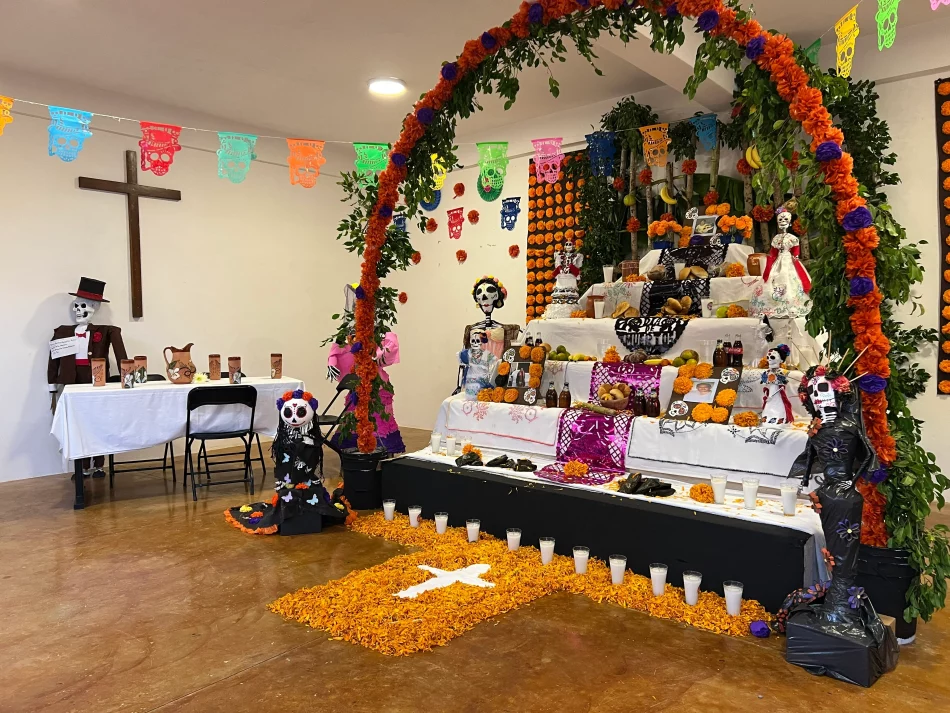
But the part we always spend the most time exploring is the ofrendas. At the public festival, different families, groups and organizations build altars filled with photographs, candles, cempasúchil, fruit, bread, drinks and personal objects.
On our visits, people standing beside them have been remarkably generous about explaining what we are looking at, who an altar honors, why a particular object was included or what a certain food means to the family. That changes the experience completely.
From a distance, an ofrenda can look like an elaborate piece of folk art. But once you learn that a piece of clothing, a photograph, or even a favorite dish was chosen in memory of a particular person, it stops being decoration and becomes a story about someone who was loved.
The public side of the festival is much bigger. Puerto Juárez also hosts Catrina processions, live music, folkloric dance, food stands, and artisan stalls. Recent editions have included a maritime procession and dozens of altars, drawing both local families and visitors. In 2025 alone, the Puerto Juárez program included 51 altars, more than 50 food stands, and 120 stalls for artisans and entrepreneurs.
That combination is what keeps bringing us back. You can spend one moment watching an elaborate Catrina parade and the next listening to someone explain the photograph on an altar. It is celebratory without making remembrance feel trivial.
A Very Different Celebration at Xcaret
We have also experienced Día de Muertos at Xcaret Park (pronounced “esh-kah-ret”), and although the two celebrations share many of the same symbols, the atmosphere is completely different.
If you have never been, Xcaret is a large eco-archaeological theme park in the Riviera Maya, south of Playa del Carmen. It combines natural attractions such as underground rivers and wildlife areas with Mexican history, folklore, food, and cultural performances, so Día de Muertos fits naturally into the kind of experience the park is built around.
Every year, Xcaret holds its Festival of Life and Death Traditions from October 30 to November 2. The park fills with ofrendas, traditional food, artisans, theatre, dance, workshops and live music, while a different Mexican state is invited to present its own regional traditions. For 2026, the invited state is Guanajuato, with more than 35 altars included in the program. If Puerto Juárez feels like stepping into a local community celebration, Xcaret feels more like walking through a huge cultural showcase.
That is not necessarily a bad thing. In fact, for a visitor who knows very little about Día de Muertos, Xcaret can be an excellent introduction because so many traditions are brought together in one place. You can move from an altar to a theatrical performance, try regional food, watch traditional dances and then encounter customs from another part of Mexico a few minutes later.
For us, though, experiencing both made the differences even more interesting.
Xcaret showed us how diverse Día de Muertos can be across Mexico. Hanal Pixán in Puerto Juárez helped us understand what those traditions can mean closer to home. And together, they taught us that there really is no single “Mexican Day of the Dead.”
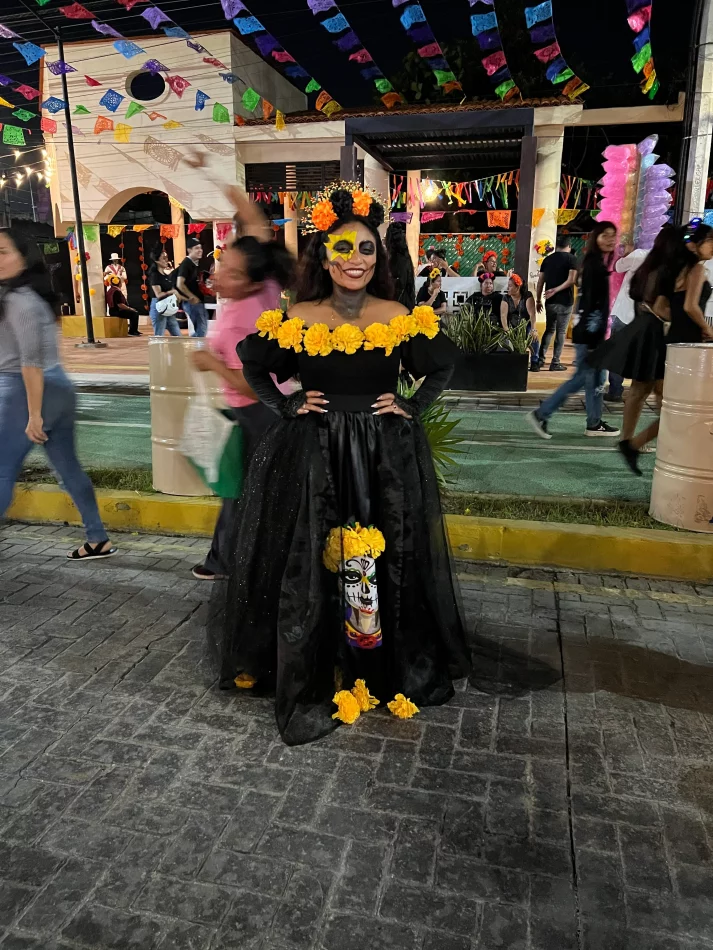
If You Want to Experience Day of the Dead in Canun
If you happen to be in Cancun around the end of October, we would absolutely recommend looking out for the Hanal Pixán celebrations in Puerto Juárez. The exact program changes from year to year, but the combination of ofrendas, food, music, Catrinas, and local families makes it one of the events we look forward to most.
And if you are trying to understand what all those flowers, skulls, candles and offerings actually mean, we put together a much deeper guide to Day of the Dead in Mexico after researching the traditions behind what we had seen.
We filmed our visits to Day of the Dead celebrations in Quintana Roo. You can watch the experience in our video.
But this is also one of those celebrations that is easier to understand once you see it. Every year we go back, we notice something we missed the year before. And perhaps that is why Hanal Pixán has become one of our favorite traditions since moving to Cancun. Beneath all the skulls and spectacle, it is ultimately about remembering people and keeping them part of the family.
Focus Keyword: Day of the Dead in Cancun
SEO Title Day of the Dead in Cancun: Why We Keep Going Back to Hanal Pixán Meta Describtion: Experience Day of the Dead in Cancun through Hanal Pixán in Puerto Juárez, from ofrendas and Catrinas to food, music and Xcaret’s festival.
Related posts:
 Japanese Fabric Banshu-ori – Explore Nishiwaki’s 200-Year Textile Heritage
 Setting Sail On Sydney Harbour Dinner Cruise – We’ll Tell You When!
 From Jasper’s Icefields To Maligne Lake: A Panorama of majestic Colours
 Later “Louise”!: Hurricane Season in Tortola, BVI
 Sumatran Blend, Ripples on the Edge of Time: Toba or not Toba?
Leave a Reply