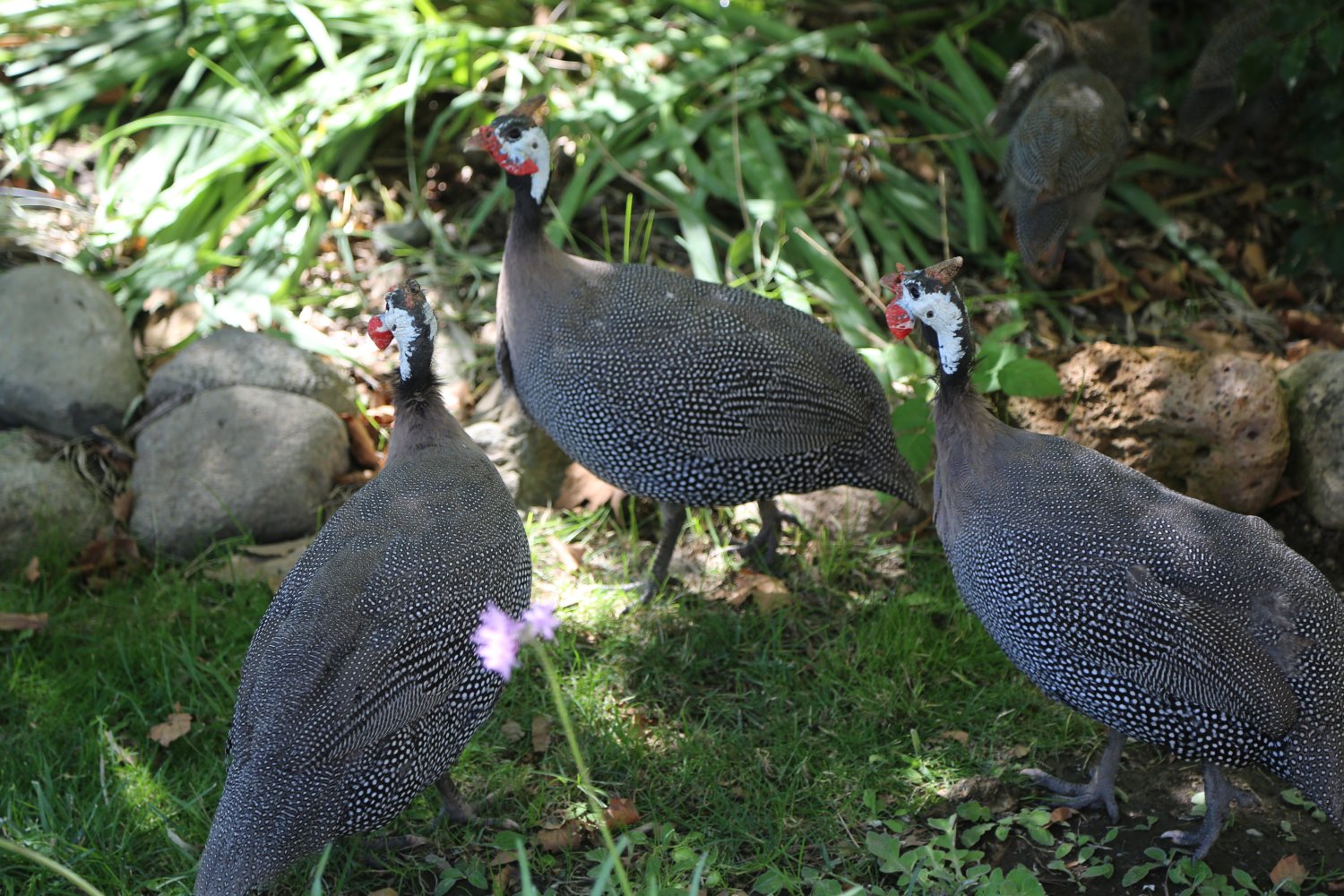
 Soon after pulling into the entrance of Safari West we hopped into a waiting 1952 Dodge Power Wagon Jeep and we were greeted by a young fellow in the driver’s seat named Billy. Billy was born and raised in South Africa. His father was a bush pilot and Billy grew up around wild animals all of his life. He would be our driver and guide for the 2.5-hour tour. His background and insights into the animals and their behaviors was invaluable.
The Jeeps we rode in were open to the air. Two rows of comfortable cushions lined the back – upper seats were available above the drivers’ head and two seats were available next to the driver.
To begin the tour, we slowly drove down a dusty jeep road past a few of the 32 canvas African safari tents available for lodging to the public. These tent cabins were made in South Africa and are authentic to the African Bush. They stand on wood poles situated high enough above the ground for optimum game viewing. When one thinks of tent cabins, one does not often associate the word amenities with this type of lodging. However, these particular tent cabins are complete with hardwood floors, luxurious beds, custom furniture, a bathroom with a shower, and a veranda, which overlooks the rolling hills of the preserve.
The preserve is accessible via jeep roads, which wind their way through the bucolic countryside – there are over 400 acres in the preserve. As soon as we drove through one of the gates we stopped and two very curious ostriches quickly approached the vehicle and stopped several feet away. We learned that Ostriches can sustain speeds up to 35 mph for 15 minutes, have enough power in their legs to seriously harm an attacker, and a 250lb person can stand on top of one of their eggs without breaking it. Our guide Billy gave interesting facts about each of the animals we viewed as we made our way through the preserve.
Having been on several safaris in Eastern Africa (Serengeti, Botswana, South Africa) – viewing the animals here brought back good memories of the African Bush. Instead of thorn trees scattered among the grasslands we were among Oak and Bay Leaf and instead of being on flat plains we were surrounded by the rolling Sonoma County foothills. However, one thing was the same – the animals, which like in the African Serengeti, is of course the main attraction at Safari West.

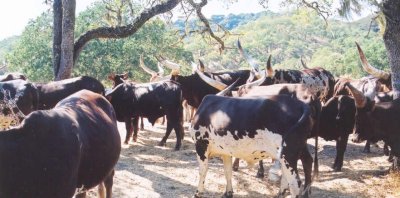
At one point in the tour Billy got out of the jeep, carefully, as there were several menacing looking bulls with long horns nearby, and he scooped up some of their droppings and carried them over to the jeep. Several of us were quite appalled at the potential of smelling the foul odor as he placed these droppings under our noses. The point he was trying to make is the droppings dry very quickly and are completely odorless when dry. We smelled absolutely nothing. While talking about the cattle Billy segued into telling us about a drink the Masai people of Eastern Africa make. Billy dubbed it the “Masai Milkshake.” The Masai people take a small amount of blood, urine and milk, which they later ferment in the sun, from their cattle and they mix this together into a drink. Apparently its a rather “rich” drink and tastes somewhat like yogurt. Billy had first hand knowledge of this from when he lived in Africa.
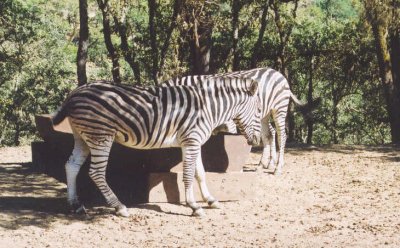
As we continued the tour, Billy warily drove past several Cape buffalo lying in the shade under an oak tree and parked well out of range in case they decided to charge the jeep. He informed us that Cape buffalo are the 2nd most dangerous African animal – just behind the hippopotamus. He told us this tidbit before we actually drove by these animals! After we drove past the buffalo we saw several Zebra grazing & drinking at a watering hole, among them a very cute baby zebra just four days old. In addition to these animals we viewed several species of gazelles, a rare sable and several other species of African animals.
There is such a great feel to this preserve especially towards the end of a warm day. There is no better time to take a tour of the preserve than in the late afternoon/evening (in photography they call this the “golden hour” when the lighting is just about perfect), the smells of the outdoors come alive in the cooling air, and the suns hot rays have diminished.
At the end of the jeep tour we gorged ourselves on delicious watermelon and saved the rinds for feeding the giraffes. Once the giraffes consumed the rinds our guide Billy took us into the Safari West aviary. This is an enclosed netted environment, which contains many species of exotic African birds. As soon as we entered this aviary Billy was immediately hit in the back of his head by a beautifully colored bright blue bird. This bird hit him once, and then flew back to its perch, and then dive-bombed him again. After guiding tours through this aviary several times a day, this bird recognized Billy as the one with the food bag!
After touring the aviary we finished our walking tour by visiting various other animals including cheetahs, lemurs, a serval (an exotic cat) and an African porcupine.


Leave a Reply