Q. You grew up in Aotearoa New Zealand and Aotearoa New Zealand is a land of natural wonders. What are some of your earliest memories of views and sound growing up in Aotearoa New Zealand?
My parents had a cabin up in the Southern Alps region of the South Island, so those earliest memories are of being in the bush listening to the incredibly beautiful birdsong, (I miss that still), listening to a river near our little hut, the Bealey, at night. My brother and I, lying in the top bunks in the one room hut, were always hoping to hear the calls of kiwis, already a little rare, always unsuccessfully, but in the process I was listening really closely to the river itself, I now realize.
Q. Let’s talk about your travels. When you are in a new place, how do you get your bearings and find ways to get to know the place?
I usually travel in connection with performances of my music, or else to record rivers. These are very different types of journey. For performances, I arrive at a hotel, usually near the performance venue, and my first foray is to locate the nearest good café or coffee shop. If there’s time, my next impulse is to search out the nearest good bookshop. After that I’m content, and there often isn’t time to explore much further.
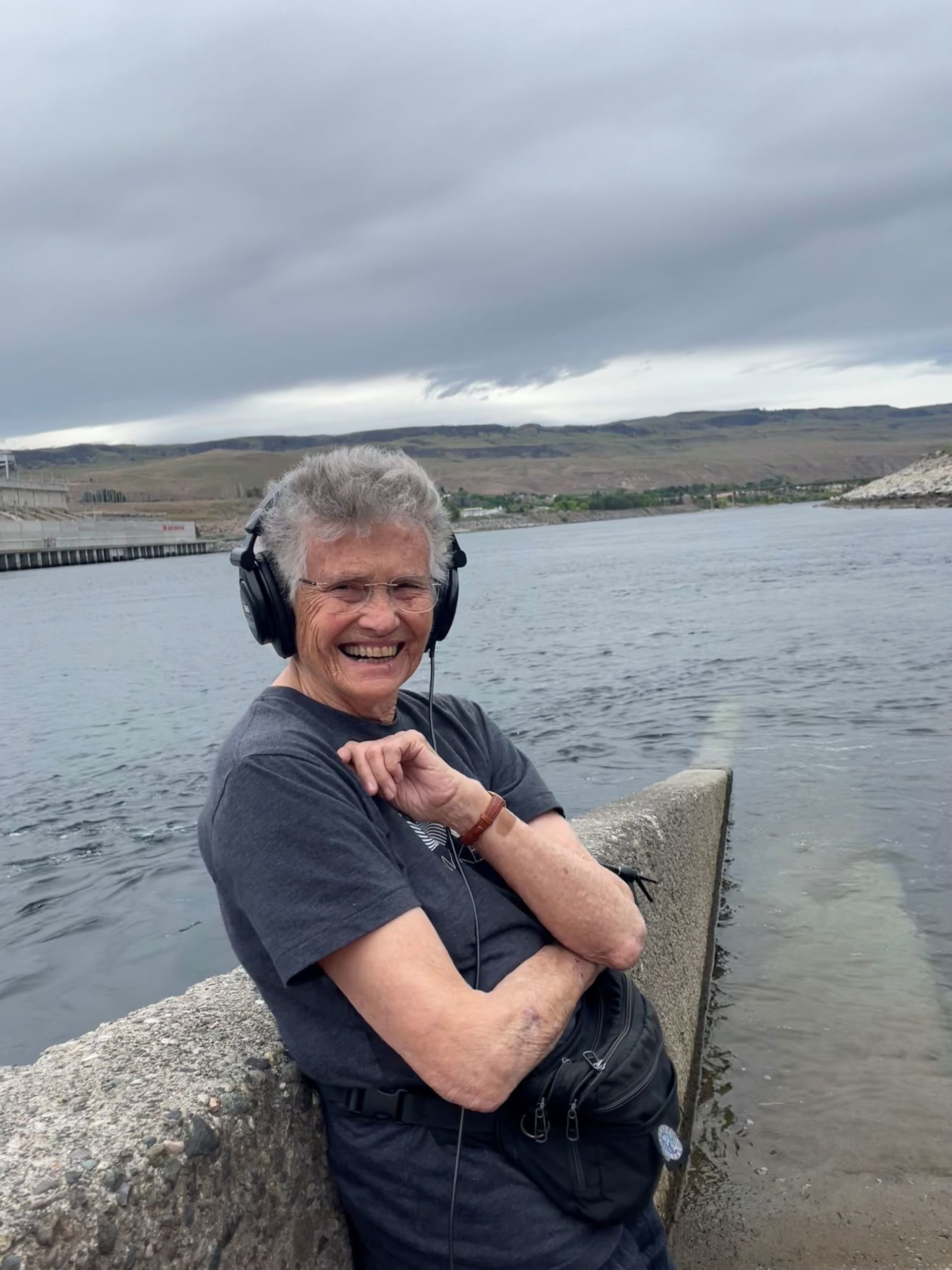
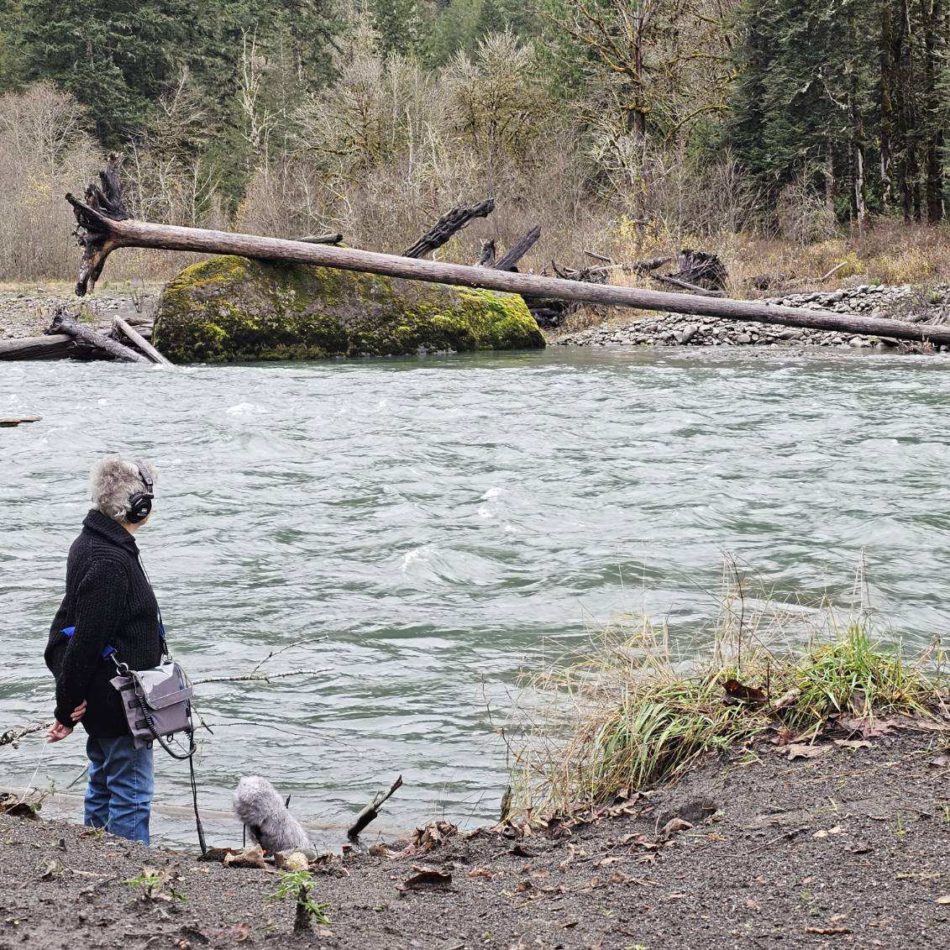
On field recording journeys it’s a very different time frame. The terrific composer and trumpet player, Nate Wooley and I have just finished an extended project – making a sound map of the Columbia River (which starts in British Columbia, flows through Washington State and ends in the Pacific in Oregon).
Nate was born at the mouth of the river and knows the lower river well, but for me the entire river, and the region, was unknown territory. We both wanted to explore it, and have collaborated for several years now, so have a very compatible way of thinking and working. We fell easily into a rhythm.
Across four journeys along the river, each about two weeks, we developed a routine of getting up early, finding a good place to have breakfast in the little town we landed in the previous night, taking off for a site on the river which looked promising for recording, having checked it out the previous evening, then pushing further.
We rarely stayed more than one night anywhere, and were entirely focused on the river itself, since we were hoping to record a sense of that huge river’s energy, its being and the riparian environment which it sustains. Little by little the tremendous constraints and environmental damage created by the 14 large dams which have been built on the river’s main stem and buried its storied rapids, became a deep, continuing concern for us both. In the end, we feel that despite those imprisoning dams, we uncovered the river’s huge energy.
Nate’s sense of knowing the river in its lower stretch I think comes with all the sense memories built up through his childhood on it and guided us in how we recorded it. My own feeling of knowing the river is an intangible sense of its power, its patience, almost its weight, something closer to what I felt about the wild river of my childhood, the Waimakariri.
Q. When did you first start thinking about composition beyond instruments, and moving to environmental listening?
I have been composing in both domains all along – that of voices and instruments, and that of environmental sound, seeing both domains as part of the same sonic world I could draw on, just as the French composers of musique concrète had been doing for a long time. But environmental sounds shifted, for me, from being sonic motifs or objects to manipulate, into manifestations of, largely, non-human life, with their own life spans and characteristics, which were fascinating, unpredictable, always changing, complex.
Recording them becomes a discipline of closely listening to those environments and sensing how one is deeply a part of them, not separate – pushing back against the old assumption of human dominance. The energy in them so clearly passes within one’s body, affecting biophysical processes even beyond one’s awareness, and is literally enlivening.
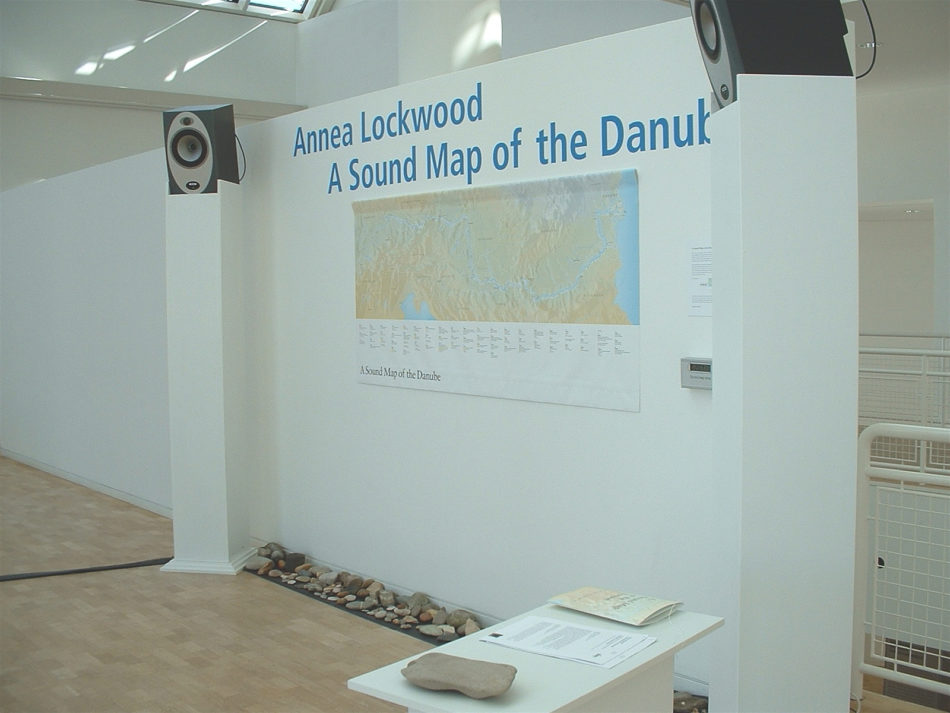
The domain of the river sound maps (the Hudson, Danube, Housatonic, Schuylkill – a collaboration with sound sculptor Liz Phillips, Columbia with Nate), is the soundscape of moving water and its environment, its surface, and underwater. That environment naturally includes human voices sometimes, but they do not dominate.
In the other domain there are works, such as Elwha!, my recent collaboration with the beautiful flutist Claire Chase, which mix water and instruments via field recordings of the former, and, often, live performance by a player. But with Elwha! both domains developed together. Claire and I went to the Elwha River together to make the field recordings, then composed the flute’s domain, sending sound files back and forth, over a period of a couple of years in as deeply integrated a process as we could devise. And now we are performing it together.
Q. You made multiple trips to the Danube for your field-recording project A Sound Map of the Danube. Tell us about this project and what was it like being physically present along those rivers and just listening?
Making that sound map was one of the richest experiences of my life and Ruth Anderson’s, my partner. It came about when one day, ten years after recording the Hudson River, I felt that I could do a better job of recording a river, perhaps get closer to a sense of its being. In the form of a specific question I asked myself, “What is a river?” Why the Danube? I think because it flows through so many human cultures, so much history has accumulated because of it, such varied terrains. Mitteleuropa has always fascinated me, as have the Balkans. It came to mind immediately.
Mapping the Danube brought us back to the river on four journeys, from 2002 – 2004, each five or so weeks, moving slowly downriver, which is roughly 2,880 kilometers, from the Black Forest sources to the Black Sea delta. Apart from the very rough aim to cover about 600 kilometers on each journey, we made no advance plans, because I couldn’t know in advance what places would be sonically rich.
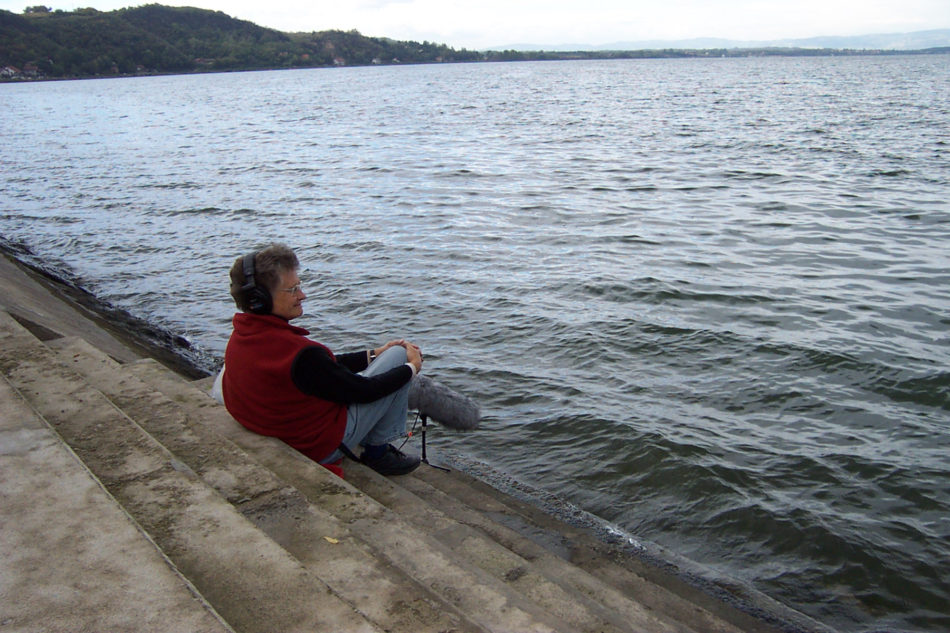
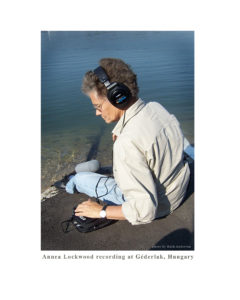
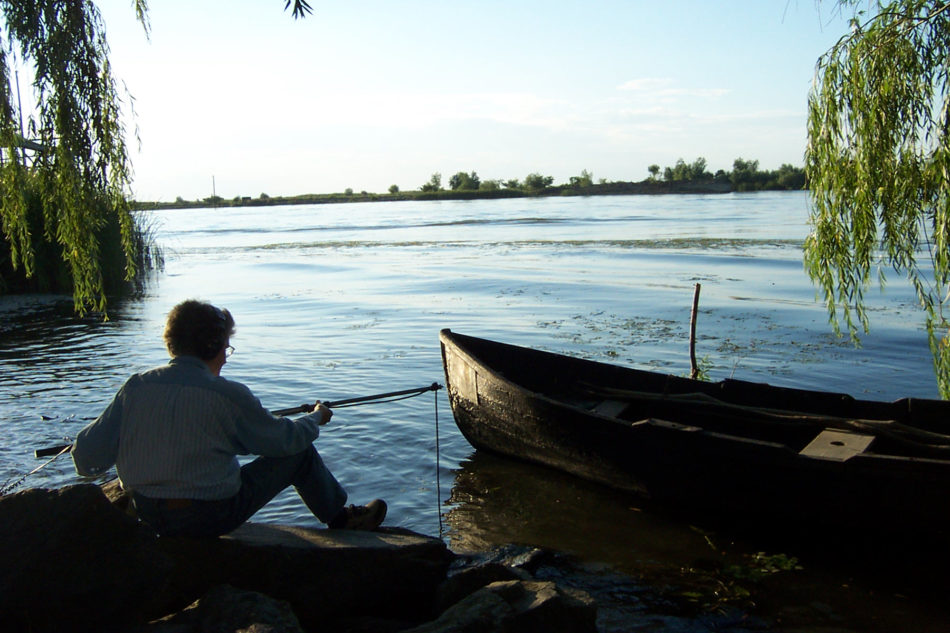
I made all the site choices by ear, not for their historical significance, using the magnificently detailed Radfahrer bicycle maps at first, then, when we reached Hungary, local maps, to show us how to stay close to the river. We would set off early after breakfast and drive until we spotted a promising looking area – marshy, or a backwater or Auen which, full of aquatic invertebrates and larvae, would be great for recording with the hydrophone, (an underwater microphone). I would set up my microphone and recorder, and settle myself down to listen, often for at least a half hour. The longer you listen, the lower your hearing threshold drops and the more you hear. Then sometimes I can feel myself slipping into the sounds around me, not separate from them. It is a brief realization of our actual at-one-ness with everything.
This is a deeply peaceful pursuit. I’m not listening for an event to happen – sometimes a fish jumps or a boat’s horn blasts – but rather I’m becoming absorbed by the satisfyingly complex sounds of friction – the river’s energy constantly shaping and reshaping its banks. It’s a multi-layered sort of sound and I love trying to hear all its layers, and knowing that my mic is able to pick up subtleties imperceptible to me, until I come to edit the recording, months later.
Then pack up, move on, eat, record, find a place to sleep for the night and retire to listen to the day’s recordings together and plan the following day, knowing that we can’t predict where we will stop. So it is a delicious, constant exploration.
Q. The Danube is the second-longest river in Europe, and it flows through 10 countries. What were some of your most memorable experiences during your trips along the river?
As well as being beguiled by the lovely sounds created by water, I am interested in why we humans are so strongly drawn to it – to ponds, creeks, springs, rivers, coasts. So as we went I was also recording conversations with people for whom the Danube is central to their lives, asking them “What does the river mean to you? Could you live without it?”
Down in Mohács, Hungary, Ruth and I took a room in a rather dreary hotel near the river, then looked about for somewhere to eat. Across the road was an outdoor café which looked lively, and sure enough, after we’d settled down, a trio set up on stage – an elderly man on electric guitar, a portly man on sax and a very skinny young man on drum set – and they played up a storm!
They were exciting, so good! Partway through their set they persuaded a friend to join them, and she sang the most beautiful, melancholy song I’ve heard. I had no idea what its lyrics were about, but was watching the dark, glistening river as she sang, and at that moment the sound map pivoted in my mind and I realized that it had to incorporate a shard of the tragic human history of the river, in the interviews especially.
The map goes on into the Balkans and that darker history emerges in Gizela Ivkovic’s difficult memories of the NATO bombings of the three bridges connecting Novid Sad, Serbia – the heaviness in her voice is palpable. It also comes through in Josef Cerwenka’s sadness that the town he grew up in, Orsova, Romania, is now underwater beneath a reservoir, in a different form of violence, dam construction.
Q. Were there any sounds from your river projects that made you think differently about your work as a composer?
I don’t think so, but I also don’t think about my work in that way, but rather, that it is all exploration – a way of exploring the world – physically and socially, and every piece builds on its predecessor, somehow.
Q. Since this is a travel site, let’s talk about something related to travel. What do you think people miss when they only “look” at a place but don’t listen to it when they travel, and what advice do you have for how to “listen” to a place?
I suspect we are indeed hearing it but without awareness, internally sorting an environment’s sounds into ‘just traffic/too close/too distant to matter/important voice’ etc. and ignoring most of it, thus not listening. But our bodies take it all in! And respond to it in subtle, probably imperceptible ways. So much of the life going on in a place is reflected sonically, even just on the basic level that, unlike vision, ears can hear around corners, beneath surfaces, across distance, (especially with low sounds).
When I’m in a place new to me, especially if its significant to me, I want to hear its life. My ears are not always switched on, as it were. Busy brain dominates too easily. After a little, I often realize this, become still and just consciously switch them, i.e. my attention, on. Then a place becomes full-bodied and rich to me. I relax into it and am there. I think physical stillness is key.
Q. You have received lifetime achievement awards and recognition from institutions worldwide. How do you see your legacy in sound art?
This is not something I can answer, perhaps after I’m dead I could! But there is a long continuum of artists working in sound art and music stimulated by, and focusing on the environment in which we live, and I hope to be heard in that continuum.


Leave a Reply