
Mountains and rice fields with the Abra River (© Strutz Art Garden Resort).
Abra sits nestled between mountains and rivers, with the mighty Abra River carving through its heart. Historically, the province served as a crossroads of highland and lowland cultures, creating a unique blend of traditions that have survived centuries of colonial rule and modernization. My journey would take me through its capital, Bangued, and into the tribal communities that preserve ancient ways of life.
The jeepney dropped me at Bangued’s central plaza. Unlike the frantic energy of Manila or the tourist bustle of more popular destinations, Bangued moved at a gentler pace. Locals gathered under the shade of acacia trees, sharing stories and watching children play. The plaza was dominated by St. James the Elder Cathedral, its bell tower standing as a testament to Spanish colonial influence that began in the 1600s.
“First time in Abra?” asked an elderly man who introduced himself as Manong Pedro. When I nodded, he smiled. “Most newcomers just pass through on their way to somewhere else. But we have stories here, if you have time to listen.”
Manong Pedro became my impromptu guide, leading me through Bangued’s historic quarter. Abra is dedicated to Gabriela Silang, the female revolutionary who fought against Spanish rule in the 18th century. Her fierce expression in portraits at the fine arts gallery (which had been closed) seemed to follow us through rooms filled with artifacts from Abra.
“Abra has always been a place of resistance,” Manong Pedro explained. “Our mountains protected people who wanted freedom. During Spanish times, during American occupation, during Japanese war—always the same.”
As the afternoon heat intensified, we took refuge in a small restaurant serving traditional Ilocano cuisine. I sampled pinakbet, a vegetable stew with fermented fish paste, and dinengdeng, indigenous vegetables cooked in bagoong broth. The flavors were bold and earthy, reflecting the agricultural heritage of the region.
“Tomorrow,” Manong Pedro said, “you should visit Kaparkan Falls. It’s the crown jewel of our province.”
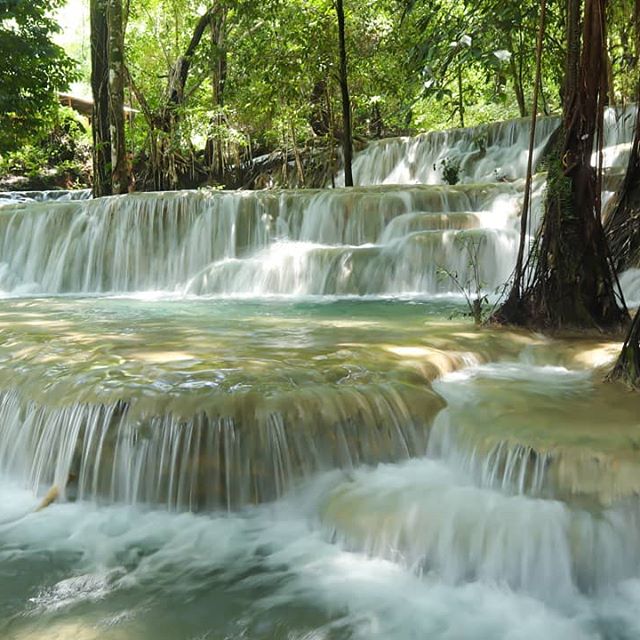
The Kaparkan Falls (© Moderndayigorot).
The journey to Kaparkan Falls began before dawn. My guide for this excursion, a young man named Carlo, navigated his motorcycle through increasingly rough terrain as we left Bangued behind. The road eventually disappeared altogether, replaced by muddy trails that wound through dense forests.
“Kaparkan is special,” Carlo explained over his shoulder. “We call it our ‘stairway to heaven’ because of how the water flows over limestone terraces. But it’s only accessible during rainy seasons. You came at the perfect time.”
After three hours of travel and a challenging hike, we emerged from the forest to witness a breathtaking scene. Kaparkan Falls cascaded down hundreds of natural limestone steps, creating tiered pools of turquoise water. Unlike the more famous Banaue Rice Terraces to the east, these terraces were formed naturally over millennia, with calcium deposits creating what looked like a giant’s staircase.
I spent hours exploring the different levels, each pool offering a unique perspective of the surrounding forest. Carlo pointed out rare orchids clinging to nearby trees and explained how the indigenous Tingguian people considered this place sacred.
“Our ancestors believed the spirits of nature lived in these waters,” he said. “Even now, many locals perform rituals before swimming here.”
The following day took me deeper into Abra’s cultural landscape as I visited a Tingguian village in the municipality of Tubo. The Tinggian are an indigenous group whose ancestors resisted Spanish conversion, maintaining animistic beliefs and traditions that predate colonial contact.
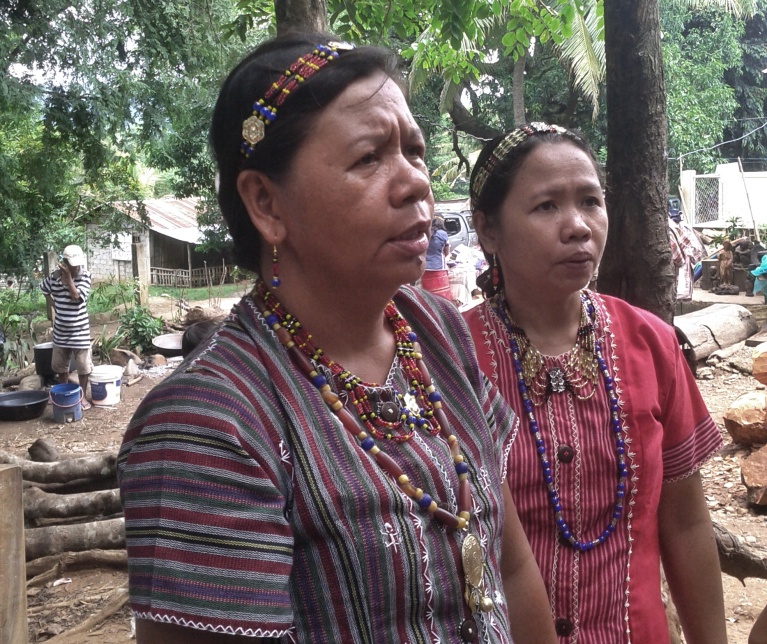
Women of Abra’s Tingguian Tribe (© Paco Guerrero).
Village elder Apo Maria welcomed me with rice wine served in bamboo cups. Her hands, weathered by decades of weaving, moved constantly as she spoke about her community’s struggles and triumphs.
“Our biggest challenge is keeping young people connected to traditions,” she said as she demonstrated traditional backstrap loom weaving. The intricate patterns in her textiles told stories of mountain spirits and ancient heroes. “Every design has meaning. This one shows the path of the Abra River. This one represents our creation story.”
I watched as younger women practiced the same techniques, their fingers working threads dyed with natural pigments from local plants. One of them, Lina, showed me her latest creation—a ceremonial blanket that had taken three months to complete.
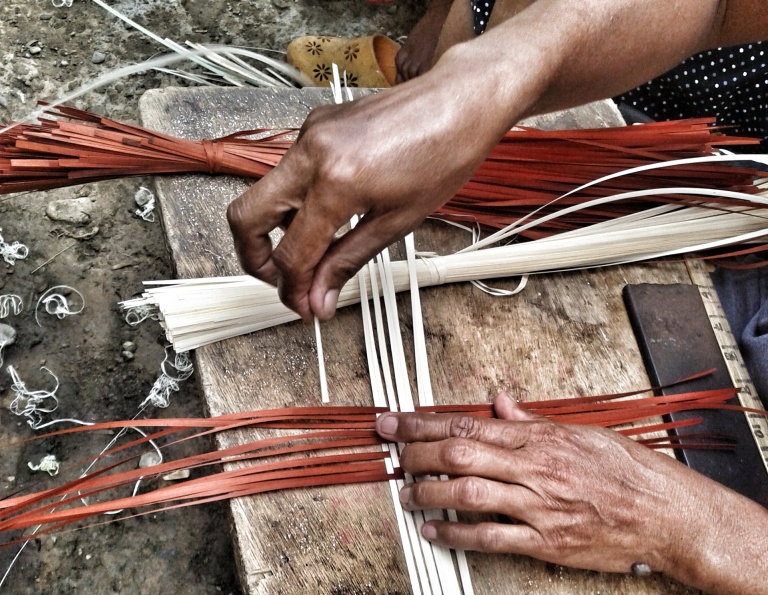
Apart from loam back strap loam weaving of textile, the Tingguians are also adept at bamboo split weaving (© Paco Guerrero).
“I studied in Manila for college,” Lina explained. “But I came back. There’s something here that can’t be found in cities.” She gestured toward the mountains surrounding the village. “Our identity is tied to this land.”
That evening, I was invited to witness a community celebration marking the start of planting season. Beneath a full moon, villagers gathered in a circle as musicians played gongs and bamboo instruments. Dancers moved in patterns that mimicked the flight of birds and the flow of rivers, their costumes adorned with beads and feathers.
The music grew more intense as the night progressed. An elder entered the circle, chanting invocations to ancestral spirits. He sprinkled rice wine on the ground as offerings, asking for blessings for the coming harvest. The boundary between performance and spiritual practice blurred as more villagers joined the dance.
“This is not for tourists,” Apo Maria whispered beside me. “This is for our survival as a people. We invite you to witness because sometimes outsiders become the ones who help preserve what is forgotten.”
I spent my final days in Abra exploring its natural wonders. The Victoria Cave in Manabo municipality revealed underground rivers and rock formations millions of years in the making. At Piwek Rock Formations in Tubo, wind and water had carved fantastic shapes from sandstone cliffs, creating natural sculptures that local myths attributed to ancient deities.
Throughout my journey, I encountered evidence of Abra’s complex history. Colonial churches stood alongside pre-Hispanic burial caves. Traditional villages existed in the shadow of modern telecommunications towers. The province seemed to exist in multiple time periods simultaneously, neither fully embracing nor rejecting outside influence.
On my last evening, I sat with Manong Pedro at a viewpoint overlooking the Abra River as sunset painted the waters golden.
“What did you learn about Abra?” he asked.
I considered the question carefully. “That it’s a place of contradictions and resilience. That its greatest treasures aren’t famous or easily accessible. That its people maintain dignity and culture despite centuries of outside pressure.”
He nodded, satisfied. “Then you saw the real Abra, not just the Abra in guidebooks.”
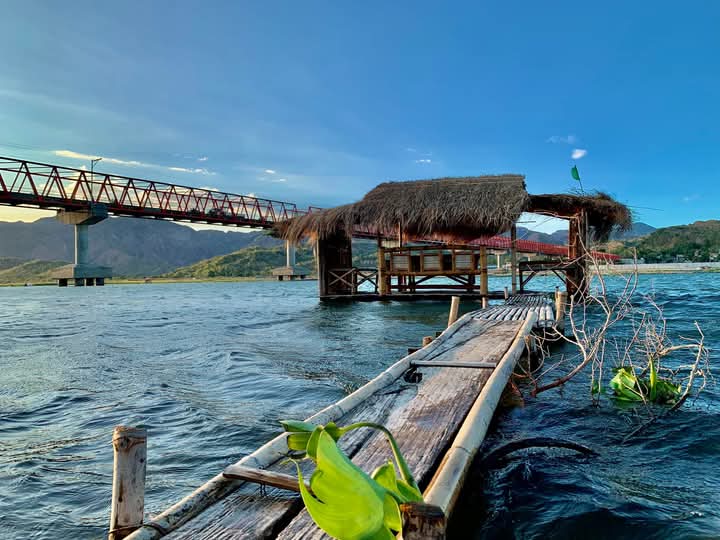
The Calaba River in Bangued, Abra (© Salrep Pper).
As darkness fell over the valley, lights from scattered villages twinkled like earthbound stars. In that moment, I understood why this province remained one of the Philippines’ best-kept secrets. Its magic wasn’t in grand monuments or luxury resorts but in the authentic human connections and living traditions that continued to thrive in its mountains and valleys.
Abra had offered me something increasingly rare in our hyperconnected world—a glimpse of a place that remained true to itself, where hospitality came without commercial motive, where natural wonders remained uncrowded and pristine, and where ancient wisdom continued to guide daily life.
As I prepared for the long journey back to Manila the next day, I knew that while Abra might never become a mainstream tourist destination, those who ventured into its highlands would discover what I had found—a province that rewarded curiosity with genuine cultural immersion and landscapes of breathtaking beauty. In an age of overtourism, Abra’s relative obscurity might be its greatest blessing, preserving both its natural environment and cultural heritage for generations to come.



Leave a Reply