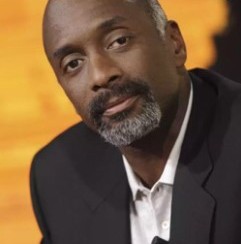
 Eddy L. Harris is a writer, filmmaker, and lifelong traveler who mixes memoir, adventure, and cultural insights in books like Mississippi Solo and Native Stranger. His stories dive into race and identity, inspired by his journeys across the USA and Africa.
Q. Back in the 80s, you made a journey down the Mississippi by canoe, solo. What was the hardest part of doing it solo?
The hardest thing about doing it solo was doing it. And I imagine that would have been the case had I not been alone – the big difference being that accompanied, I would have had the encouragement of a travel partner to keep me going. Alone – and this might have been the hardest part – the solo traveler is his only source of encouragement, his only well of inner strength, his only spur when things get tough.
Almost every day during the first journey, I wanted to quit. It was entirely up to me to find it within myself to carry on for another day – another day which I once again thought would be my last.
Alone, there is no one to see you quit, no one to mock you if you do, no one to cheer you on if you don’t quit.
The Mississippi, Africa, travels though Latin America – anything difficult to face is harder to face alone.
Q. Was there a stretch of the river you particularly loved or found most memorable?
None any more than any other.
However there are a few spots more trepidatious than others, and a few less attractive than other. The long reach above Davenport, for example, scared me to death in the wind. It was a moment I considered abandoning the second trip. Luckily, as I walked into Potosi to grab a beer and wait out the wind, I met a man named Ken and after the beers we loaded the canoe onto his pickup and he drove me around that reach. And in industrial areas like the refinery plants around Baton Rouge, the river is less appealing. But taken as a whole, the Mississippi is a beautiful thing and I love it. And whenever I cross a bridge going over the Mississippi, I always slow to spend as much time with the river as I can.
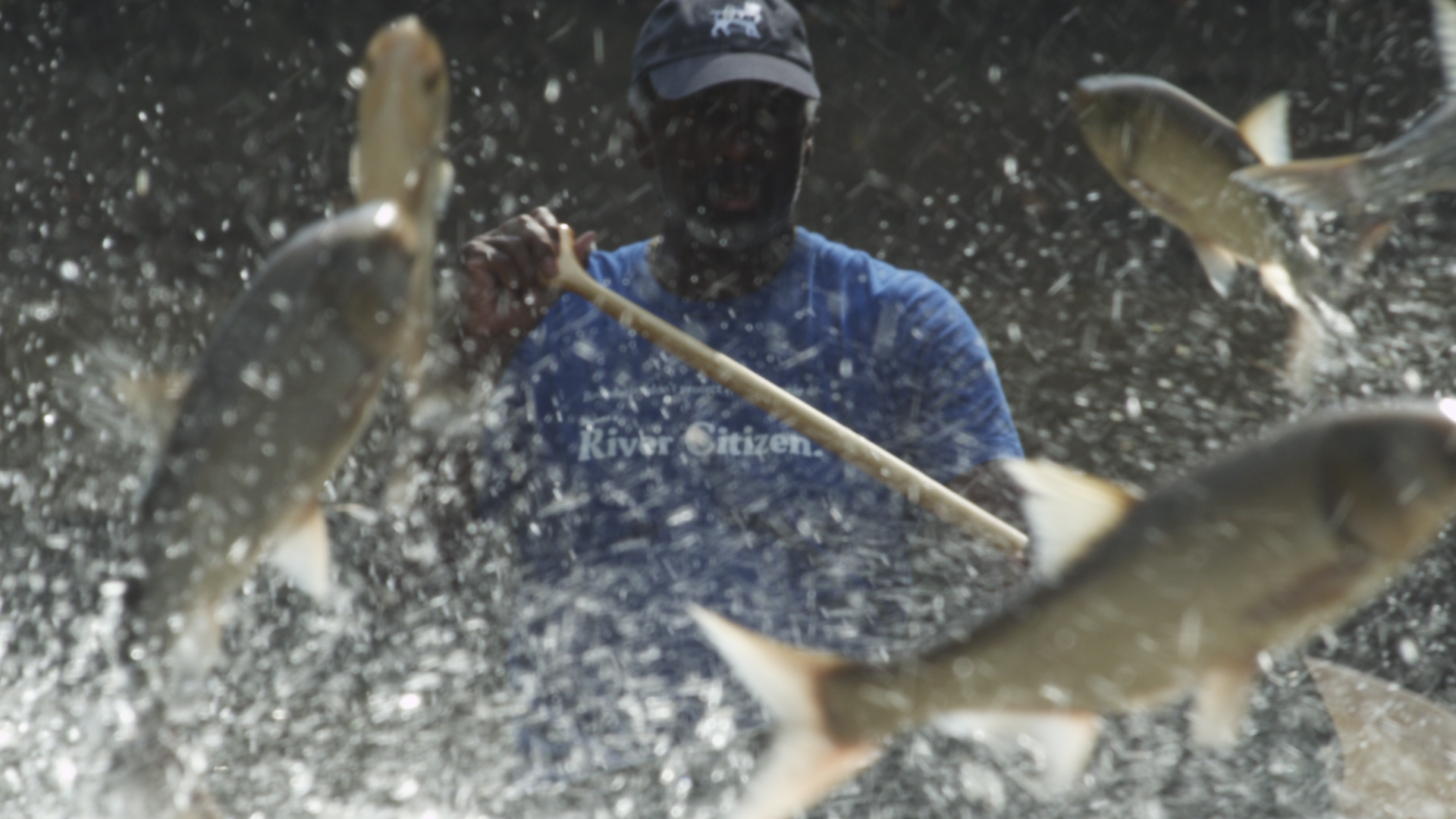
Q. After years of writing, you moved into filmmaking with the documentary River to the Heart. What did the camera let you capture that words could not?
I think my writing is pretty visual – or can be. But the camera captures visual imagery in ways that words cannot.
I’m a big fan of the book and greatly appreciate the contribution of the reader to the understanding of the text – the back-and-forth conversation between the reader and the writer which determines if the book works or doesn’t. But – and this is both positive and negative – the camera leaves no doubt.
They say the camera doesn’t lie. Of course it lies. The filmmaker is manipulating reality to tell a visual story. It is that manipulation which is most fascinating. How can you tell an honest story in an honest way knowing that – the same as in writing a book – you’re not filming, for example, the 24 hours in a day, which is what you would have to do for there to be no manipulation.
I can’t skip over the fact that along with the movie there was a book – which I wrote but which has never found a US publisher and which I wrote because, while the camera can capture everything, the camera and the crew have to be there and there were many moments and many encounters and many experiences the camera and the crew were not there with me.
Q. Going back to the Mississippi after your first canoe trip, what parts of the journey felt the most nostalgic?
The two trips were so different, there was nothing nostalgic, nothing that connected the second trip with the first one except the canoe. It was great to be on the Mississippi, great to be in the canoe, great to sleep on the cold hard ground to remind myself of the value in hardship, but I was not thinking about the first trip as I carried on with the second. You can’t step into the same river twice or do what you’ve already done.
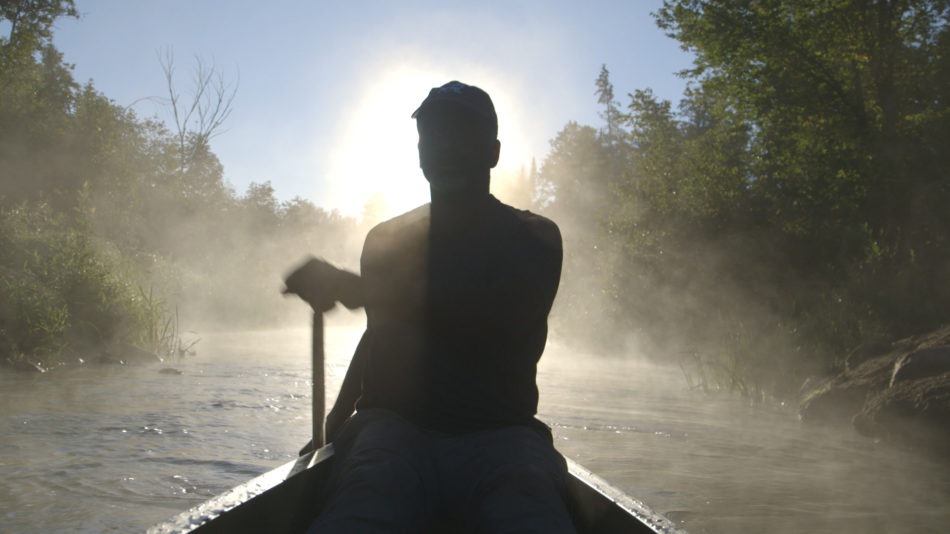
Q. You traveled through South America by motorbike and walked parts of Africa on foot. How do you decide the best way to explore a place?
I traveled the American South on a motorcycle, not – as much as I would like to – South America. And in Africa I used whatever transportation was available to the locals I was traveling with.
Motorcycle, taxi-brousse, bus canoe – the journey is the thing and for me the best method is the method that gets you from A to B on the ground and in touch with the local landscape and people. With an element of myth-making added in.
If I were to travel across Russia from Moscow to the Pacific, I would go by train. Along the Mississippi, by canoe, of course, but along the Danube I would go by bicycle. On foot along Hadrian’s Wall, stopping in at pubs along the way.
The goal is to encounter the people and, in so far as possible, meet them on their terrain, in ways that they would relate to.
Q. As a travel writer myself, I always wonder how other writers take in what is around them and later translate it into words. What is your approach?
Being just a simple country-boy with very little artifice, I just live it – without thinking about what might come out of it via the written word. The experience comes first, with maybe – just maybe – a few photos as an aide-memoire. I live it, I see it, and I write it to re-create it and to understand it. And as simply as possible I write what I did, what I saw, what I felt and try to capture as closely and as honestly as possible, the people I met and the conversations we had.
Q. In your book Native Stranger, which chronicles your journey through Africa, did you have an idea of the story you wanted to tell before the journey? And were there moments during the trip that changed how you wanted to tell it?
At the start of that trip – as at the start of every trip – I had no idea what I would write or how I would write it or even if I would write it. I’m a traveler who writes, not a writer who travels. Not all of my journeys get transformed into books. They all do, however, get transformed into memories. The trip is the thing. The memories that get created, the stories in a bar or around a campfire or at a dinner table that get told are I’m after and only if I think there is a larger reach or a broader scope do I think about a book coming from the journey. It was a long time before I put pen to paper to write Native Stranger. I had to live it first and then re-live it in my head and heart before I could tell it.
Q. At this point in your life, do you still see yourself as a curious traveler, or are you more focused on slow travel and savoring the experience?
That’s what I do. I am still unstable in terms of house and home, for the longest time renting short-term, always ready to pick up and go somewhere new. Even though I rent a house full-time in a little village, I am mostly not there. (Someone recently asked how many days in a year I spend at home and the exaggerated answer was about 90; I’m sure it’s far less.) And even though I am quite comfortable in my little village, I’m constantly thinking about living someplace else. And if I can’t live there, I can at least go there. And the travel has to be slow.
The experience has to be sipped and not gulped.
Like a traveler, not like a tourist.
Q. Your message to our readers?
One of the reasons I live in France is that travel from here is easy. Six hours to New York, Two hours by plane to anywhere in Europe, a few more hours to Africa or India. Living in France keeps the rest of the world close and always at my fingertips.
It’s heartening to hear that 45%-50% of Americans now have a passport. I hope it means we’re traveling more but I fear it has as much to do with fairly recent passport requirements for travel to Mexico, Canada and Caribbean.
In any event, we need to know that the US is not an island, that it is in the world and that we need to know the world as well as the world seems to know us. And the way to do that is by traveling – and traveling not as tourists but on the ground, in the cafes, on the buses and trains and doing what the people around us do. Understanding will lead to less prejudgment, less racism, less other-ism in general and possibly more peace.
Who knows?
I’ll keep traveling and I’ll keep writing and I’ll report back…
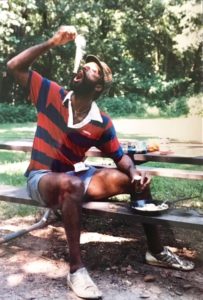
All photographs credit: Eddy L. Harris




Leave a Reply