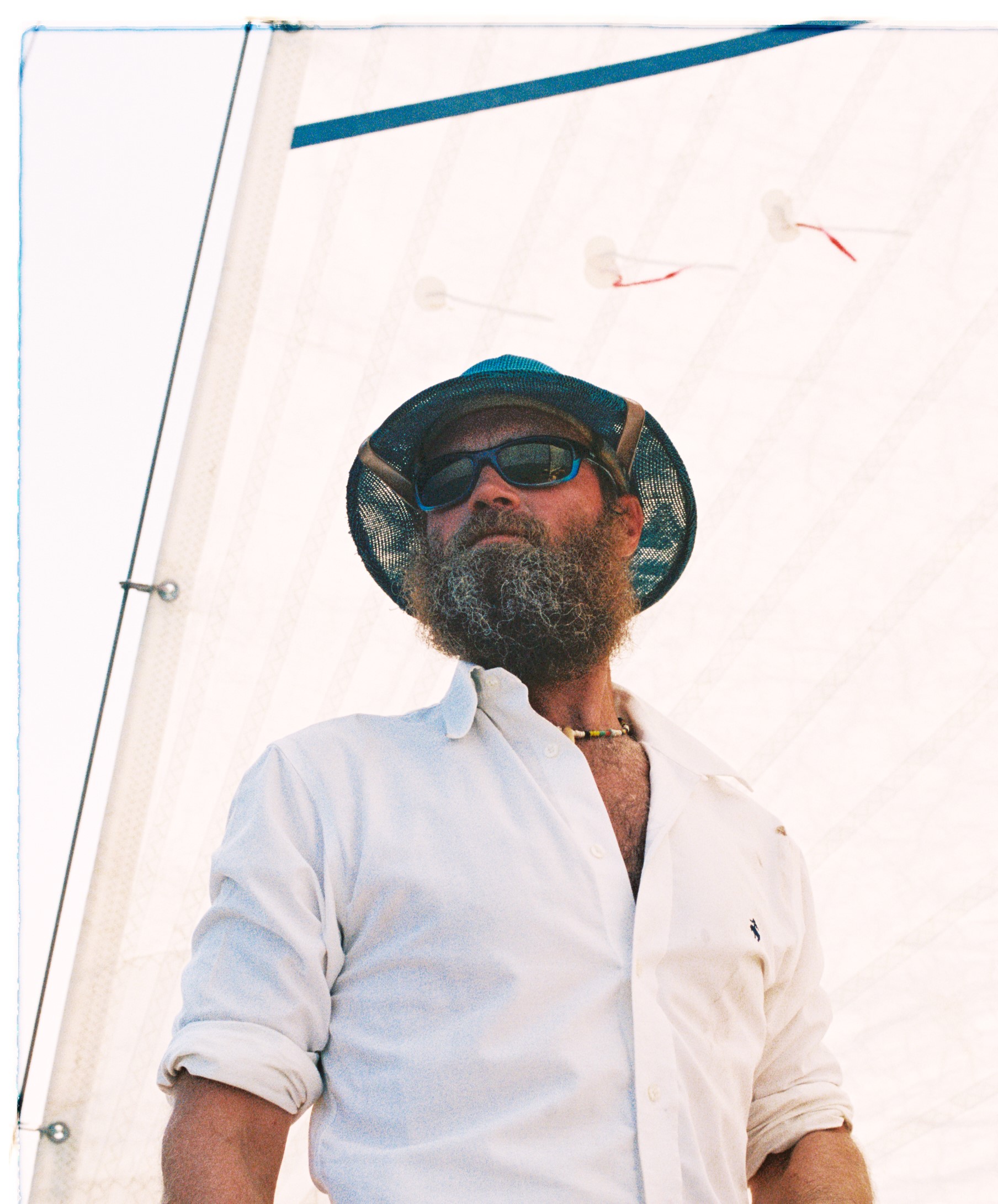
 Jerome Rand is a sailor from Northern Michigan. In 2017, he solo-circumnavigated the globe nonstop aboard Mighty Sparrow, spending 271 days alone at sea. Today, he writes and speaks about his adventures, including his book Sailing Into Oblivion, hosts the podcast of the same name, offers sailing coaching and motivational talks, and shares stories that inspire resilience, curiosity, and pushing beyond comfort zones. Visit his website.
Q. Let’s start with your childhood in Northern Michigan. Growing up around lakes and forests in Northern Michigan, what made you fall in love with the ocean?
Growing up in northern Michigan, I did have access to small freshwater lakes and I suppose that was the spark that ignited my passion for sailing. But deep down my father’s side of the family are all from New England, and I think it’s imprinted in my DNA that the ocean was going to be a huge part of my life.
Q. You named your adventure “Sailing into Oblivion”— the words “into oblivion” makes me think of being alone and in the unknown. What made you pick that name, does it mean something special to you?
“Sailing into oblivion” really came from the fact that to circumnavigate the planet without stopping and venture down into the Southern Ocean. It is an understatement that this is the most desolate, lonely and isolating place on the planet and I would spend 4 1/2 months there. That and I did think it sounded like a cool name for the voyage.
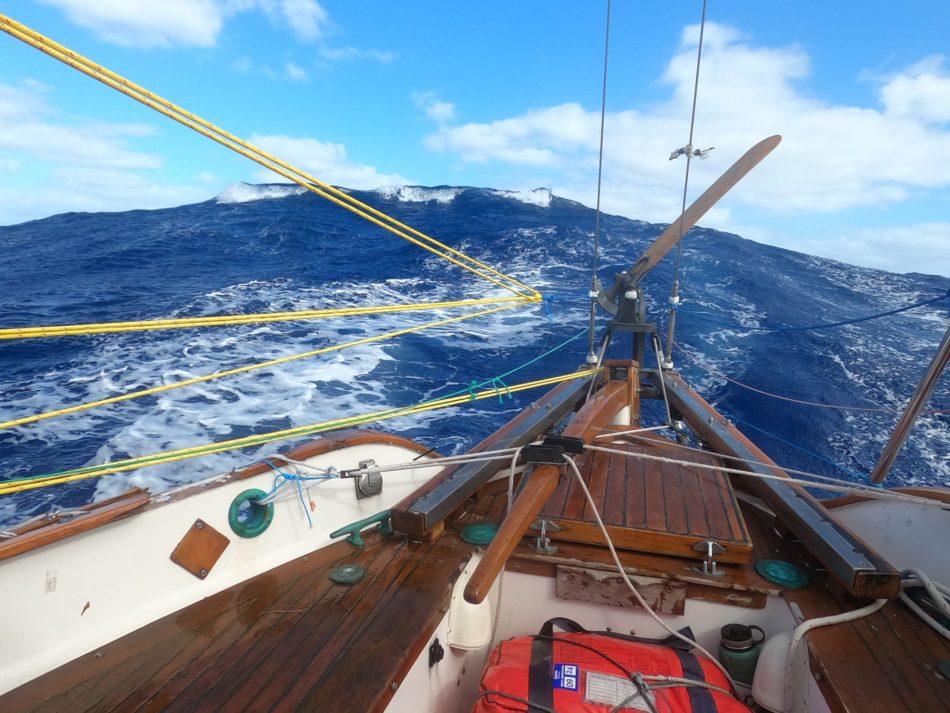
Q. 271 days alone on the sailboat, surrounded by nothing but ocean with no horizon. Was the reality tougher than you had imagined before the journey?
271 days definitely is a stretch of the imagination. It’s difficult to put into words just how it feels to spend that much time isolated on a small boat in the middle of our world’s oceans. But I had some practice being alone on the Appalachian Trail a few years before, this voyage and one of the factors that always helps on such a long duration adventure is that you know you have a goal, and you know there is a finish line and each and every day you are getting closer and closer to that point.
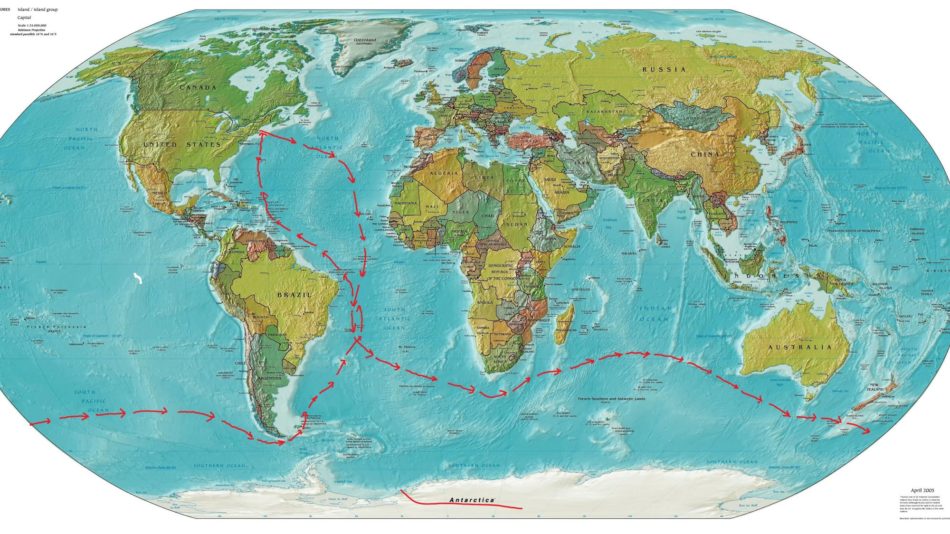
Q. Most sailors stop at ports for supplies, but you went on a nonstop circumnavigation. Looking back, was going nonstop the right choice in hindsight, or would you have stopped?
During this trip nonstop was the initial goal. It was the entire reason to go and was the adventure that I was seeking to go after I think it’s partly the challenge and also the experience that drew me in to doing this voyage nonstop. I do hope one day to circumnavigate the world via the trade winds in which stopping would be a very regular occurrence but that one I don’t think I want to do alone, it would be much more fun with a crew of three or four people to share the experience.
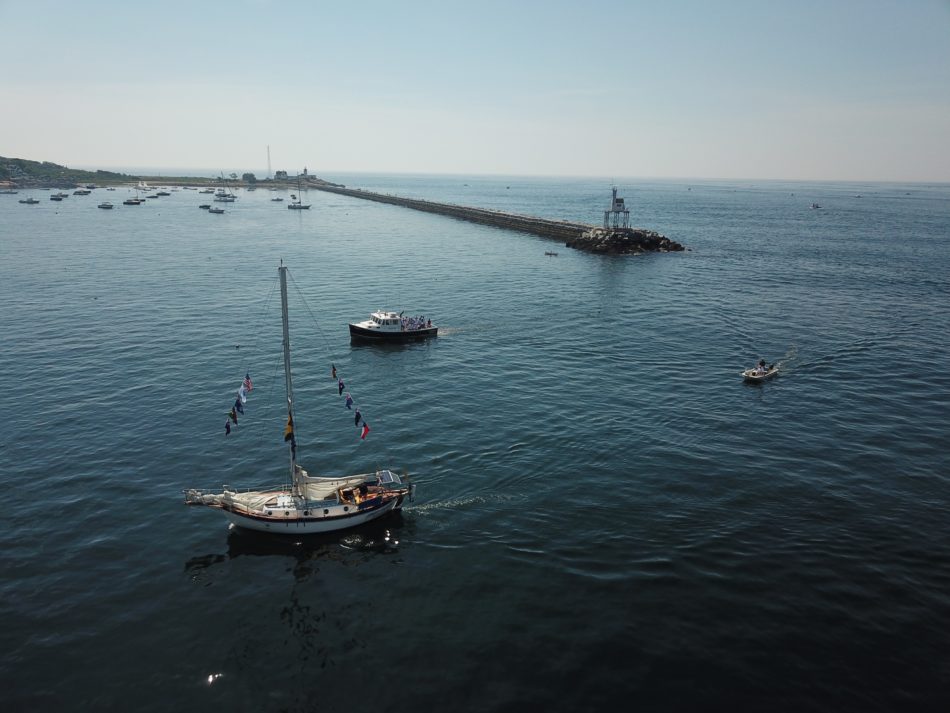
Q. 271 days completely alone at sea—that’s an incredible stretch. What were the biggest lessons you learned about yourself?
Well, the ocean is one of the greatest teachers of so many things, probably the biggest being patience. When Mother Nature oversees whether you move forward whether you move backwards or whether you don’t move at all, you have to give up an idea that you get what you want. When the ocean does get riled up and become a very scary place, very quickly you learn what you are made of and how you handle yourself in extreme conditions.
Q. What are some things about sailing around the world that most people don’t know?
I think the most important thing that people don’t know about sailing alone around the world is the fact that our planet is 70% ocean. So, when you think about a cross-country drive or flying from one continent to another it pales in comparison to the scale of the seemingly endless void of our oceans.
The Pacific Ocean for instance travelling from New Zealand to get to South America was over 4 1/2 thousand miles and took over 2 1/2 months to cross. You really get to know the scale of our planet when you are sailing at 4 1/2 miles an hour.
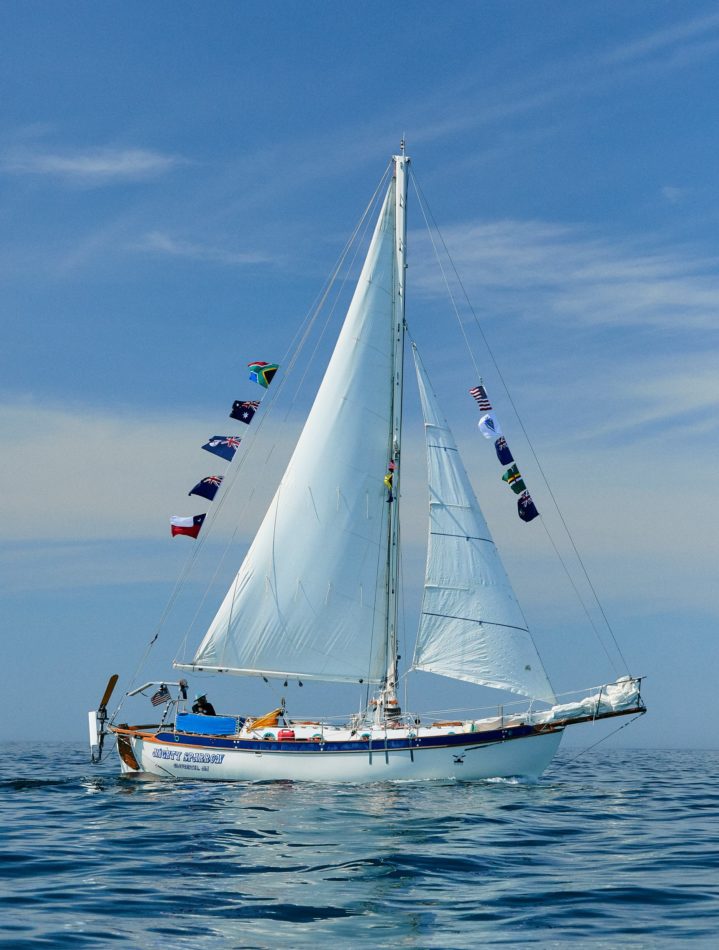
Q. Now you are a speaker, author and running your podcast, what is the most rewarding part of sharing your story with people?
I think the most rewarding part about what I do for a living between speaking and sitting with people on podcast is also consulting with other sailors. Being able to share the experiences that I have had in order to fast track or motivate others to go after their dreams is very rewarding. It’s also very cool when I get to hear some of the experiences others have had-whether it’s on the ocean or any type of adventure that poses great challenges that they overcome.
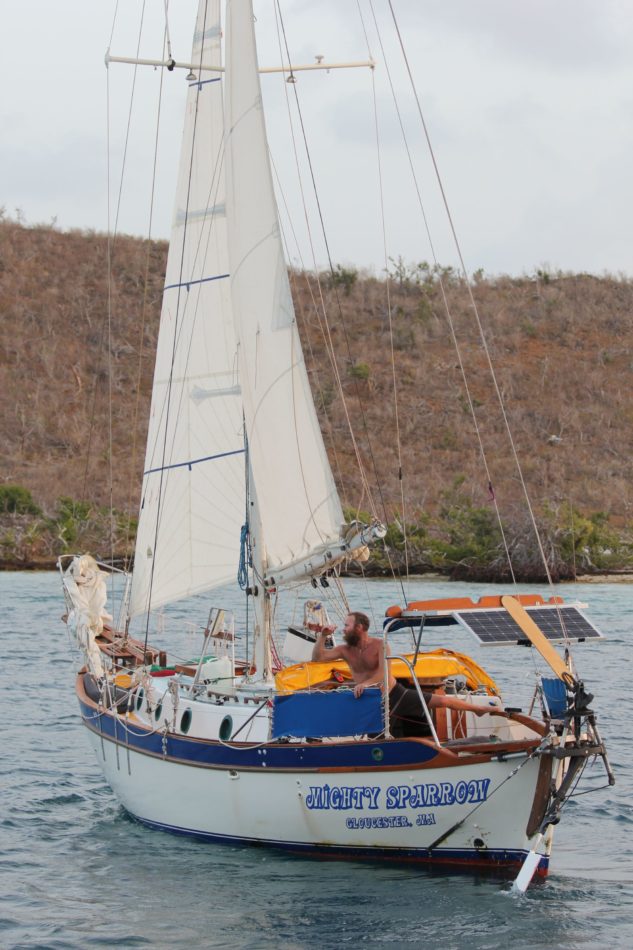
Q. Do you see “Sailing into Oblivion” as a one-time adventure, or are there other big adventures you are dreaming about?
The trip around the world was a one-time only adventure for me. Though I attempted other similar ambitious voyages I never saw any reason to repeat the same adventure. Life seems a little too short to not try and always experience new things. The nice part about sailing is that you can find big adventures just a few short miles from shore. In fact, on some of the trips from Maine to the Caribbean, I have found great challenges and had wonderful experiences when only sailing for a few weeks at a time.
Q. Your message to our readers, especially those thinking about the same adventure?
I would tell anyone planning or wanting to do a similar adventure like sailing alone and non-stop around the world to gain as much experience and seek out those who have done it before to learn from their experiences.
And though a voyage like that is physically demanding and you also need to know and have technical skills the real challenge is in the mind. The mental stress when you are isolated and under the control of something like Mother Nature are difficult to navigate.
Add stress, fatigue, and uncertainty — without a grounded state of mind, a challenge like this would be nearly impossible. When people ask how much of this venture is mental, I typically tell them 95%.
All photographs credit: Jerome Rand




Leave a Reply