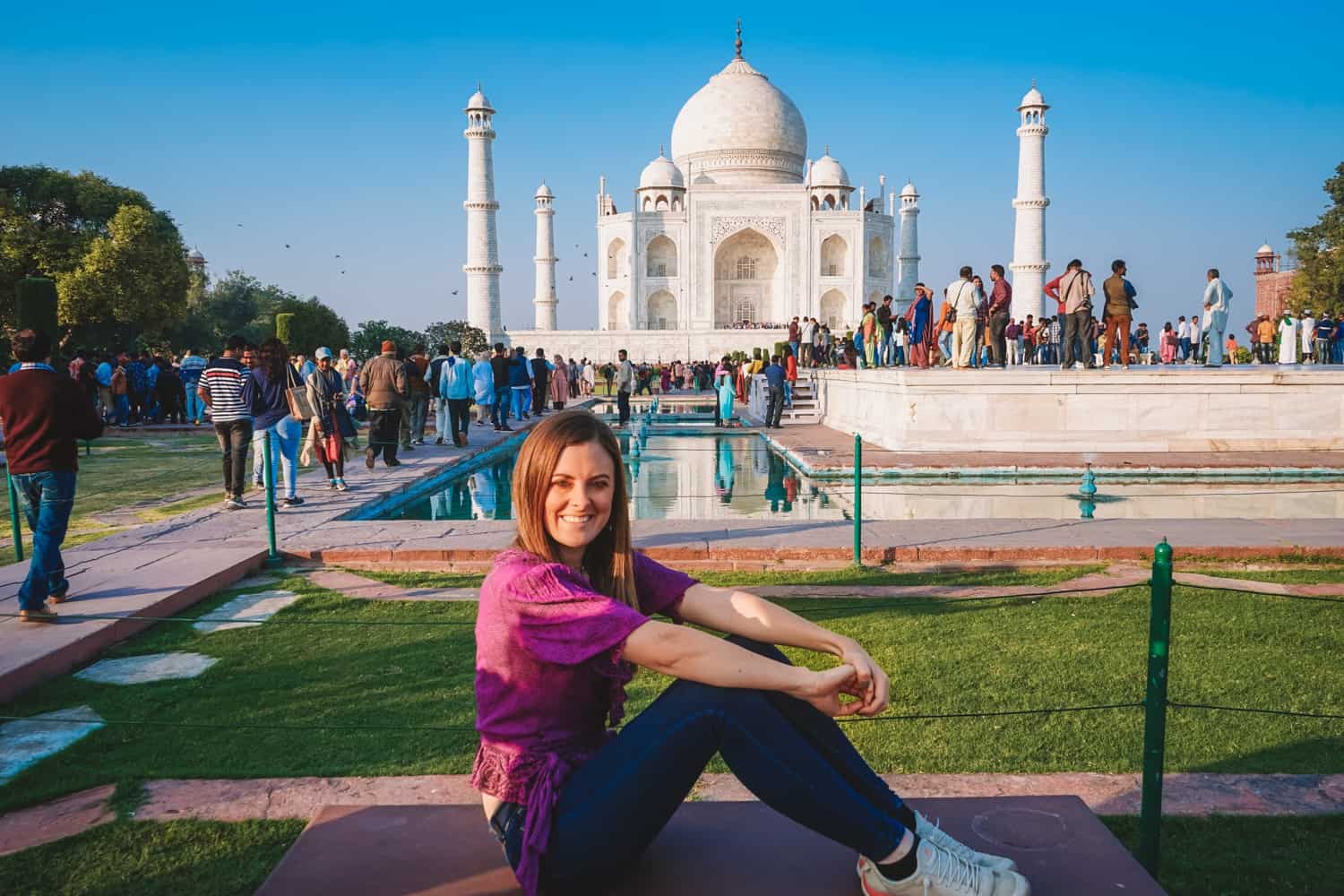
Lauren at Taj Mahal
Lauren Juliff is a British travel blogger, author, and digital nomad who founded the travel site Never Ending Footsteps. In 2011, she decided to quit her job and see the world. She has since spent more than a decade on the road, visiting over 100 countries and sharing her experiences in an honest way that most travel blogs don’t, including highlighting some of the unglamorous mishaps she has learned from along the way.
Q. Most travel blogs nowadays seem pretty polished and highlight only the glossy side of travel. Never Ending Footsteps has always felt super honest in comparison. Why do you think it is important to have more travel blogs that show the reality of traveling?
In the age of social media, in which travel is usually depicted as glamorous and trouble-free, I think it’s important to share the reality of what doing this can actually be like.
In the early days of my travels, I would often have misadventures and disasters and it would make me feel bad because it seemed like I was the only person it was happening to. Every travel creator I followed seemed to be having nothing but amazing experiences!
Once I started writing about my mishaps, however, I discovered that the reality was closer to my experience than the polished write-ups you see online. My readers really related to my low moments on the road and it helped make them feel less alone, too. Once I realised I wasn’t doing travel wrong, I committed to sharing a well-rounded picture of what my trip was actually like: the good, bad, and terrible.
I would hate for somebody to decide to travel full-time with the expectation that it was going to be one big holiday only to have a rude awakening when they stumble into their first challenge. I therefore try to ensure my articles prepare people for the inevitable downsides as well as the upsides.
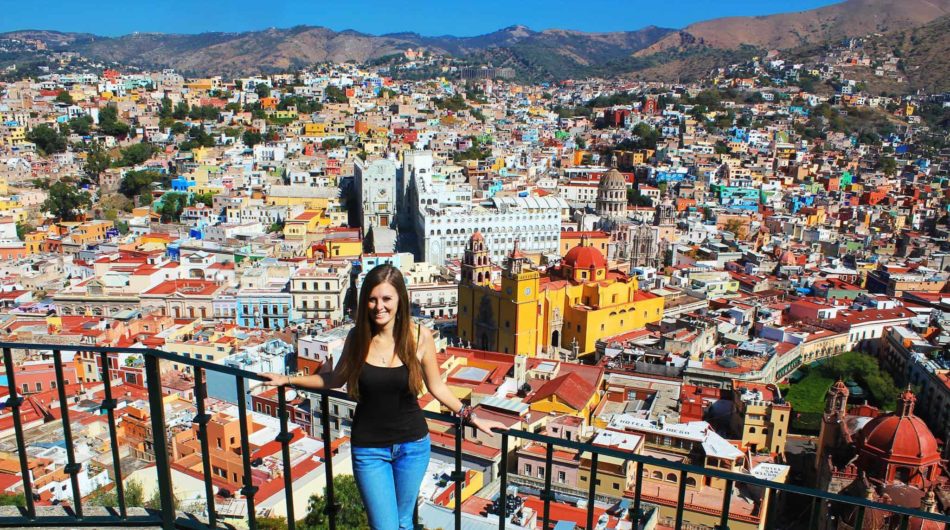
Lauren in Guanajuato
Q. You quit your job to travel the world in 2011. Many people do that and call it the best decision they have ever made. But what was the reality like for you in those first months, and what was your biggest fear?
Looking back, I can 100% say it was the best decision I’ve made, as it led to a career I love, meeting my partner, and travelling for over 15 years.
During the first few months, however, I definitely had moments of concern. I had never travelled long-term before – and never travelled solo – so I was learning as I went. At first, I found myself getting lost, scammed, and taken advantage of on a weekly basis. I felt lonely at times, struggled to sleep in dorm rooms, and even thought about booking a flight back home.
Even so, the advantages outweighed those disadvantages, and travel became easier as I picked up more and more life skills. Gradually, the mishaps dropped in frequency and before I knew it, I was having the time of my life.
My biggest fear in those early days was that I would learn that I wasn’t cut out for travel. I had spent years planning for this trip and didn’t have a backup plan. If it didn’t work out, I’d have to return home, confess to everyone I knew that it hadn’t worked out, and then try to figure out what to do with my life.
Q. Most people don’t really understand what being a full-time traveler actually entails. They think it is all fun and freedom, but the truth is there is actually a lot of hard work and planning that goes into it. What was the most challenging part for you of being a full-time traveler?
There’s a huge number of downsides to full-time travel, which is why the vast majority of my travel blogger friends ended up settling down and finding a home base after around five years.
It’s particularly challenging to remain healthy when you travel full-time. Most of the time, you’ll be eating at restaurants for three meals a day, often won’t have access to gyms, and high temperatures/humidity can make outdoor exercise challenging.
If you take medication, you may not be able to access it in every country you visit. Most days, I would work while lying on a bed because I wouldn’t have access to a desk. I suffered multiple bouts of food poisoning every year.
The lack of long-term relationships can grow tiring after a while, too. At first, it’s exciting to meet new people from all over the world. After years of doing so, however, the superficiality of those friendships and continual goodbyes were depressing. I would find myself craving hanging out with somebody who had known me for more than one day, so I wouldn’t have to keep repeating my life story on a daily basis!
It’s also tough to effectively balance work and travel while you’re on the road and it usually results in you doing both badly. I would find myself not seeing as much of a destination as I would have liked because I simply had too much work to do. On the other hand, I would feel guilty about spending so much time inside working when I should have been exploring where I was.
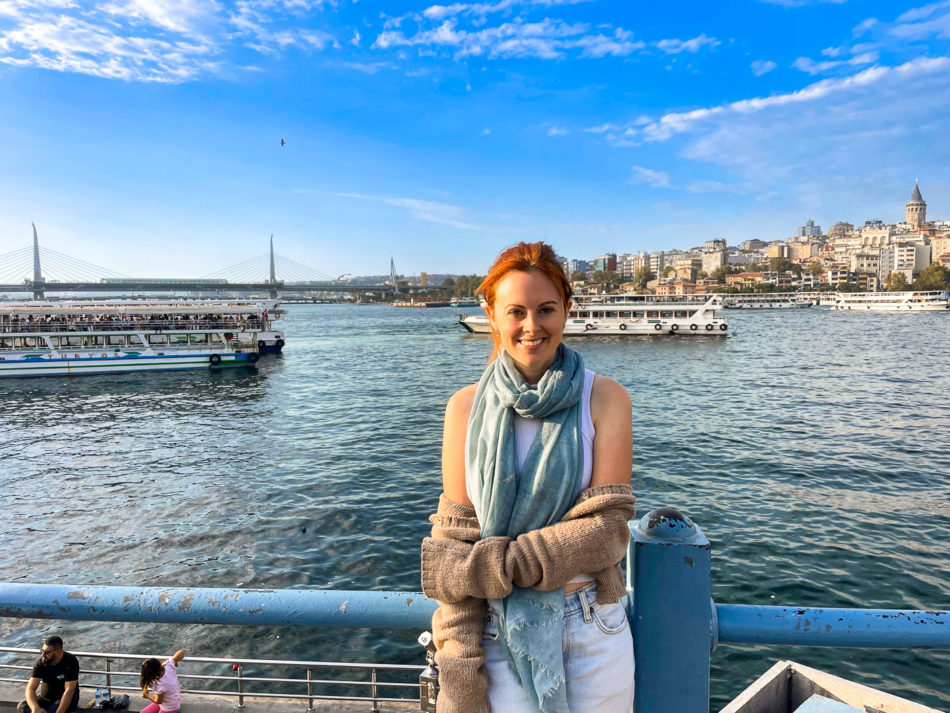
Lauren in Istanbul
Q. You have had so many travel mishaps … catching cholera, getting scammed by locals, and staying in horrible guesthouses. But if you could pick one mishap that could teach every traveler an important lesson, which mishap would it be and what would that lesson be?
I would have to say that the time I was scammed in China taught me a really valuable lesson: specifically that if an overly friendly local approaches you for seemingly no reason, you should absolutely be on your guard.
There can be a narrative in travel that trusting strangers can only lead to incredible experiences (which ties back into people only sharing the positive travel moments online). I bought into that story, so when a couple of extremely friendly locals approached me on the streets of Shanghai, I was overjoyed that I was going to have one of those wonderful moments I’d read about, where a local takes me under their wing, becomes a lifelong friend, and makes my time in the city amazing.
In reality, their invitation to attend a traditional tea ceremony with them was a scam and it resulted in an enormous bill at the end of it. I felt so embarrassed that I was able to be taken advantage of so easily, but it taught me to have my guard up during future interactions.
Think about it: in your everyday life, how often do you spot a stranger on the street, walk up to them and spend an hour chatting to them, then invite them to hang out with you for the rest of the day? People are busy and they have their own lives. But if you’re a scammer, your day will revolve around spotting foreigners and trying to convince them to trust you.
Of course, there are exceptions (everyone I met in Pakistan was so friendly and had no ulterior motives!) but if I’m in a major city and a local suddenly starts treating me like their new best friend, I would recommend being wary.
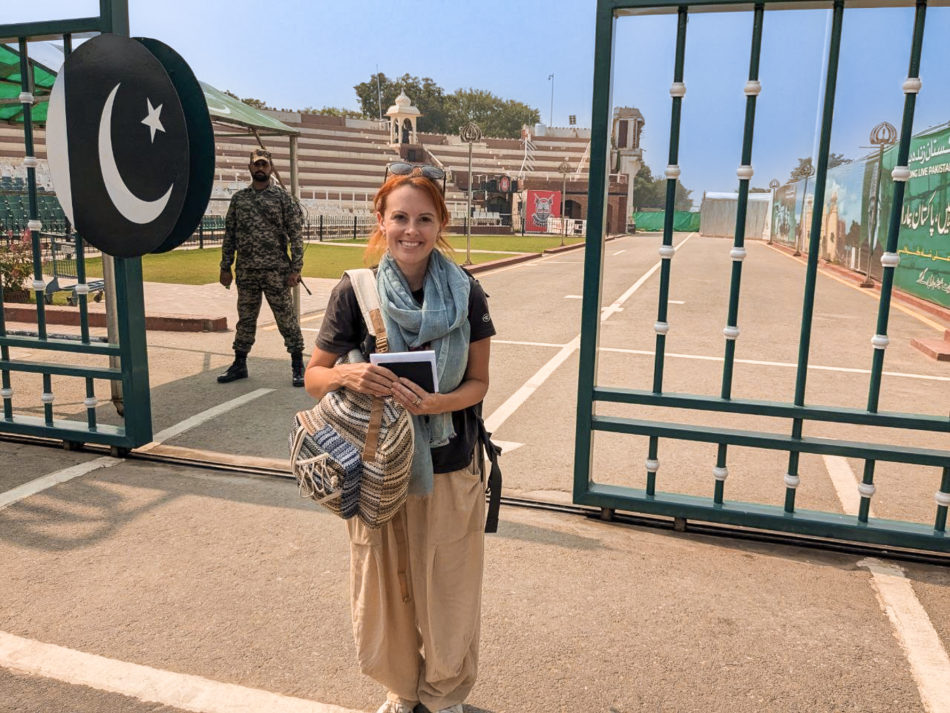
Lauren at Pakistan border
Q. I always love asking travelers if someone they have met on the road has ever changed the way they see the world. Have you ever experienced unexpected kindness from a stranger while traveling?
I immediately thought of my disastrous travel day in Belize.
I was trying to travel from San Ignacio to Placencia, which was 125 miles away, but it was the weekend, and I had no idea just how busy the buses get in Belize on a Saturday.
What I had expected to take three or four hours evolved into a nine-hour ordeal involving crowded bus stations, missed connections, and hours spent standing in the heat. At one point, my partner and I spent four hours standing inside a packed bus terminal, watching every single bus arrive too full for us to board.
Eventually, we managed to squeeze onto a bus to Independence, only to discover that by the time we’d arrive, we’d have missed the final ferry that would take us across the lagoon to Placencia. It was dark by the time we disembarked and we had no idea what to do.
We flagged down a taxi driver and told him our situation, and asked if he could take us to a nearby guesthouse in town.
Instead, he was motivated to save the day. He insisted on driving us to the jetty and doing everything he could to help us out. I watched as he ran from fisherman to fisherman, attempting to find somebody who could give us a ride. I had assumed it was hopeless, but after a few minutes, he found an elderly fisherman who was willing to take us across on his boat.
Ten minutes later, we were safely in our guesthouse in Placencia and amazed that a stranger had gone so far out of his way to help us. And a taxi driver, too! They have a terrible reputation all over the world.
Moments like these have changed how I handle difficult travel days. Now when something goes wrong, I try not to panic because I’ve learned that things often work out in the end, especially if you’re willing to be vulnerable and ask for help.
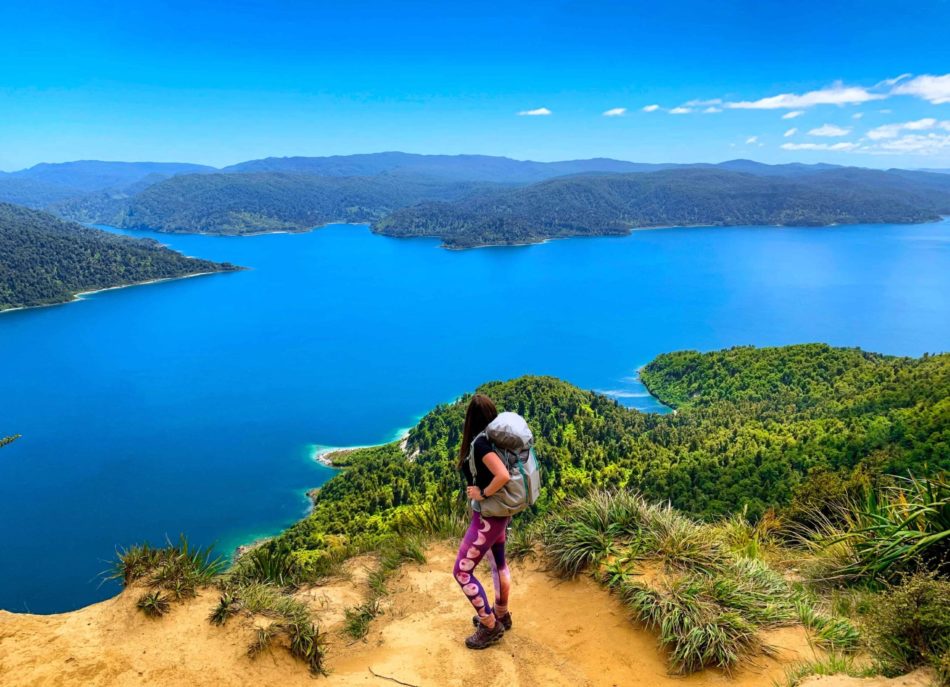
Lauren at Lake Waikaremoana, New Zealand
Q. You used to be a budget traveler, but your style has probably changed over the years. Looking back, what is one budget travel experience you would love to relive?
That’s true. I tend to focus more on value rather than price these days. While I’m far from a luxury traveler, I will occasionally splurge on a higher-end hotel to take a break from some of the less comfortable accommodation I stay in. And I definitely don’t plan on ever staying in a dorm room again!
One of my favorite travel experiences was discovering that it’s possible to visit the Maldives on a budget. There are two types of islands in this country: the expensive resort islands that the Maldives are most famous for, and the local islands that few people are aware of.
The Maldivian government used to ban tourists from visiting local islands, but this all changed around 15 years ago, when access was opened up to the rest of the world.
The local islands offered a whole different experience to the fancy resort islands. You could stay in guesthouses for $50 a day, find meals for $10 a dish, and hop on the local ferries for a couple of dollars. It was a fascinating experience to travel to a country that was so new to tourism – on one island, my partner and I were the only tourists there! – and the fact that you could do so on such a low budget made it all the more exciting.
Even better: the beaches were just as impressive as the ones you’d find on the resort islands, but you often had them all to yourself.
The local islands are much more well-known these days, and the places I visited on that first trip are now full to the brim with hotels and guesthouses. I’ve seen photos and they look unrecognizable from the quiet islands I fell in love with a decade ago.
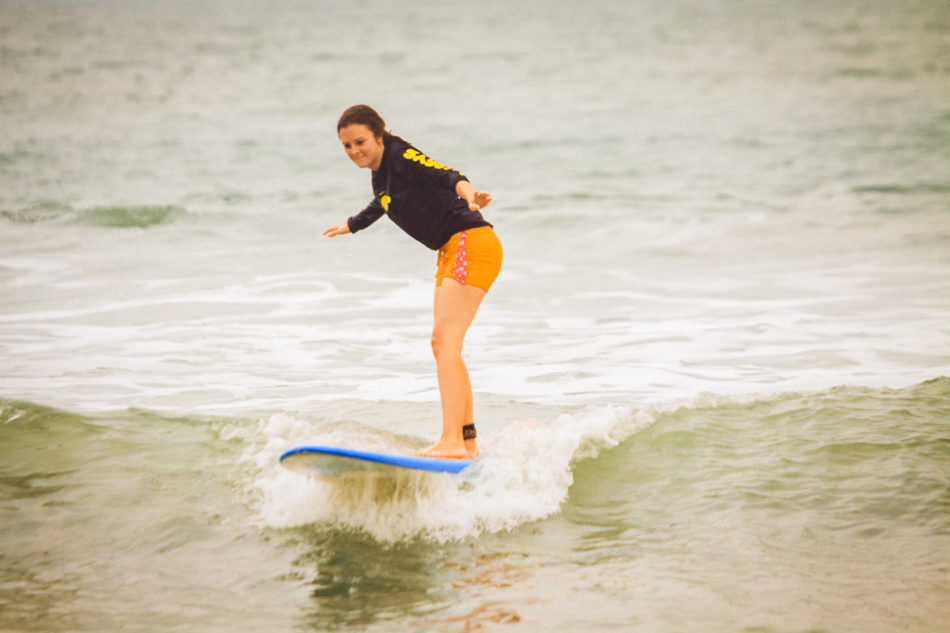
Lauren learning to surf in Bali
Q. What is the scariest or riskiest thing you have ever done while traveling and did it change the way you see yourself?
I spent several days travelling through Virunga National Park, in the Democratic Republic of Congo.
While I had done extensive research into the safety risks of taking a trip like this, it was still the only time I’ve been to a destination where my government advised against all but essential travel.
At all times, I was accompanied by multiple armed guards who were there to protect me from militia groups that were active in the area. Their presence was alarming rather than reassuring, given that the park viewed them as a necessity for visiting.
I had some truly incredible experiences while I was in the D.R.C., though. I hiked for hours to spend time with wild mountain gorillas and slept at the crater of Mount Nyiragongo: an active volcano that’s home to the world’s largest lava lake. I count these experiences as the two best things I’ve ever done, and I’m not sure I’ll ever be able to top them.
I wouldn’t say that any of the risky trips I’ve taken have necessarily changed the way I view myself, but they’ve definitely made me more aware of how much luck can play a role in travel. Visiting Virunga was an incredible experience and I’m grateful I had the chance to go, but it’s easy to say it was worth the risk when everything went smoothly!
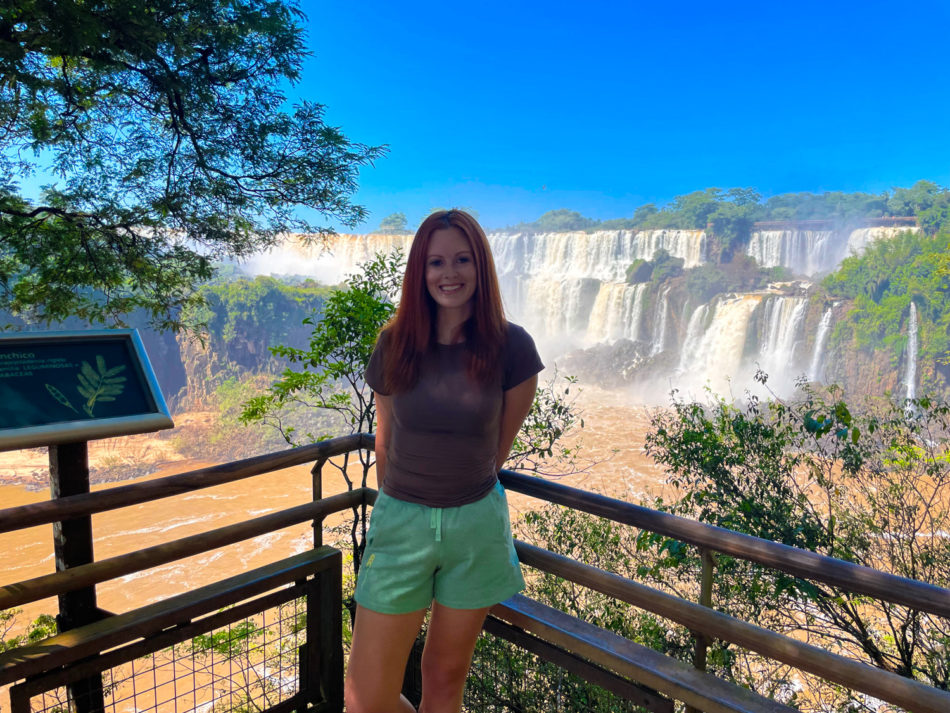
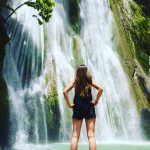
Lauren at Iguazu Falls
Q. After all those years of nonstop traveling, what made you decide to slow down and settle in one place for a bit? How did you decide where to go?
The downsides to full-time travel that I mentioned earlier eventually led to me wanting to find a home base. It wasn’t that I was deciding to stop travelling, but that I wanted to have one place in the world where I could rest, recover, get some work done, and build a core set of friendships.
These days, I spend six months of the year in one place, working on my website and catching up with friends. The other six months are spent overseas, exploring new countries and returning to old favorites. It’s a balance that helps improve my health and relationships, while allowing me to work and travel better.
Deciding where to live was a tricky decision because there were so many cities around the world that I’d fallen in love with. Initially, I moved to Lisbon, Portugal. A couple of years later, I tried Bristol, England on for size. Several years after that, I settled on Melbourne, Australia as my next home base.
Melbourne feels like the perfect fit at this stage of my life. I have friends and family in the city, the food scene is phenomenal, and there’s tons of activities and events to fill your time. I don’t know if it will be my forever home base, but it’s working well for now
Q. Your message to our readers?
Travel doesn’t have to be perfect to be meaningful. Some of my favorite memories come from the days when everything went wrong, because those are the moments that turn into the best stories.



Leave a Reply