NOTE: Bangkok’s two airports are highlighted first on this page. All other ground transportation is described below them in alphabetical order.
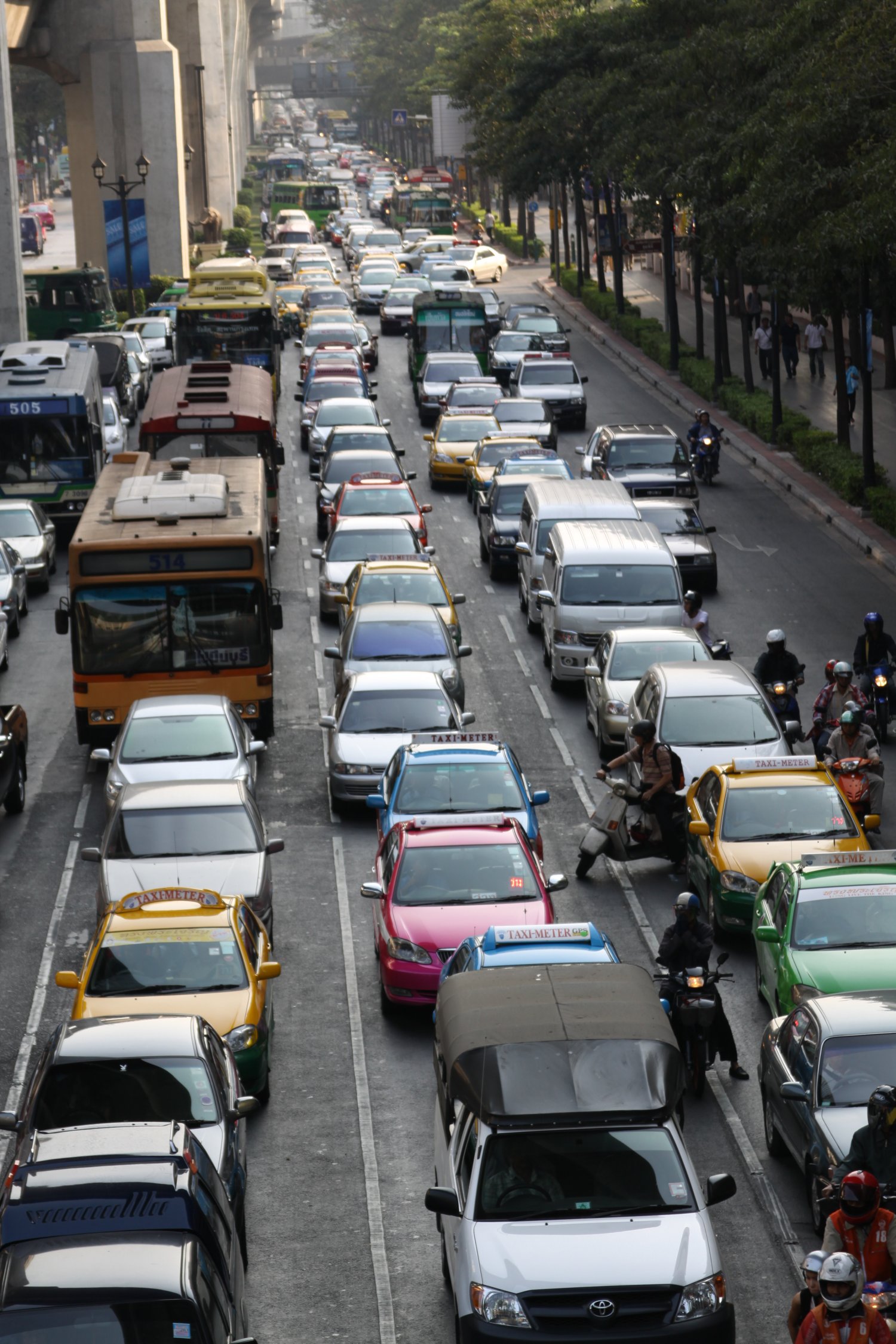
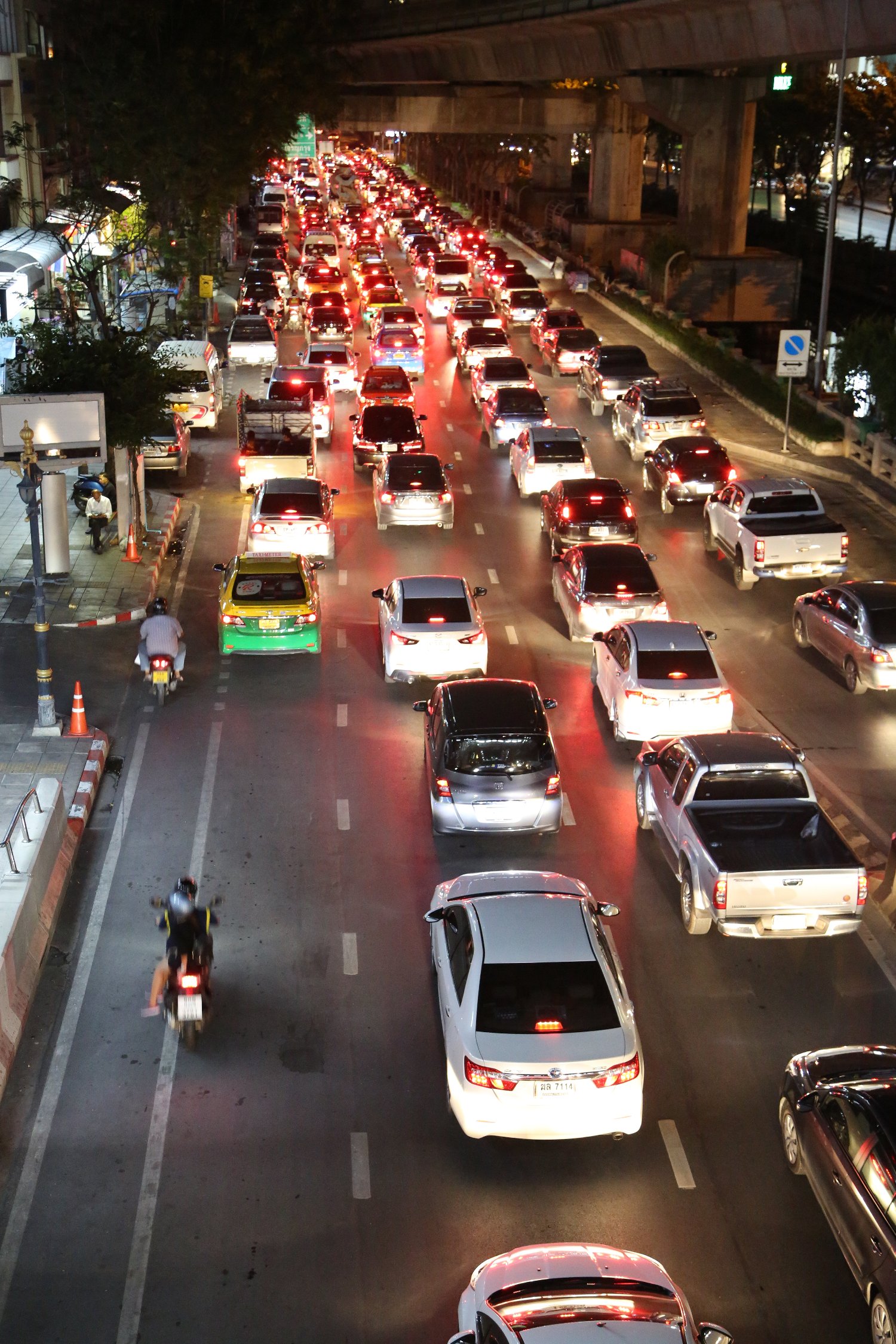 One word summarizes traveling via Bangkok roads – terrible! Drivers use the left hand side of the road – well, at least most of the time! During most hours of the day, the roads are highly congested and it takes a lot of patience and time to get anywhere. On several occasions I have challenged my ability to stay alive by crossing large intersections of traffic. I have been entirely successful and have built up confidence with more and more practice. This is not recommended unless you are a seasoned veteran at dodging traffic in busy cities because in Bangkok cars have the right away, NOT people.
There are certain times of the month when the traffic is terribly fierce. One of these times is on paydays – usually the last Friday of the month. I’ve spoken to people who say a drive that normally takes 30 minutes turns into 2 hours on these days.
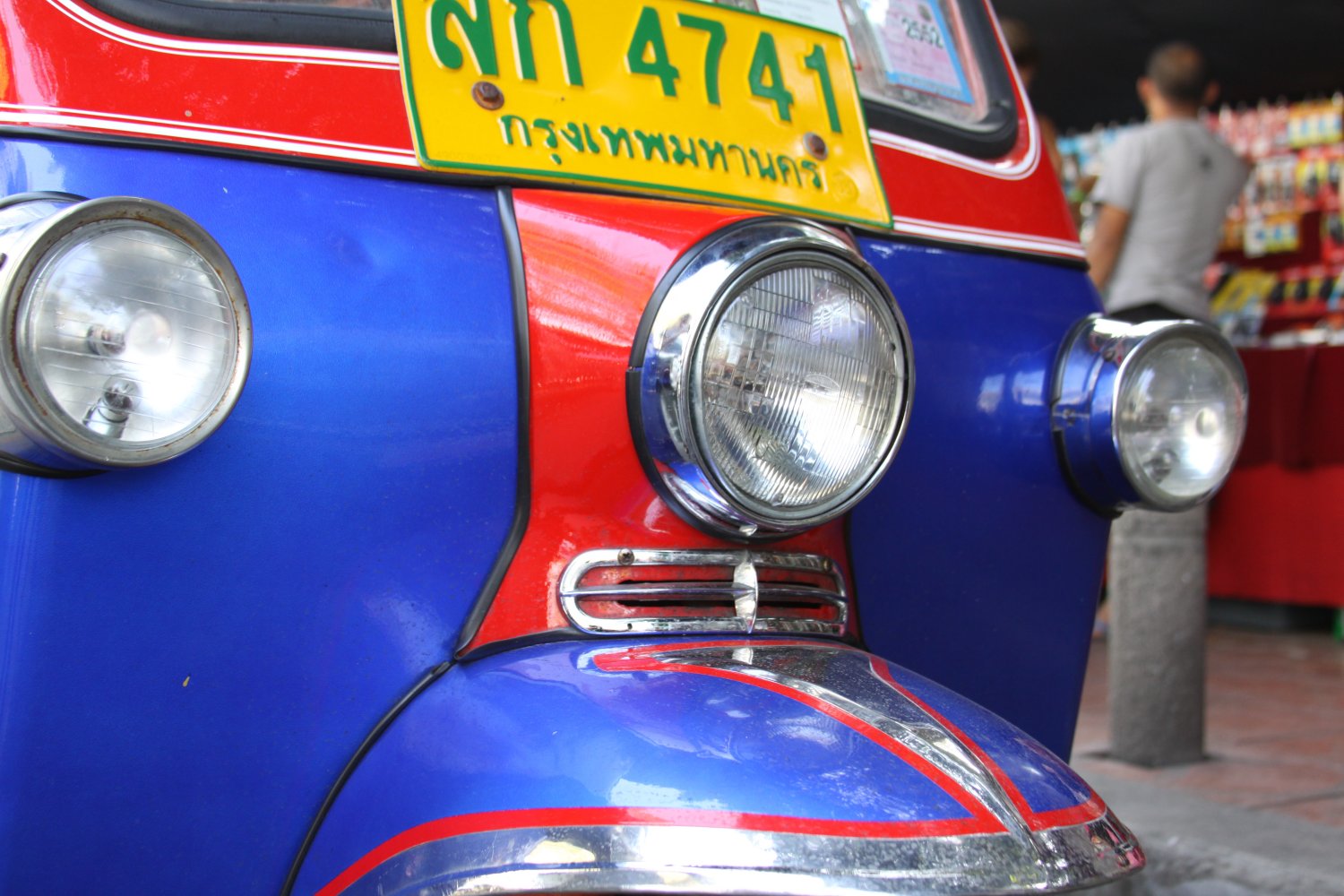 Mornings and evenings are of course very bad. Extremely late night – like after 1am and mornings before 5:00 am are generally an ok time to travel the streets of Bangkok. Both the Skytrain and the metro can be crowded as well but are usually nice alternatives to being stuck in traffic.
The following are some methods of transportation you can use during your stay in Bangkok.
AIRPORTS
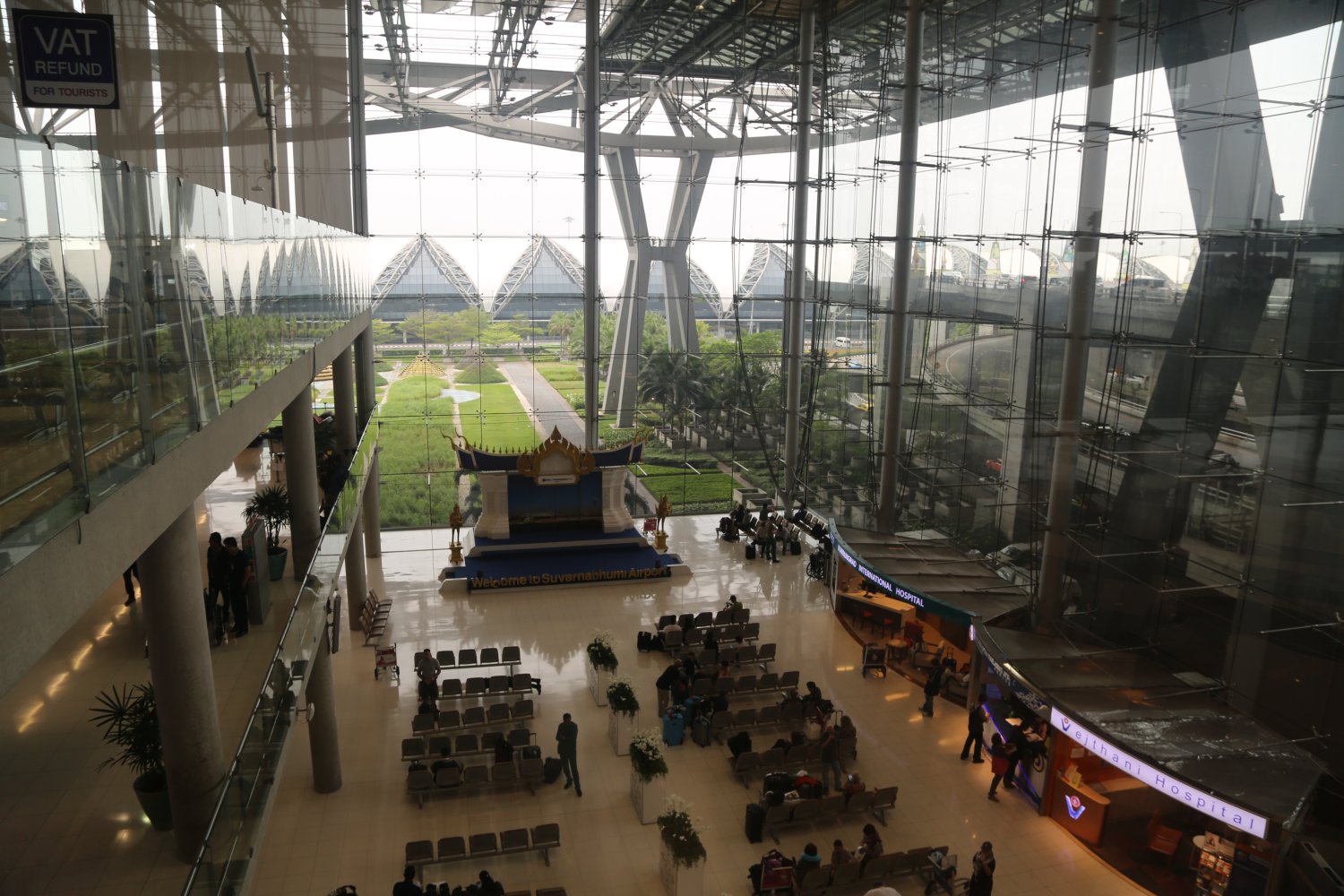
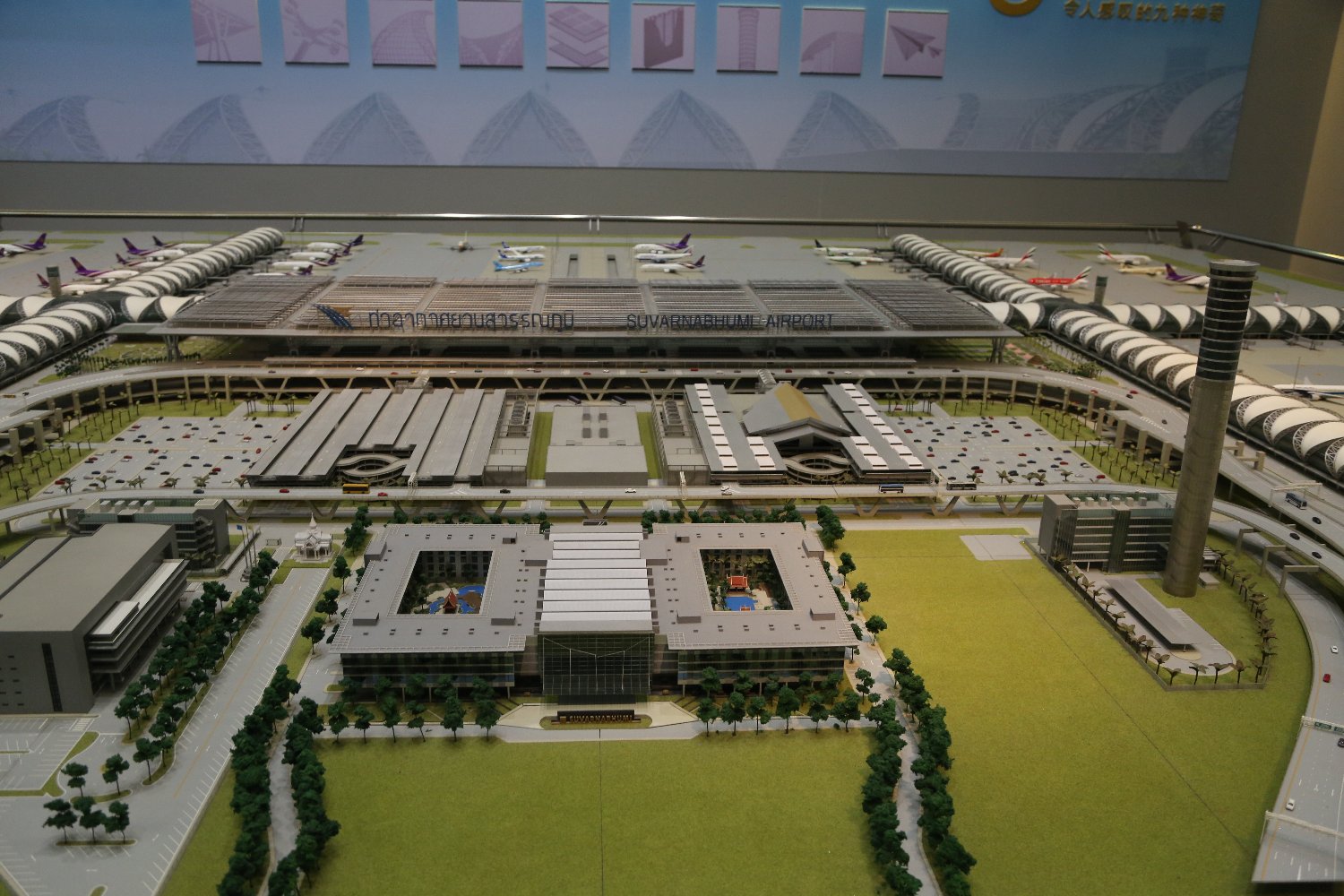
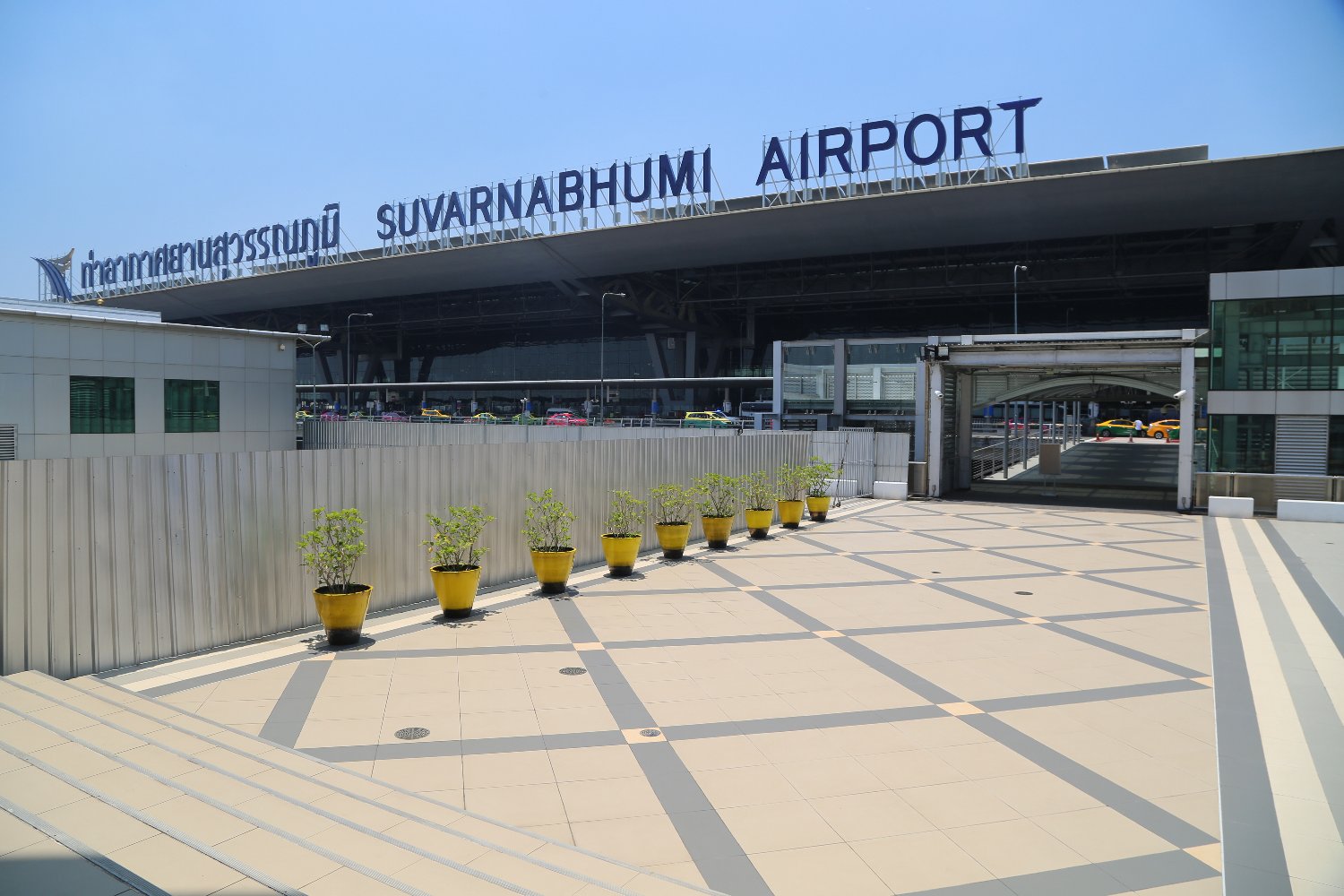 Suvarnabhumi Airport is Thailand’s beautiful state of the art airport which opened at the end of September 2006. Suvarnabhumi airport is huge and has one of the longest terminals in the world – the name of this airport is pronounced Su-wanna-poom (it means golden land in Thai). This is a major airport for all of SE Asia. We have flown into and out of this airport many times and as a result have become very familiar with the services offered here. A new city has actually grown up around this airport with many new buildings and massive bill boards will greet you next to the multi-lane expressway that leads back to Bangkok.
The following are 8 important levels that you should know about in the main airport terminal building.
- B Floor
Airport Rail Link (Airport Express & City Line), book store, few miscellaneous food shops - Level 1
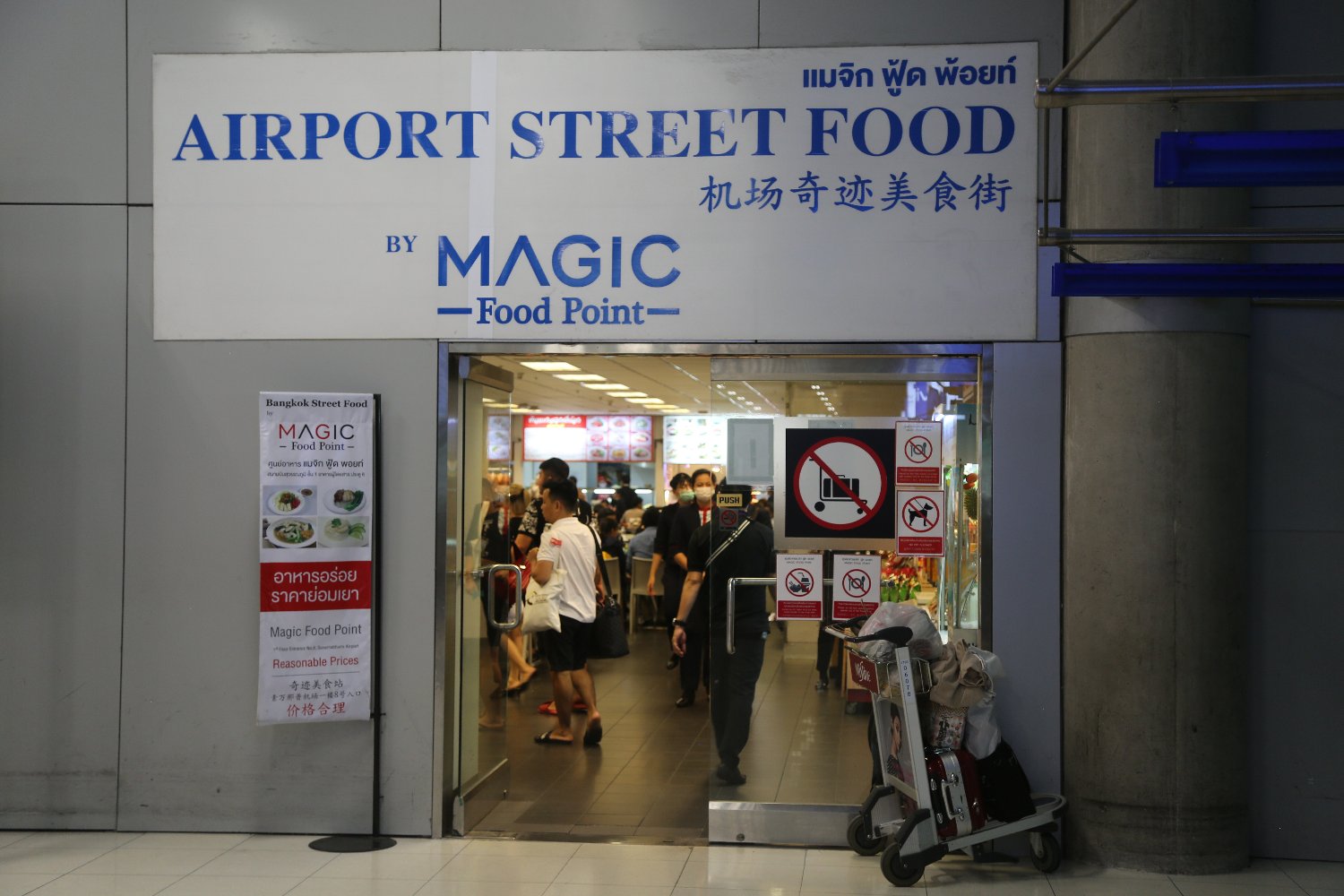
Bus Lobby, & Taxi’s – Magic Food Point (local cuisine – MUCH cheaper than Food Court on Level 3!) - Level 2
Meet arriving passengers (Arrivals) – small tourist offices, banks, money exchange, Internet consoles, Phone SIM Card purchase, phone rentals, and ATM’s available here - Level 3
Meet & Greet area (next to exit door #3), also dining options including a food court, Internet consoles, and Massage service (Chang Massage). Note the food court caters to tourists and tends to be quite expensive. For MUCH cheaper dining option go to Level 1 – the Thai Magic Food Point. This is open 24 hours a day, buy coupons first, then choose from a variety of food counters. NOTE: coupons are ONLY good the day of purchase.
- Level 4
Departing passengers. All airline counters & check in terminals. Thai airways main customer service offices. Expensive Internet cafe is located in the concourse F corner. There are many duty free shops in the main terminals. - Level 5
Thai Airways and Star Alliance program information - Level 6
Restaurants – typically more expensive than the dining options on Level 3. - Level 7
Observation Deck

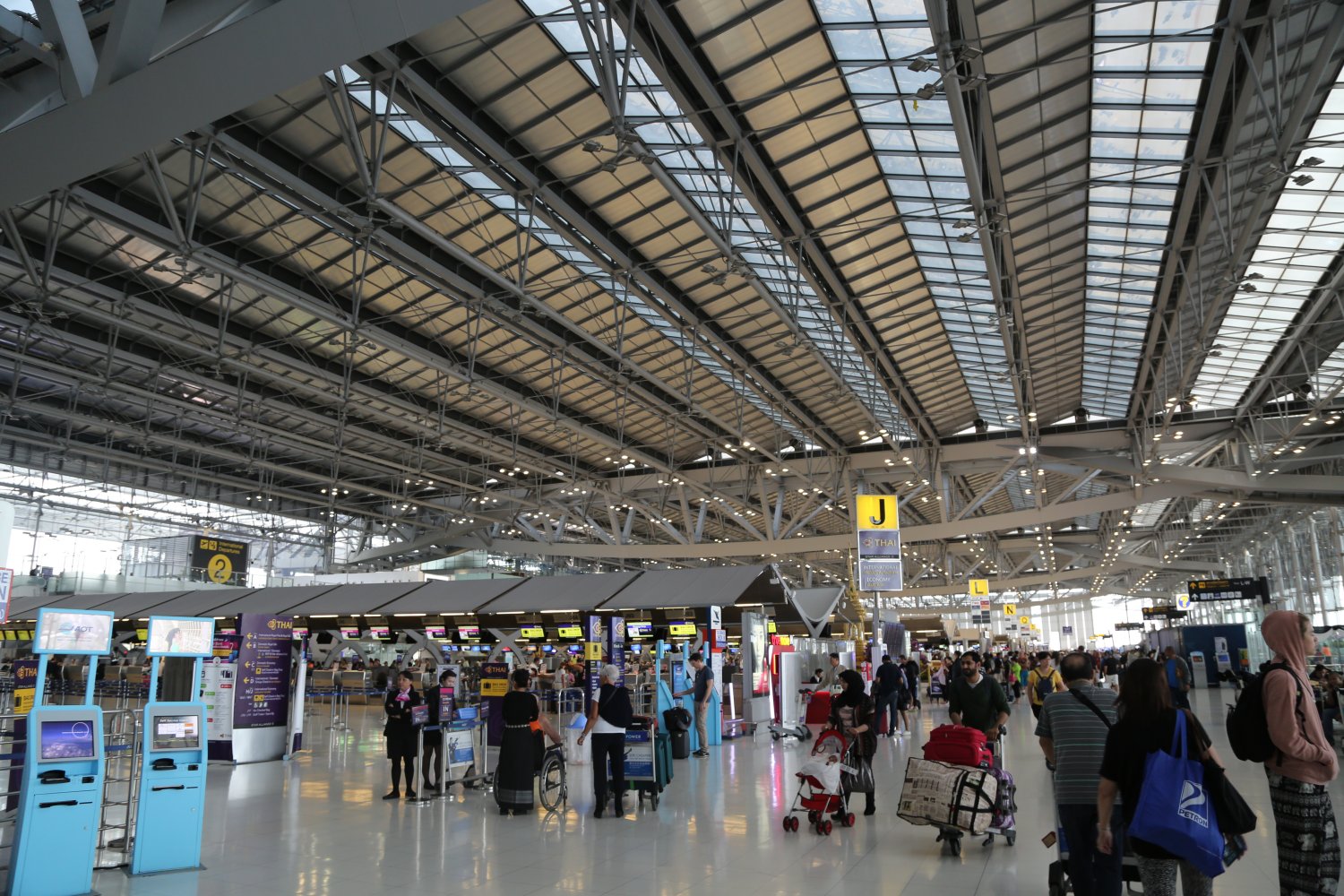
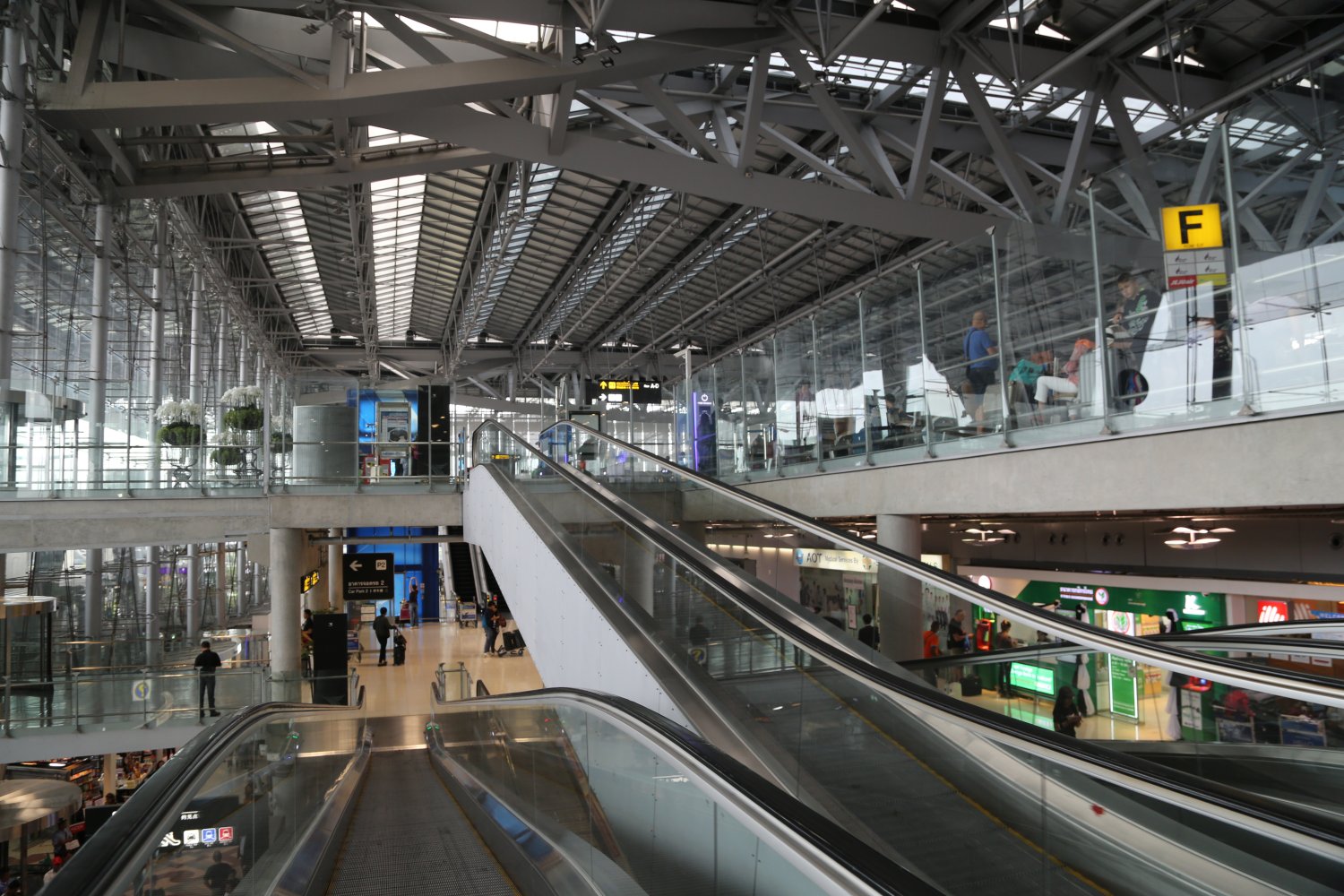

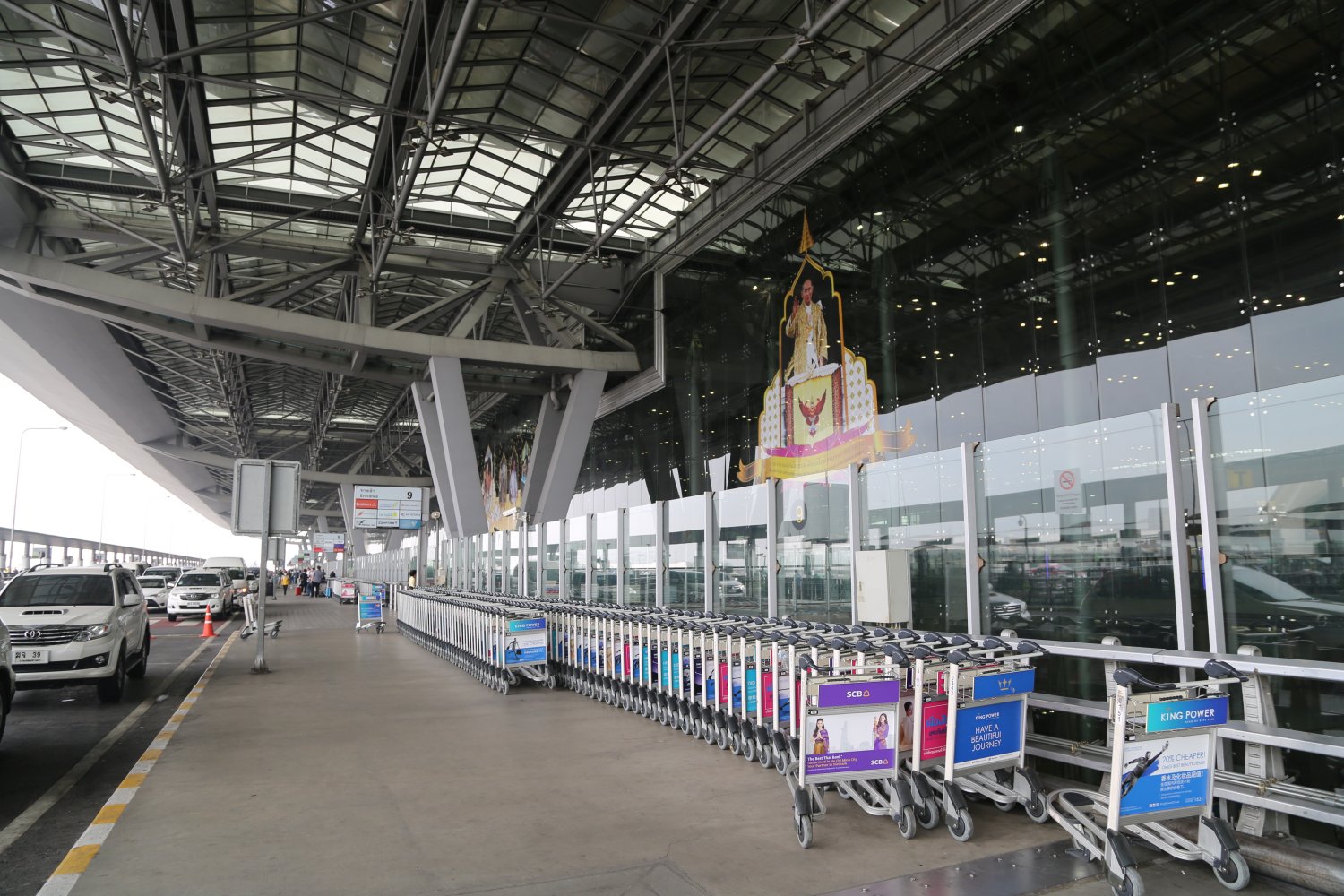
Internet: for many years there was no easy way to access WiFi but in recent years Google began offering an airport WiFi connection available after connecting to the network and then filling out some basic personal details. As of our last update, guests could use this free WiFi for one hour. Some physical internet consoles are still located throughout the airport – using these however, feels like using old clunky technology. Often some of them will not be working and the metal key pads are *extremely difficult and slow* to use. The only nice part of using this is they are relatively cheap.
You can also purchase a wireless card at one of the book stores on the second level which contains a login/pwd. Major carriers do work such as Boingo (no card needed). The CAT Telecom Internet shop on the departing level is absolutely terrible – the net here is very expensive and the computers lock up rather often and a number of sites don’t even load – we’ve tested this cafe year after year. We suspect this shop won’t last much longer – there simply is not enough demand for internet cafe’s like this anymore.
Also note: at the Airport Information counters on the 2nd and 4th floors (2 counters on each floor) you can pick up a card with a login and password good for 15 minutes free WiFi use (connect to the “Free Airport WiFi” network on your computer). You need to look for the red and white symbol in certain areas of the airport indicating you can use that WiFi here. NOTE: these cards for free WiFi is *only* available after you’ve gone through through customs and security.
Arriving passengers can purchase a sim card and a data/phone plan from several telecommunication companies that maintain small shops right next to where arriving passengers exit after customs. There is a tiny shop across from where the Airport Rail Link arrives on the B Level that rents portable data devices (somewhat expensive) but can be used in a pinch if you have a phone that is not already unlocked.
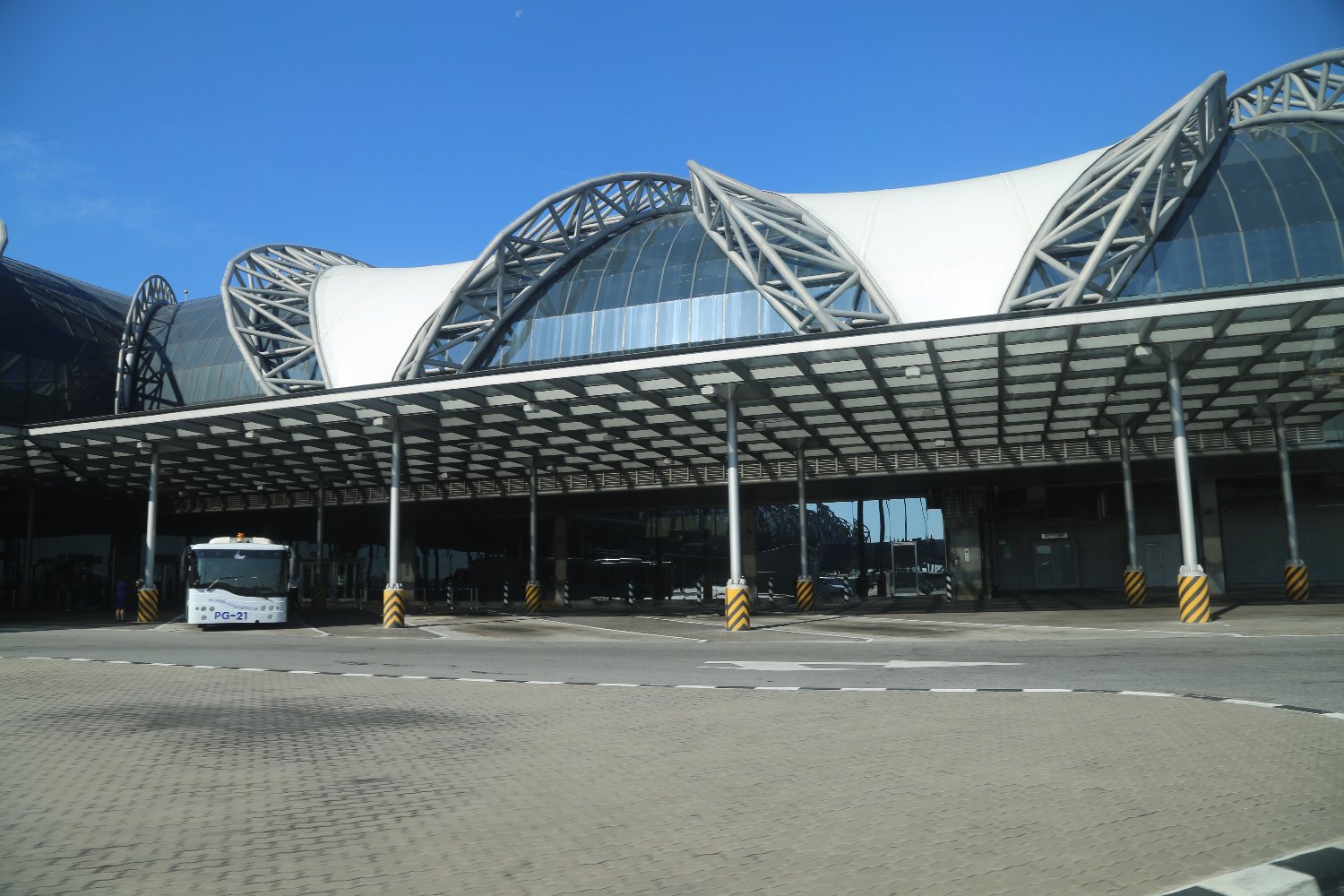
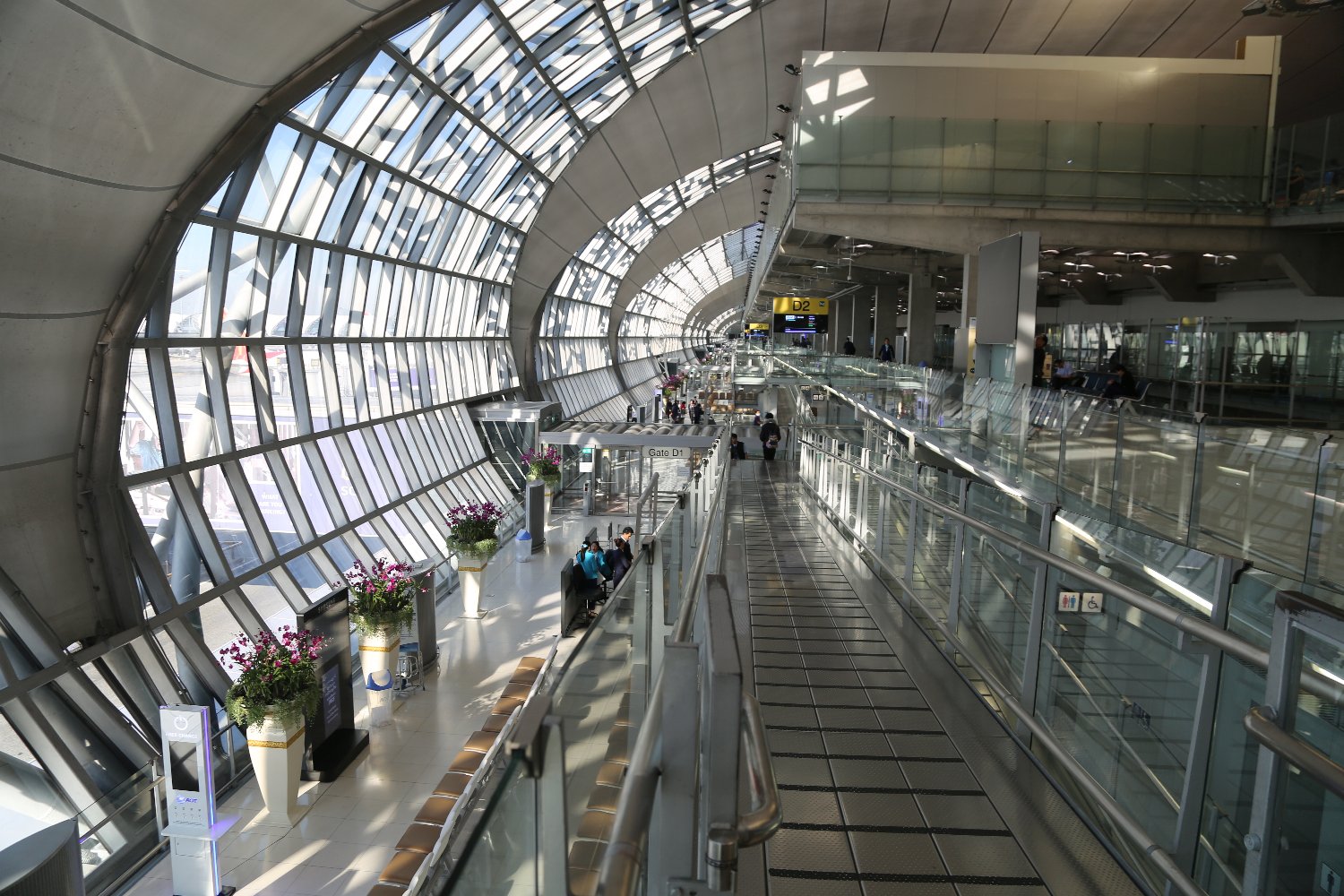
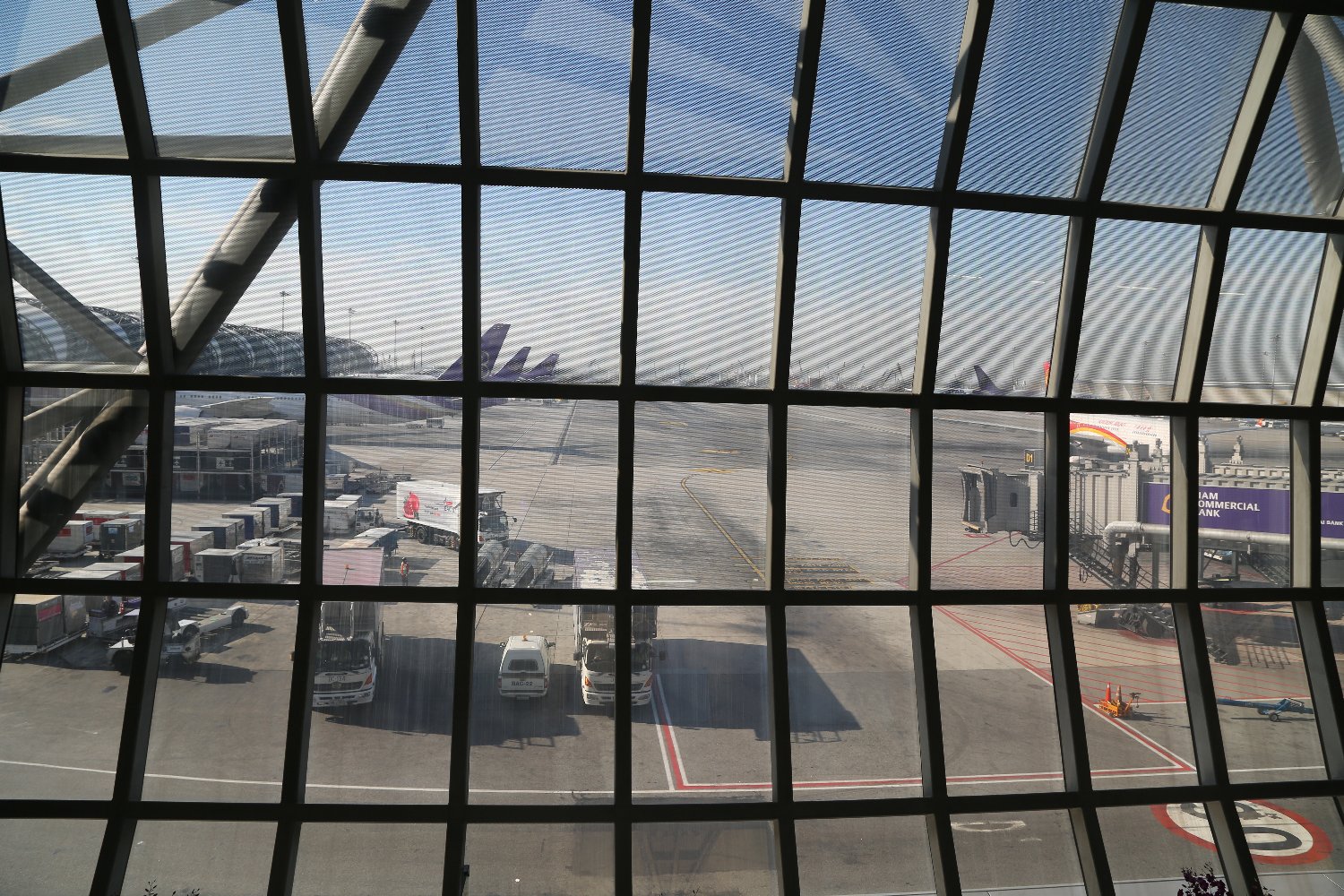
Airport Amenities & Services. Passengers 70 years or older traveling in the International Terminal can use the FasTrak lane – a separate entrance to immigration that often saves significant time when the primary lanes are highly congested with passengers. Passengers with long layovers can elect to stay at or near the airport.
The Miracle Transit Hotel is located on the 4th floor of the International terminal in the Departure Hall (note arriving passengers on international flights *must* clear immigration before staying here) – with reception open 24/7 this transit hotel provides a variety of other services including massages, a spa and showers (even if one is not staying here). One can book rooms from 6 to 12 hours. Rooms are not cheap but are certainly convenient.
And for those looking to stay overnight close to the airport – within a very short walk via an underground walkway from the terminal is the 600+ Novotel Airport Hotel (the only official airport hotel). Complimentary 24 hour shuttle service is provided from Gate 4. Rooms also not cheap but very convenient for those wanting to stay close to the airport. Day use rates are also available upon request.
Taxis. Taxis are available at Level 1; a 50 baht convenience fee will be added by your driver at the end of your trip. Enter the lines for reserving a taxi curbside just outside of the airport (three lines: one for regular taxi, large taxi and short trip taxi rides) – touch one of the screens and a ticket will be printed which lists the taxi stand number – simply walk over to that number and meet your waiting taxi.
Getting a taxi here is highly convenient especially if you have lots of luggage (although sometimes the lines can be very long). However, if you have just a carry on or small backpack and are on a strict budget AND arrive during non operating Airport Rail Link hours, we generally do not recommend getting a taxi at this level because of the extra 50 baht convenience fee. Instead go to Level 4 (sometimes you have to talk your way past one of the guards standing next to the turnstiles that let you exit from the walkway to where taxis are curbside), walk outside and flag one down (there are always taxis, 24 hours a day, even in the darkest hours of night) – this way you avoid the 50 baht airport tax fee.
If you do this, it is helpful if you aren’t carrying much luggage as you will have to squeeze between the narrow turnstiles to reach the curb.
Also note that WAITING taxis on Level 4 – are waiting to rip you off. When you flag down a taxi at level 4, try to get one dropping off passengers rather than one that is waiting around. Those who wait around are more aggressive and are usually waiting to prey on tourists and will insist on keeping their meter turned off or if its late at night will insist on taking you the tollway despite little traffic. Please read our TAXIS section directly below for additional pitfalls.
Know how to use a taxi – review our Taxi Pitfalls article here. Expect to pay 200-270 baht for a metered taxi from the airport to any of the main districts in Bangkok (Silom, Sukhumvit, Khao San Road etc). NOTE that this price does not include any toll road fees or the 50 baht convenience fee if you reserve a taxi the conventional way at the airport.
DEMAND the taxi driver uses their meter and walk out if they do not…regardless of the time of day or night. A common quoted price is between 600 and 1000 baht for taxi drivers who do not use the meter from this airport. That is a rip-off. The meter should start at 35 baht, nothing higher.
A toll way between the airport and the Sukhumvit Road area makes two stops and costs a total of 70 baht. This is commonly used by the taxis and typically saves time when there is bad traffic. However you are well within your right to tell the taxi driver you don’t want to use toll way (say, “Mai toll, mai expressway”) especially if its late at night, i.e. typically after 11pm as traffic will be lighter and you can use the normal roads to get to downtown – or if its on a Sunday).
Public transportation. In August 2010 the Airport Rail Link opened from the airport to central Bangkok. Most of this entire route is on a raised rail link that stands well above the ground. The Airport Rail Link is open from 6am until midnight every day of the week. This is found on the B Floor (bottom) – From the 2nd floor Arrivals, go down 2 more floors (either escalators or elevator). Also note that some of the seats near the entrance to the Airport Rail Link are often used by stretched out people who sleep here over night (maybe the quietest part of the airport for sleeping?!). No trolleys are allowed in the actual departure area for the Airport Rail Link but you can use the trolley to get here from any floor above.
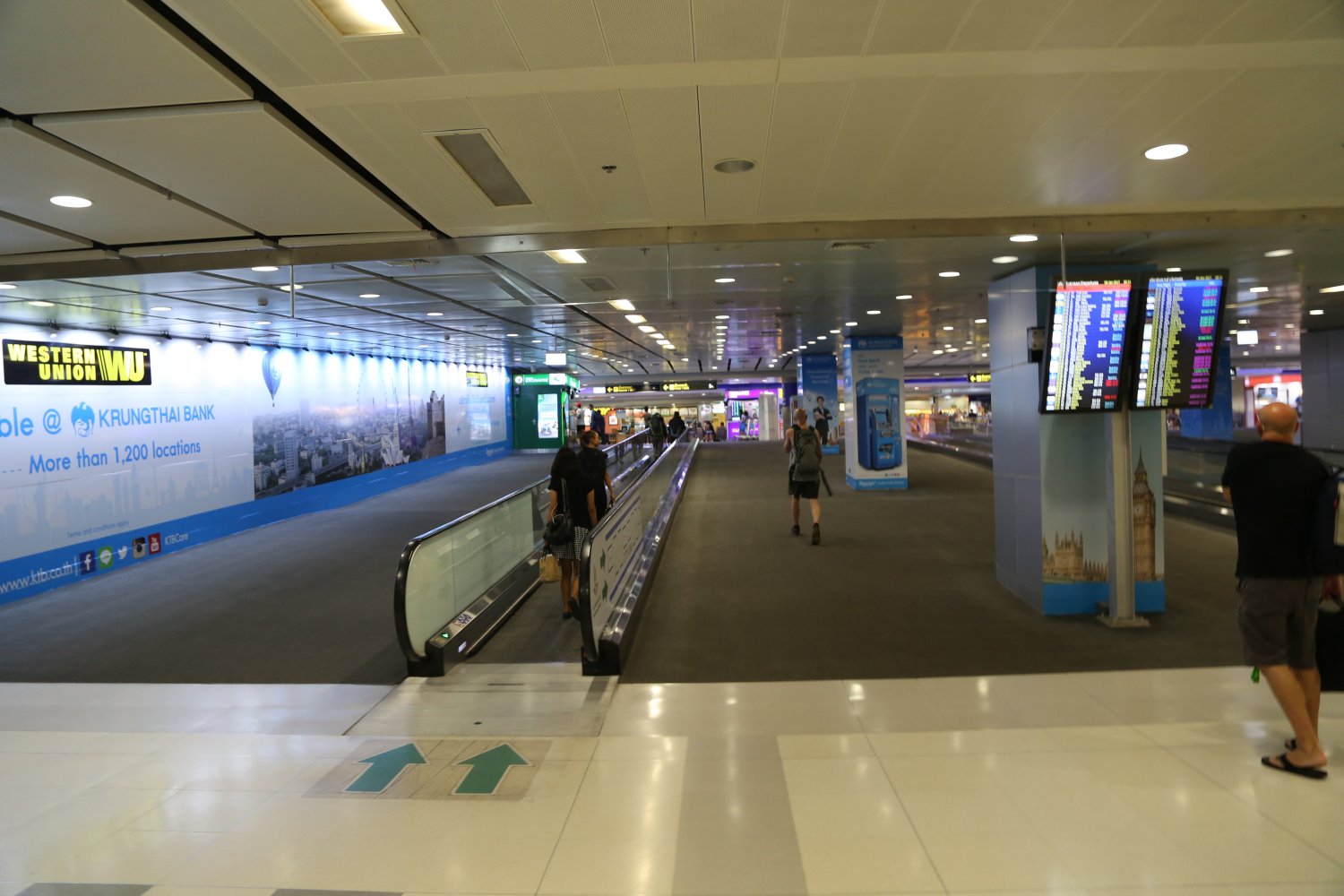
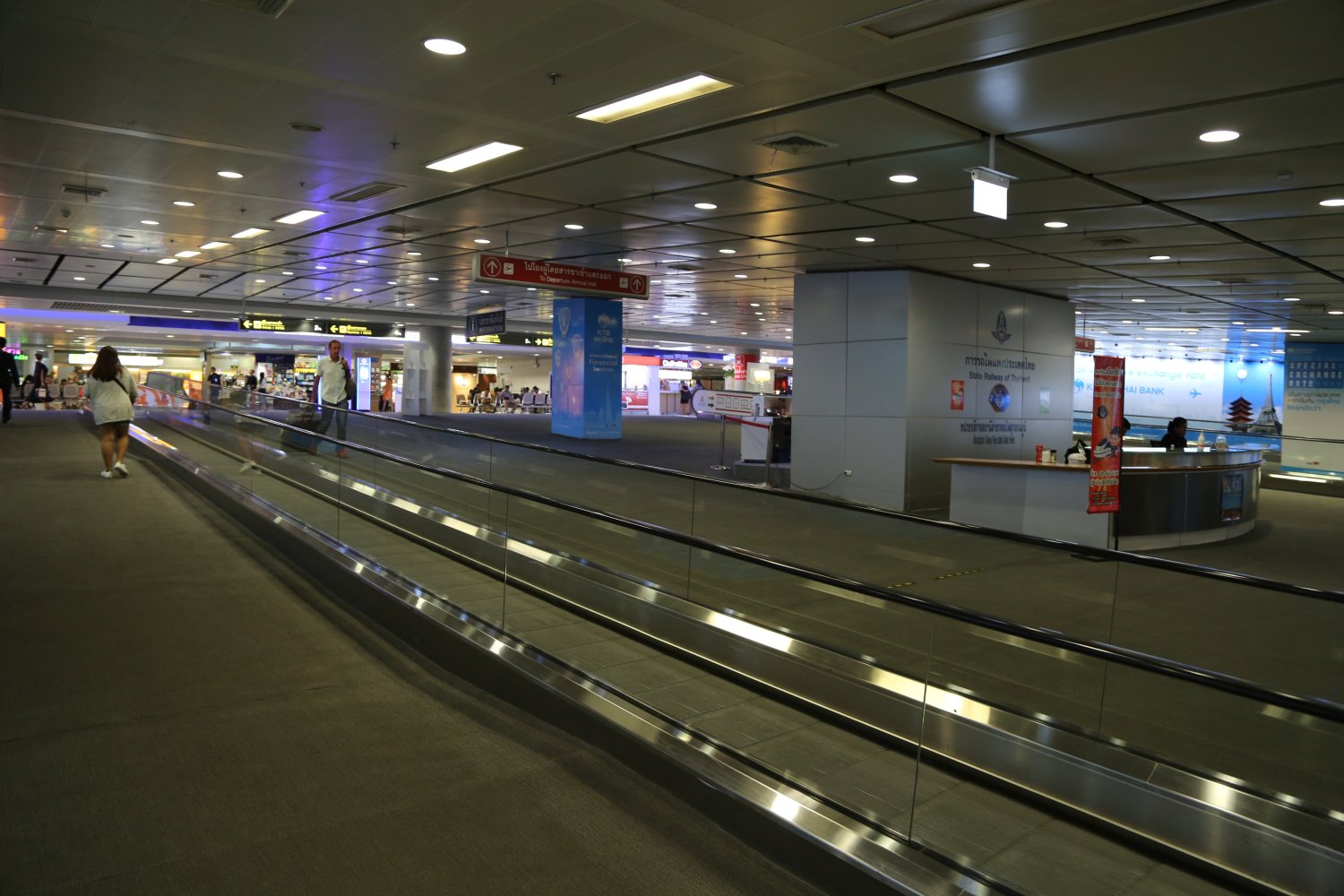
Airport City Line operated by the Airport Rail Link takes 35-45 minutes to the Phaya Thai Skytrain Station and stops at 8 stations before reaching Phaya Thai. This is a much cheaper way to reach central Bangkok than say a taxi as the fare is only 45 baht/person. This is the popular option for backpackers and other travelers on a a budget. Note you pay for your ticket at the airport – there are ticket machines (available both in Thai and English – touch screen) or you can pay at the counter. NOTE: the hours of operations are from 6am until midnight with trains operating every 10 minutes during peak hours and every 15 minutes off-peak hours and on weekends.
Note: once the train has arrived at the airport, you are not allowed to board immediately. Rather all departing passengers must exit the train and then security makes a quick check of the train cars before awaiting passengers are allowed to board.
The free Airport Shuttle Bus provides transportation 24 hours a day to main airport facilities including the Public Transportation Center. Public buses run to various locations in Bangkok from the Public Transportation center 24 hours a day. Catch the free Airport Shuttle Bus to the Public Transportation Center on either Level 2 or 4 at Entrance 3, 6 or 9. The entrances to the actual airport are clearly labeled with numbers so you should have no problem seeing these. Public buses from the Public Transportation Center will cost you 35 baht to any of the serviced locations within Bangkok.
For an extra 10 baht, it is probably well worth the price to take the City Train Line from Level B rather then the hassles of taking a public bus (assuming you are here between the City Train Line’s normal hours of 6am until 12pm).
Airport to Airport Transfer Often travelers will fly into Suvarnabhumi Airport in Bangkok and then transfer to a connecting flight at Don Muang Airport either domestically or via a short international flight. One needs to allow enough time between these airports when making flight connections.
Typically allow at least an hour from when you land to when you finally exit Suvarnabhumi Airport. And then allow at least an hour driving time between both airports using a taxi and slightly more if you use either of the following two options.
From Suvarnabhumi Airport there are several options to reach Don Mueang Airport. The most affordable is a transfer bus (free!). The bus runs between 5am and midnight 7 days a week. Passengers take this bus from Suvarnabhumi Airport on level 2 gate 3. Look for AOT Shuttle Bus written clearly on the front of the bus.
Mini Vans are located on the first level next to doors 1 and 8 and run next to door 10 and leave quite regularly (when full) every 5 t 20 minutes depending on the time of day/night. They run between 330am until 10pm every day of the week. Look for van number 559. Incidentally other vans leave from here to various parts of Bangkok including Victory Monument where you can then connect with the BTS Skytrain.
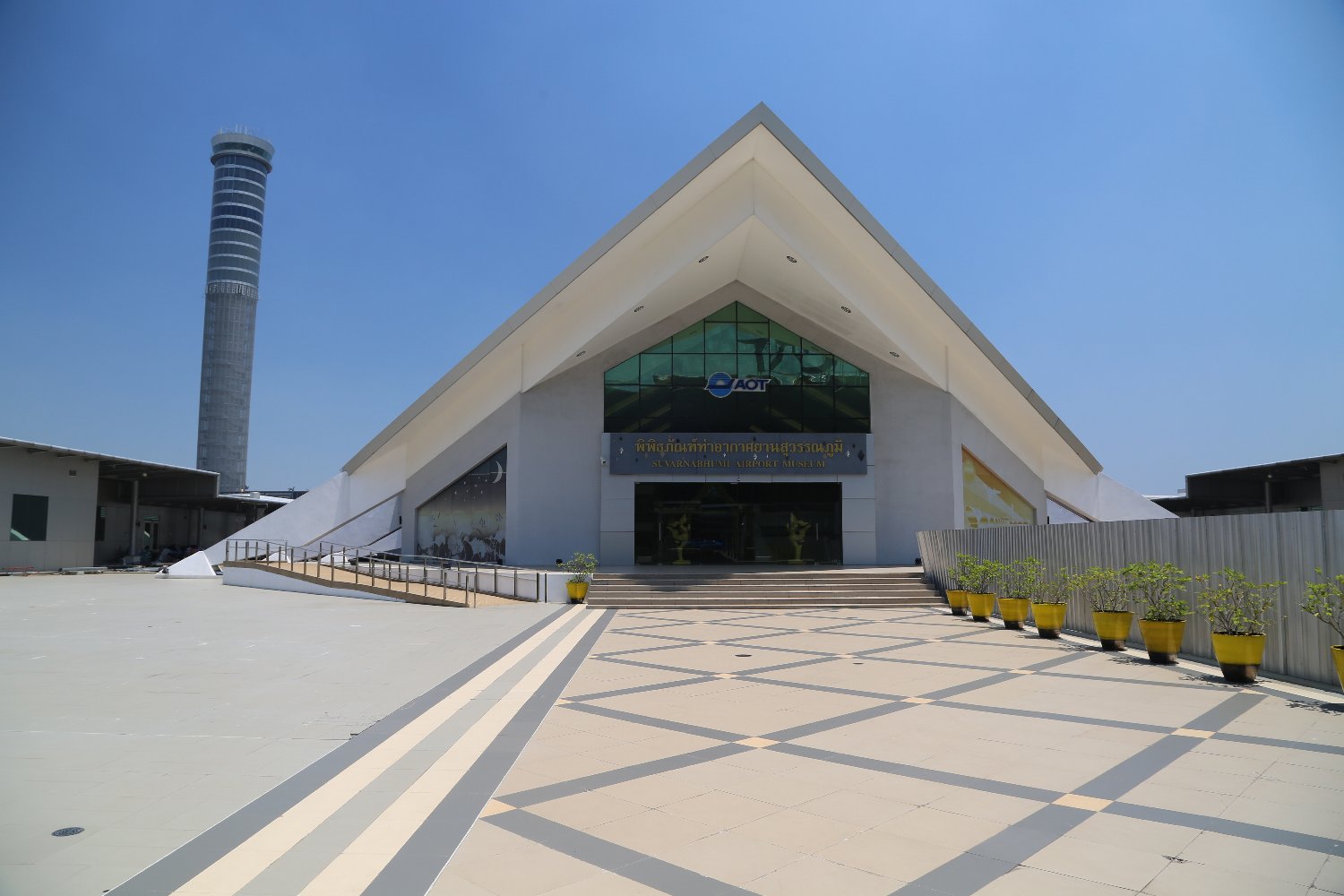
Suvarnabhumi Airport Museum . Totally under the radar but in plain site of most arriving passengers (on the western end of the terminal), this museum is located on the departures level 4 at Suvarnabhumi Airport. With most arriving passengers focused on one thing and one thing only – getting their luggage out of their vehicle and directional focused on getting into the airport and getting checked in – one can visit Suvarnabhumi many times over the years and never even see the museum building.
Built in a prominent triangle shape it is literally just across the lanes of traffic from the curbside drop off area for departing passengers. Not well advertised within the airport and not well promoted online, a visit here is truly for the passenger who has done their research and enjoys visiting aviation themed airport museums.
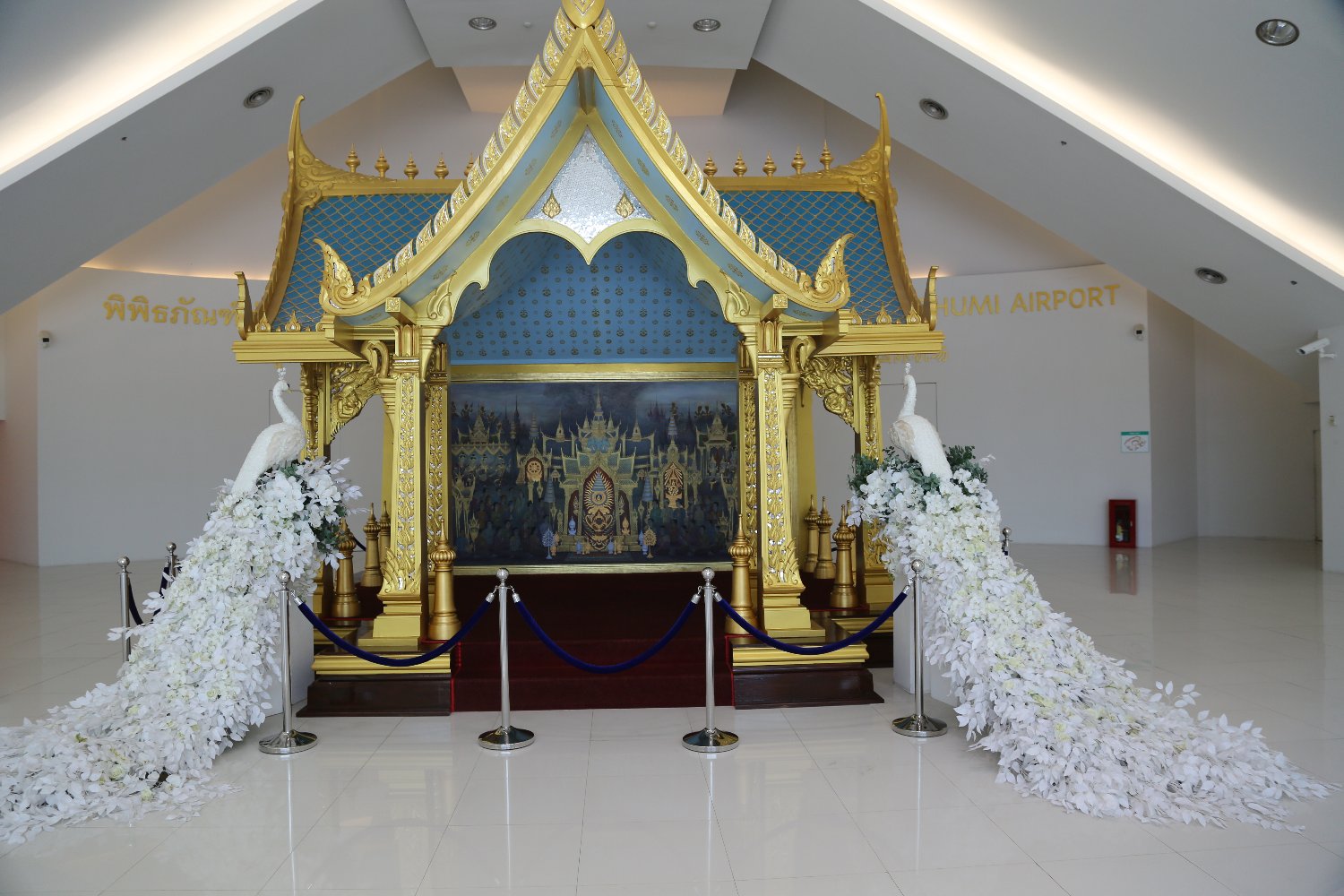
Passengers with luggage can leave their suitcases and other items in a small holding area next to the main check in counter. A tour of the museum is guided with a short intro video provided in the first room. The museum features 10 rooms each containing a different theme ranging from the history of the site, the the construction period to the auspicious room number 9 where you will learn about this lucky number and the role it plays in the airport.
Other rooms highlight the construction materials used in the airport, the King’s contributions and his visits to the airport and displays about the eco-friendly design and materials used in the museum building.
Did you know Suvarnabhumi Airport is surrounded by a 23.5 kilometer dike to prevent the land from flooding? Creatively, a bicycle and pedestrian path run the entire length – this takes about an hour to cycle the complete distance at a leisurely pace.
During our visit they gave us a souvenir airport key-chain which whenever we look at it we fondly recall our pleasant time here.

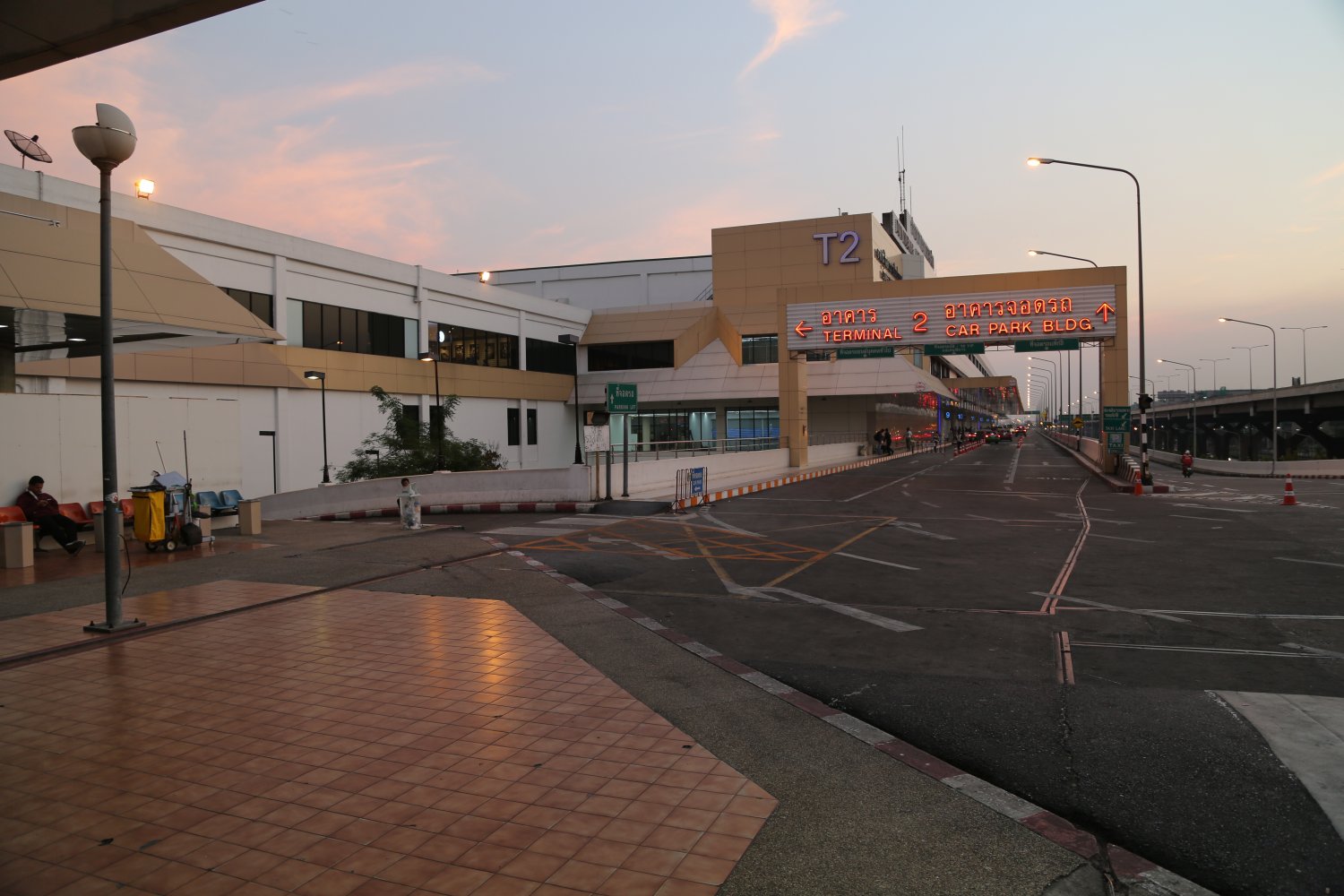 Don Mueang International Airport Bangkok’s primary airport before Suvarnabhumi was built is still used for mostly domestic flights but some international flights as well – usually for budget carriers such as Air Asia, Nok Air and Thai Smile.
Guests can be dropped off curbside next to one of the two terminals here – Terminal 1 (International flights) and Terminal 2 (domestic flights) are right next to each other – within a short walk. One can walk between the terminals on the curb just outside of the building or inside through a connecting walkway. A very dated looking car park/garage is located near the airport.
If traffic is super bad pulling into the airport ramp up to the terminals you might elect to be dropped off on a pullout area on the highway below the Don Muang Tollway – directly across from the airport (great if you don’t have much luggage to carry with you). A stairway and bridge over the highway connects directly to the airport – follow the signs to reach either Terminal 1 or 2.
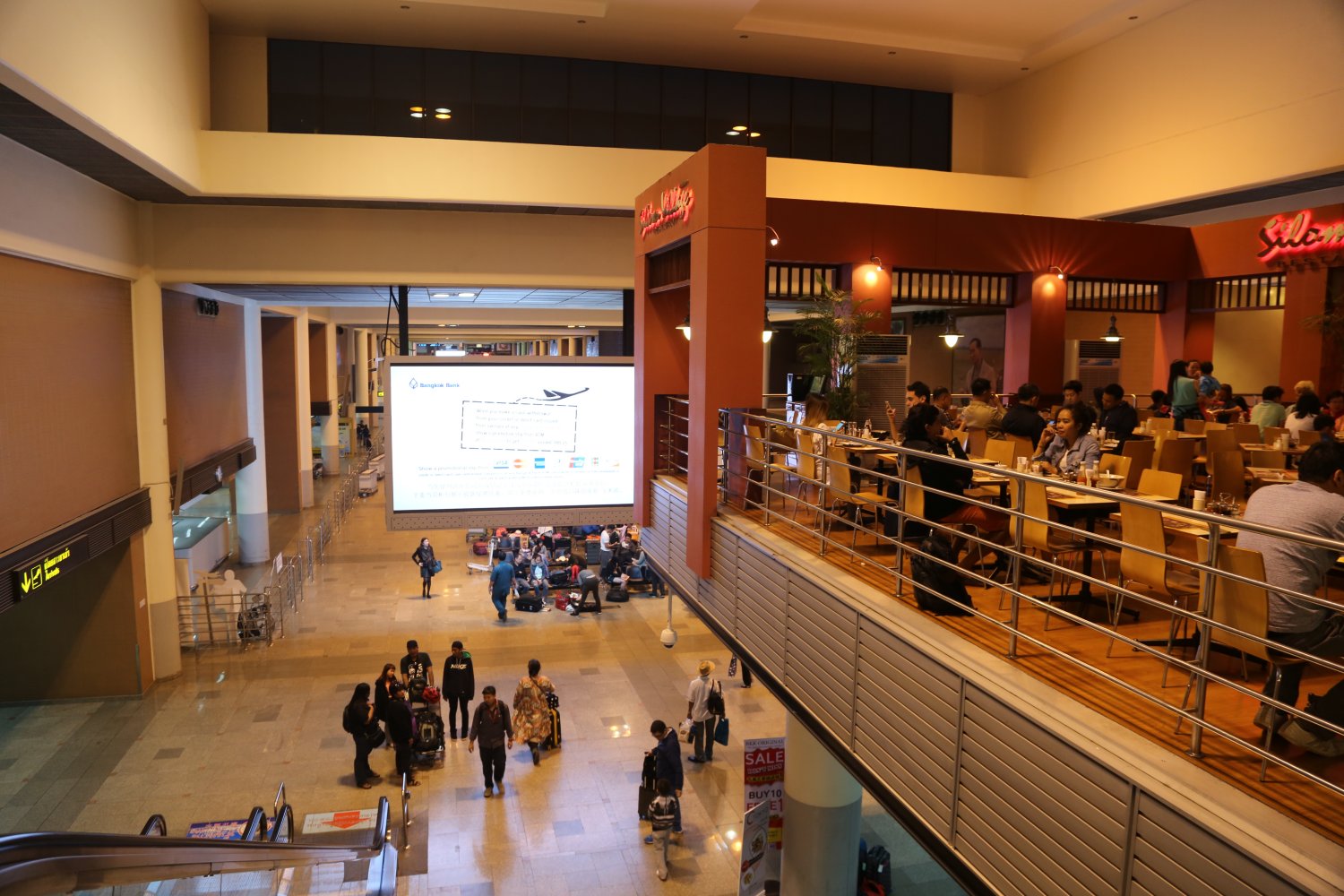
The airport itself looks a bit dated but still serves its purpose well although parts of the interior have been updated over time including some of the bathrooms and food areas.
This airport can be crowded at times, especially in the evenings for Air Asia flights but in general this airport is much less crowded than the larger and newer Suvarnabhumi – and entering the country after international flights is generally a much more pleasant experience than Suvarnabhumi.
Don Mueang is located slightly closer to central Bangkok than Suvarnabhumi – allow plenty of time to reach the airport as roads and highways nearby can be quite busy, especially during the daytime. The closet BTS Skytrain to reach Don Mueang is Mo Chit – taxis are lined up one the road just below this Skytrain stop. At the time of our last update a raised rail system is currently being built out to Don Mueang Airport and beyond it (2020). For nostalgia purposes, this site provides general information & photos of the old Don Mueang International airport: www.asiatraveltips.com/PicturesofBangkokAirport.shtml



GROUND TRANSPORTATION
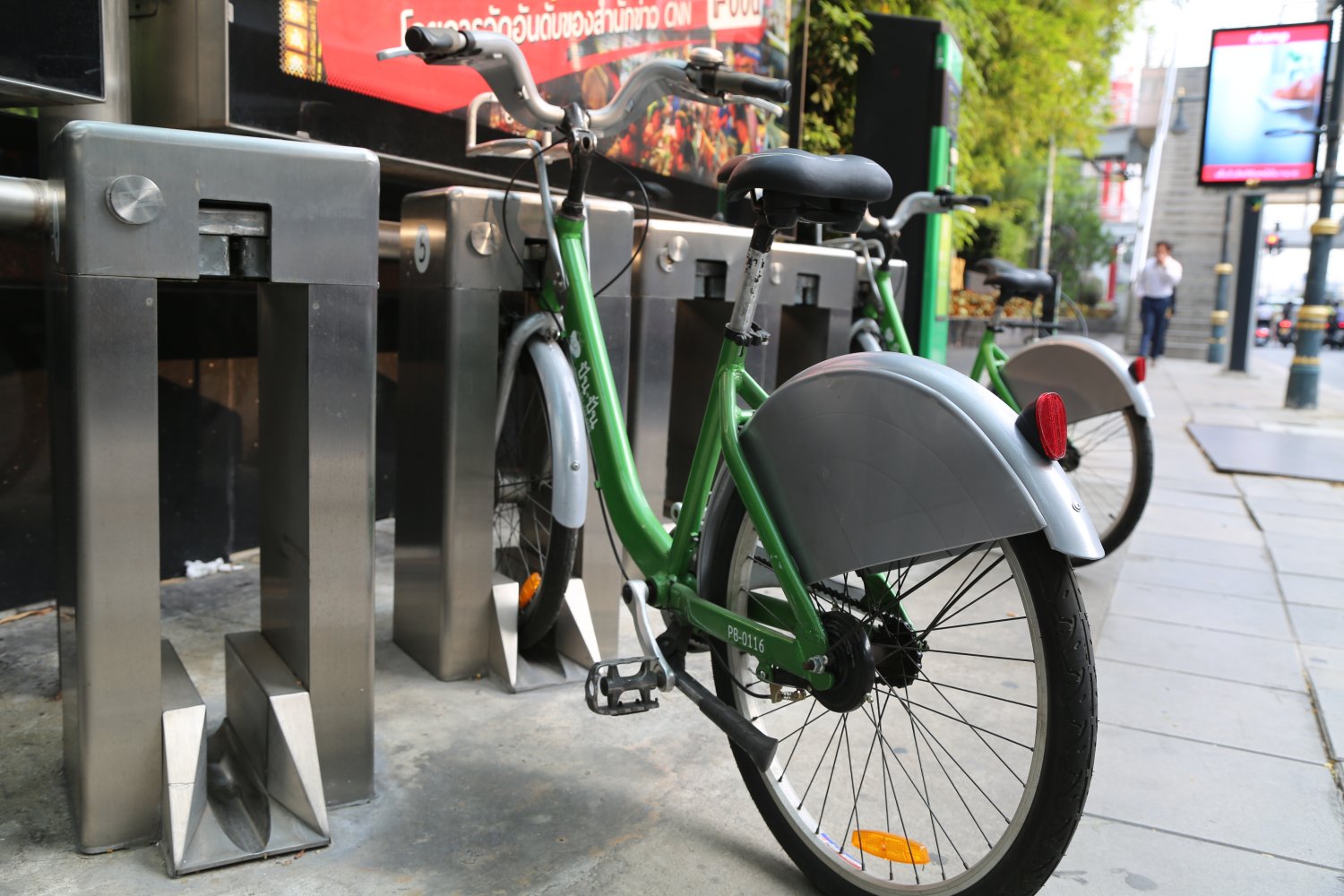 Bicycle. Perhaps not as popular in Bangkok as other cities which favor more moderate climates – biking riding in Bangkok can a challenging experience based on both the often sweaty conditions endured while outdoors (especially so when riding a bicycle) and the unique difficulties of riding among the heavy Bangkok traffic among city streets that are not bicycle friendly.
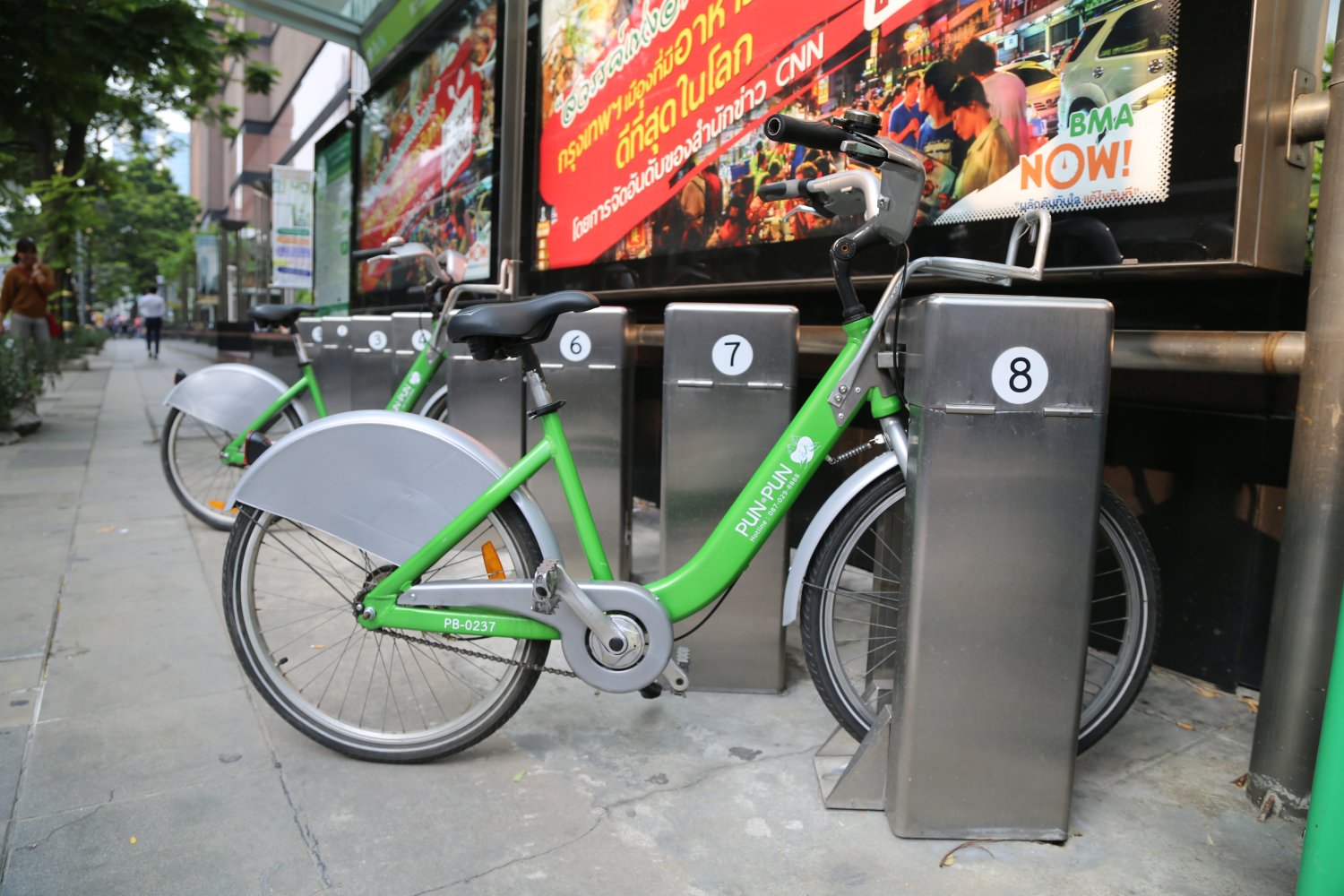
Bicycle ride sharing services are found in a number of cities around the world including in Bangkok. Pun Pun Bike Share Program was founded in 2012 in Bangkok with merely 2 curbside rental stations; today they offer 50 rental stations spread among select parts of central Bangkok with a majority spread out along Sathon and Rama IV Roads. Not setup for the casual tourist who randomly stumbles into one of their stations – rather is setup for locals or those who plan ahead. The reason being is in order to use a bicycle, one needs to fill out an application – either online or in person at one of the select registration booths (open only during certain times).
What would be much better is if these stations were coin or credit card operated to service anyone who wants to use them. Prices start for 15 minute increments up to over 8 hours. Website is currently in Thai – but interested parties can fill out an application (available in both Thai and English) to obtain a Pun Pun smart card – visit: www.punpunbikeshare.com
Bus Rapid Transit (BRT) is operated by Bangkok Mass Transit, the operator of the Skytrain. Opened in 2010 and currently operates 16 kilometers of roadway with 12 stops ranging from Ratchapruek in the Thonburi side of Bangkok connecting to the Talat Phlu Skytrain stop and at the other end, Sathon -connecting to the Chong Nonsi Skytrain stop. The service route is roughly in the shape of a U.
The stops are located in the center of the road with a dedicated lane for the BRT bus (although in places we have seen other vehicles driving in this lane).
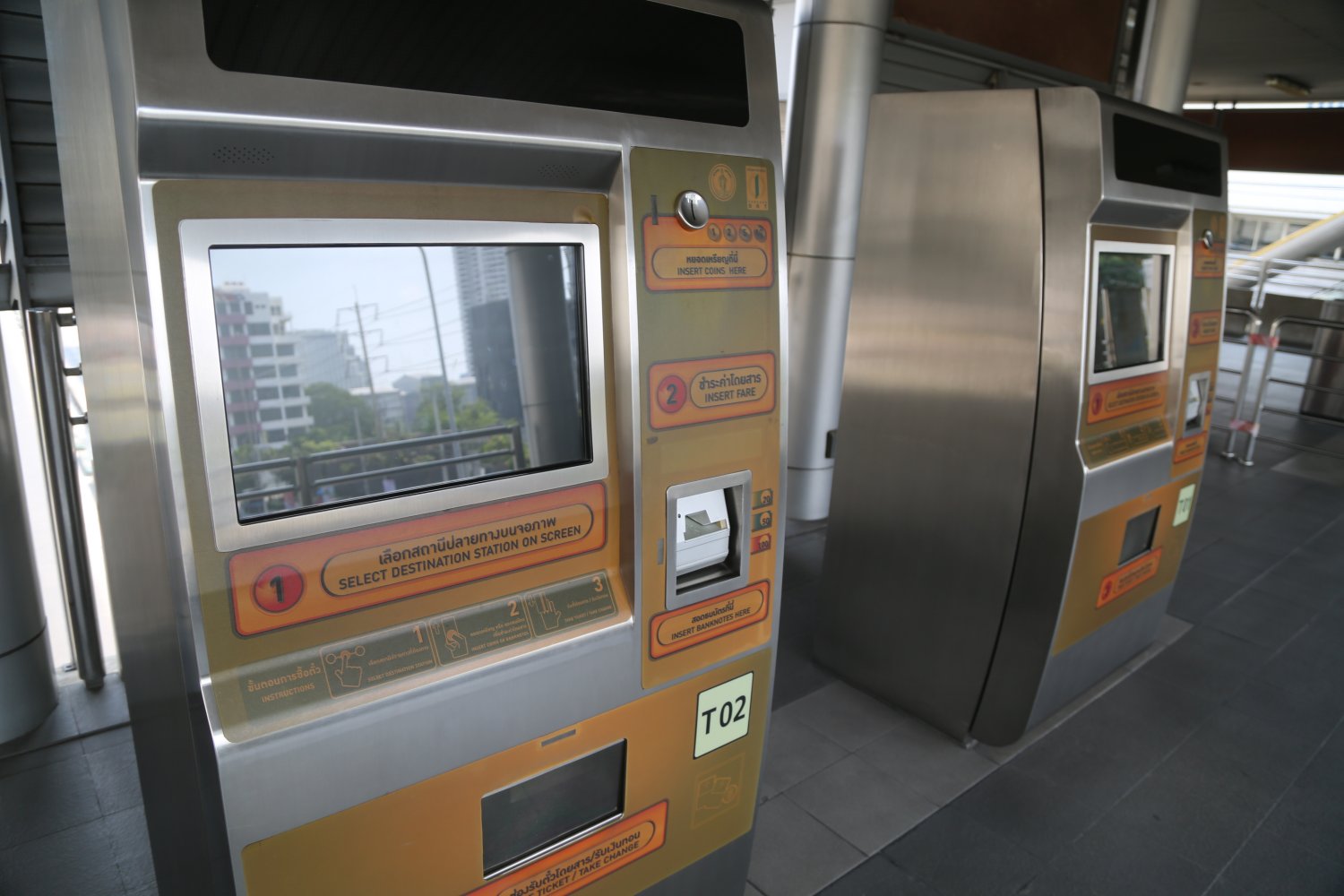
Similar to the Skytrain, users must purchase a ticket from the touch-screen machines outside of each stop – the price depends on the length of the journey. The machines accept both coins and bills up to 100baht. Plastic cards are then issued which will be tapped on the readers at the ticket stalls to enter the stations. Then walk to the island platform (either by stairs or escalator) where the bus will stop. All buses are air conditioned.
During peak times they stop every 5 minutes, during non peak times every 10 minutes – every stop is announced inside the bus prior to a stop. BRT runs from 6am until midnight. Compared to the core stations on the Skytrain where it is common to see many tourists, the BRT services mainly locals.

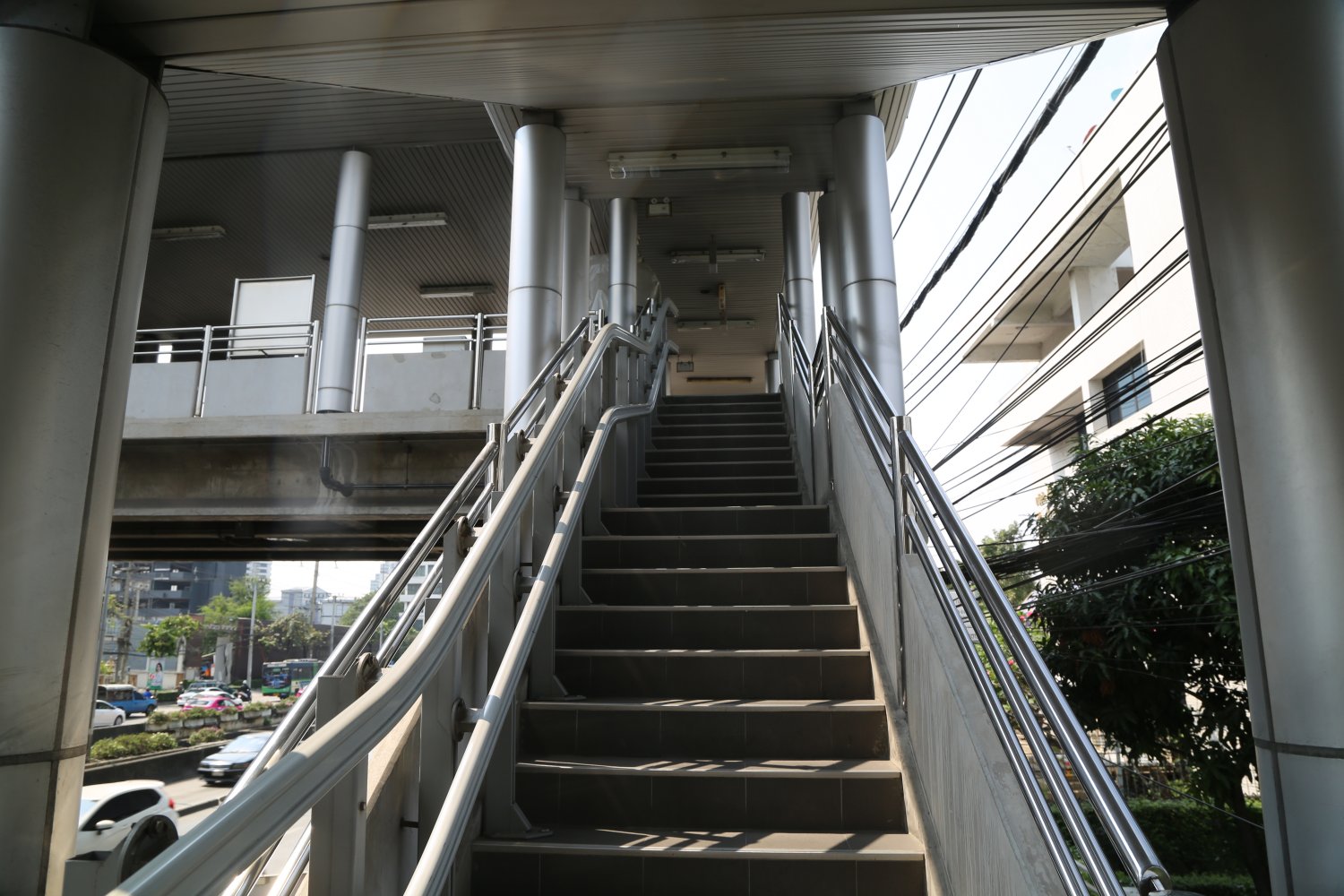
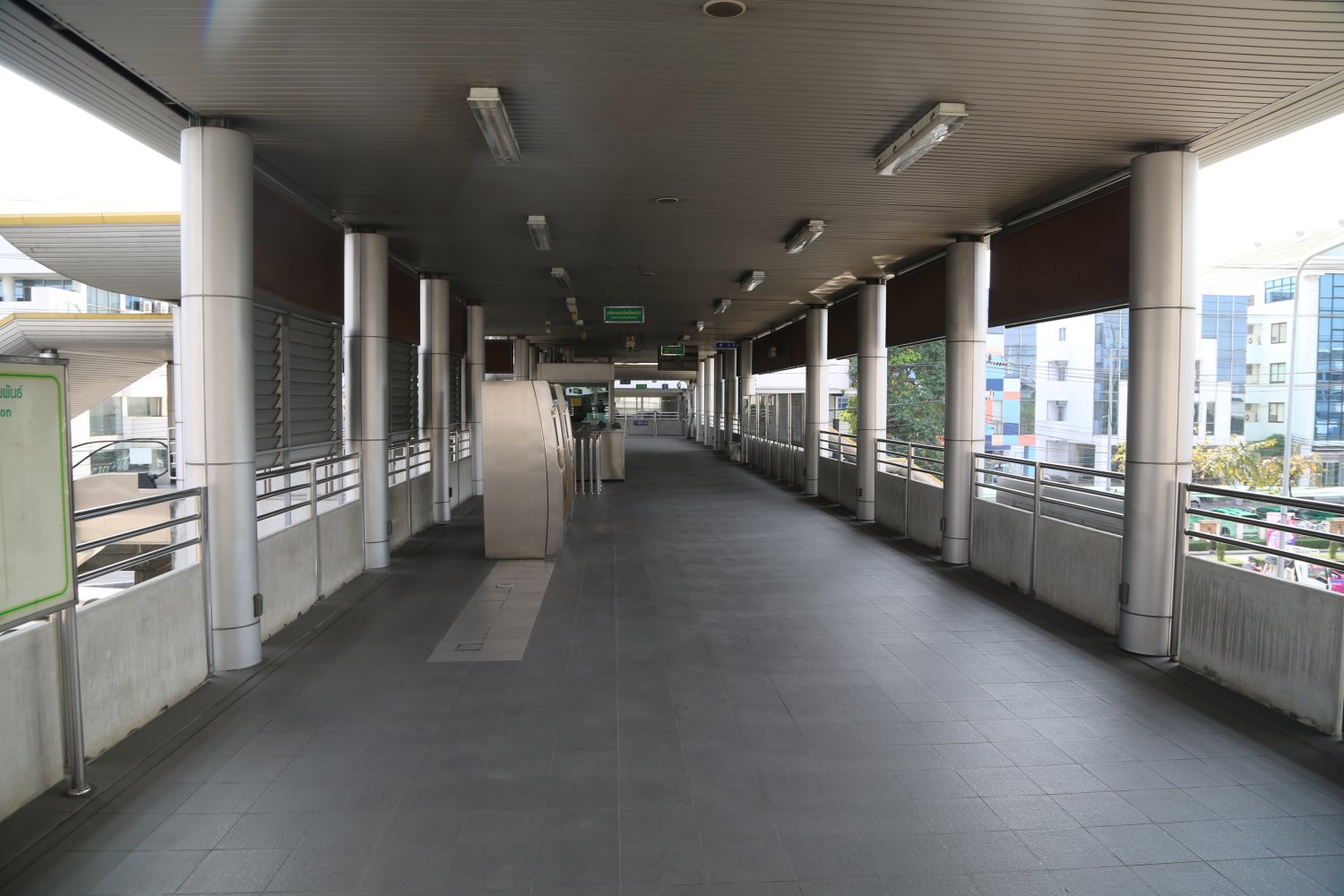

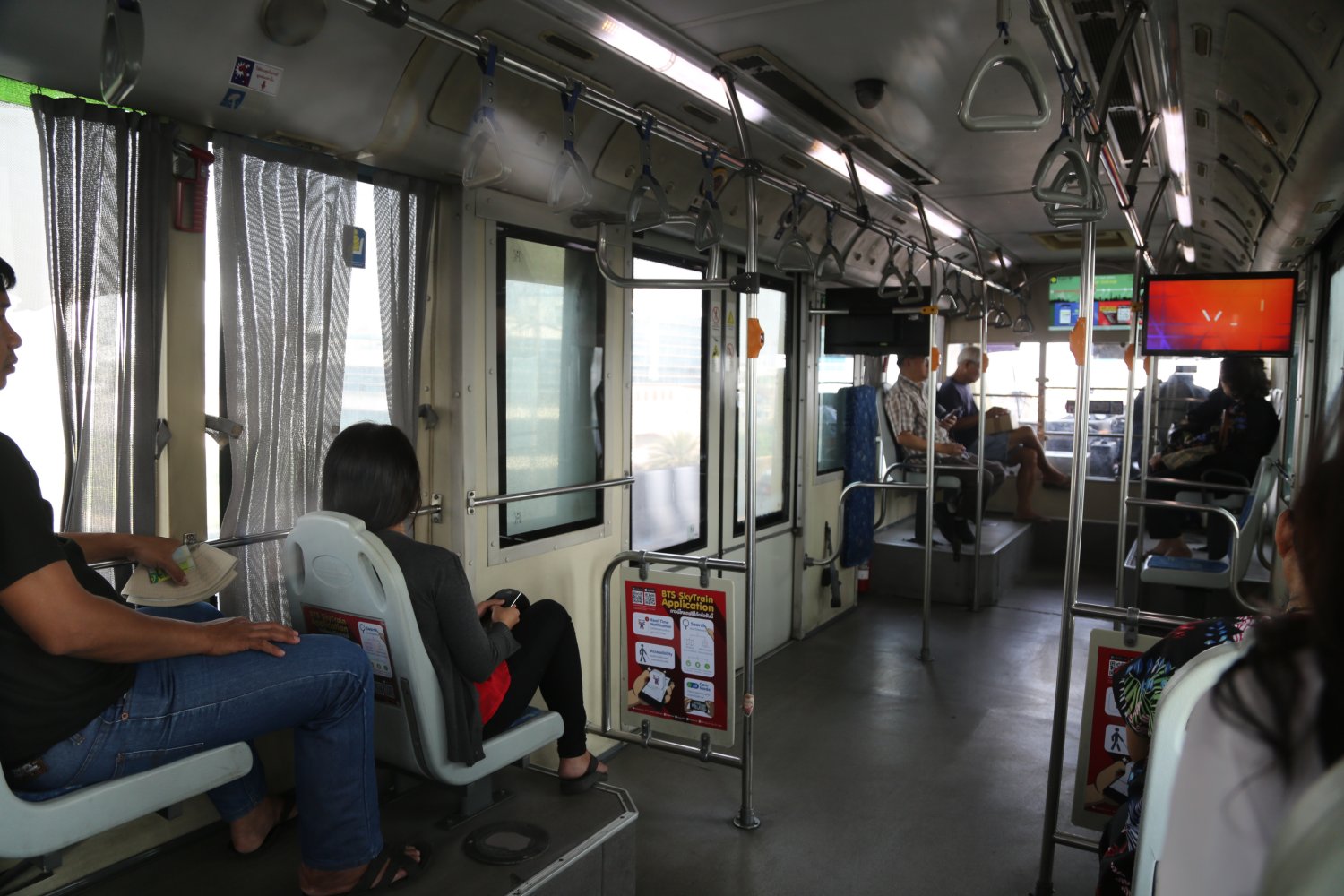
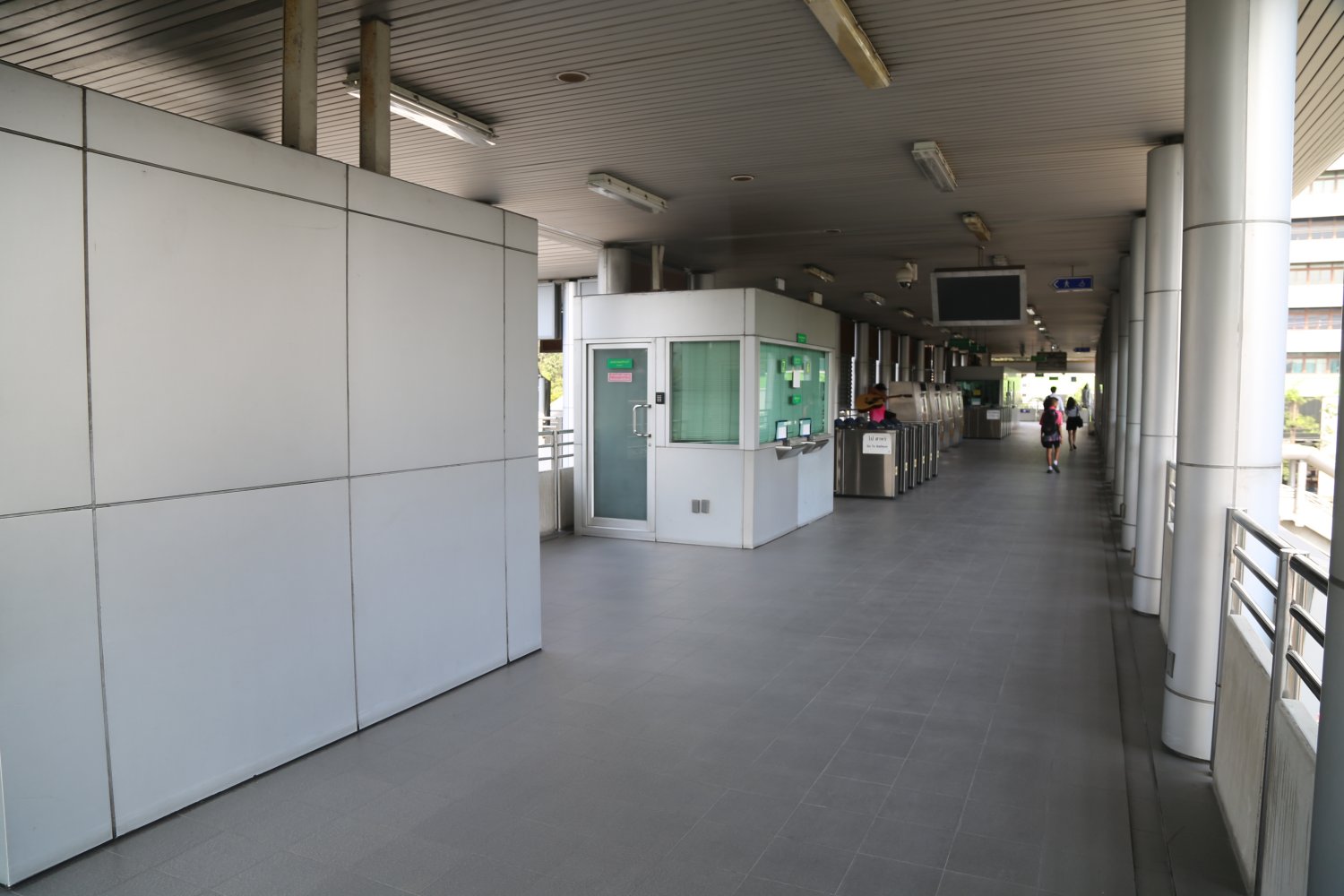
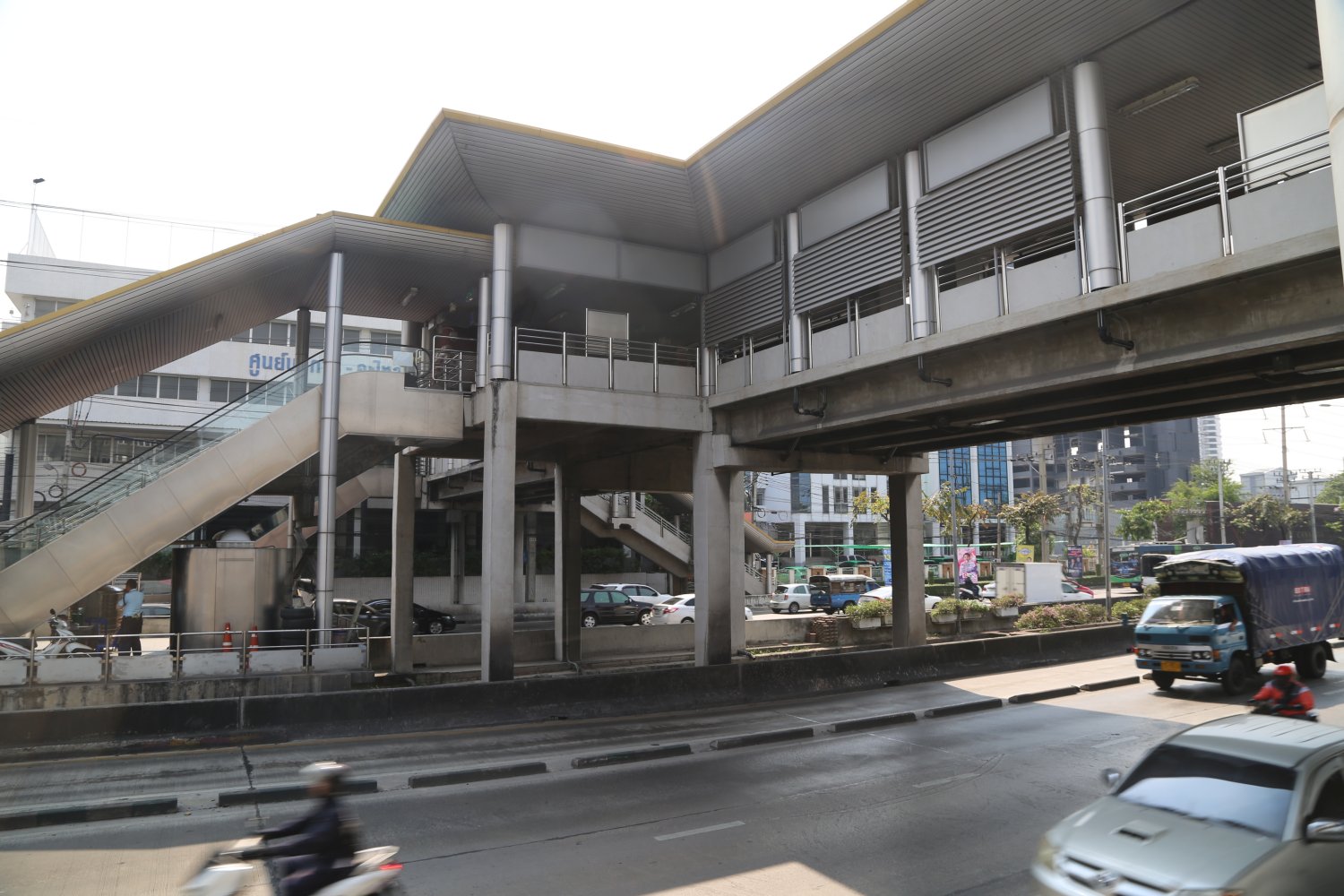
BTS Skytrain was under construction for about 10 years before the original route was finished in December 1999. In part, the reason it took so long to finish construction is because the city had to purchase land from local businesses so that they would have the space to build the Sky Train. The Sky Train towers over several large roads including the congested Sukhumvit Road – you can’t miss it. There are stairs leading up to each station from each side of the main road; some stops have escalators. All the actual trains have excellent air-conditioning. This is quite a relief to sit in one of these for a while after walking around the hot humid streets of Bangkok. Try to sit in the middle of each skycar as that is the furthest away from the doors that open – hence affords you the coldest part of each train! Also TV screens are located in each car – not always on, but when they are, they typically play Thai commercials or music videos.
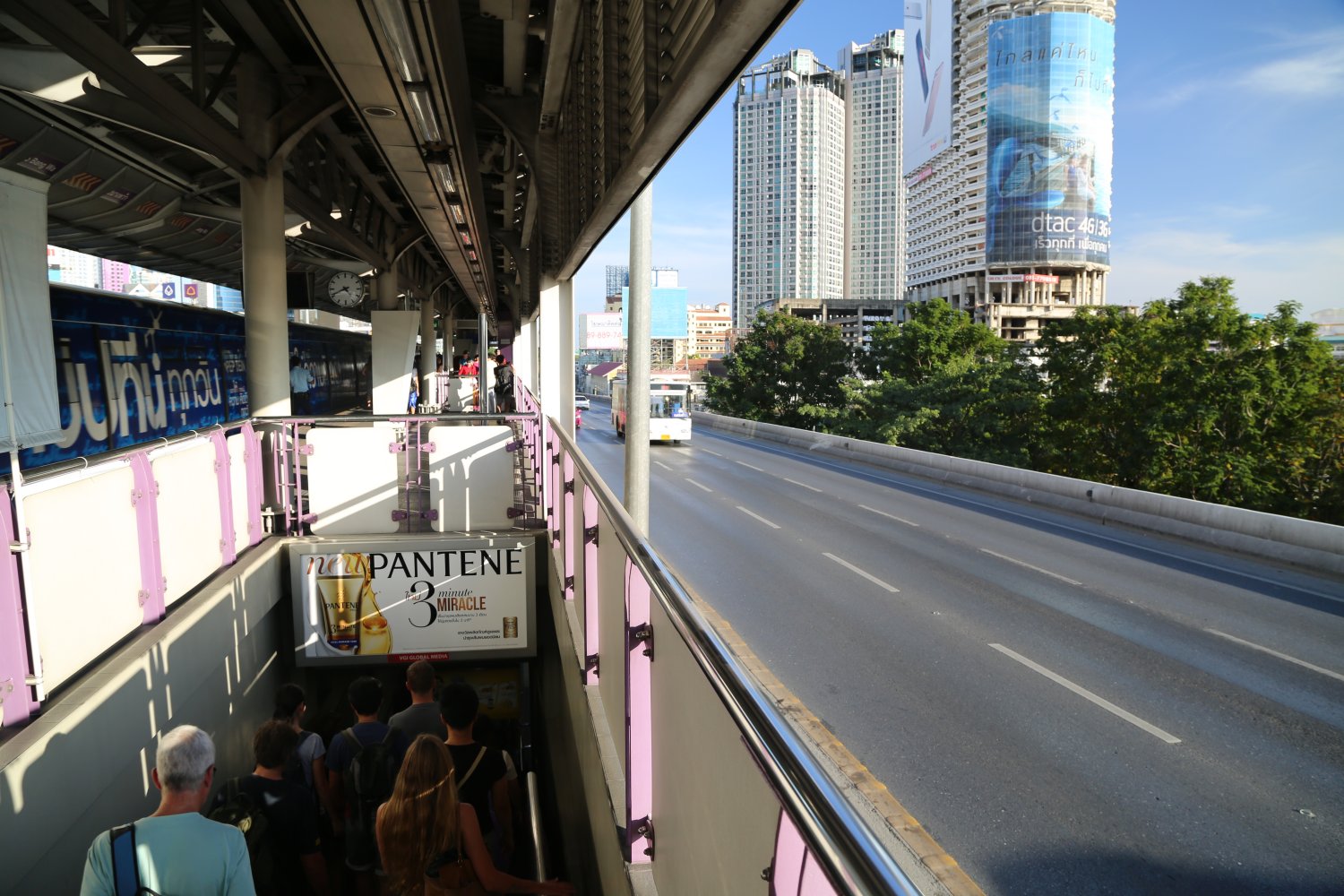 There are two lines to the Sky Train – the Sukhumvit Line and the Silom Line. The Sukhumvit Line is by far the longer of the two lines. In order to change between the two lines, you do so at the central station called Siam which intersects the two lines. At this station be sure to note the unique phenomena we have coined as the “Siam Sucking Sound1“!! If you are on the Skytrain at this stop, you will surely see what we are referring to!
( 1. Siam Sucking Sound as defined by Dave describes the Siam Skytrain stop which is the busiest Skytrain stop as it is at the junction between the two main Skytrain lines. People frantically rush in and out of the trains at this stop – almost like they are sucked in and out! )
The price of travel ranges from 30 baht to 60 baht and is charged based upon the number of stops you have to travel for (1, 5 and 10 baht coins work in the ticket vending machine). However at each station there is a small attendants office where you can give them larger bills and they will give you change in return.
It would be real nice at some point for all the ticket machines to start accepting paper bills (rather then just a select few). That would save a lot of time. Be sure to also pick up a free small paper pocket map from one of the attendants – either from them directly, or from on the attendant counter or from a plastic display – or download a Bangkok metro map to your mobile device ahead of time. There are also very good Skytrain maps posted on the wall near the coin machines.
 Before you actually purchase a one-way ticket, consider how many times you will be using Skytain that day and calculate the total cost. The reason for this is that an unlimited Day Skytrain pass is available for 140 baht, and allows you to ride for unlimited stops for the entire day (until midnight). Besides allowing you to ride unlimited for the day, there is also the neat feeling you have when you exit the Skytrain – instead of “losing” your card to the exit machine like the vast majority of the Skytrain travelers, you keep your card. And you certainly save time over those who wait in line to put in their coins into the machines to buy one way tickets.
If you purchase the unlimited option, you will hold on to the Skytrain pass each time you exit, and you keep the pass when you are finished riding for the day – a nice little plastic souvenir with a picture. Skytrain also sells student and monthly cards discounted off of the normal prices. Each car of the Skytrain has seats with signs over them saying “Please offer this seat to monks” in case it is crowded and monks have no seats.
Directions on Paying at Ticket Machine
First you need to look at the map next to the ticket machine and determine where you are going (this is based on the exact number of stops you will make). You need to press the button indicating the number of stops you want before you put in the coins. Once the button is pressed, the actual button lights up, and you put in the coins and the machine spits out a wallet size plastic card; unlike in years past, a map of the Skytrain is no longer printed on the cards (the size of the coverage has outgrown the space on the cards).
Entering the Station
After you purchase your ticket you will walk to the main entrance gates which are merely a few meters away. In 2018 the Skytrain transitioned from slot entry to tap entry – so all visitors who enter a Skytrain station must tap their card on the top of the entry stall to access the station. A beep indicates access and the red plastic gate slides apart in the middle of the stall. You are then admitted to the main part of the station. From here look at the blue hanging signs and determine which direction you will walk. The signs list the LAST stop in each direction – so if your stop is anywhere along the line that contains the last stop, you would go in that direction. Note a few stations have different levels for the different directions of travel.
You will want to keep the plastic card with you until you leave the Sky Train. When you arrive at your final destination on the Skytrain route, in order to get out of the station (if you have a single journey ticket) you insert the card into a slot and the gates open for you. If you have a Day Pass or longer continuous use pass, you simply tap the card on top of the stall to exit.
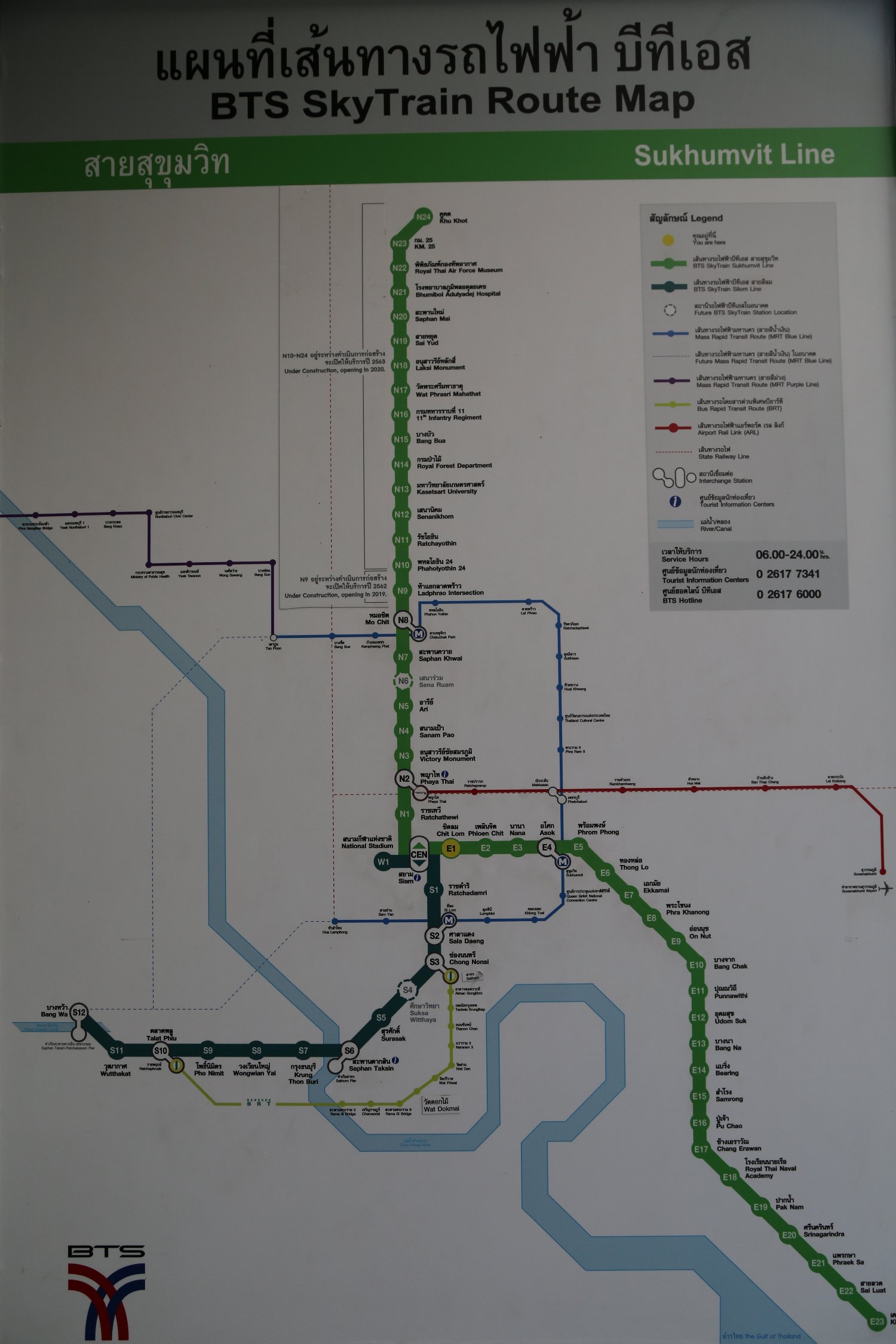 Note: Some of the machines at the entrance will have a red circle with a white line through them. A very common mistake is to try to put your card into one of these machines to gain access to the station. If you try to put your card into one of these machines, you will just get a whirring noise. If you keep trying to put your card through, an officer of the law will approach and indicate you need to use another stall/gate – one that displays a green arrow!
Note: The Skytrain completed a new expansion that opened in August of 2010 with service from Suvarnabhumi airport to central Bangkok (see the “airport” section above for more information about this. Expansion continues outwards on both the Silom and the Sukhumvit lines and in recent years additional stations have opened allowing for greater access to points further from the core of the city.
One additional item to be acutely aware of is the Saphin Taksin skytrain stop on the Silom Line. There is only one track here and trains need to stop and wait for the other train to proceed. As a result one of the platforms features trains running both directions and one needs to be cognizant of which direction you need to go in – so that you don’t end up boarding a train going in the wrong direction. Every train stop on skytrain has security guards but they are a bit more vigilant here in helping tourists get on the appropriate train based on your destination.
And on the Sukhumvit Line at the Samrong stop, note that to continue in either direction one must get off the train here and walk the very short distance to the other track across from where you exited your train – to board another waiting train continuing in the direction of your travel.
BTS Rabbit Card is a plastic card that can be purchase, used or topped up at any Skytrain stop. The intial cost is 200 baht of which 100 is applied to the card. Users can then top up this plastic card with real cash at any of the top up locations. In addition to use on the Skytrain, this card is also accepted with BRT (Bangkok’s rapid transit bus system) and a select number of restaurants (mainly fast food), food courts and other retailers. More details here: www.rabbit.co.th
Official web site www.bts.co.th
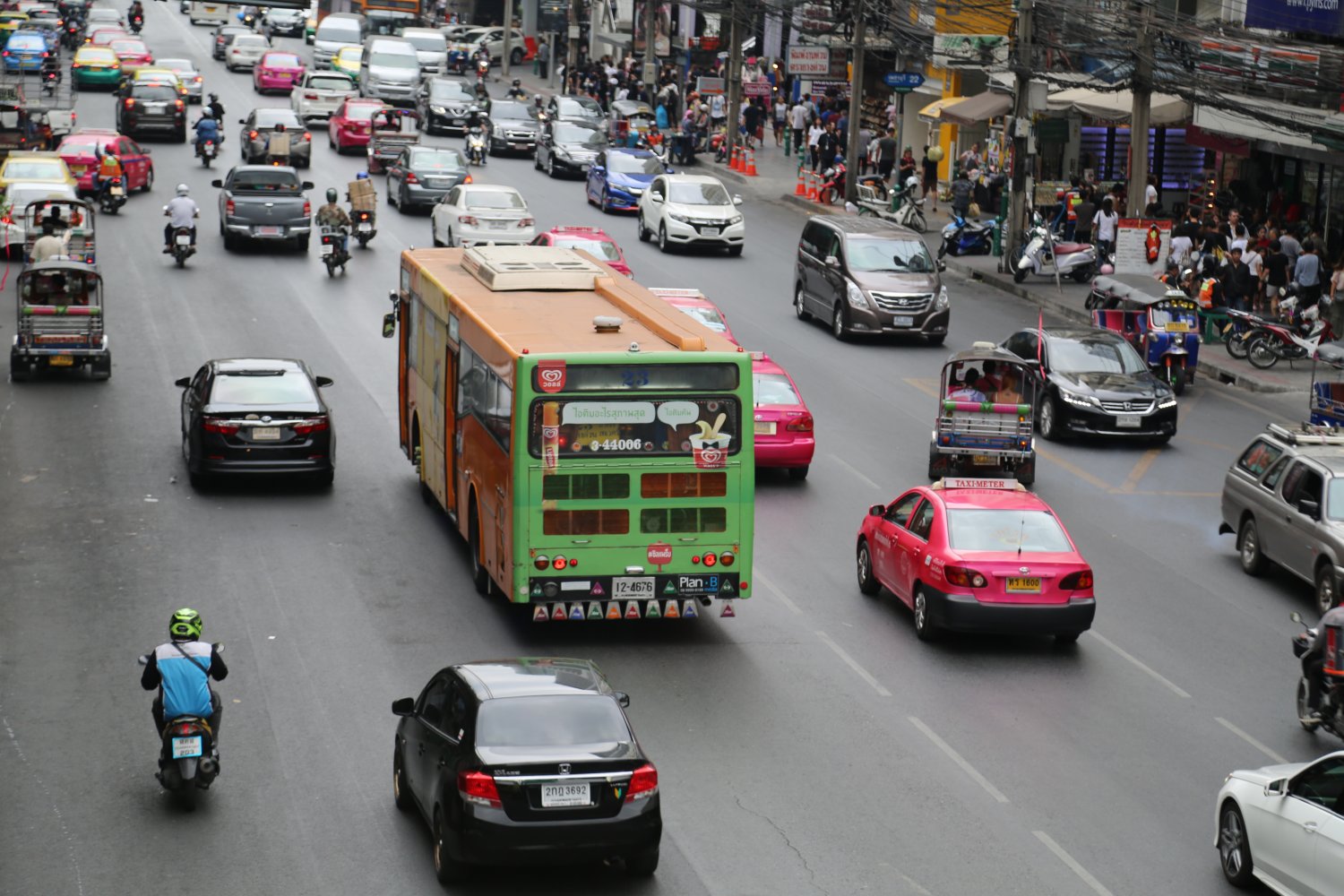
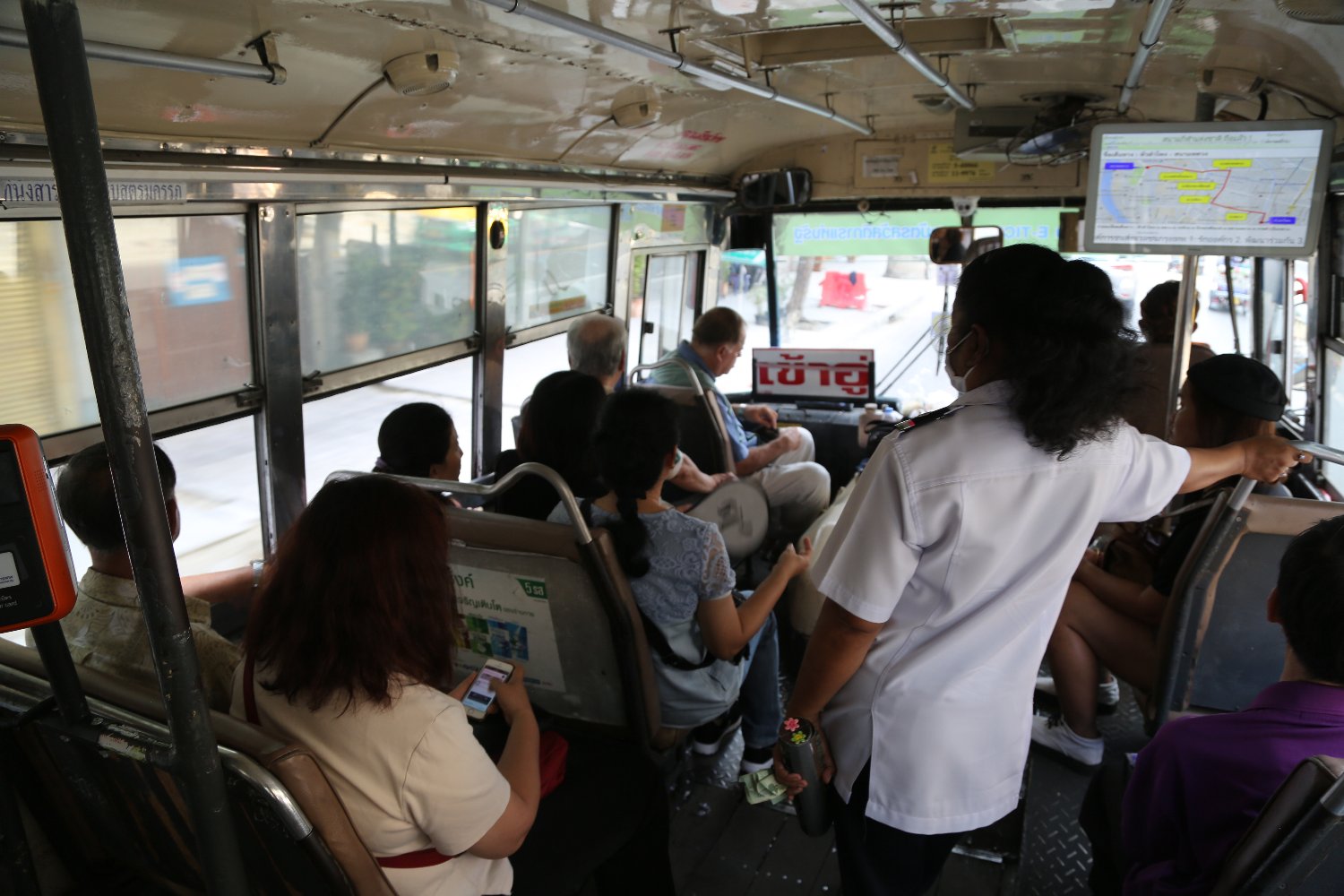 City Buses There are two types – Air Conditioned City Bus and the Ordinary City Bus – non-air conditioned. The fare for the length of a particular bus route in Bangkok is 8 baht for the ordinary open window buses. Beware of pick pockets if the bus is particularly crowded.
Those who work on the bus rarely speak English and typically you won’t see hardly any foreigners using the ordinary City Bus. The fare for the air conditioned buses range from 11 to 30 baht. Bus numbers are displayed on some bus stop signs, but not on all of them. You need to know the bus number and the route before you get on.
Armed with Google maps, sometimes we jump on a city bus if it is going in the general direction of where we need to go. Keeping a close eye on the map – if we find the bus turns away from where we want to go, we will get off. A red button is generally located near each of the doors – pressing this will alert the driver that you want to get off at his next stop.
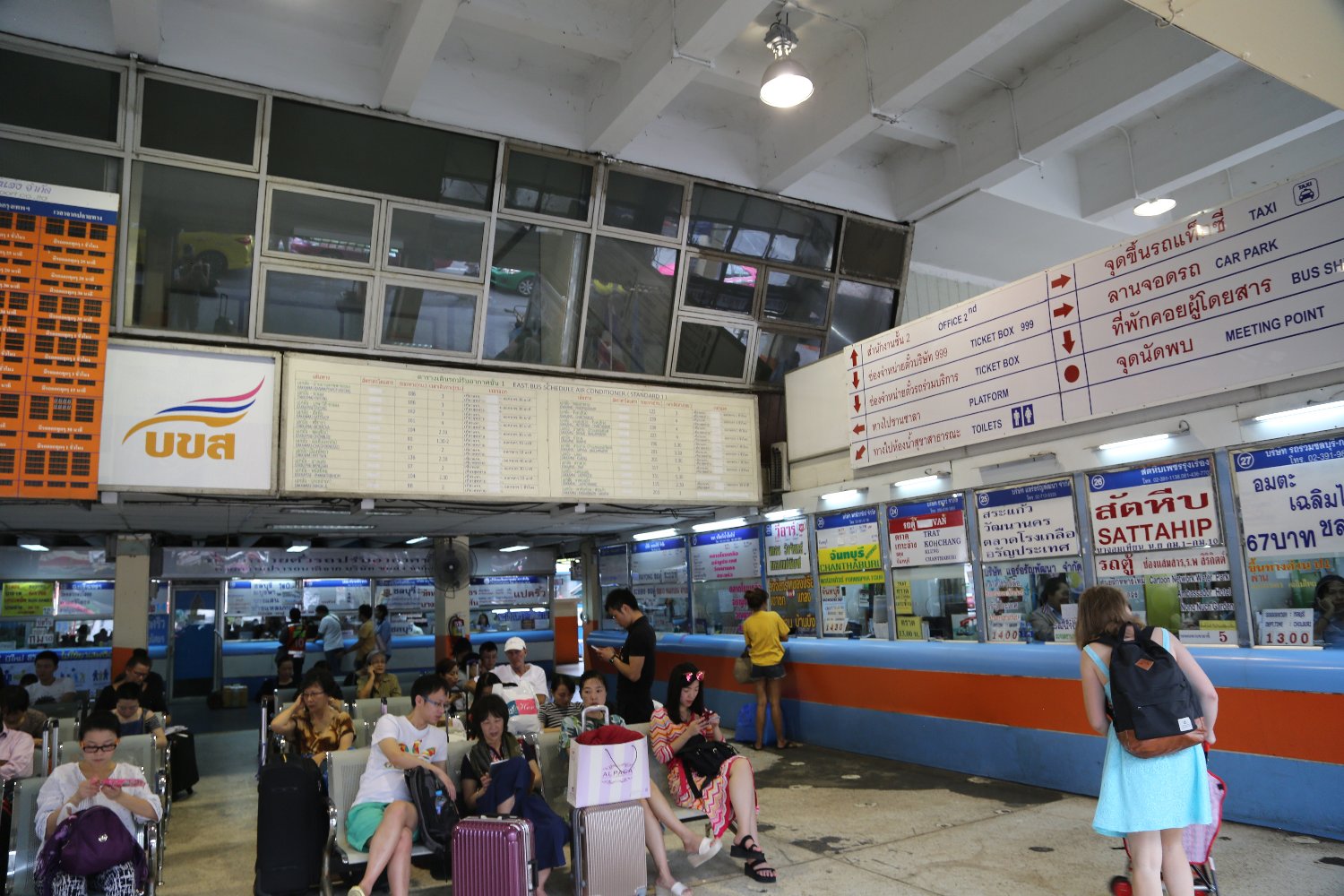
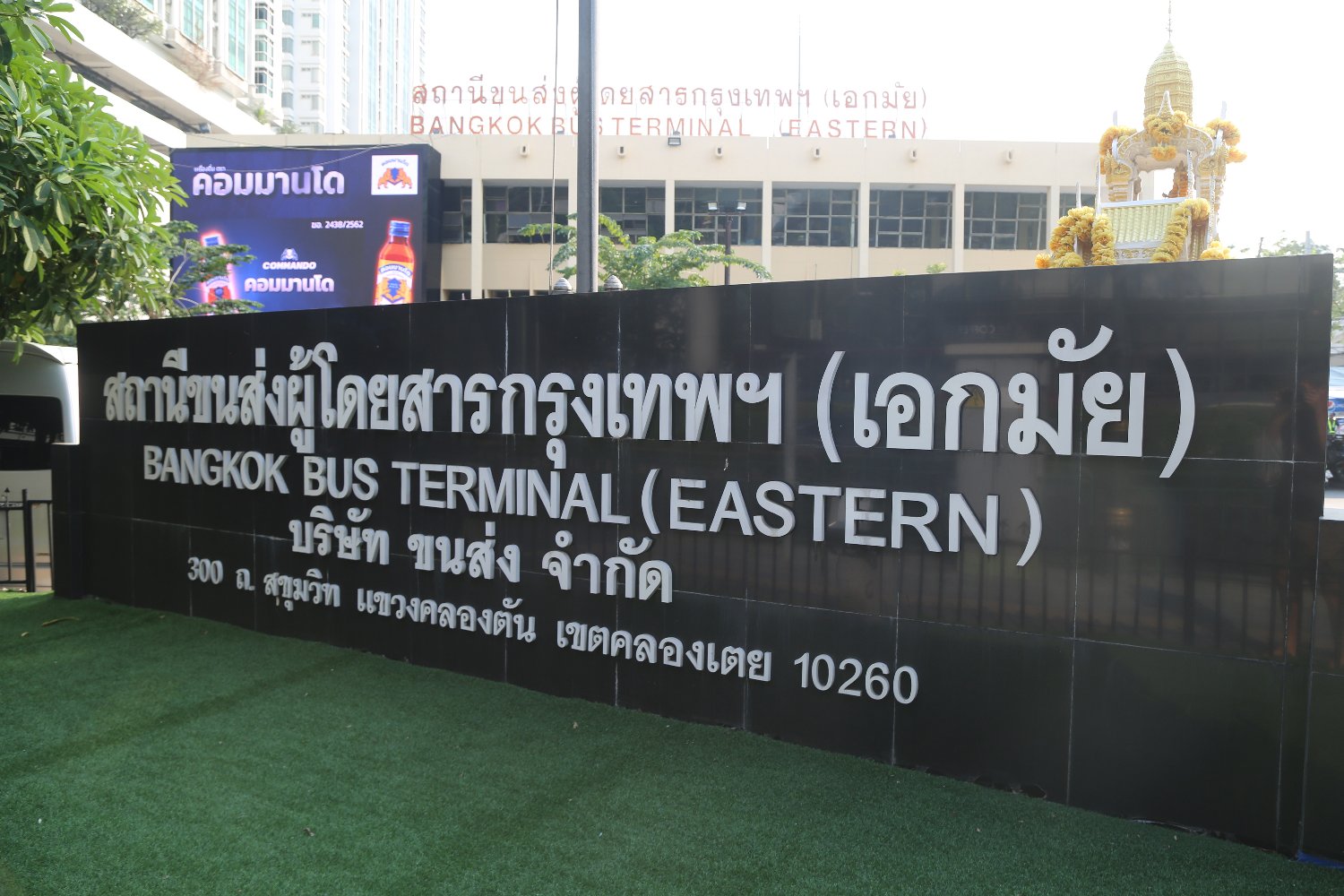 Long Distance Buses – There are three main bus terminals in Bangkok. Eastern Bus Terminal is located on Sukhumvit Road at Soi 40 opposite Soi 63. Conveniently located, the station is within a very short walk of the Ekamai stop on the Skytrain (exit number 2 or number 4).
Passengers going to the Rayong Province, Trat and islands located near Cambodia, ie Koh Chang – and Pattaya would use this station (Pattaya is a popular destination so vans generally leave every half an hour). A number of mini-vans that used to bring visitors to various parts of the country are now setup here as well. As far as bus stations go, this is a very small one with around 25 pull-in bays for vans or small buses to park. Multiple transportation companies have ticket counters here.
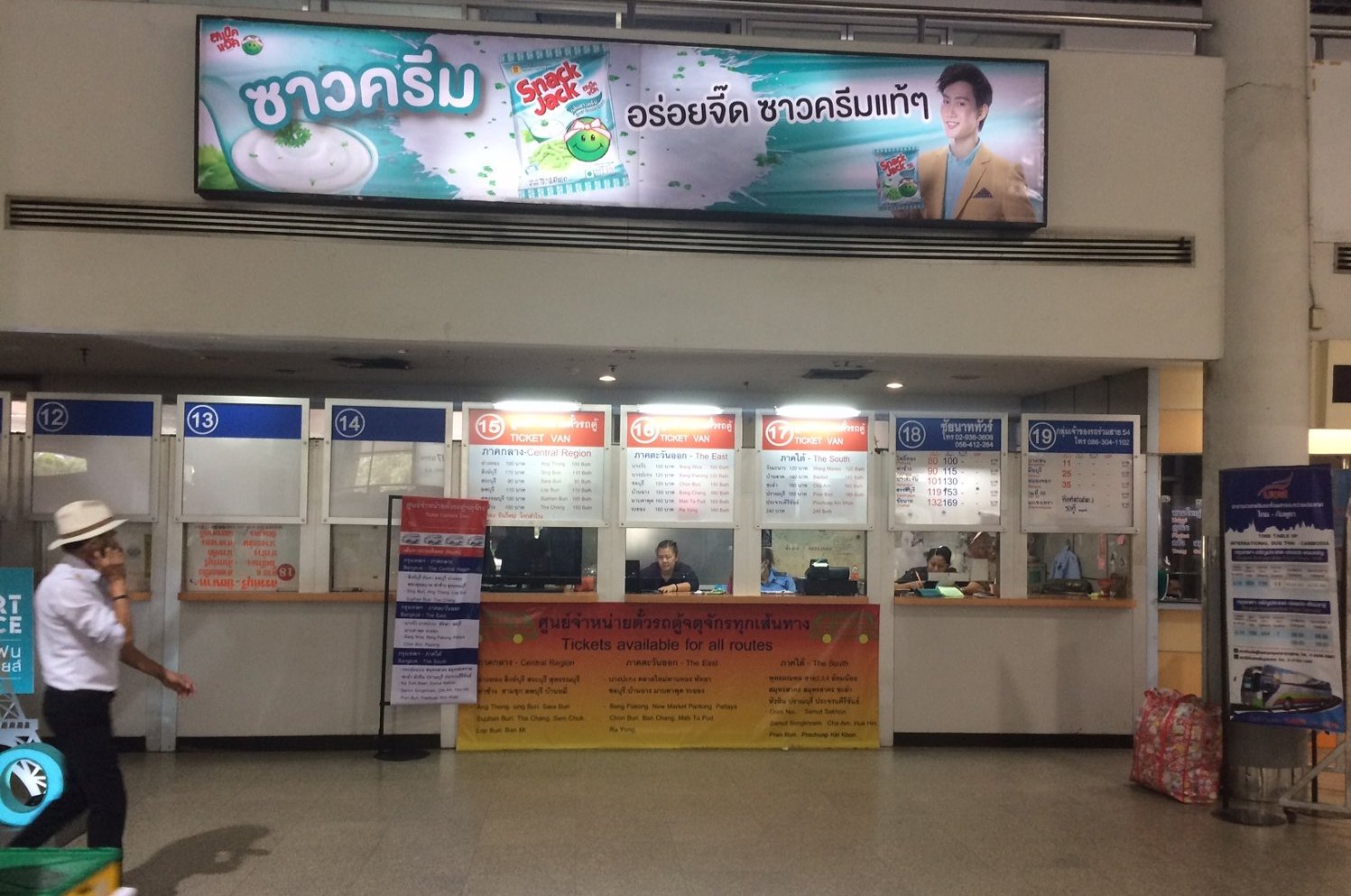
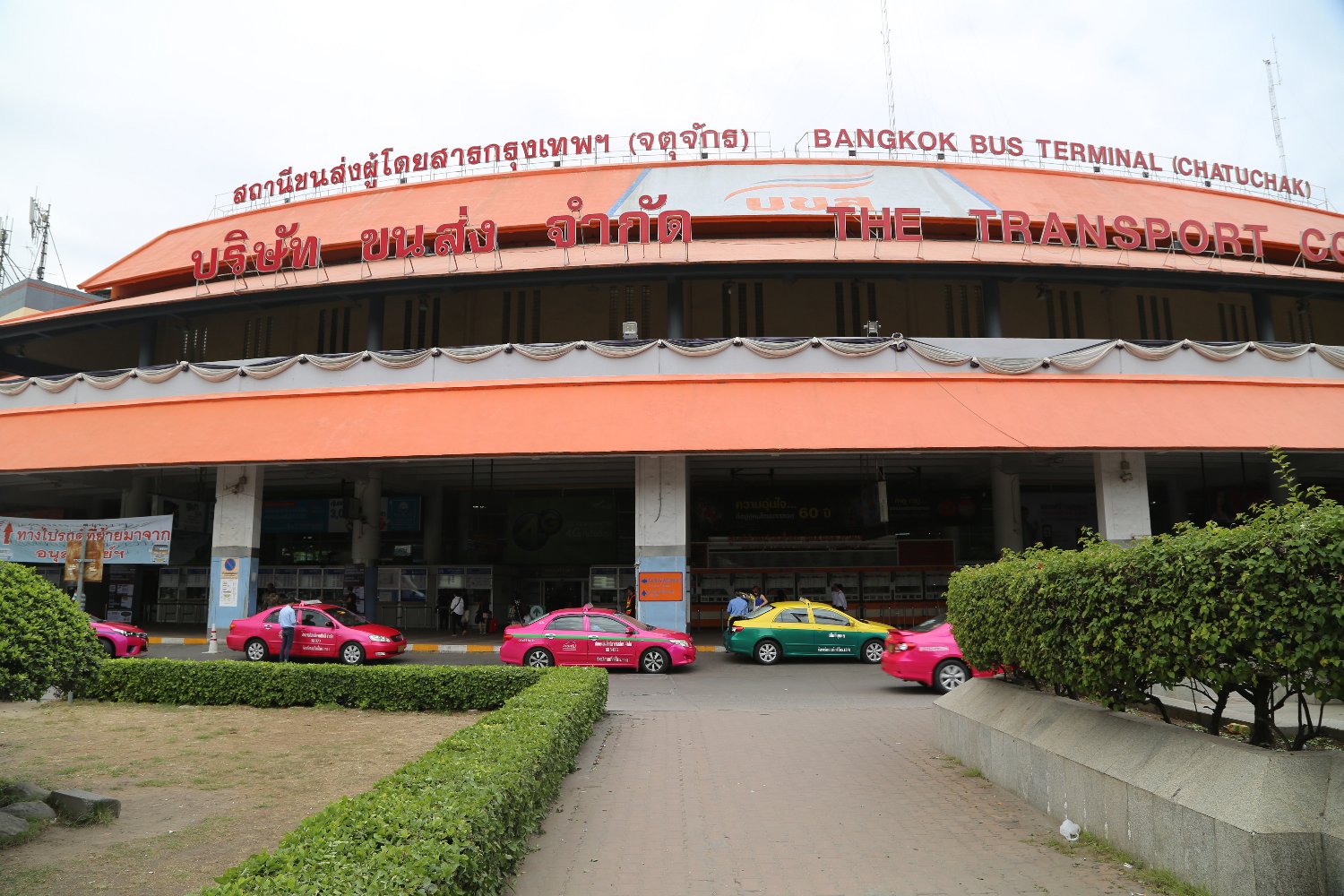 Mor Chit 2 Bus Station. Take the skytrain to Chatuchuk Market (the Mo Chit stop) and then catch a waiting taxi or motorcycle ride to the bus station – about a 10-15 minute ride from the BTS. From here you would go to places such as Chiang Mai and Chiang Rai.
As far as bus stations go, this is a major one – huge, sprawling with many buses coming, going and or waiting to leave. Primary tourist destinations are signed in English at the ticket counter – other destinations less visited by tourists are only signed in Thai.
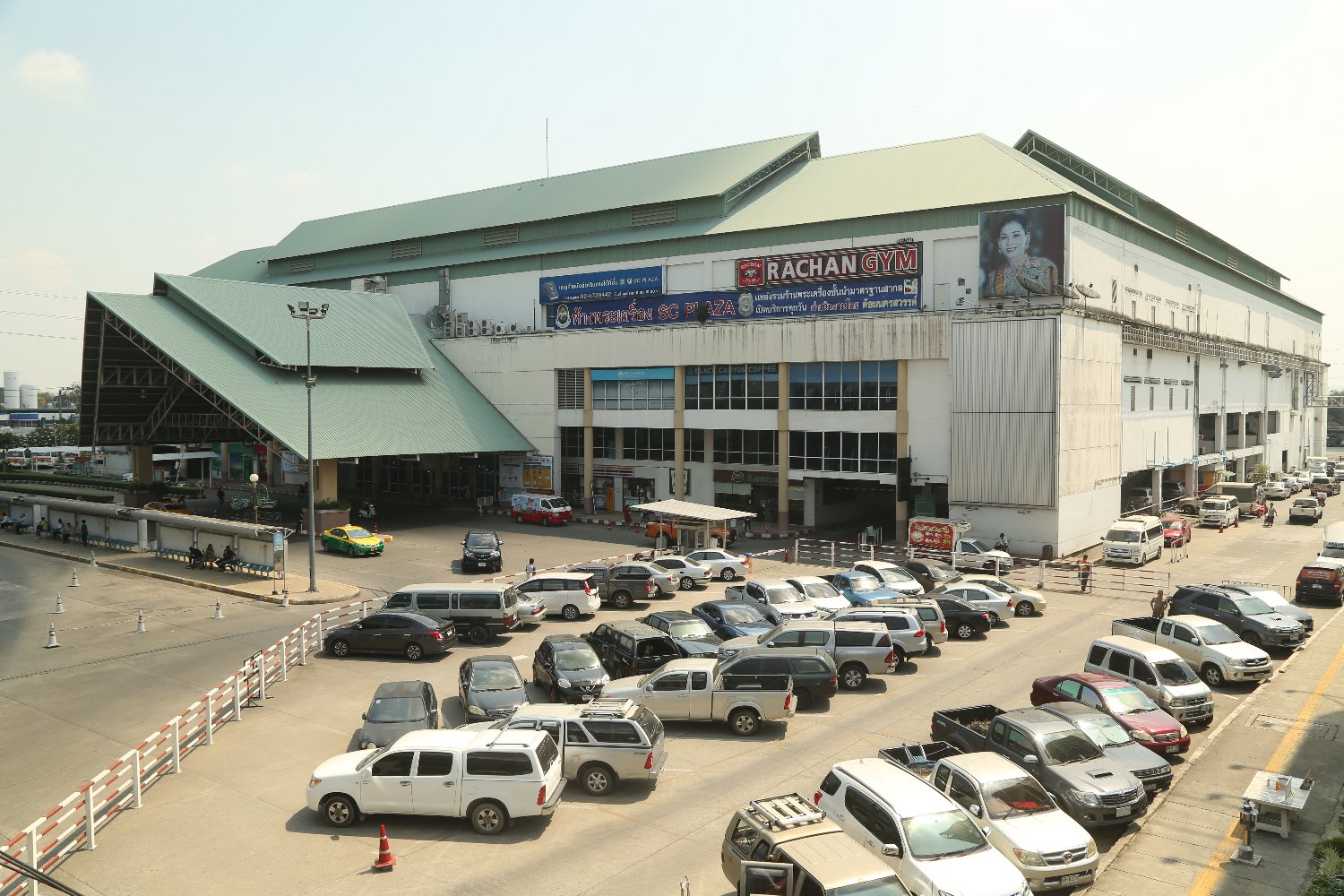
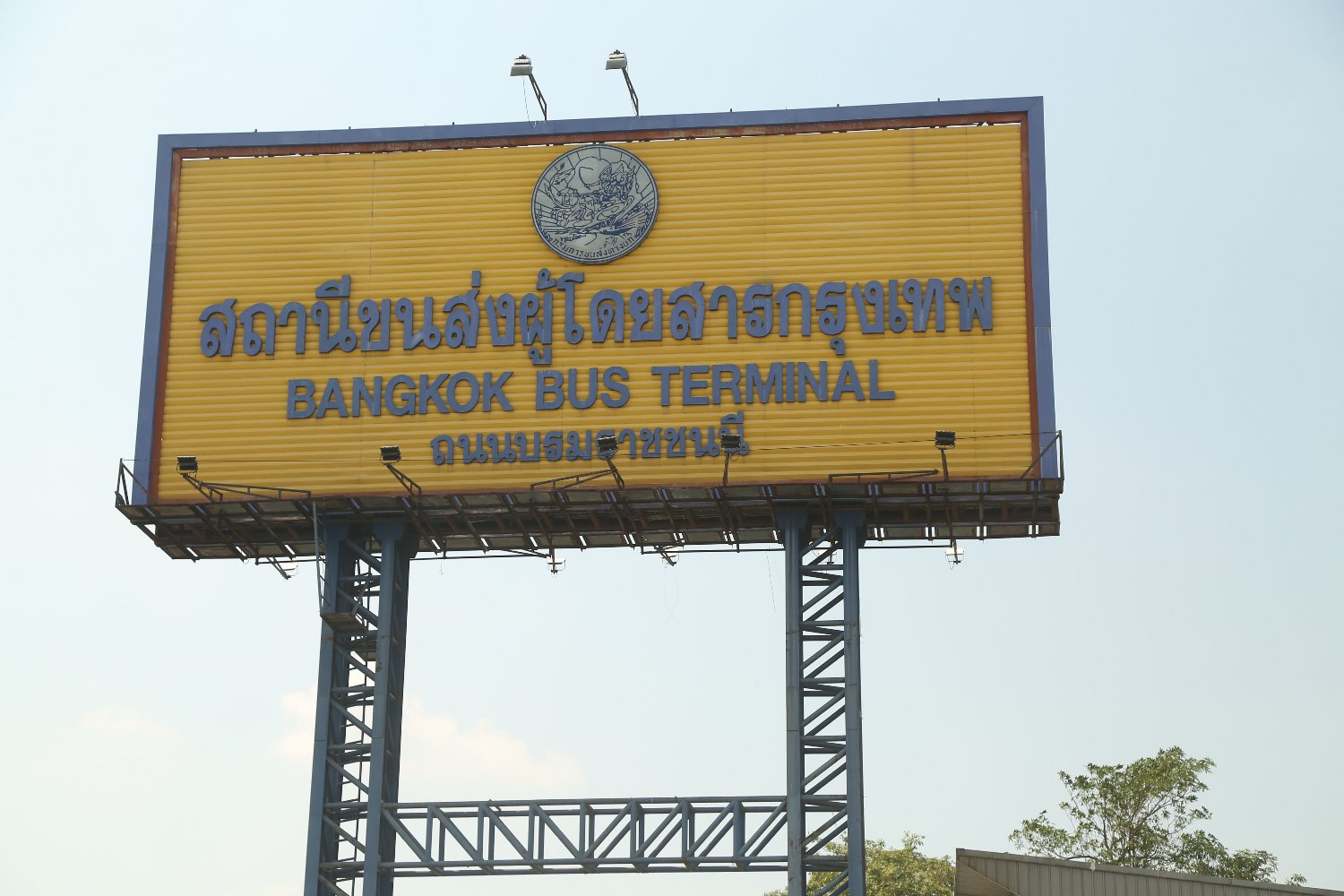 Bangkok Southern Bus Terminal or as the locals call it, Sai Tai (meaning southern direction in Thai) is located in the Taling Chan part of Bangkok – (not far from the Taling Chan weekend market). Not located immediately next to any public transportation stations, the closest would be the Bang Khun Non MRT Station – from here it is about a 10-12 minute taxi ride to the station.
This is a sizable station with numerous vans parked out in front waiting to depart to various destinations to the south or west of Bangkok. If one walks in front of the vans and the tiny ticket offices expect to hear a barrage of questions such as “where you want to go” or if you don’t want to be bothered, walk behind the ticket booths.
Sleeper and VIP buses also leave from this station for the far southern parts of Thailand including popular destinations such as Phuket and Krabi. One can also take minibus to Damnoen Saduak (famous floating market) from here.
And if one has extra time as invariably one does when hanging around prominent places of public transportation, be sure to check out the adjoining SC Plaza, a shopping mall. There are plenty of food options here.
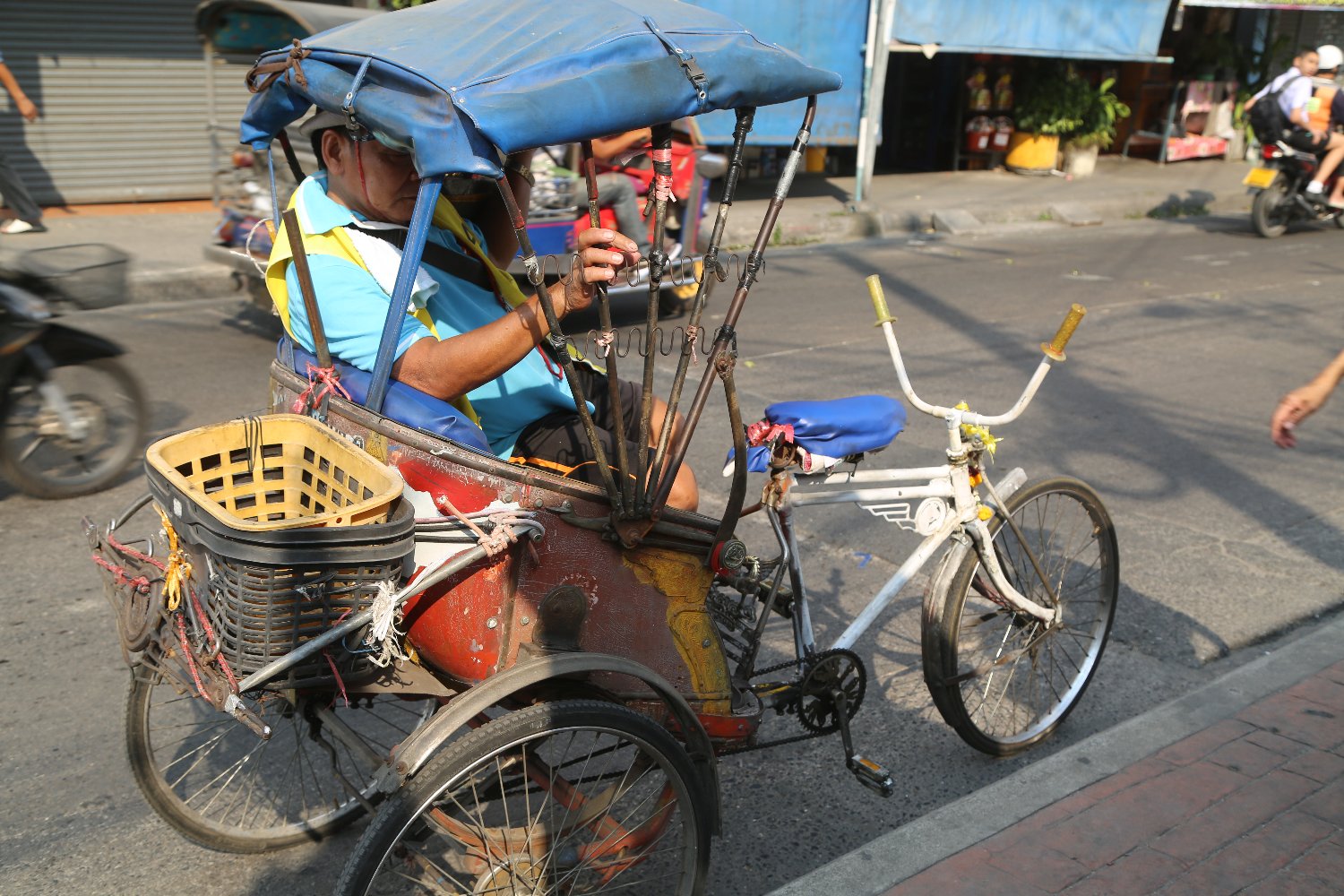 Cycle Rickshaw/Samlor
This human powered form of transportation is a modified bicycle with three wheels and a carriage. One wheel in front, two wheels in the back and a covered carriage that typically seats two adults or perhaps is wide enough for three children. Supposedly created in 1933 up in Nakhon Ratchasima by someone who combined a bicycle with a rickshaw.
One rarely sees these in Bangkok anymore as they are no longer allowed on main city streets (banned in 1964) due to their slowness and already heavy congestion. Sometimes one can see them on side streets in outlying parts of the city. They are ok for short trips where one is in no hurry and can also squeeze down small streets, where larger vehicles would be limited. A very rare site in Bangkok these days as the samlors have effectively been replaced by tuk tuks and motorcycle drivers. Although can sometimes see them in Phra Prapadaeng, the ‘green lung’ of Bangkok.

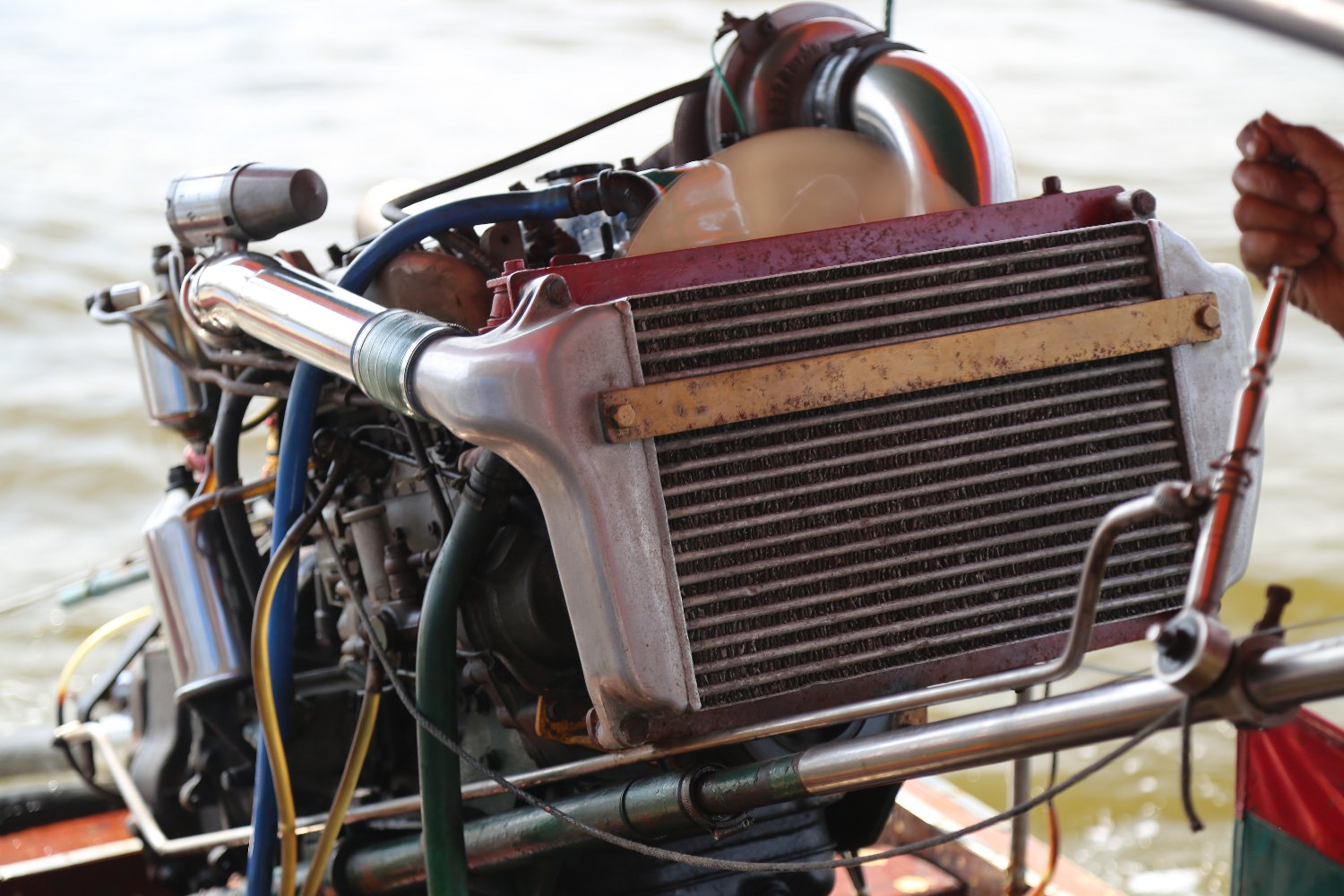 Longtail . These wooden very colorful boats contain several benches in the front while in the back is a huge engine with a long shaft that contains a motorized propeller at the end which extends from the end of the boat into the water.
The controller of the boat steers by moving this long shaft back and forth in the water. These boats are available for rent and touring but are more expensive than the ferry service.
These boats tend to take 1 or 2 hour trips for the tourists visiting the main river and several of the side canals – perhaps stopping at attractions along the way. The long tails also make trips down the side canals – not just along the main Chao Phraya River.

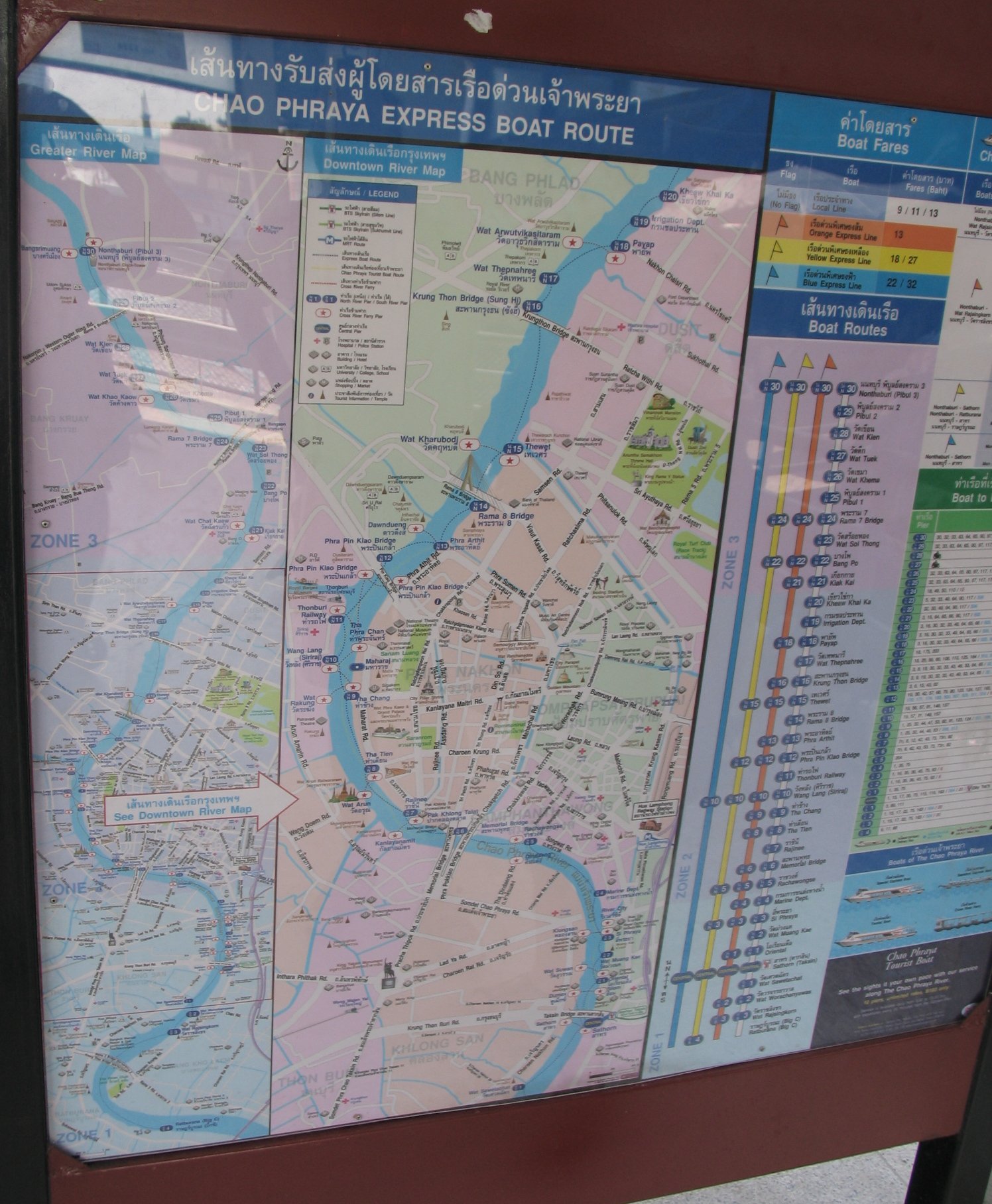 Chao Praya River is the largest and most central river running through Bangkok. Often times in the rainy season this river is quite dark (brown) looking from all the sediment runoff. I have also seen large piles of green plants floating down the middle in which birds seemed to have made these their temporary homes. There are many piers located along the edge of this river. Many small stands, usually fish and fruit vendors, congregate along here.
The river ferry is an inexpensive method of transportation to reach sights and attractions that are located along this river. It makes stops at most of the piers located along the river. There are also multiple places in which boats will cross the river such as between Wat Po and Wat Arun. The main express boats on this river are labeled with orange, yellow and blue flags – and the color of the flag determines which pier the boat stops at and which destinations it reaches. Note: sometimes its a bit difficult to tell the difference between the orange and yellow flags as both fade in the strong sun. At all the main piers along this river you will find Express Boat Route Map Boards – they list the current fares and route maps. We have included a sample map from one of these boards – click on the thumbnail above to see a larger version.
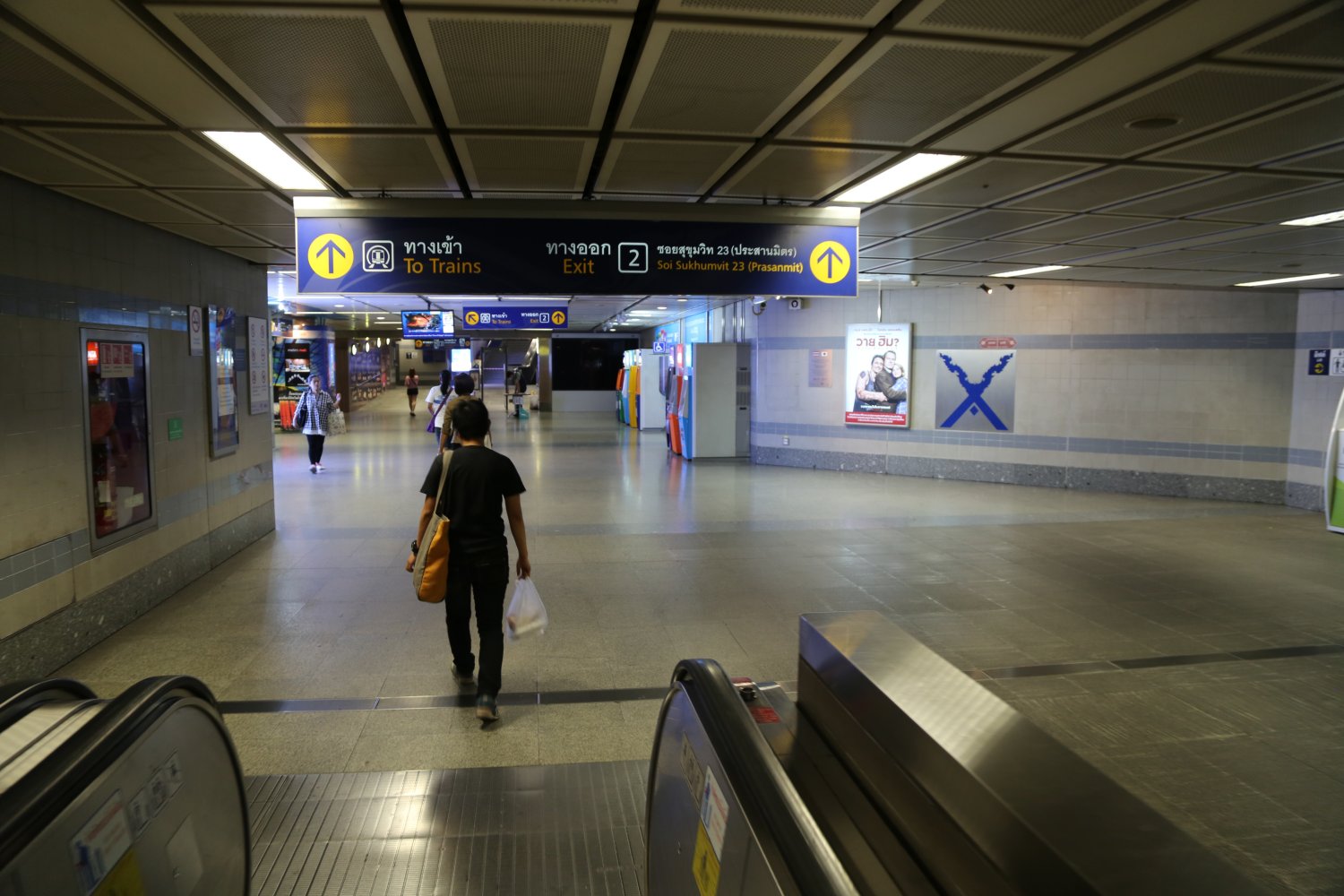
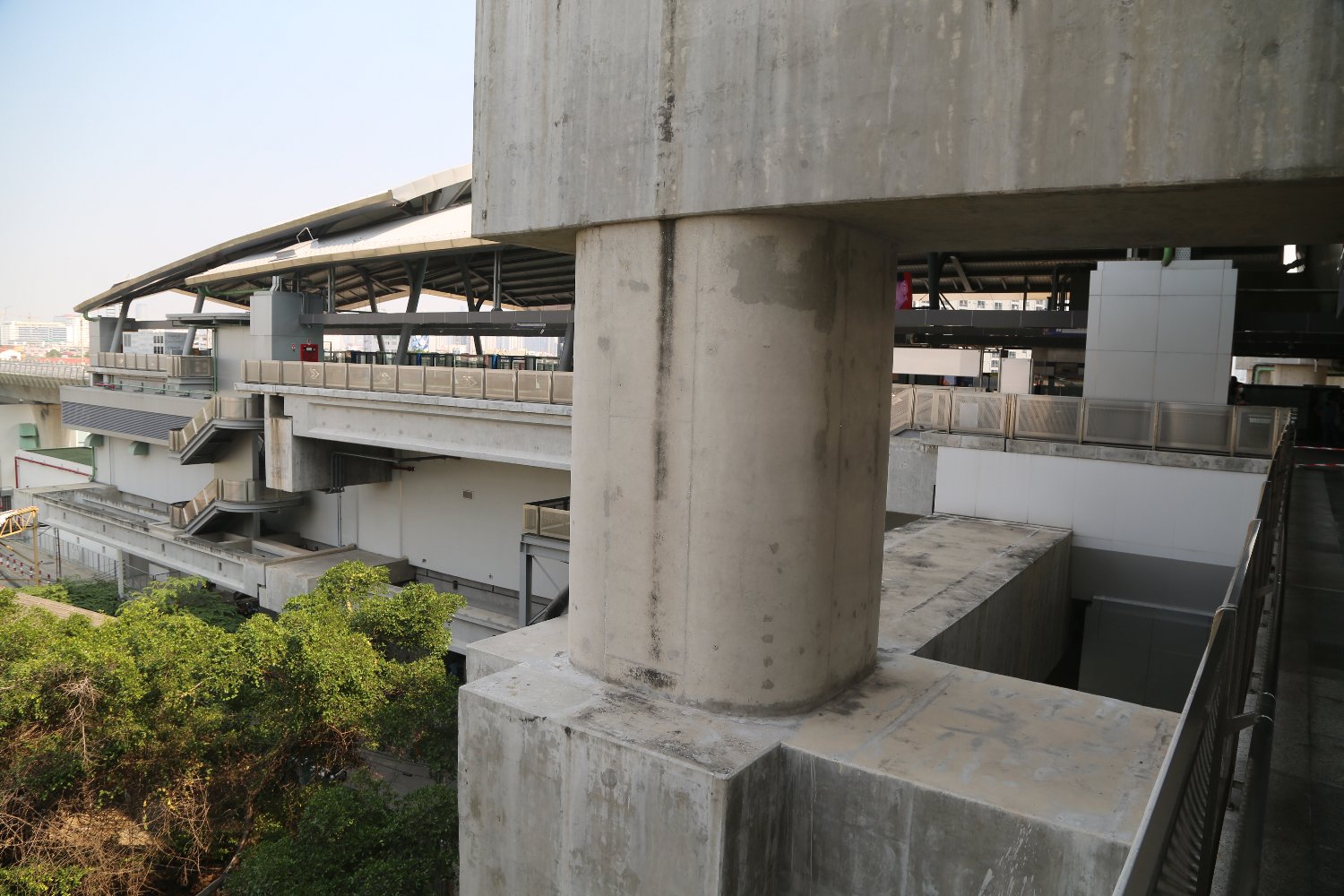 Metro (MRT) , the Metro Rapid Transit opened on July 3rd, 2004. We often ride the Bangkok Metro – it is very efficient, clean, well-laid out and safe. Originally built at a cost of 3 billion US dollars, it is state of the art.
It currently costs 18-44 baht depending on the length of a trip. Single journey tickets can be purchased from ticket machines located near station entrances. The machines are in Thai and English and are accessed via digital touch screens. Touch the station number to select a ticket – tickets can be purchased with both coins and paper money or a combination of both. Change is given as coins. Alternatively, ticket agents are located at each station and passengers may also purchase tickets through them (although at some of the busier stations such as Sukhumvit, the lines for the ticket agents are often far longer then those waiting to use a machine.
All passengers who purchase single journey tickets from either the machines or ticket agents will be given a small black plastic token which contains a record of the amount of money you paid for your trip. If you try to go further then the station stop you paid for on the metro – when you exit you will be denied and will be directed over to one of the ticket counters to pay any additional fees.
Frequent travelers of the MRT can purchase an MRT Plus plastic card (as of our latest update to our notes here, for some reason can only be purchased at Purple Line stations). And for reasons not yet fully understood, there is no single ticket one can purchase for use on both the Skytrain and the metro.
Security guards are stationed at the entrance to all the metro stops – passengers must go through metal detectors and if they are carrying a larger bag or backpack – they will be quickly searched by the security guards.
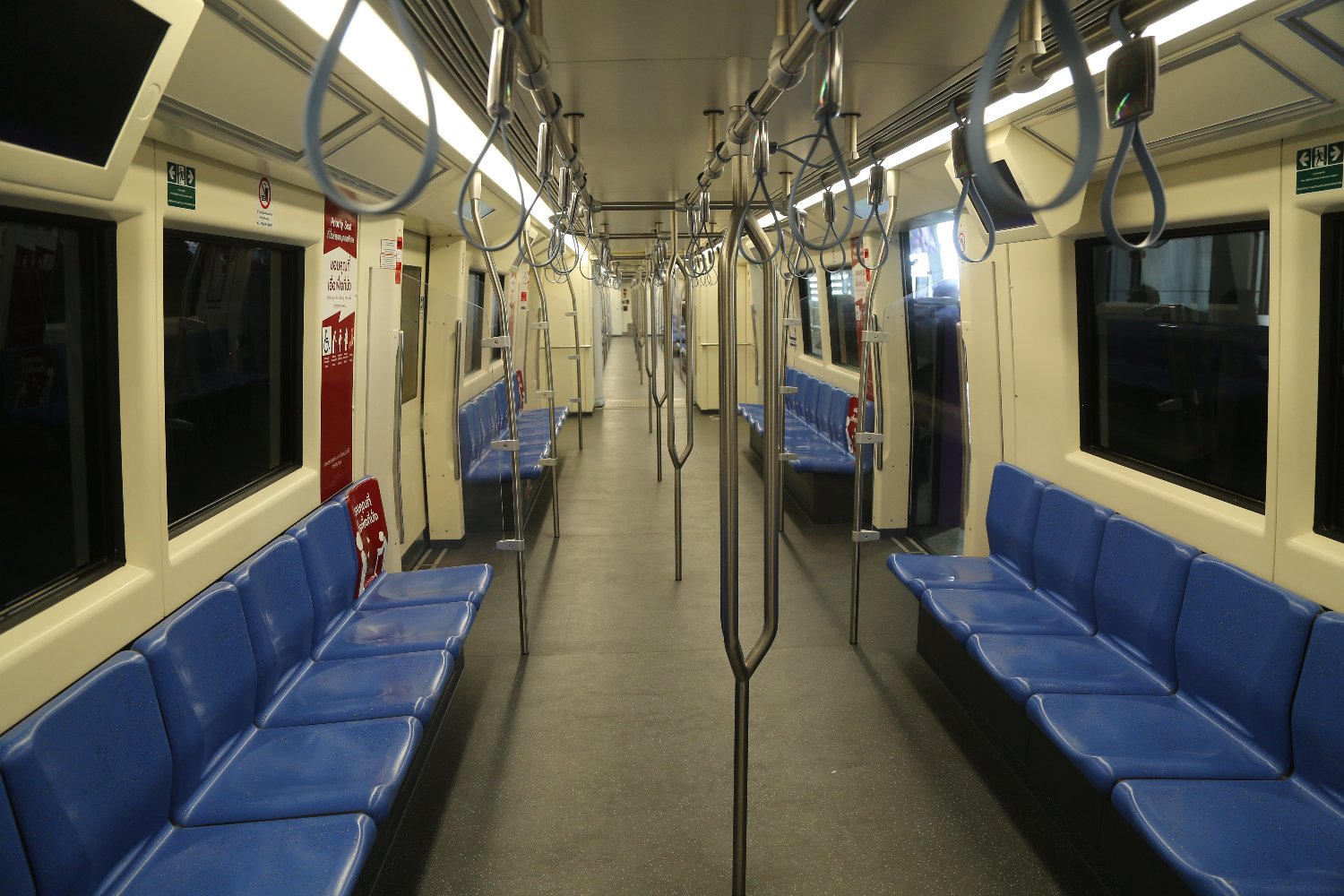
Inside the Metro Cars. Compared to some of the train cars at the busy skytrain stops, the metro cars are typically not as crowded. Some end of the row seats are considered priority seats, typically reserved for the elderly, monks, pregnant women or others in need. It is common for a young person to stand up and give away their seat to someone more in need. The announcements for each stop are given in both English and Thai.
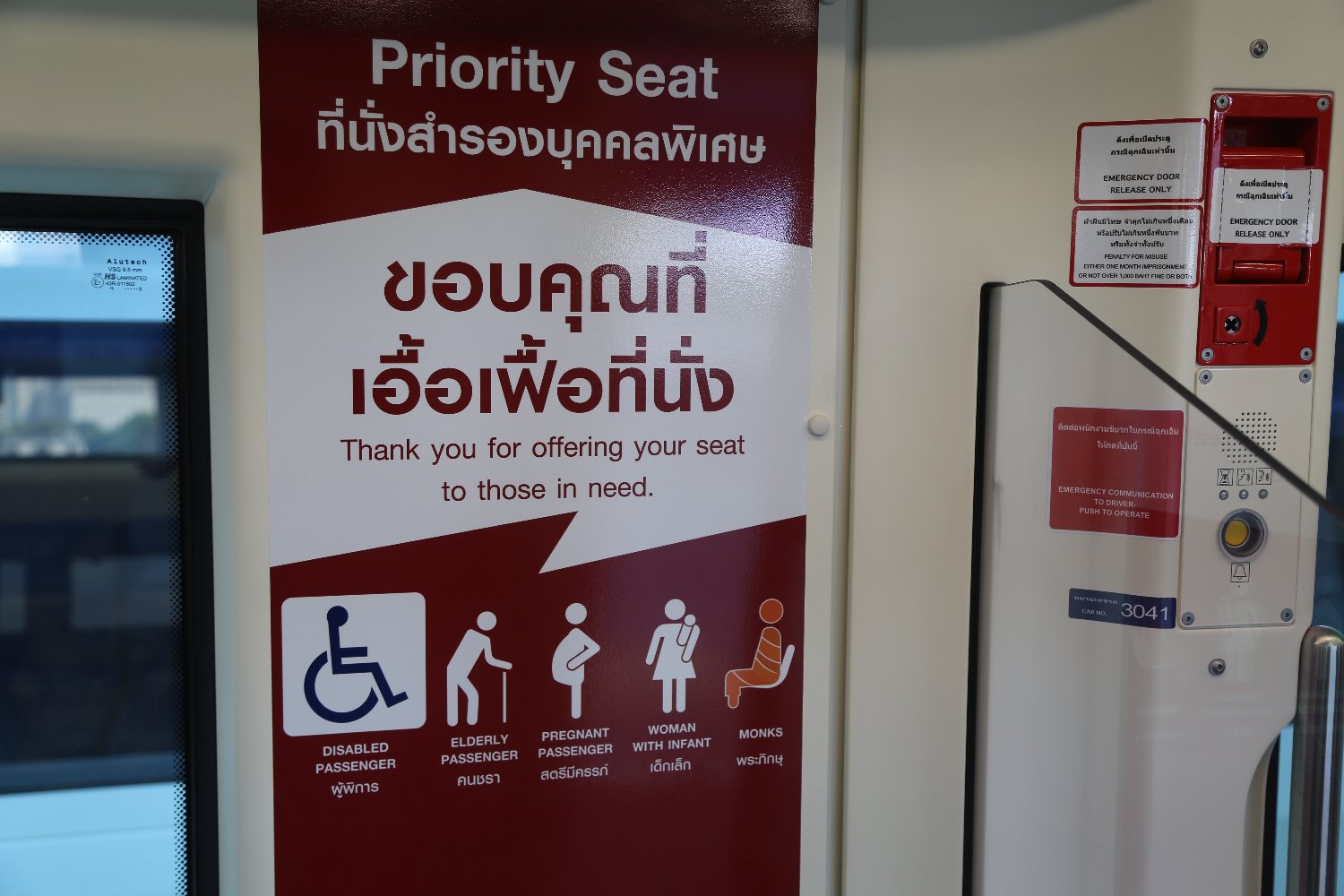
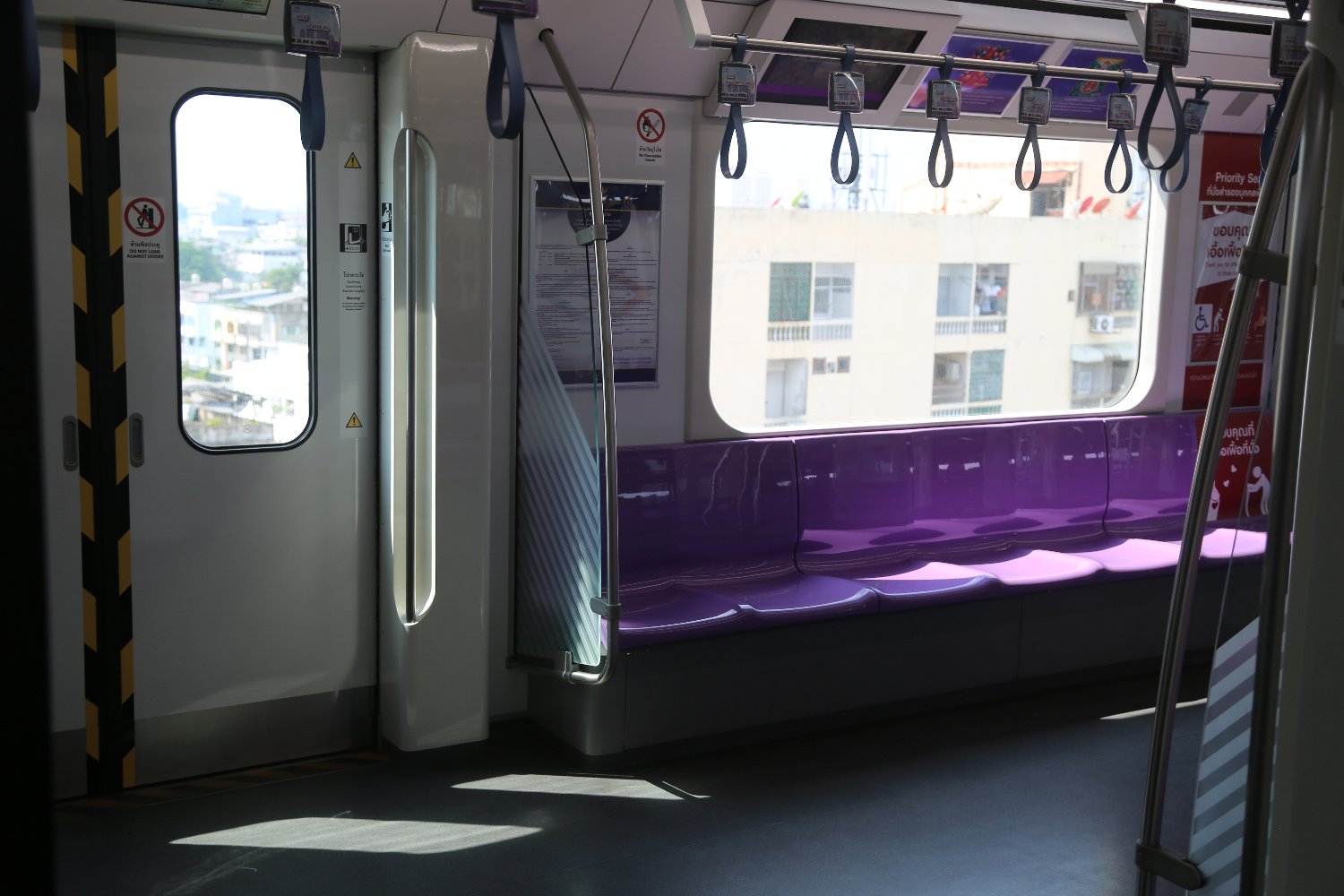
There are two connecting stations with the MRT and Sukhumvit SkyTrain line – at both Asoke and Ha Yaek Lat Phrao and two on the Skytrain Silom line at Sala Daeng and Bang Wa. And there is one connecting station with the Airport Rail Link running from Suvarnabhumi Airport (Phetchaburi). Often at these connecting stations (or terminal stations) – once passengers exit the train security will quickly walk through the train cars priot to passengers being allowed to enter – to verify there are no left items.
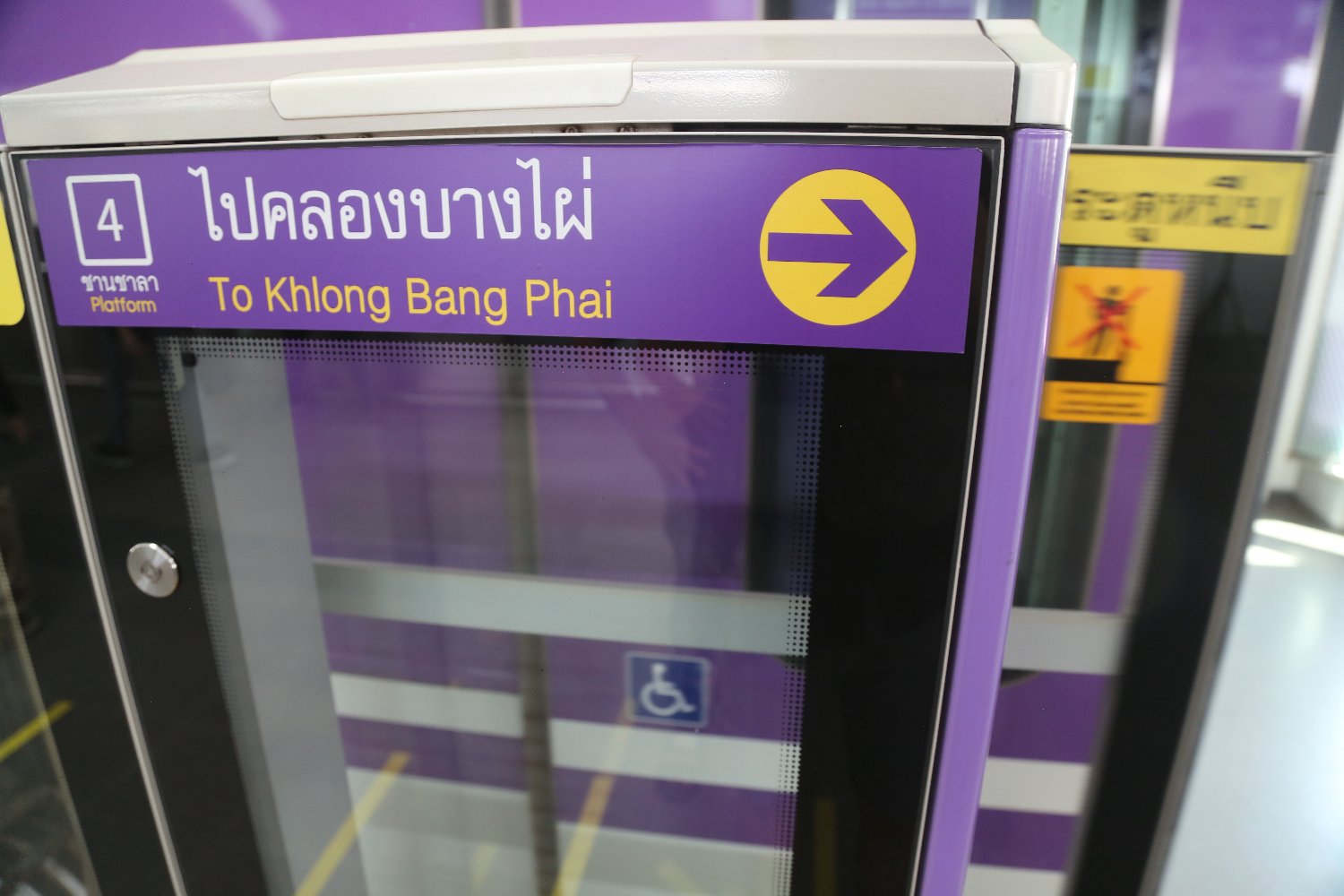
Currently there are two active metro lines, the Blue and the Purple (with the exterior of the train cars colored to match the name of the line). For convenience, all metro stations are numbered and the numbers show next to the names on any of the metro maps. The original and primary line, the Blue Line covers many areas within central Bangkok from Hua Lamphong in the south to several stops near Chatuchak in the north. It roughly forms the shape of an extended lariat and crosses the Chao Phraya River several times.
Tha Phra station is a major Blue Line station connecting the arm of the lariat with the rest of the system. Passengers transferring from the primary circular part of the metro to the arm of the metro must change trains here – timed to arrive within minutes of each other.
The much needed Purple Line opened in mid 2016 and covers a number of Bangkok suburbs in the northern part of the city. Nearly 500,000 passengers ride both the Blue and Purple lines daily.
As of 2020, three major line additions to the MRT are under construction all with various opening dates – the Orange, Pink and Yellow lines. Between the Blue and Purple lines there are 45 stations with many more stations to open once the additional lines become active. We will update our notes here once these lines open to the public.
For more information please visit the official Bangkok metro website (Thai and English versions – a map is available) here.


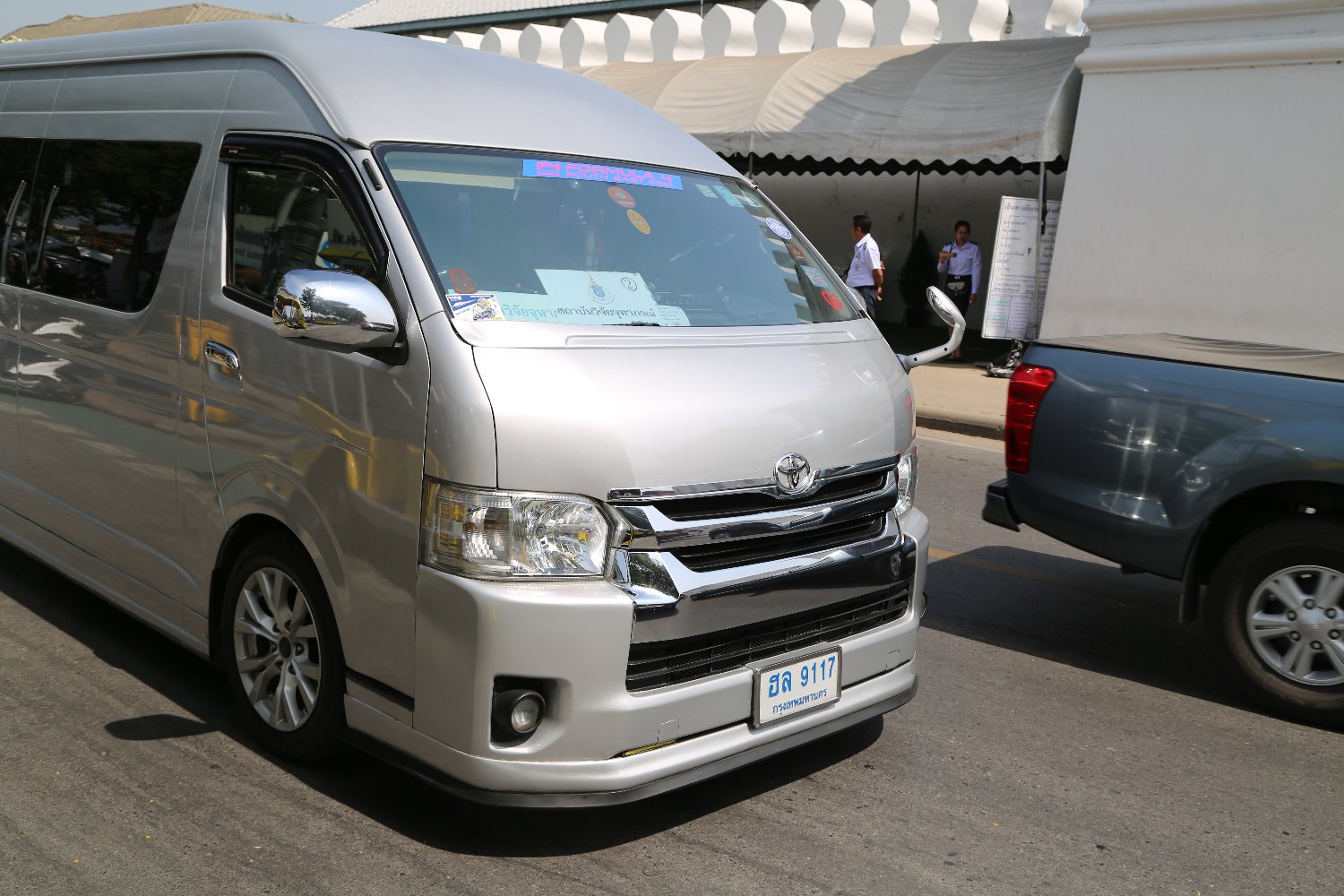 Mini Van – there are many Mini-Vans that run in Bangkok (at last count several thousand), usually frequenting the same stops as the buses. These usually cost 10baht for short rides, they are much smaller than the buses, have Air Conditioning and can be more comfortable. Its ok to get into the driver’s side seat if it is empty and the rest of the van is full, otherwise you should first sit in the back.
There are also mini vans that service numerous destinations outside of Bangkok. A number of these used to be located near Victory Monument but relocated in 2016 to other terminals – you can find vans serving a variety of destinations around the country leaving from various bus stations including the Eastern Terminal (near Ekkamai BTS stop) and from the Mor Chit 2 Terminal.
Vans are supposed to keep the speeds at 100km or less on the highways but often they do not.
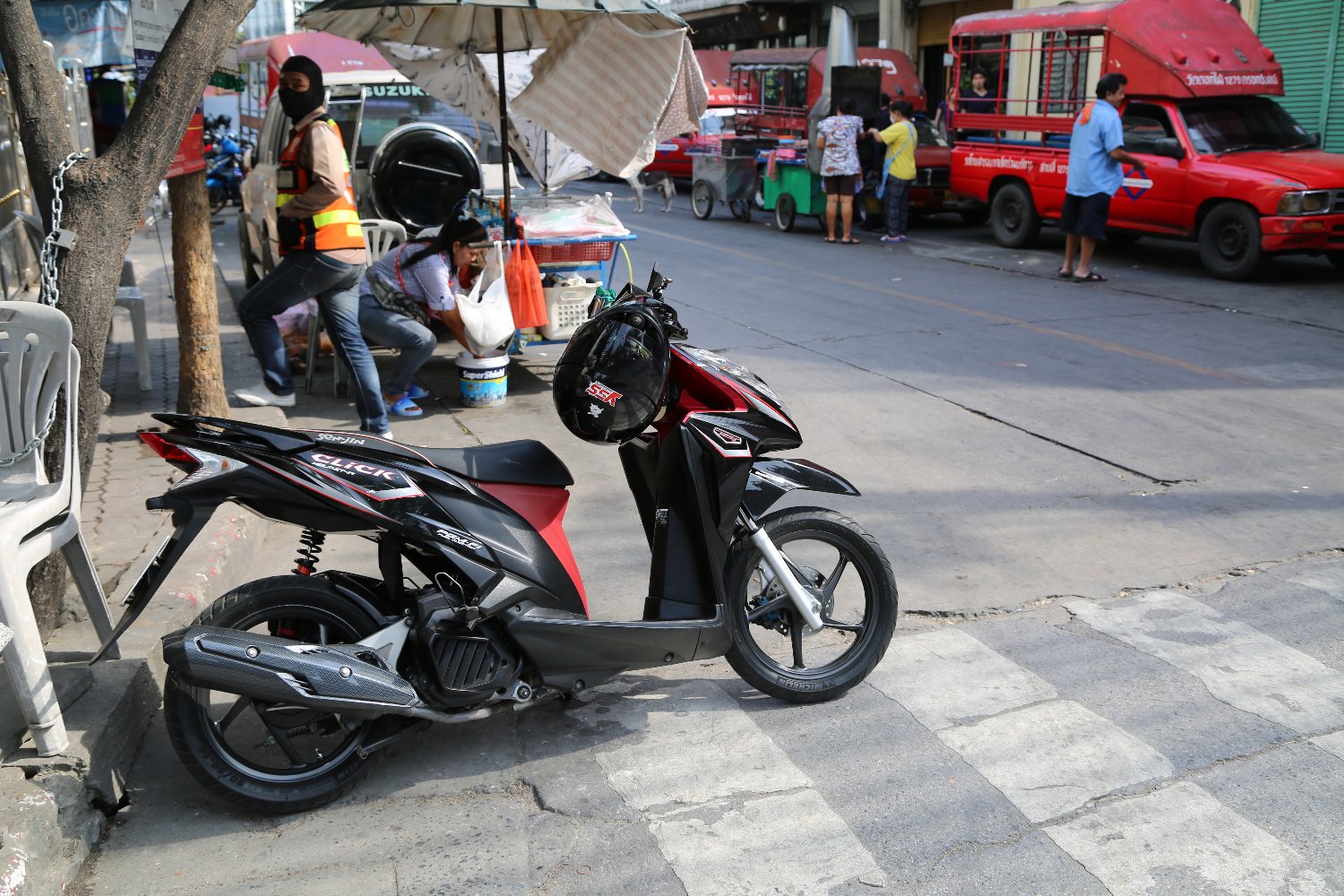
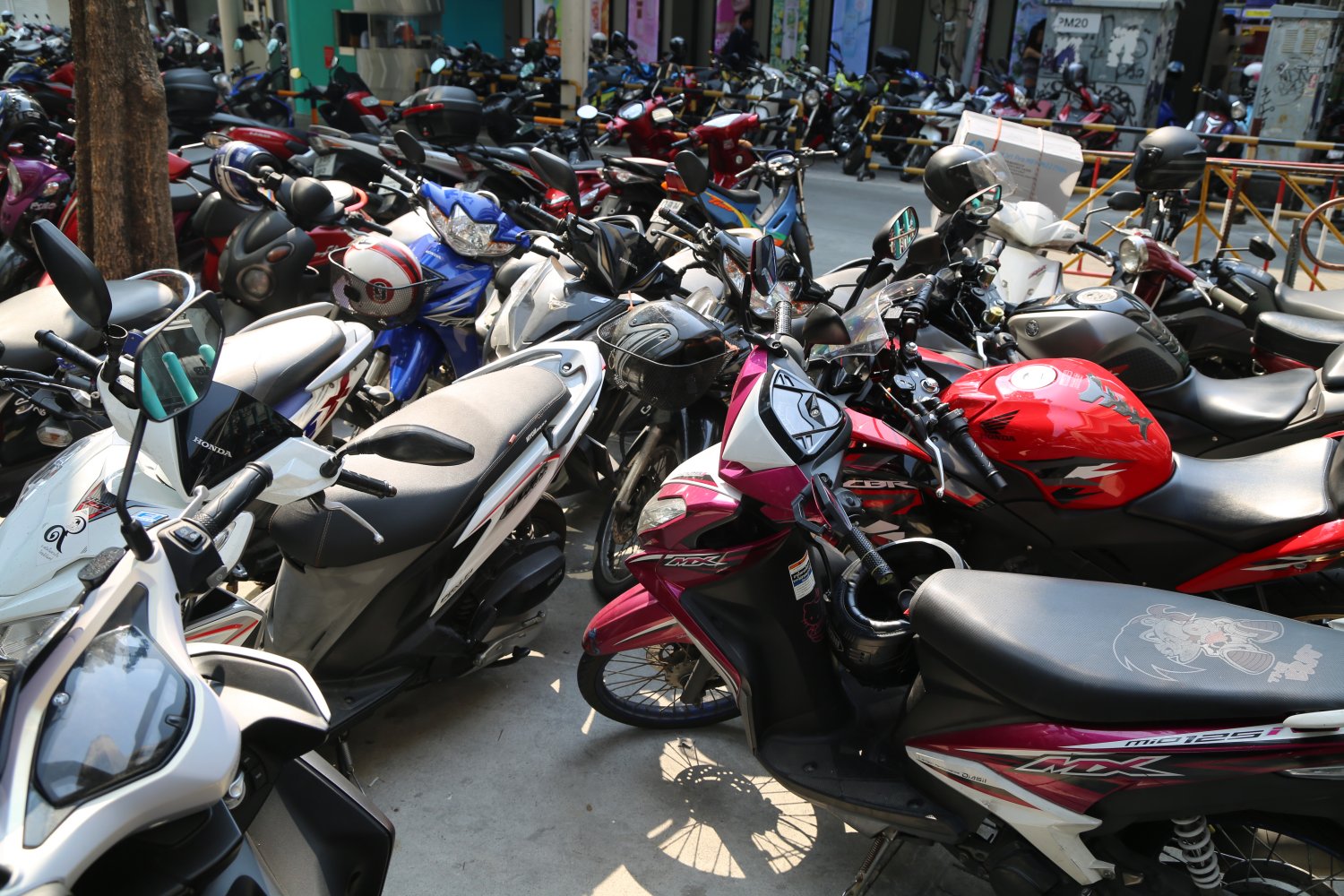 Motorcycle – motorcycles have the excellent competitive advantage of being able to slip in and among cars, vans, buses and Tuk-tuks during the busy rush hours of Bangkok (which is nearly every day of the year!). Numerous motorcycle drivers we have employed for short times have ridden the sidewalk or on the opposite side of the street in order to reach their destination. Often they will use the bicycle lane. And we have seen them cut through side alleys which are nearly impassable for a car and or cut through hotel driveways. They often will go into the lanes of oncoming traffic if there is space. They commonly weave in and around cars – moving or otherwise to get further ahead.
All space on, in and around Bangkok streets seems to be fair game for motorcycles. With that stated, you can *significantly* cut your time going from point A to point B by using a motorcycle.
You find public motorcycle drivers hanging around on the sidewalks in many parts of Bangkok – often near tourist attractions, temples, the BTS and the MRT stations, shopping centers, museums and other places that see a lot of visitors. Like taxis one can flag down a moving motorbike driver who does not have a passenger. During rush hour in very busy parts of town (like along Sukhumvit) we often see lines of people waiting on sidewalks for the next available motorbike driver. These drivers are identified simply by their orange vests – often they will be wearing masks covering most of their face except their eyes. Most of the drivers have a second helmet. Use it. Try to find one that has a second helmet.
These drivers are predominantly male – we’ve seen very few female motorcycle drivers in our exploration of Bangkok over the years. The ages vary from young to middle age mostly. Sometimes you are able to pick your driver of choice from several huddled around waiting for passengers – most often you are directed to the ‘priority’ driver – presumably the one that has been waiting the longest for the next passenger.
Price can be negotiated somewhat – but usually not that much. Prices often are quoted higher if you appear foreign – this tends to ocurr more in touristy areas but we have also experienced this many times in non touristy parts of town. Drivers tend to stick together and quote similar prices. And most motorcycle drivers in and around the touristed parts of Bangkok speak at least some broken English. Passengers can opt to ride directly behind the driver – you can hold on to a handle on the back of the bike. Some passengers may opt to ride behind the driver but facing the side (we’ve seen mostly local women do this).
We only recommend motorcycle transportation in Bangkok if you are in an absolute hurry to get somewhere. Using motorcycles saves a lot of time but perhaps is not the most safe way to get around Bangkok. This is not an easy city to drive in – the many motorcycle drivers we have used have obviously known their way around town – using and any available space – often creatively to pass through or around traffic. However some of them seem to take chances ‘playing’ with larger vehicles as they pass by – all it takes is one car door opening in your oncoming path, or a car swerving without warning – or any of a number of other moving vehicle incidents to make your day a very very bad one.
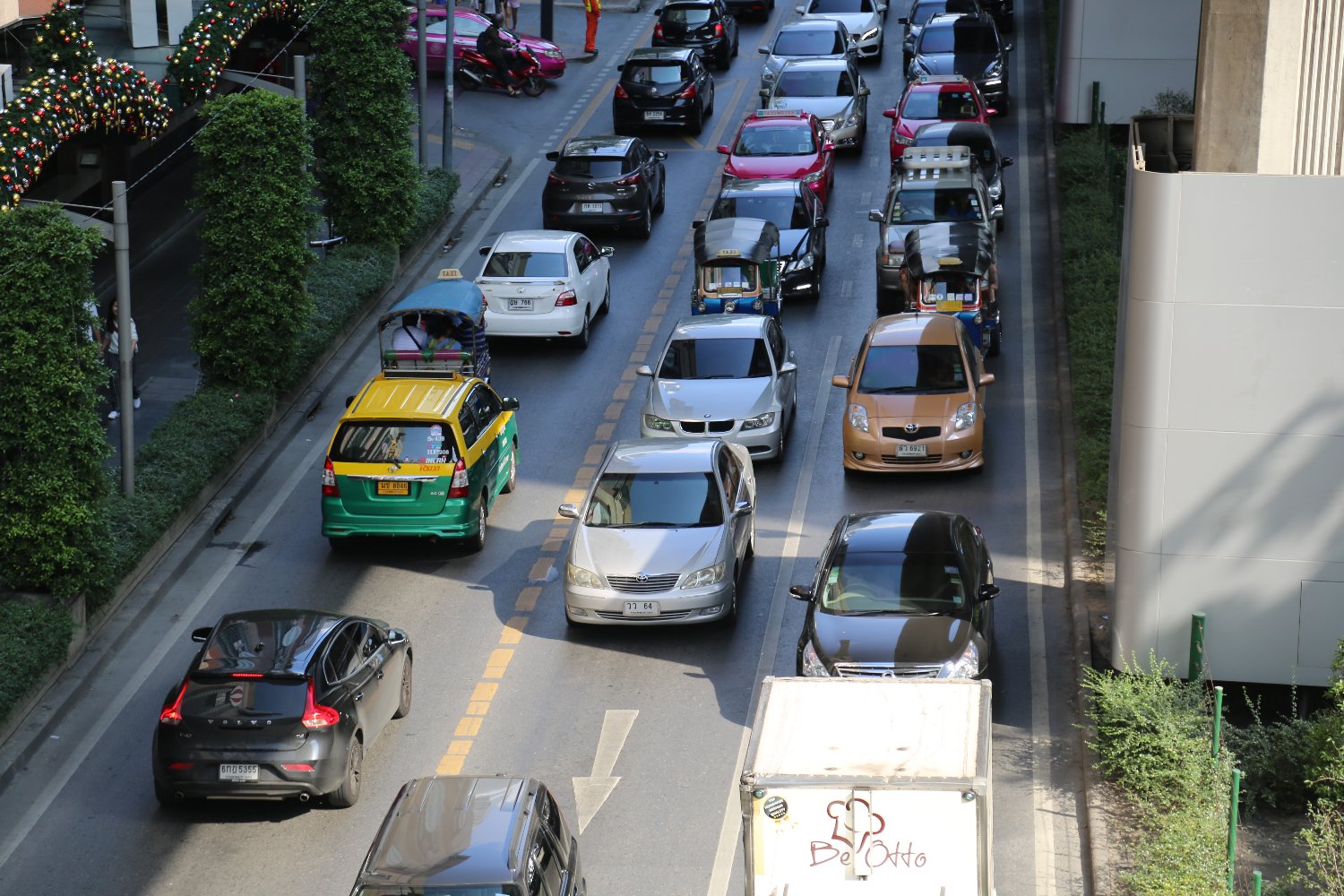 Ride Sharing Grab & other ride sharing services are available in Bangkok and the surrounding urban sprawl (although if you get more then an hour outside of Bangkok from personal experience, you may receive a message that ‘service is not available yet in this area). For short distances the price doesn’t seem to be to much lower then a taxi – but for longer distances from Bangkok to locations outside of the city, the pricing seems to be quite a bit cheaper.
In our experience using Grab in Bangkok is hit or miss as to whether it is faster then a taxi. Visibly Grab or other ride sharing services does not seem to have made a dent in the number of taxis in the city. Some parts of the city have so many taxis that often you can get a ride from a taxi slightly quicker then an Grab driver.
Unlike taxi drivers in Bangkok where this profession is dominated by male drivers – Grab seems to have attracted a number of female drivers.
One advantage some might consider to taking a Grab over a taxi is avoiding dishonest taxi drivers and haggling over price if they don’t use their meters.
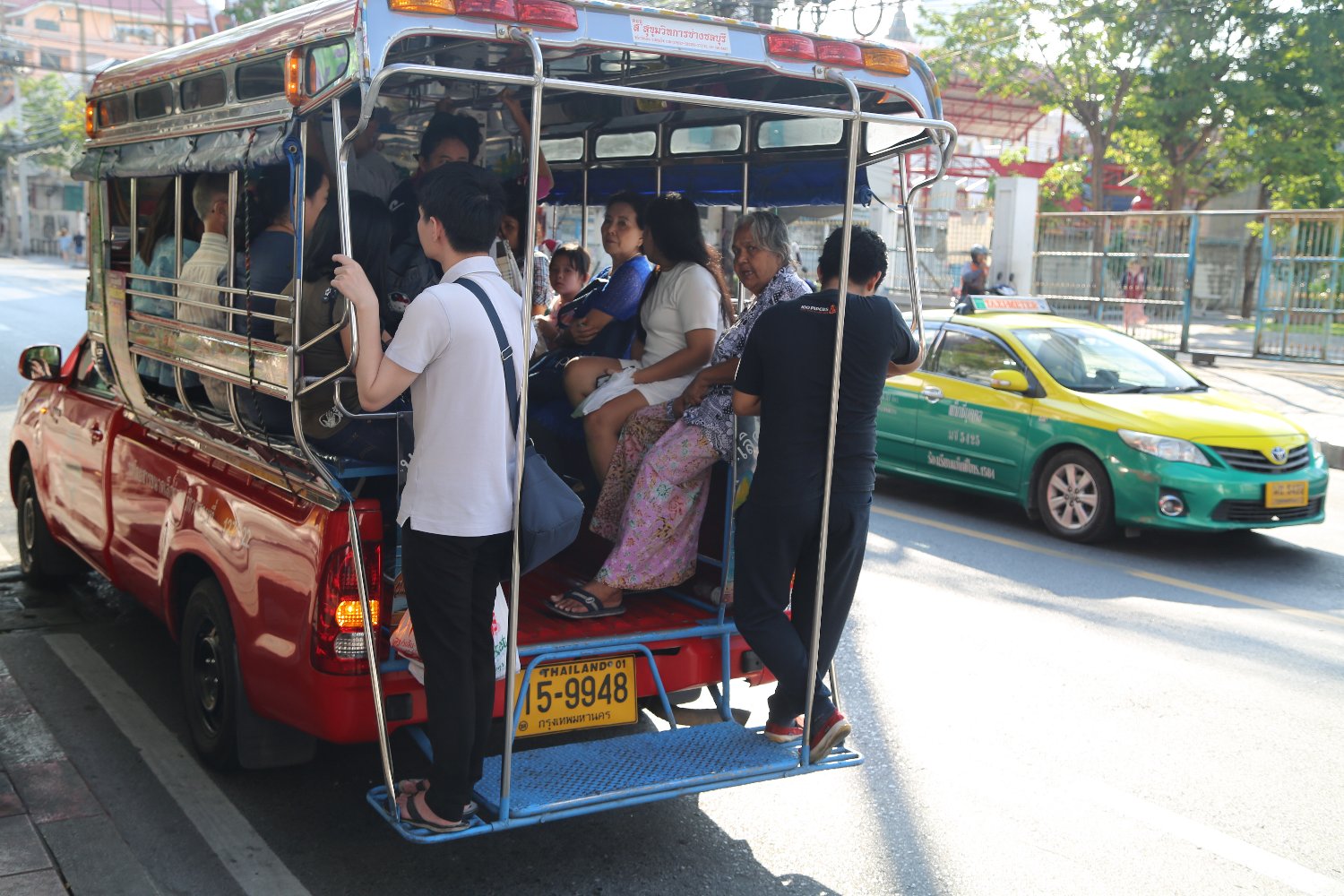 Songthaew – is a mostly local used form of transportation. Covered seating (plastic tarps) are attached to the truck’s sides with two bench seats running down the length of the back of the truck. When these benches fill up – people then have to stand in the middle or outside. One can simply wave at one to stop (on the same side of the street as you) – then hop in. When you want to stop simply press one of the buzzers (often red color) located above one of the benches. This will create a noise alerting the driver that someone wants to get off. Once you do get off you must walk up to the driver or passengers window and pay. Usually the price starts at about 10 baht for short trips and goes up there for longer rides.
It can be quite confusing to know the route of a particular Songthaew and we have had the most success using these when we want to go quite a distance down a large street – away from either the BTS or MRT stops.
Taxis – There are more taxis in Bangkok than we have seen in most cities. Ride share service apps have not yet visually made much inroads into decreasing the number of taxis in Bangkok like they have in other cities. The most common taxis are yellow and green and they have a “metered” sign on top of their roof. Most of the taxis are air-conditioned.
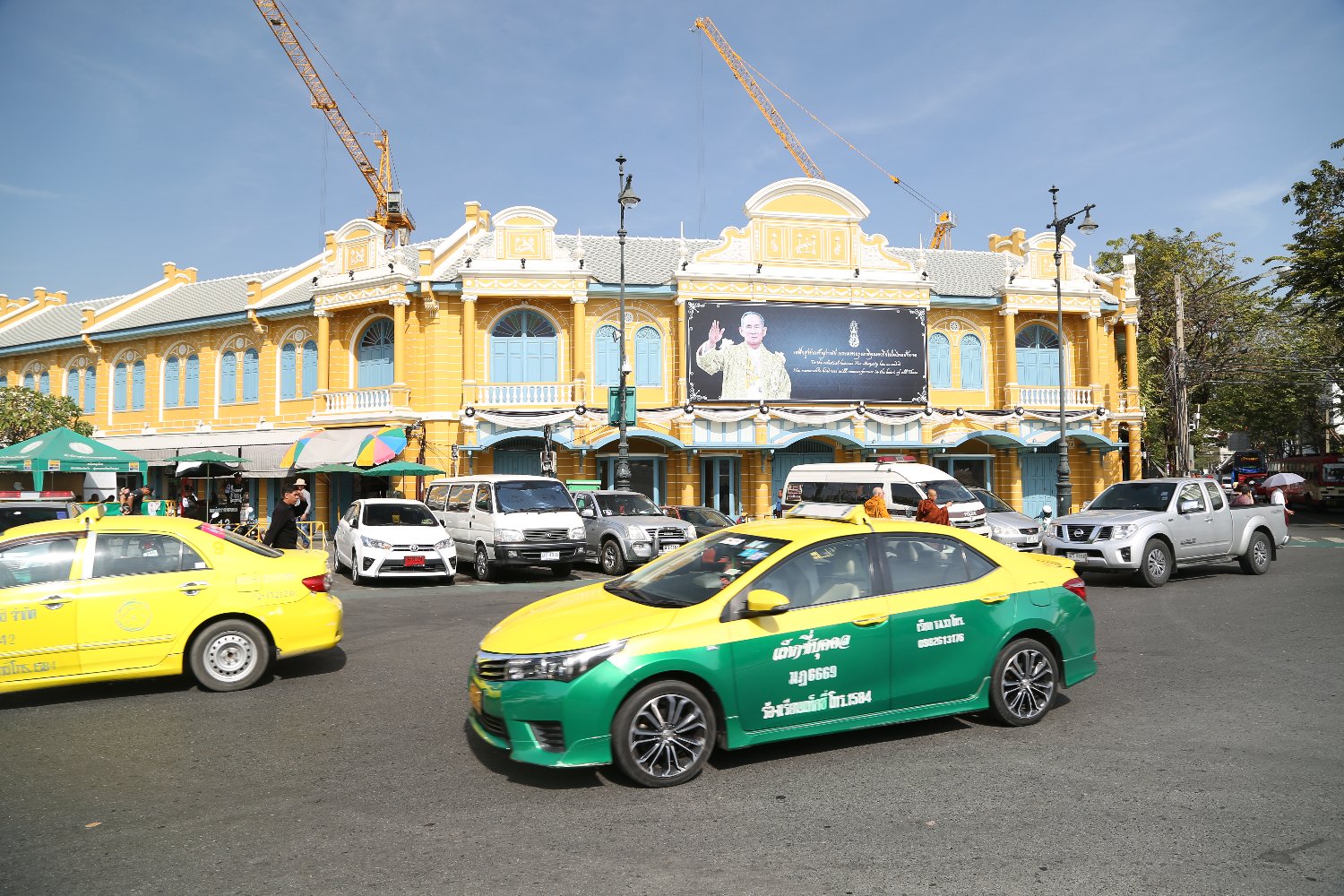
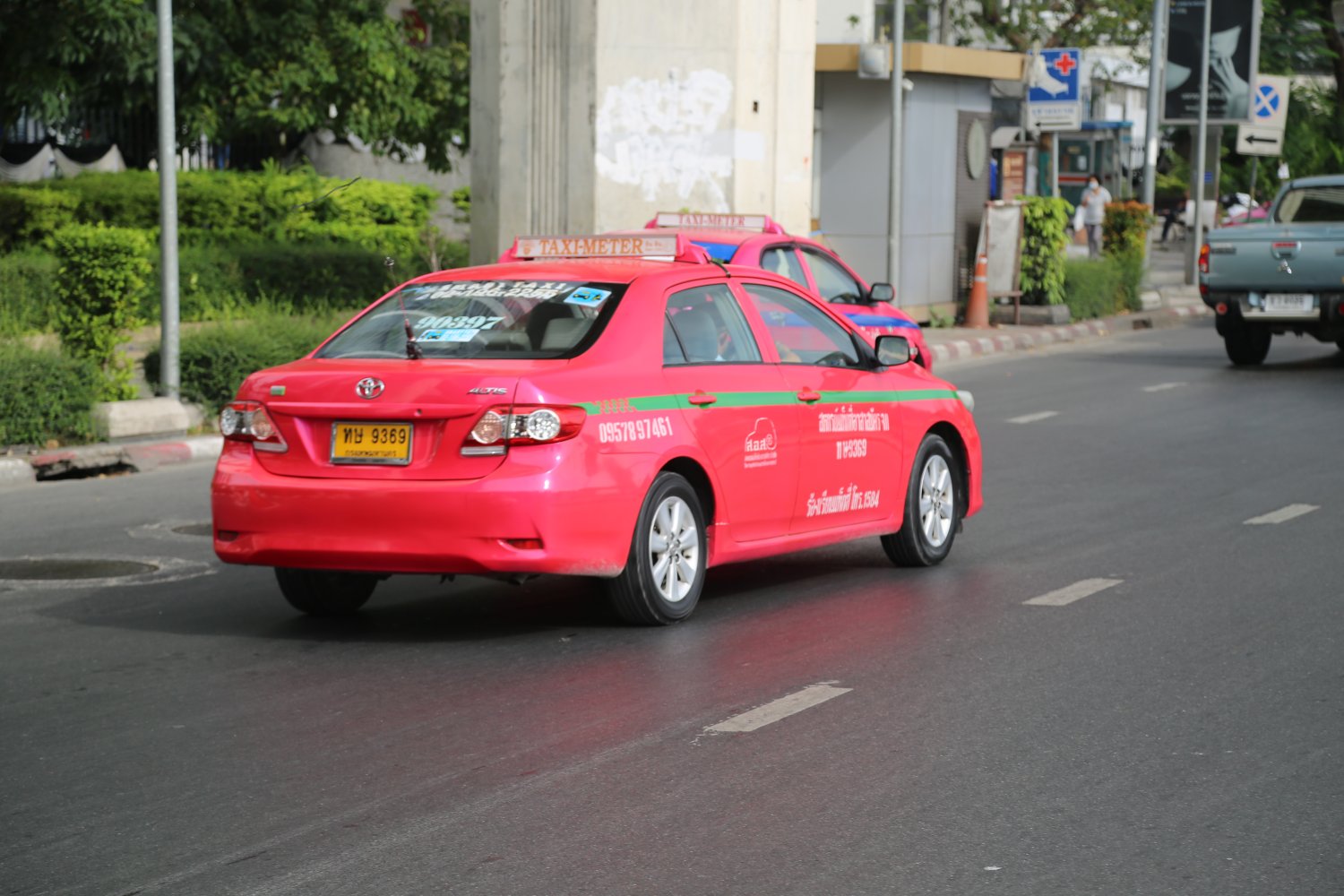 I do not recommend taking a taxi if the driver insists on NOT using their meter. This can be very common when you first step into a Bangkok taxi. Usually when the driver says “no meter” and quotes you a set price – you are being ripped off. I find for the most part that the taxi drivers are friendly and helpful; in addition almost all of the taxis have excellent air conditioning. The taxi driver will know about how much rides cost to certain parts of the city with their meter – There are four scenarios for why a taxi driver will tell you he can’t use the meter. 1. The meter is actually broken (very doubtful) 2. there is so much traffic that the drive will take a very very long time – this is often the case in the late afternoons. 3. they know the price they told you is higher than what it would be if they used their meter, 4. it is late at night. If traffic is so bad you will find that most of the taxi drivers will quote you a price and not use their meter. At this point you could take the taxi, or take a Tuk-Tuk for a little cheaper or walk depending on the distance.
Expect to pay between 200 to 270 baht for a ride from a taxi from the Suvarnaphumi Airport to most Bangkok districts (the metered price – tollway fees are extra – if you arrive late at night, say after 11:30pm there is really no reason to use the tollway). On Level 4 where taxis drop off passengers, you can walk out to the median lane and get a taxi before they pull away. Technically the taxis are not supposed to stop here very long. Sometimes the drivers will refuse to use their meter – they can say anything in regards to this, the most common reason for not using the meter is “its late at night”. Right. REFUSE their services and find a taxi driver who will use their meter REGARDLESS of the time of day or night. Unfortunately this can be difficult very late at night especially with any language barriers or if you are extremely tired – if you keep getting rejected by taxi’s who refuse to use their meter, our best suggestion is to try to get one of the security guards to walk over with you to the taxi, or simply save the hassle and pay the extra 50 baht convenience fee to the taxi attendant on Level 1 and be assured of taking a metered taxi.
Also note a very small percentage of taxi drivers will alter their meters. This is a real tough one to determine when they are cheating, unless you know approximately how much you should pay based on the distance. (See our airport taxi info above).
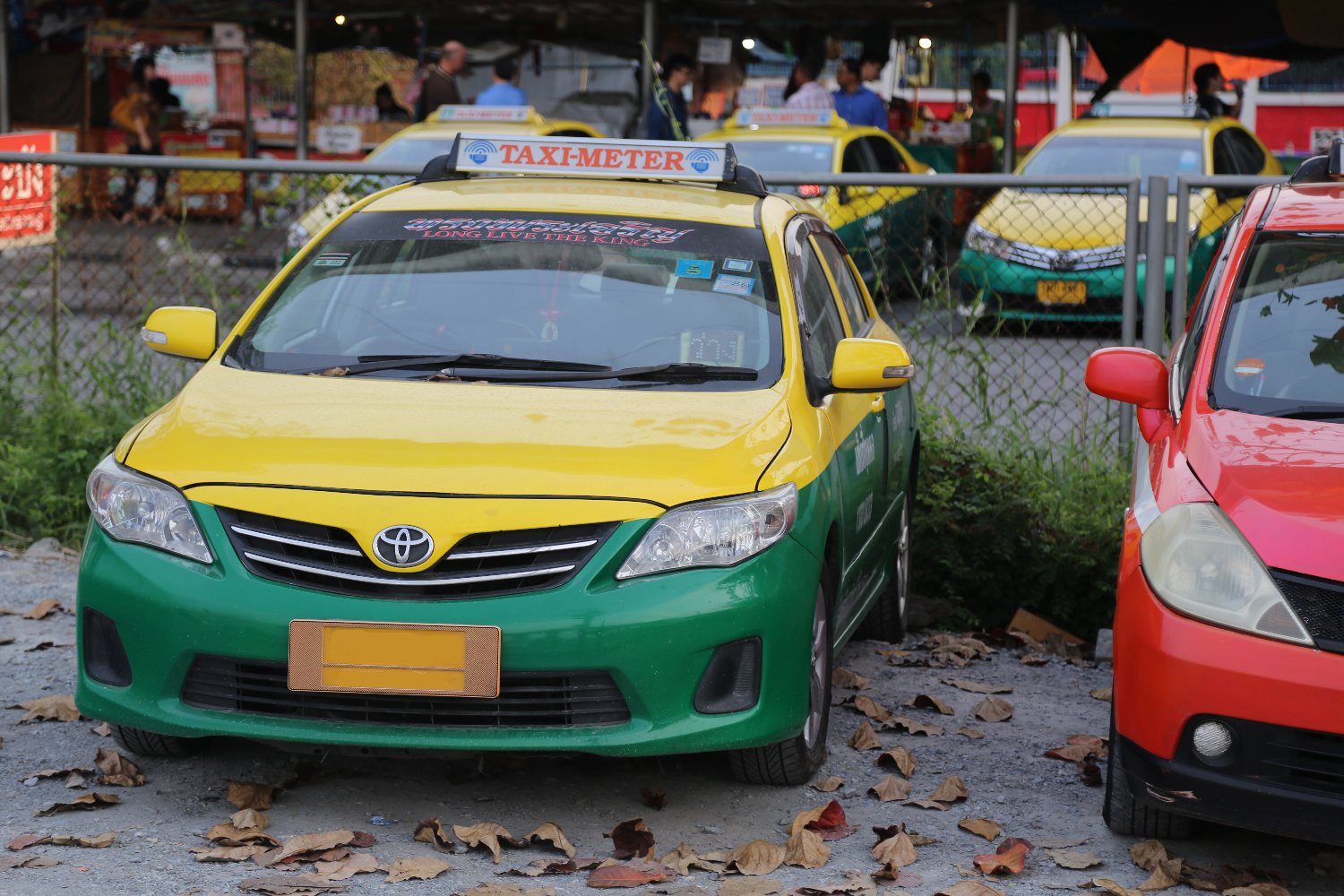 Normally hailing a taxi is not that difficult unless you happen to be on a small side street. There are usually many taxis available near the main tourist locations even in the wee hours of the night and morning. We always reject taxis that hang out next to hotels as often these drivers will try to not use the meter, will alter their meter or somehow rip you off. We go by the “rolling taxi” rule – walk a little further from your hotel and flag down a taxi that is actually moving.
There are two main taxi companies in BKK – identified by the green & gold cars, and the blue and red cars. The green and gold cars are individually owned whereas the blue and red cars are company owned. Note is has become more of a problem with taxi drivers not using their meters in Bangkok.
The phone number: 1584 is the Bangkok Thai complaint line about taxis (if you have a complaint be sure you have the meter number on hand) – we haven’t yet tried this, so not sure if the receptionist will be able to speak English.
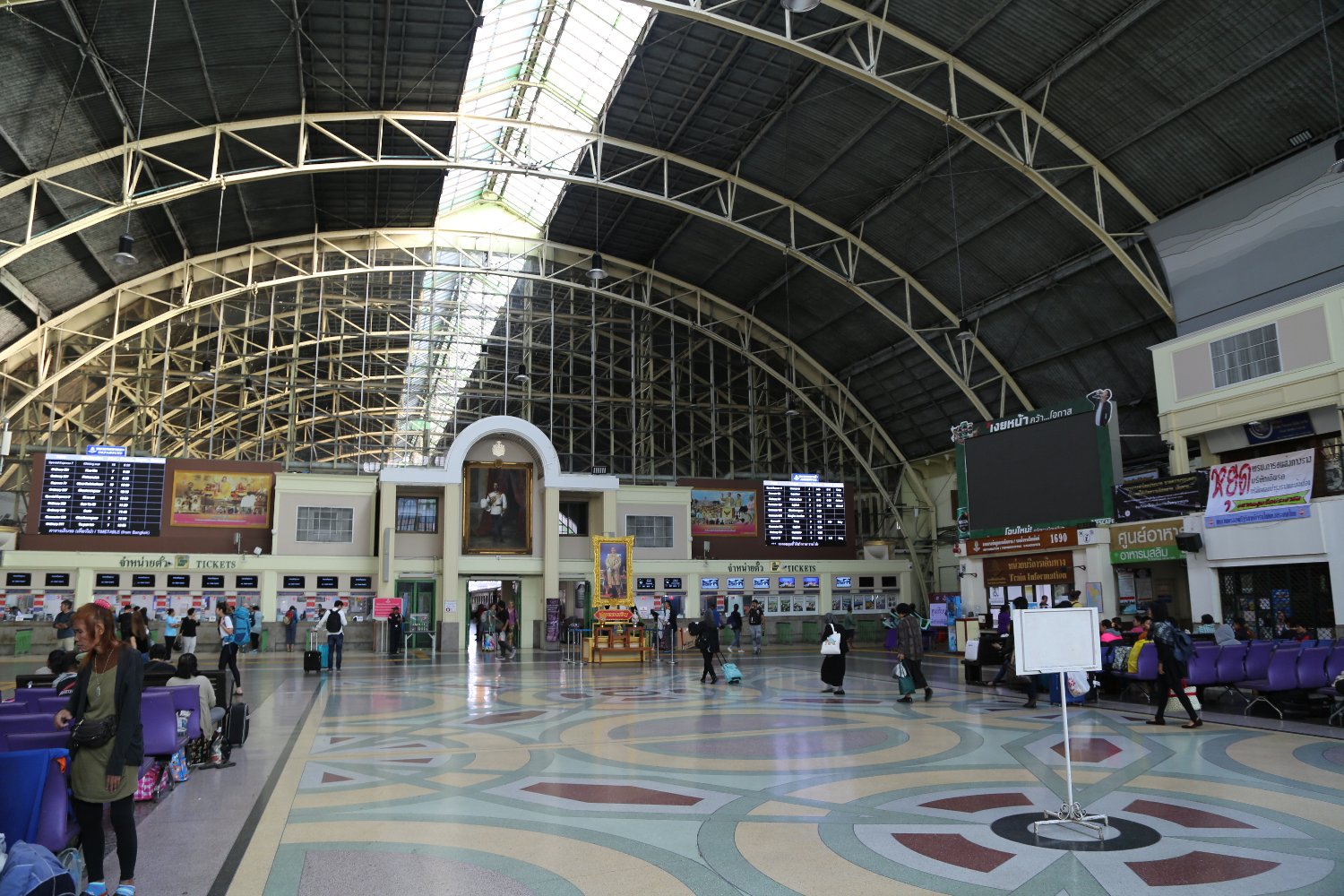
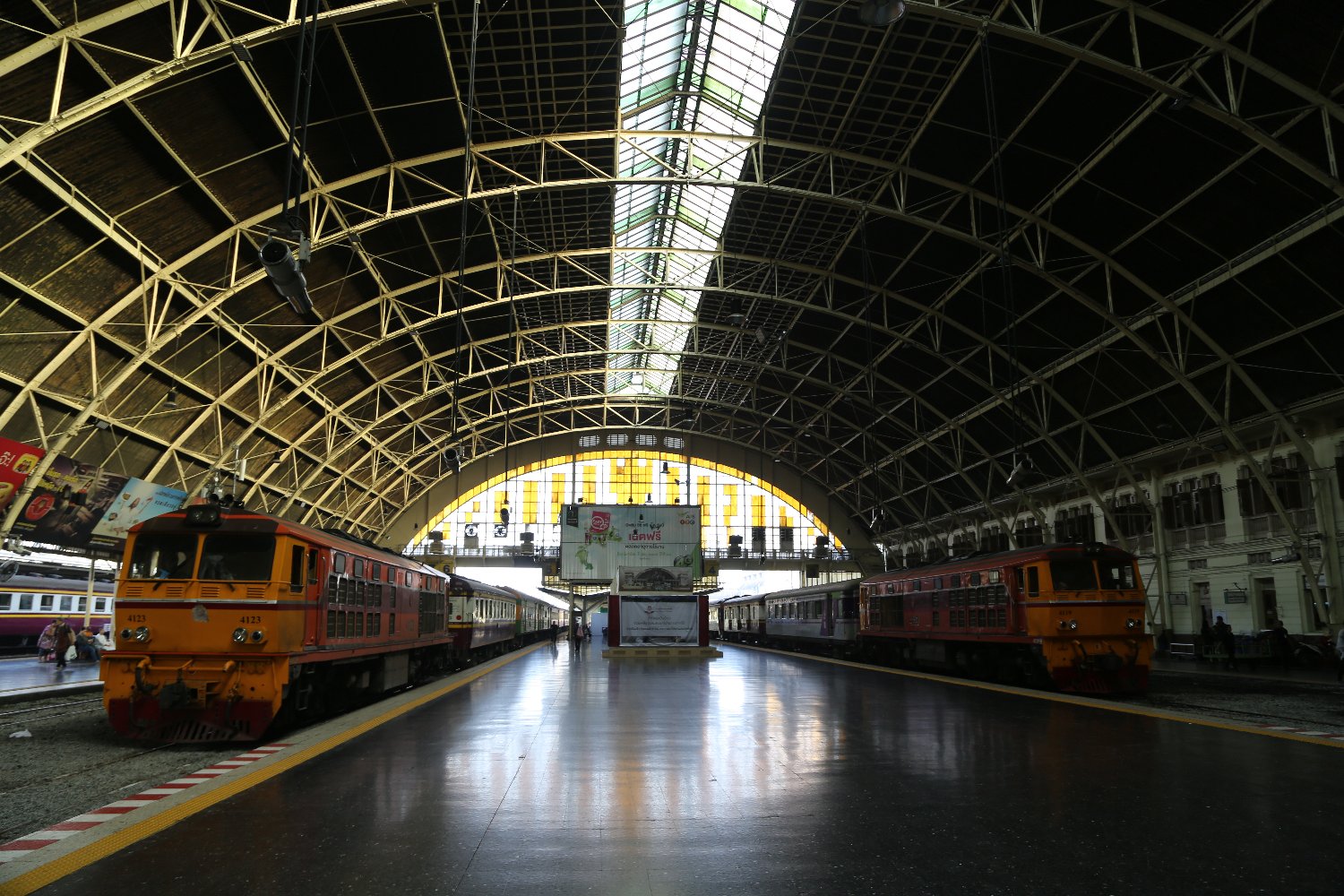
Train – Hualumpong Train Station is Bangkok’s primary train station and is located near the Chinatown district. This train station is a hub for those who want to travel to other parts of Thailand, as this train station does not actually serve destinations within the city of Bangkok. Note you can get to this train station by public transportation. The Metro Stop called Hualumpong is just minutes away by walking from the train station.
Thailand trains have three classes, 1st class is a private car with 2 beds stacked one above the other. Second class includes the option of fan or AC. Seats fold down into beds at night. Third class contains hard wooden benches (no AC and no sleepers). Of the three classes, this is the only class that cannot be pre-booked. These seats sell within several hours of the trains departure.



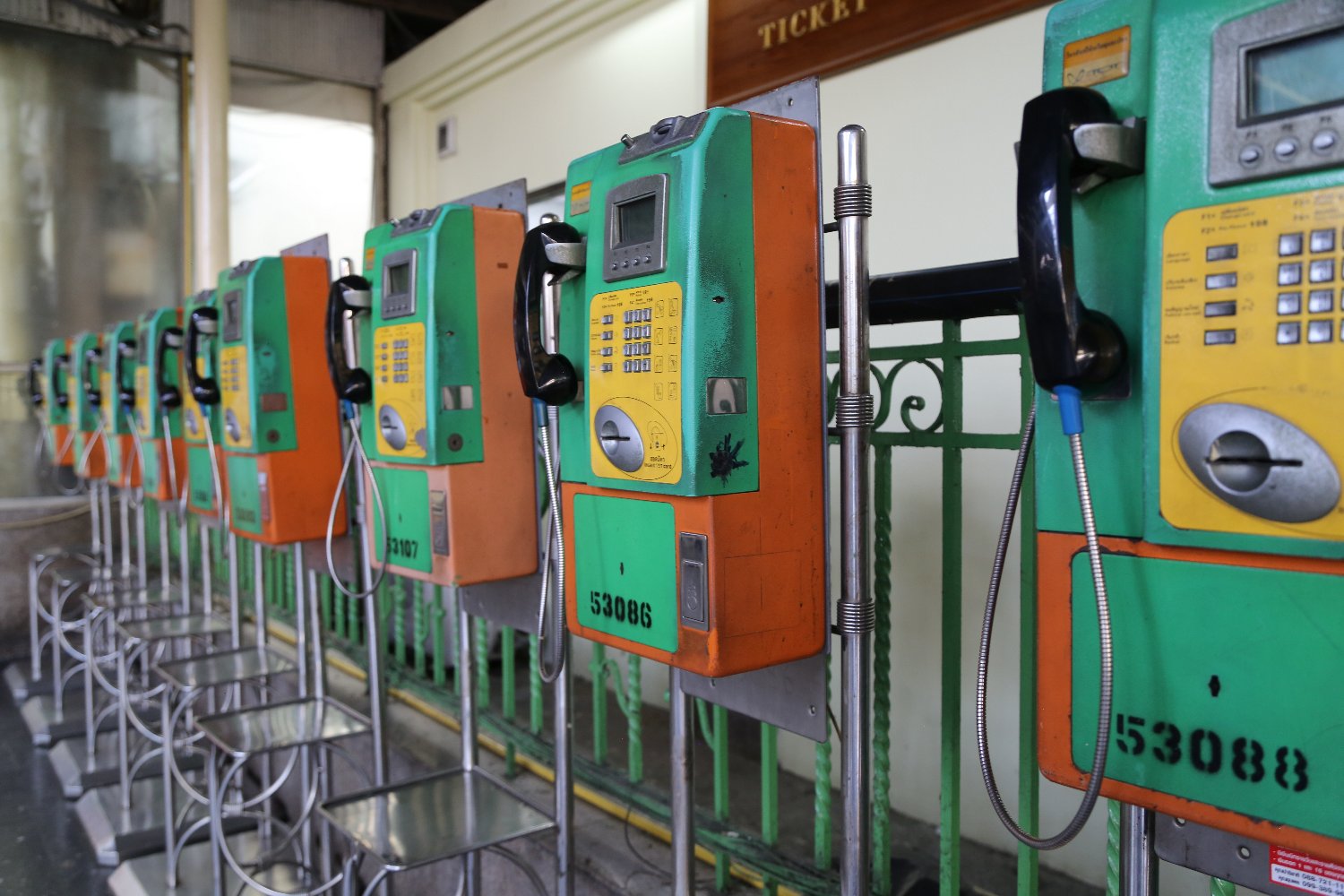
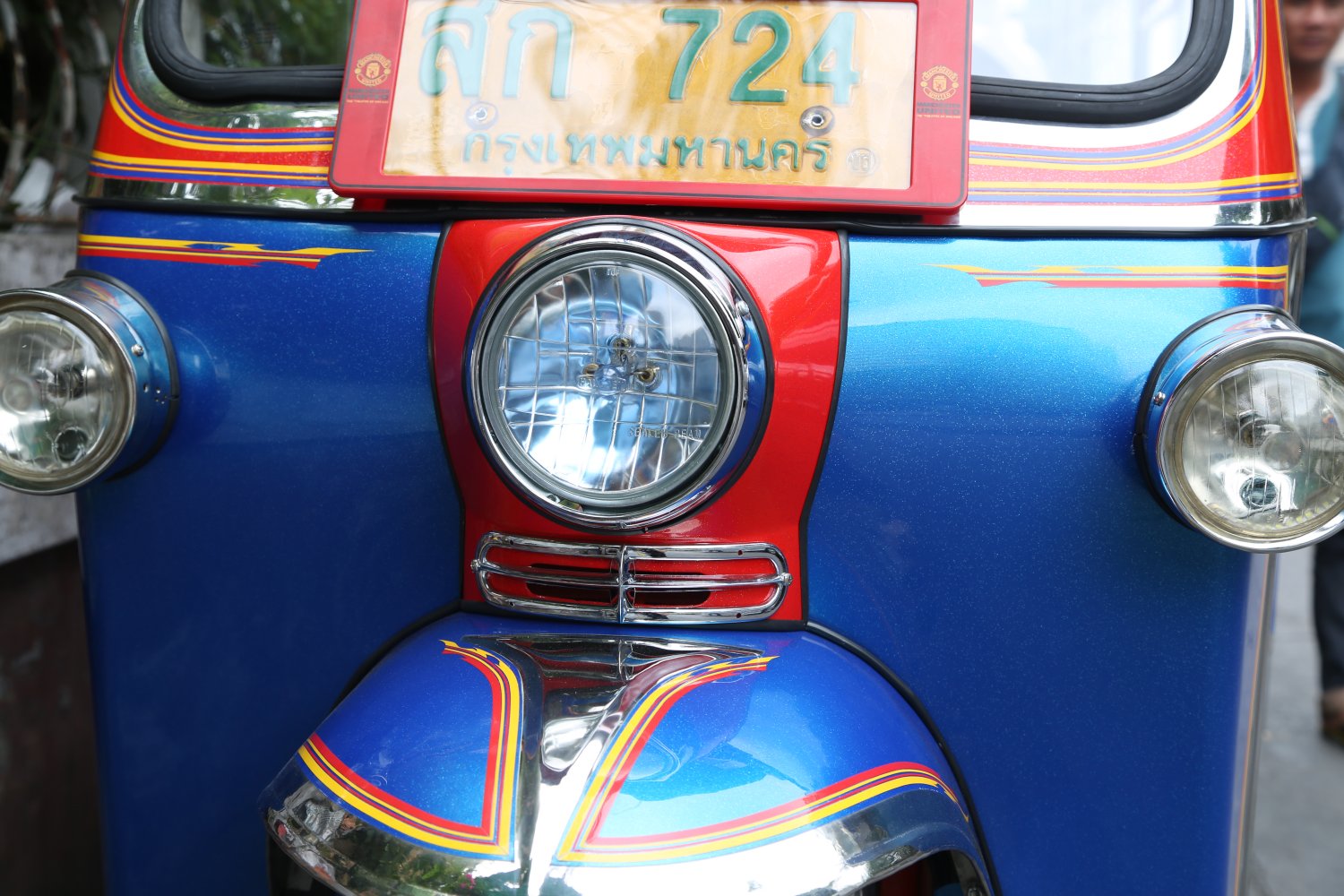 Tuk Tuks – Bangkok is famous for its three wheeled Tuk-Tuks. This mode of transportation is usually found downtown and near most of the major tourist attractions. Once you leave these areas you won’t find nearly as many Tuk-Tuks. To travel the same distance, Tuk-tuks often more expensive than an air-conditioned taxi ride. However, they are able to get around traffic jams a bit better than a taxi. I recommend taking a Tuk-Tuk for the experience at least once unless you are adverse to some of the things you will experience from the back seat – listed here.
From the back seat of a Tuk-Tuk you really get to experience the Bangkok traffic intimately – you will absorb severe amounts of gasoline and diesel vapors, there are no seatbelts, and you can reach out your hand and touch other cars or tuk-tuks because in Bangkok, automobiles tend to drive quite close to one another. Tuk-Tuks are quite small vehicles that are open to the air but have a roof. They contain one seat for the driver in front and space for 2 to 4 people in the back seat.
I have never seen a metered tuk-tuk. You should always try bargaining with the Tuk-Tuk drivers. Finally, a use of “wasted” advertising space: Nowadays you may see ads on the back of some of the Tuk-tuks. Sometimes Tuk-Tuk drivers will insist on stopping at a jewelry store or other business before reaching your desired destination (especially around the Grand Palace).
Don’t use these drivers – find another one who will take you straight to your destination. We call these drivers “Stop Stop Drivers2” and they are working on a commission.
( 2. Stop Stop Drivers – Coined by Dave, these are Tuk Tuk drivers who insist on stopping at a business, usually a jewelry store before reaching your desired destination. They work on commission and get paid by the store for dropping customers off there first. )
 Walking is a cheap way to get around Bangkok, however, wear something quite lightweight due to the heat and humidity. Be sure to carry with you some sort of fluid so that you do not get dehydrated while walking as during many times of the year it feels as if you were walking in a sauna. Or just duck into any of a number of 7-11 or other convenience stores as needed.
Shorts are acceptable for tourists to wear. There are several places you can get maps of Bangkok. Travel authorities at the airport should have maps of Bangkok as well as your hotel.
The number one app in our opinion for travelers is Google maps. Preload this on your phone and it will be quite helpful as you explore Bangkok on foot – showing you one way streets, indicating which direction you are moving in and other helpful hints.
There is much useful information here, but it is not quite up to date
Here is what you say about the buses in BKK:
“The fare for the length of a particular bus route in Bangkok is 7 baht for the ordinary buses. Beware of pick pockets if the bus is particularly crowded. Those who work on the bus rarely speak English and typically you won’t see … any foreigners using the ordinary City Bus. The fare for the air conditioned buses range from 10 to 20 baht. Bus numbers are displayed on bus stop signs.”
The fare for the old buses with open windows is now 8 bath, no matter the distance.
The fare for new buses with air condition depends on the distance. The fare begins with 11 bath and ends with 30 bath.
Bus numbers are displayed on some bus stop signs, but not on all of them
You need to know the bus number and the route before you get on
Passengers are almost always Thai – when I take the bus, I almost never see a foreigner, probably because they do not know which bus to take.
Buses are often overcrowded. You cannot always get a seat. You will have to stand. Hang on all the time. Many drivers are crazy. They start and stop very abruptly, and they will change lanes often if they think they can go faster this way.
You can buy a map of BKK where all the bus routes are marked. The text is in English. The map is available in some bookshops, for instance Asia Books.
Torben Retboll
Bangkok
Thailand
Regarding mini vans in BKK. Here is what you say:
“There are also many Mini-Vans that run in Bangkok, usually frequenting the same stops as the buses. These usually cost 10baht, they are much smaller than the buses, have Air Conditioning and can be more comfortable. Its ok to get into the driver’s side seat if it is empty and the rest of the van is full, otherwise you should first sit in the back.”
There are many vans in BKK. This is true. They are usually used for longer distances. The fare begins with 15 bath for a short ride. Vans will stop at the bus stop, if anybody wants to get off or a passenger wants to get on. The fare for a long distance is 30 bath. This is much less than what you will pay for a taxi. 30 km in a taxa will probably cost you around 200 bath.
One or two persons can sit next to the driver (in the front). The maximum number of passengers is 15. If the van is full, the driver will not stop until a passenger wants to get off. This means that the van can be faster than the bus, because the bus must stop at almost every bus stop.
On the van you will always get a seat. If there is no seat available, the driver will not let you board. You will have to wait for the next one.
Mini vans have their own routes. The route is marked on a sign which is placed in the front screen and often on the left side of the car. The text is written in Thai – not in English (except if the van is going to the BTS. These letters will appear in English). Different routes have different colours on the sign. In addition the route has a number, but it is written in small digits.
If you wish to use a mini van in BKK, I think you will have to ask a Thai friend to show you how it works and to help you find the best route for you. Passengers are almost only Thai. But foreigners can go as well, and they pay the same price. There is no double pricing here!
PS. Some drivers of the mini vans are crazy. They drive very fast. In addition, some drivers use a mobile phone while driving, even though this is illegal. When I see this, I ask the driver to hang up and stop talking on the phone. Sometimes they will do so, but they will usually be upset about it. They do not want anybody to tell them what to do. I have never seen a Thai passenger ask the driver to stop talking on the phone.
Torben Retboll
Bangkok
Thailand
Update about the BTS:
The fare is now from 15 to 52 bath, depending on the distance. The vending machine will accept 3 types of coins: 1 and 5 and 10 bath.
Torben Retboll
Bangkok
Thailand
Hello if you are thinking of selling your vehicle in thailand contact me directly! Thanks for providing all this detailed information Dave.
Torben – thanks for the notes on the price increases regarding the bus and van transportation. I have updated accordingly above. Cheers.
Nice review of Bangkok Dave – I hope to visit in July of this year. Hows the weather then?
Great article and very detailed with photos too. Been to Thailand several times and wish I had all this information the times I traveled there. Have used their long distance busses and always pay the extra small fee to get the seats with more leg room and comfort. Very useful information, thank you.
Roberta – expect hot and humid temps in July!
Reinaldo – thanks for stopping by our Bangkok guide. The extra fee is well worth the extra space. The VIP long-distance buses are generally quite nice in Thailand.