The cafe owner set down a tiny cup of espresso and said something in Portuguese I did not quite catch. I smiled, nodded, and turned back to my sketchbook. Across the narrow street in Lisbon’s Alfama district, a woman was hanging laundry from a wrought iron balcony, and the morning light was doing something to the yellowed tiles on the building behind her that I knew a phone camera would never get right.
So I painted it instead.
I have traveled with cameras, journals, and voice memos. But on this trip through Portugal, from Lisbon south to the Algarve coast and then inland to the Douro Valley, I brought something different: a compact watercolor kit. It changed the way I moved through every place I visited, and honestly, it changed what I noticed.
Why I ditched the camera (mostly)
I should be clear. I did not leave my phone at home. But I made a decision before this trip that photography would take a back seat. On previous trips, I had fallen into a pattern that I think a lot of travelers recognize. You arrive somewhere beautiful, you pull out your phone, you take 40 photos from slightly different angles, and then you move on. Later, scrolling through the camera roll, you realize you barely looked at the place with your own eyes.
A friend who paints plein air suggested I try watercolors. “You don’t have to be good,” she told me. “You just have to sit still and look.” I have gotten a lot of travel advice over the years. That was the most useful.
I picked up the watercolor set I packed for my trip a few weeks before departure. It was compact enough to fit in my daypack alongside a water bottle and a paperback, which was the main requirement. I did not want to lug around a full art studio. A small tin of paints, a couple of brushes, and a pad of thick paper were all I needed.
Lisbon: Slowing down in Alfama
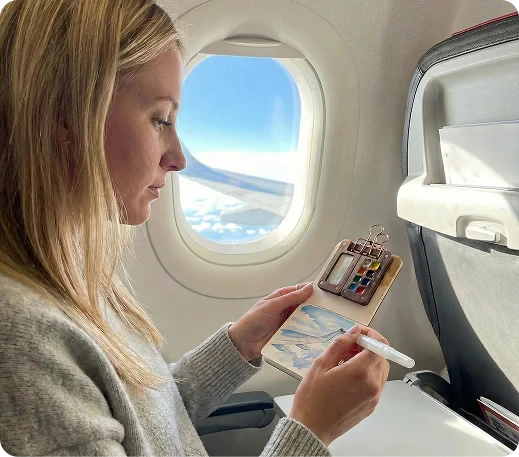
Alfama is one of those neighborhoods that rewards wandering. The streets twist and climb without much logic, and every corner reveals another tiled facade or crumbling archway or cat sleeping in a doorway. Most tourists pass through quickly on their way to the Castelo de Sao Jorge at the top. I spent three days there and barely covered six blocks.
The reason was simple. Every time I sat down to paint, I ended up staying for an hour or more. Setting up at a cafe table or on a bench overlooking the Tagus River, mixing colors on a tiny palette, trying to match the exact shade of terracotta on a rooftop. The pace was completely different from anything I had managed on previous trips.
And something unexpected happened. People talked to me. A retired fisherman sat next to me on a bench and, through a combination of broken English and hand gestures, told me about how the neighborhood had changed over the decades. A teenager stopped to look at my painting and pointed out a viewpoint around the corner that most visitors miss. I have never had a stranger stop to talk to me while I was taking a photo.
The Algarve: Painting sandstone and sea
From Lisbon, I took a train south to Lagos on the Algarve coast. The landscape shifted dramatically. Lisbon is all pastels and tile. The Algarve is raw sandstone cliffs, turquoise water, and wide open sky.
I spent a morning at Ponta da Piedade, the famous rock formations just outside Lagos. Tour boats were buzzing around below, and groups of hikers moved along the clifftop trail. I found a flat rock a bit off the main path, sat down, and opened my kit.
Painting water is humbling. The color of the ocean changed every few minutes as clouds moved overhead, and the shadows on the cliff faces shifted constantly. I gave up trying to capture it exactly and instead focused on the feeling of the place: the warmth of the rock underneath me, the salt on my lips, the sound of waves echoing through the sea caves below.
The result was not a masterpiece. It was a loose, slightly lopsided sketch of golden cliffs and blue-green water. But when I look at it now, months later, I can still feel that warm rock and hear those waves. No photo I took that day does the same thing.
The Douro Valley: Wine country on paper
The final stretch of my trip took me inland to the Douro Valley, one of Portugal’s oldest wine regions. The valley is steep and terraced, with rows of grapevines climbing the hillsides on both banks of the river. In the late afternoon light, the whole landscape turns gold and green in a way that looks almost unreal.
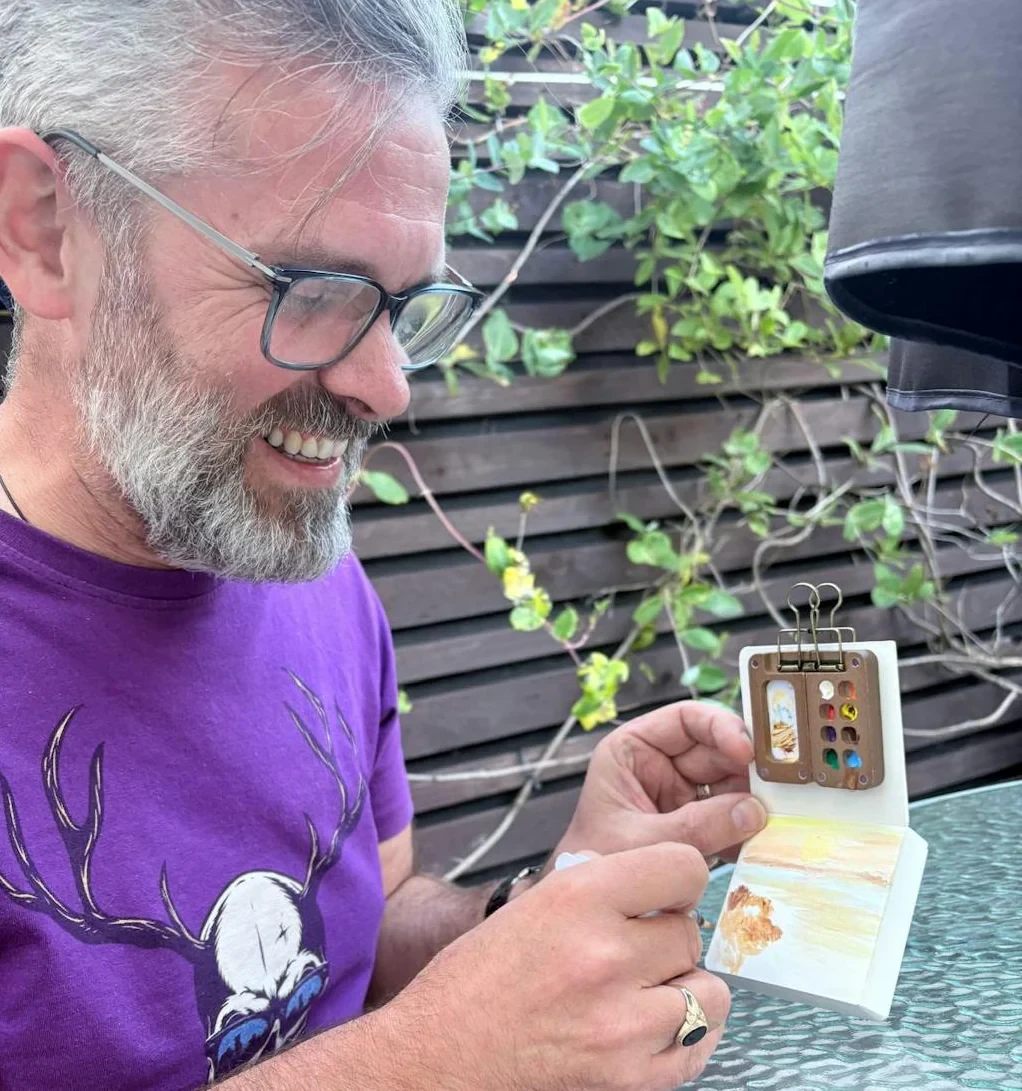
I checked into a small guesthouse in Pinhao, a village that sits right on the river, and spent two evenings painting from the terrace. The owner brought me glasses of port while I worked, which may or may not have improved the quality of my paintings.
The Douro was the hardest subject I attempted. The terraces create a complex pattern of lines and shadows, and the river reflects the sky in unpredictable ways. I filled several pages with attempts, most of them mediocre. But on my last evening, with the sun dropping behind the hills and a glass of tawny port at my elbow, I managed a sketch that actually captured something. The warmth of the valley. The quiet. The sense of a place that has been shaped by human hands for centuries.
What I brought home
I came back from Portugal with a sketchbook full of uneven paintings, paint-stained fingers, and a different relationship with travel. Painting forced me to sit still, to really look at a place, and to accept that I could not capture everything perfectly. Somewhere in that failure, I found what I was actually after.
If you are the kind of traveler who feels like you are always rushing to the next thing, try leaving the camera in the hotel room for a day. Grab a small set of watercolors, find a bench with a view, and just sit. Not because you will produce anything worth framing. But because you will actually look at where you are.
If you go
- Lisbon: The Alfama district is best explored on foot early in the morning before the crowds. Cafe A Brasileira in Chiado is a good spot to sketch, but any of the smaller cafes in Alfama work just as well.
- Lagos (Algarve): Ponta da Piedade gets busy by midmorning. Arrive early or go late in the afternoon for better light and fewer people.
- Pinhao (Douro Valley): The village is small and quiet. Take the train from Porto along the river. The two-hour ride cuts through the valley and is one of the better ways to arrive. Many guesthouses and quintas offer tastings and terrace seating with valley views.
- Packing tip: A travel watercolor kit, a small pad of watercolor paper, and two brushes take up less space than a paperback novel. Bring a small container for water or just use a cafe cup.




Leave a Reply