
Mario Rigby is an eco-explorer, author, speaker, and former professional track and field athlete. Born in Grand Turk, Turks and Caicos Islands, he was raised in Germany before moving to Canada. In 2015, Rigby embarked on his epic “Crossing Africa” expedition, traveling from Cape Town to Cairo entirely by foot and kayak. Over two years, he covered more than 12,000 kilometers across 8 African countries.
Q. Growing up in the Turks and Caicos Islands, did you feel any connection to Africa?
I grew up moving between very different worlds, Turks and Caicos, Germany, and later Canada. That gave me a layered identity and a comfort with change. When I set out to walk across Africa, I carried that same adaptability.
Culturally, I could sense echoes of the Caribbean in the warmth of the people, the rhythm of daily life, and the connection to the land. But the vast scale of Africa diversity, and deep history made it unlike anywhere I had been. Over time, it became a second home, shaping me in ways I will carry forever.

Q. When did the idea of walking from Cape Town to Cairo first come to you, and why did you choose those specific end points? Does that route hold any particular significance for you?
The idea came to me in 2015. I wanted to attempt a human-powered journey that would test my limits and immerse me deeply in different cultures. I trained by walking from Toronto to Montreal, then set off on my 30th birthday, November 24, 2015. Cape Town to Cairo felt symbolic, from the southern tip to the north, connecting the continent through one continuous thread.
Q. People know you as a track and field athlete and might assume that you are incredibly physically and mentally fit to take on something like this. But do you think that background alone was enough to prepare you, or did this journey demand something more?
My background as a track and field athlete gave me a good physical base, but the walk demanded far more than fitness. It was a daily test of mental endurance, patience, and humility.
There were endless unknowns, and no training could prepare me for the emotional weight of solitude or the unpredictability of the journey. What kept me going was remembering my purpose. I wasn’t just walking for myself; I was walking to inspire others to take on their own “impossible” challenges.
Q. The journey was not all smooth sailing. I read about you being down with malaria, attacked by a stray dog, and going through detentions and conflict zones. Were there moments when you second-guessed yourself or thought about giving up?
One of the lowest moments was catching malaria in Tanzania. I was weak, bedridden, and honestly thought I might not make it.
Another was being shot at in a conflict zone, that kind of fear is hard to describe. In those moments, I thought about giving up. But I always came back to why I was there: to push human limits, to tell Africa’s story, and to show what is possible when you commit fully. That purpose pulled me forward when nothing else could. Another motivator was knowing how I wanted to make my mother proud.
Q. Despite all the challenges and hardships, did the kindness of strangers along the way surprise you and help you keep going?
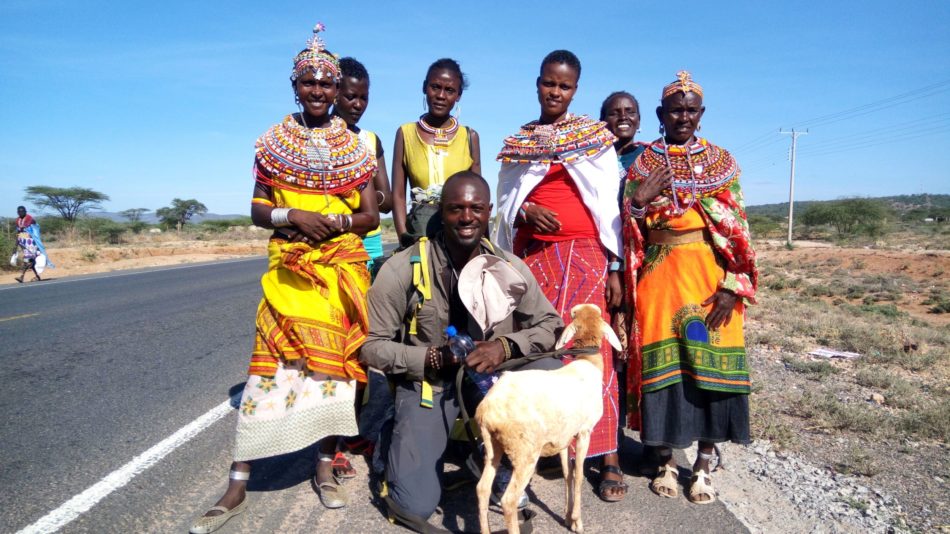
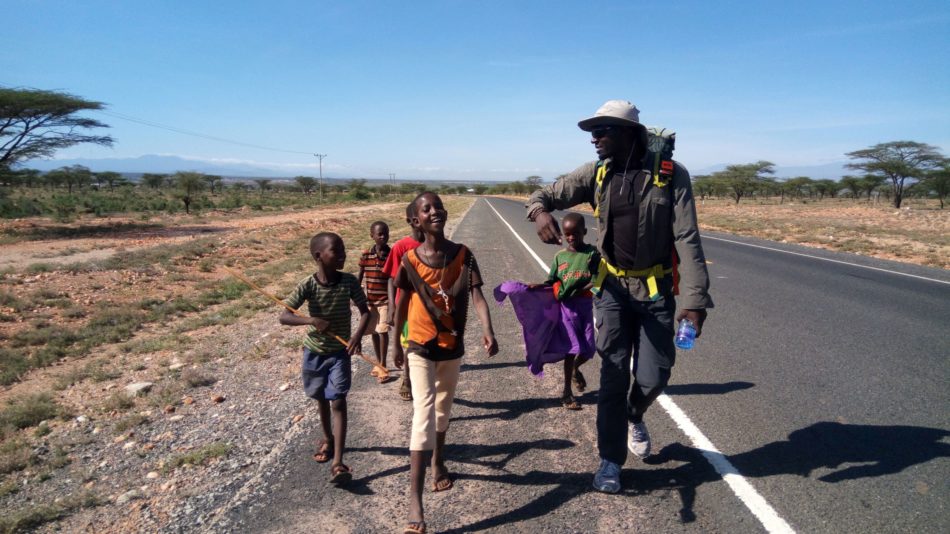
Those moments defined the journey. Families who had very little still shared food with me. Strangers gave me shelter or walked with me for a stretch. That kindness, sometimes offered at great personal risk, reminded me that generosity is universal. It completely reshaped my view of humanity.
Q. You have long championed sustainable travel and eco-exploration. How did your long walk across Africa deepen that passion and change your understanding of the continent when you reached the final stretch?
When you move by foot or kayak, you see how deeply people depend on the land and water around them. Entire communities live or die by the health of their ecosystems. That connection hit me hard. It showed me that exploration has to be sustainable, not just to protect the environment, but to protect the people who depend on it every day.

Q. As a Black adventurer, what unique perspectives or experiences did you bring to the journey both from how communities saw you, and how you navigated preconceptions about who explorers “should” be?
When I started, I saw Africa as one big idea, vast, diverse, and misunderstood. Walking it step by step broke that idea down into hundreds of personal stories. Each country, each village, had its own heartbeat. By the time I reached Cairo, my understanding wasn’t conceptual anymore, it was a mosaic of friendships, lessons, and memories.
Being a Black explorer in Africa gave me a dual perspective. In many places, I blended in and gained trust more easily. But I was also an outsider, a Canadian, a Western-raised so I had to learn humility fast.
At the same time, I was very aware of challenging stereotypes. People don’t often picture a Black man leading expeditions or walking continents. I wanted to change that narrative to show that exploration belongs to everyone.
Q. Your message to our readers?
Adventure isn’t reserved for a select few, it is a mindset. You don’t have to walk across a continent to explore; you can start in your own backyard. The key is to step into the unknown, connect with people, and challenge yourself to see the world differently.
All photographs credit: Mario Rigby
Expedition Impossible
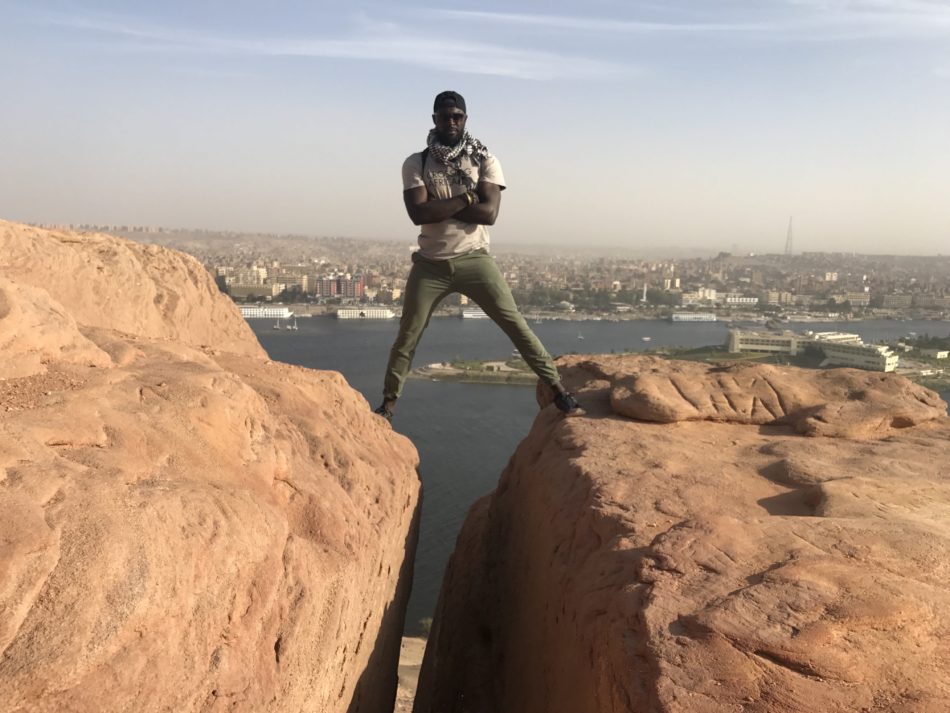
His upcoming project, “Expedition Impossible – 7 Summits. No Planes. No Fuel,” aims to climb the world’s tallest peaks under human power and in a sustainable way—through hiking, cycling, kayaking, and sailing around the world. It will begin in Spring 2026 with Phase One: cycling from Toronto to Alaska to climb Denali, then continuing south by bike to Argentina to summit Aconcagua.




Leave a Reply