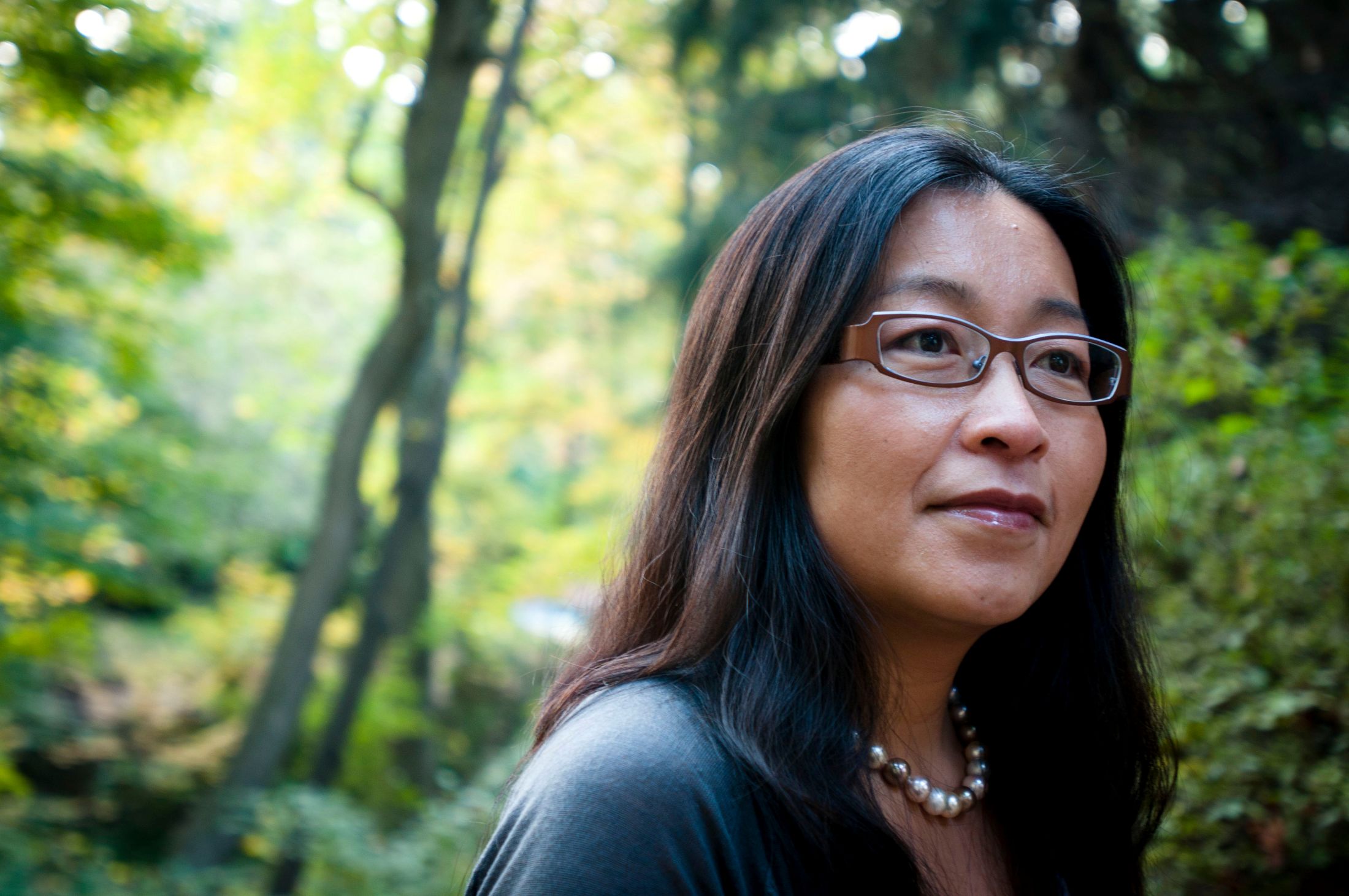
By McCormik Photography
Mei Zhang is the founder of WildChina, an experiential travel company that creates immersive journeys across China, developed in collaboration with local communities. She is currently pursuing a PhD at the University of California, Berkeley, researching how the Tea Horse Trail can be reimagined as a contemporary hiking route connecting cultures and landscapes.
Q1. When you first chose the name WildChina, how do you personally define “wild” in the context of China?
When we chose the name WildChina, “wild” was never meant to describe China as untouched or remote in a literal sense. China is a deeply lived-in landscape, shaped by thousands of years of human history.
To me, “wild” speaks to a kind of openness. China resists simple definitions. The further you go, the more layers you begin to see, whether in its landscapes, its cultures, or in everyday life.
It is also about stepping beyond assumptions. China is often reduced to a few familiar images—the Great Wall, big cities, industrial growth. But in reality, it is incredibly diverse. “Wild” is simply an invitation to look a little closer, and to encounter a China that is more nuanced and more human.
In that sense, the name also resonates with the kind of travelers we hope to meet—those who are curious, who value a deeper way of seeing, and who are interested in the authentic spirit of a place rather than just its surface.
One funny anecdote to the naming, when I commissioned the first WildChina brochure, I specifically fought against using any iconic China image or English words on the cover. You couldn’t find a great wall or red lantern in the entire brochure. That was the China I saw, so diverse and rich (culturally) that it defied stereotypes.
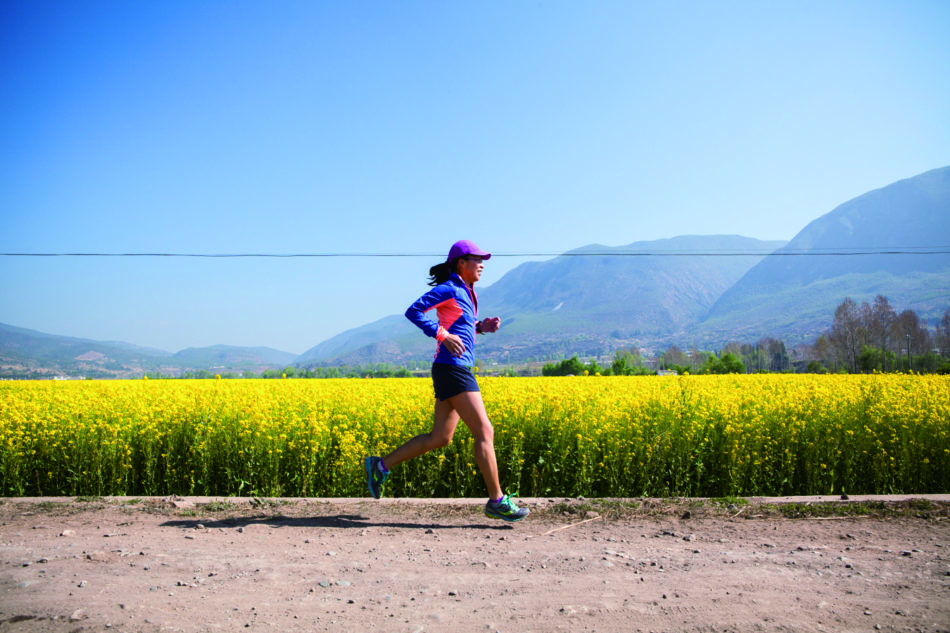
Dali, Yunnan
Q2. Growing up in Dali, what adventure or exploration do you remember most vividly?
I was born and raised in Dali, and as a child I spent most of my time outdoors. My parents worked at a local power station, and we lived in simple huts built along the mountainside by a river. My childhood was shaped by those surroundings—running through the hills, being close to nature, and simply observing everyday life.
I left Dali when I was ten, and for many years I didn’t think of it in any particular way. But when I returned as an adult, I saw it differently for the first time. I realized that the place I had taken for granted carried a richness and beauty that I hadn’t fully understood before.
Most vivid memories from childhood were following the adults to a hot spring for baths. After the hot bath, my mom or aunts would take me into the mountains to collect rhododendron flowers. All women in Dali loved hanging a pair of fragrant magnolia champaca flowers on the buttons, so we smelled good all day. It was a life very close to nature.
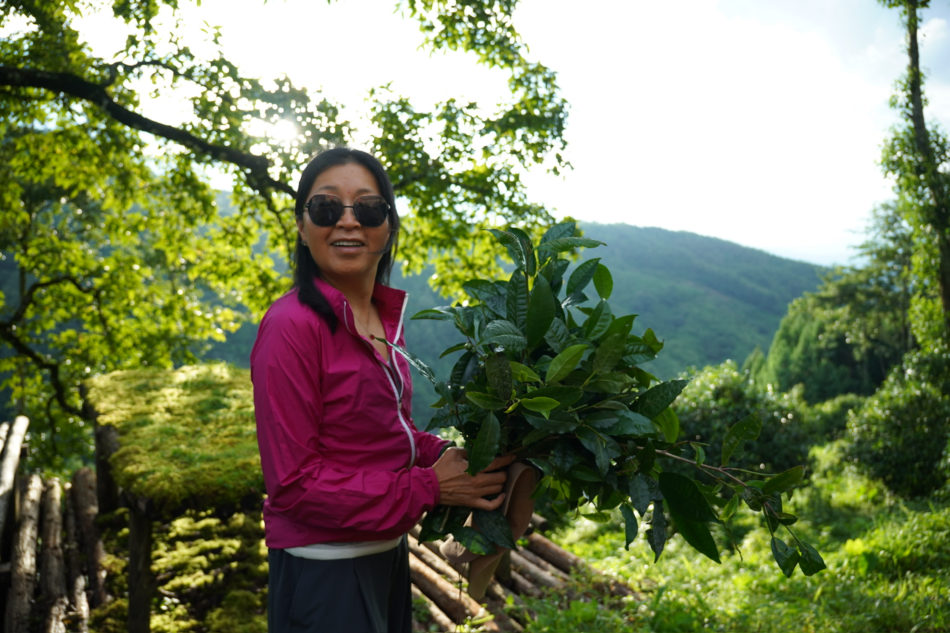
Gaoligong Mountains
Q3. Where in China makes you feel most at home, and why?
Dali still feels the most like home to me. Not just because I grew up there, but because of the pace and the way of life.
It’s a place that allows for quiet observation. You can walk through the countryside, watch how people live, how the seasons change, how daily routines unfold. That kind of environment creates space for reflection.
In recent years, I’ve also spent a lot of time in western Yunnan, near Baoshan and the Gaoligong Mountains, through my research. Being there has deepened my connection to the region. I continue to learn from the landscape and the communities that live there.

Feast in Dali, Yunnan
Q4. When you design a WildChina tour, what criteria matter most to you?
What matters most is not just where you go, but how you experience it.
We think carefully about pace, allowing travelers to spend meaningful time in each place. We also think about people—who you meet, whose stories you hear, and how those interactions shape your understanding.
We also try to move beyond the obvious. Not to avoid well-known sites entirely, but to place them in a broader context. Often, the most memorable moments come from simple experiences—sharing a meal in someone’s home, walking through a village, or seeing how local life unfolds.
For us, a well-designed journey is one that helps travelers move from observation to understanding.
Q5. One memorable moment you had with a tour group that still brings a smile to your face?
Yes. It was one of the horse racing events we organized for a group of Harvard Business School alumni. We were in Shangri-La, and the Tibetan villagers were putting up a horse racing event for us. We could tell it wasn’t just for us as show, because all the villager women and kids showed up to watch with us. The racers on horseback were about 2Km away from where we stood, they took off as the flag signaled the start. But they were so far away, and it took a while for them to get closer, but the horse decided not to come to us, but instead went off to eat grass closer to the foot of the mountain. Obviously, they were not trained racehorses.
At the time, I was completely stressed out – horses not behaving according to what we paid for! But, seeing the villagers were all laughing, yelling and clapping, the guests all turned their attention from the horses in the distance to the villagers standing next to them. It turned into a communal comedy show! Each time the horse did something funny, we all laughed.
That experience hit home for me: traveling isn’t about a perfectly controlled performance, traveling is about discovering in one’s heart, the capacity to see beauty in surprising places.
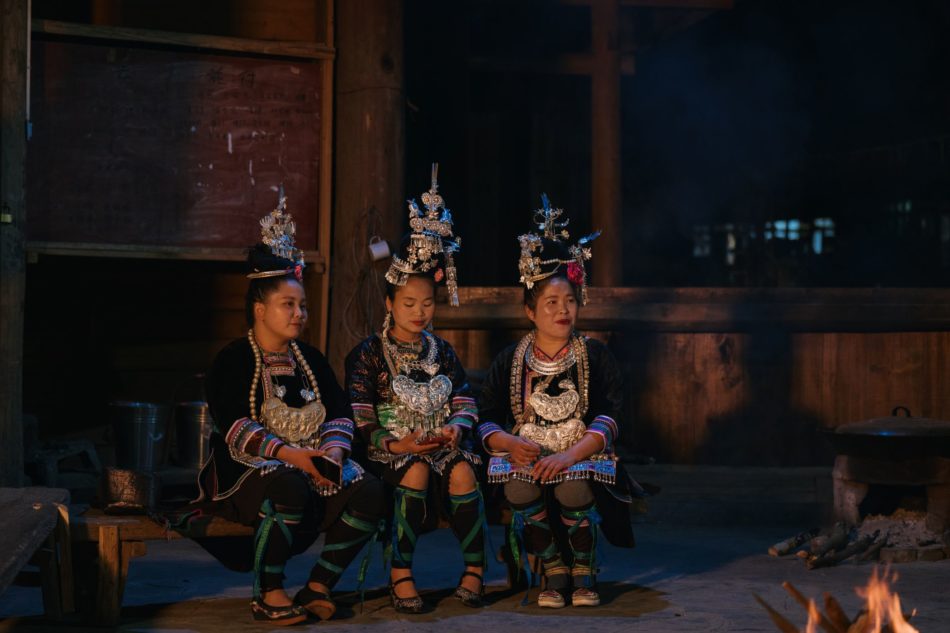
Huanggang Village, Guizhou, Dong Minority
Q6. If you could show travelers only one side of China, what would it be?
What we try to share is a way of seeing—one that centers on people and connection.
Beyond the famous sites or what you might see on social media, there is another layer of China that emerges through everyday interactions. Sitting down with a family, speaking with a local guide, or simply observing daily life at a park often leaves a more lasting emotional impression than any landmark.
If there is one thing we hope travelers take away, it is that China is best understood through its people.
Q7. Have you ever seen a perspective or understanding of China completely change during a tour?
I’ve had many travelers tell me about how their relationship with their children changed after traveling with WildChina. I am sure different travelers experience this change in their own different ways, depending on who they are and who they meet.
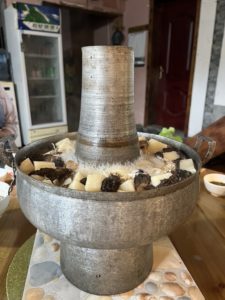
Dinner at Aluo House
Allow me to share one of my own stories about dinner table manners. I insist on my kids waiting for adults to sit down before they can touch the dishes, because to me, that shows their respect for the elders and particularly the one who may still be finishing the cooking.
This was challenging as my kids growing up in America, as they could be whining that they were hungry or they had a soccer practice to rush too etc. etc. It was always an uphill battle. Until I took my daughter to visit a Tibetan family in Nujiang, Yunnan. Our hostess would always cook the meal, sit everybody down, and invite her elder mother to sit next to her. She’d serve her mother a bowl of hot soup while everybody watches and waits. It was so beautiful and loving. After that, my daughter returned home, never once, did she eat first at dinners.
Q8. Outside of work, how do you explore and connect with China yourself?
My way of exploring China has evolved over time. In recent years, much of it has been connected to my academic work. I am currently pursuing a PhD at UC Berkeley, focusing on the Tea Horse Trail and how it can be reimagined as a contemporary hiking and cultural route.
This research brings me back regularly to Yunnan, where I spend time walking the trails, observing the landscapes, and speaking with local communities. It has also led me to continually learn about and rediscover my own hometown.
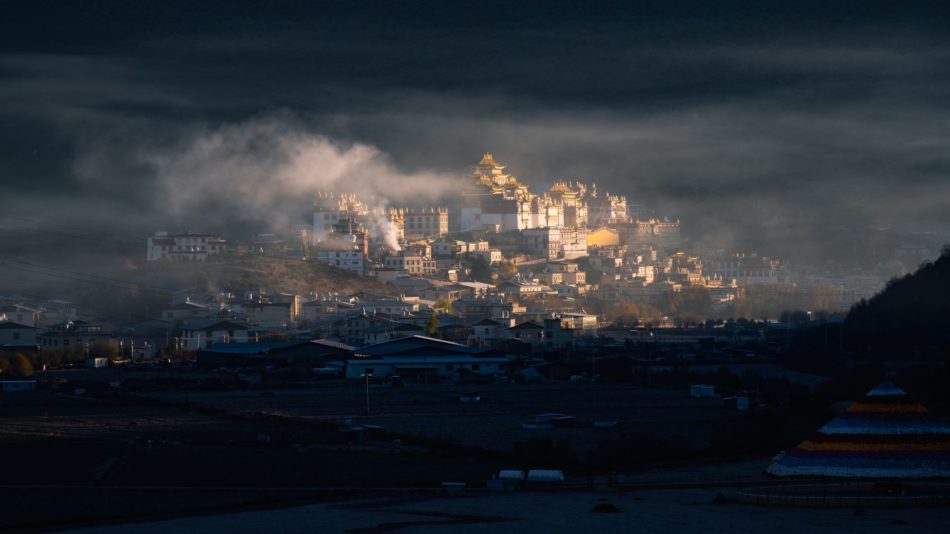
Songzanlin temples in ShangriLa
Q9. Your message to our readers?
Travel, to me, is not about seeing more, but about understanding more.
China is a place that rewards curiosity and patience. The more time and attention you give it, the more it reveals, often in quiet and unexpected ways.
I would simply encourage readers to come with an open mind, and to allow the experience to unfold in its own way.
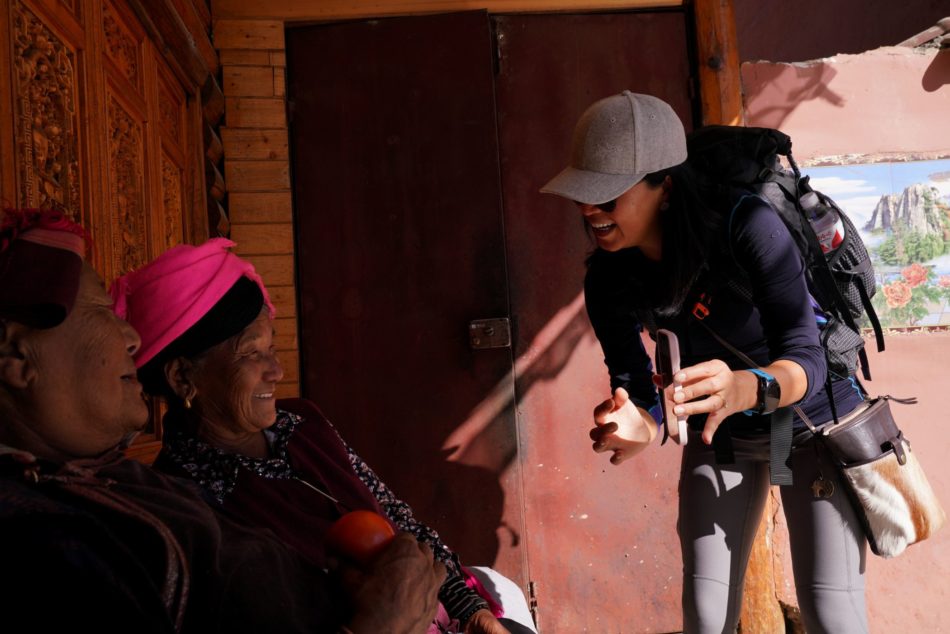
All photographs credit: WildChina


Leave a Reply