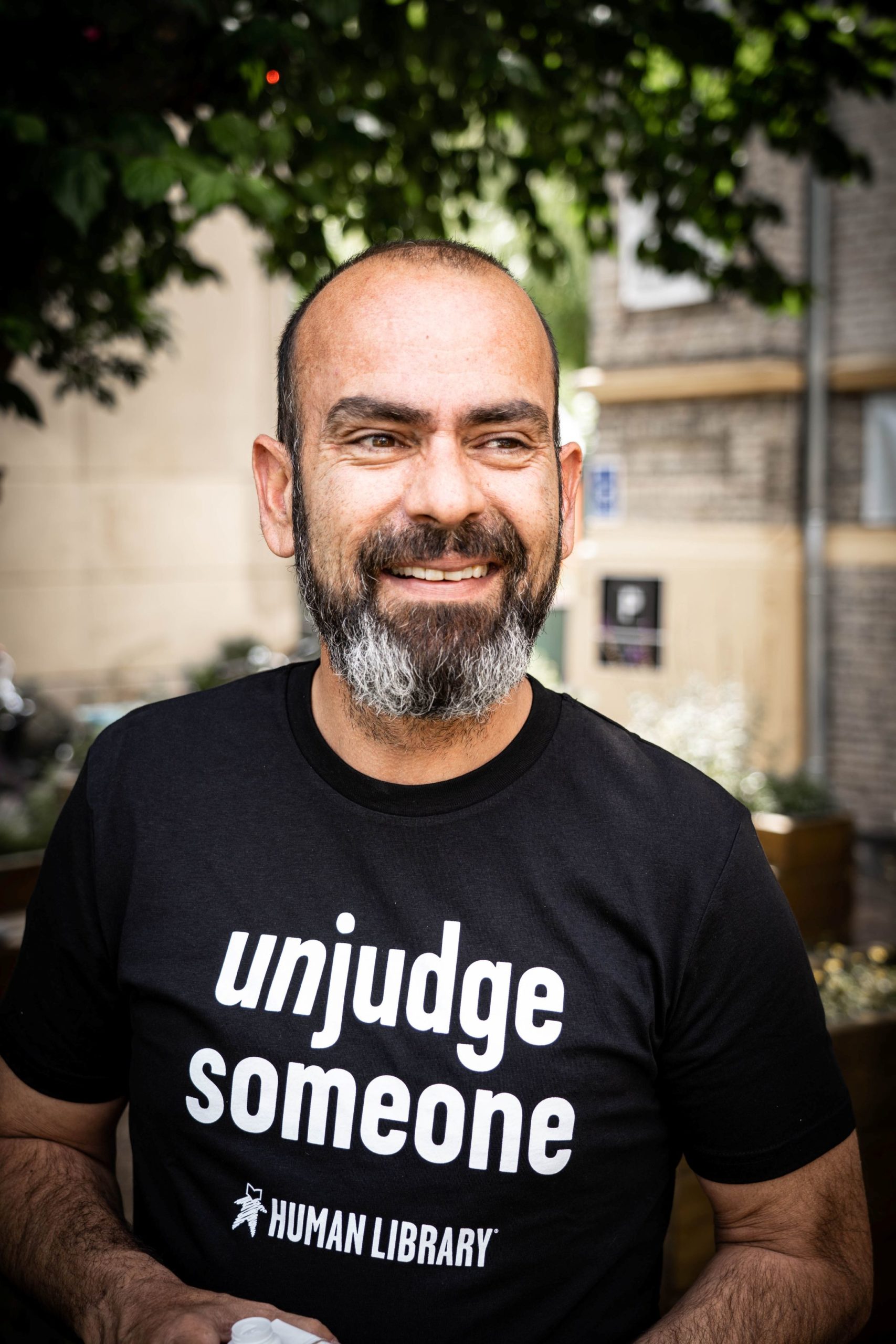
Credit: Elin Tabitha
Q. When I hear the name “The Human Library”, It literally reminds me of the saying, “I can read you like a book.” I understand you first created the Human Library after a violent stabbing incident. But what really convinced you at the time that the library through real human connection would make a difference in society?
There is some factual confusion about the origin story. A mutual friend was stabbed in 1993 in nightlife. As a response, my friends and my brother and I started the Danish Stop the Violence movement. In 2000 we developed the Human Library, so as a longer-term outcome you could say, but not as a direct response to the stabbing incident.
We have long lived constrained by social norms that forbid us to ask personal questions without a clear invitation and so we felt it could be useful to have a space where you know you can ask questions freely as the person in front of you volunteered to be an open book about a given topic.
What convinced me was the realization that in every culture and every nation, there are conversations that we cannot engage in because of these hidden barriers and naturally that we do not want to offend others.
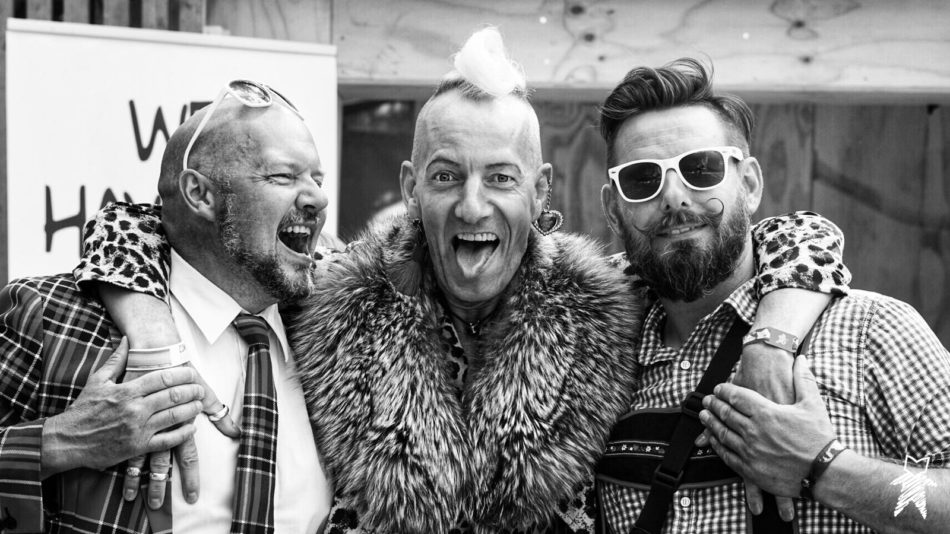
Book and two readers at SmukFest, 2018 Credit: Elin Tabitha
Q. The first Human Library session was in 2000 at the Roskilde Festival in Denmark. Looking back, what were the real challenges like, for example, did you convince people to be Human Books, and how did you get visitors to attend the very first session?
We knew that the festival space and its participants would be especially motivated and open to exploring different social and cultural opportunities while on the festival. It is an integral part of being at the festival.
Exploring different music, food, and culture is all part of our DNA. We decided that this could be right space to try and test this kind of framework around social interaction and see what the outcomes could be.
We did have a lot of work to explain the concept and prepare the folks that wanted to be books. But it was not so difficult to convince readers to take a chance and borrow a person. As we can all relate to the sayings: Don’t judge a book by its cover and often we will tell other people that “they are like an open book”. This was the chance to really be an open book.
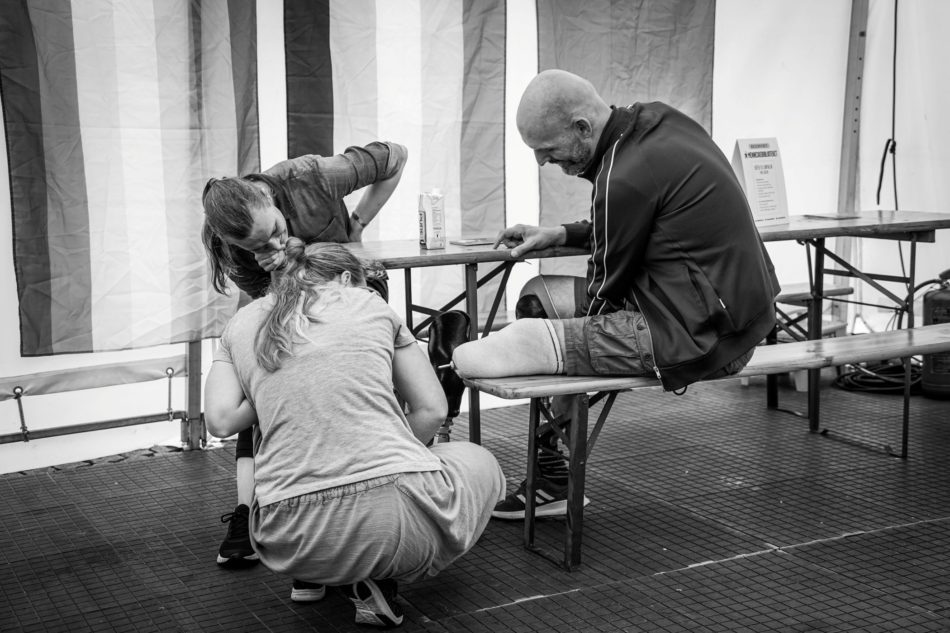
Credit: Elin Tabitha
Q. There have been many varieties of Human Books, like a refugee and a transgender person. Was there one Human Library session that particularly stood out to you to this day?
We publish a broad scope of content that can help us learn about the incredible diversity that already exists in our communities. We have 15 different categories of content including social, ethnic, religious, gender, occupation, orientation and many more. We always insist that there is a big and broad mix of content and so the Human Library will never be thematic in its approach.
I think every session has something unforgettable about it and feedback from readers 21 years after their first reading proves that the learning we provide access to has longevity and staying power.
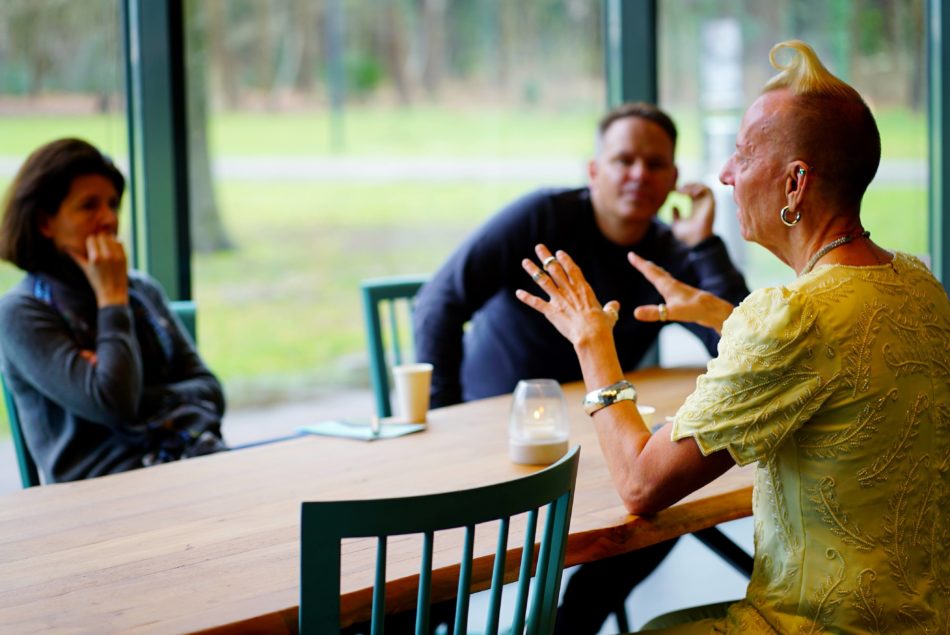
Reading in Holland. Credit: Katy Jon Went
Q. Do you hope that eventually each session of the Human Library will be documented, like perhaps turned into a physical book, or do you still feel it is best for the conversations to remain confidential?
The privacy of space is crucial to the impact and authenticity of the session. So, I would never want to compromise on that. There are plenty of great books published but that does not always give a voice to the individuals that have their own experiences and journeys to share.
I think the power of conversations in some cases exceeds the impact a physical book can have. And we must not forget that not all people embrace reading physical books just like not all people are comfortable to have a personal and open conversation with a stranger on a topic that might be difficult to speak about.
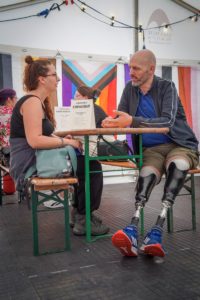
Credit: Elin Tabitha
Q. The Human Library has grown so much that now it is held in over 80 countries outside of Denmark. How has the library expanded internationally, and how local values and cultures influenced the sessions, and what has that experience been like?
We are very respectful of local cultures and their traditions for conversations. We recognize that each country will require some local adaptation of the concept. This happens in partnership with our local publishing partners. They are familiar with the norms, they know what is feasible and how to adapt to the learning space, so it creates the right framework for the community it is meant to serve.
We have learned so much from engaging around the world and the current methodology and the way we train our books and librarians reflect a composite of the learnings from the many countries in which we have been allowed to publish our books to readers.
Q. The Human Library Reading Garden in Copenhagen provides a garden‑like atmosphere where participants can sit and talk in a relaxed setting. What was your vision when creating this outdoor space for the Human Library?
We wanted to test if we could build a space designed to accommodate our format and how this could potentially impact on the quality of the experience. The Reading Garden was a great way to make the Human Library available to a great range of readers including visitors to Copenhagen from around the world.
Schools, workplaces, organizations from Denmark and educational institutions from Japan, US, France, Germany, Palestine and beyond have dropped by our garden.
We wanted a place that was our own and to see how this could help secure both a flow of events and stronger contact to our readers. Next up is the Human Library Book Cafe.
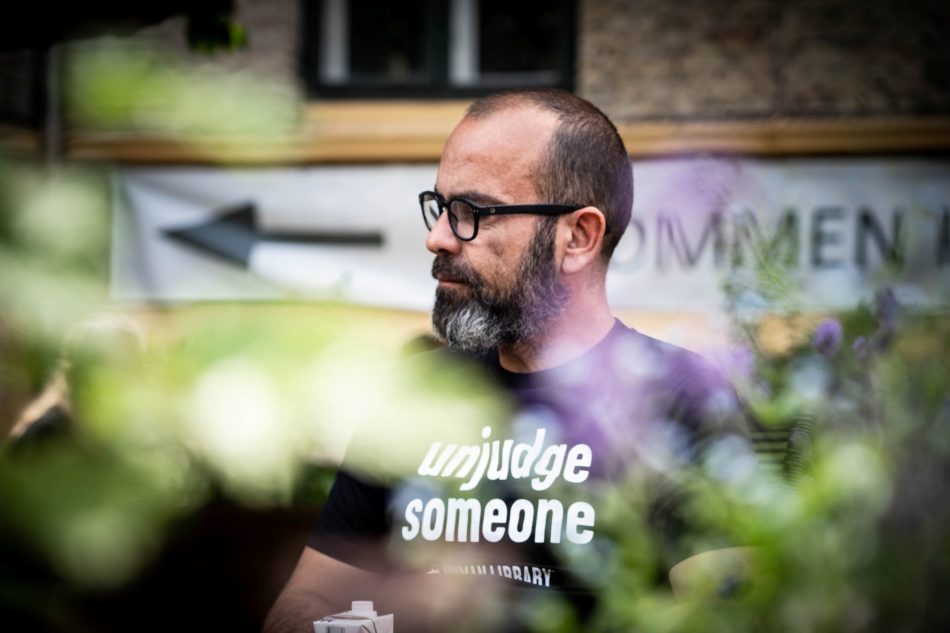
Reading in Reading Garden, CPH. Credit: Elin Tabtiha
Q. The Human Library has changed human conversation in many ways and to some extent in society too, but how has it changed you personally since 2000?
Life is a journey of constant knowledge and change for us as people. We live and we learn and we try to do better and be smarter. I am no different and I have learned a lot from our courageous books and readers. It has shown me that with more understanding of each other we can all benefit from a higher quality of life and by increasing our own participation in networks and our community we are creating opportunities. For ourselves and those around us.
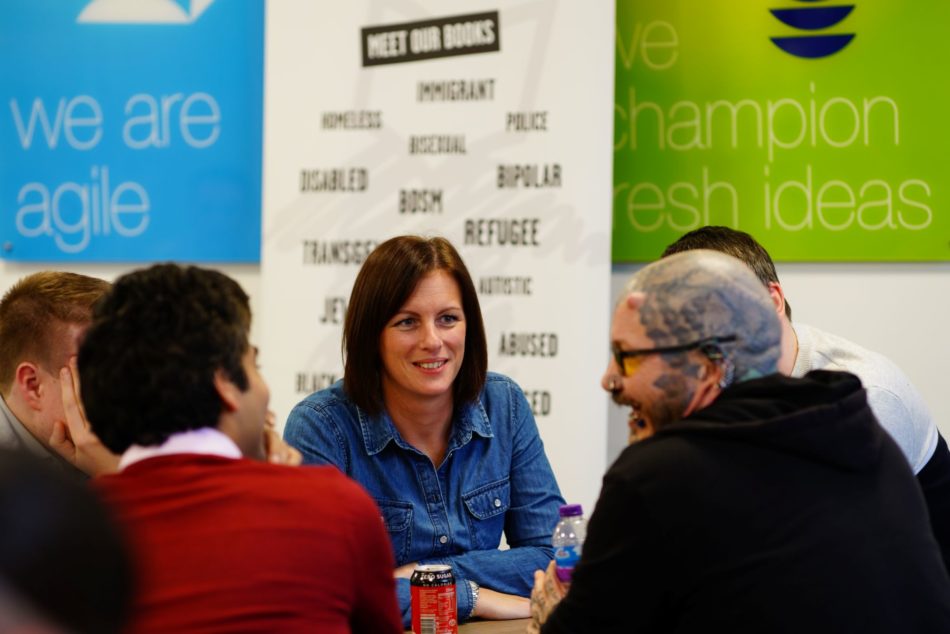
Credit: Katy Jon Went
Q. Is there anything about the Human Library that people might not know, but you would like to share with us here?
Yes, I don’t think enough people are aware that participating in the Human Library can positively impact the rest of your life and the life of others.
Q. If you could be a Human Book yourself, what story would you share with our readers?
I have been a Human Book on many occasions. More recently with the topic of Bereavement, as I lost my wife in 2013 and learned the hard way about the social stigmas of loss and early death. How the fear of engaging in difficult conversations can lead to social exclusion and a sense that some people are afraid to talk about death. Don’t be afraid, be courageous.
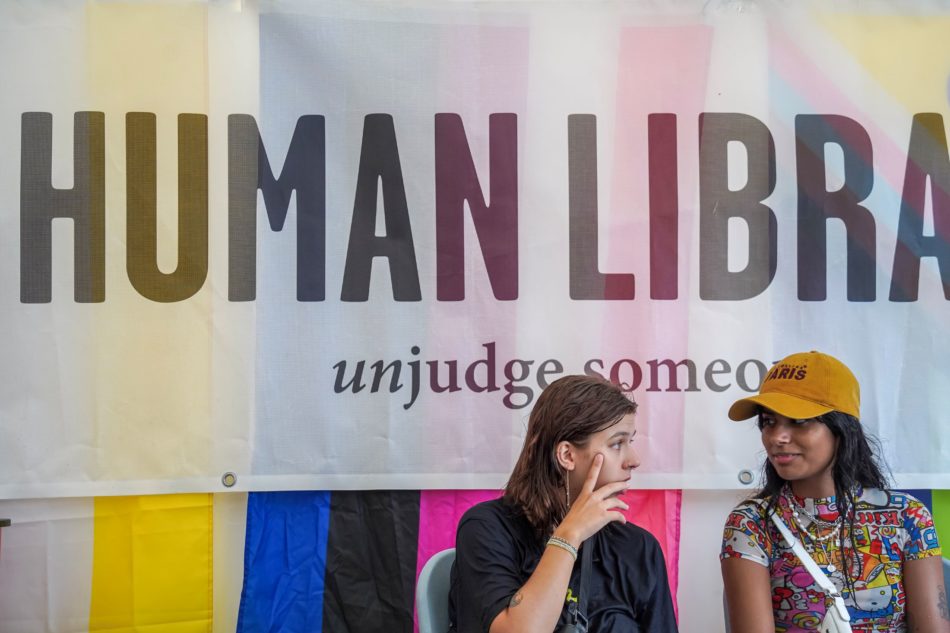
Credit: Human Library Org





It’s unusual to come across a concept that is completely new to one. The idea of the Human Book is just such a one to me. What a fascinating idea!