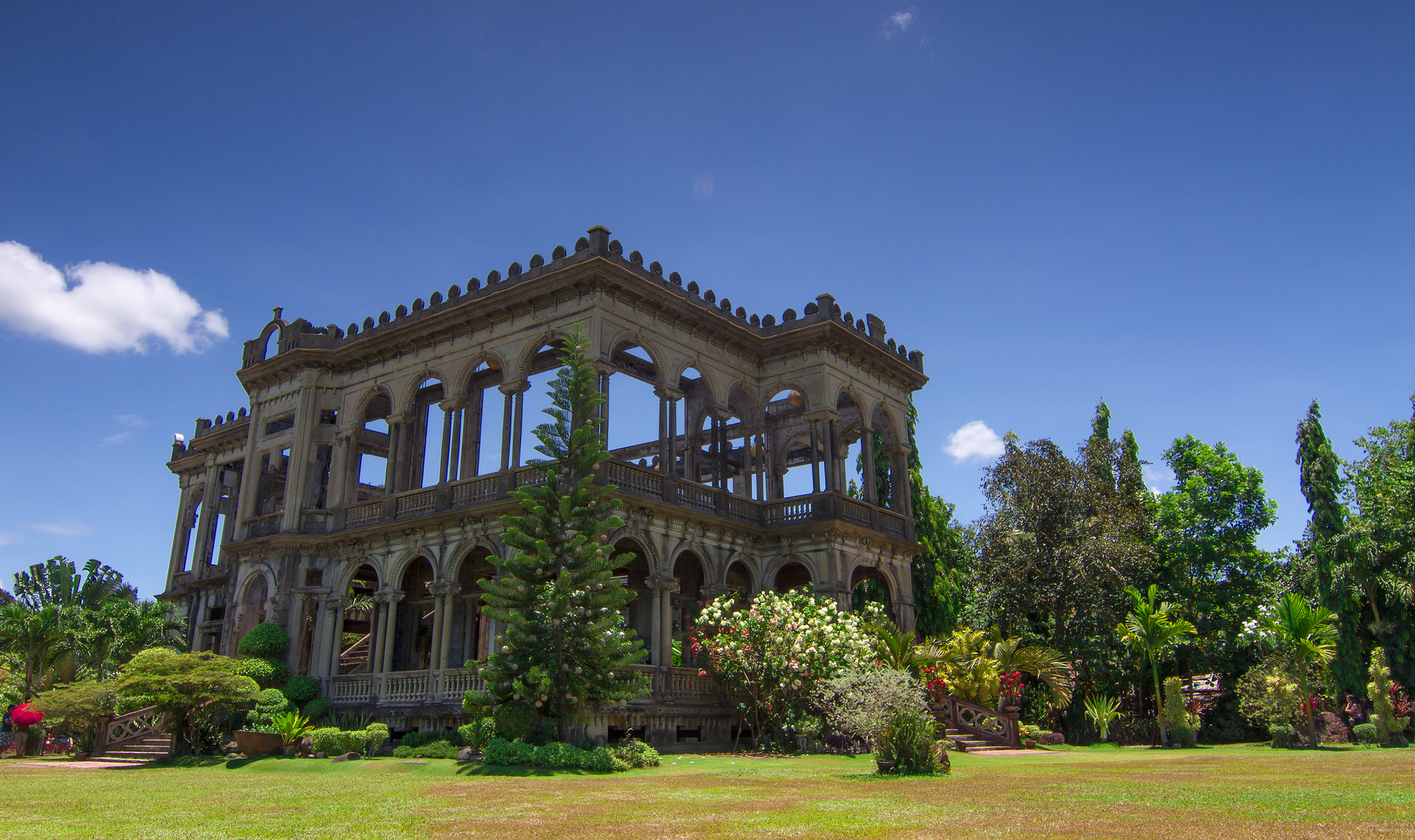
The Ruins in nearby city of Talisay.
The city’s connection to sugar runs deep – quite literally. For generations, vast plantations have surrounded Bacolod, their crystalline bounty earning the region the title of “Sugar Bowl of the Philippines.” The remnants of this wealthy past stand proud in the form of ancestral houses, locally known as heritage houses or “sugar mansions,” their weathered facades telling tales of boom times and elegant soirees.
My first stop was The Ruins in nearby Talisay City, perhaps the most famous testament to this sugary legacy. Standing amid manicured gardens, this skeletal mansion – often called the “Taj Mahal of Negros” – was built by sugar baron Don Mariano Ledesma Lacson in memory of his Portuguese wife. The sunset transformed the honey-colored stone into liquid gold, and I couldn’t help but imagine the grand parties that once graced these halls before World War II brought them to a fiery end.
But Bacolod isn’t content to rest on its historical laurels. The city pulses with a modern energy that’s most evident in its famous Lacson Street. Here, among art deco buildings and newer establishments, I found myself drawn into the orbit of local life. Students from nearby universities crowded into milk tea shops, while office workers ducked into hole-in-the-wall eateries serving up steaming bowls of batchoy, a noodle soup that originated in the region.
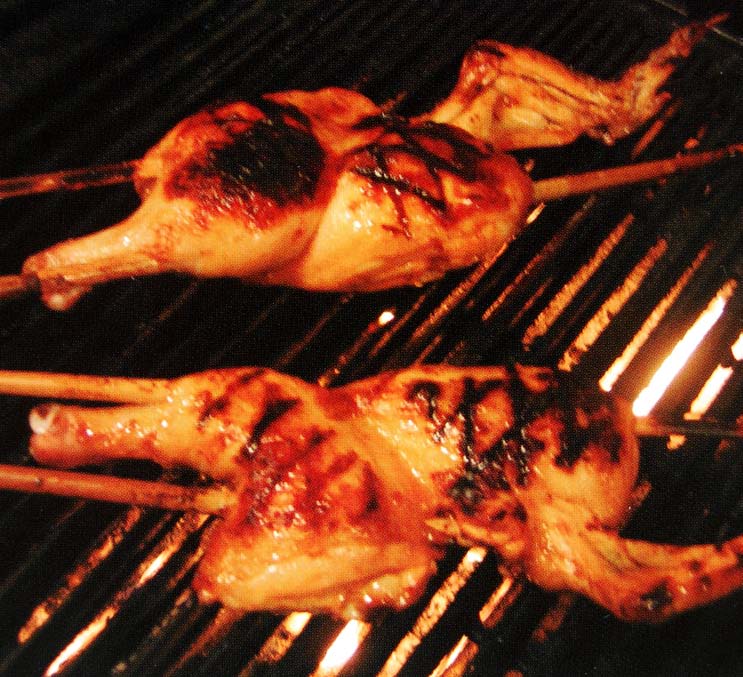
Chicken Inasal @ Manokan Country
Chicken inasal is more than just grilled chicken – it’s a cultural touchstone. At Manokan Country, a collection of open-air food stalls near the city center, the air was thick with smoke and the sound of sizzling meat. Ludwig showed me how to eat like a local: ordering rice wrapped in banana leaves, picking the most succulent pieces of orange-tinted chicken, and most importantly, mixing up the holy trinity of condiments – soy sauce, vinegar, and calamansi – in precise proportions.
“The secret is in the marinade,” a vendor confided as he fanned the coals beneath skewers of chicken. “Annatto oil, ginger, garlic, and lemongrass – but every family has their own recipe.” The result was nothing short of revelatory: smoky, tangy, with a subtle sweetness that seemed to embody Bacolod itself.
As evening approached, Ludwig insisted we visit The Negros Museum, housed in the former provincial capitol building. The exhibits told stories of sugar plantation life, indigenous culture, and the dark years of the 1980s when falling sugar prices devastated the region’s economy. “We learned to diversify,” Ludwig explained. “Now we’re known for more than just sugar – we’re a city of entrepreneurs, artists, and dreamers.”
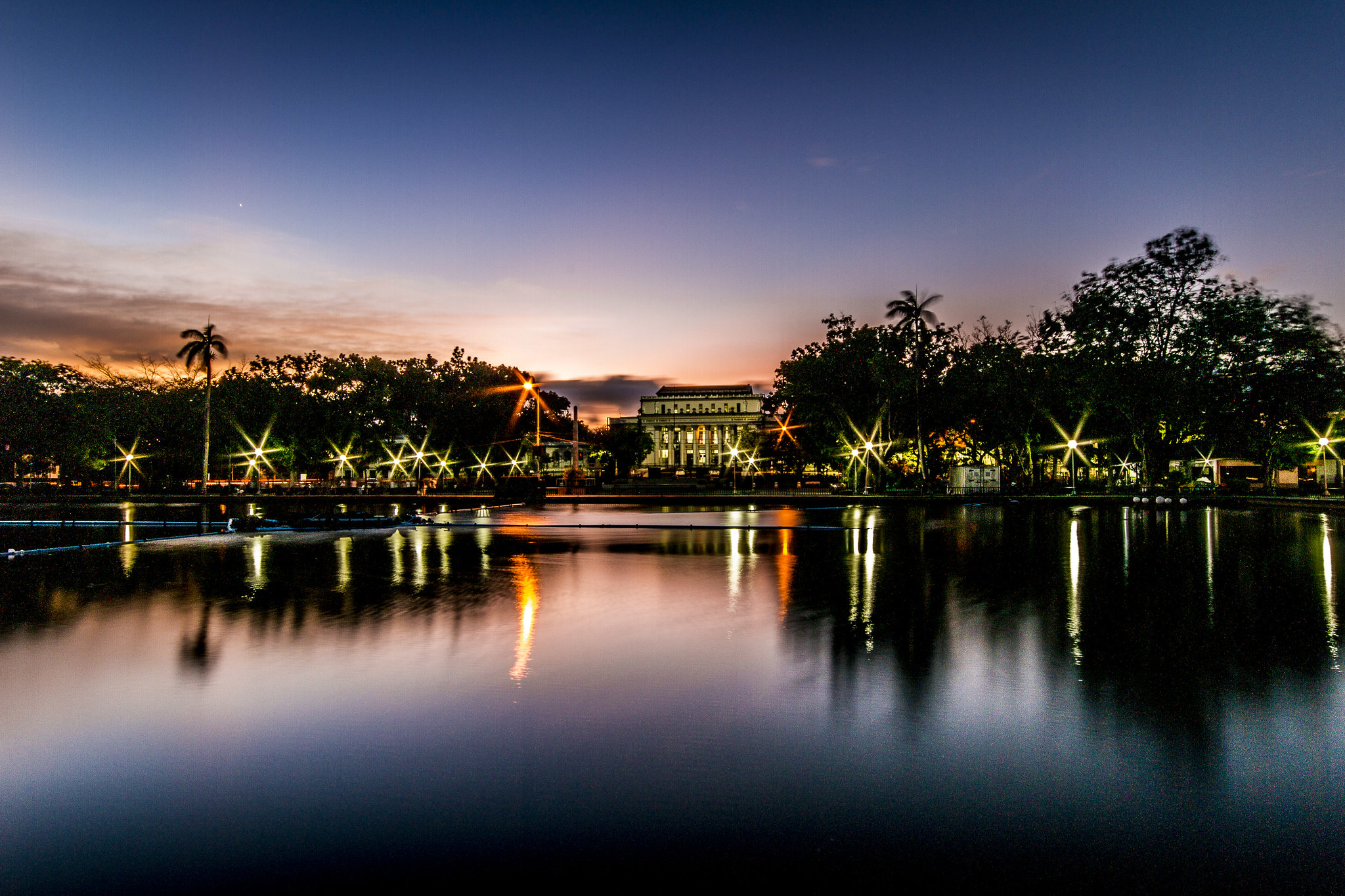 This resilience was on full display at the Sunday food market in the Capitol Park and Lagoon. Local vendors hawked everything from traditional kakanin (rice cakes) to innovative fusion dishes. I watched as a young chef combined traditional ingredients with modern techniques, creating desserts that paid homage to Bacolod’s sweet heritage while pushing culinary boundaries.
The crown jewel of Bacolod’s sweet offerings is undoubtedly its piaya – flatbread filled with muscovado sugar. At a small bakery off Lacson Street, I watched as skilled hands rolled out dough paper-thin, sprinkled it with raw sugar, and cooked it on a griddle until perfectly caramelized. The result was addictive: crispy, chewy, with pockets of molten sugar that demanded multiple napkins and zero regrets.
But Bacolod’s sweetness extends beyond its food. The city earned its “City of Smiles” nickname from the warmth of its people, nowhere more evident than during the famous MassKara Festival held every October. Though I missed the actual festival, traces of its spirit lingered in the workshops where artisans crafted the elaborate smiling masks that have become symbols of Bacolod’s resilience.
In one such workshop, I met Ramon, a third-generation mask maker who showed me photographs of past festivals. “The festival started during a crisis,” he explained, referring to the 1980s crash in sugar prices and a maritime disaster that claimed many local lives. “We chose to smile through our hardships, to celebrate life even in dark times. That’s the spirit of Bacolod.”
This spirit manifested itself in unexpected ways throughout my stay. When an afternoon thunderstorm trapped me in a café, the owner insisted on teaching me to play chess, a popular local pastime. When I got lost looking for a specific restaurant, three different people offered to walk me there personally. Each interaction reinforced what Ludwig had told me: “In Bacolod, no one stays a stranger for long.”
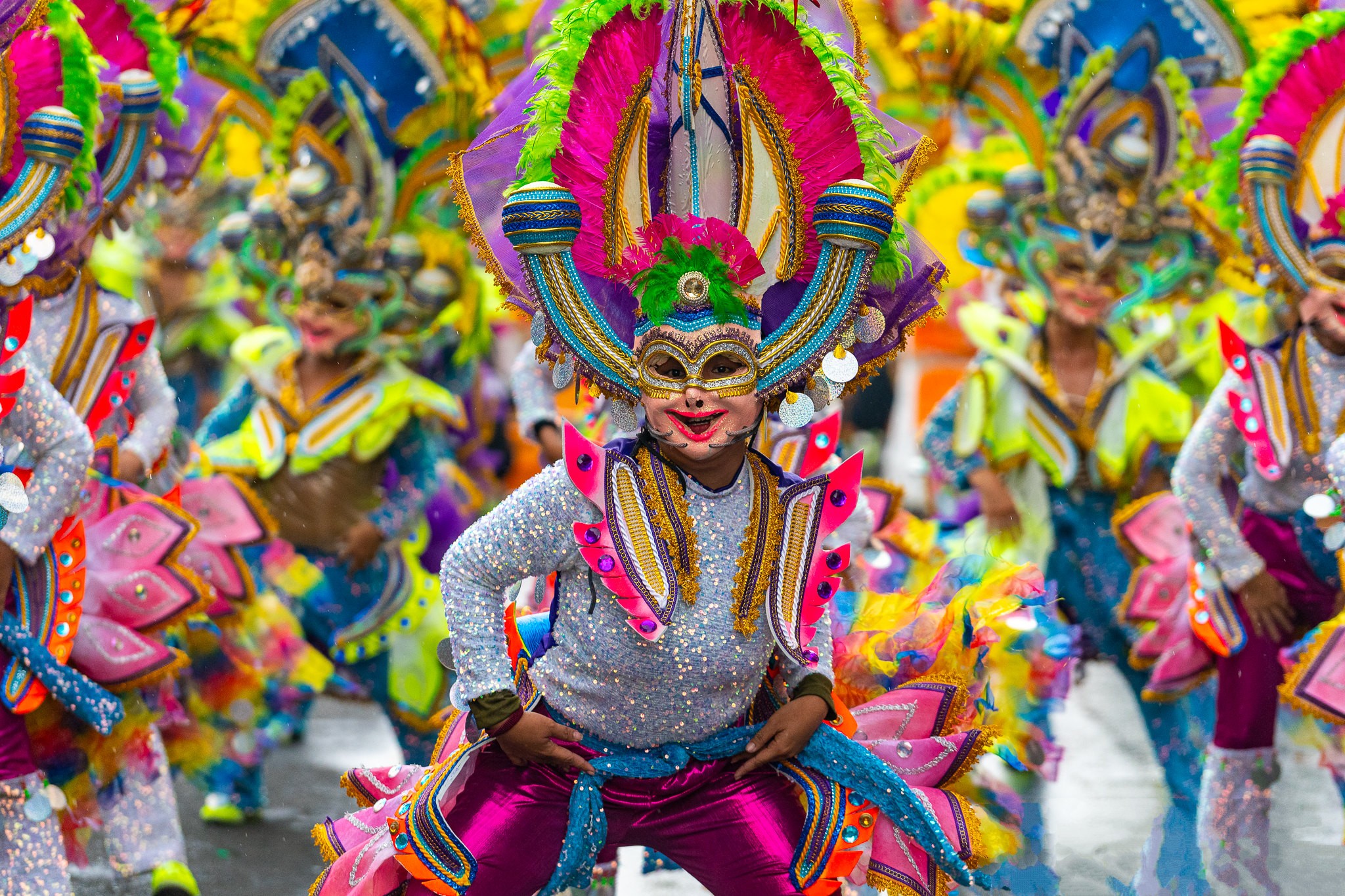
The MassKara Festival of Bacolod City.
As I sat on a bench, savoring my own cup of taho, I reflected on how Bacolod had surprised me. I’d come expecting a simple provincial capital and found instead a city that balanced its sweet heritage with a dynamic present. The sugar industry that built Bacolod may have waned, but its influence lingers in the city’s architecture, cuisine, and most importantly, in the warmth of its people.
That morning, as my flight departed over those same sugarcane fields, I understood that Bacolod’s true sweetness isn’t in its sugar or even its famous desserts – it’s in the genuine smiles of its people, the preservation of its heritage, and its ability to face challenges with unwavering optimism. Like the best desserts, it leaves you wanting more, planning your return even as you’re leaving.
The sun was setting over the Visayan Sea, painting the sky in shades of orange and pink that reminded me of caramelizing sugar. Somewhere below, amid the cane fields and heritage houses, new stories were being written, new friendships were being forged, and new reasons to smile were being discovered in the City of Smiles.


Leave a Reply