Adventure travel has changed dramatically over the last decade, and I have had the privilege of witnessing that transformation firsthand. As someone who has spent more than 10 years riding traditional bicycles and electric bikes across trails, mountain passes, coastal routes, and remote countryside roads, I can confidently say that electric bikes have reshaped what is possible for modern explorers.
When electric bikes first entered the market, many cyclists viewed them with scepticism. Some believed they were only for commuters or riders who wanted an easier experience. Today, that perception has changed significantly. Electric bikes, often referred to as e-bikes, have become one of the most exciting developments in cycling and adventure tourism.
From reaching remote destinations to extending daily mileage and making challenging terrain more accessible, e-bikes are opening new opportunities for riders of all skill levels. They are not replacing adventure travel—they are expanding it.
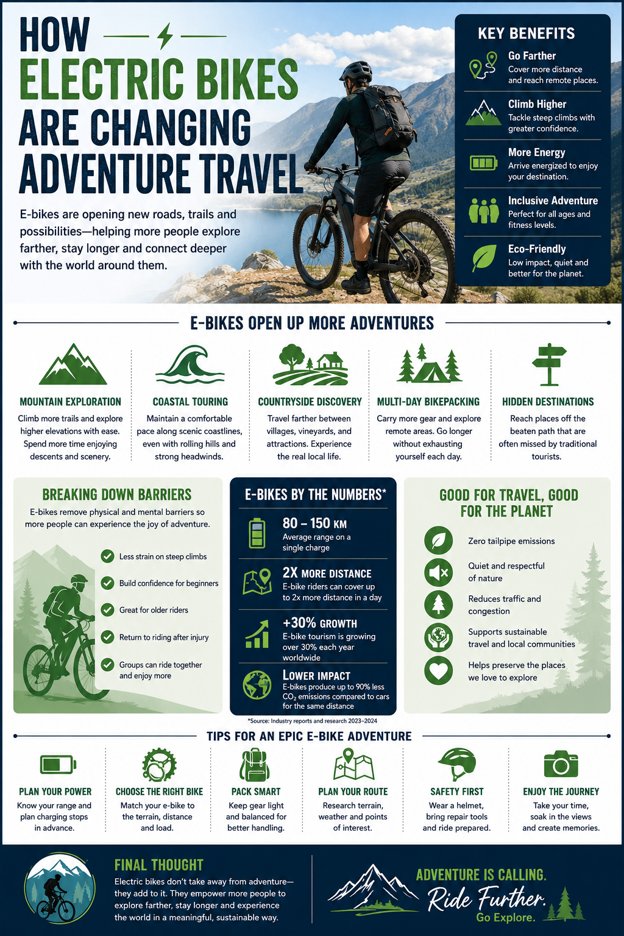
The Evolution of Adventure Travel
Traditional adventure cycling has always been about exploration, self-reliance, and discovering places beyond the reach of ordinary tourism. Whether it is a multi-day bikepacking trip, a mountain trail expedition, or a long-distance road journey, cycling allows travellers to experience destinations at a slower and more meaningful pace.
However, traditional cycling can also be physically demanding.
Steep climbs, strong headwinds, long distances, and carrying gear can limit how far people travel and who can participate. Many travellers dream of cycling adventures but are discouraged by fitness concerns, age, injuries, or lack of experience.
This is where electric bikes have become a game changer.
The addition of pedal assistance allows riders to tackle routes that might otherwise feel impossible while still enjoying the physical and mental benefits of cycling.
Electric Bikes Make Adventure Travel More Accessible
One of the biggest changes I have seen over the past decade is the increase in accessibility.
I have ridden with people in their twenties who wanted to cover greater distances and with riders in their sixties and seventies who thought their cycling adventure days were over. E-bikes have created a middle ground where everyone can participate.
Pedal-assist technology provides support when needed while still requiring riders to pedal. This means travellers can enjoy challenging routes without becoming exhausted before reaching their destination.
Accessibility benefits include:
- Reduced physical strain on steep climbs
- Greater confidence for beginner cyclists
- Increased participation among older riders
- Easier recovery during multi-day adventures
- More opportunities for mixed-ability groups to ride together
In my experience, one of the most rewarding aspects of e-bike travel is seeing families and friends with different fitness levels enjoy the same adventure.
Covering More Ground Without Losing the Experience
One concern often raised about electric bikes is whether they remove the sense of adventure.
After thousands of kilometres on both traditional bikes and e-bikes, my answer is simple: absolutely not.
Adventure travel is not about suffering. It is about exploration.
E-bikes allow riders to travel farther while maintaining the immersive experience that makes cycling so special. Unlike travelling by car, motorcycle, or bus, riders still feel every turn, every change in terrain, every scent from nearby forests, and every interaction with local communities.
On a traditional bicycle, a rider may comfortably cover 50 to 80 kilometres in a day. With an e-bike, many travellers can confidently explore 80 to 150 kilometres while still having energy to enjoy the destination.
This expanded range means:
- Visiting more attractions during a trip
- Exploring remote locations
- Connecting multiple towns in a single journey
- Reaching hidden viewpoints
- Spending more time sightseeing rather than recovering from fatigue
Adventure Tourism Is Embracing E-Bikes
The tourism industry has quickly recognised the growing demand for electric bike experiences.
Many destinations that previously catered only to traditional cyclists now offer e-bike tours, rentals, and guided adventures.
Popular adventure travel experiences include:
Mountain Exploration
Electric mountain bikes have revolutionised off-road travel. Riders can climb challenging trails more efficiently and spend more time enjoying descents and scenic viewpoints.
Coastal Touring
Coastal routes often involve rolling terrain and strong winds. E-bikes help travellers maintain a comfortable pace while enjoying breathtaking ocean views.
Countryside Discovery
Rural villages, vineyards, farms, and natural reserves become more accessible when riders can comfortably travel longer distances between locations.
Multi-Day Bikepacking
Carrying camping equipment, food, and water becomes much easier with electric assistance, making extended adventures more appealing to a broader audience.
Breaking Down Physical Barriers
One of the most significant advantages of electric bikes is their ability to remove physical barriers.
Over the years, I have met countless travellers who wanted to experience cycling adventures but felt intimidated by the physical demands.
Some common concerns include:
- Long climbs
- Joint pain
- Previous injuries
- Lack of endurance
- Age-related fitness changes
Electric bikes provide support where it matters most. Riders still exercise, but the workload becomes more manageable.
Research consistently shows that e-bike riders remain physically active while often riding more frequently and for longer periods than many traditional cyclists.
This means travellers can focus on enjoying the journey instead of worrying about whether they can complete it.
Sustainable Adventure Travel
Sustainability has become a major focus in modern tourism, and electric bikes fit perfectly within this movement.
Many travellers are seeking ways to reduce their environmental impact without sacrificing memorable experiences.
Compared with cars, motorhomes, and other motorised transport options, electric bikes have a significantly lower environmental footprint.
Benefits include:
- Reduced carbon emissions
- Lower energy consumption
- Minimal noise pollution
- Reduced traffic congestion
- Less environmental disruption in natural areas
When exploring national parks, coastal roads, or rural landscapes, e-bikes allow travellers to experience nature without overwhelming it.
As someone who values outdoor environments, this is one of the aspects I appreciate most about e-bike travel.
The Rise of Electric Bikepacking
Bikepacking has become one of the fastest-growing segments of adventure travel.
Traditional bikepacking involves carrying lightweight gear on a bicycle while travelling across extended routes. Electric bikepacking takes this concept even further.
The additional assistance allows riders to:
- Carry heavier gear
- Travel farther each day
- Explore more remote locations
- Handle rough terrain more comfortably
- Extend the duration of trips
Battery management becomes an important part of the adventure, adding a unique planning element similar to managing food, water, and navigation.
Modern batteries offer impressive range capabilities, and many riders now plan routes around charging opportunities, creating entirely new travel experiences.
Technology Is Driving Better Adventures
The rapid improvement of e-bike technology has significantly enhanced adventure travel.
Ten years ago, electric bikes were often heavier, less efficient, and limited in range.
Today, advancements include:
Longer Battery Range
Many modern e-bikes can travel over 100 kilometres on a single charge depending on terrain and riding style.
More Efficient Motors
Modern motors deliver smoother assistance, making rides feel natural and intuitive.
Improved Reliability
Adventure riders can now rely on durable systems designed specifically for off-road and long-distance use.
Smart Connectivity
Many e-bikes include GPS navigation, ride tracking, route planning, and performance monitoring features.
These technological improvements have made electric bikes practical tools for serious adventure travellers rather than niche alternatives.
Local Communities Benefit from E-Bike Tourism
One often-overlooked advantage of e-bike travel is its positive economic impact on local communities.
Cyclists tend to spend money differently from traditional tourists.
Rather than passing quickly through an area, bike travellers often:
- Stay overnight in local accommodations
- Eat at independent restaurants
- Visit local attractions
- Purchase supplies from local shops
- Explore lesser-known destinations
Because e-bikes allow riders to cover more ground, they can visit multiple communities during a single trip, spreading tourism benefits more broadly.
This creates opportunities for smaller towns that may not traditionally attract large numbers of visitors.
Adventure Travel Becomes More Inclusive
Inclusivity is another reason electric bikes are transforming the industry.
Traditional cycling adventures can unintentionally exclude people due to fitness requirements or physical limitations.
Electric bikes help create experiences where:
- Couples with different fitness levels can ride together
- Families can enjoy shared adventures
- Older travellers can continue exploring
- Beginners can build confidence
- Recovery riders can return to cycling after injuries
I have personally witnessed riders rediscover their passion for cycling because e-bikes made adventure accessible again.
That alone demonstrates how transformative this technology has become.
The Future of Adventure Travel
Looking ahead, I believe electric bikes will continue playing a central role in adventure tourism.
Several trends are already emerging:
- Growth in dedicated e-bike tour operators
- Expansion of charging infrastructure
- Increased availability of e-bike-friendly accommodations
- Development of purpose-built e-bike trails
- Improved battery technology
- Greater integration with tourism services
As technology continues to evolve, adventure travellers will gain even more opportunities to explore destinations in sustainable, enjoyable, and accessible ways.
The future is not about choosing between traditional bicycles and electric bikes. Both have their place.
Instead, the future is about giving more people the opportunity to experience the freedom, excitement, and personal growth that adventure travel provides.
Final Thoughts
After more than a decade of experience riding both traditional bicycles and electric bikes, I firmly believe that electric bikes are one of the most important innovations in modern adventure travel.
They are helping riders explore farther, climb higher, travel longer, and discover destinations that once seemed out of reach. More importantly, they are making adventure travel accessible to people who may never have considered a cycling journey before.
Electric bikes do not diminish adventure. They expand it.
Whether you are exploring mountain trails, coastal roads, countryside routes, or multi-day bikepacking expeditions, e-bikes offer a practical and exciting way to experience the world from a unique perspective.
As more travellers embrace this technology, we are likely to see even greater innovation, accessibility, and sustainability within the adventure tourism industry. For anyone considering their next cycling adventure, there has never been a better time to experience what electric bikes can offer.
About the Author
Michael Reyes – Cycling and E-Bike Enthusiast
Michael Reyes has more than 10 years of experience riding traditional bicycles and electric bikes across a variety of terrains, including mountain trails, gravel routes, urban cycling networks, and long-distance touring adventures. His passion for cycling began with recreational riding and evolved into extensive exploration of adventure travel, bikepacking, and e-bike technology. Through years of hands-on experience testing bicycles, riding diverse landscapes, and following industry developments, Michael shares practical insights to help riders discover new destinations and enjoy cycling adventures with confidence.





Leave a Reply