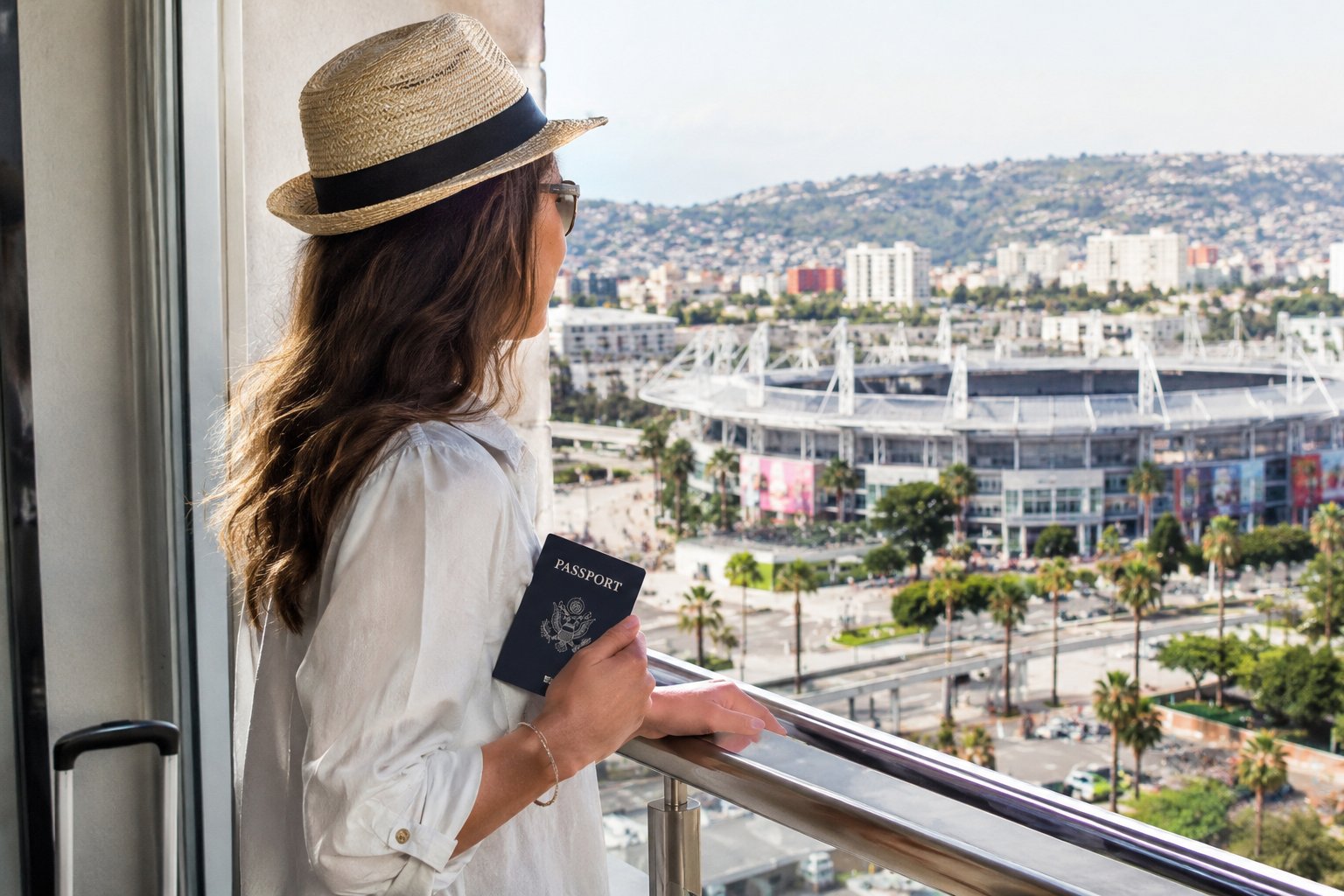
A ticket to a major sporting event can end up dictating an entire trip. During the 2026 FIFA World Cup, the tournament ran for 39 days and included 104 matches across Canada, Mexico, and the United States. Fans weren’t simply booking a flight and a hotel for game day. They were working out border crossings, domestic connections, hotel changes, and the occasional day to recover before squeezing in any sightseeing. In many cases, the ticket came first, and the rest of the itinerary followed.
The World Cup Turned Supporters Into Route Planners
The United States staged 78 of the 104 World Cup matches, while Canada and Mexico hosted 13 apiece, making multi-city travel part of the tournament’s basic geography. Pre-tournament research from the U.S. Travel Association found that one-third of surveyed international World Cup visitors intended to stay in the United States for more than two weeks, while more than 80% said they were open to destinations beyond the largest gateway cities. Respondents also expected to spend more than $5,000 per international trip. Those were visitor intentions rather than final measured spending, but they showed how one match ticket could anchor a much longer itinerary.
Paris Proved Fans Will Stay Longer
The Paris Olympics supplied measured evidence that event visitors can extend their stays rather than disappear after the last session. Paris je t’aime estimated 3.1 million tourists in Greater Paris during the 2024 Olympic period, 19.2% more than during the comparable 2023 window, while international tourists stayed an average of 2.9 nights instead of 2.5. Hotel occupancy in inner Paris reached 84% between July 23 and August 6, and foreign overnight stays in Saint-Denis rose 205%. Venue geography pulled visitors into districts that often receive less attention on a standard Paris itinerary.
Formula 1 Sells More Than a Grandstand
Formula 1 has made the destination itself part of the event product. Las Vegas Grand Prix organizers and the Las Vegas Convention and Visitors Authority report $3.2 billion in cumulative economic impact for Southern Nevada across the 2023, 2024 and 2025 races, all three of which sold out; a new agreement keeps Formula 1 racing in Las Vegas through 2037. F1’s 2025 Global Fan Survey adds another travel signal: 73% of U.S.-based respondents said they planned to attend a U.S. race in the future. The race is only part of the trip.
The Phone Fills the Hours Between Events
Event travel creates long gaps between airport arrivals, meals, fan zones, and evening sessions, which has made mobile entertainment part of the itinerary. Some travelers spend that time following statistics or live odds, while someone opening plinko MelBet can choose from several Plinko titles built around the familiar mechanic of a ball dropping through pegs and finishing in a multiplier slot. Individual versions can differ in RTP, volatility, risk levels and row settings, so previous drops do not provide a dependable forecast for the next result.
LA28 Wants Visitors to Think in Zones
The 2028 Olympics are already shaping how spectators will need to plan their time in Los Angeles. LA28 lists more than 40 competition venues and says the Games will be the first in 80 years to avoid building new permanent facilities, using existing and temporary venues instead. Because those venues are spread across a wide area, the official planning system groups them into zones and recommends staying near the zone where most of your events are scheduled. That could save a lot of time on the road. Even two events on the same day may be hard to combine if they’re held on opposite sides of Southern California.
The Extra Day Has Become the Real Tourism Prize
Major events increasingly compete for what visitors do before and after the game rather than only for the crowd inside the venue. Paris converted Olympic demand into longer stays, the World Cup forced supporters to think across cities and borders, and Las Vegas built an F1 weekend in which hotels, restaurants and entertainment sit beside the circuit rather than outside the sports experience. Travelers have changed the planning order, locking in the event date, mapping the venue cluster after that, pricing transport between sessions, and only then choosing the neighborhood or secondary destination. A well-planned sports trip now leaves enough space for the city to matter.




Leave a Reply