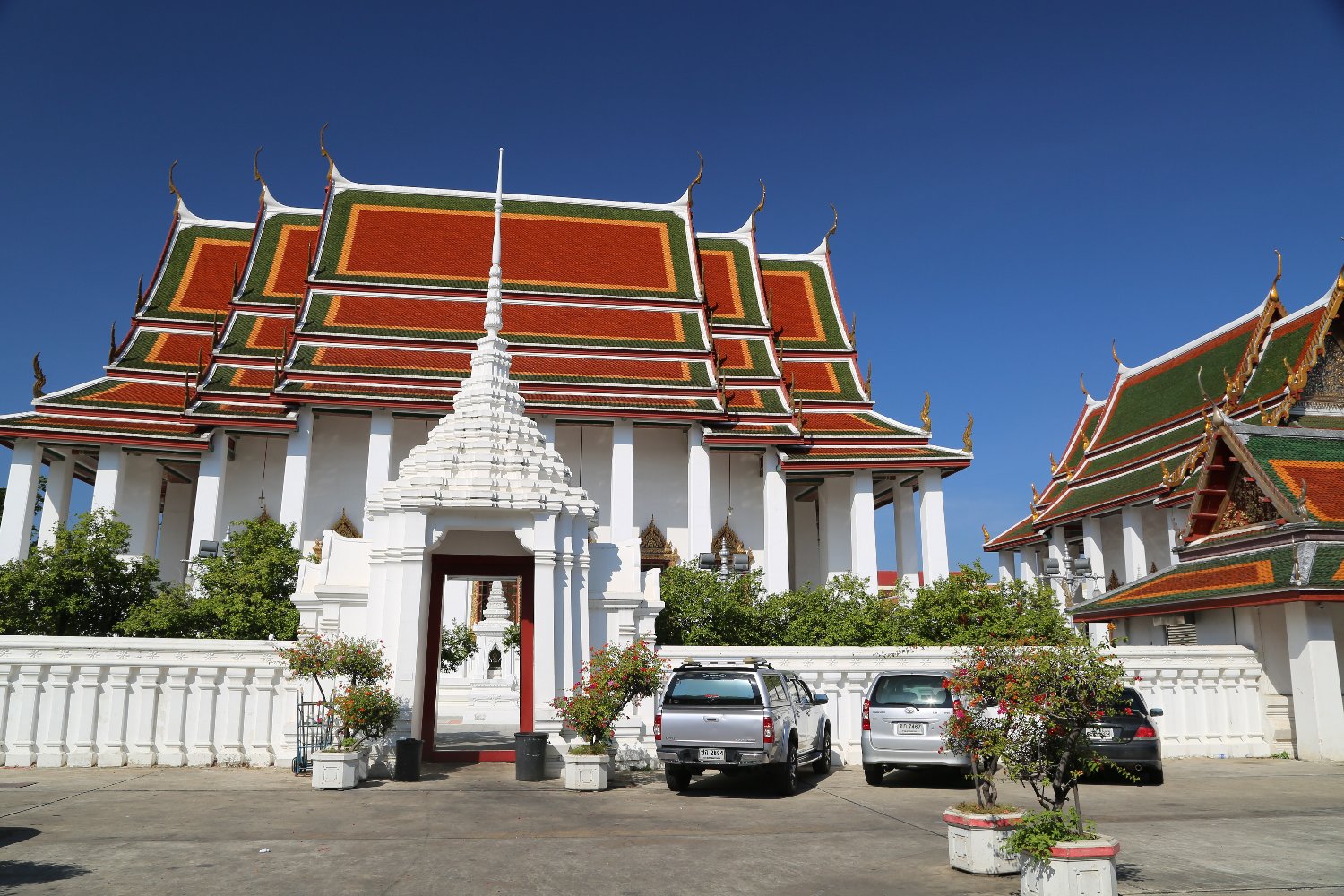
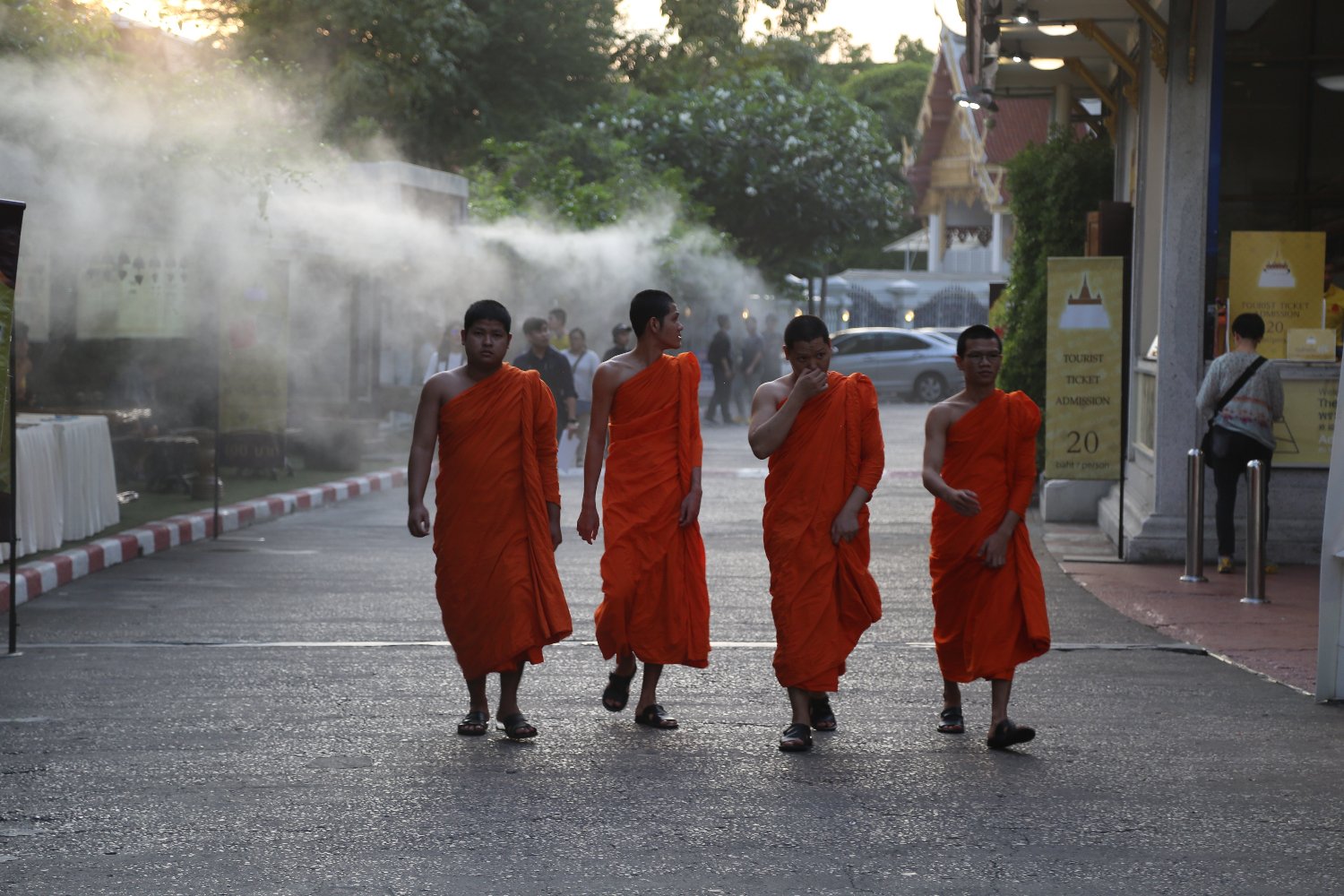

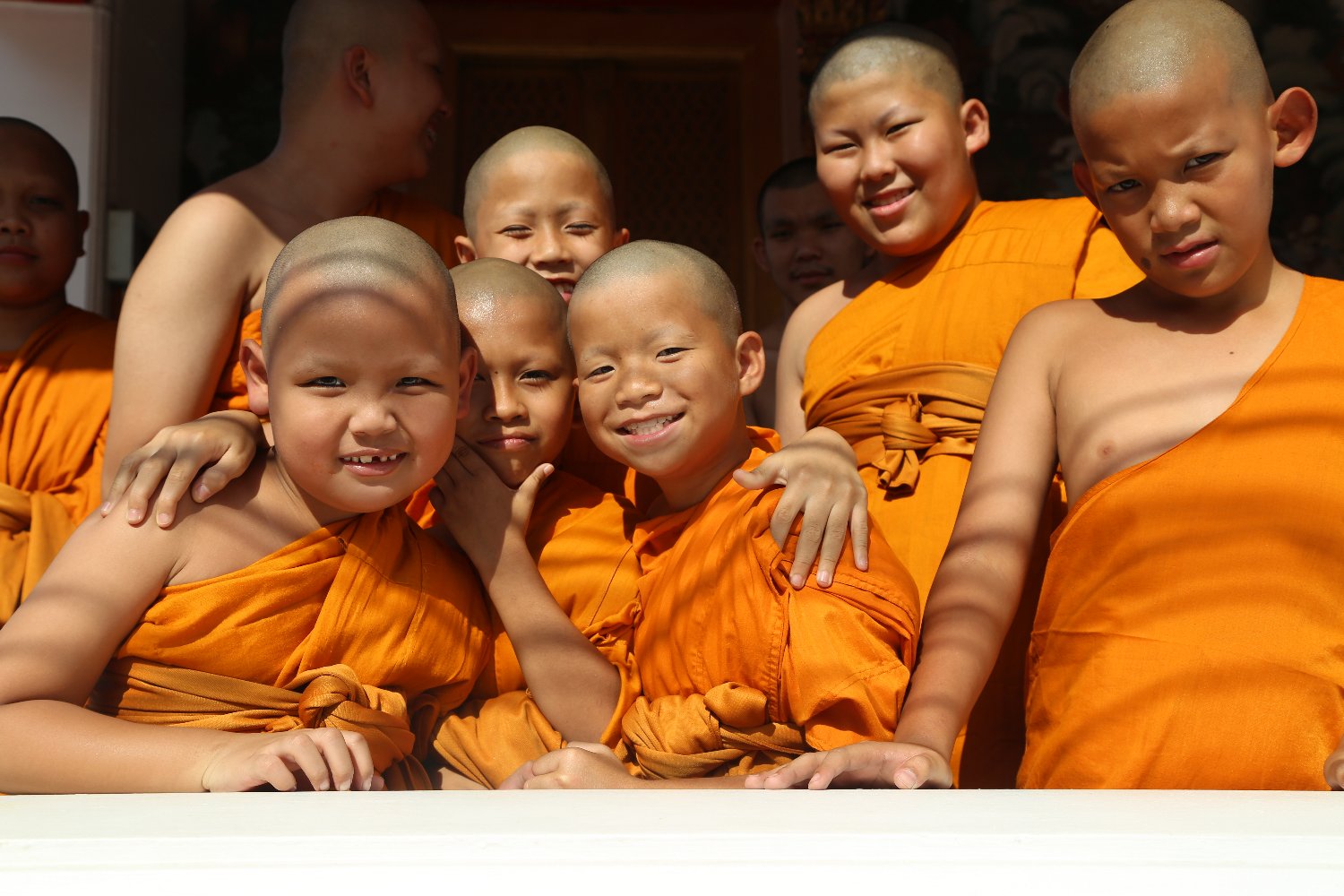

 Bangkok is home to hundreds of gleaming golden temples – many of which are centered around the old part of town and along the banks of the Chao Praya River or along other waterways within the city. Buddhists believe that monks should be ordained on or near water. Some are more memorable than others for a variety of reasons (size, architecture, unique artifacts, unique Buddha statues, location etc). Some of our favorites are indicated by the Dave’s Pick, the imprint of a boot image as shown here.
Thai temples often contain two sections – the Phutthawat (the primary part of the temple that most visitors see – the part of the temple dedicated to Buddha) and the Sangkhawat (section that provides the housing for the monks and includes the kitchen area).
Thai temples or wáts include several buildings such as the Ubosot (ordination hall) and the Wihan (shrine hall), containing images and statues of Buddha and where monks and people come to pray) – are places of worship, site of various events throughout the year and also provide a home for monks.
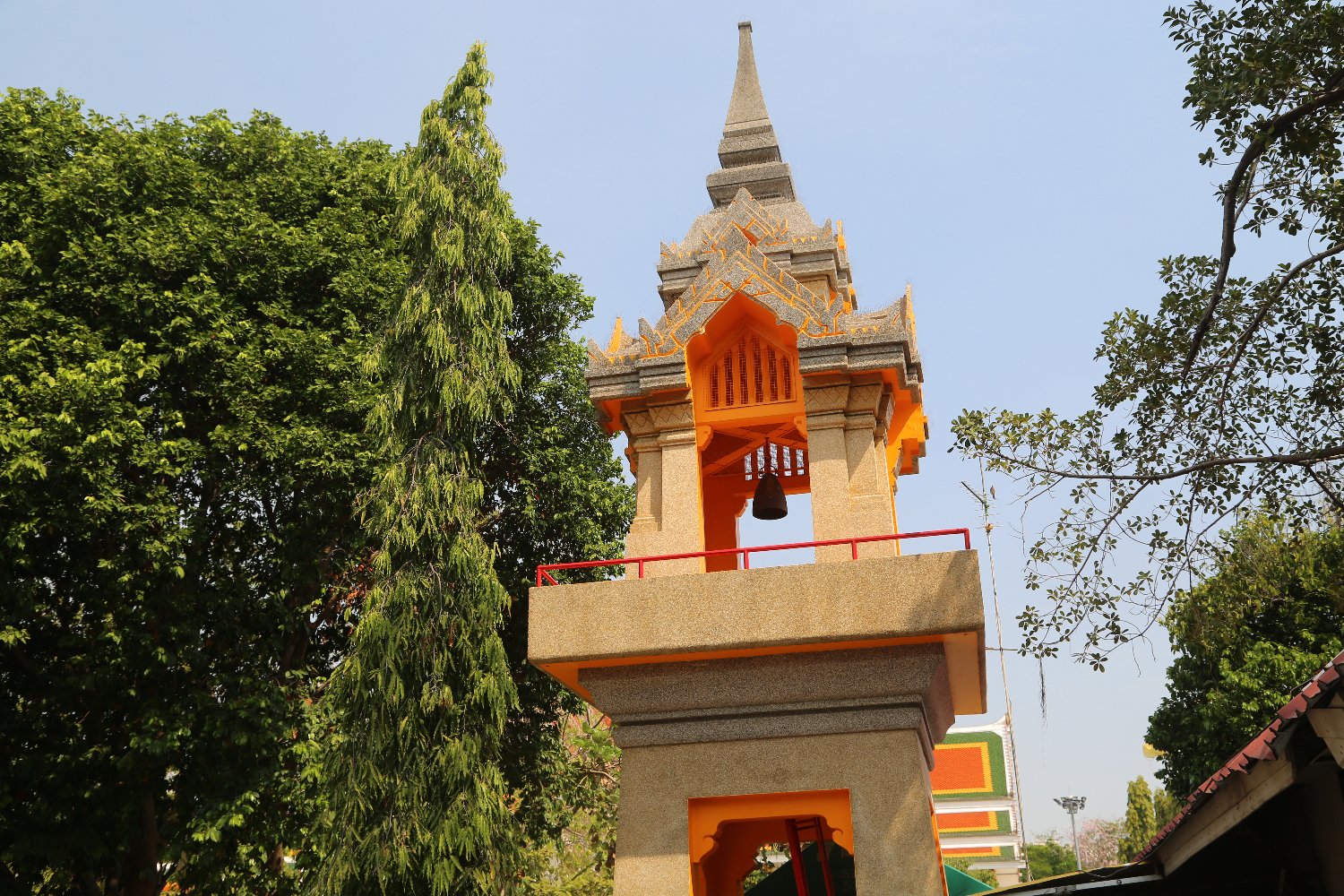
Other common features of temples include the crematorium, visually evident by the tall chimney which is used for cremations. A chedi is usually white in color or sometimes covered in gold and ranges in shape and size from very small to ones that you have to strain your neck to look up at their tops. Chedis contain important relics or cremated remains of individuals. A Hor Rakang is a belltower and is used by monks in the mornings and evenings for a call to prayer (these can contain drums as well).
We recommend visiting temples in the early morning before it gets too hot. Dress appropriately – most temples will let you in with shorts – as long as they are not too short (the exception being the Grand Palace) and shoes must be removed before entering the temple buildings. Note that many temples open in the 7 to 8am hour and most close by 6pm.
Some of the buildings at the smaller temples may not be open every day and only open for certain ceremonies. Some of our favorite temples are located on the west side of the Chao Praya River (Thonburi side) away from core of historic Bangkok. These temples often do not see as many tourists and are certainly not as well-known as the larger temples in the historic part of town. They also tend to be smaller.
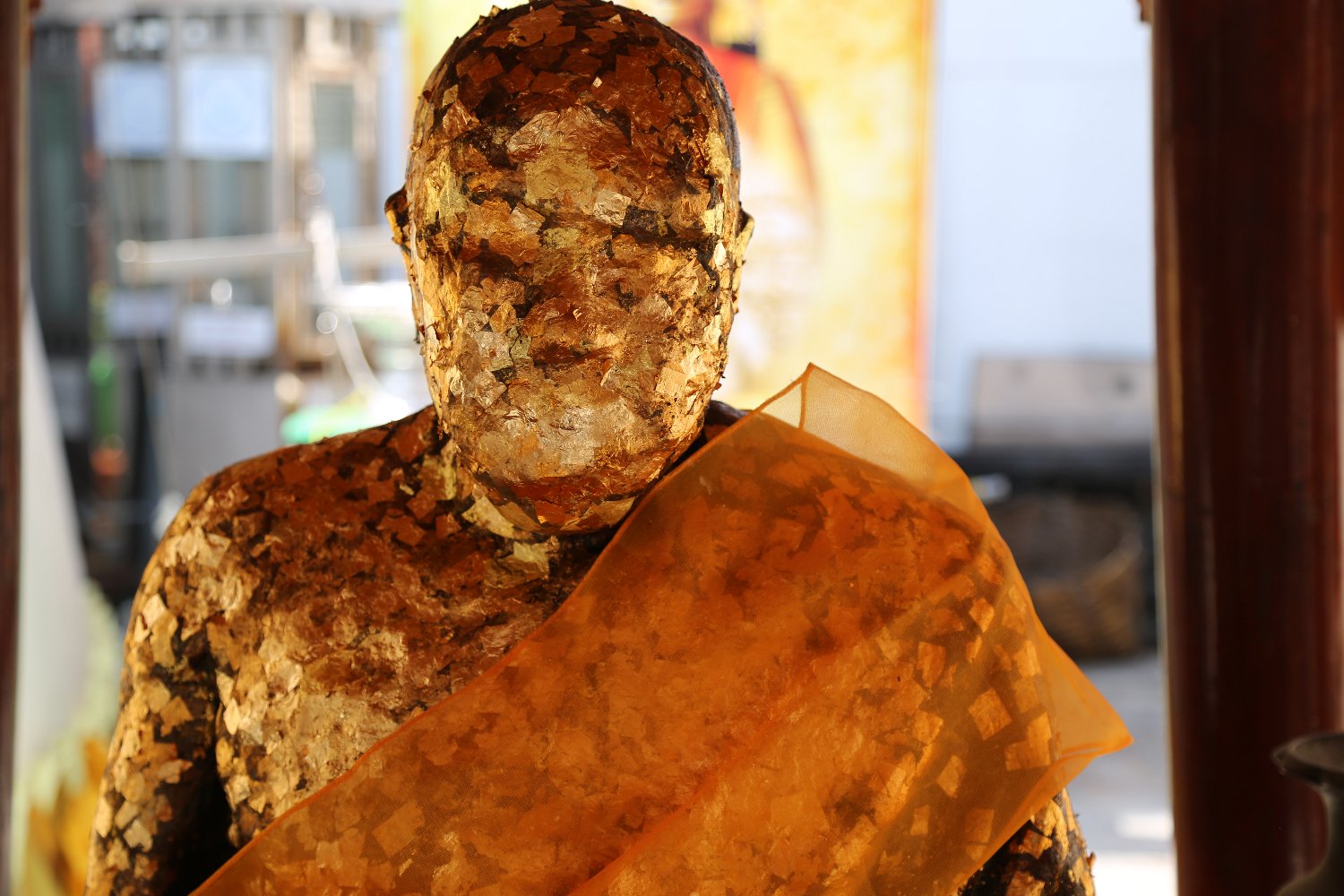
You may wonder if all that gold foil you see on statues and in temples in Bangkok is real. Yes, this is real gold ranging from 96.5 to 99.99 percent purity. It is an extremely time-consuming process to create such thin gold foil from the original gold bars. Once the gold reaches the stage where it is thin enough to be shipped to the temple’s bamboo scissors are used to cut it into small square pieces. Regular scissors are not used because the gold foil sticks to the metal of the blades.
Also note that many temples have multiple spellings of the same name, used to be called by different names and or have multiple different names entirely. This can be confusing to the casual visitor so be sure to double check you are going to your desired temple.
We have visited and reviewed the following 100+ temples in the central part of Bangkok to date:
loading map - please wait...

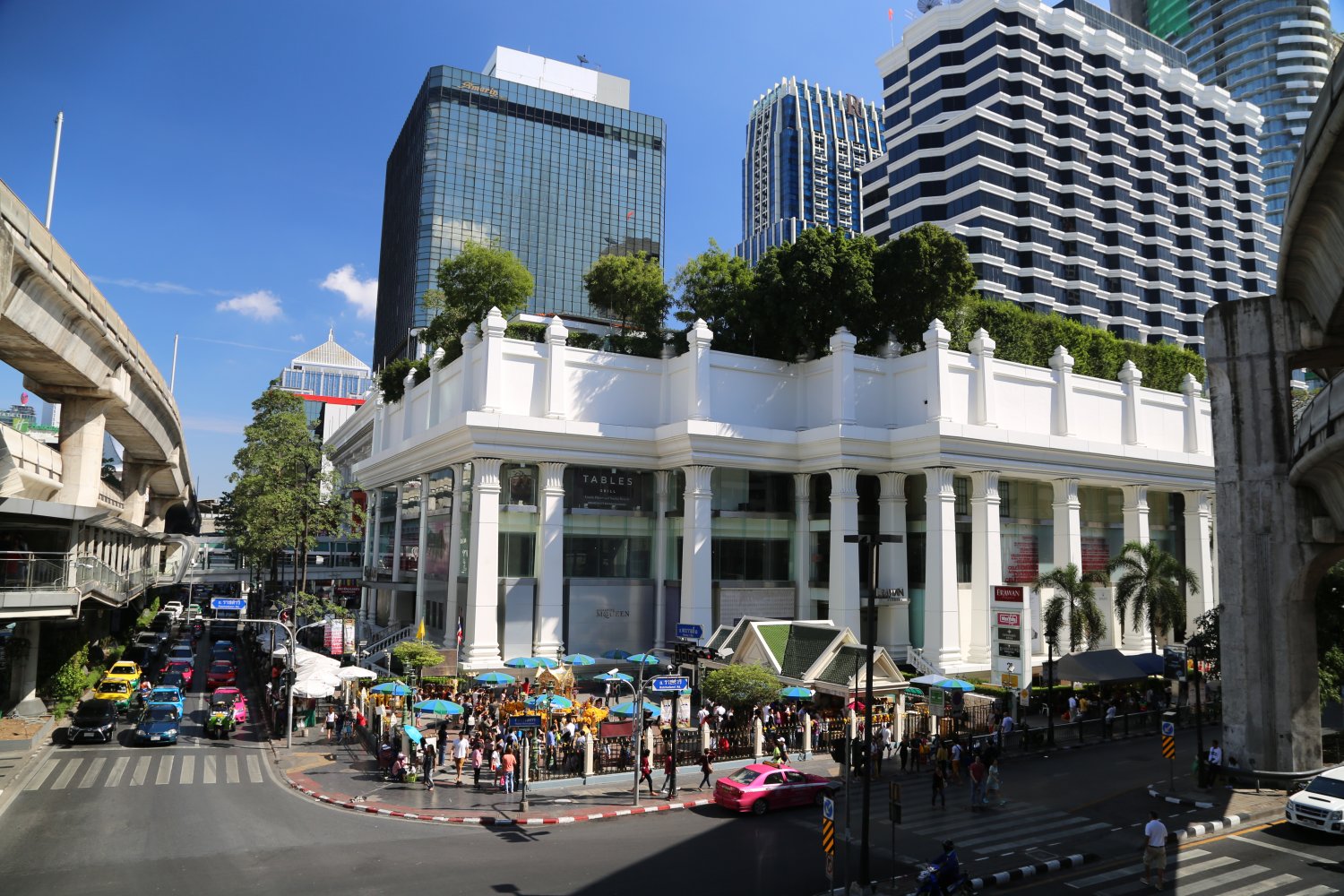
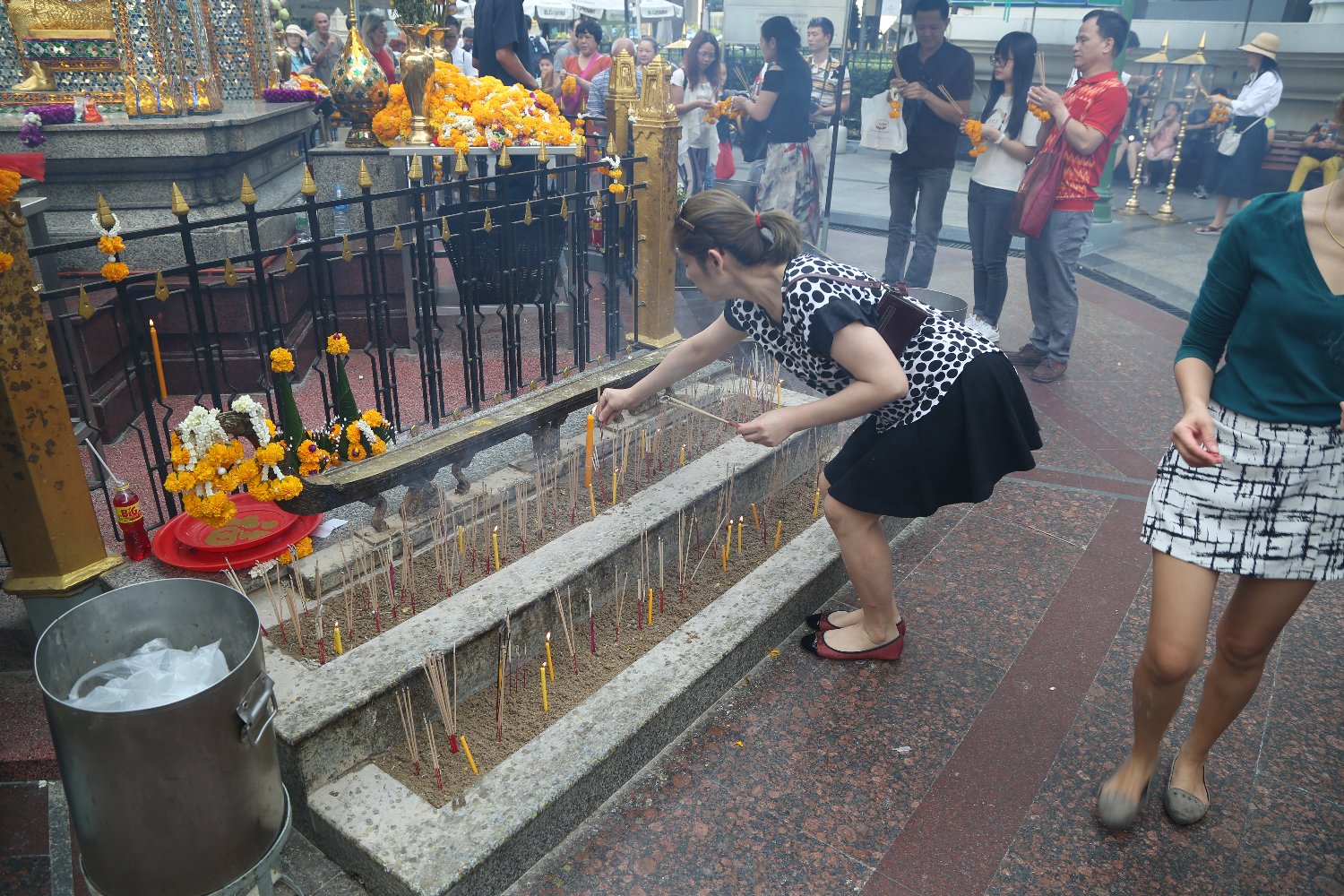 Erawan Shrine is an often very crowded Hindu shrine located in the heart of Bangkok’s shopping district at the Ratchaprasong Intersection of Ratchadamri Road. An elevated walkway leads past a number of prominent shopping areas in this part of town easily allowing pedestrians access via the second story to some of these shopping centers as well as providing a bypass overcrowded intersections.
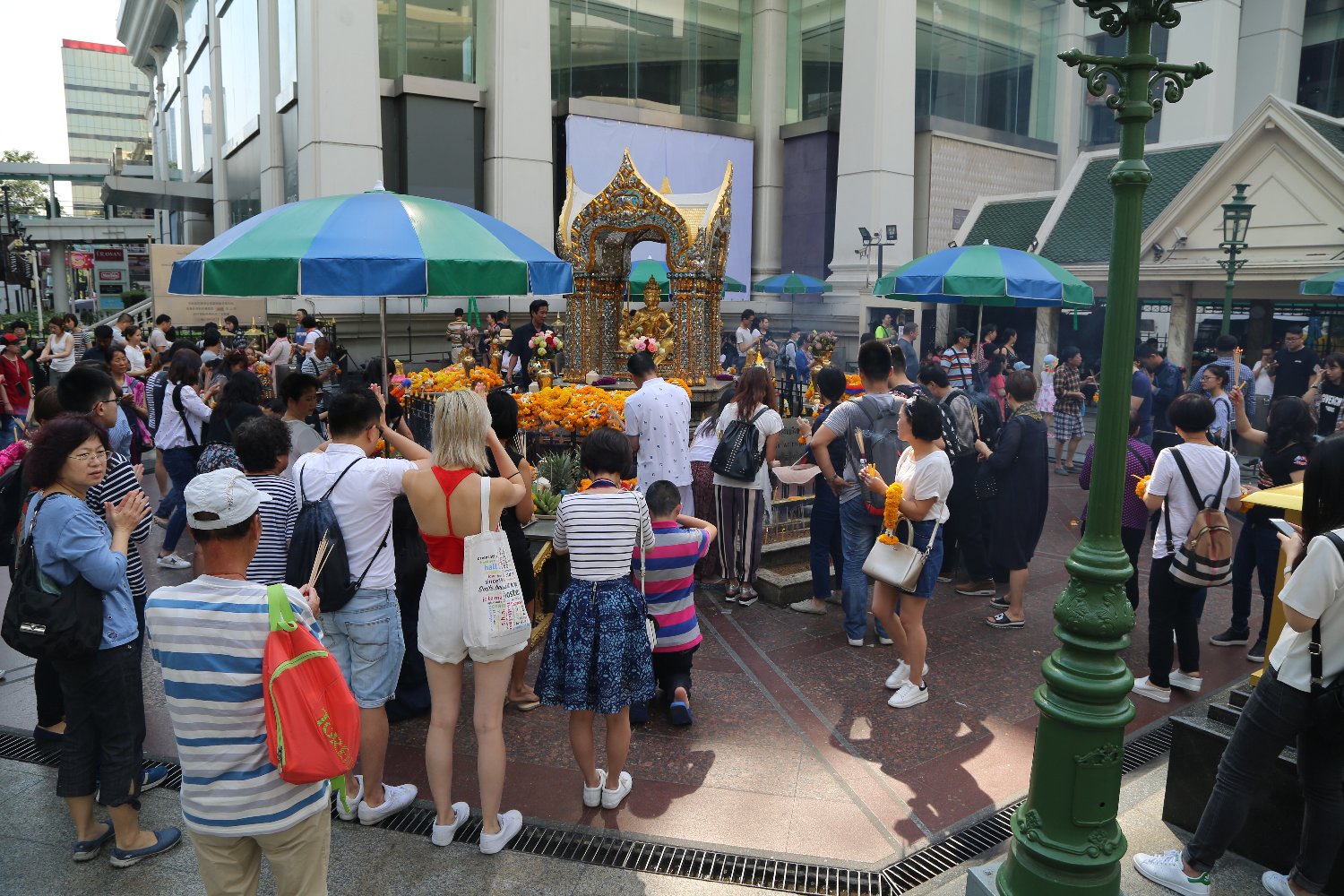
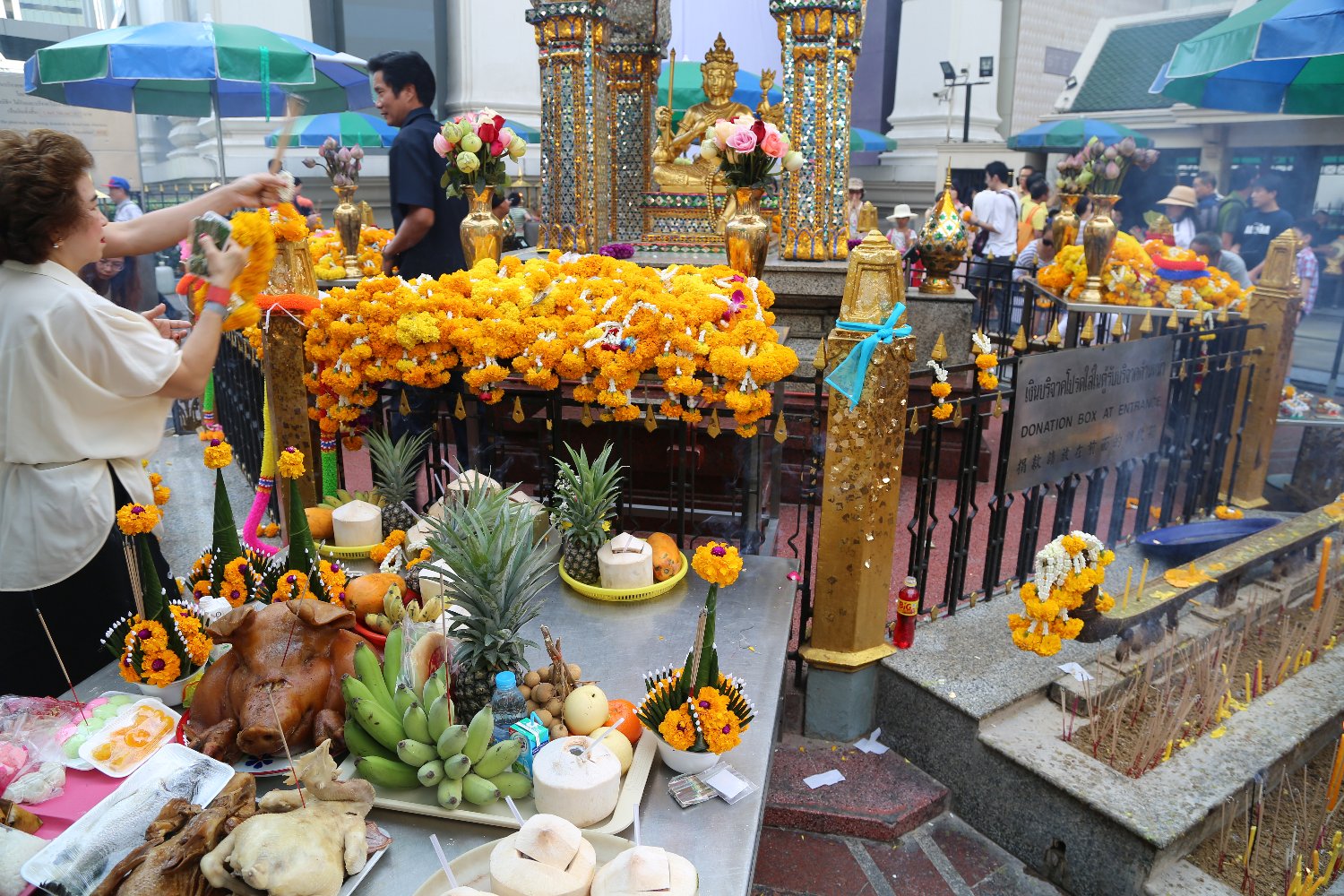
The closest BTS Station to the Erawan Shrine is Chit Lom (only a few minutes’ walk from the station). The shrine itself is located at the base of the Grand Hyatt Erawan Hotel at the Southeast corner of the street intersection. It features a golden image of the Brahma God and was originally constructed at this location in the 1950’s. However, note that this is not the original statue – it was destroyed by an insane man in 2006 and was soon replaced with a new statue.
Today it attracts people from many countries all over Asia including many from China as well as those walking by curious to see why there are so many people here. Flowers line the gates in front of the statue (can be purchased from nearby vendors) and people come to light candles and pray at it’s base. We have also often seen Thai dancers performing under a nearby covered tiny stage along with musicians seated next to them. Any cash left is managed by a group who then donates it to various charities in the country as well as to select hospitals in need of equipment for their patients.


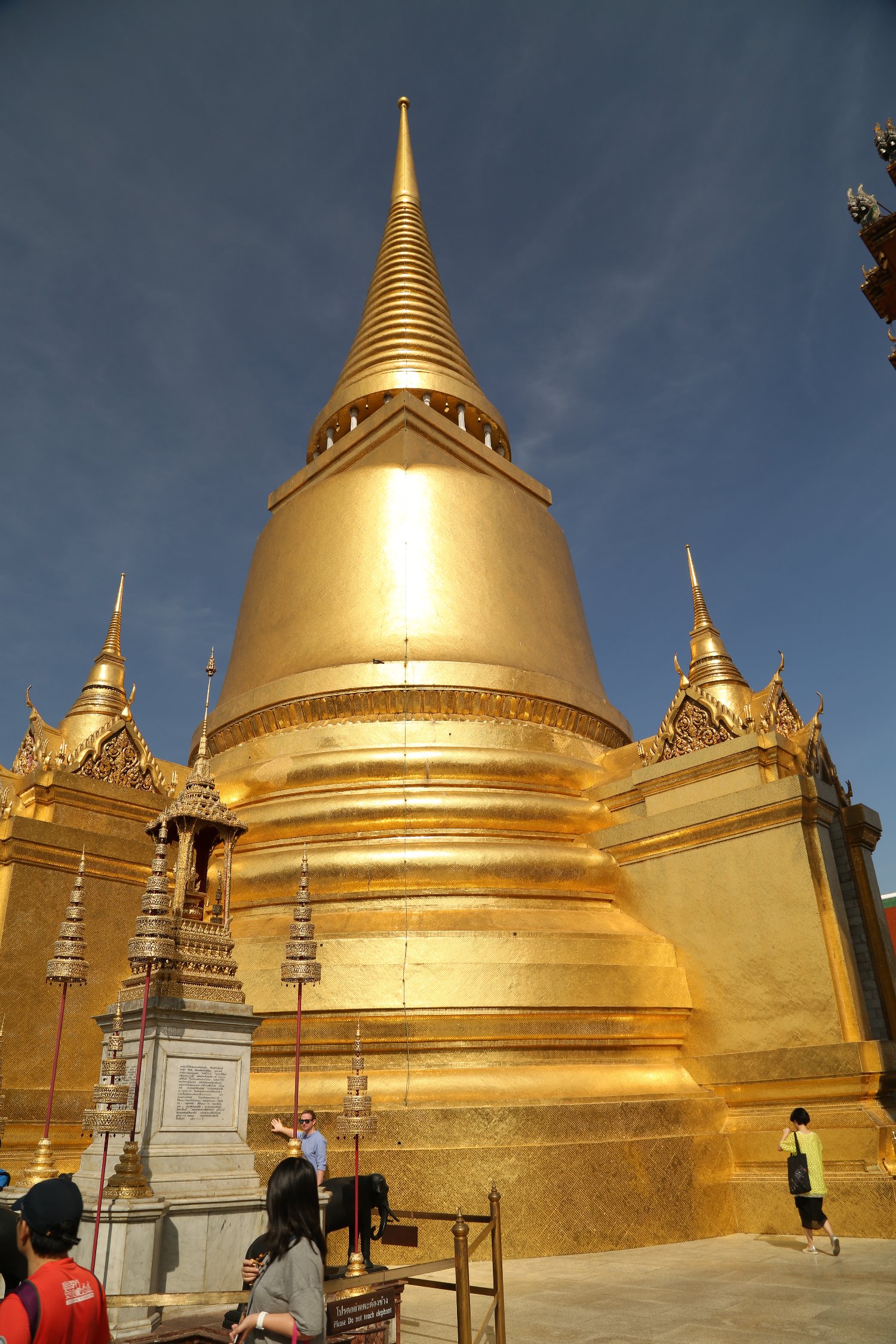
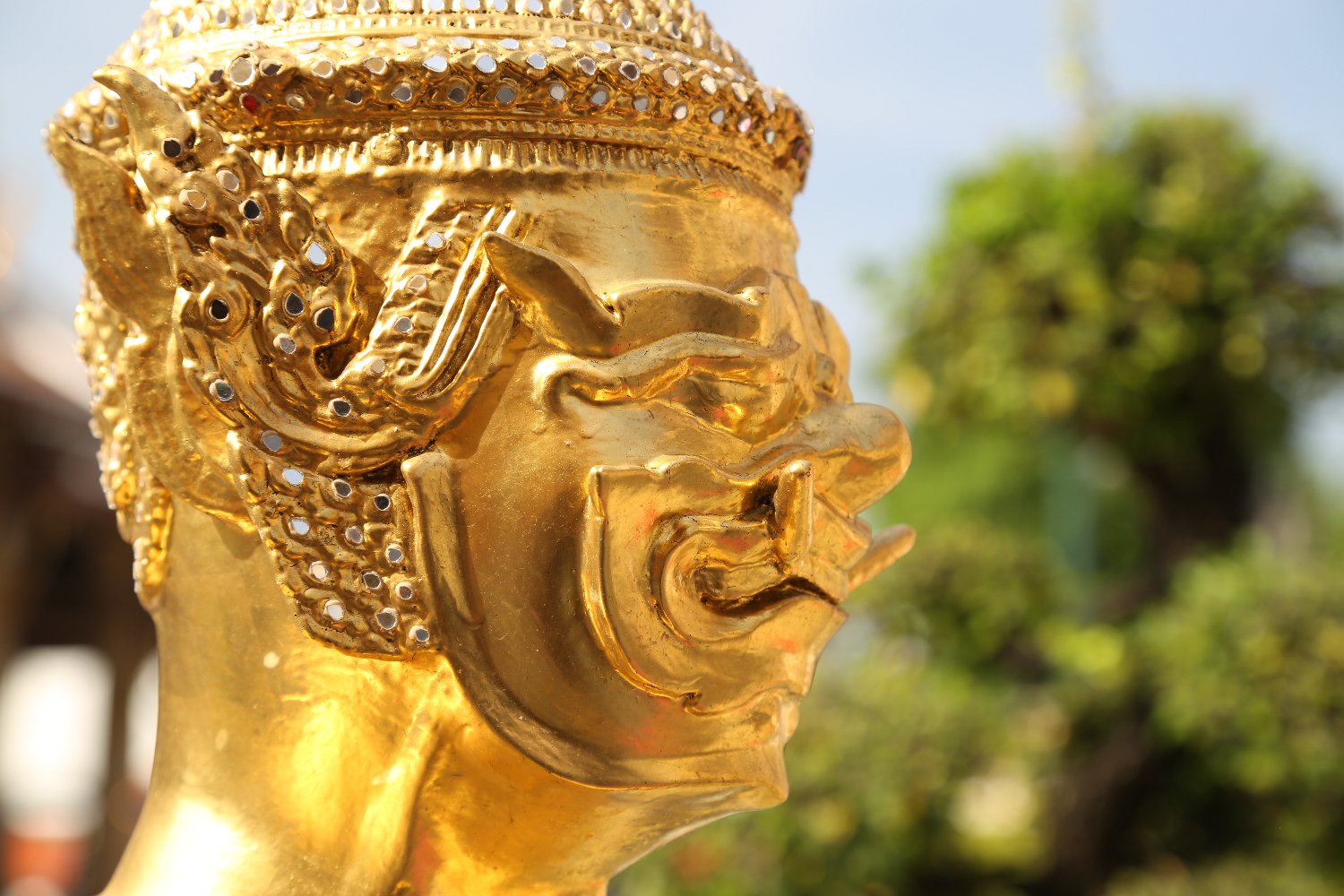 Grand Palace began construction in 1782 and is one of the primary highlights for both locals and travelers. It is open from 8:30am to 3:30pm each day. The palace is bordered by four roads – Mahathat, Thai Wang, Sanam Chai, and Na Phra Lan. Completely surrounded by high walls on all four sides, the Grand Palace spans several acres and contains numerous buildings. It is located next to the Chao Praya River.
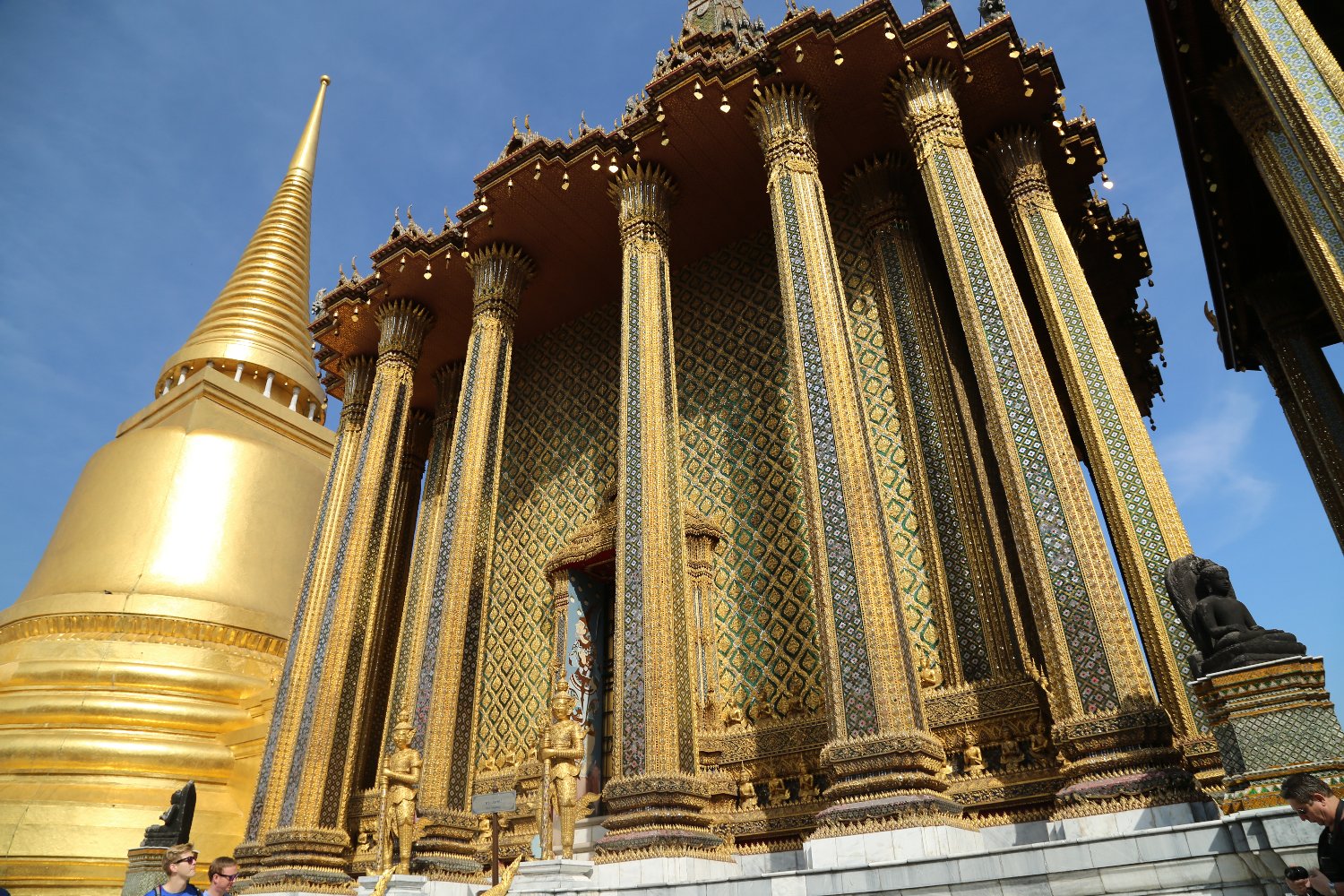
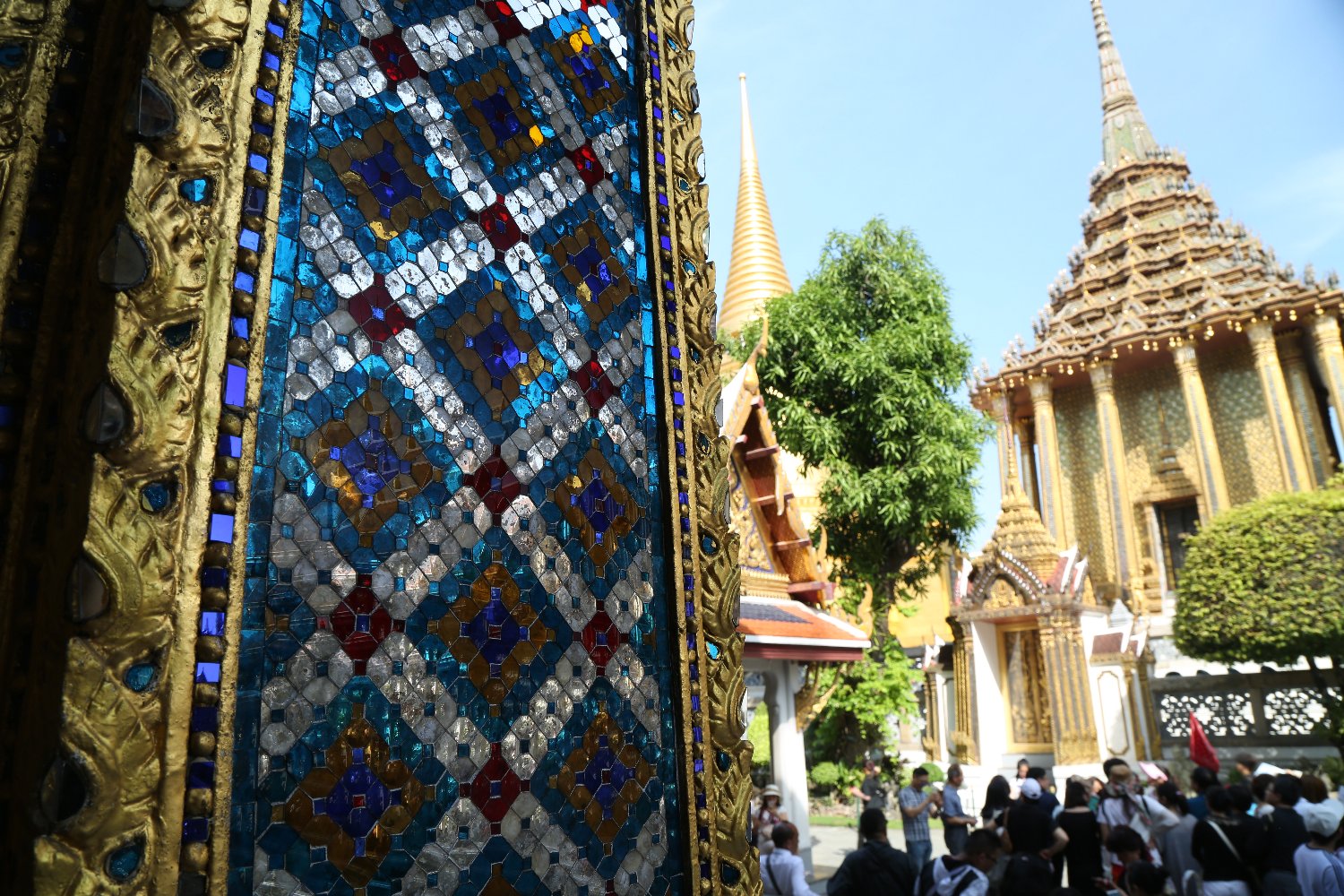
Being one of the most recognizable landmarks in Bangkok it is easily characterized by its gleaming golden temples, hundreds of spires, and brightly colored tile roofs – most of which are a prominent dark orange color.
A couple of things you will want to be aware of: Only persons wearing long pants are allowed to enter the Palace grounds. For many years you also needed to wear closed toe shoes but recently this rule has been relaxed and you can now enter the Grand Palace with sandals. If you do not have on the proper attire, you will need to change into the appropriate attire, although we found that these rules do not seem to apply to many of the local men who work in the palace.
Depending on the day and or time of year, significant crowds will often be lined up outside the walls of the Grand Palace well before it even opens in the morning (8:30am to 3:30pm daily.
A changing room is located to your immediate right as you walk in the main entrance. For 200 baht you can rent long pants – you *must* have exact change. When you return the clothing, the attendant will return your 200 baht.
Tickets to the Royal Palace are 500 baht. The ticket windows are located a minute or two or more walk if very crowded from the main entrance. You will be inspected for the proper clothing at the main gate. Be sure to pick up one of the very informative brochures available in several languages at the gate. This brochure provides a map inside and also describes in detail the history of the buildings and the palace. Aside from the sheer impressiveness of the all the detailed gold and glass work in the buildings (bring your sunglasses!) you will want to visit the famous Temple of the Emerald Buddha.
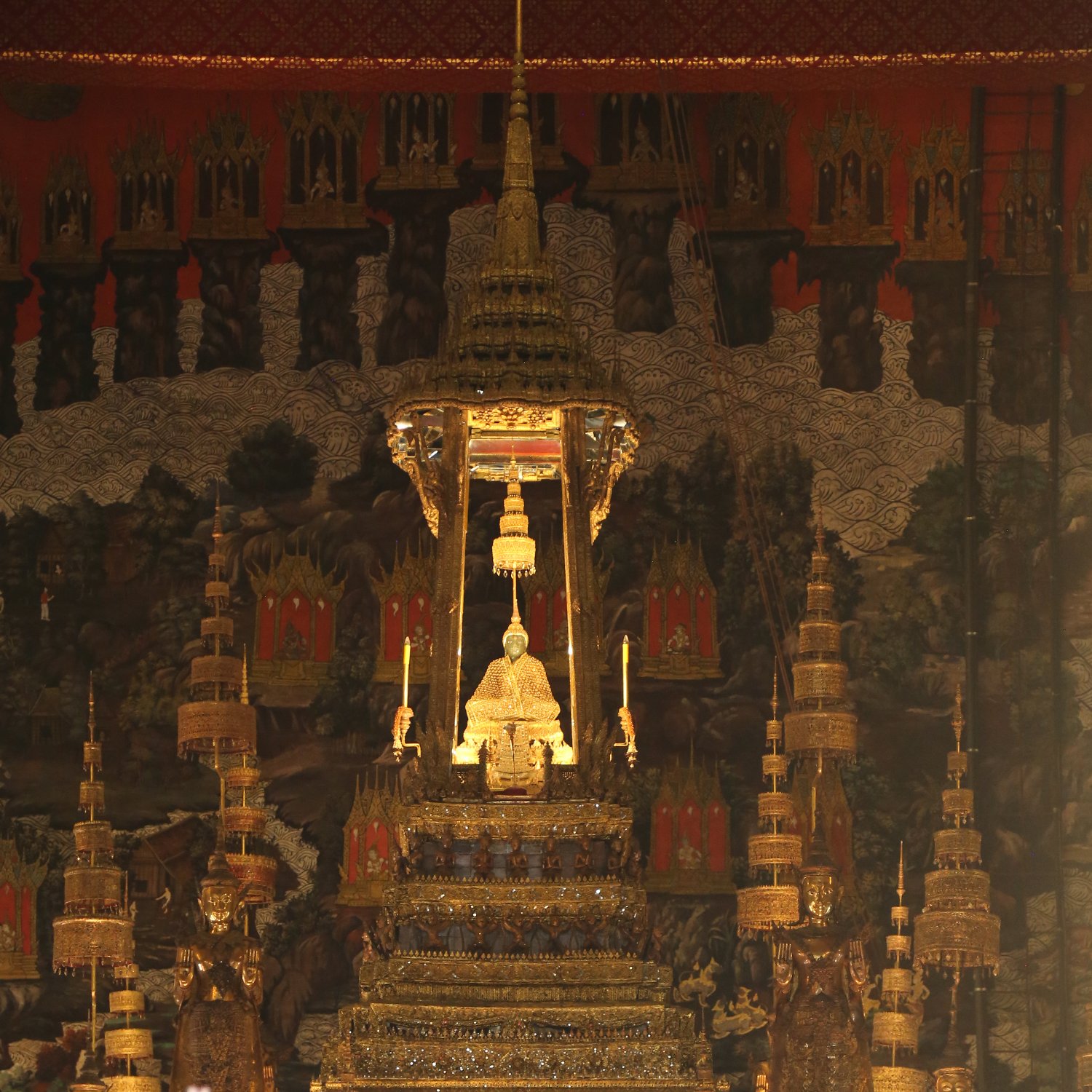
Emerald Buddha (inappropriately named because it is actually made out of jade) was first found in the northern province of Chiang Rai in 1434. It is housed in Wat Phra Kaew on the grounds of the Grand Palace. It was originally covered with plaster and when a priest saw some green coloration through the plaster, he mistakenly thought it was emerald, and the name has stuck through the centuries.
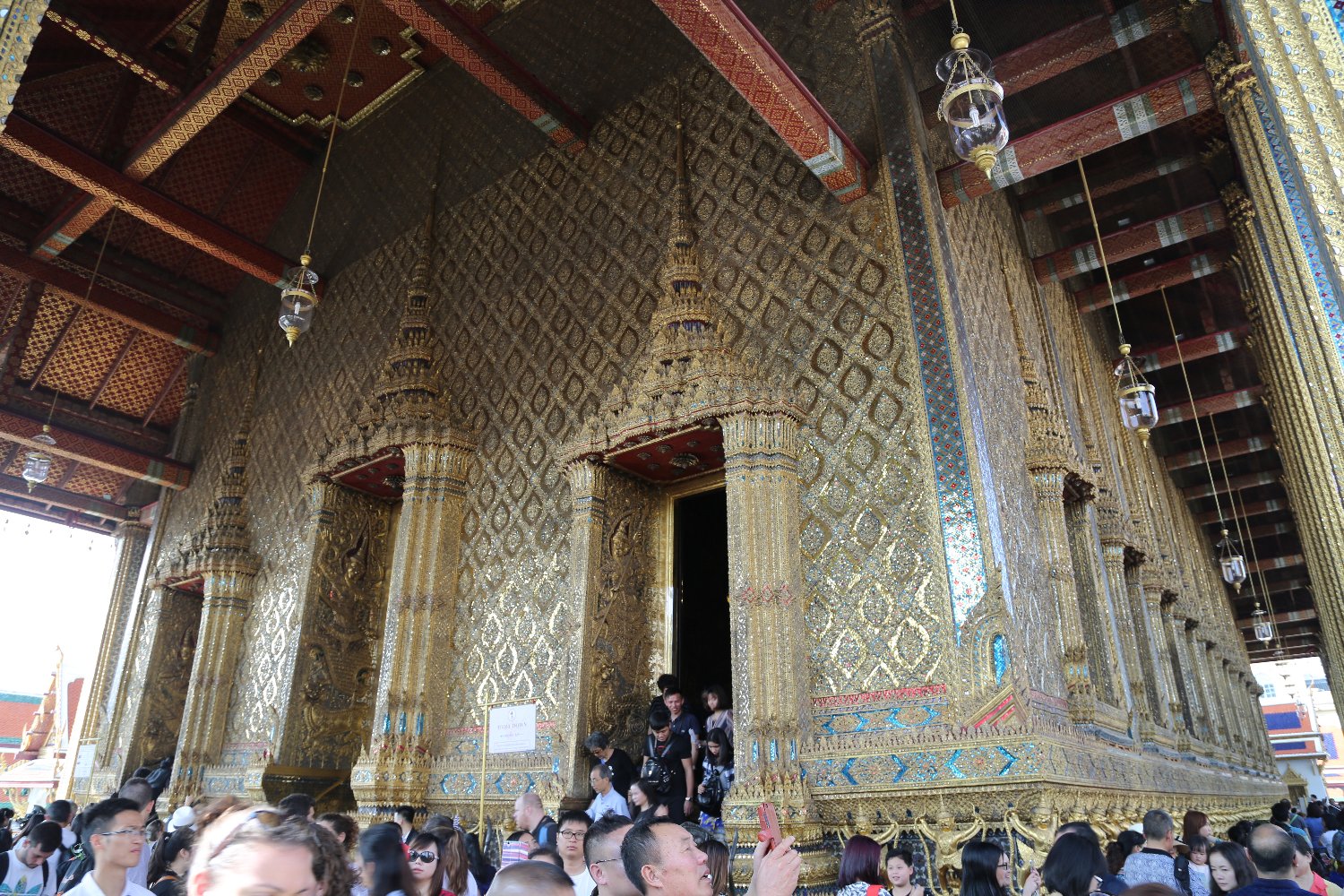
The temple that contains this Buddha feels intensely spiritual and is often well packed with throngs of people inside and outside. The Emerald Buddha is set about 20 or 30 feet above the floor on top of a gold throne. Many people pray on their knees inside the building – facing the Emerald Buddha. You will probably see many flowers, vegetables and other organic items that have been left here. Depending on the time of year (the seasons – cold, warm & wet the Emerald Buddha will be clothed in different golden clothes. All Royal clothes not being worn by The Emerald Buddha are found in the Royal Museum located near the ticket gates (museum mentioned below).
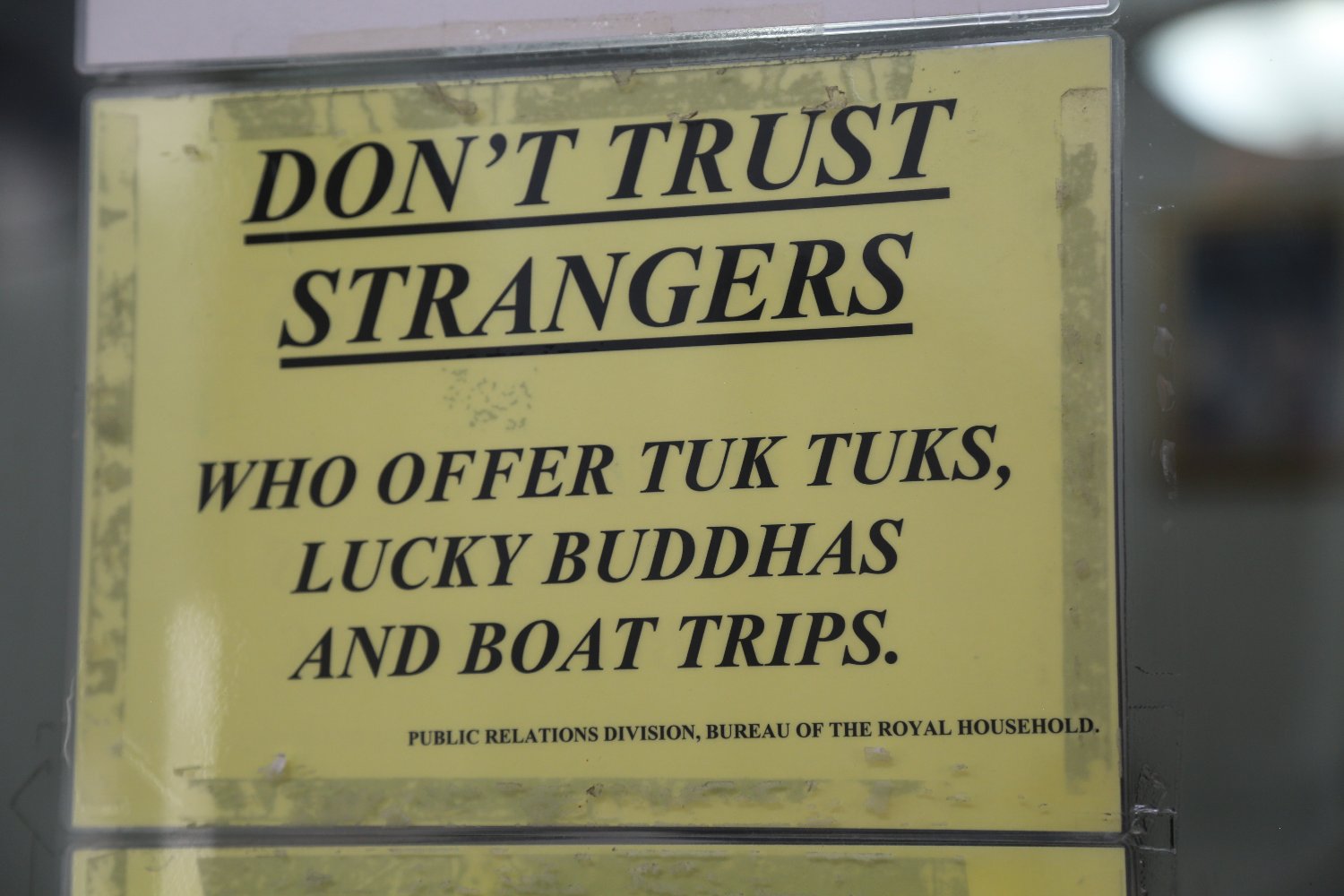
Note: there are many Tuk Tuk drivers hanging out near the Grand Palace and they *love* to prey on tourists! They will insist on taking you to a jewelry store for a reduced transportation rate. Even after you insist back that you are not interested, they may still physically take you to a jewelry shop sometime during your ride. Its best to walk away from the Grand Palace area and flag down a moving Tuk Tuk or one that has just dropped off passengers.
In addition, we’ve had several reports of innocent looking Thai bystanders who approach confused looking tourists and insist on helping them or giving them a ride to their next destination but then taking them to a jewelry store. Be aware of these “scams” most prevalent around the Grand Palace.
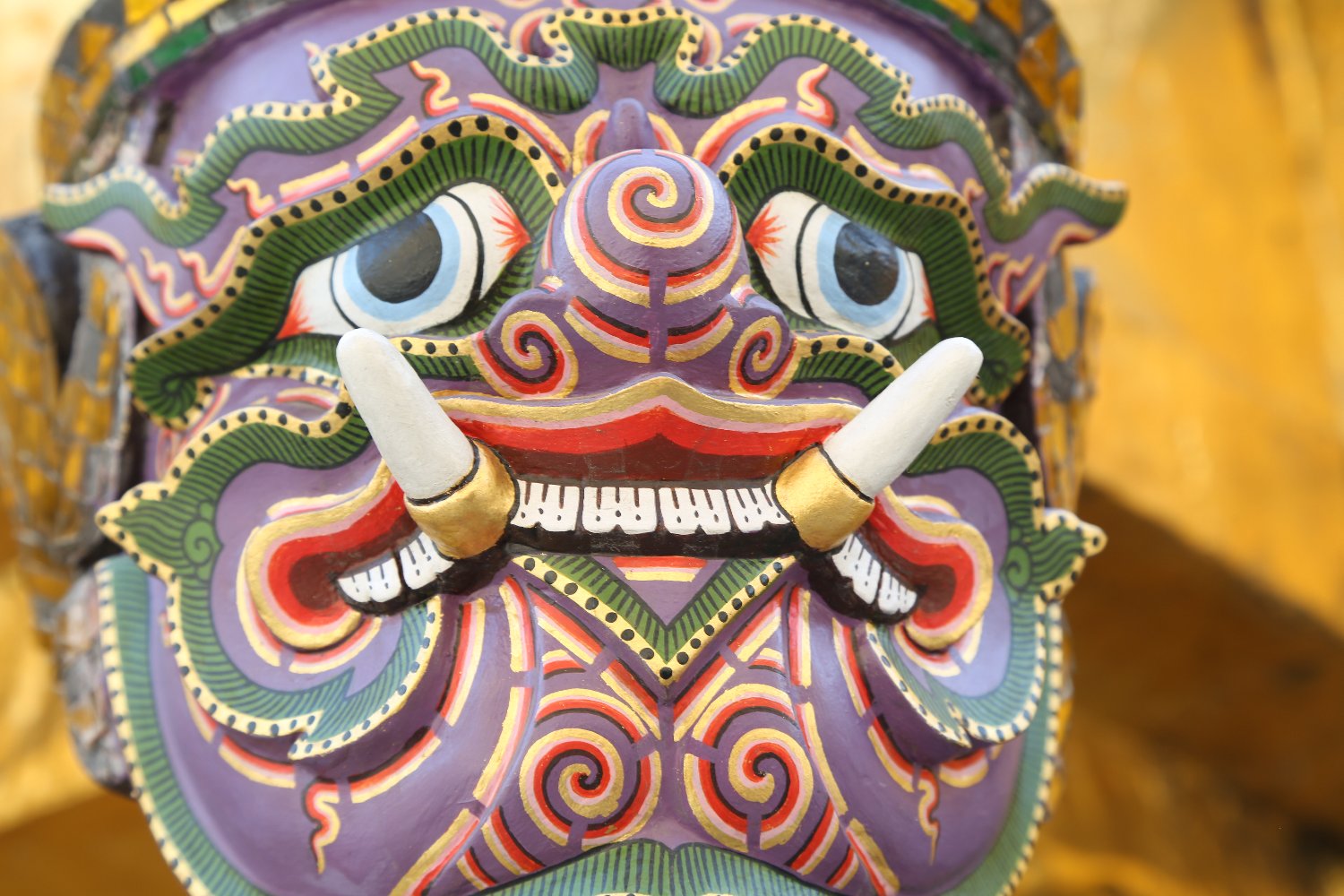
 When the seasons change, the King of Thailand is responsible for removing the “old” clothes and replacing them with the current season’s attire. If the King is sick or unable to do this, usually his brother or another member of the Royal Family will change the clothes.
One of the largest buildings in the Royal Grand Palace is the Chakri Maha Prasat Hall (Royal Throne Hall).
As you leave the palace there will be an exit to the main courtyard and the Chakri Maha Prasat Hall (Royal Throne Hall). Be sure you are ready to leave as there are signs saying you are not allowed back into the main palace once you exit to the main courtyard. Guards are on duty here to make sure of this. Be sure to visit the Coronation Room – this is where the world’s longest reigning monarch, the King of Thailand coronation was in 1946 (he died in 2016). Photography is not allowed in here. Nearby weapon museum rooms are also available – some displaying very old weaponry and worth visiting.
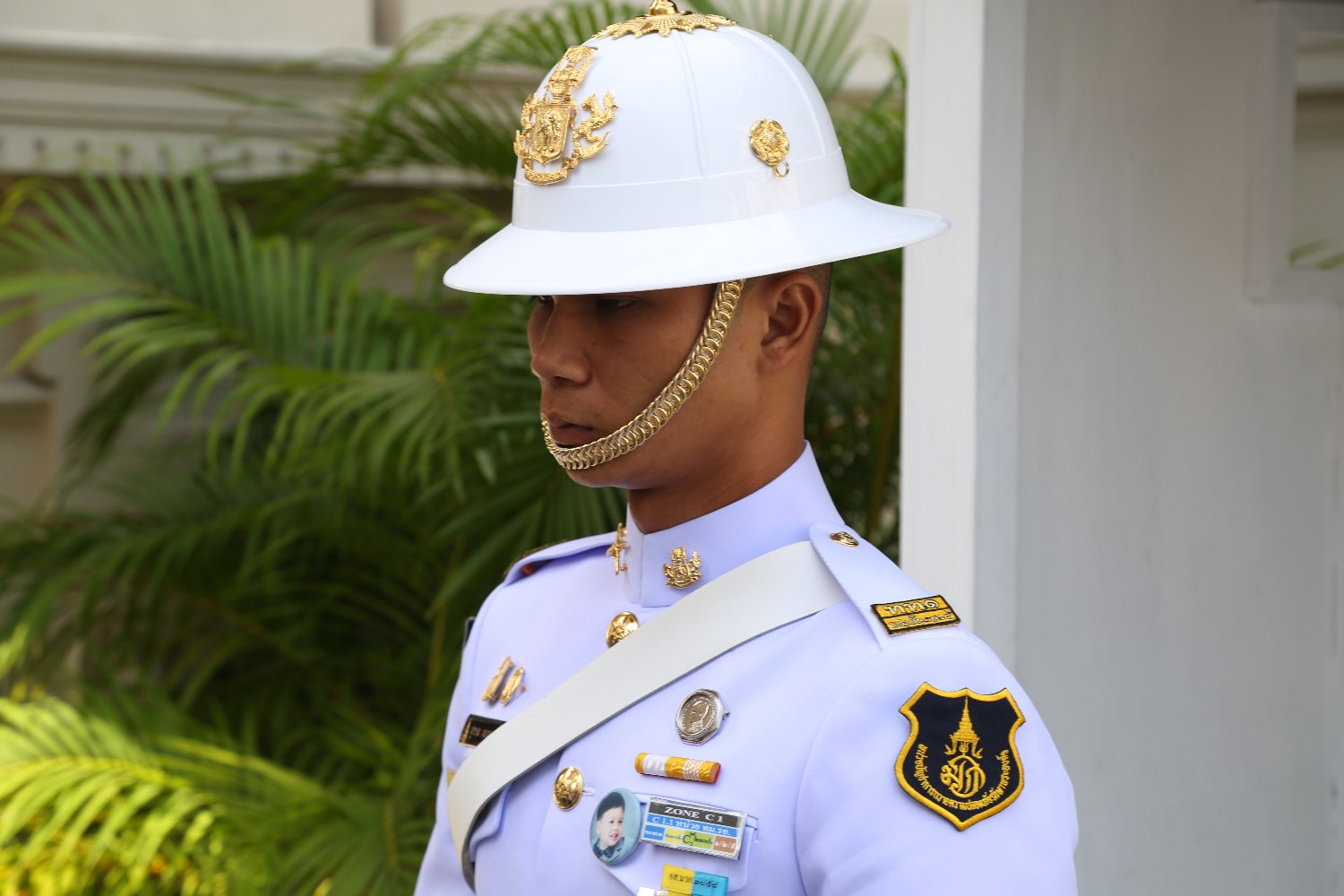
Notice the European influence in the lower two thirds of the Royal Throne Hall – it was designed by a European architect in the 1880’s. The upper half contains several tall colorful spires. There are some visually pleasing bonsai trees growing in front of this building. In addition, you might want to consider taking your photo with one of the Thai Royal Guards standing in front of this building. Sometimes we have even been able to make them smile for the photo but more often than not, no matter what we say, they retain that grim looking expressionless stare. Other times security guards don’t allow you take photos of the Royal Guards.
 Queen Sirikit Museum of Textiles is located next to the ticket booths inside the main entrance to the Grand Palace. As you enter the main gate walk straight past the clothing attendant on your right and in several hundred feet turn left toward the actual stalls that you walk through when you have your ticket in hand – you make your left turn once you reach the ticket booths. On your right is an unassuming entrance into the Queen Sirikit Museum of Textiles. We suspect most tourists fly right by this museum – with most wanting to simply get inside the Royal Palace as quickly as possible.
This museum is well worth visiting – not to mention the air conditioning inside works quite well. This museum showcases how Queen Sirikit brought Thai silk to the world and how it ultimately become one of Thailand’s most associated products. The museum also features many dresses from Queen Sirikit’s personal collection. Tour groups often visit this museum, so one minute a room might be full of people and then the next minute quite empty. The tour groups tend to push their groups through quite rapidly, probably in anticipation of seeing the actual palace.
“Next door” is the coin museum featuring a number of ancient coins. You enter this museum through the far-right walkway next to the main entrance stalls – and you use a separate ticket to gain entry that was given to you at the main ticket office. This museum is fairly small – you used to be able to access it from the Queen Sirikit Museum of Textiles on the second floor but during our latest visit access was closed (another coin museum opened in 2014 off site from the Grand Palace – see our museums page in this guide for more details).
It is also interesting to note that Thai people can visit the Royal Palace for free. In addition, if you are a foreigner and you are with a Thai person you may be granted free entry (but not usually). Estimated visit time for the Grand Palace and Museum is 180 minutes.


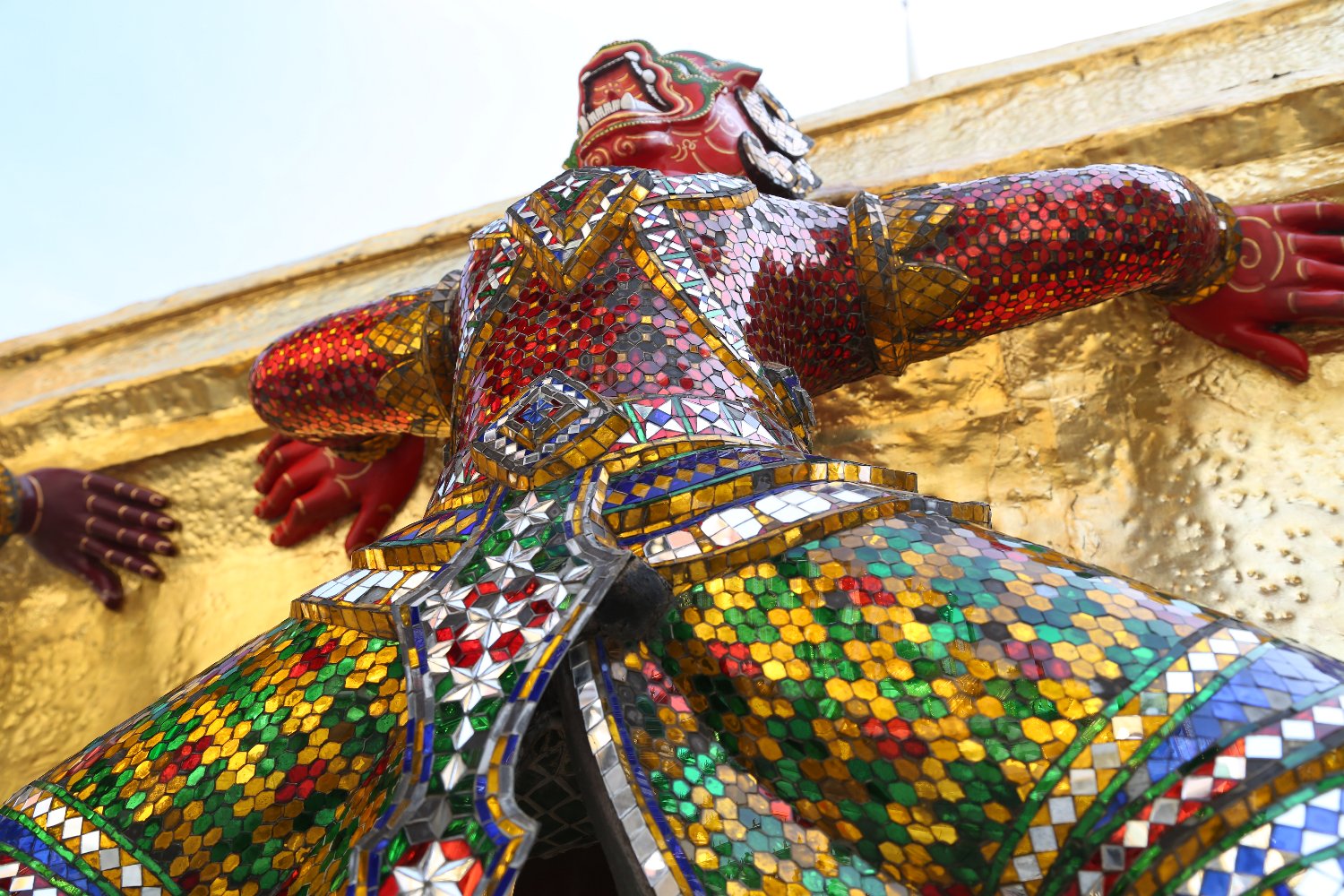

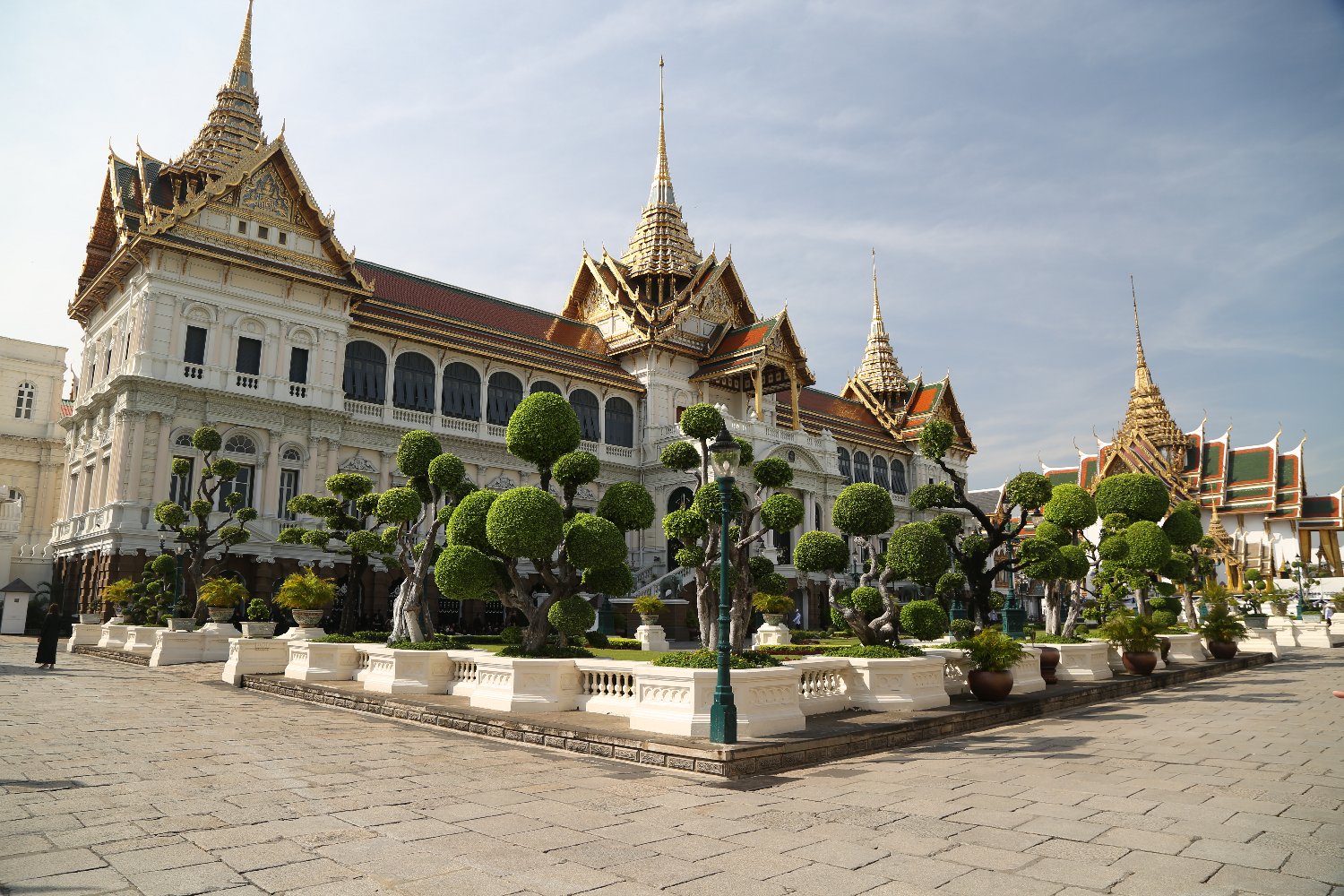

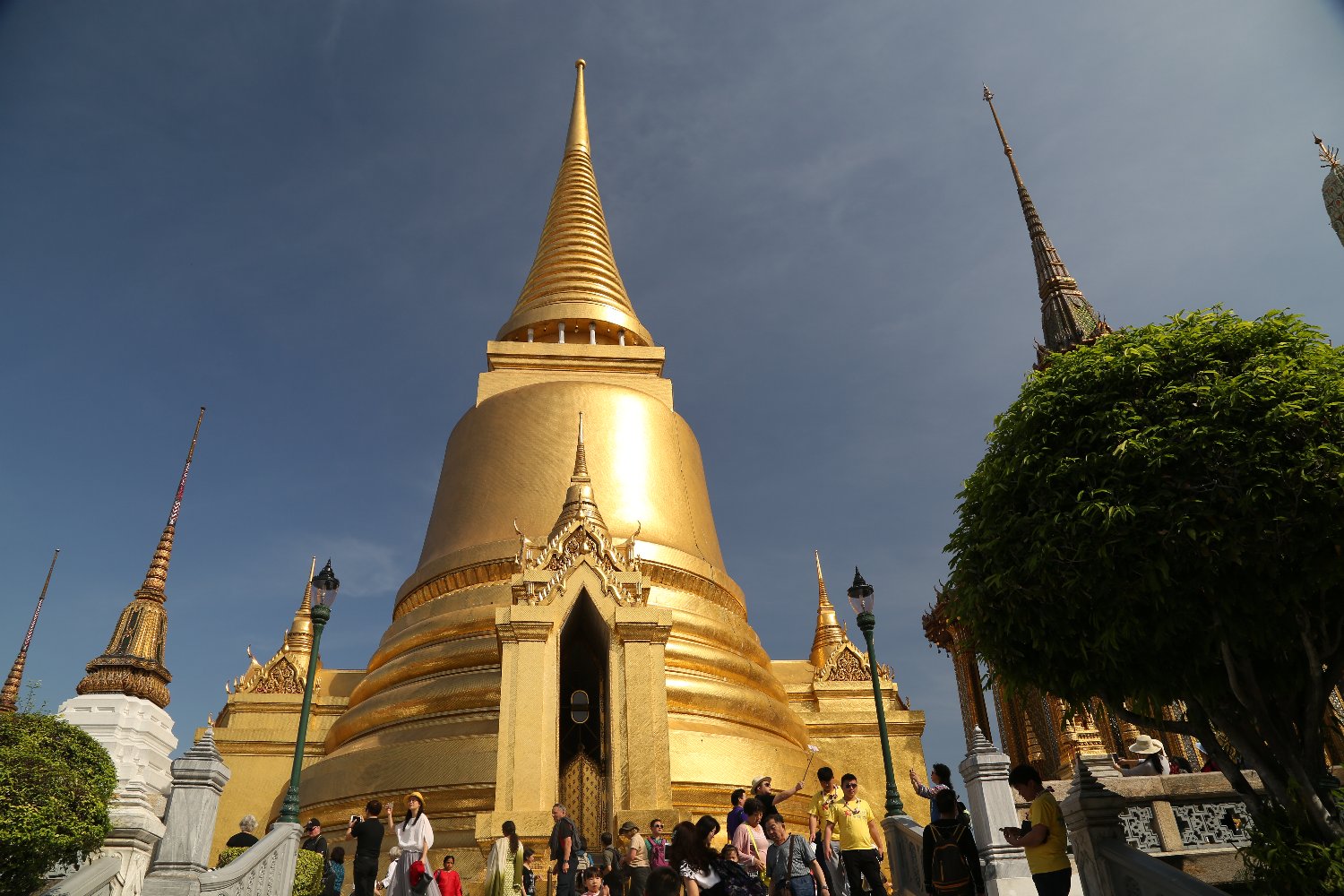
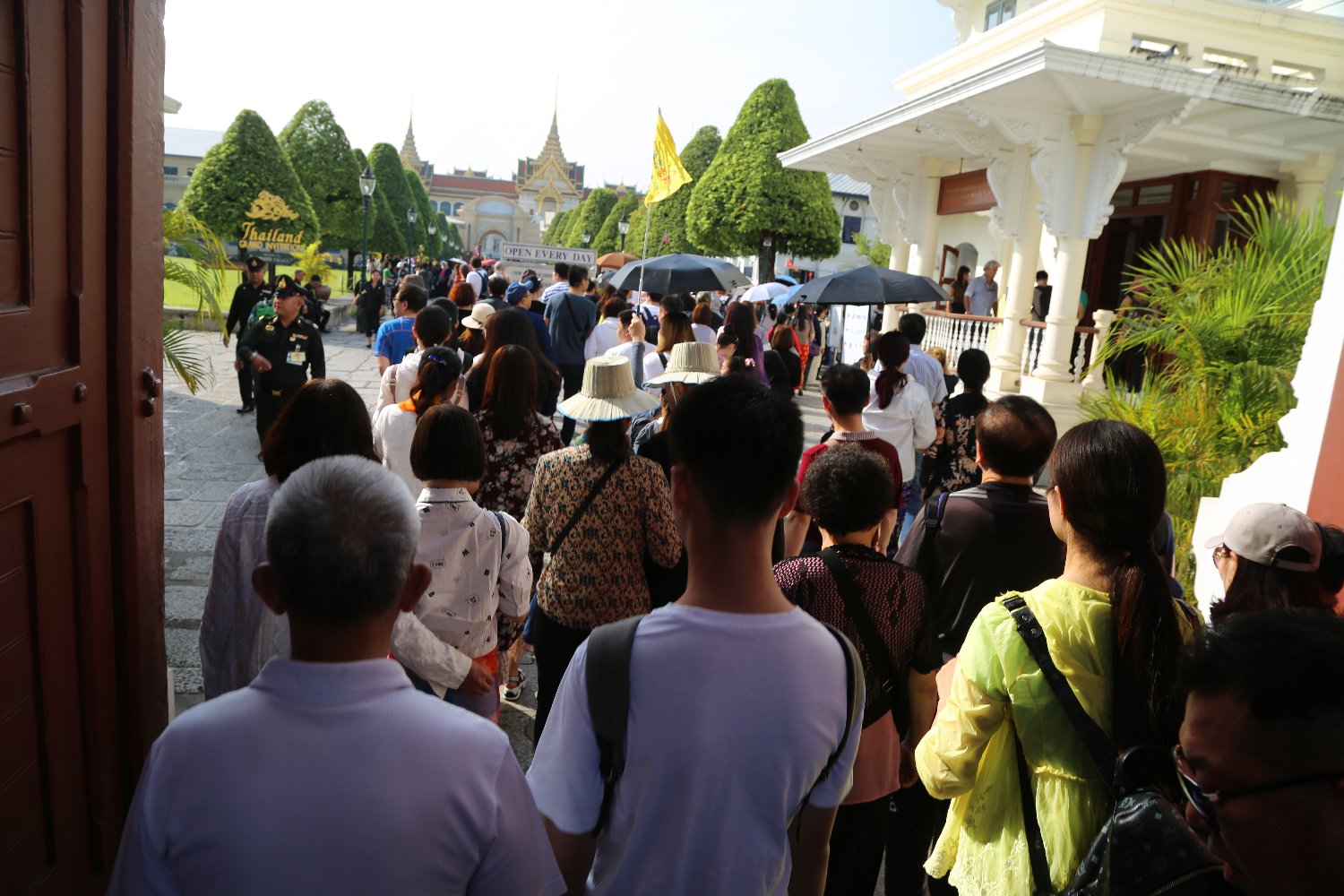


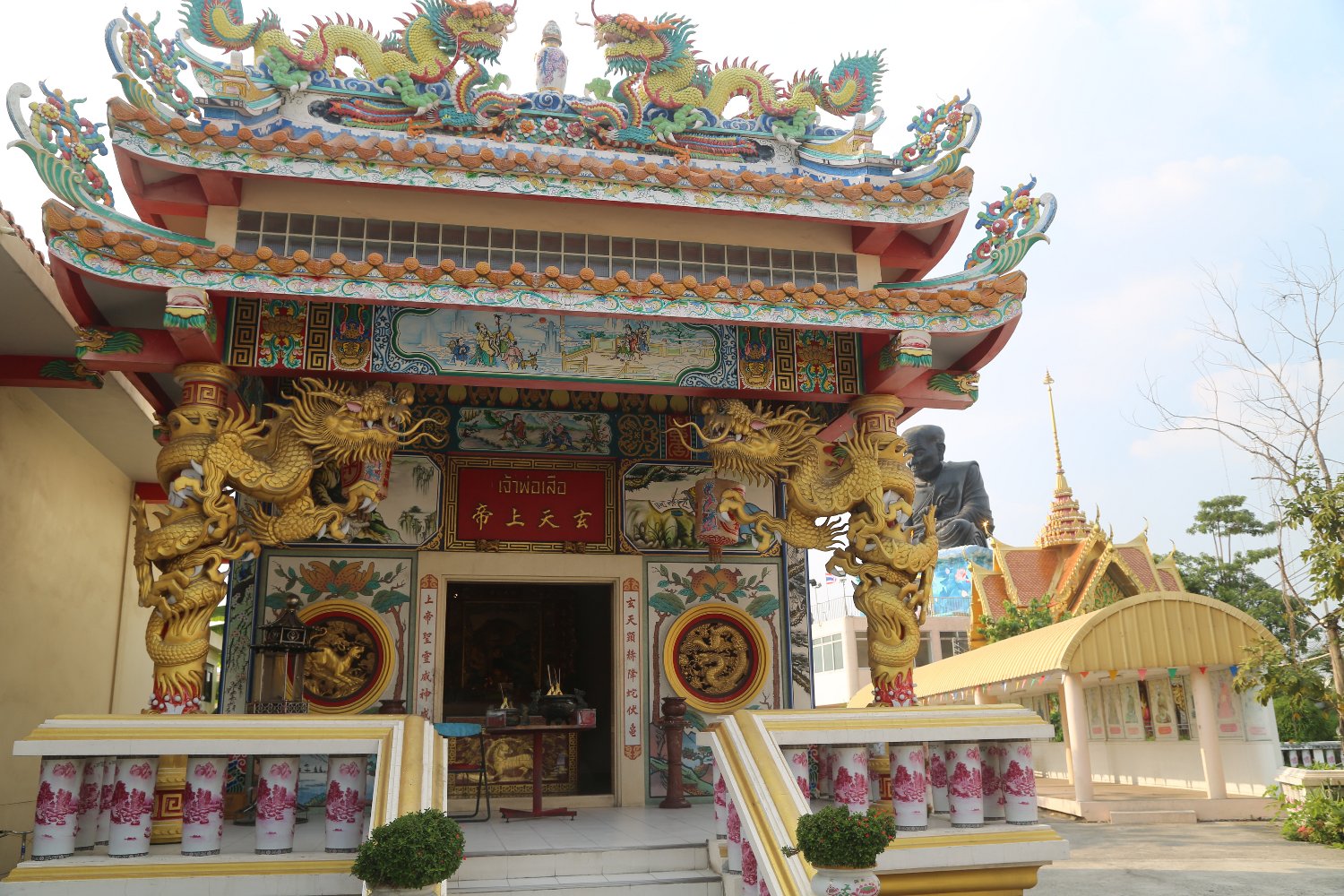
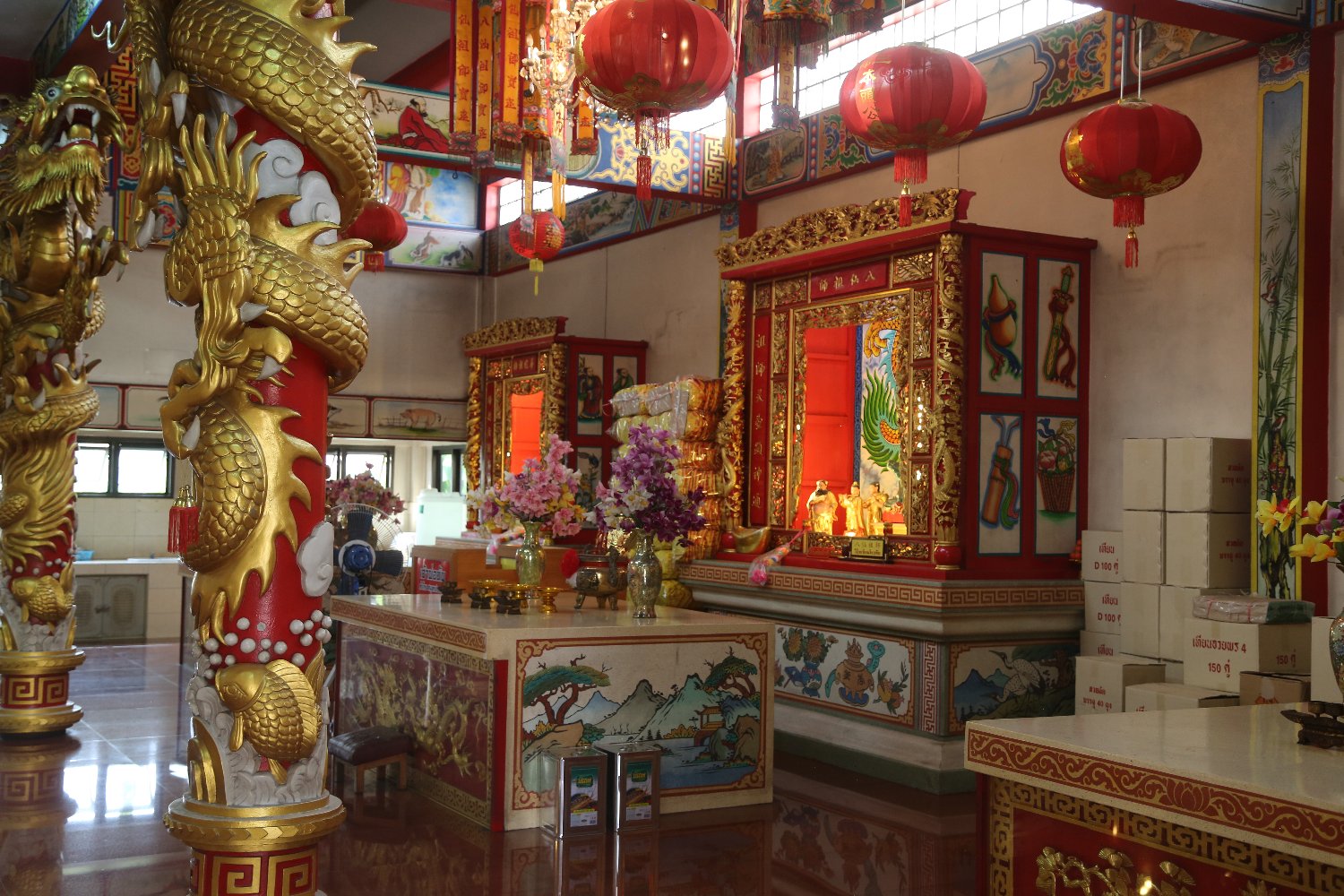
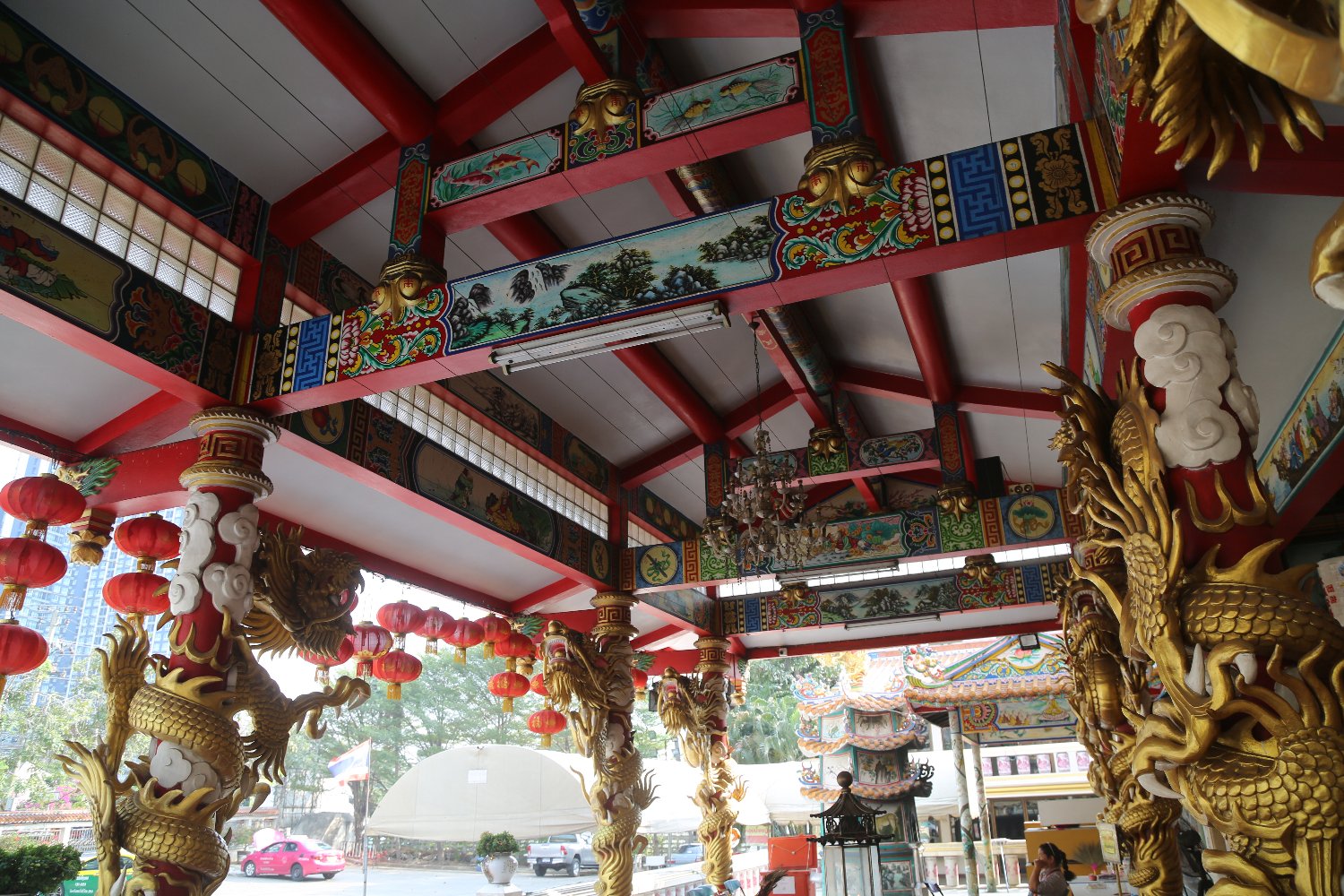
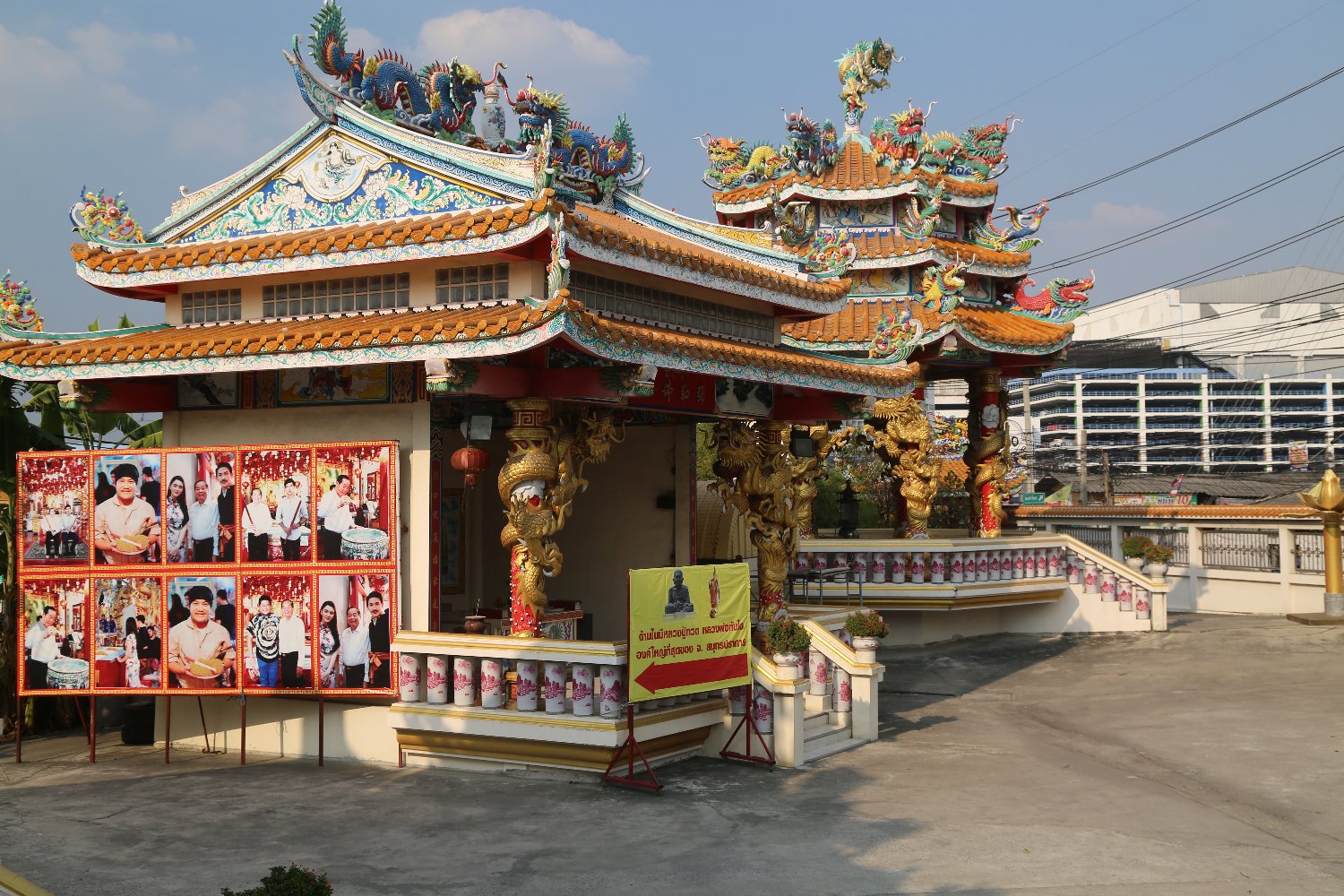
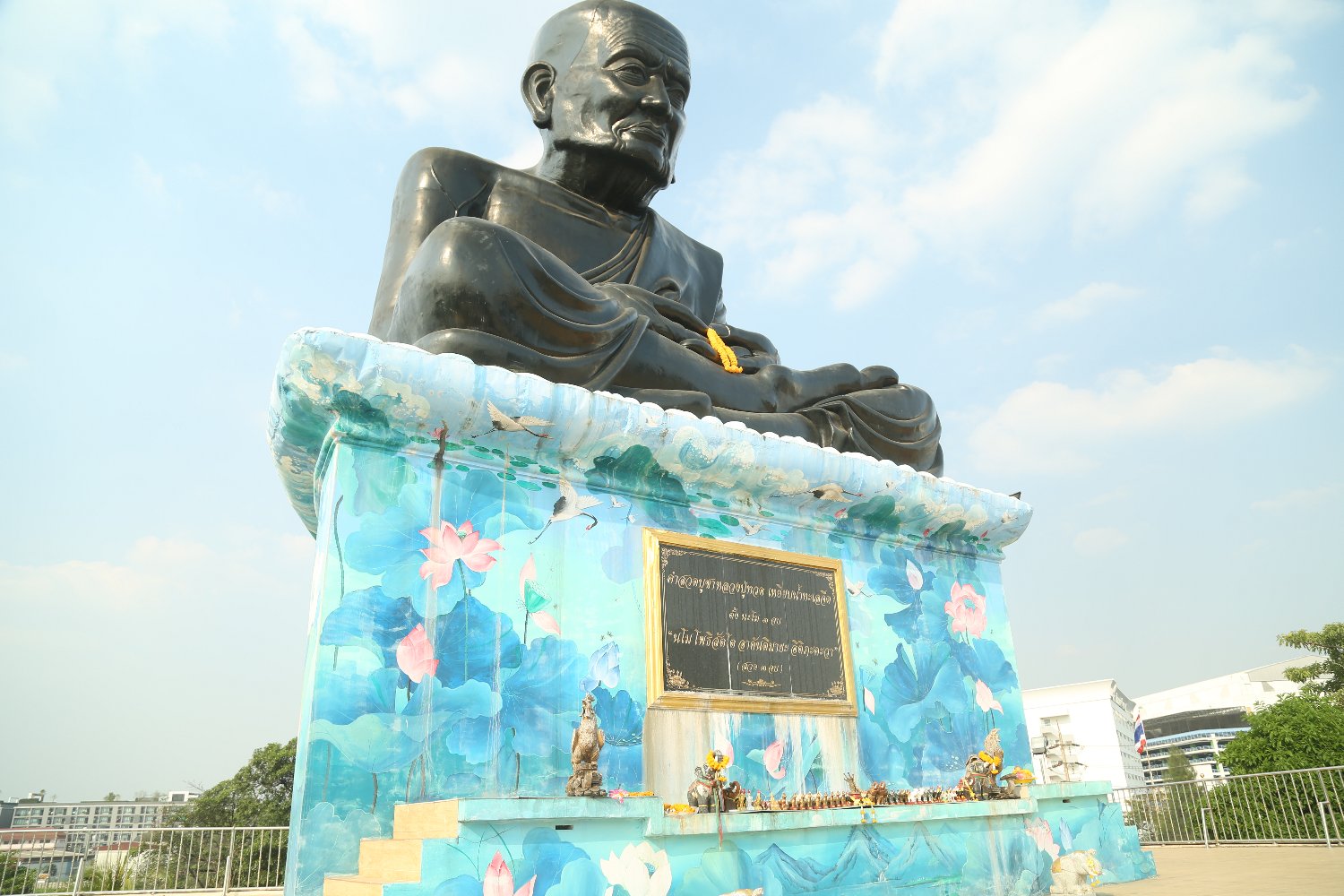
Samrong Shrine of the People can be easily seen from the Samrong Skytrain stop – all one has to look for is the giant statue of the Reverend Grandfather Thuat located on top of a raised mount (accessible via steps – one must remove their shoes; these steps can be quite hot if walking barefoot). A short walk from the Samrong Skytrain stop – located next to a canal this temple includes several buildings all very much decorated in a Chinese theme. The temple buildings are worth peeking into for their very colorful and golden interiors.
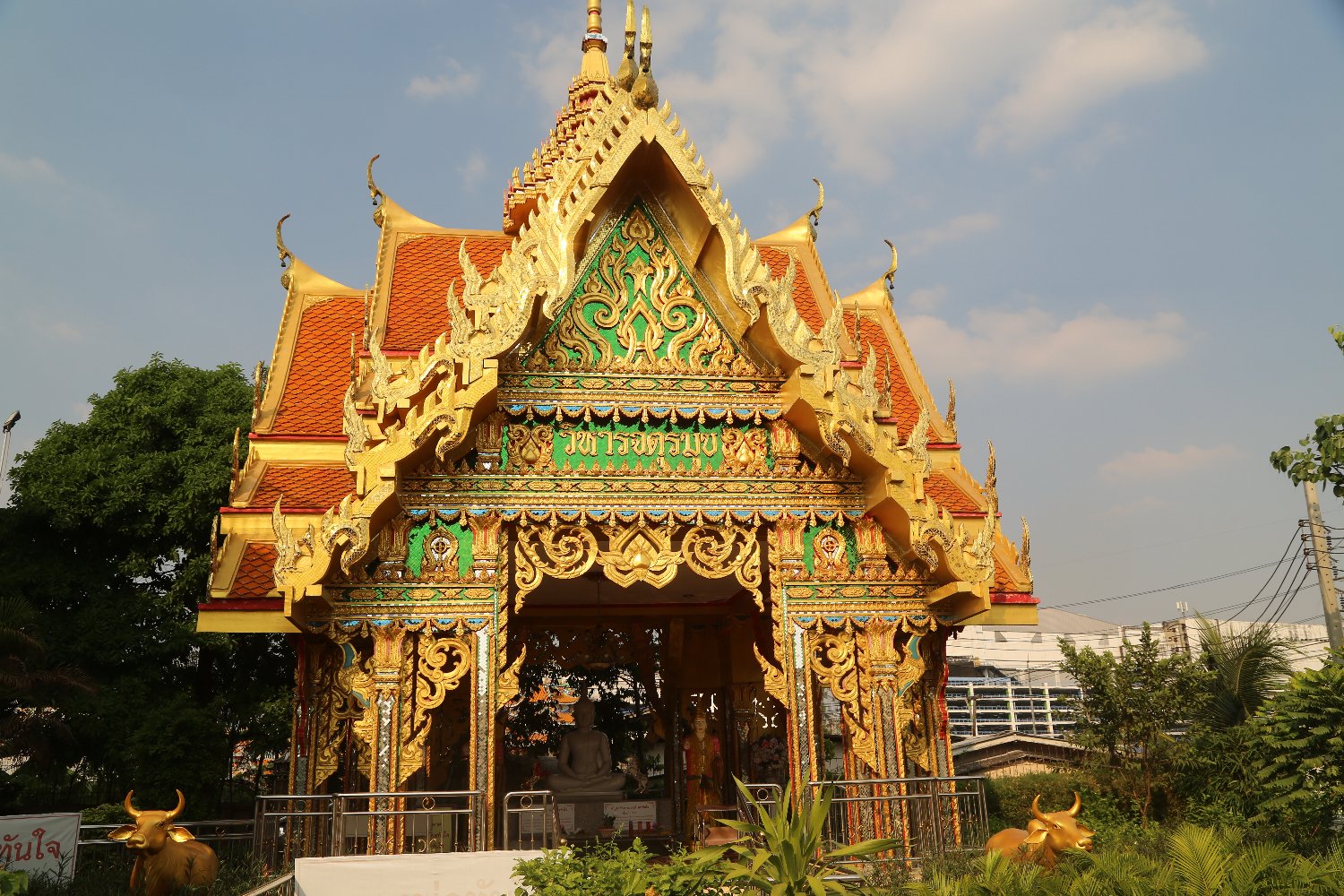
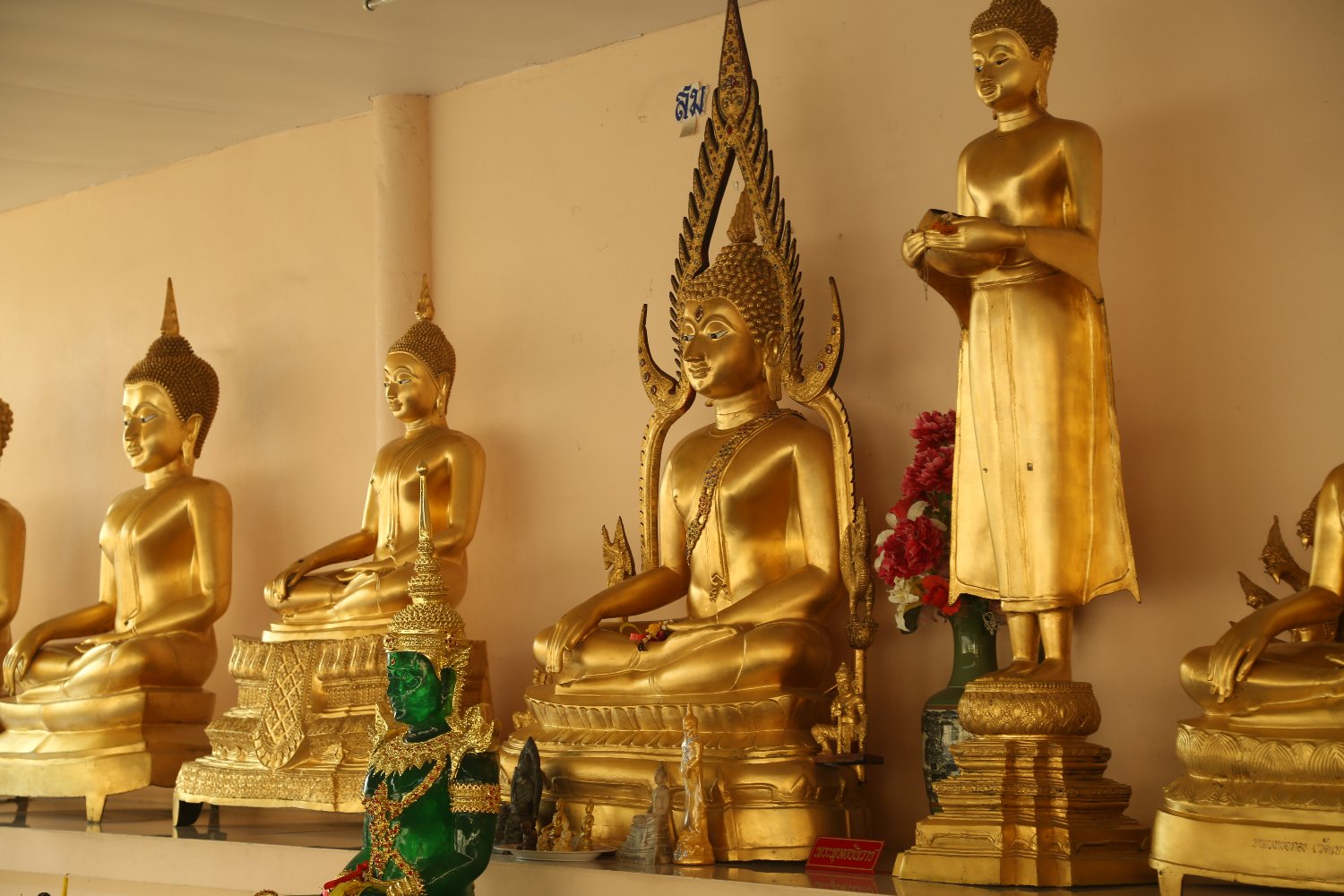
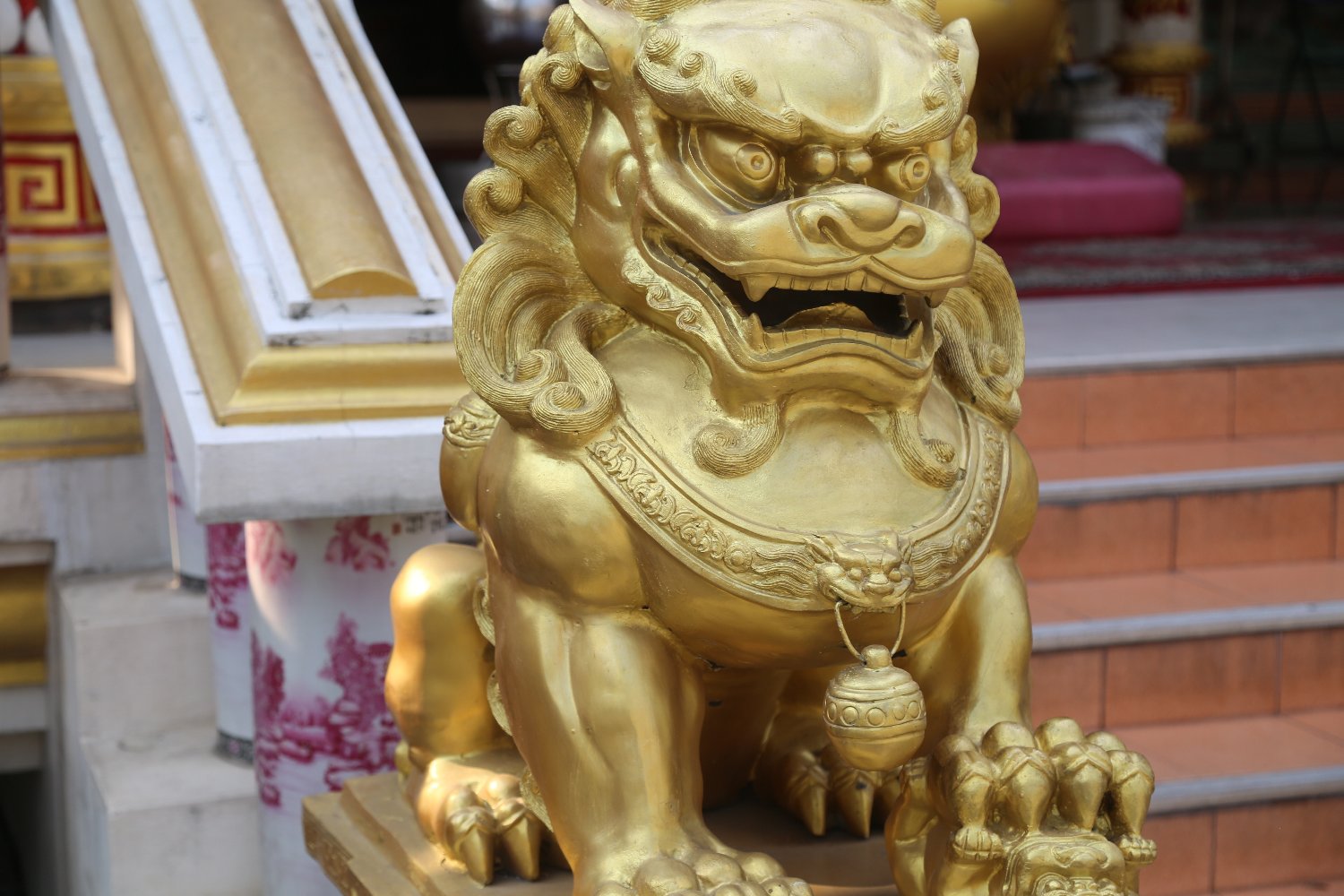
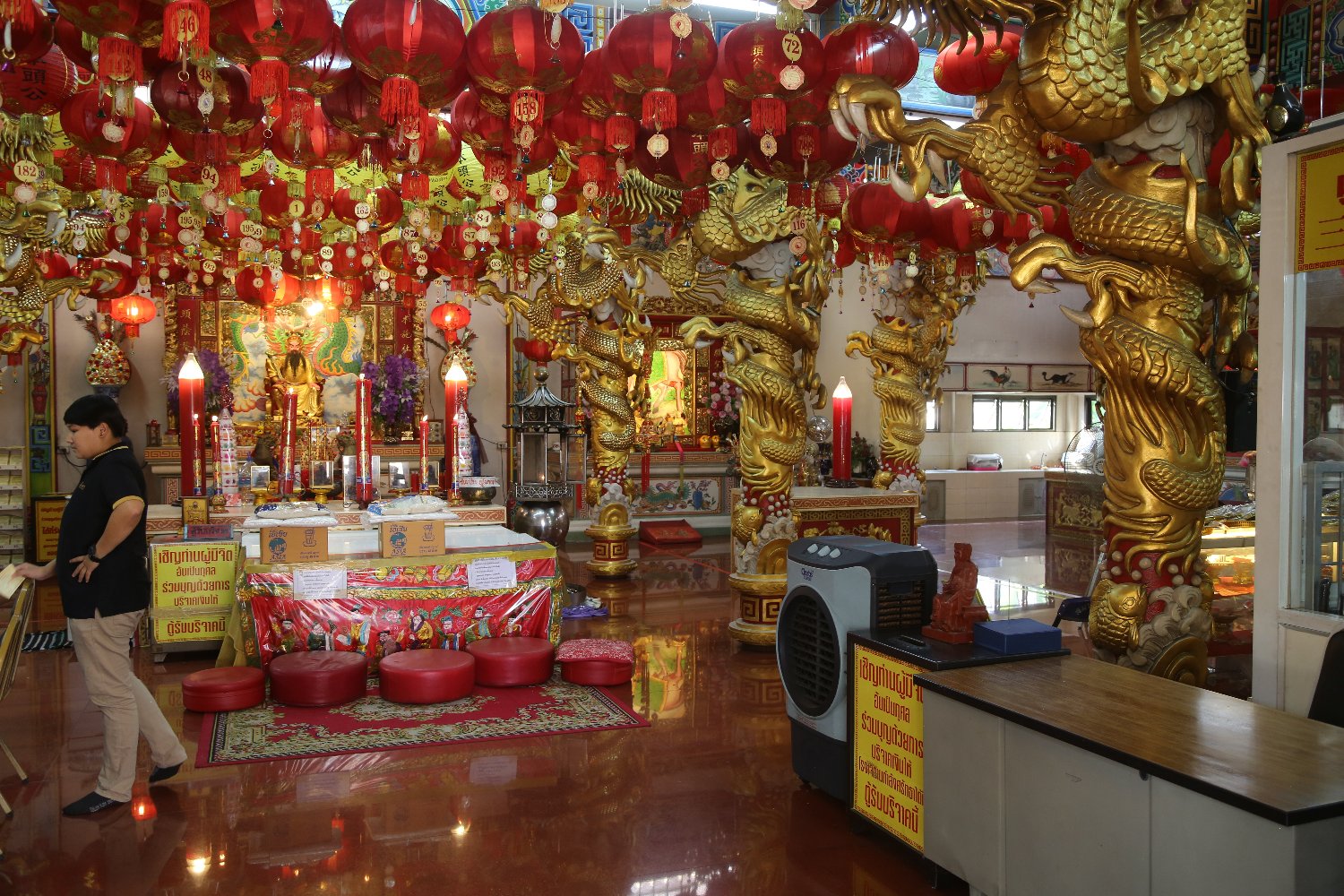
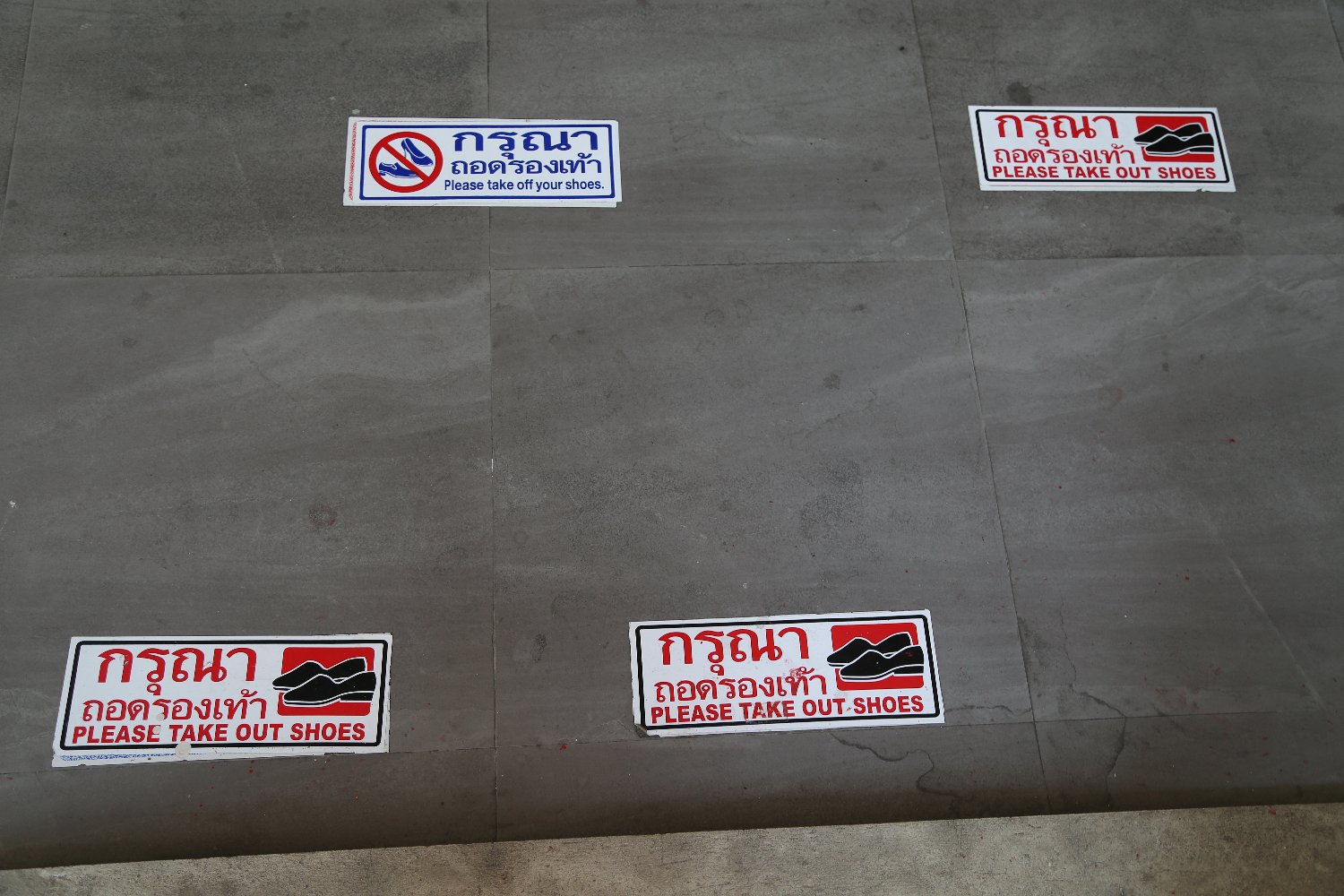
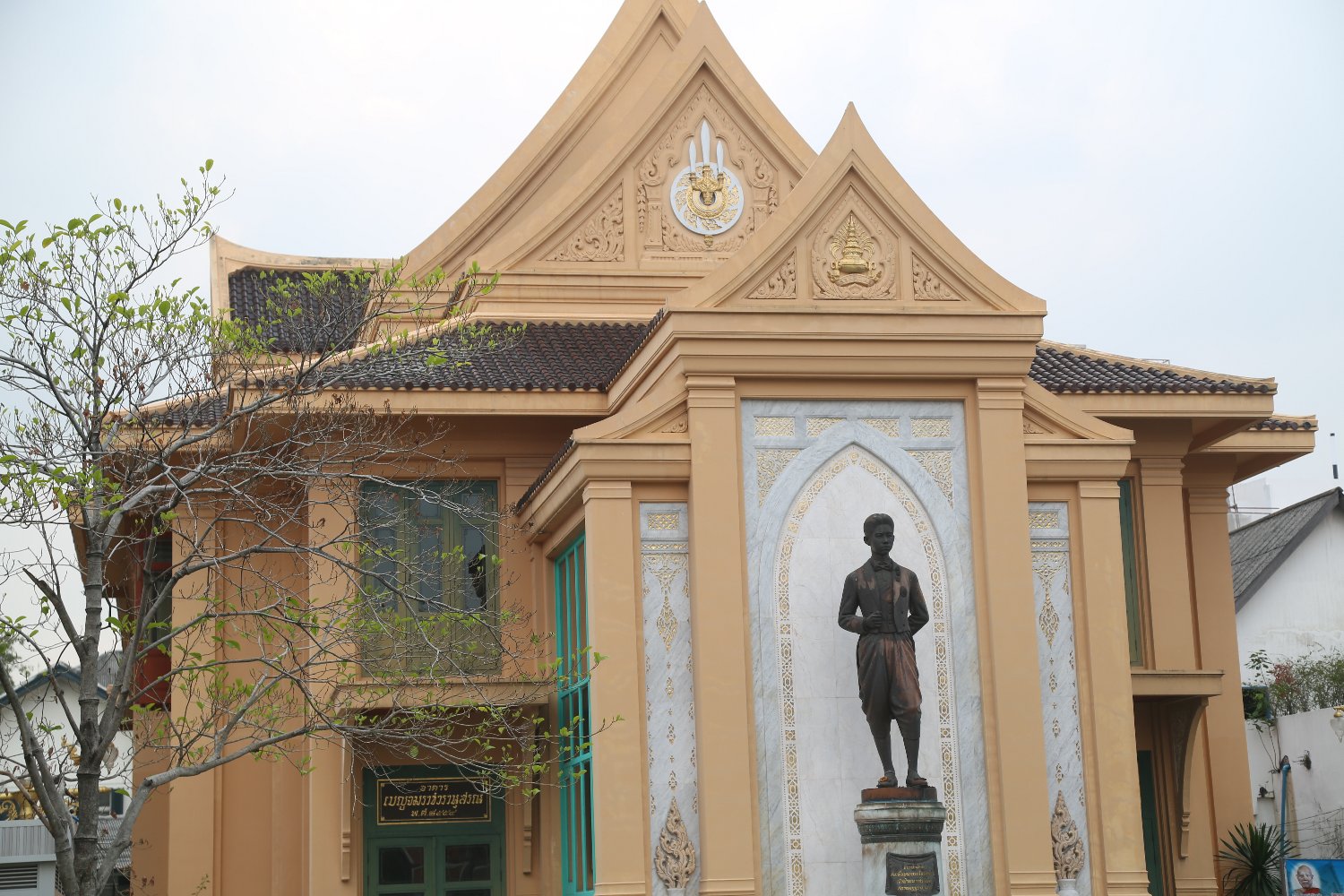
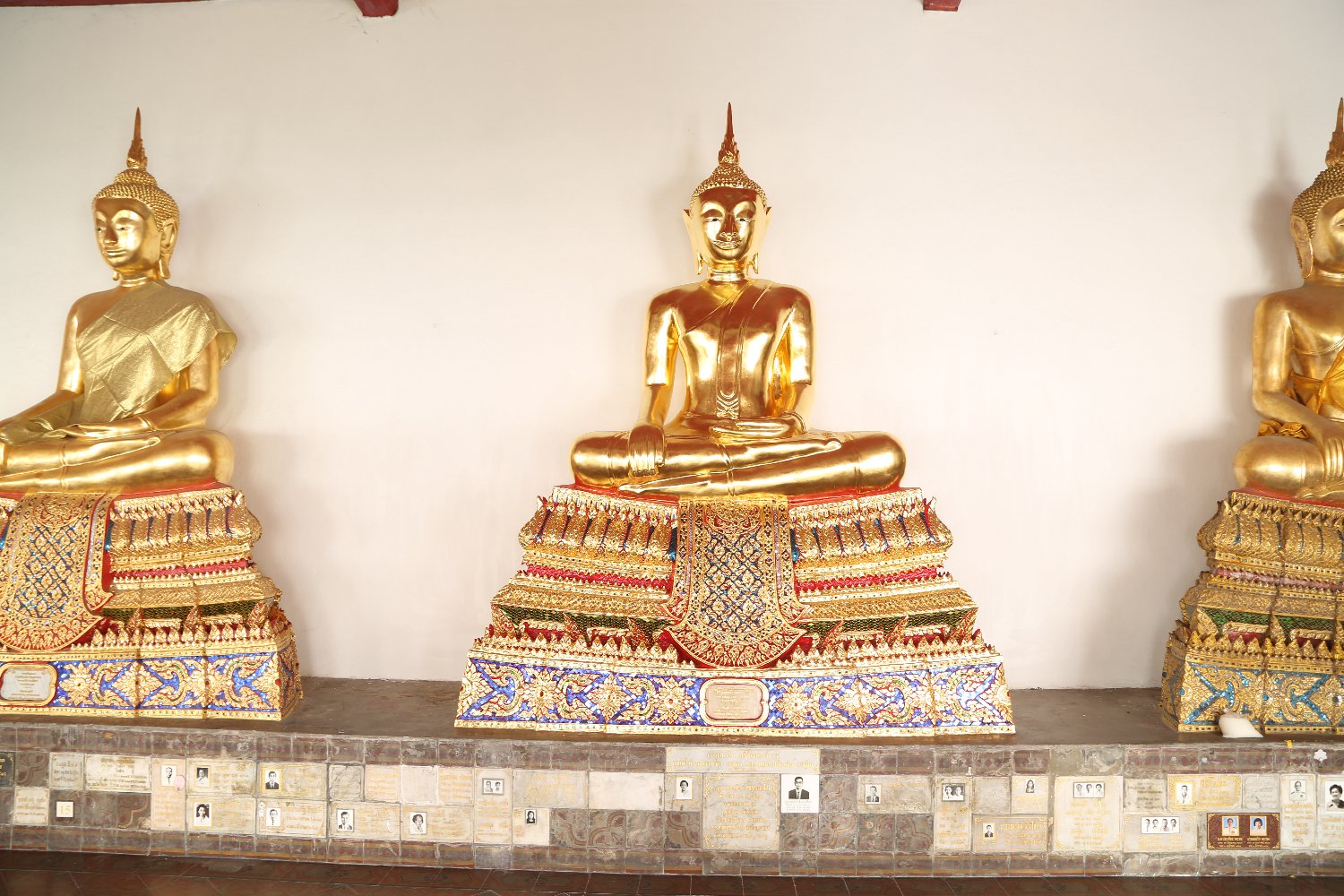
Wat Absonsawanwon Wihan is a tiny picturesque complex temple houses next to the Khlong Dan Canal in the Phasi Charoen District. Known for the presentation of sitting Buddhas inside one of the temple houses – they are all lined up in several rows. One of the best marked temples we have seen informing you to remove your shoes before entering – clearly signed on the floor before you walk up the stairs to the main temple.
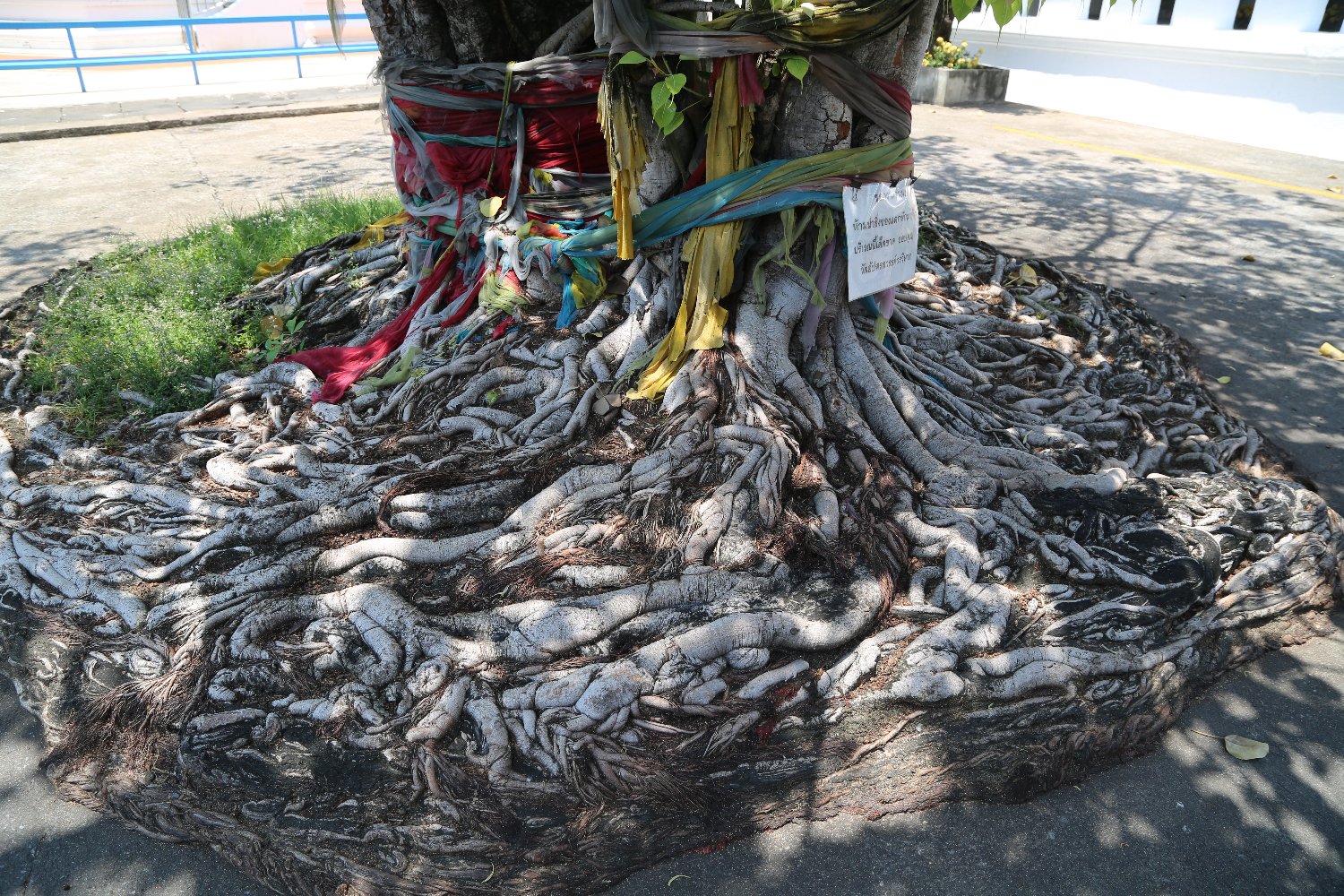
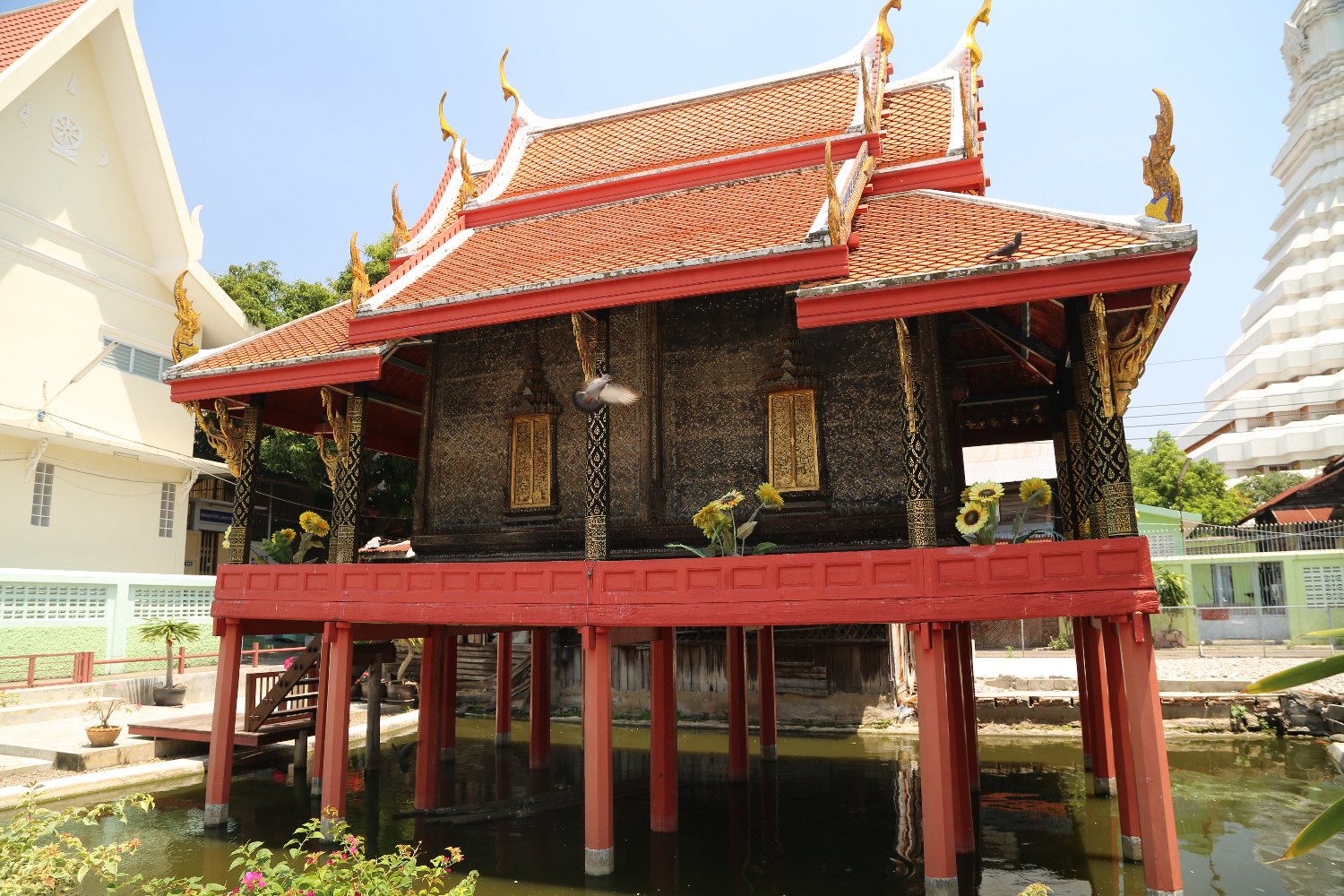
Another picturesque golden temple building is raised on stilts above water. Also, worth checking out is the tree in the main courtyard with all its coiled roots showing above ground. While small, this wat has a number of picturesque spots – especially for photographers looking for out of the way and off the beaten path small temples.
Closet skytrain stop is the Wutthakat station – accessible via a short walk. A number of other small, intriguing temples are also located in this area – easily accessed via a short walk or by hailing one of the motorcycle ‘taxis which are the best means of serving the local community based on the very narrow walkways through this part of Bangkok.
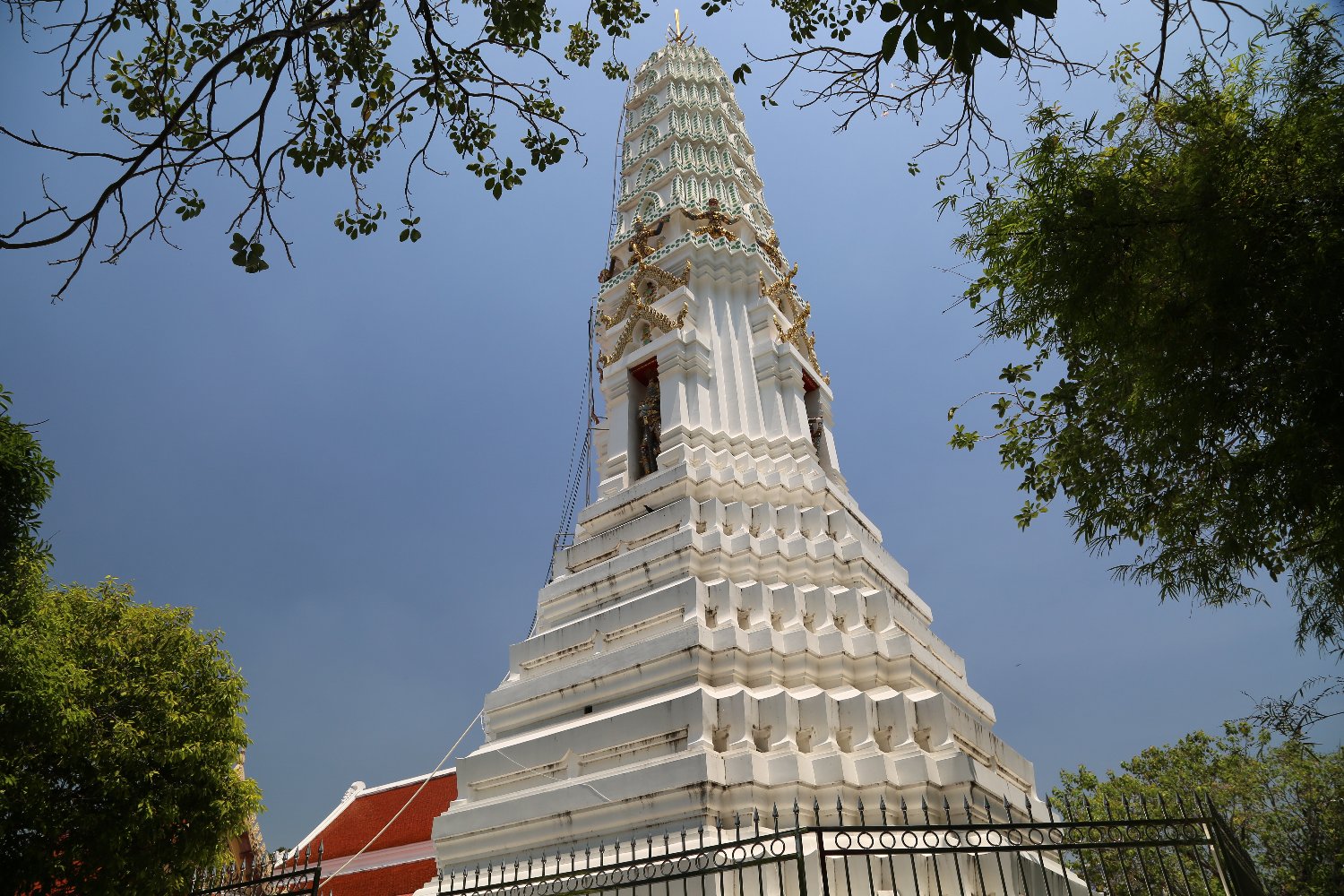
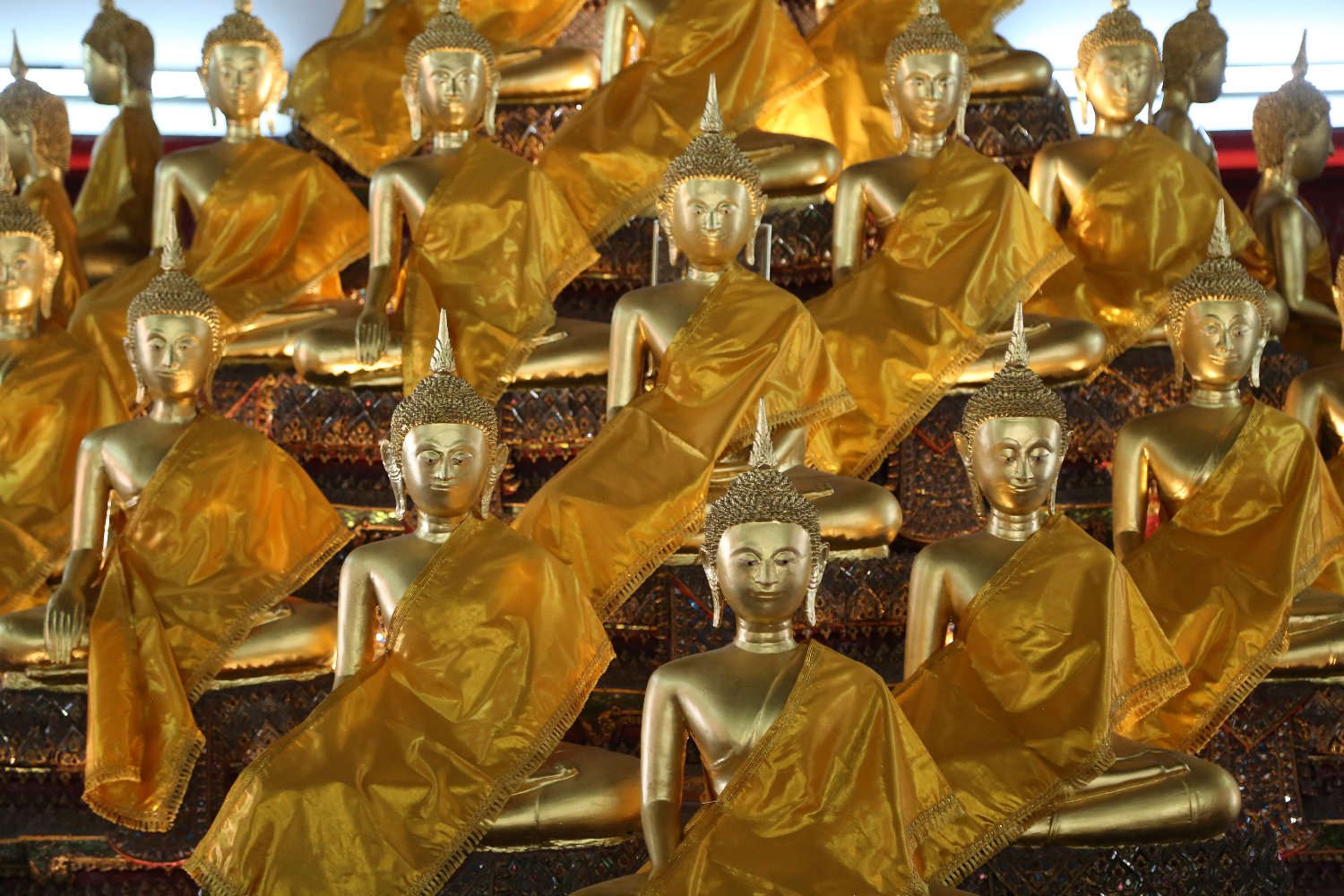
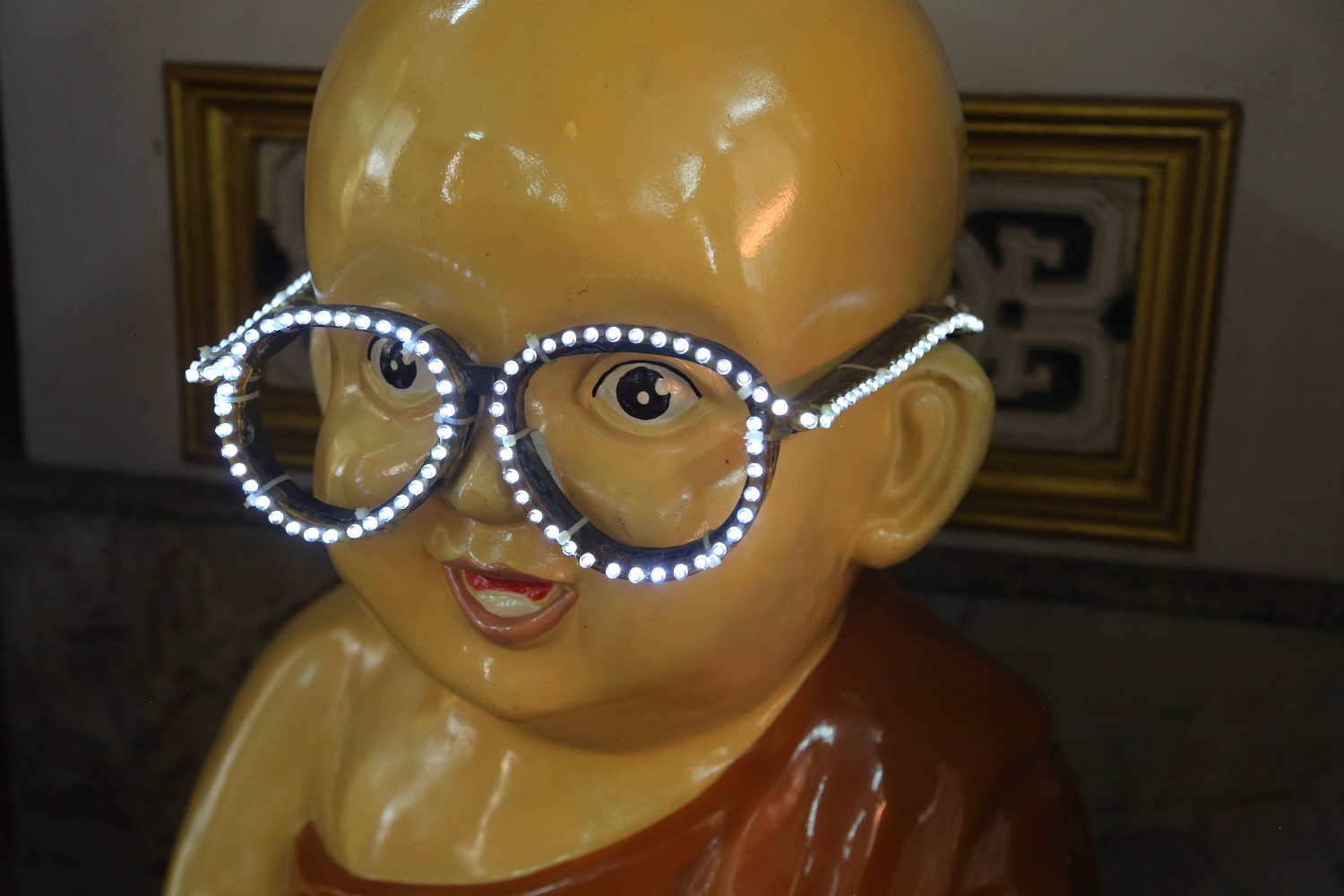
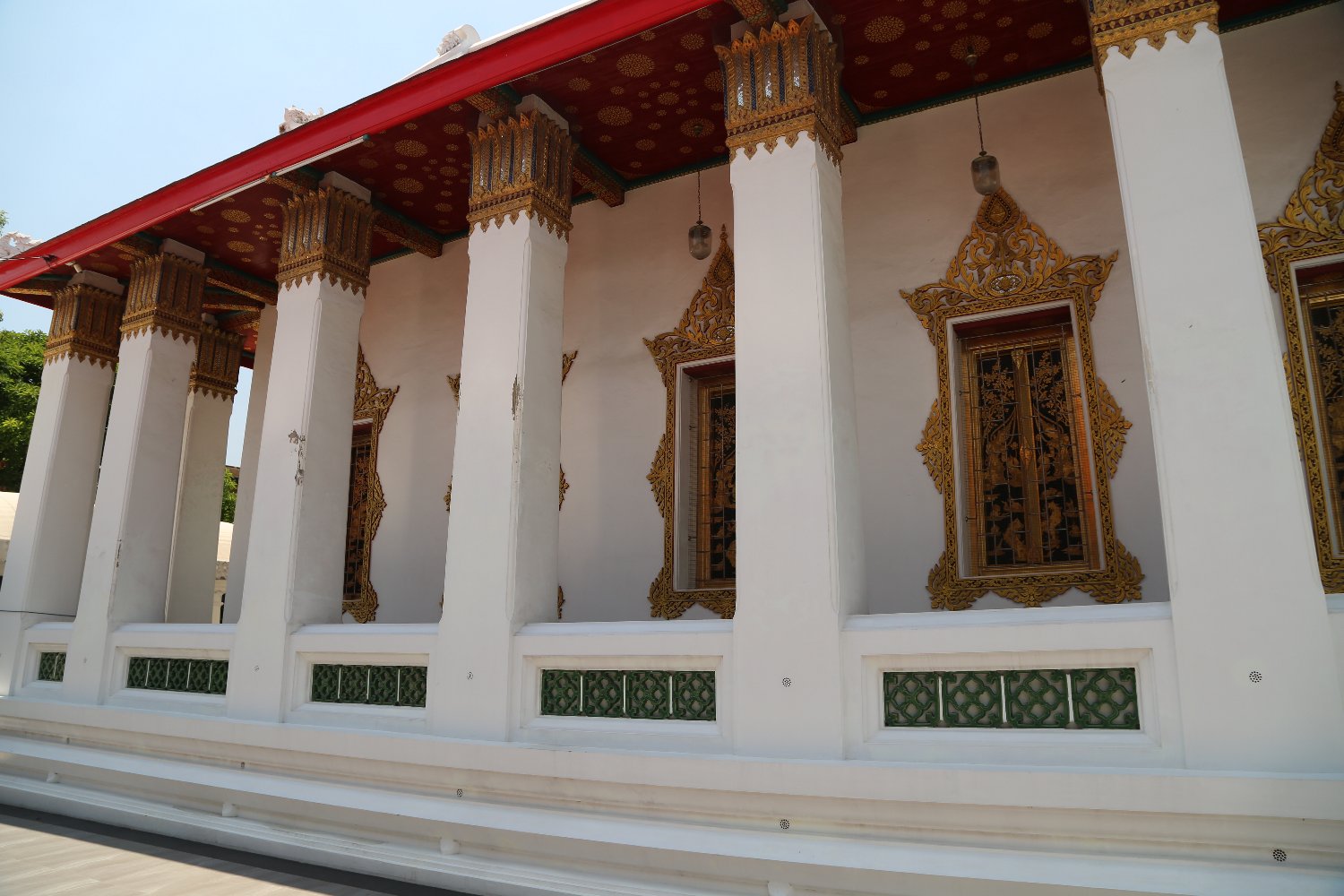
Wat Amon Khiri is the small but rather impressive looking gleaming temple in the shadow of the busy Rama VIII Road on the Thonburi side of the Chao Praya River. Located a few minutes from the iconic Rama VIII Bridge. Worth a stop to gawk at the bright gold and red temple building but also worth marveling at the interior equally colorful hand painted murals.
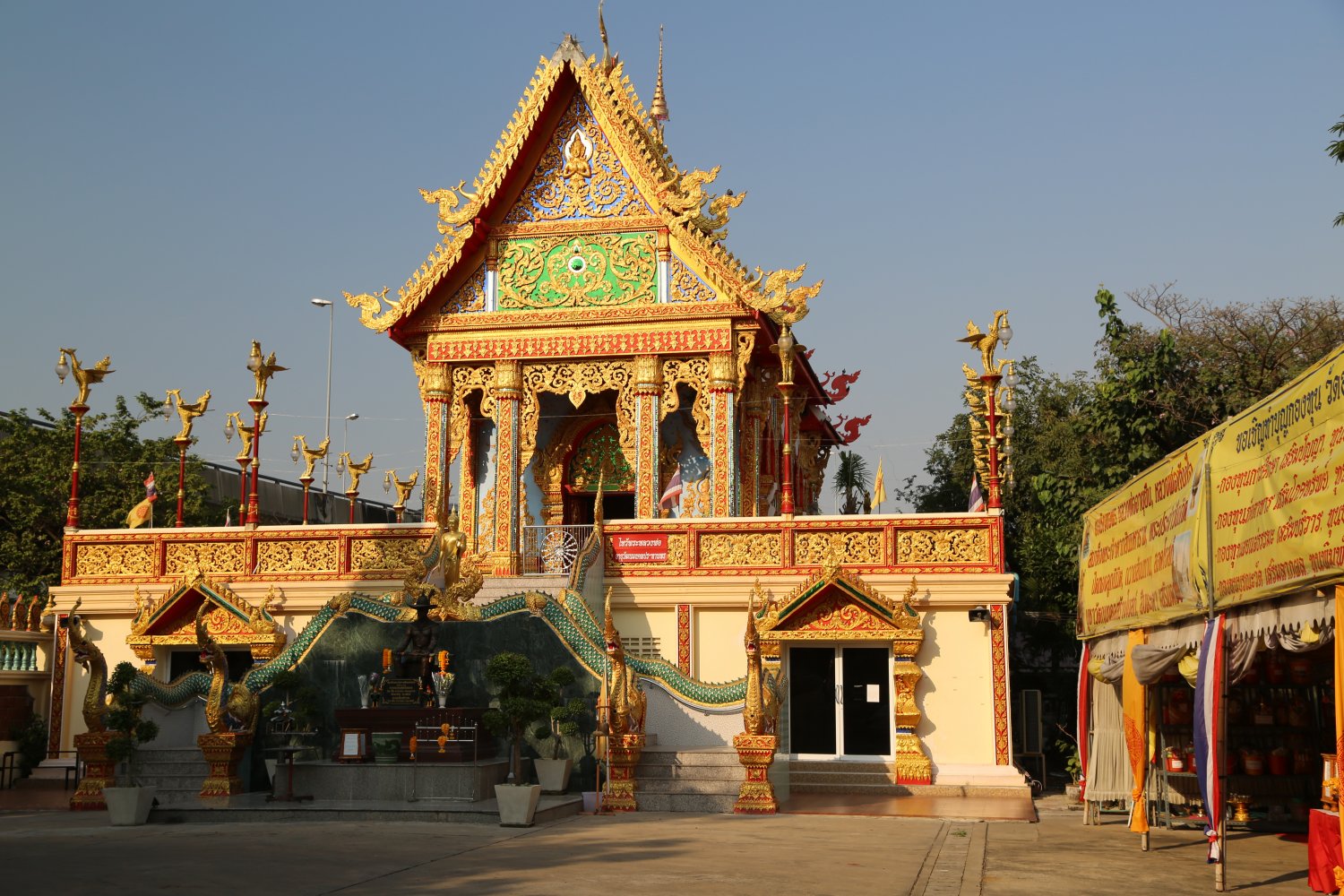
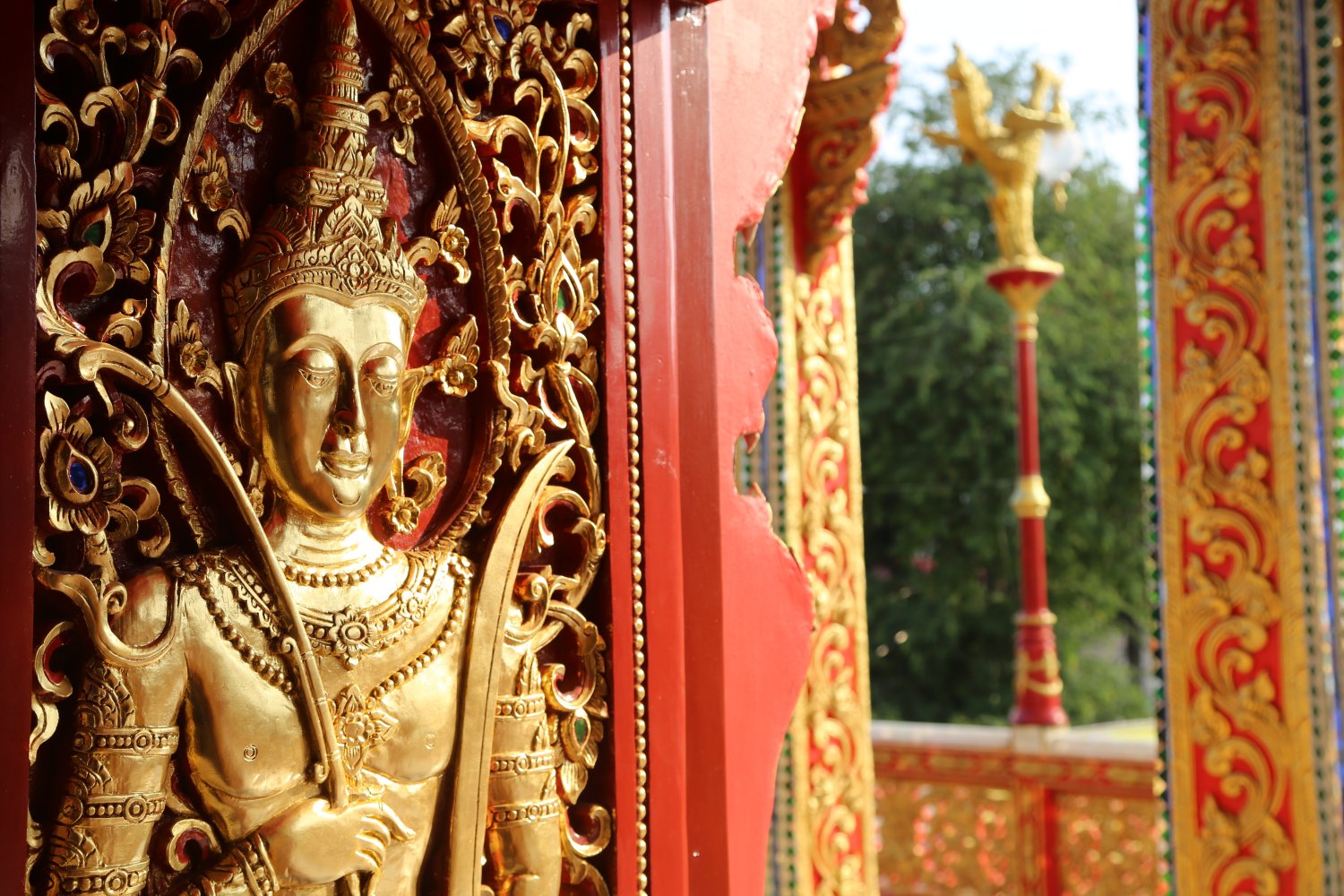


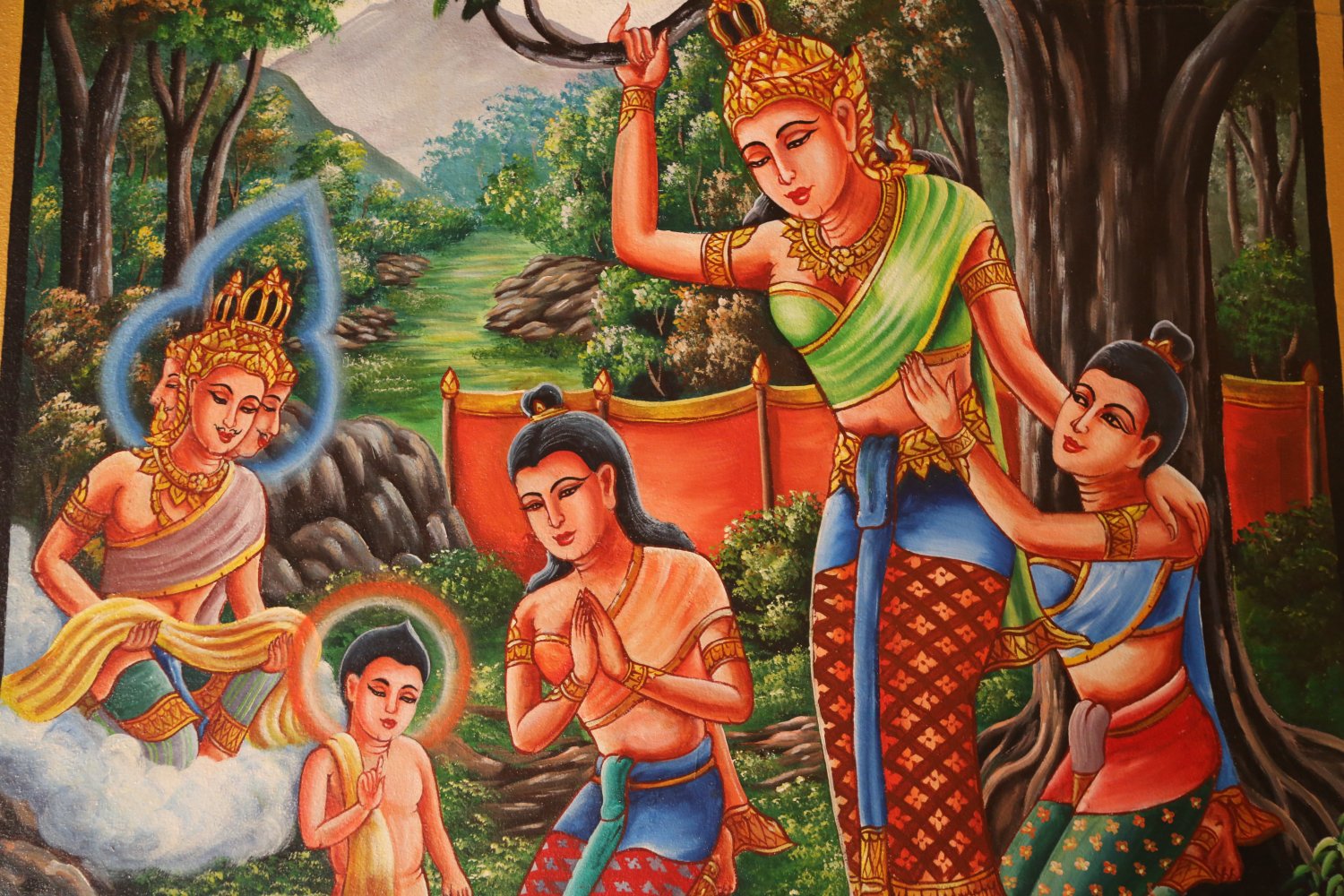
Wat Anongkharam Worawihan is located on the Thonburi side of the Chao Praya River – not far from the King Rama I Bridge. Not a popular temple with tourists – that is fine – you will probably have the grounds to yourself. Originally it was built in 1850 as a dedication to King Rama III and was named Wat Noi Khamthaem but later renamed by King Rama IV.
The large Buddha was brought here from the Sukhothai Province in 1949. Also known for lots of detailed religious images that decorate the grounds outdoors. Also, in a scenic location next to a local canal.
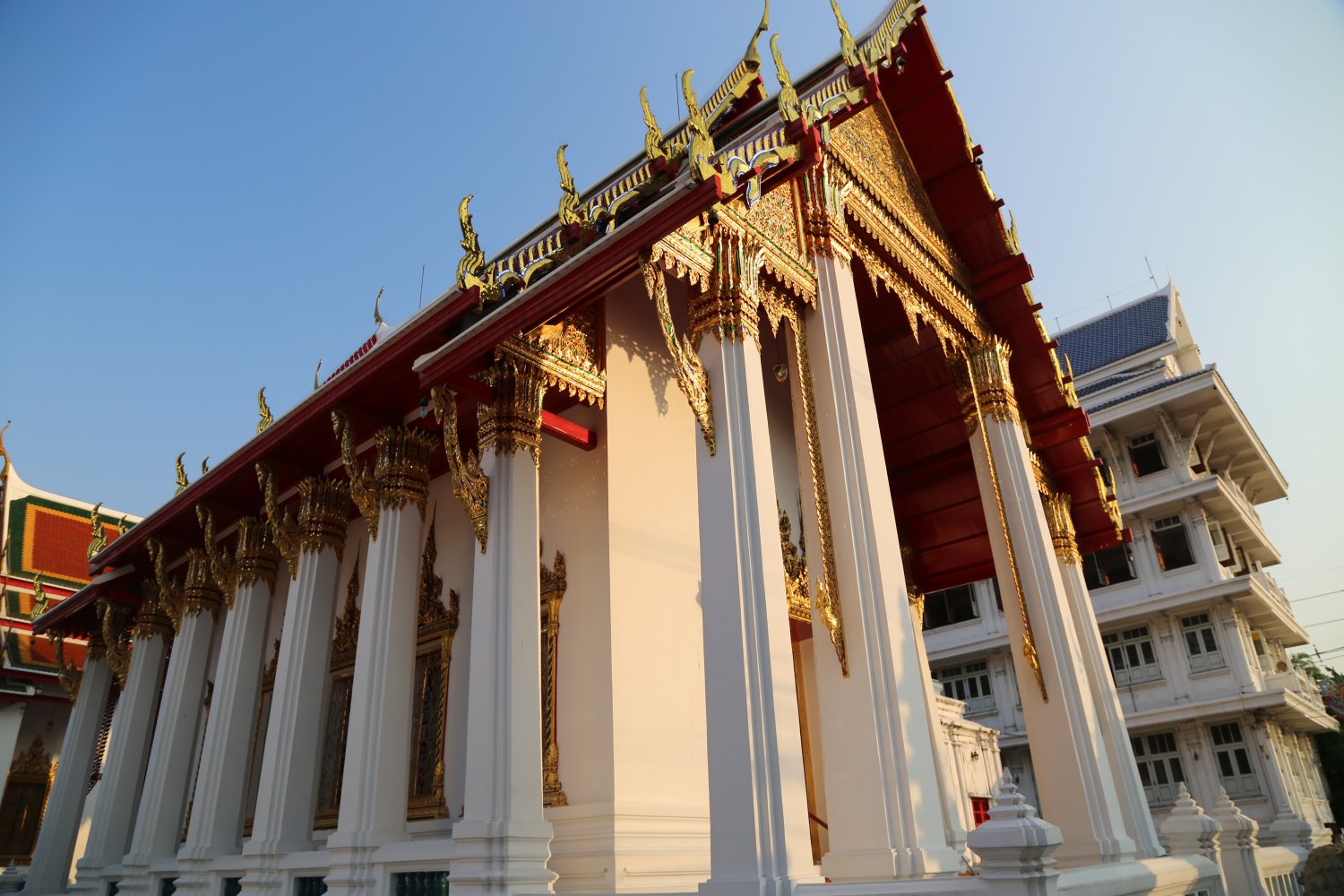
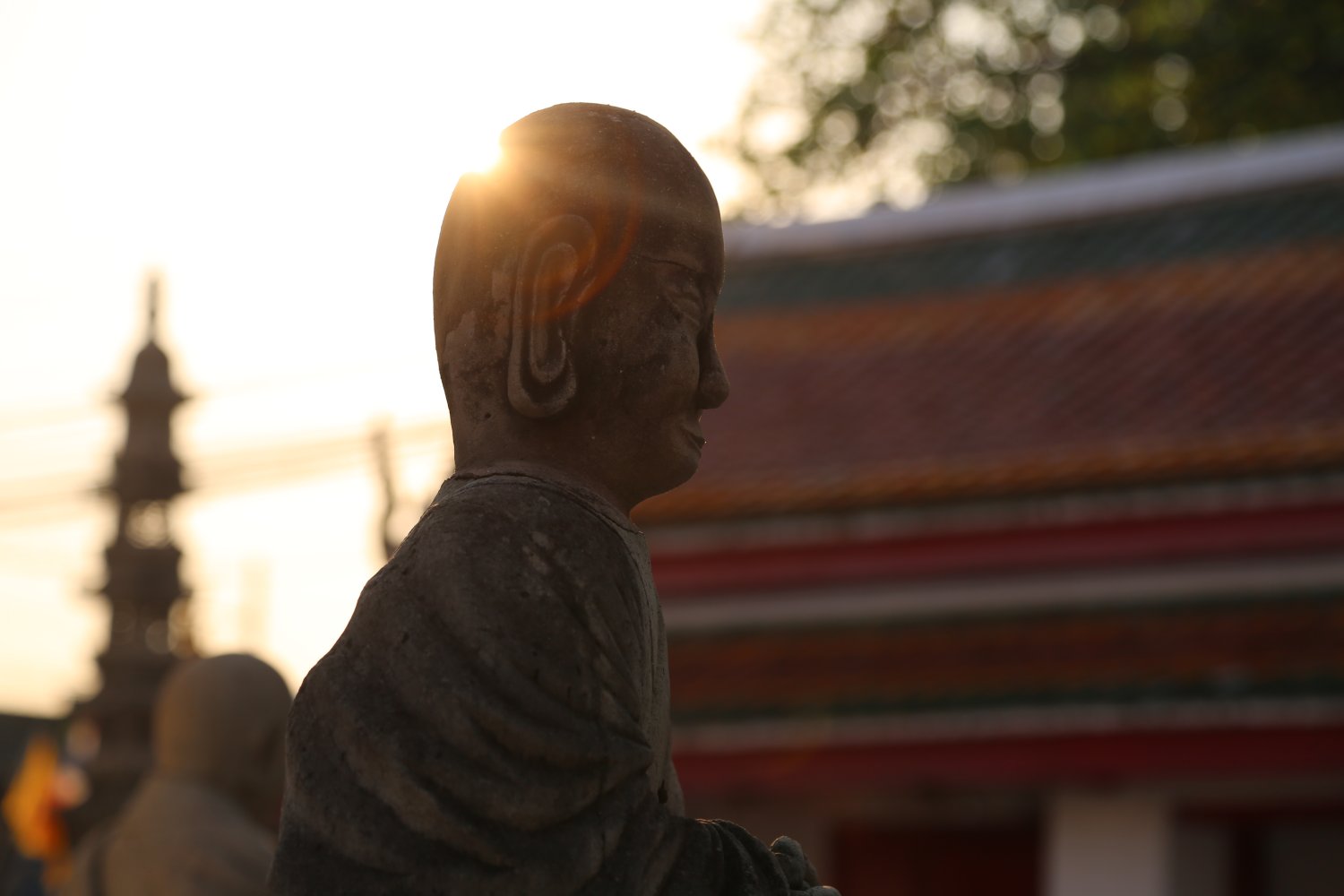
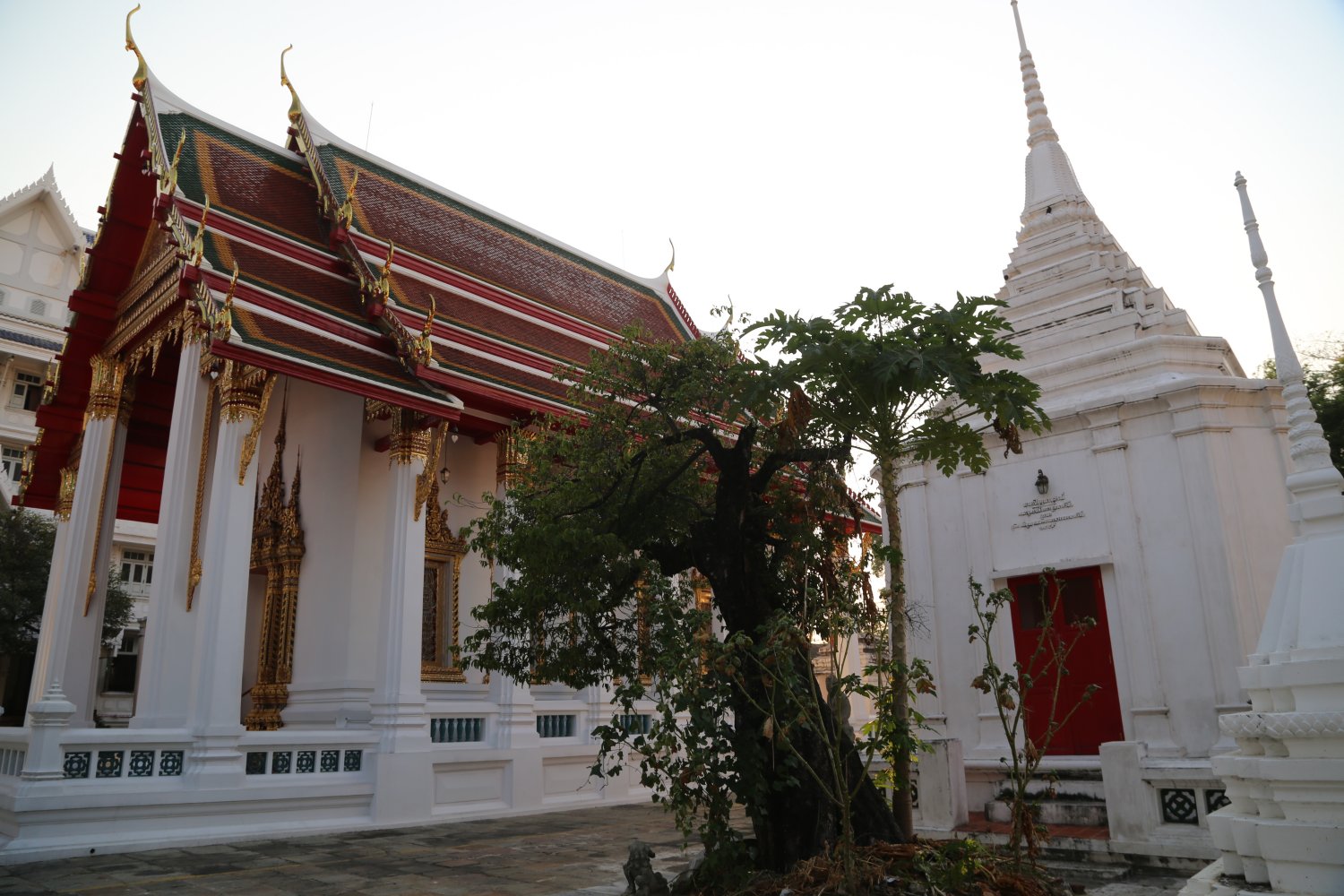

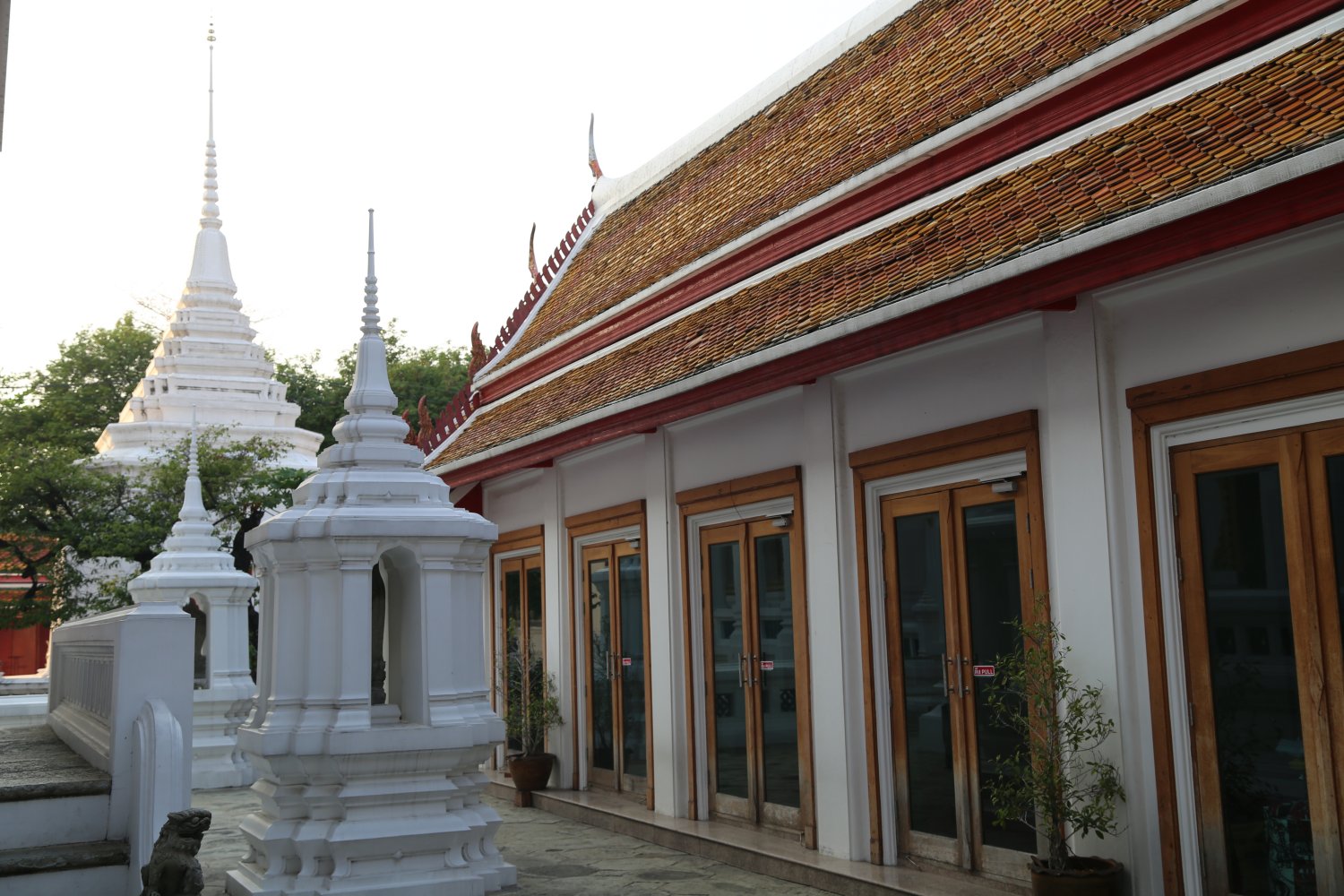
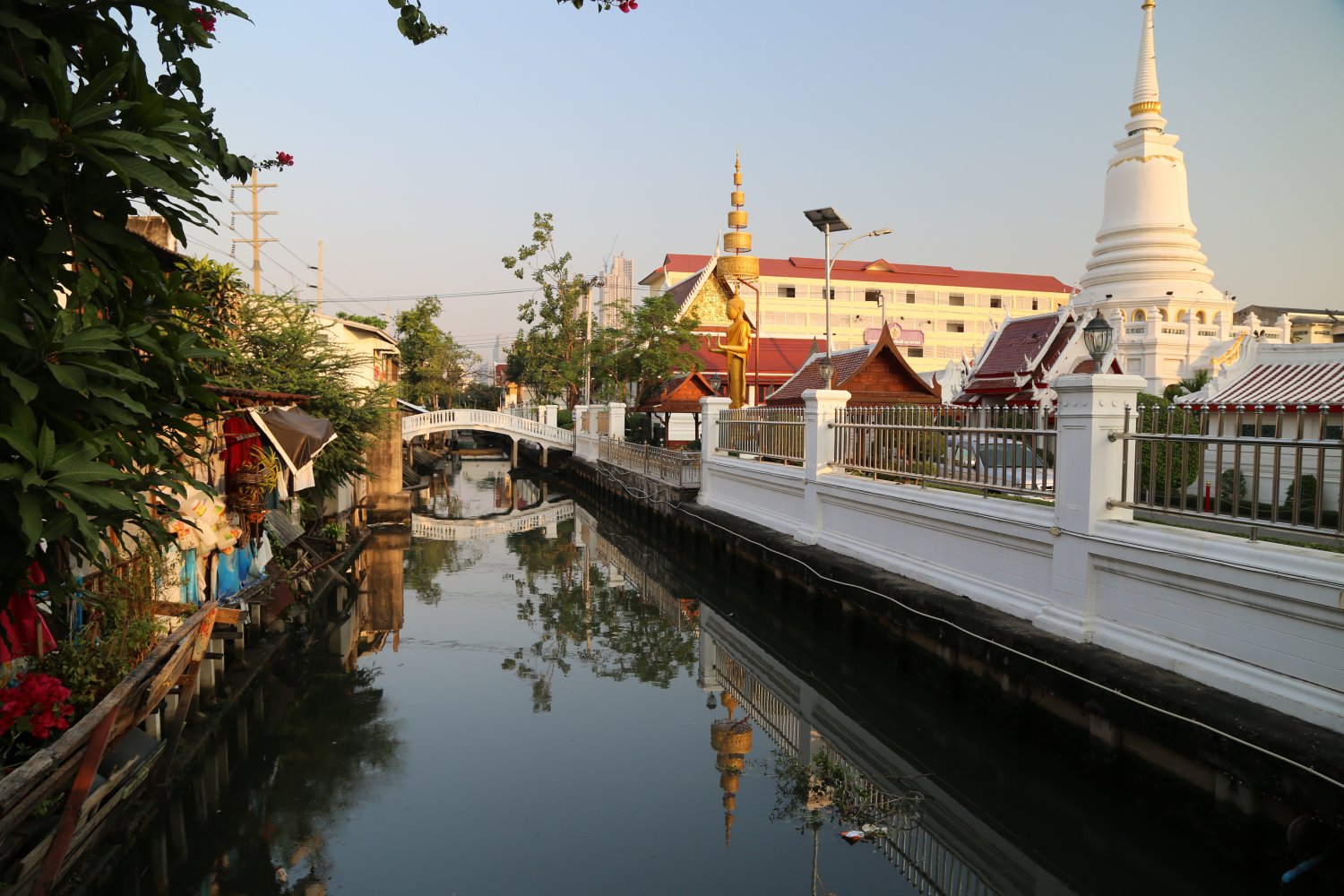

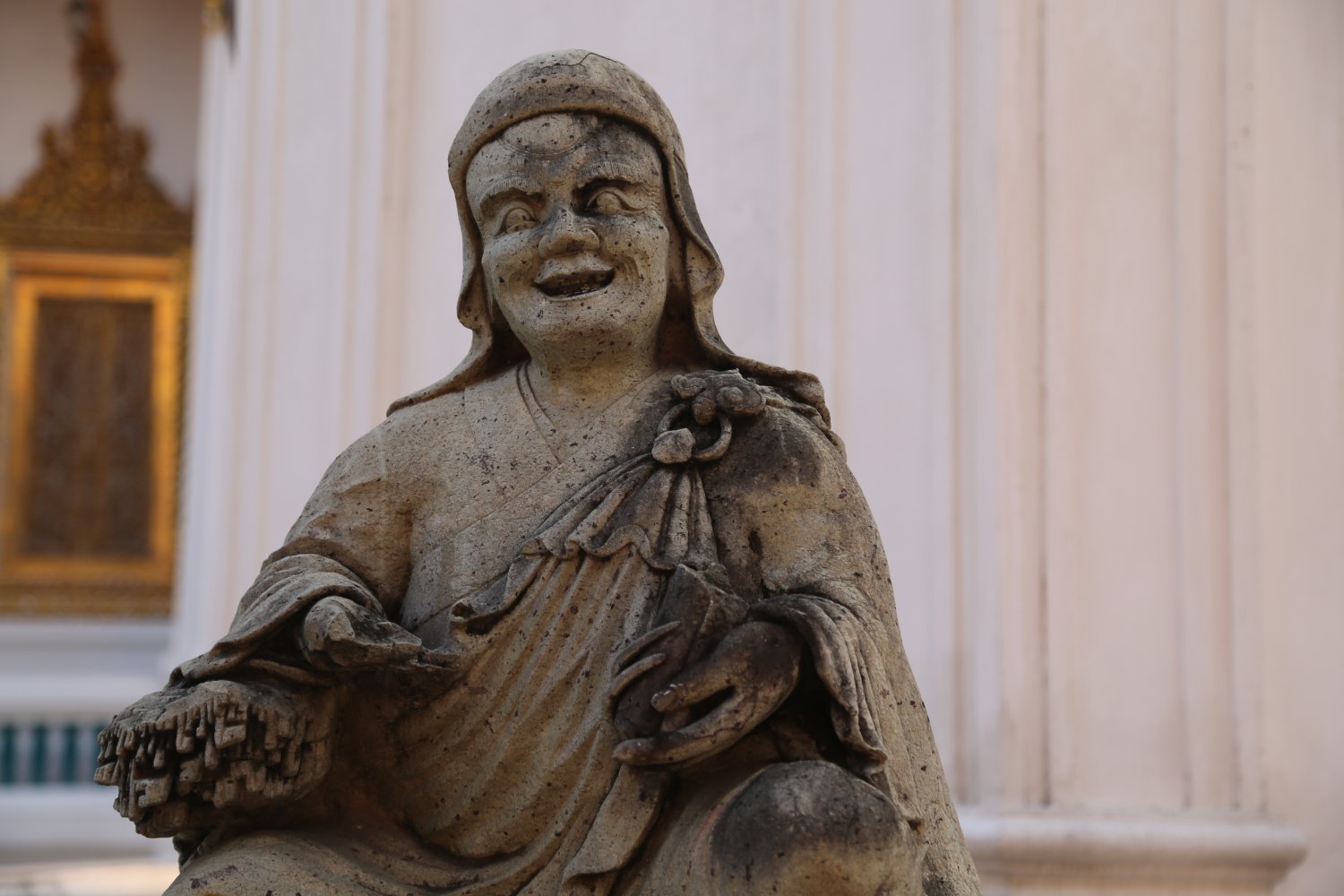
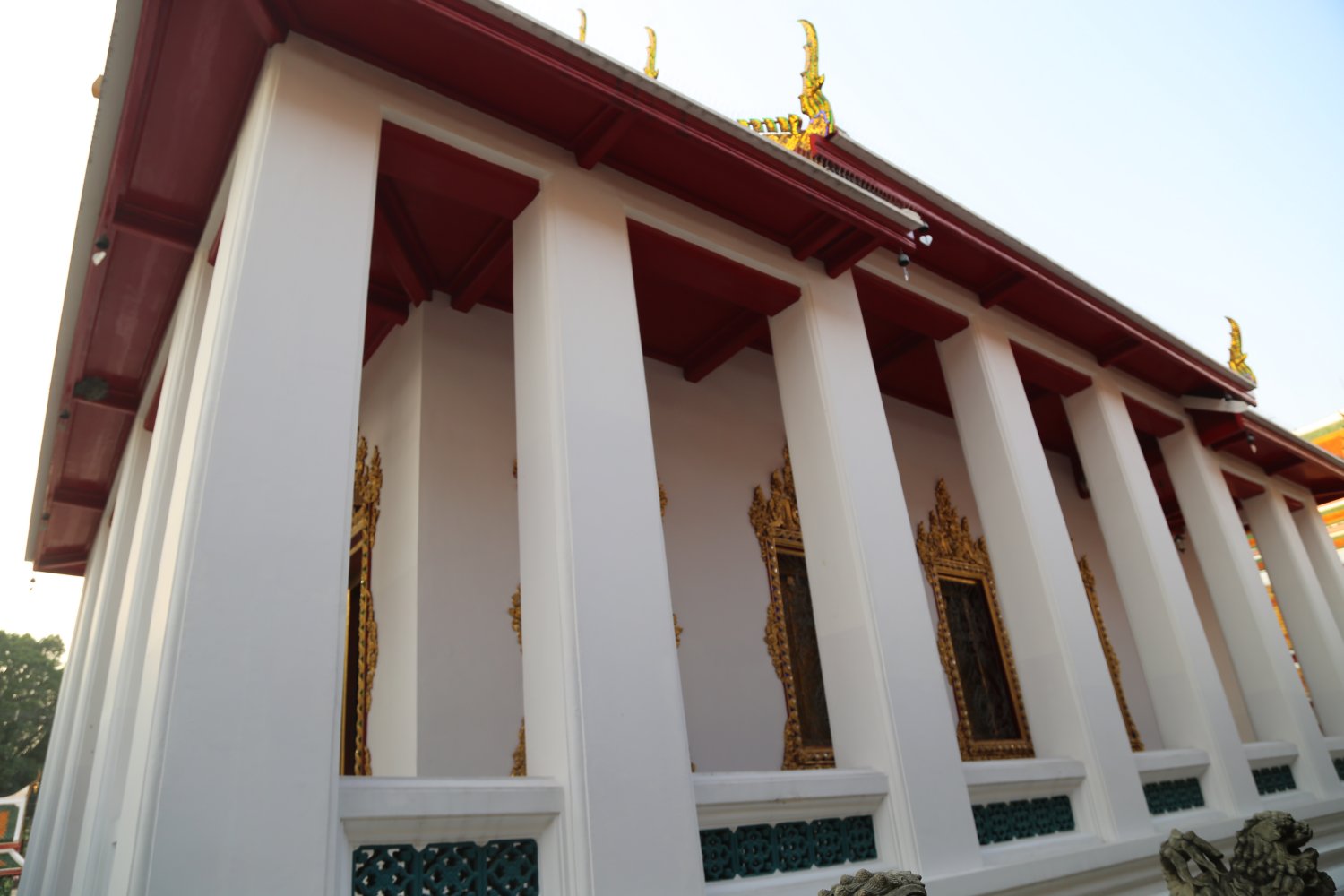
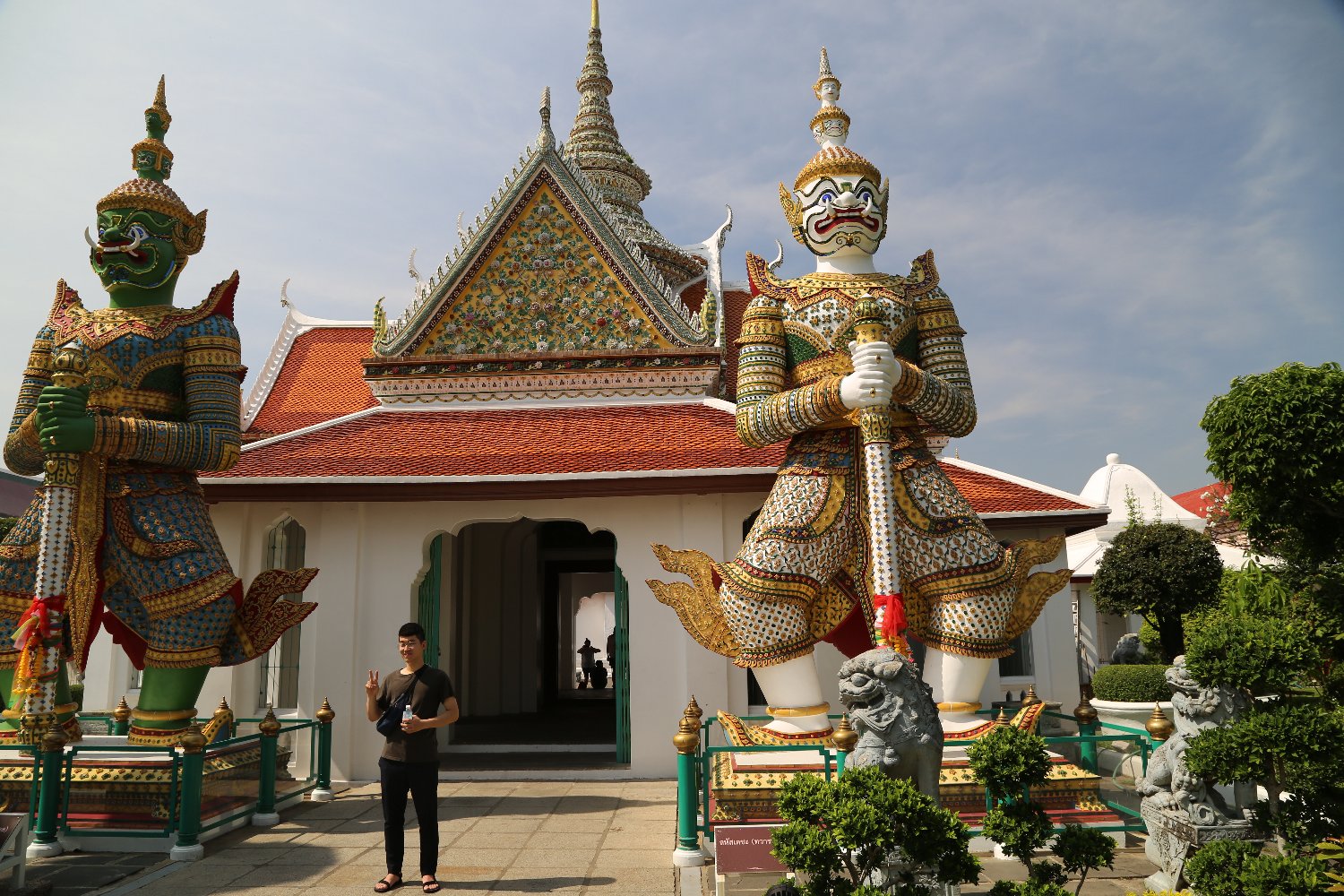
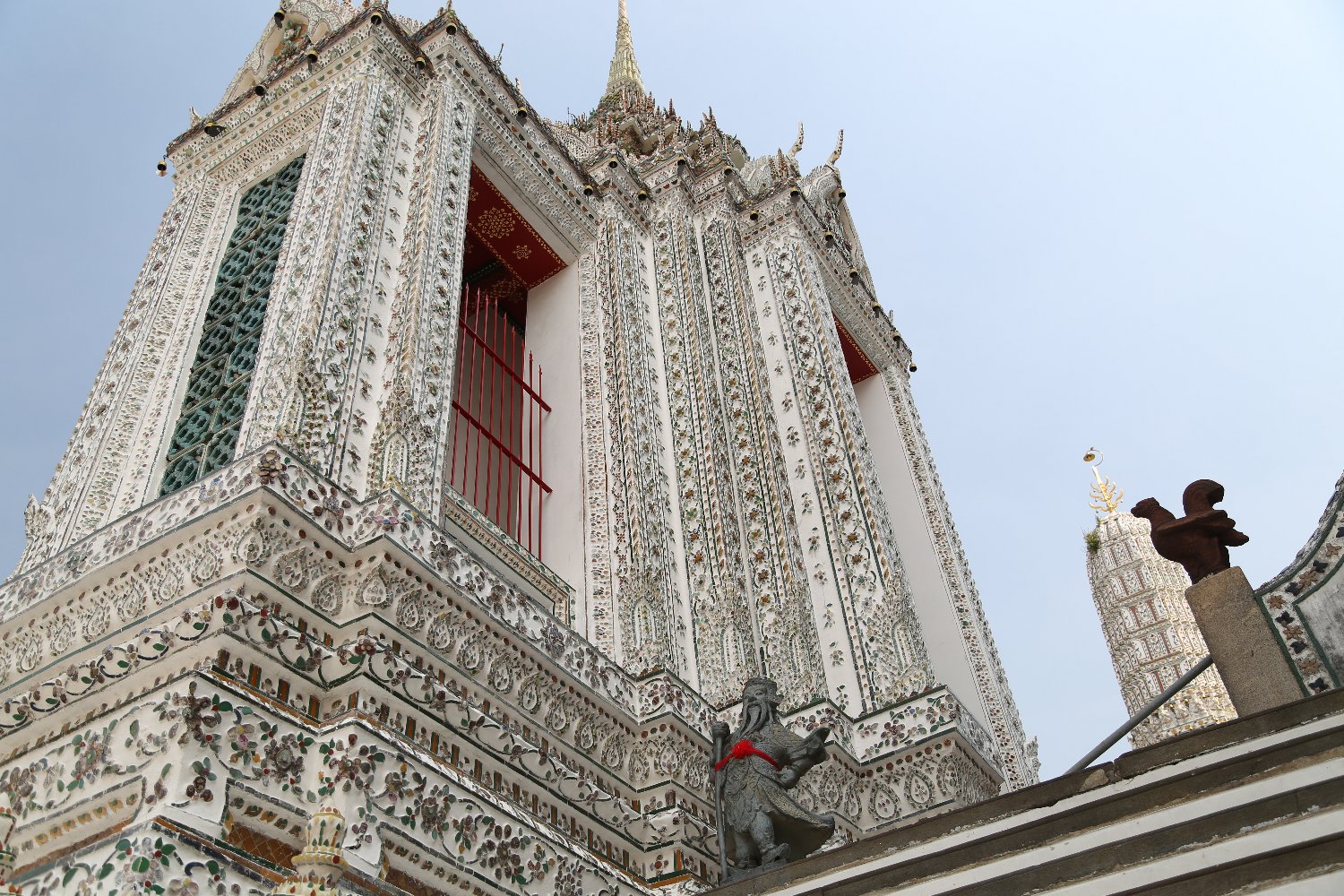 Wat Arun , a smallish temple located on the western side of the Chao Praya River, is accessible via ferry boat from Wat Po directly across the river using the Tha Tien Pier. There are many small local restaurants located along the wood planks that border the edge of this portion of the Chao Praya River. For authentic Thai cuisine you can’t beat some of these restaurants.
From select parts of Wat Arun you have excellent views of the Grand Palace and of Wat Po on the other side of the river. You will certainly be attracted like a magnet to a refrigerator to the tall tower, called Phra Prang, which is in the center of Wat Arun. It is worth walking around this tower about 1/3 of the way up on the concrete walkway. This tower is 243 feet tall and is decorated with thousands of little pieces of colorful porcelain.
Even though Wat Arun is also known as the “temple of the dawn” – sunset is an excellent time to be here as there are not that many crowds and it’s a peaceful time watching the sun set over the Chao Praya River and Bangkok. Estimated visit time 60 minutes.


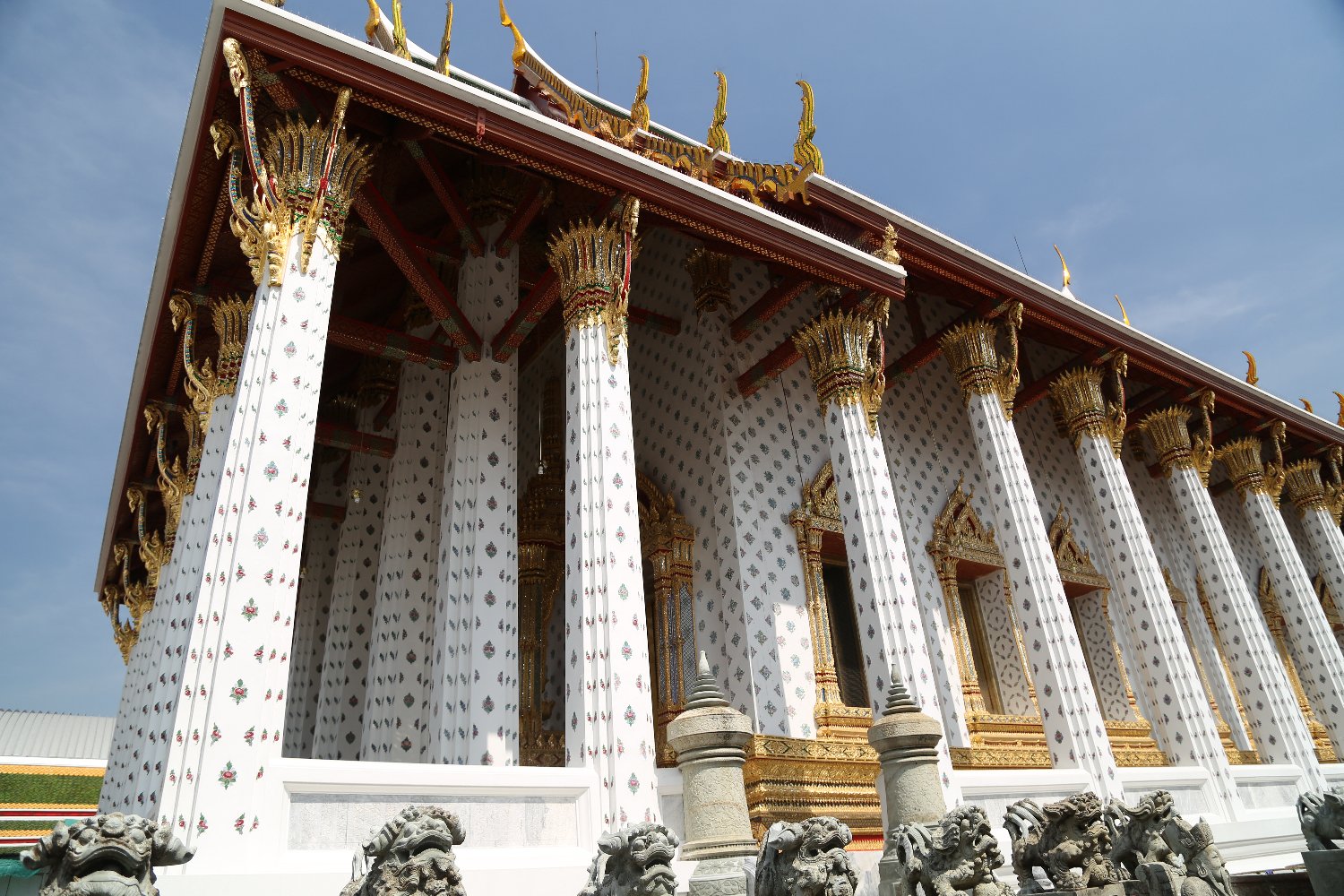
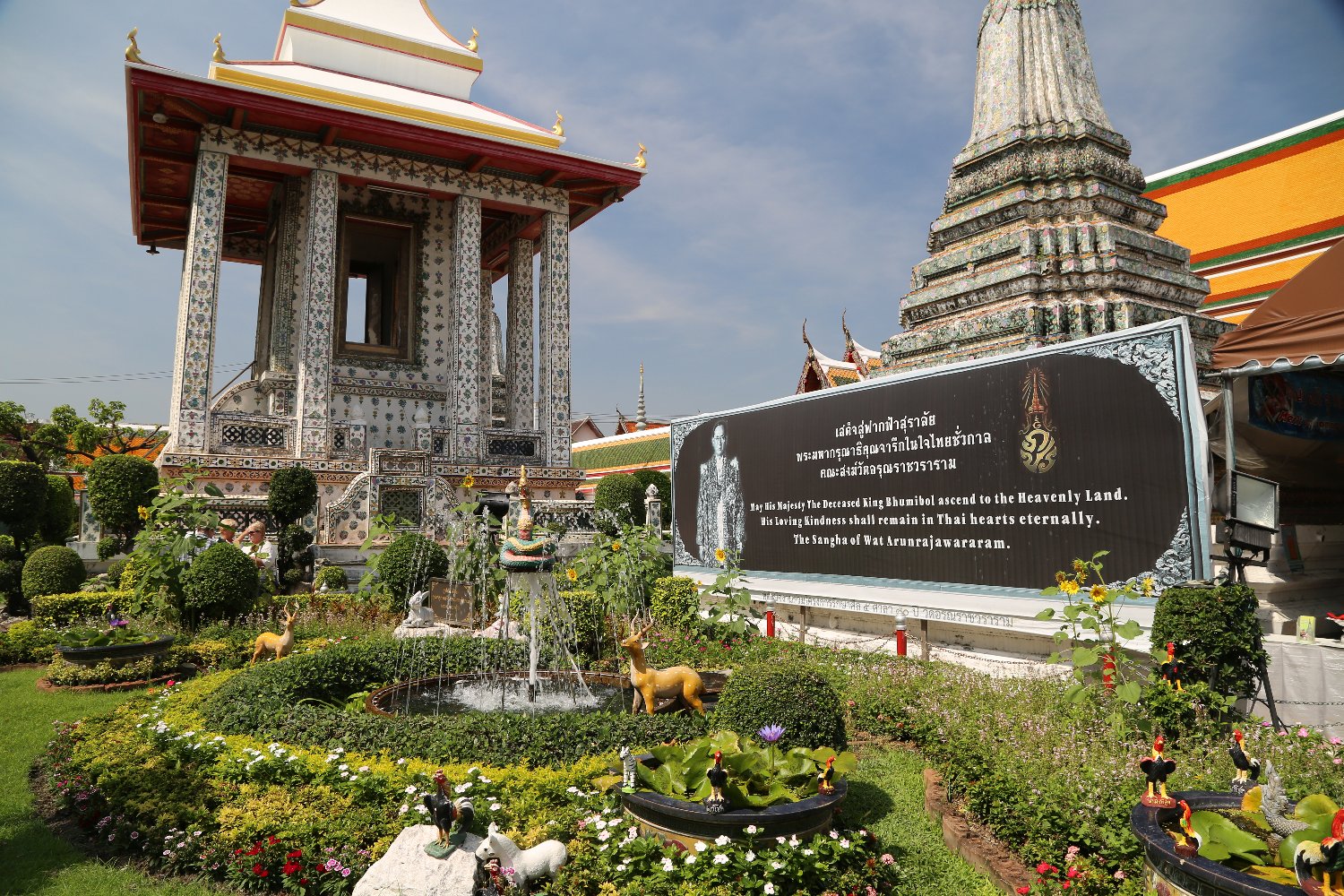


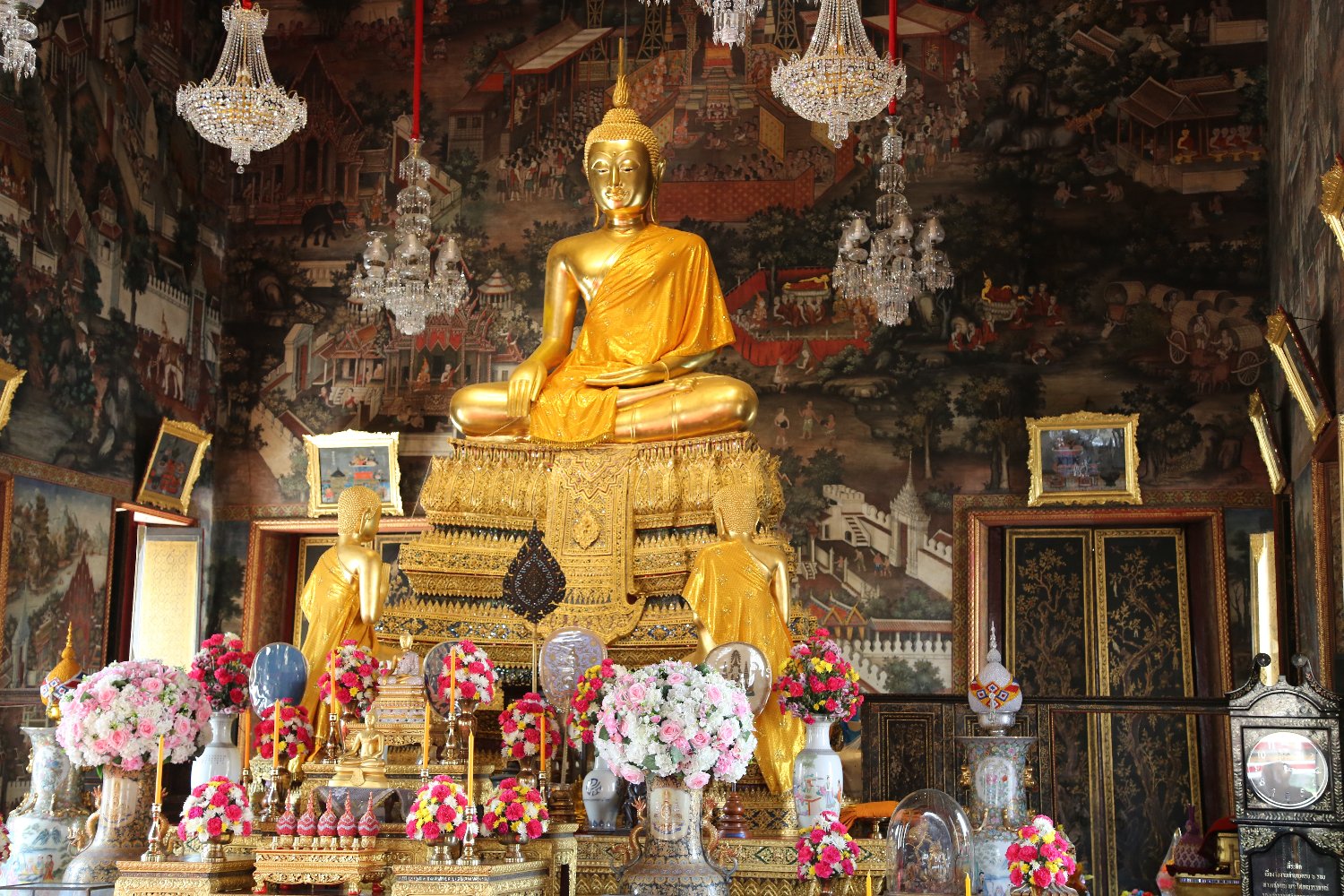

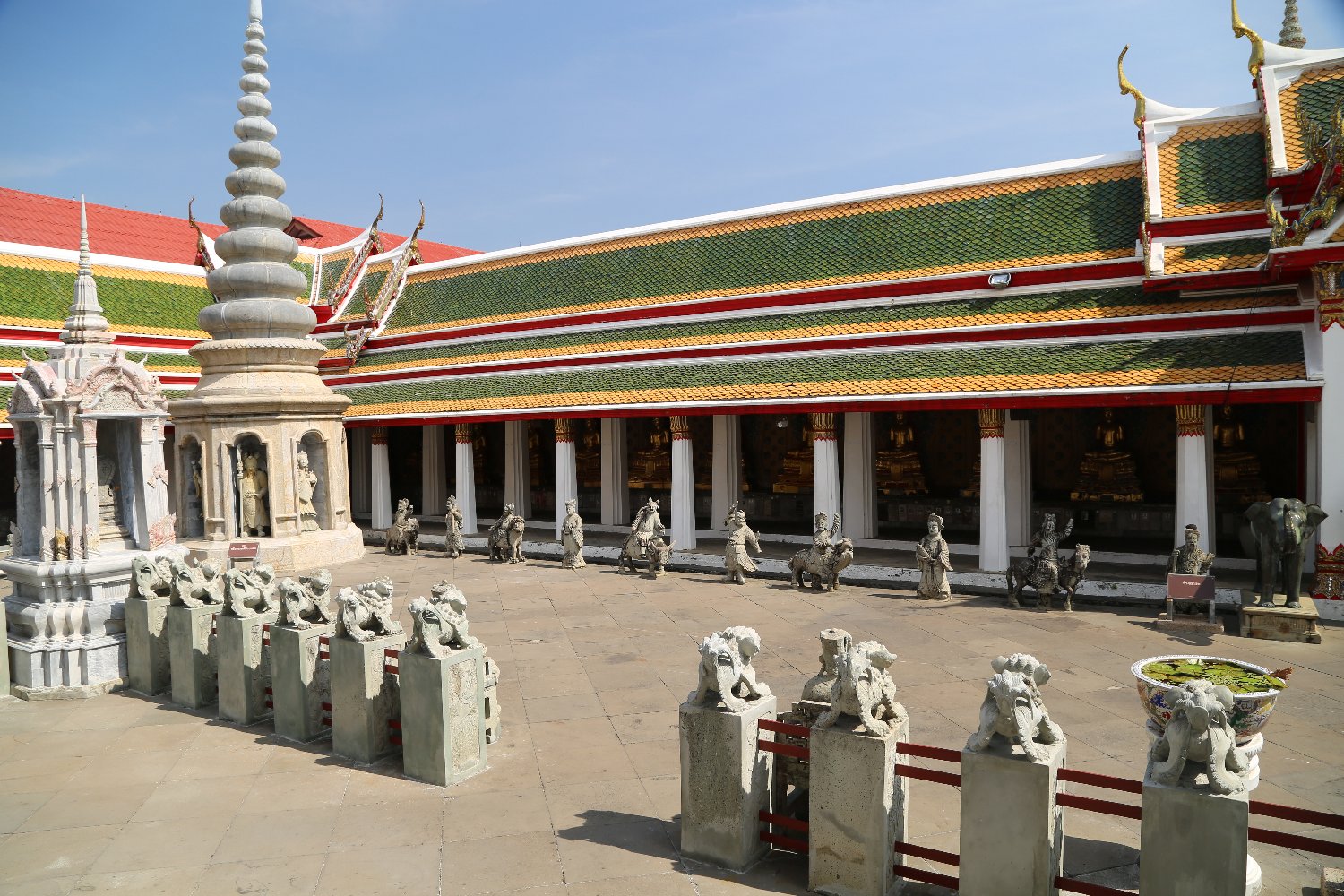
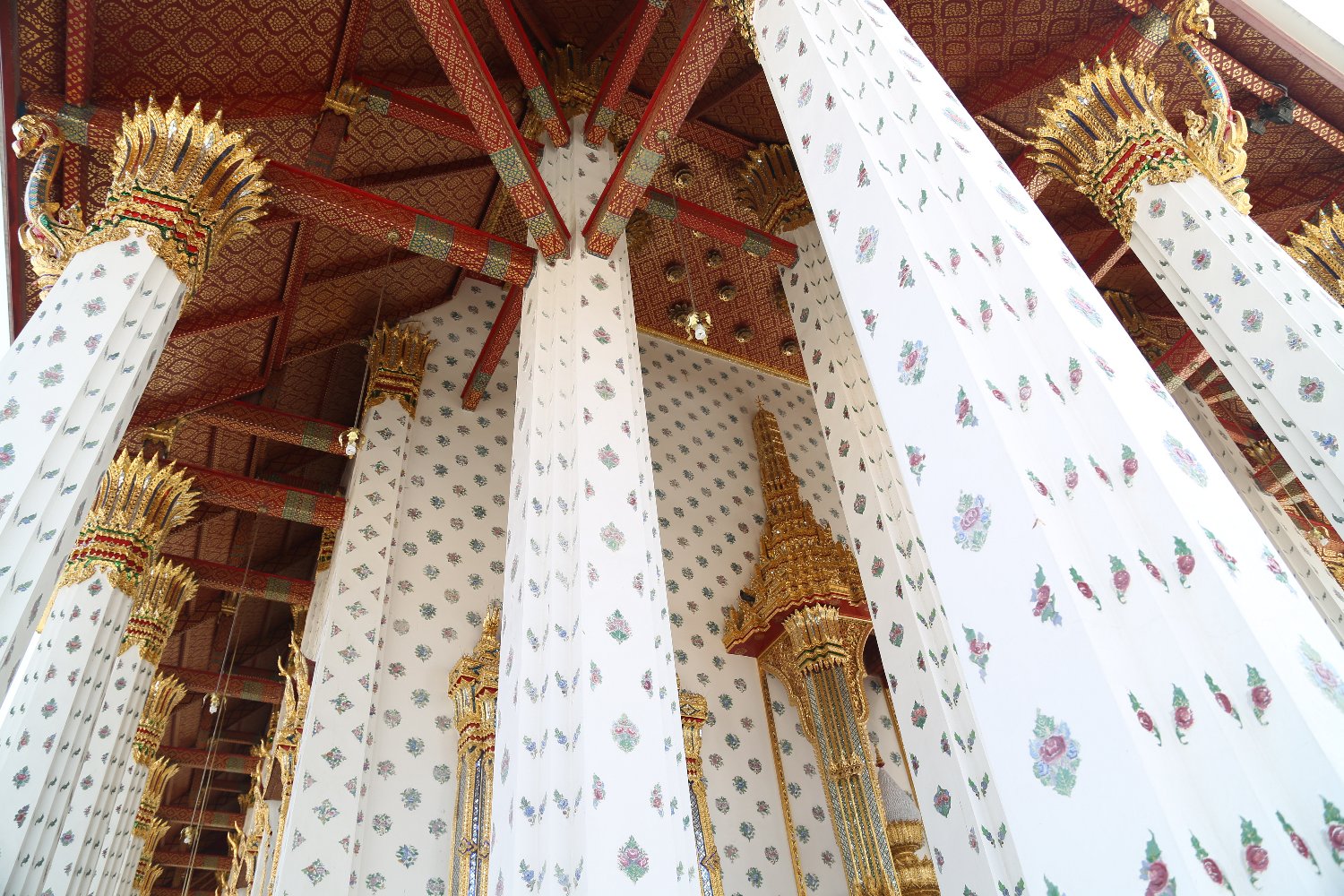

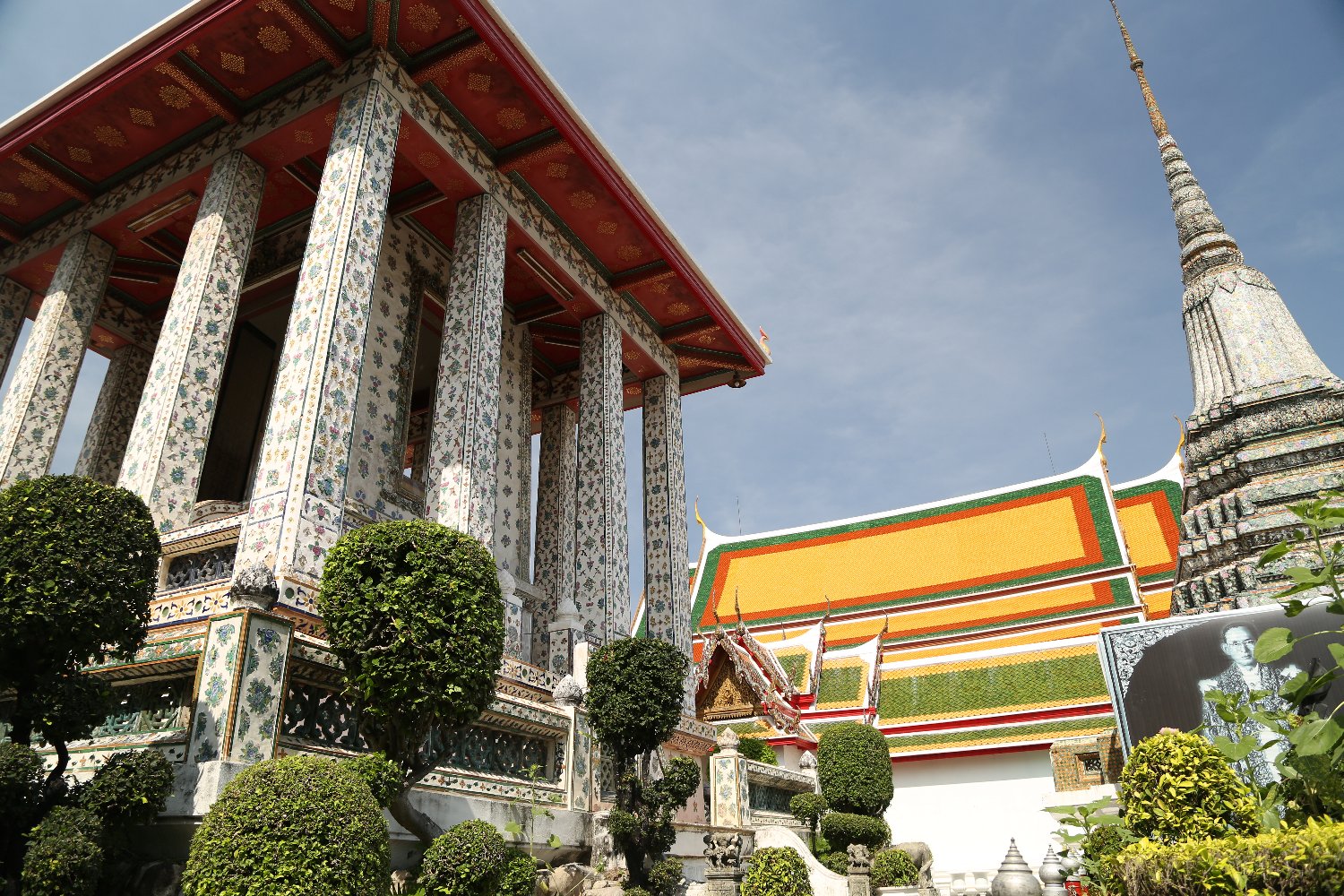
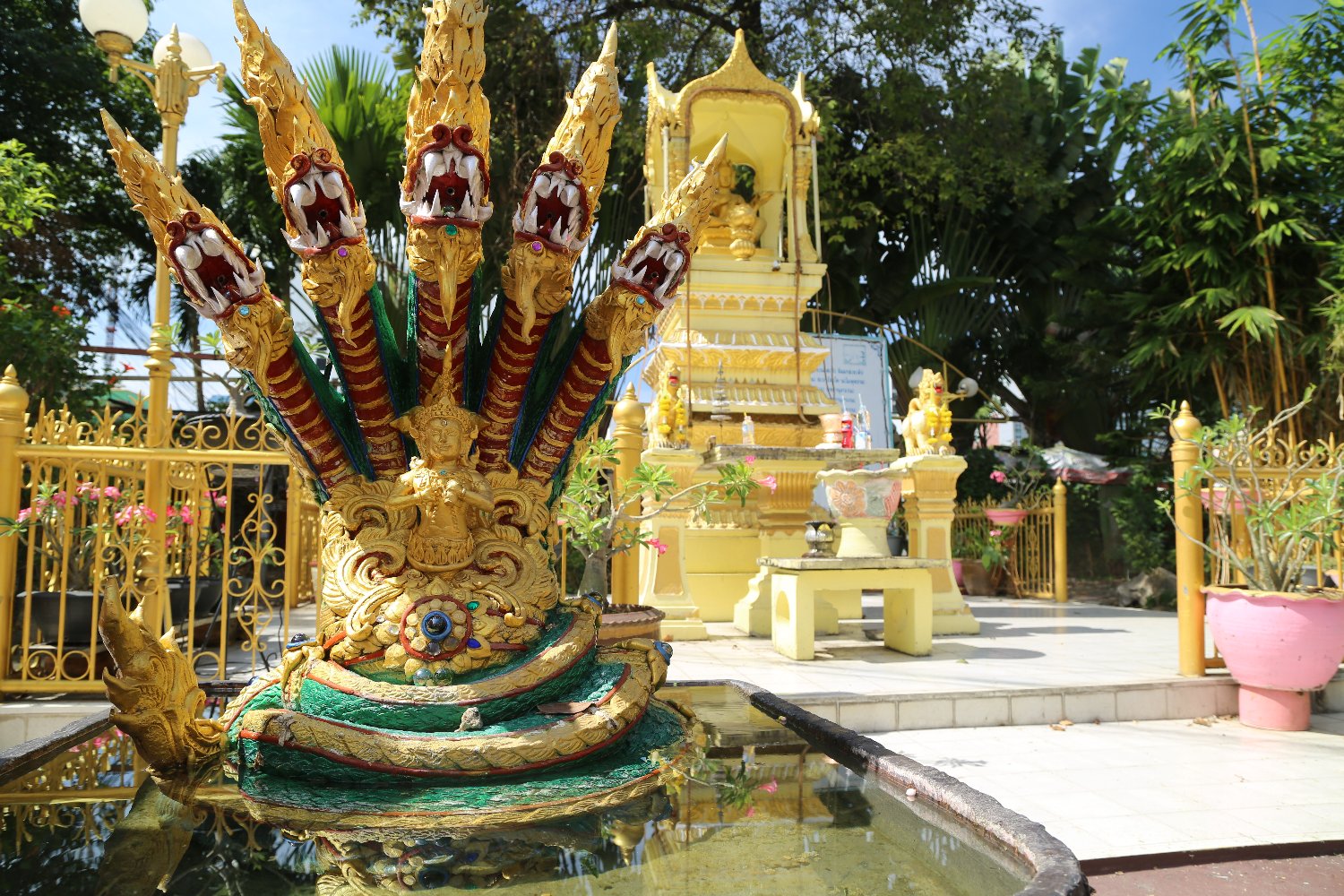
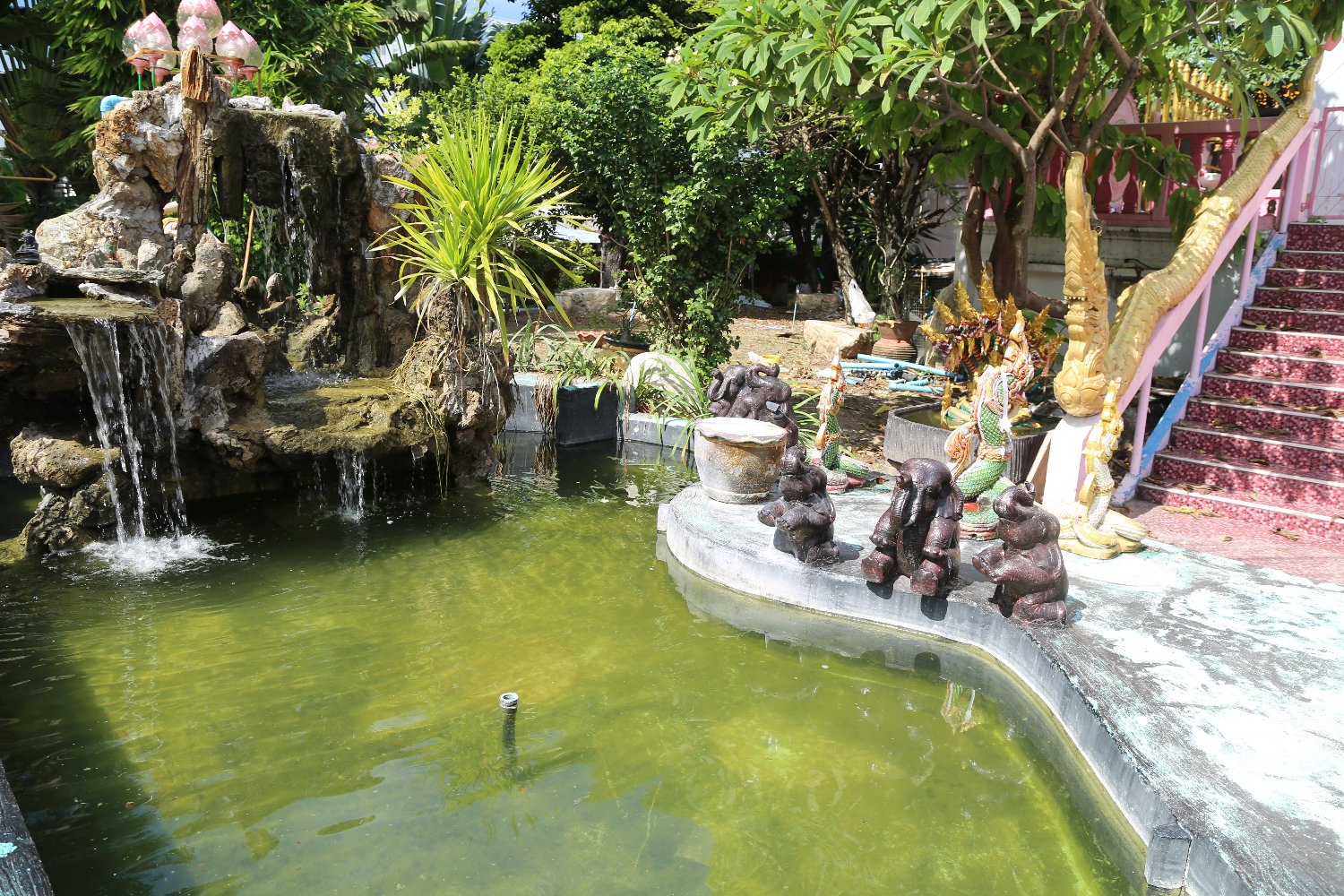
Wat Bang Bua is located in the northern part of Bangkok about a 20-minute ride (with little traffic) from the Mo Chit Skytrain stop near the Chatuchak Weekend Market. Known for its pretty pink exterior colors this temple is well off the beaten path for most visitors to the city. Located next to a klong (canal) with a walking path alongside the water. A small pond on site with some small waterfalls – a relaxing place to sit for a while. Also, some intriguing mostly pink and gold statues on site including one of a pink mouse.
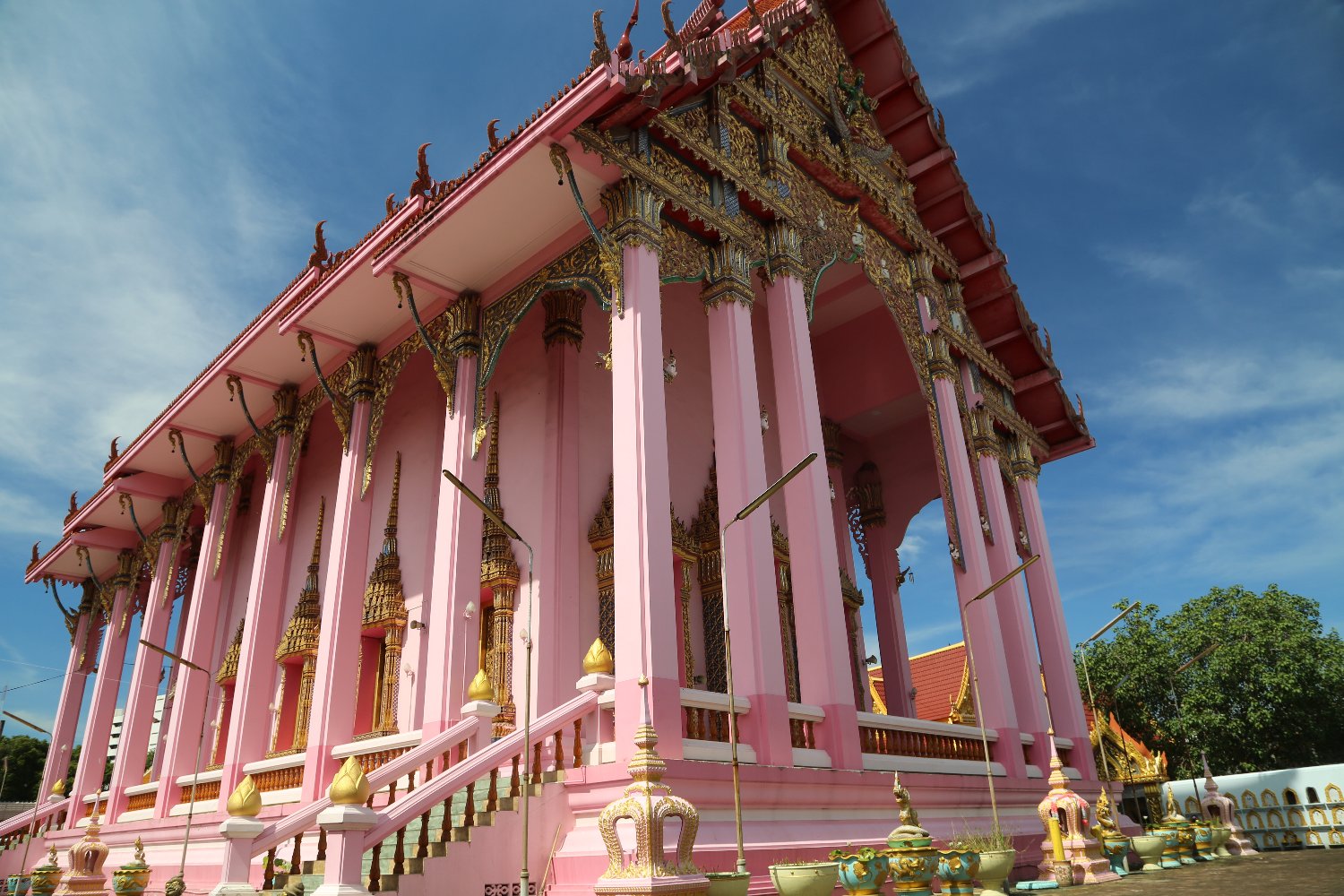

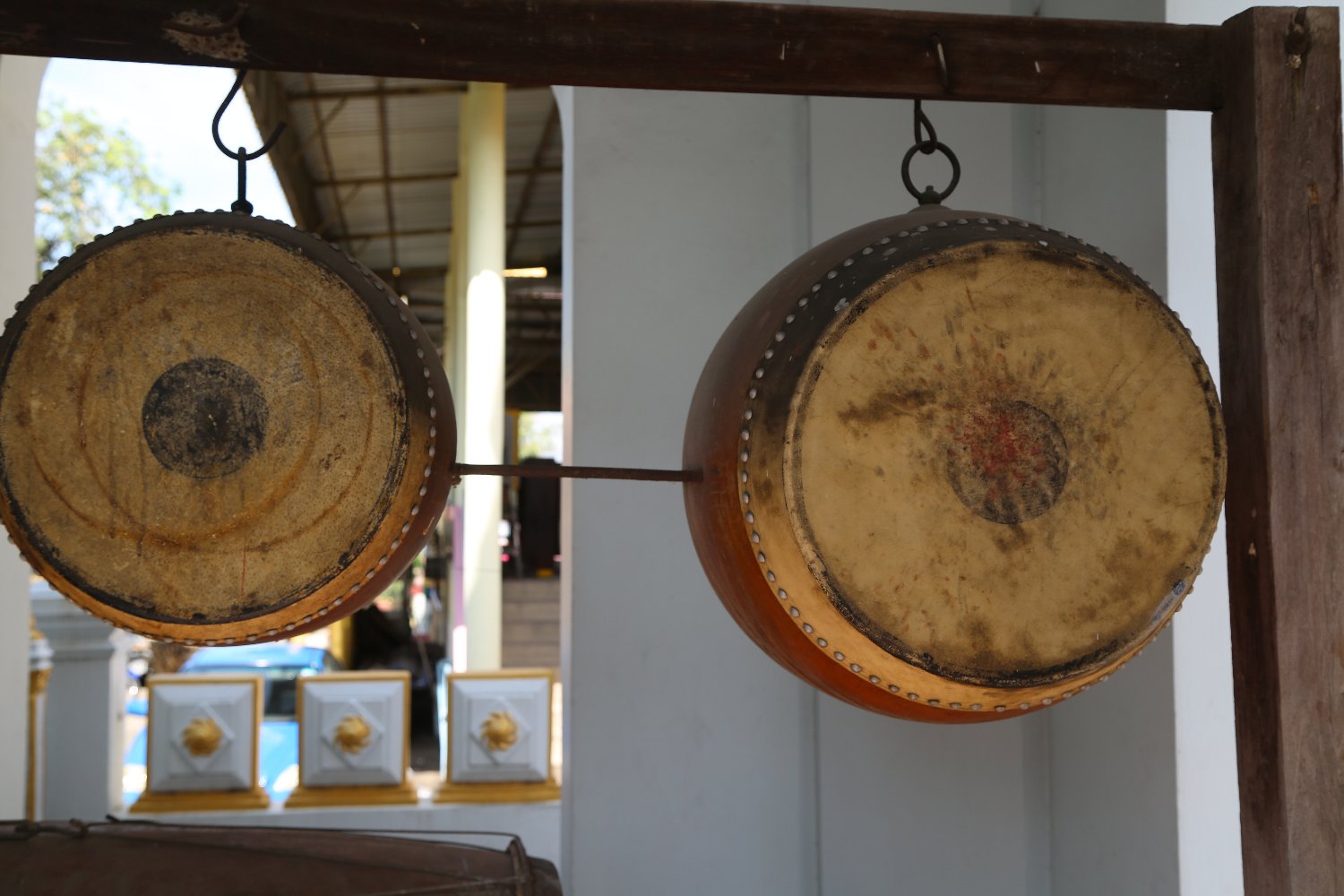
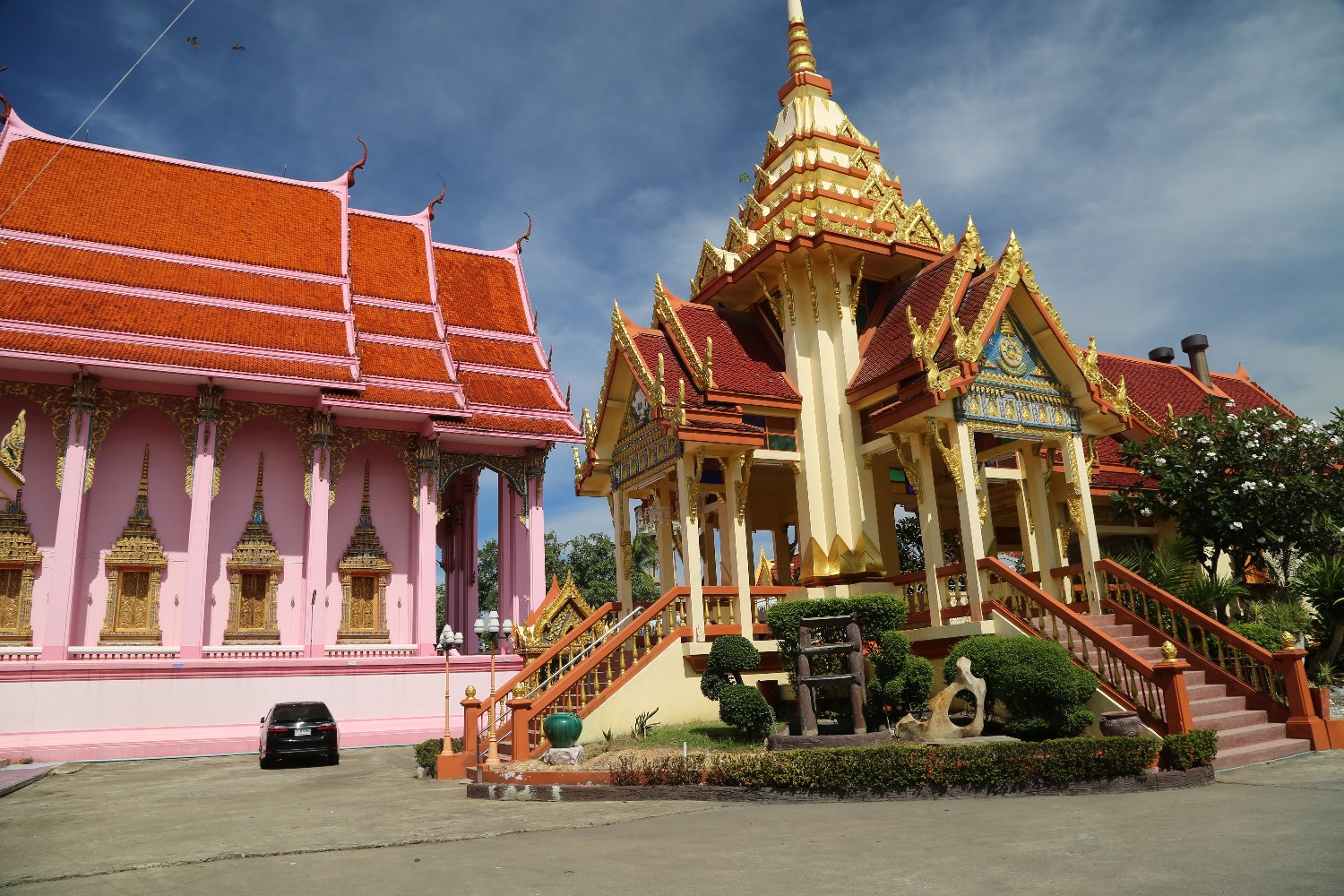
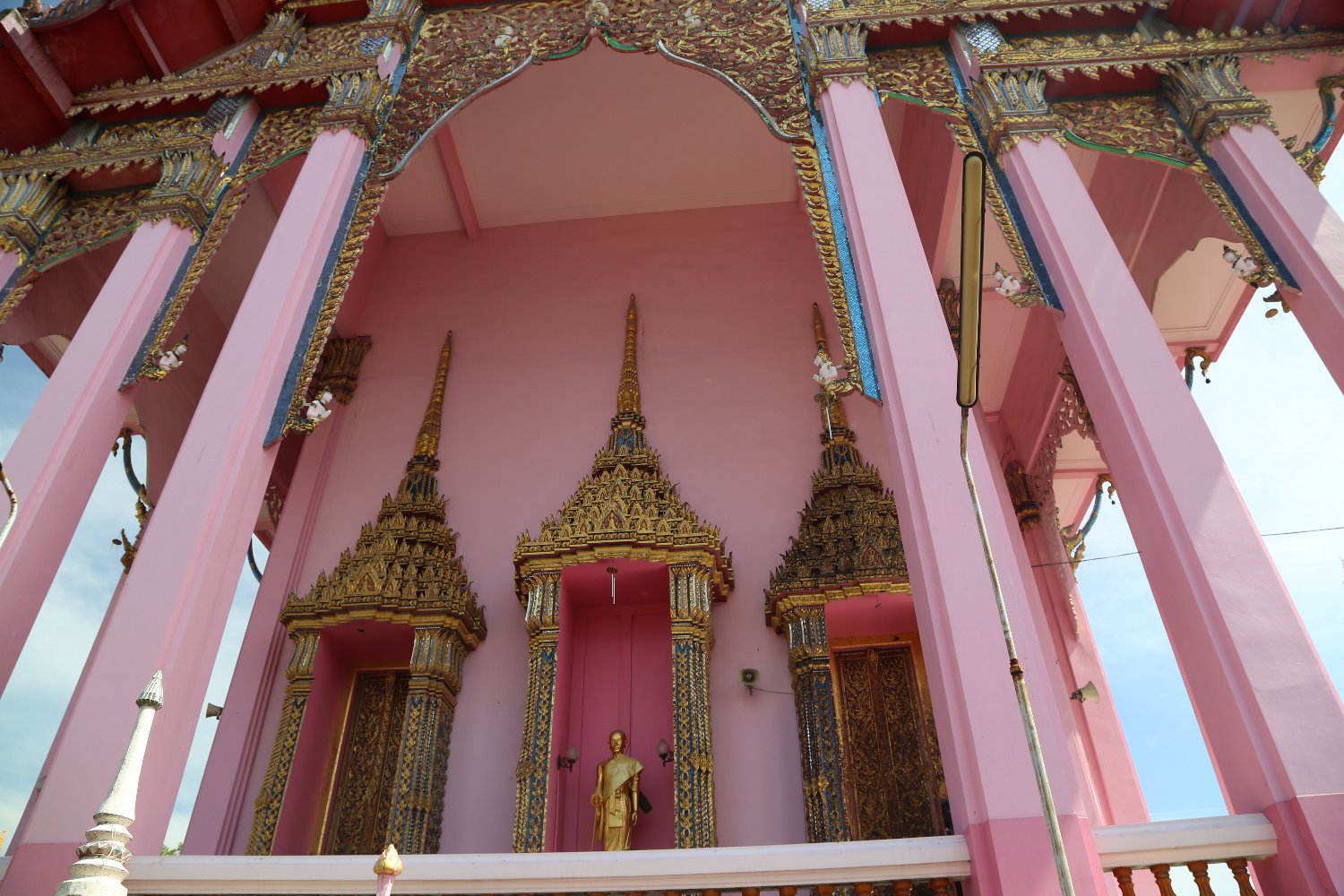
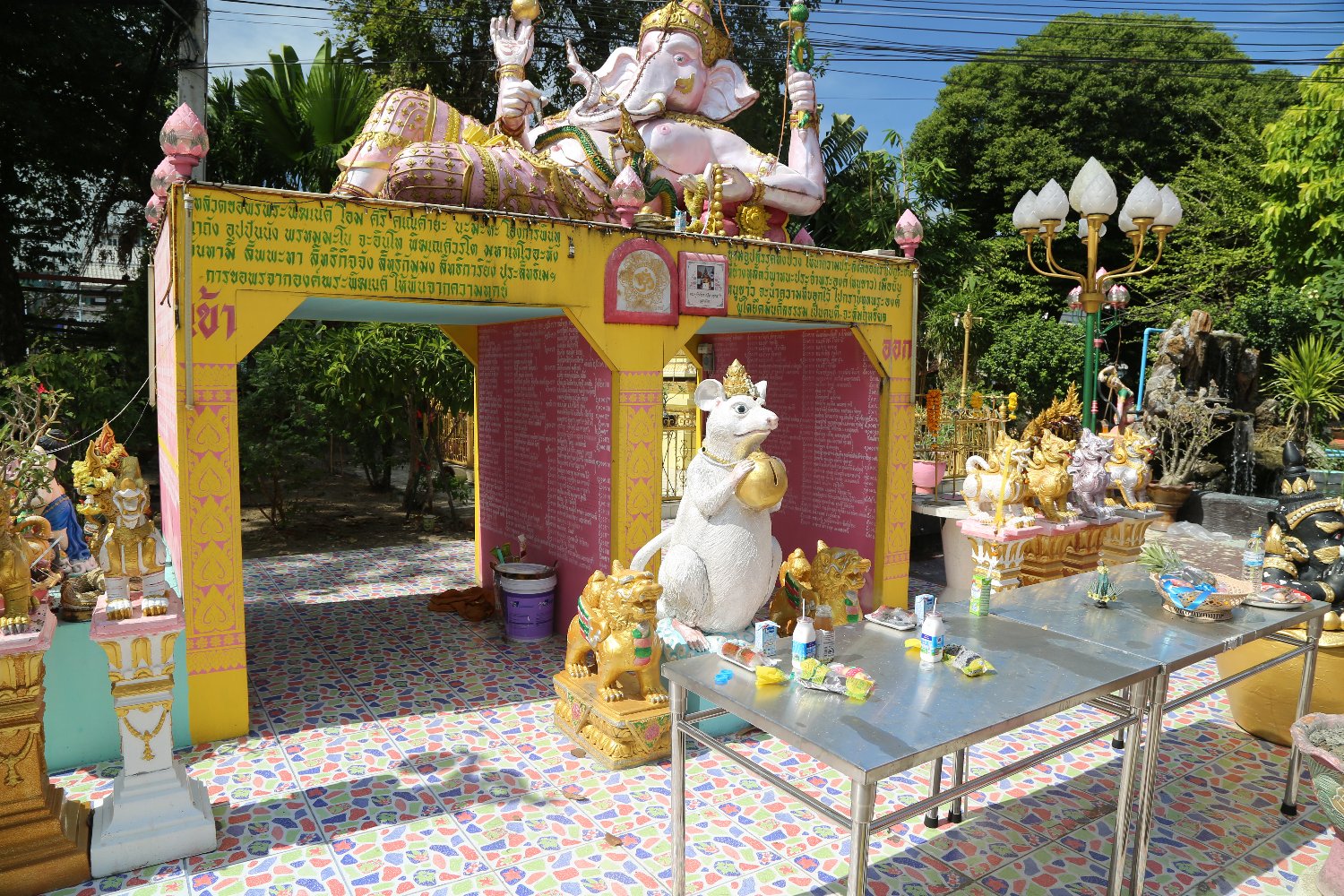

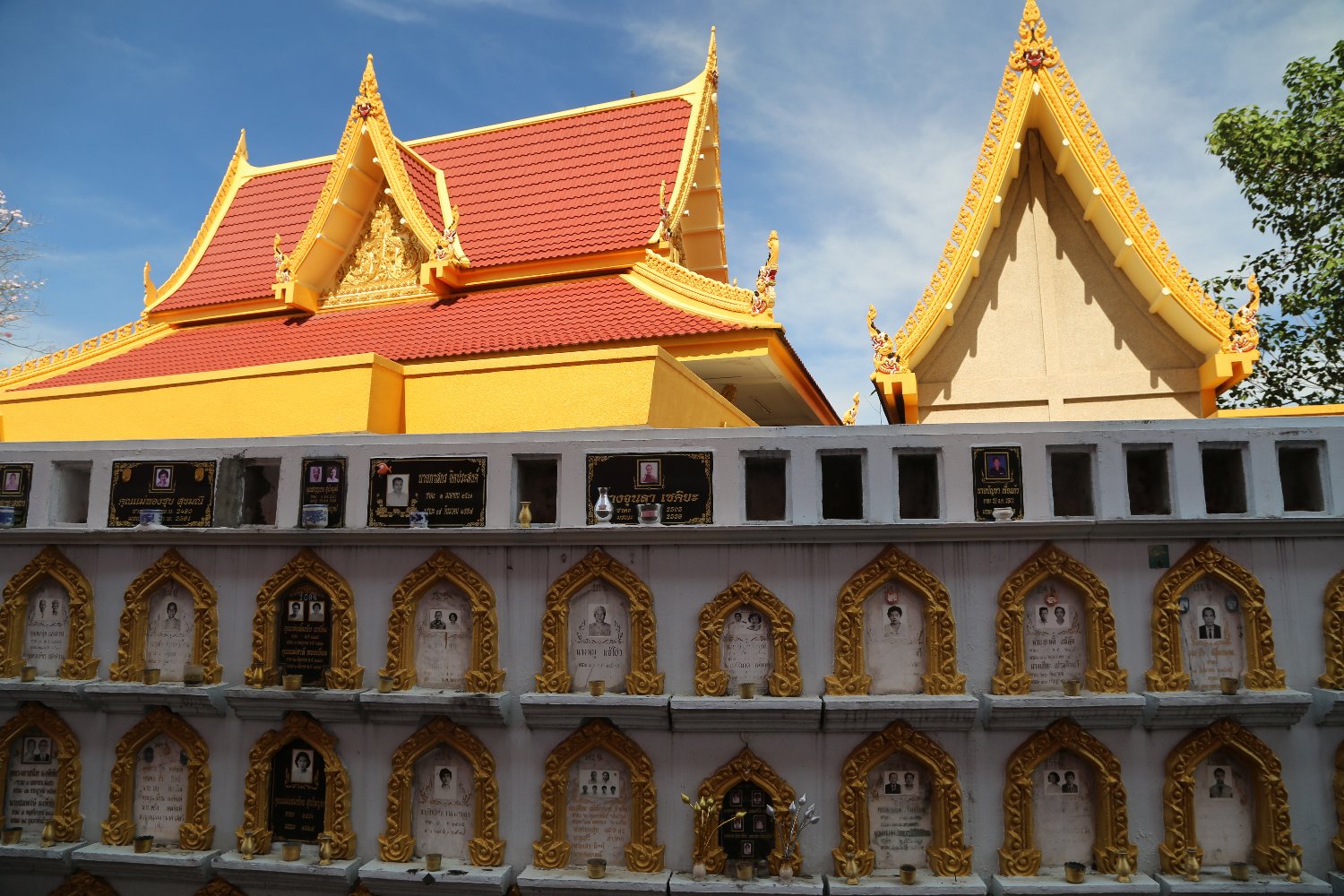

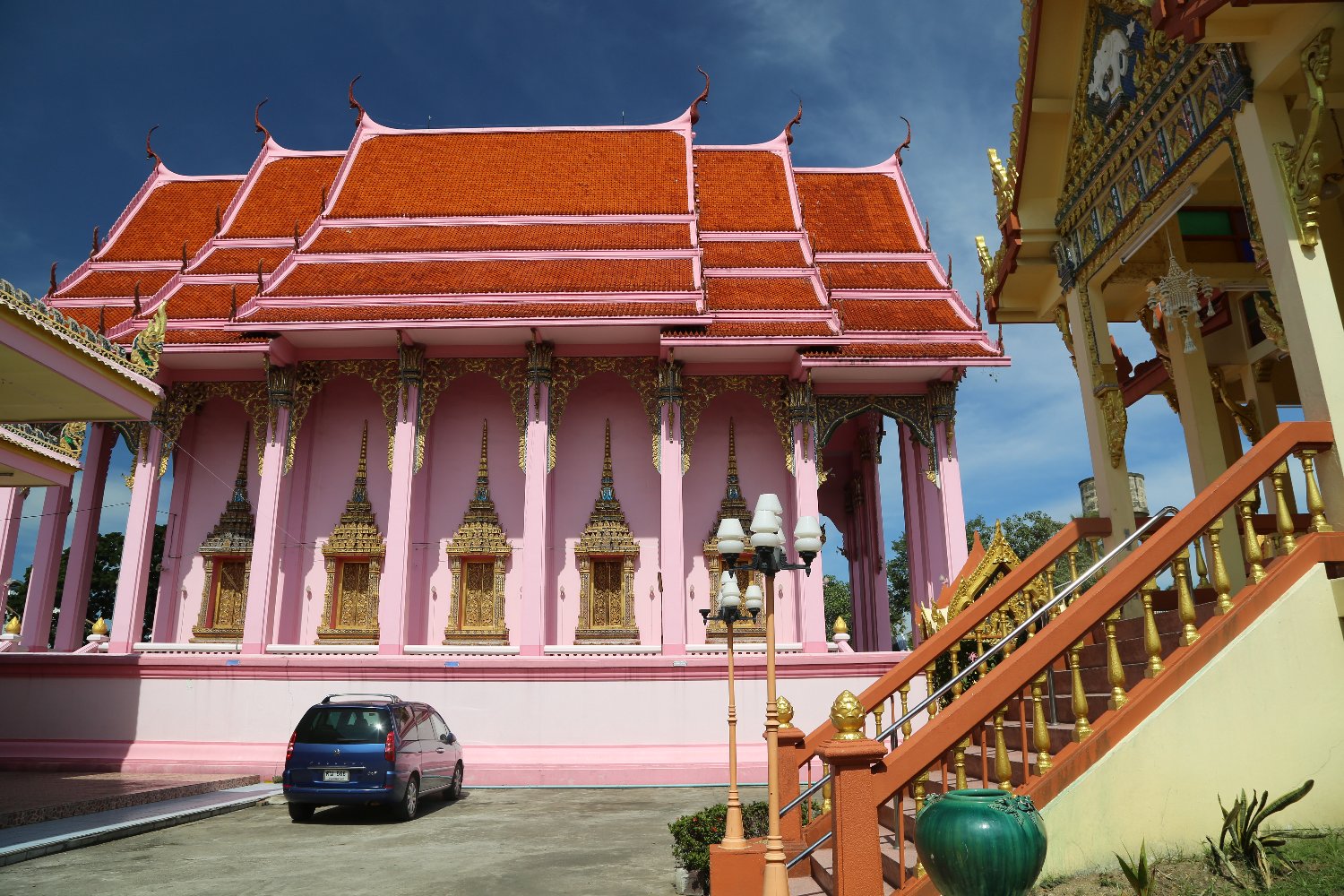
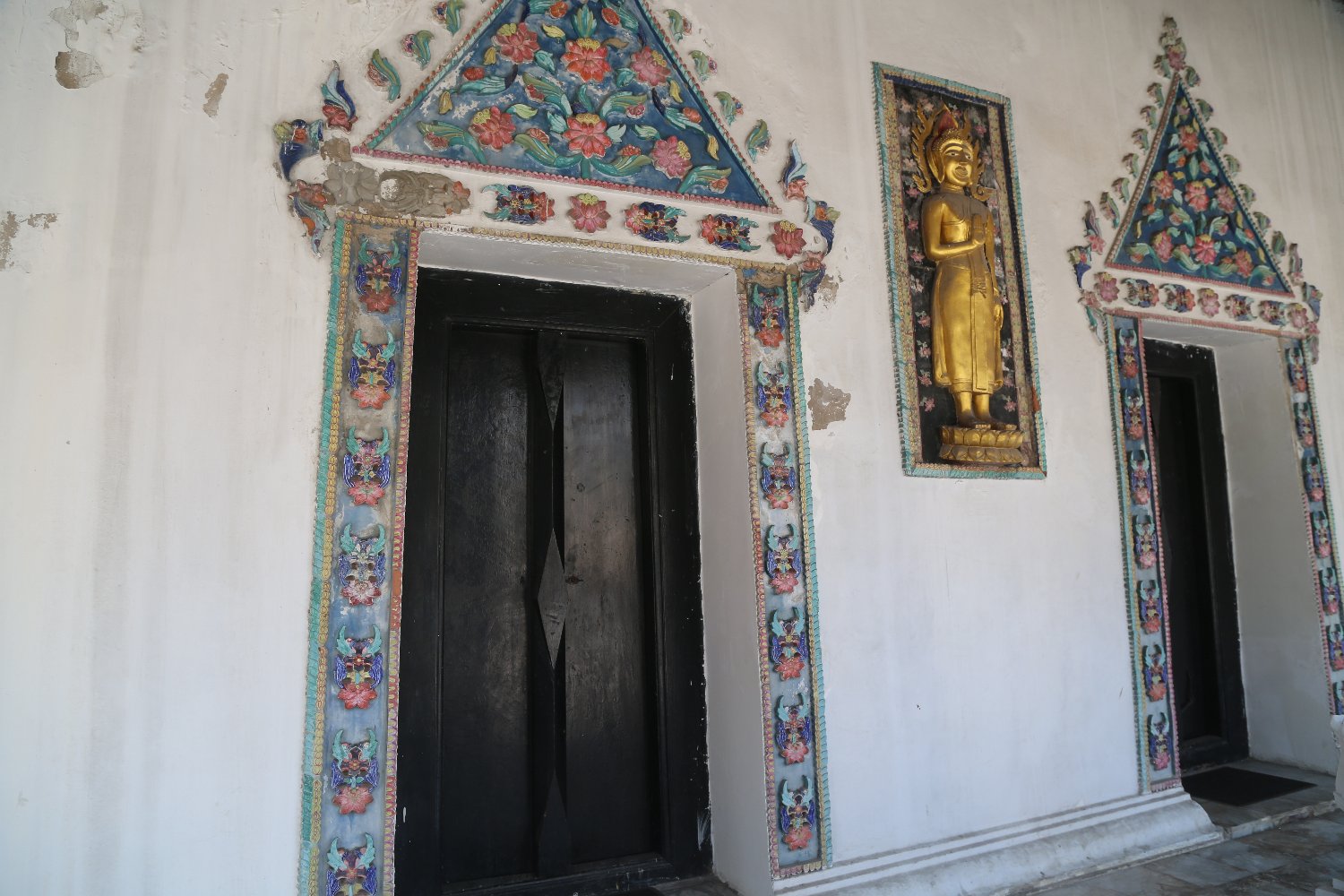
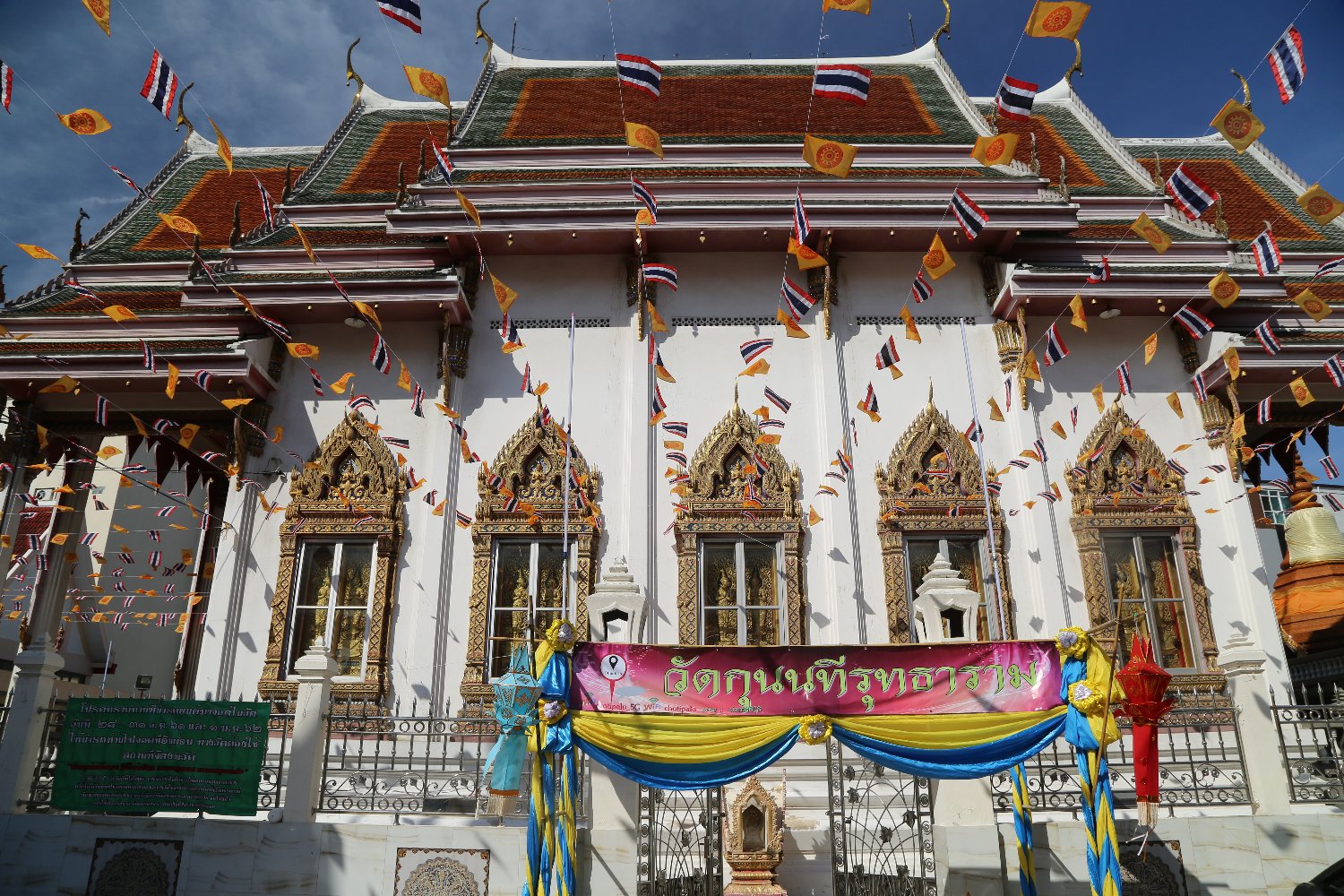
Wat Bang Khun Non is a very tiny wat located in a peaceful little section of this part of Bangkok close to two klongs (canals). Located at the end of Bang Khun Non 19 off of the main Thanon Bang Khun Non Street. Closest Metro stop is of the same name, Bang Khun Non – about a 12-minute walk.
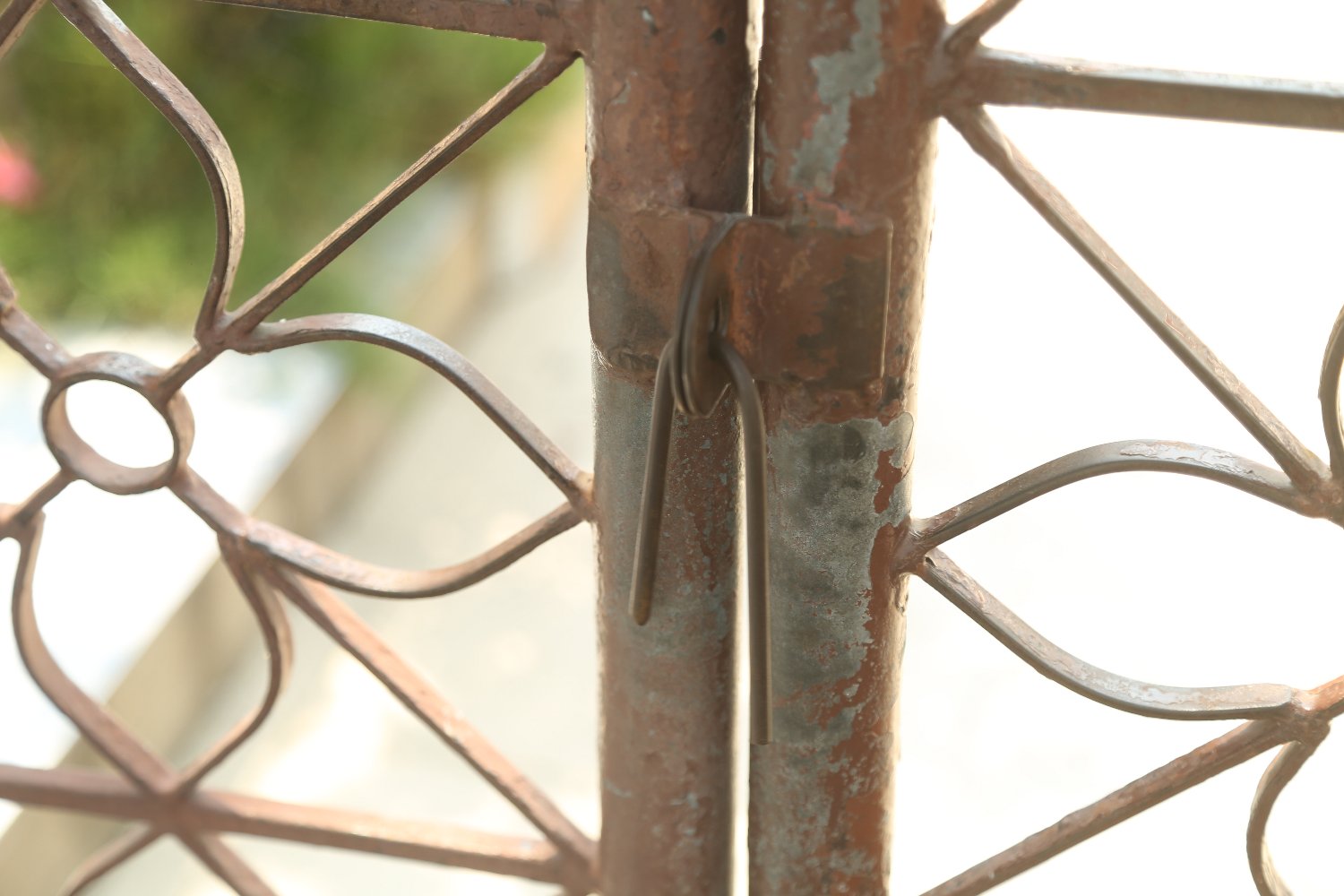
This very much off the tourist beaten path temple offers passer-bys who want to walk down the soi a wonderful respite from the busy traffic in the nearby neighborhoods. This temple originally dates from the Ayutthaya Period and was formerly known as Wat Chaiyachit (meaning to have victory). The gated entry to the tiny ubosot is normally closed – held tight with a u-shaped piece of metal. One simply pulls up the metal to release the latch thus securing easy entry into the courtyard.
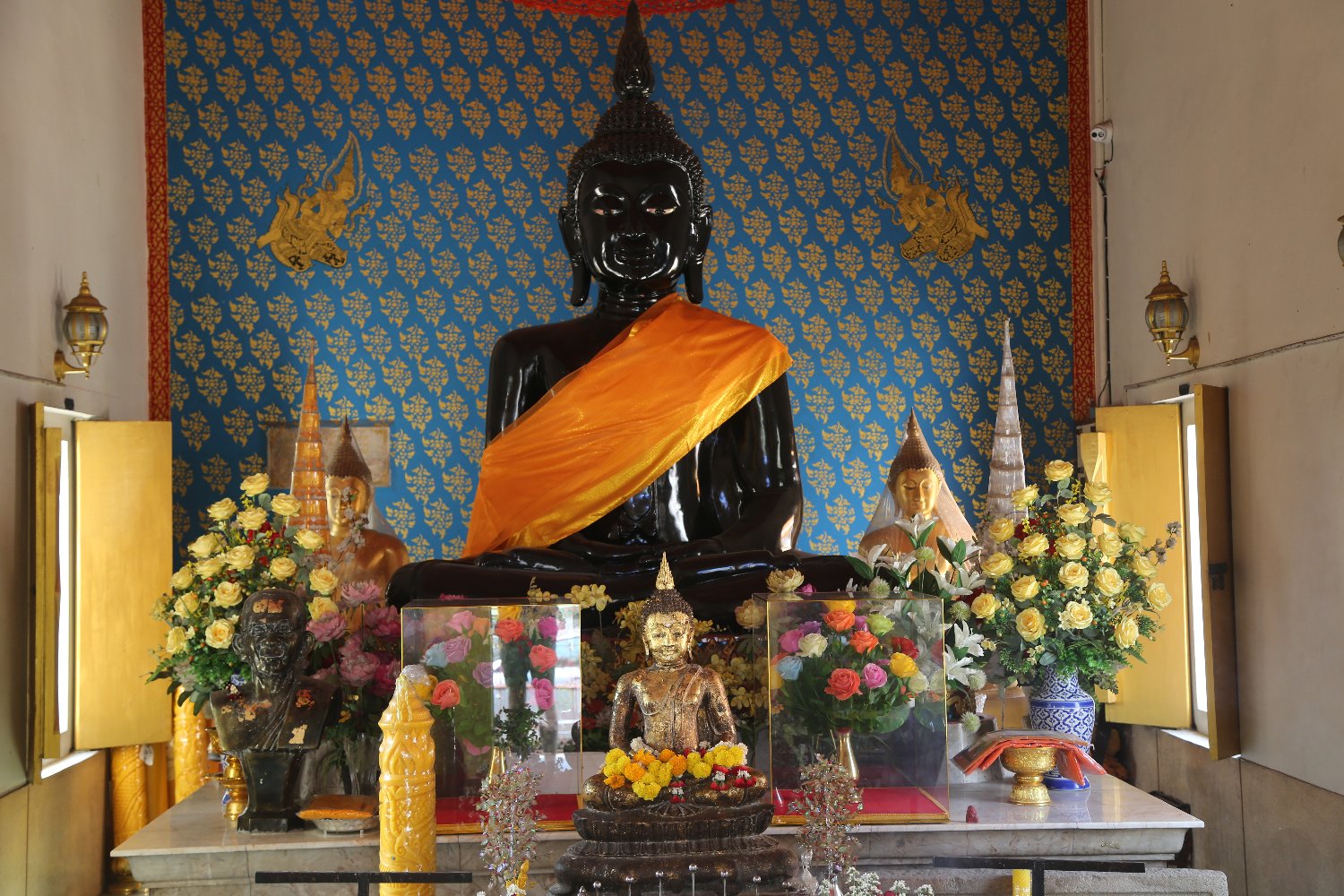
Unusual is the principal Buddha statue, it is completely black. A wooden bridge over the canal behind this temple is covered by a Thai style roof (but visitors may not be able to access this bridge).


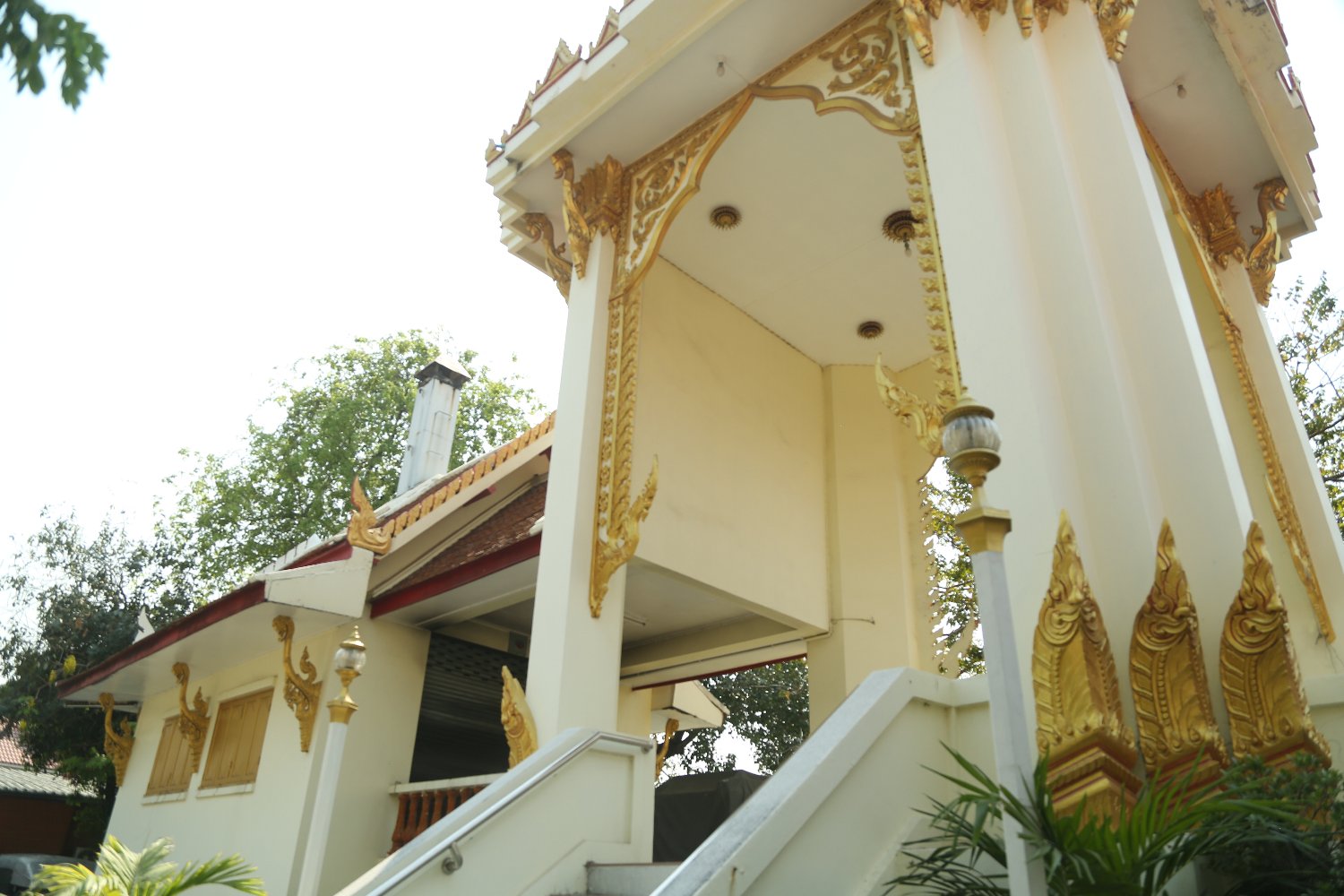
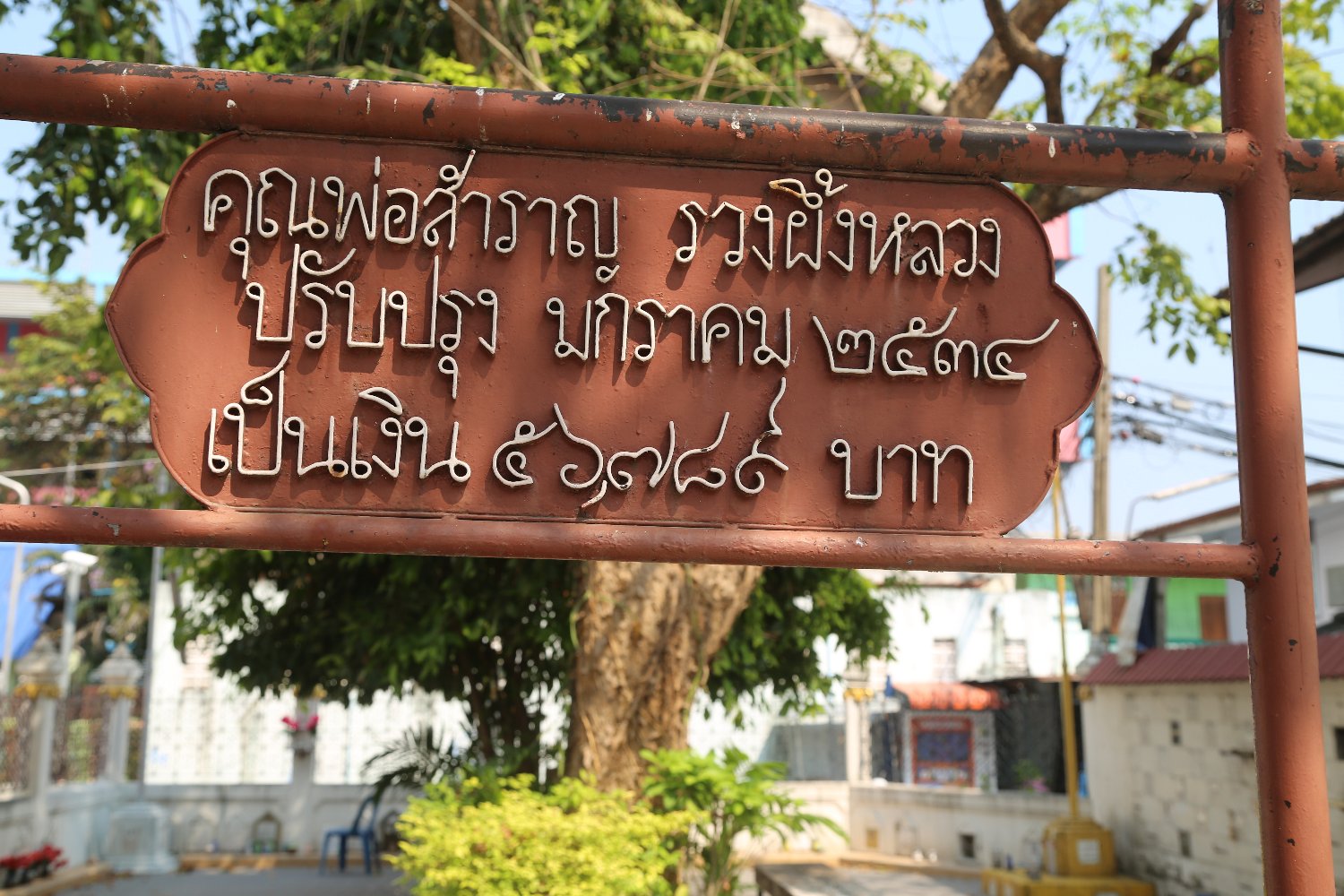
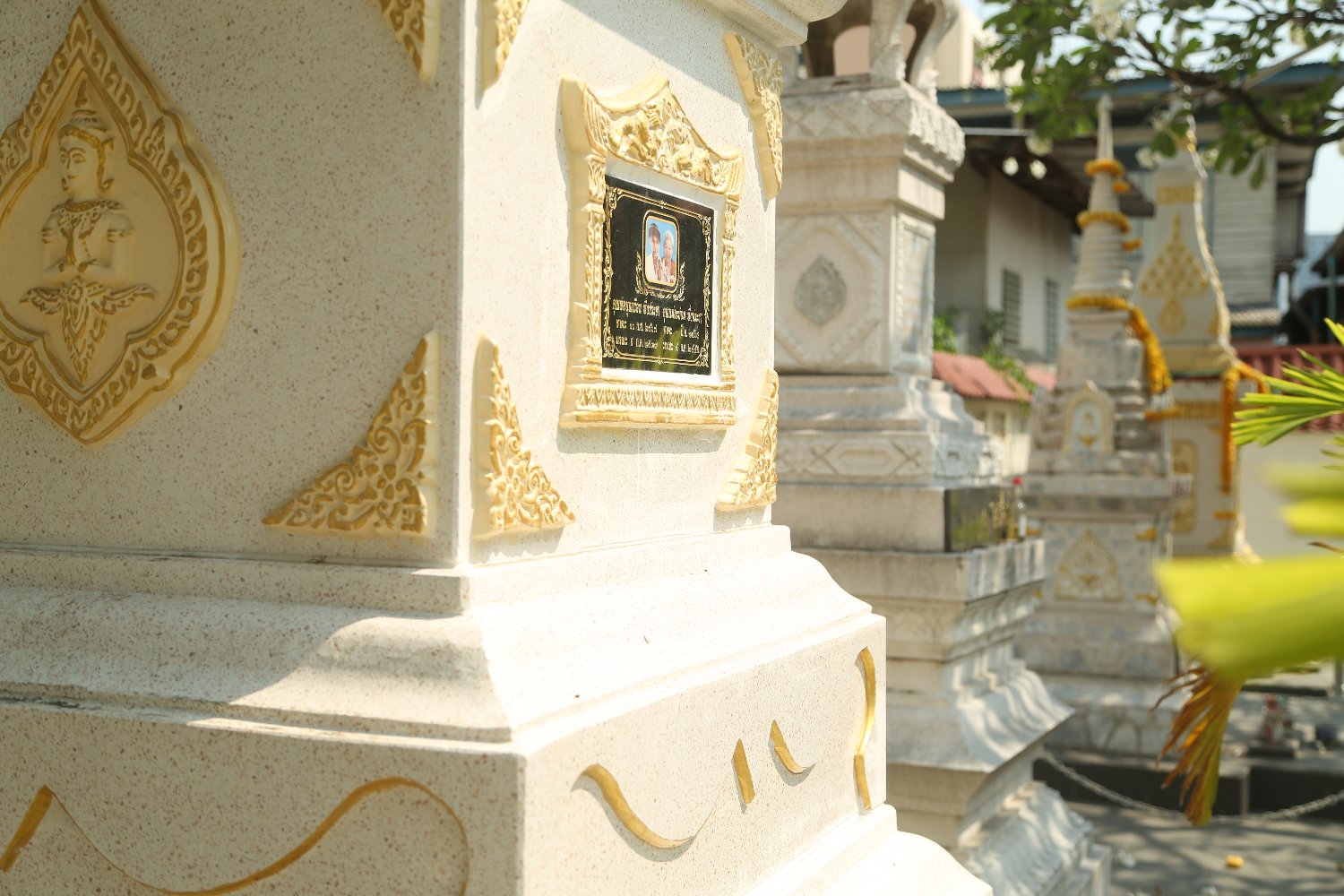
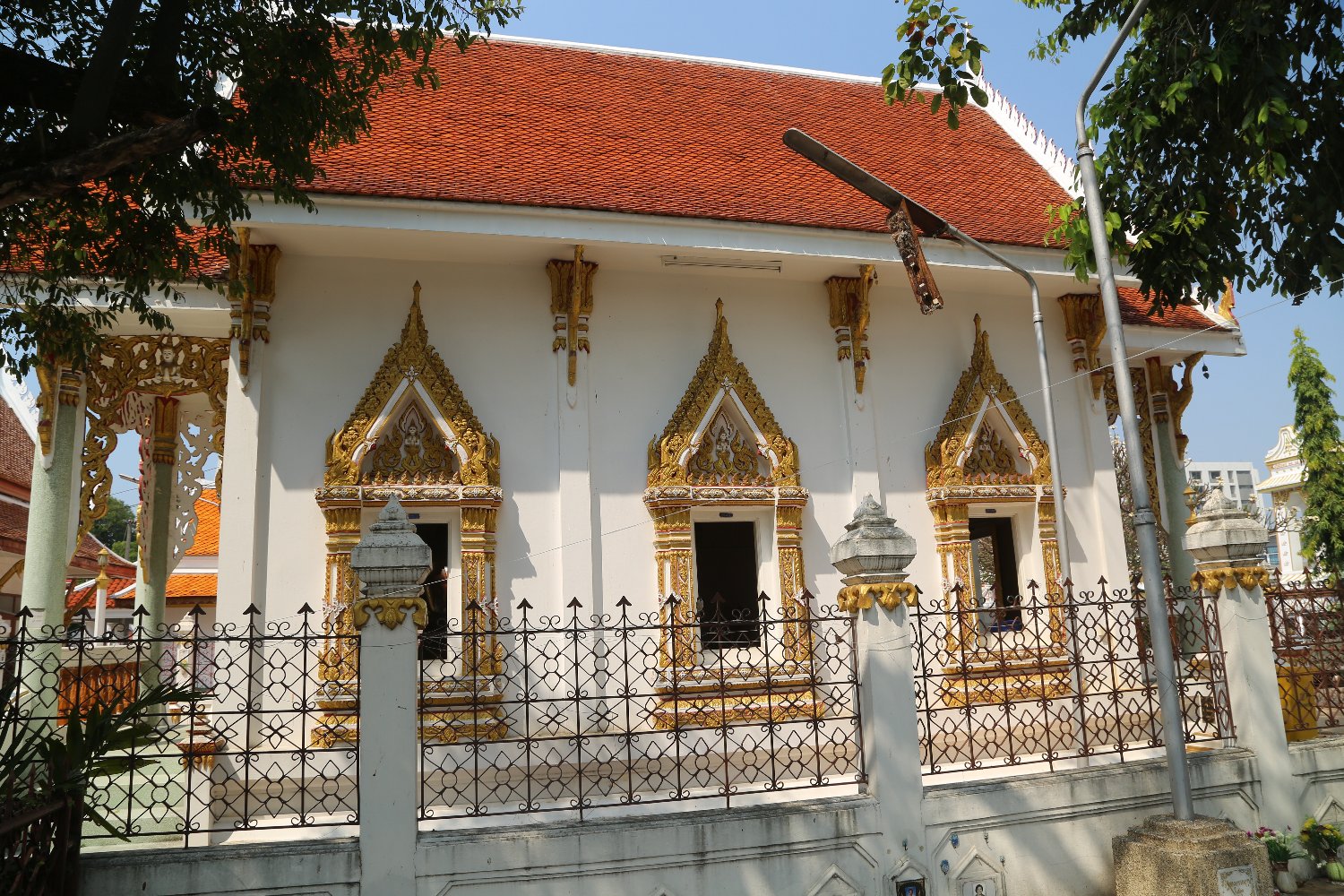
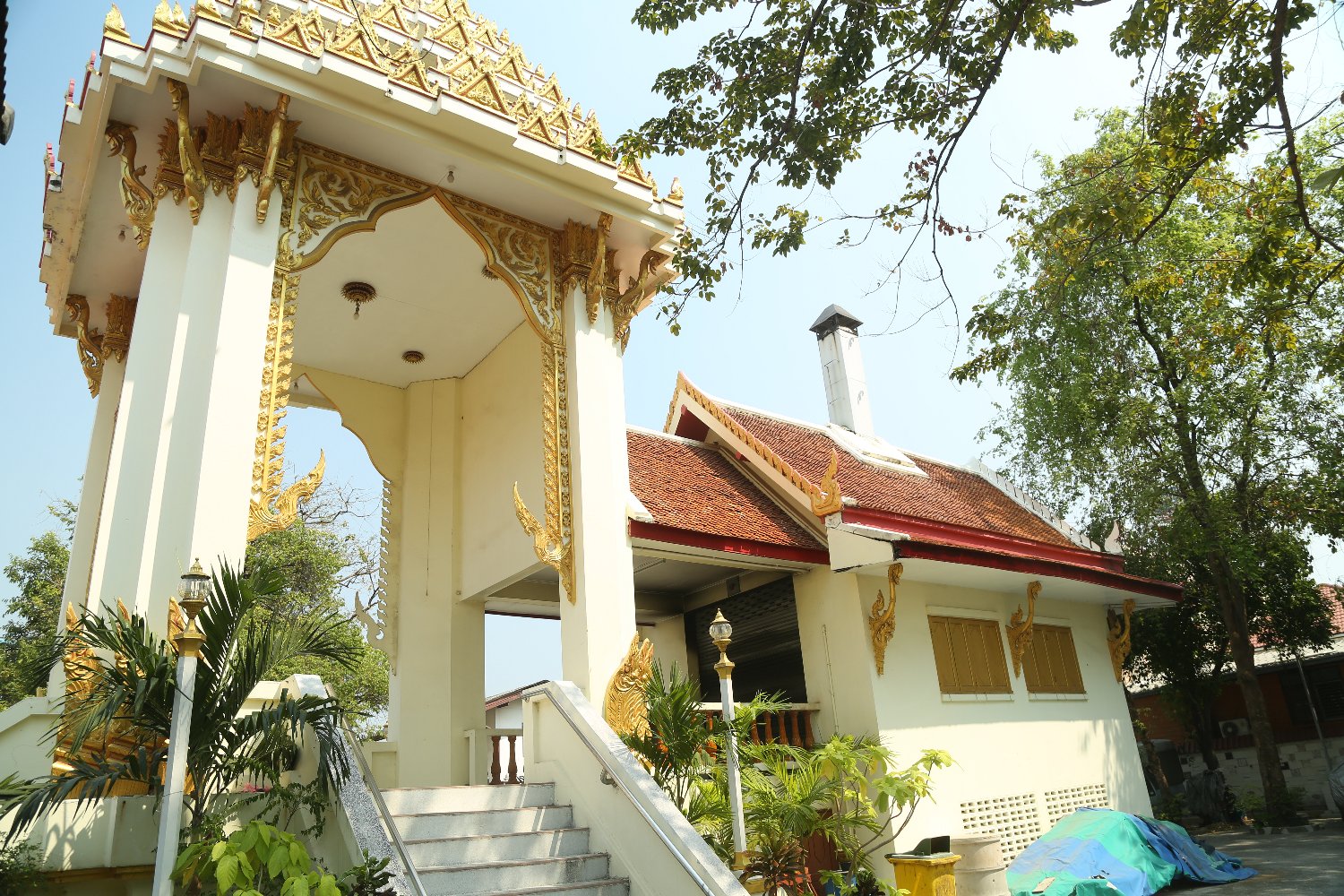
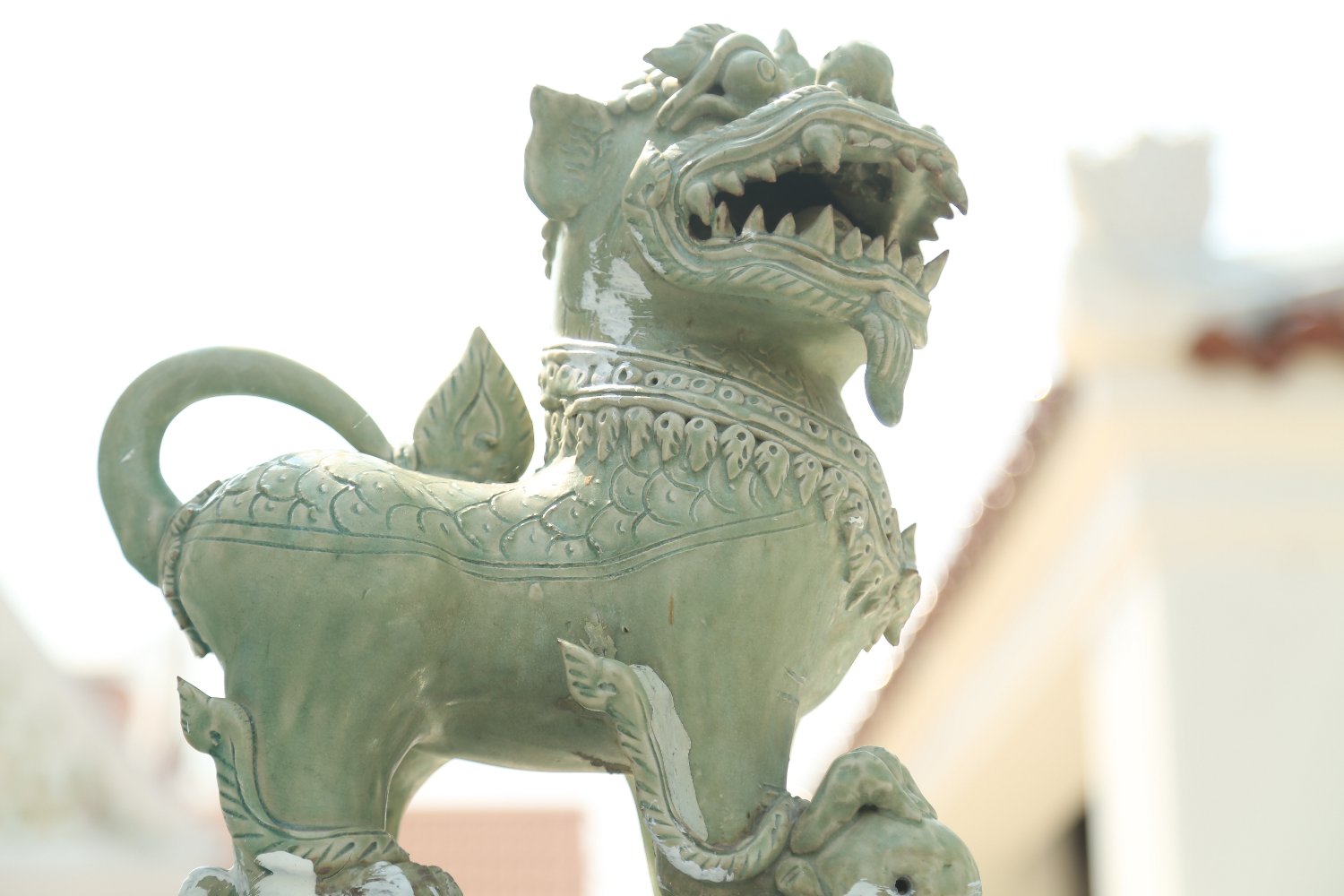

Wat Bang Na Nai is located within a very short walk of the Bang Na Skytrain stop – this colorful and sizable temple space is also located next to a school of the same name. The large golden chedi is easily visible from the Skytrain stop. Two highlights of a visit here are the primary temple is made out of marble and one can walk among its marble columns (one rarely sees marble at temples in Bangkok). And a pretty clock tower is also located on site (again one doesn’t usually see stand along clock towers at Bangkok temples).
Located in a residential neighborhood but surrounded by several tall residential towers. From the Bang Na Skytrain stop use exit number two and walk a short distance down the road before turning onto a small bride/soi which leads to the actual temple. Incidentally this was the 100th temple located in Bangkok that we visited.
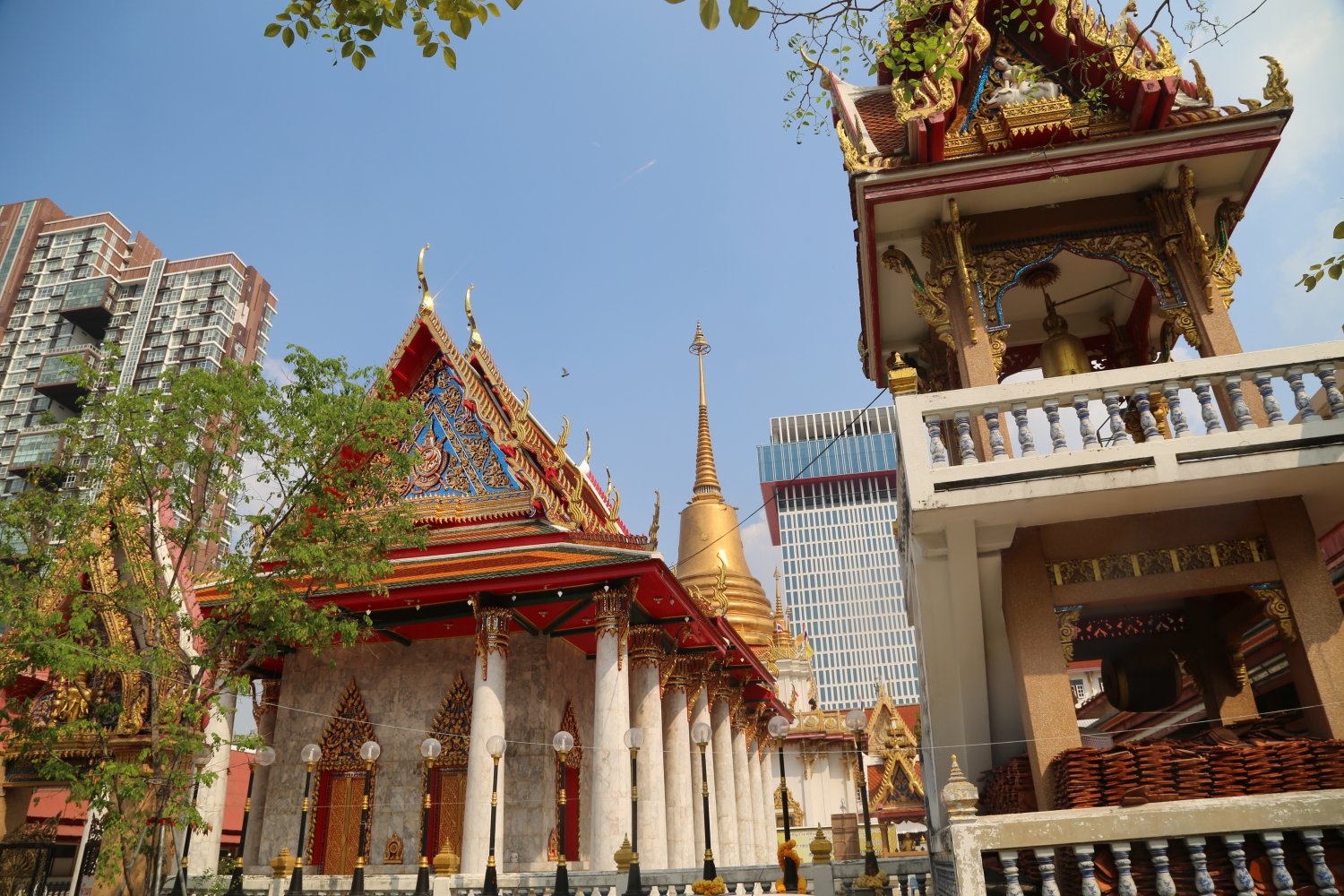
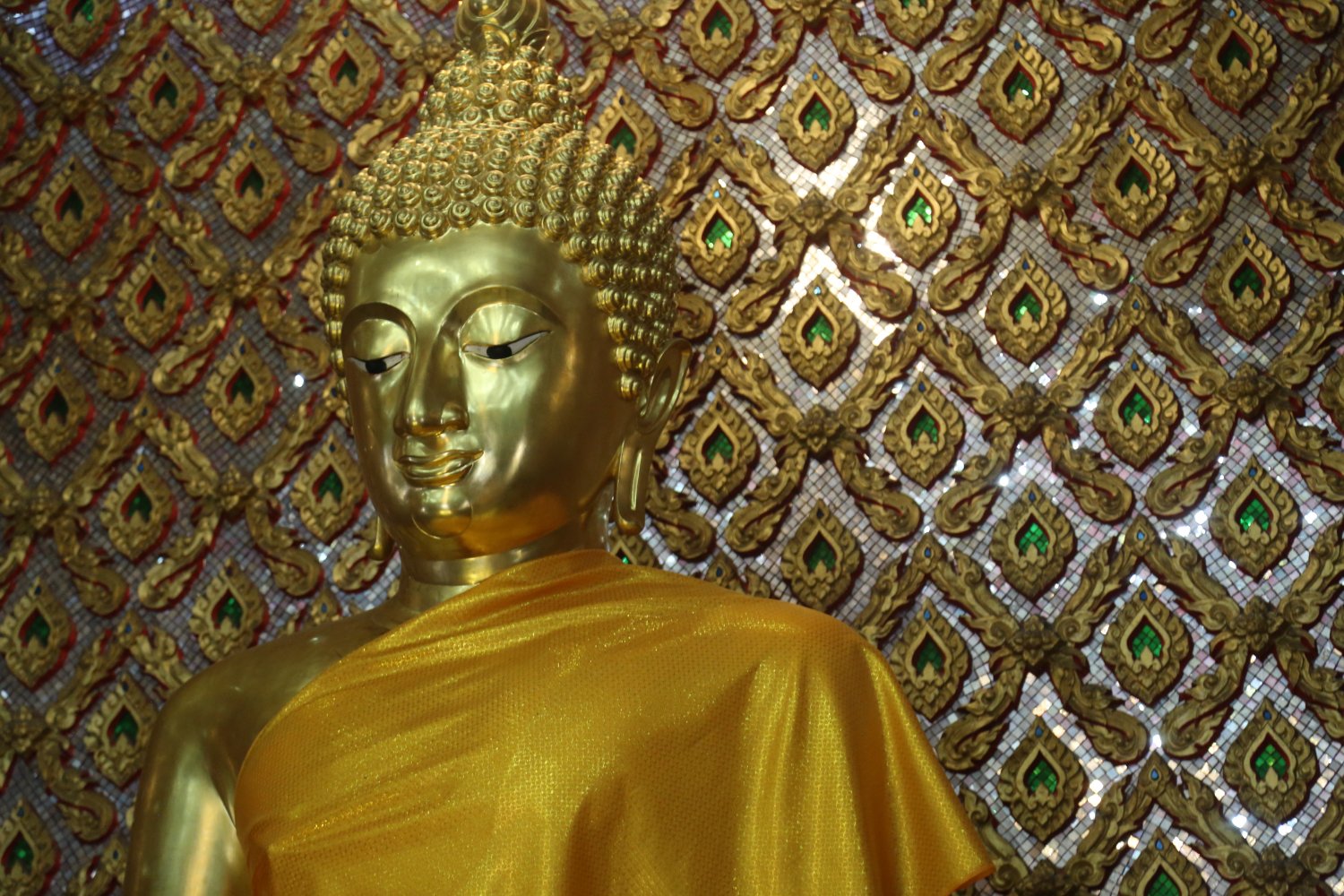
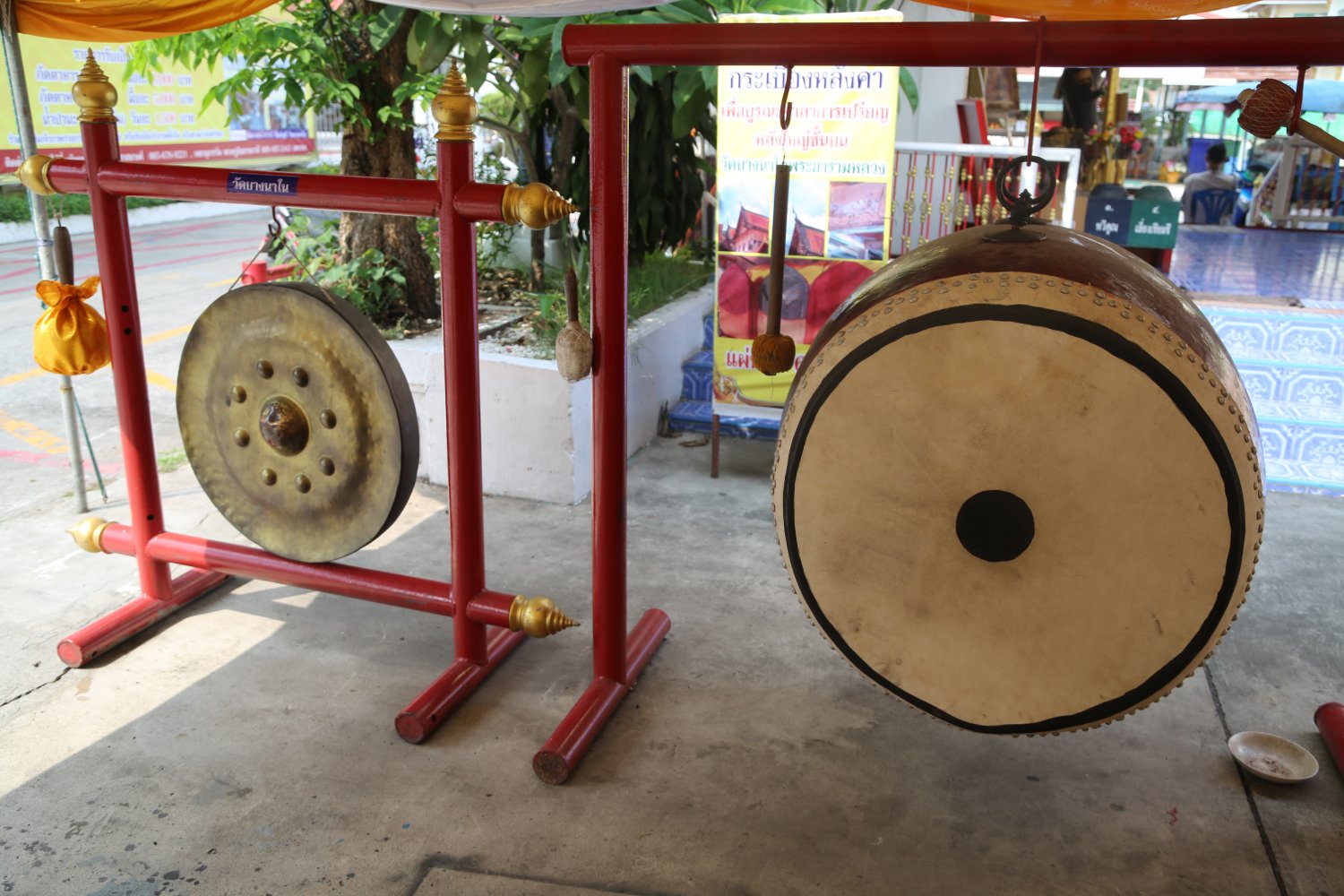

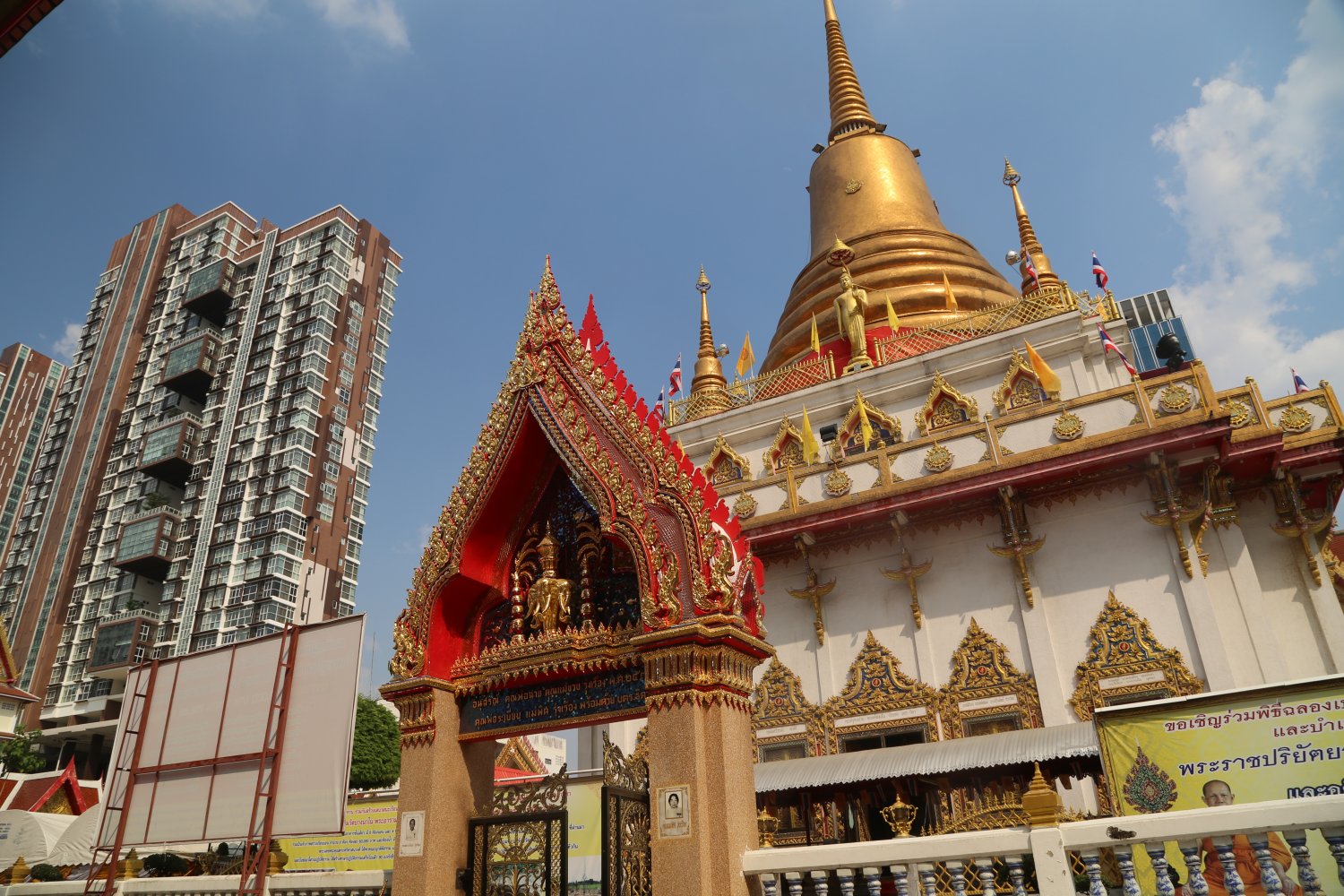
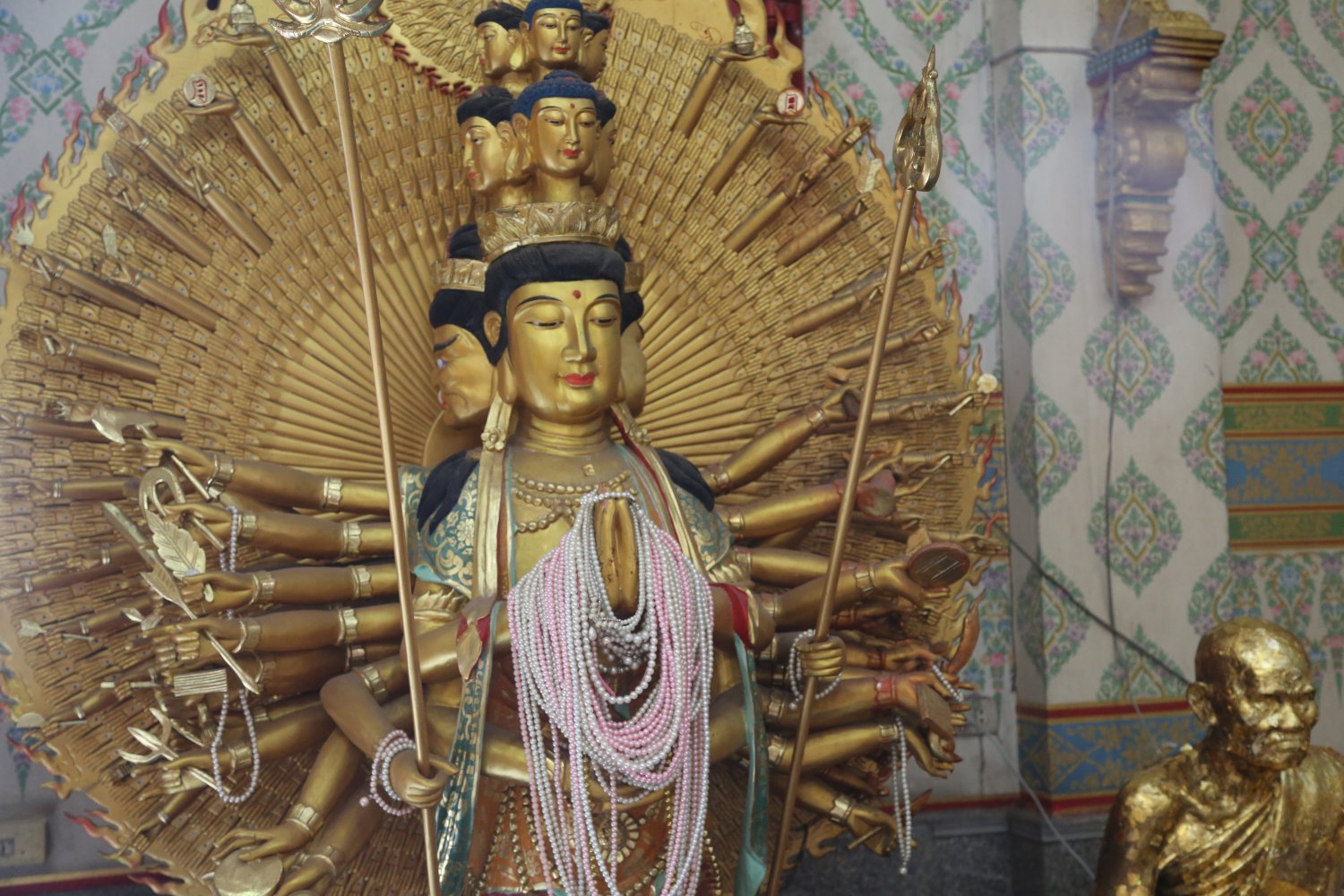

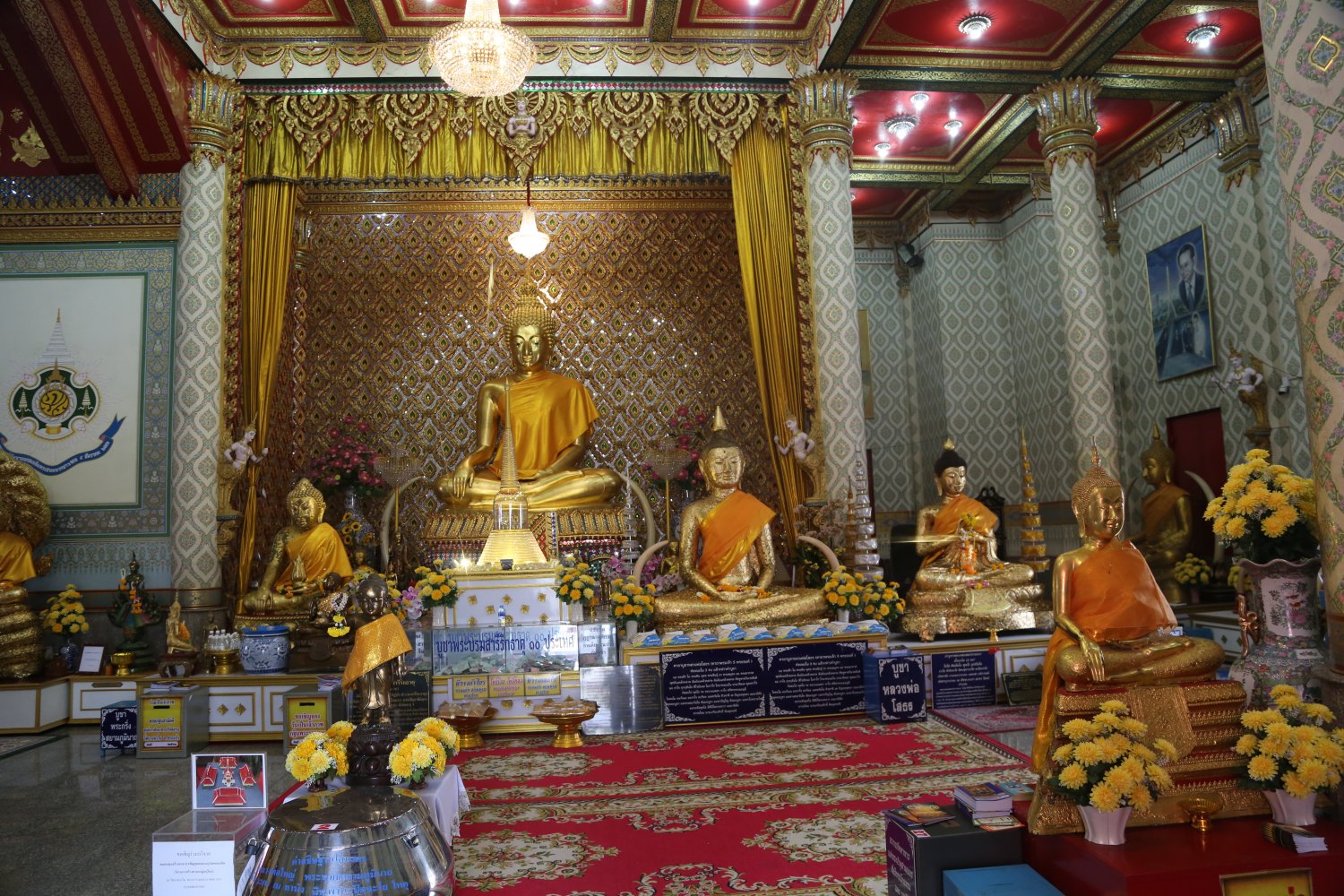
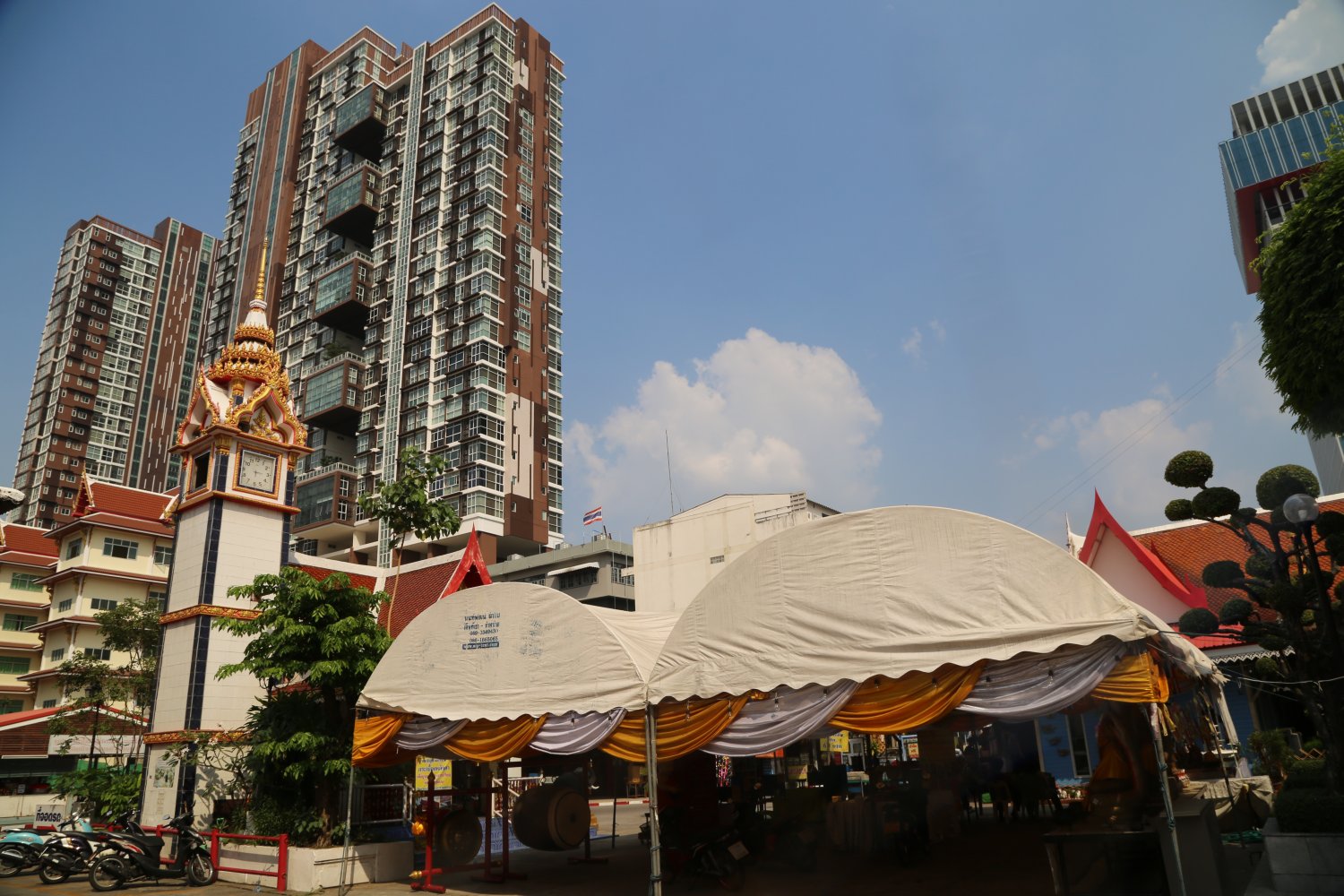

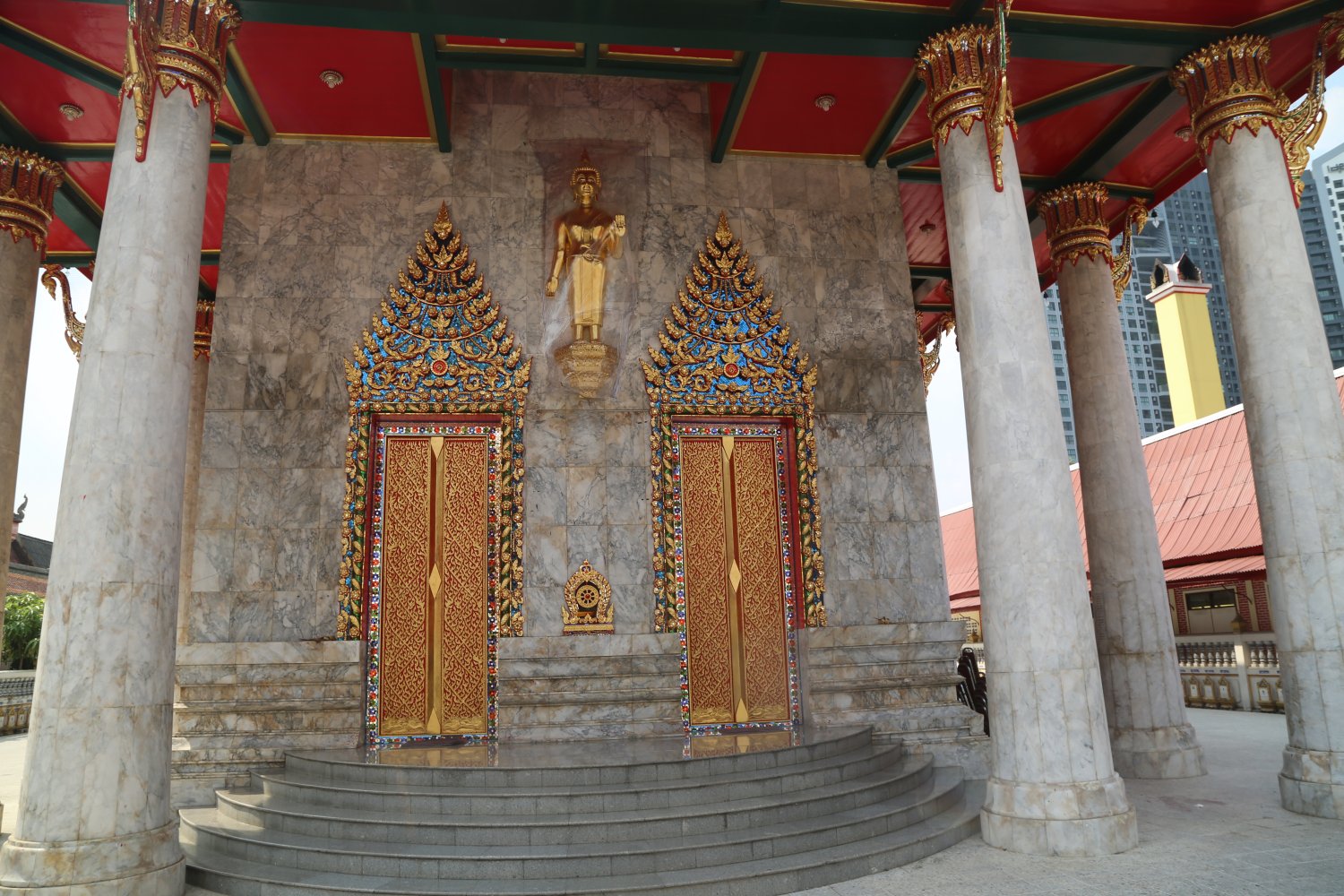

Wat Bang Na Nok is located along the banks of the Chao Phraya River about a 10-minute drive from the Bang Na Skytrain station – or a leisurely 35+ minute walk (we’ve walked much of this distance before). Plenty of large catfish hang out along the steps leading down from the temple into the river and often (especially on weekends) locals will be feeding these fish breads and other snacks. Conveniently the Bang Na pier is located close to the temple grounds and sometimes visitors arrive by boat. This is one of the piers that visitors can use to reach the other side of the river – going to Bangkok’s ‘green lung’ or Bang Krachao – and often one will see bicyclists arriving or departing from this pier.
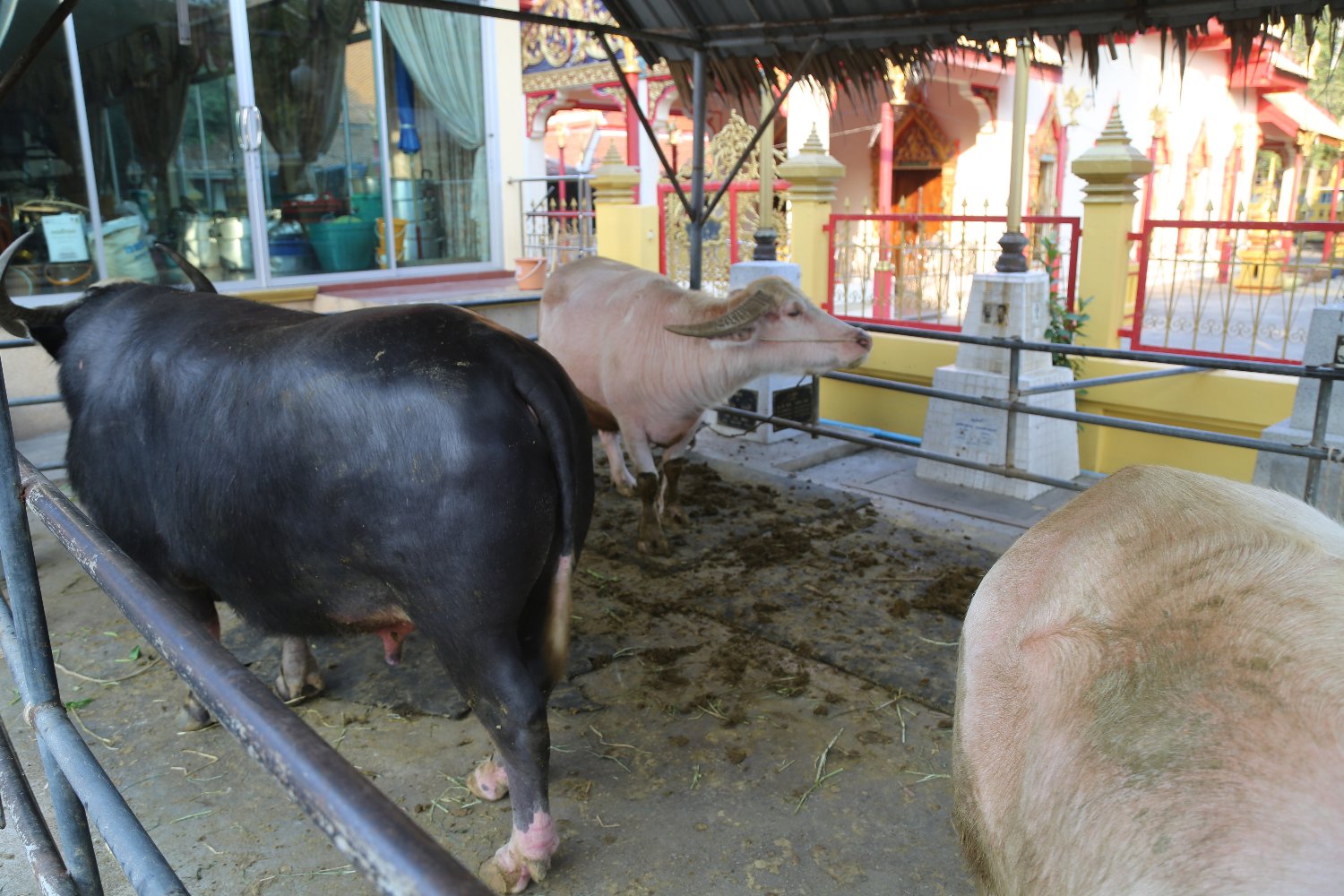
Live animals at temples in Bangkok are not that common but every once in a while, we stumble across a temple that houses them. This temple keeps several cattle fenced-in corrals near the parking lot. Wat Bang Na Nok also feature a sizable brick lined crematorium. A small to medium sized temple.

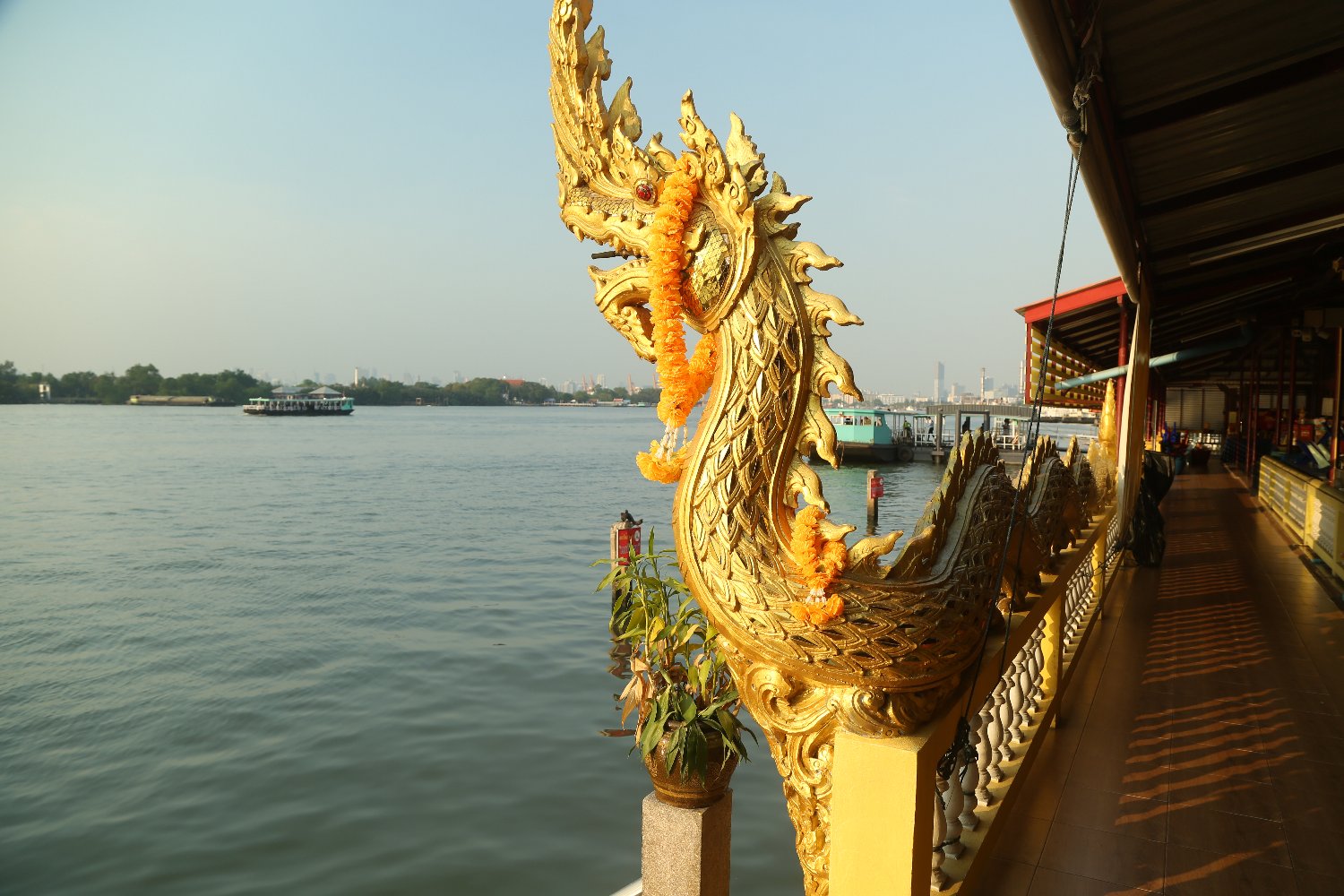

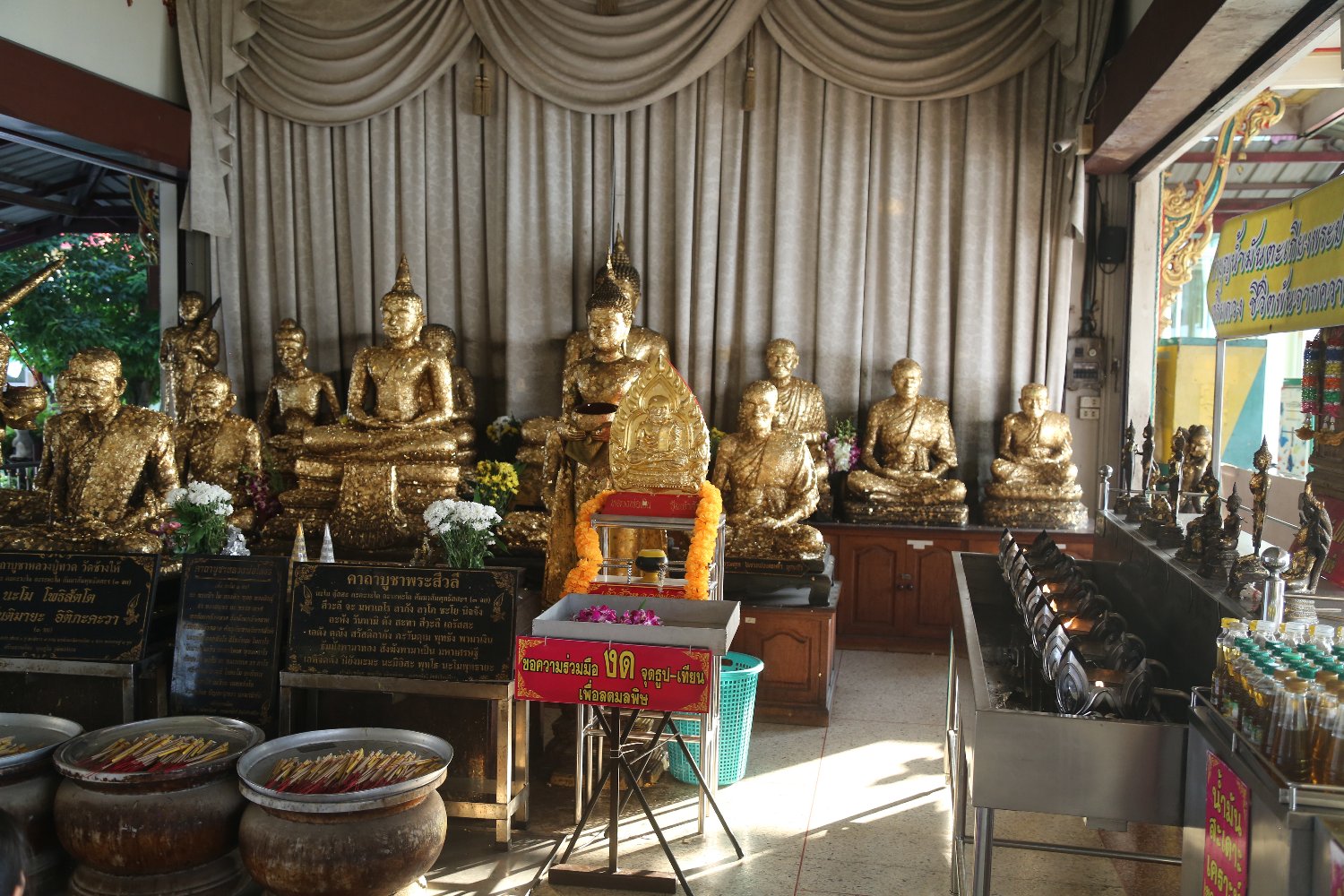
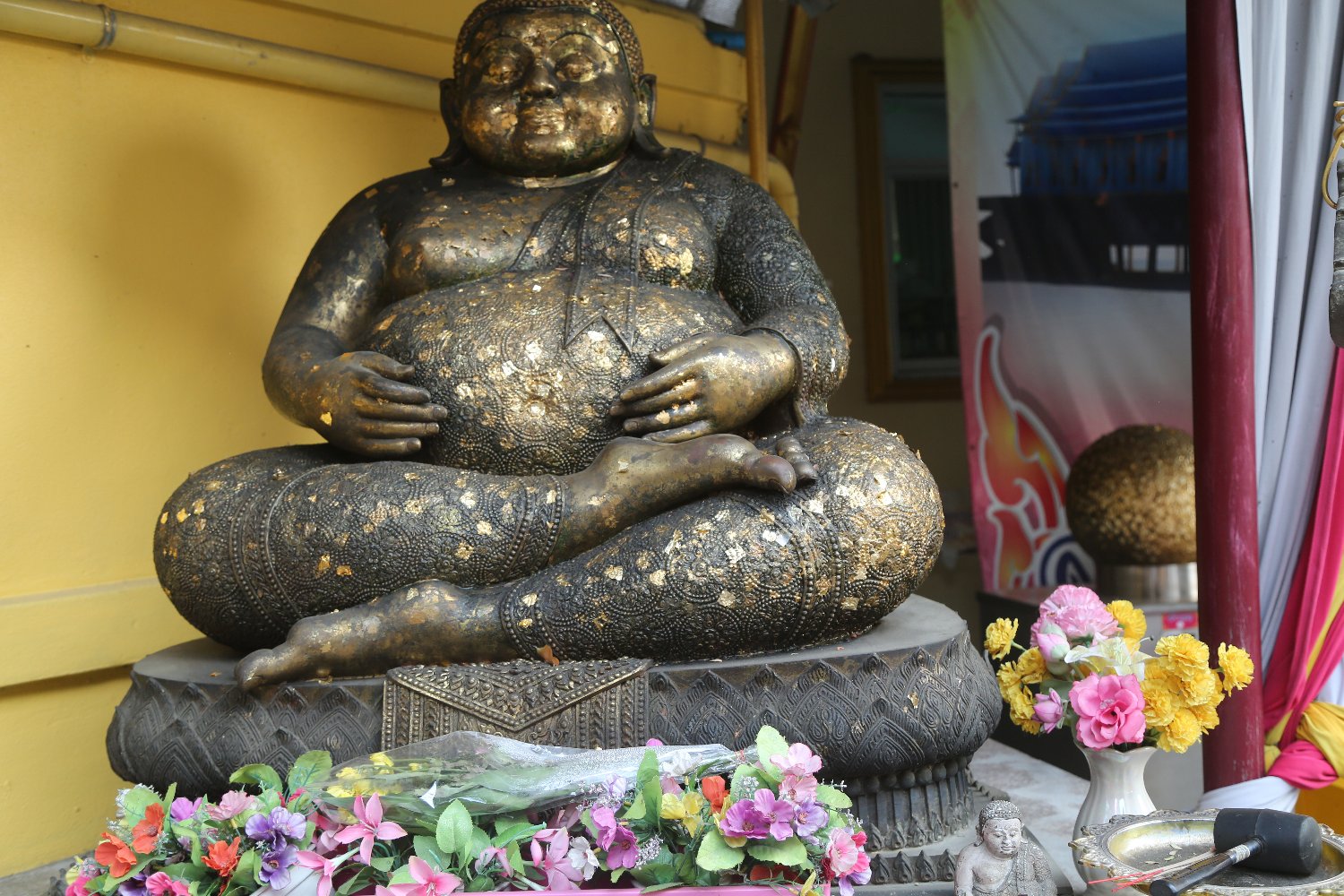


Wat Bang Yi Khan is a very small temple located on the Thonburi side of the river next to the always busy Rama VIII Road. This temple was originally built in the Ayutthaya period and contains several ancient items of note including old mural paintings inside the wihan building (painted by Pae Kong – a prominent painter from the Rattanakos period) and several smaller Buddha statues that are over 100 years old.
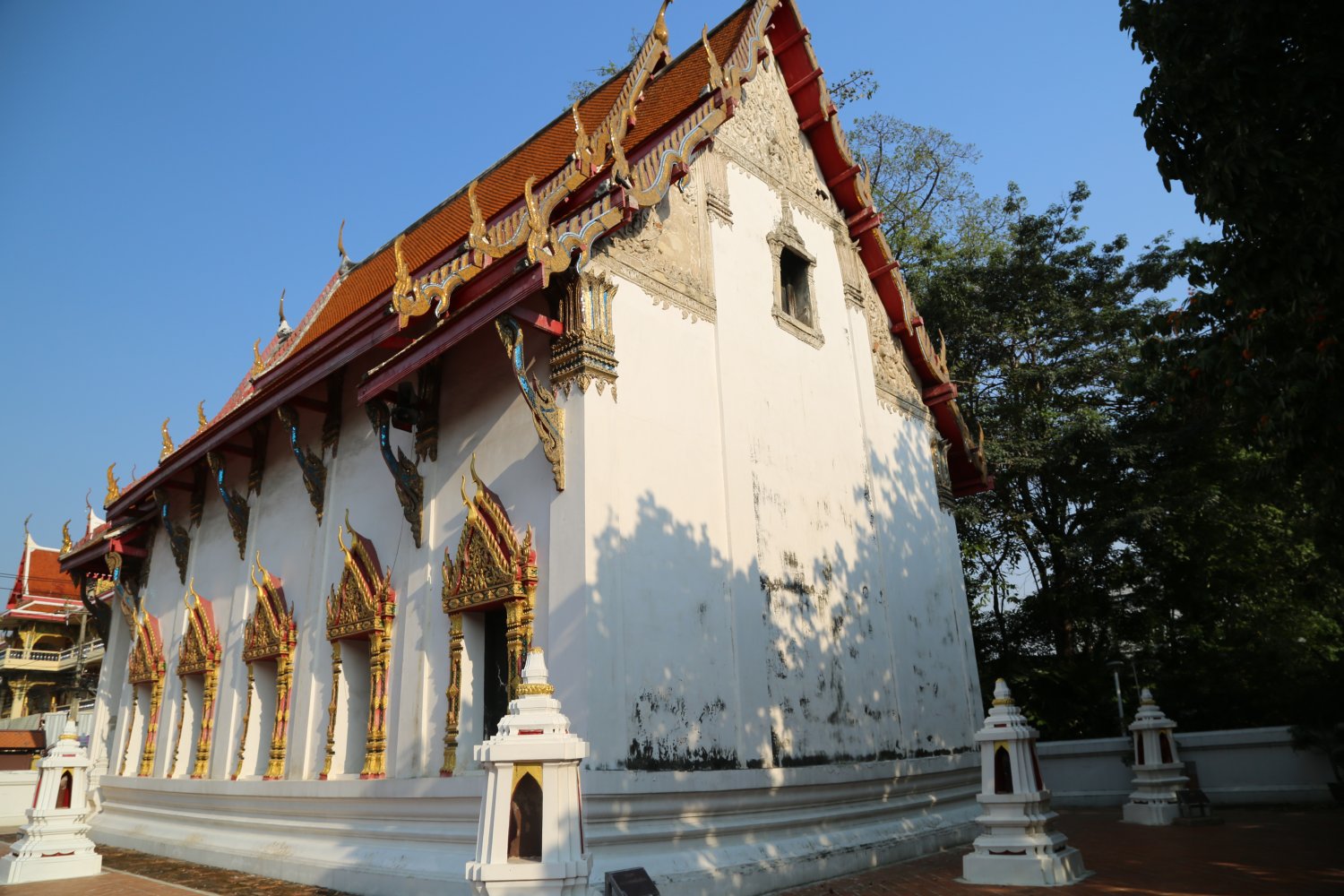
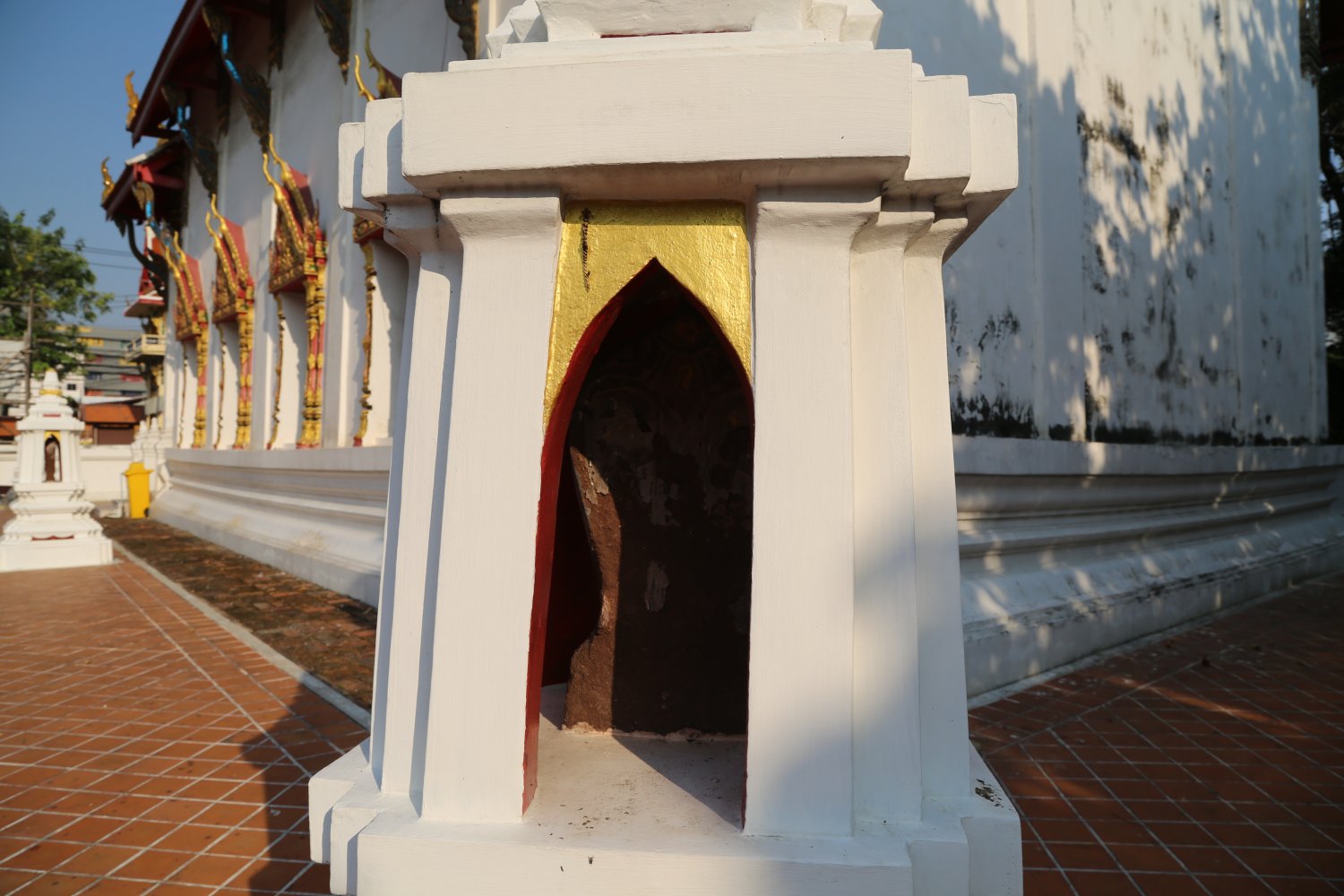
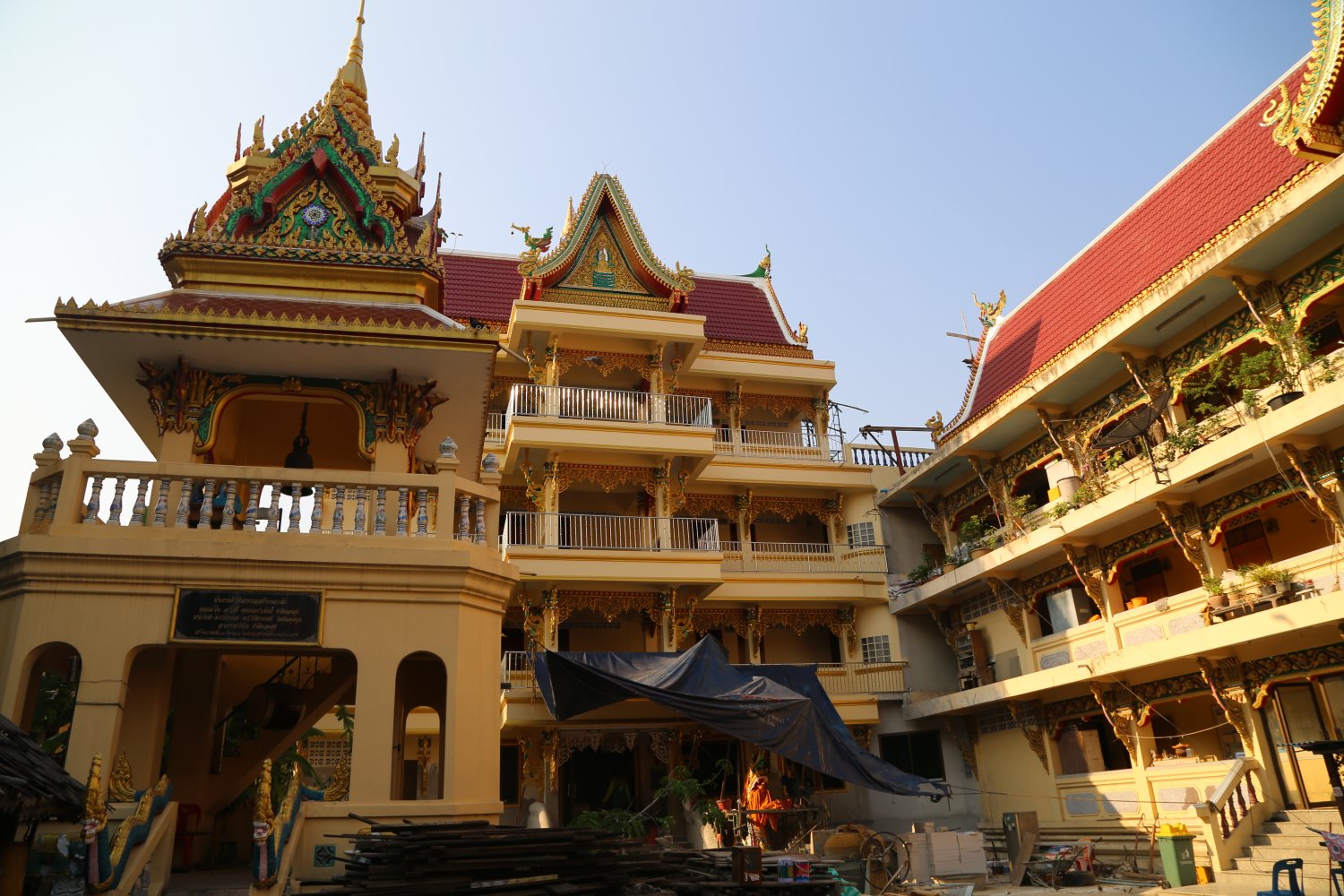
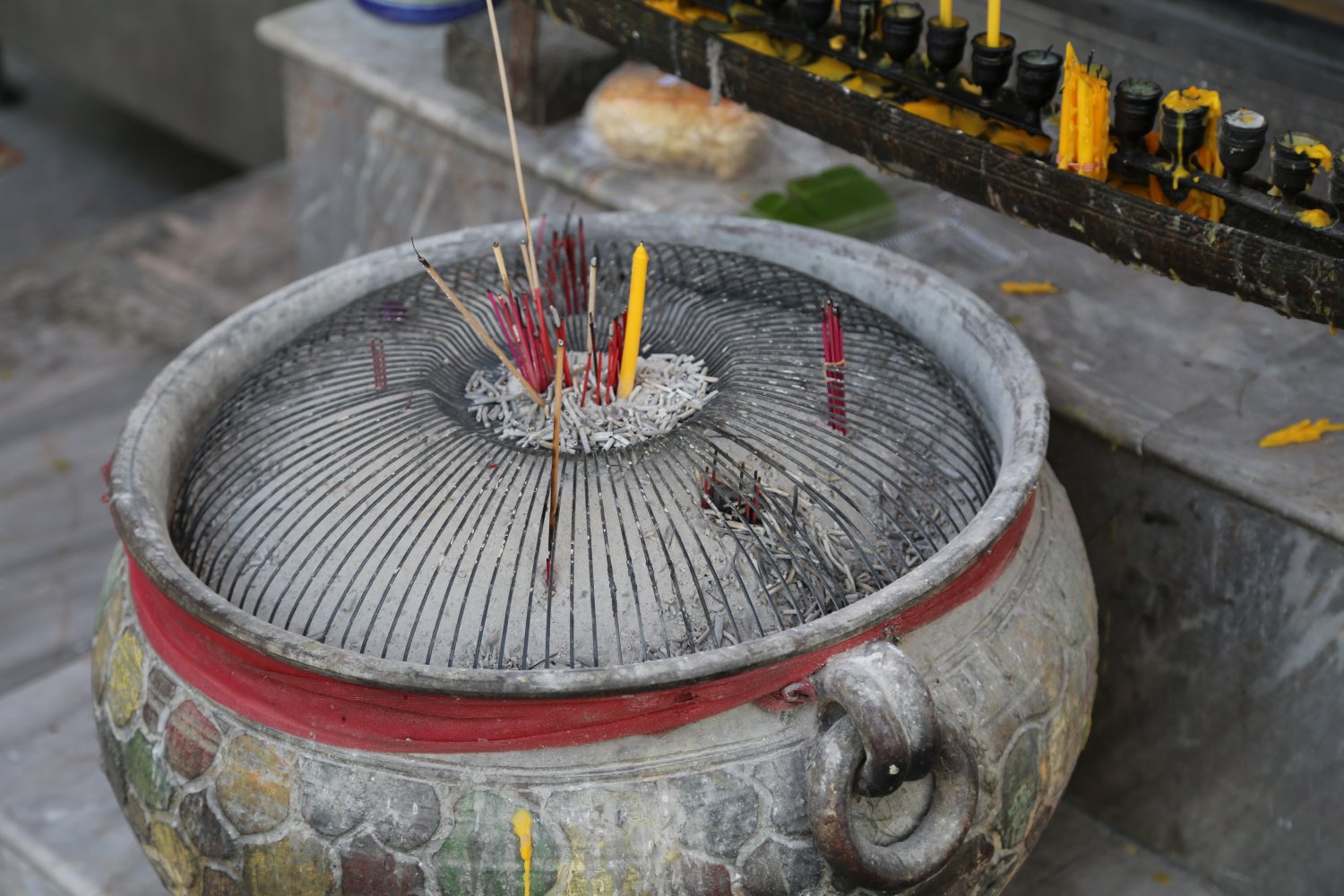
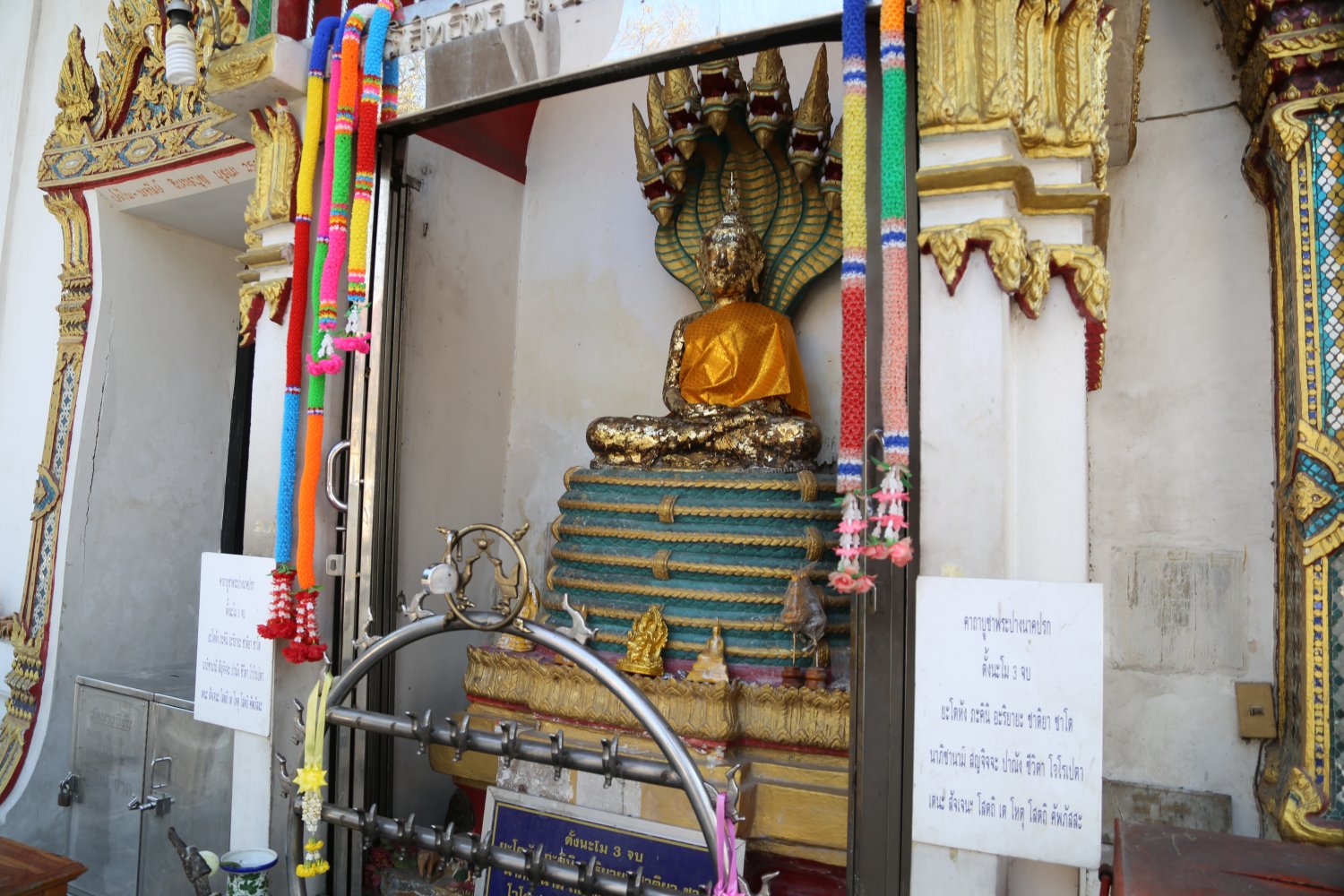

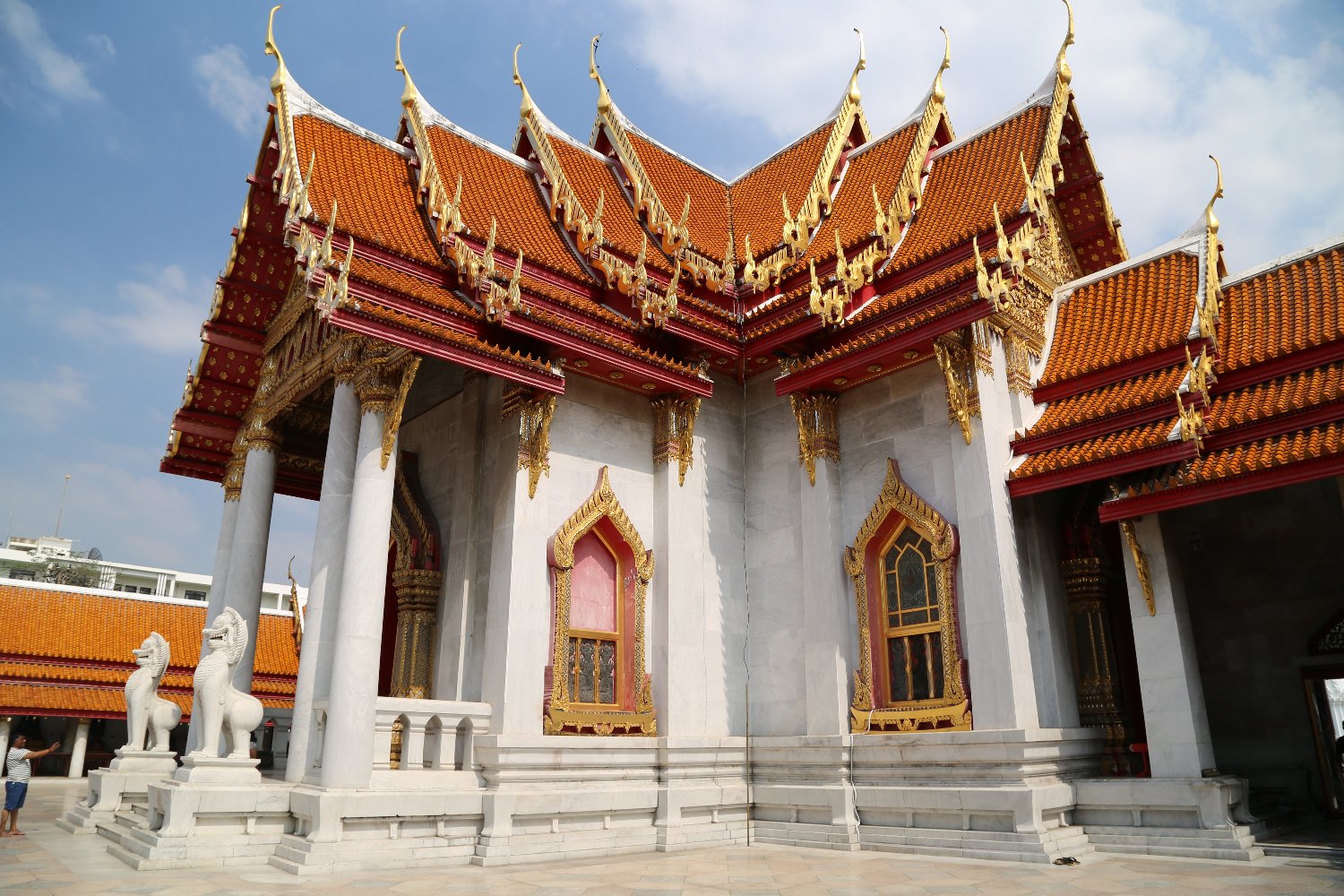
 Wat Bench amabophit (called Wat Ben by locals) or otherwise more simply called the “Marble Temple” is highly worth a visit (and certainly sees less visitors then more famous Wats like Po and Arun – both because it is small and possibly because of its location outside of the historic center of Bangkok near the Chao Praya River). Located near the Dusit Palace, Dusit Zoo and the Vinmamek Teak Mansion. Worth making the trip out here from the central historical core of Bangkok. Also, can take a taxi from the Victory Monument Skytrain stop which is how we usually make this trip based on where we stay while in town.
Opulent and elaborate are two words to easily describe this remarkable temple. It was built in 1899 and its name translates to “Temple of the fifth King located nearby Dusit Palace”. It was built in part with Carrara Marble imported from Italy (to see more nearby Carrara marble in use visit the Ananta Samakhom Throne Hall located just down the street).
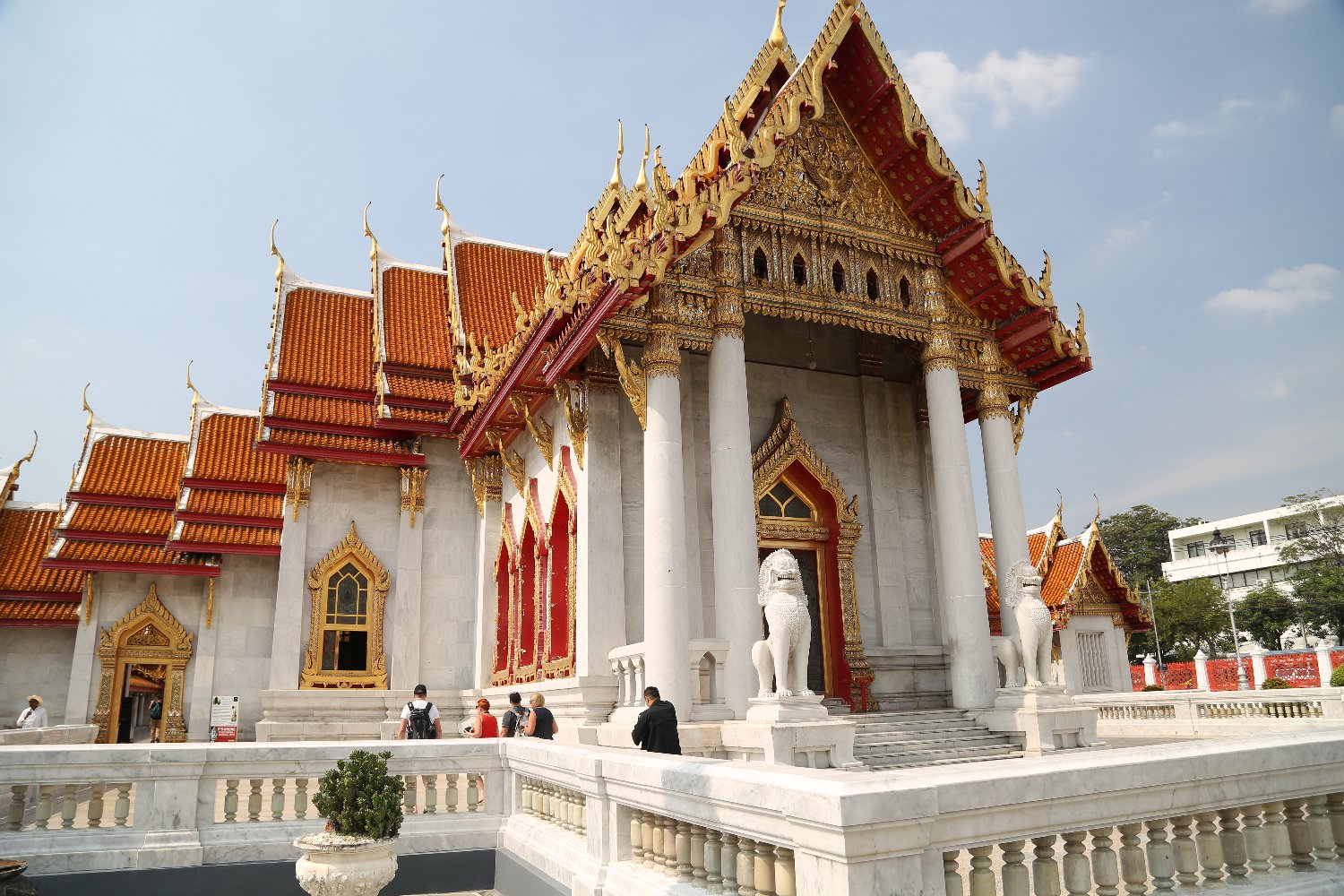
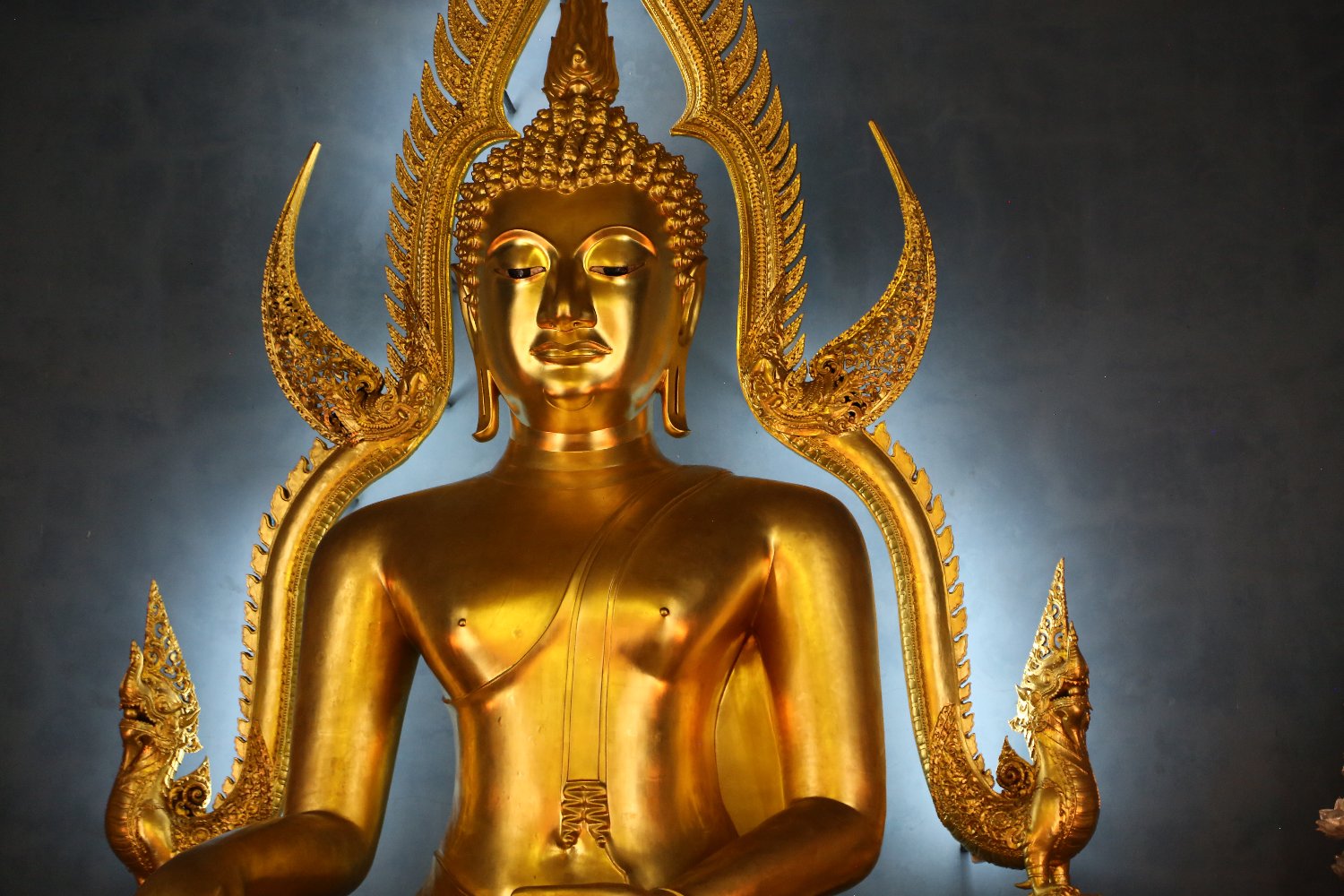
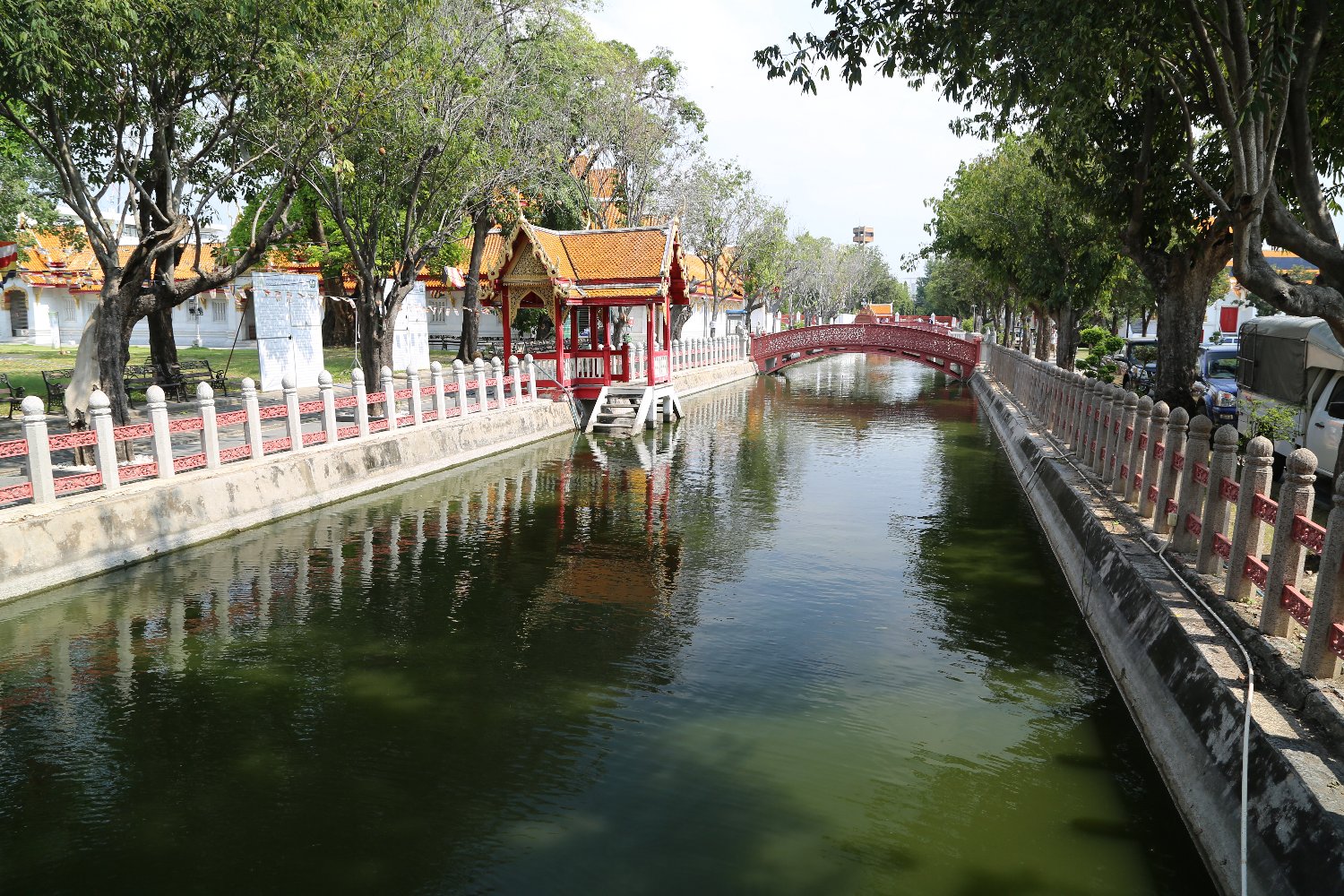 Very popular with visitors so a nominal admission fee is charged. Be sure to enter the primary building on site, the ordination hall – one of the most impressive back lightings for a golden Buddha we have ever seen is housed inside. This Buddha dates from 1920 and stands over ashes of King Chulalongkorn. The nearby courtyard and views of the ordination hall are equally as impressive. A canal runs through the property with some quaint curved bridges standing over the water. Also of note is this wat is featured on the 5-baht coin and was in an episode of the TV show, The Amazing Race.
During our latest visit, several large banners erected presumably by Thailand’s Tourism Authority, offered visitors a chance to take their photo in front with the words as a backdrop – “I am at Wat Ben”.
Not a lot of food vendors in the immediate vicinity.
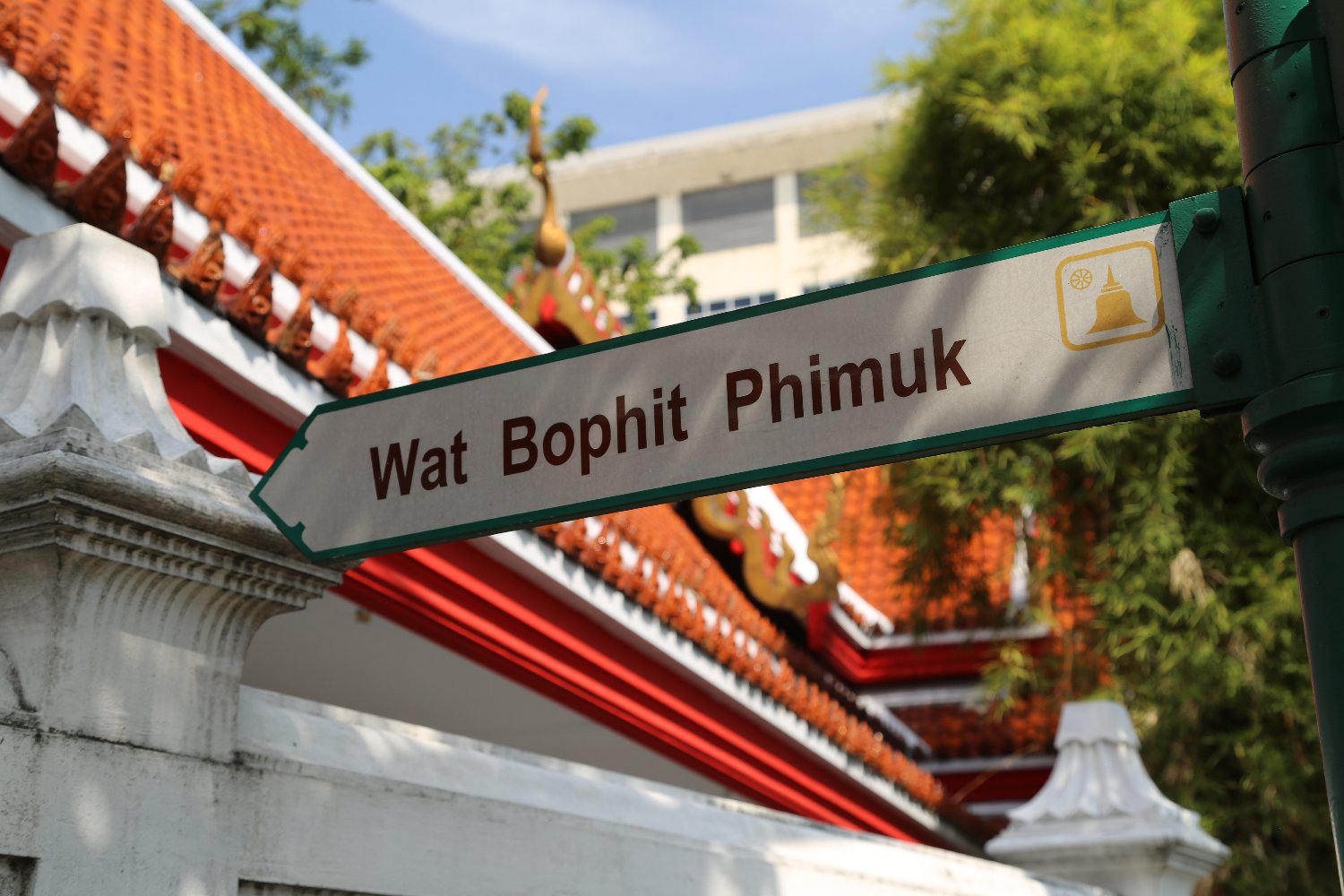
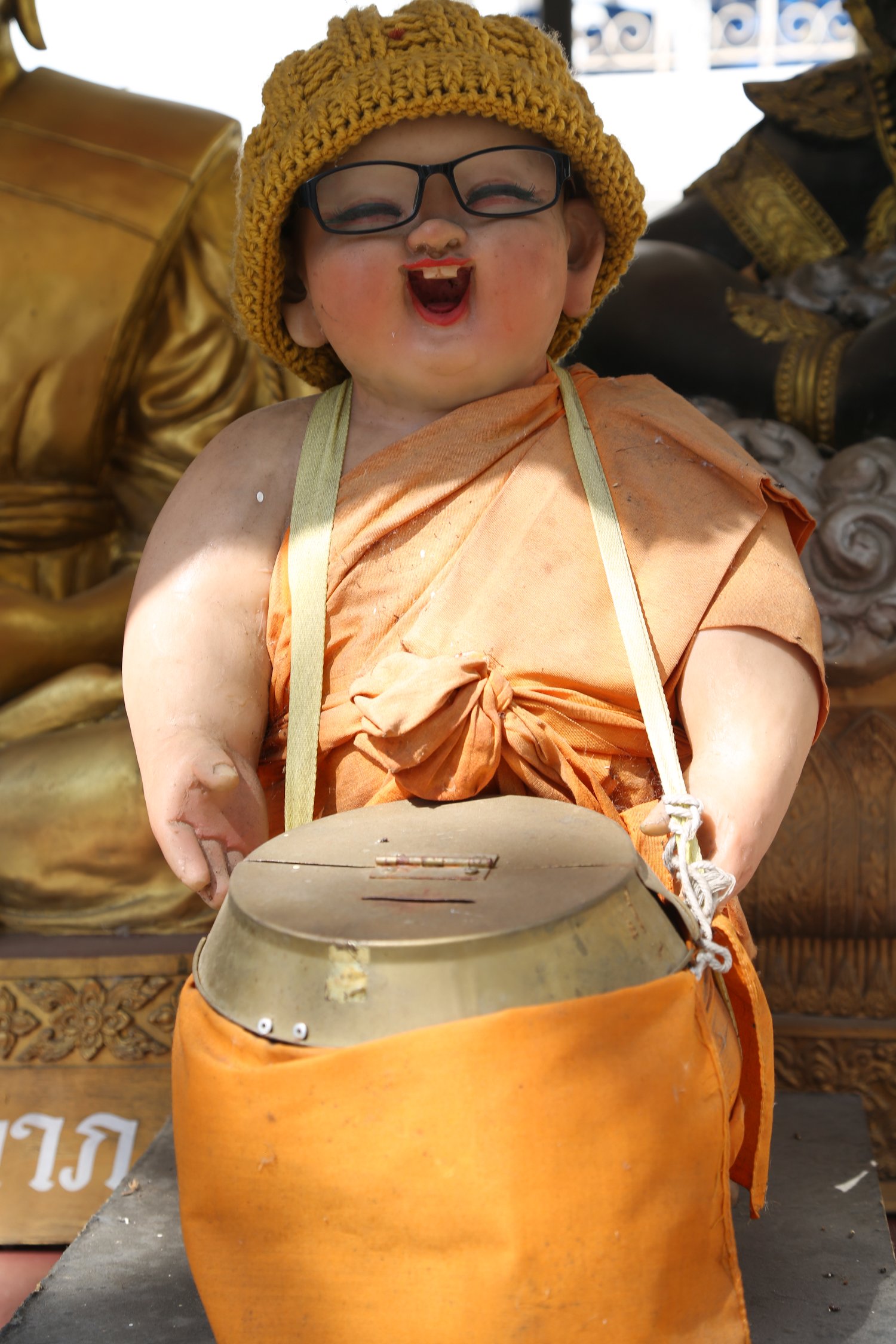 Wat Bophitphimuk Worawiharn has seen a number of name changes over the years based on certain eras and kingdoms. One of its names ‘Lain’, referred to all the mud in the area due to its low-lying location relatively not far from the Chao Praya River.
At one point cholera killed many people in the area and their bodies were taken to this temple’s graveyard. Originally wood – it has seen been replaced by concrete. The residences of the monks on site are built in both Thai and Chinese styles. Within about a 15-minute walking distance of the Siam Museum.
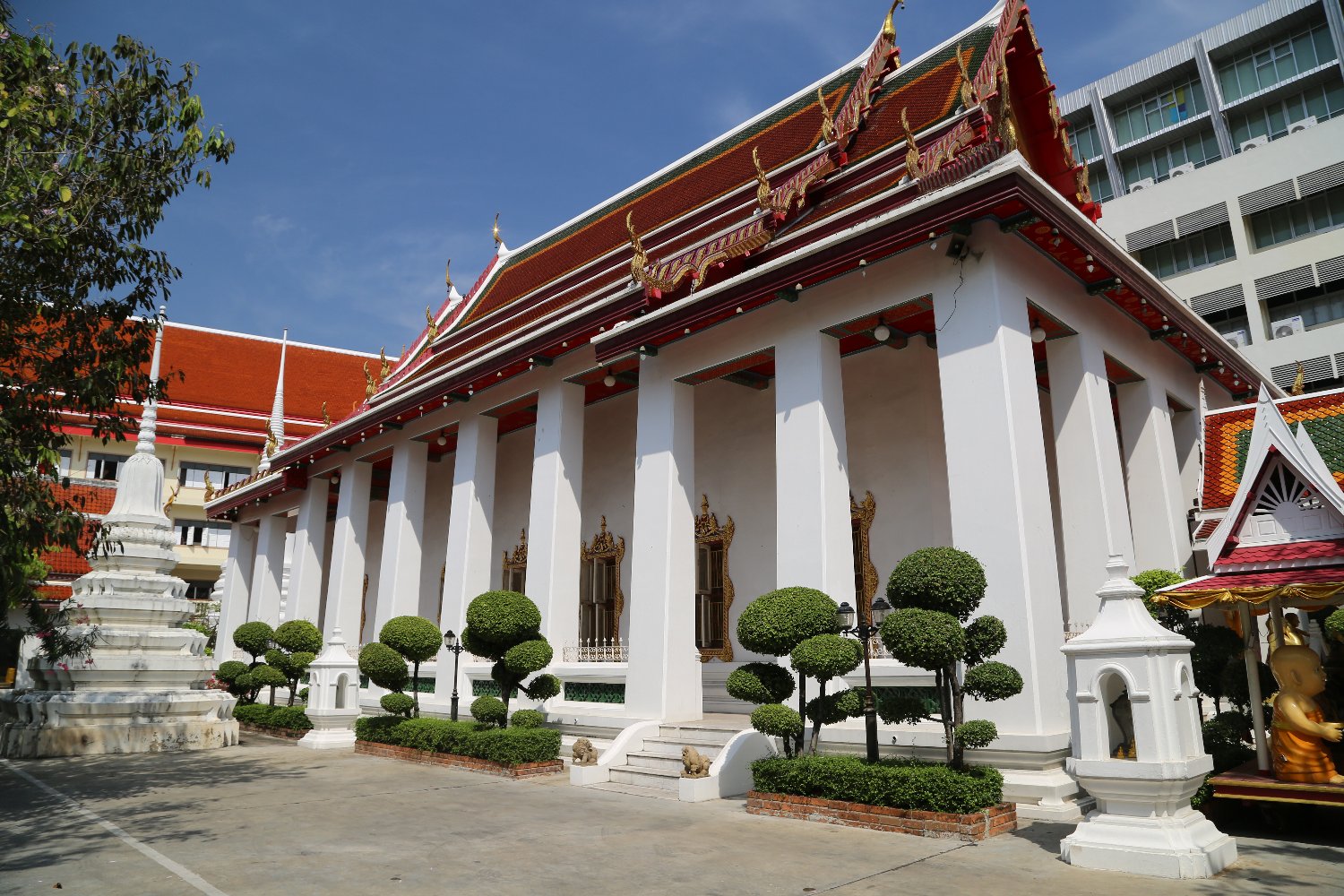
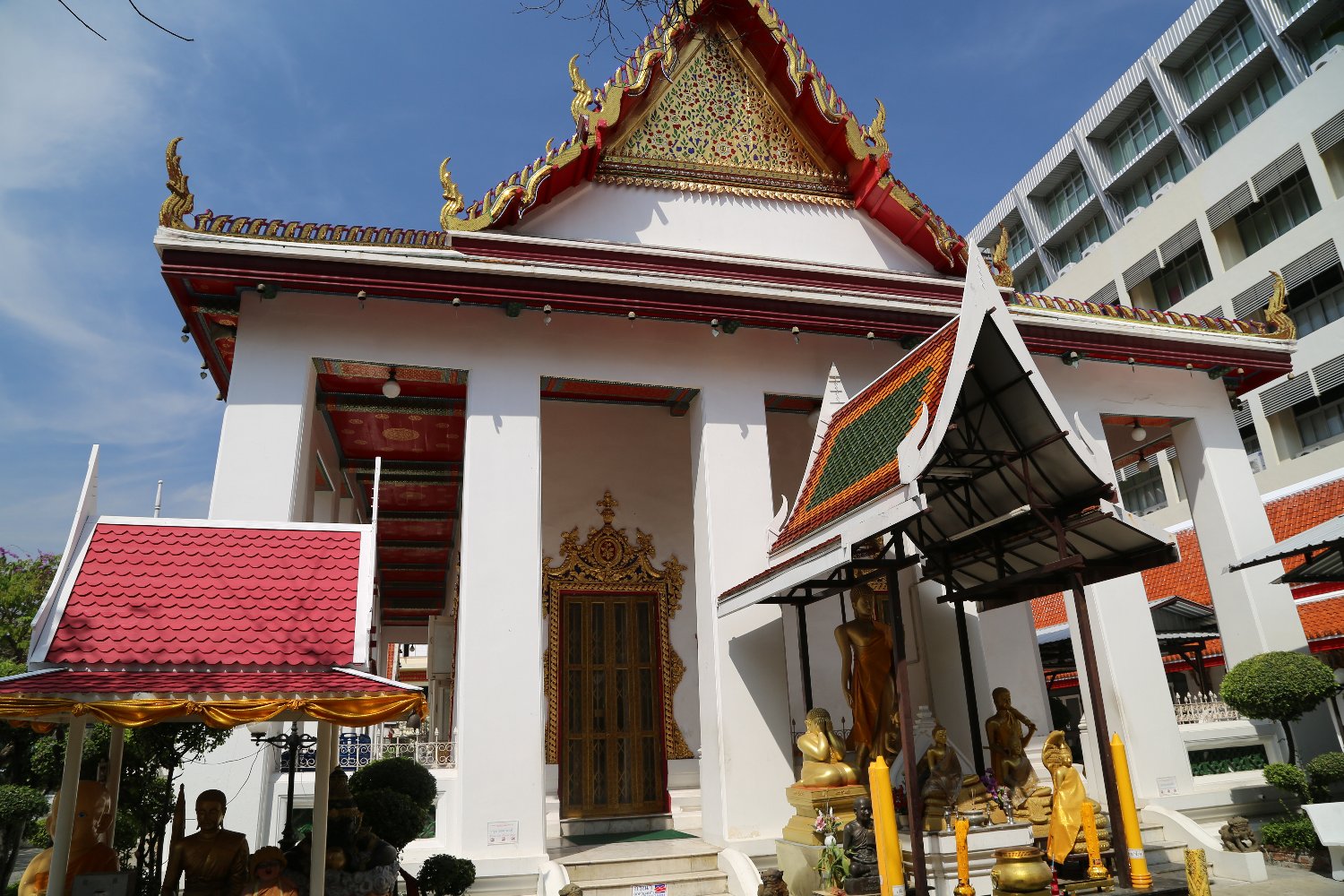
Wat Bowon Mongkhon is a decent sized temple on the Thonburi side of the Chao Praya River about a 20-minute walk from where the King Rama VIII Bridge reaches this side of the river. The walk is somewhat fun if it’s not to hot – as it is through a bunch of very local neighborhoods – a maze of homes along the river bisected by narrow paved pathways. Far enough removed from the core of Bangkok one doesn’t often find tourists here. Worth checking out the colorful buildings plus an older stately wooden building.
Located next to the Chaloem Phrakiat Rama 9 Park – which shows as a green space and a park on maps but in reality, is a mostly paved over parking lot with a few trees growing on site!
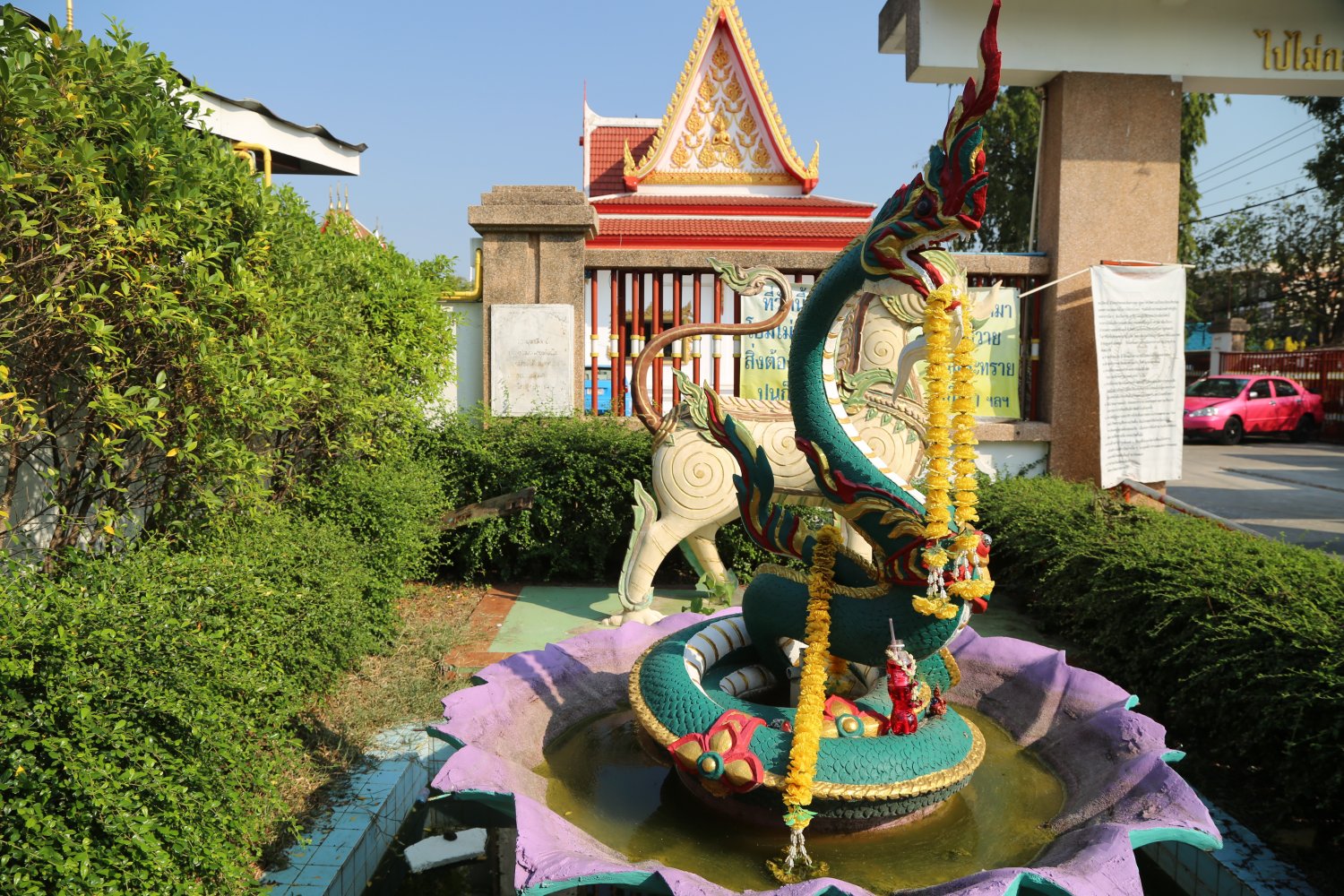
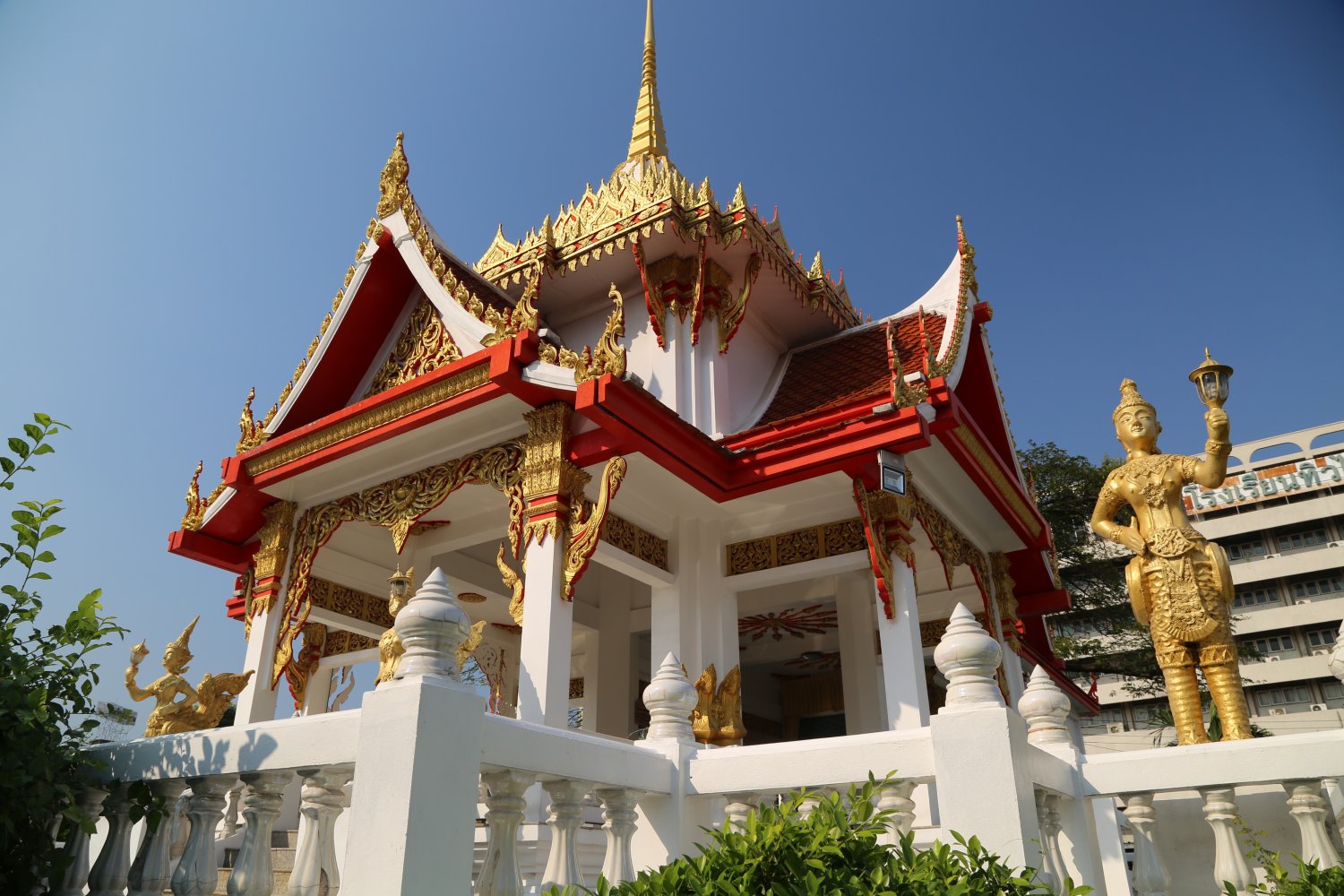
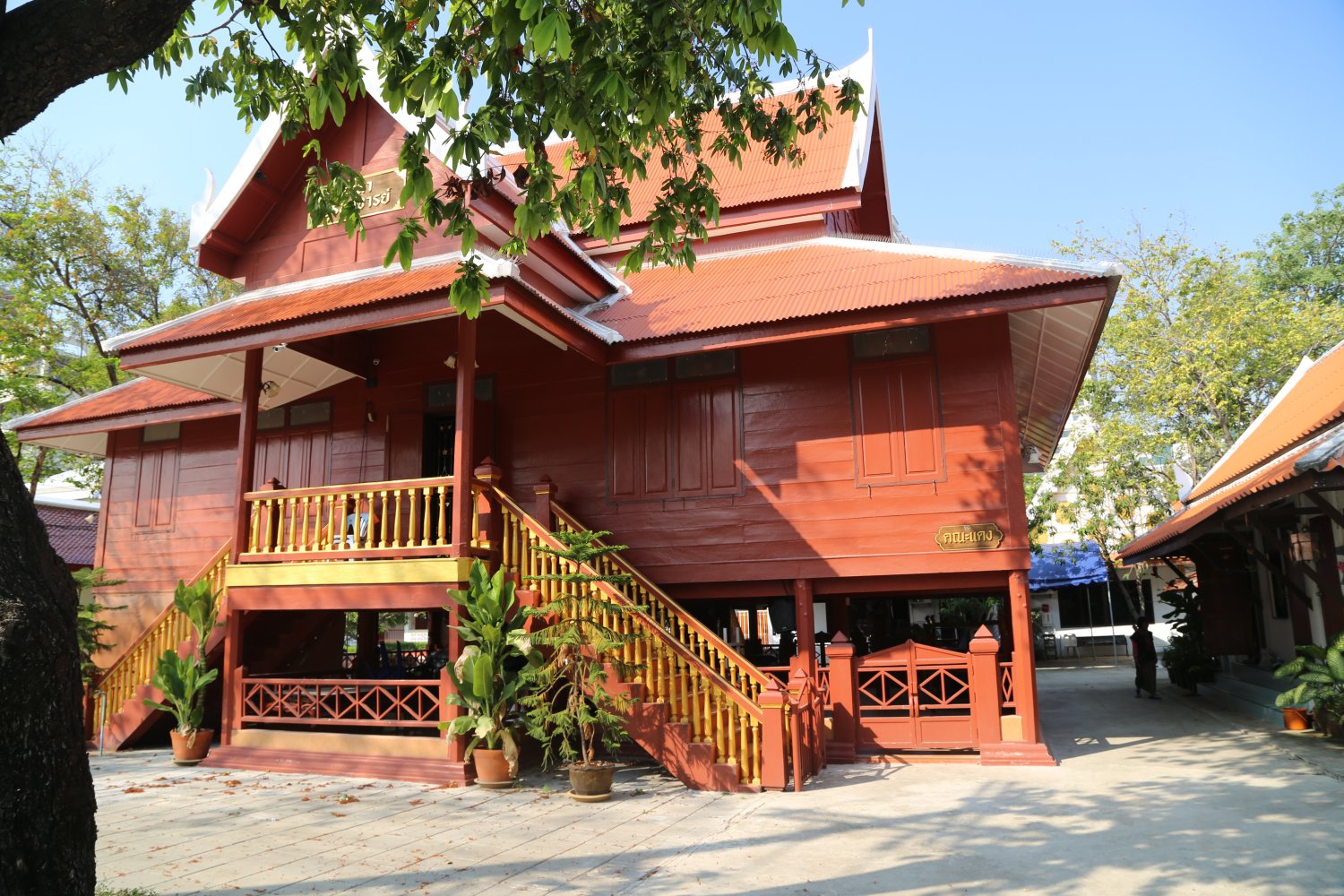
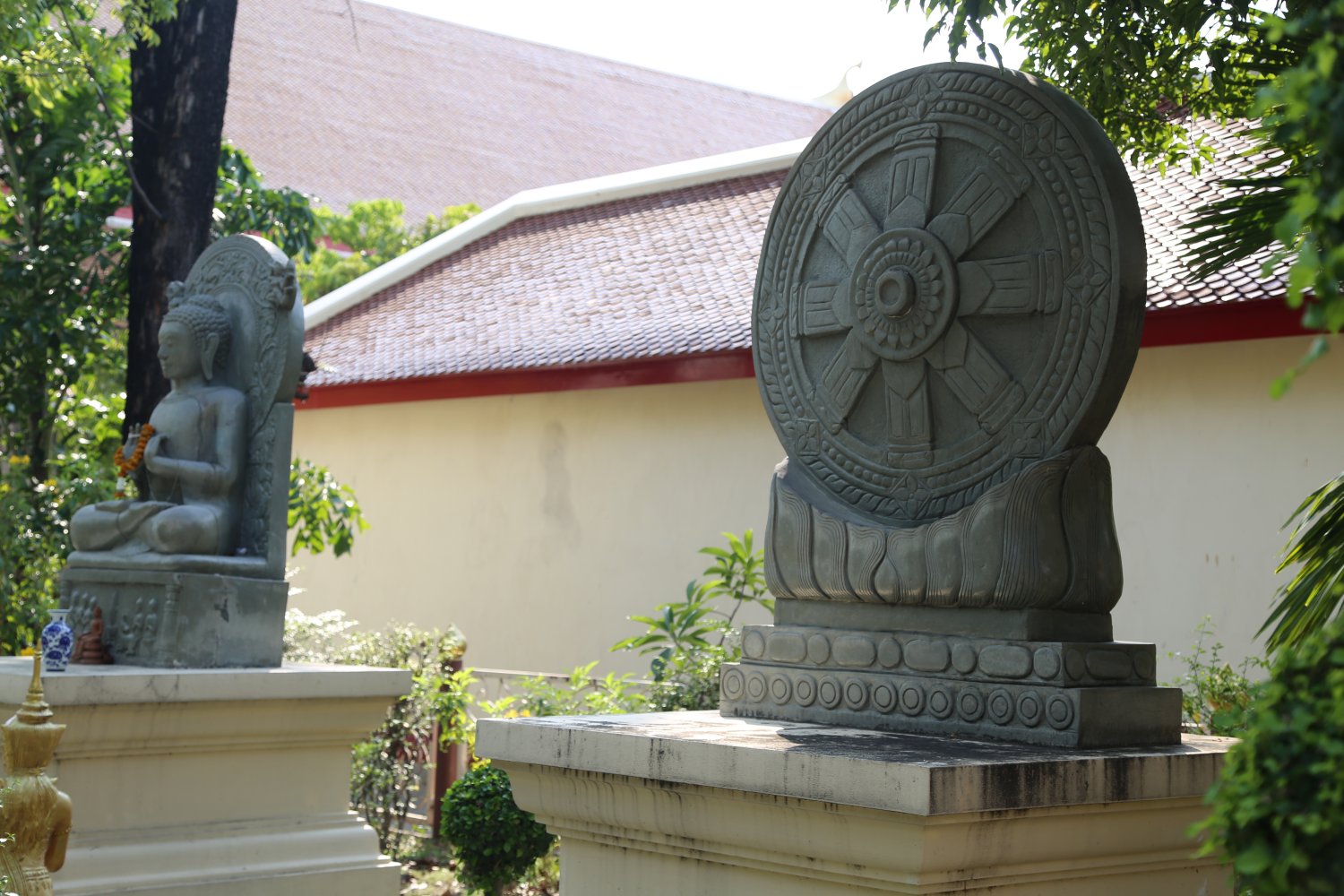
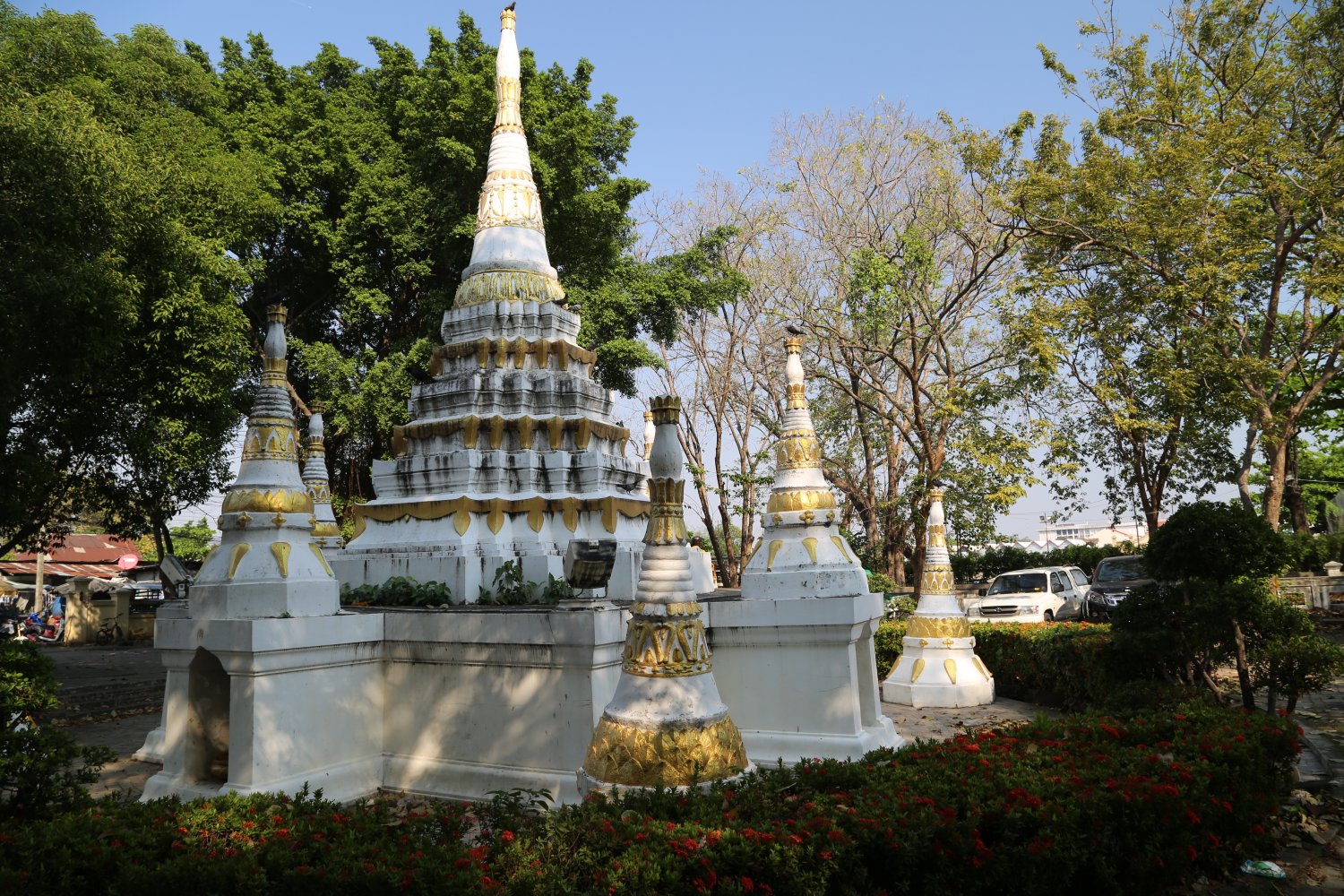

Wat Bowon Niwet Vihara (not to be confused with Wat Bowon Mongkhon on the other side of the river) is located within a short walk of Democracy Monument and a slightly longer walk from Khao San Road. This impressive and historic temple is worth taking some time to visit and walk around the grounds. Originally established in 1829. The Ubosot contains several impressive golden Buddhas including the well-known Phra Phuttha Chinnasee Buddha image which supposedly was built in 1357. A number of Thai Kings prior to their ruling lived here including Rama VI, Rama VII and the more recent much revered King Rama IX.
For visitors there are lots of highlights to a visit here including two ancient Buddha footprints (dated to 1426), murals in the ubosot that were painted by historical prominent Thai painter, Khrua in Khong and the impressive chedi near the ubosot. Part of the temple looks to have architectural influence from China including various sculptures. Remarkably this temple has its own website – visit: www.watbowon.org
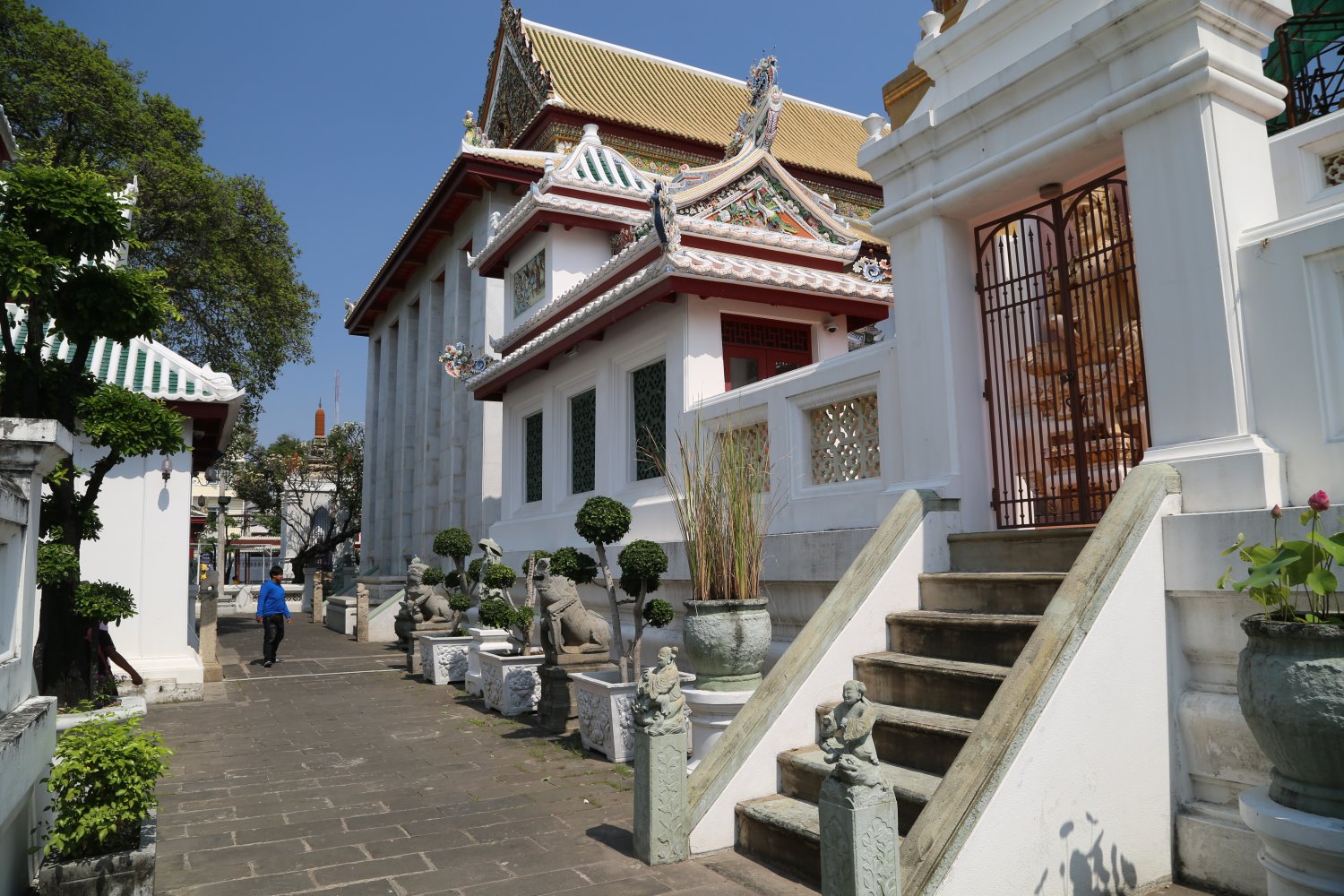
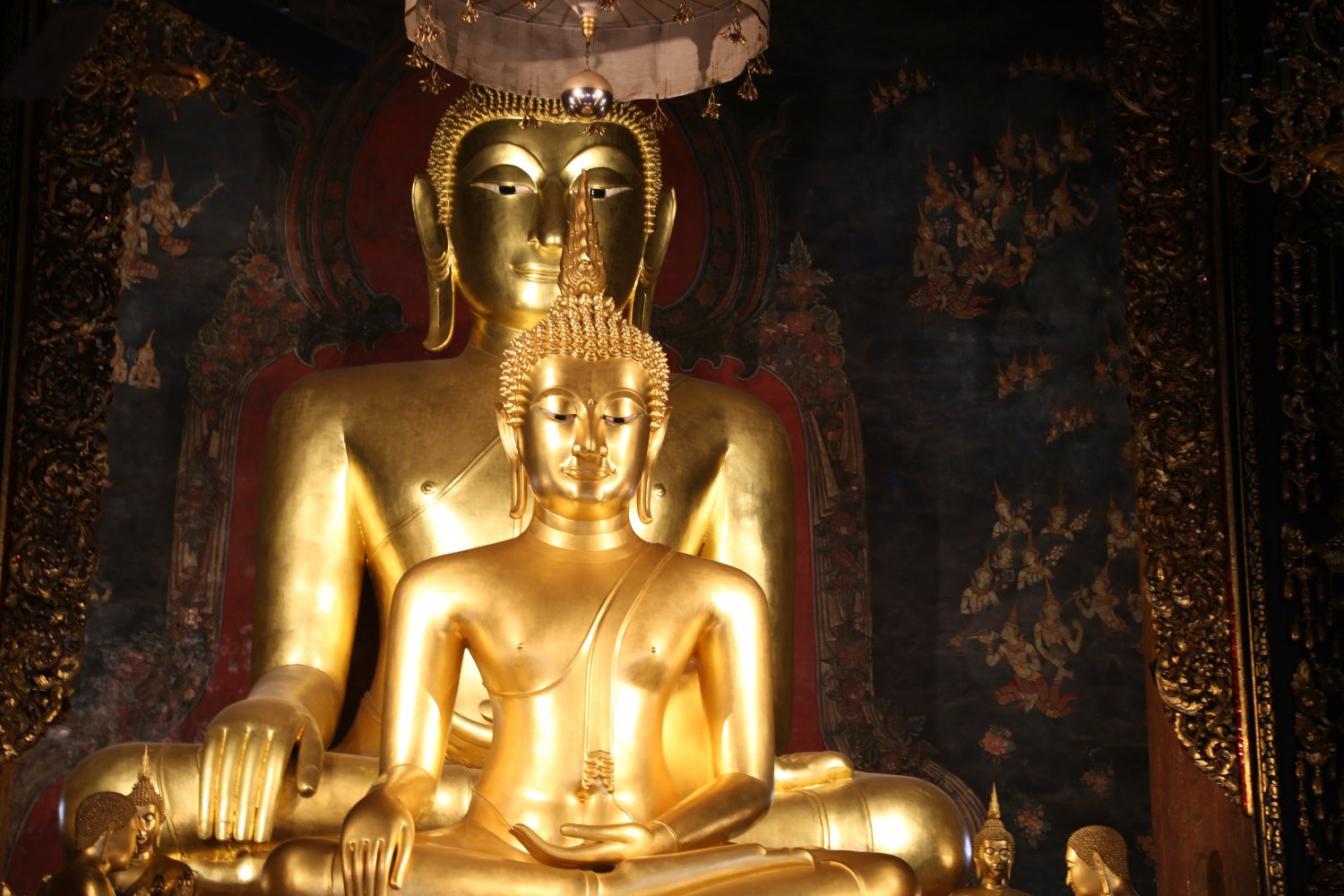

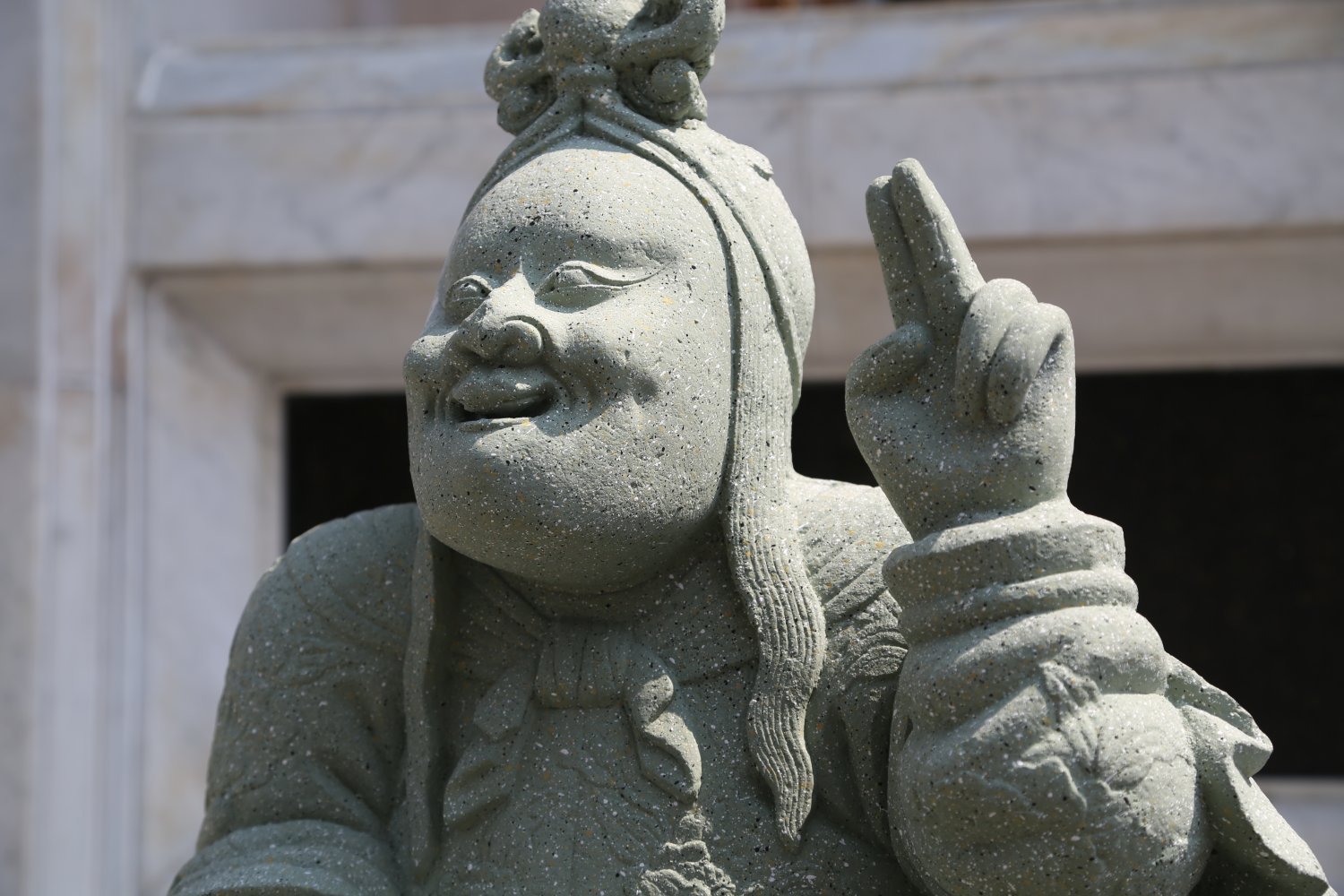
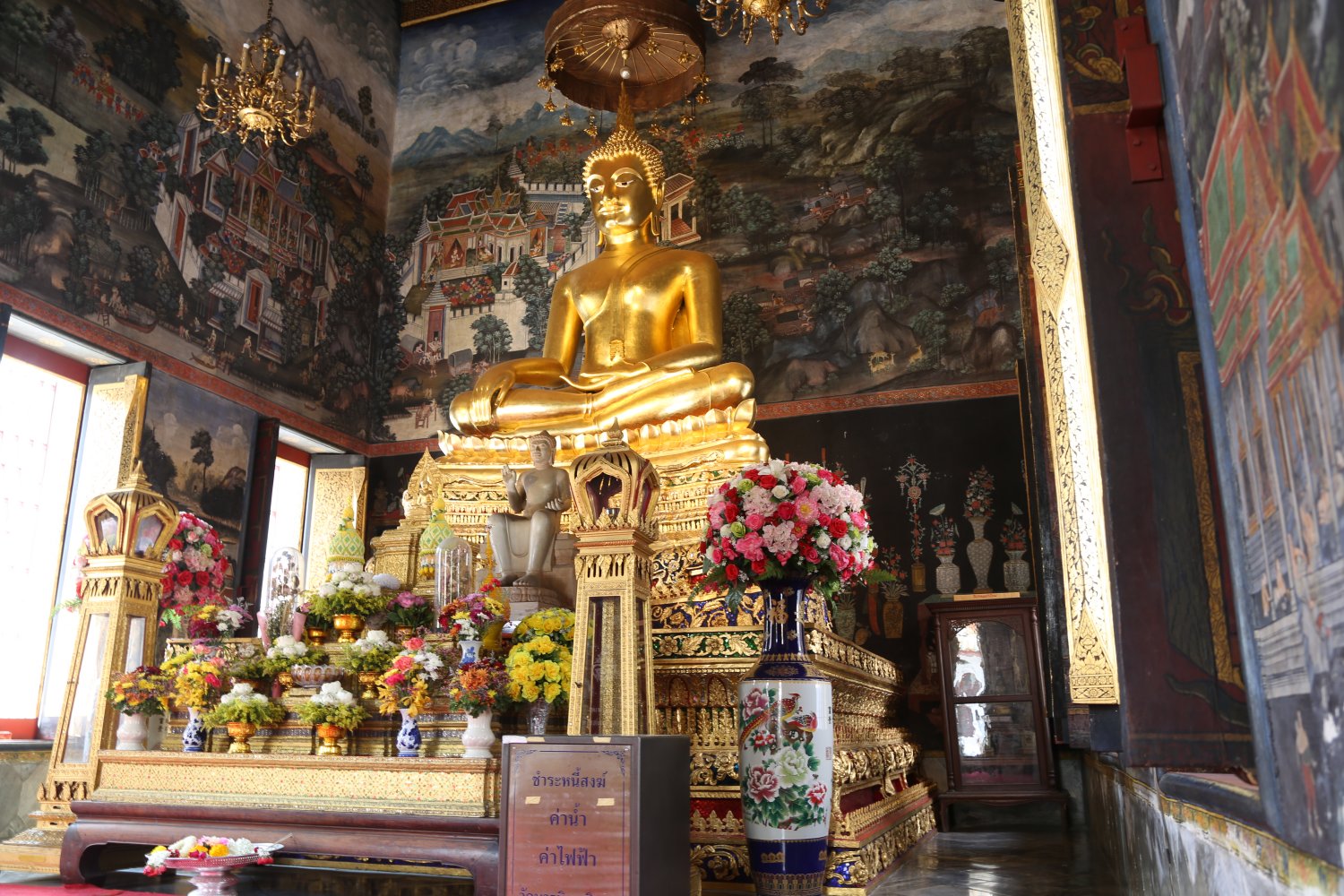
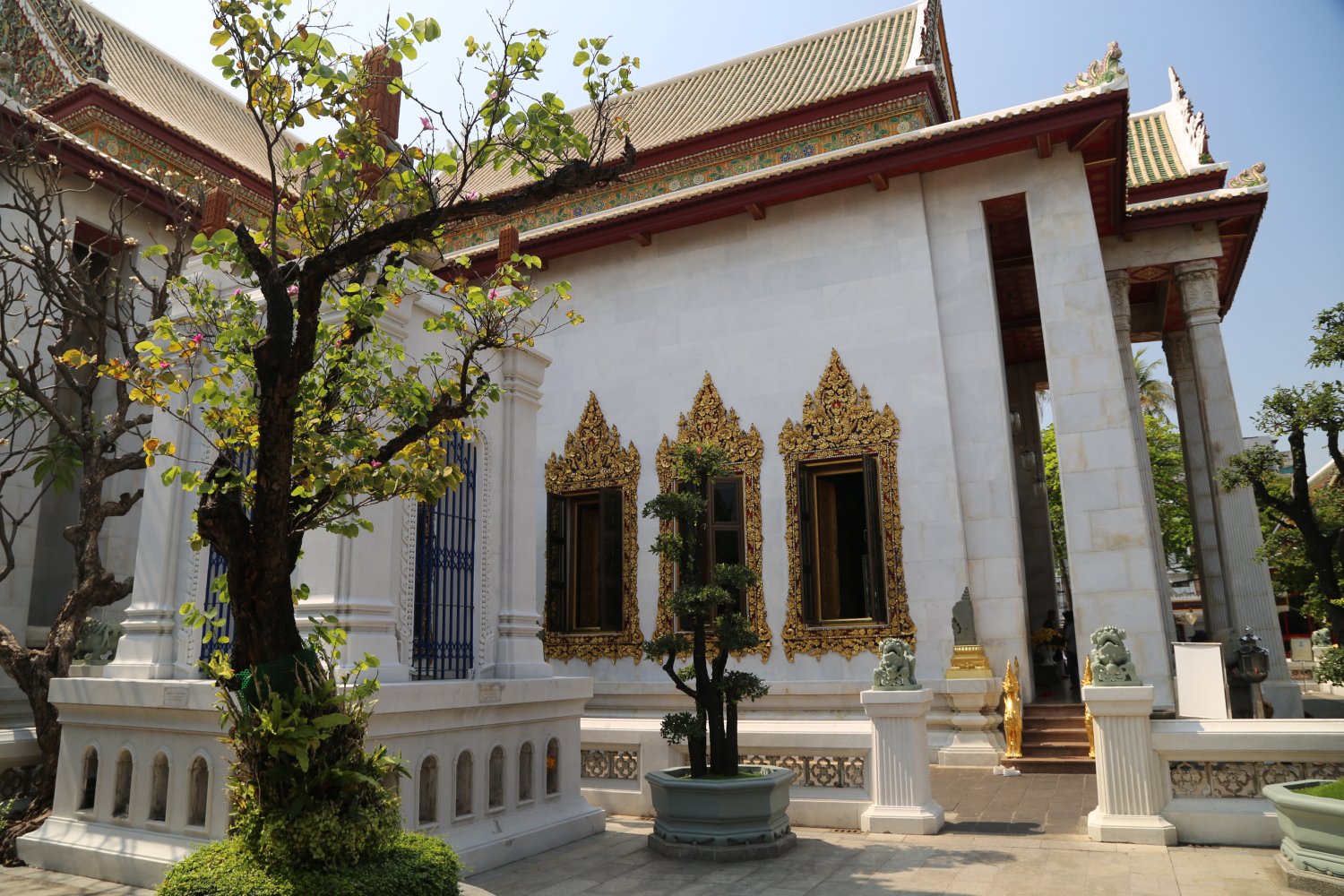
Wat Bunrod Thammaram is located to the closest Skytrain stop of Bang Chak (along the Sukhumvit line) – about a 3-minute car ride. Also, fairly accessible via the Chao Praya River using the Khlong Toei Pier. A small but photographic friendly temple. Worth walking inside the main building to see the hand painted murals and the collection of golden Buddhist statutes.
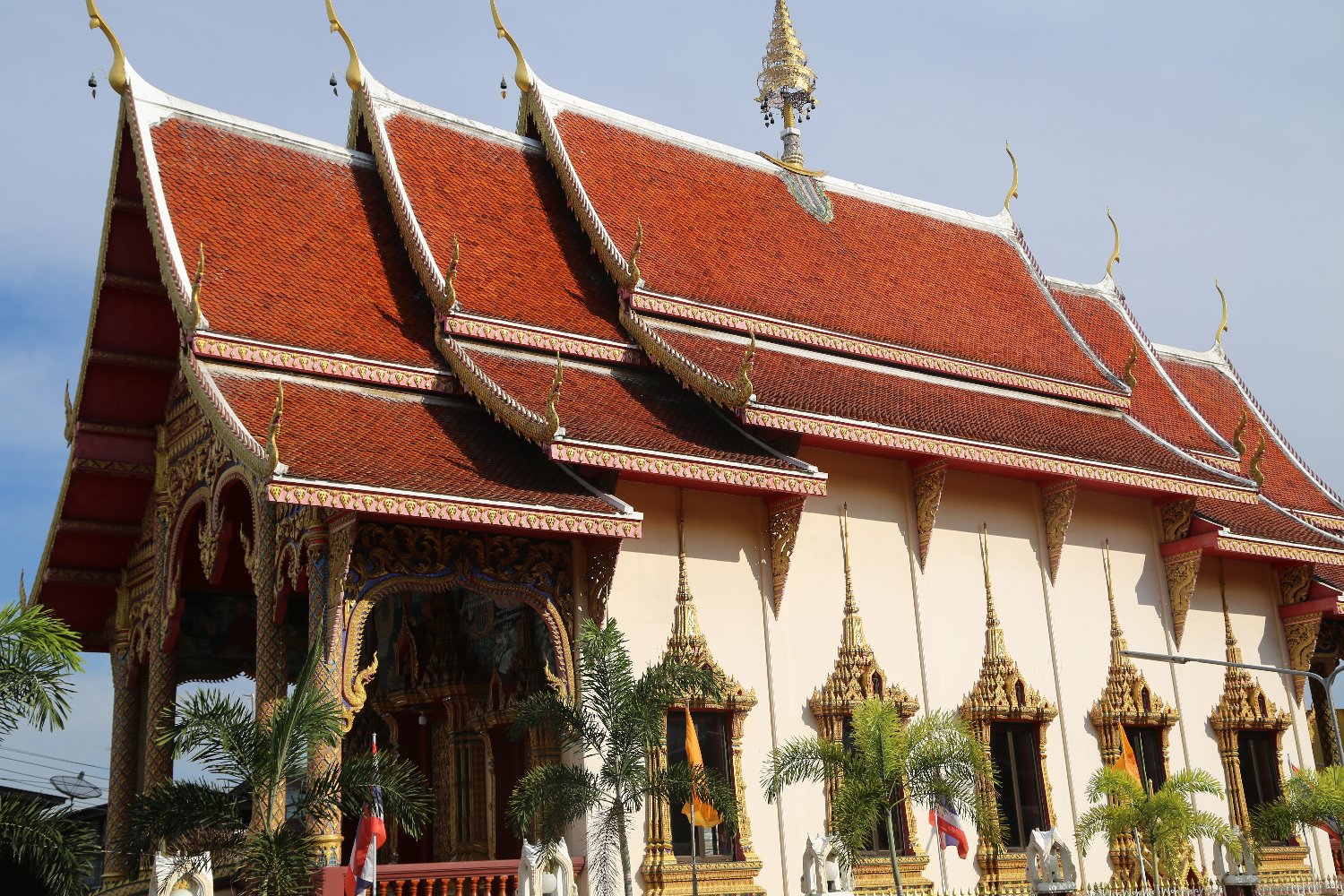

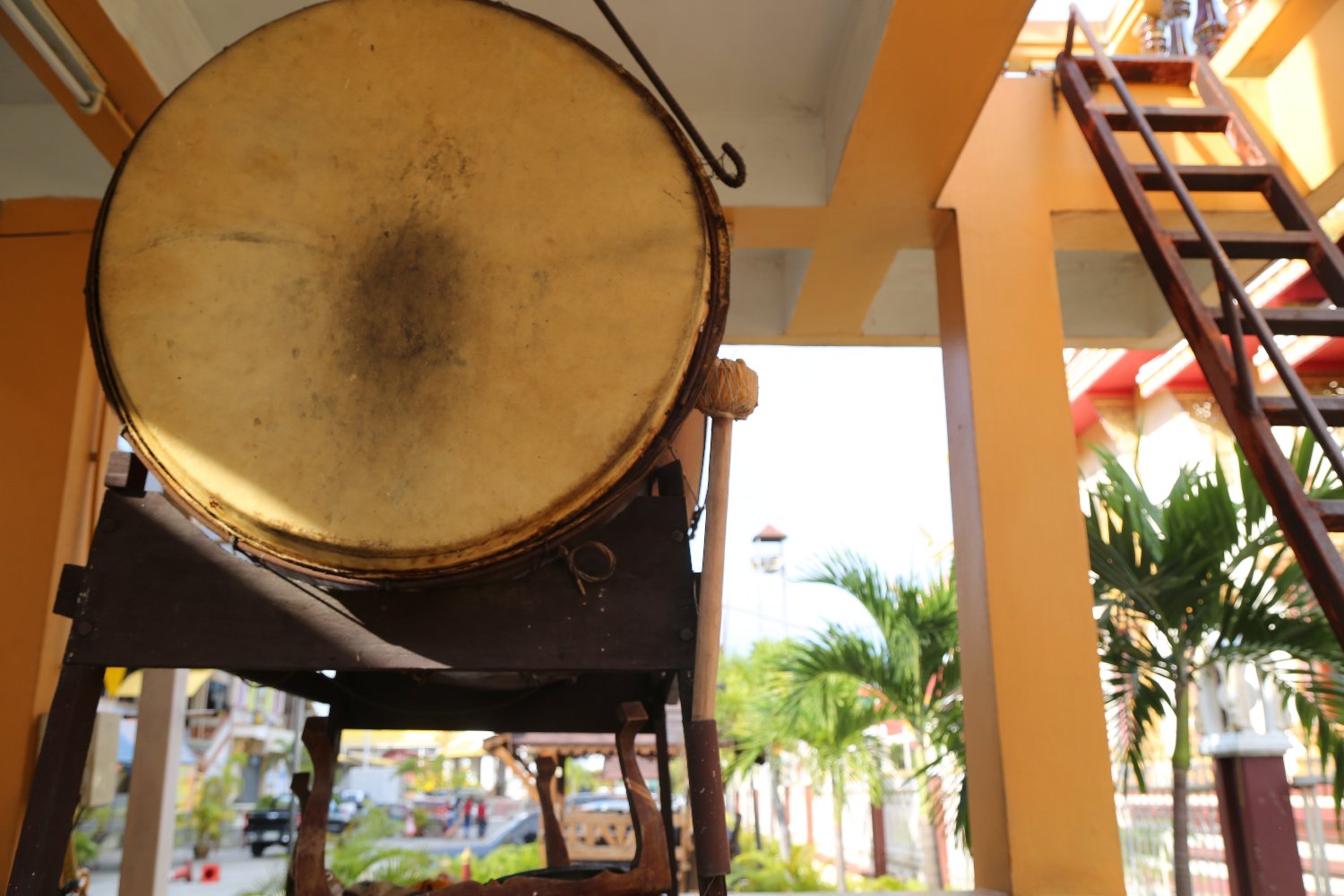

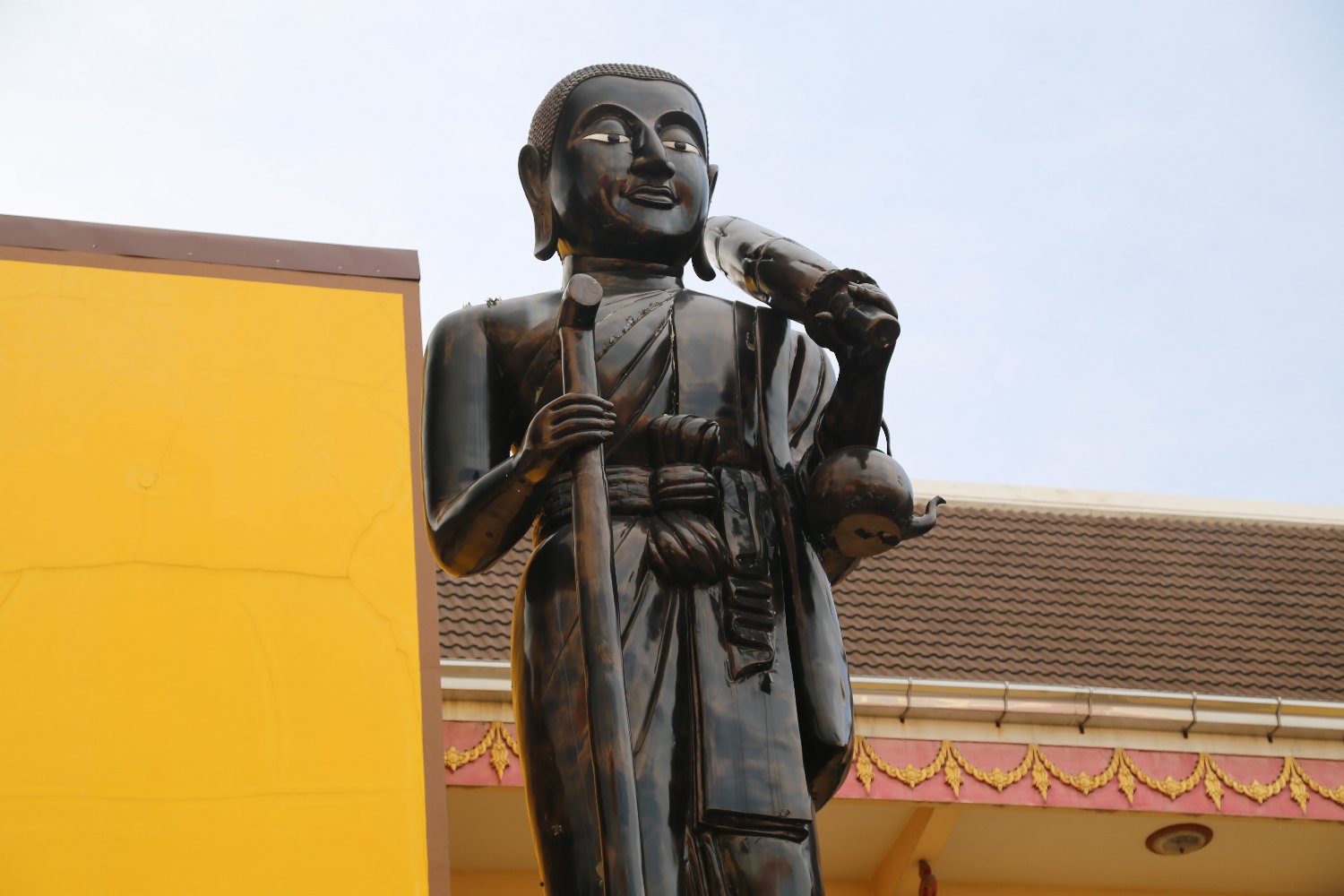
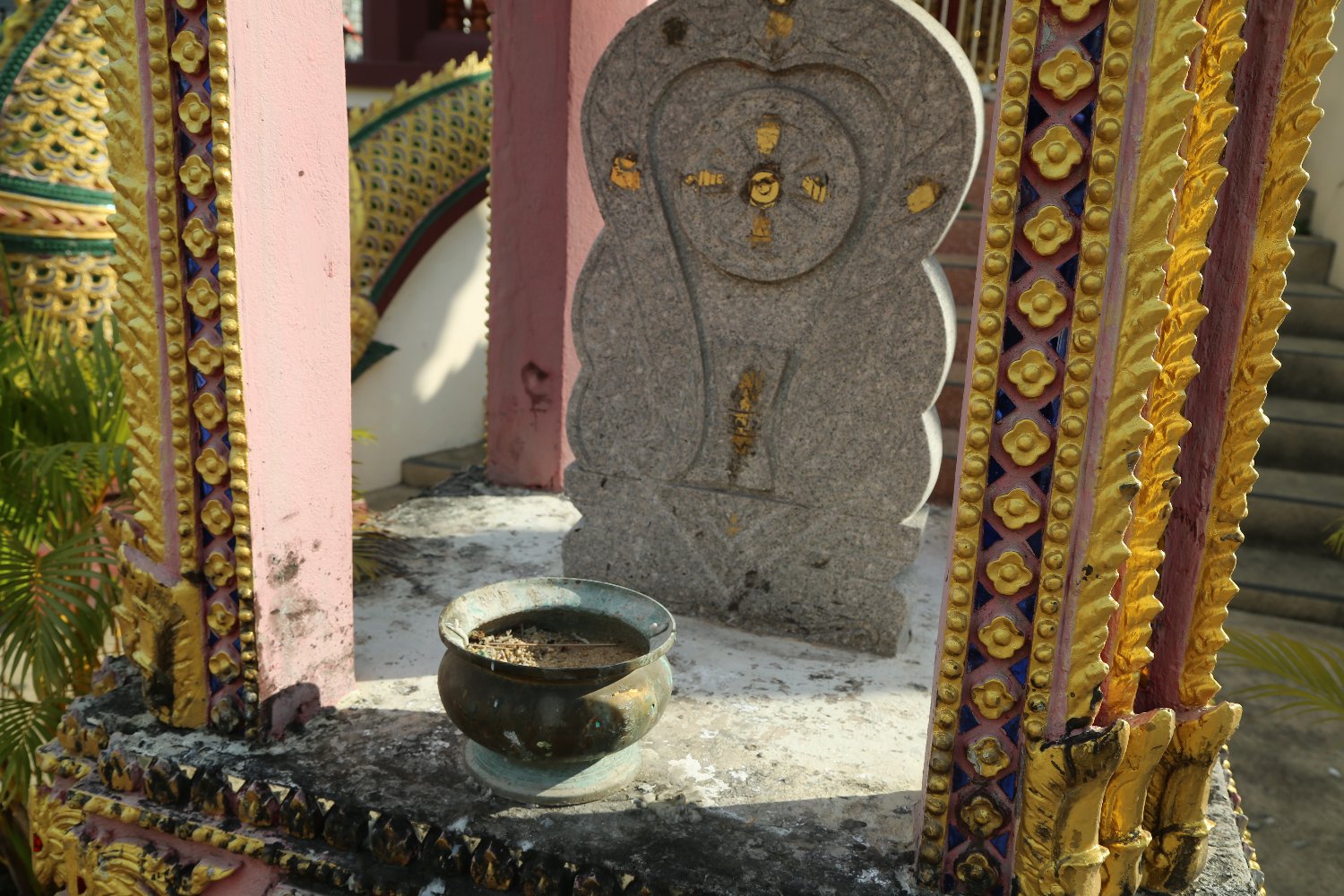
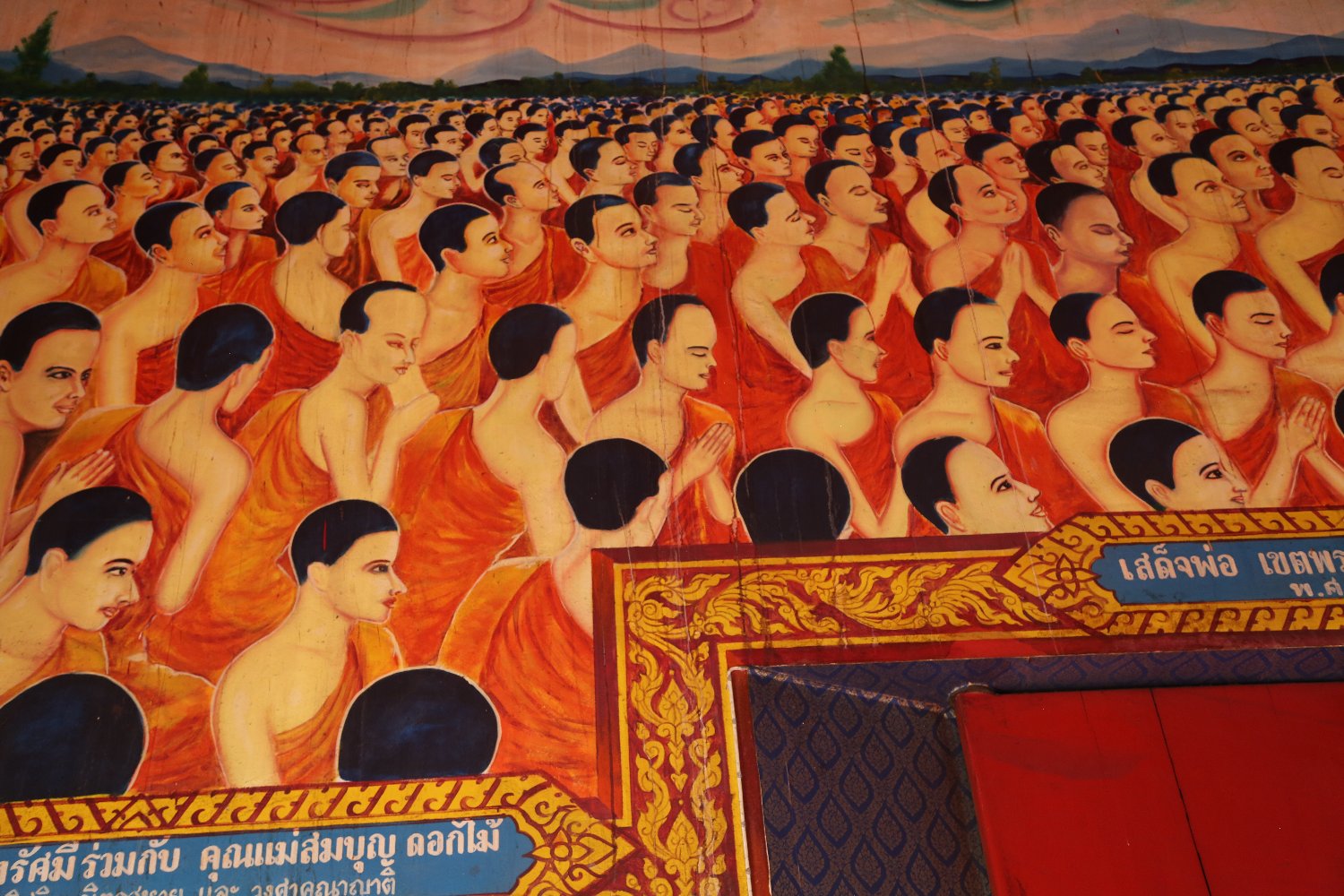
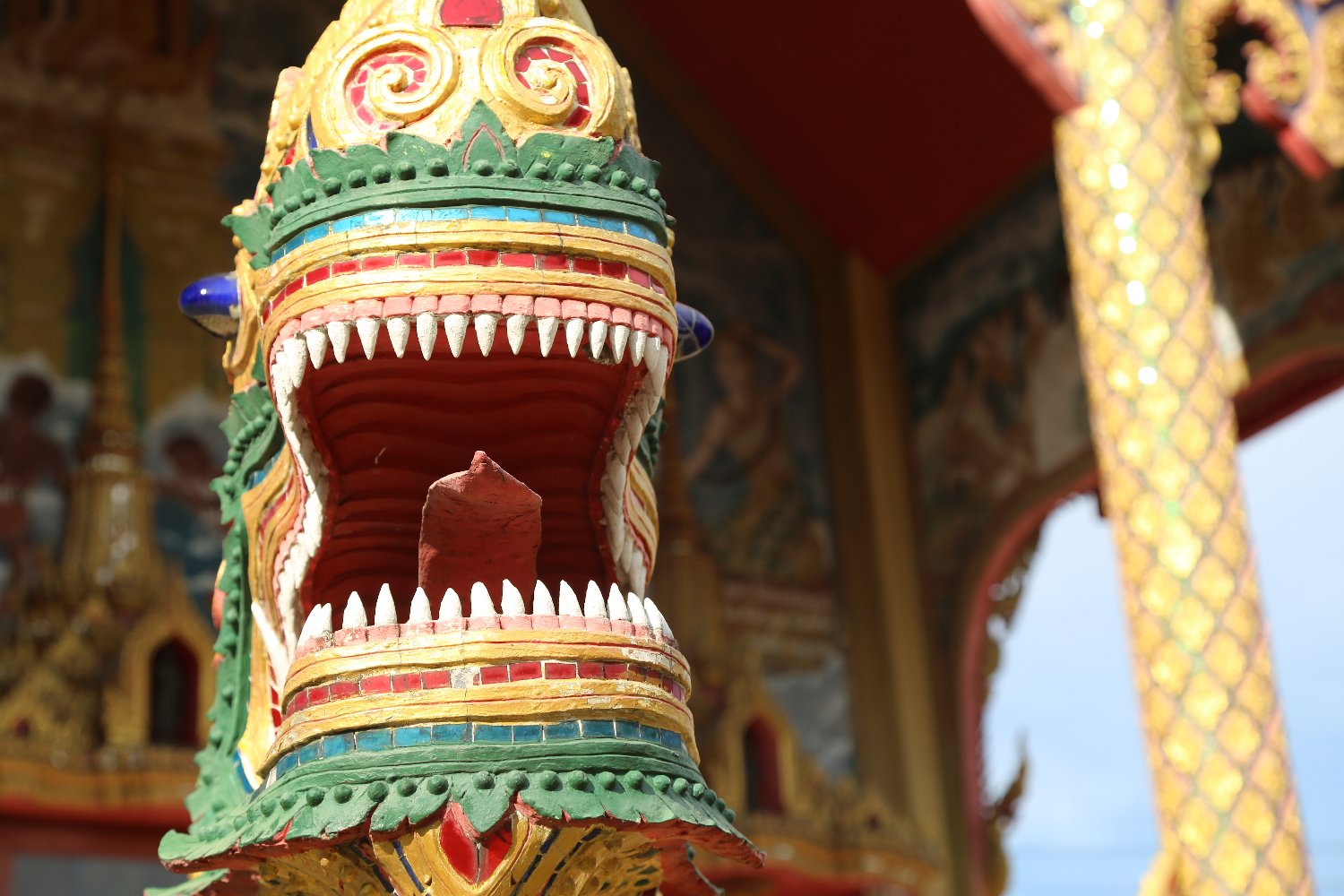

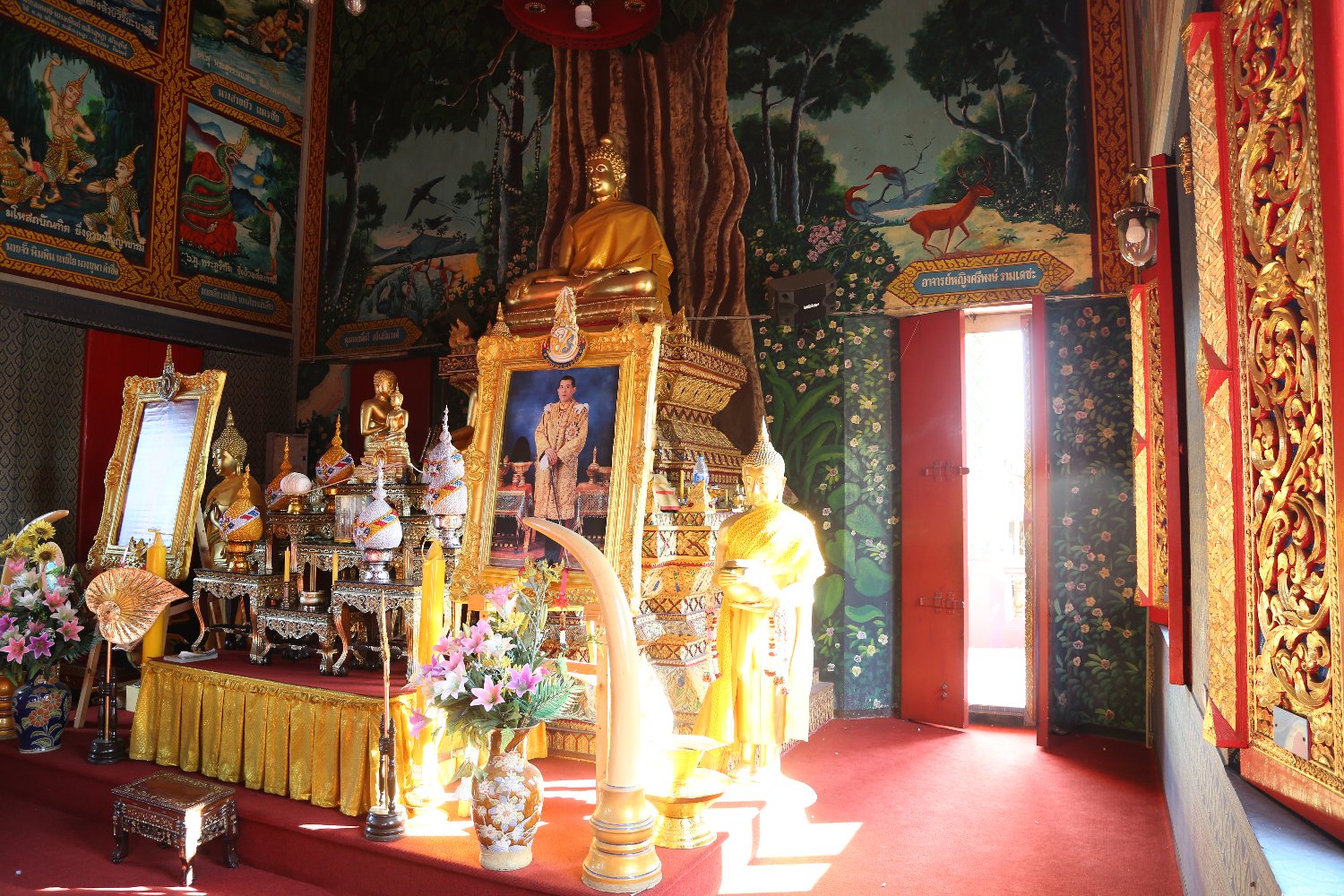
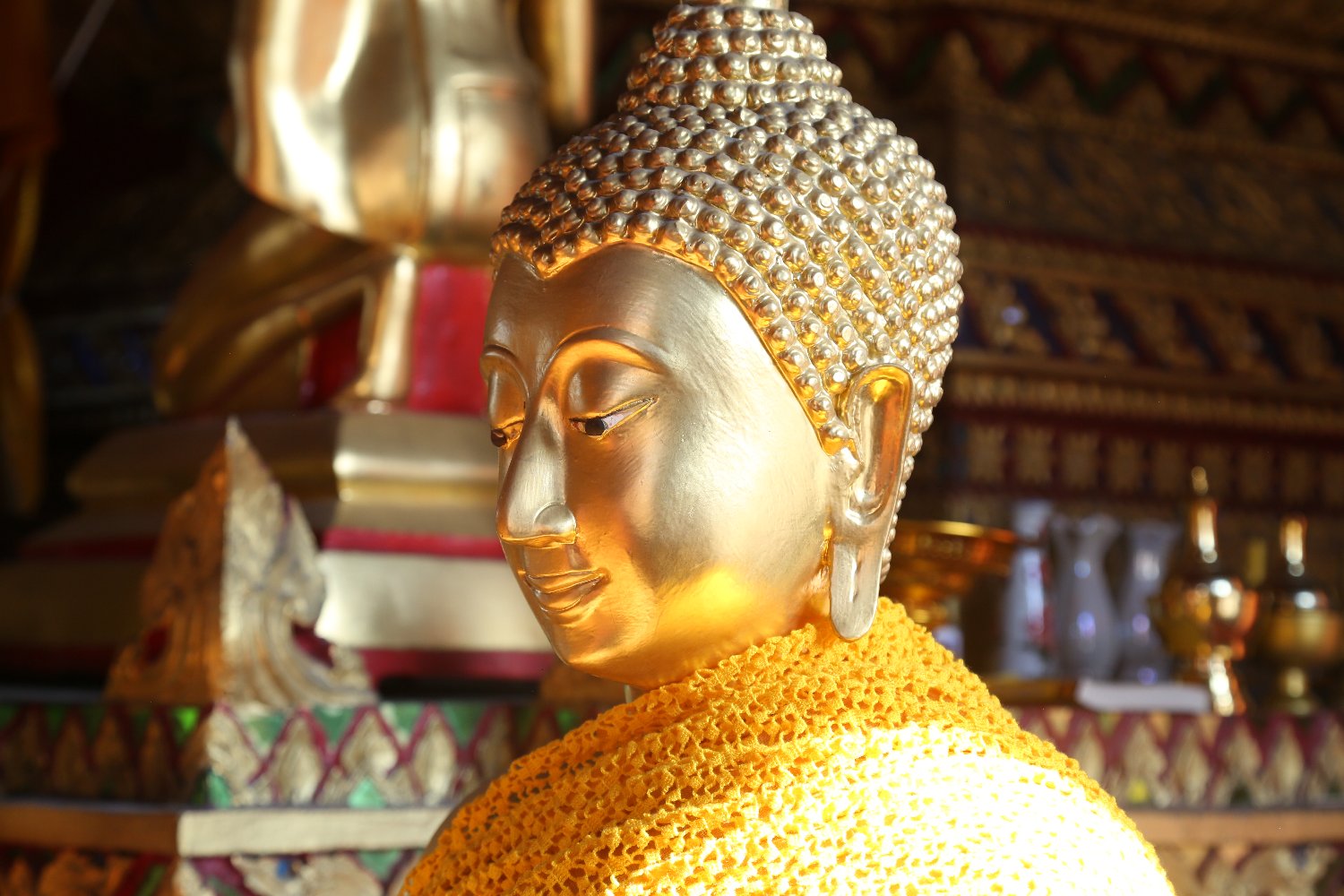
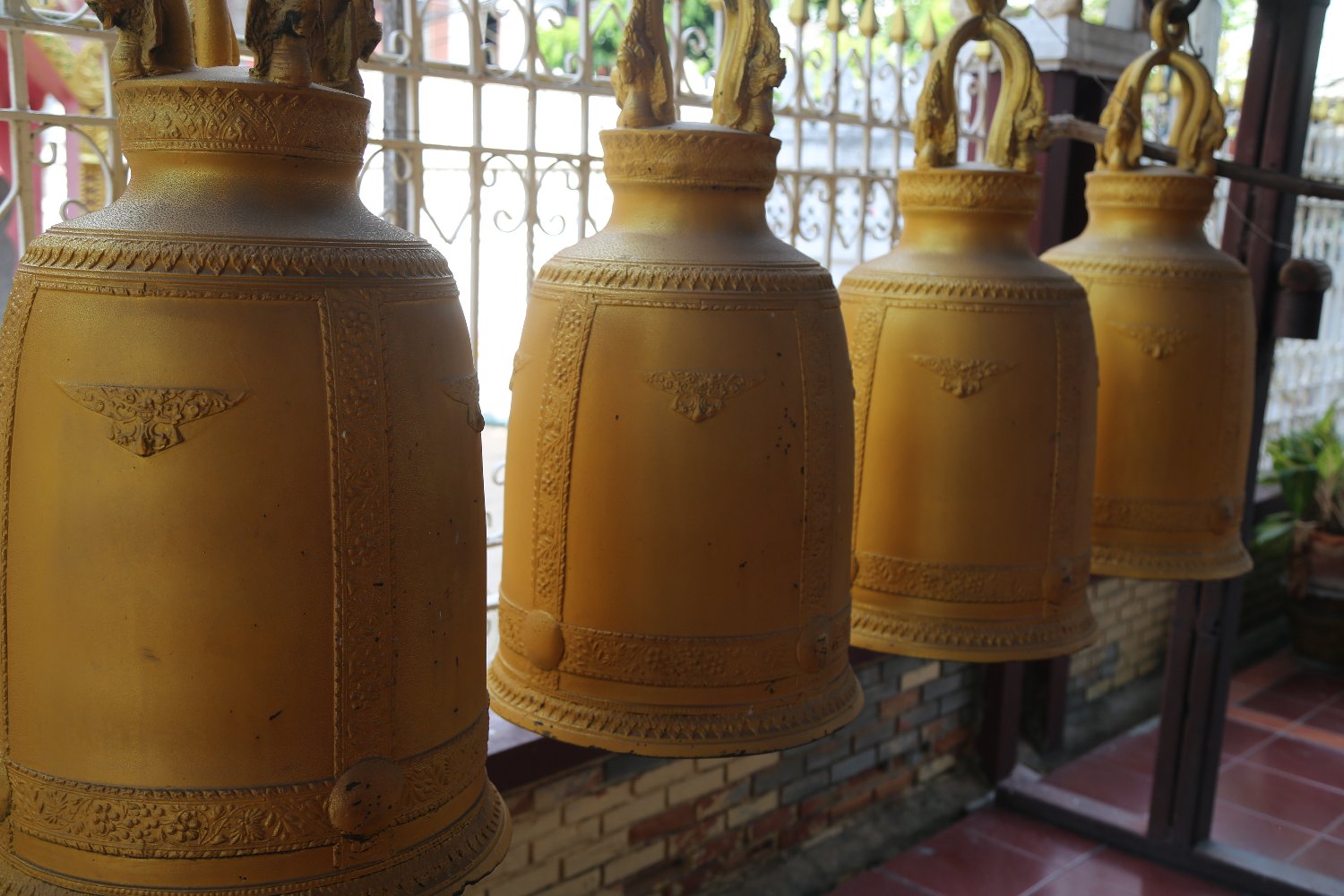
Wat Buppharam is a tiny temple (not to be confused with the Wat Buppharam in Chiang Mai) located just north of the great Wongwian Yai traffic circle. Closest Skytrain stop is also Wongwian Yai. One can also walk here from the other side of the river as we did, using the King Rama I Bridge.
This tiny temple is certainly well under the radar of most visitors to Bangkok. If open, worth checking out is the Ubosot Ordination Hall with its tiny collection of golden Buddhas and ancient looking dark paintings on the walls. Equally as impressive is the colorful exterior of this building especially on both ends. It is obvious this temple, while diminutive in its stature is very well taken care of.
During our visit several monks were lounging around in the shade – this is a good temple to take a break from the crowds of much larger well-known temples.

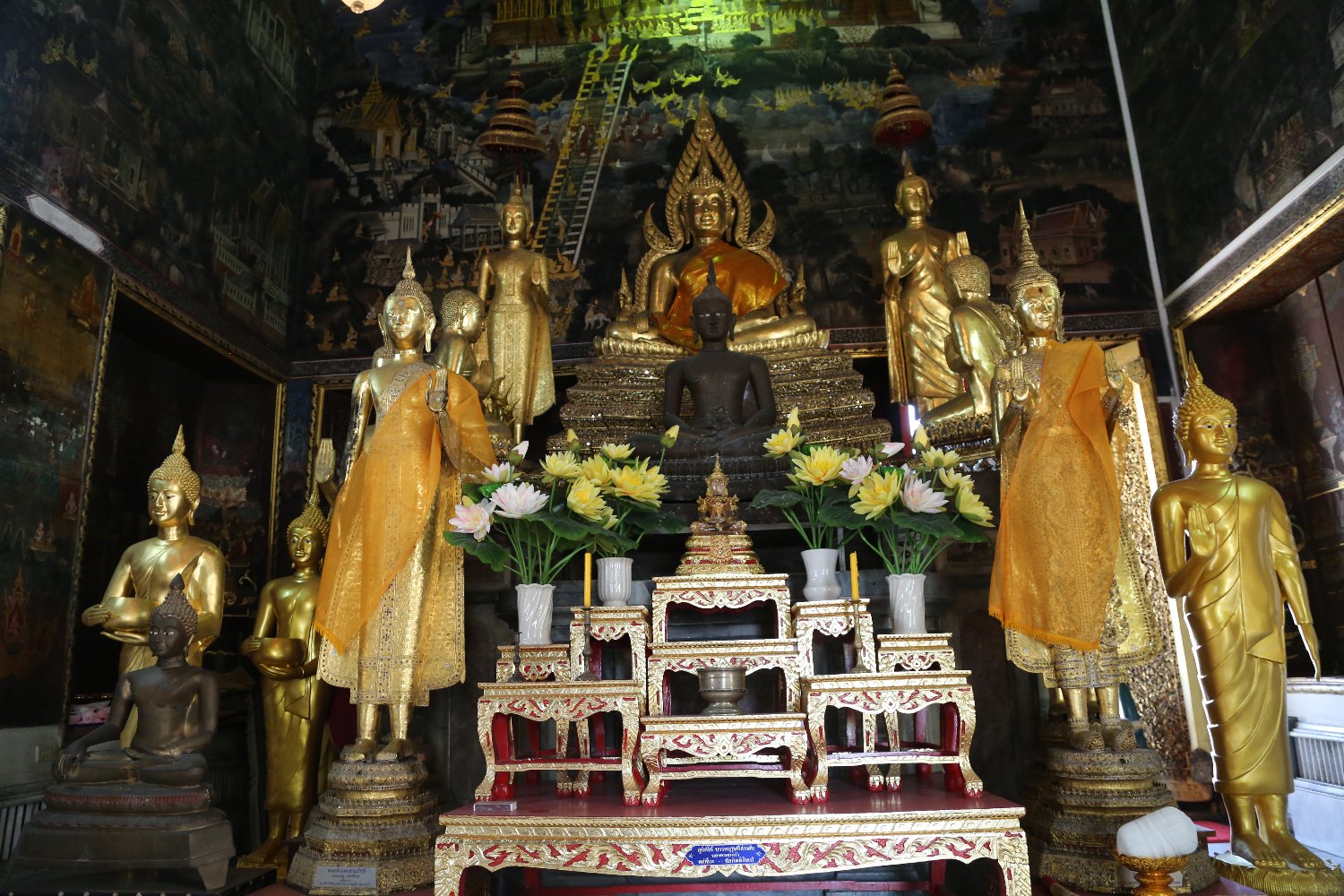
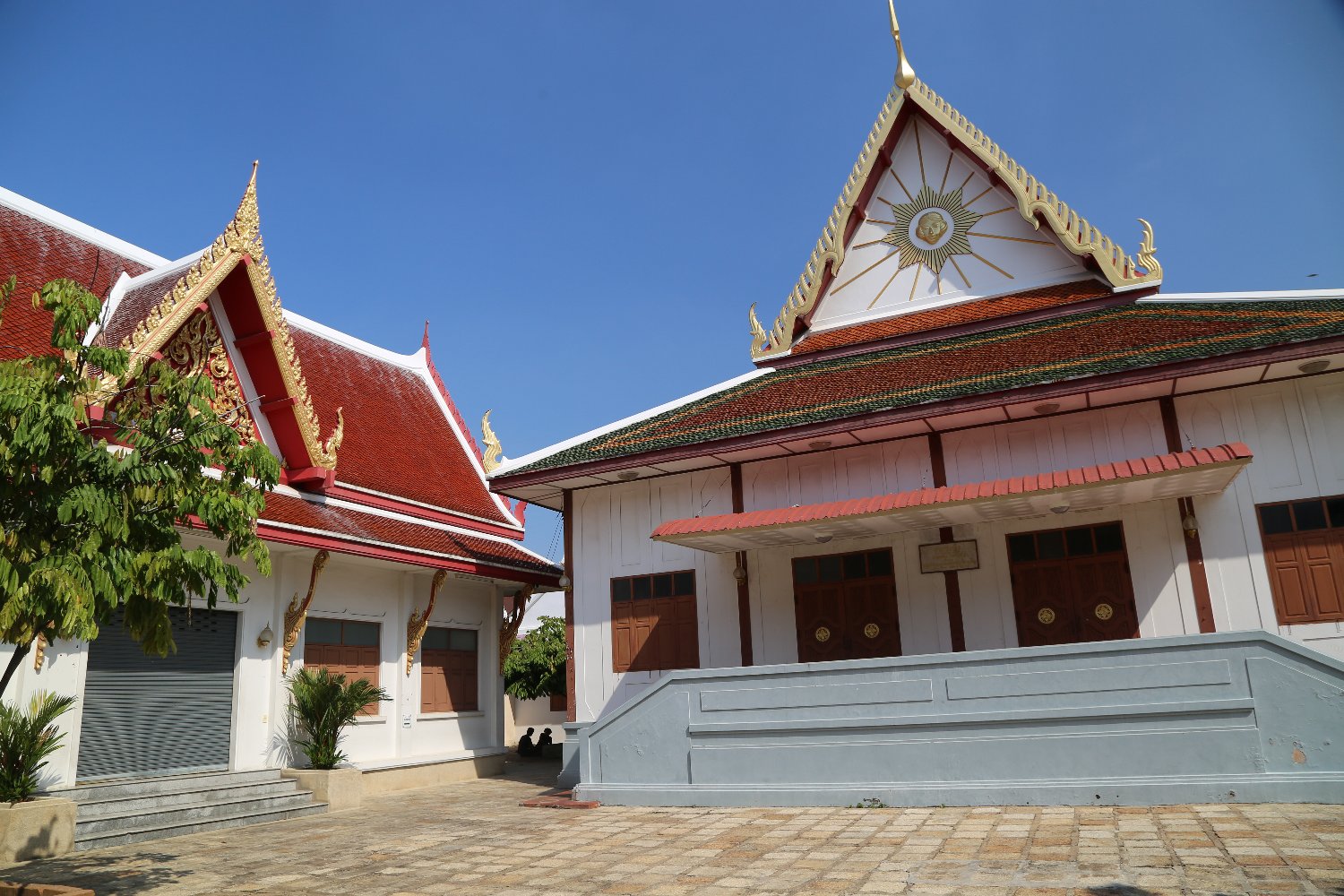
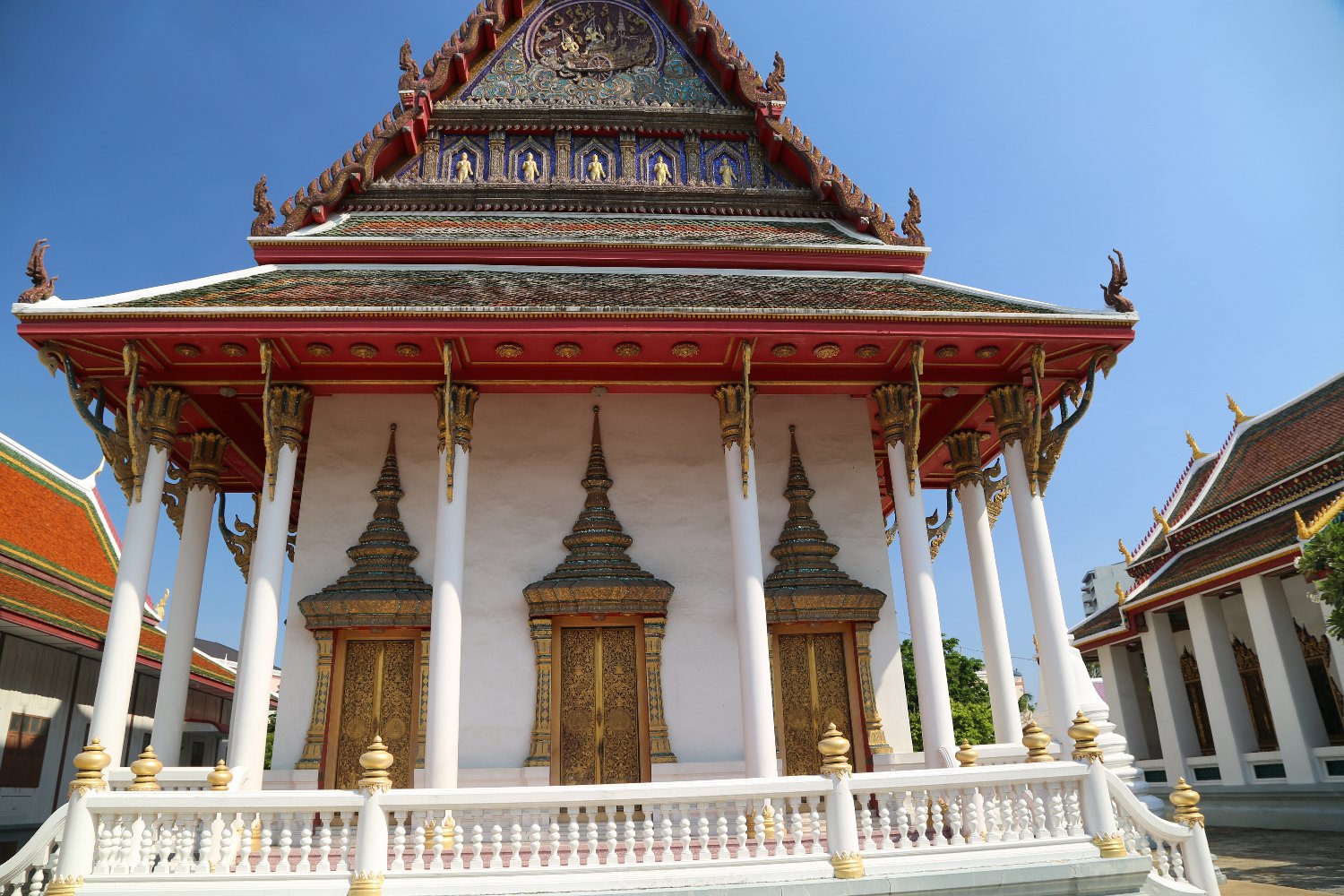
Wat Buranasiri Mattayarm is located along the picturesque Rop Krung Canal not far from the Khlong Lod Night Market (in old town Bangkok). Built by a man named Bunsri Buranasiri on his birthplace. This wat used to be called Wat Siri Ammattayaram and was later changed by another Thai king. Small wat with a clean courtyard and an unassuming stupa. Near to a number of much more famous temples – however, this temple sees few foreign visitors.
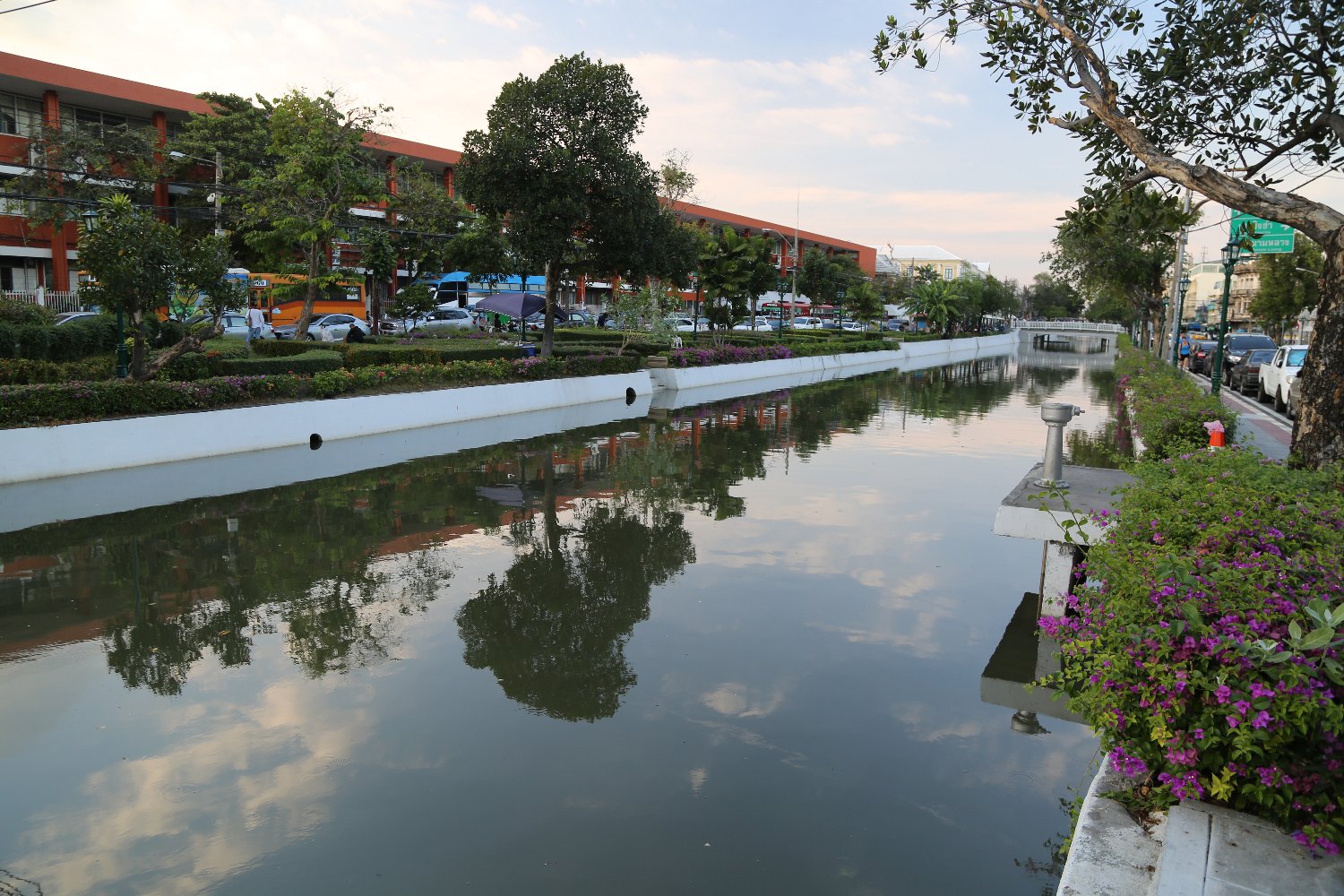
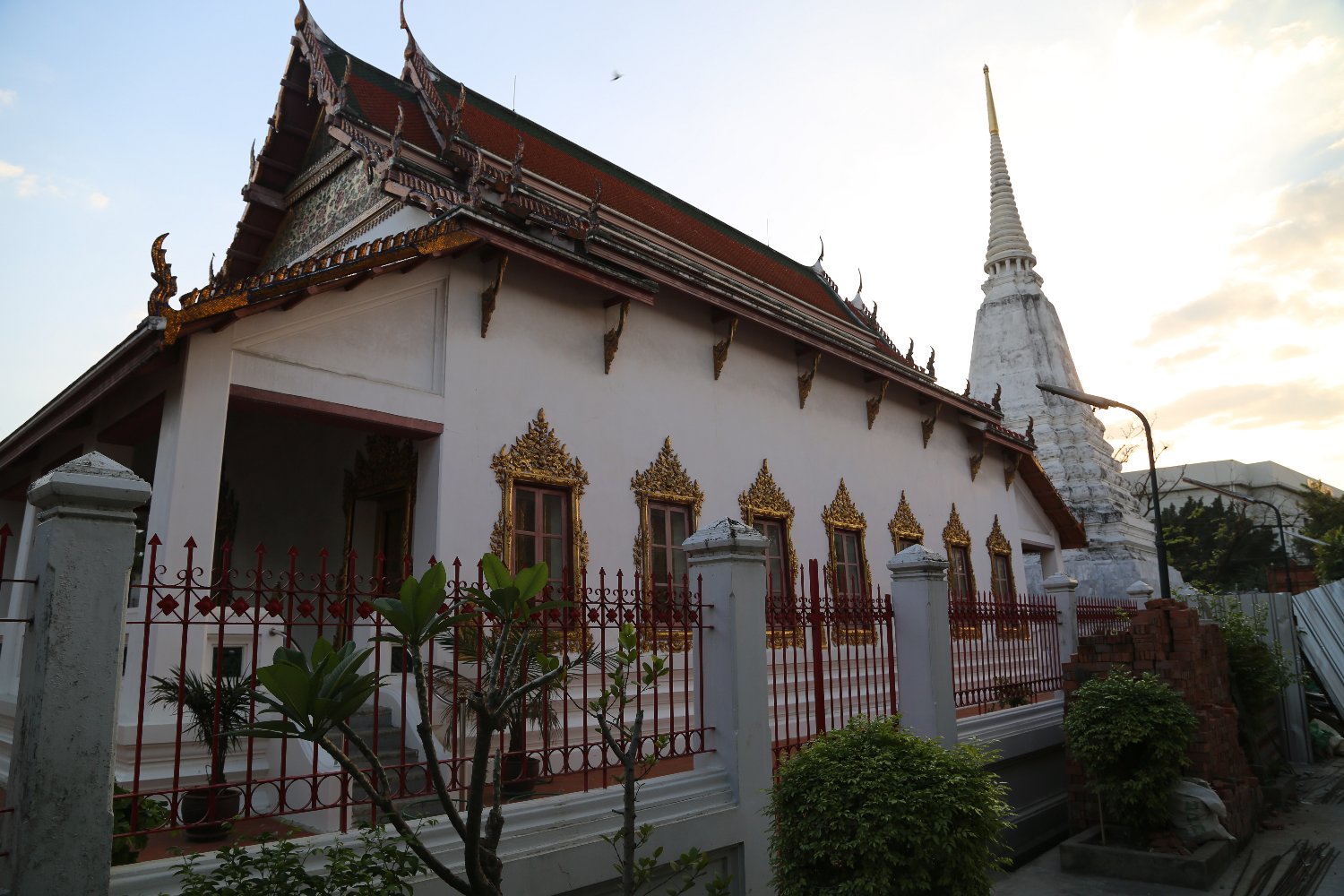
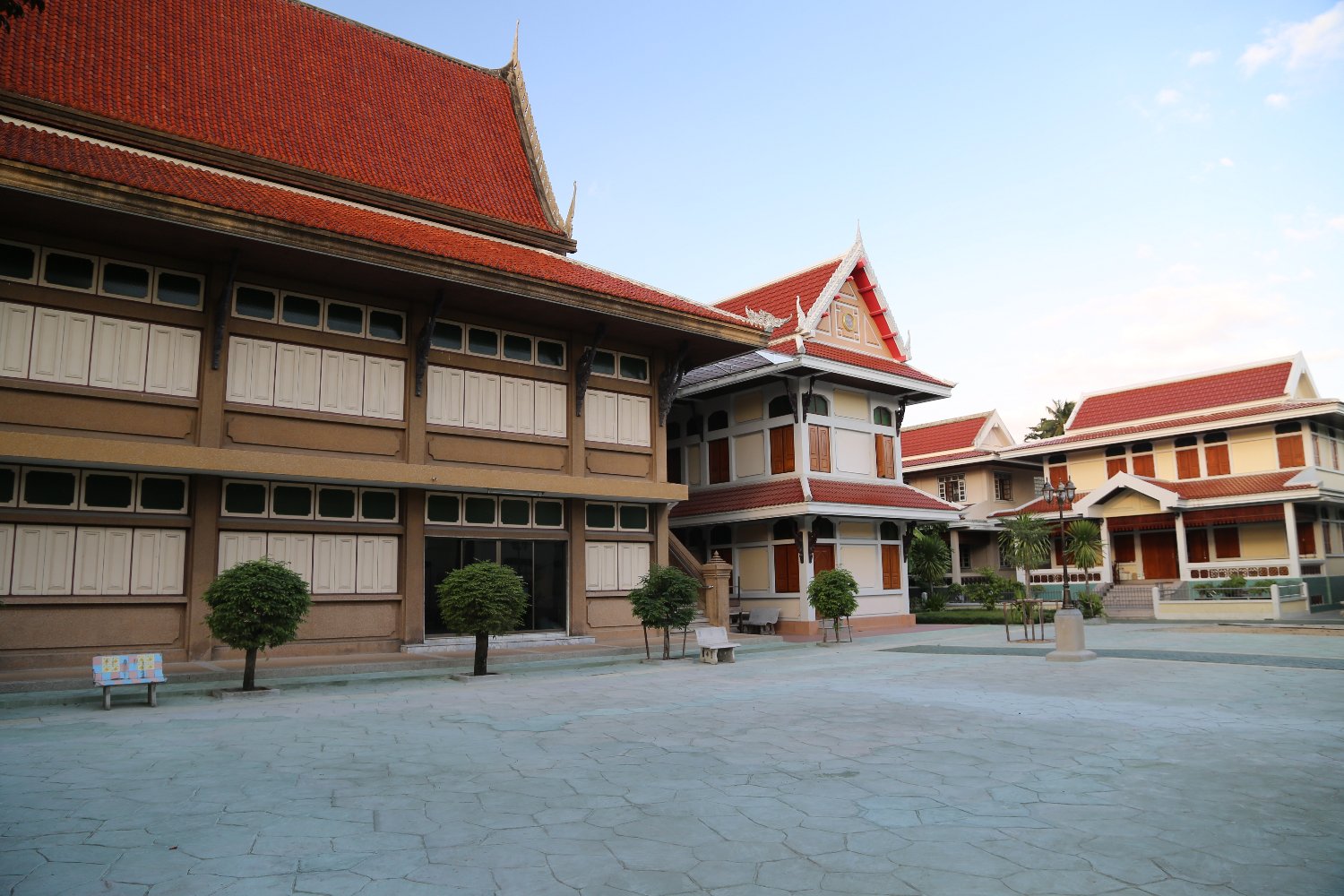
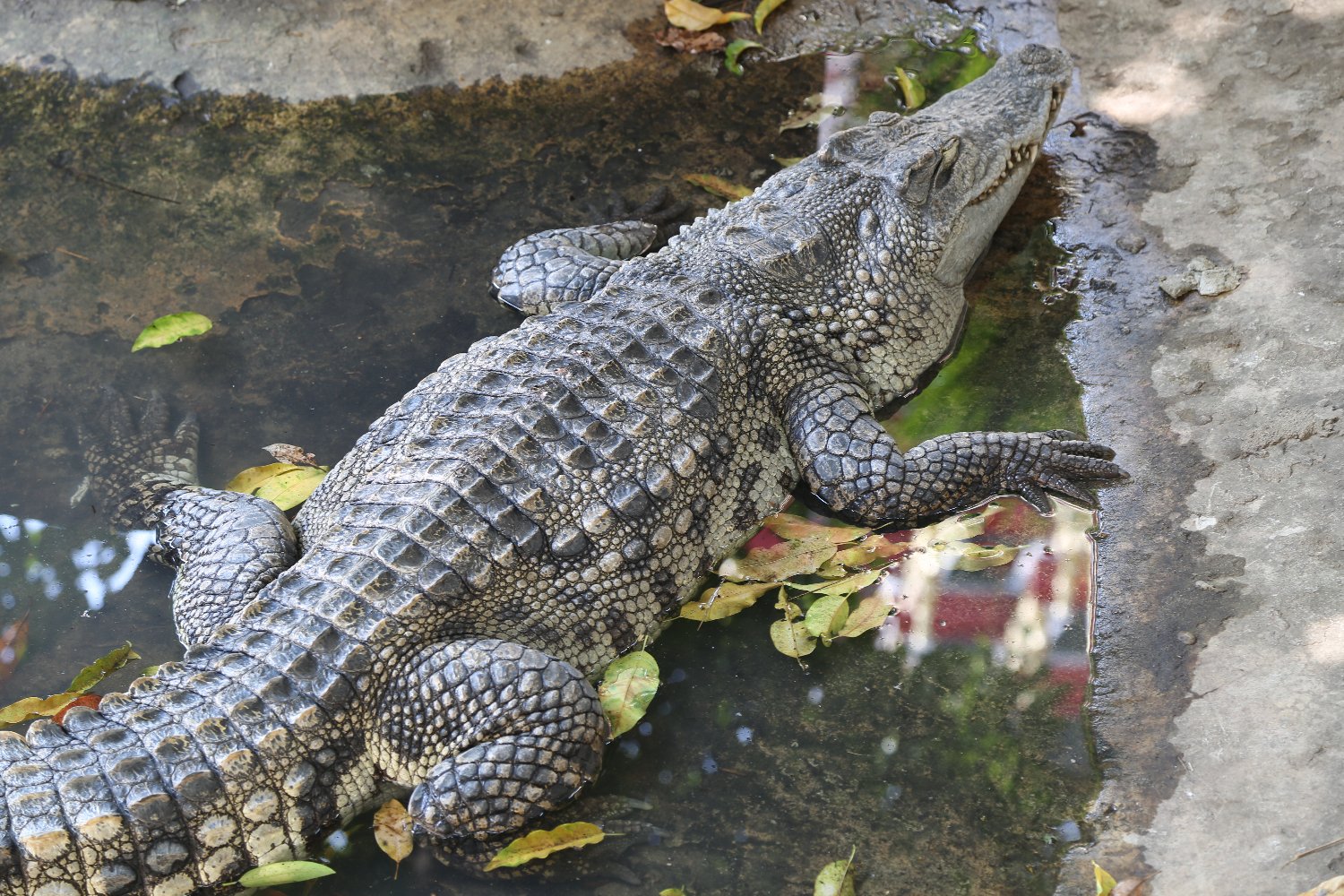
 Wat Chakrawatrachaw Woramahawihan or otherwise more simply known as Crocodile Temple features several small and one large crocodile – kept in several enclosures right at the base of one of the temples on property. Located on the edge of Chinatown this wat was first founded as a royal temple in 1825 (pushing nearly 200 years old). Plenty of history here aside from the novelty of seeing crocodiles housed on the grounds!
Like a number of lesser visited wats around town we found some of the buildings locked on site during our visit. An open-air car parking area is located adjacent to the temple. A security guard collects a nominal parking fee as you exit. Also houses one of the larger communities of monks and novices in Bangkok. A very long and narrow, very crowded during the day shopping soi is located just down the street.
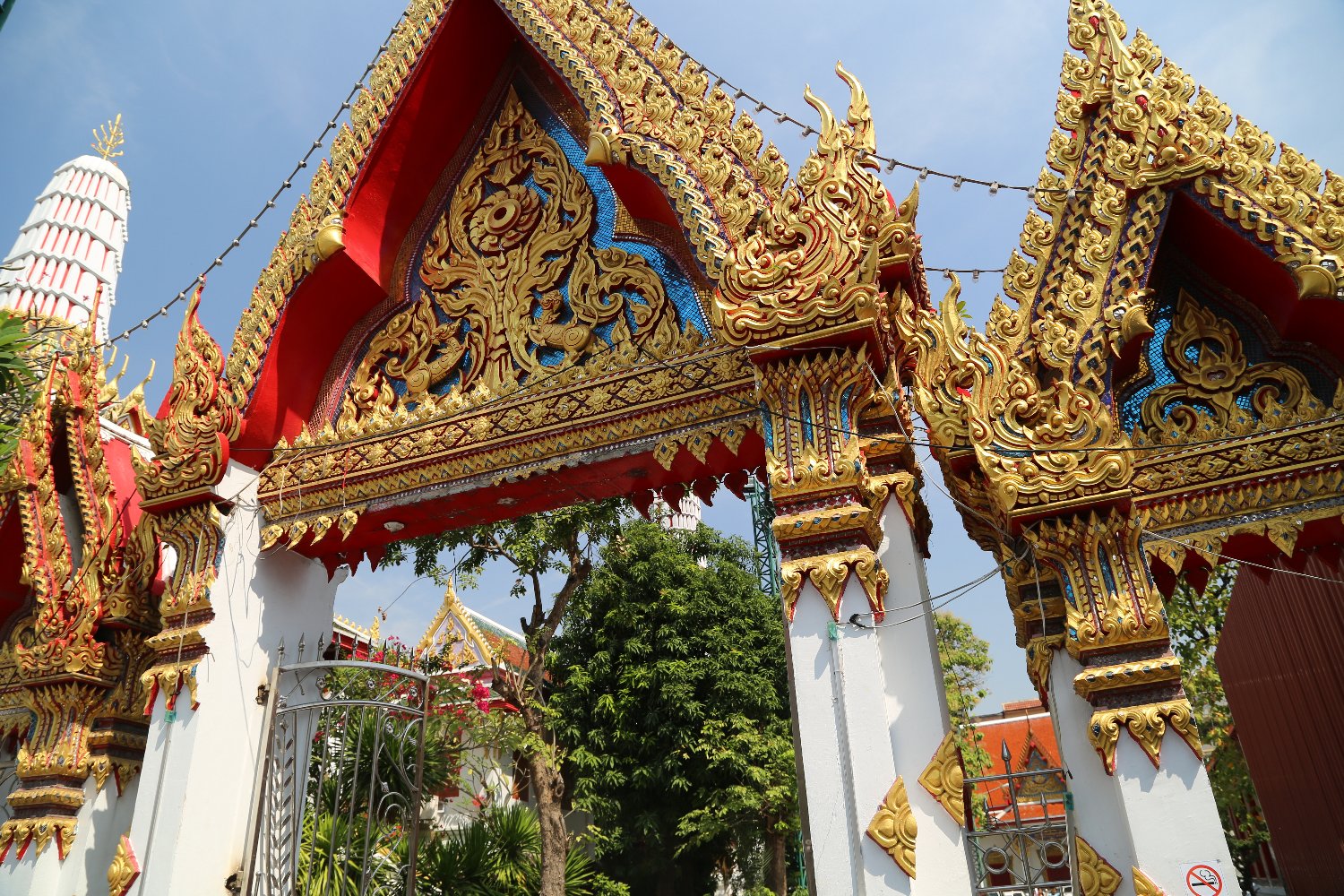
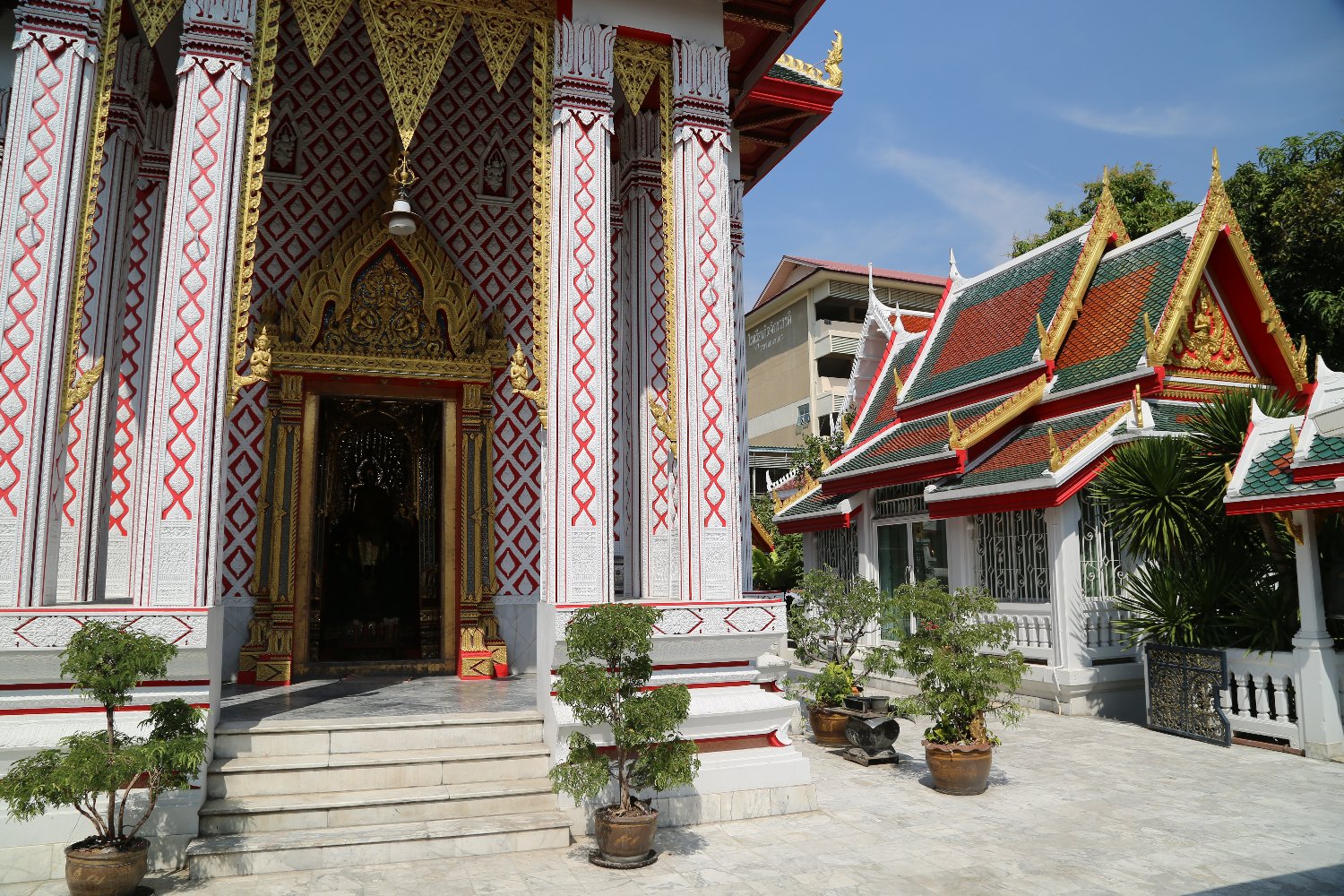
Wat Chana Songkhram Rachawora Mahawiharn (how is that for a mouthful) is located between the Chao Praya River and Khao San Road (within a very short walk of Khao San Road). Popular with locals and tourists alike. We don’t often see nuns in Thai temples, but we have seen nuns at this temple before. During our latest visit to this temple, a local was introducing himself to tourists and showing them around the temple. A stop here is a welcome respite from the often chaotic and noisy nearby streets including Khao San Road.
Estimated visit time 20-30 minutes.
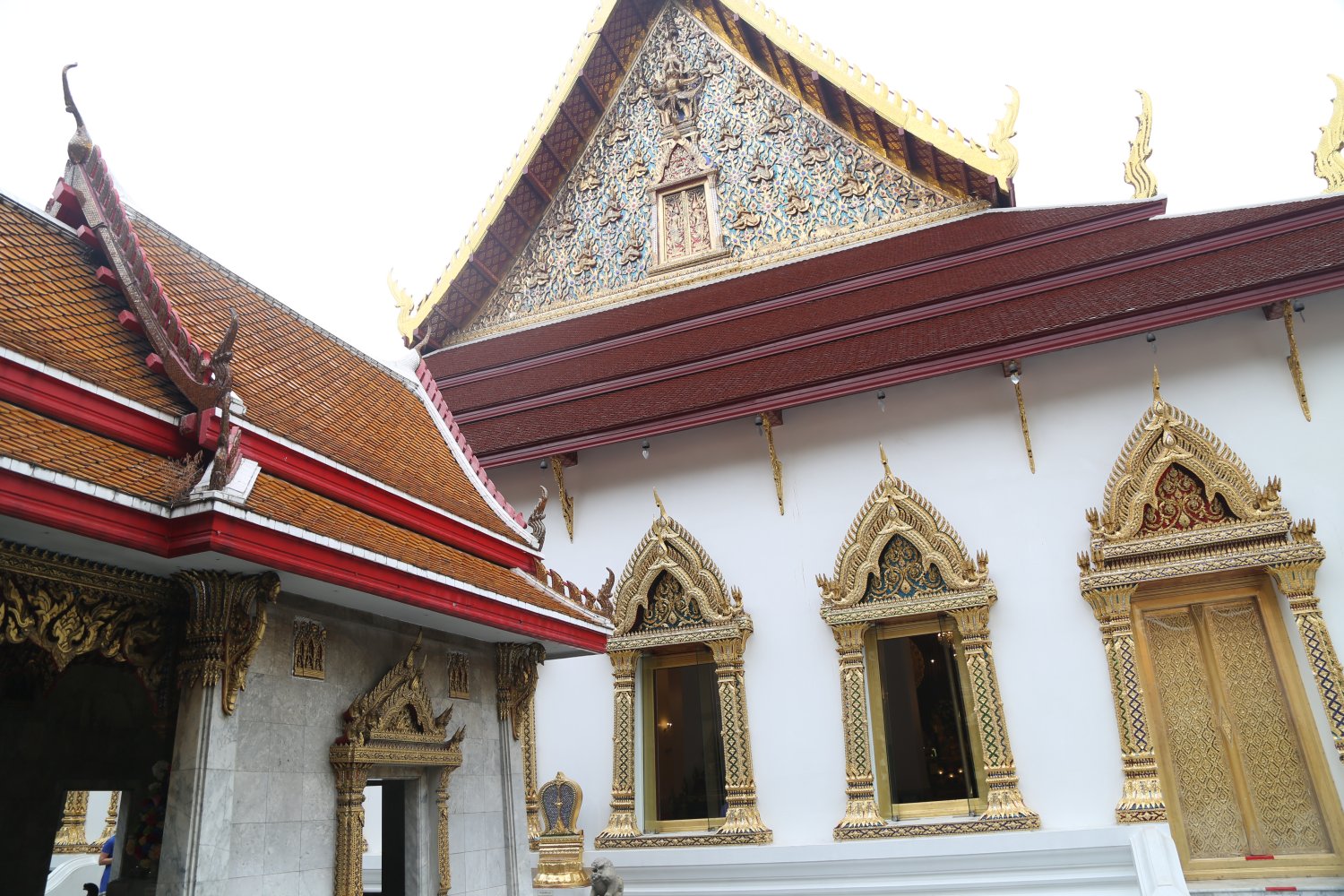
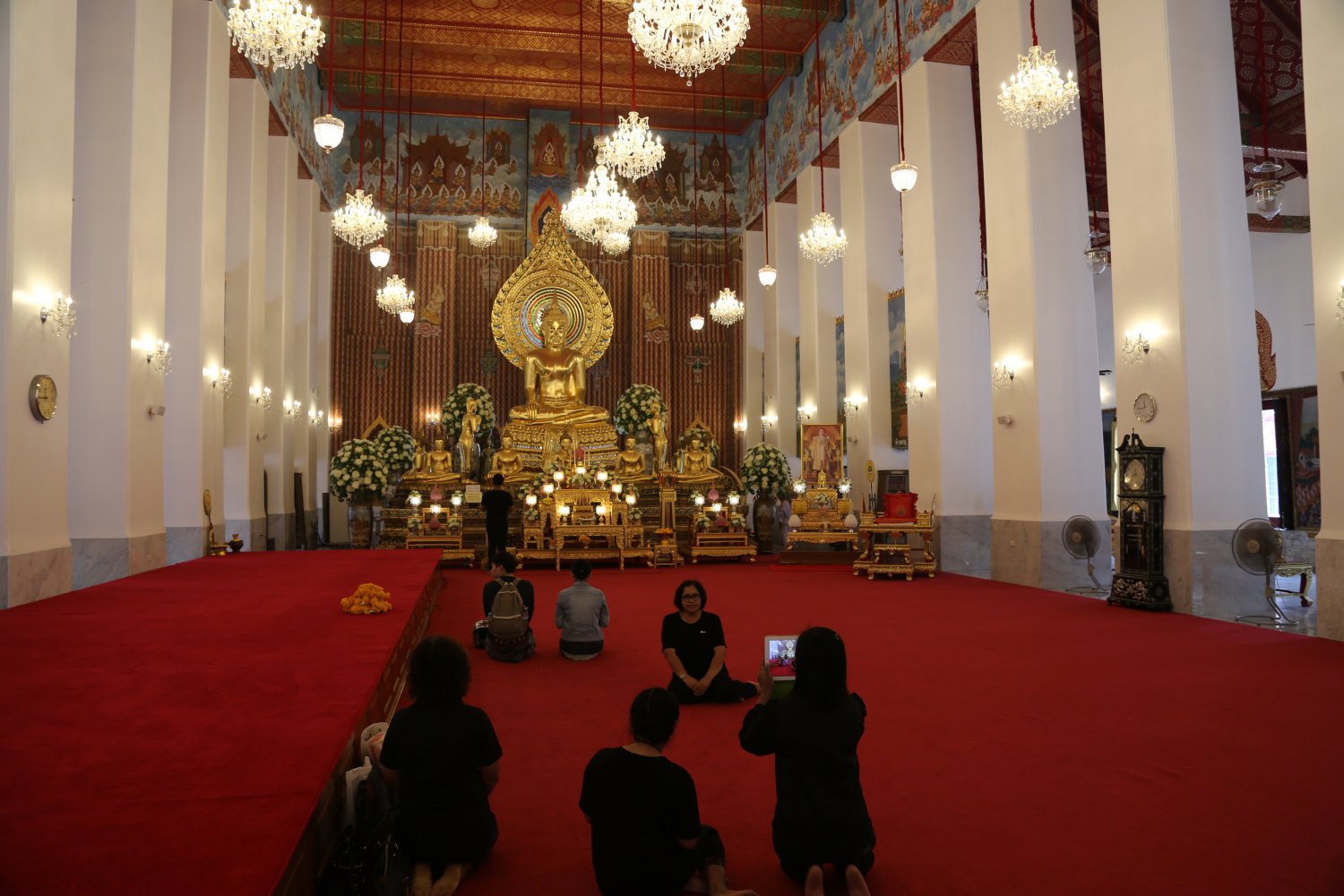
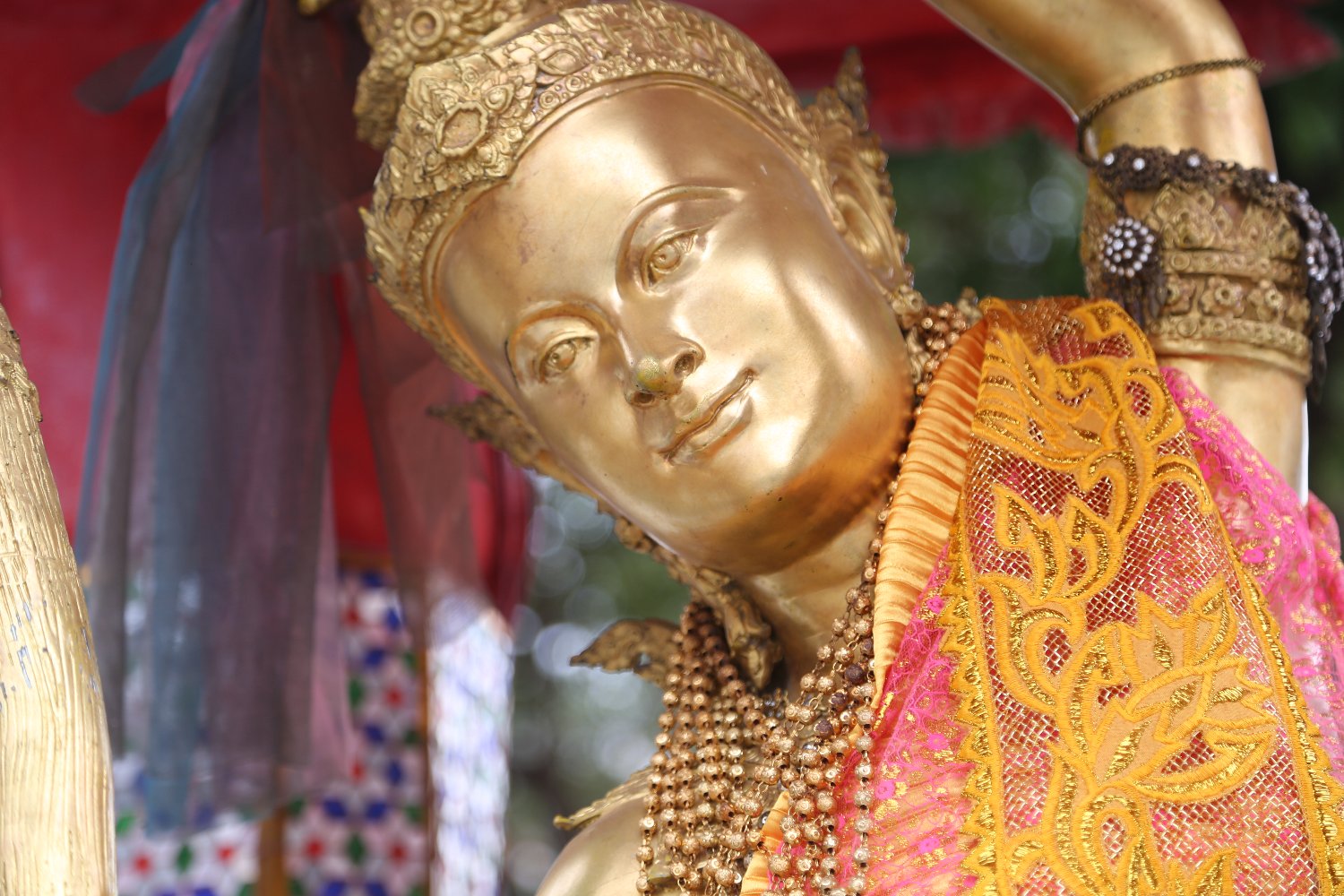
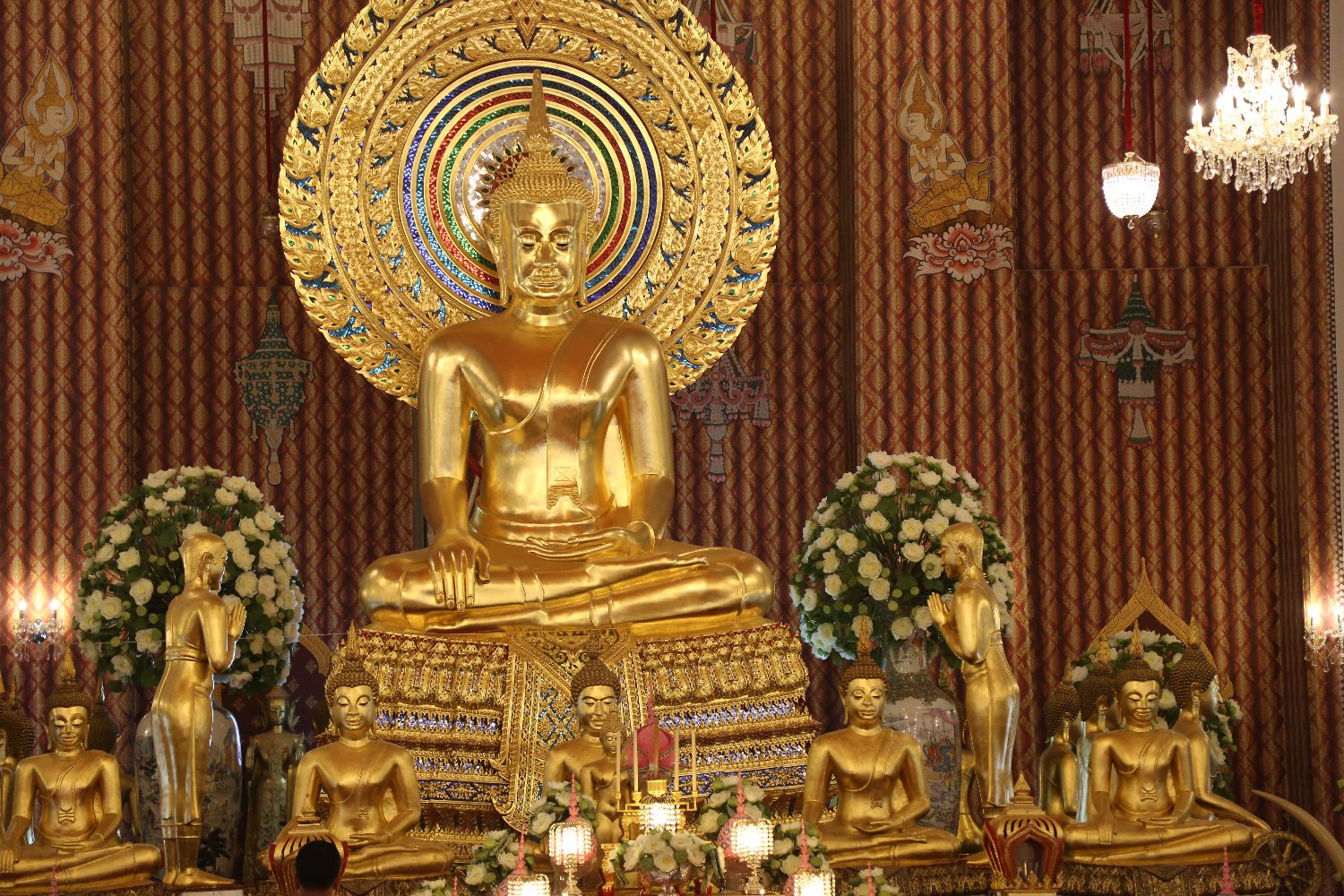
Wat Chao Am is about a 20-minute walk from the closest MRT (metro) station, Bang Khun Non and not too far of a drive from the Taling Chan district in Bangkok. This is a pleasant walk for those not in a hurry, passing by a number of small restaurants serving what appears to be delicious food. The largest temple in this part of town, Wat Chao Am (sometimes referred to as Wat Chao Arm) originally was built in 1779 by a royal decry from King Taksin the Great (in honor of his royal consort Chao Arm who was killed because of a misunderstanding). A stupa was originally built to contain her remains and relics.
A popular place for local Thai’s – especially on the weekends where sometimes small shops will sell a variety of products to attendees. While the temple buildings are not necessarily large the overall grounds are quite spacious and spread out with plenty of parking. Features of a number of indoor and outdoor prayer places including a small water feature surrounded by a number of plants – several benches are located here – an ideal place for meditation.
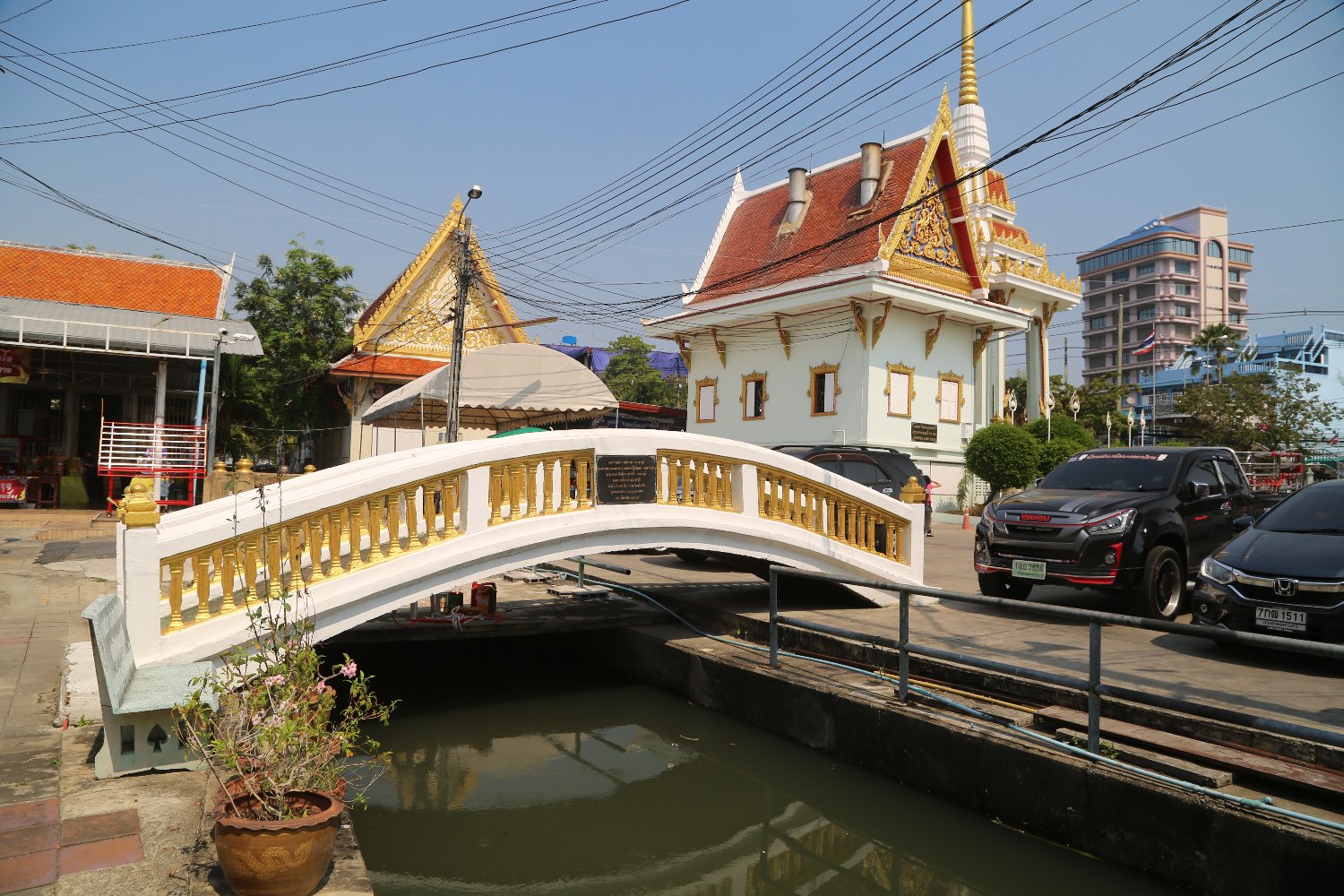
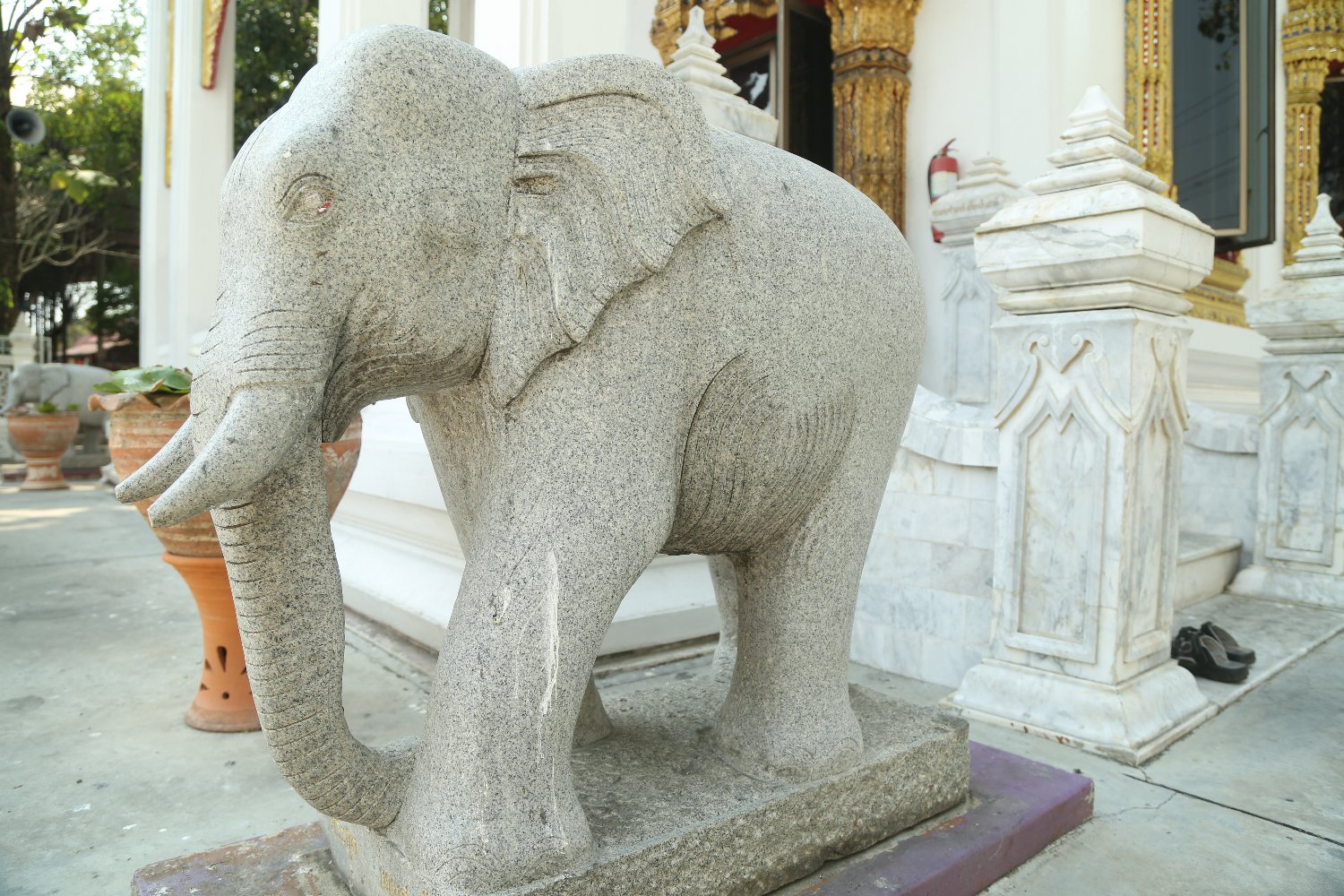
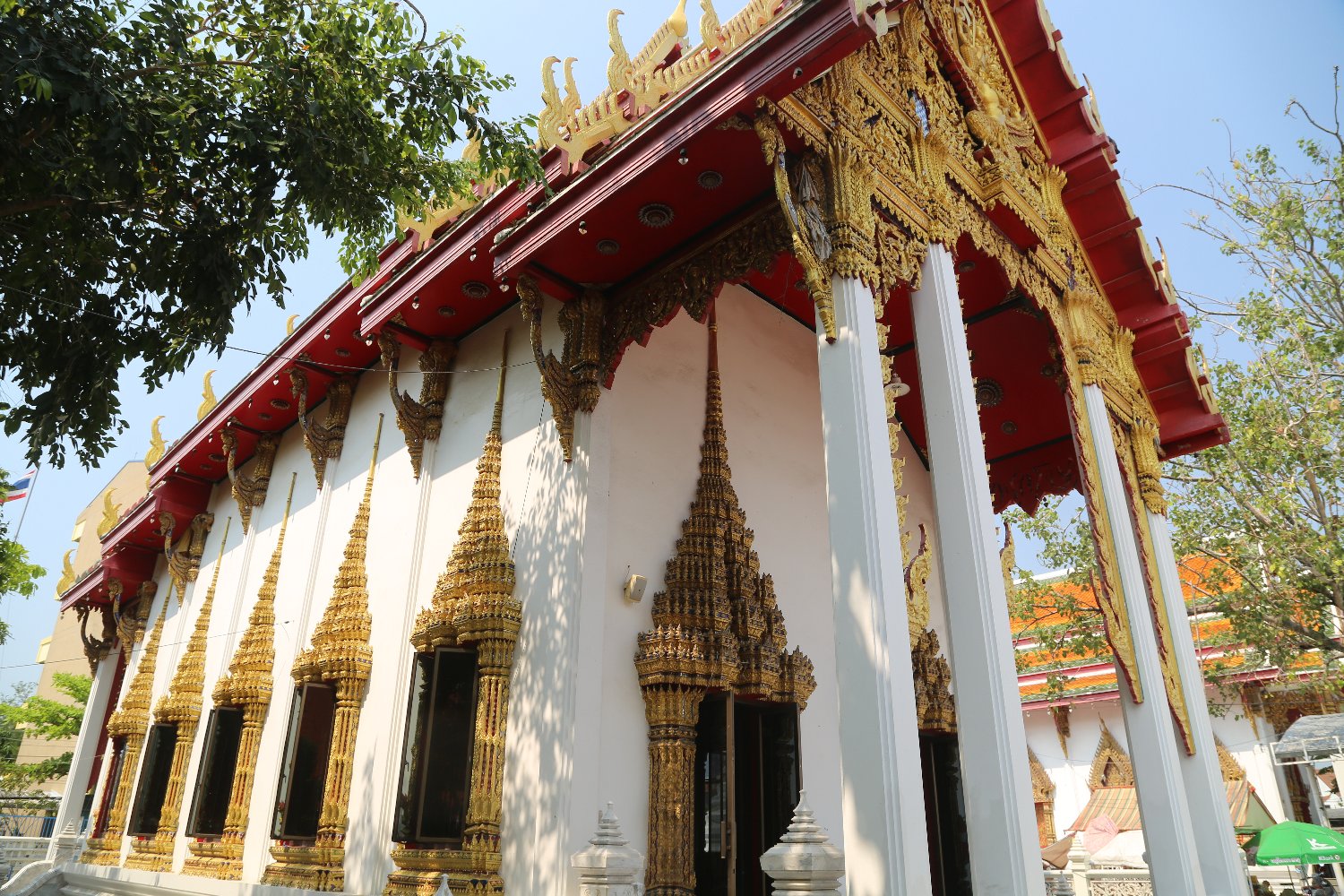


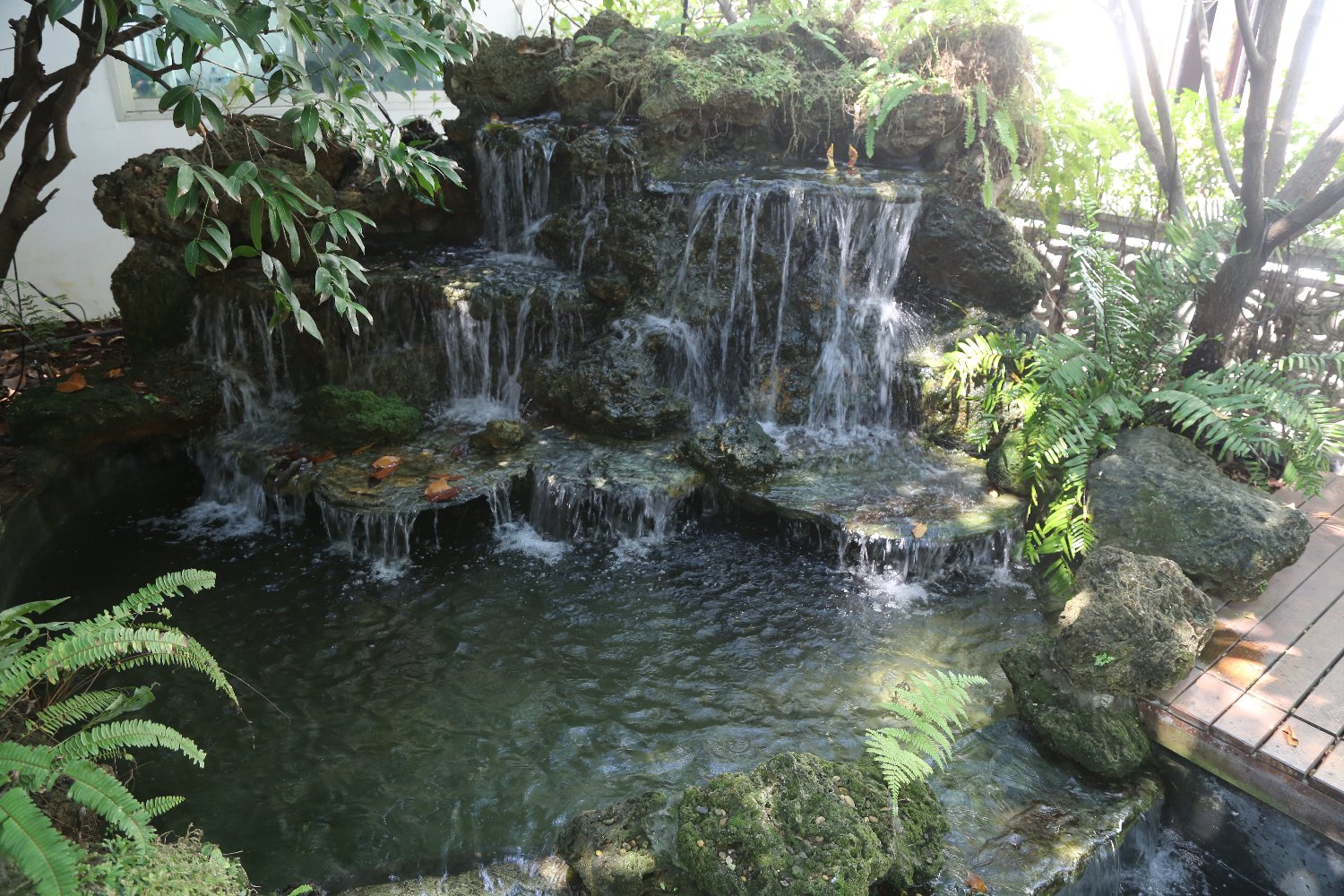
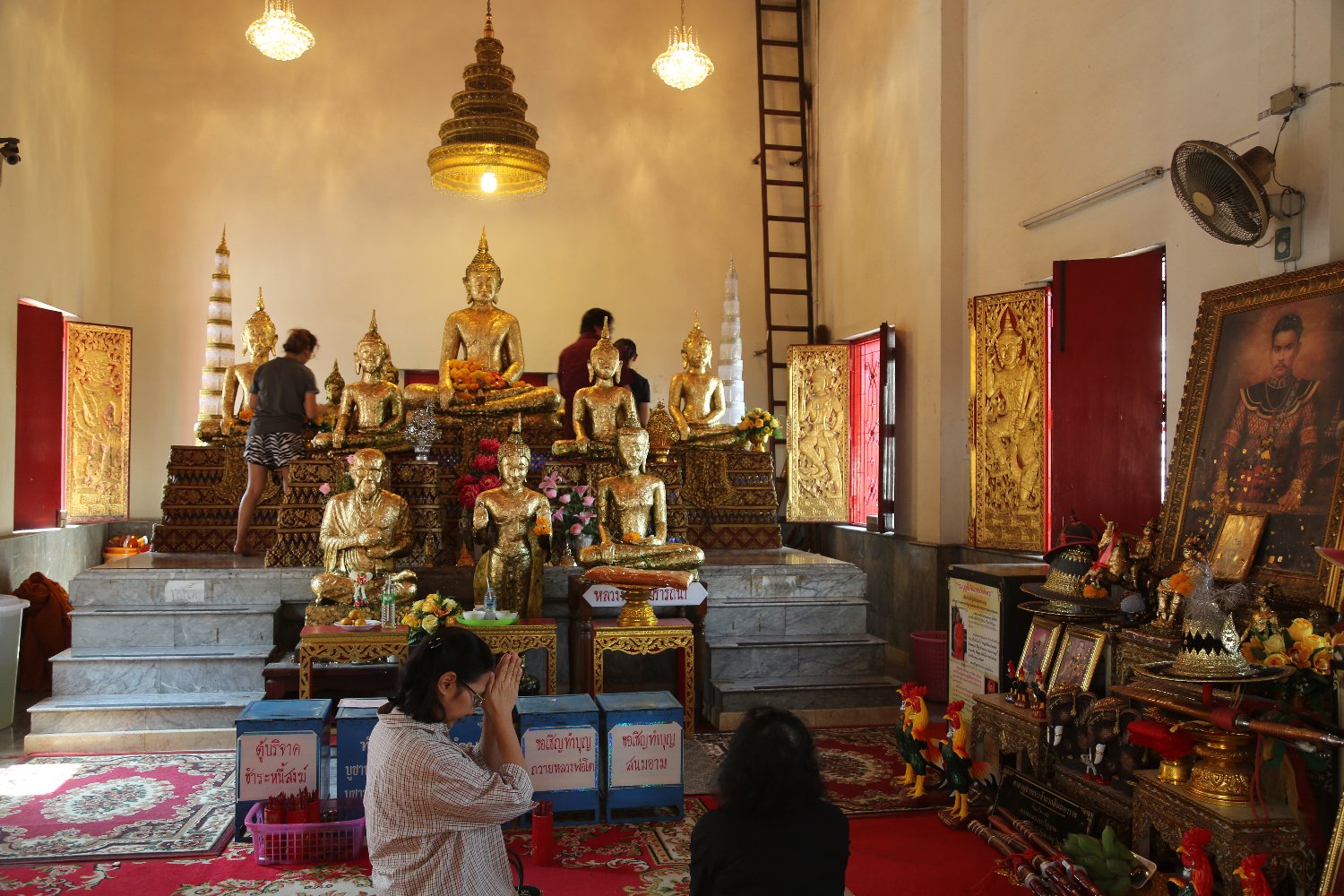
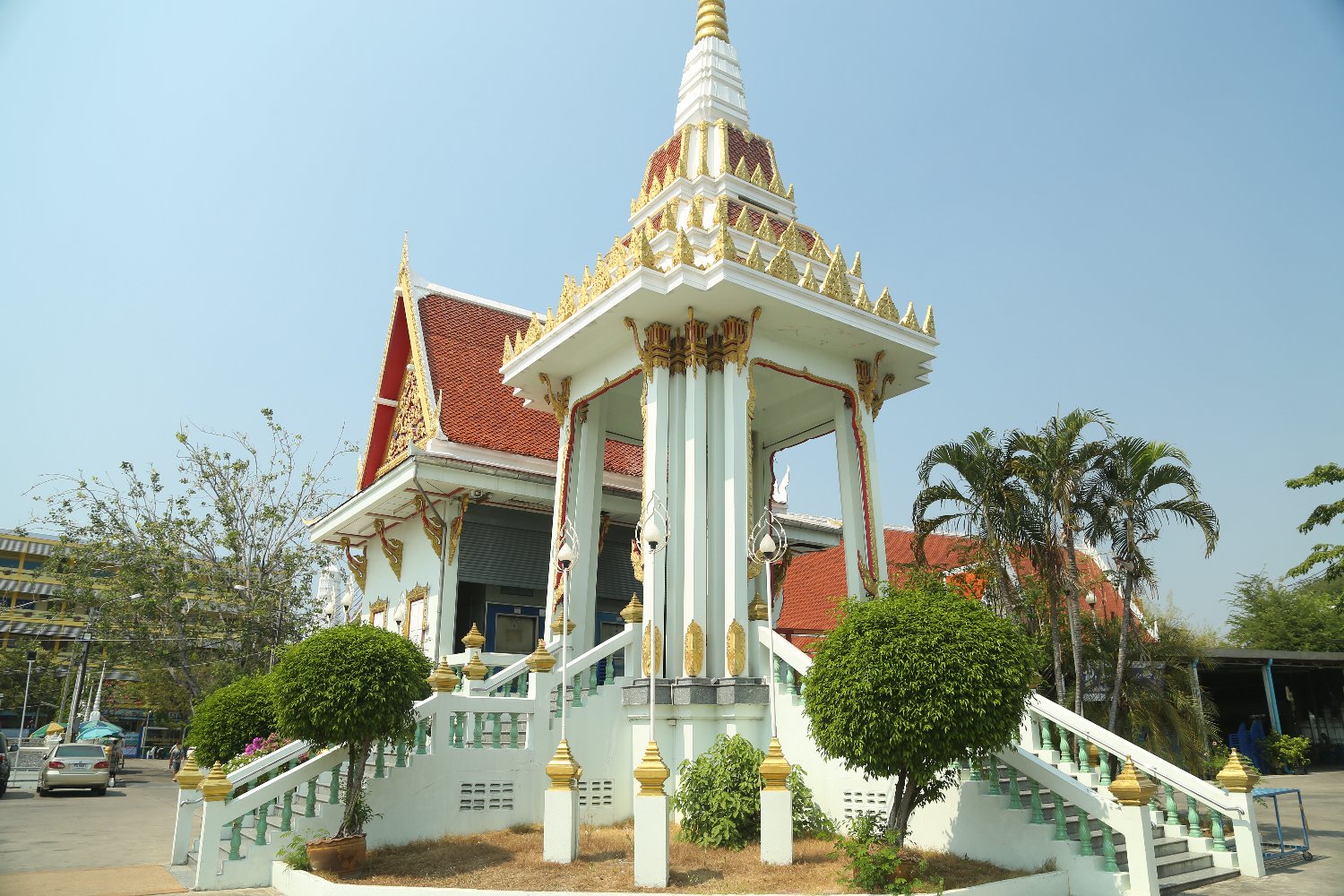
Wat Chat Kaeo is located on the Thonburi side of the Chao Praya River – a short walk from Yanyee Hospital (known for their roller-skating delivery women). Located on the end of a small soi close to the shore of the river, but not actually accessible from the river. A very tiny temple that few foreign visitors ever see – very limited photography opportunities here. Also, home to a school.
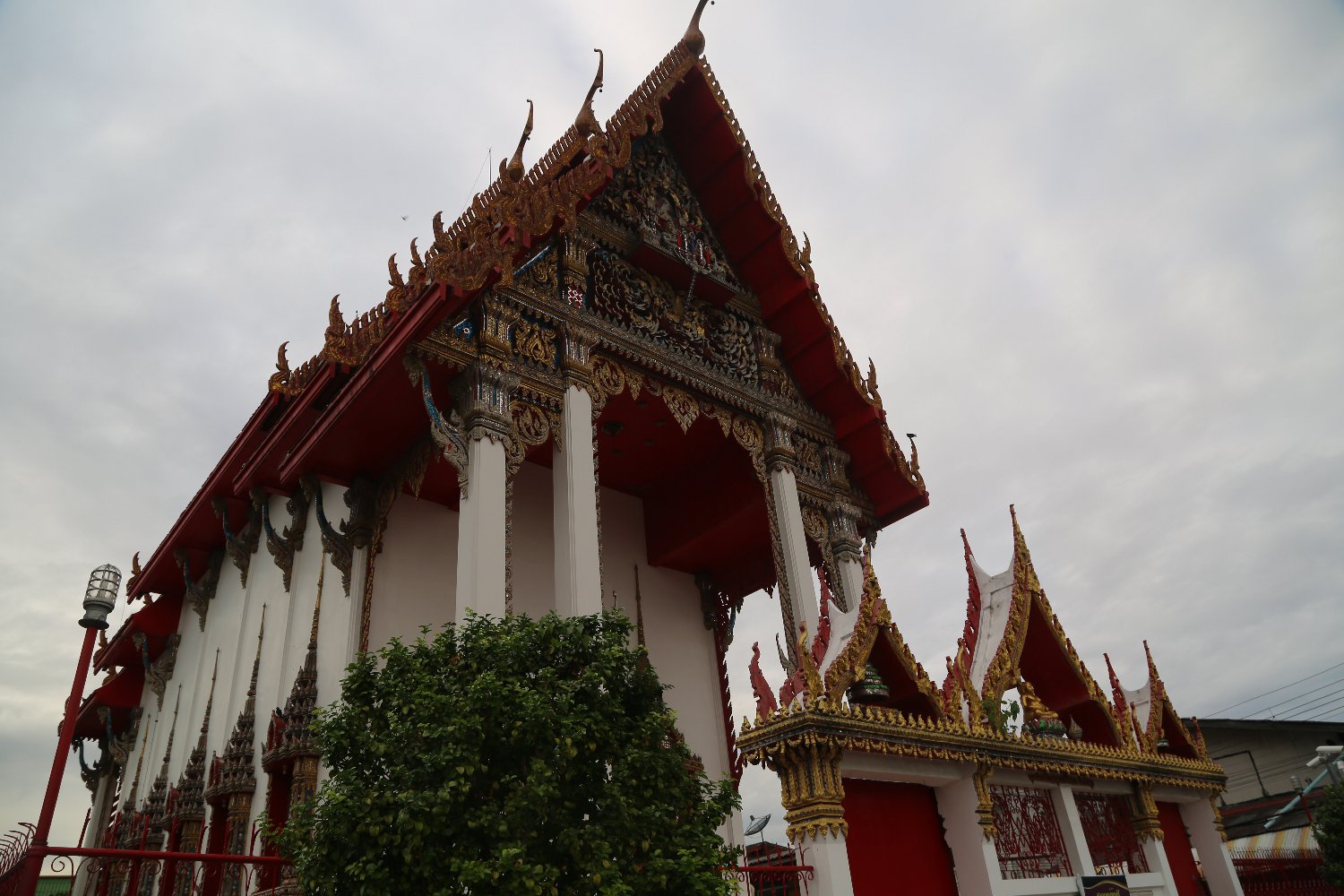
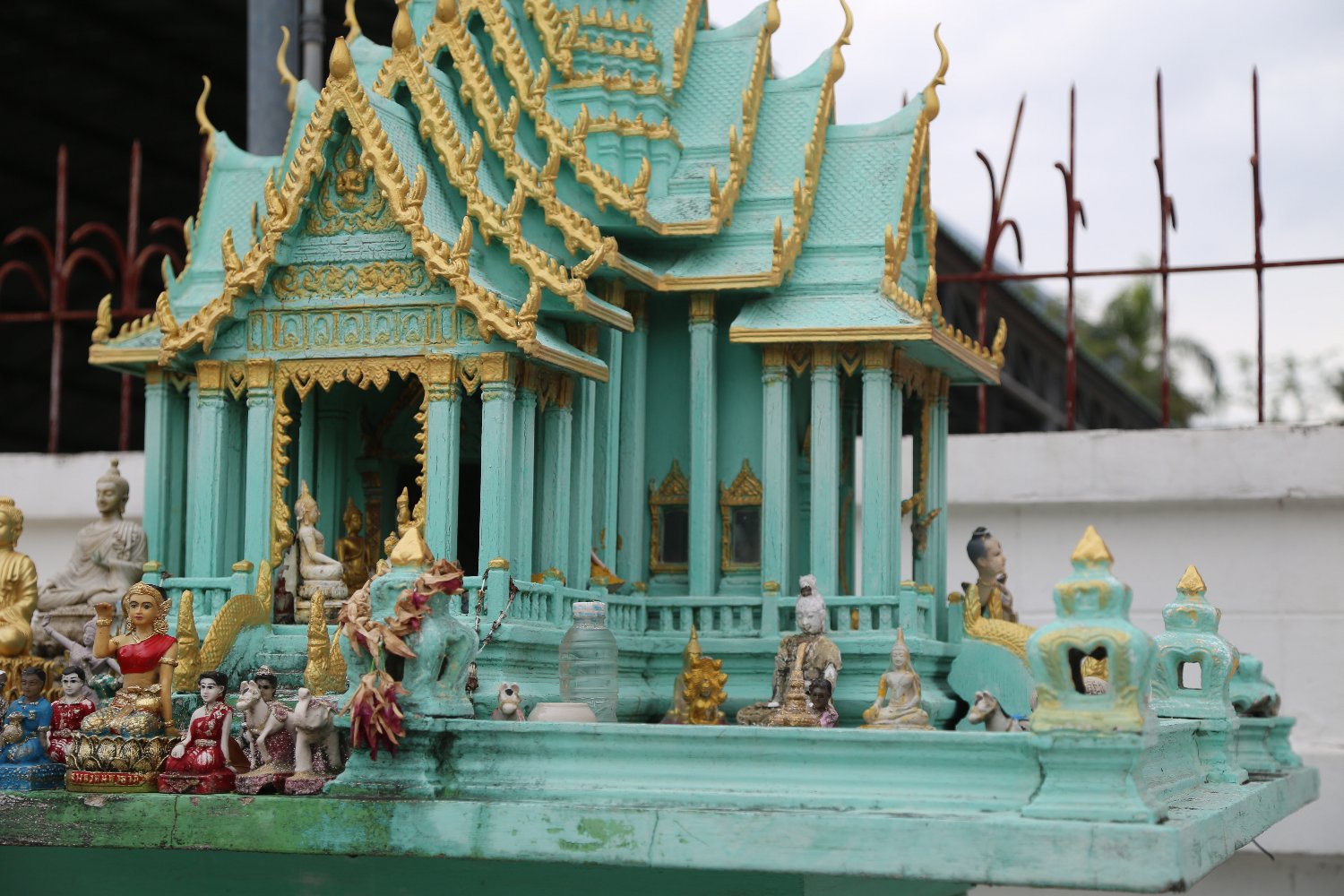
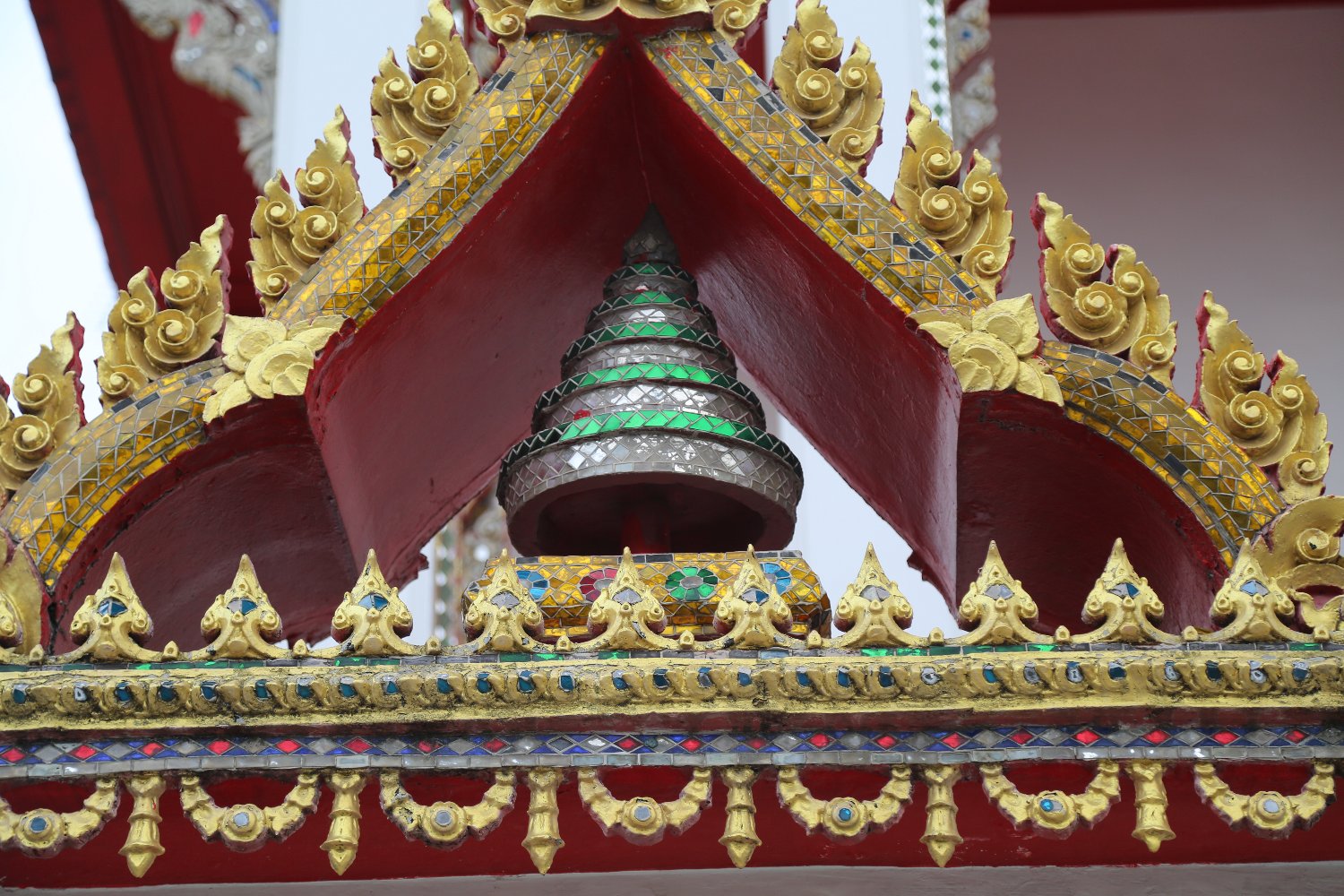
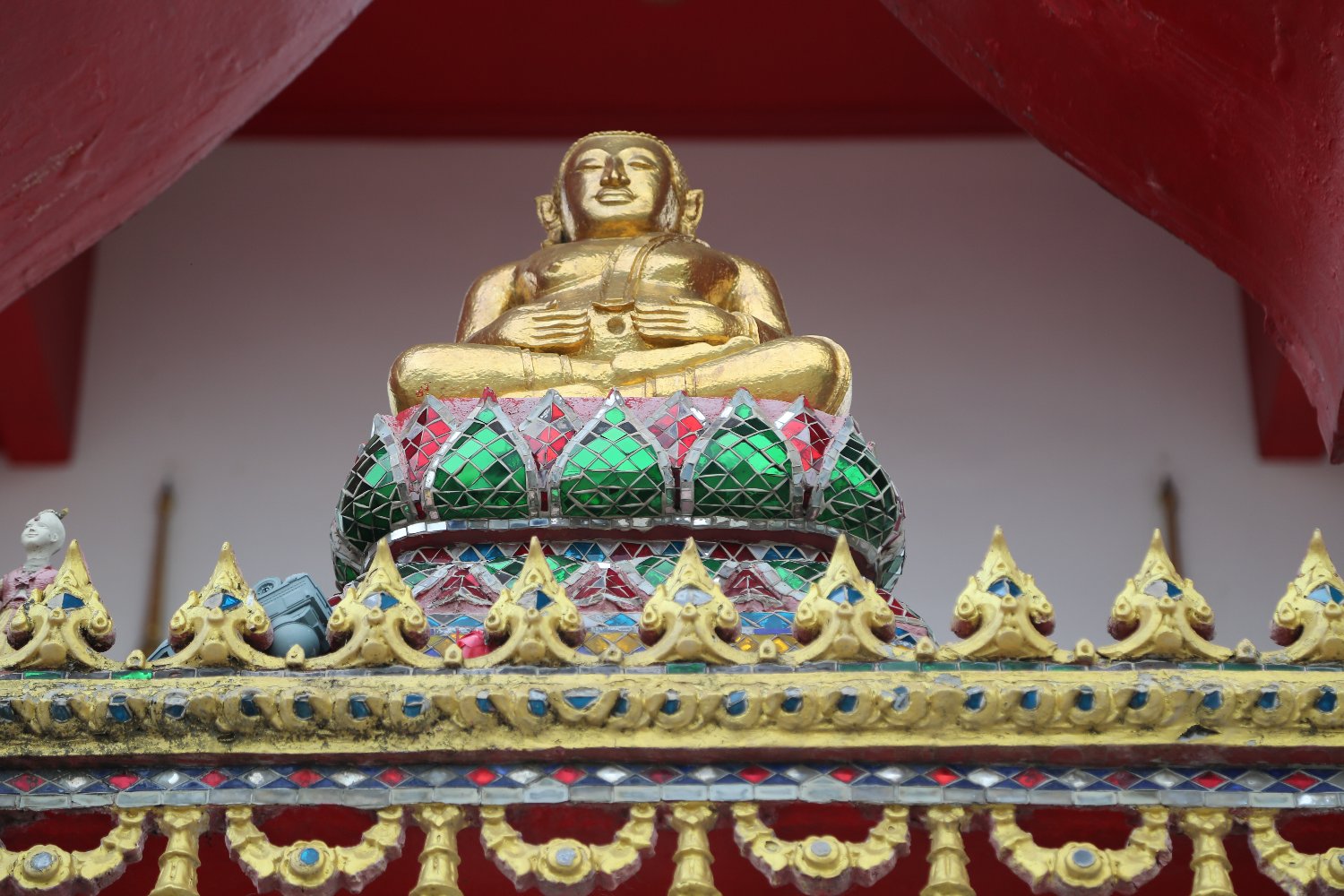
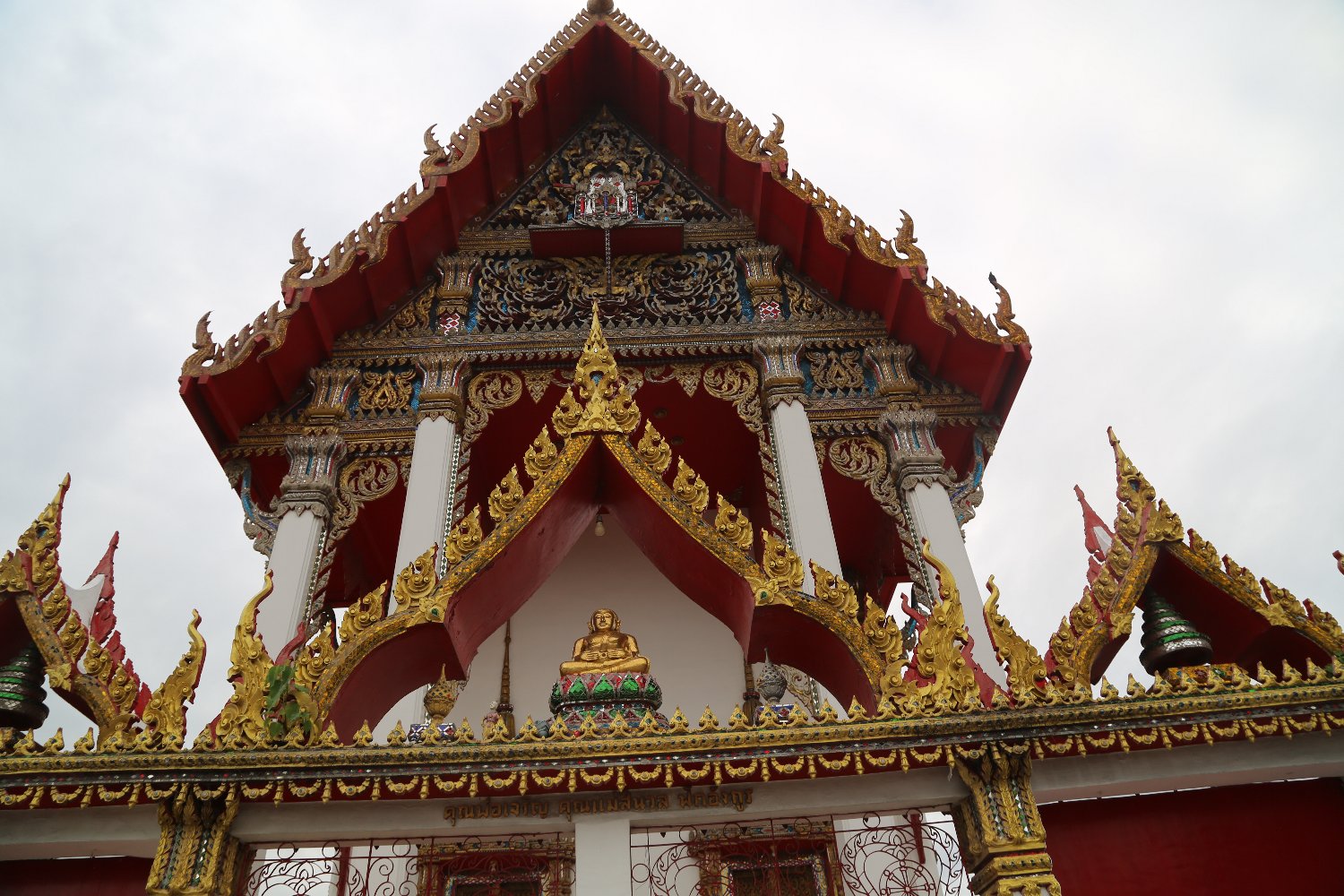

Wat Chaturamit Praditharam is located on the Thonburi side of the river about a 15-minute walk from the Rama VIII Park at the base of the Rama VIII Bridge. Located in a quiet area with several other tiny temples nearby – one has more fun making the journey to this temple then perhaps hanging out at the temple itself. Walk through a maze of small neighborhoods and ultimately reach the temple via crossing over a small footbridge over a tiny canal. No one around during our latest visit – certainly a quiet well off the beaten path for personal meditation.

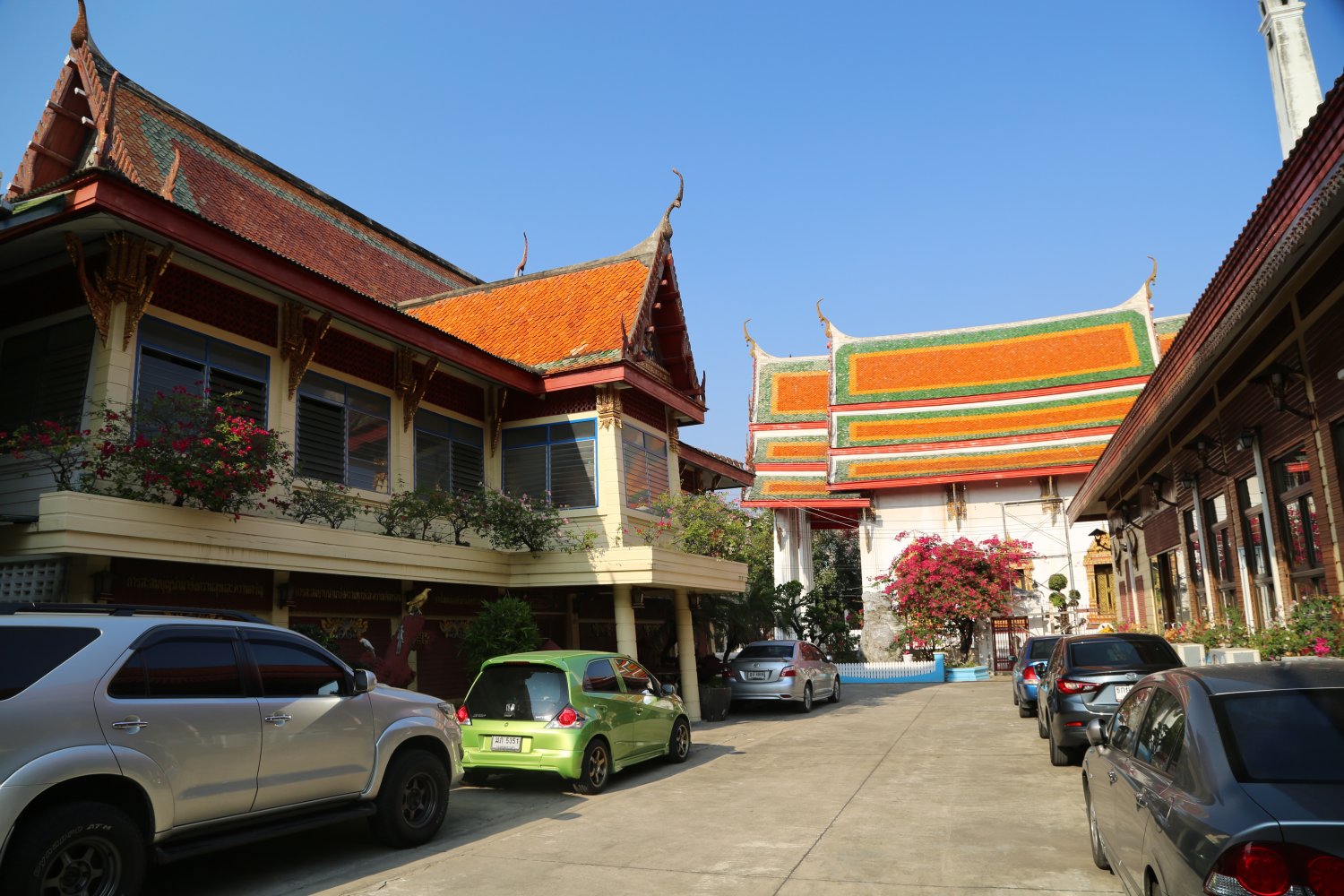
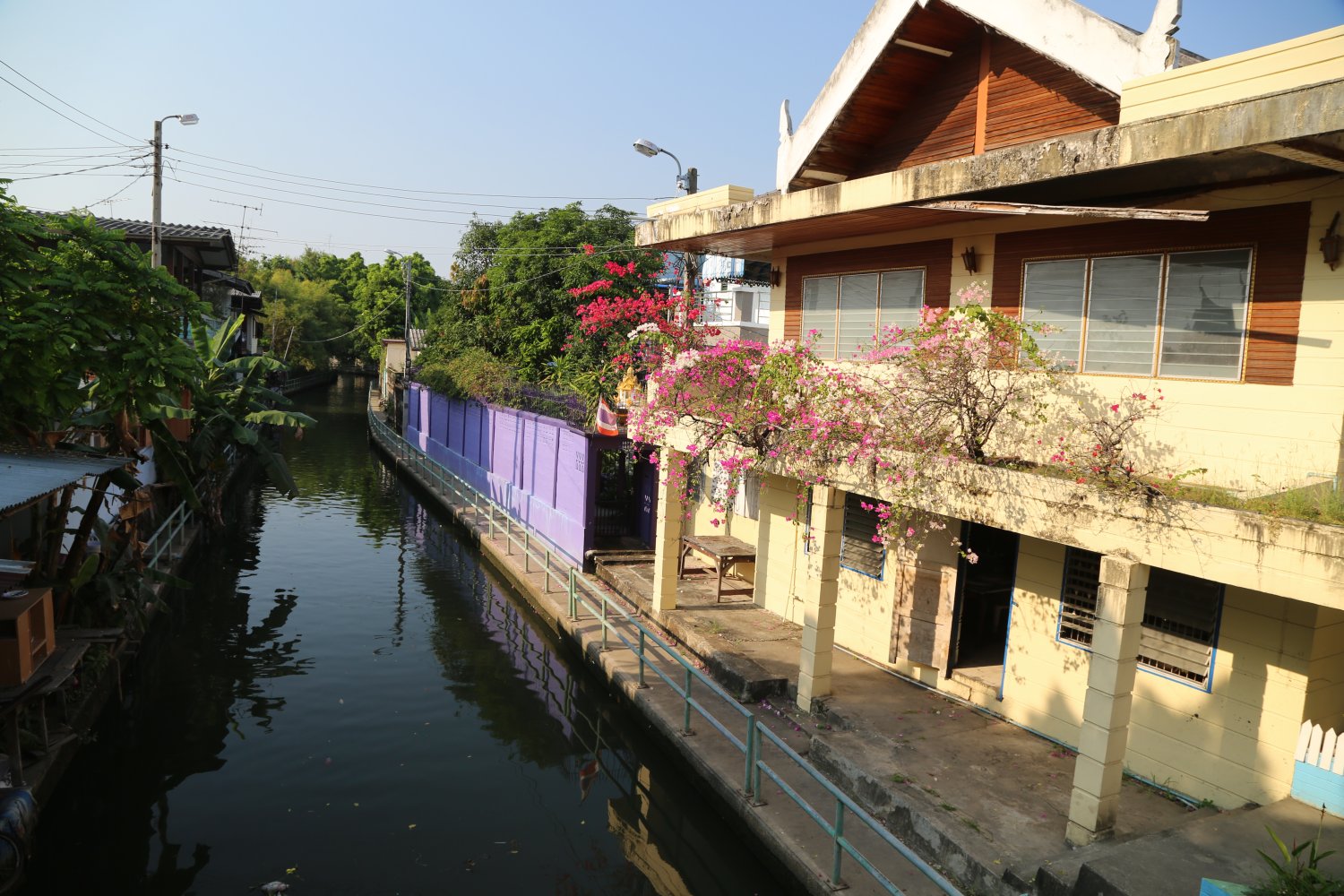
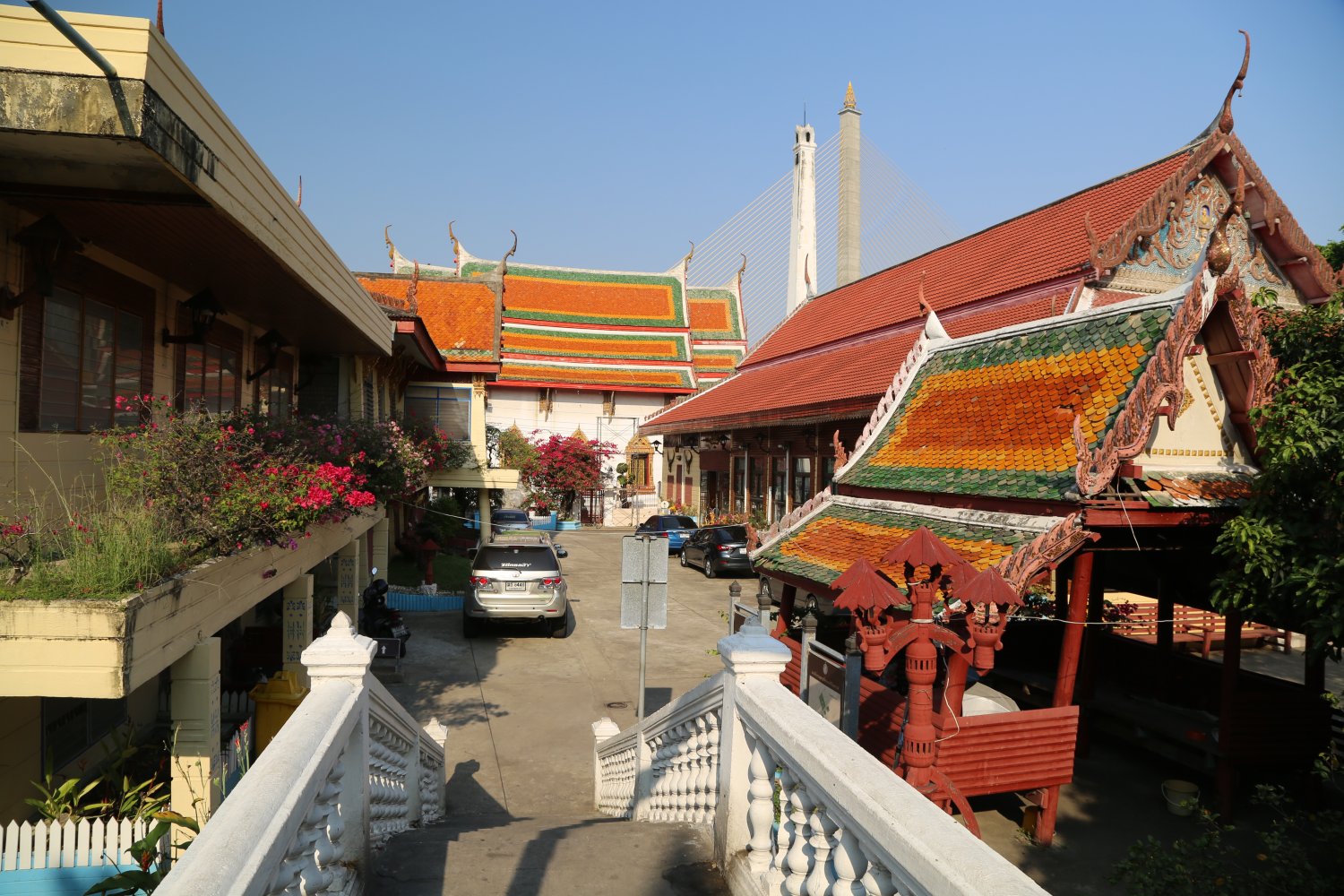
Wat Dan (one of the shortest temple names in all of Bangkok!) and the adjoining school is located on the appropriately named Wat Dan Alley off of Rama II Road near the shores of the great Chao Phraya River. The nearby BRT station is called BRT Wat Dan and is only a few minutes’ walk away.
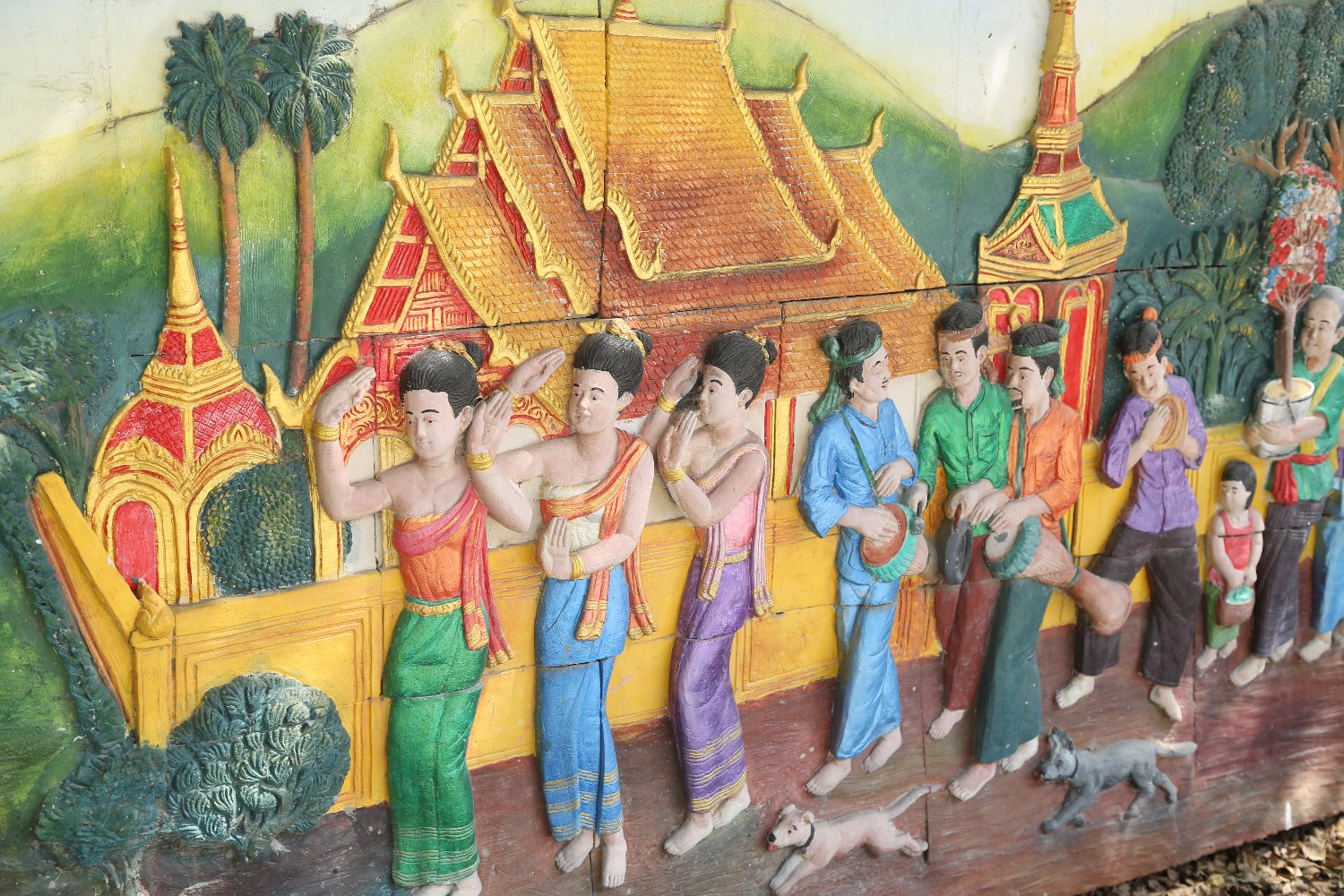
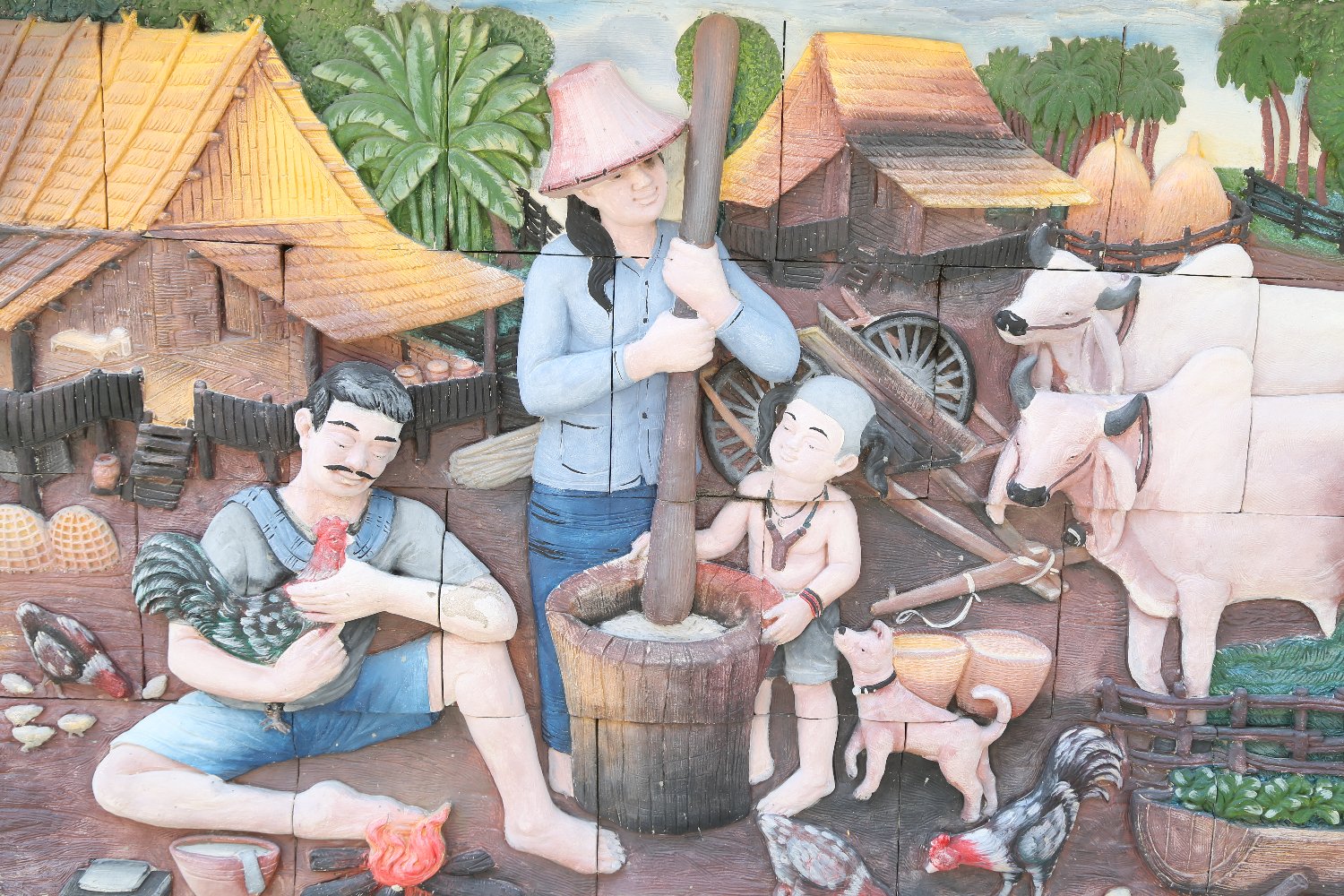
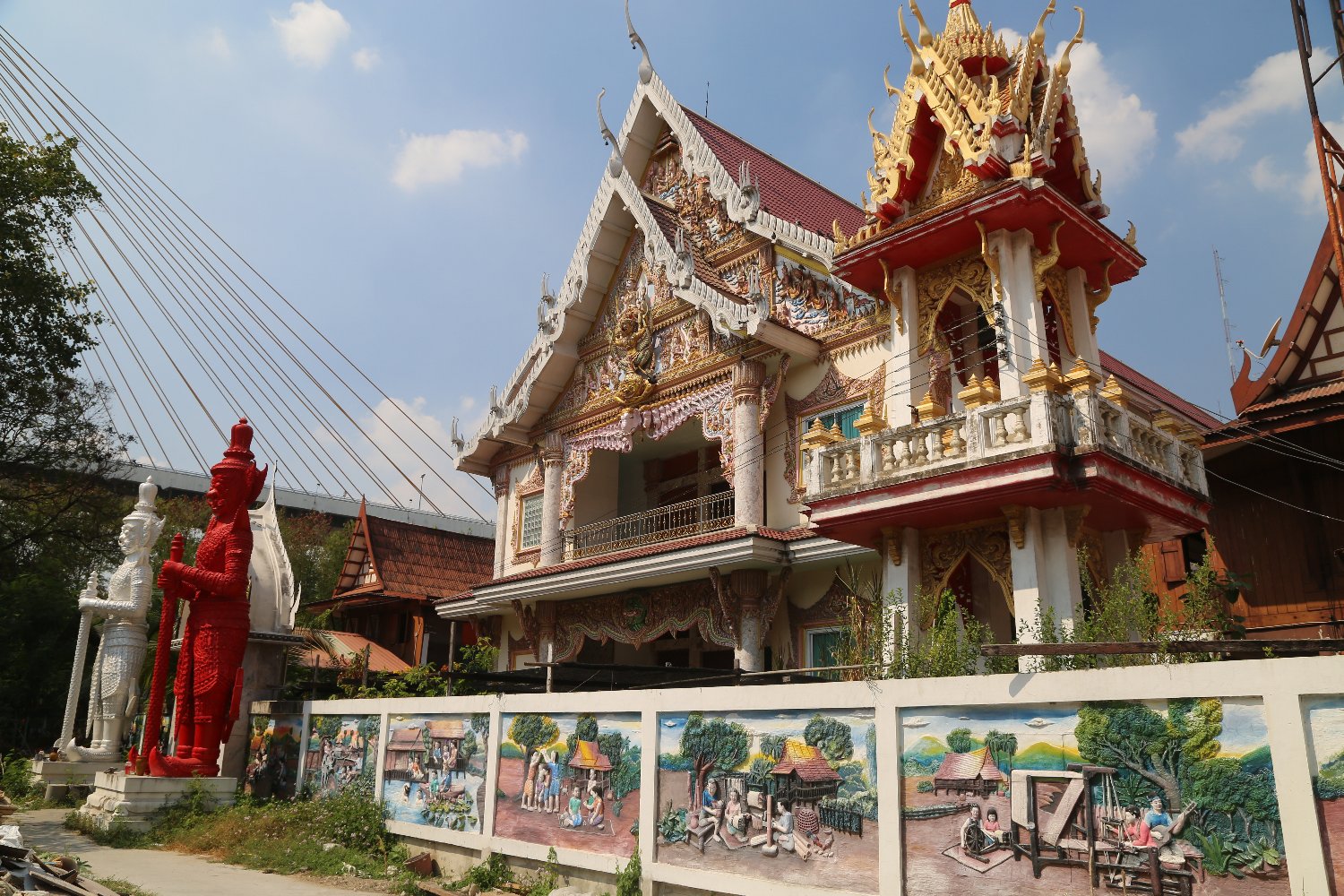
Small in stature but well worth visiting for a variety of features. Known for its walls highlighting heavy relief artwork of various old country scenes and daily life of villagers. Every panel is unique; it is worth spending some time slowly walking past these walls enjoying the creative artwork.
Houses monks on site – including numerous novice and young monks. An interesting contrast between this temple and the nearby tall modern residential buildings. A great photo spot is of the two tall guardians to one of the temples. The grounds border the Chao Phraya River and steps lead down to the river allowing for easy access, especially useful for religious celebrations. A small and picturesque cemetery is located near the riverbank.
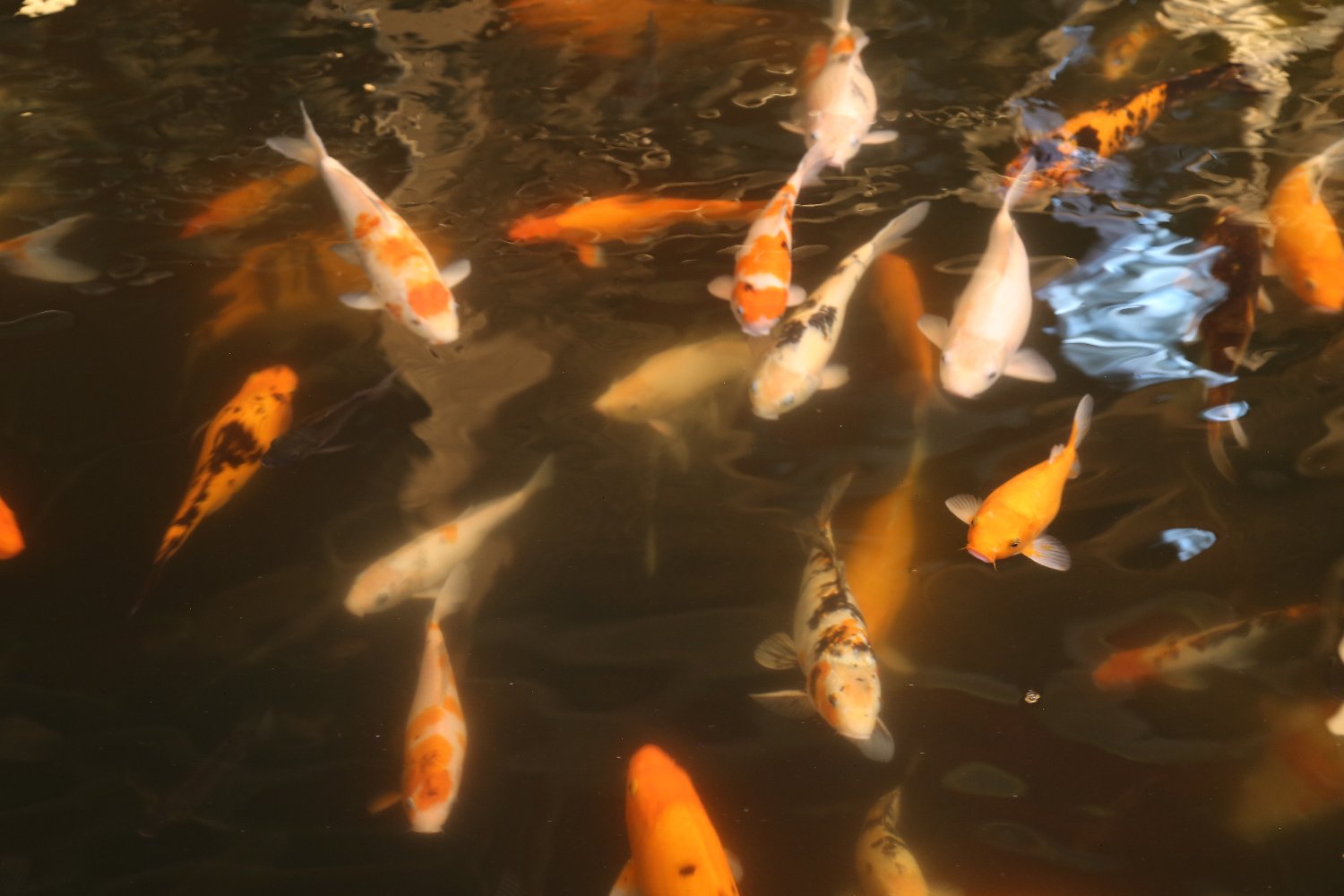
One of the temple buildings contains a small canal with large and colorful koi fish. A peaceful place for prayer. And of the 100+ Bangkok temples we have visited to date – we have never seen this before until spotting it here; fake monks with bowls moving in circles, an electric device powering rotating monks.
Also known for as a popular gathering for the annual Ganesha Festival held every September.
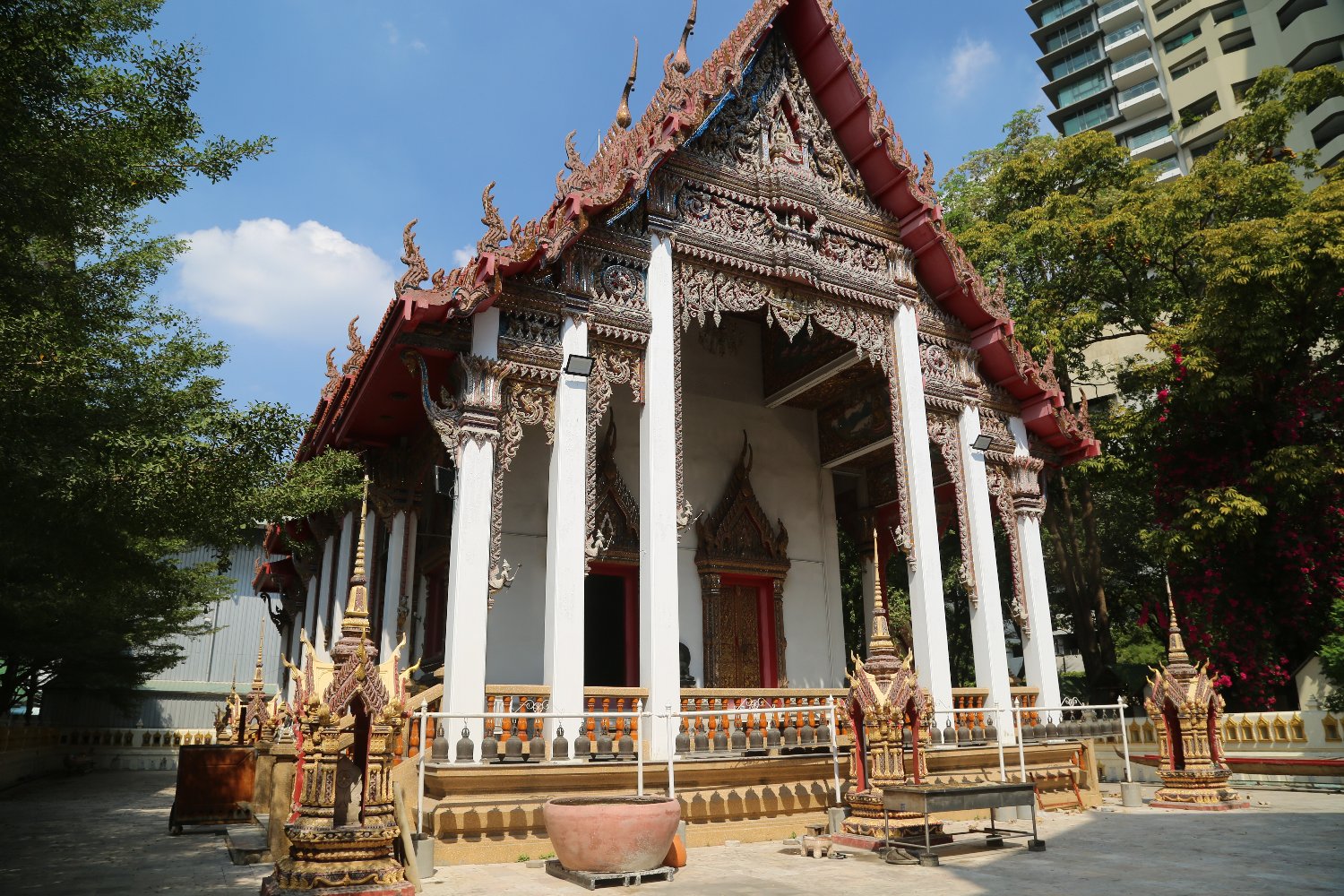

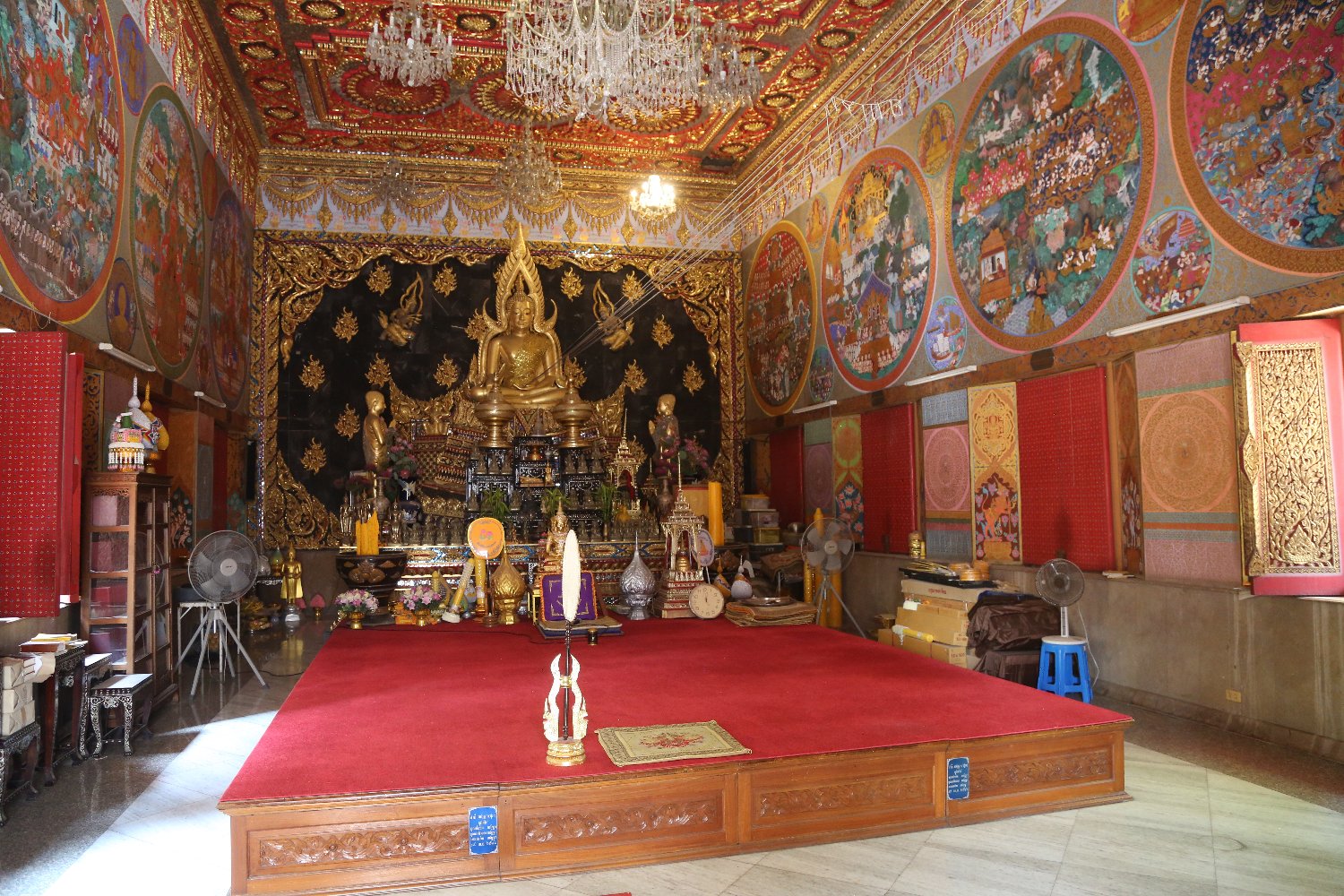
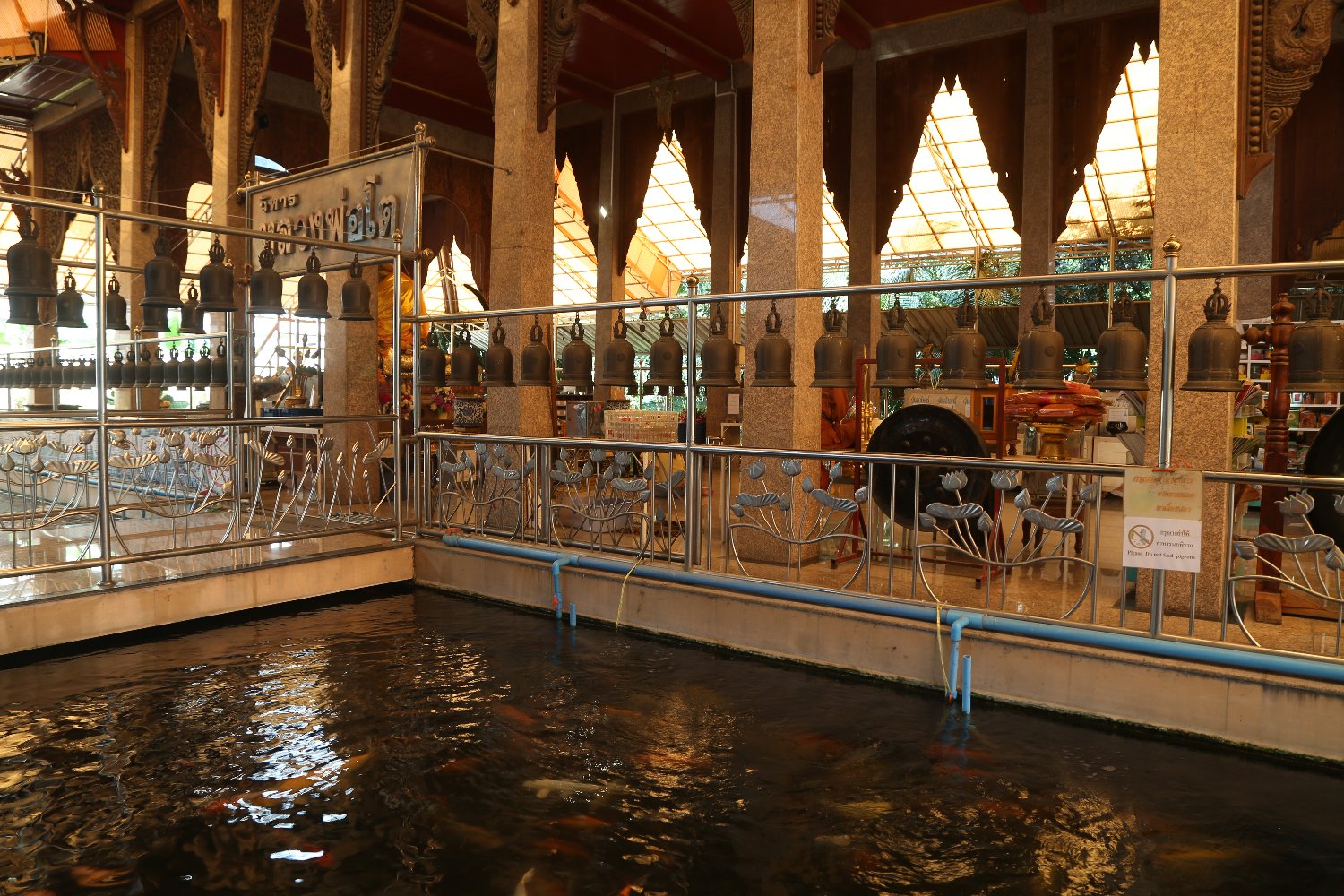



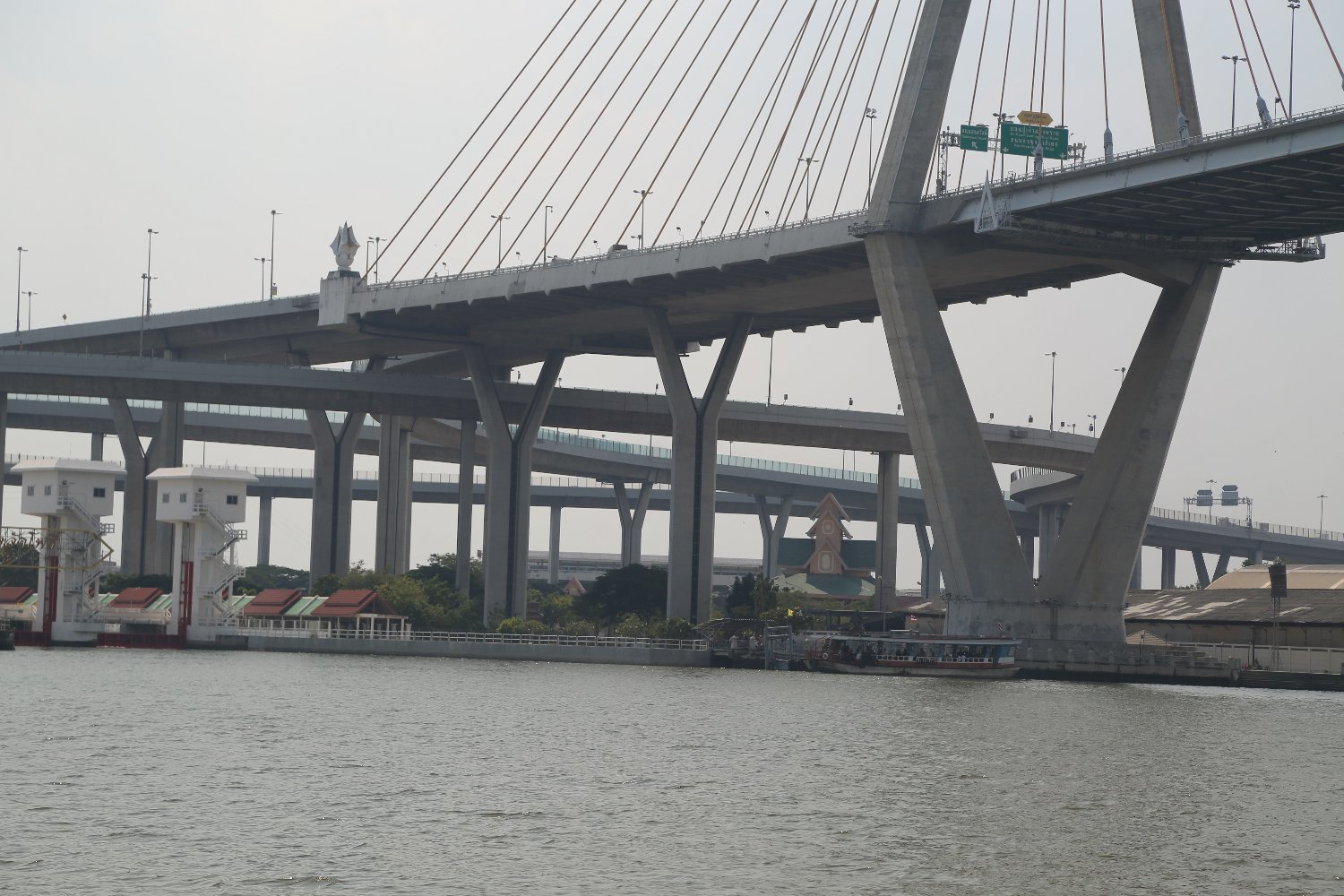
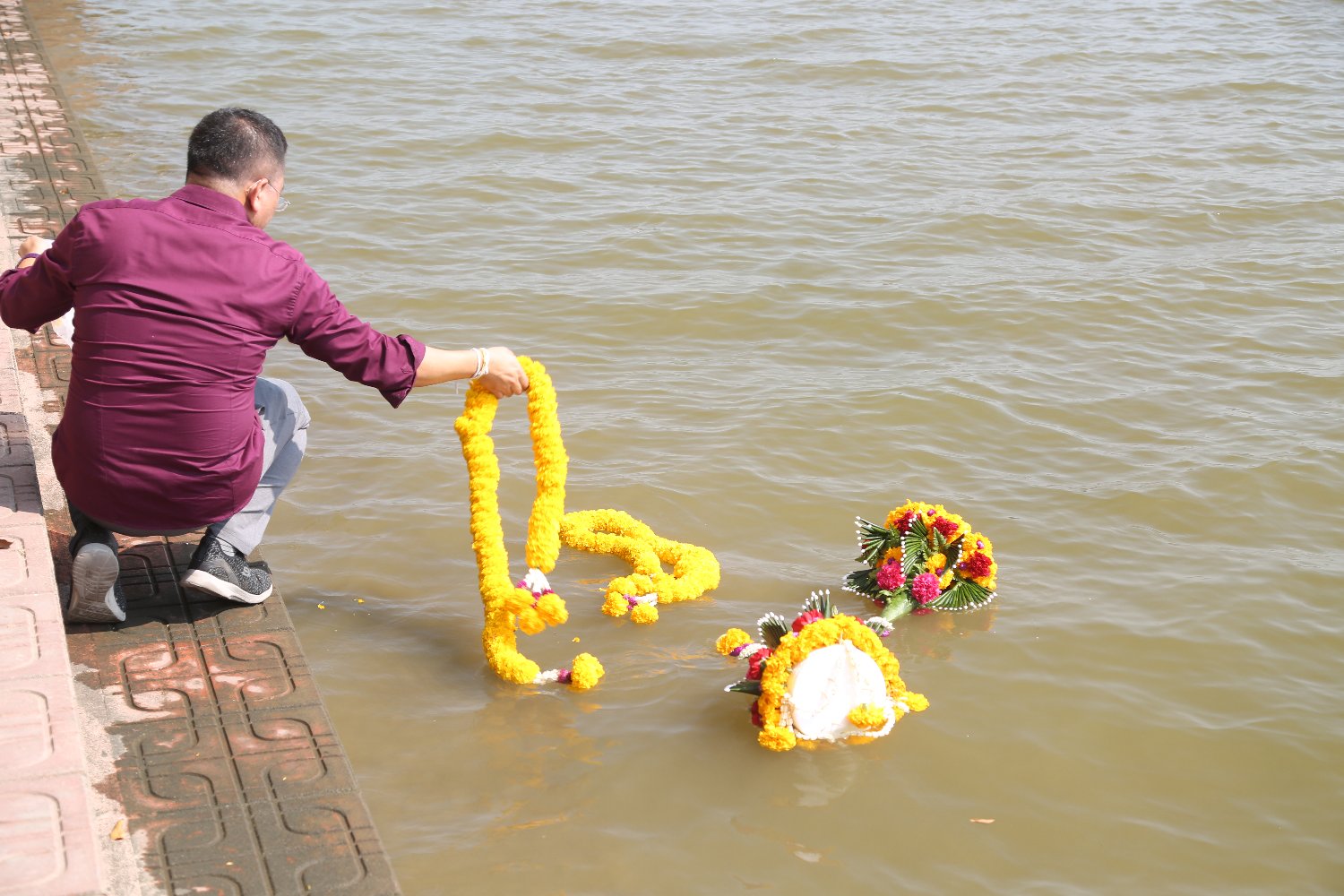
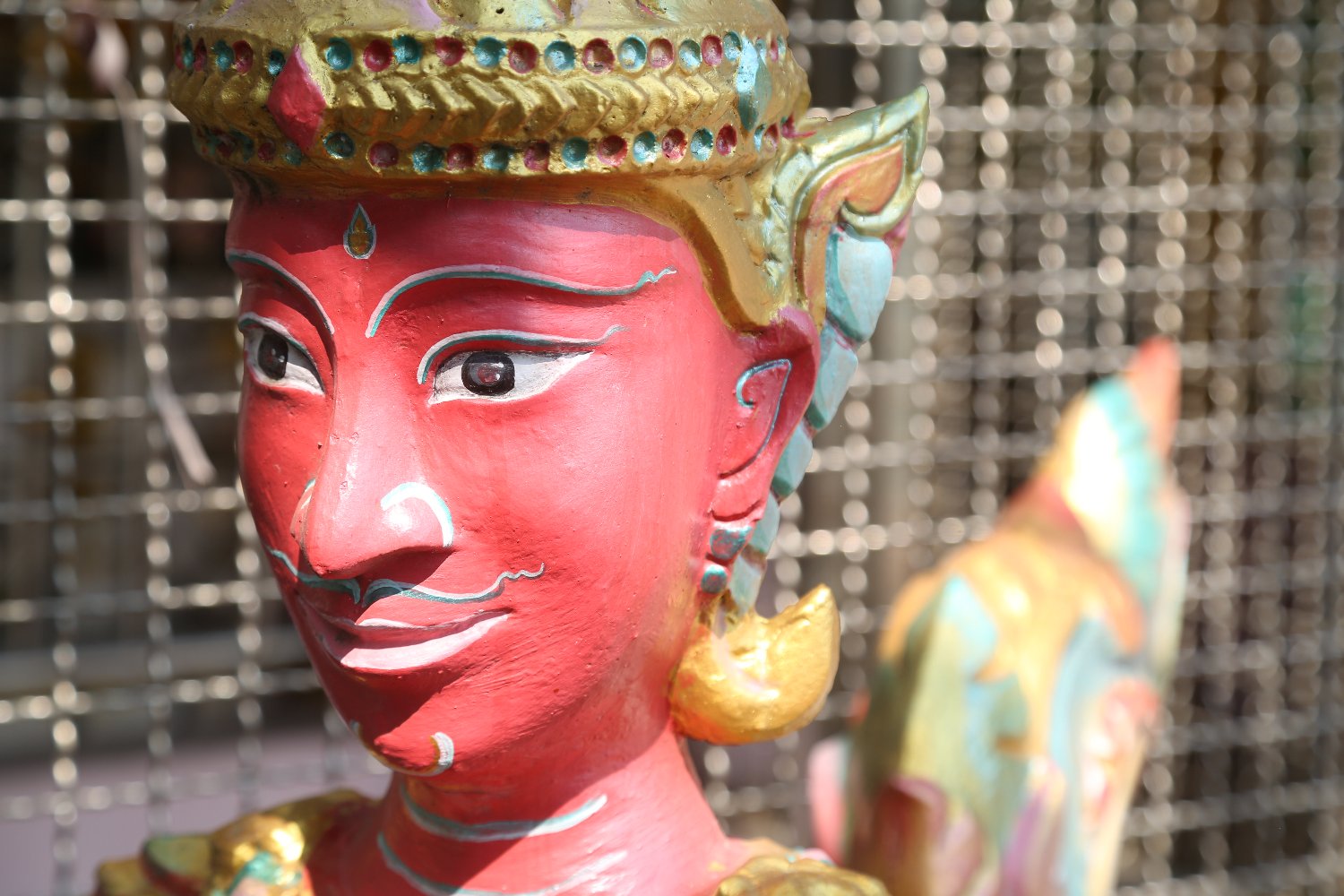
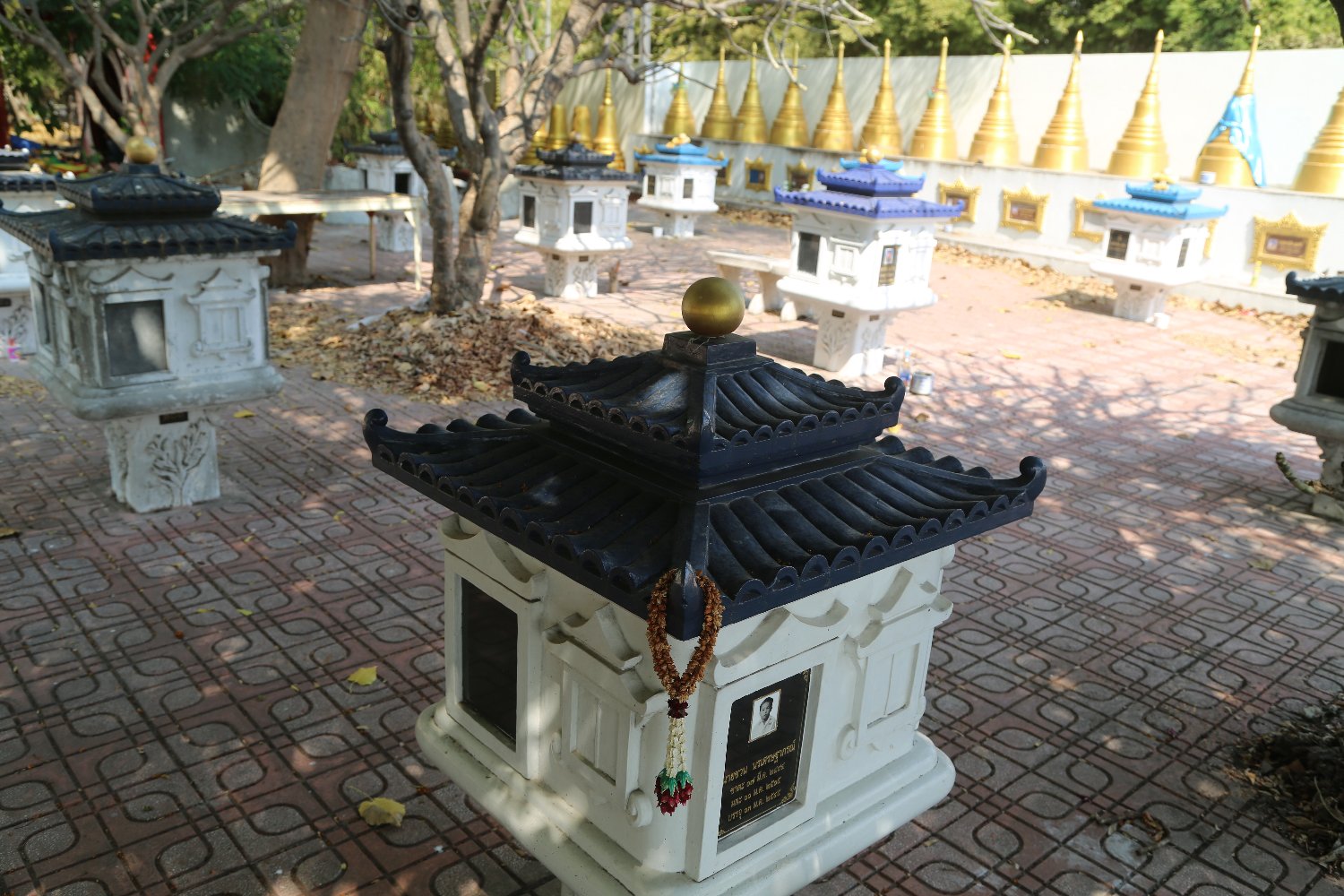

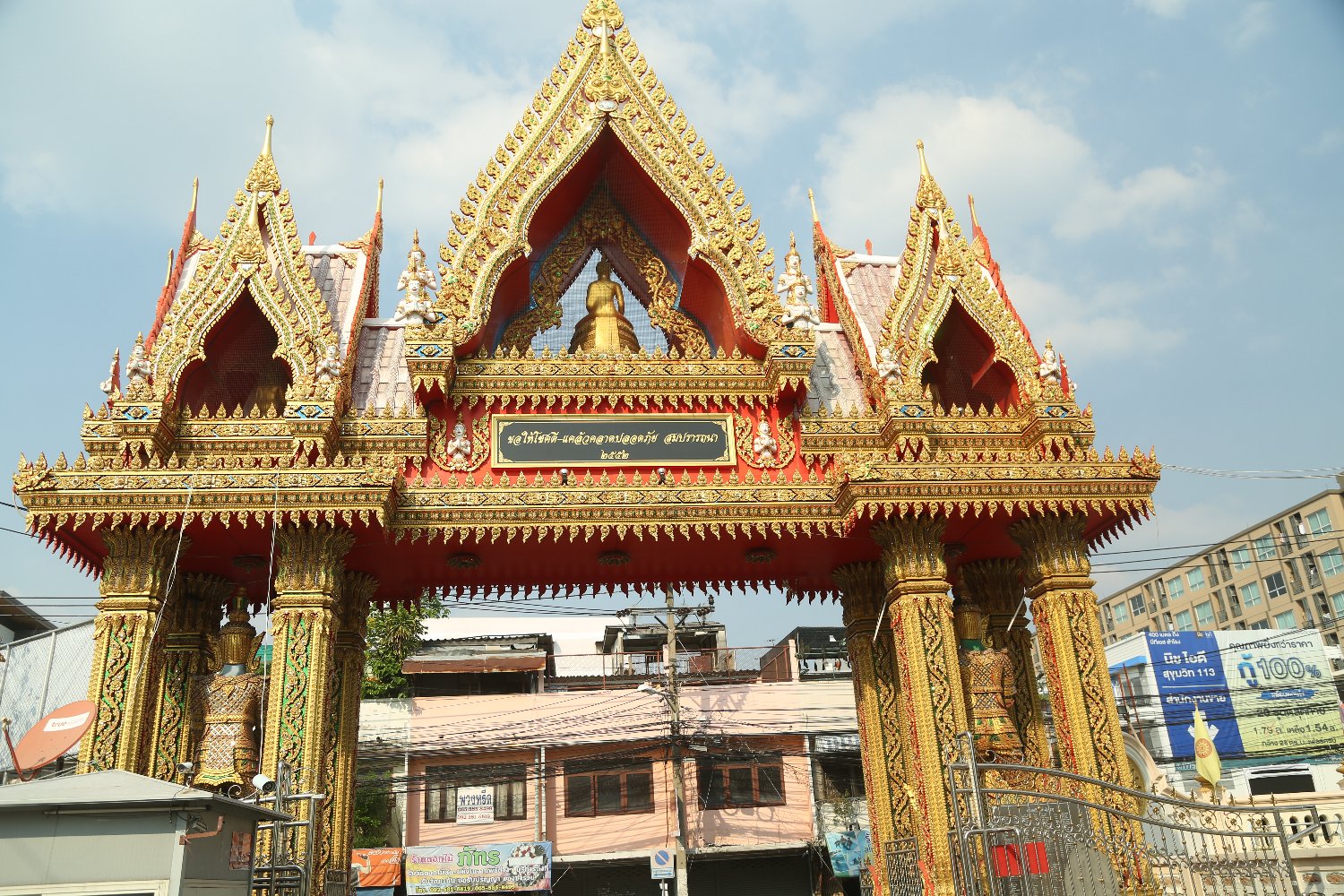
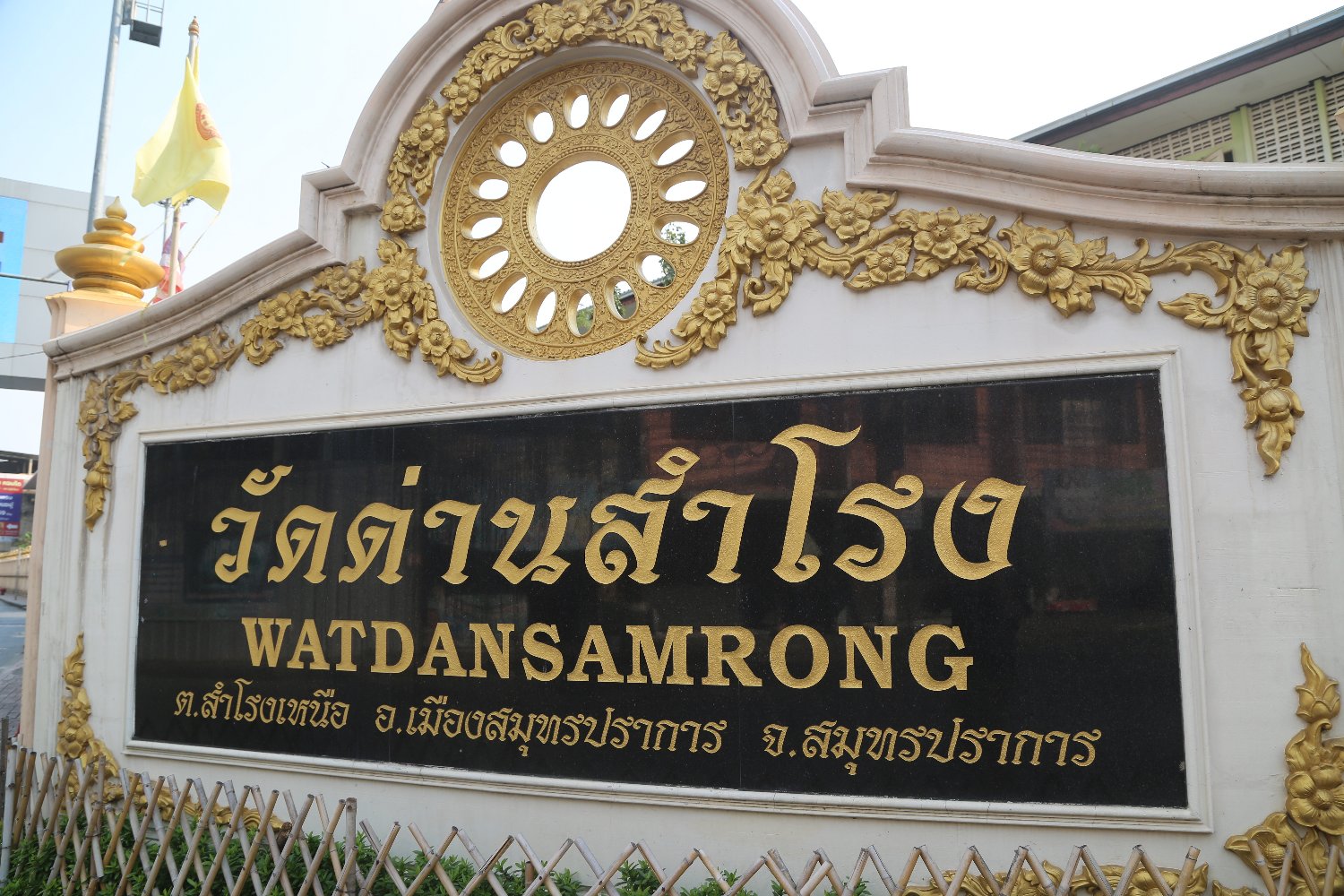
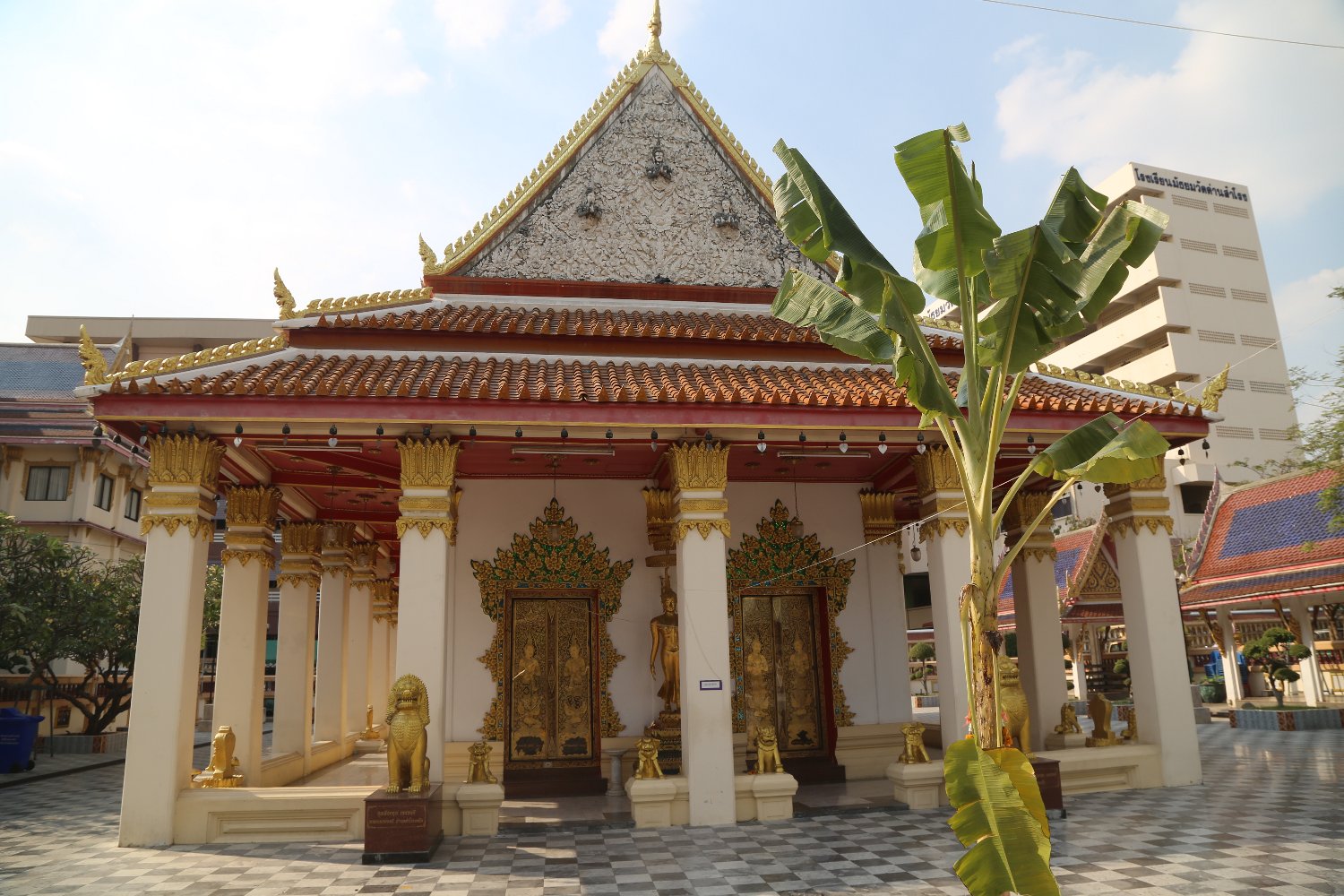
Wat Dan Samrong is within a very short walk of the Samron BTS Skytrain stop. Not too far from the Chao Phraya River but not right next to it, rather the temple is located next to one of the tributaries – the Samrong canal. A sizable temple that one can spend 15-30 minutes wondering through the grounds. Features a mix of both Chinese and Thai style architecture and decor. A number of smaller statues and prayer areas that one can check out. A really large parking lot. And a number of stores leading up to the temple that sell numerous flower arrangements and other gift and fruit baskets that visitors can purchase and leave at the temple for worship. Also, a part of town where one might be able to spot a rare samlor and or take a ride in one (bicycle rickshaw).
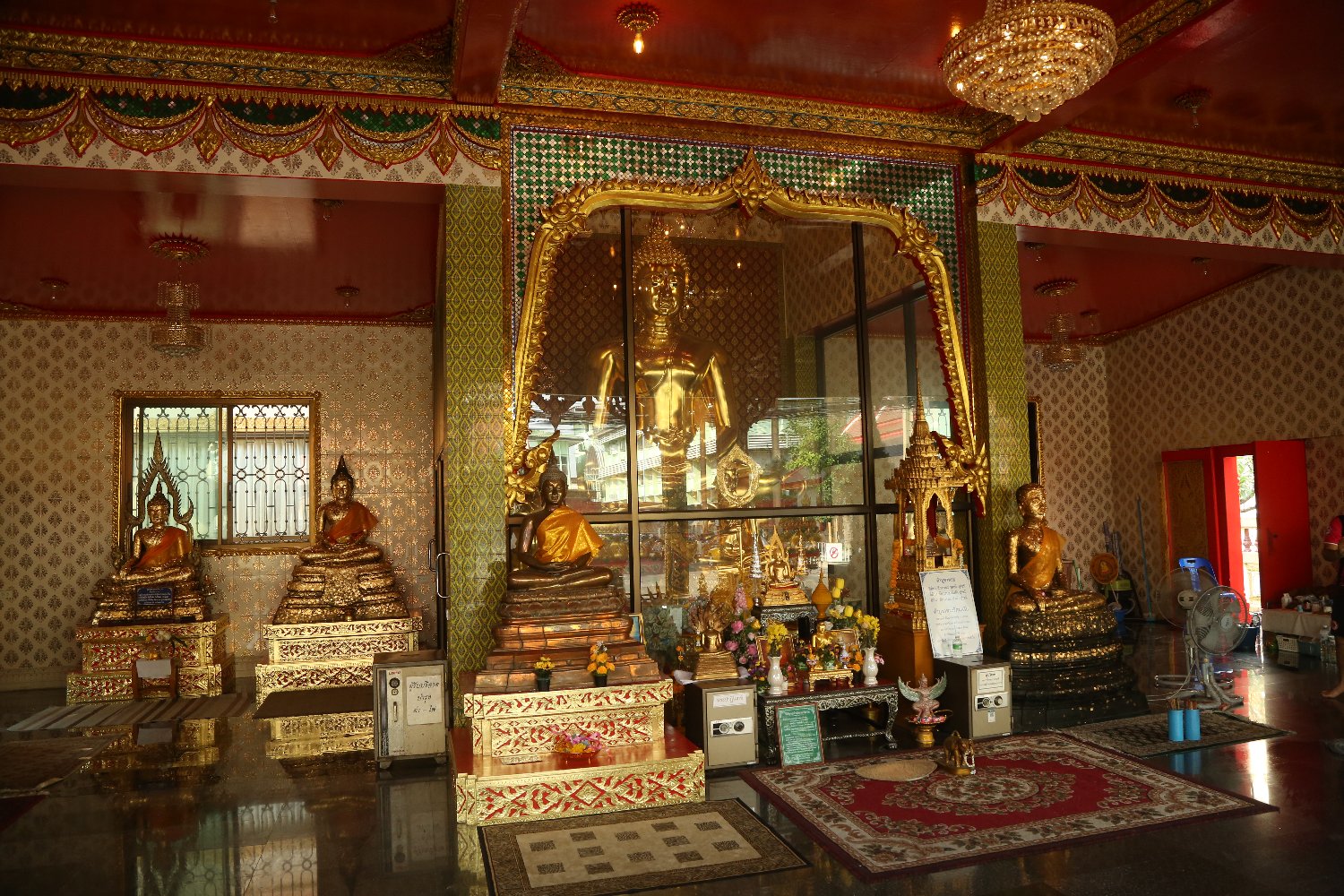
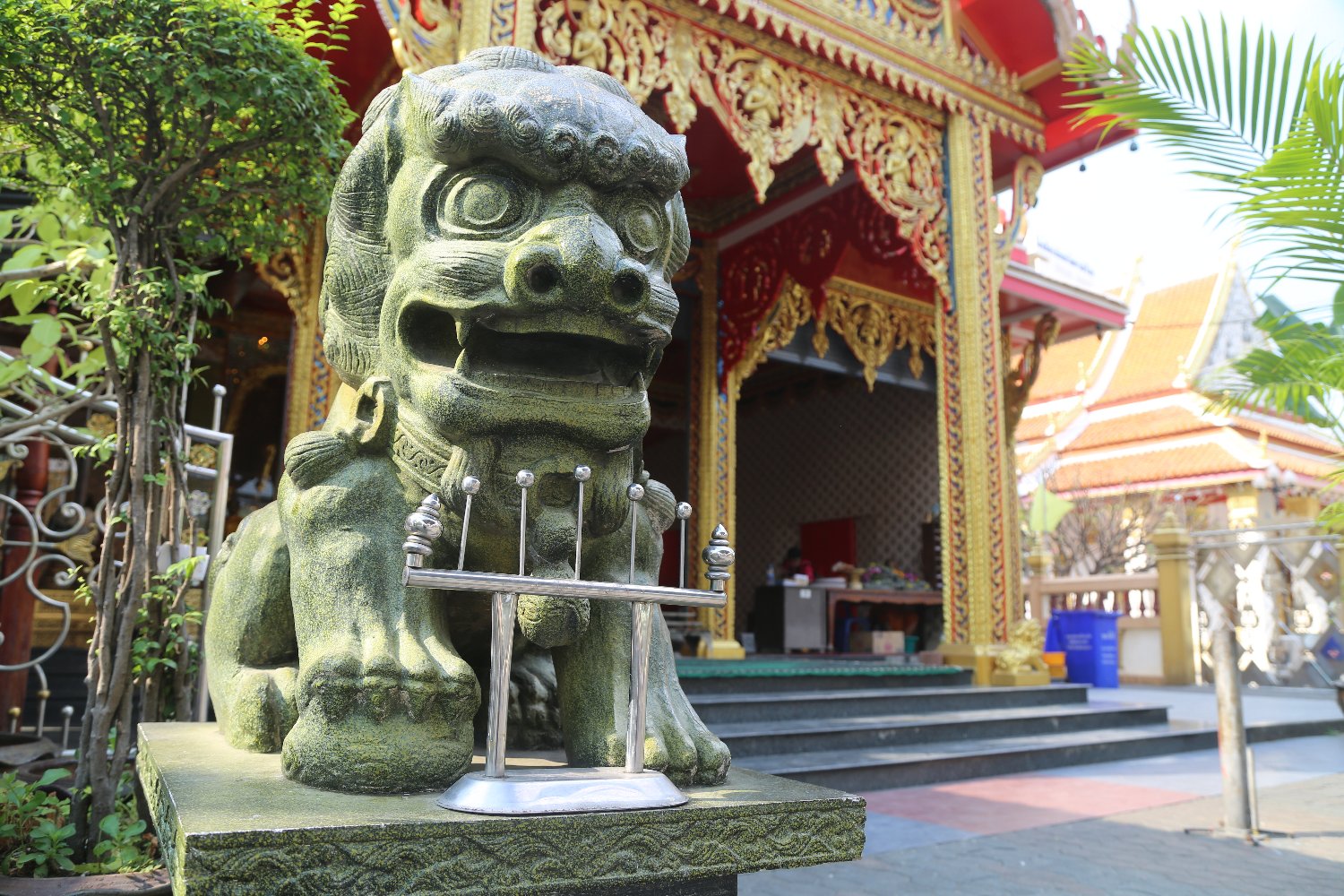
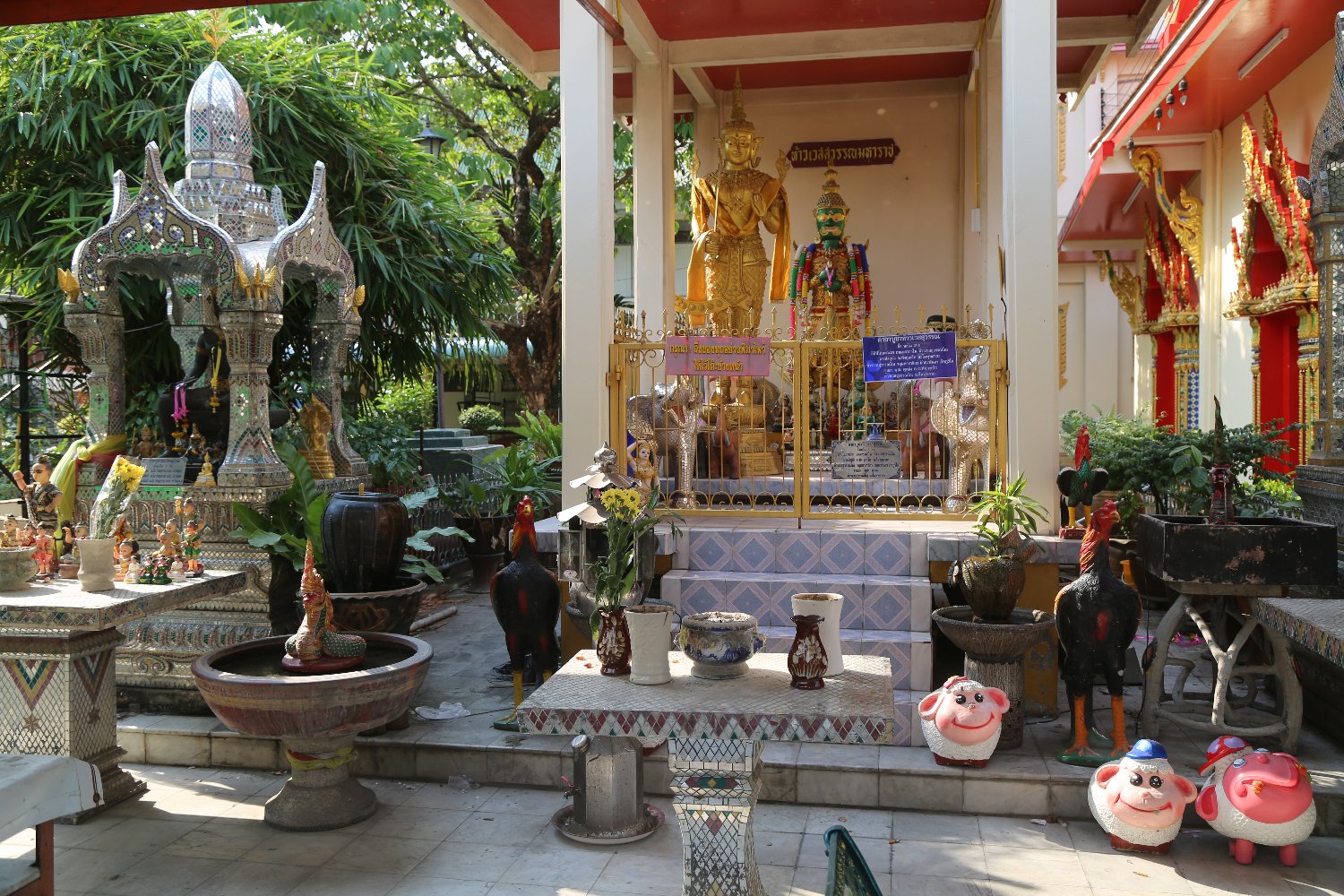
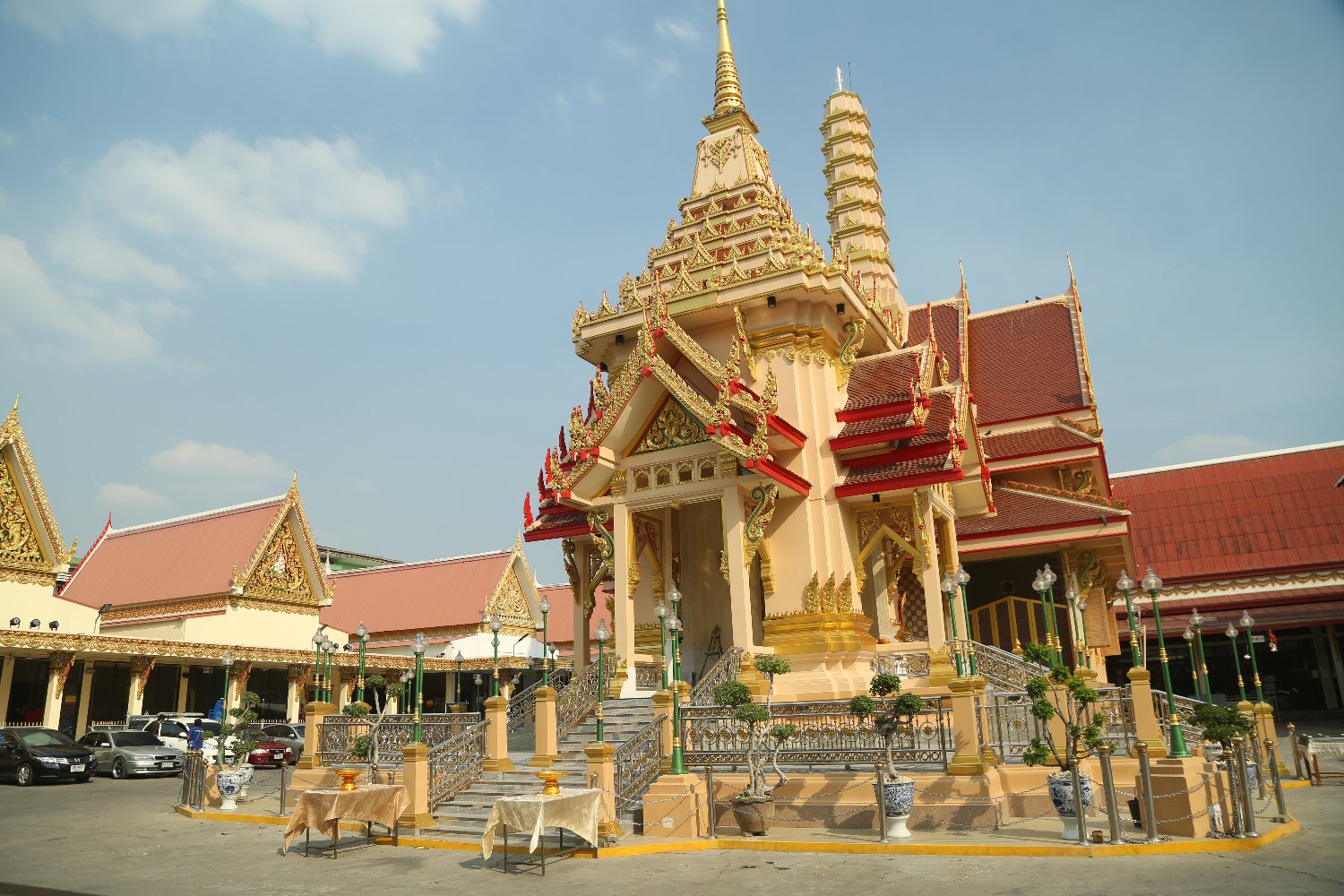
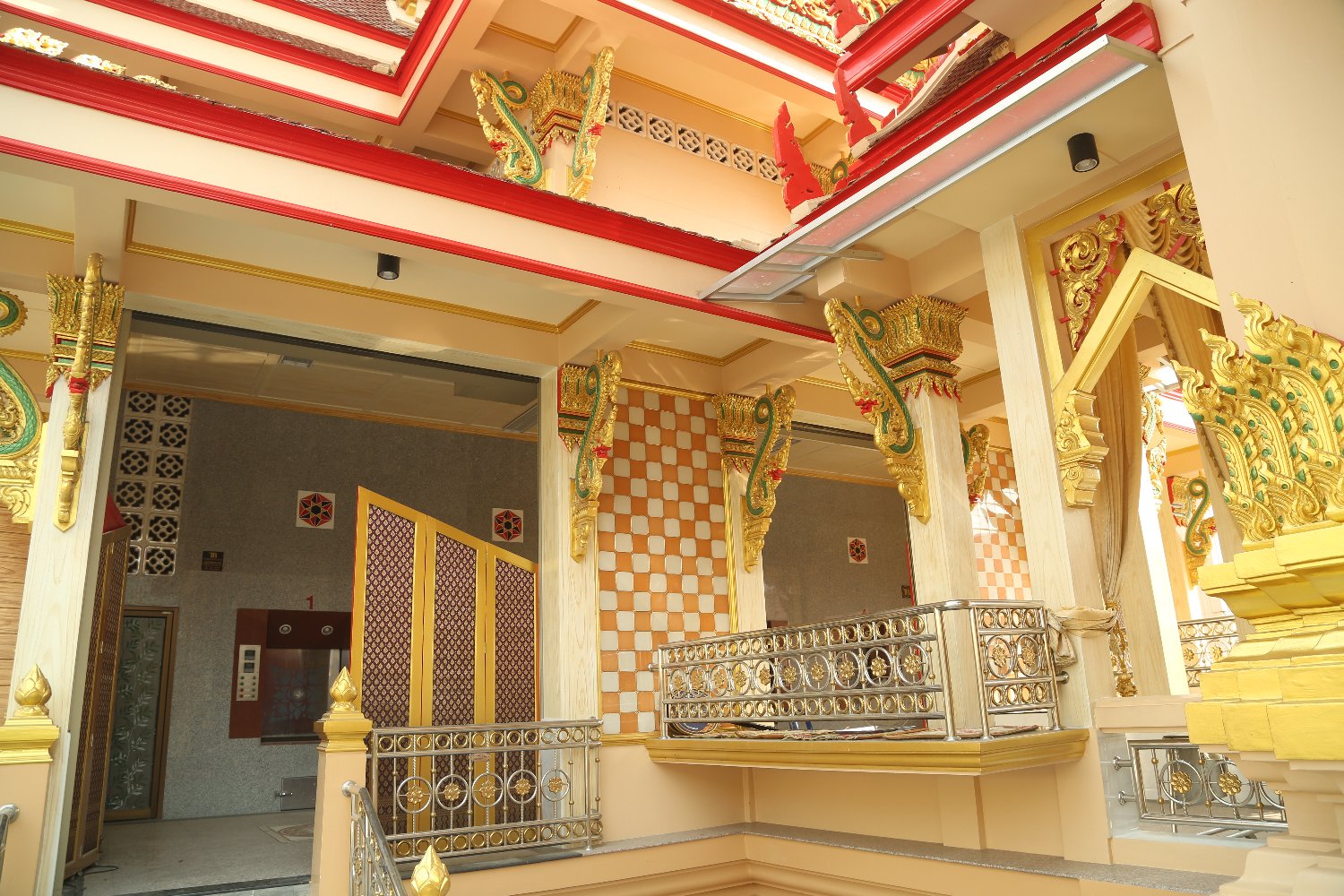
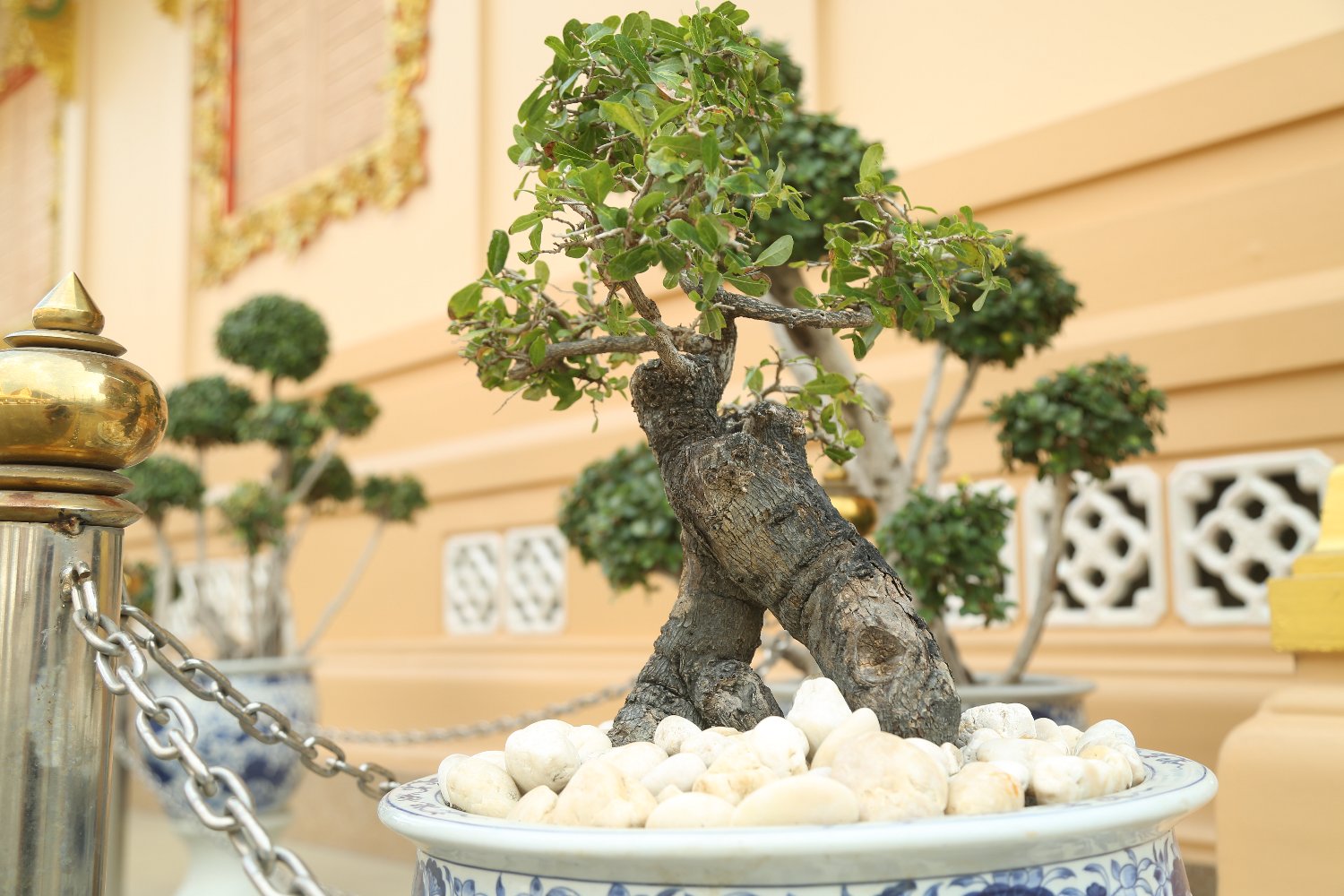
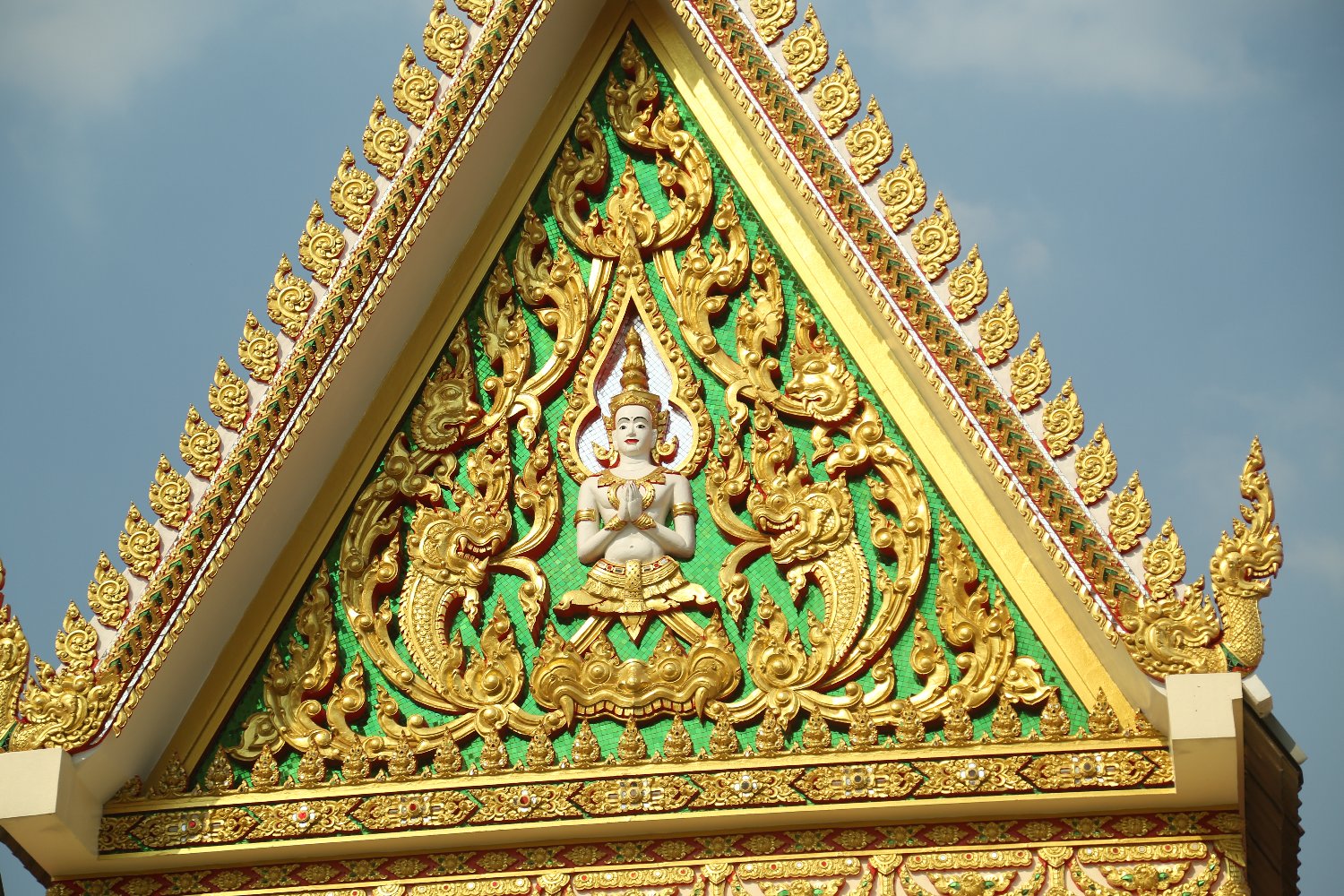
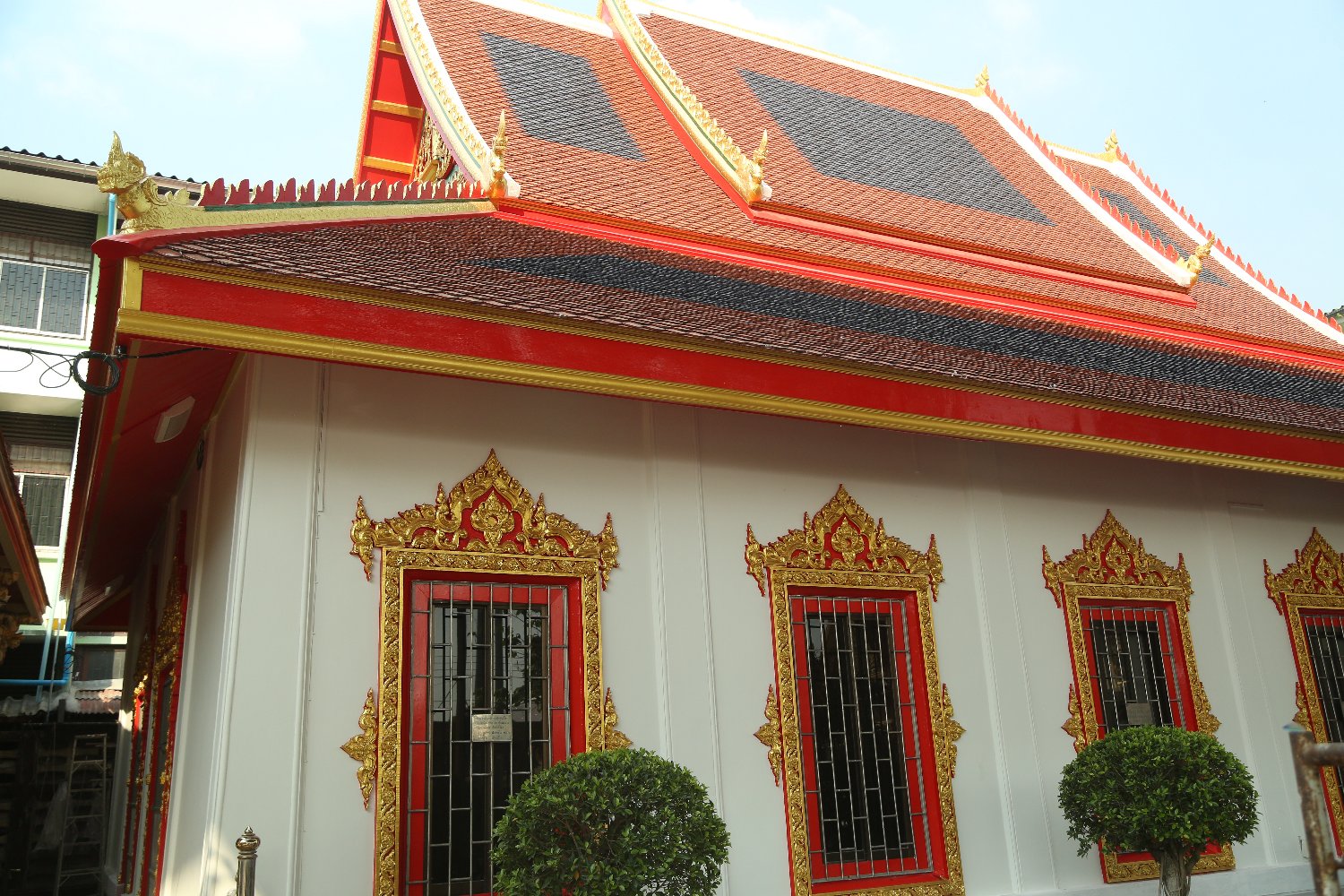
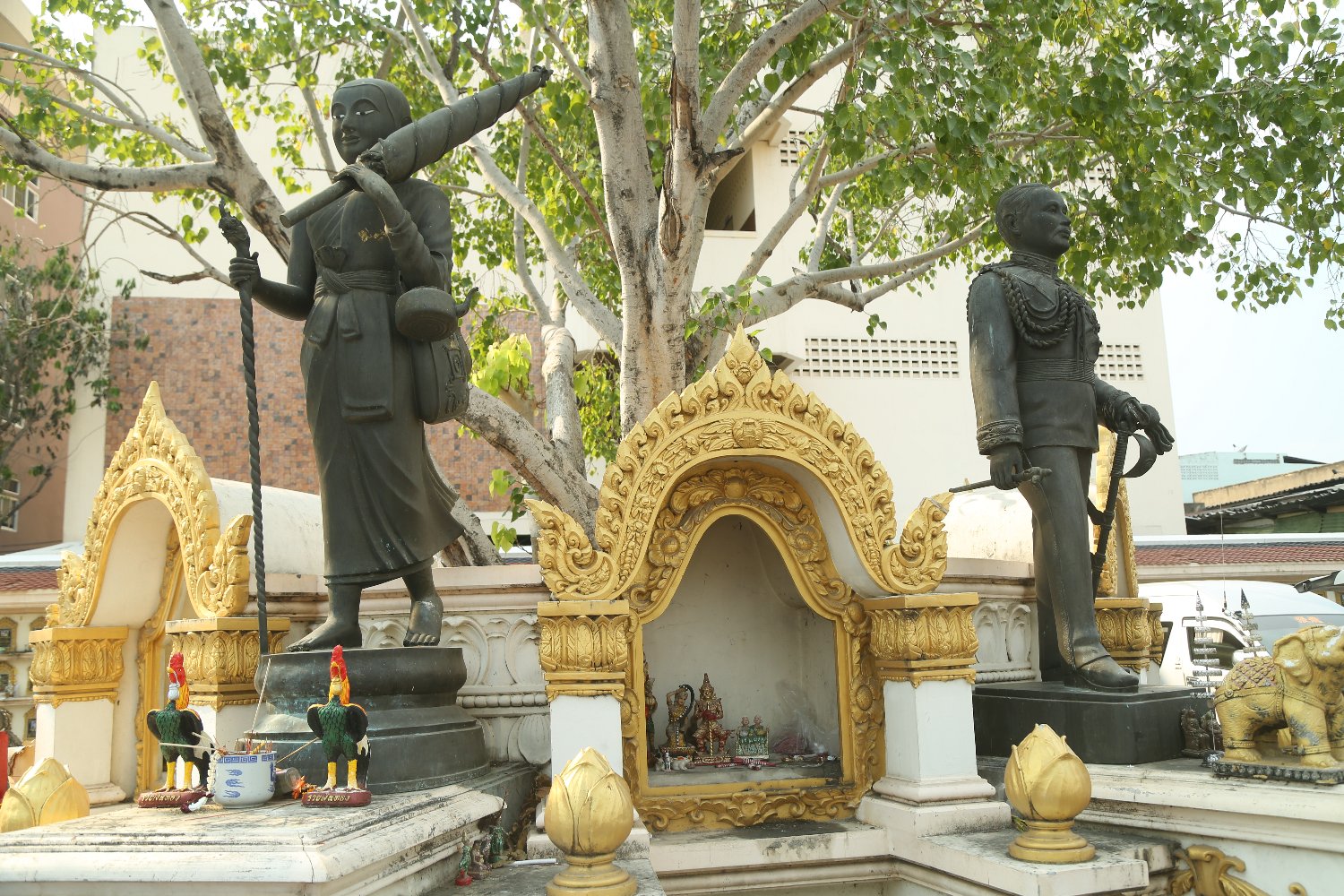
Wat Daodungsaram or Wat Daodung for short is also known as Wat Daowaduengsaram. Located on the Thonburi side of the river about a 15-minute walk from the Rama VIII Park at the base of the Rama VIII Bridge. Situated in a quiet area with several other tiny temples nearby. Originally founded by Chao Chom Waen, a lady in the royal court of King Rama I – it was first called Wat Khrua-In after the first abbot’s name. King Rama II had this temple renamed. Known for its beautiful original mural paintings by Luang Seni Borirak, a Thai Chinese artist who painted during the reign of Kimg Rama III.
The original construction featured hardwood pillars and walls made from solid teak wood. However during restoration, the wooden structures were replaced with brick. The name Daowaduengsaram means “heaven where the god Indra resides”.
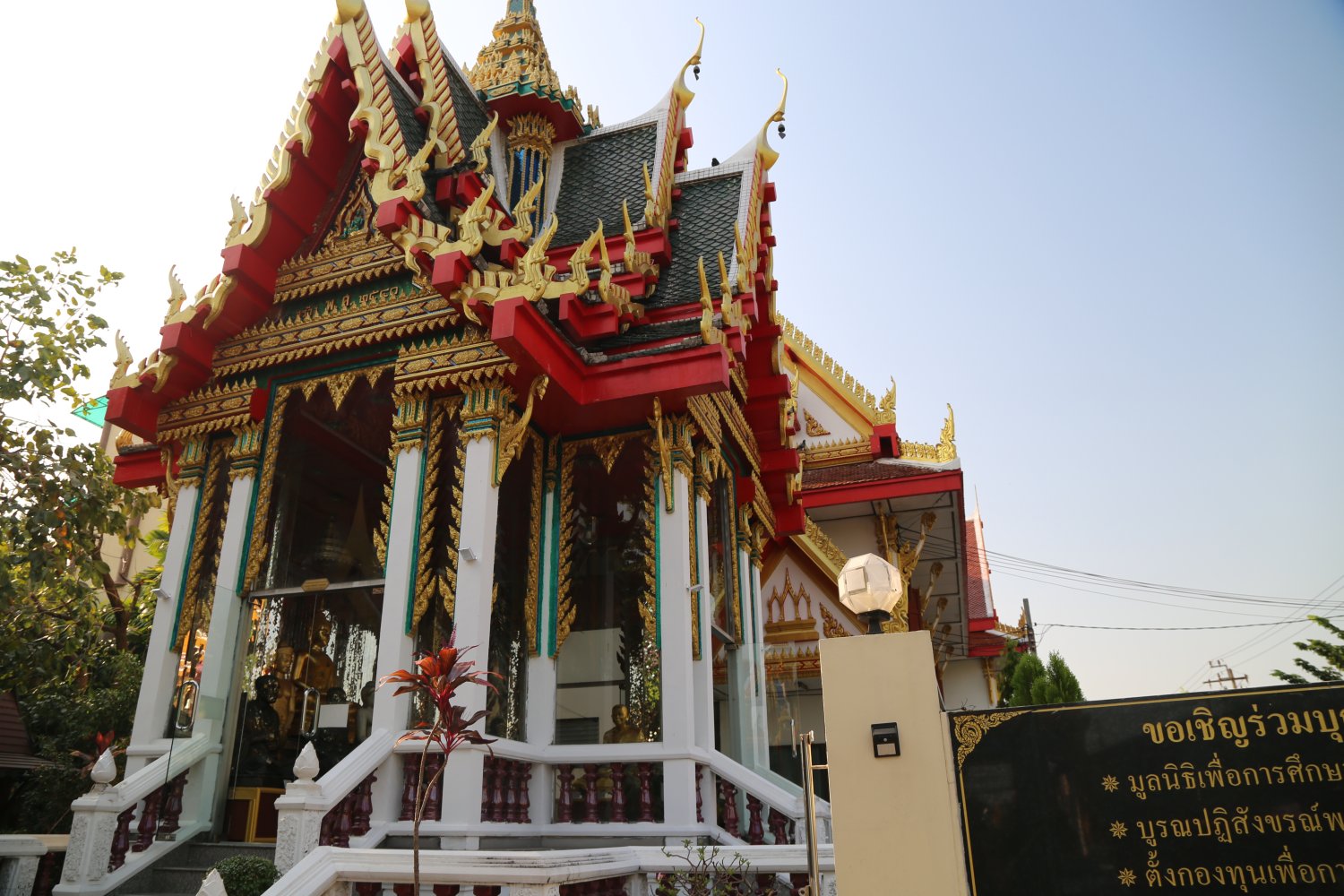

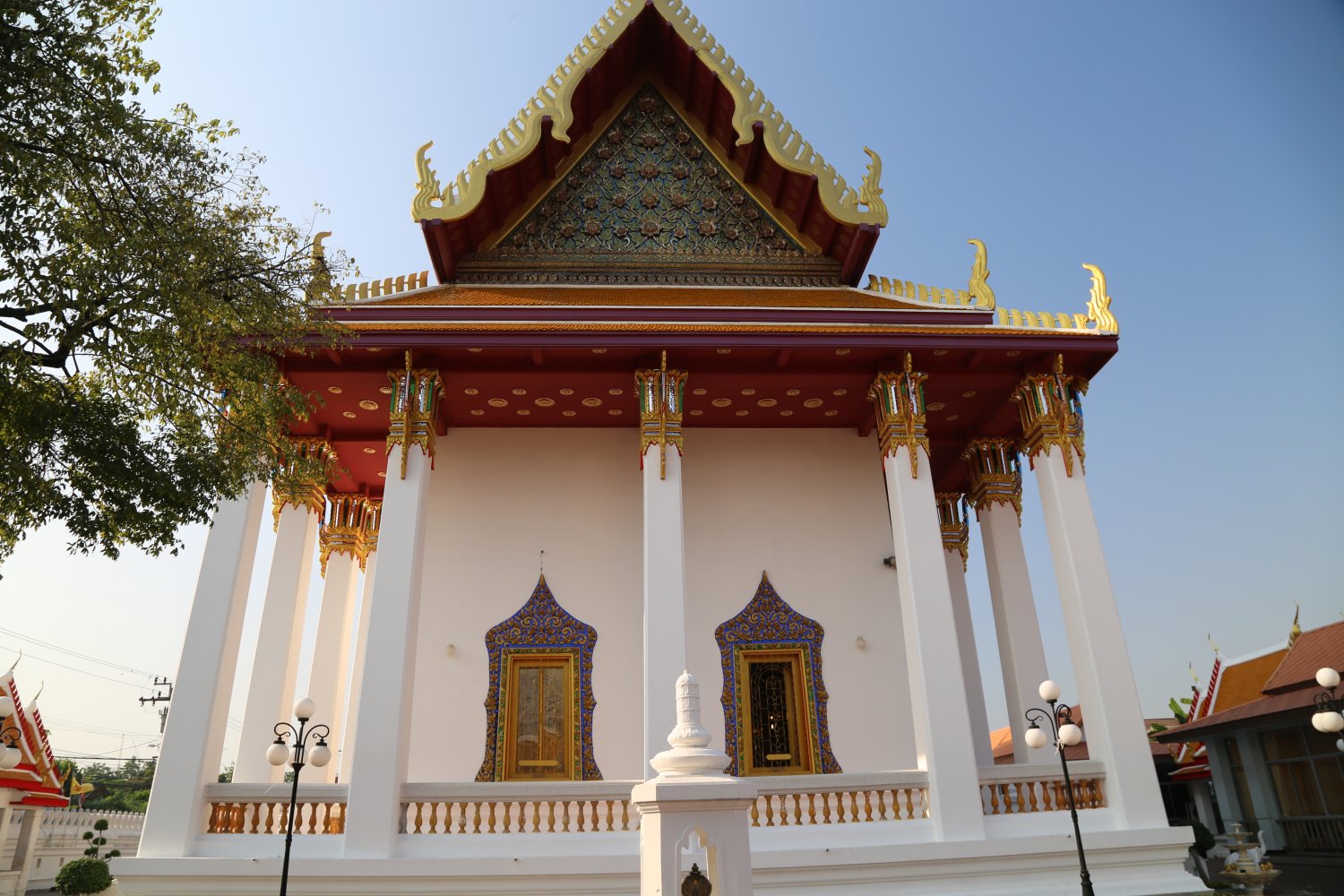
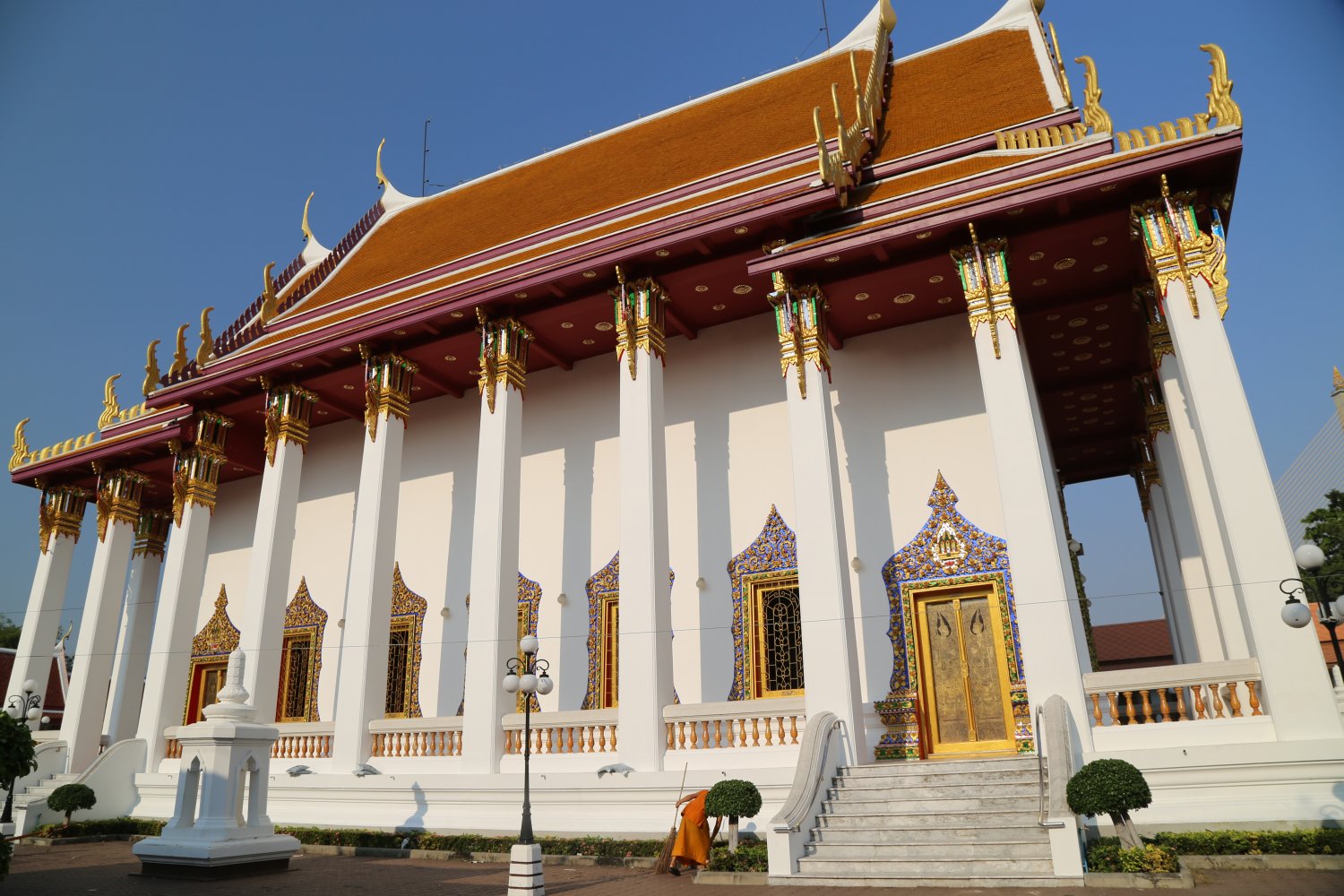
Wat Dhammamongkol This is one of Bangkok’s more major temple sites – and perhaps one of the few that most visitors will never hear of but should. Located about a 10-minute walk from the Punnawithi Skytrain. The 95-meter-tall tower is the most visible part of this temple even easily seen from parts of the nearby elevated toll way and from the Punnawithi Skytrain stop. Not an old temple – it was originally conceived in the 1960s by a single monk, Phra Viriyang.
When this monk settled here in the 1960s (now Sukhumvit soi 101), this was still a swampy rural part of town. Hard to believe by looking at all the urban surroundings today!
The tower was completed in 1985 and and was built to commemorate where Buddha obtained enlightenment in Bodhgaya, India. Impressive from the outside but equally as impressive inside, the tower contains classrooms, a radio station and a museum on the 10th floor (accessible by an elevator). A chapel is located even higher up at the top of the tower. Visitors can take the elevator to the 10th floor or those wanting some exercise can climb the stairs to the top. Great views from the top!
Highlights include a huge black Buddha image carved from a single block of stone (from Canada). Several other important Buddha relics are located on site having been donated over the years including from Bangladesh. Associated with this temple are other temples that have been built within Thailand as well as several others in Canada. Due to its international scope and influence and educational opportunities on site, it is not common to see visiting monks and foreigners on site.
The property is rather large, and one can easily spend 45 minutes to an hour here (in contrast with most of the numerous other much smaller temples in Bangkok).
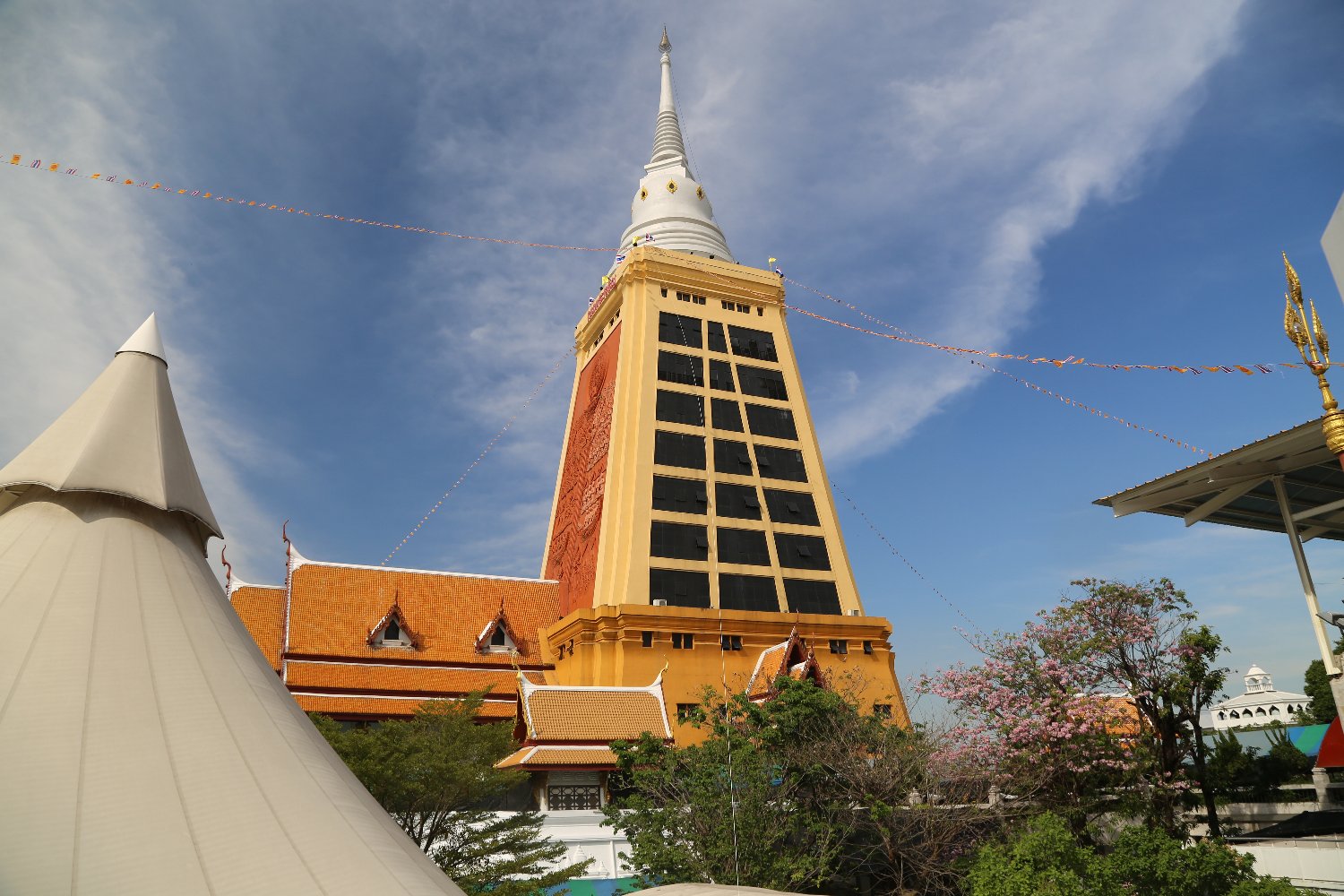
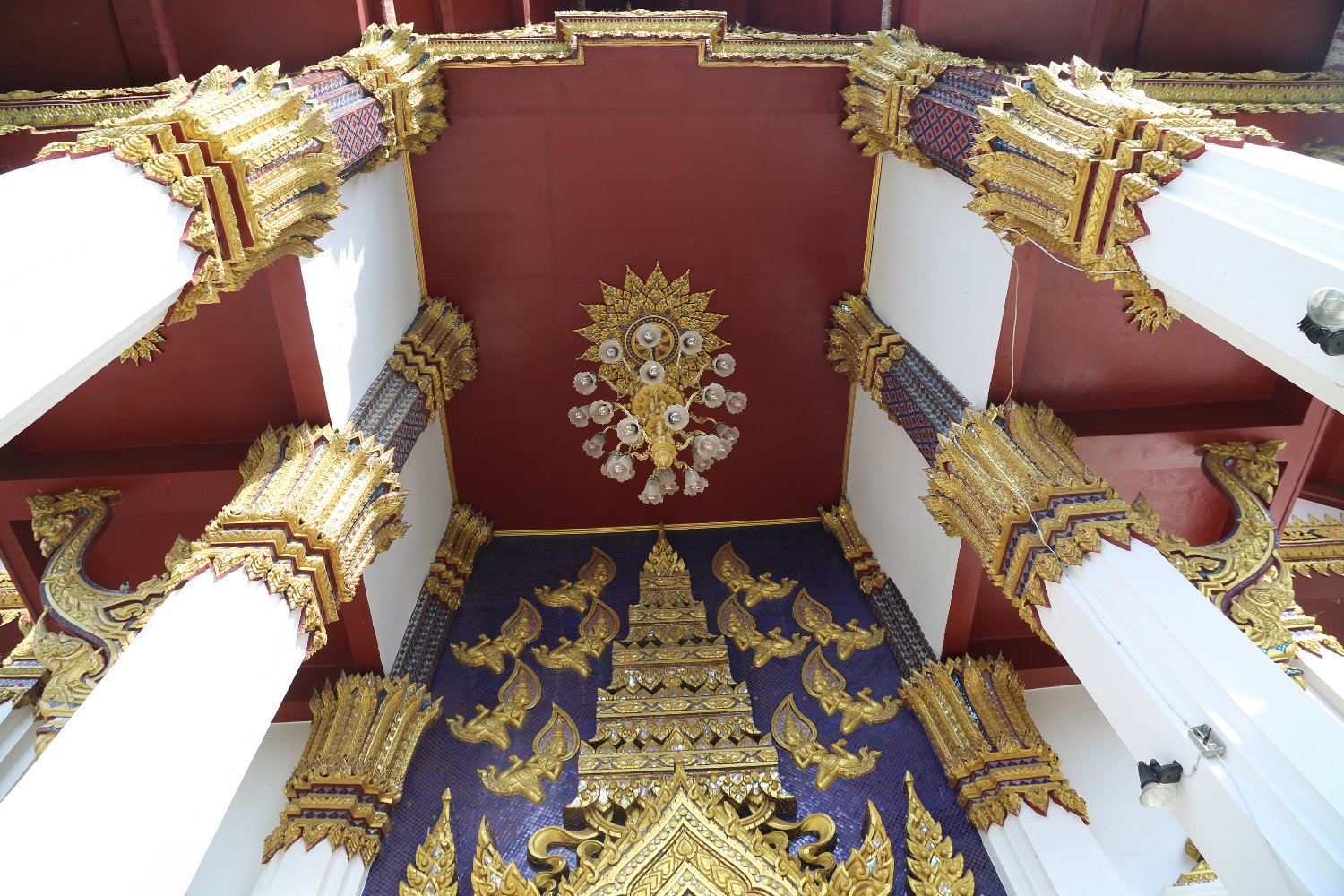
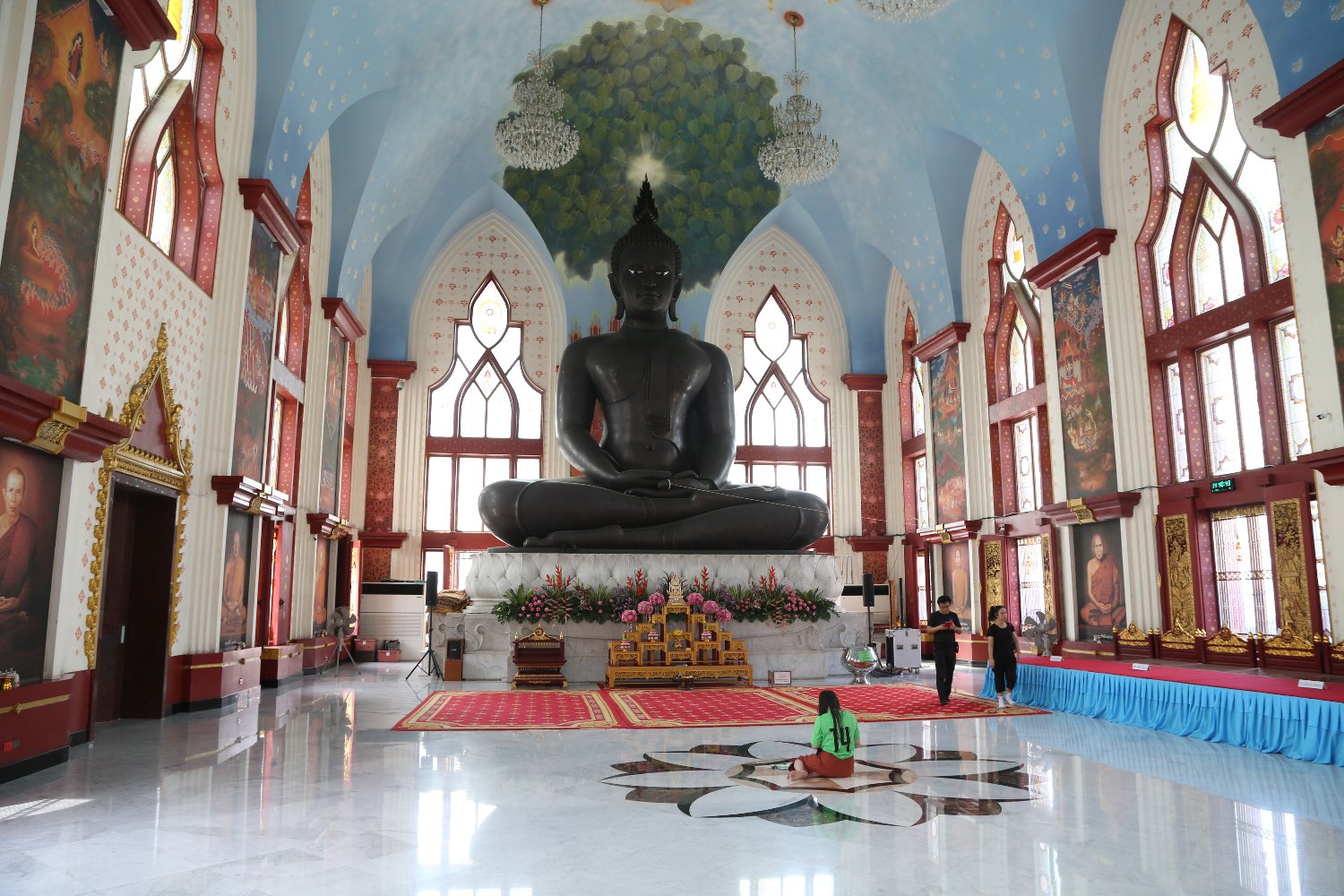
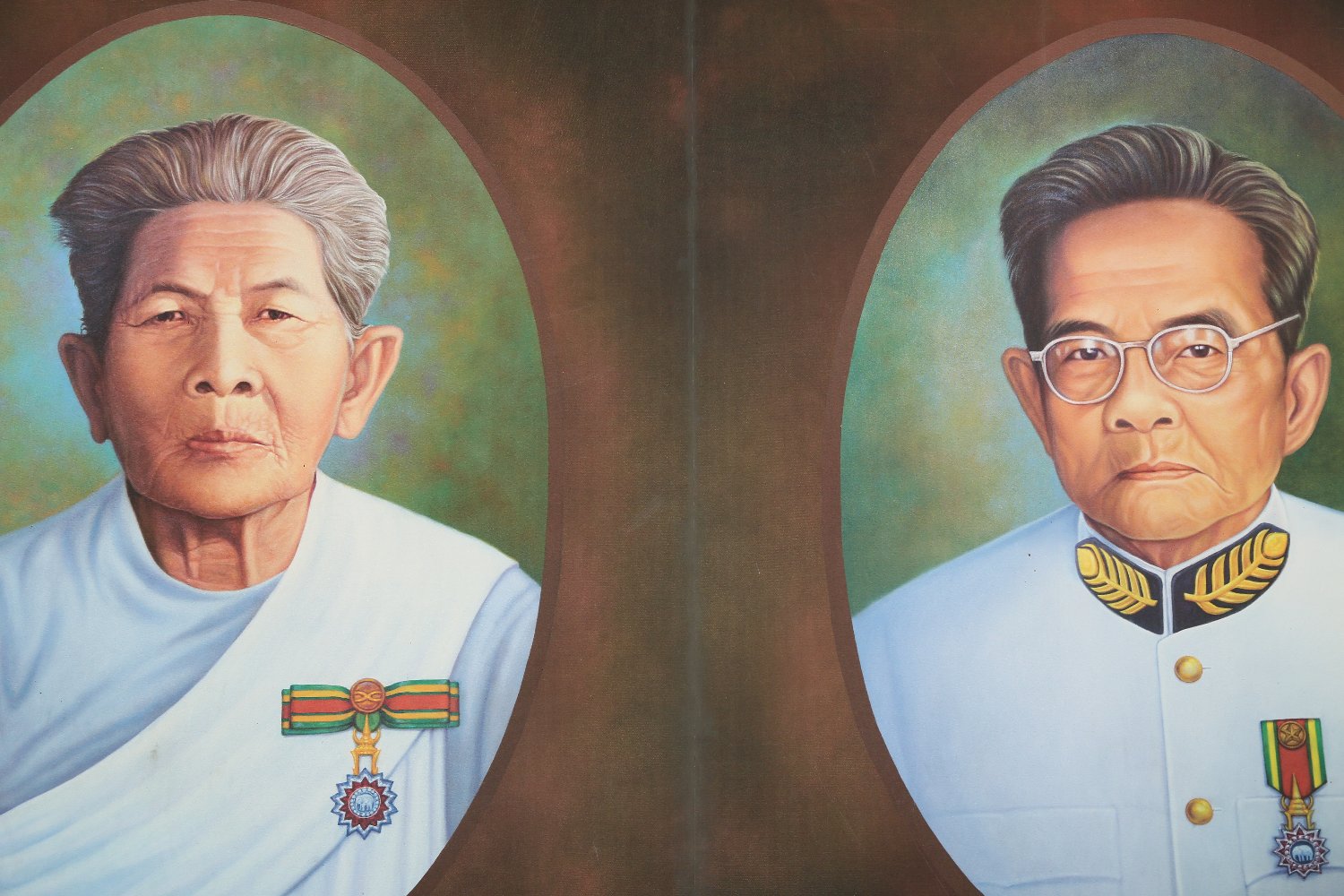
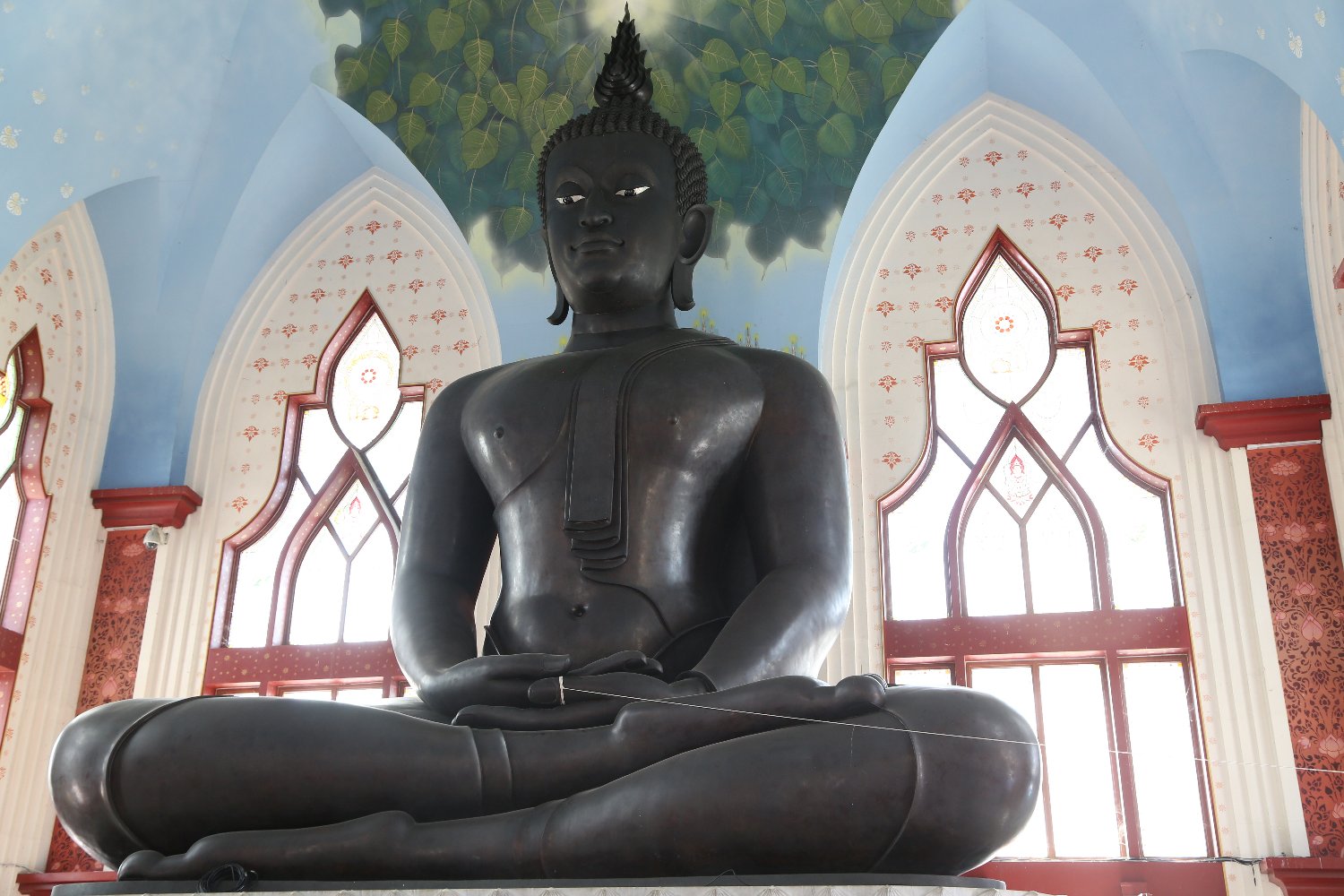
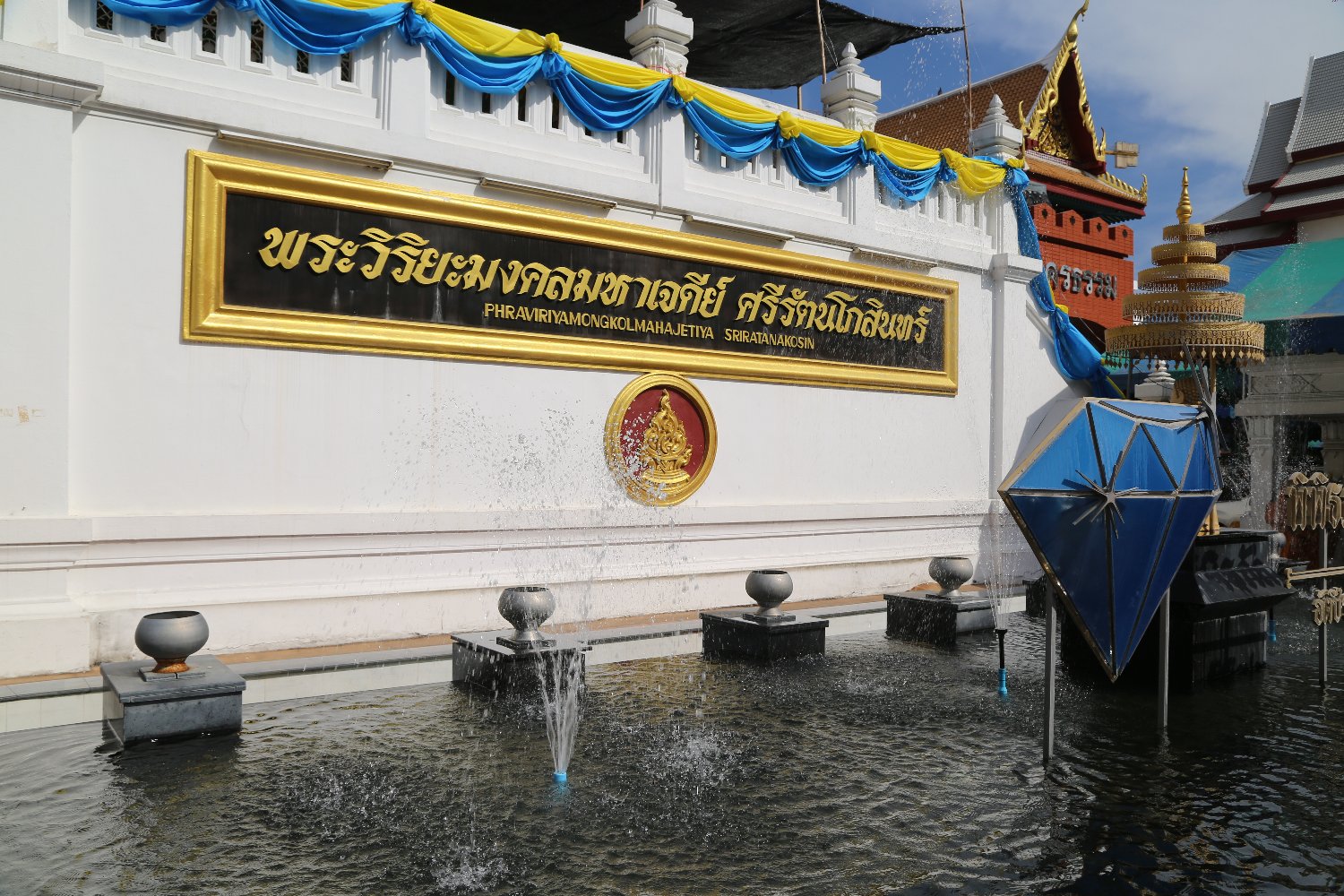
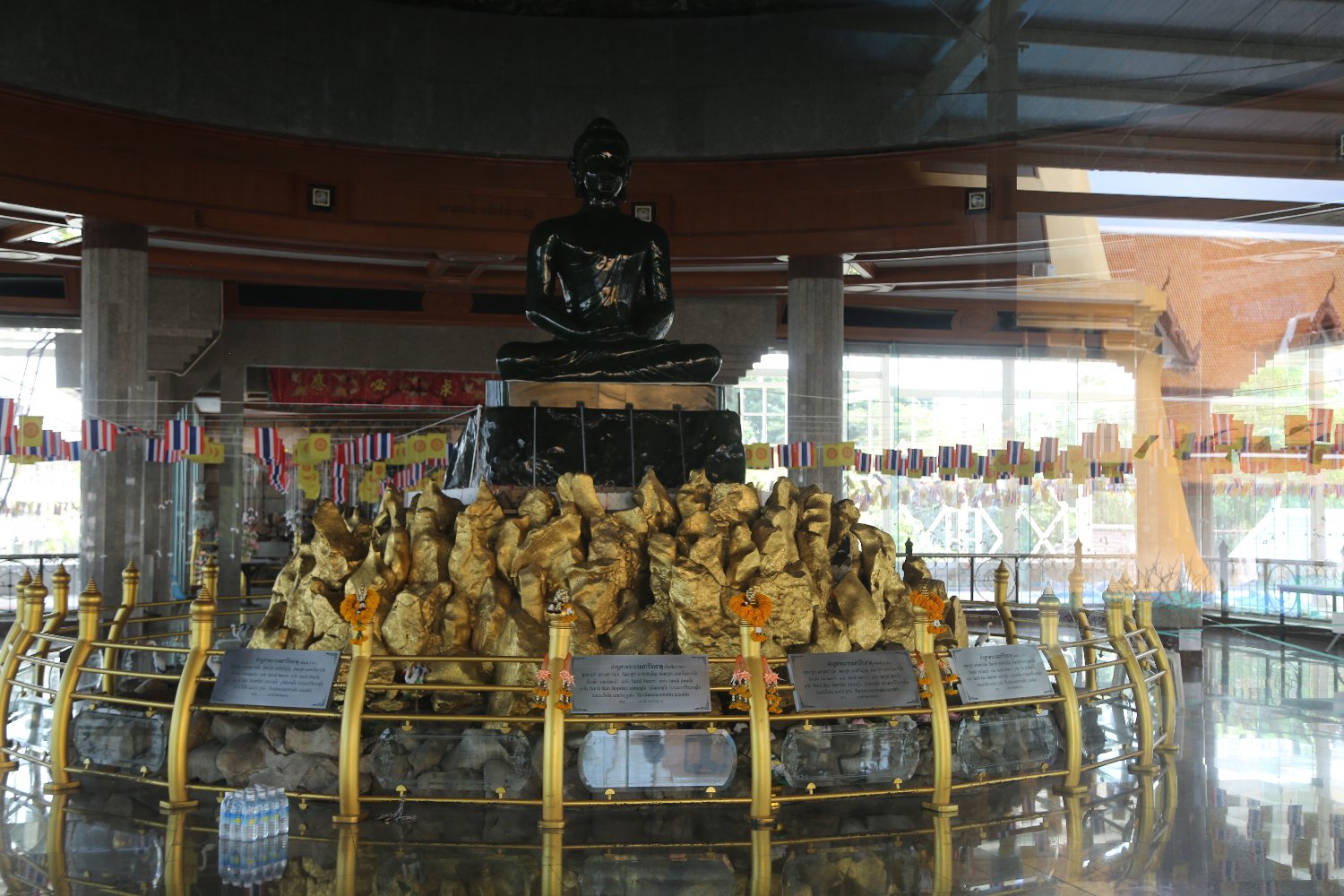
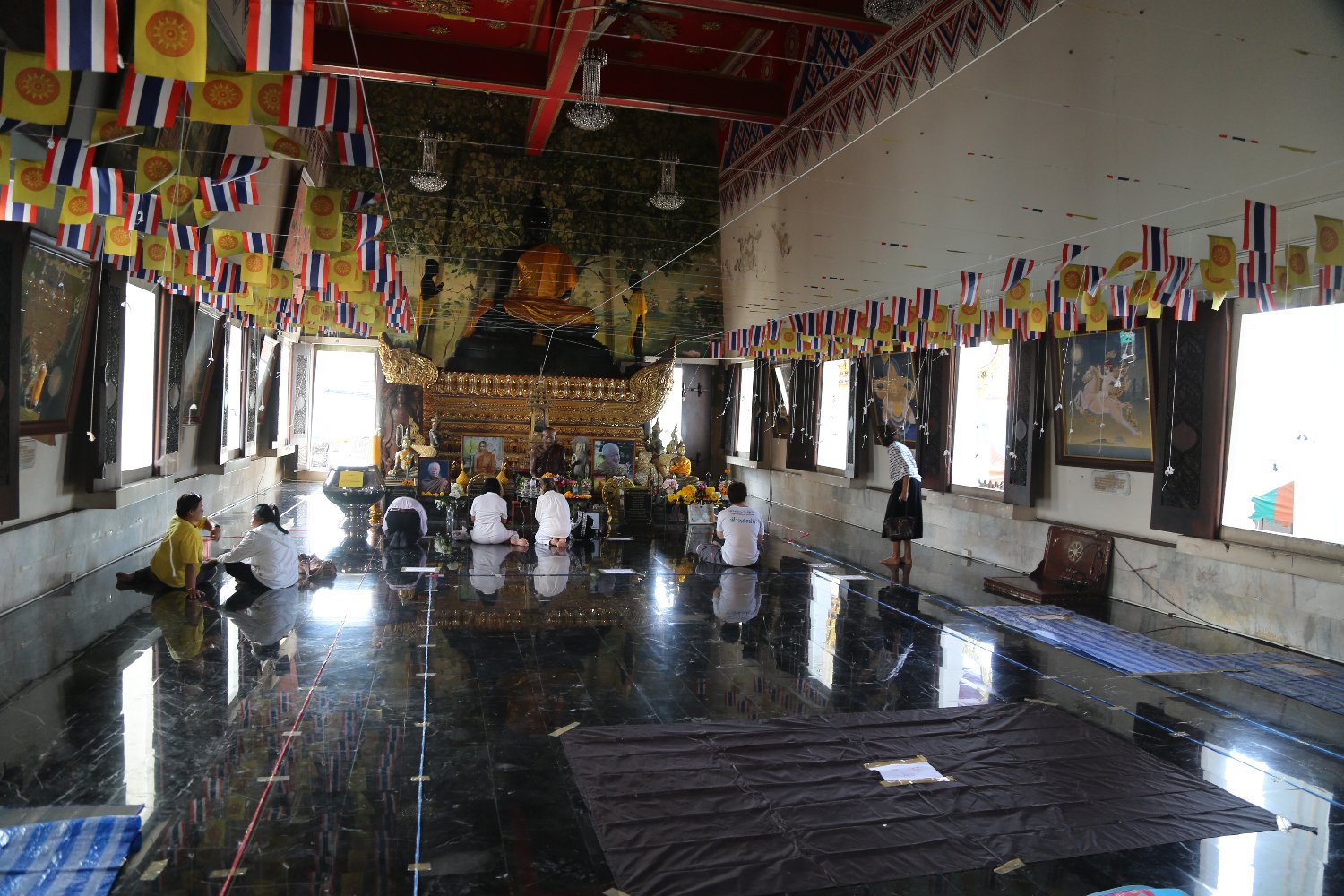
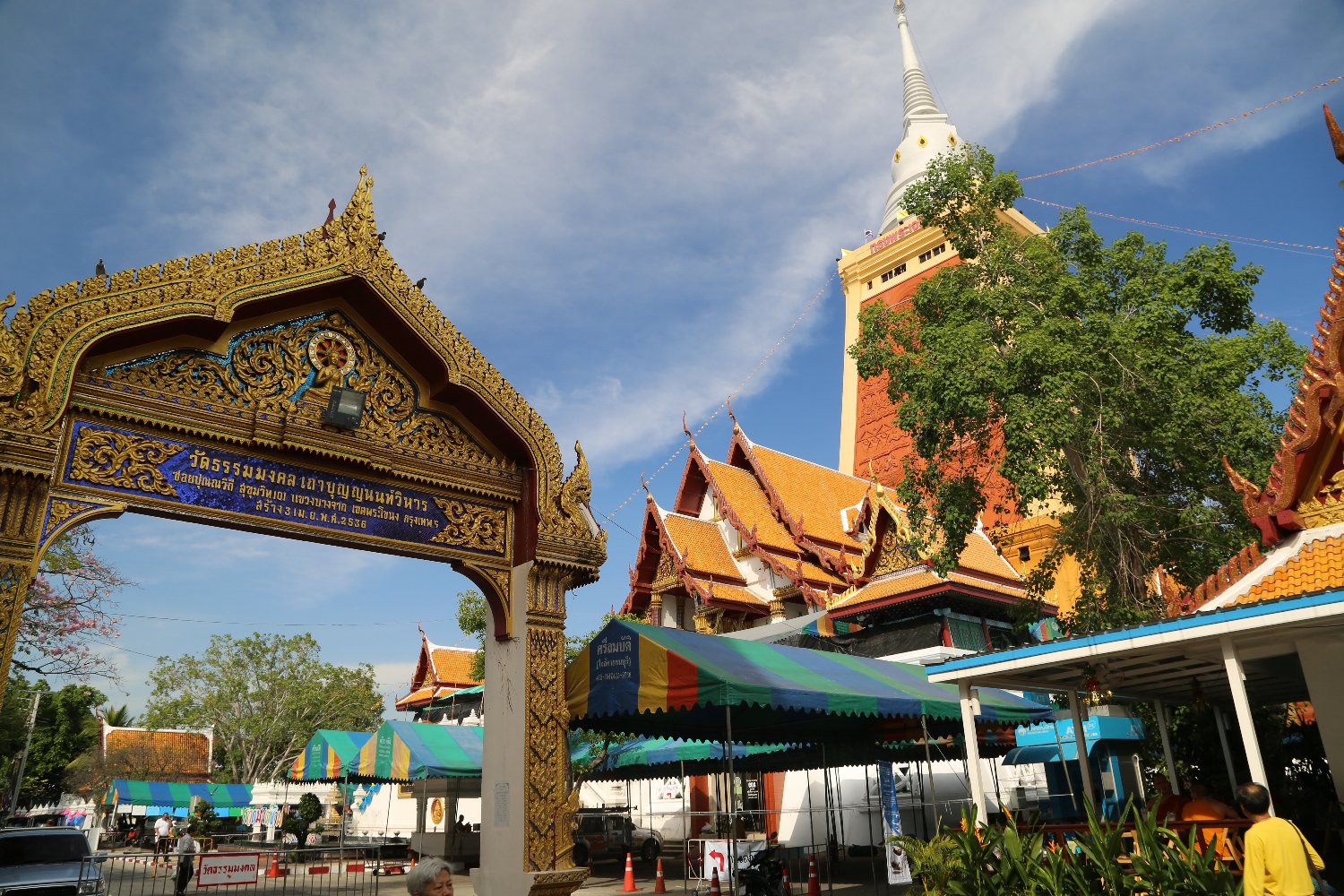
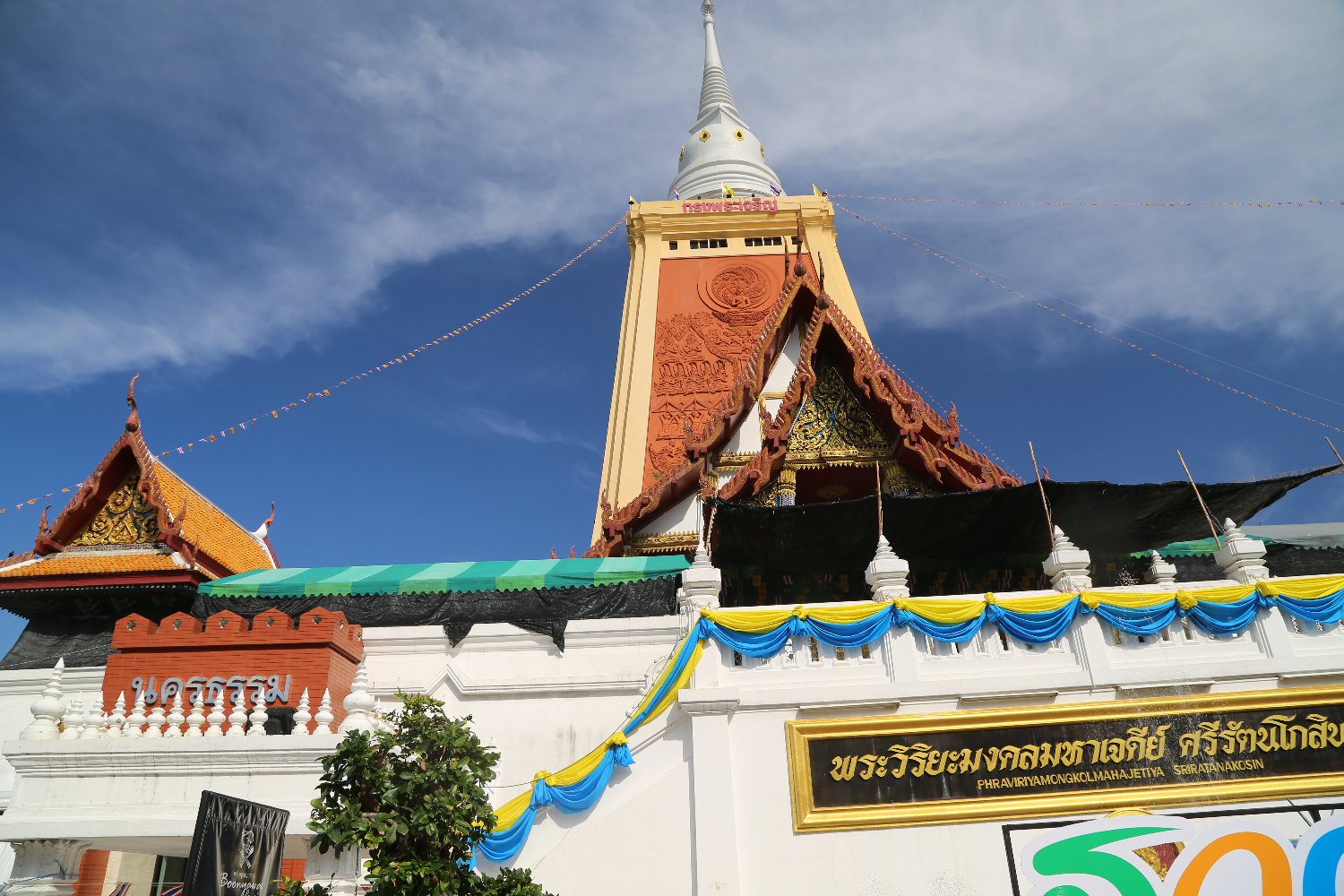
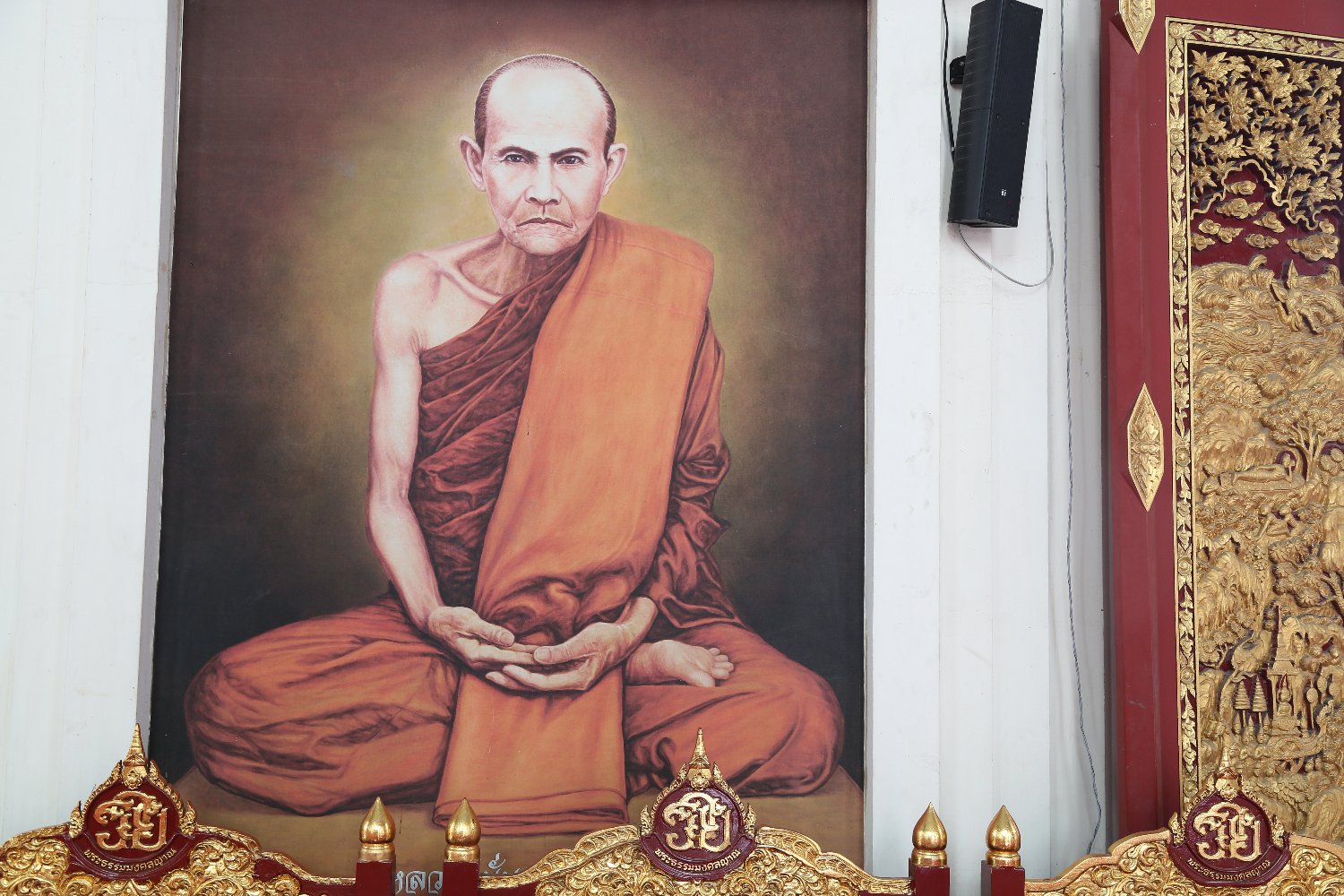
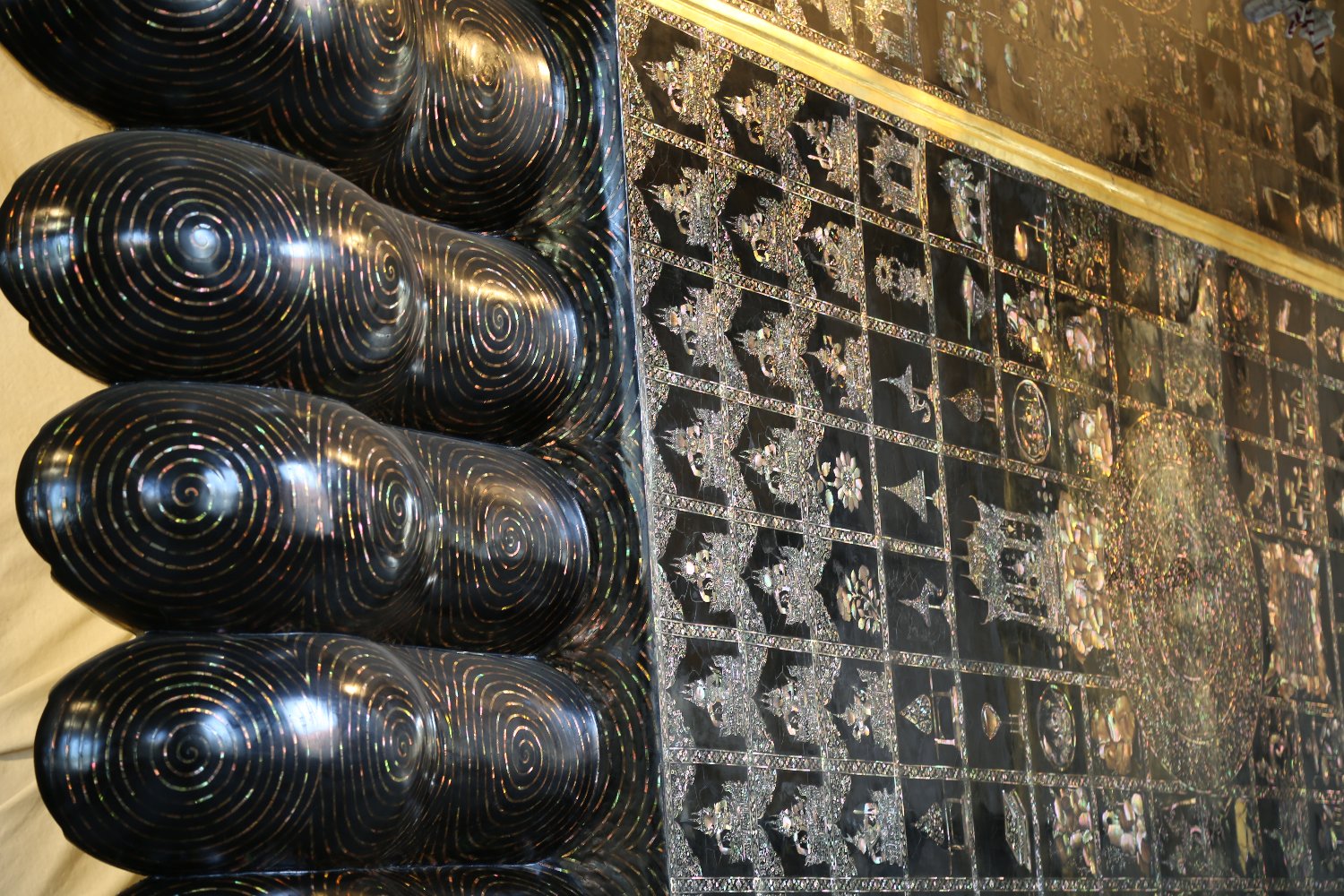
Wat Disanukaram (also referred to by other spellings such as Wat Desanukaram) is an impressive wat but compared to other temples in this part of town, quite small. Some notable design features are the door panels are made of mother-of-pearl (same material used in the feet of the Reclining Buddha at Wat Po), the lower part of the interior walls are made of marble and a number of intriguing paintings decorate the interior walls.
Unfortunately, this wat is on the ‘tuk tuk scammers list’. We first heard about this wat from one such scammer – who was hanging out around a touristy section of town (near Wat Saket) and he offered to bring us to this temple in his friend’s tuk tuk provided we stopped at a jewelry store first – offering an all-day rate of only 60 baht because of a “special promotion”. We have since visited this temple several times and each time we notice foreigners accompanied by a tuk tuk driver. Once one of the tuk tuk drivers even tried to stop us from walking into the courtyard that surrounds the temple (saying it was forbidden to enter – absolutely not true).
Home of the ‘black’ Buddha. It can be quite challenging to actually visit the interior of this temple as we have heard it is only open on the last day of each month (unconfirmed).
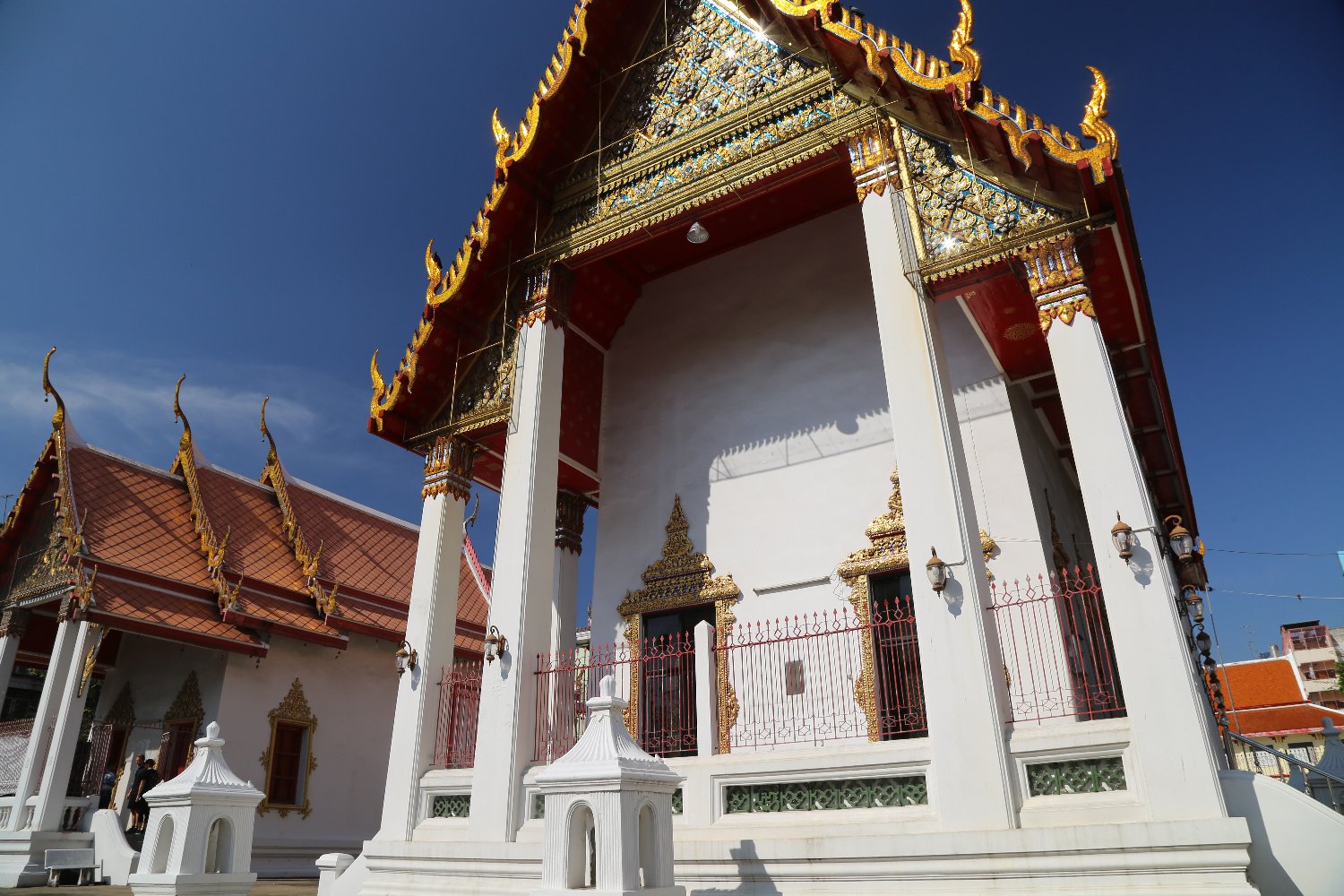


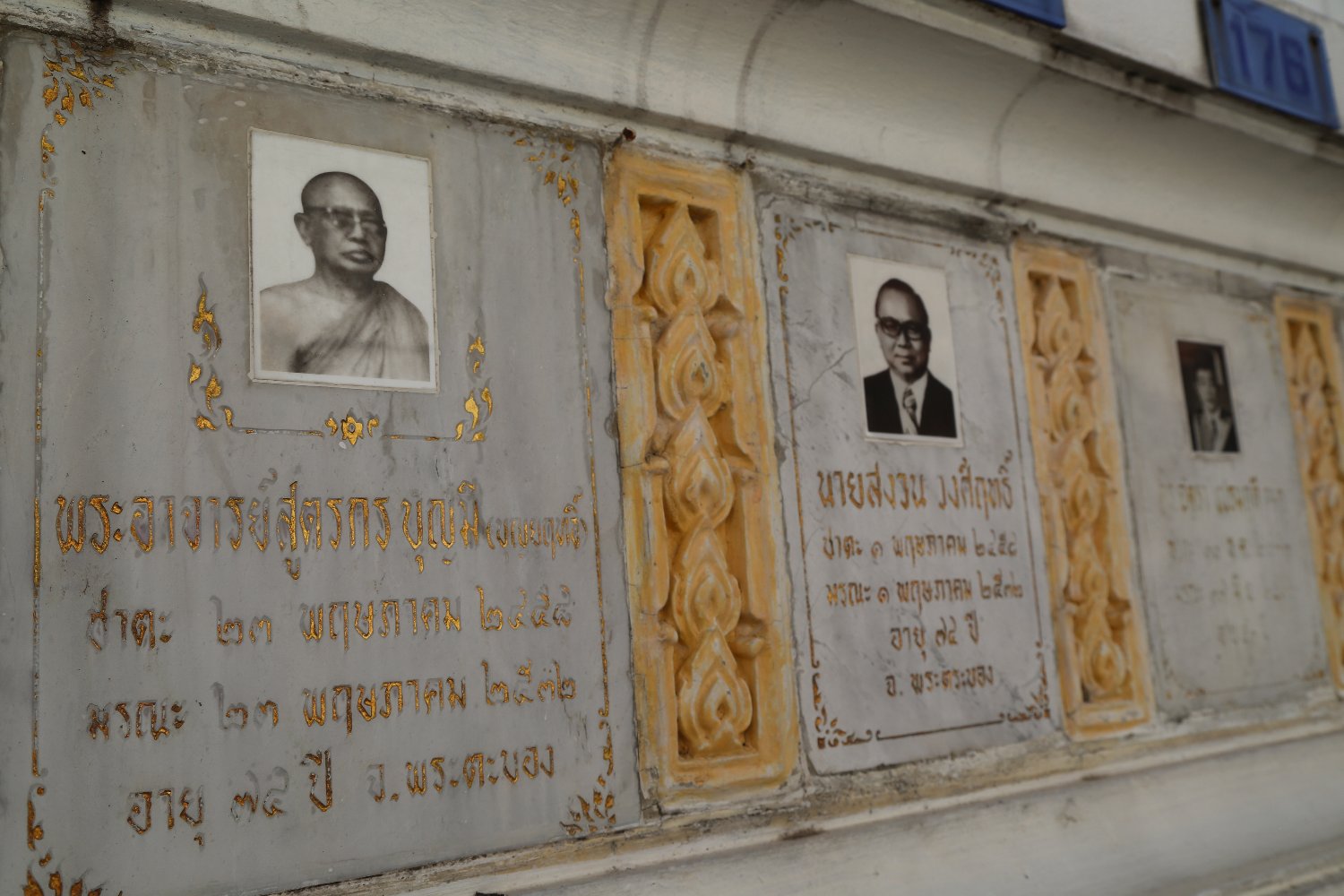
Wat Dong Munlek is a tiny temple located about a 25-minute walk from Wat Arun (or a short taxi ride away). Not to be confused with the beef noodle shop of the same name. If the Ordination Hall is open worth popping in for a quick peek – during our visit monks were inside praying so we did not stay long, not wanting to disturb them. No giant Buddhas inside just a few smaller golden ones.
The outside of the building is decorated traditionally – nothing fancy or unique here. Well off the tourist beaten path – one doesn’t just stumble into this particular wat.

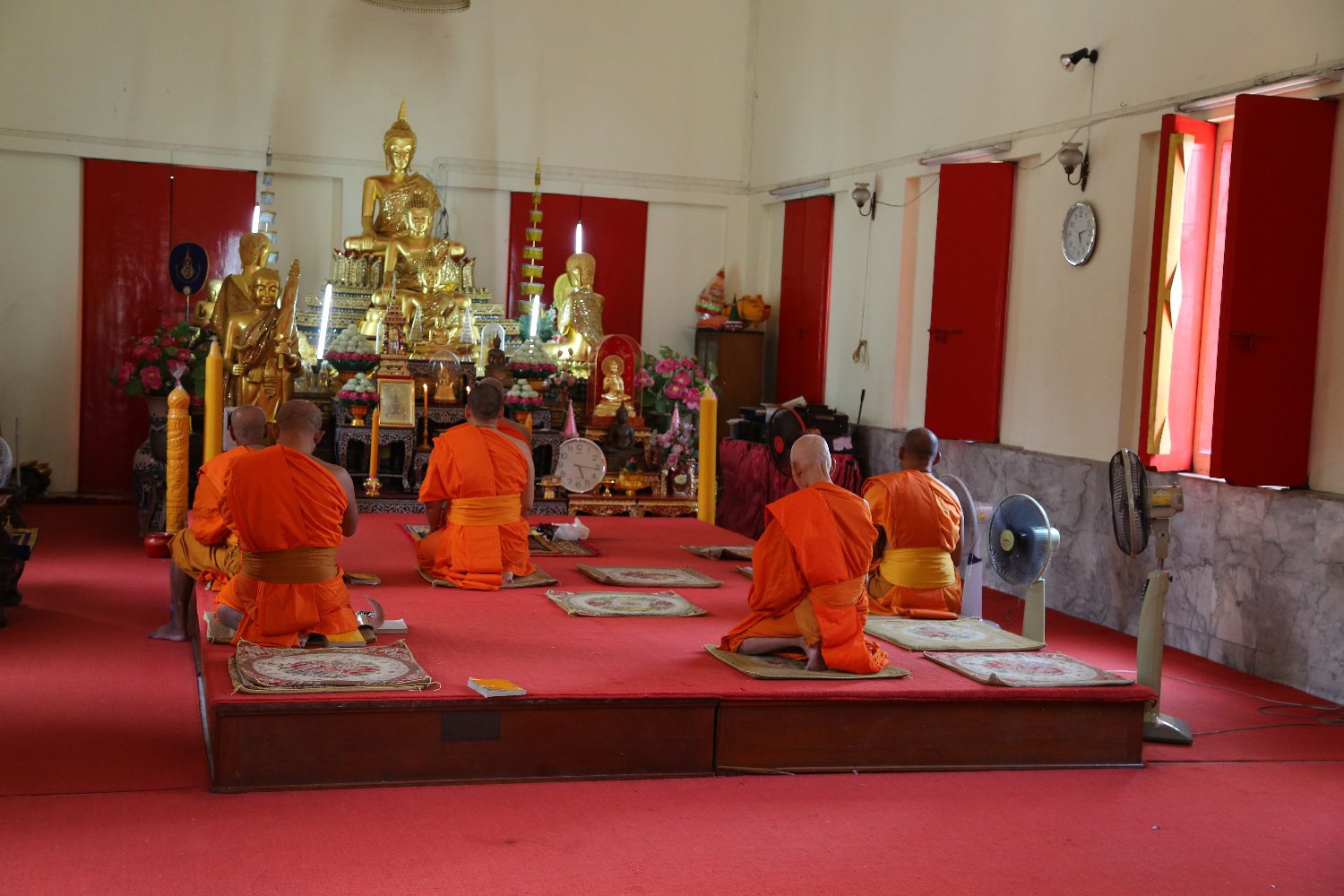
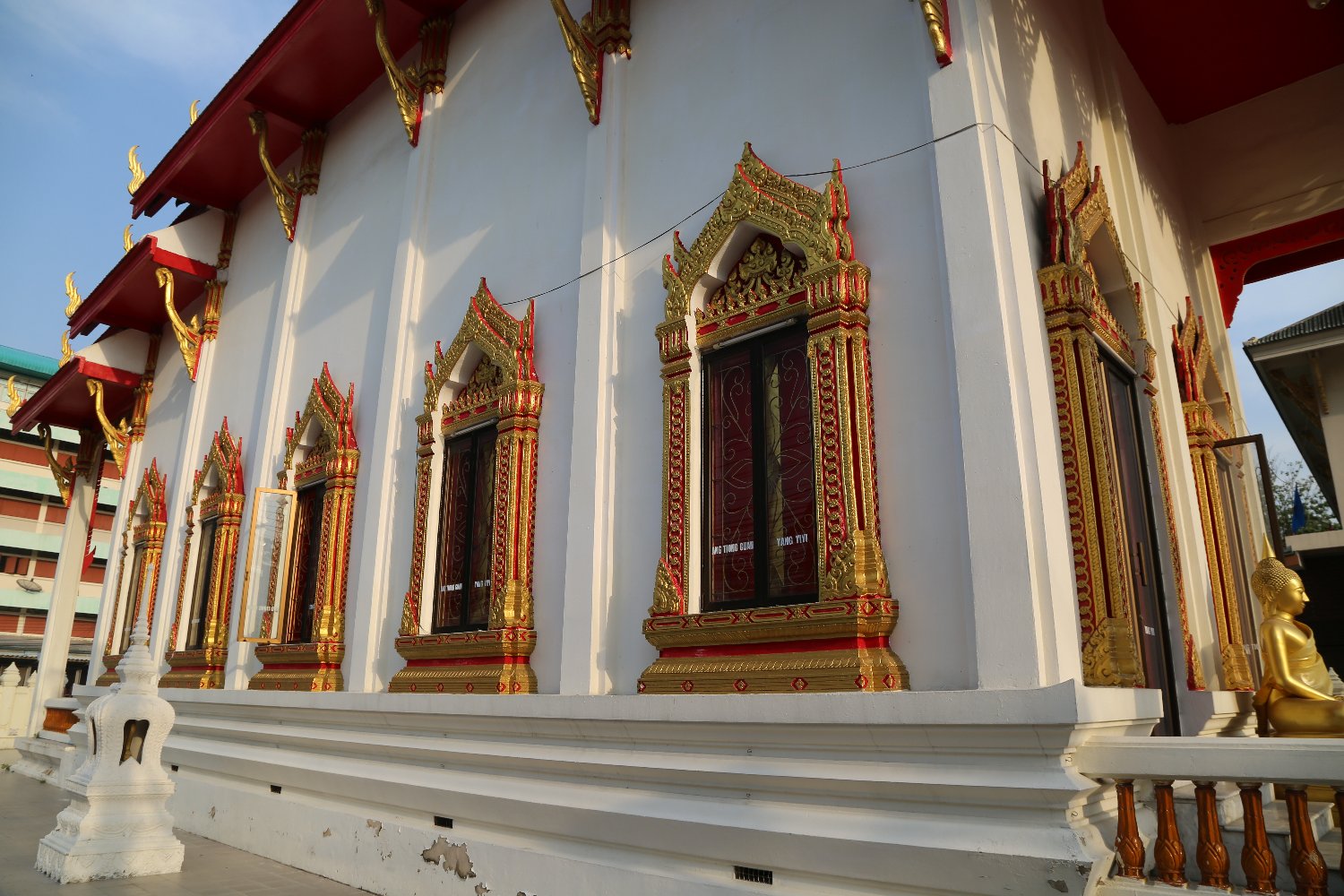
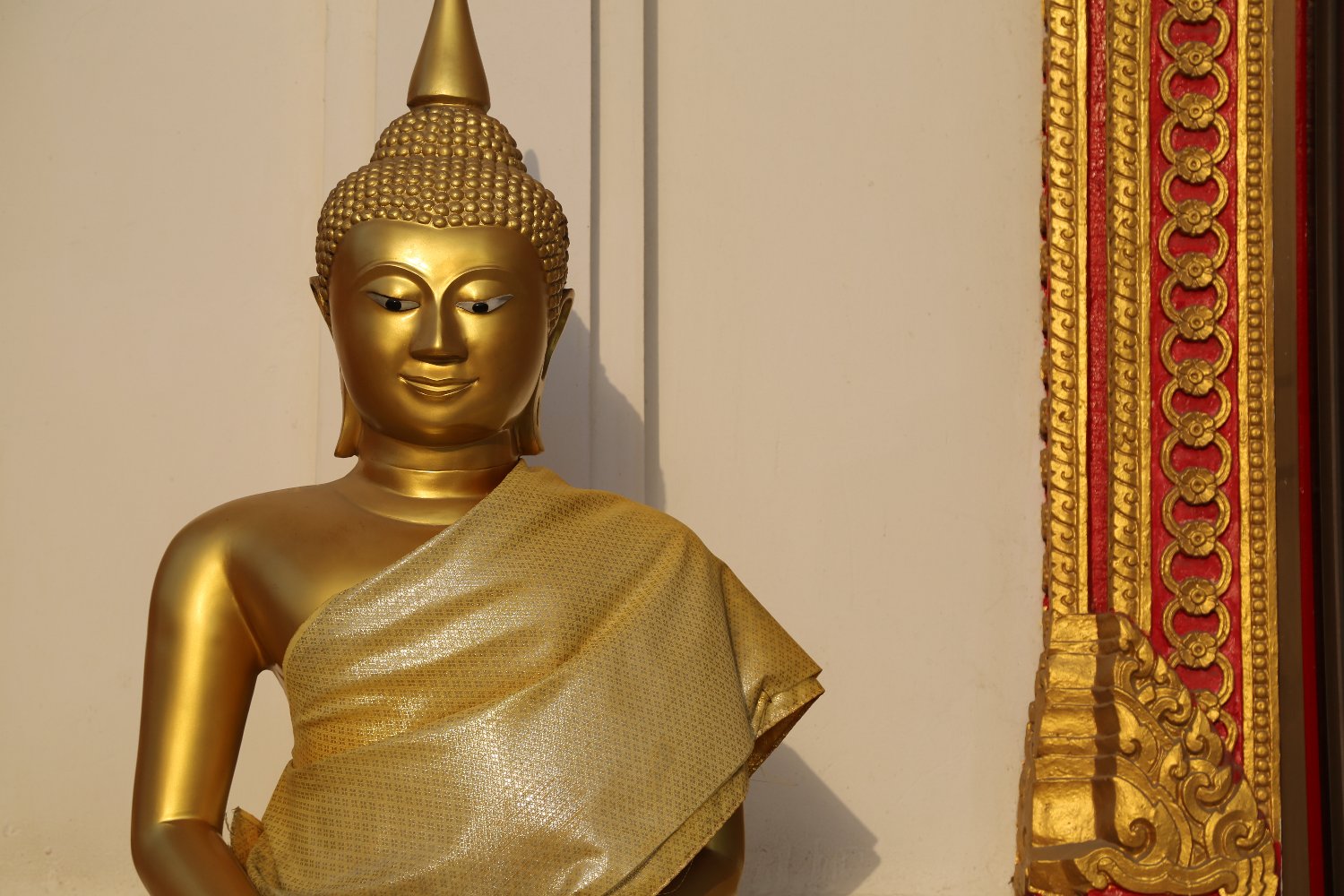
Wat Hua Lampong is locacated near Bangkok’s busy Silom District and can easily be accessed via the closest Metro stop, sam Yan (directly next to the main temple entrance) or a short walk from the Sala Daeng Skytrain stop. This is a sizable temple that we have visited numerous times. Because it is located in such a crowded part of town, it has always been quite crowded during our visits.
Nominal admission fee charged to tourists to enter the main temple. A number of shrines are located on the property; a number of monks also live on site. Estimated visit time 20 minutes.

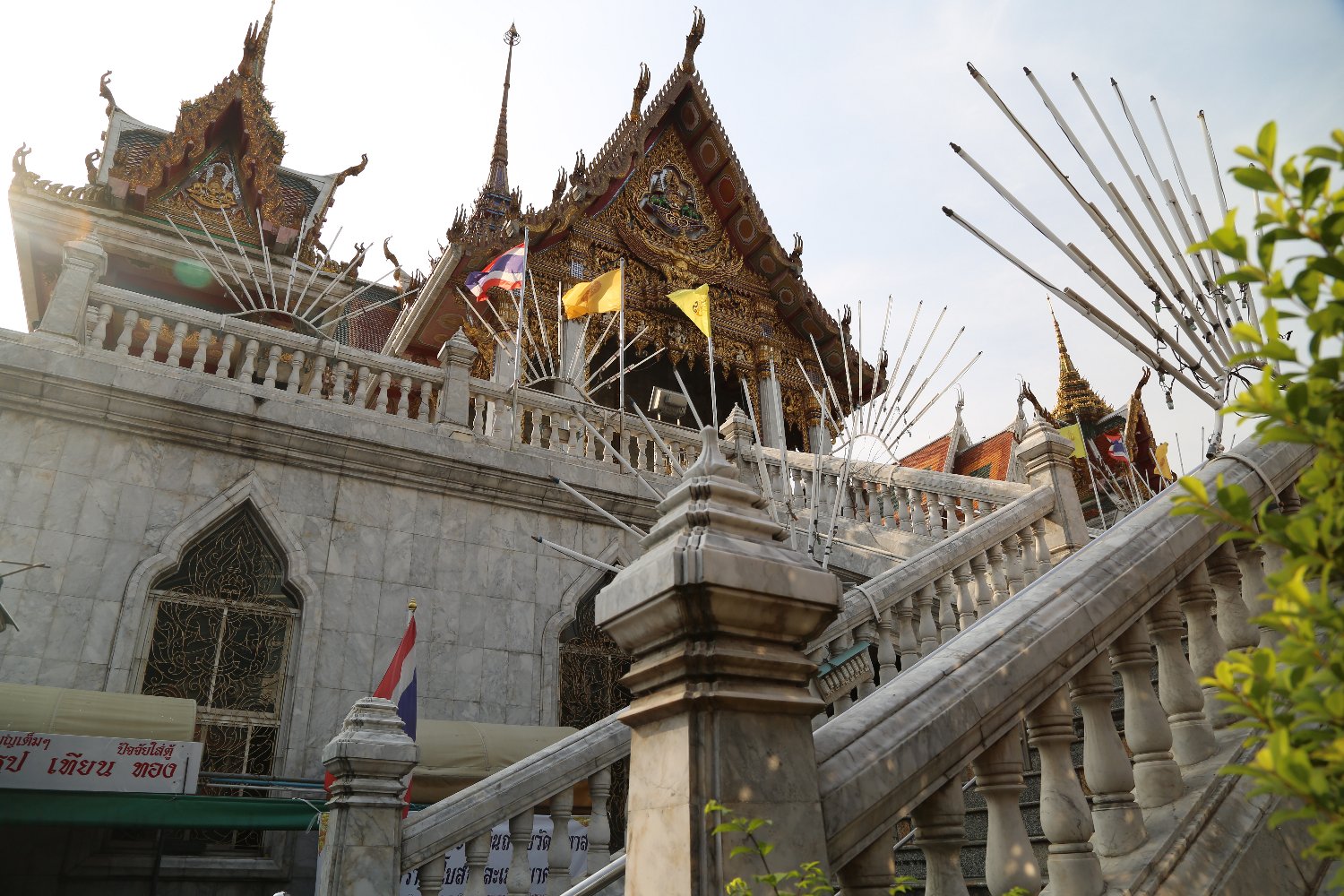
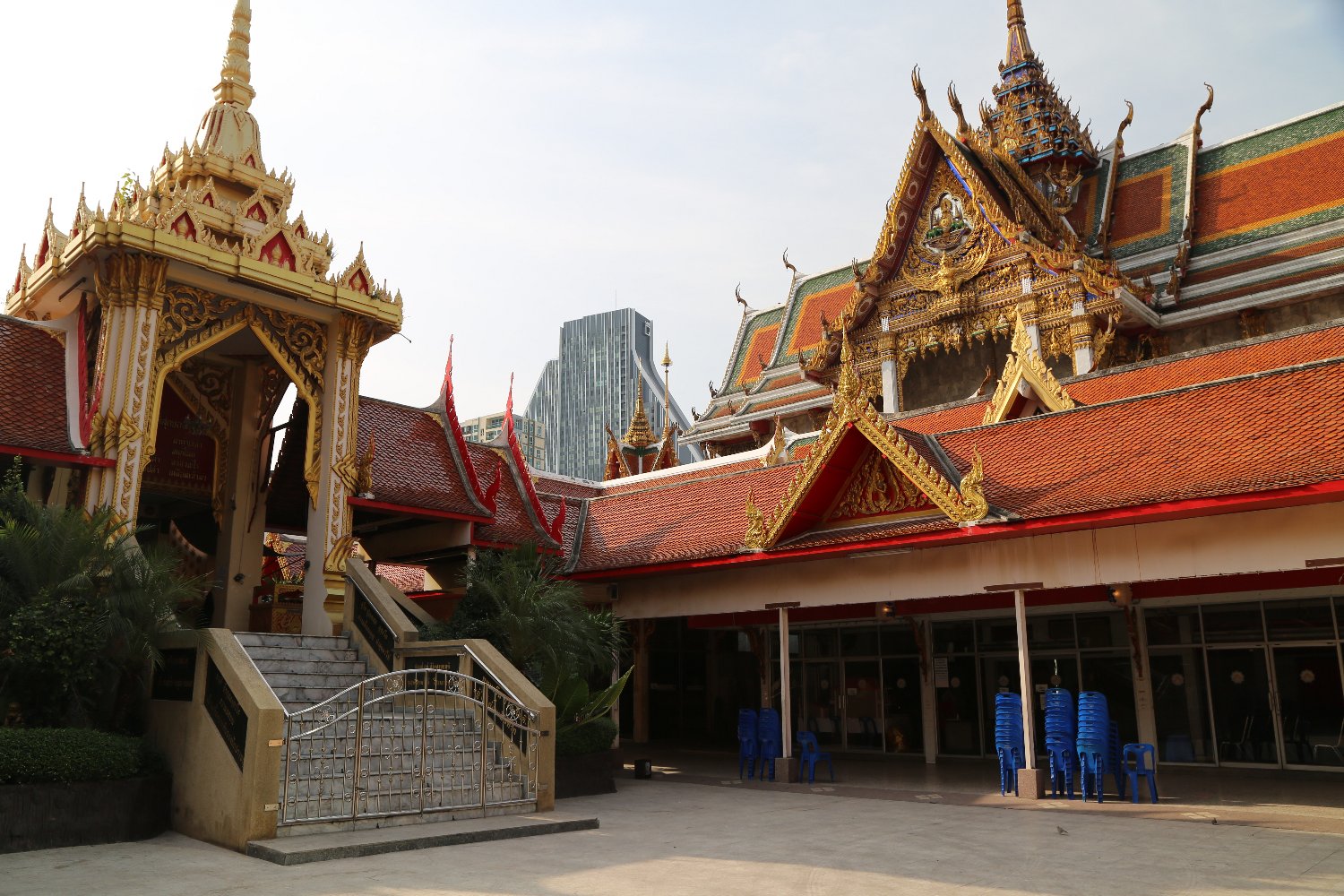
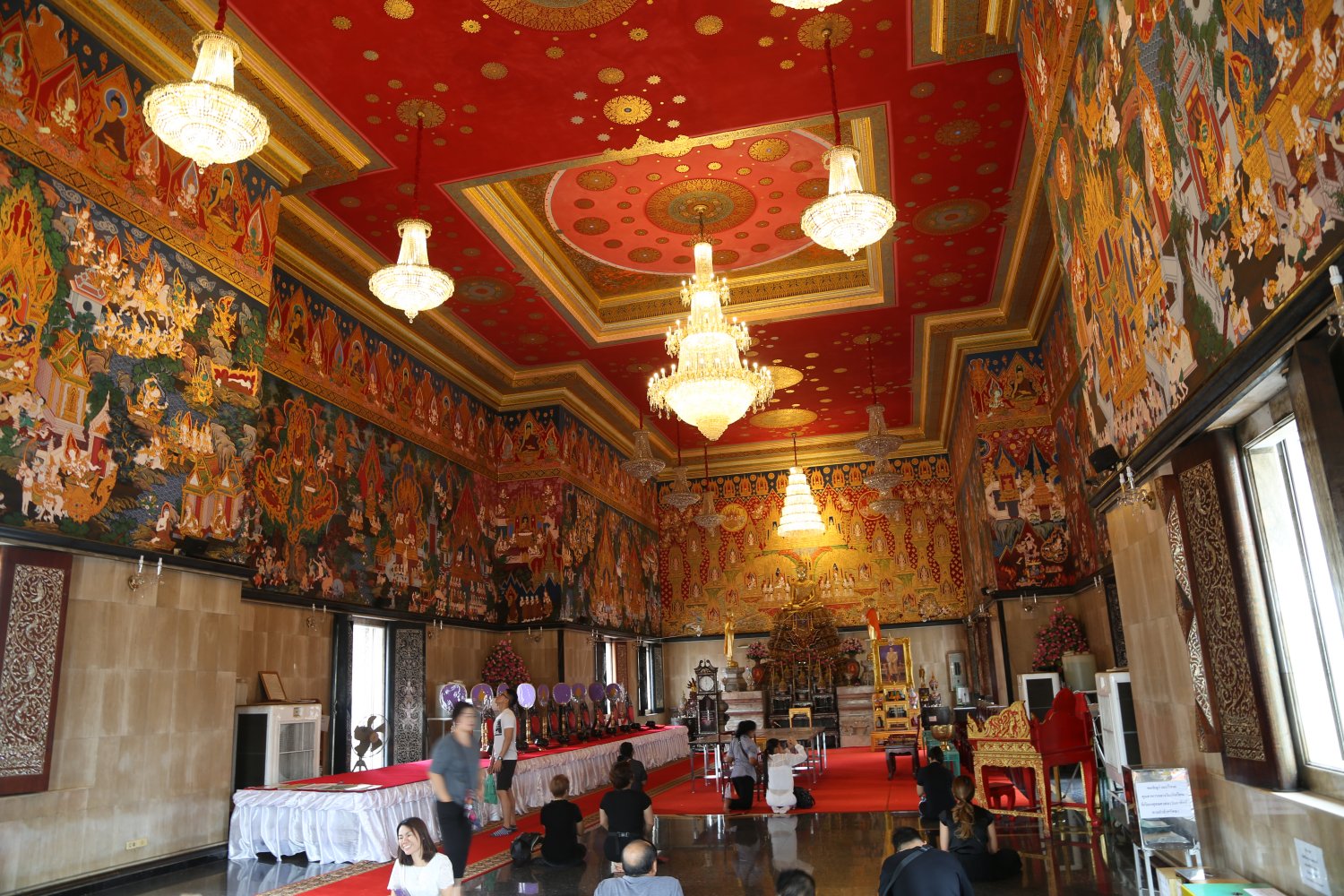
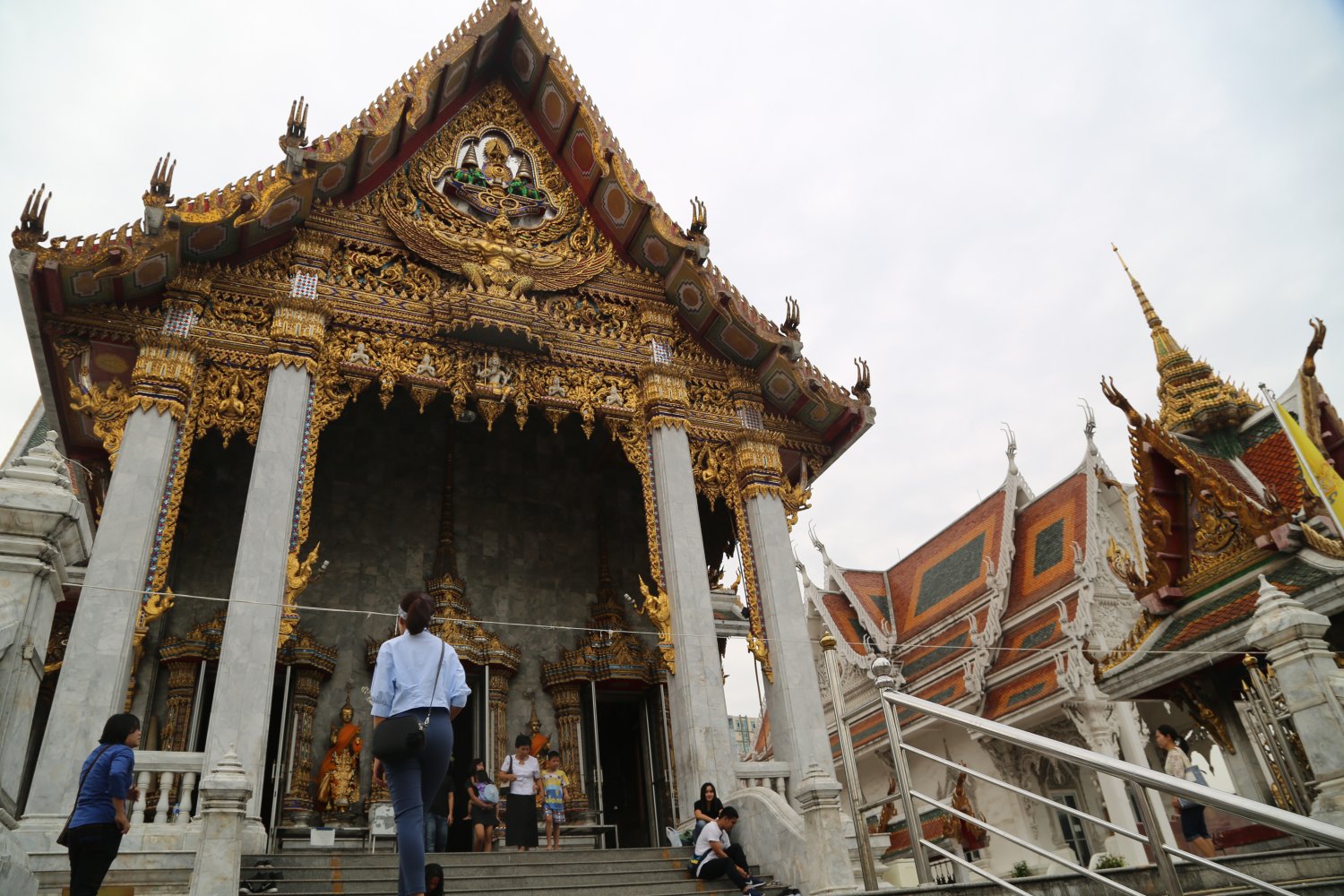

Wat Huai Khwang is located about a 10-minute walk from the Huai Khwang Metro stop located near the intersection of two canals. On the way, walking along PrachaSongkro Road one passes numerous sidewalk vendors including many fruit vendors. The temple itself is medium sized and very colorful featuring several animal and other statues. Surrounded by a number of small sois.


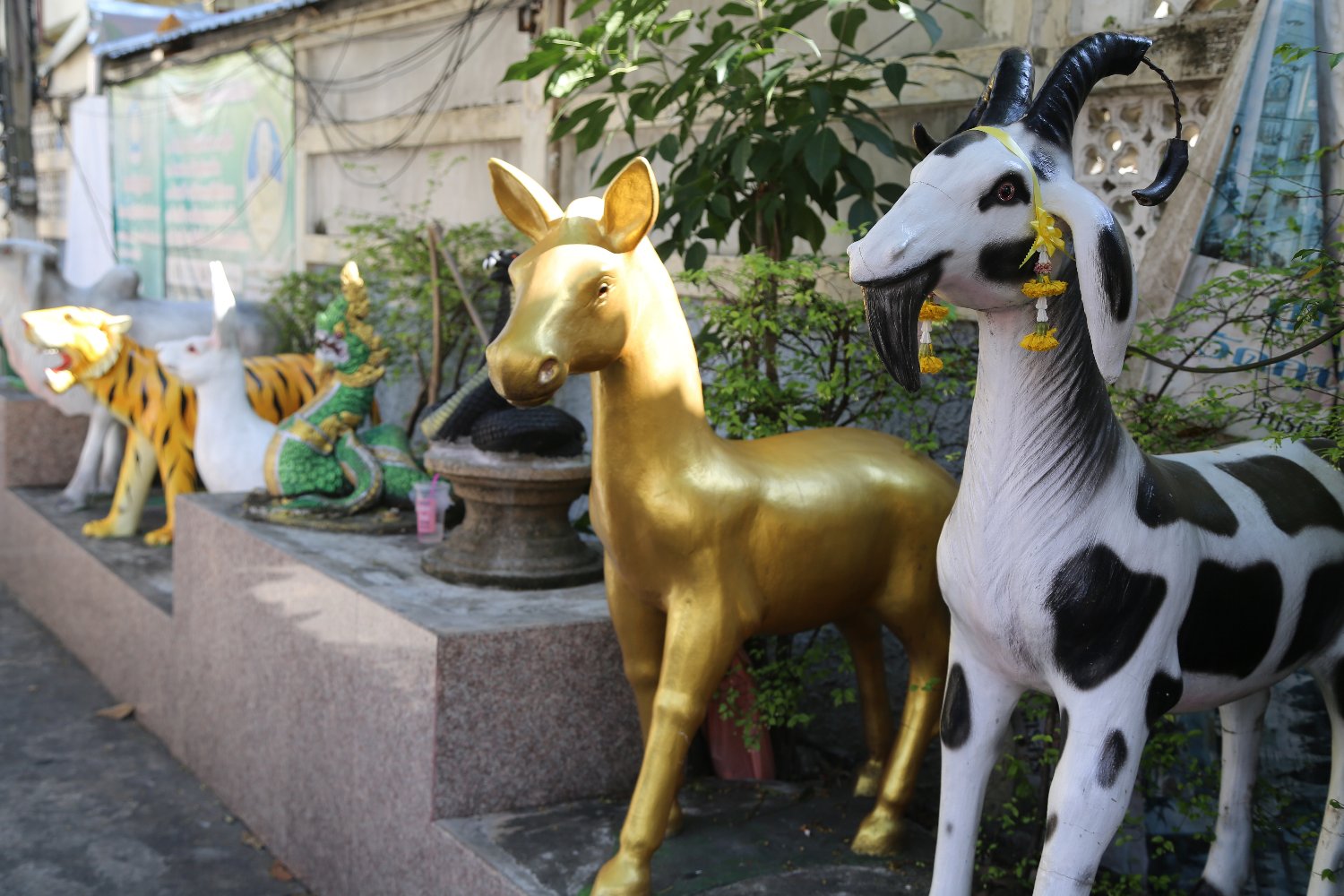

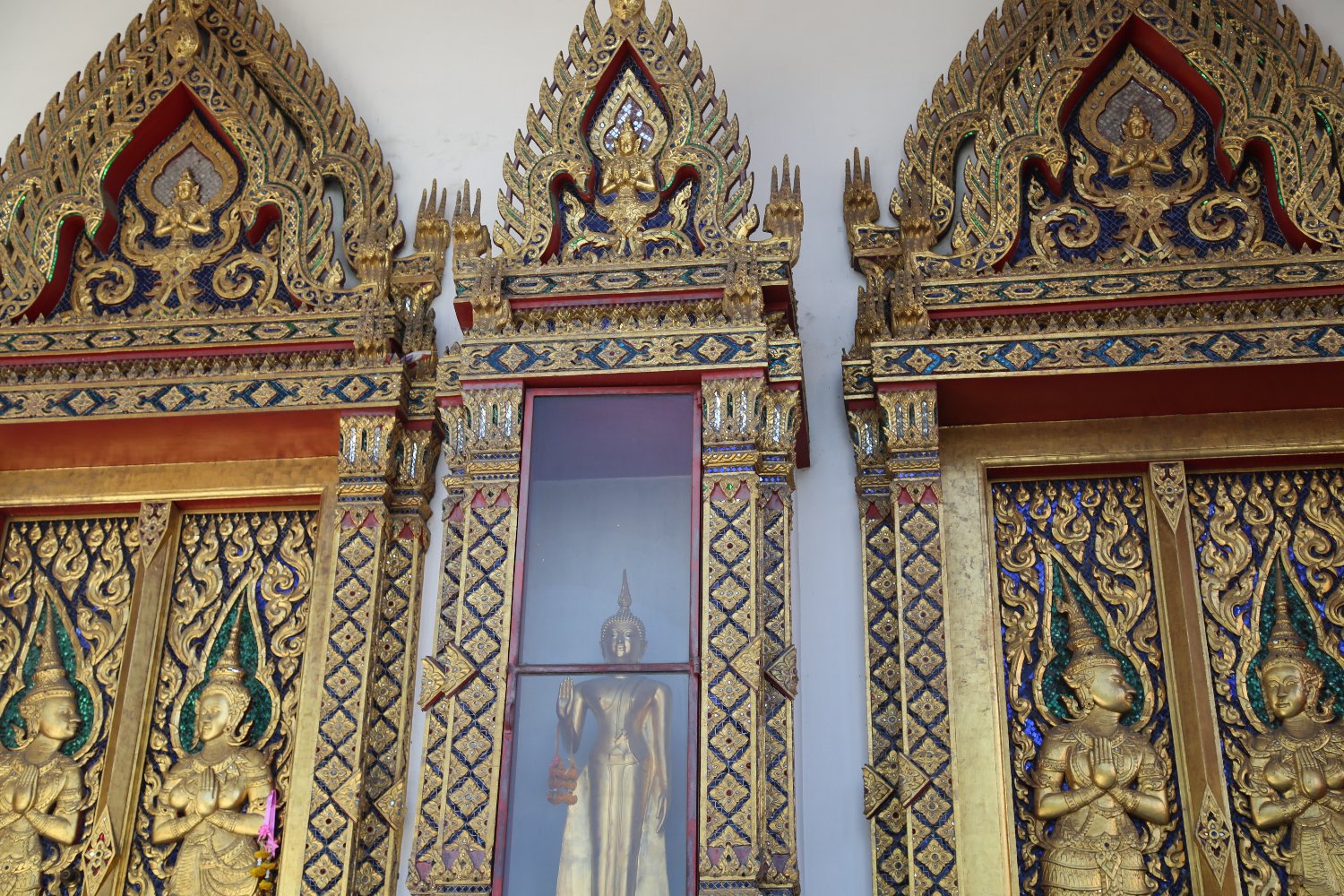
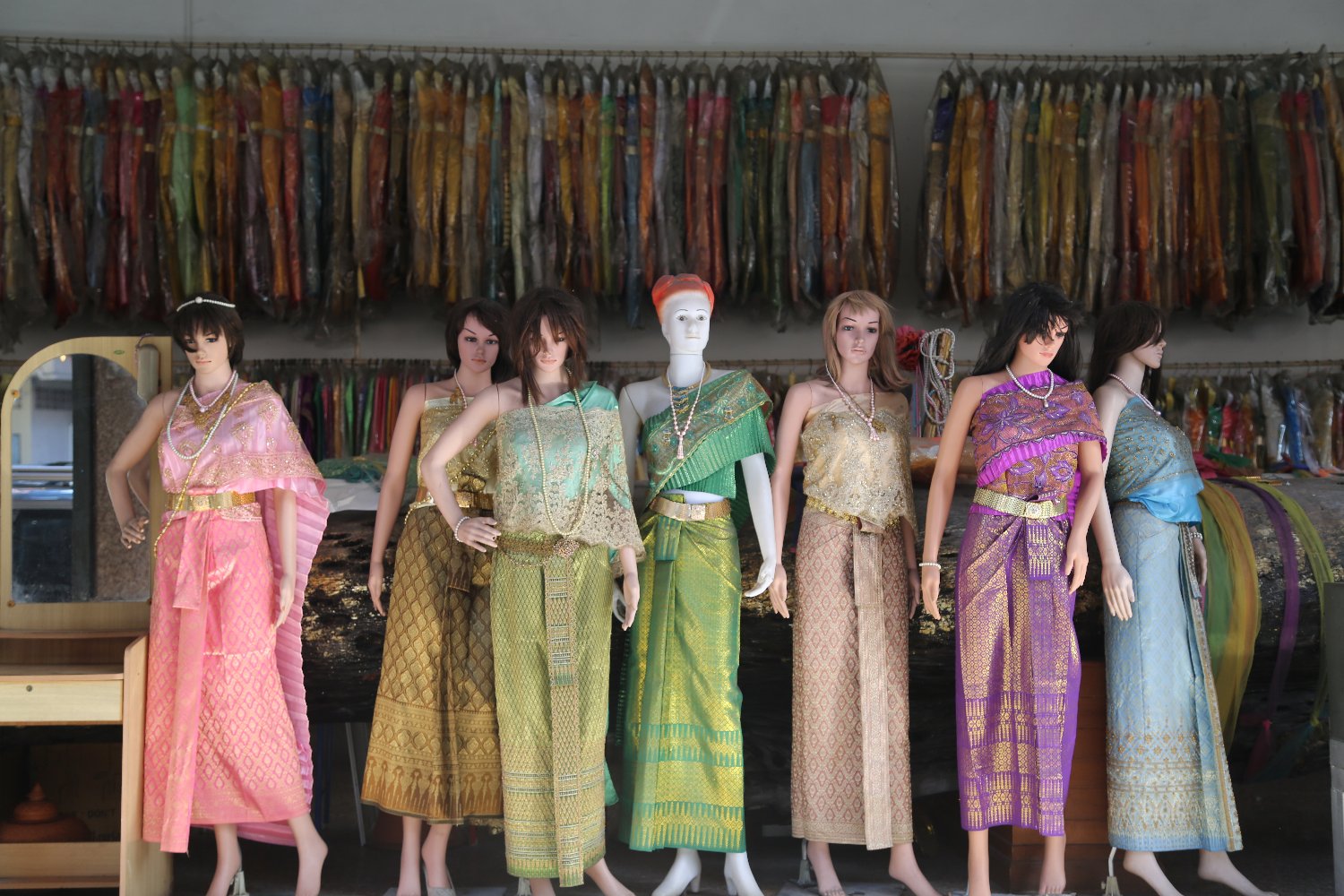
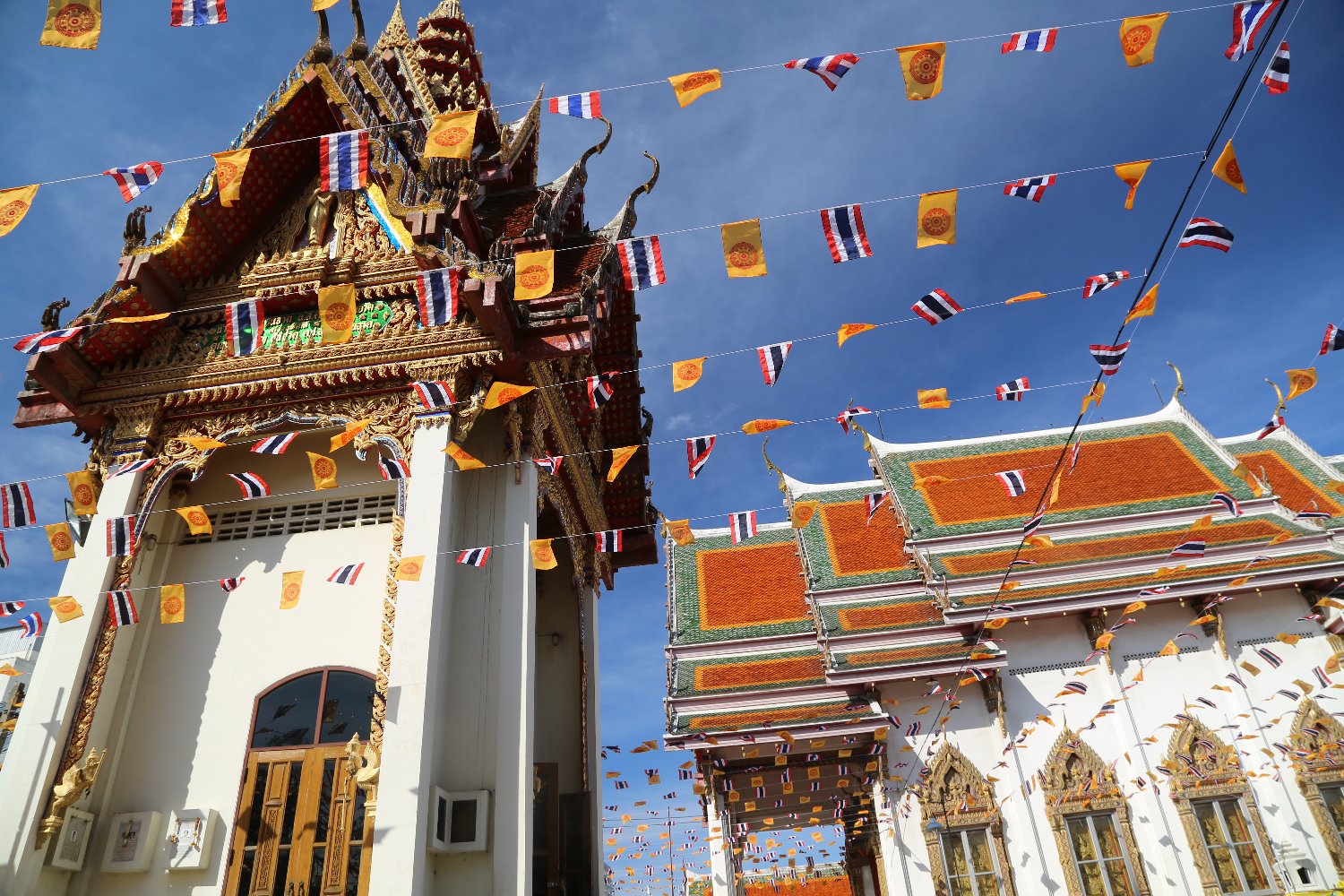
Wat Iam Woranuch (also known as also Wat Iam Won Nut) is one of our favorite micro temples in Bangkok. A calm space in nearby urban chaos – surrounded by the always busy Rama VIII Road and the lesser busy Samsen Road – still a busy part of town. Located within walking distance of the much more well-known standing Buddha, Wat Intharawihan. With influences from China, Thailand and India. A small pool with tiny running waterfalls drowns out some of the nearby traffic noise and makes for a relaxing ambiance. Also, plenty of greenery in this small space.
Originally called Wat Mai Thong Khung because of its location on a nearby canal (later filled). Interestingly the canal featured a wide turn where the boats used for the Royal Ceremonies could turn around. The oldest building on site is the charming pavilion.
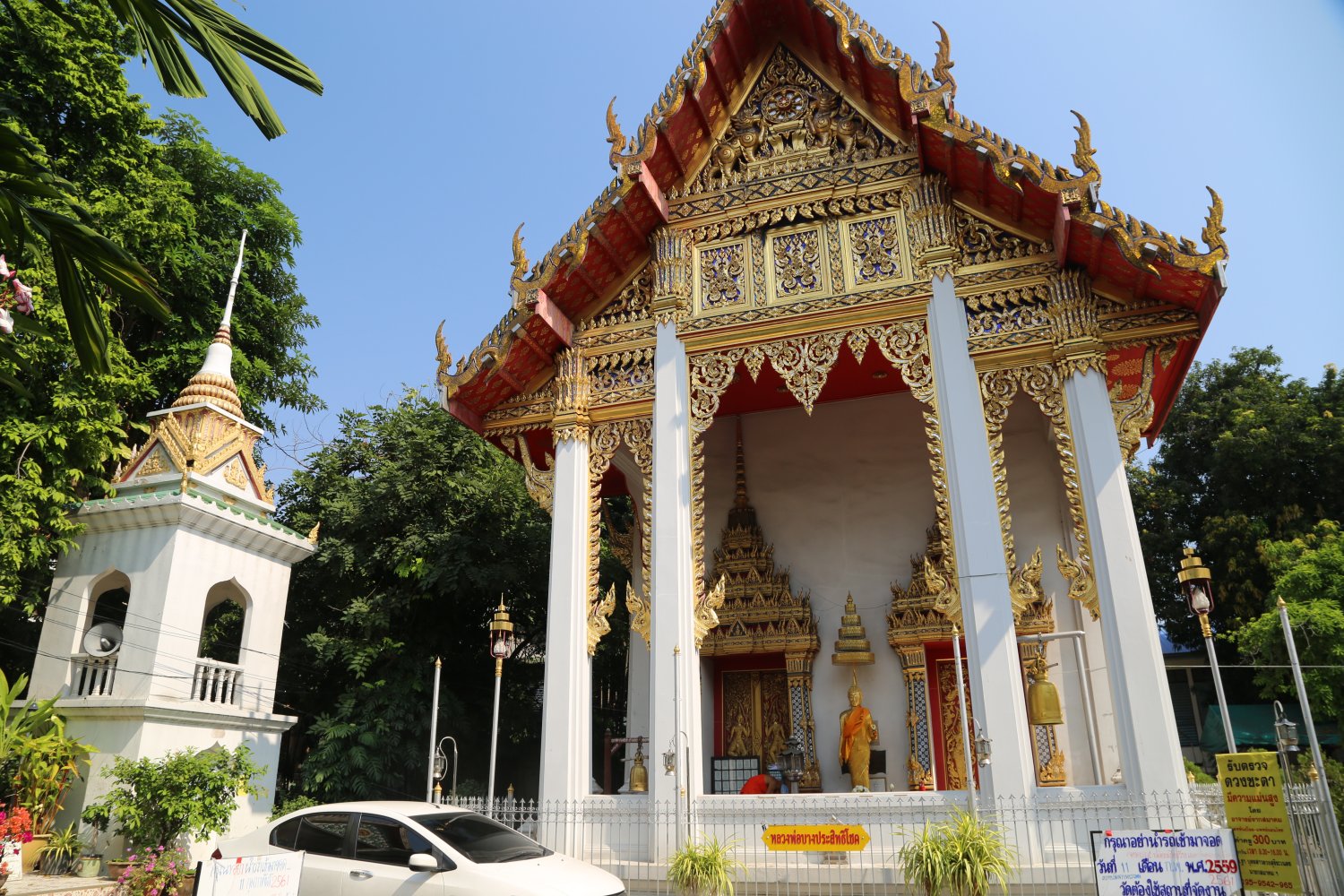
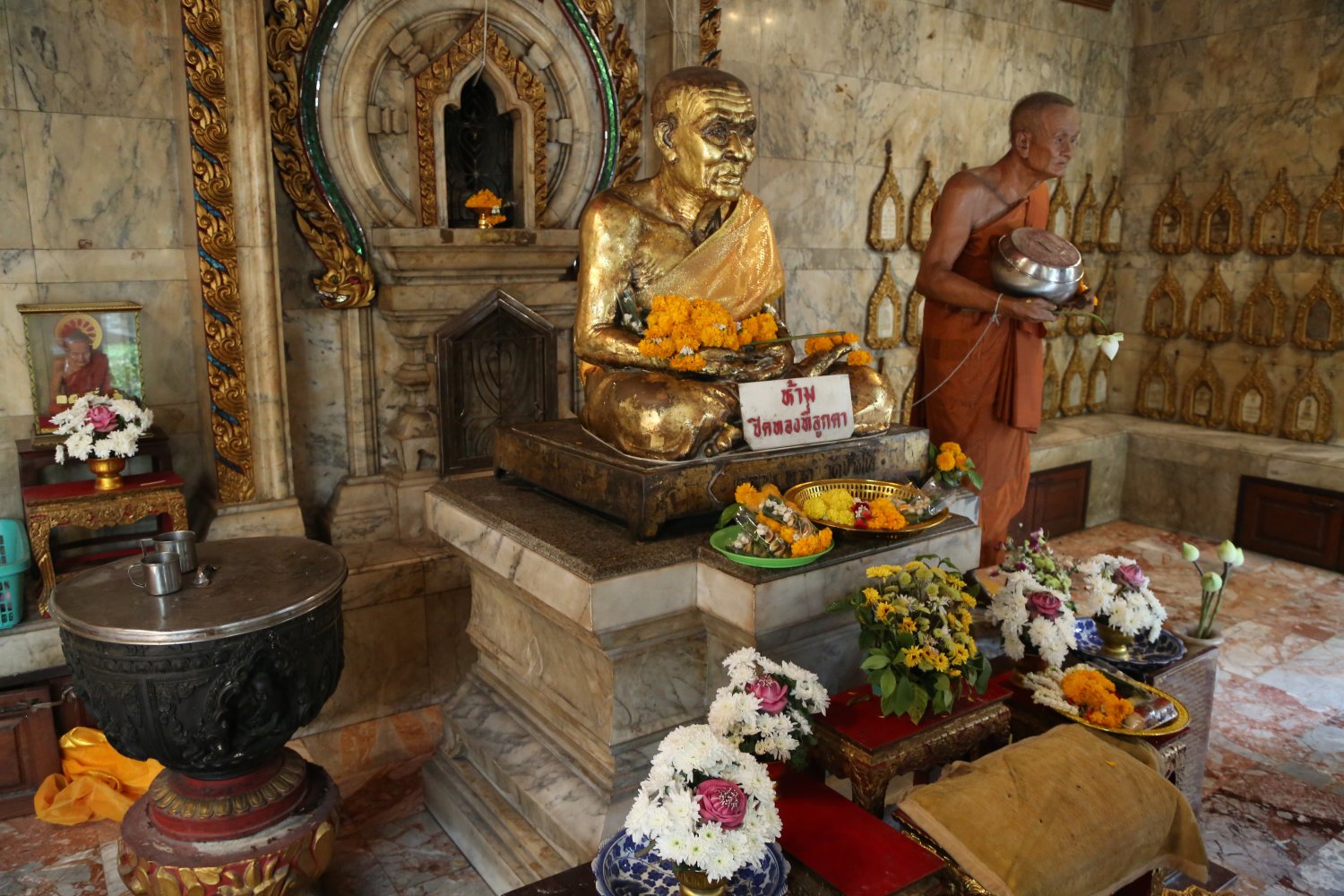
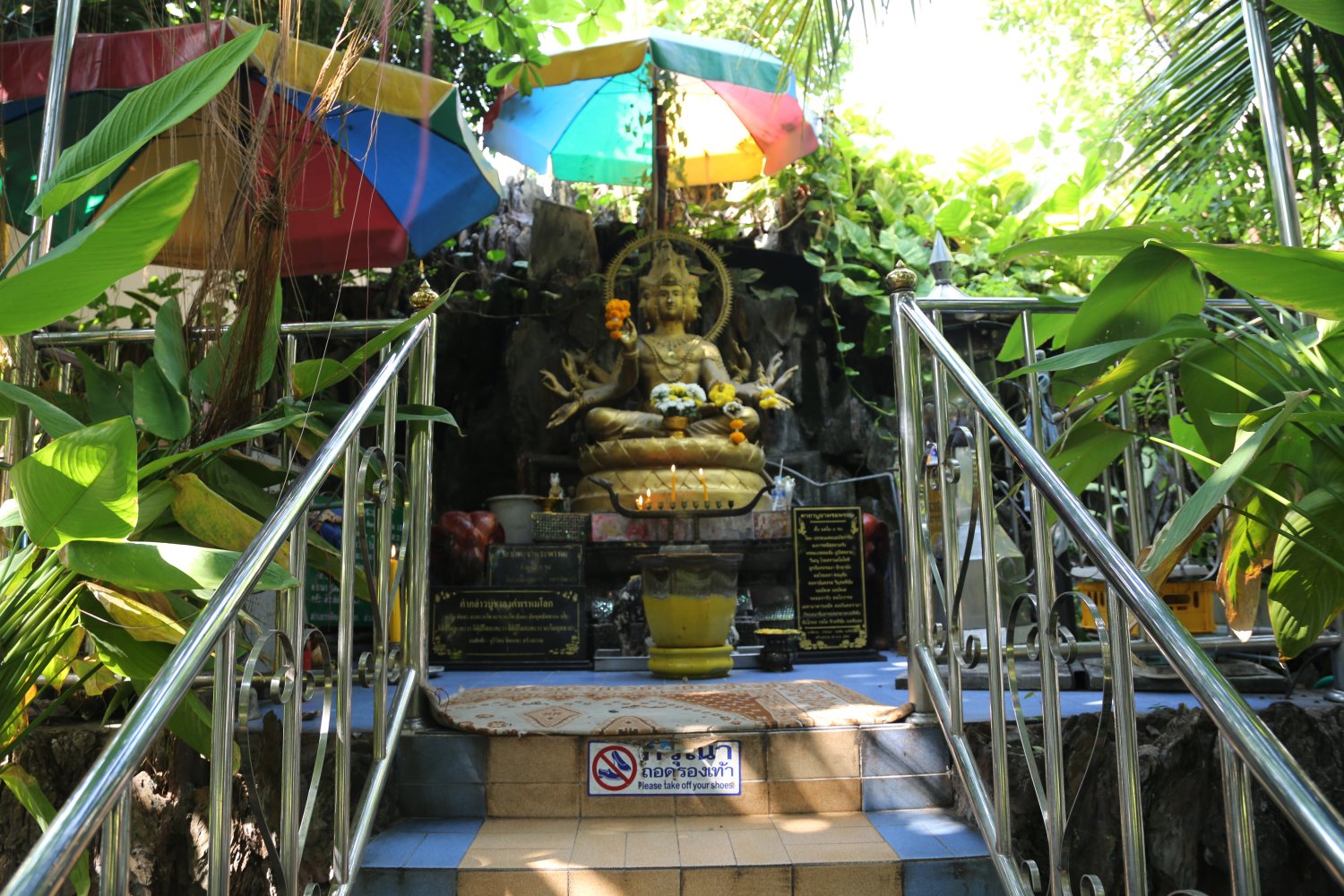
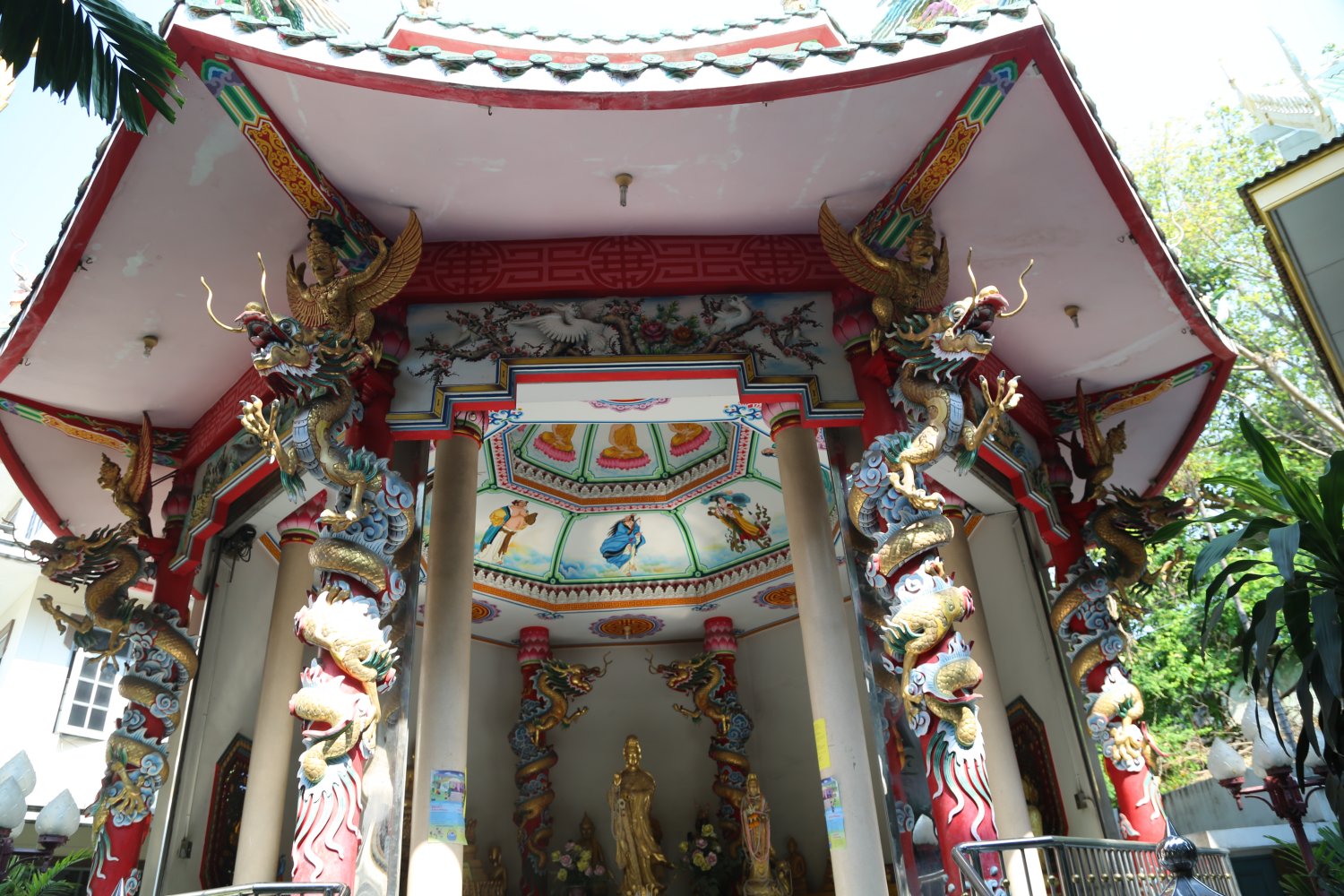
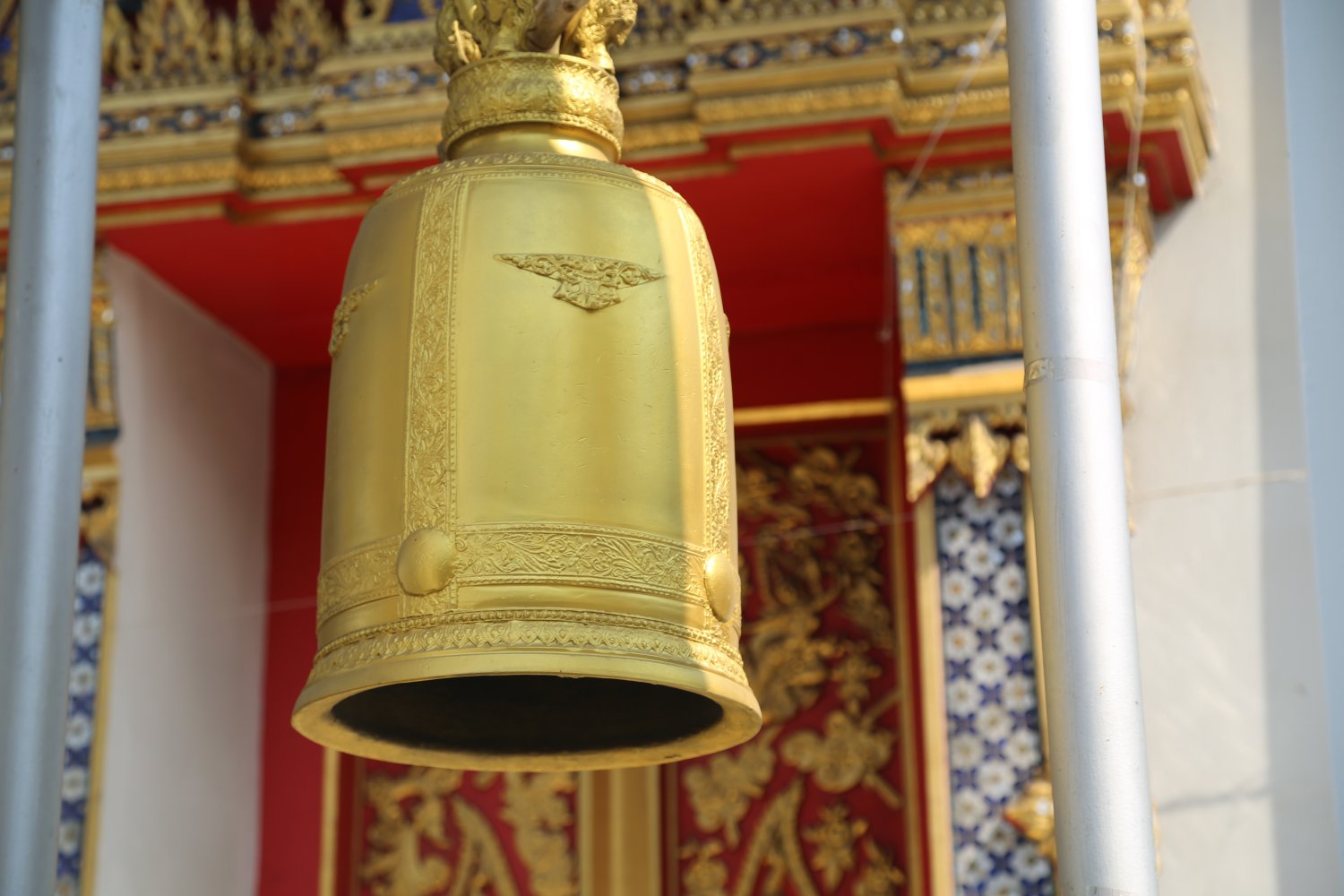
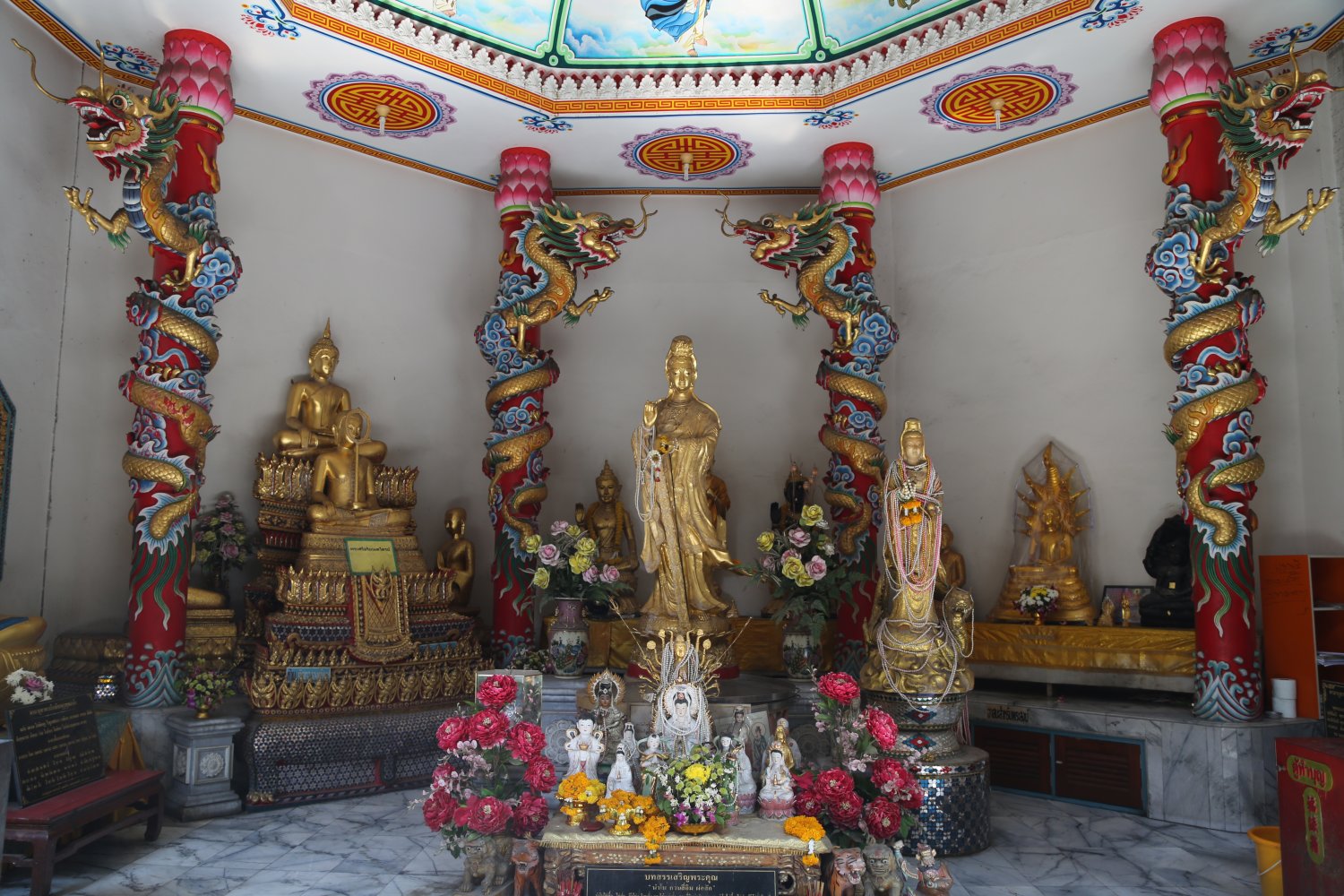
Wat Intharam Worawiharn – not to be confused with the much more visited Wat Inthanon on the other side of the river. This picturesque small temple is located within a very short walk of the Bangkok Yai canal (one often sees long tail boats cruising this canal), and there is a Wat Intharam Pier where one can catch public transportation boats.
This temple was built during the Ayutthaya period and has had many names over the years. It was restored by King Taksin the Great in the mid to late 1700’s and was then given the status of a Royal Temple. No surprise since it was his favorite temple, and he often came here to pray. It has since retained its royal temple status but was assigned a lower standing during the reign of King Rama III (in the early to mid 1800’s) which is always when it was given its current name.
Also note that records show this temple was not always located on its present location. Rather it was located closer to the banks of the canal but due to river erosion the temple needed to be moved further away. It was moved to its current site during the reign of King Rama V.
Worth taking a few minutes to stroll around the small grounds. Take a peek in the Ordination Hall to see the statue of the single large Buddha. Also worth noting is the reclining Buddha, housed in a small room outside of the Ordination Hall. At the time of our last visit, was in need of major restoration.
Chaloem Phrakiat Kiakkai Park, the little nearby park oasis among the urban jungle of this part of the city was unfortunately removed in 2017 and was replaced by numerous buildings.
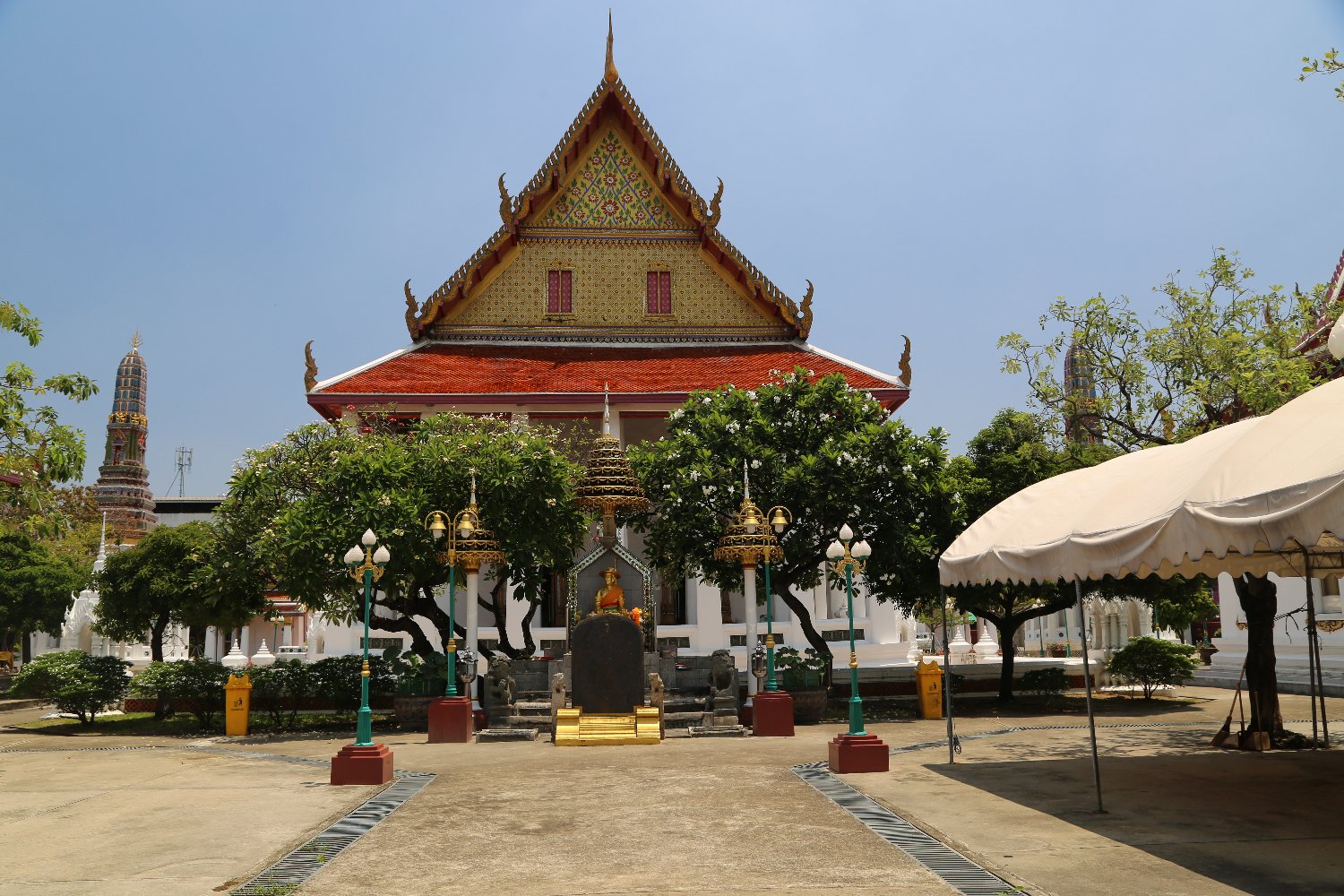
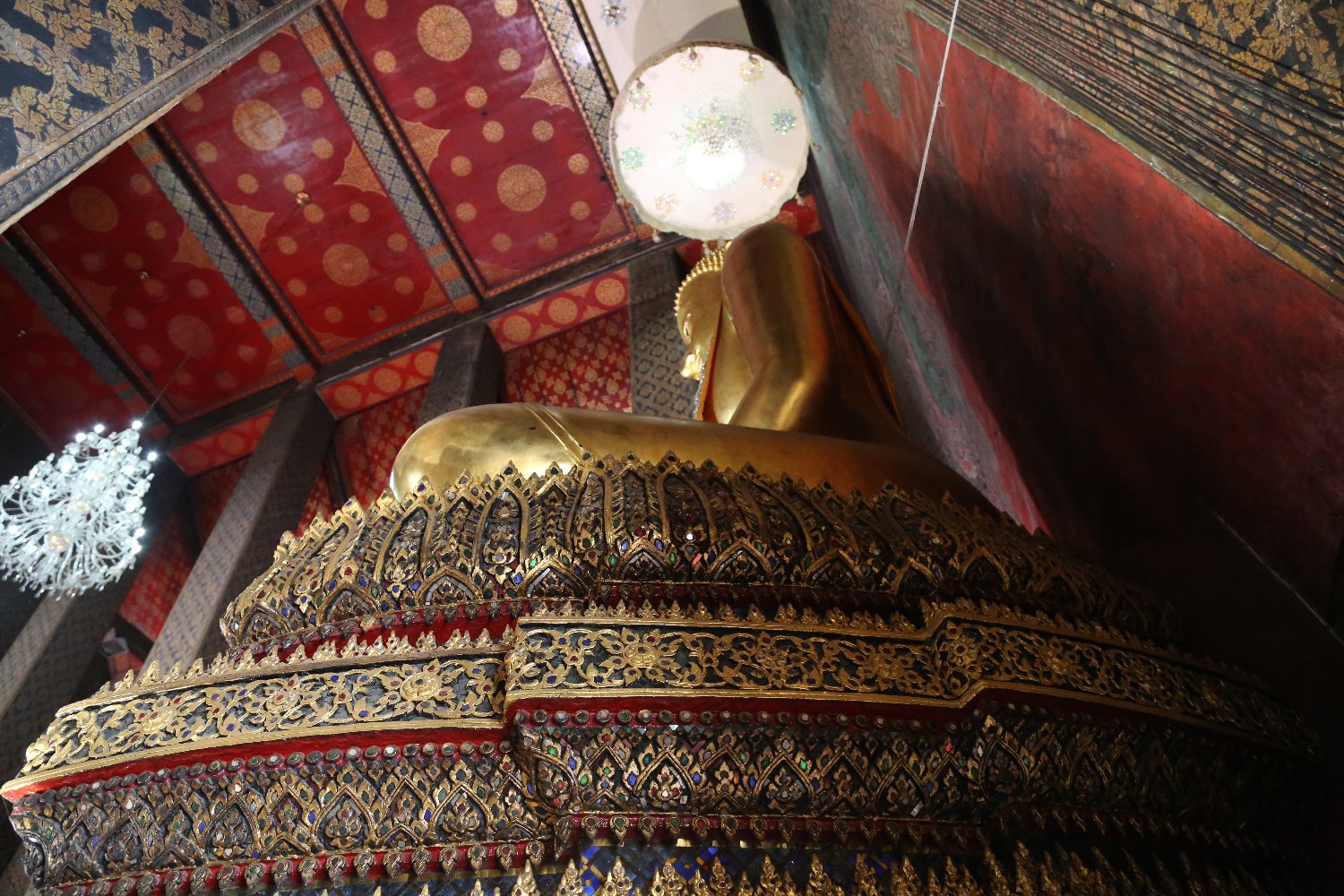
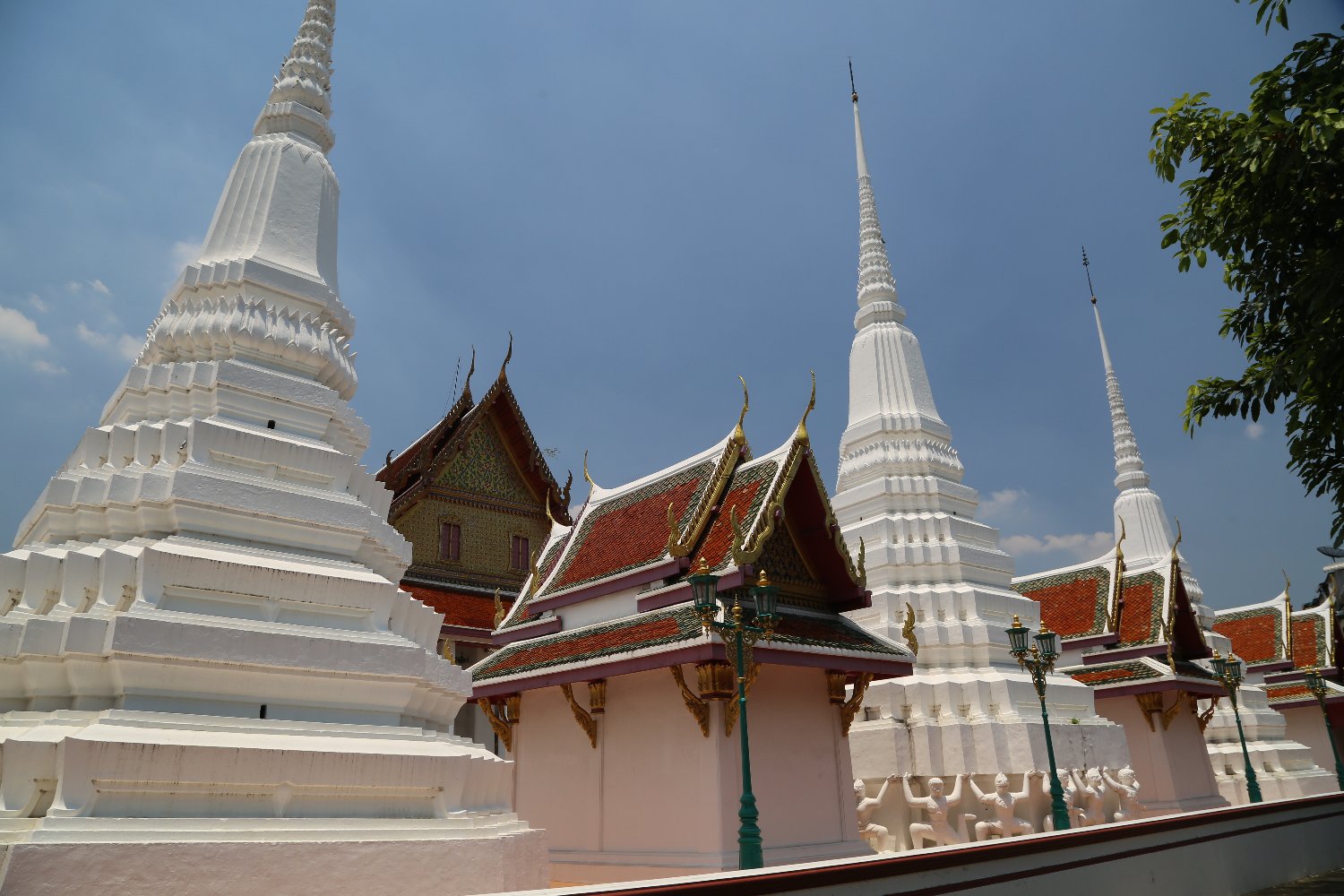
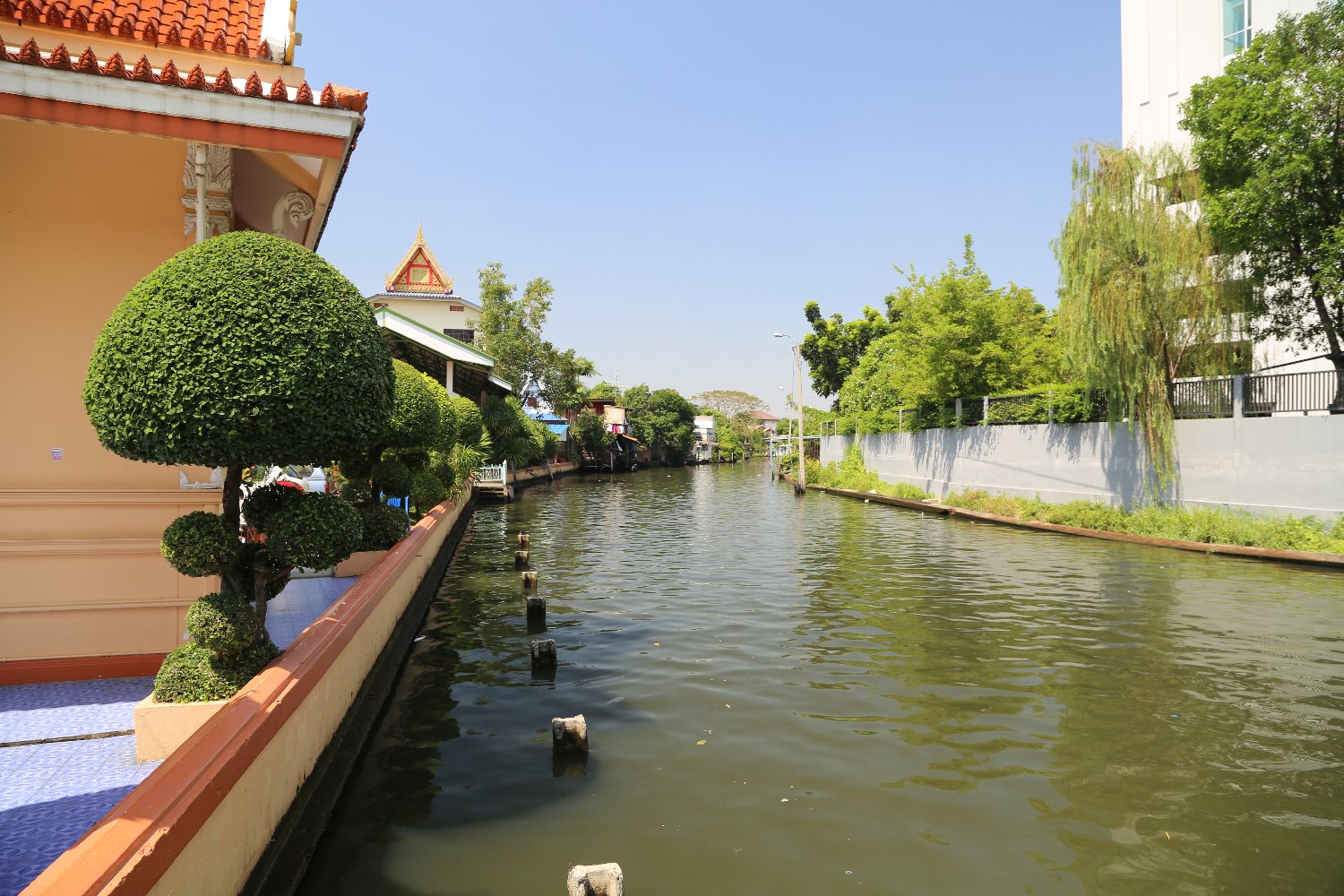
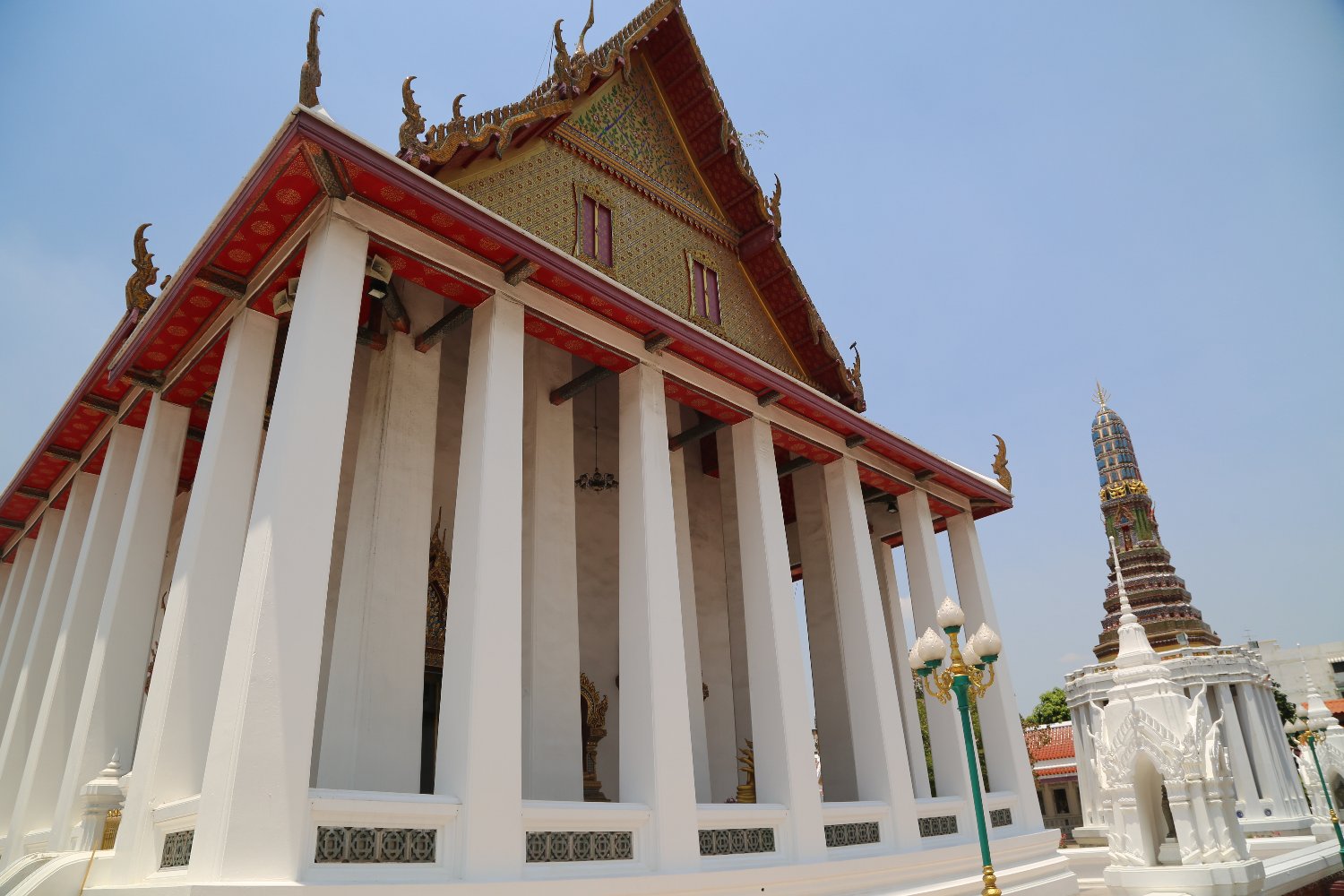
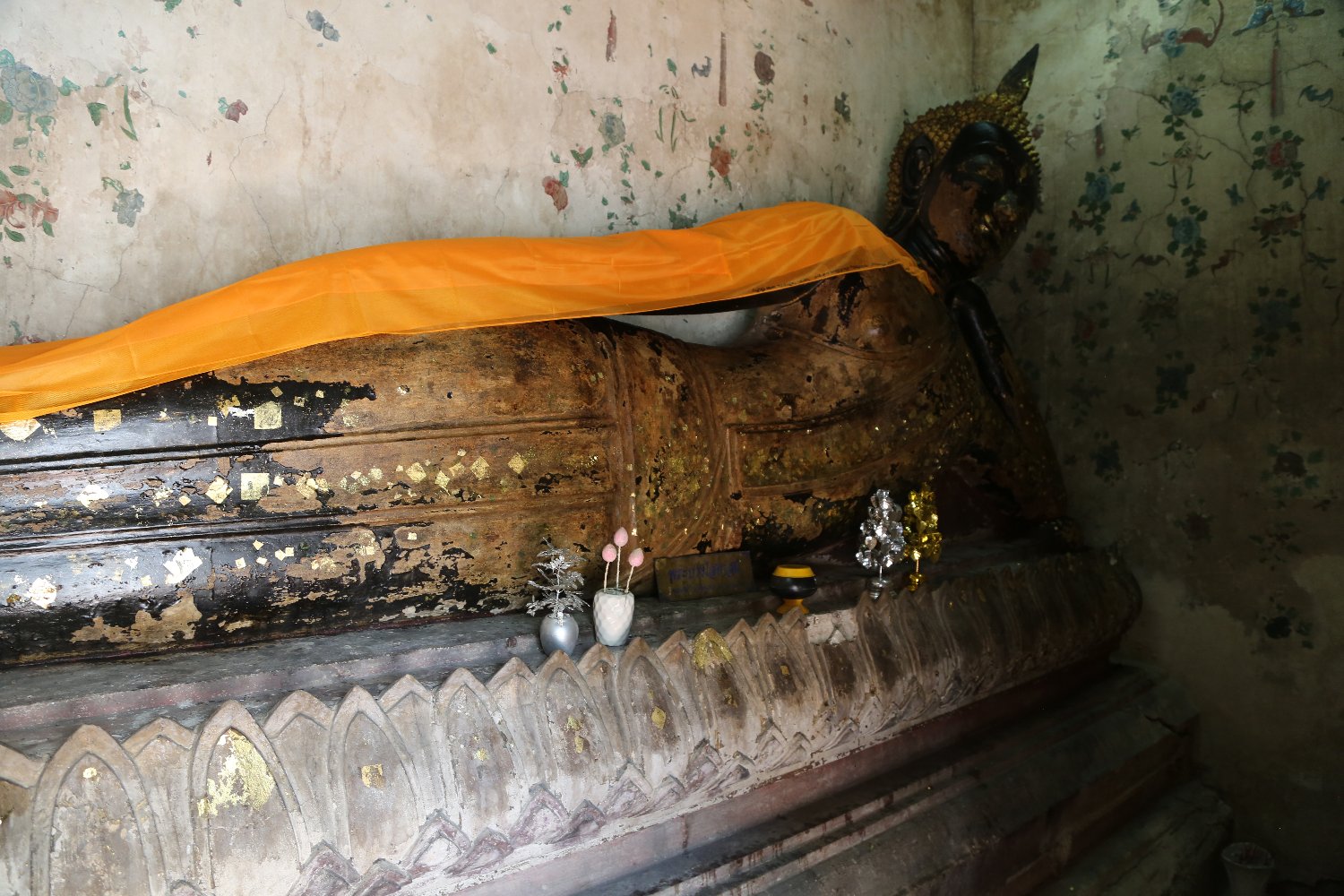
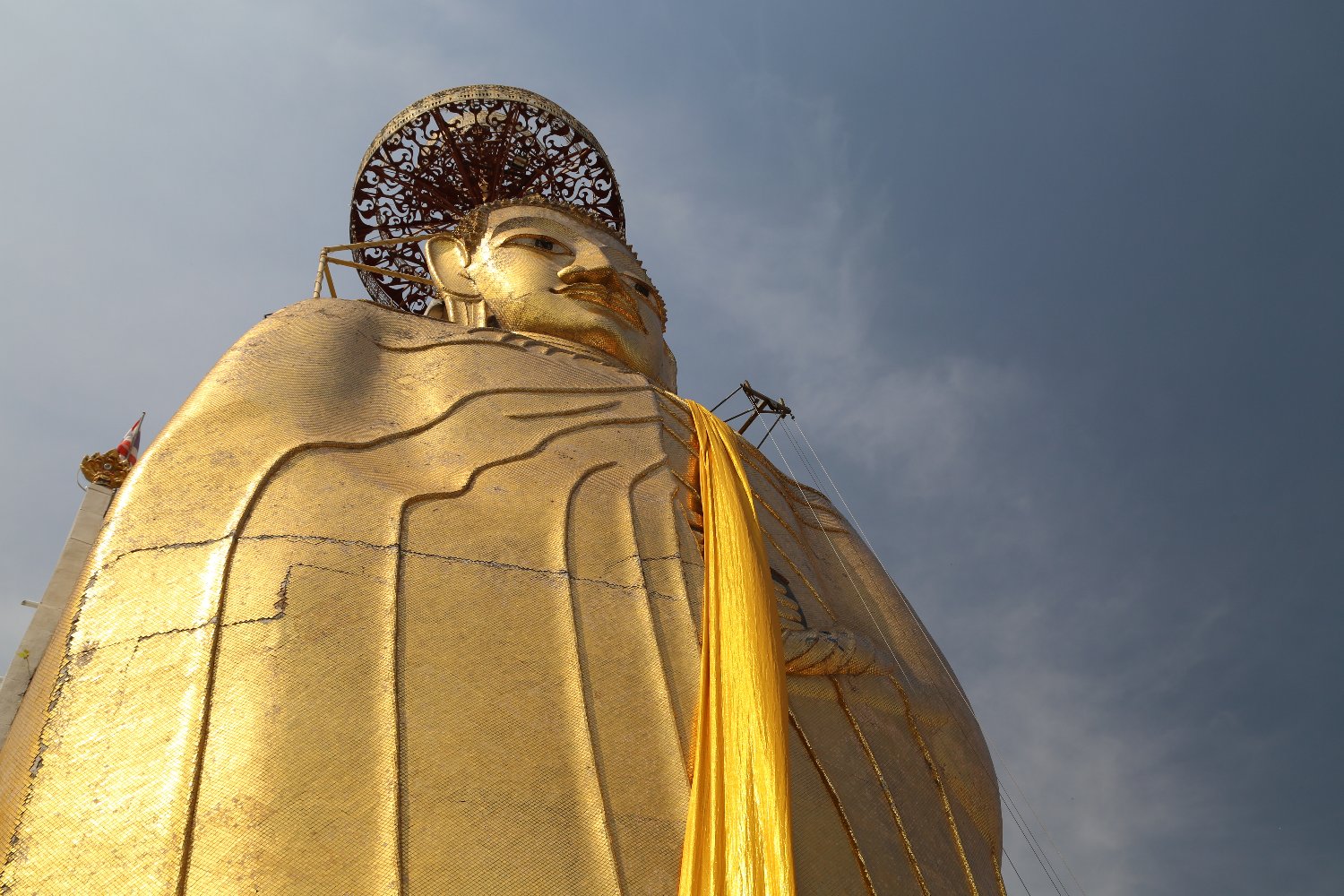
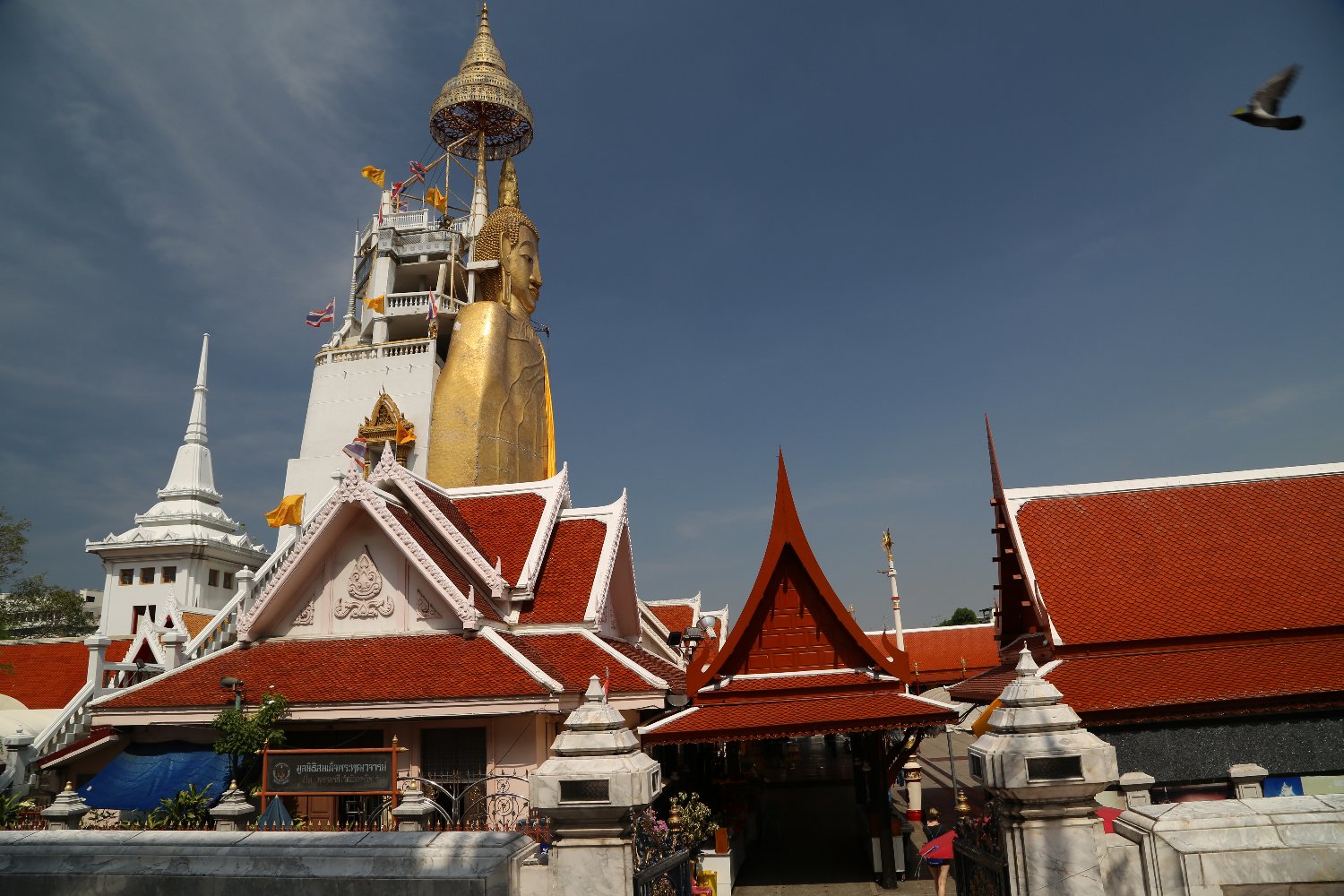
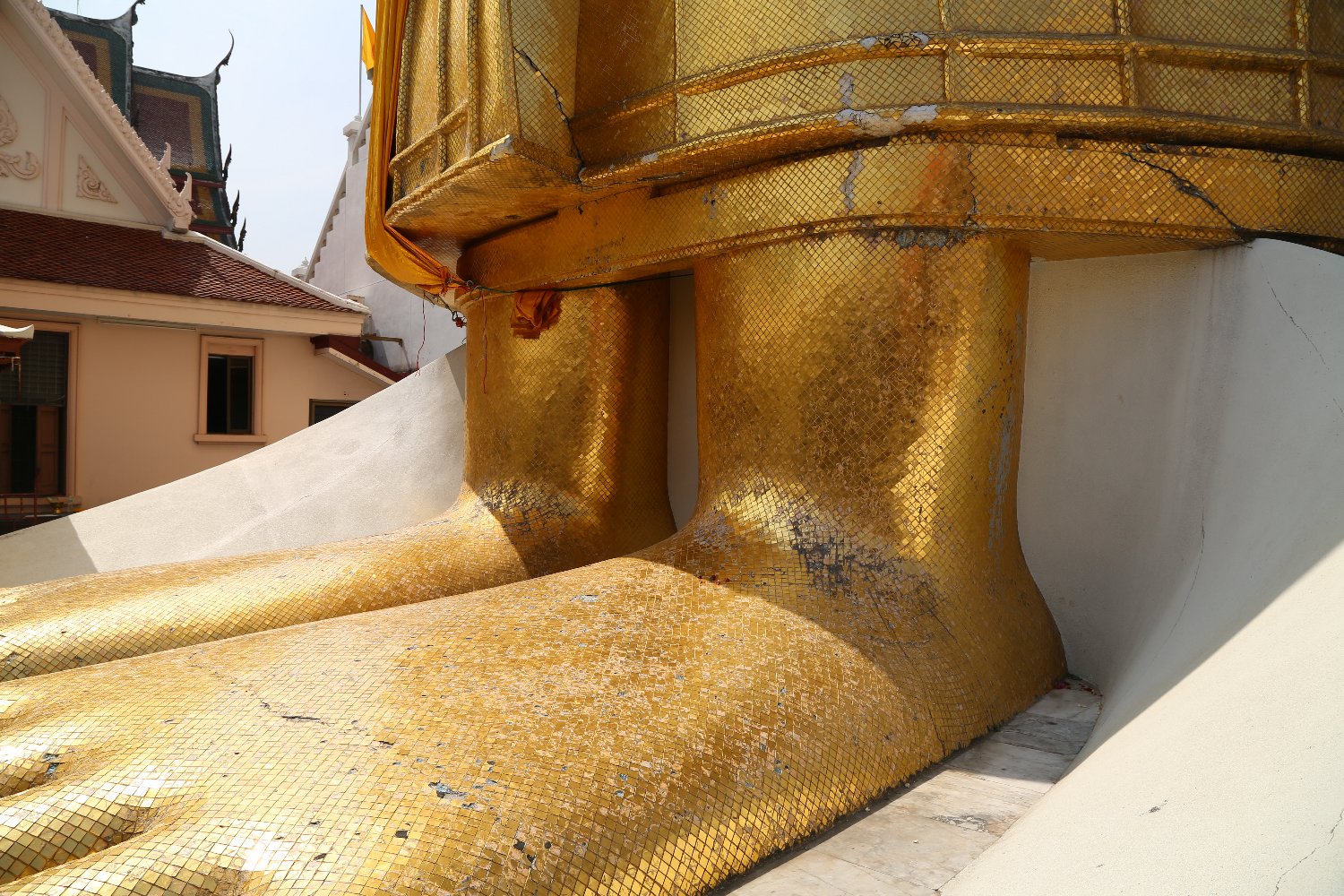
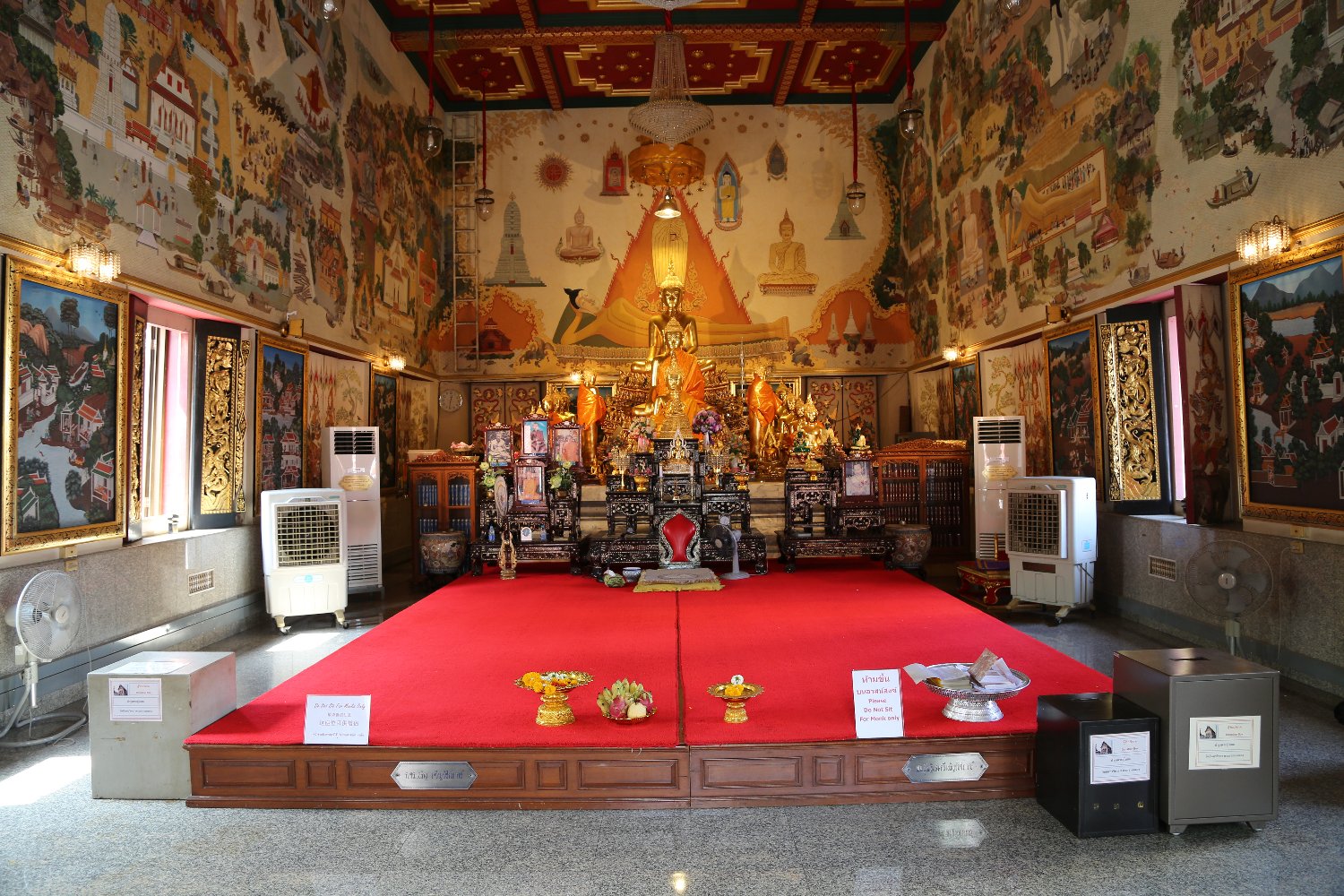
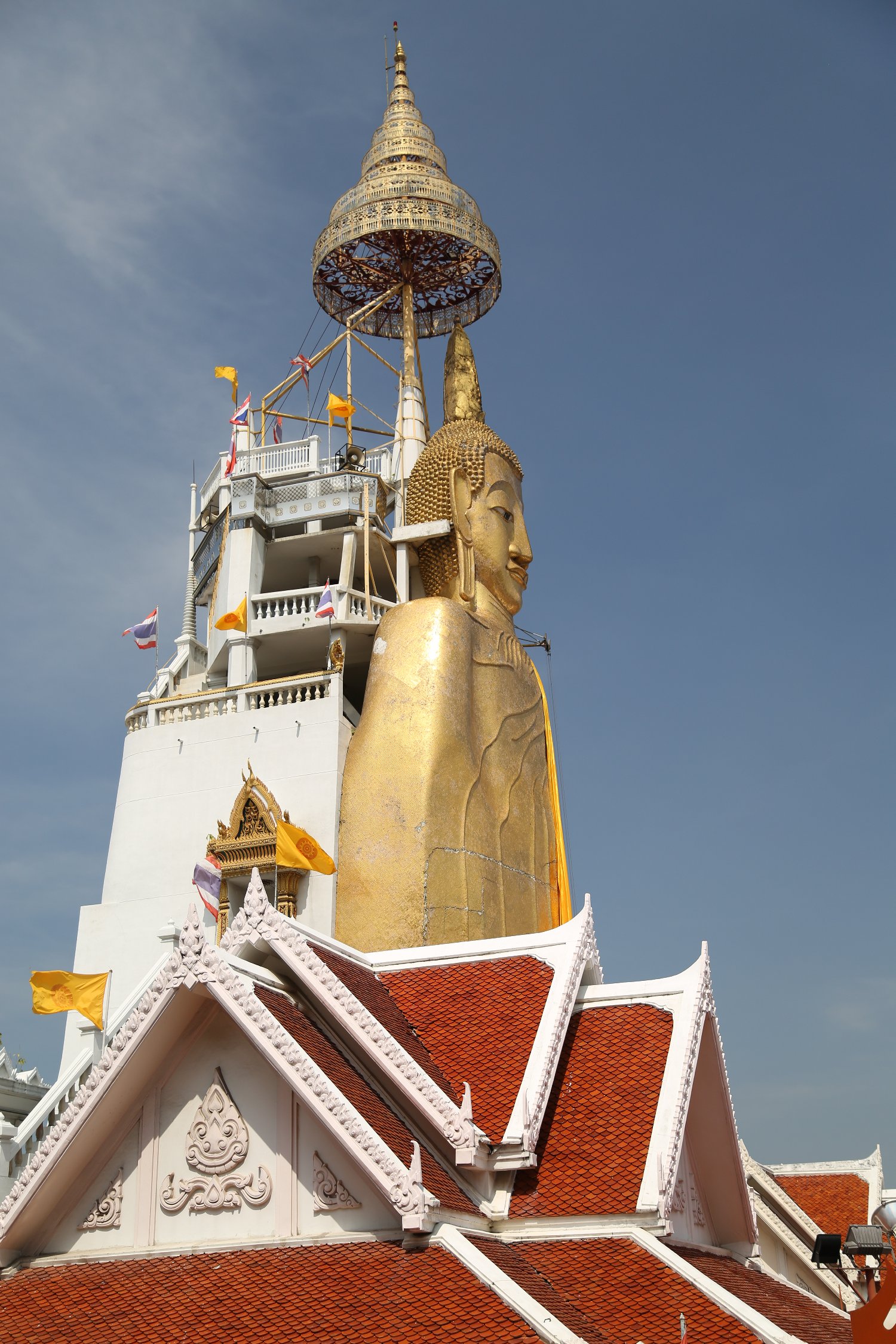
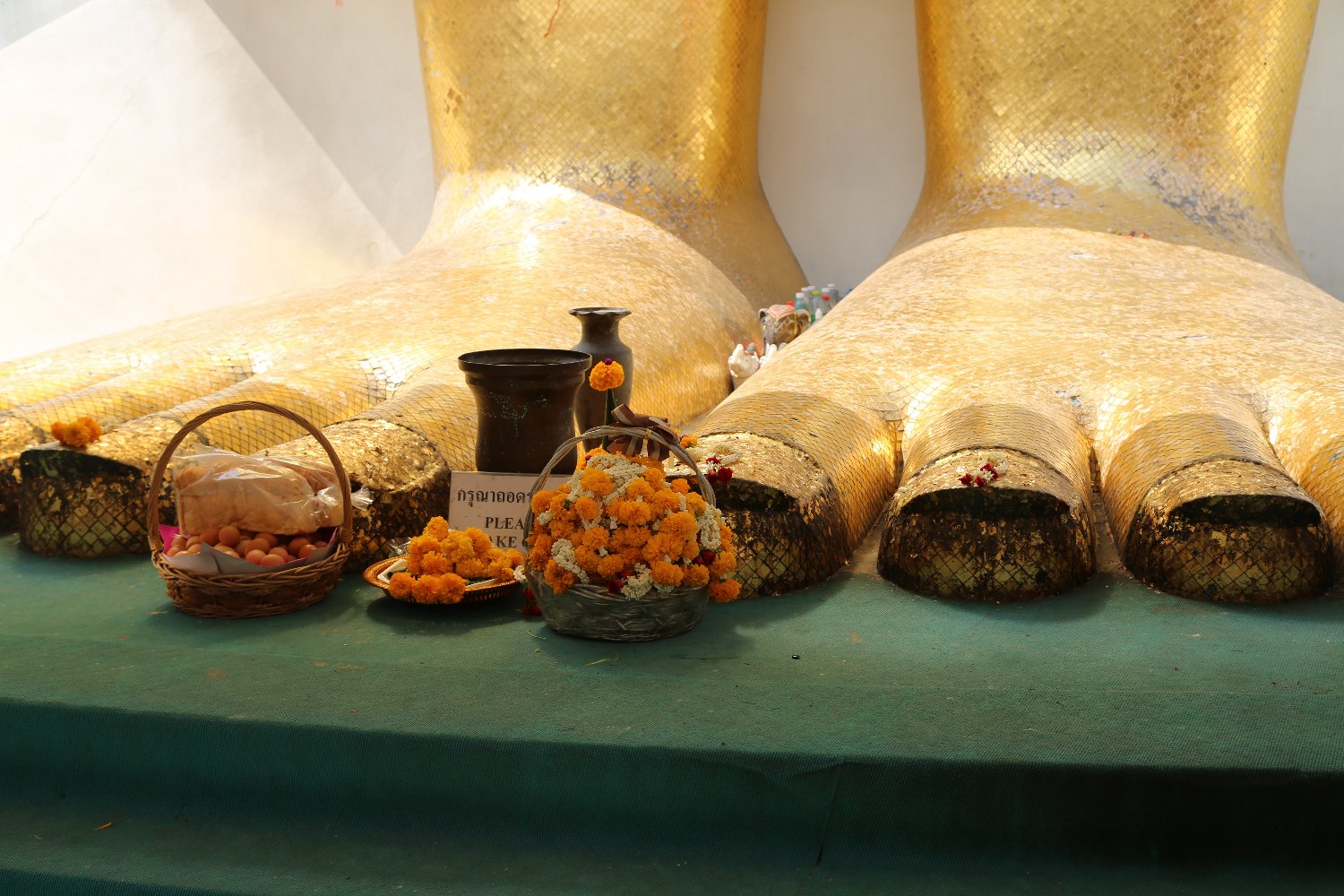 Wat Inthar awihan (Wat In for short) is home to the one of the world’s tallest standing Buddhas – at 32 meters tall. The Buddha is dressed in gold tiles that rise the length of his body. Construction started in 1867 and was finished in 1927. The abbot at the time of the early construction actually died at the base of the statue. It can be hard to get good views at the base of the statue (sometimes there are portable tents setup here in the way – if you walk to the nearby Ordination Hall (prayer hall) near the main entrance and climb up the steps you will have a better glimpse of its size from slightly further afar. Regardless of where you view this, this statue is quite impressive.
The statue was refurbished in 1982 with golden tiles. This held up pretty well into the 1990’s. During our most recent visit in 2018, some of the files are showing wear and some are missing, especially in the lower part of the statue. Entry is by donation only. Wat In borders Thanon Wisut Kasat is only about a 10-minute walk from Khao San Road. Estimated visit time 30 minutes.

Wat Kaew Fah (Chulamani) is ideally located next to the Bang Sue Canal junction with the Chao Praya River. One can arrive here on the Chao Praya Express boat – the pier stop within a very short walk of the temple is called Museu. Because of the same name, this temple can easily be confused with the one in the Nonthaburi province.
This Civil Temple was originally called Bang Sue. The grounds encompass approximately 5 acres of land. While there is no definitive record on when the temple was originally constructed, a letter from a former Abbot in 1954 indicates the temple was built around 1757 (the end of the Ayutthaya era).
One of the highlights of a visit here are the mural paintings in the Ordination Hall depicting the 10 lives of the Buddha’s story. The crematorium is located in approximately the center of the temple grounds. Fairly well visited by local Thais – but not by tourists.
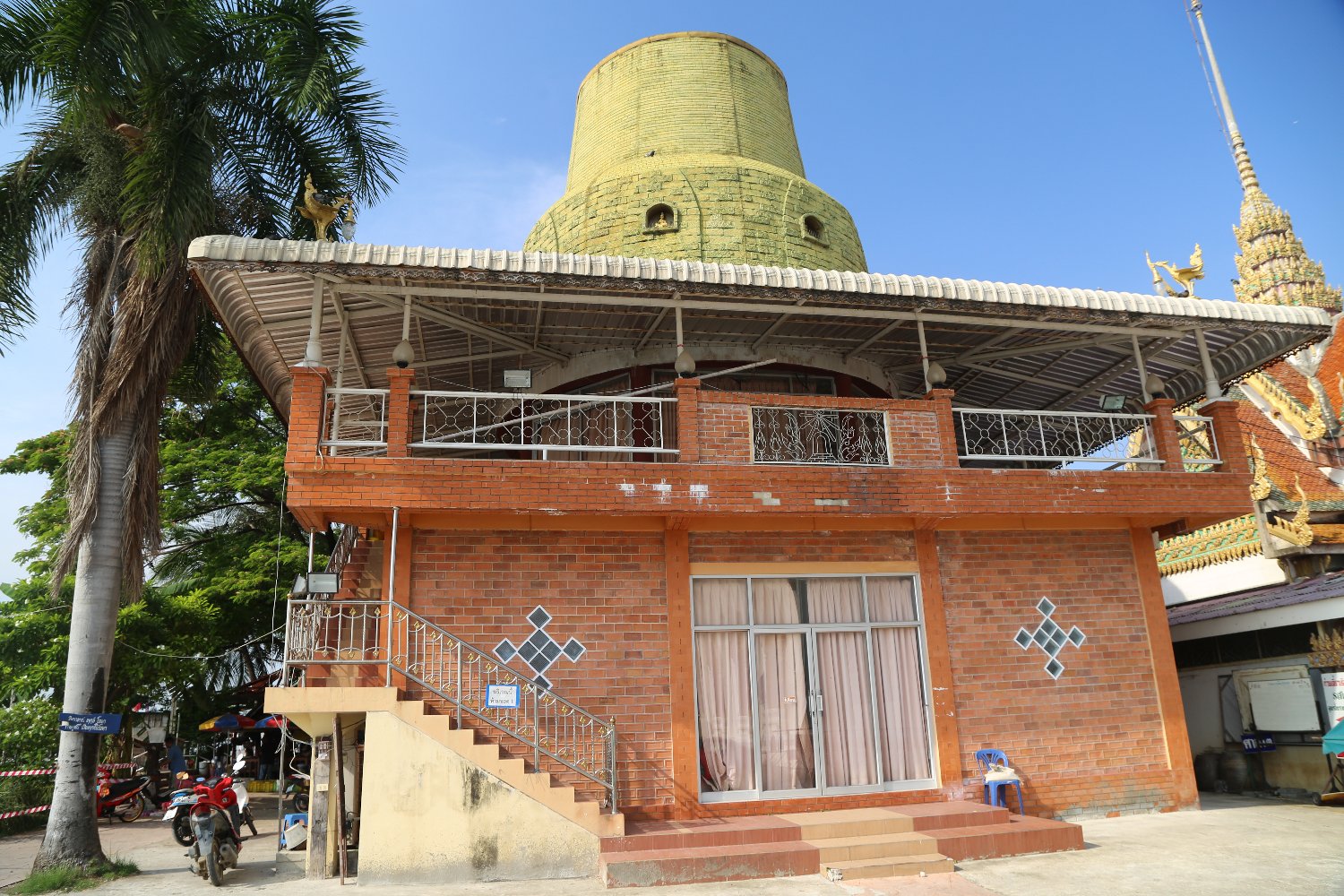


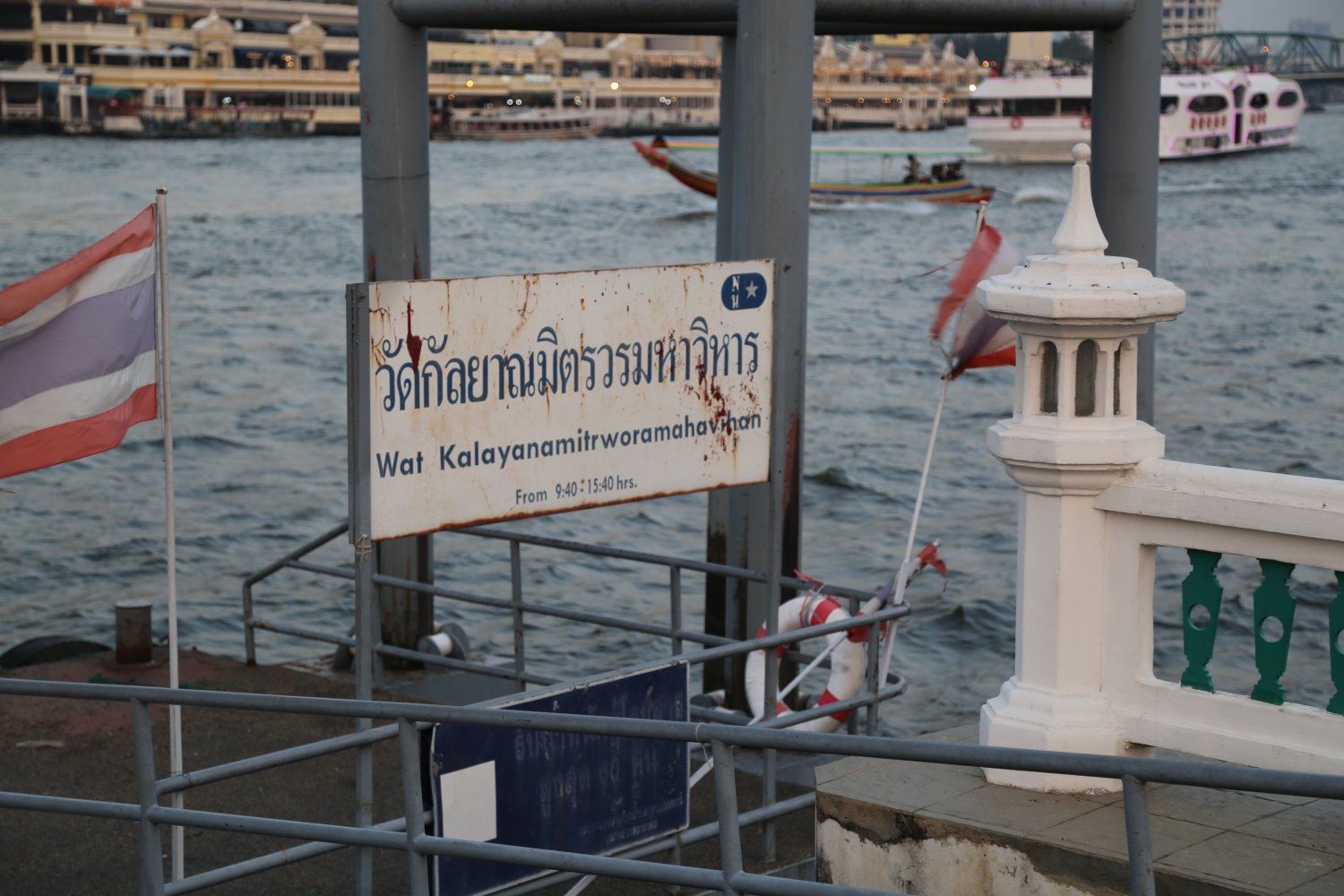
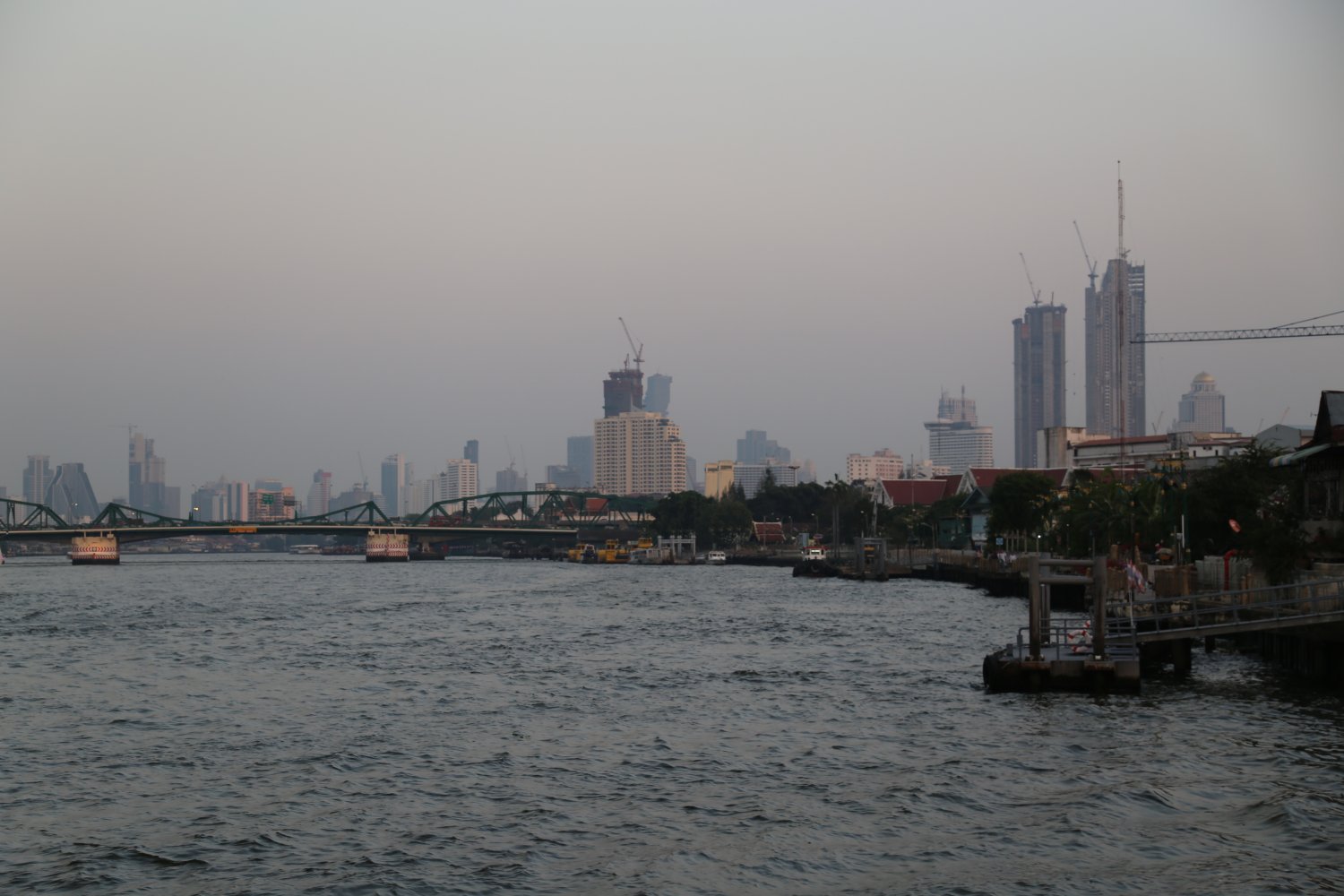
Wat Kalayanamit Woramahavihan (or Wat Kalaya for short) is a major temple complex located on the banks of the Chao Praya River (near the much small Bangkok Yai canal) and within a short drive of the King Rama I Bridge. There is even pier along the river with the same name as this temple. Despite being on a busy section of the river, this temple does not see as many visitors as the more famous ones upriver.
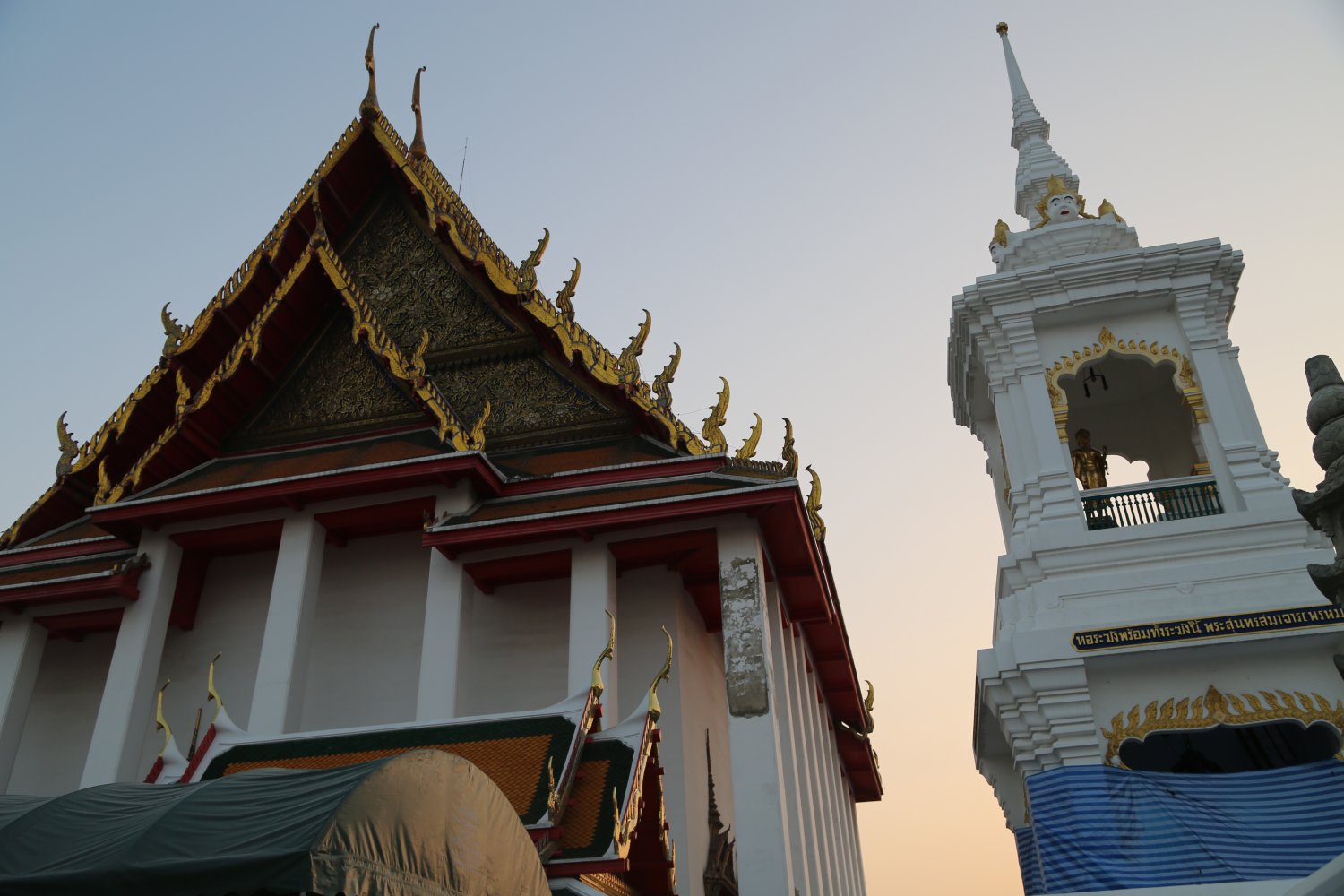
Known for several items – a massive sitting Buddha statue contained in the massive wiharn building and a bell tower which holds the largest bronze bell in all of Thailand. Also, worth checking out are the old and original paintings from the era when this temple was constructed (1825). Originally built by a family and then donated to King Rama III.
Travelers take note – this temple is known for being a holy place for travelers and locals often come here to pray before and after taking a trip.
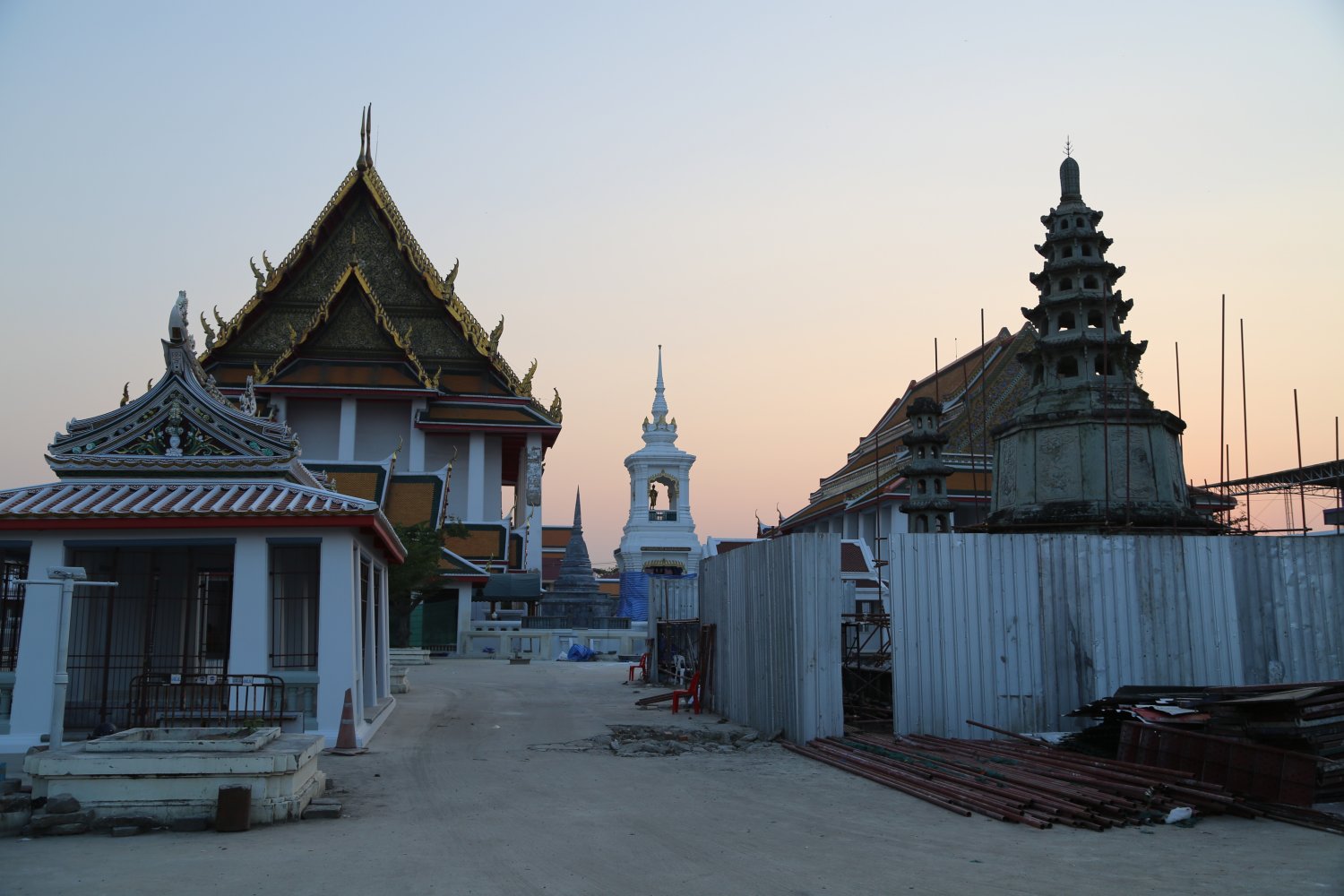
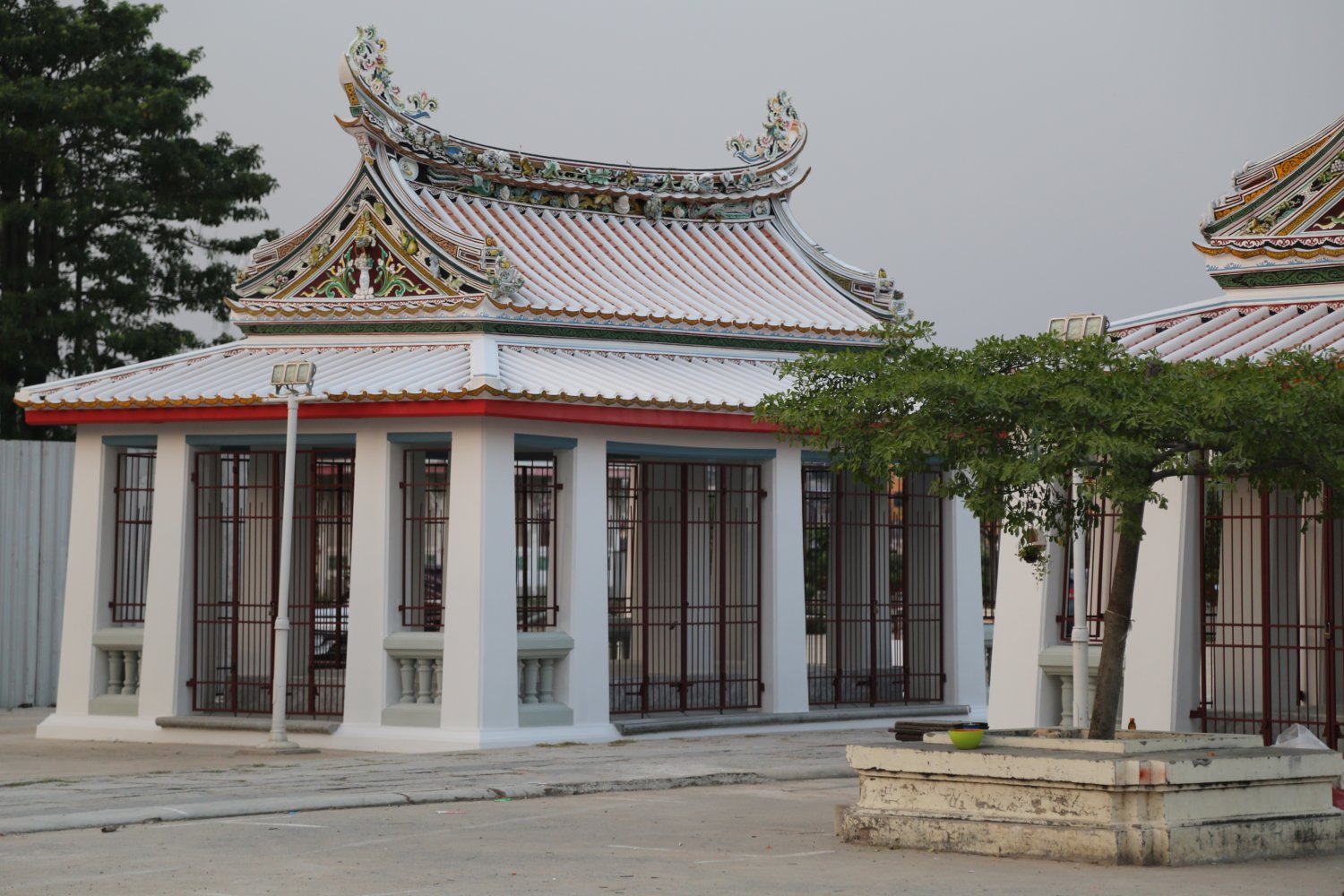
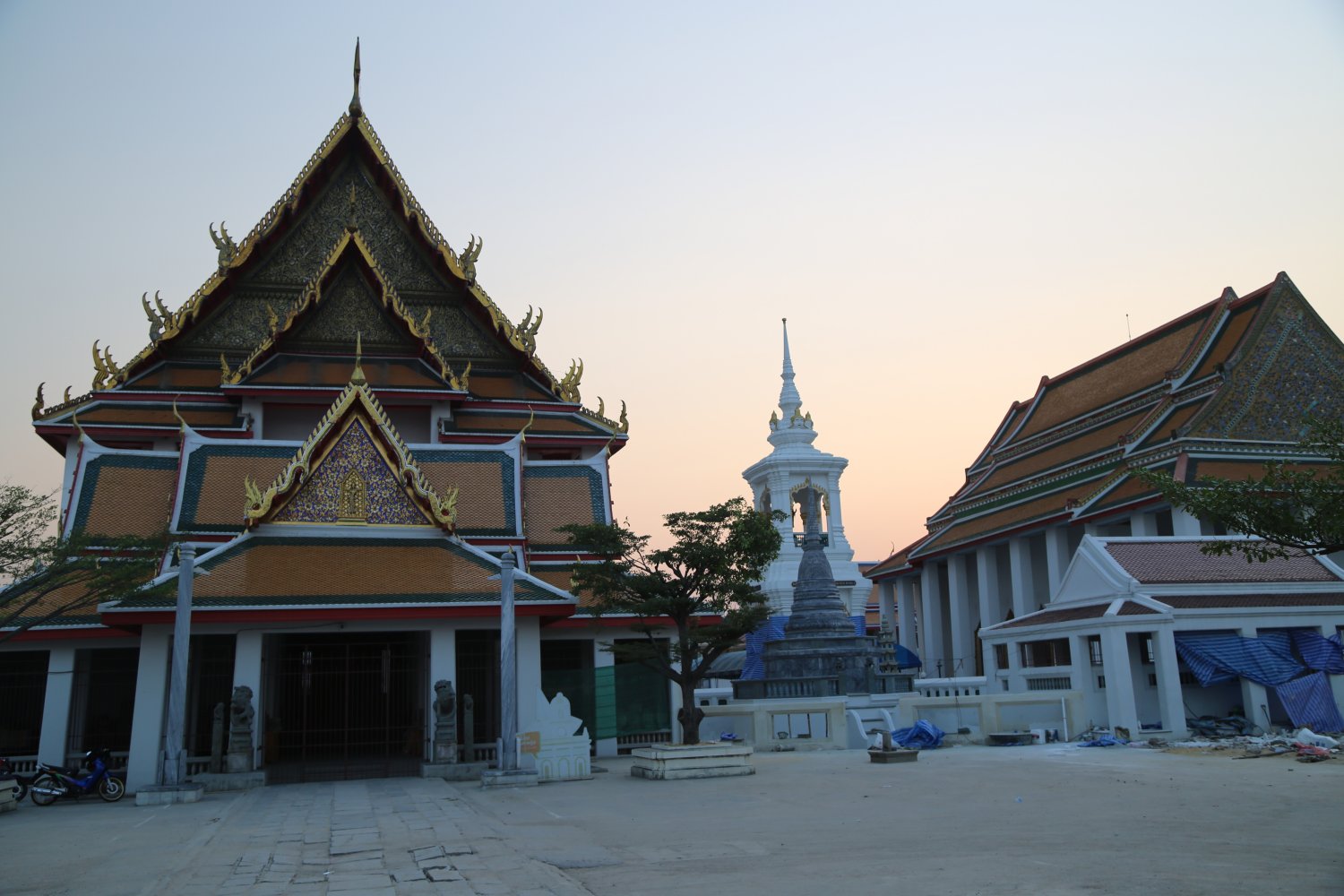
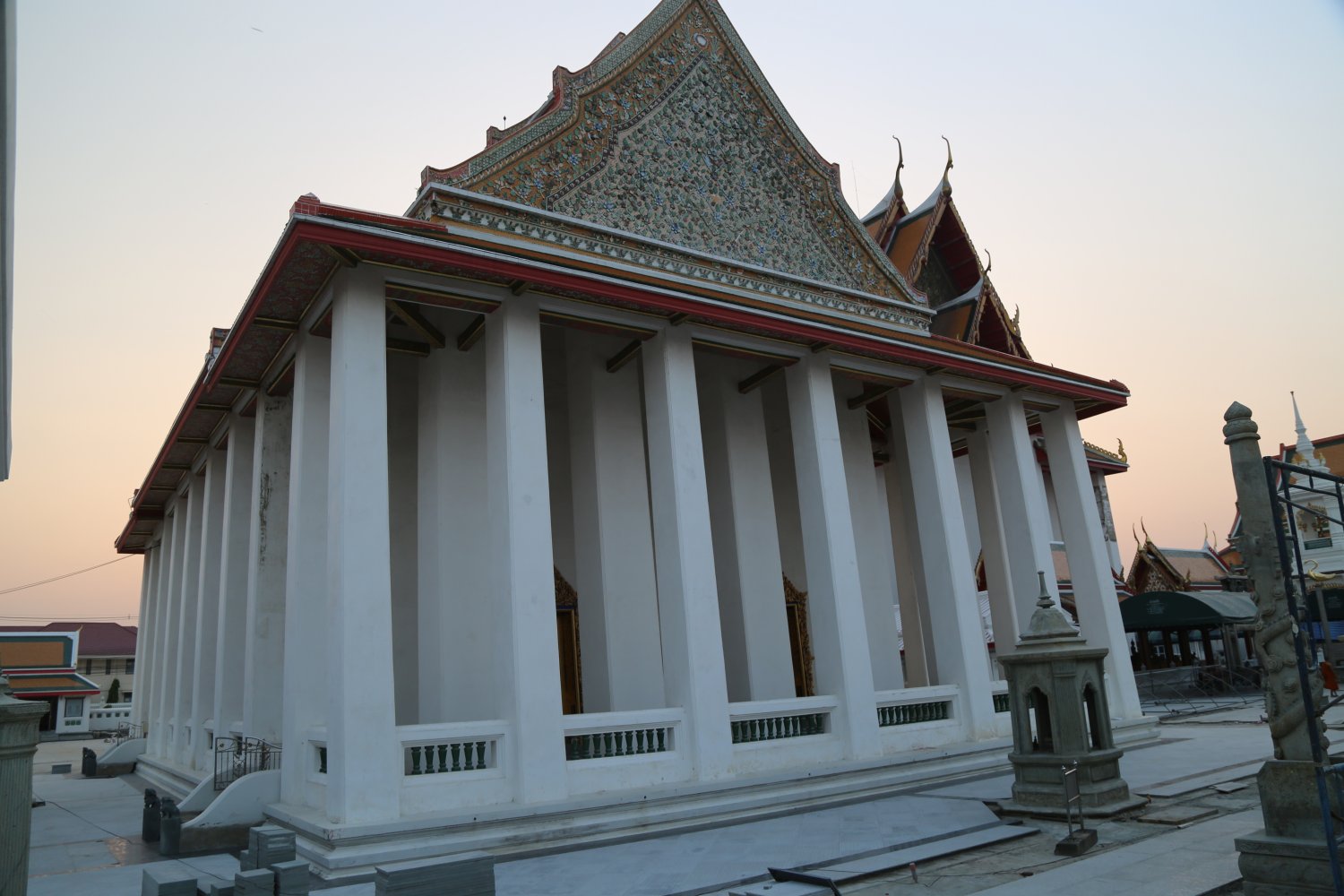
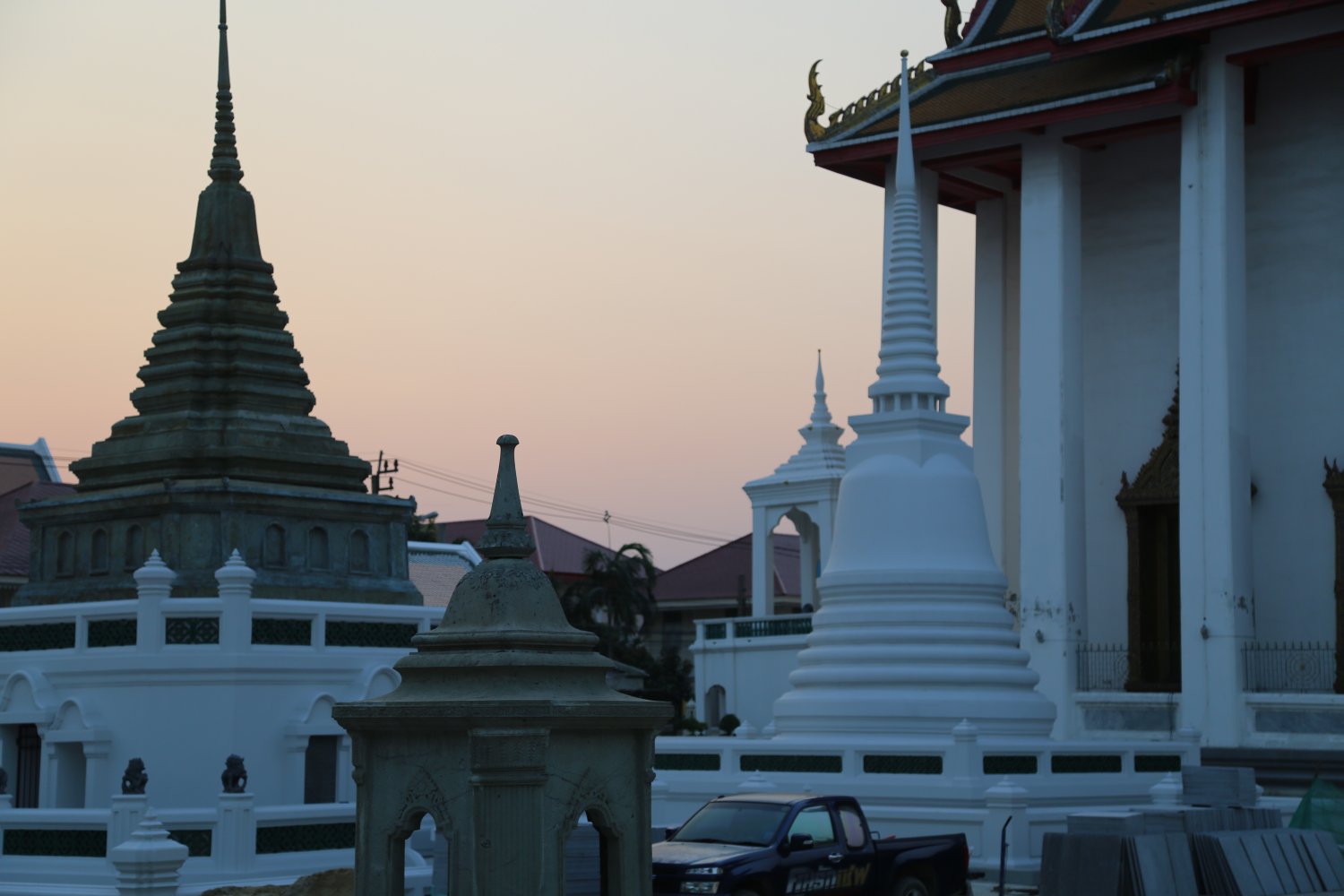
Wat Khachonsiri is about a 20-minute drive from either the On Nut Skytrain Stop or from the Rod Fai Night Market. Located next to the prominent Phra Khanong Chanel (which passes by a number of other wats). A raised concrete walkway is an ideal way to walk or bike along this canal visiting a number of the temples in the area including this one. It’s a calm way to pass through this part of the city rather than on the almost always busy nearby streets. One can also arrive to this temple by boat – getting off at the steps to the east of here (a short walk back from where the boat drops off passengers).
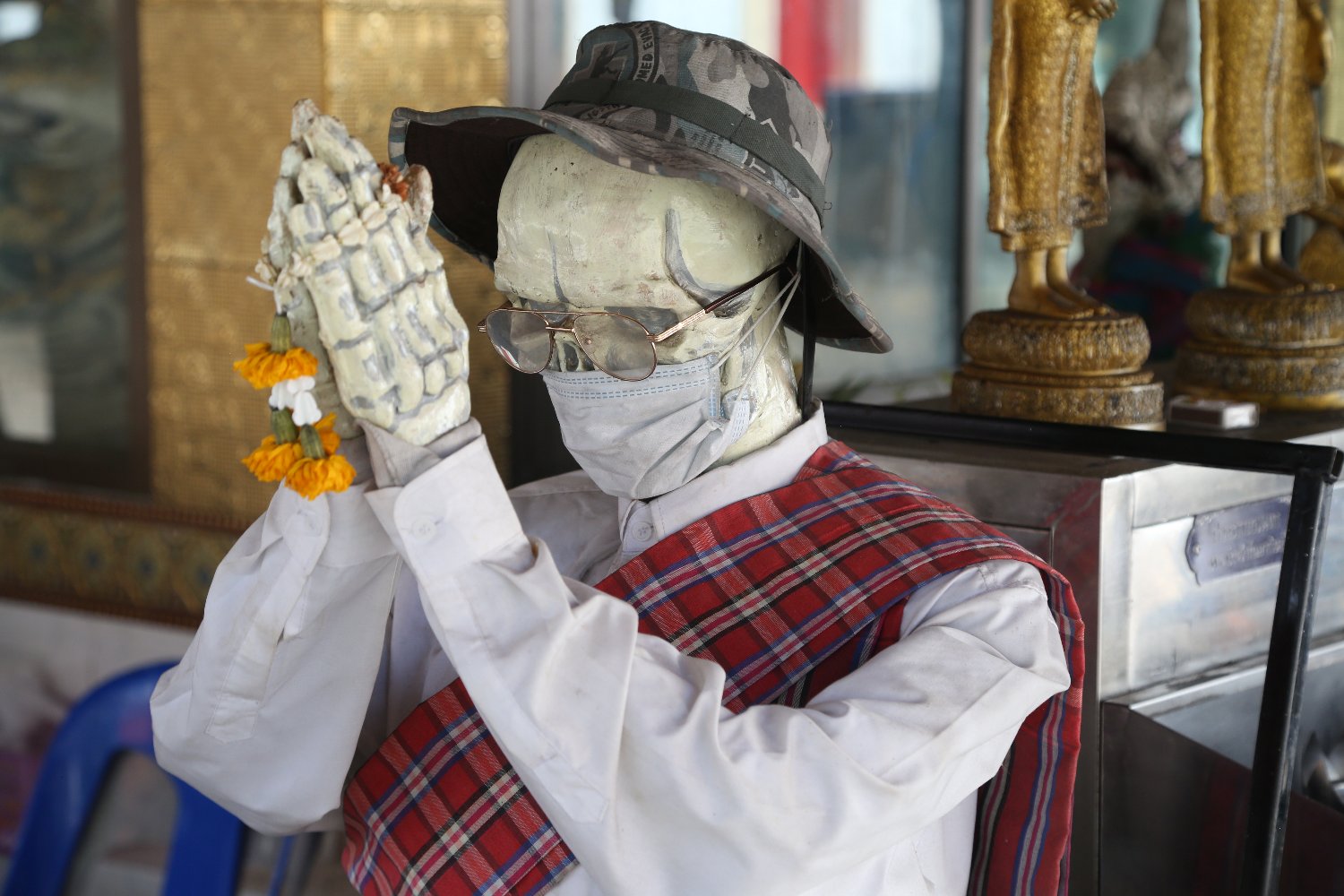
One of a number of select temples in this part of town where we have seen farm animals on site including some cows and pigs. Also unique is the bobbing skeleton – doing the wai repeatedly up and down. Known also for its herbal sauna (with the obligatory sign indicating caution for those with high blood pressure and other diseases) and some fish on site in a pond that always appear to be hungry.
One of the more unique cultural experiences when bells are ringing in this temple combined with the call to prayer, loudly playing from the nearby mosque. Doesn’t get more culturally rich then this!
A very peaceful temple – also helped by the fact there are plenty of trees on site.
Records show that this temple was originally built in 1849 by a Khmer immigrant who lived in the area – the temple was originally called ‘Wat Khom’ but changed its name to Wat Khachonsiri in 1940. The records were preserved in a palm leaves book and were also inscribed into the original ceiling of the ubosot building. In 1970 the old wooden stupa top was discovered buried underground on site.
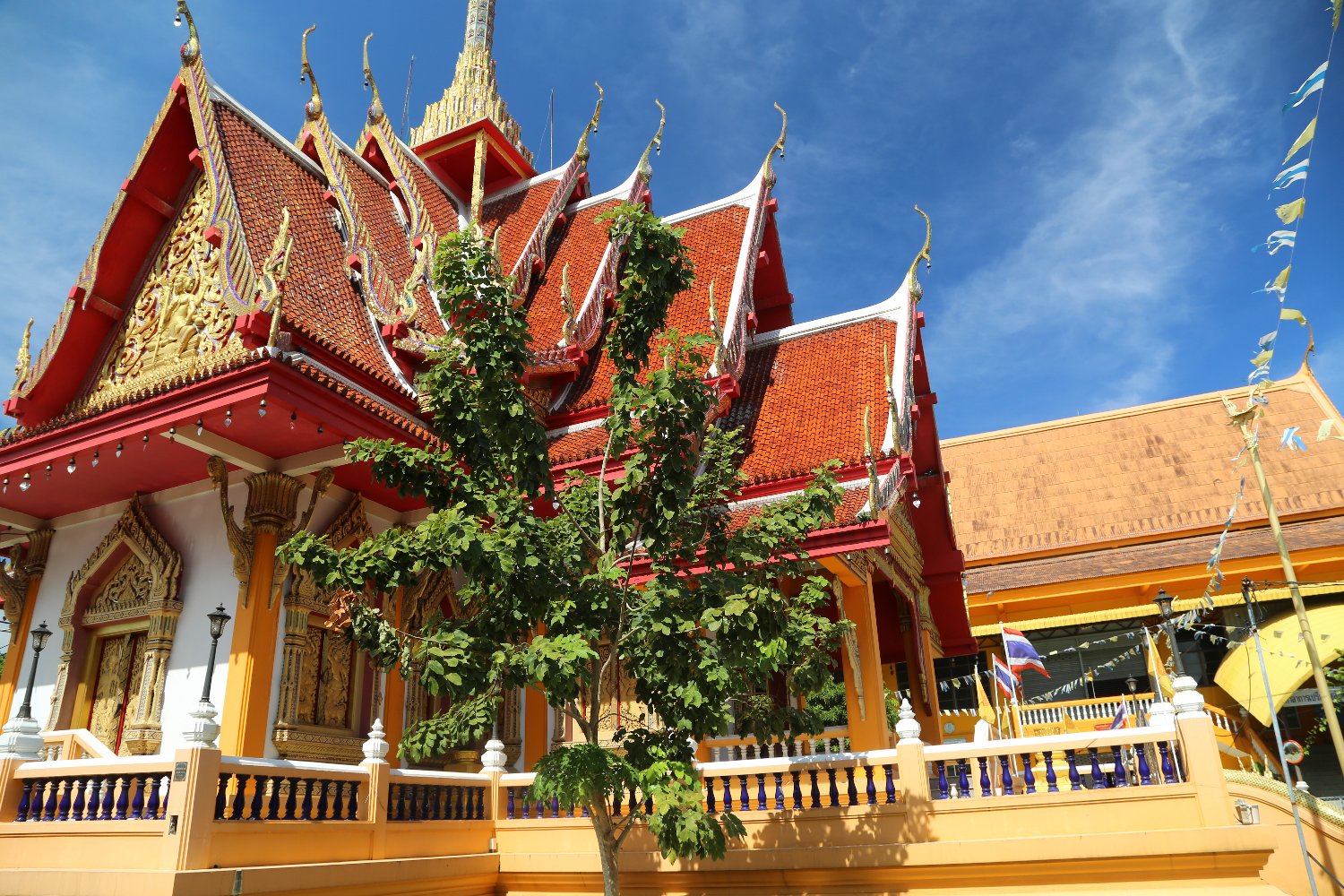
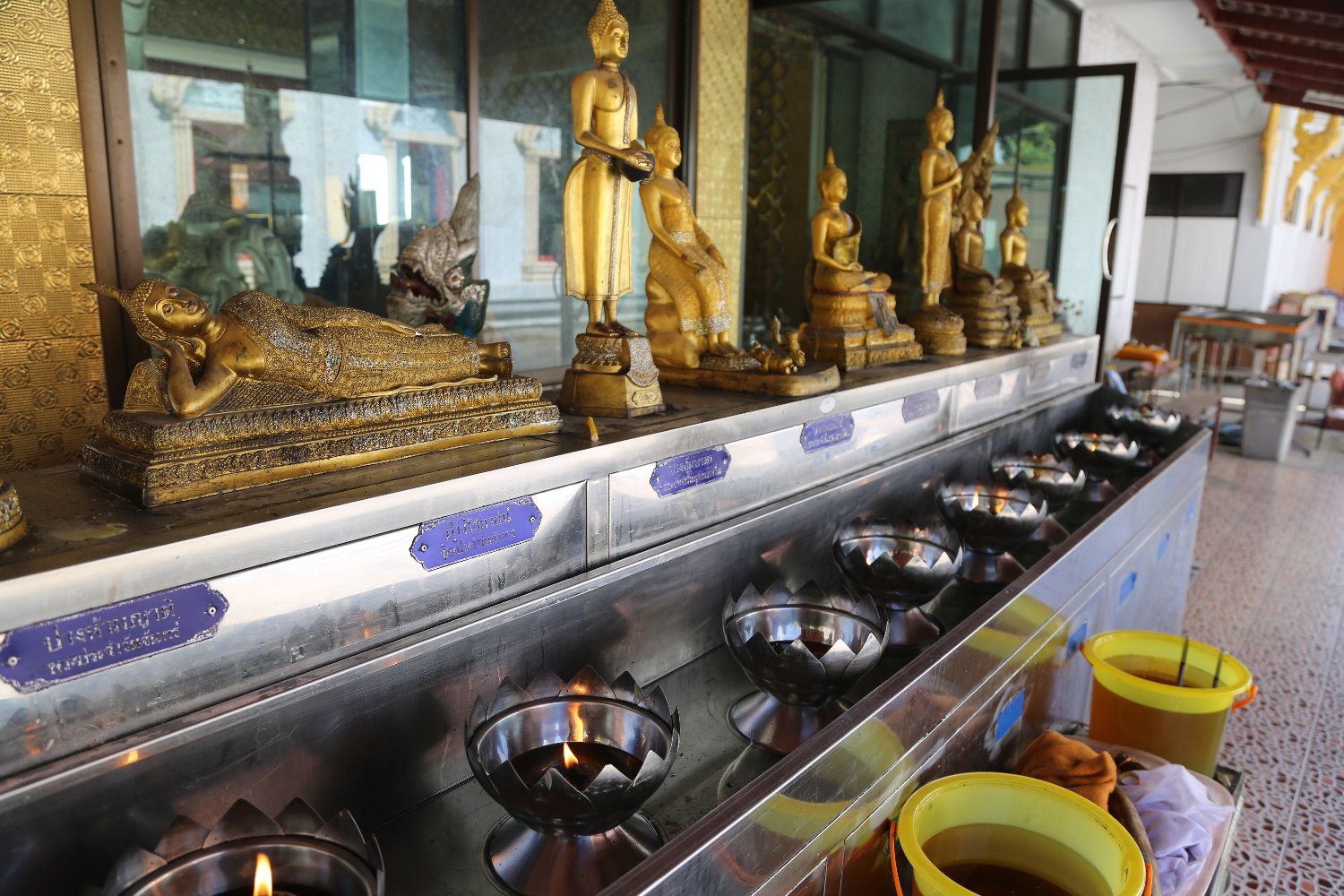
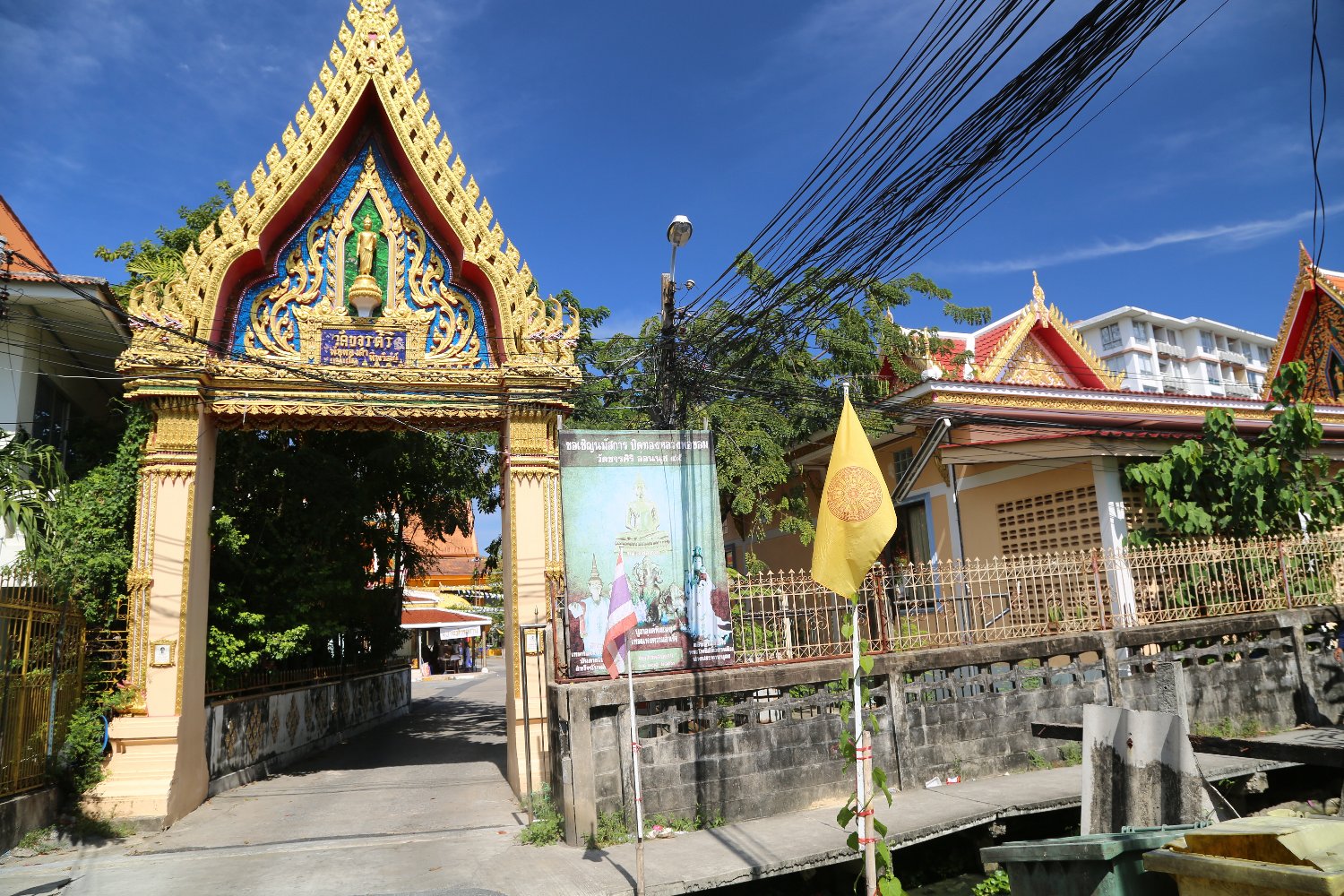


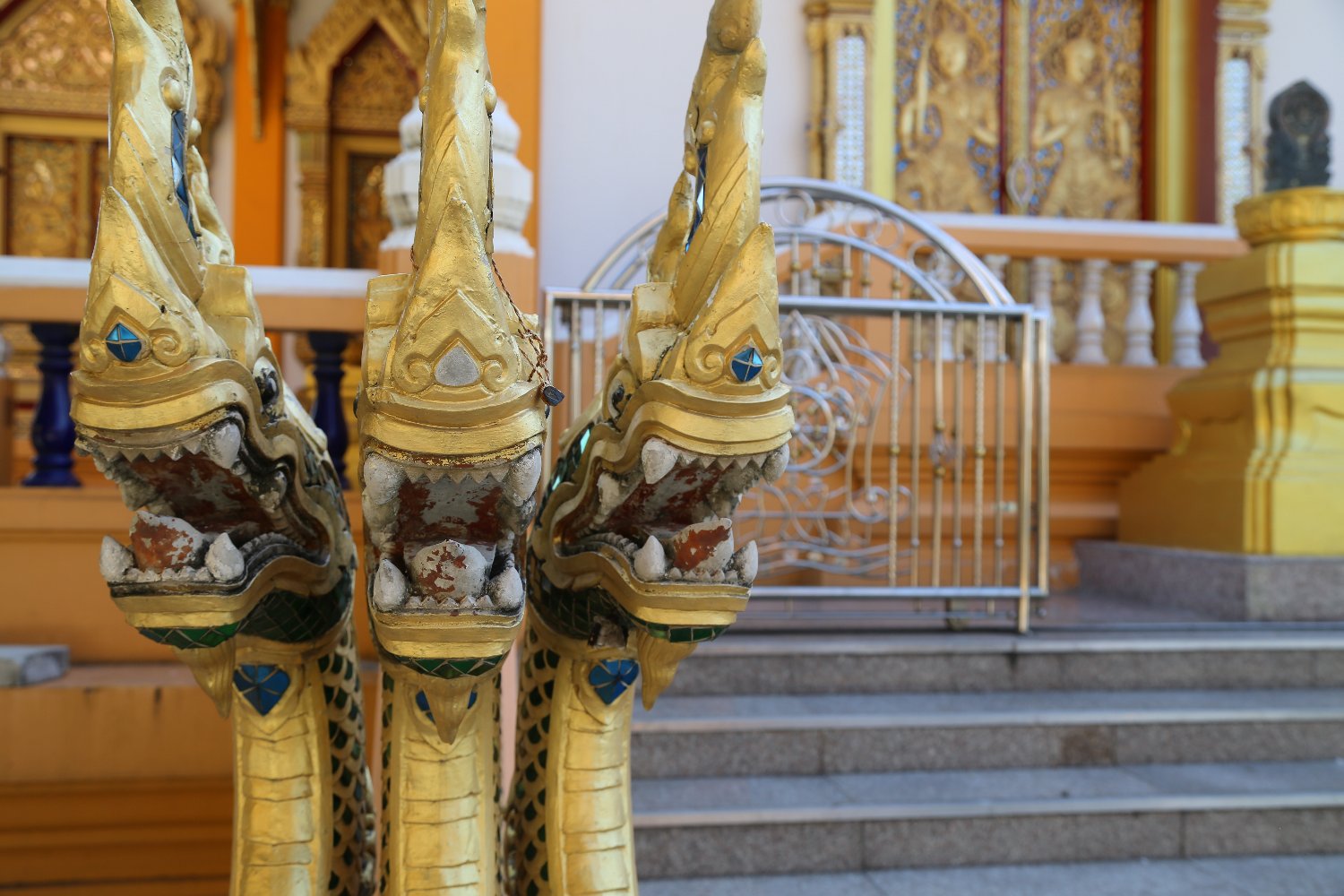
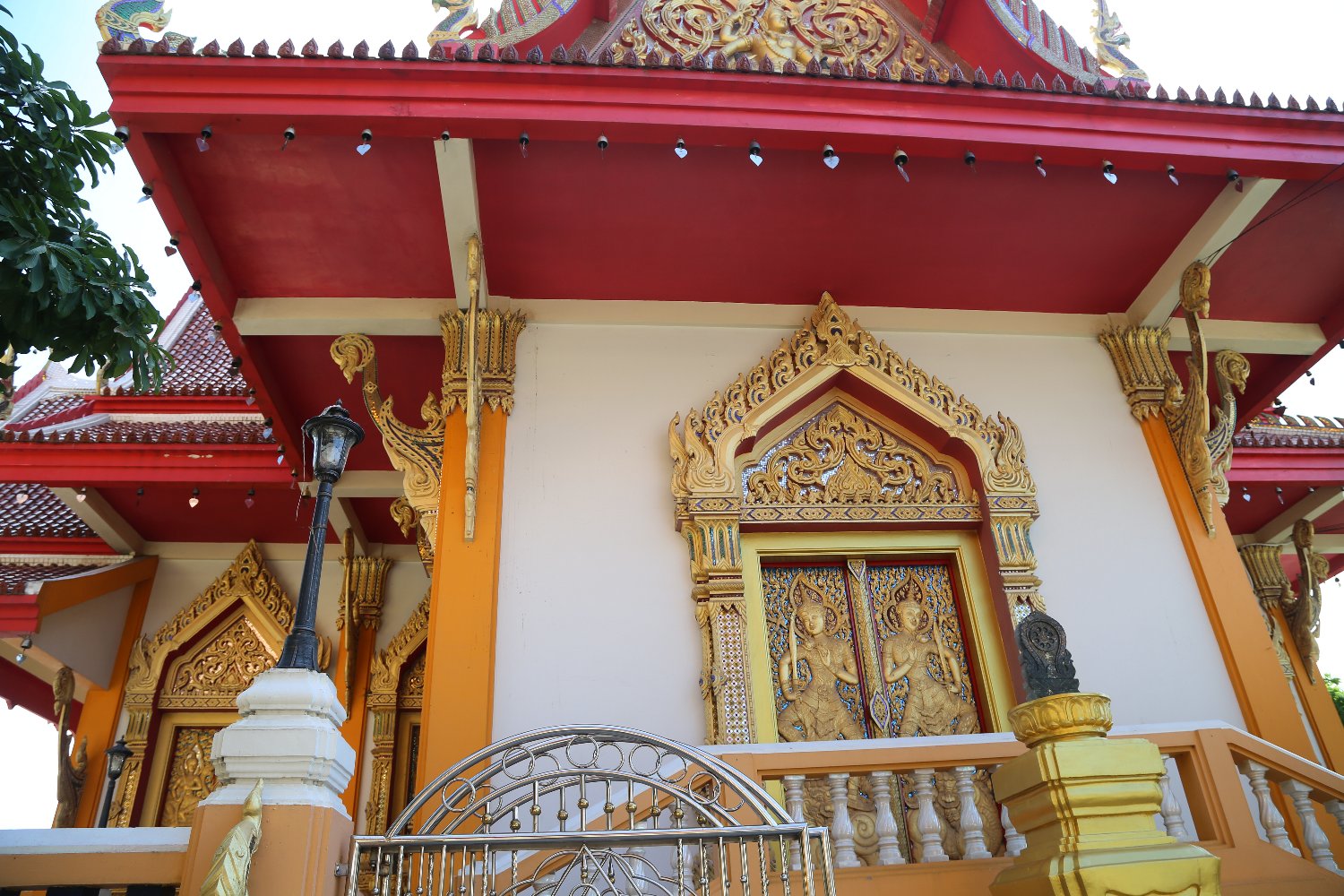
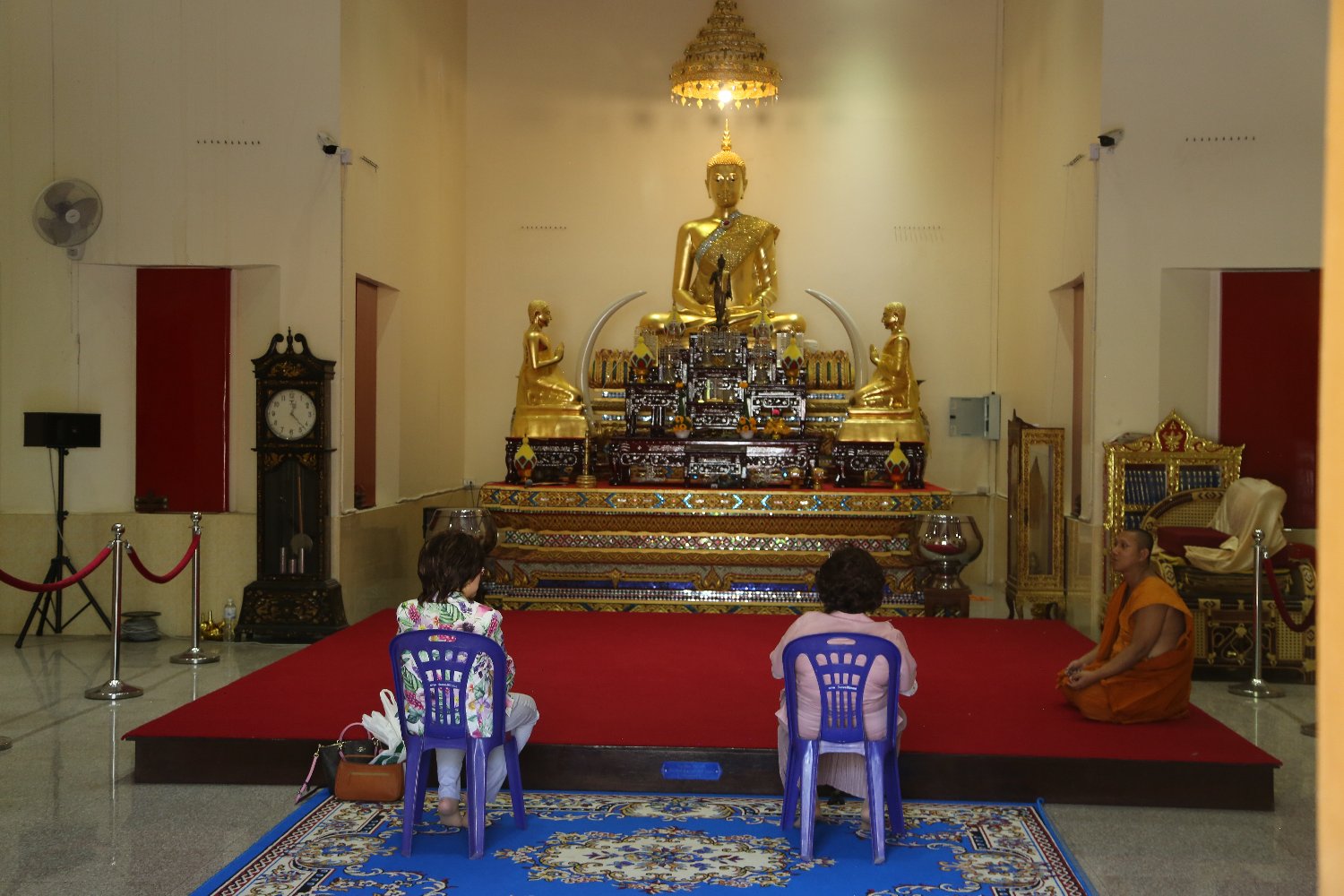


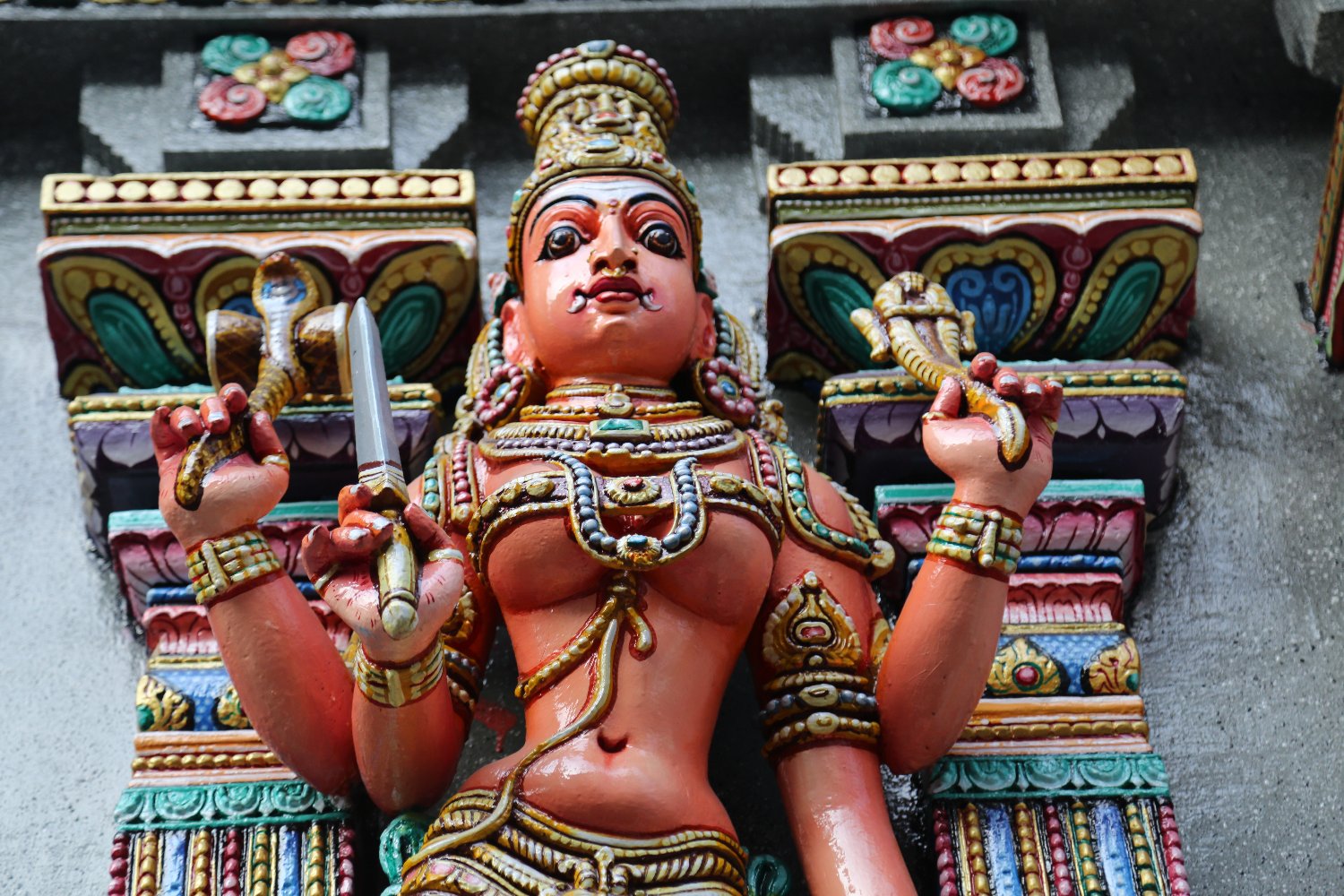
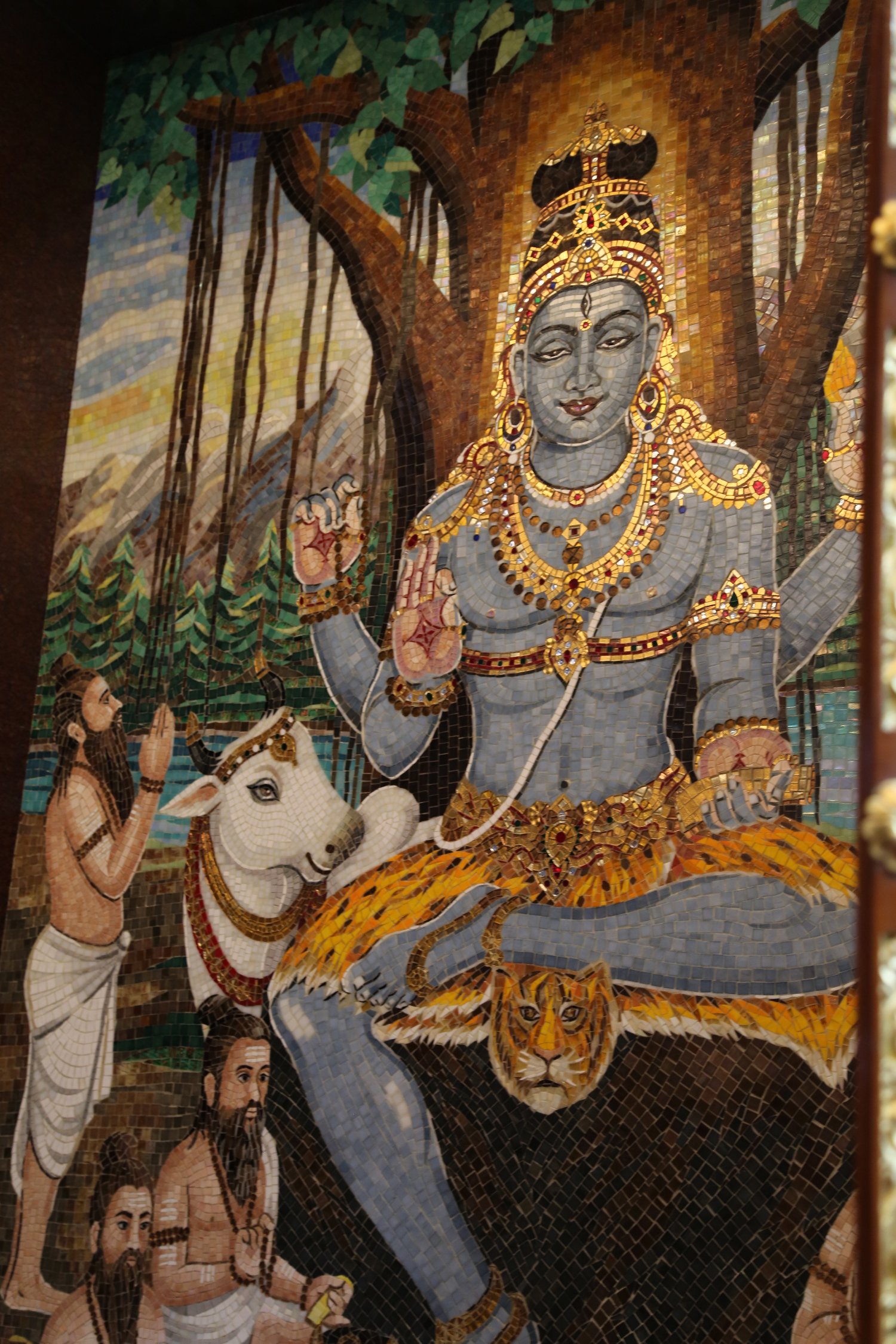 Wat Khaek Silom or it’s more formal name Sri Mahamariamman Temple, is a beautiful and rare (for Bangkok) intricately designed Indian temple. It was built in 1879 by a number of Indians living in this area. Easily accessed via a short walk from the Chong Nonsi Skytrain stop, it is located at the corner of Silom Road and the small soi, Pan Road.
Easily noticeable due to its unique and colorful design. And you may also notice the flower vendors lined up along Pan Road selling a a variety of mostly yellow flowers for those who come to the temple to worship. No photography is allowed inside but you can take photos from the street.
An annual 10-day/10-night festival is held here in September/October called Navaratri – in which attendees worship a variety of gods. Look for a procession on the last day of this event in and around this temple in which part of Silom is actually blocked from through vehicular traffic. Also a number of budget hotels and hostels within a very short walk of this temple.
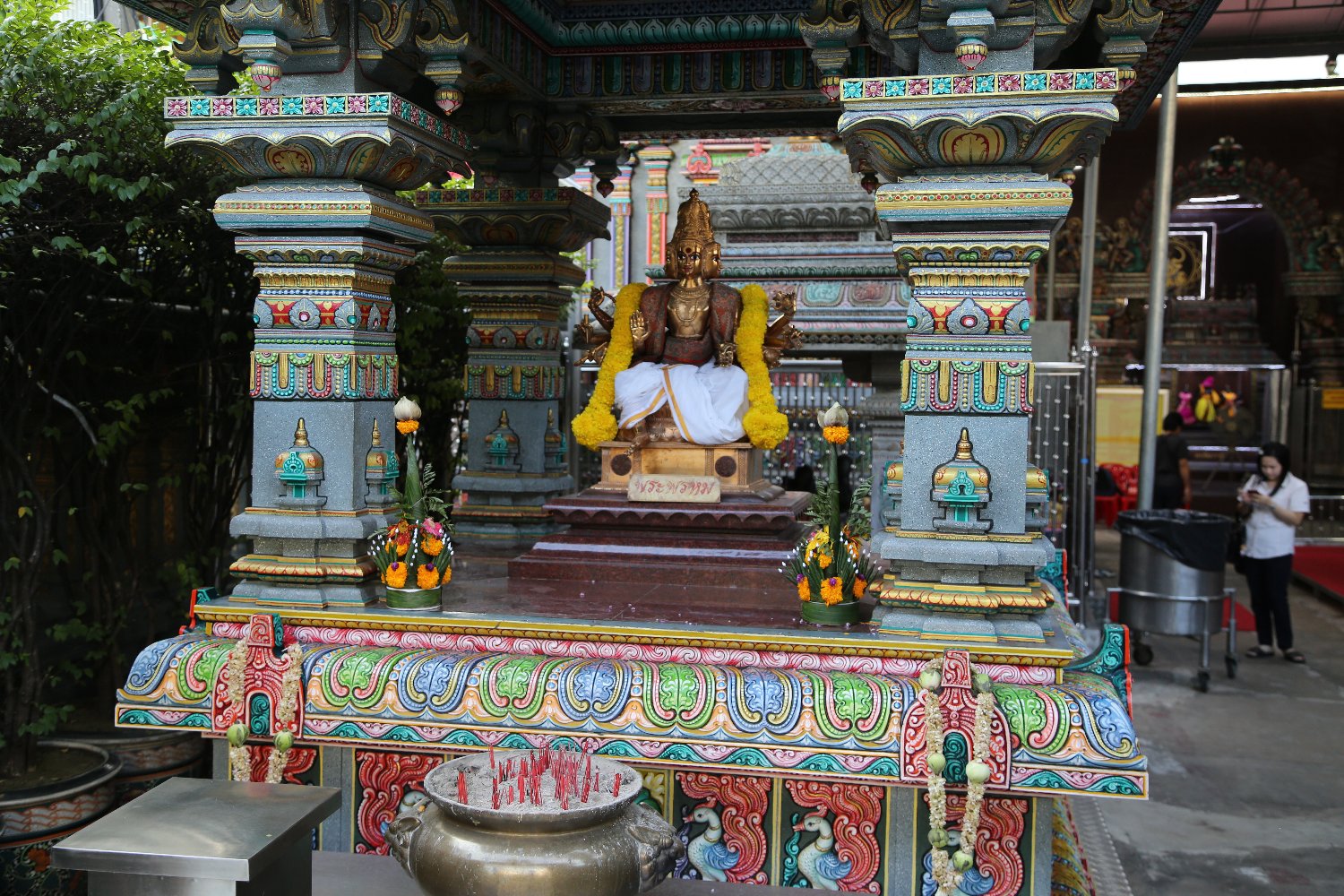
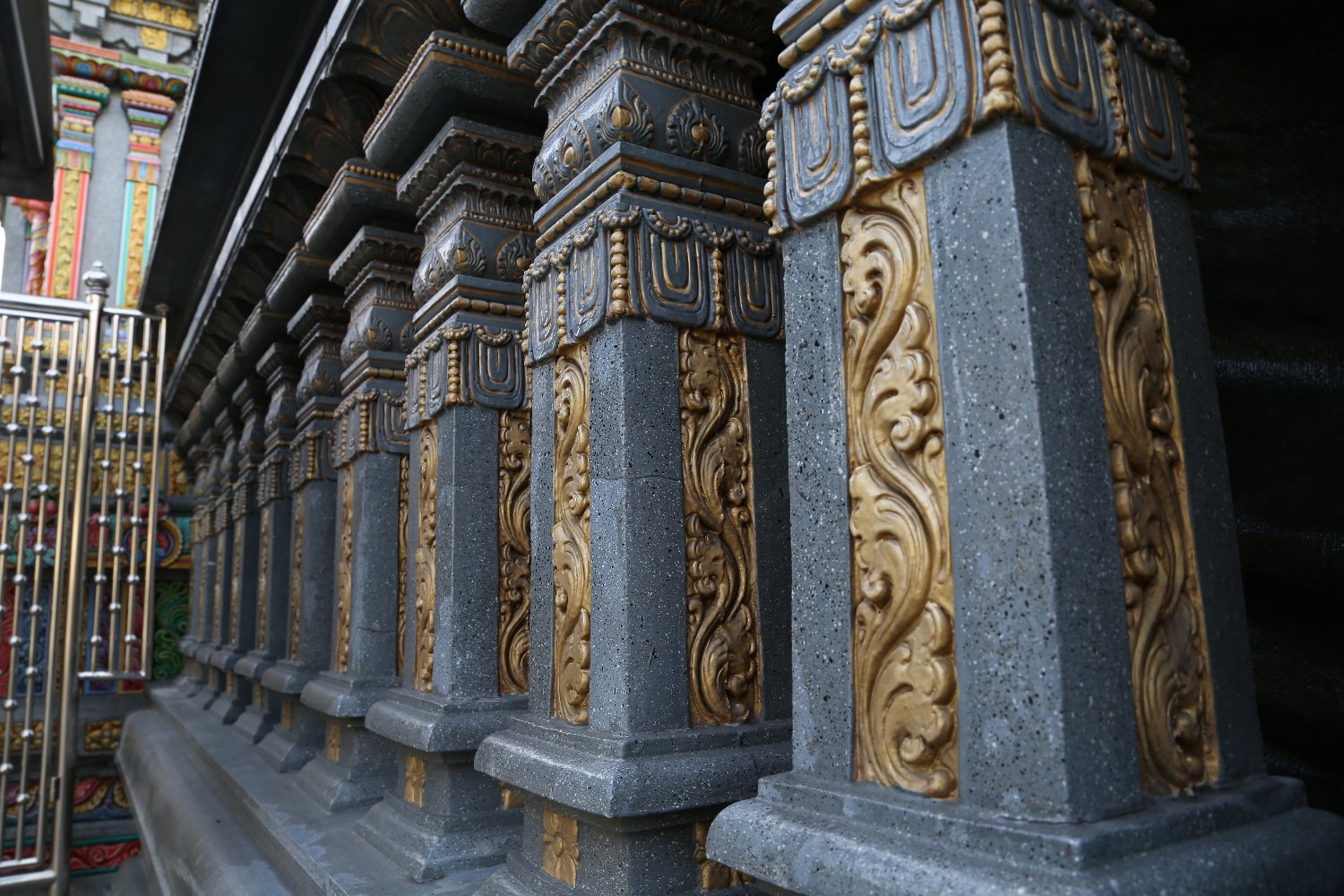

Wat Khlong Mai appropriately shares its name with the nearby Klong Mai, a small canal that runs through residential neighborhoods. Not to be confused with the ‘dragon temple’ located outside of Bangkok but shares a similar name.
A small temple with an appealing tower. Several bathrooms are in the back and are easily found (not always the case at temples). You might be the only one here at this small well off the beaten path temple. A small school is also housed on the grounds. Located about 10 minutes taxi ride from the nearest Skytrain stop of Surasak.
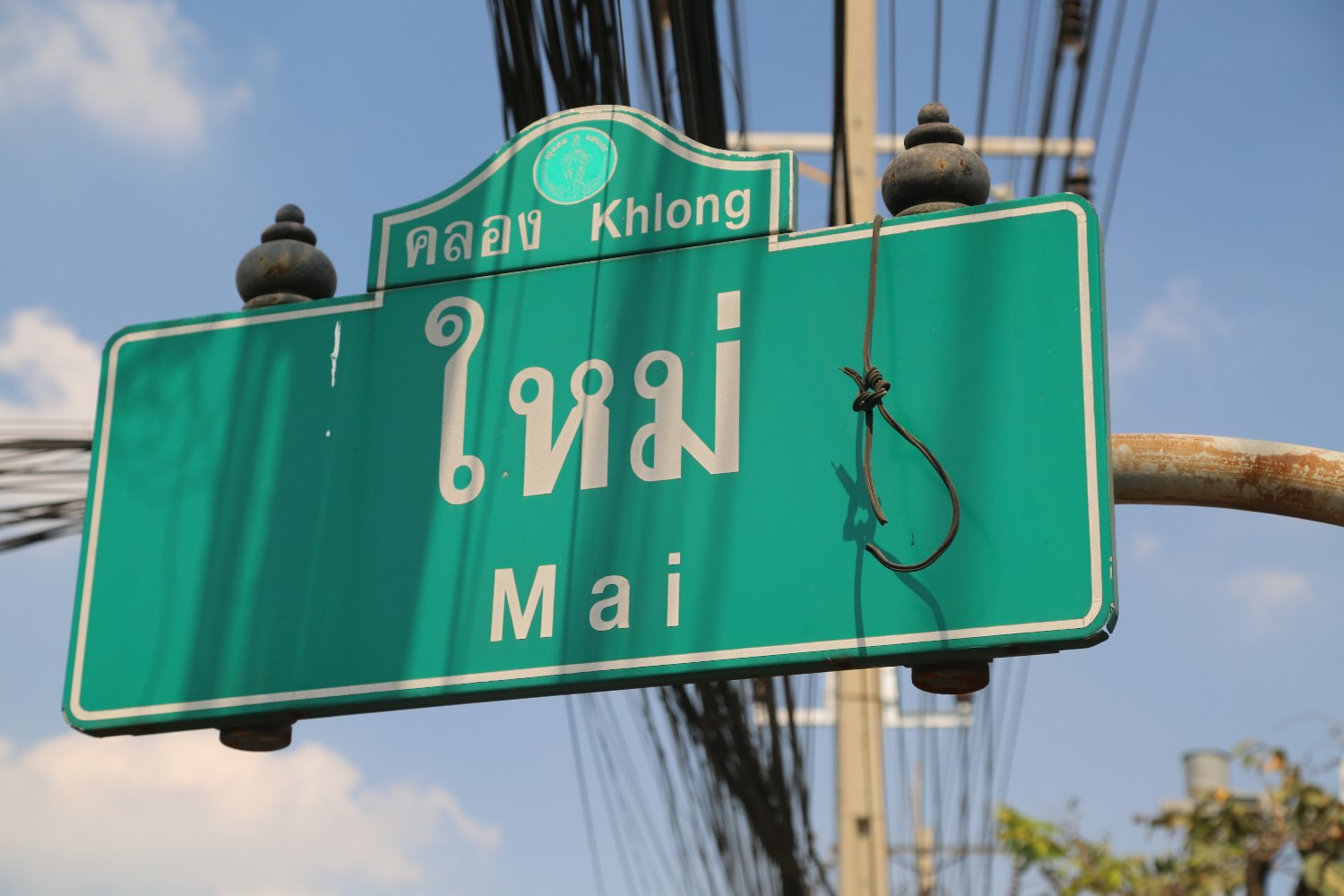
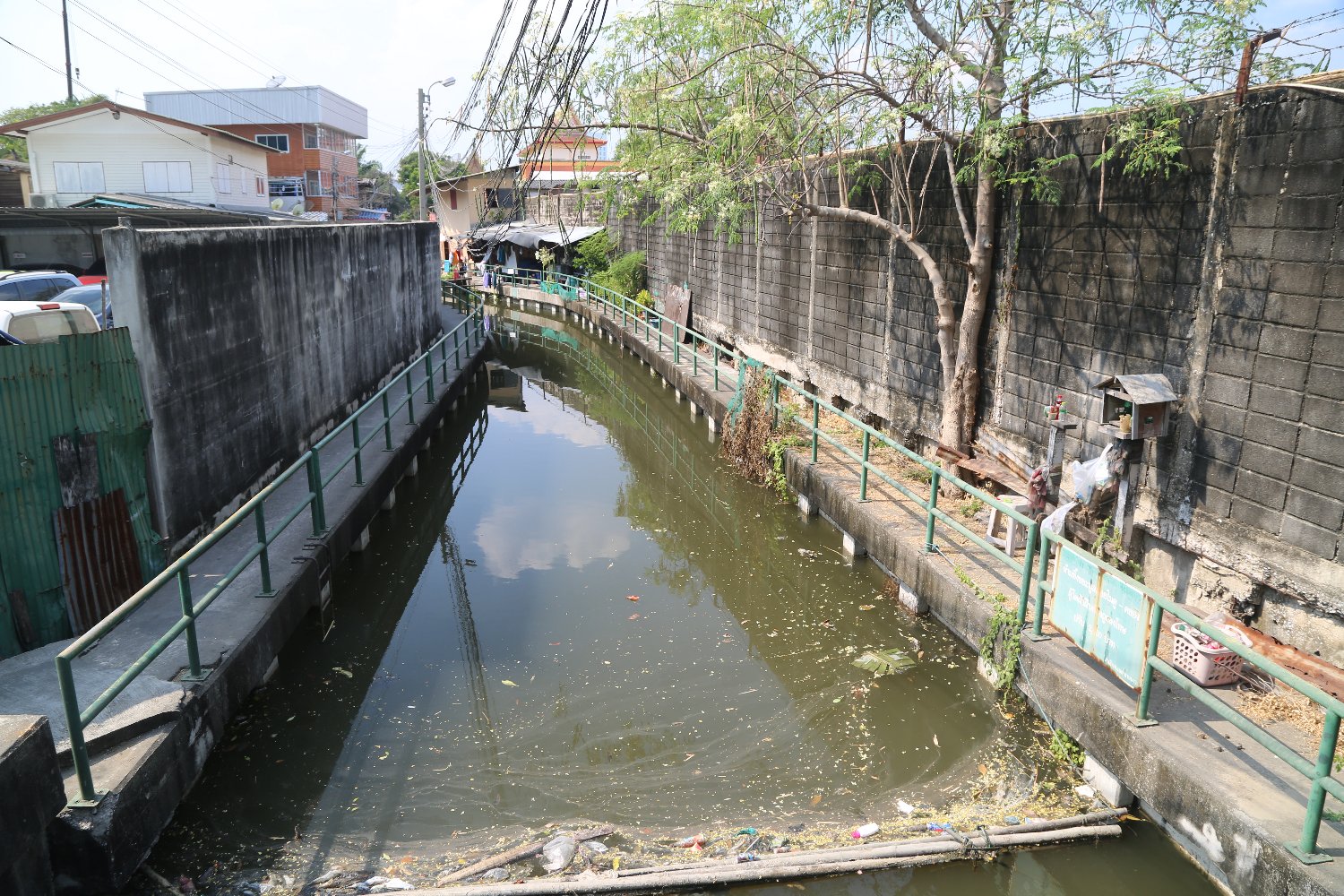
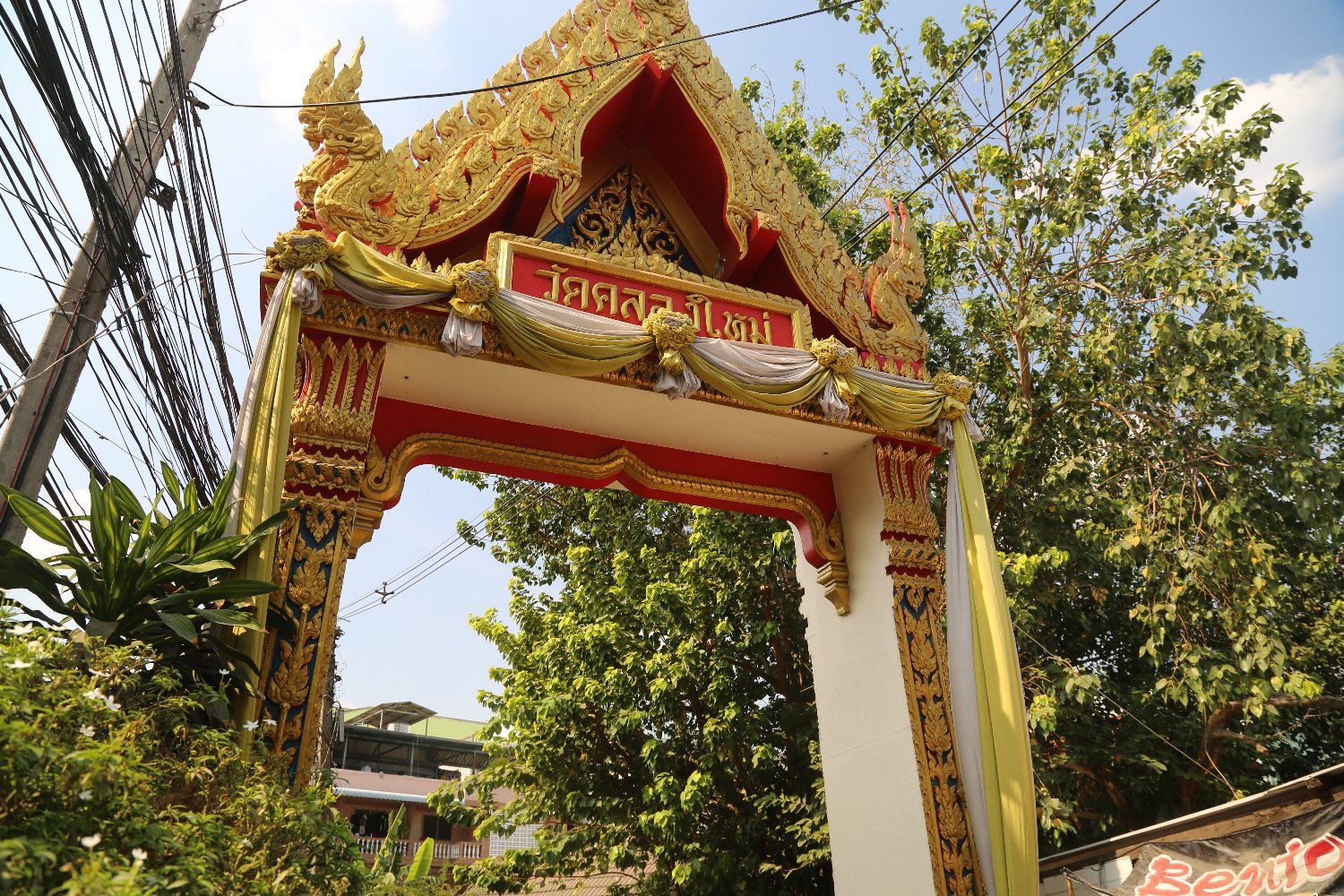
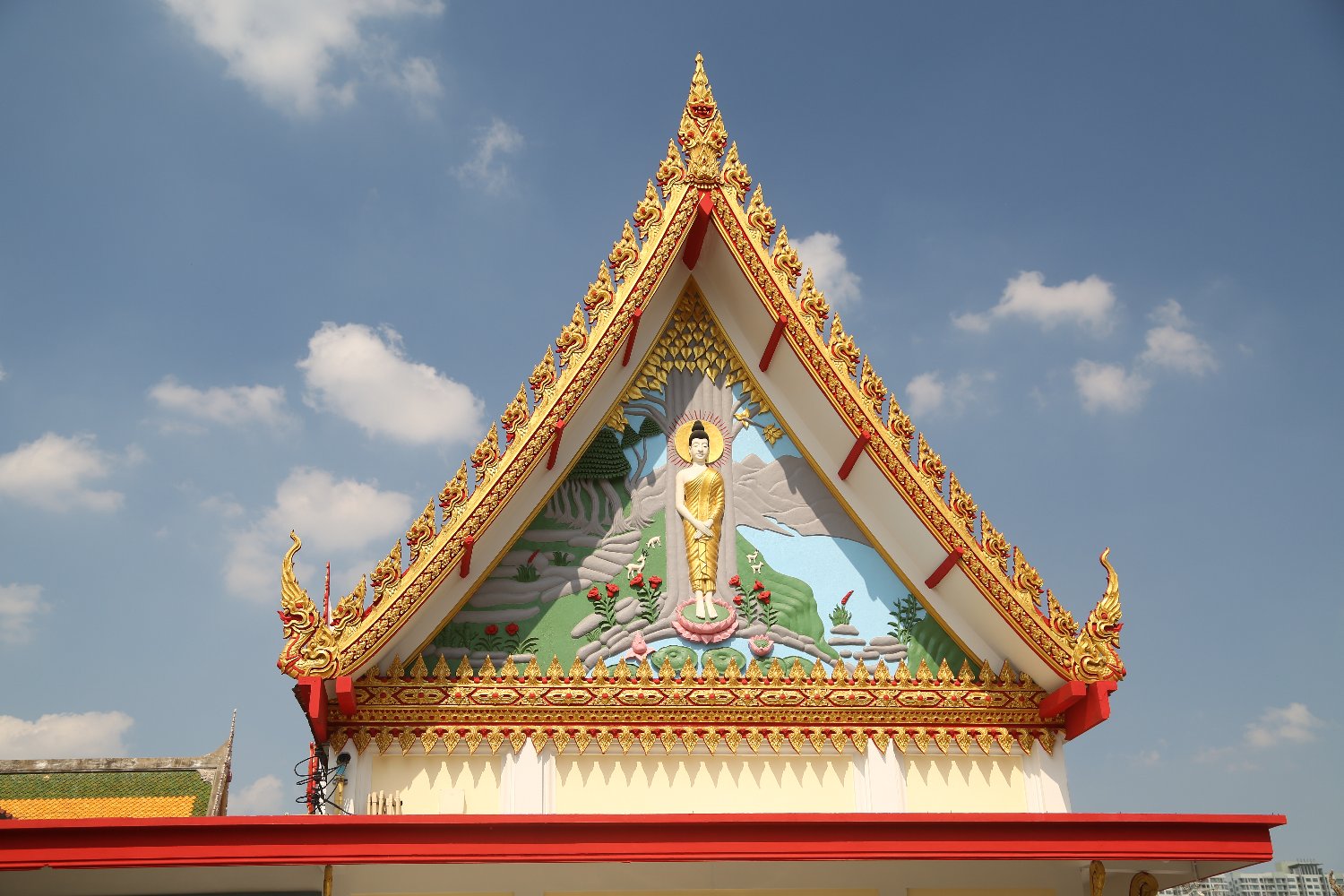
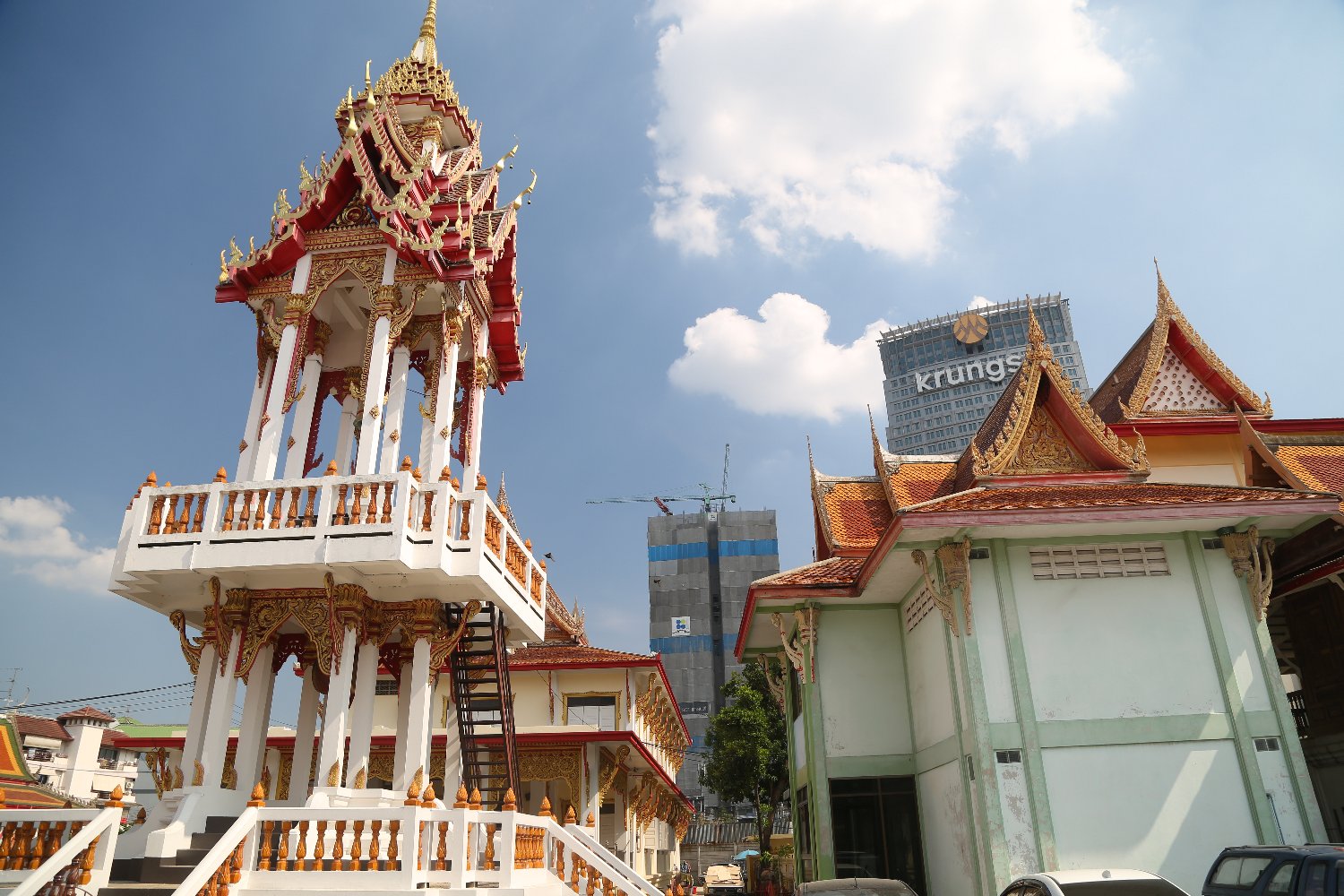
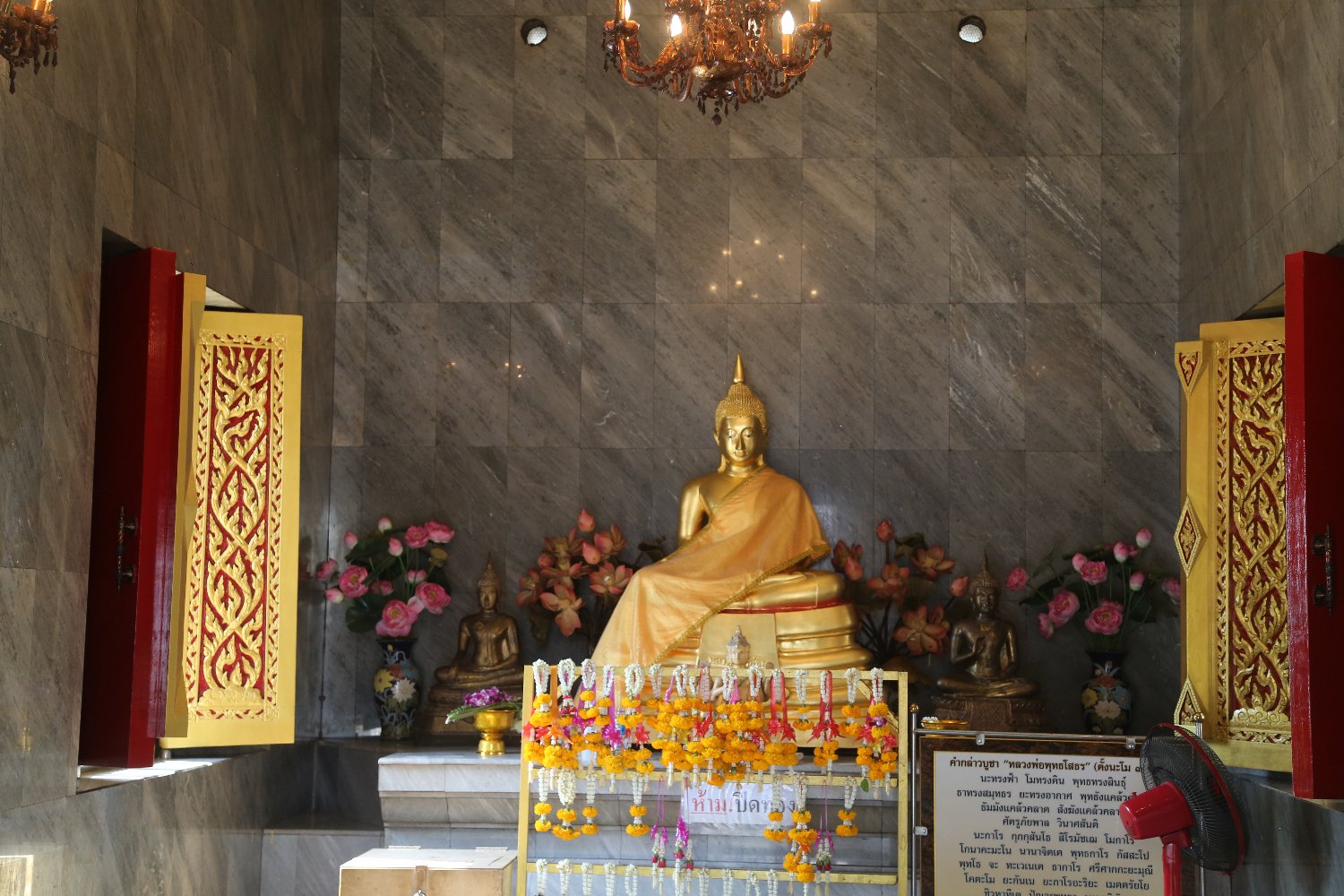
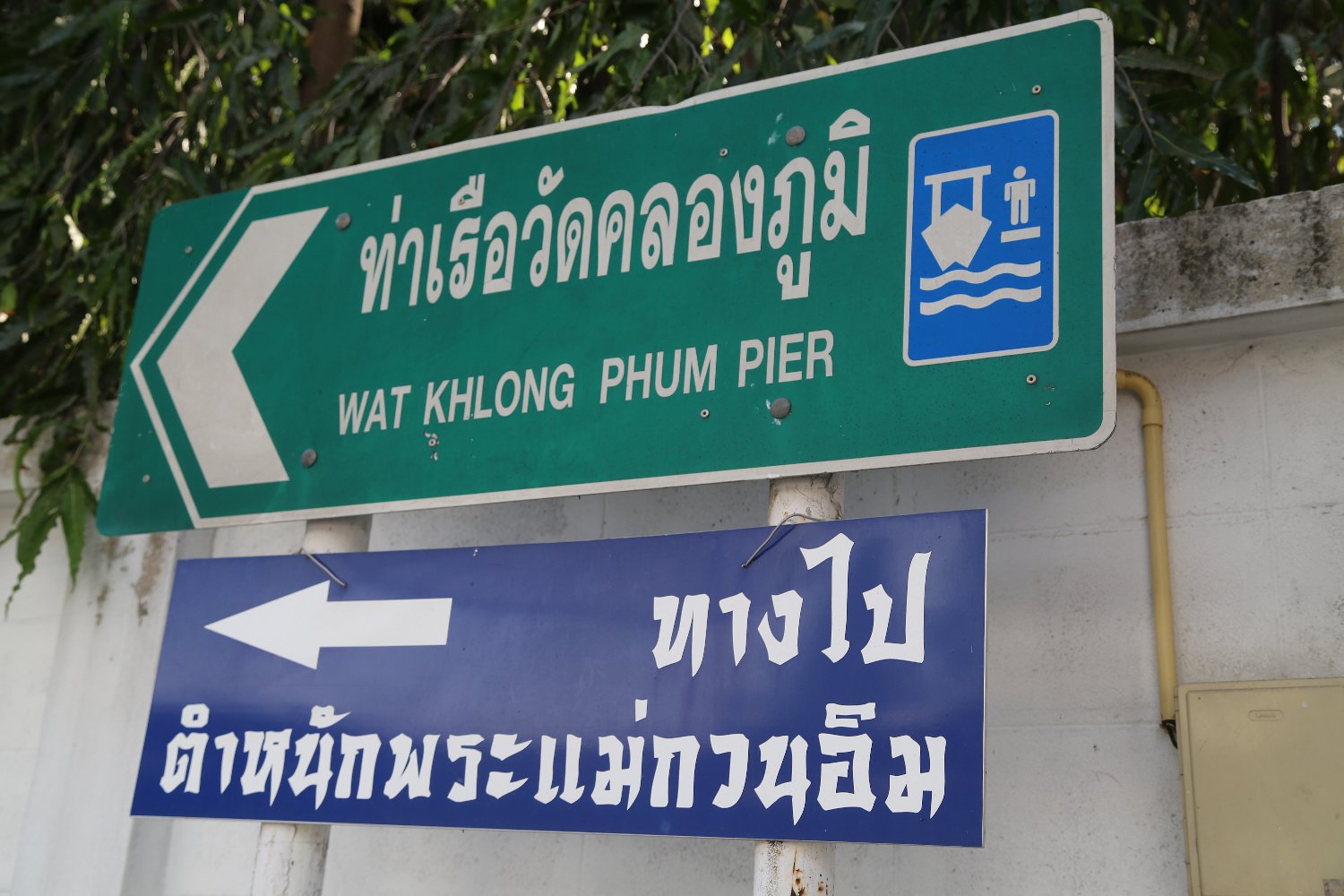
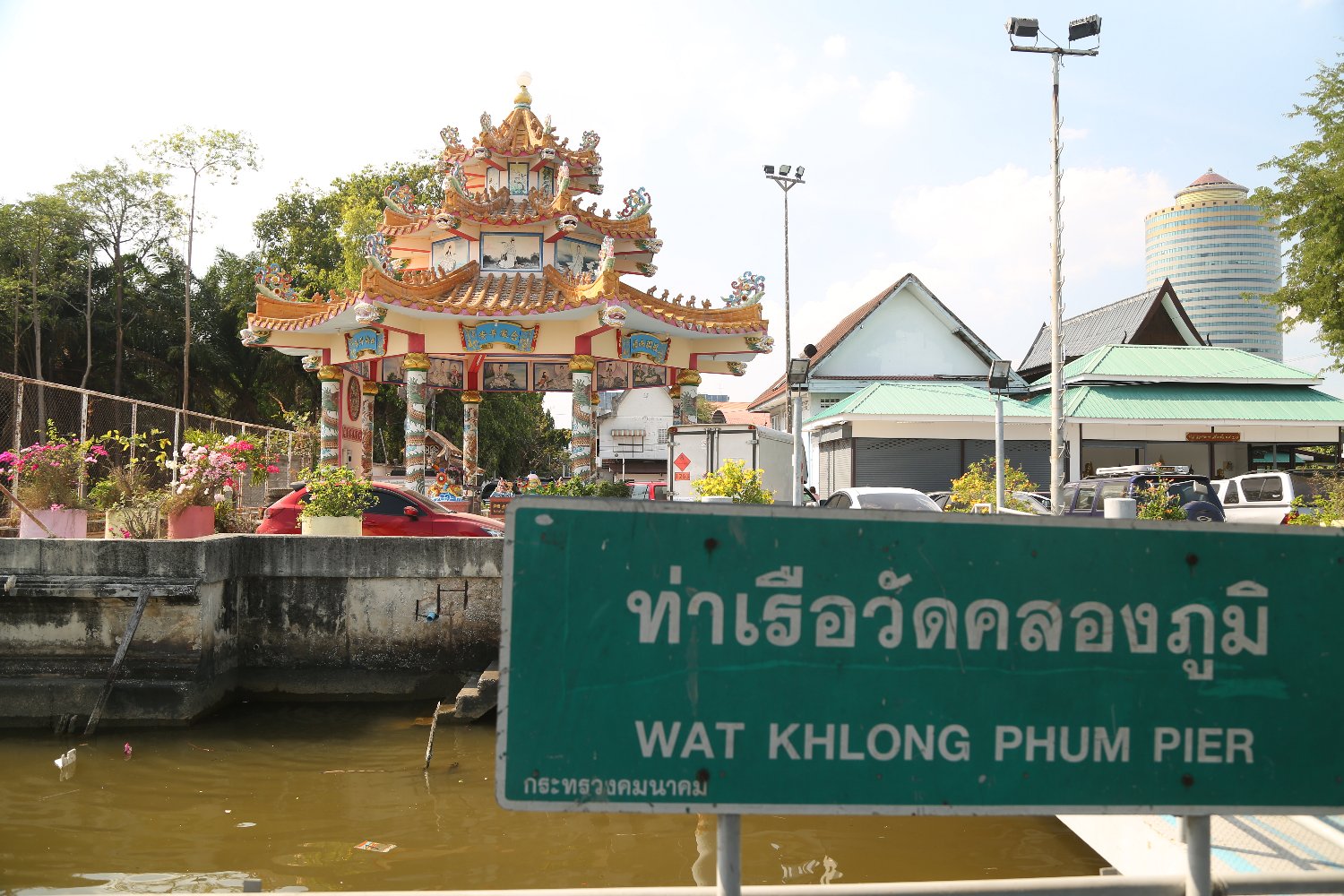
Wat Khlong Pum. Khlong in Thai means canal and the temple grounds are appropriately located near the banks of a small canal which empties into the Chao Phraya River. A small unassuming temple. Also, at the edge of the temple grounds is the Khlong Pum Pier with access to boats going up and down the Chao Phraya River. A school is on site – within one of the buildings is a small museum.


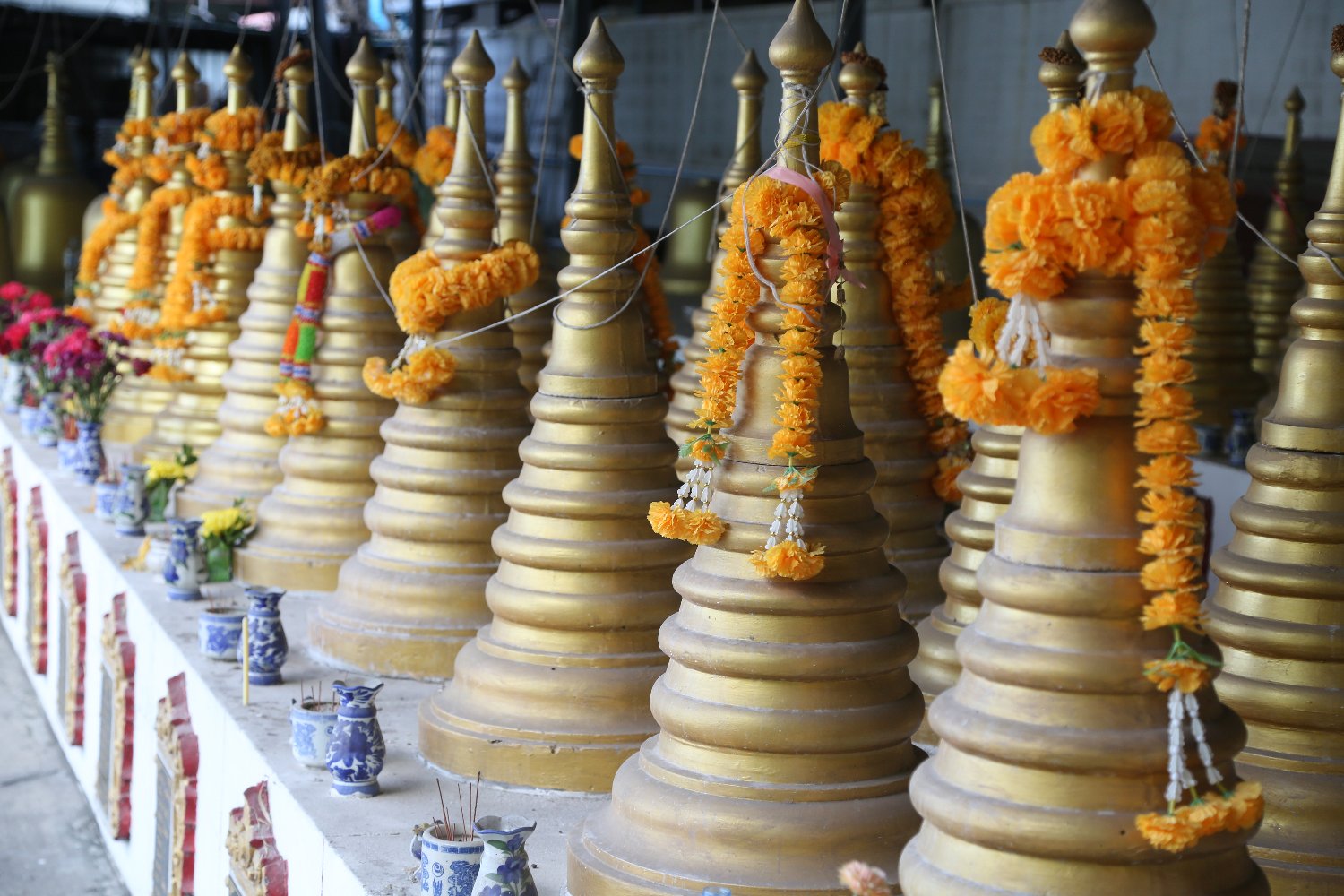
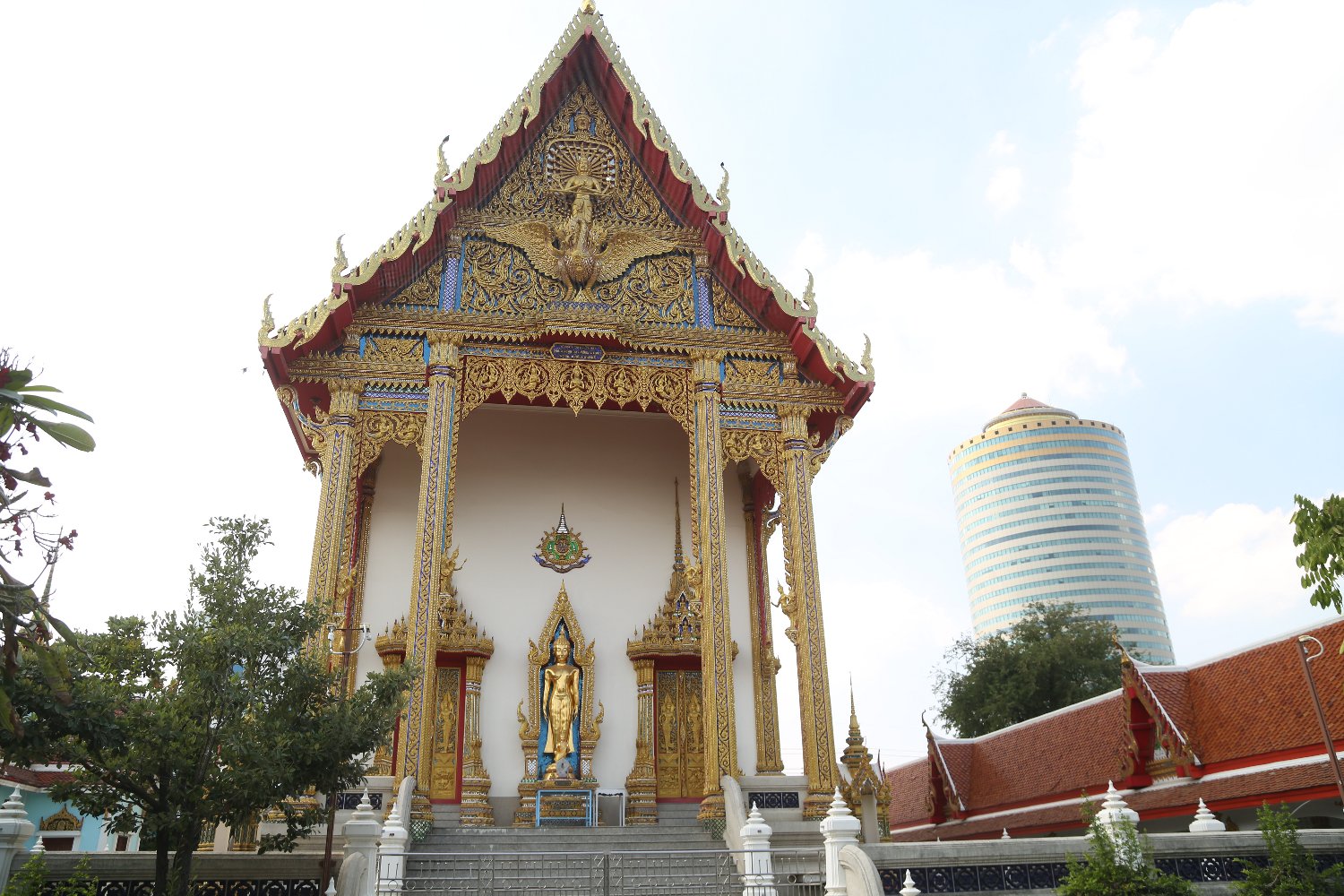
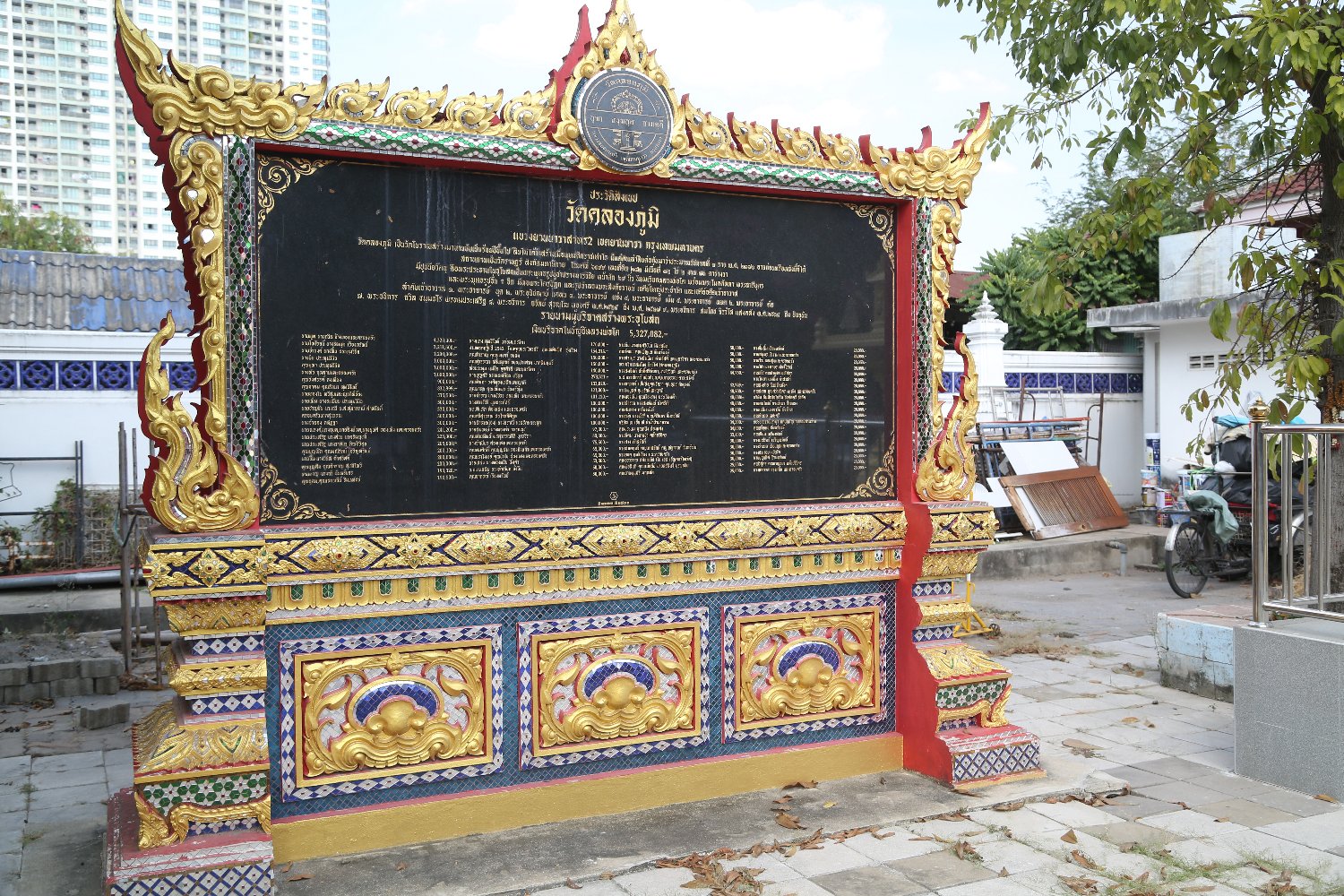

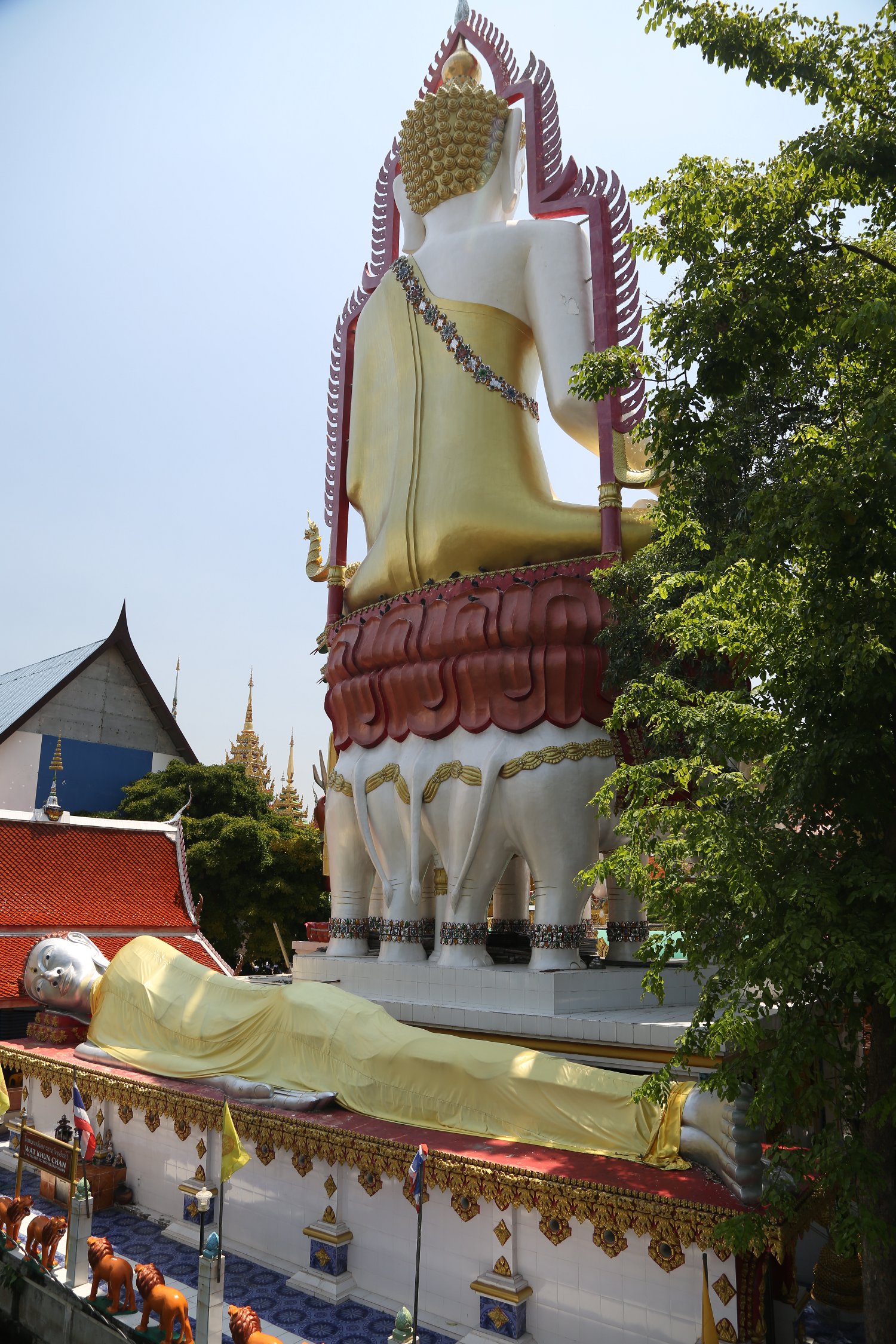
Wat Khun Chan (Jan) Waramattaya is an extremely photogenic temple located along the banks of the Khlong Dan canal which connects to the Bangkok Yai canal which ultimately connects into the Chao Praya River. The Khlong Dan canal is often frequented by long tail boats ferrying tourists around. As a result, you may sometimes see tourists on the temple grounds although not nearly as much as at the larger more well-known temples. For tourists looking to visit a beautiful temple (especially for photographers), we highly recommend a visit here.
A colorful play of art and sculpture of the highest degree, arguably the highlights of a visit are seeing the large statues of Buddha (both from the front and behind). The details are amazing on some of the statues, the exterior and interior art and also the ceilings inside the buildings.
Be sure to also walk across the canal using the pedestrian footpath – nice views looking back at the temple. This neighborhood is also interesting – connected via small pedestrian paths (also used by motorcycle taxis). Several other nearby temples easily accessible on foot are also worth exploring. The closest Skytrain stop is Wutthakat (about a 15-minute walk to the temple).

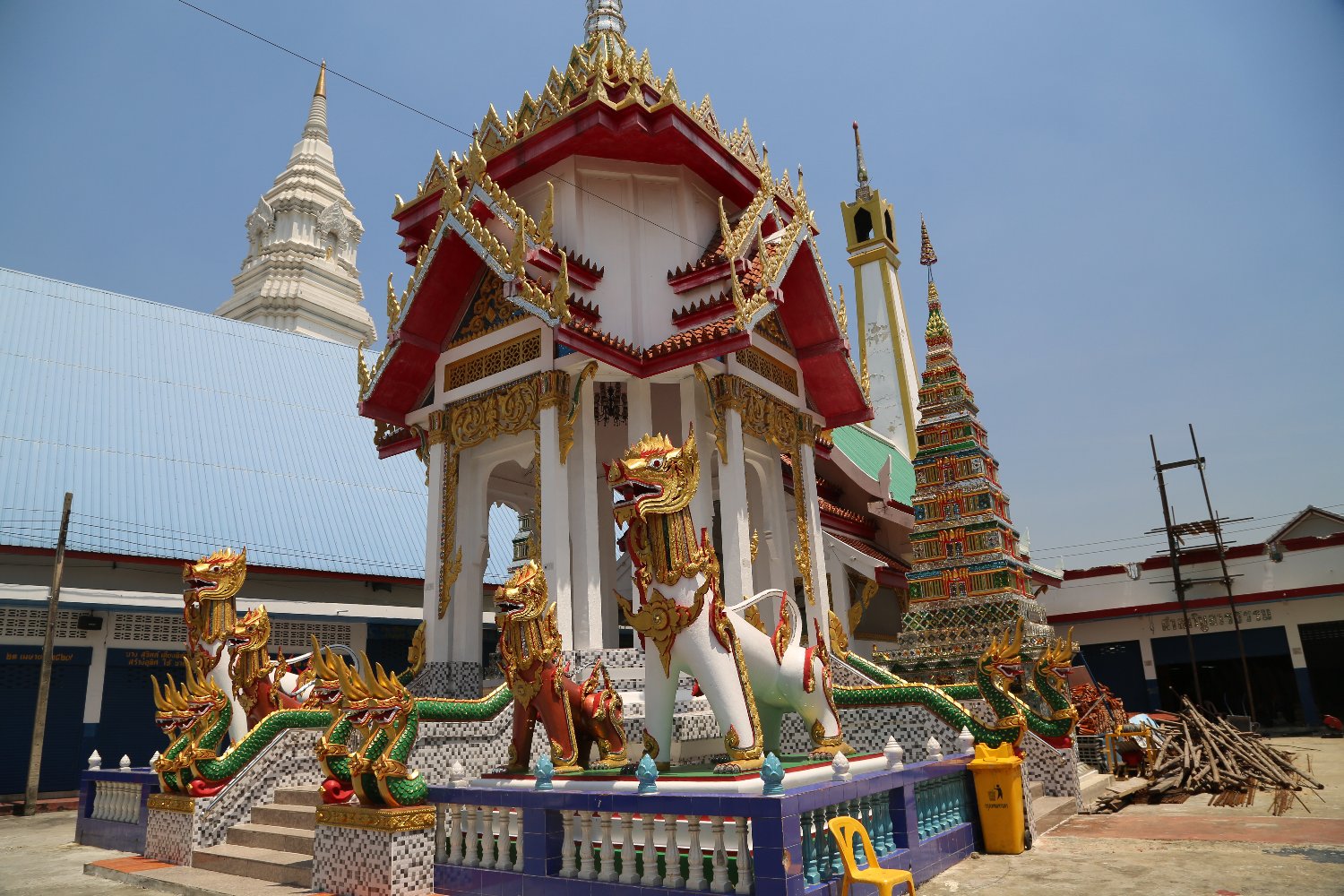
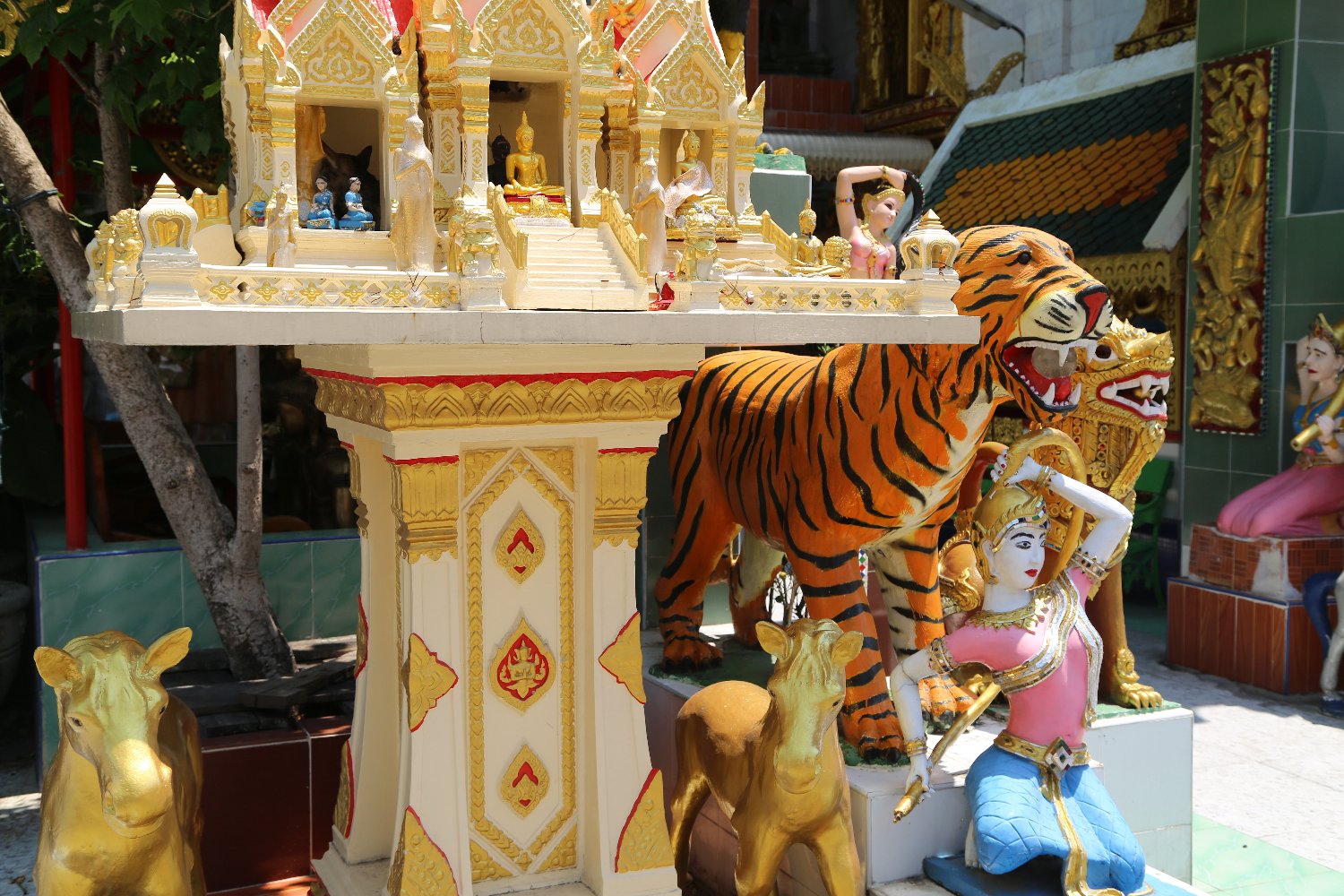
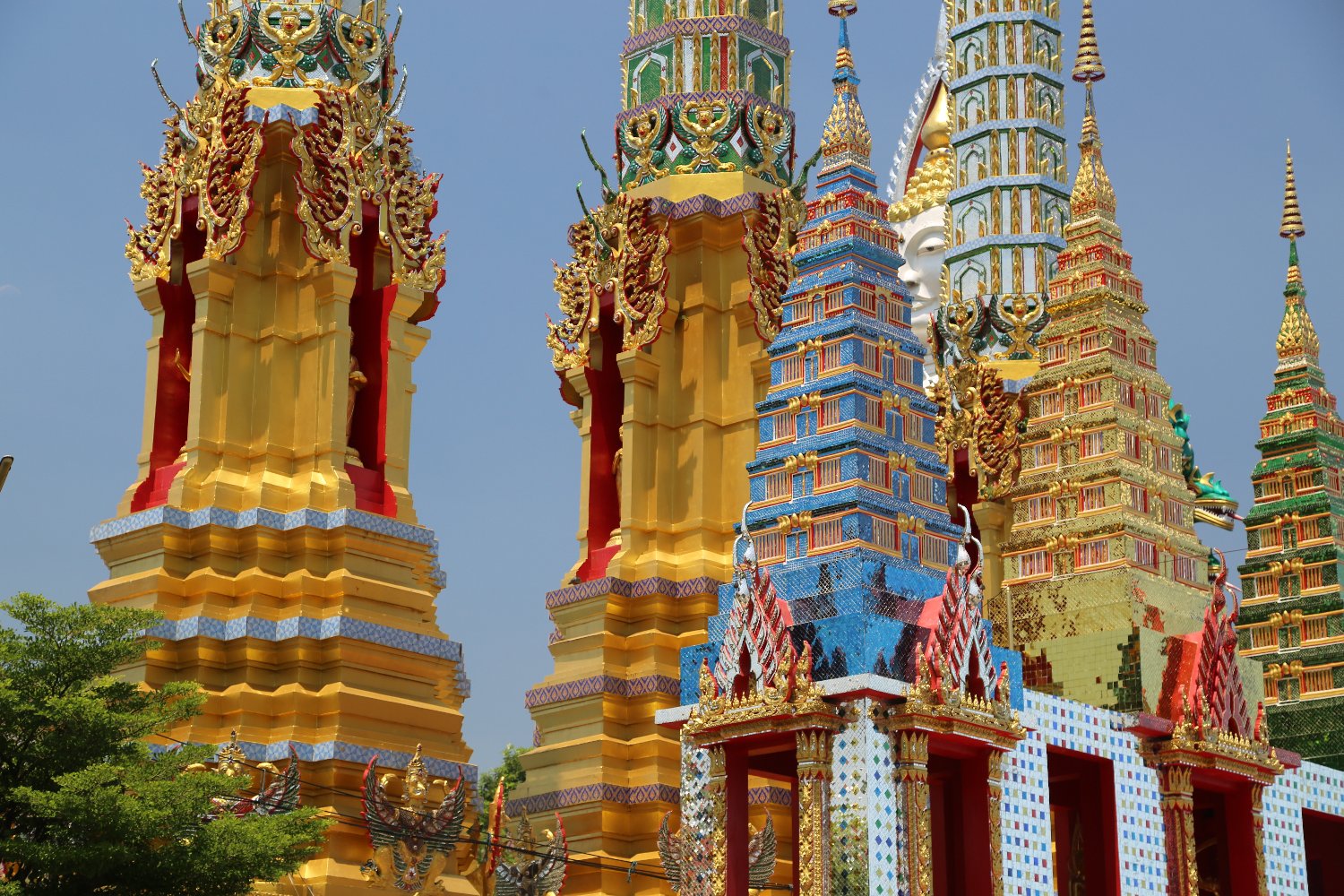
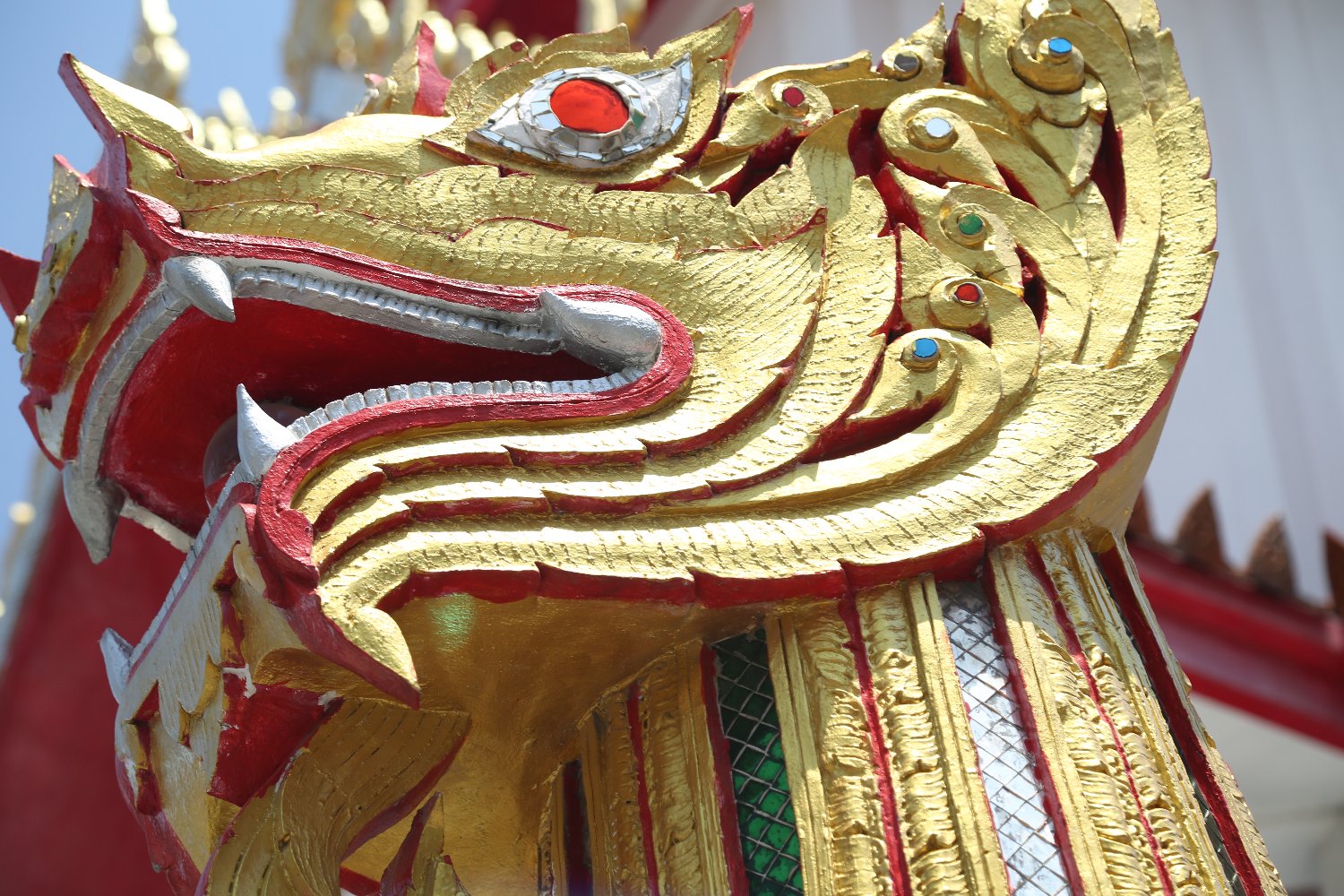
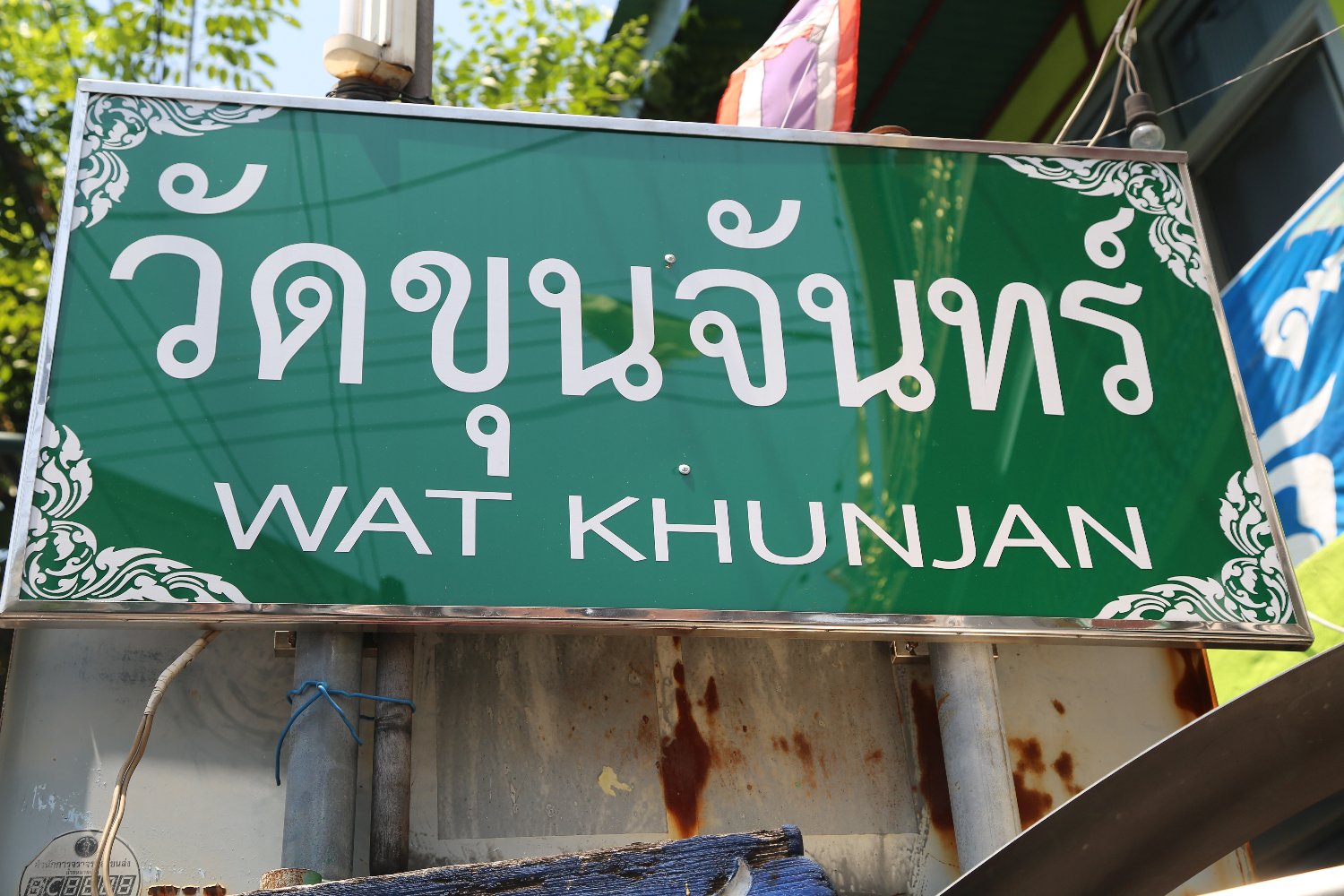
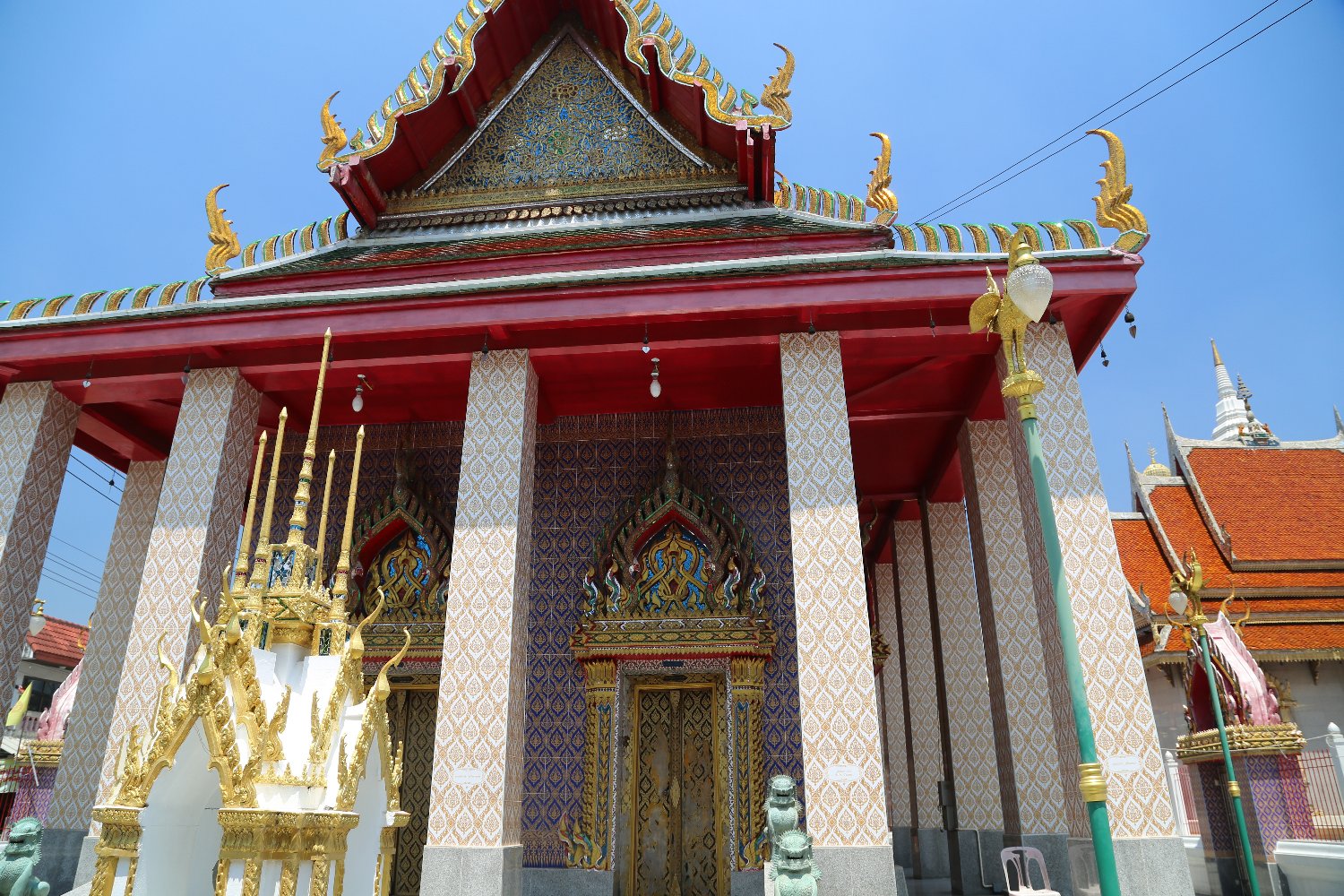
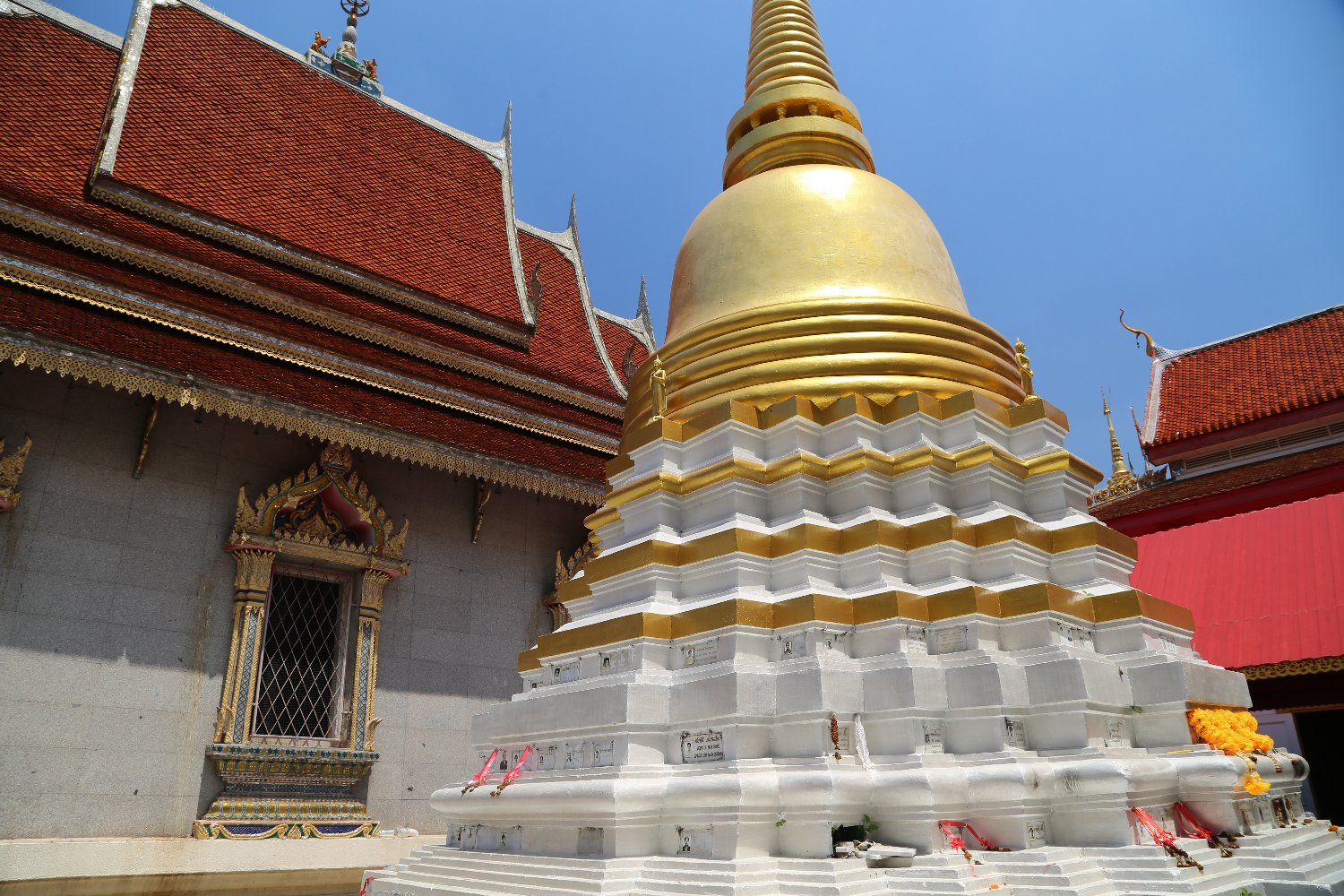

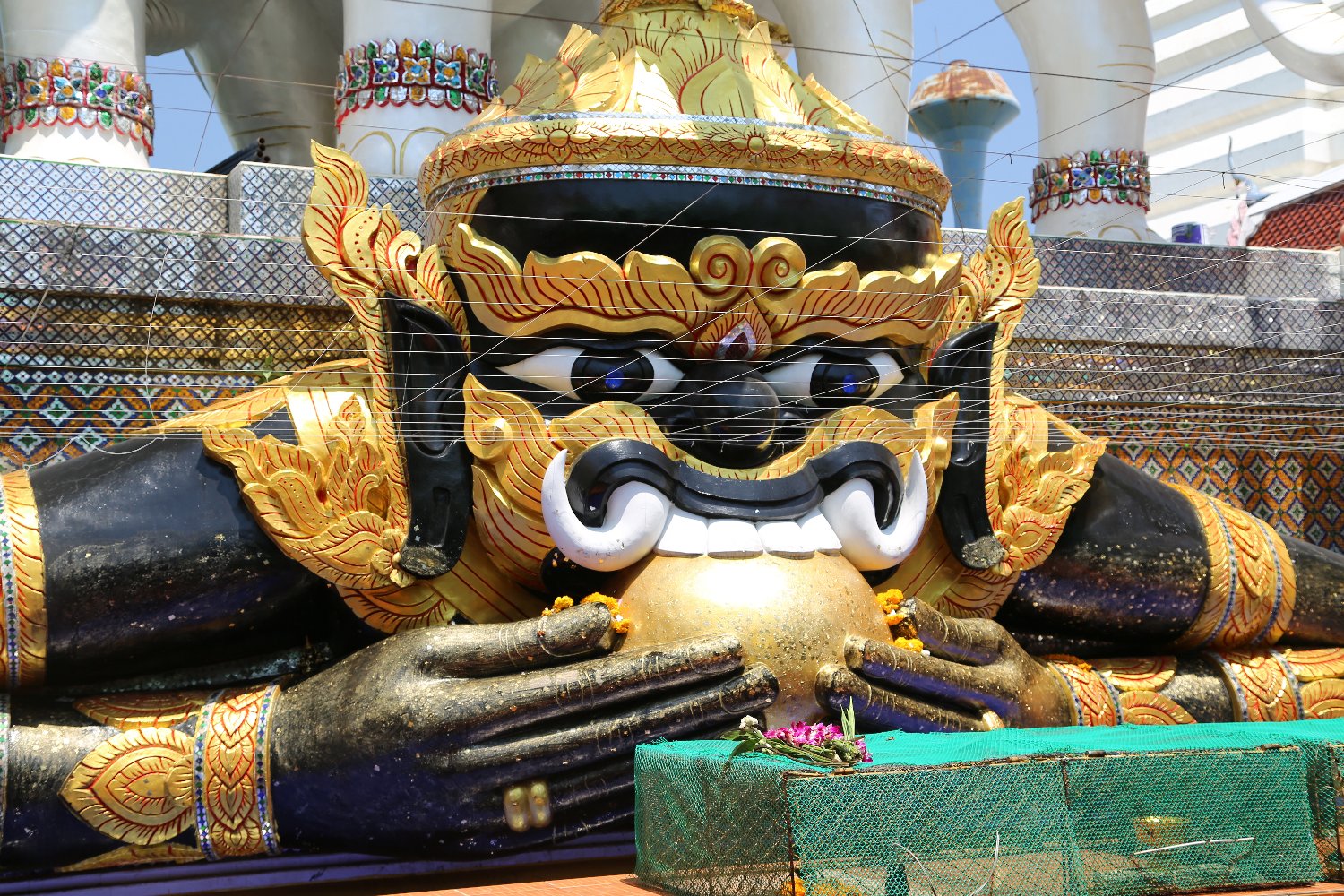
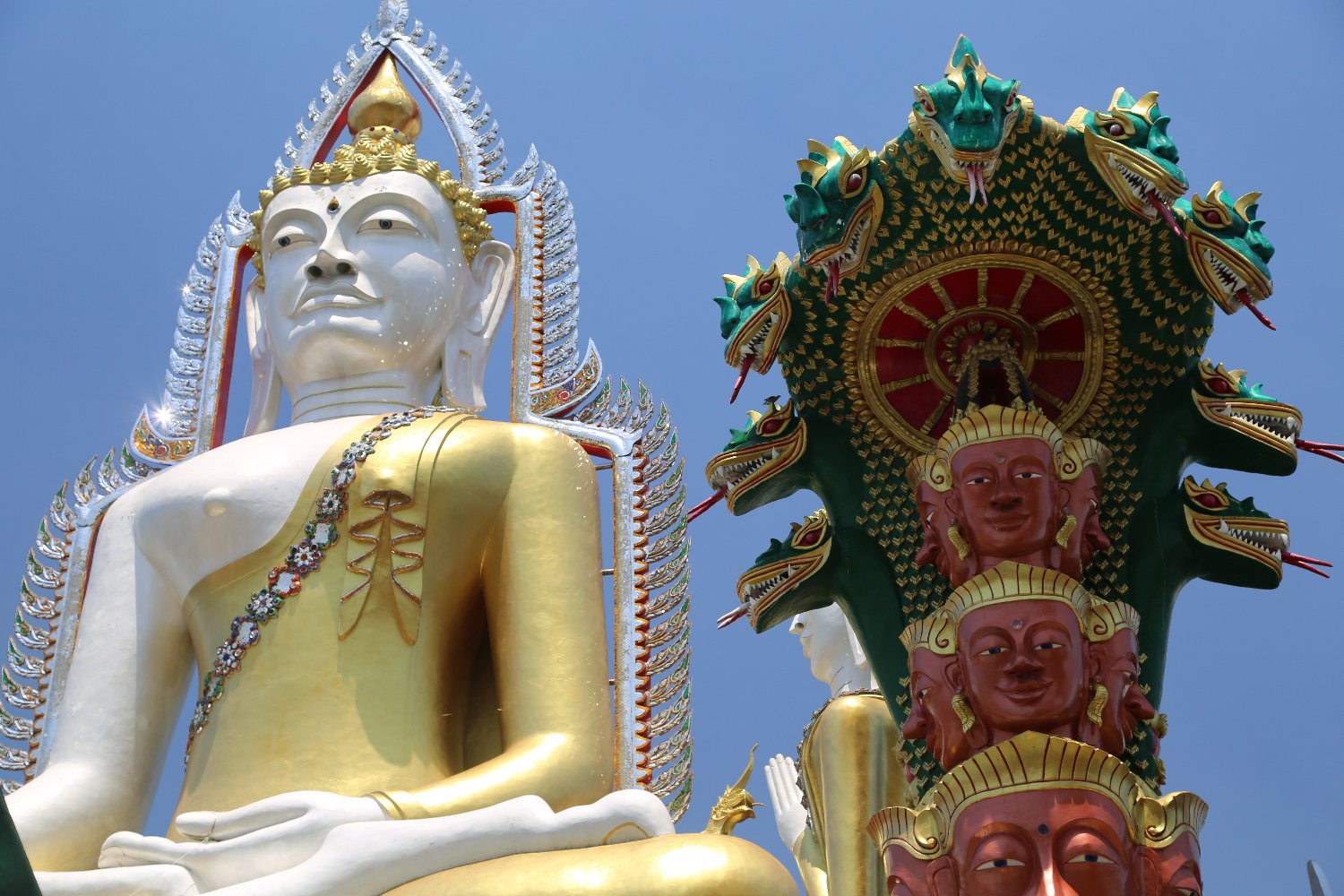
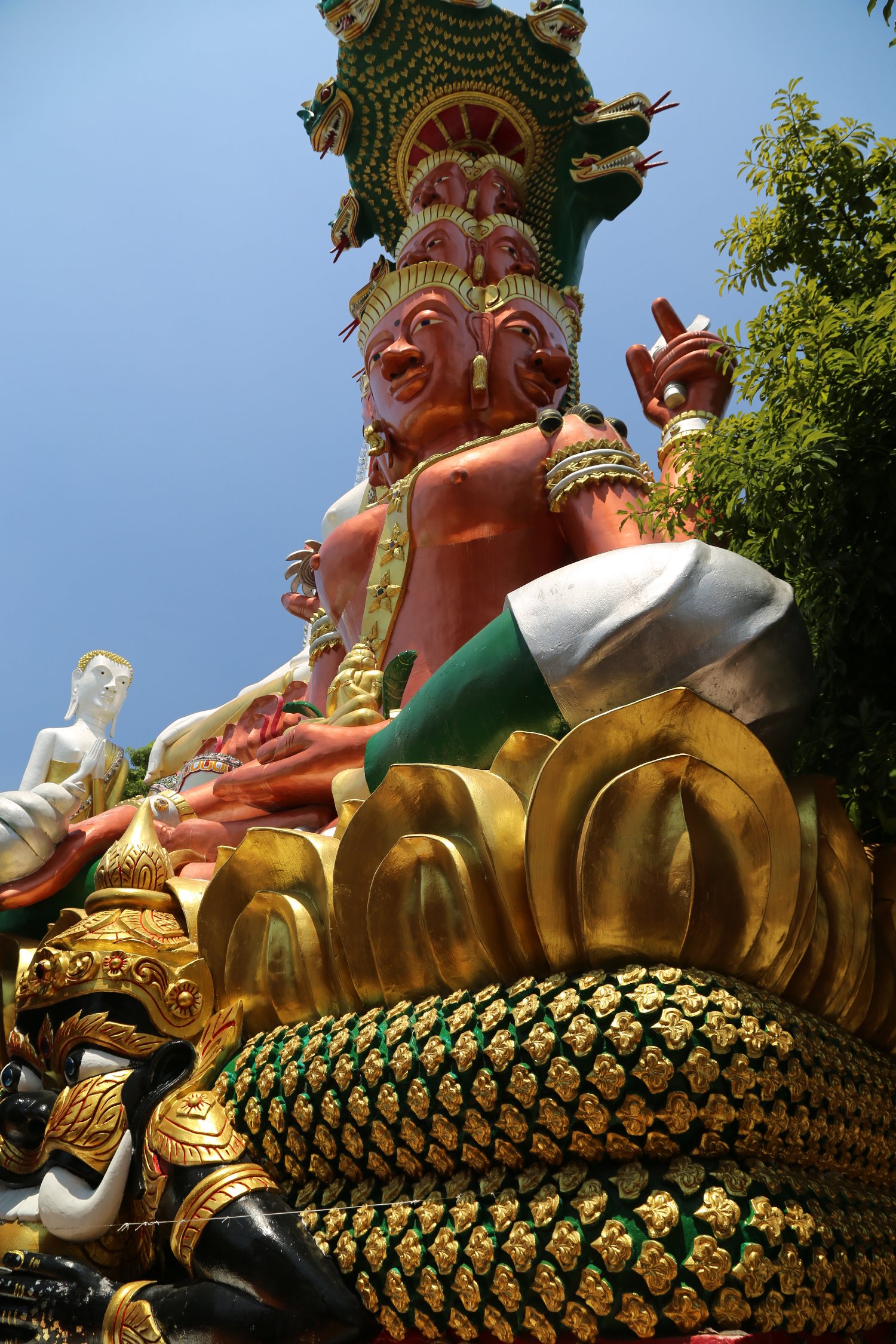


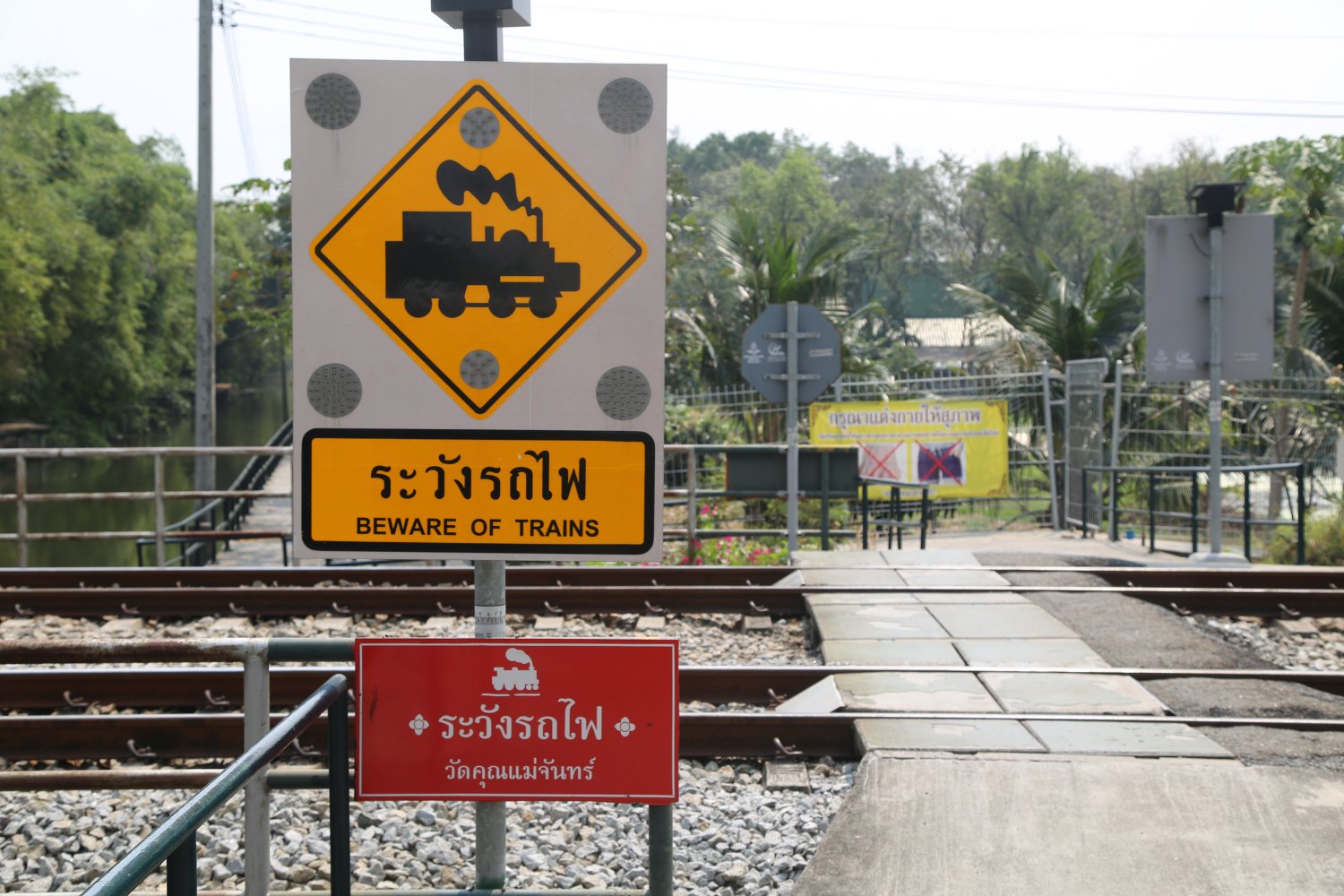
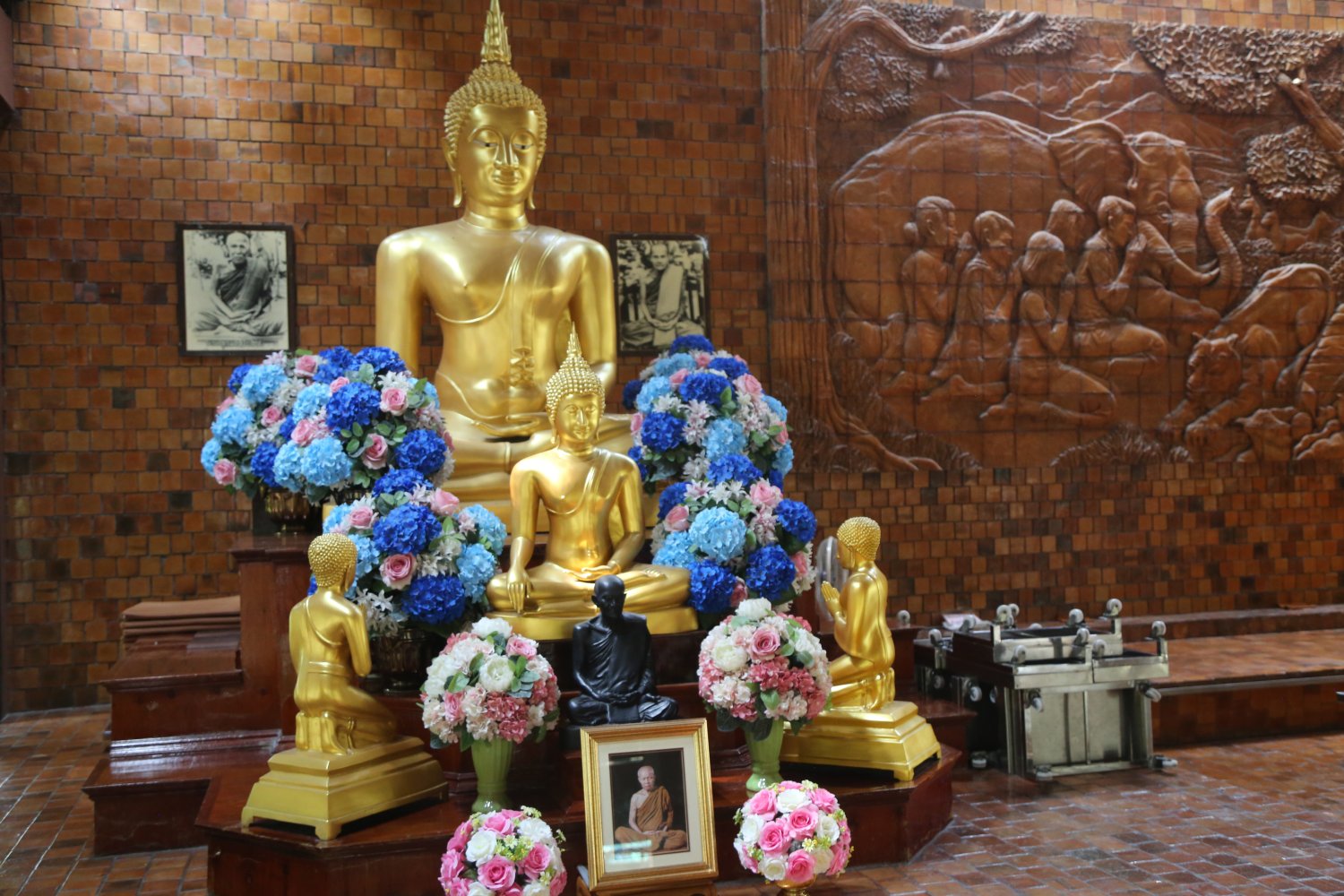
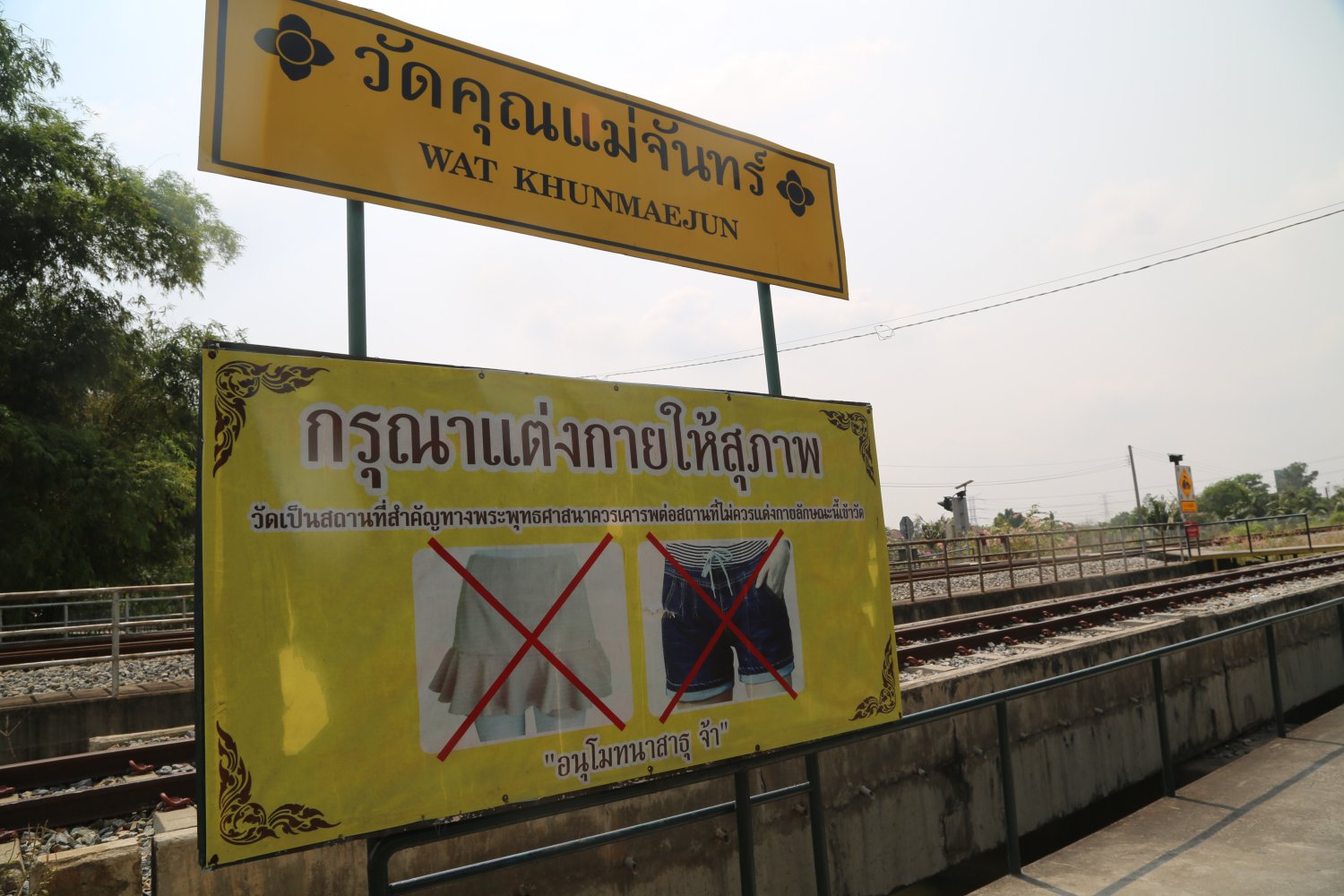
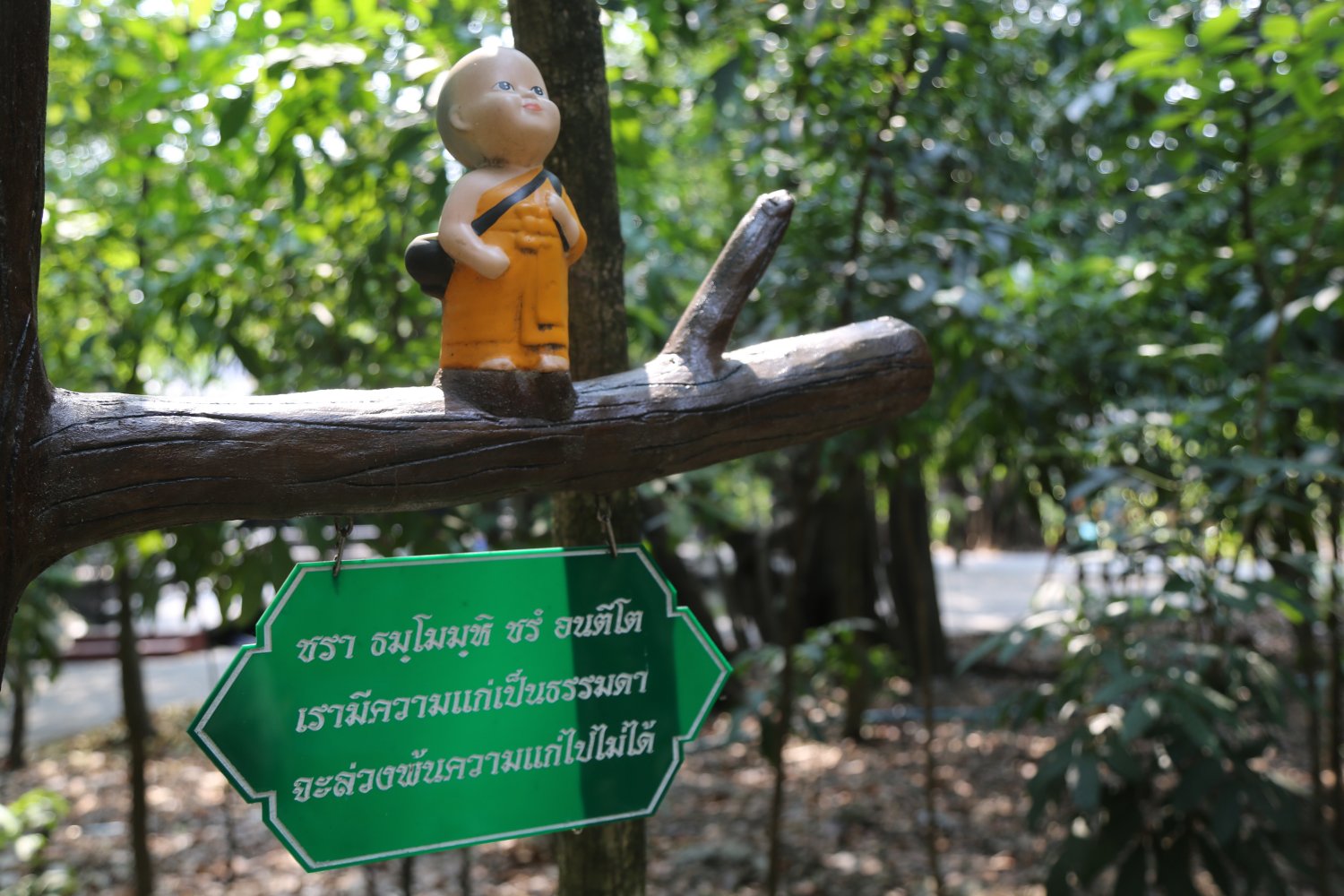
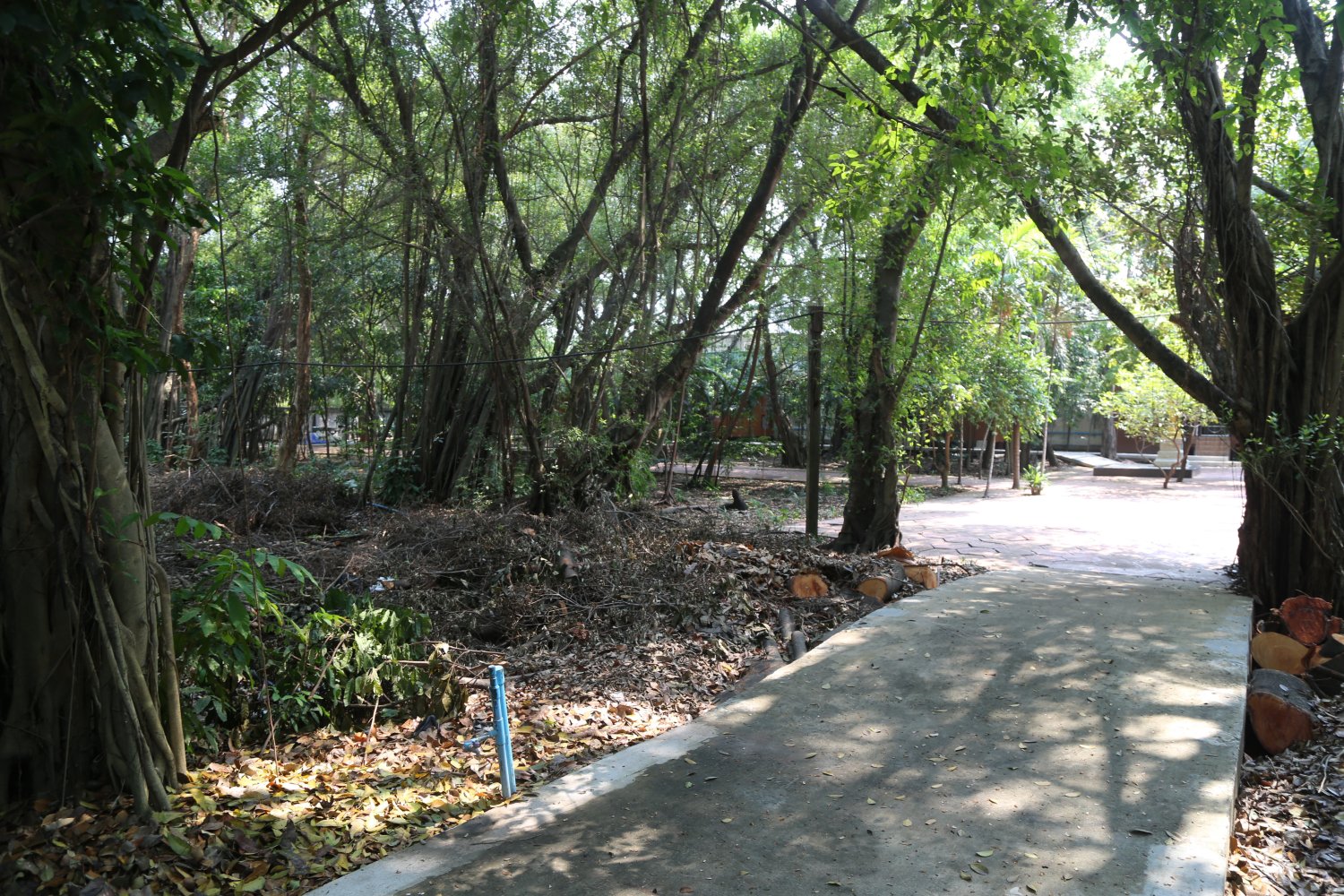
Wat Khun Mae Jan is a very unique temple, often called the “forest temple” due to all the trees on the grounds. Located only about 10-15 minutes from Suvarnabhumi Airport, this temple is located almost in the ‘shadow’ of the Airport Rail Link line. This is the only temple we have entered in Bangkok where we had to use caution doing so – one of the entrances is at the end of a small soi where one has to cross an active railroad track to the other side. Use extreme caution here – during our visit we saw a warning photograph of a train hitting a car.
Cars must drop off passengers at the end of the small soi near the train tracks and visitors to the temple after crossing the tracks walk down a concrete path eventually coming to a small canal. The entrance to the temple is next to this canal – with a gated entrance for motorbikes and a smaller built in gate for pedestrians. During our visit, both were closed but one can open the pedestrian gate to enter.
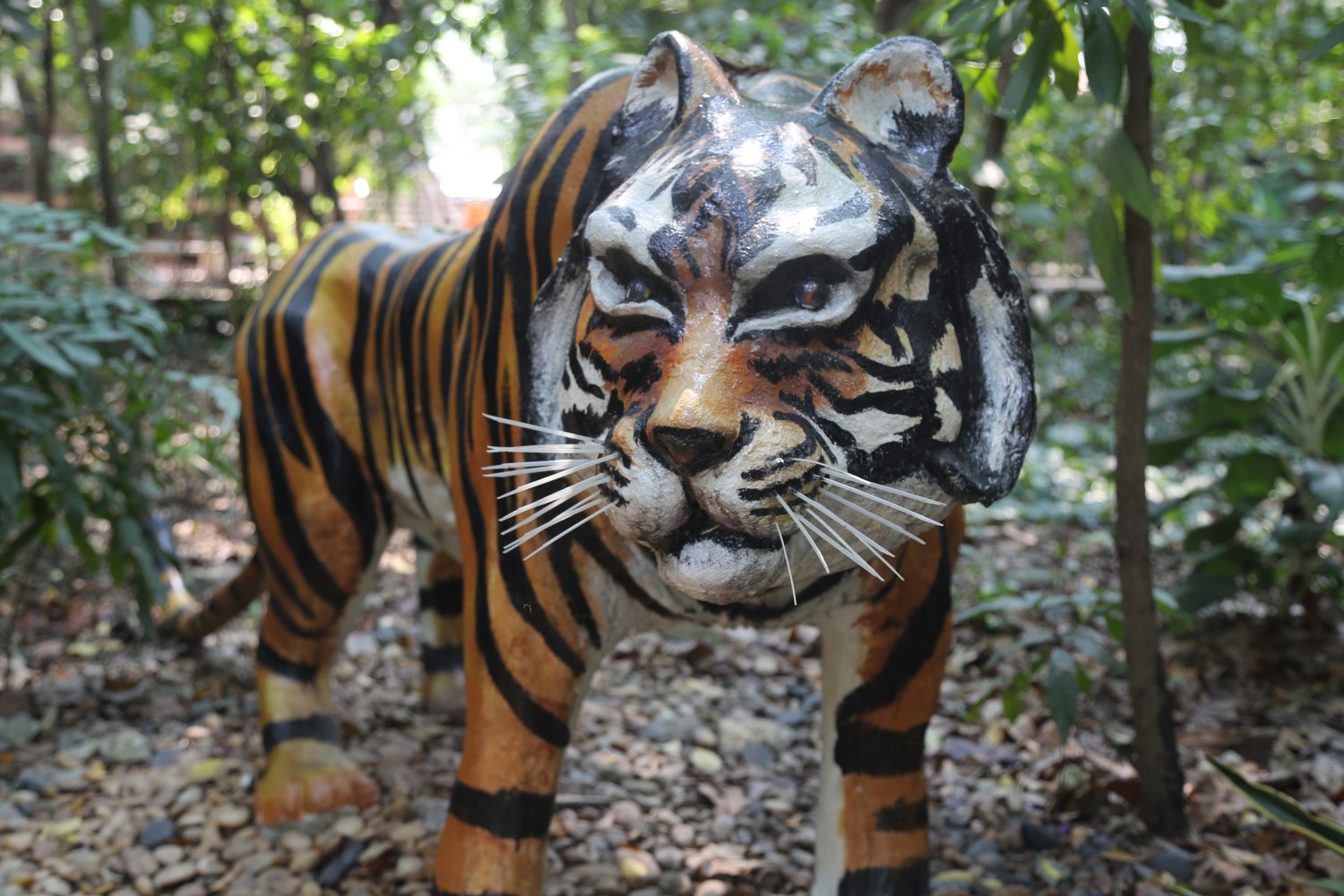
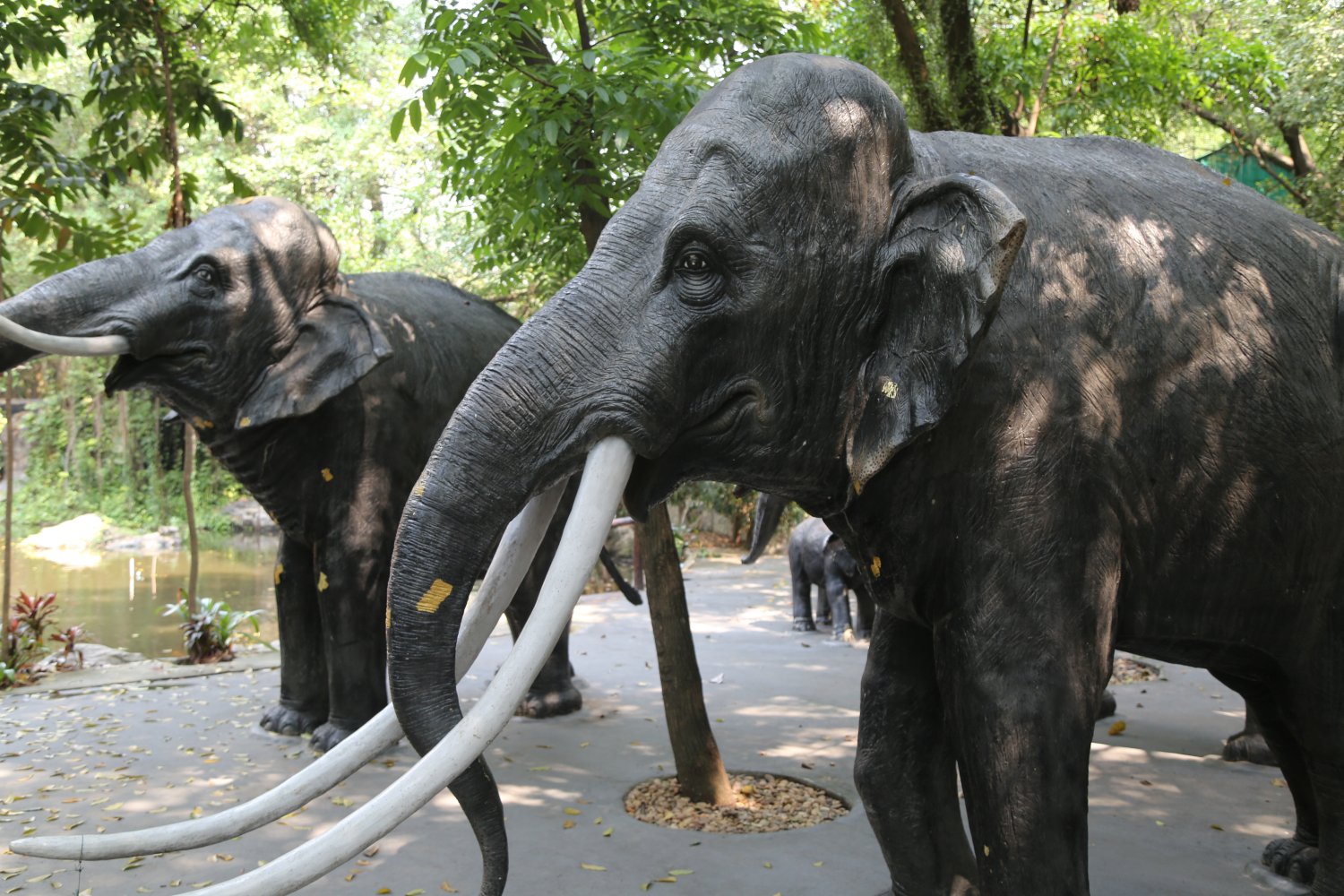
The interior looks like sometime from another planet – with large faux stone almost volcano looking like structures with interior covered with dark non see-through glass. A number of large statues are located on the grounds including of elephants and tigers. We also came face to face with the largest dog we have ever seen in all of our travels – this giant behemoth began barking and obviously weighed more than we did. A local monk called it aside before it became more aggressive. We hid behind one of the giant tiger statuses for protection during its loud verbal attack.
Not a typical temple one associates with Bangkok – no gleaming golden chedis or other temple buildings. Only one rather plain brown building contains several Buddha statues, a carved mural on one of the walls. People come here to make merit. In any case, other than the possibility of running into a giant dog, this is a relaxing place to walk on the paved paths among all the foliage.


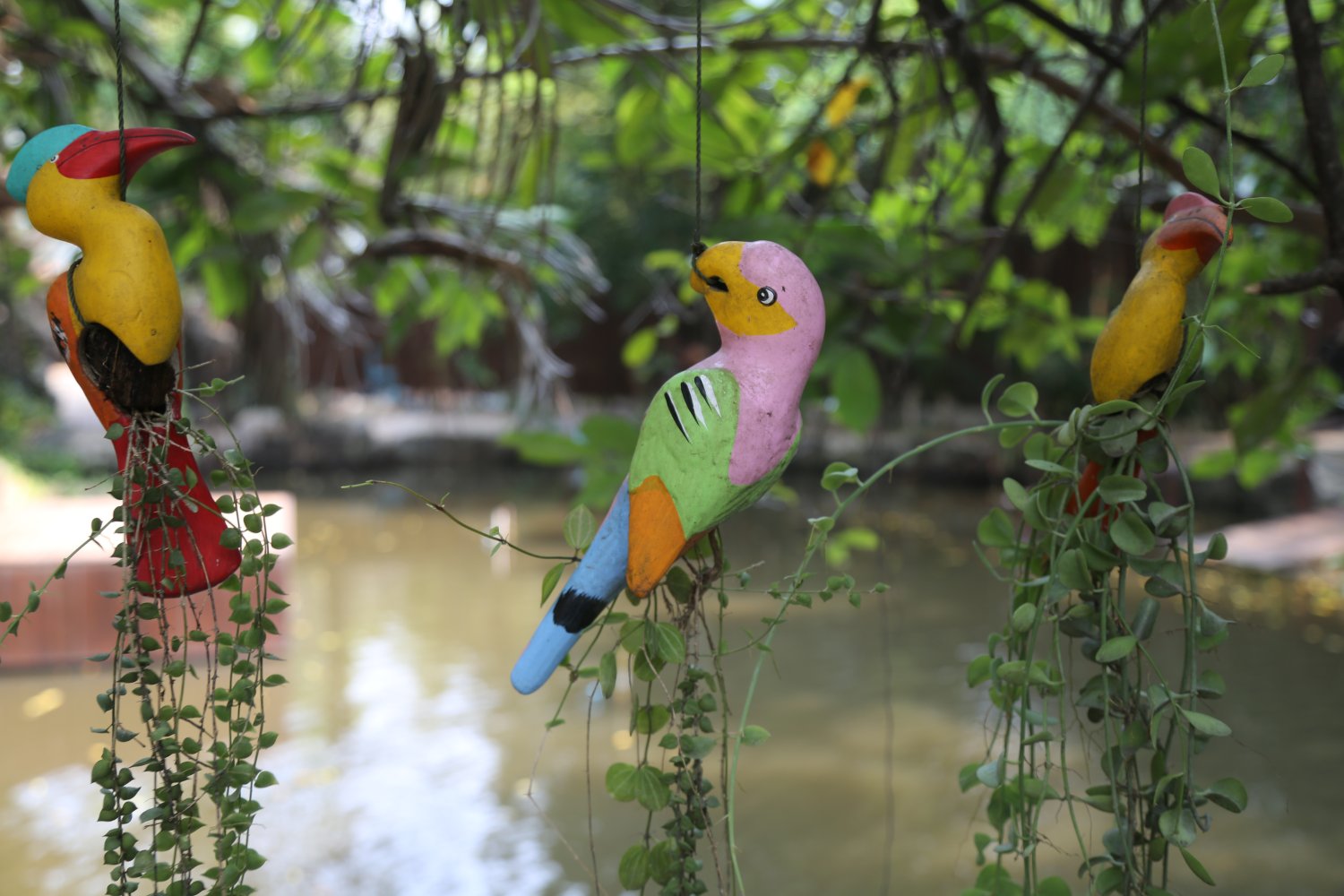
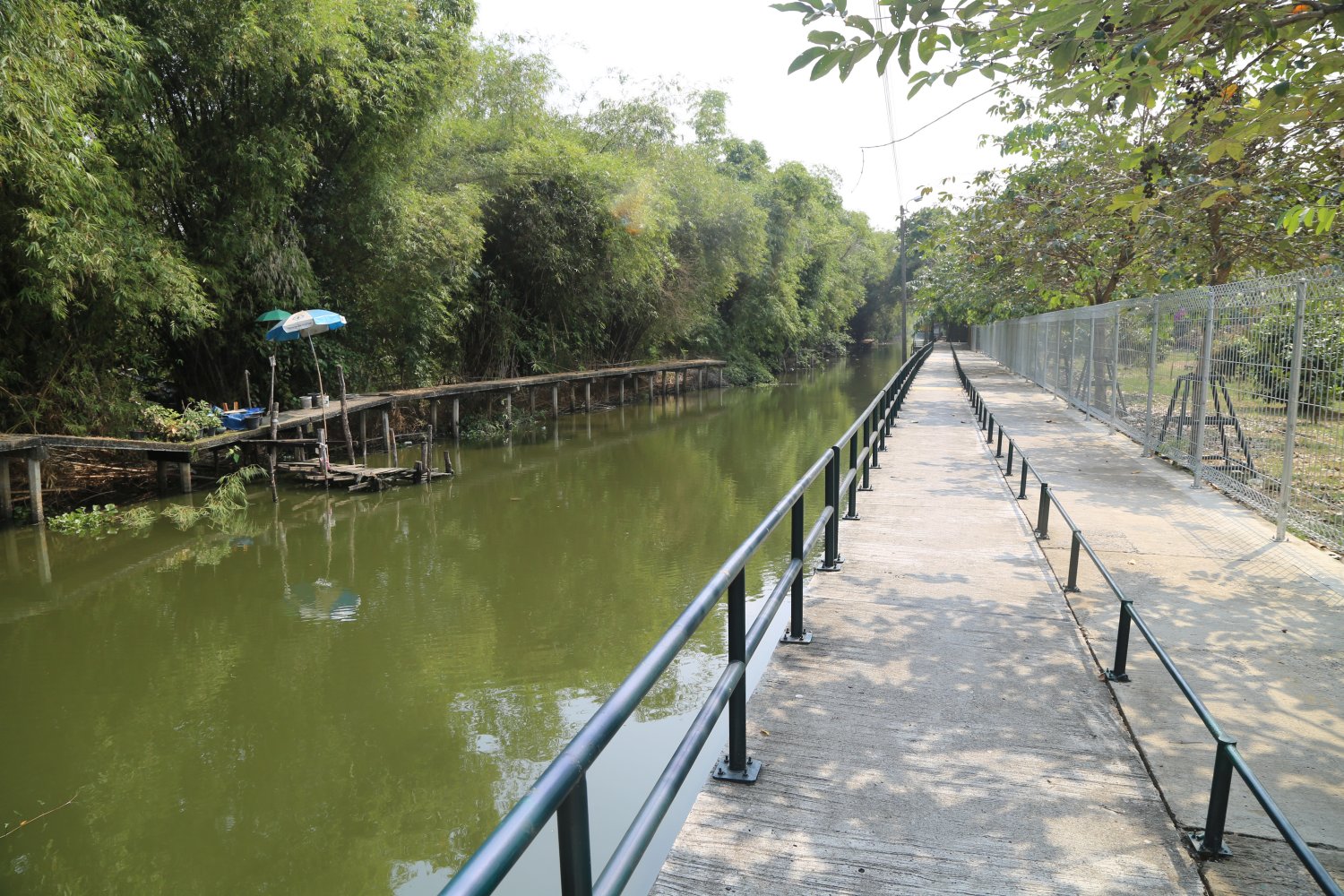
Wat Klangworrawiharn is about a 5-minute drive or a 15-minute walk from the closest Skytrain stop, Srinagarindra on the Sukhumvit line. While not directly on the Chao Praya River – this temple can also be accessed via boat on the Chao Praya River from the Pak Nam Market Ferry Pier. The temple is small and features a number of colorful statues. Worth visiting is the Ubosot – with a number of Buddha statues.

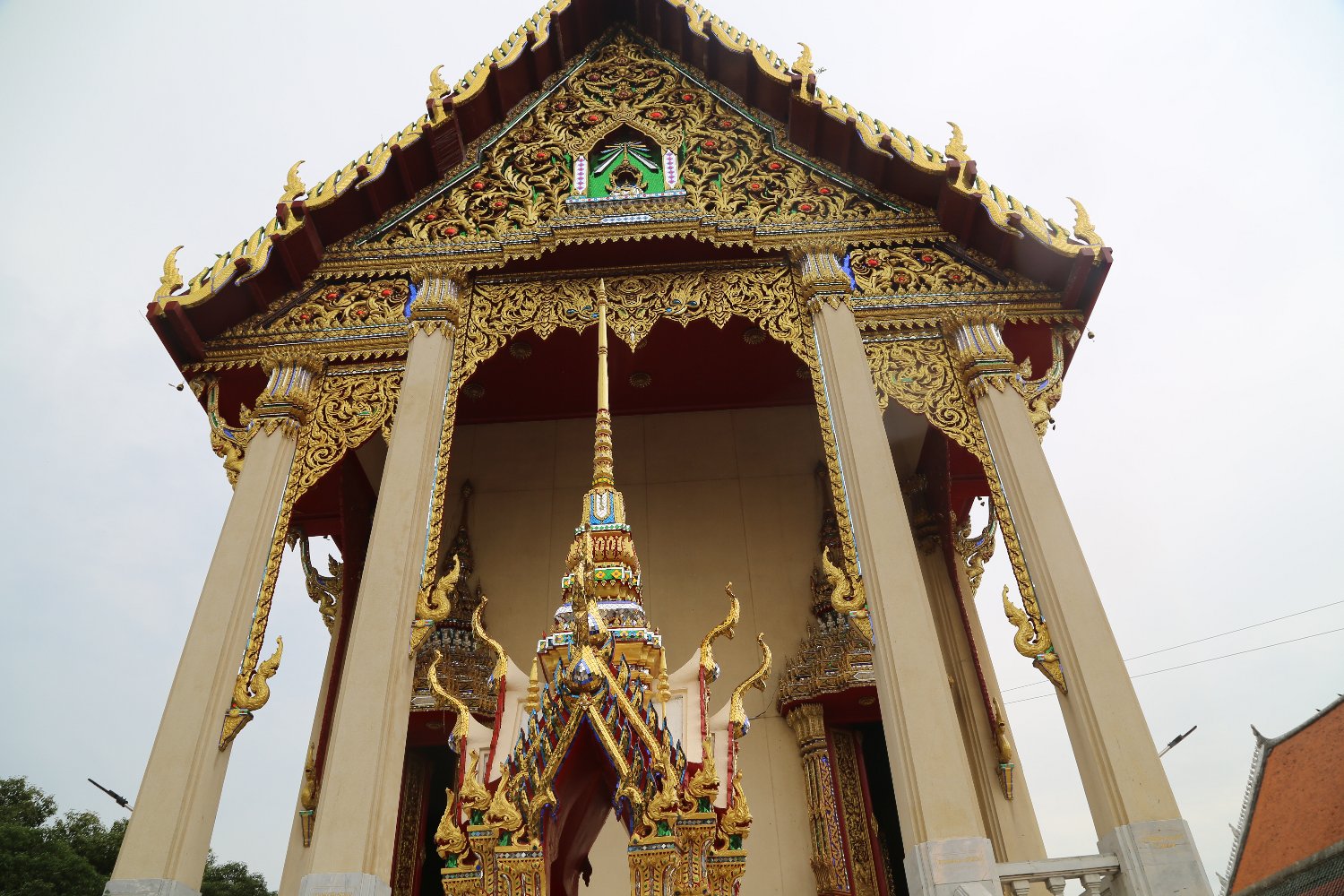
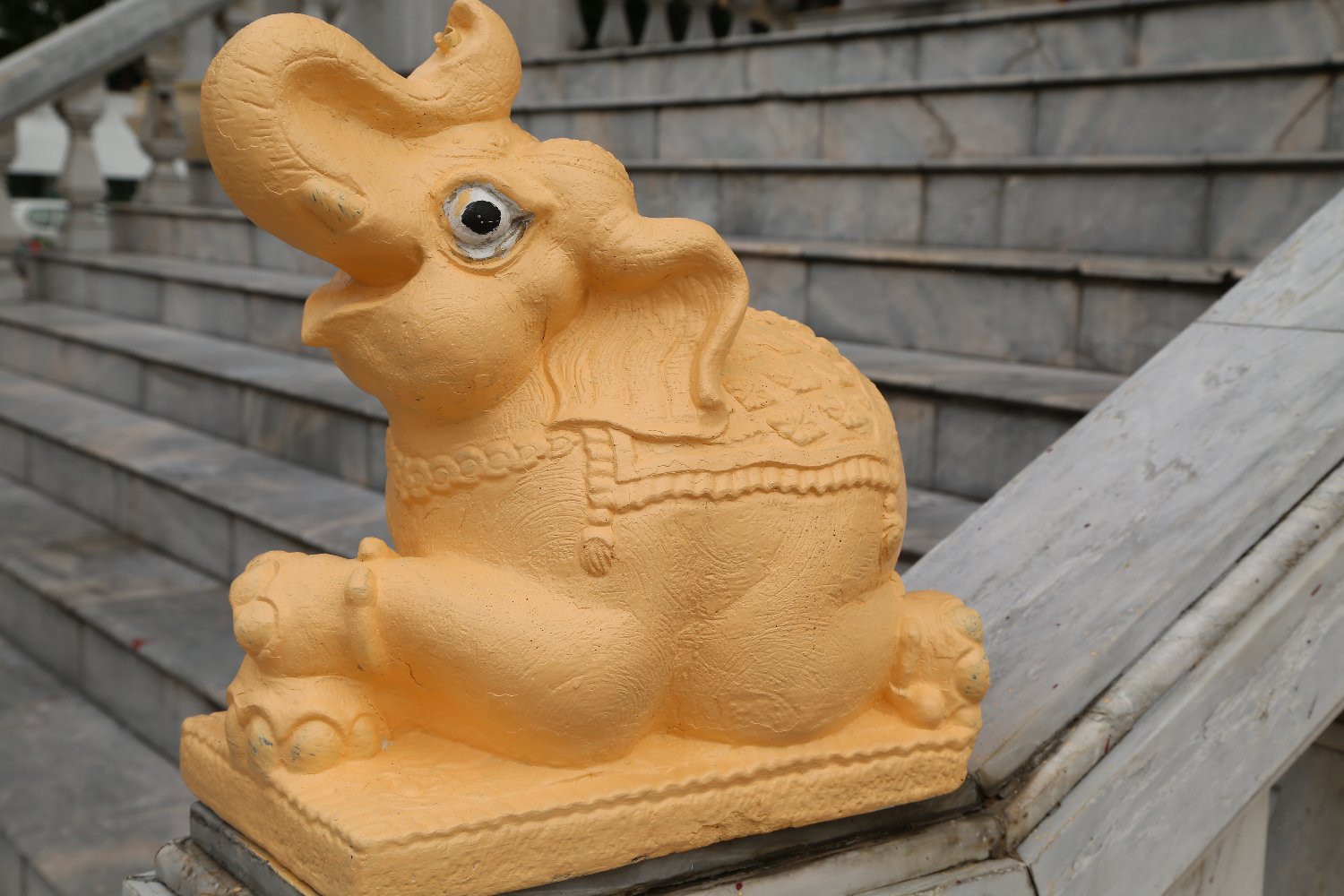
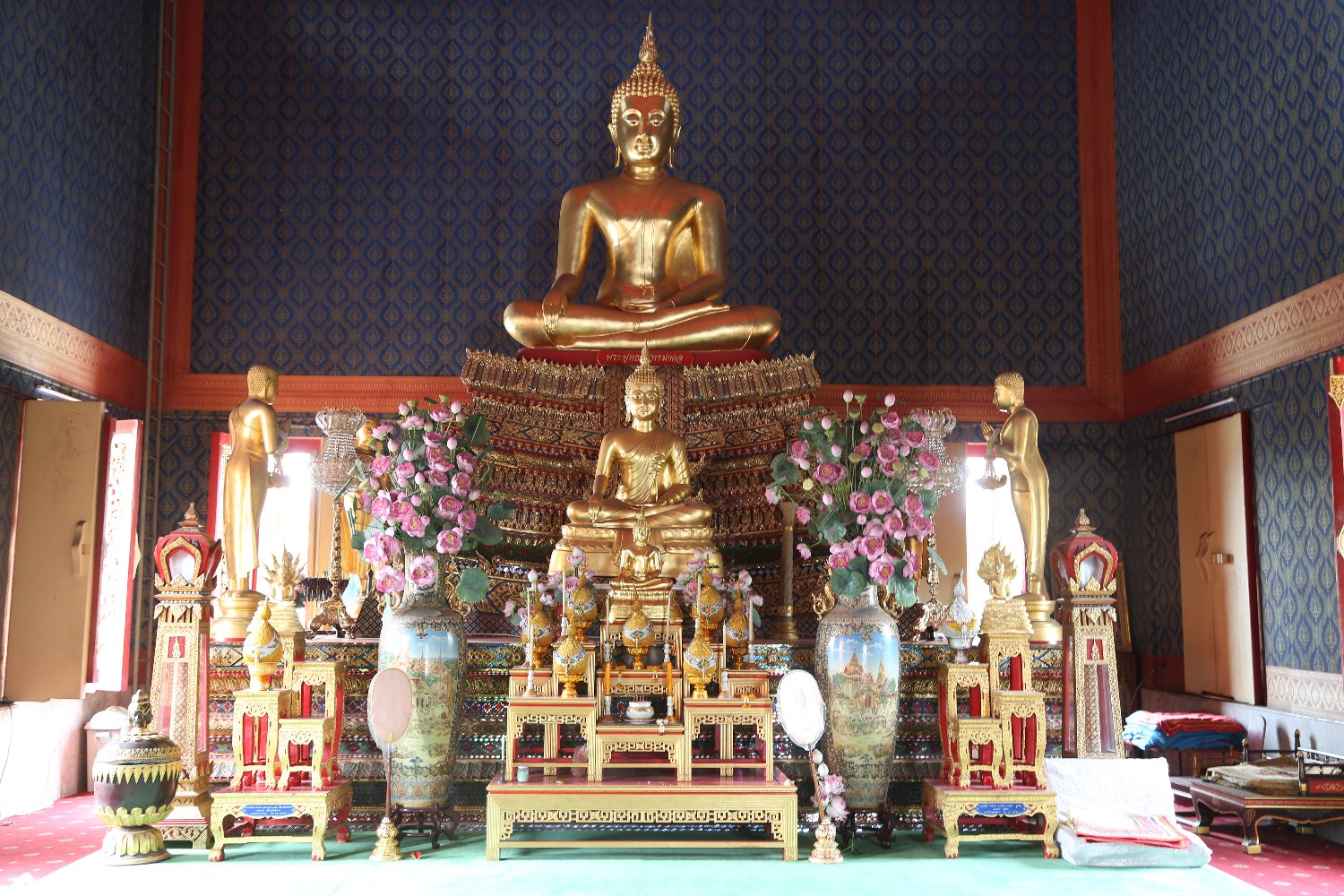

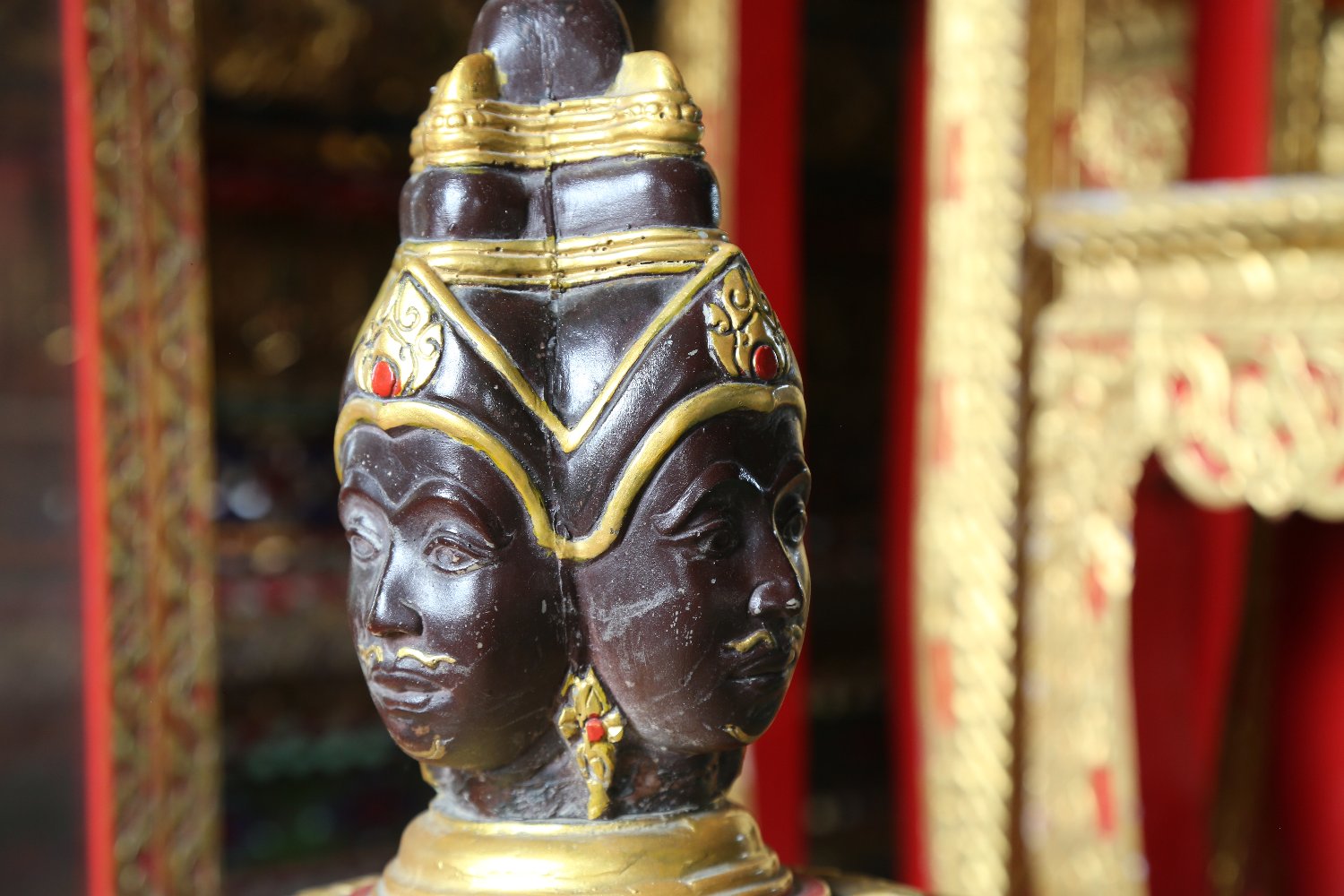


Wat Klong Toei Nai is about a 10-minute drive or 25-minute walk from the closest Metro stop, also called Klong Toei. This temple is located close to the banks of the Chao Praya River and can also be accessed by pier, the closest being the Khlong Toei Pier. This temple should be called the temple of the gardens – based on all the lovely little well-manicured bonsai trees growing on site. We met the head groundskeeper here during one of our visits – obviously proud of his little trees.
This temple was built in the early 19th century. Today a sizable building serves as the residence for numerous monks. A number of small shrines, and sculptures are on site including several old images of Buddha.


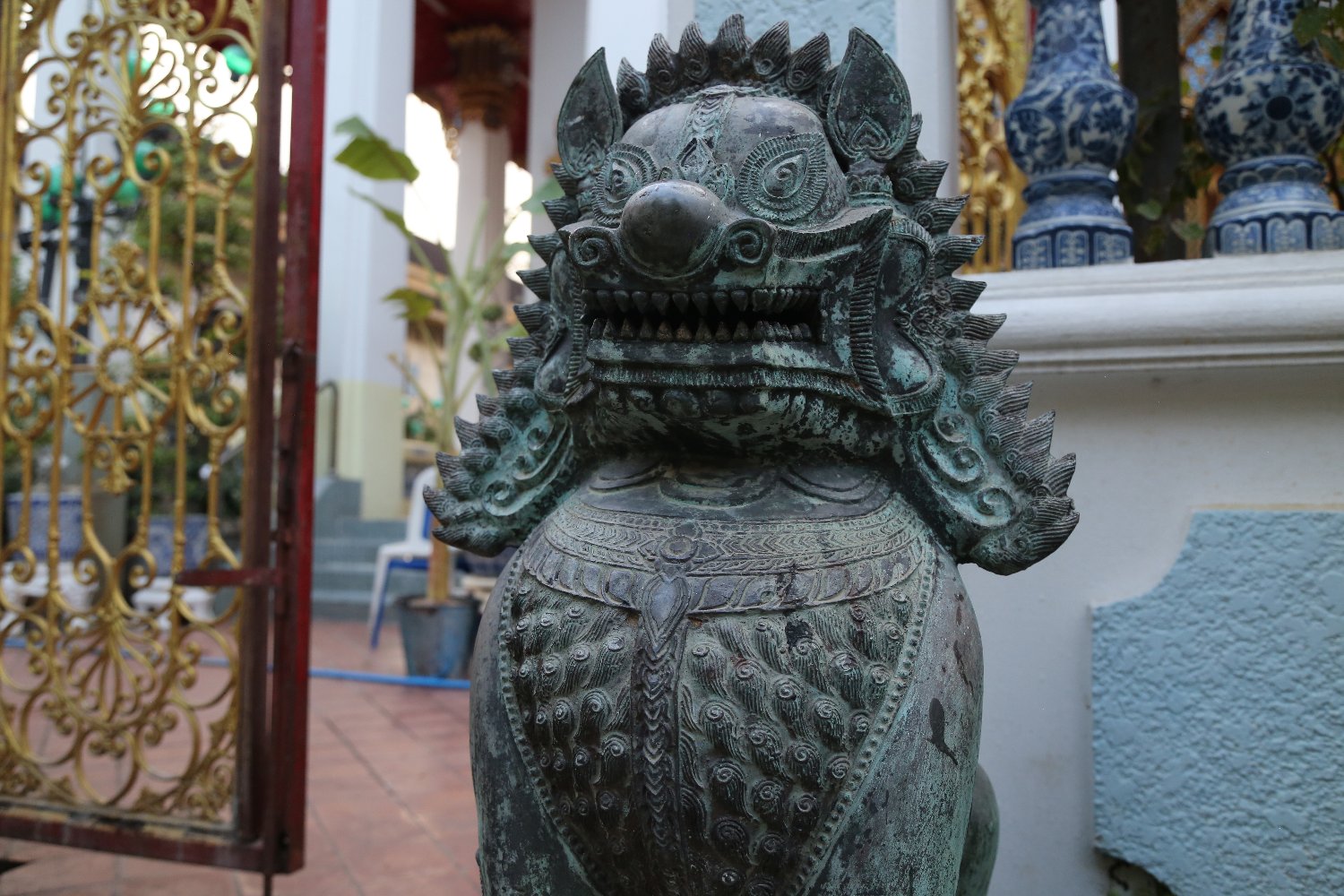
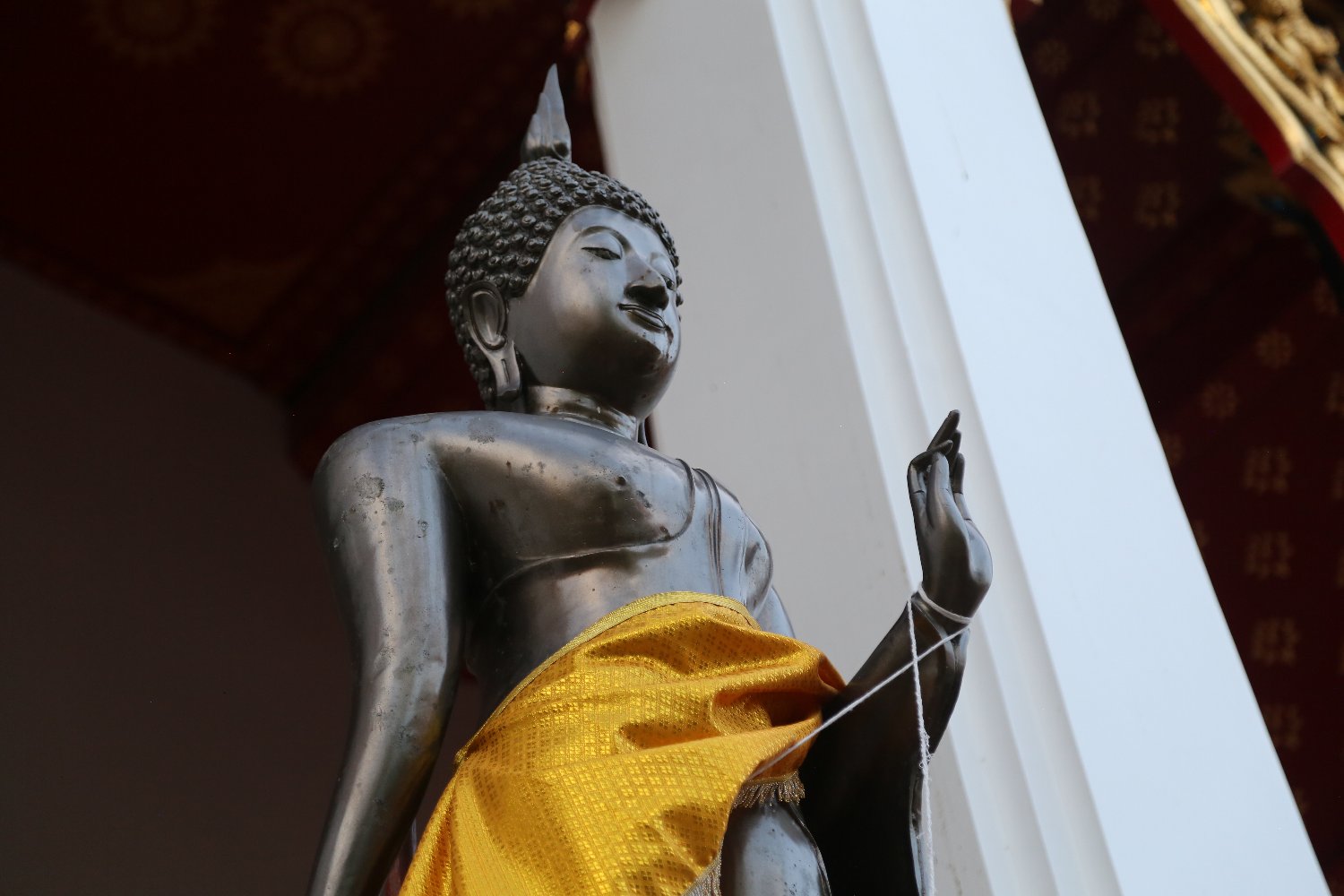
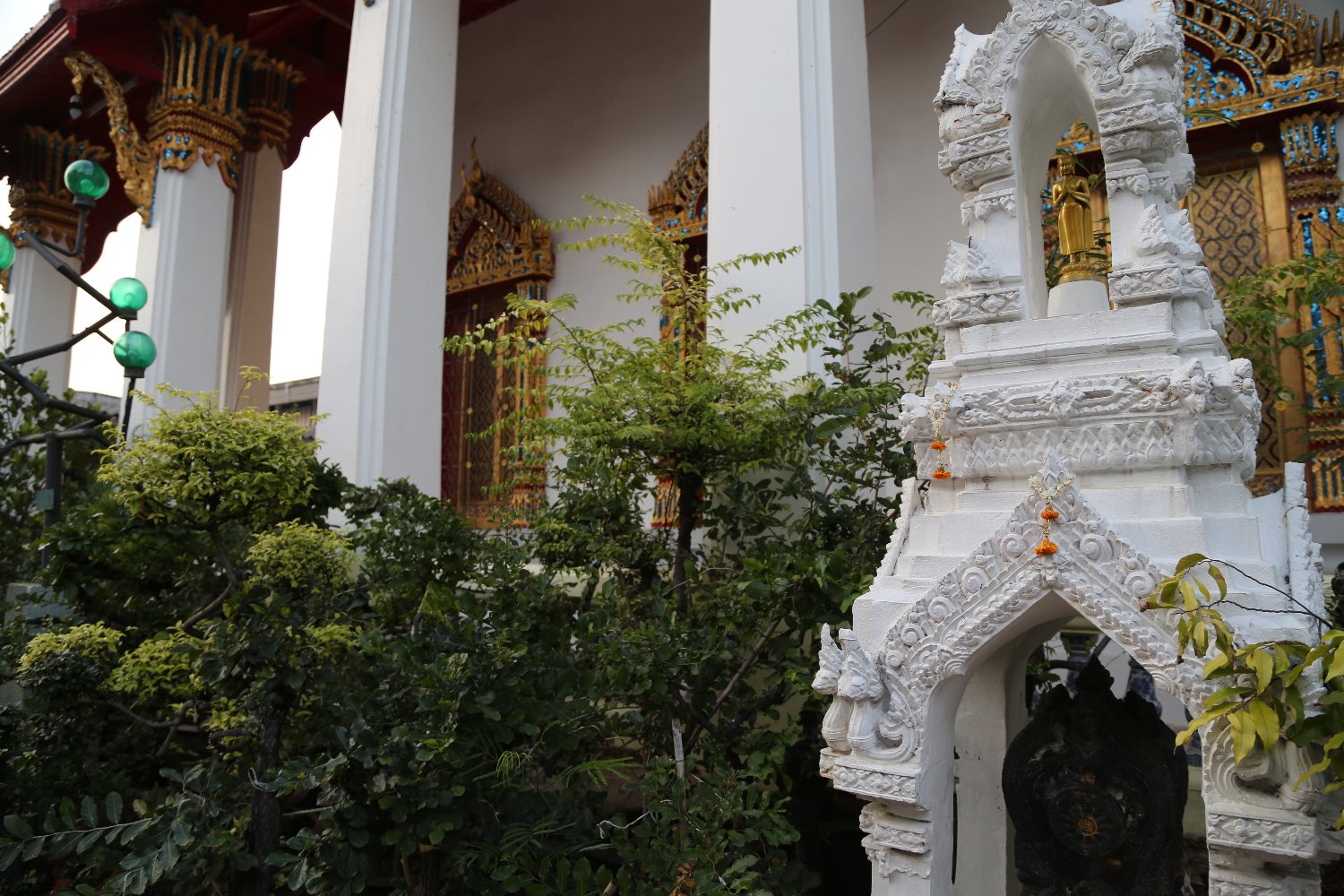
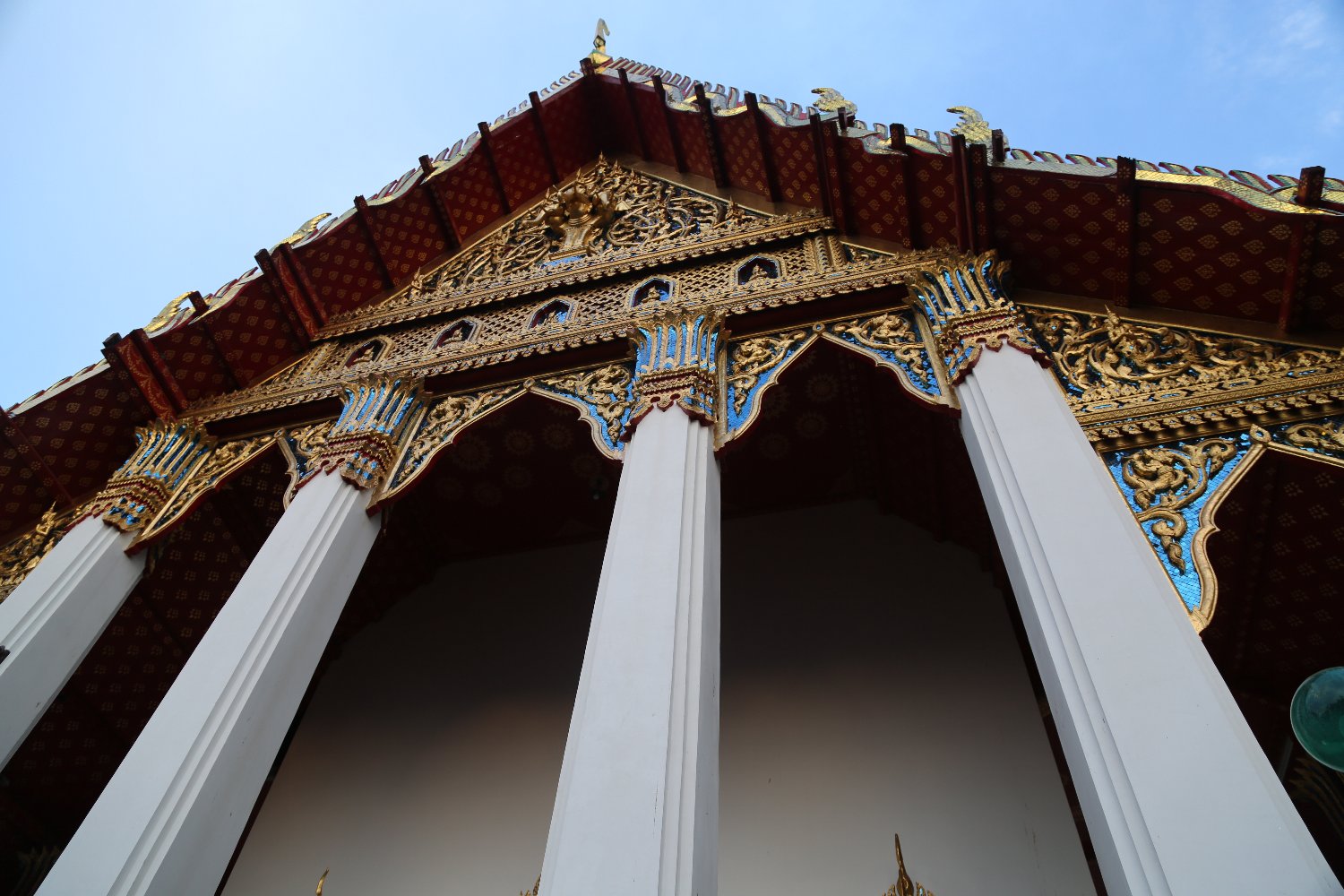

Wat Klong Toey Nok is about a 10-minute drive or 25-minute walk from the closest Metro stop, also called Klong Toei. This temple is located on the banks of the Chao Praya River and can also be accessed by pier, the closest being the Khlong Toei Pier – basically right next to the edge of the temple grounds. Not to be confused with the nearby Wat Kong Toei Nai. Located directly across the river from Bang Kachao – often called Bangkok’s Green Lung. And this pier is often used by those taking their bikes over to Bang Kachao or sometimes bicycle tour companies leading a bicycle tour.
Great temple to watch the sunset from – if accessing from the street, one has to go through the main entrance and then wander pass a number of the buildings before reaching the actual Chao Praya River. Plenty of fish often hang out near the steps leading down to the river. Numerous buildings within the temple grounds – during a recent visit most appeared to be closed.
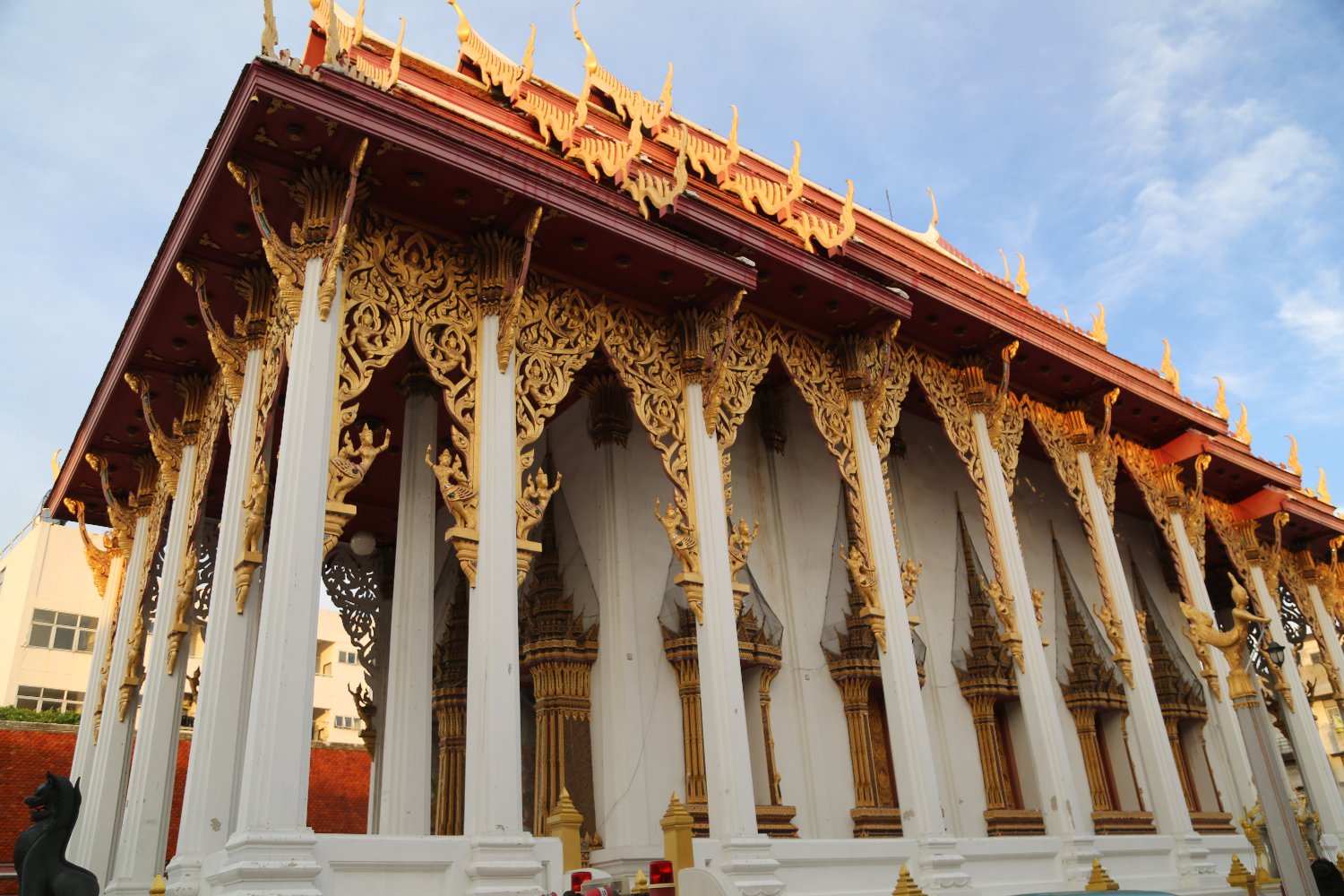


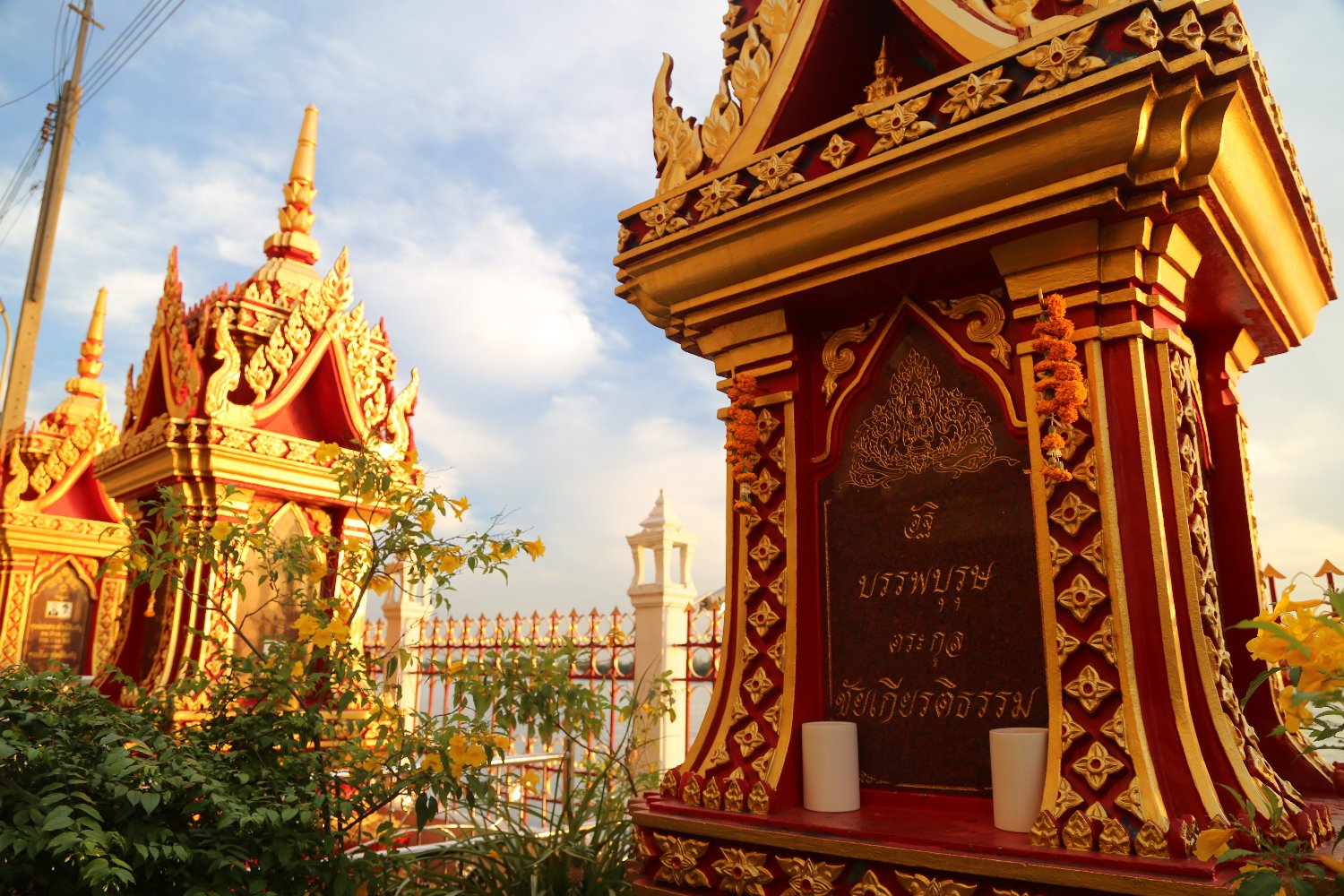
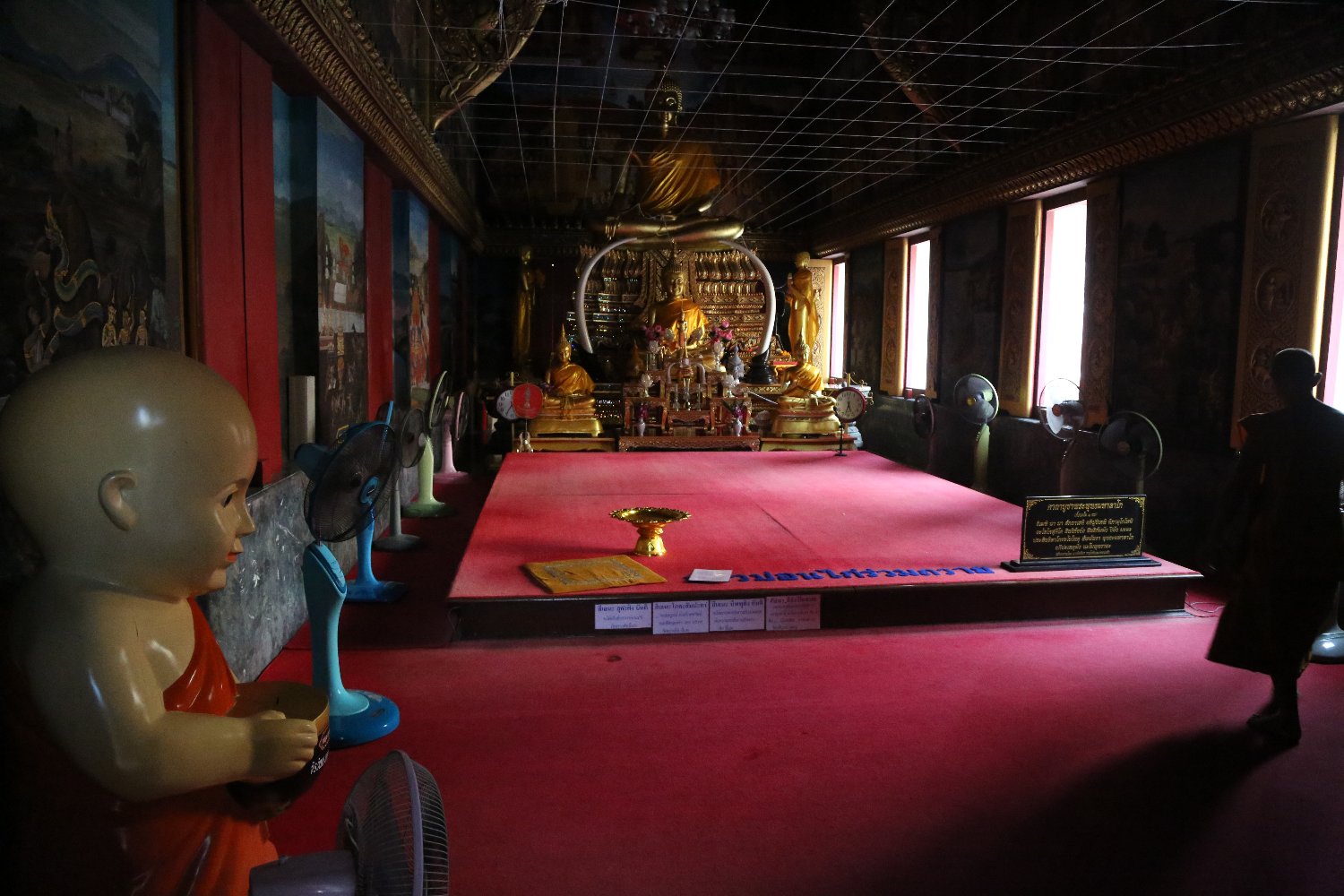
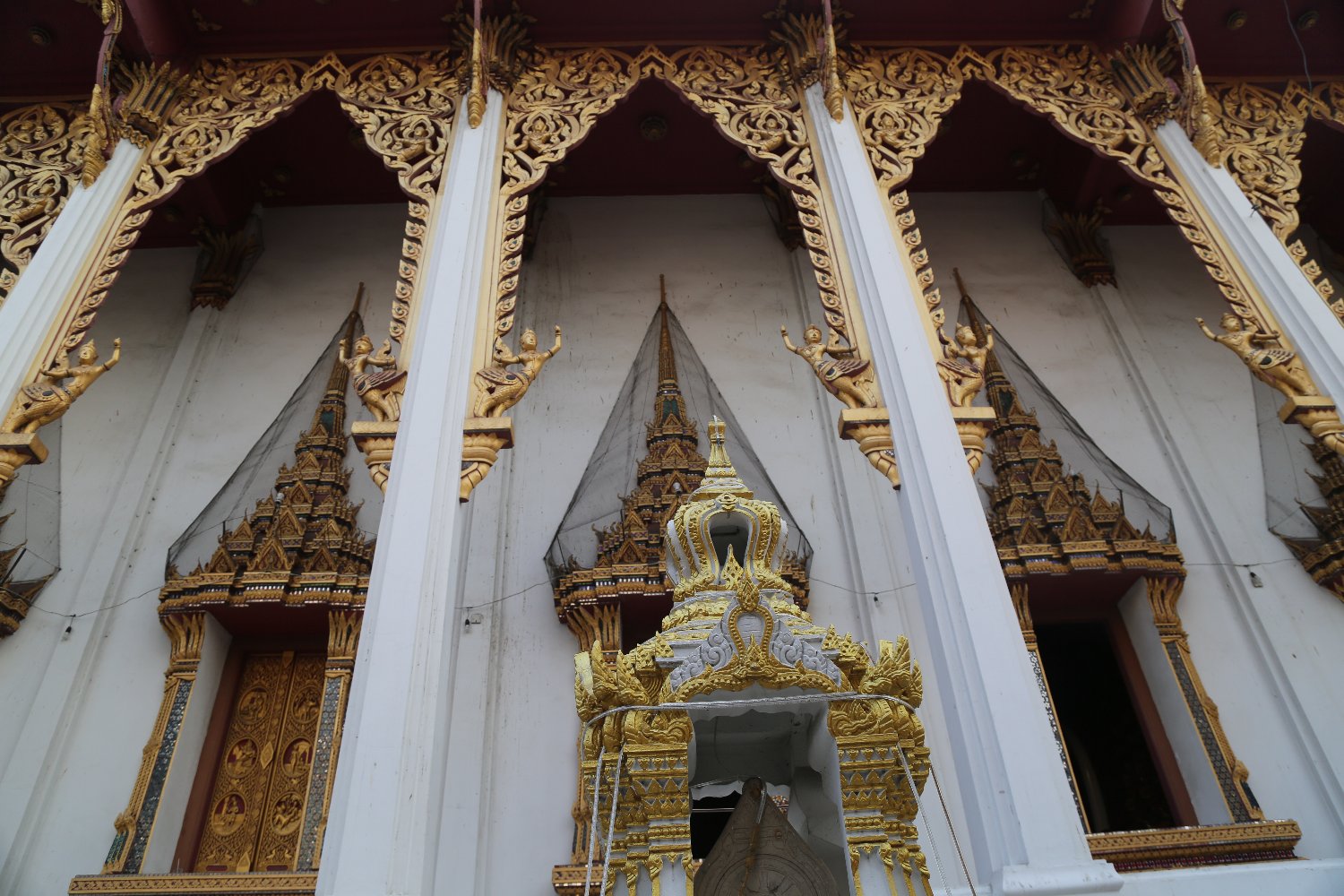
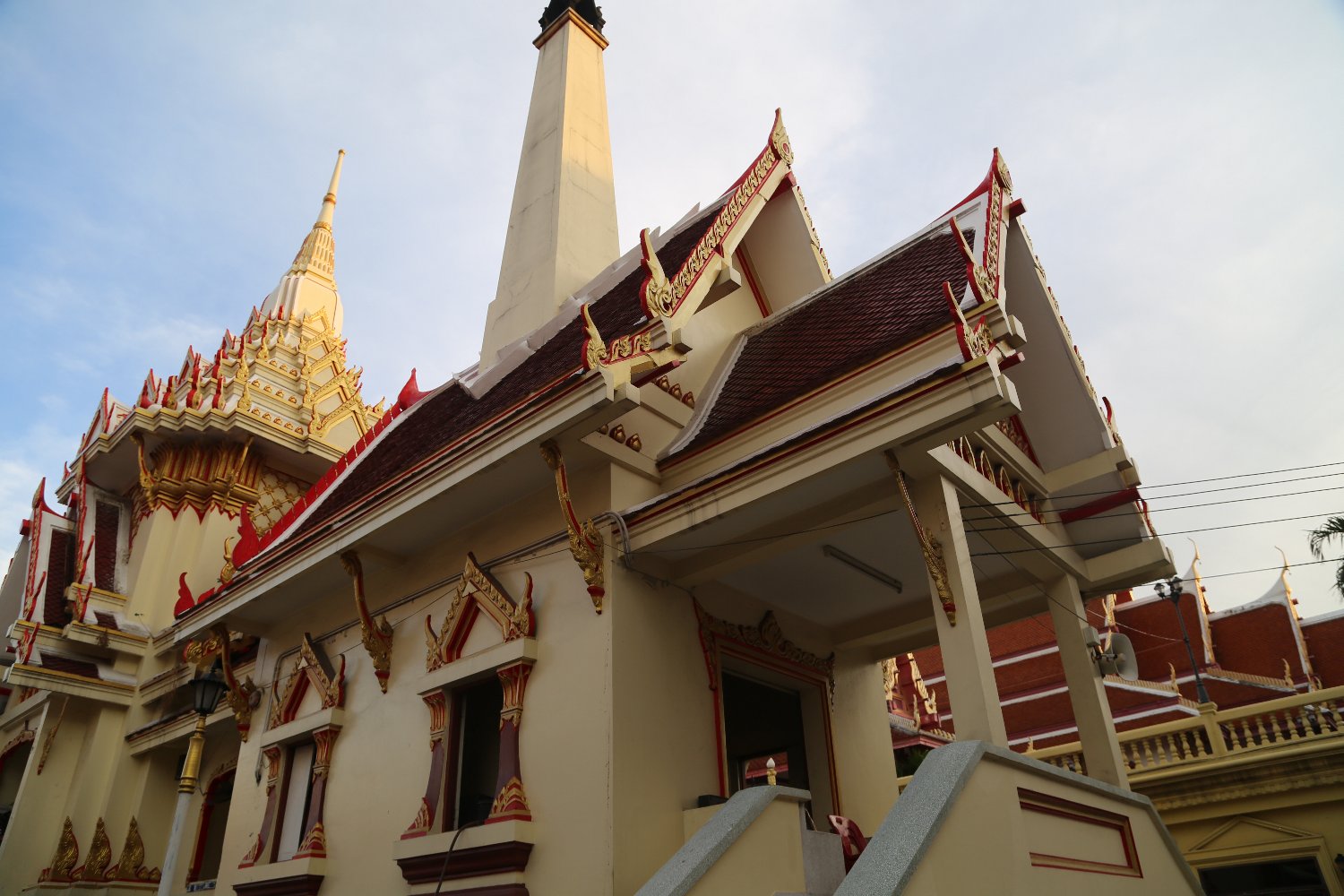
Wat Krathum Suea Pla is well off the temple tourist beaten path – located about 15 minutes by car from Suvarnabhumi Airport or about 30 minutes from the main part of Sukhumvit closer to the center of Bangkok. This sizable temple is located not far from On Nut Road next to the Prawet Burirom canal. Known as the tiger temple or fish temple. Invariably visitors will end up at the canal where hundreds of giant river carp hang out just waiting to be fed. One can purchase food snacks here to feed these carp – this is always a popular activity for children.
Another very unique highlight is the ‘museum’ upstairs in the main building which houses numerous golden Buddha statues. Well worth the climb up the stairs to see these. Plenty of ornately decorated and very colorful statues on the grounds – with a feel of both Thai and Chinese influence. There are a number of rooms worth entering (remember to remove your shoes). Also, some giant frogs in one of the water bowls. Be sure to take children to see these.
Also, a temple where people sometimes take their pets for funeral ceremonies (a pet crematorium is on site).
This temple can be very busy on the weekends with locals making merit. Not very popular with tourists due to the fact it is not in the center of town and is a bit isolated from other tourist type attractions. Also known as the Tiger Temple – based on an old shrine to tigers that has been on site for 90+ years. Take your time exploring the grounds – there is much to see here.

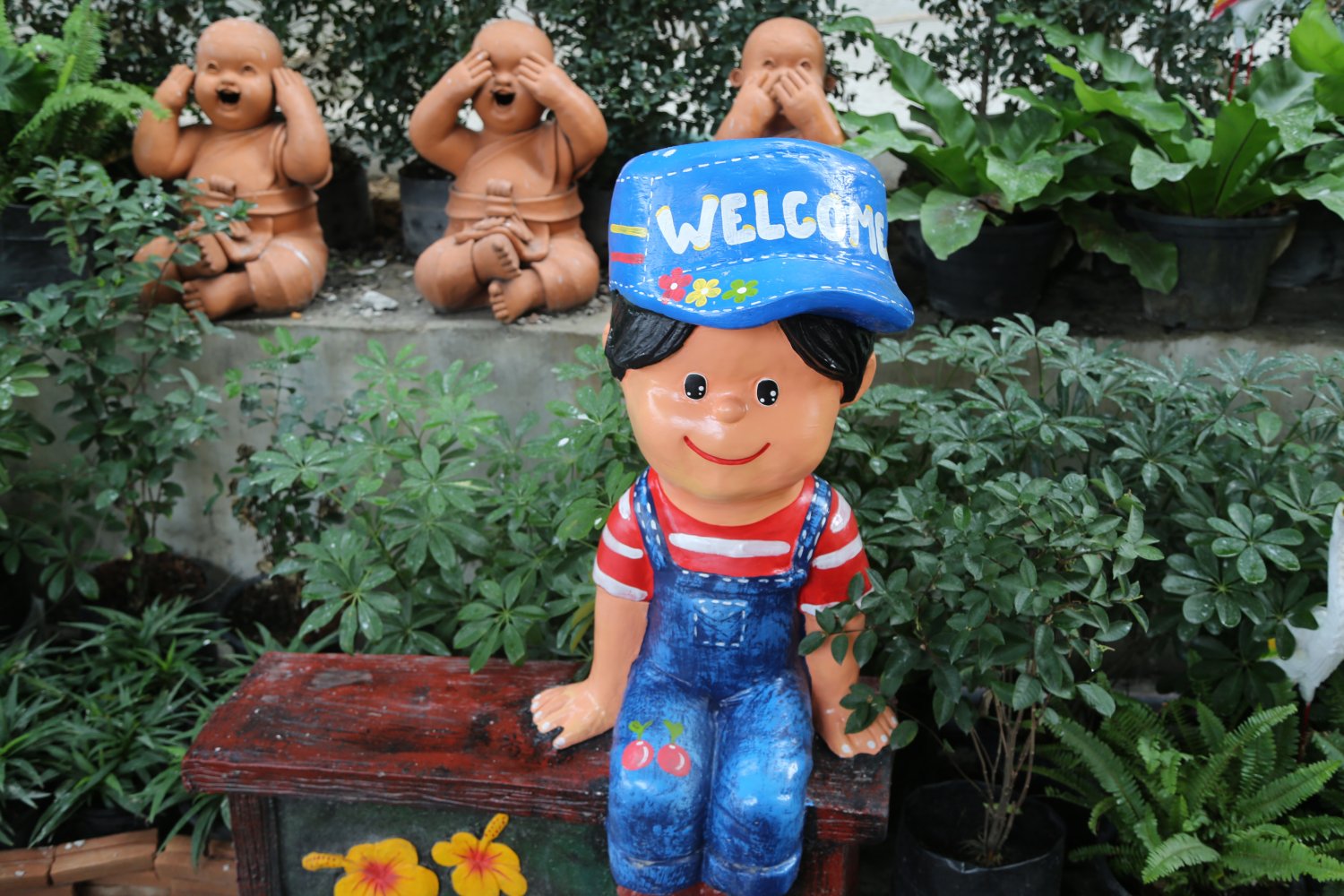
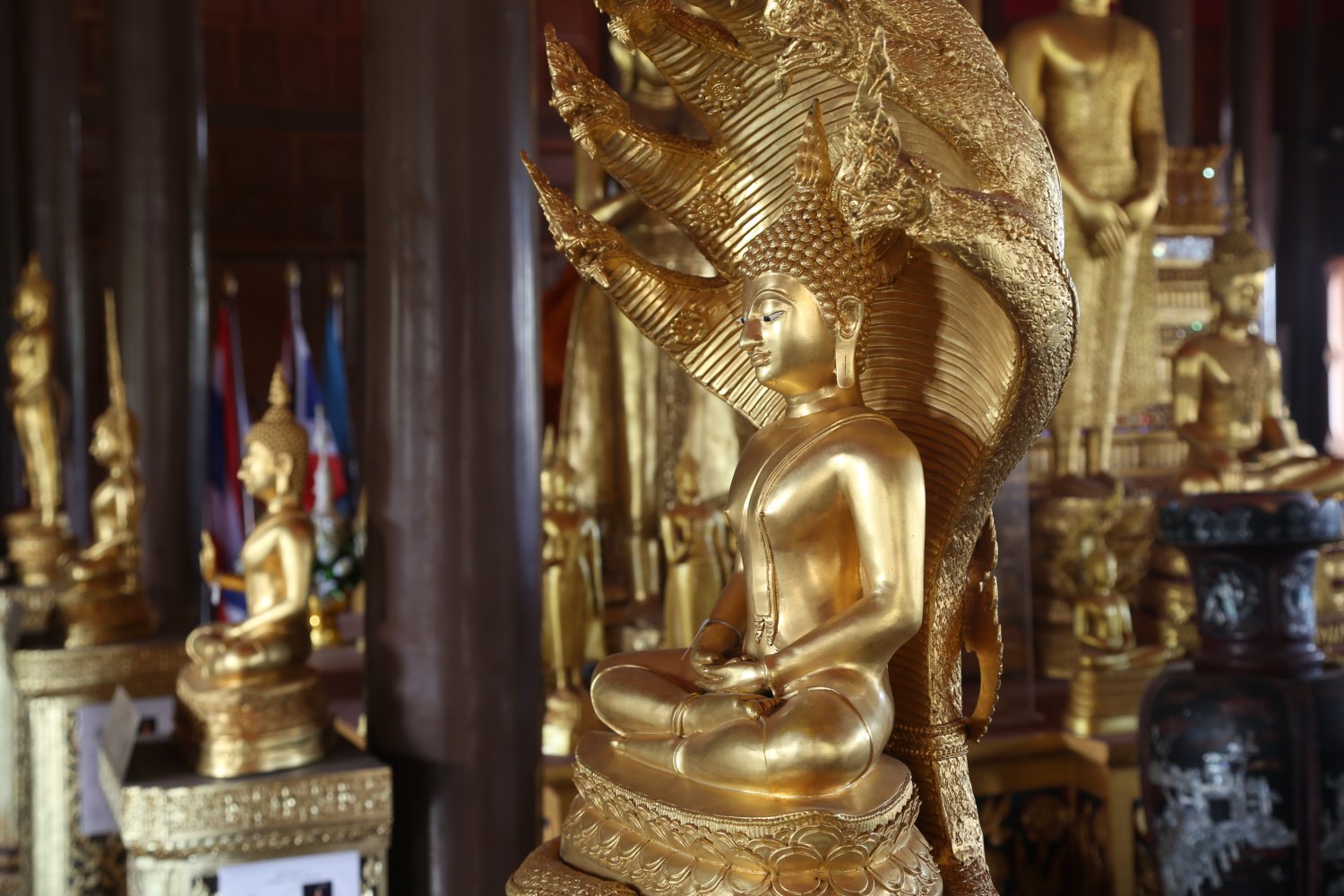

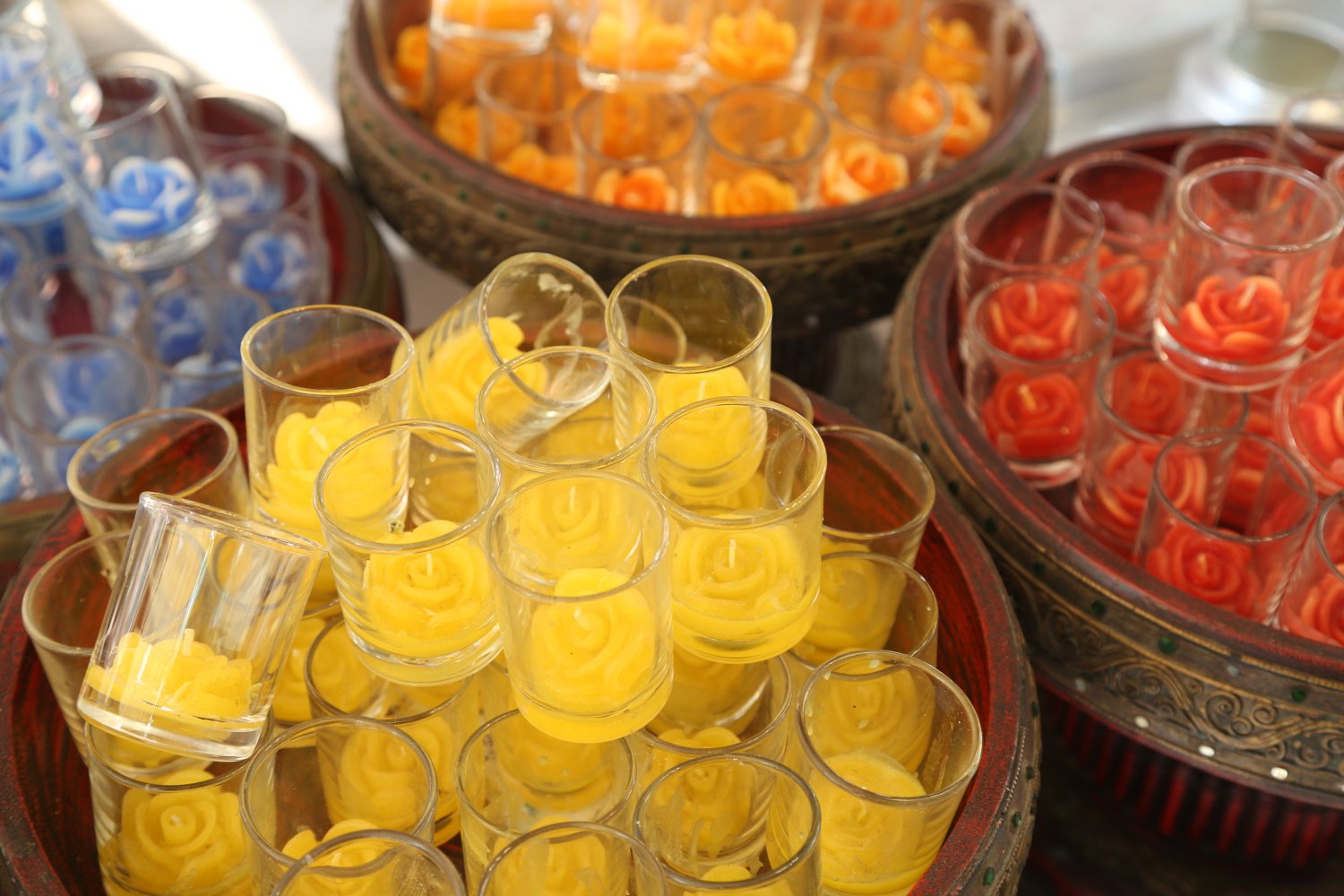
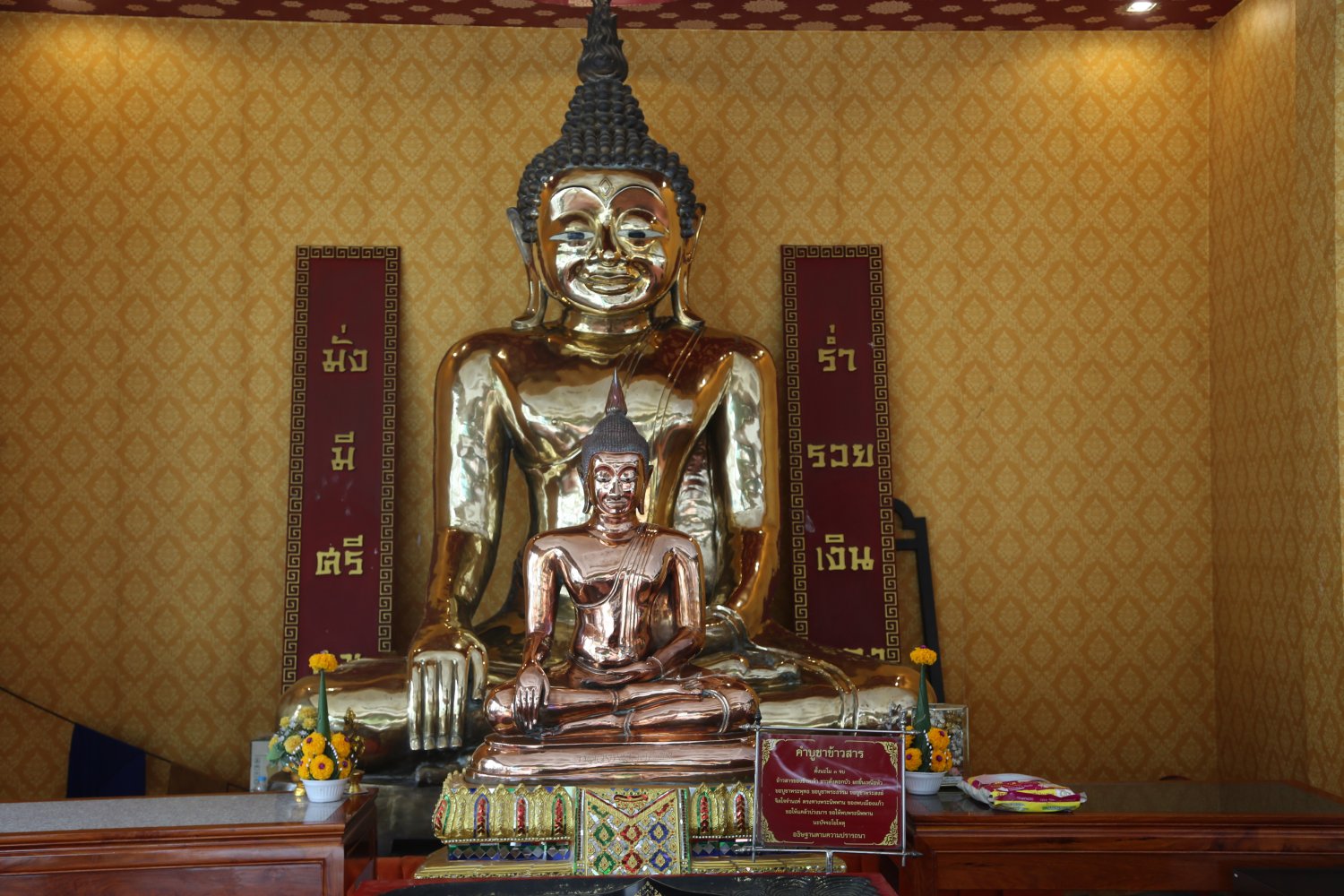
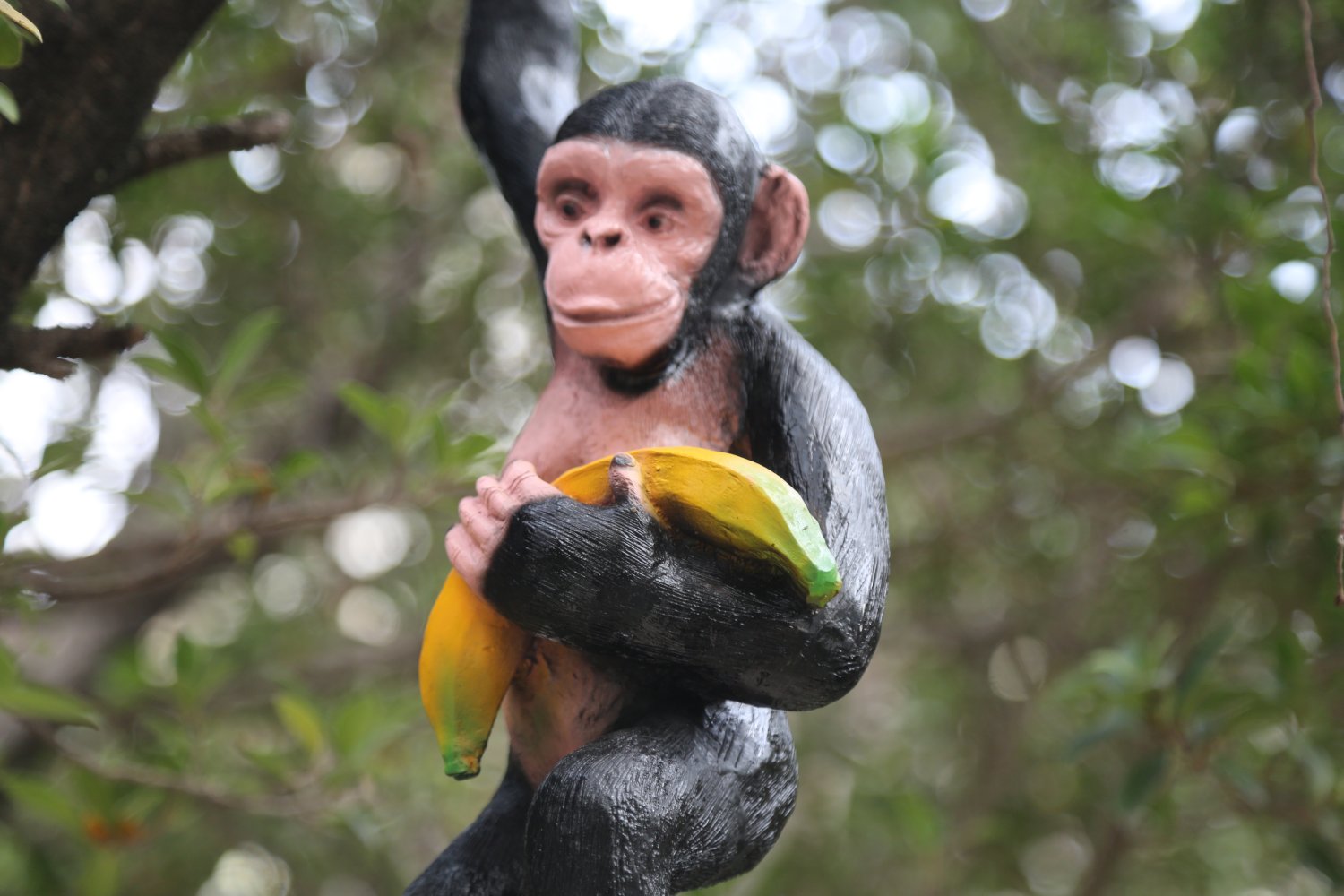
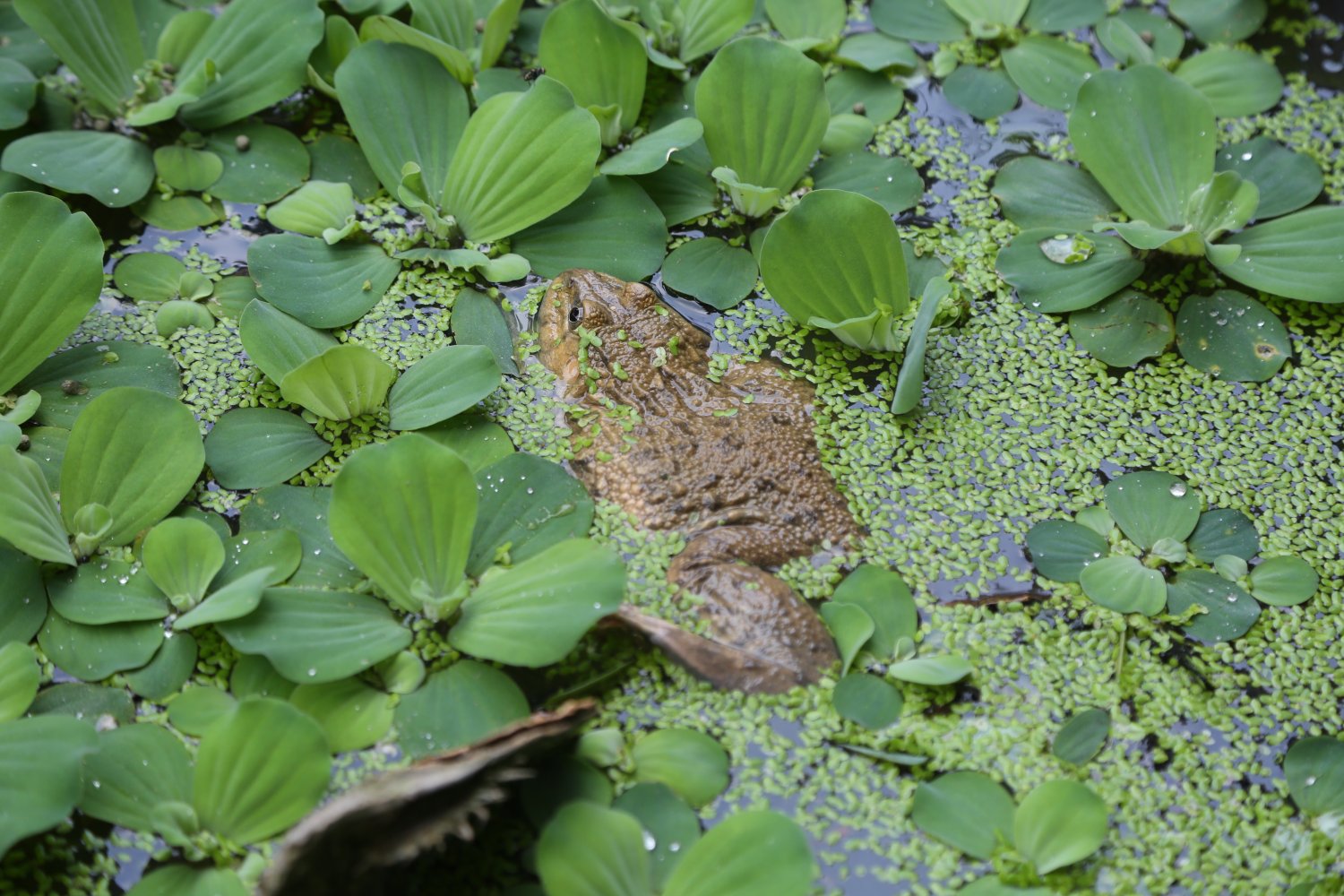
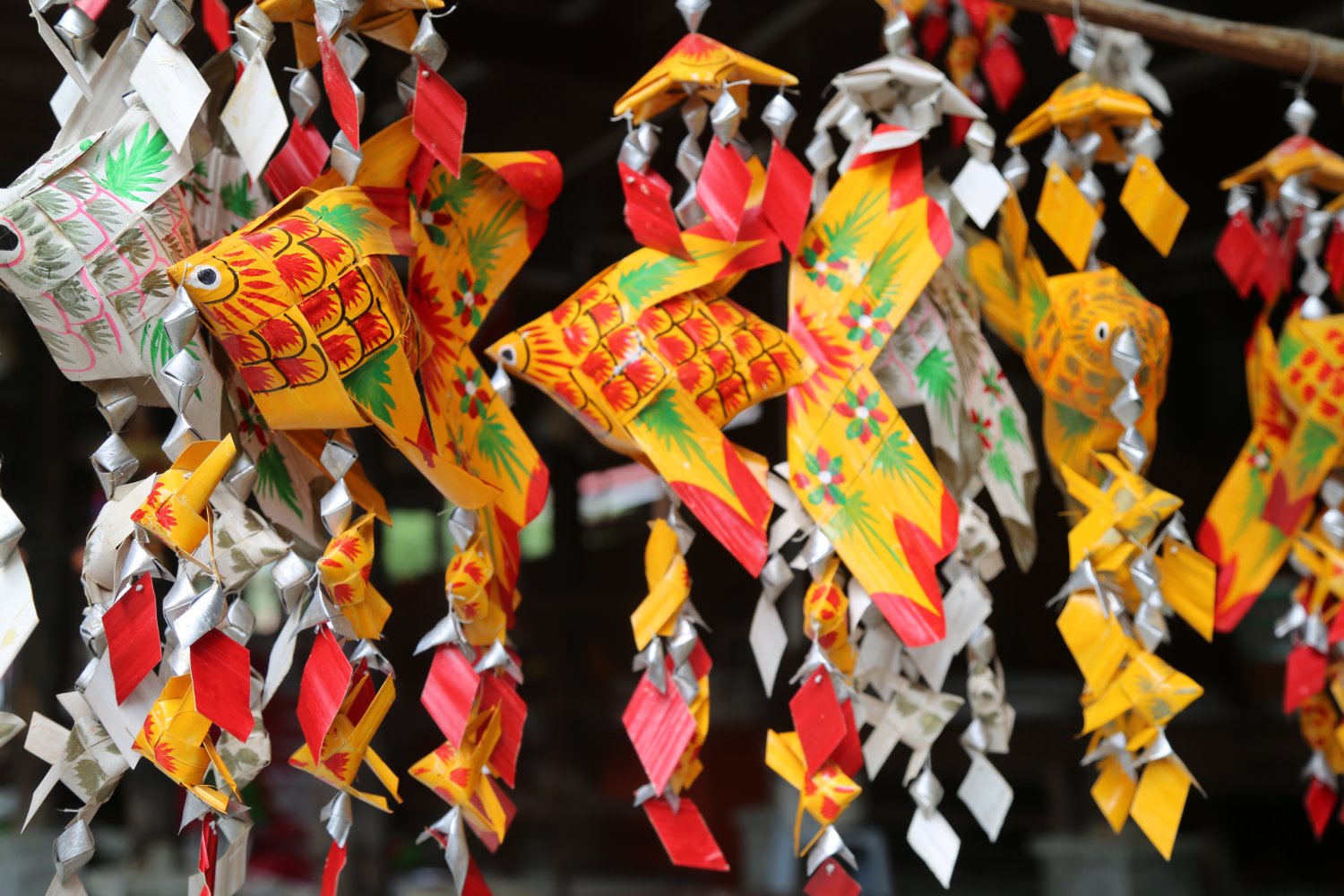
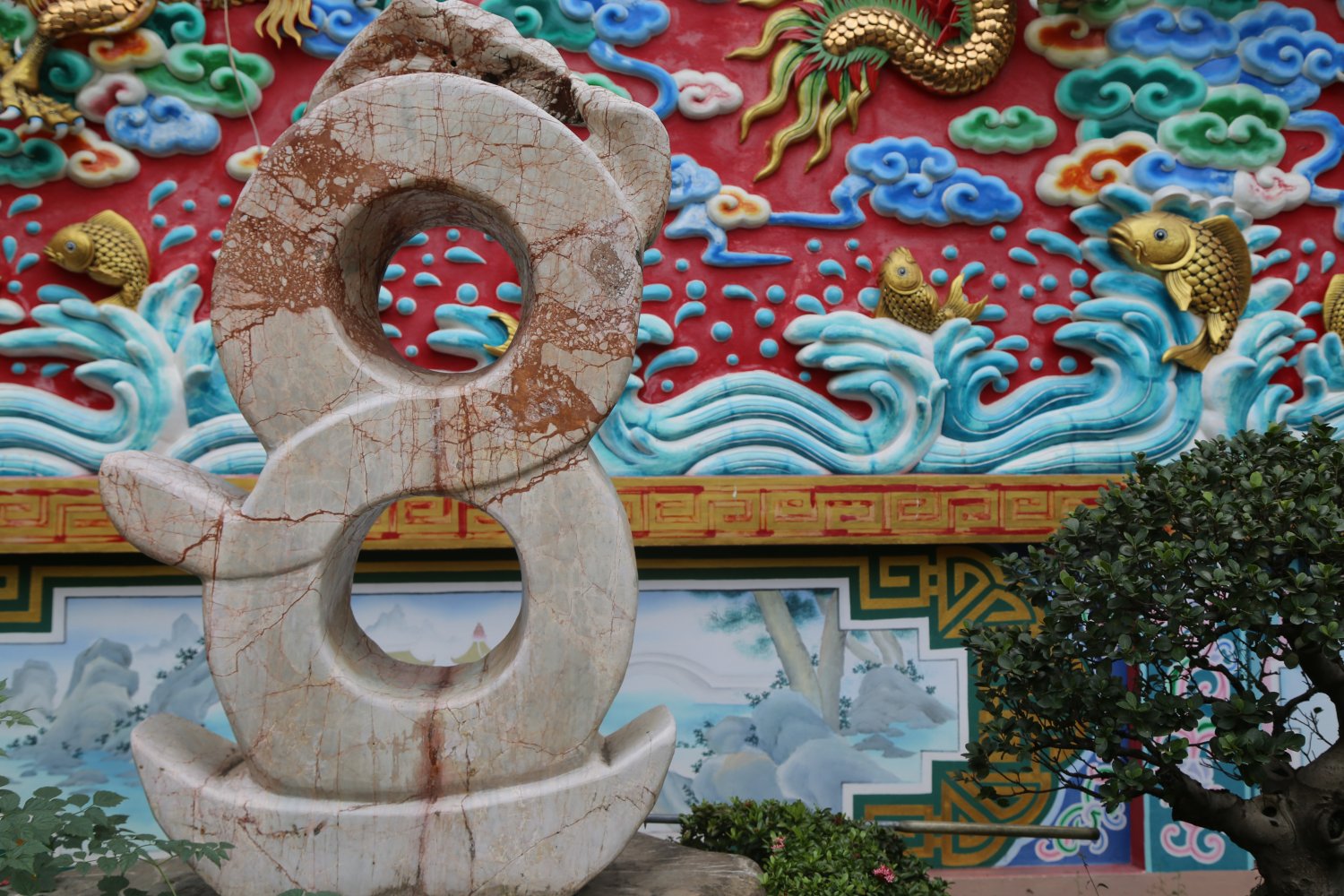
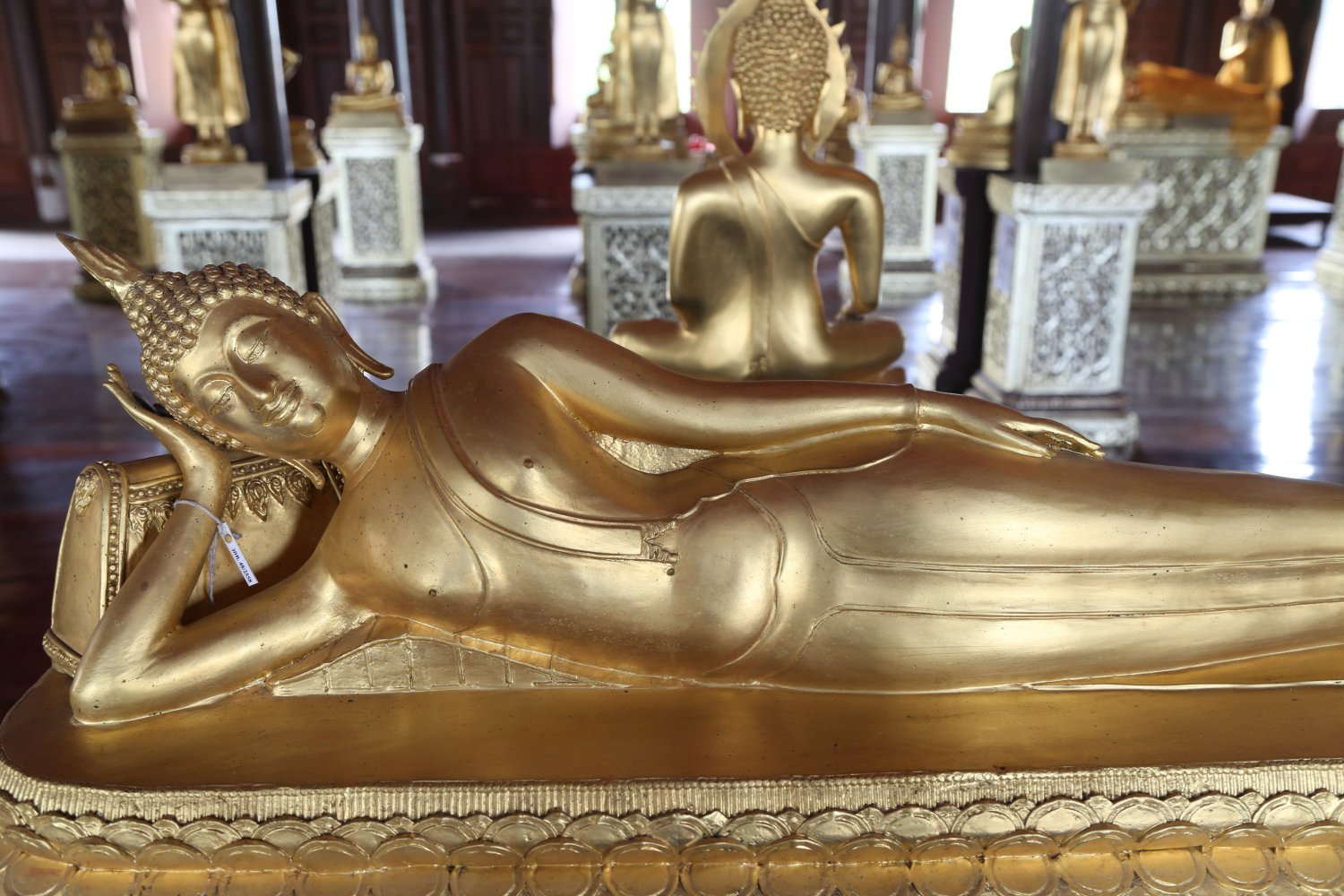

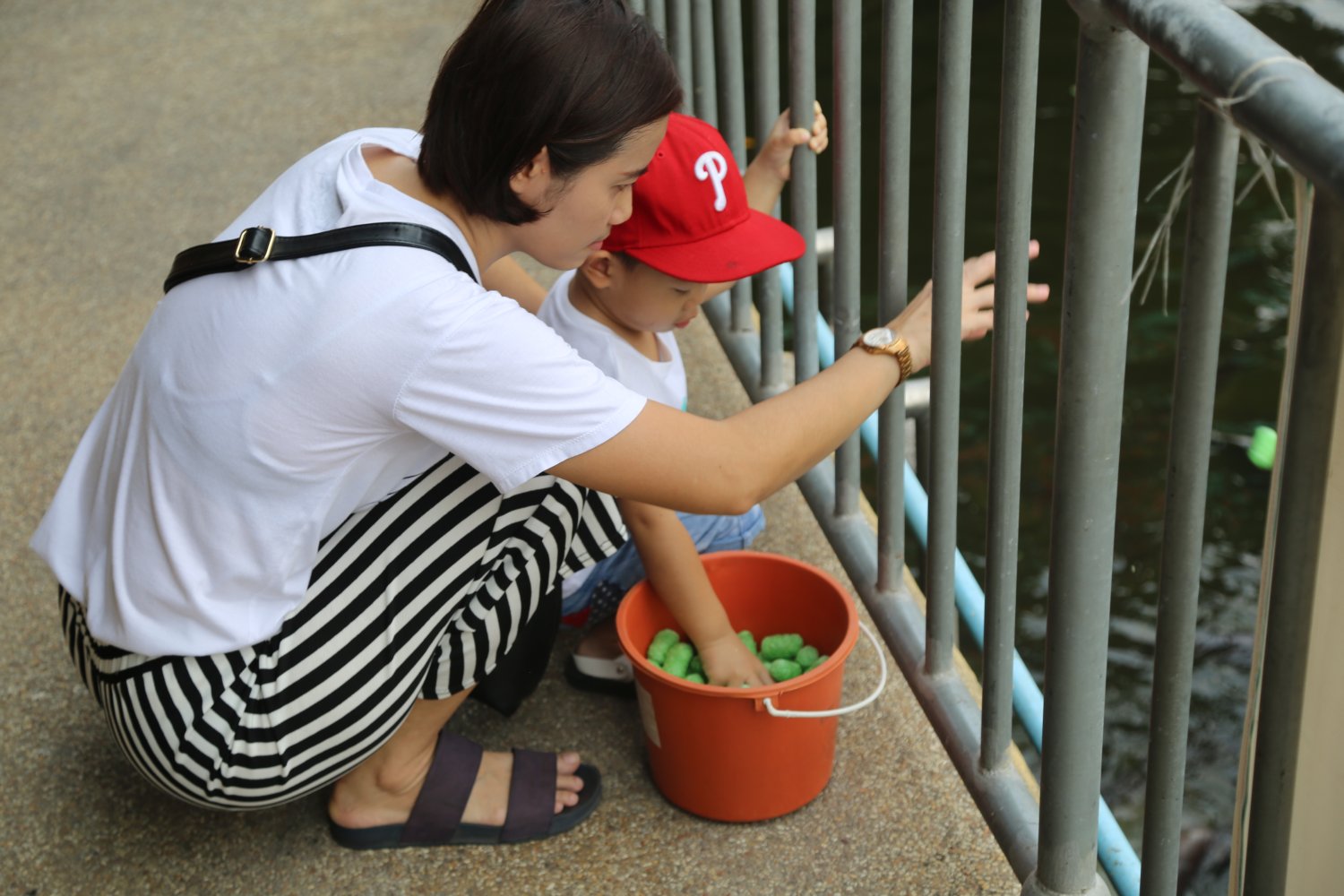
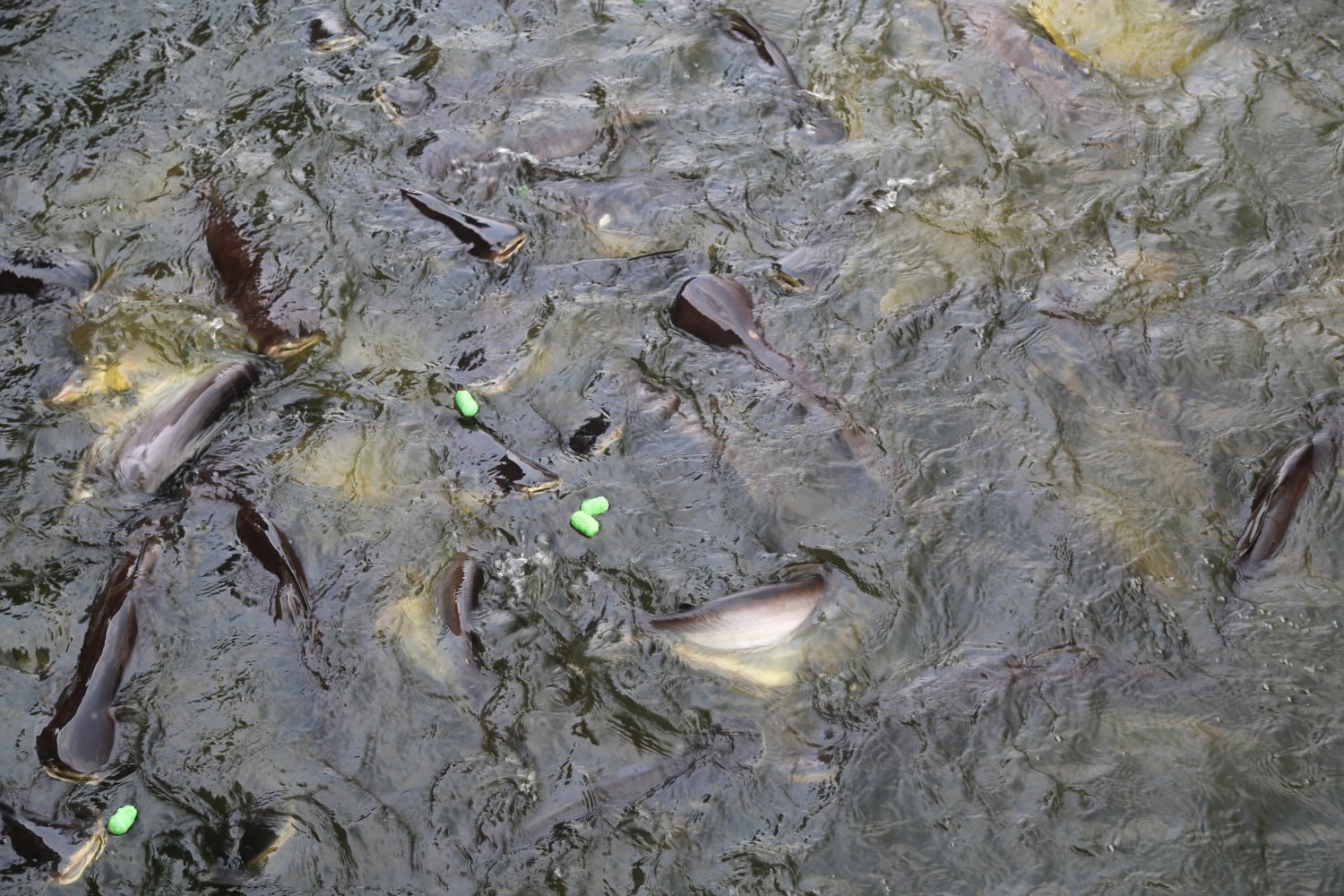
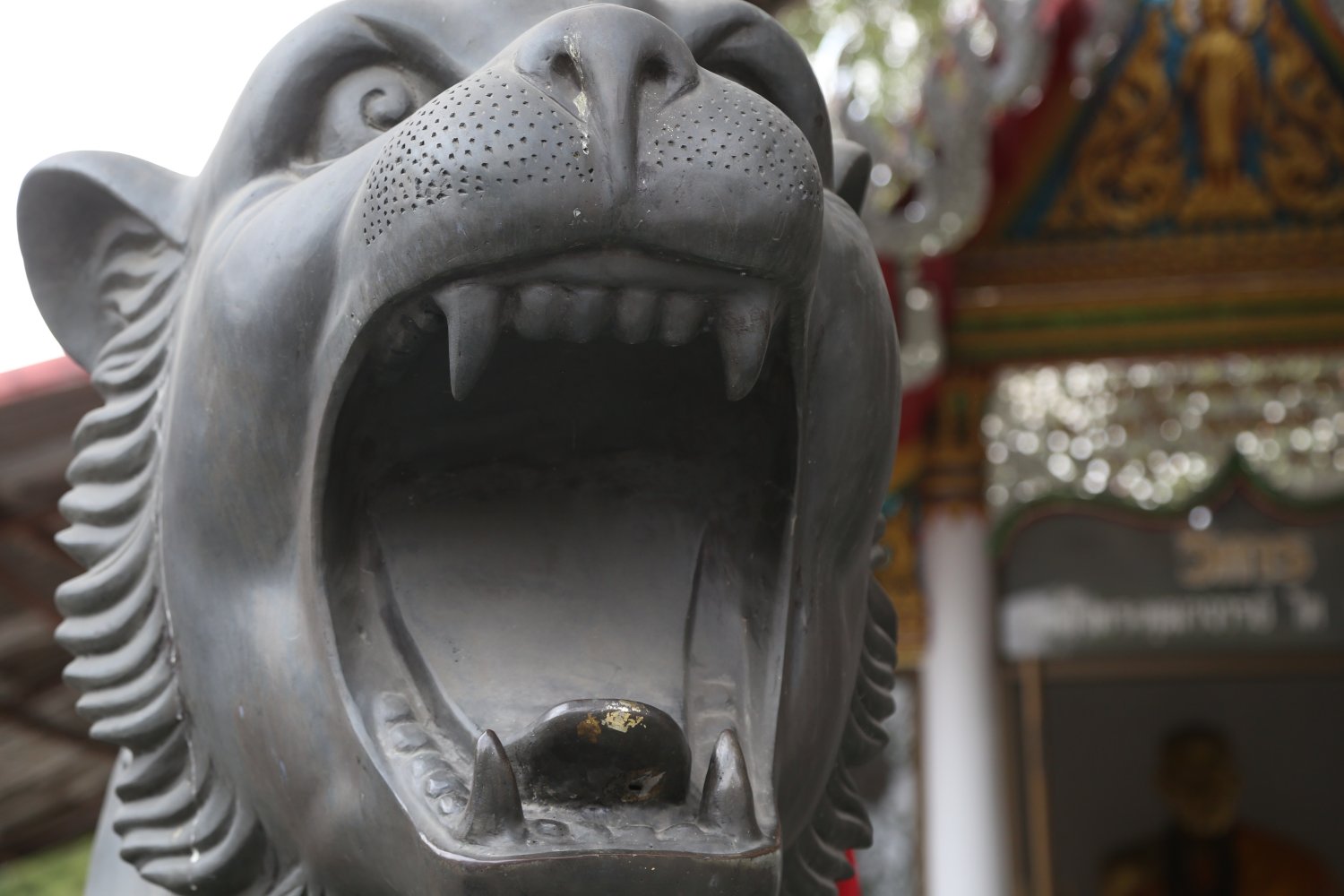
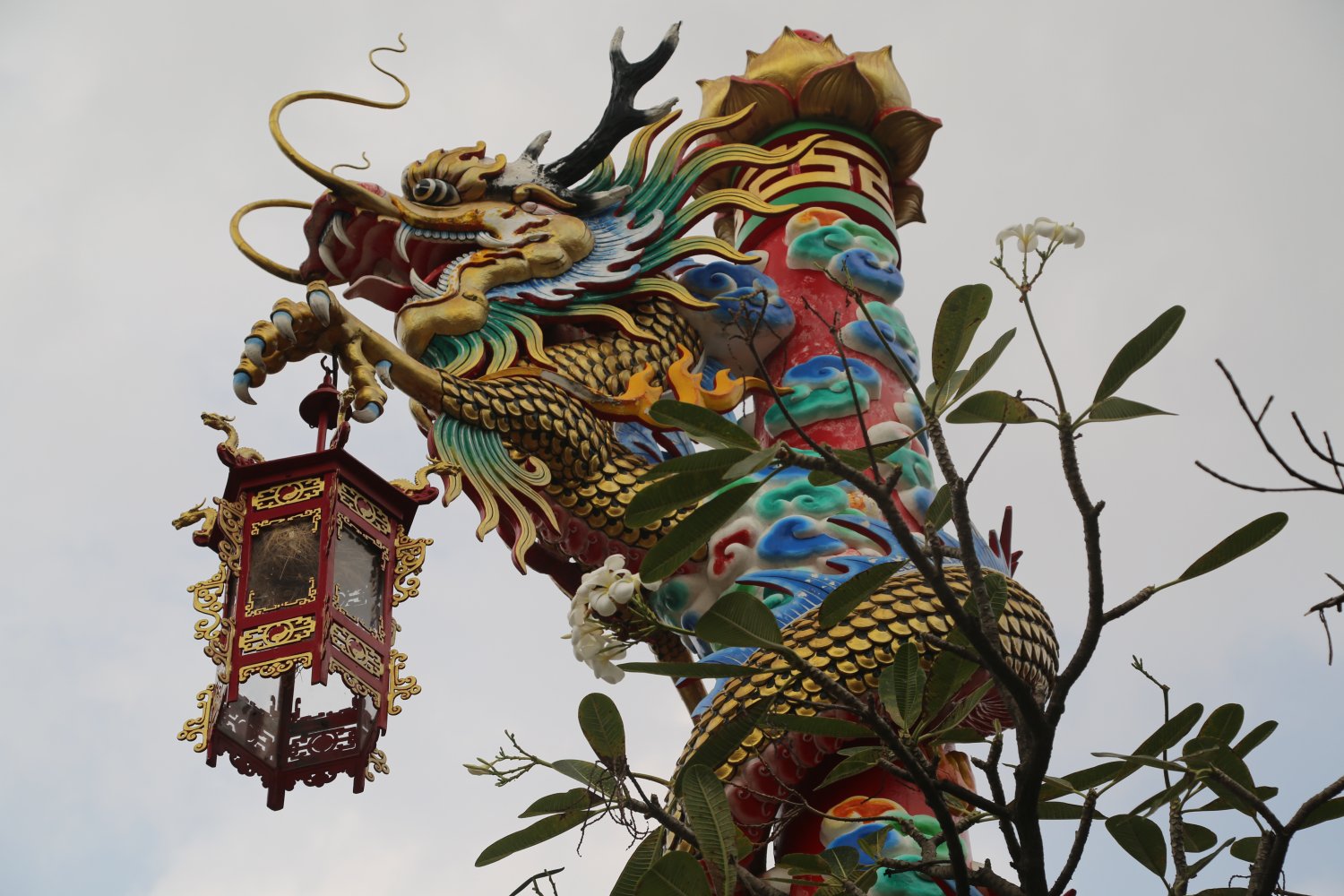

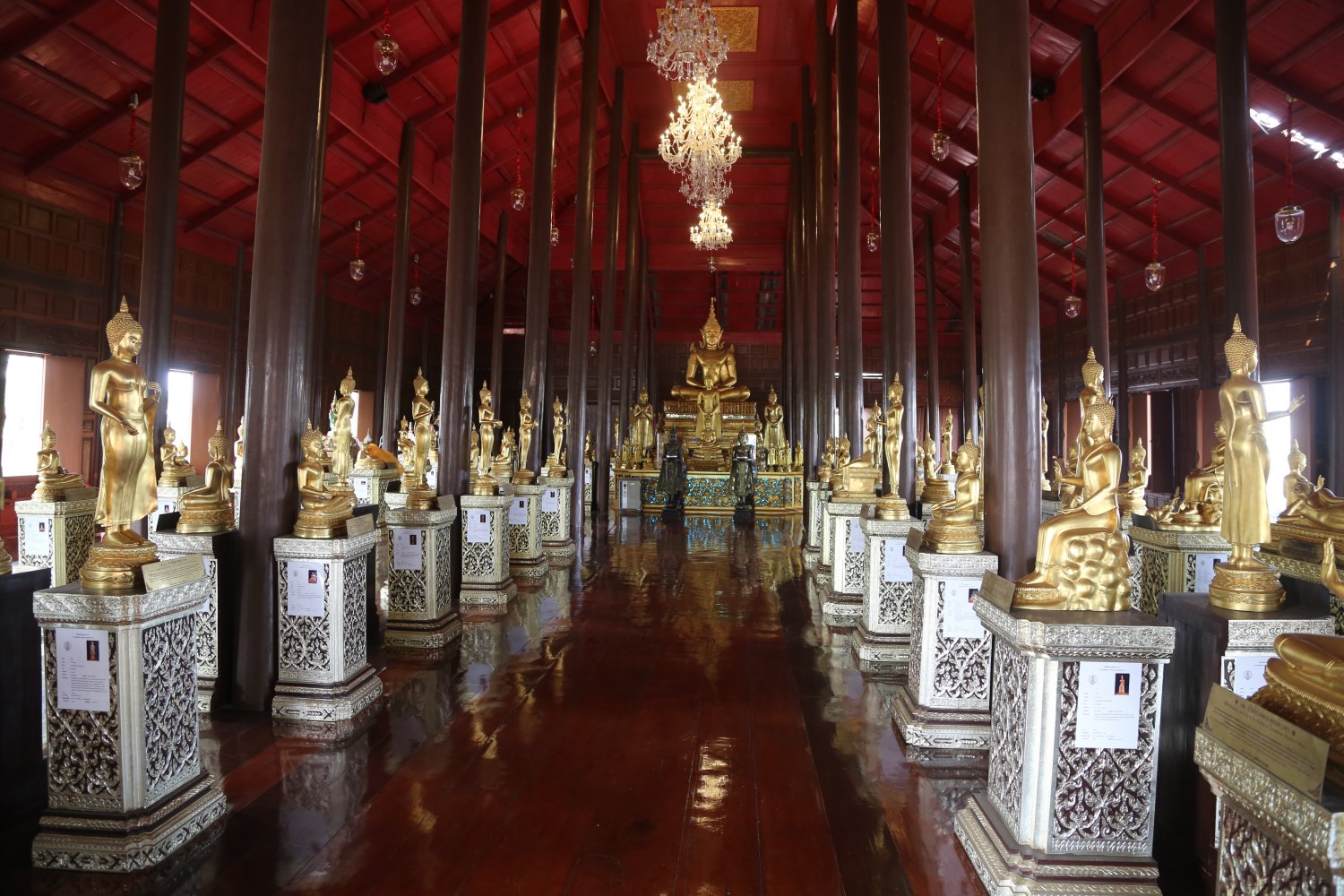
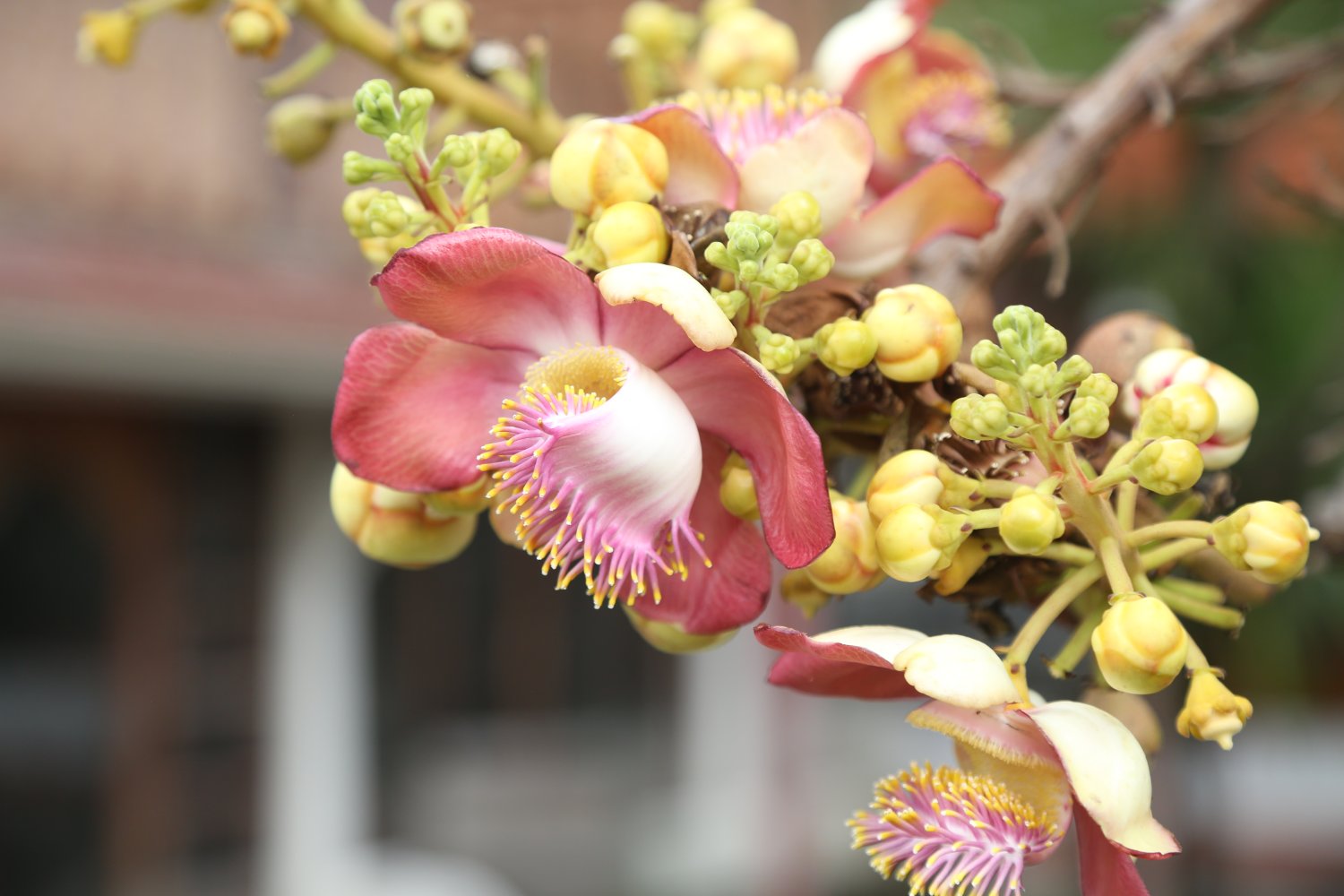
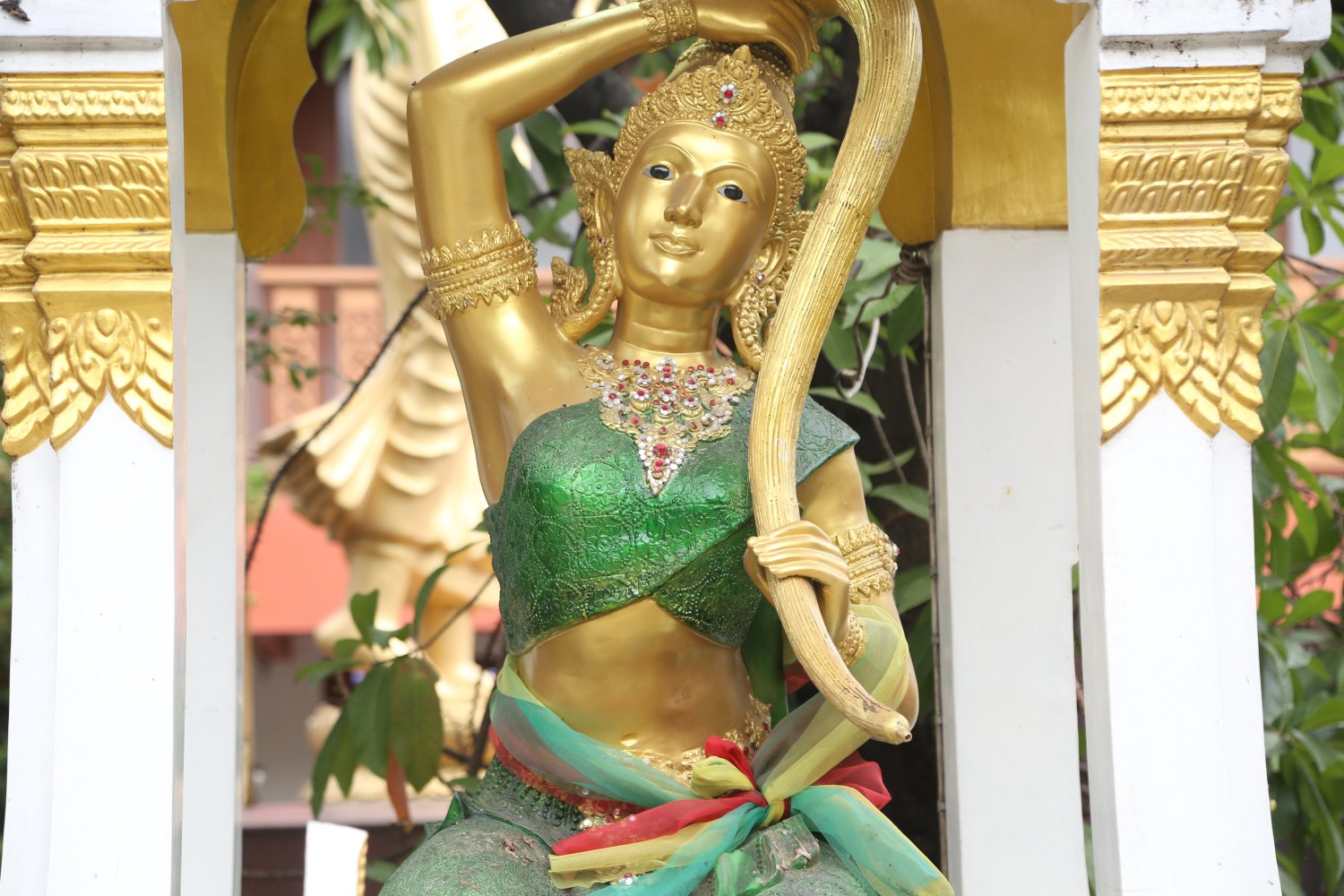
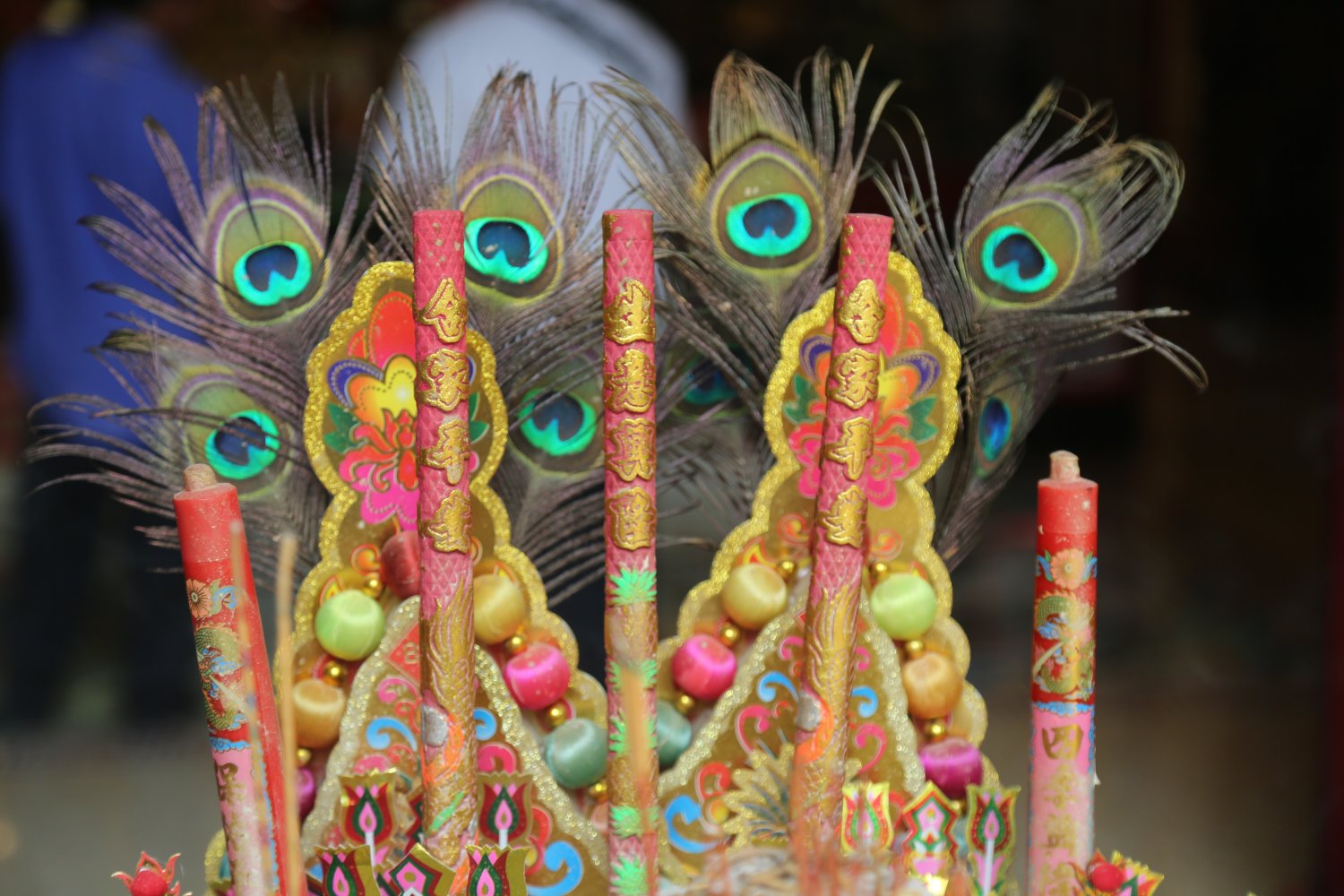
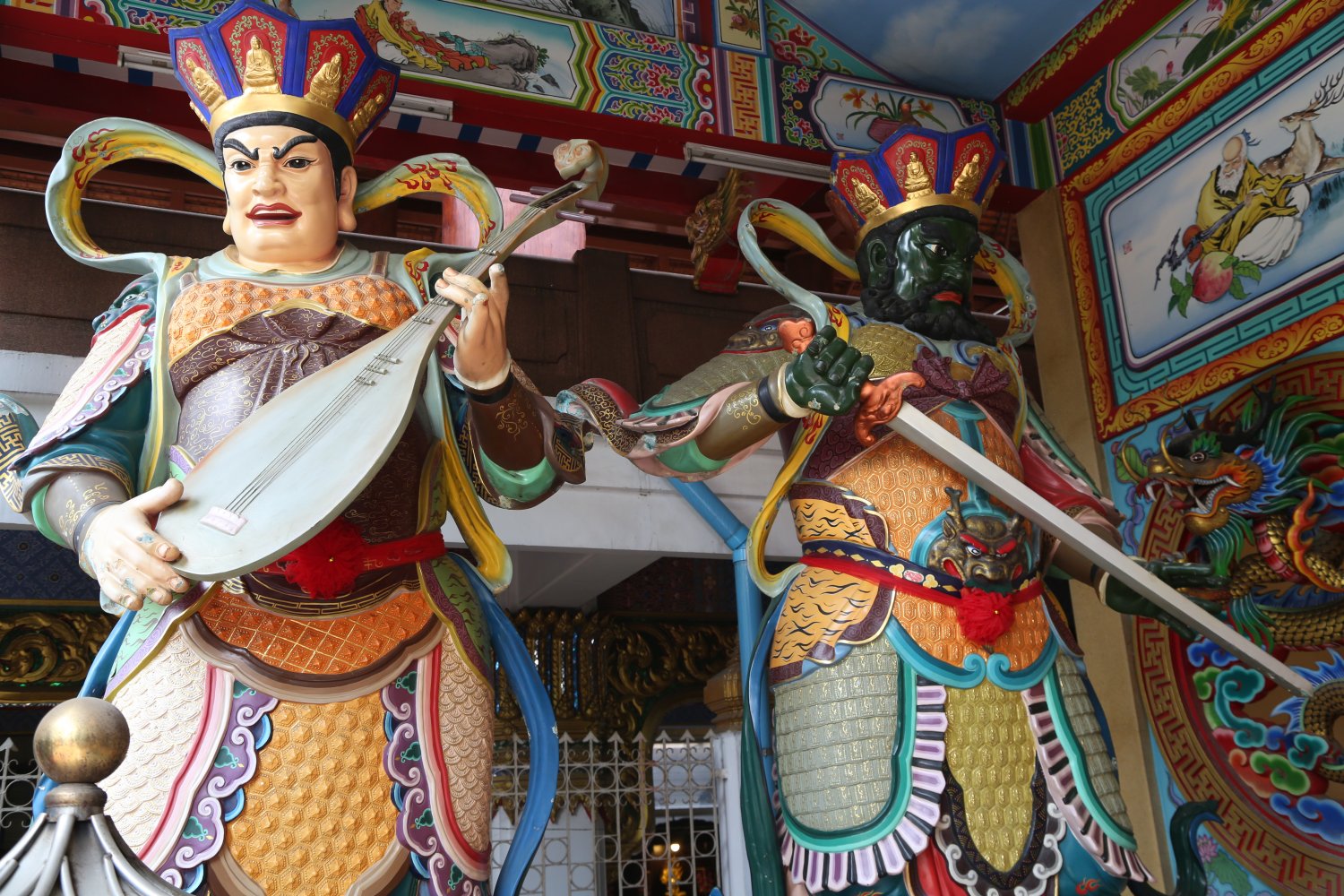

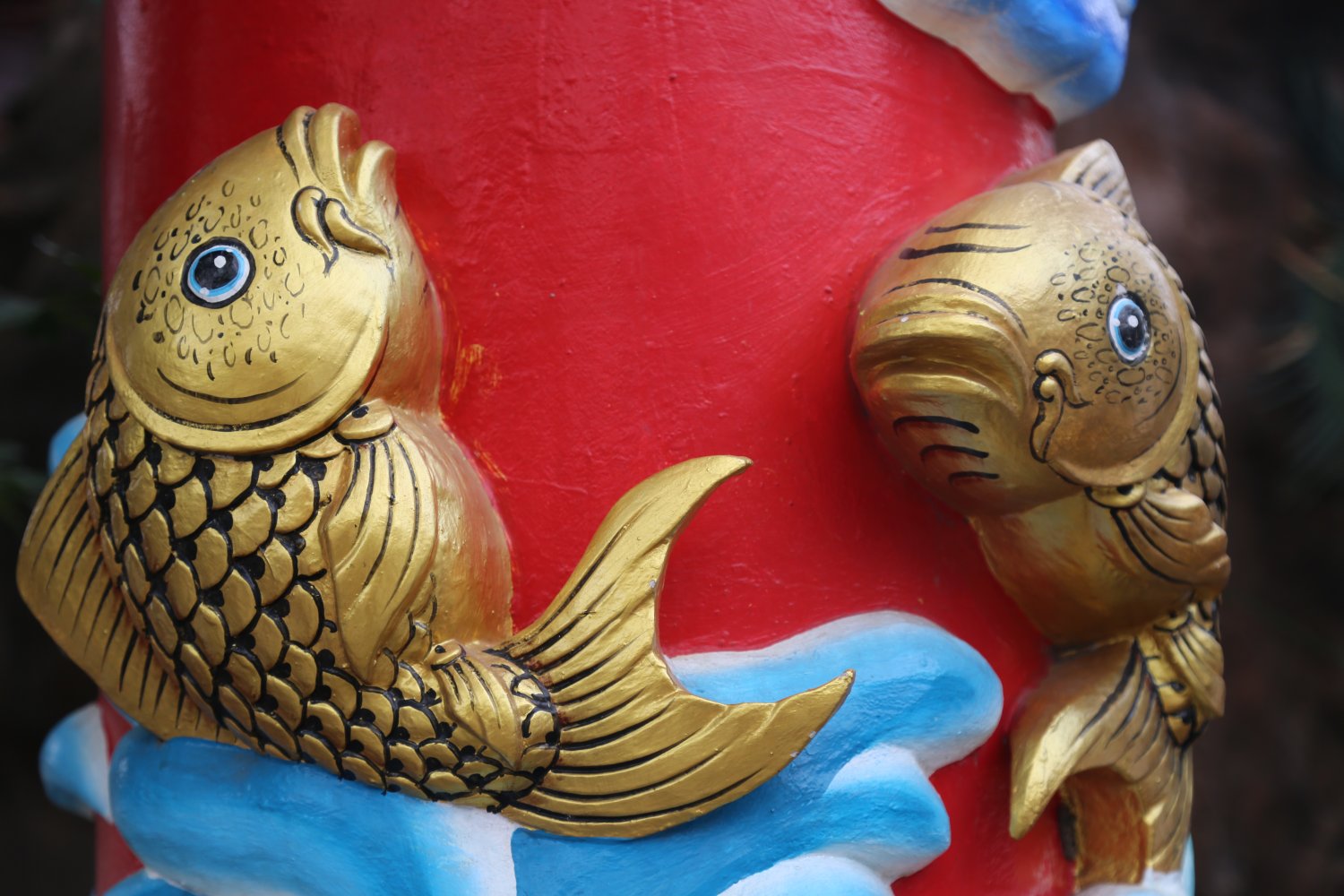
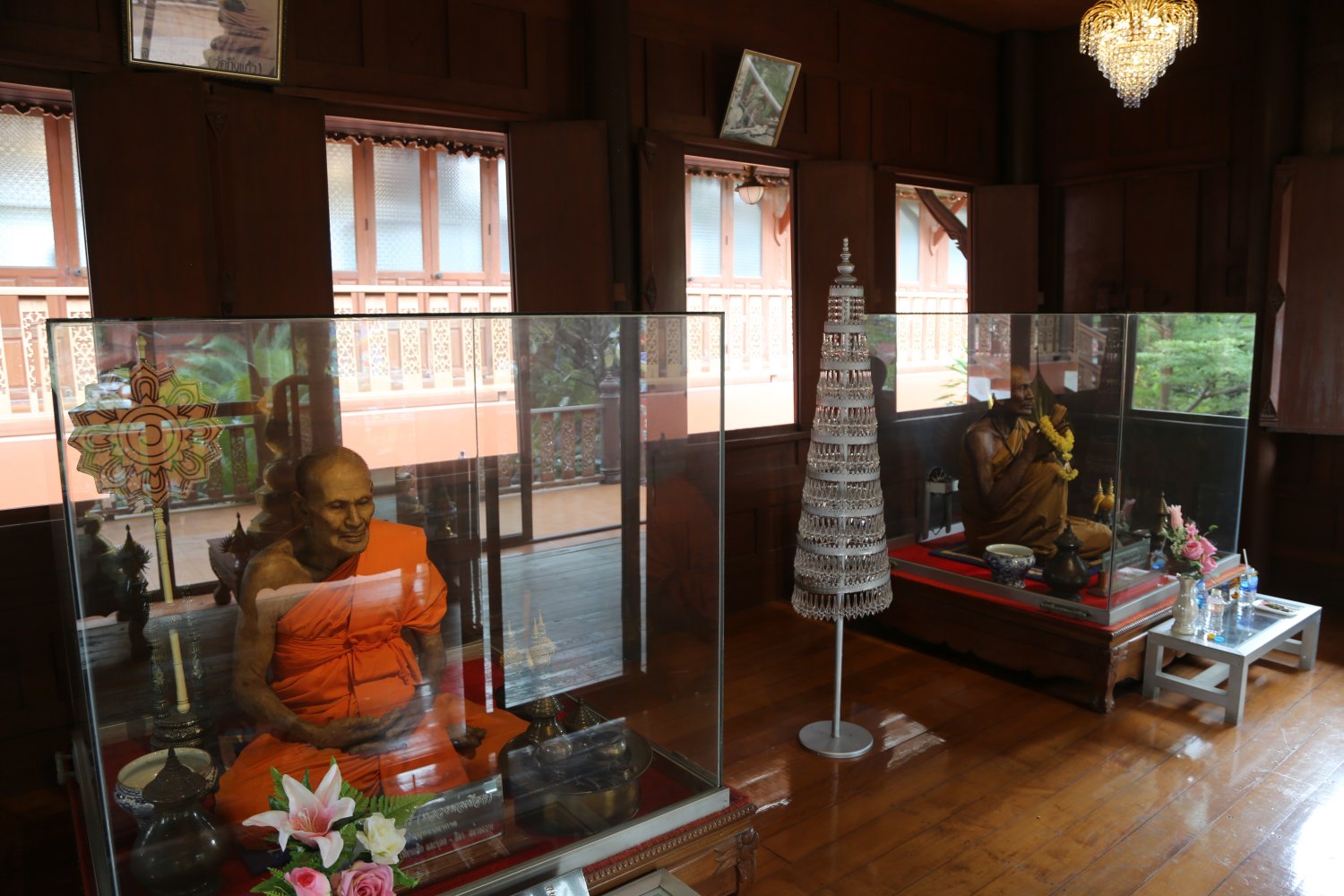
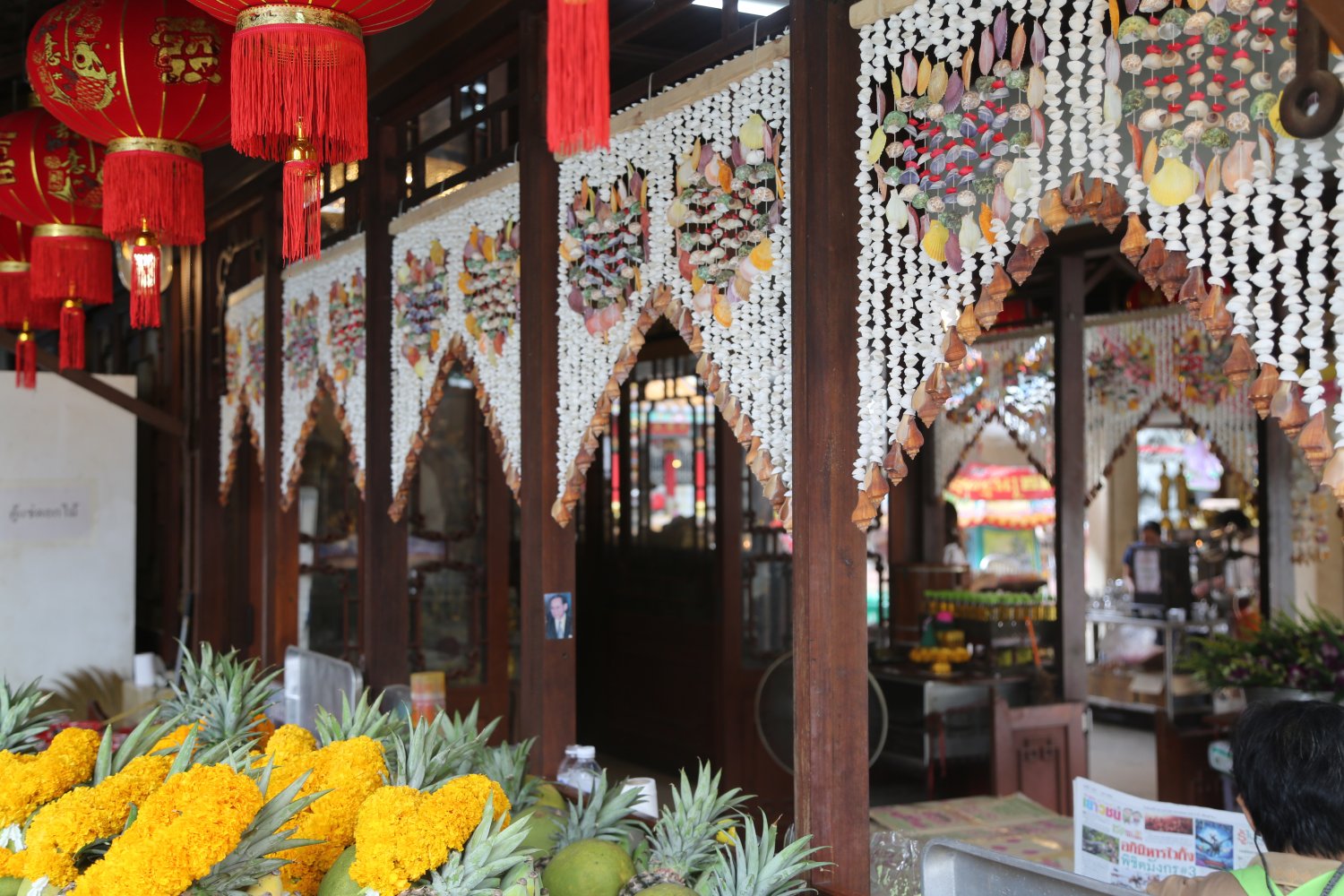
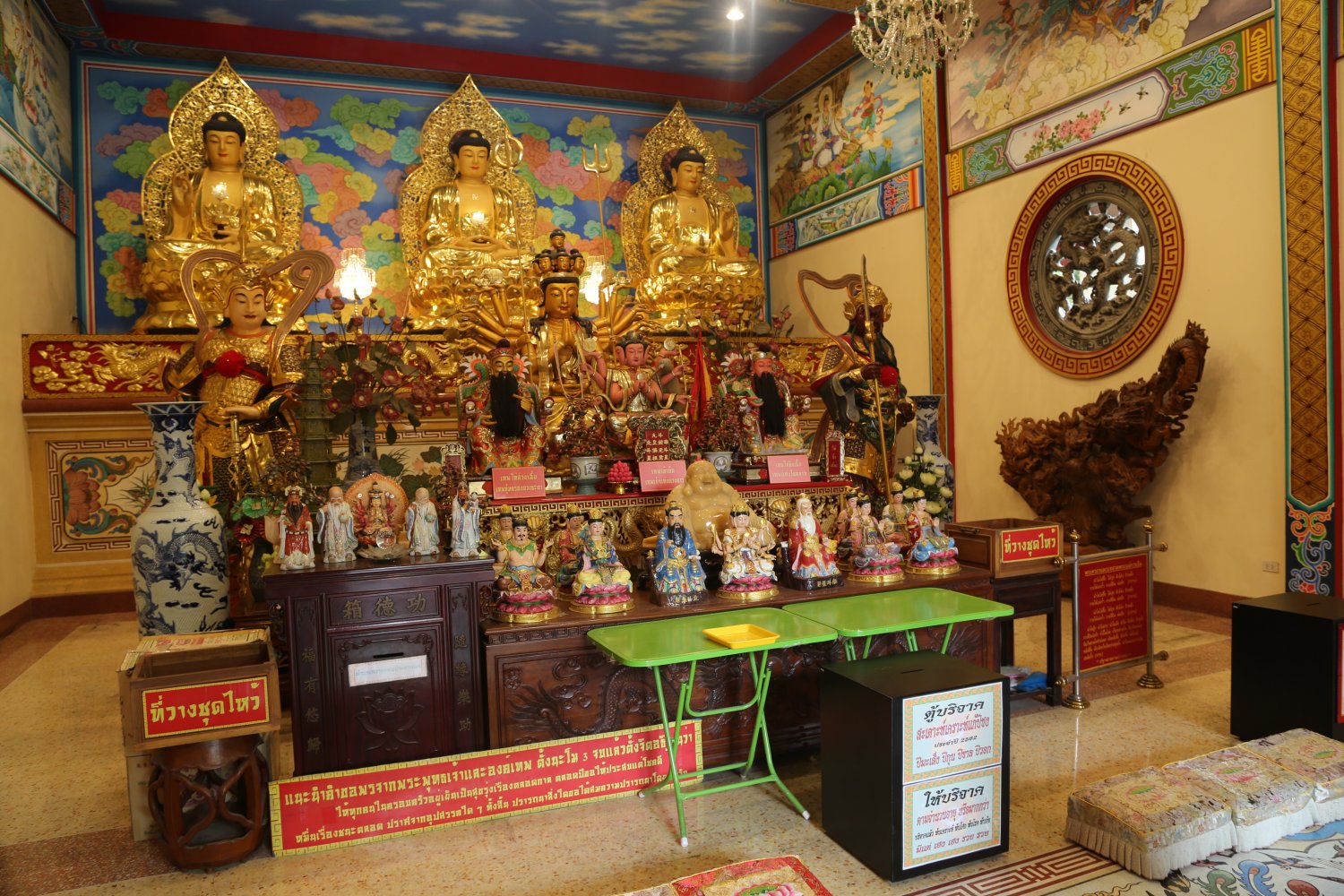
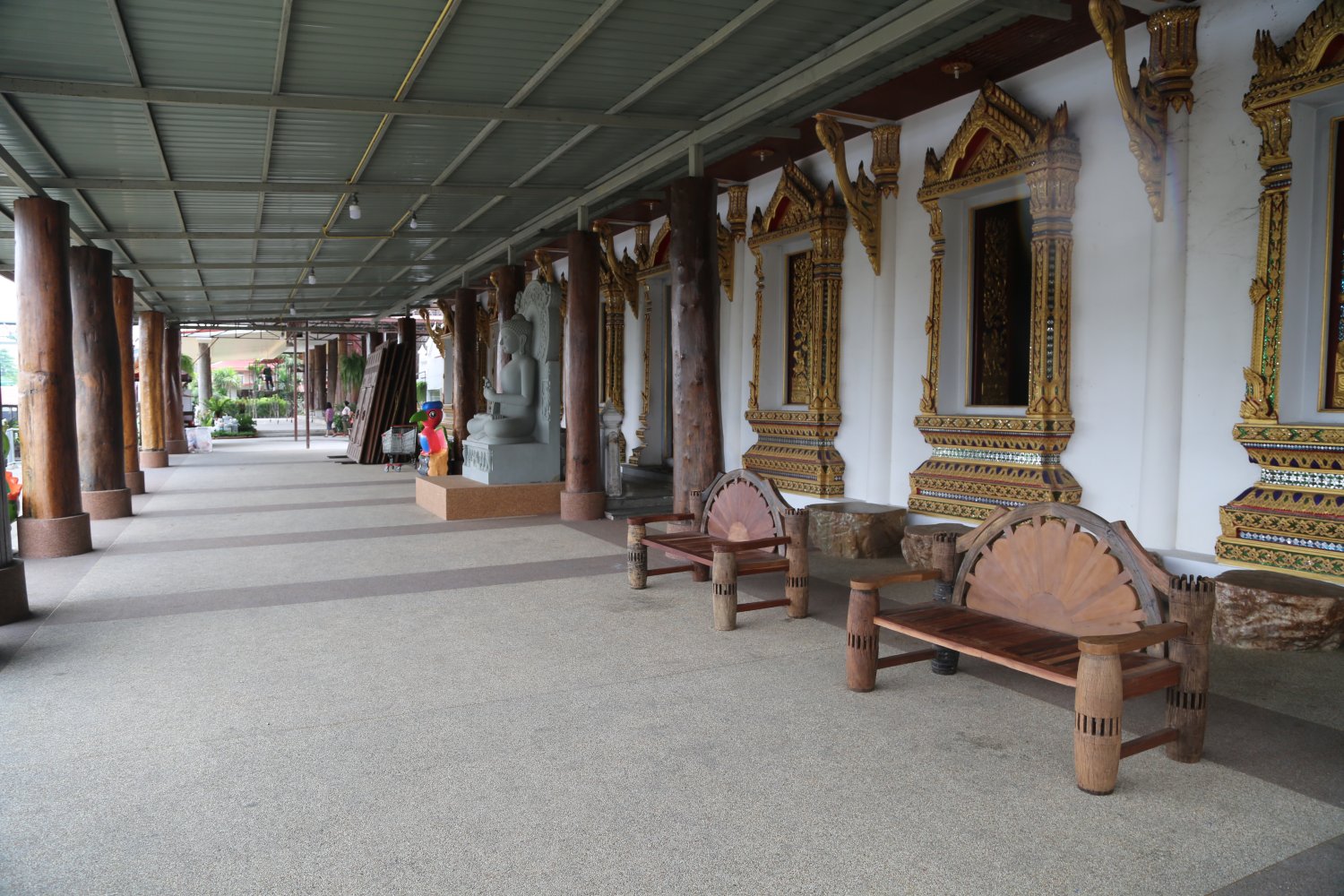
Wat Kuhasawan is located near the Bangkok Yai canal. Dates back to the Ayutthaya time – the temple was restored during the time of Rama I which is when it was given its current name.
Features a very beautiful interior of the Ordination Hall including colourful hand painted murals on the walls. A large enough temple that the inside also contains a sizable golden Buddha statue along with smaller statues. Also, a very colorful and artistic exterior to this building.
Arguably a highlight of a visit here is seeing the impressive Bell Tower which also contains a giant drum. If you time your visit correctly you can see and hear one of the monks beating this drum. However, note that most of the buildings are generally closed (even on the weekends) so it can be difficult to gain access inside. We were lucky as we visited when the main hall was being cleaned.
Several other tiny temples are located within walking distance of this one. The surrounding neighborhood is worth exploring including crossing over some of the canals on small pedestrian paths.
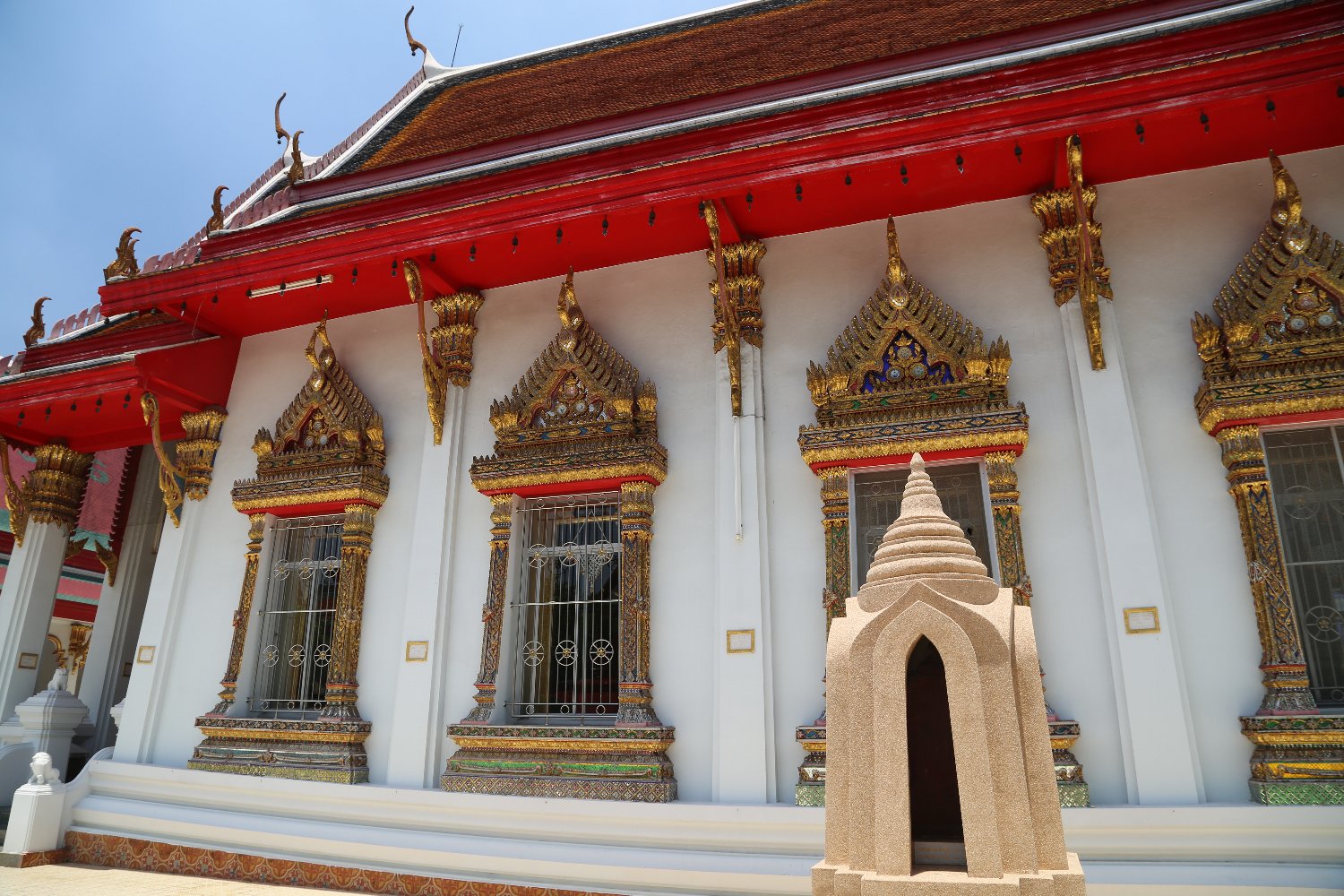
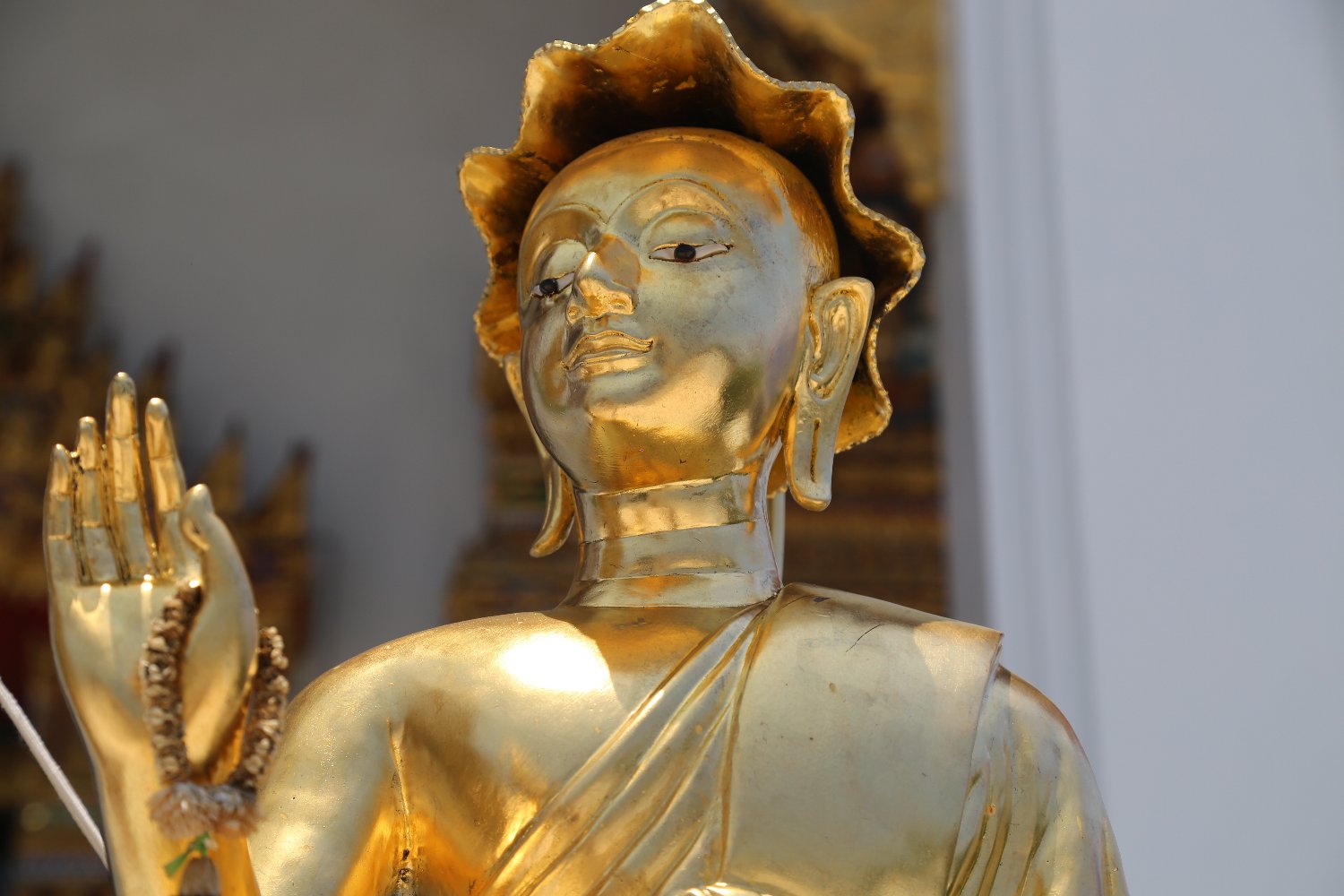
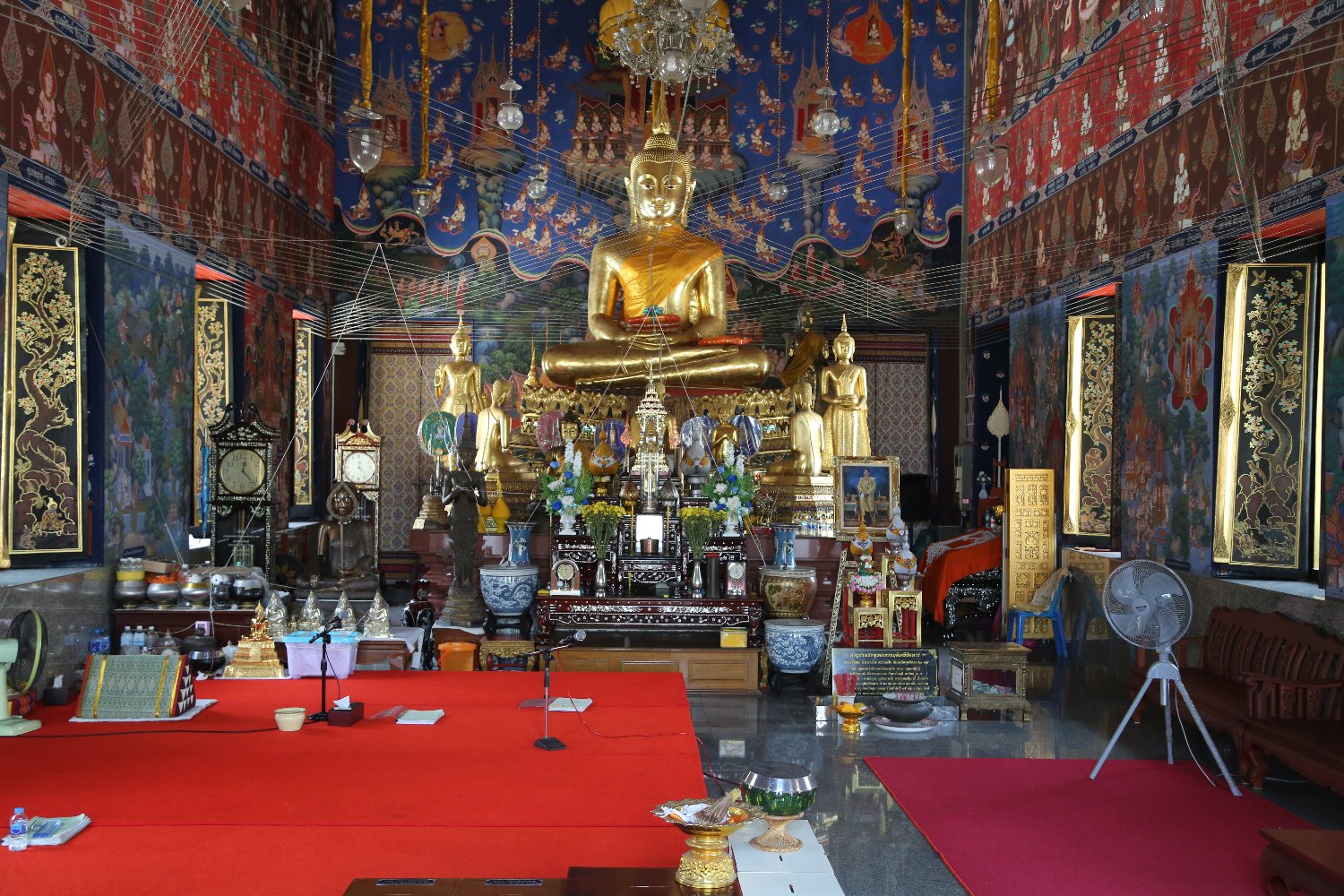

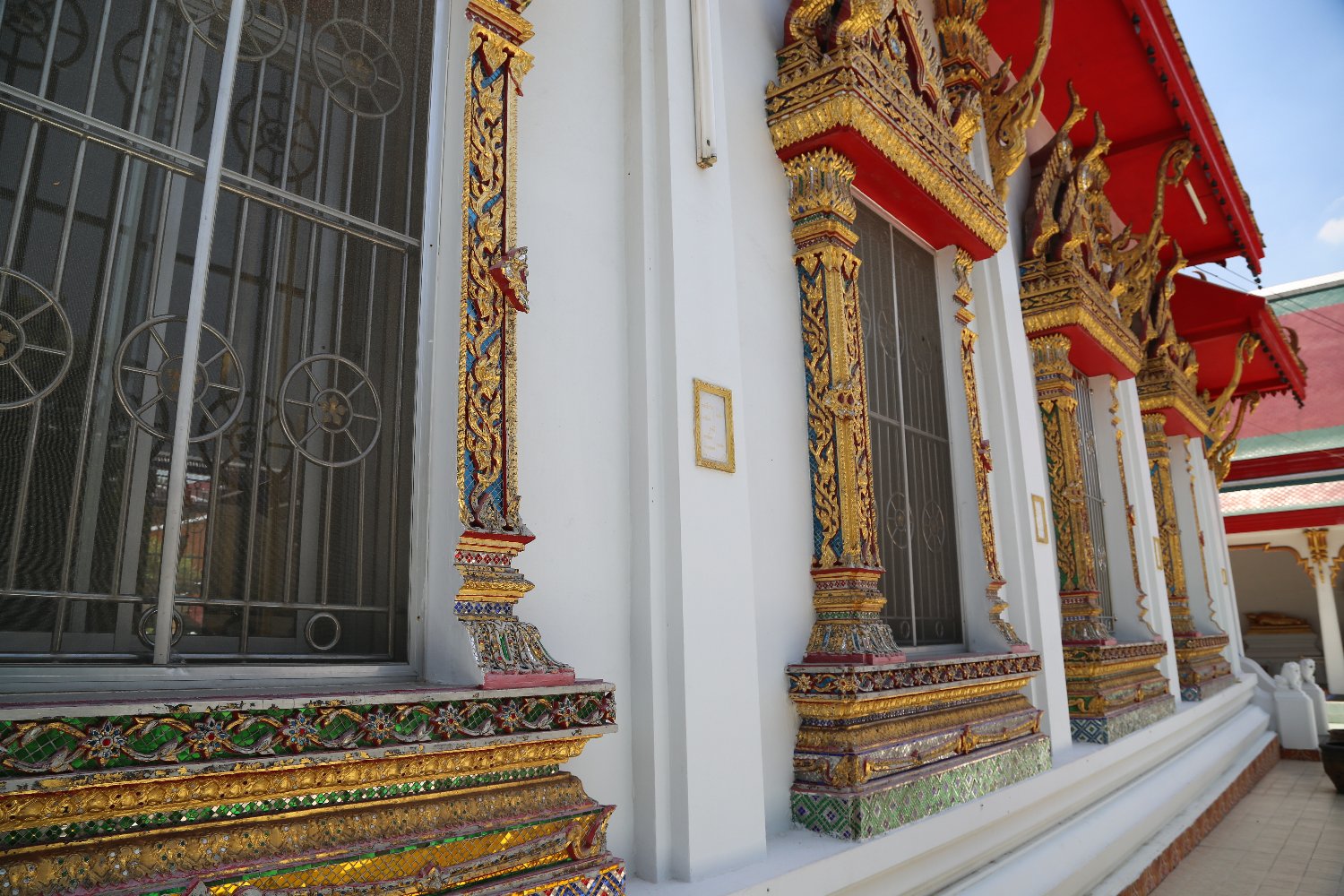

Wat Lad Phrao is about a 10-minute drive from the Metro station of the same name, Lat Phrao. A very pretty temple complex – not huge but worth exploring if you have never been and find yourself in this part of town. This was not the original temple location – rather it used to be located about 100 meters from its present location. It was moved because the original location was not close to good water for the monks to access.
Located within a short walk of the nearby canal this is well off most tourist’s temple seeking route. That is a good thing – it’s not nearly as busy as the more popular Bangkok temples. Decent sized, this temple features a number of shrines on site including three noteworthy tall golden Buddha statues. One of the buildings features a mirrored ceiling – in our experience, somewhat unique.
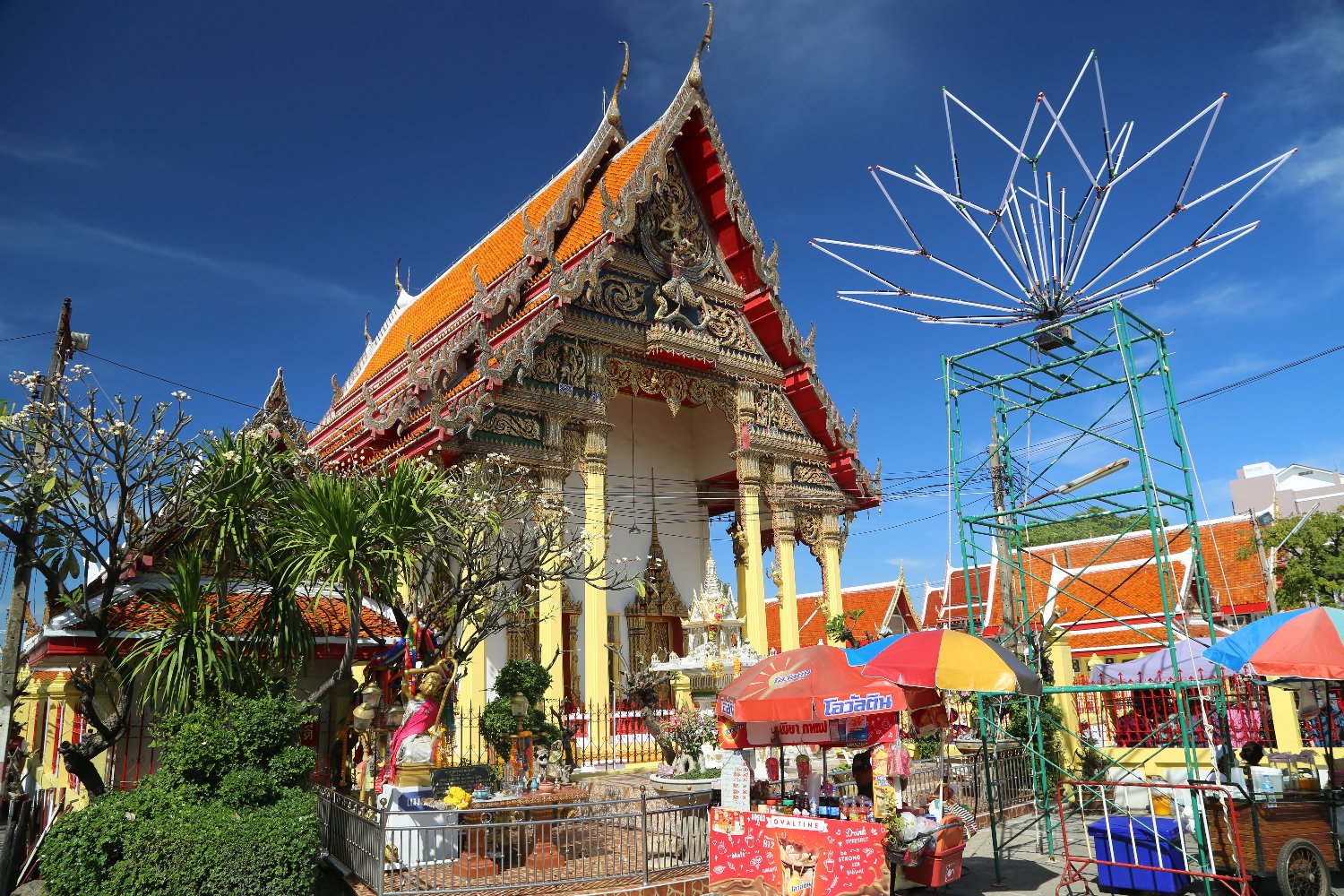
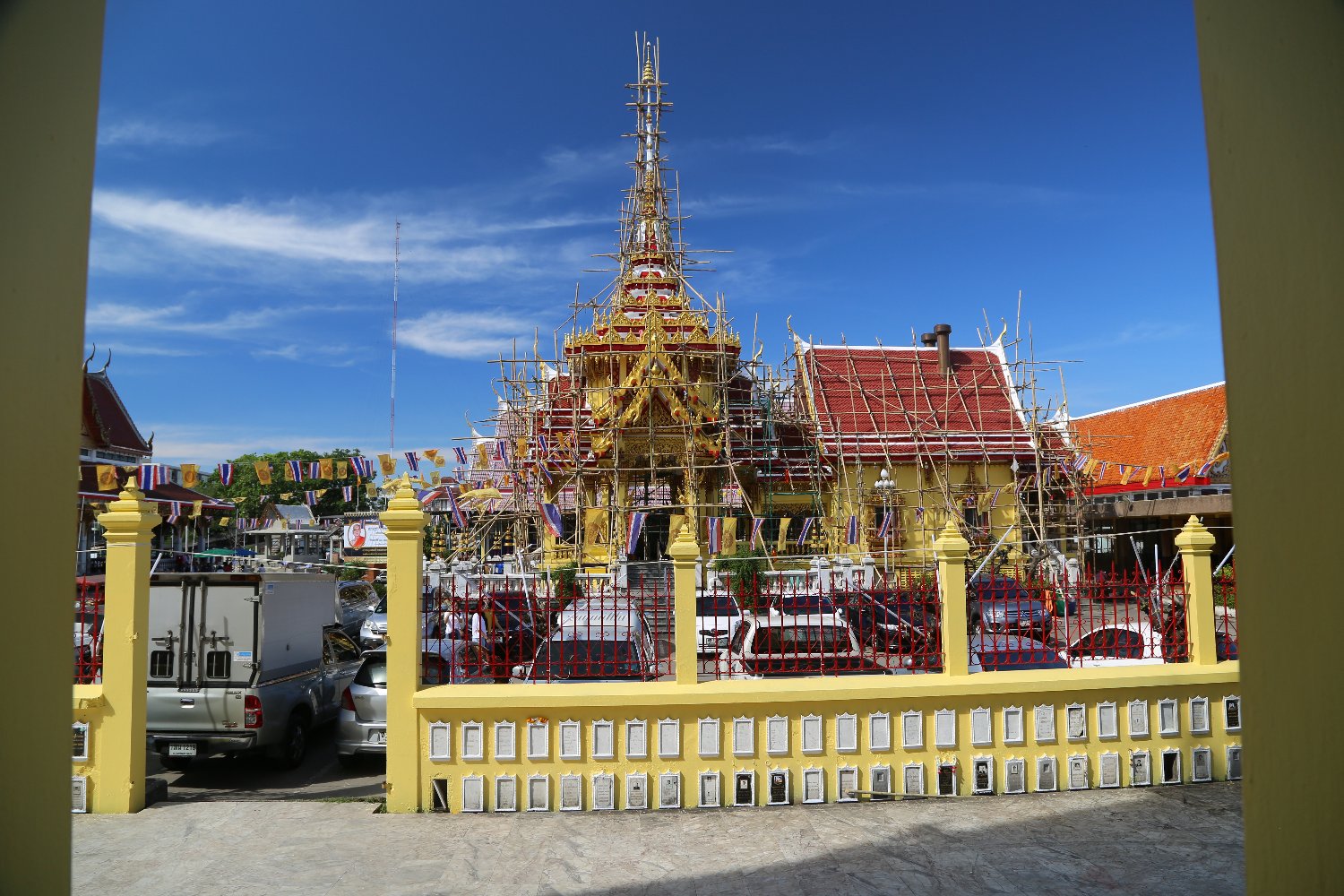
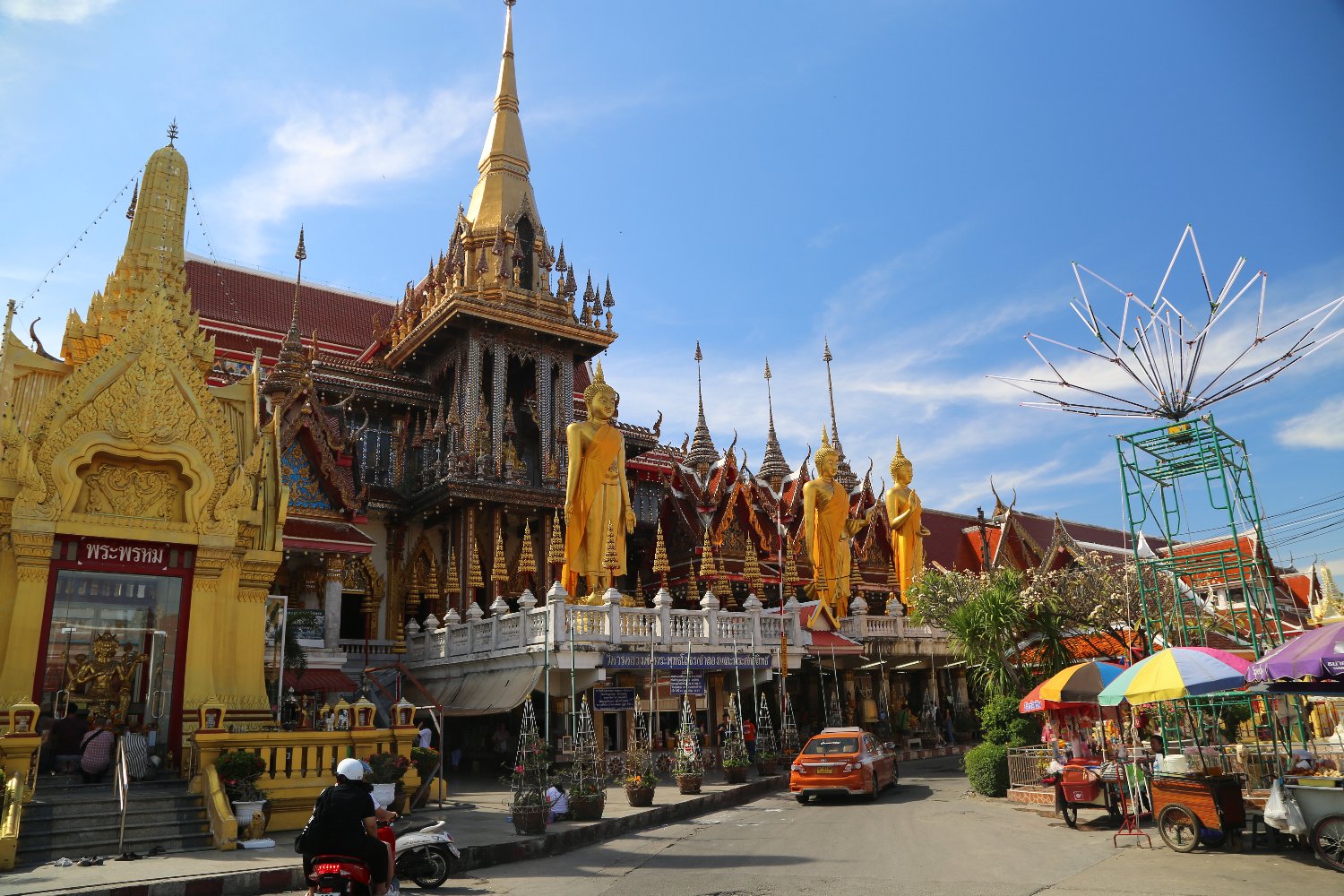
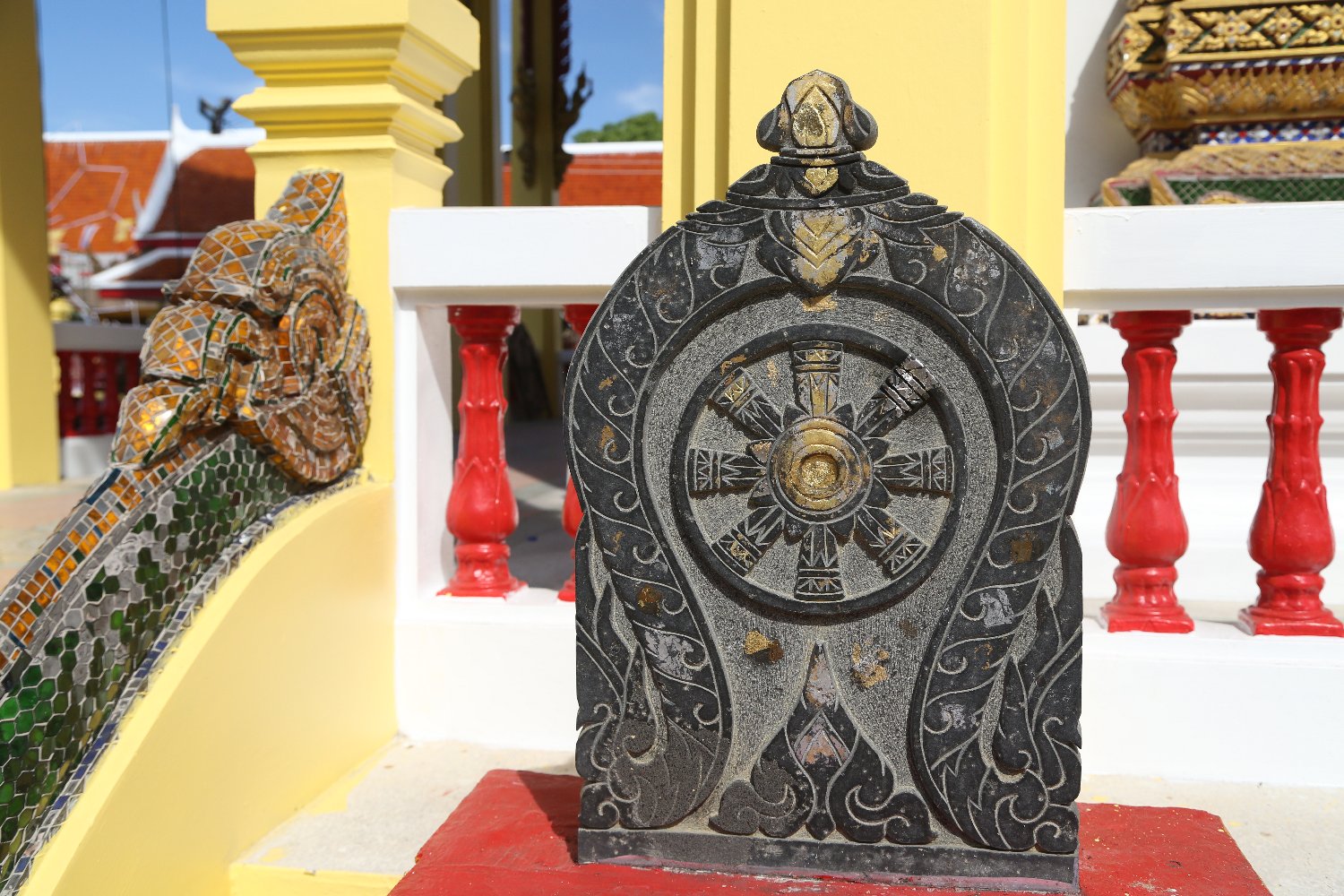
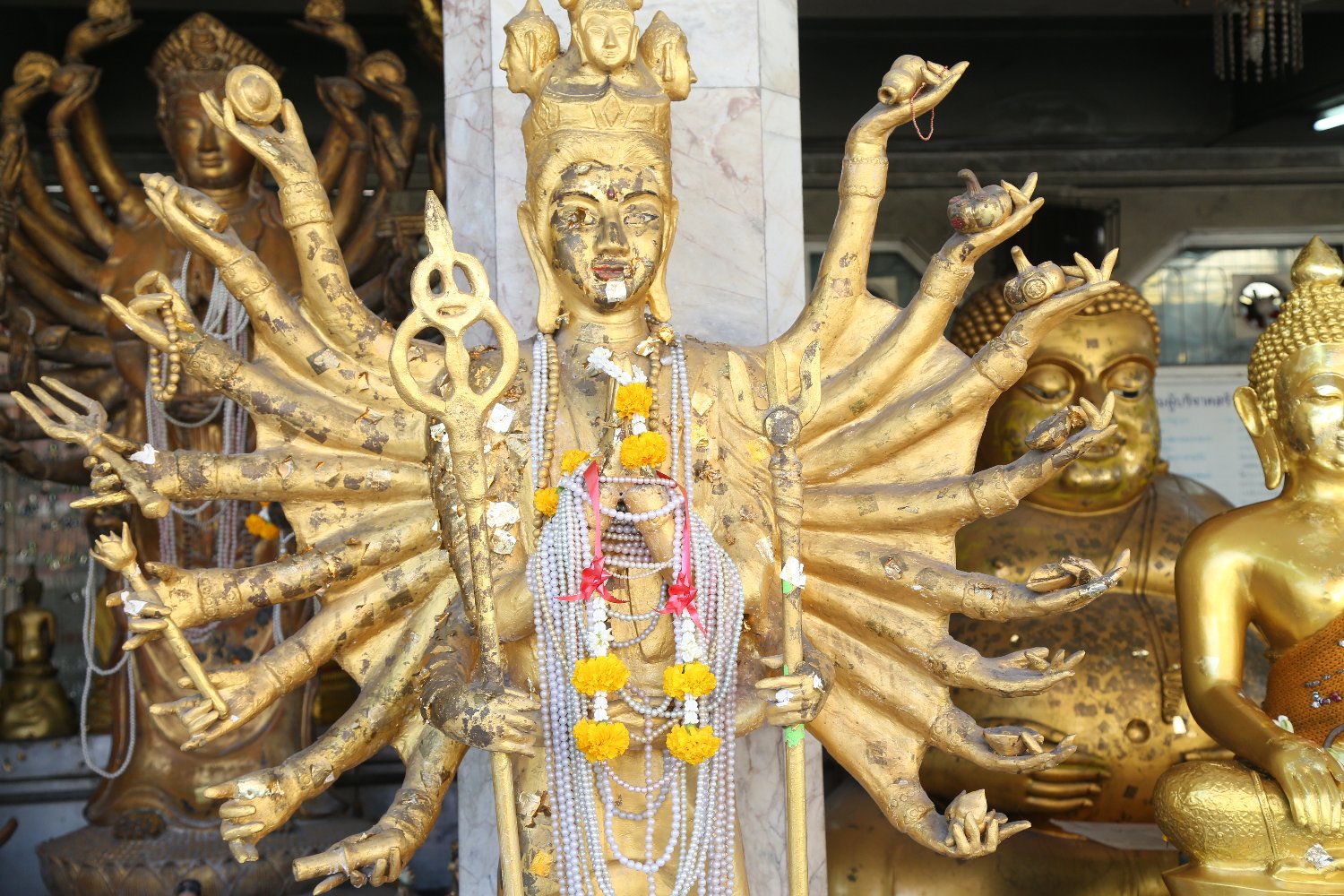
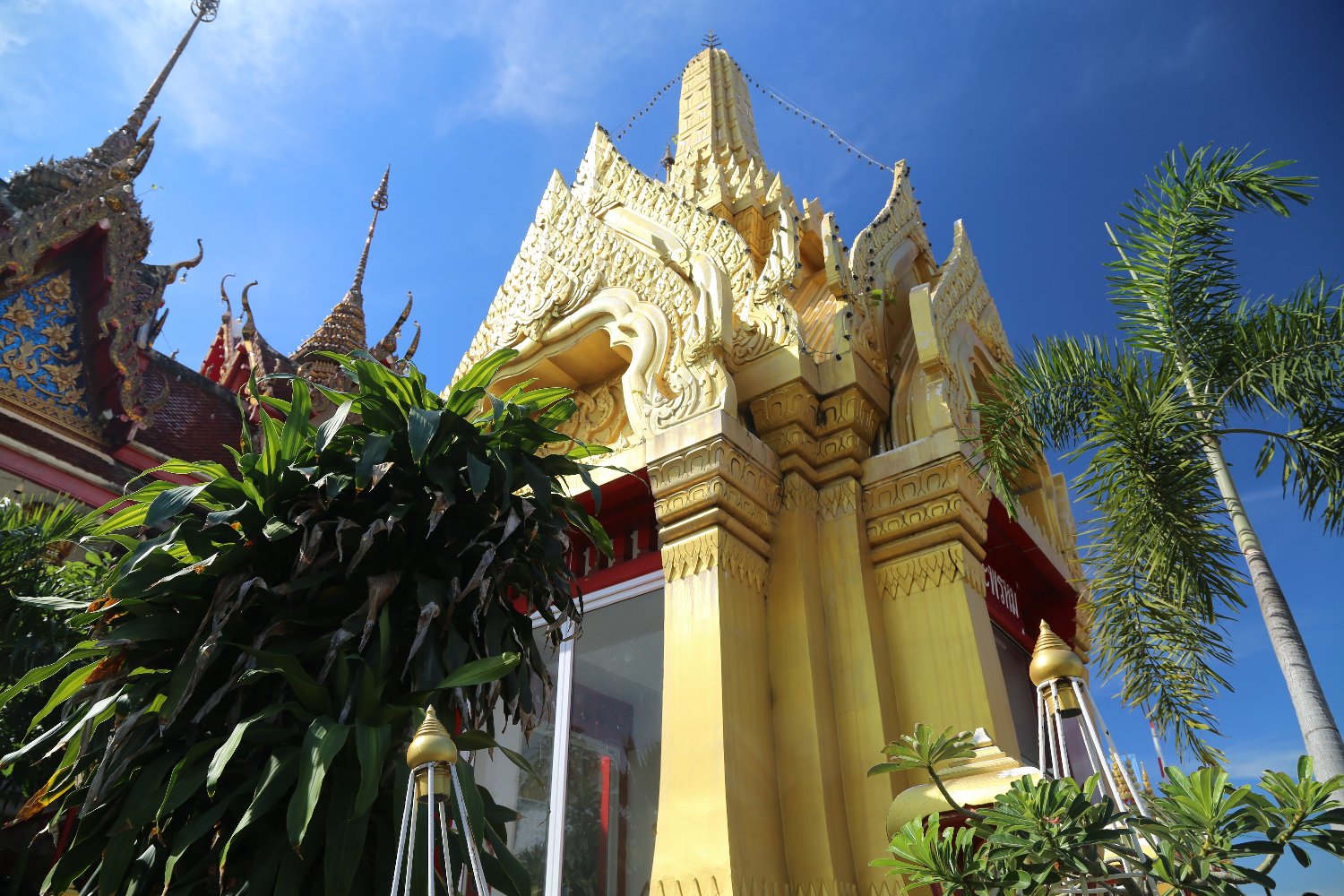
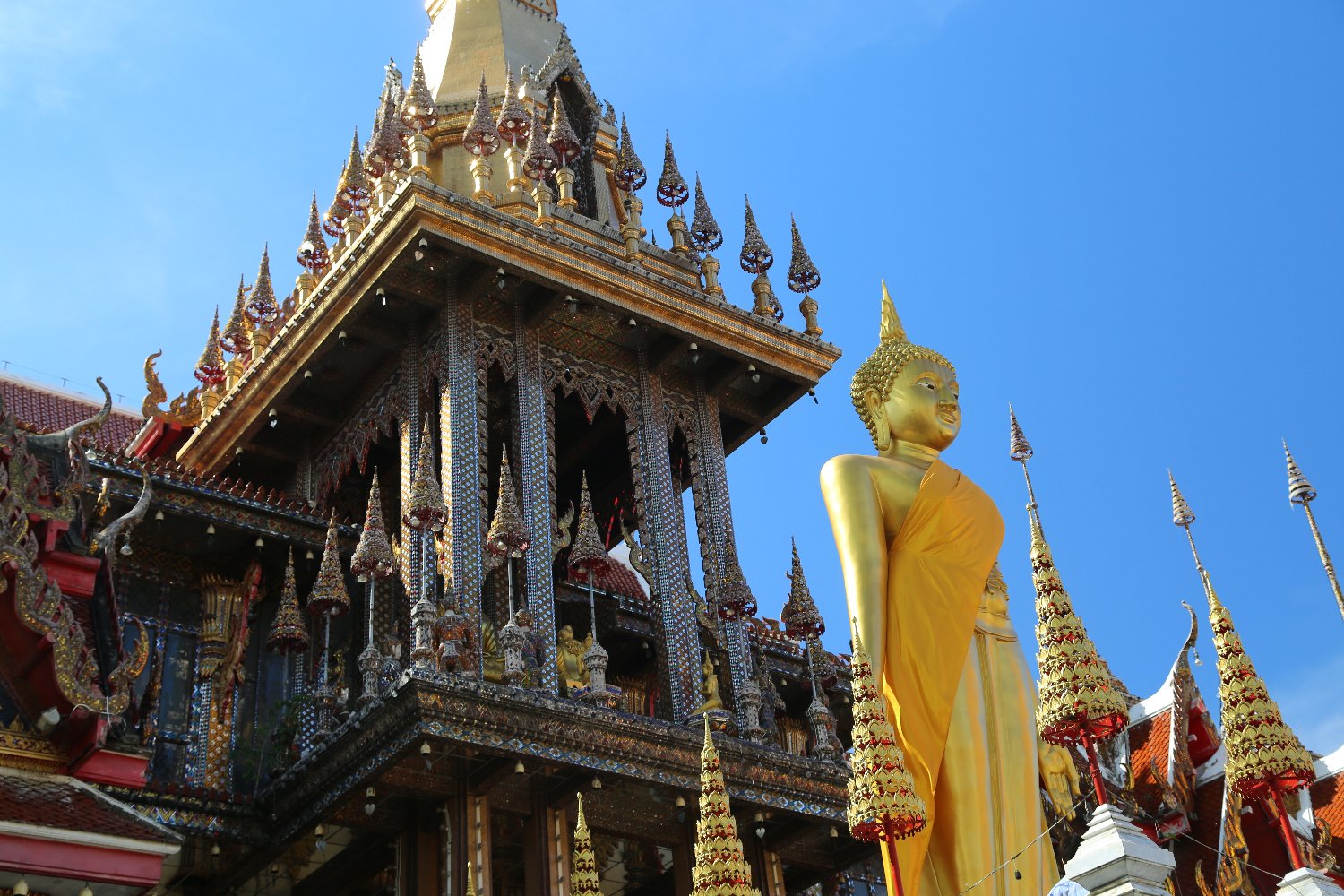
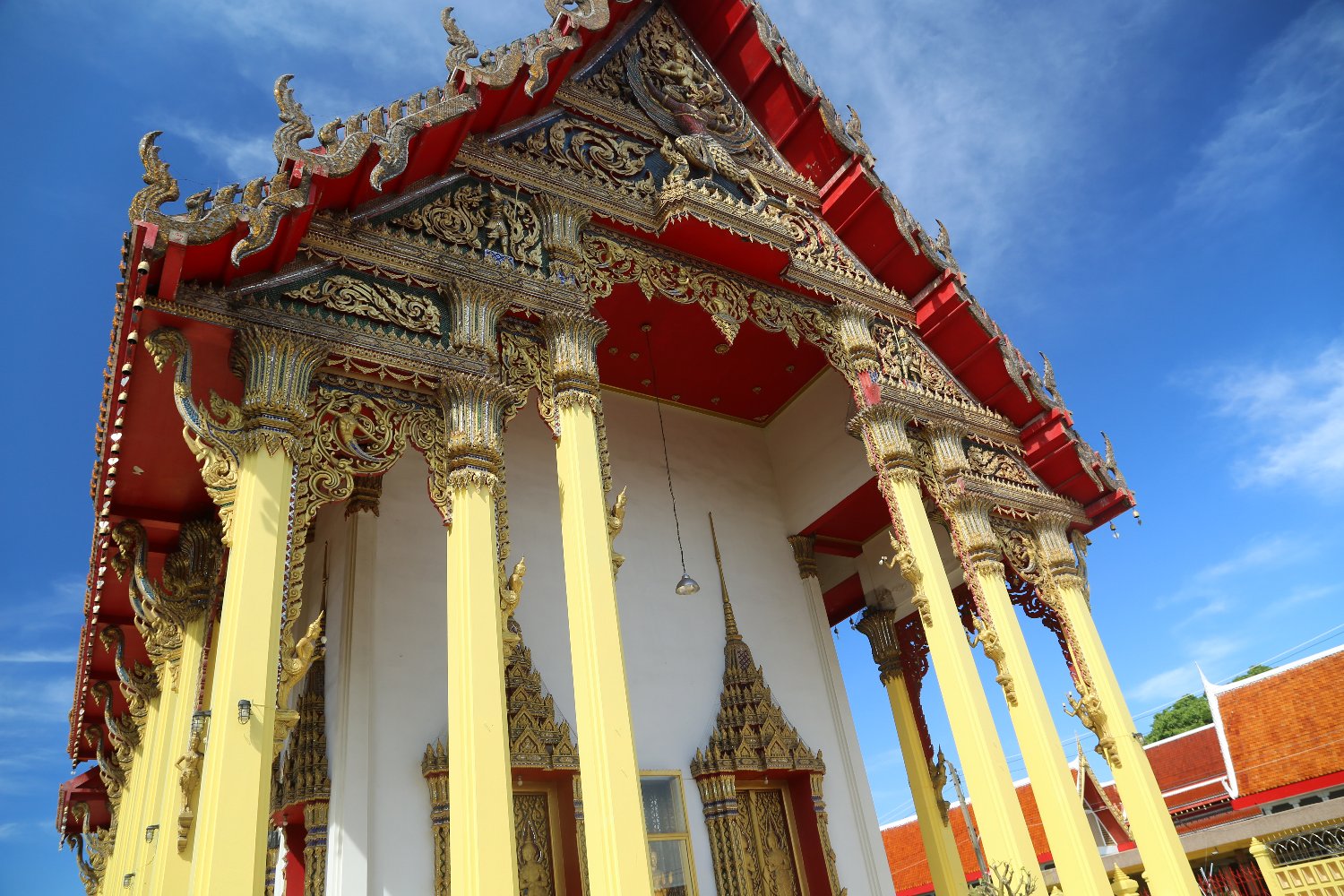
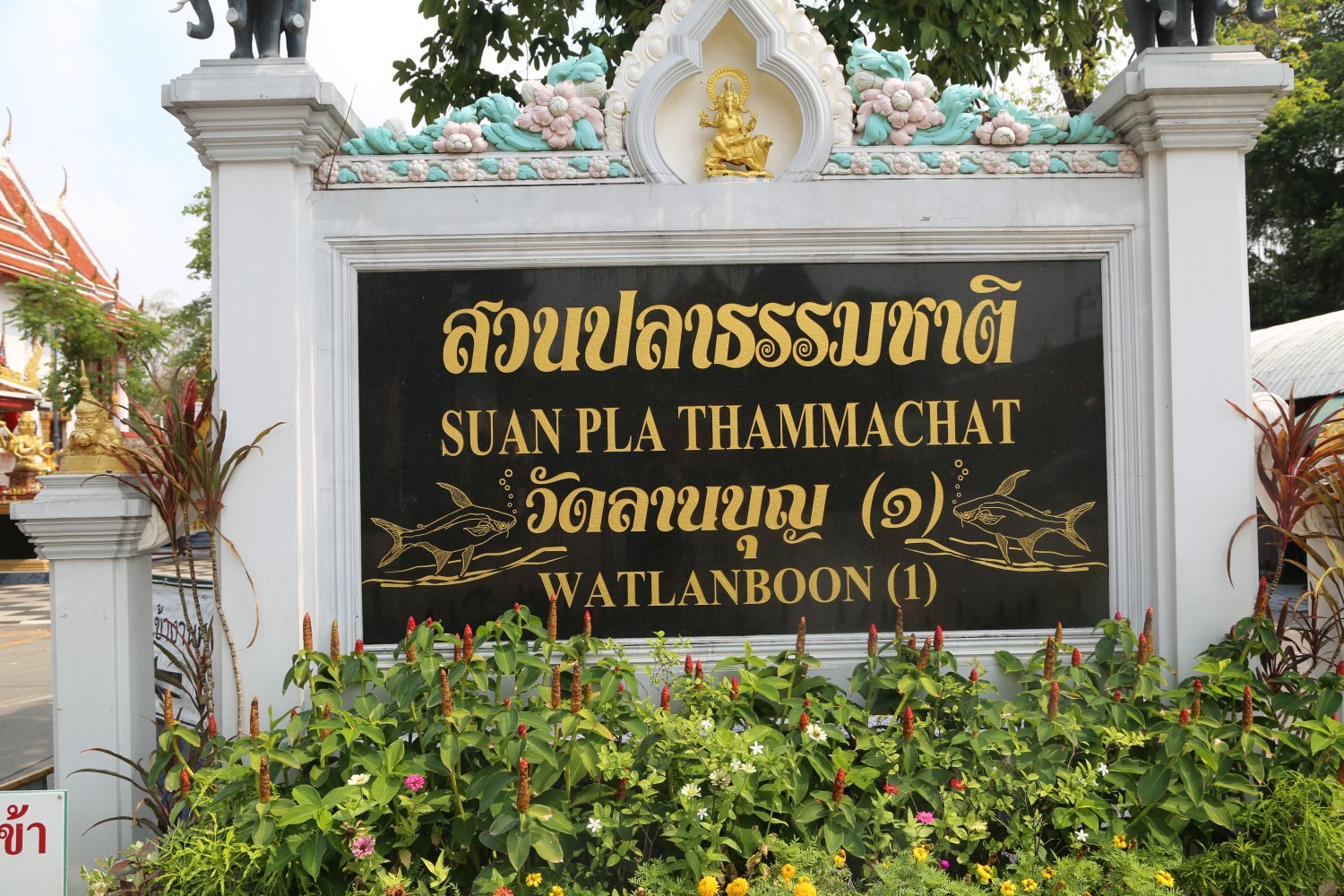
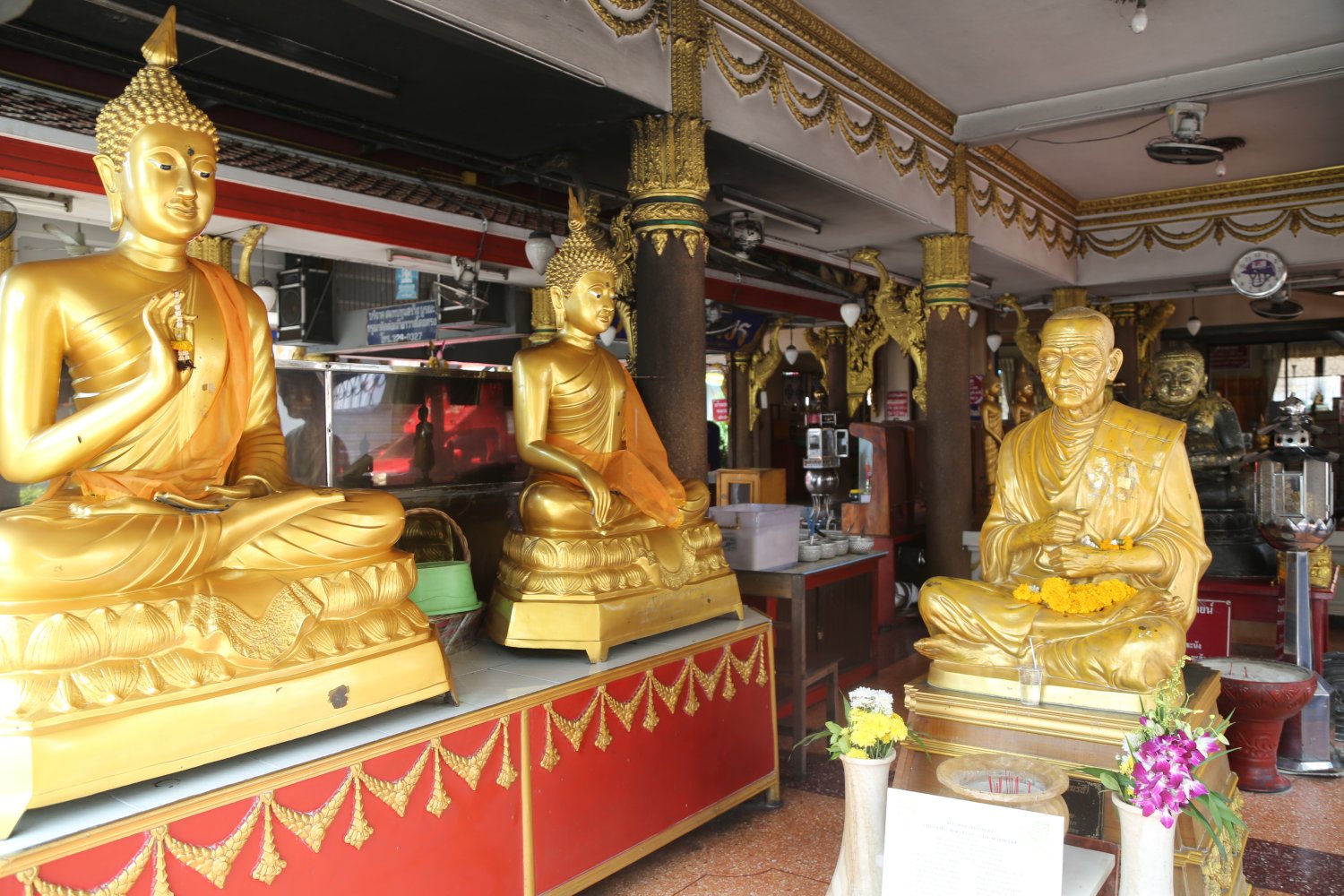
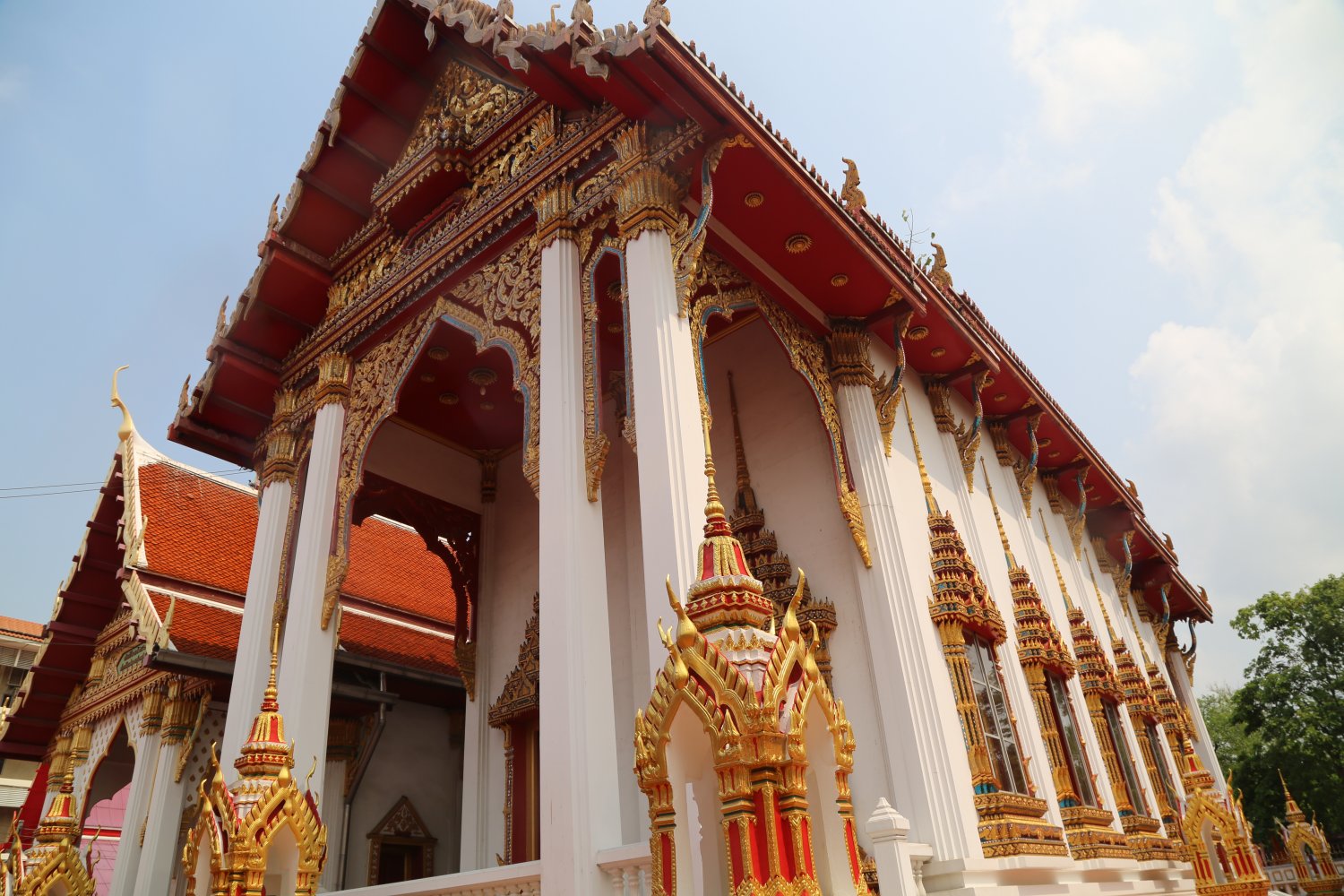
Wat Lan Boon is a small temple located within a short drive of Suvarnabhumi Airport – in an off the beaten path neighborhood, this temple is not really visited by tourists. Called the fish temple because of its location next to the Prawet Burirom Canal – one enters the temple via a bridge over this canal. Known as a fish sanctuary, a fish garden is located along the canal where visitors can purchase fish food or simply loaves of bread to feed the fish. Some of these fish are quite impressive – and when there is food in the water, they go a bit crazy!
In an unusual space, a covered food stall vendor area is located on the temple grounds directly next to the canal. Visitors order from one of the vendors and eat at one of the tables overlooking the canal. This canal was constructed in the late 1800s totally some 46 kilometers running all the way from Chachoengsao to the Chao Praya River near Sukhumvit. The canal took over 3 years to dig and facilitated water transportation of both goods and people.
A helpful display on site (first one we’ve seen at any temple in Bangkok) highlights the differences in birth dates (each day of the week).
And a covered semi-open library is also located on another part of the canal – the books are all in Thai – there is some seating here and one can rest overlooking the canal.
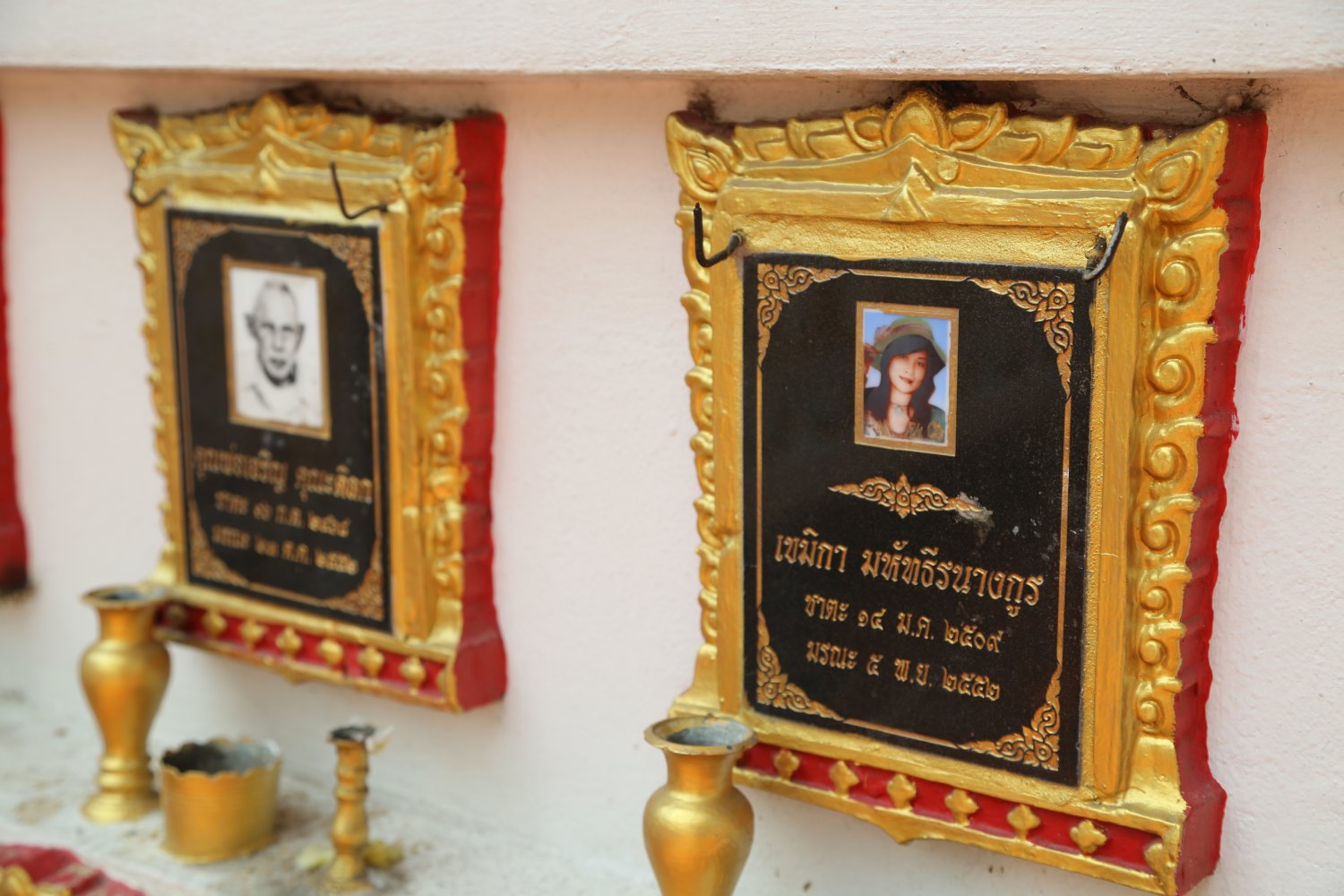
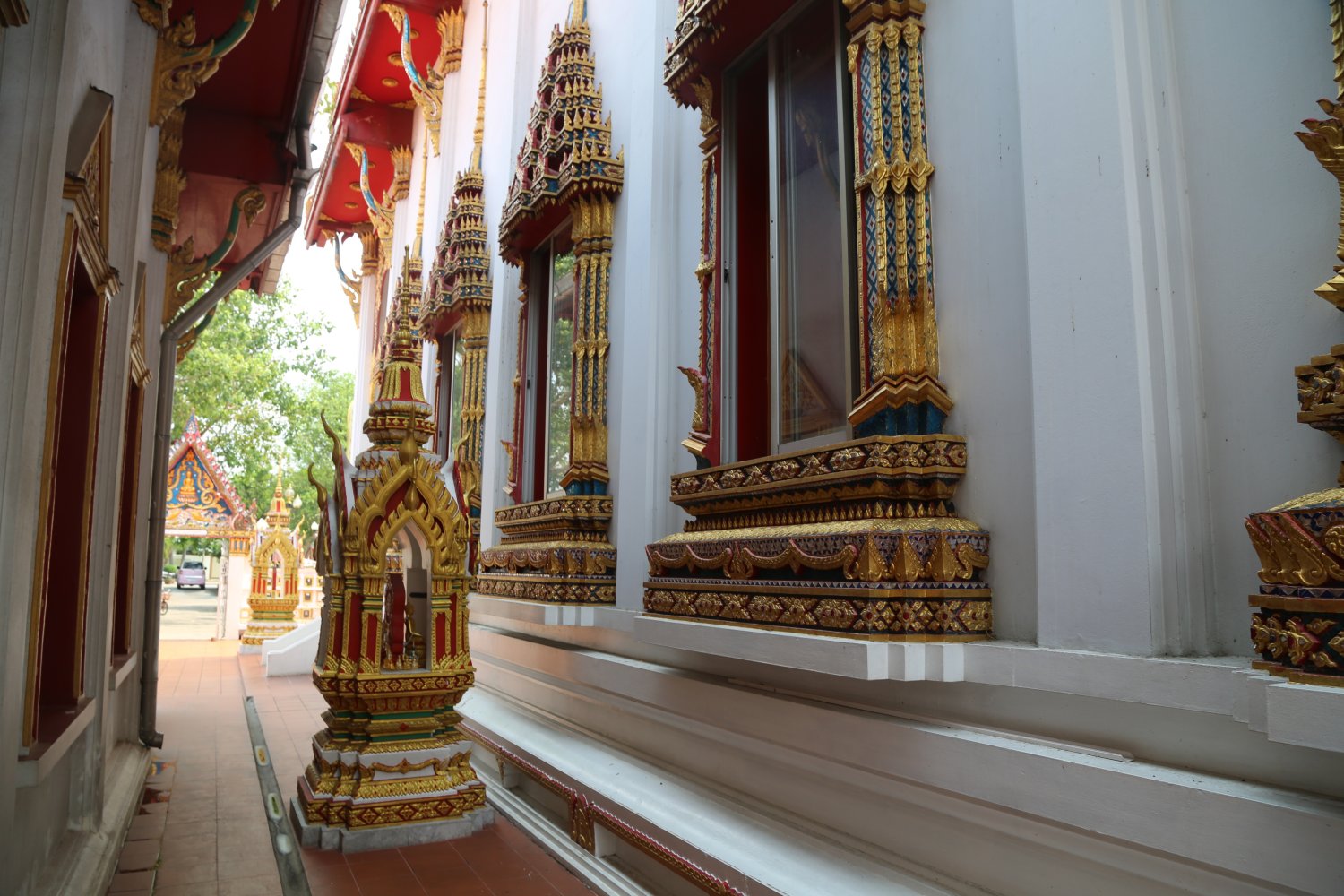

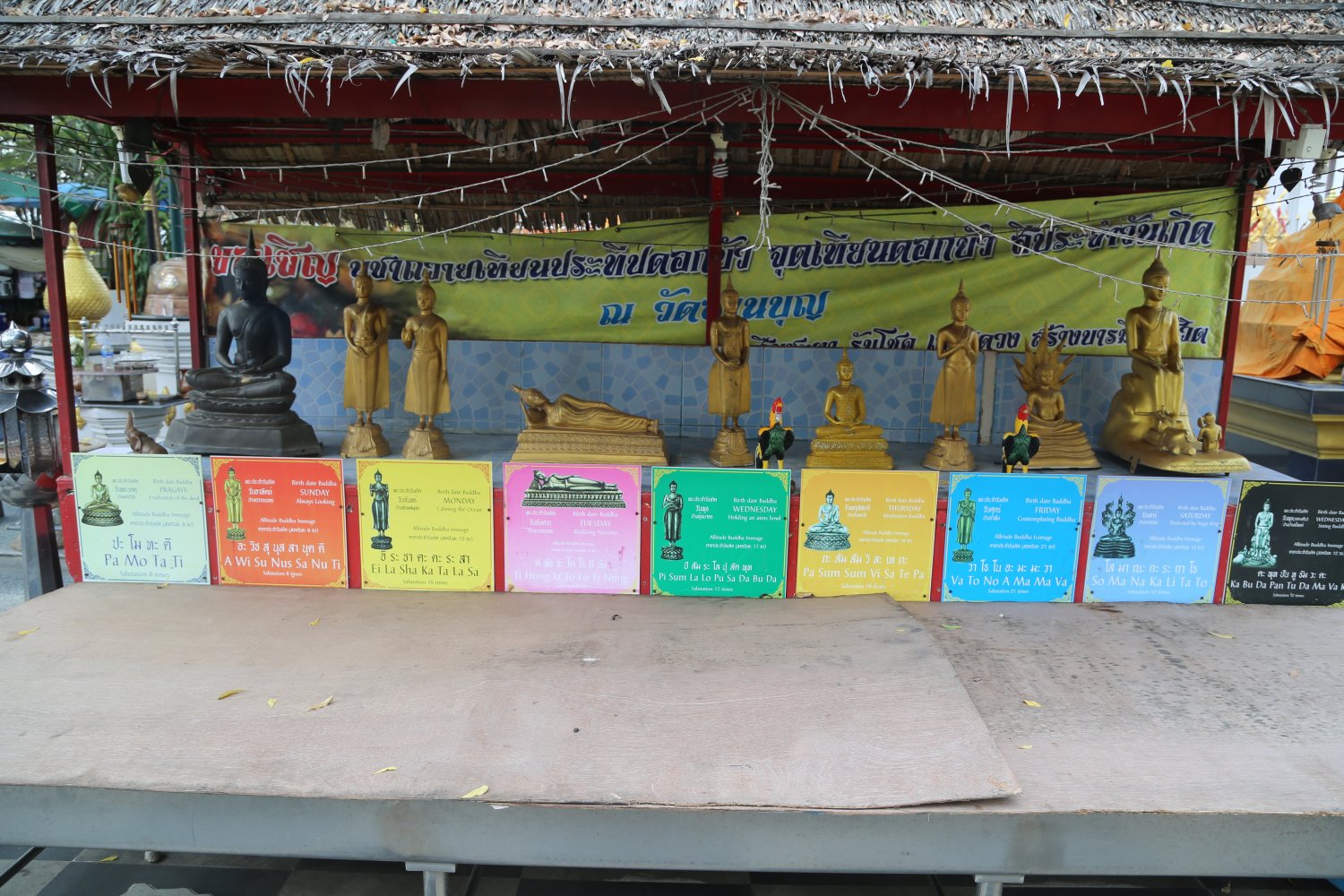
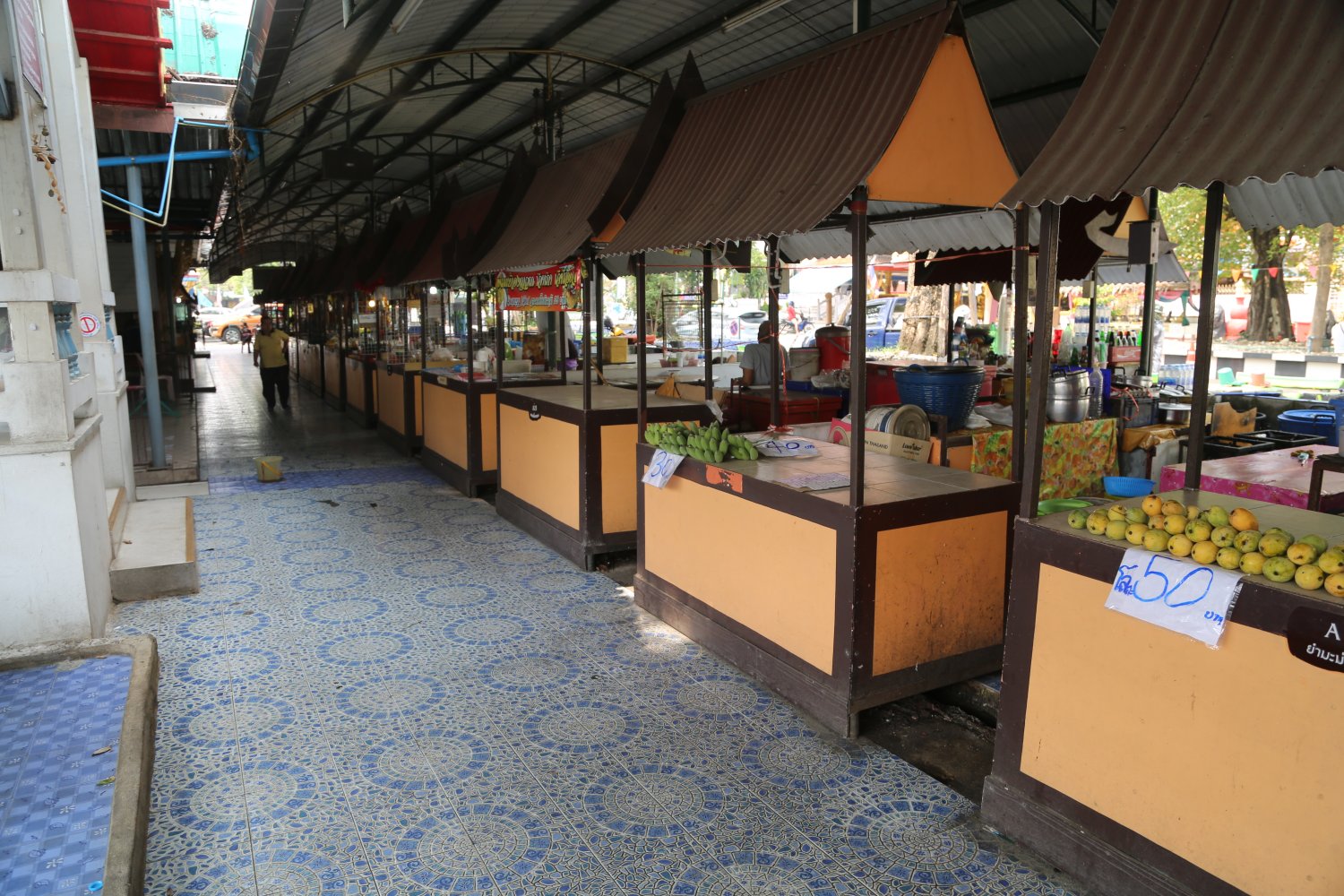
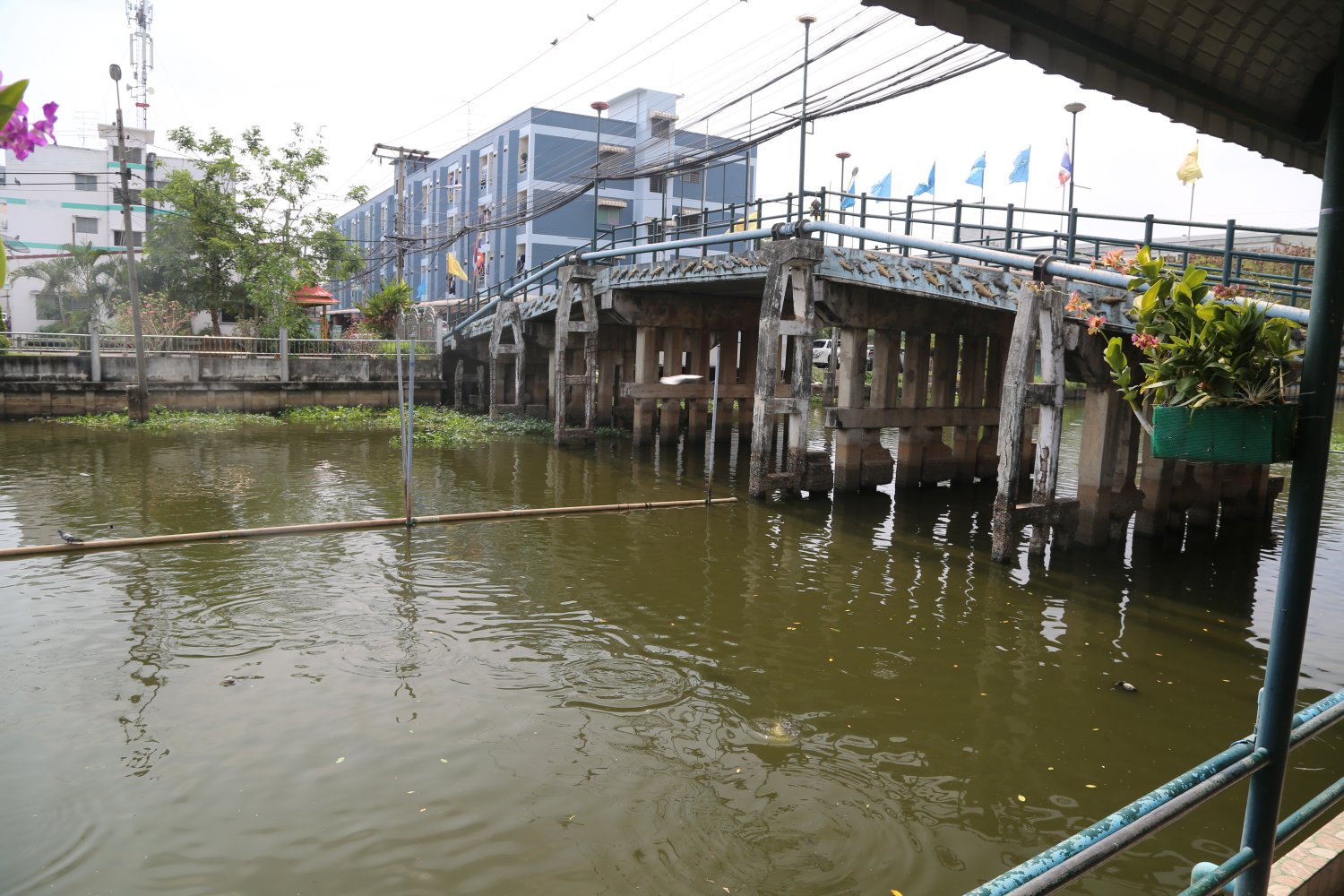
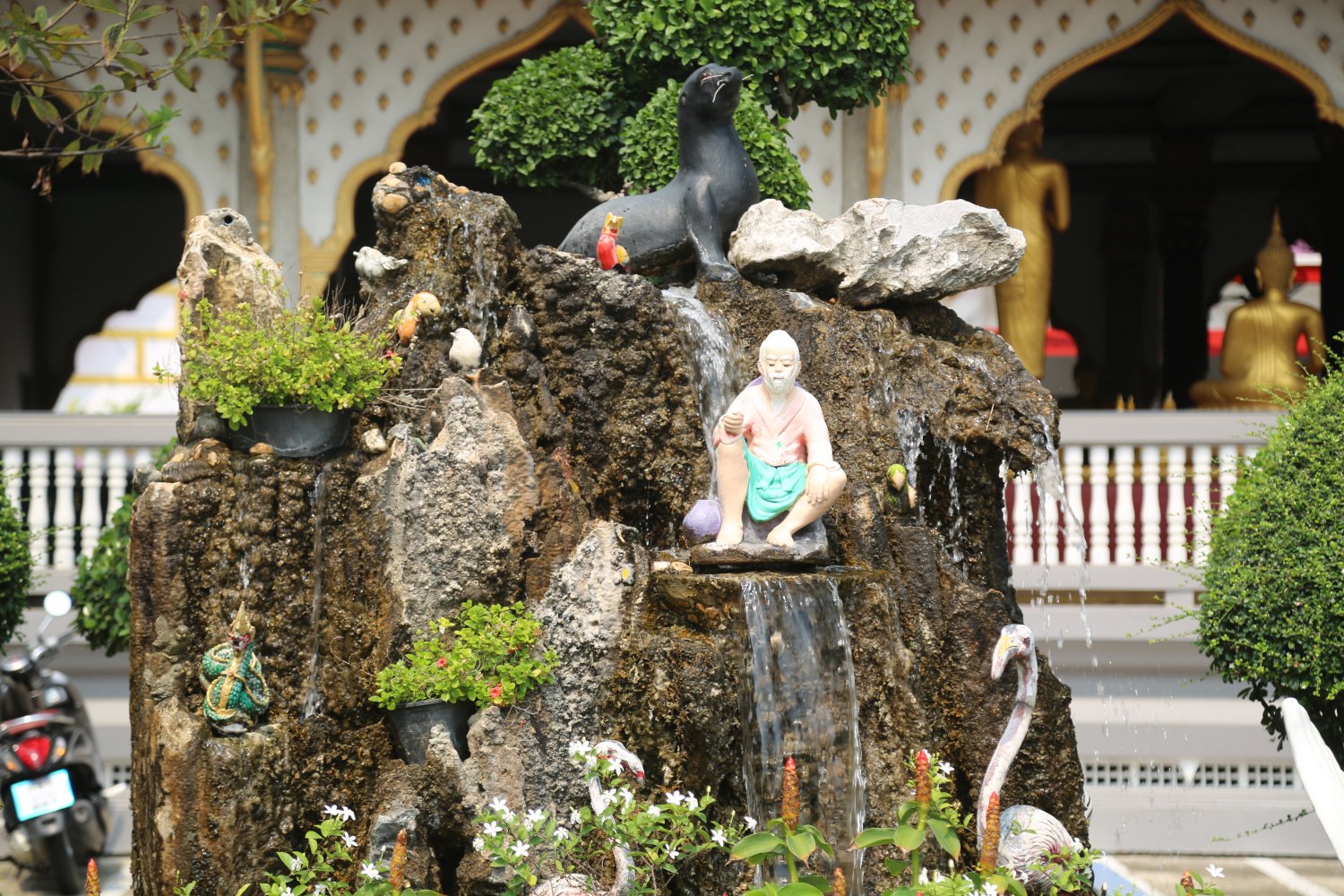

Wat Lat Pla Khao is located about a 20-minute drive from the Chatuchak Weekend Market on a small soi not far from a river canal. This is the only small temple we have ever seen ATM machines. One needs some time to look around this temple – lots of beautiful details in the artwork including the statues. Worth entering is the Ubosot with the prominent sitting Buddha resting high above the floor – surrounded by colorful murals on the upper walls and ceiling.
This old temple dates back to 1866 – in the early years, this site served as a small clergy but later became a monastery with the appointment of a monk and took its current name at that point.

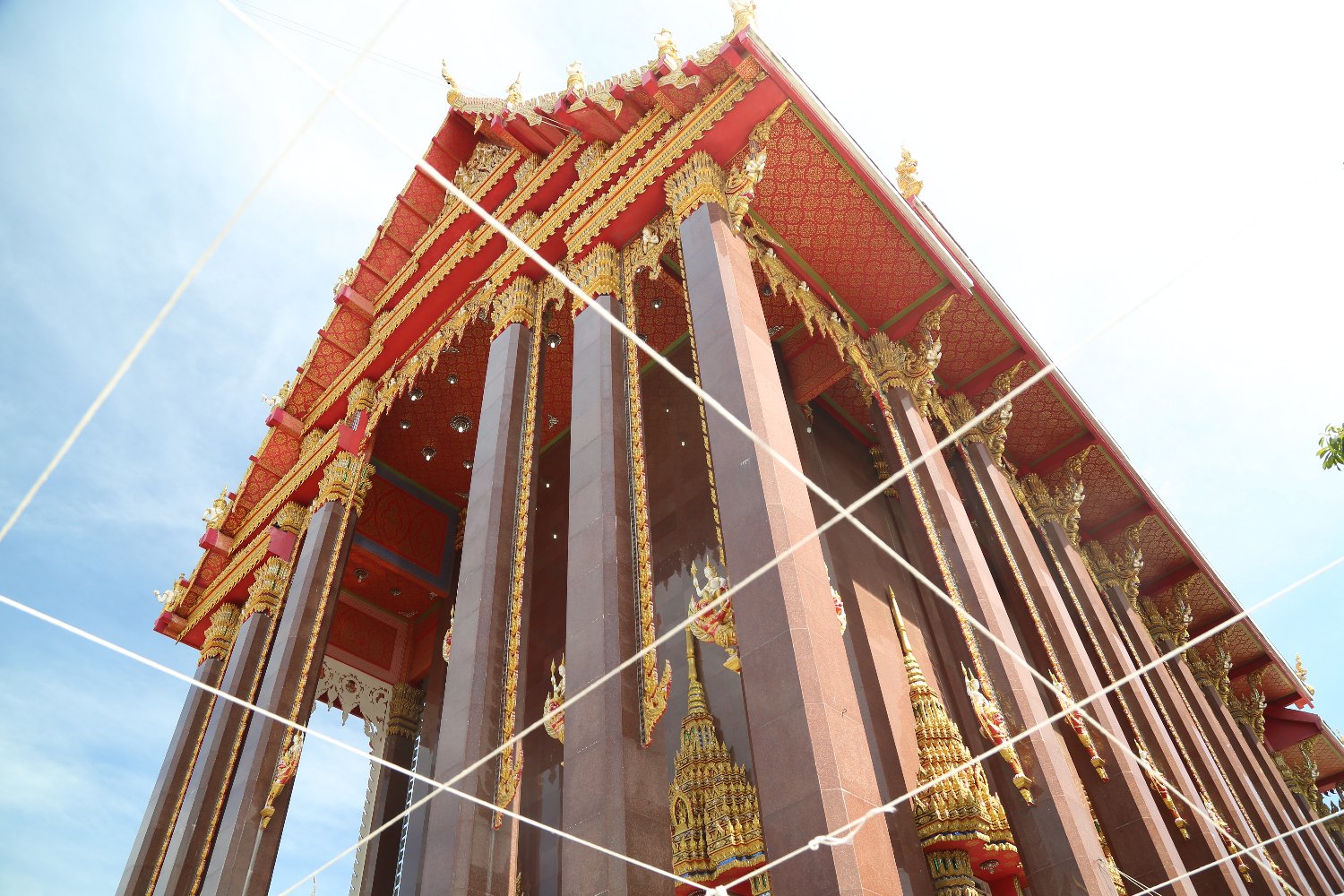
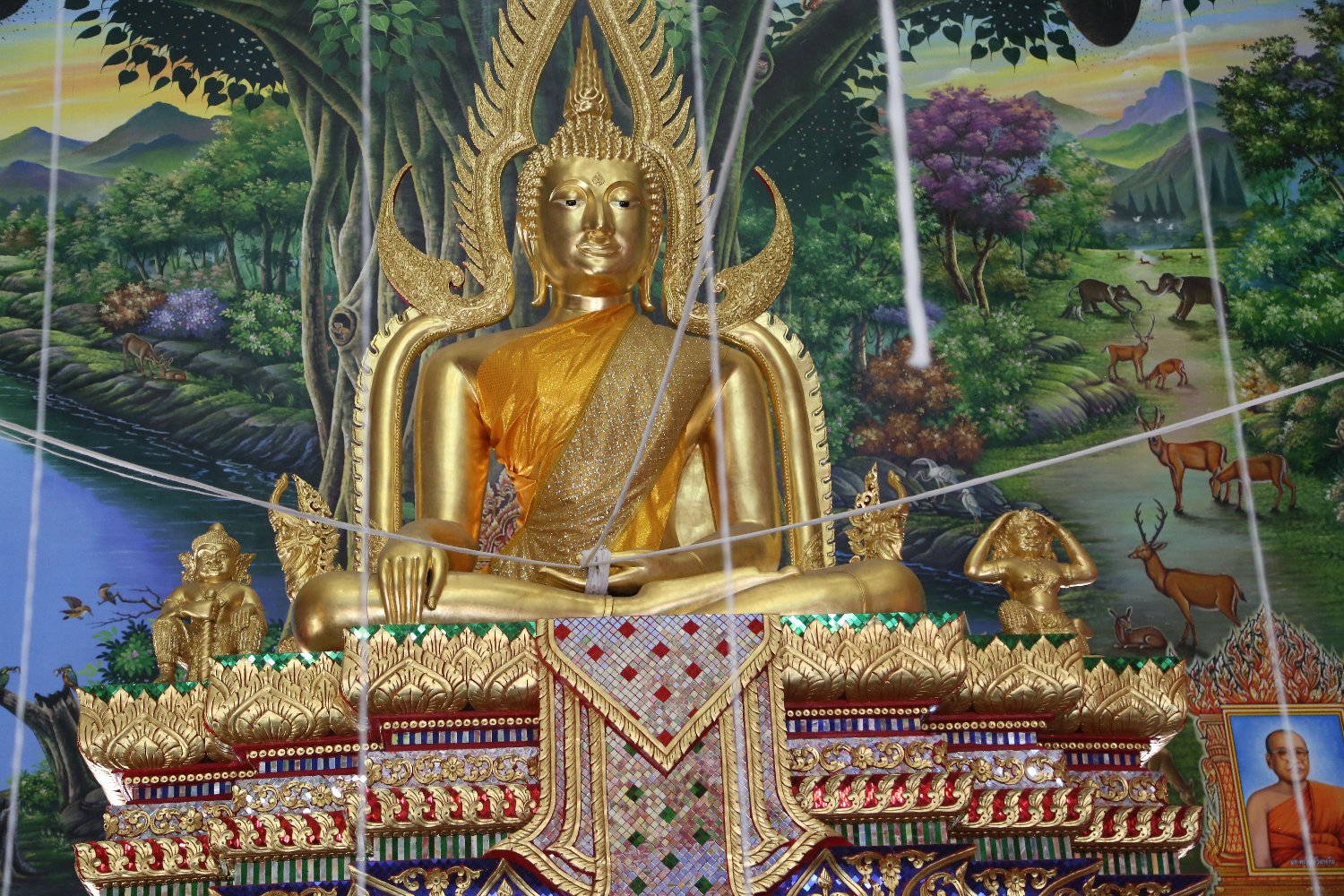
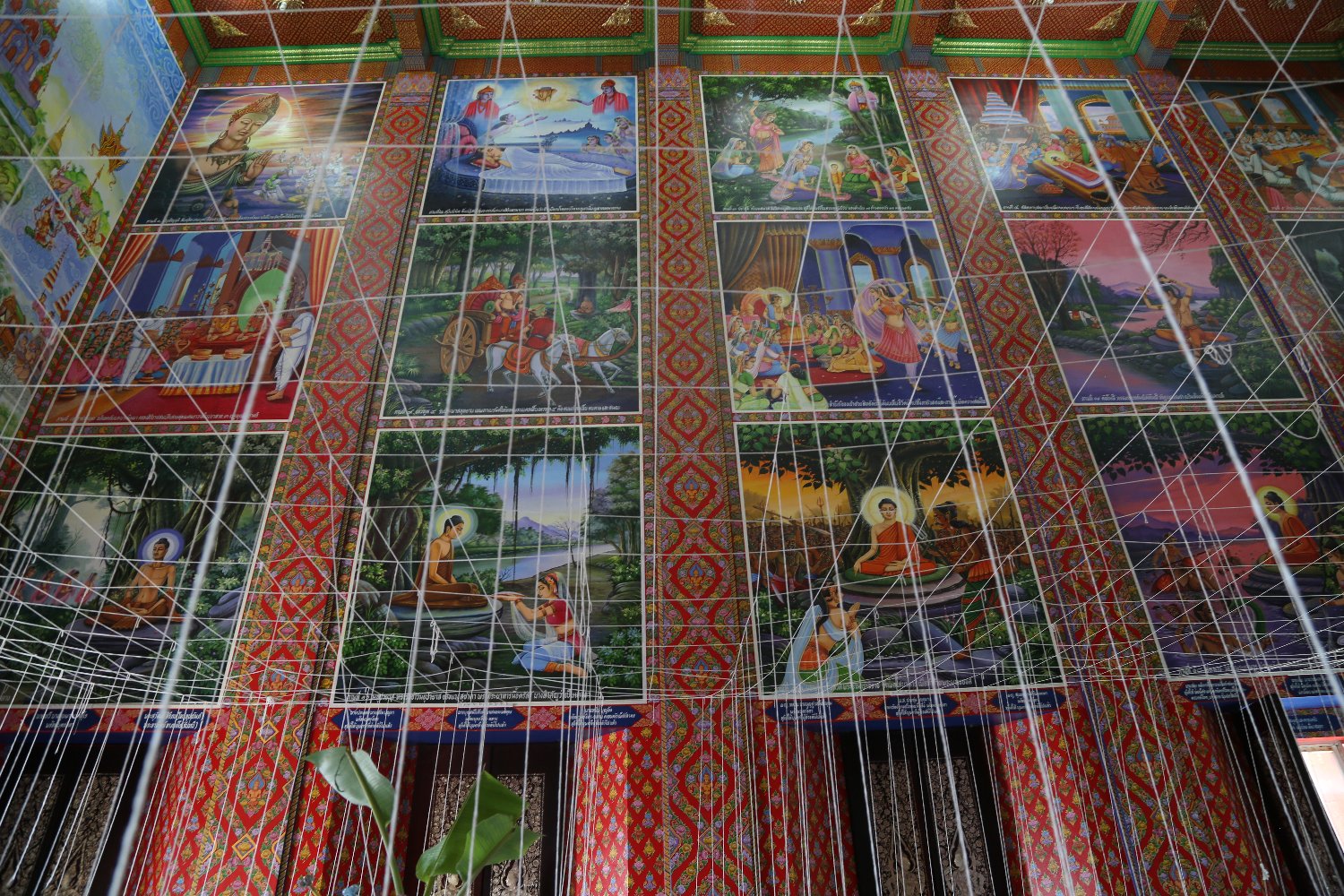
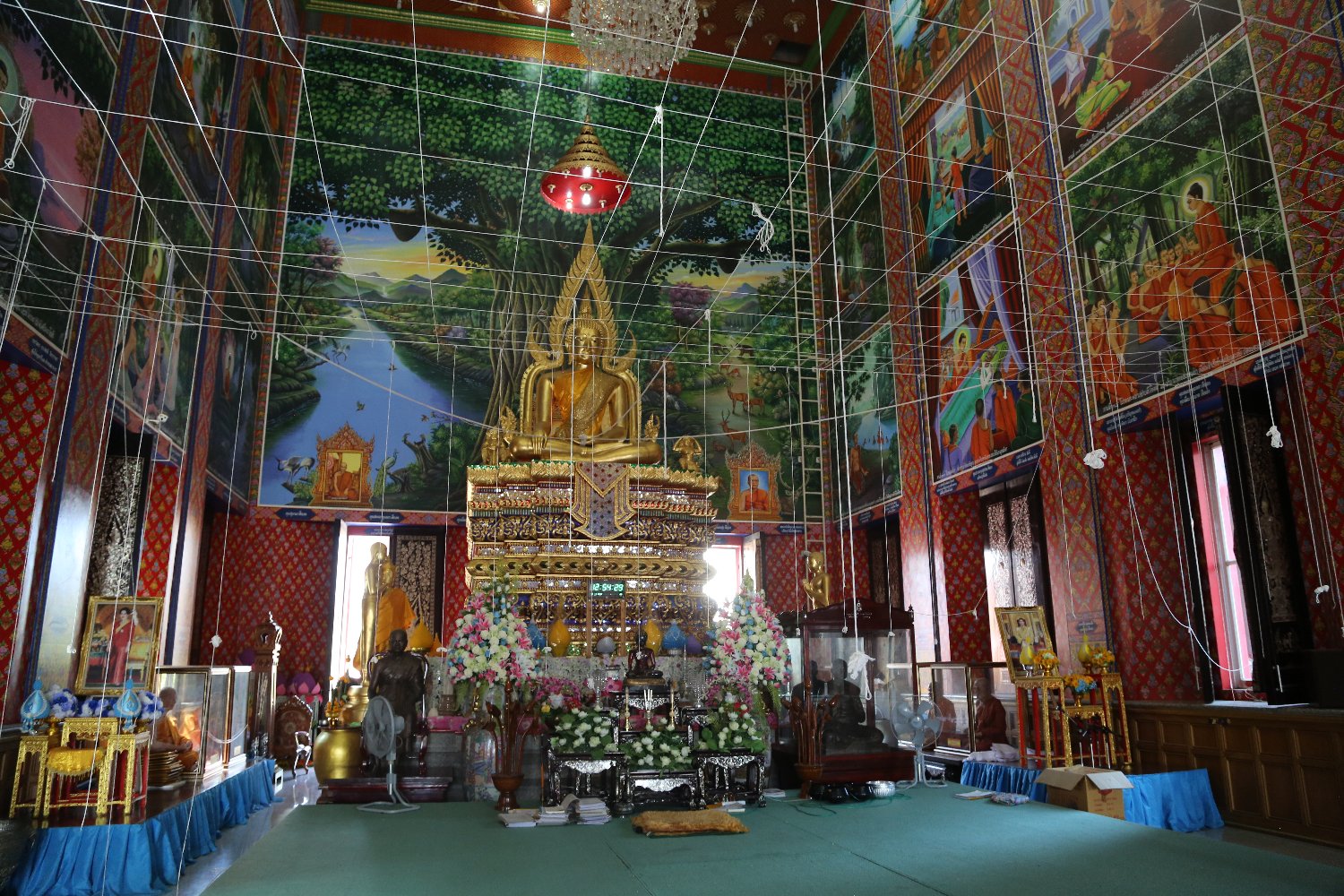
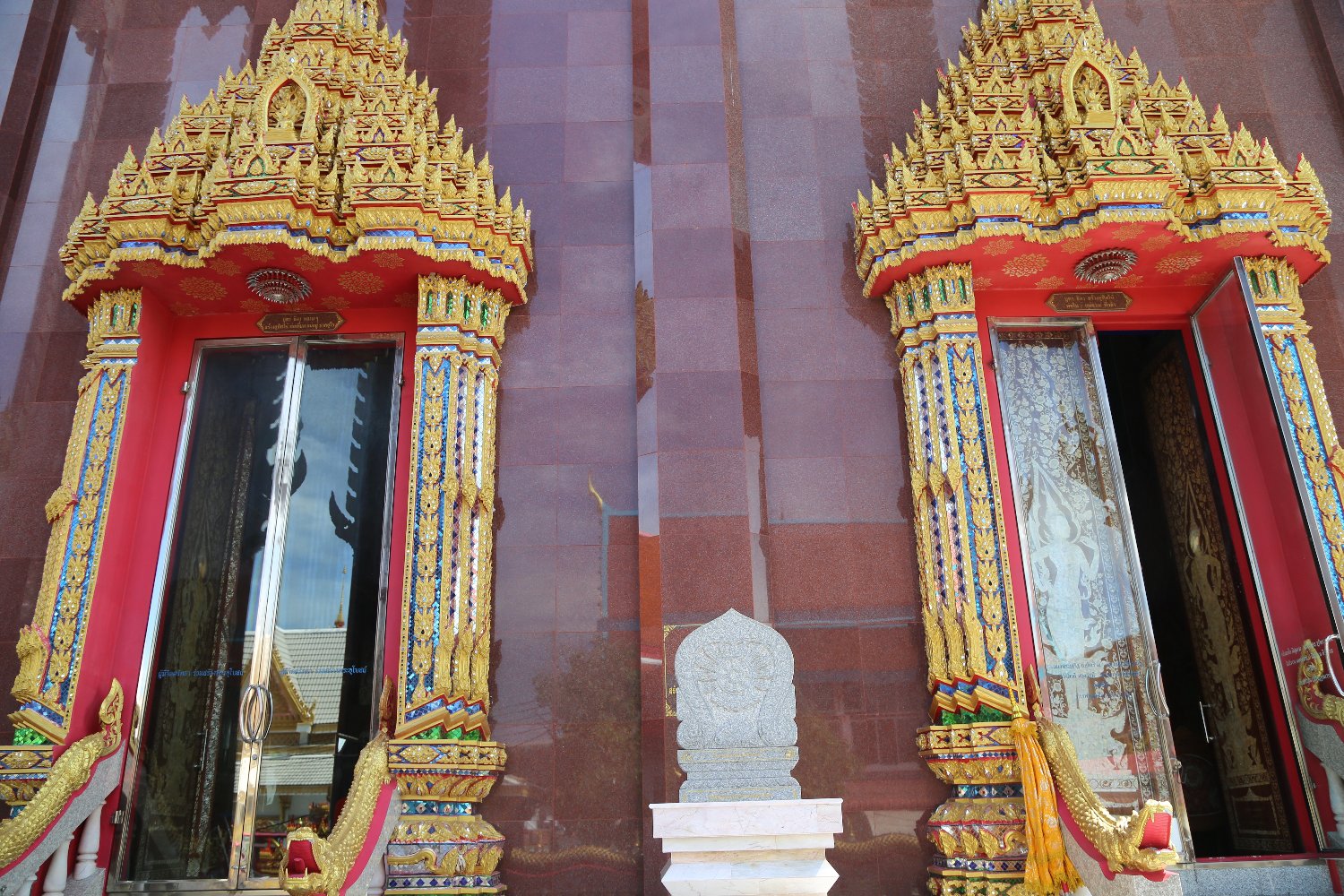
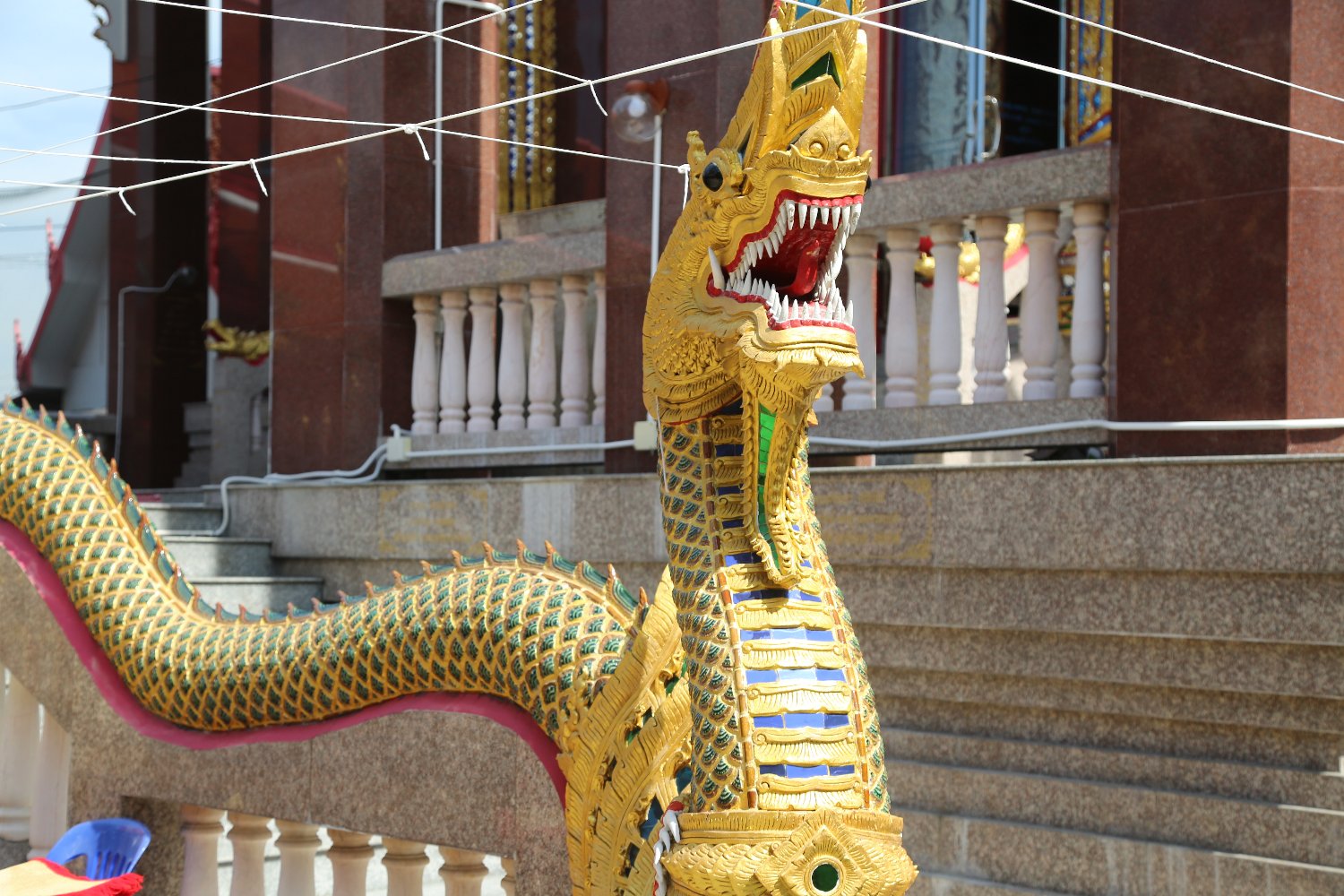
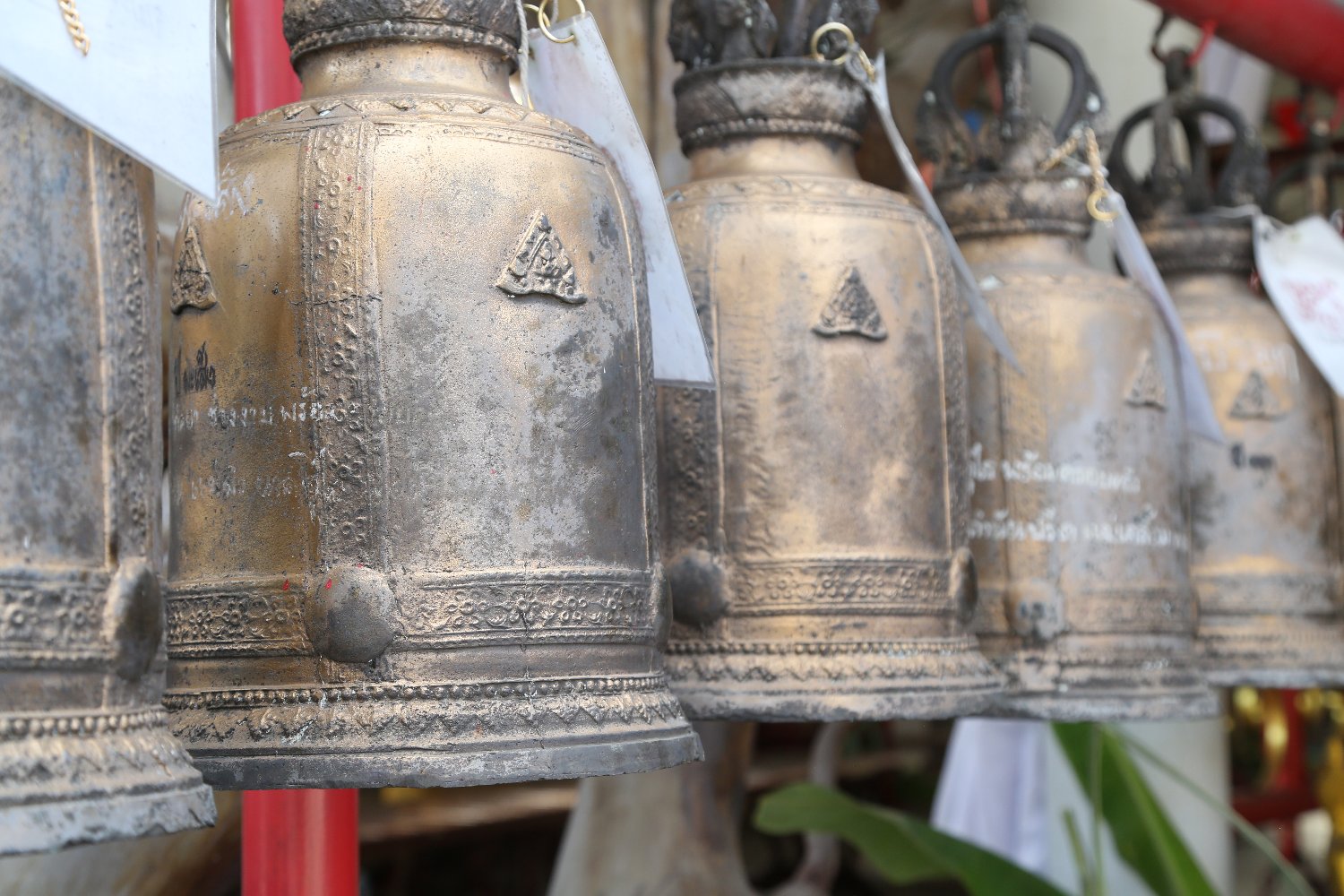
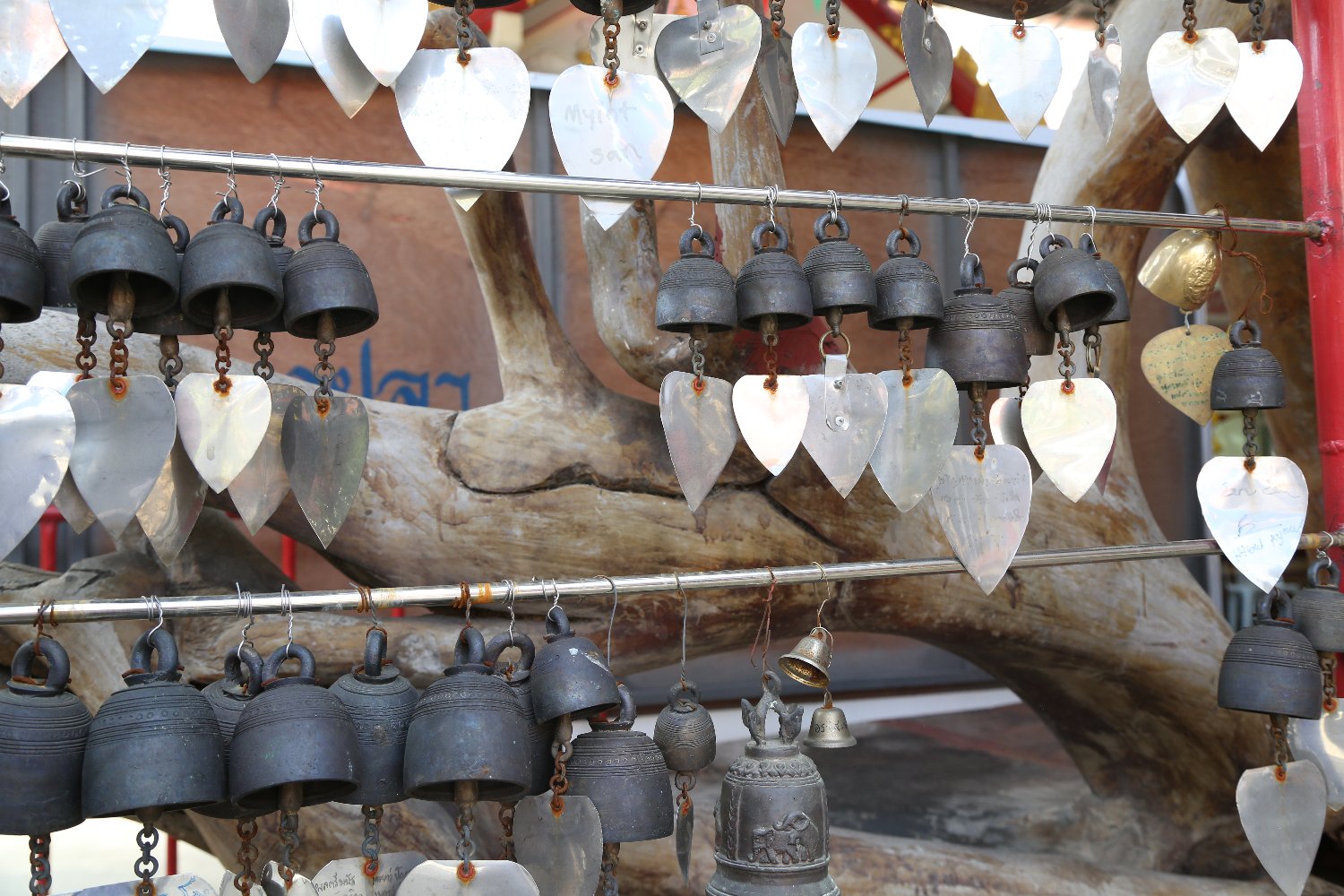
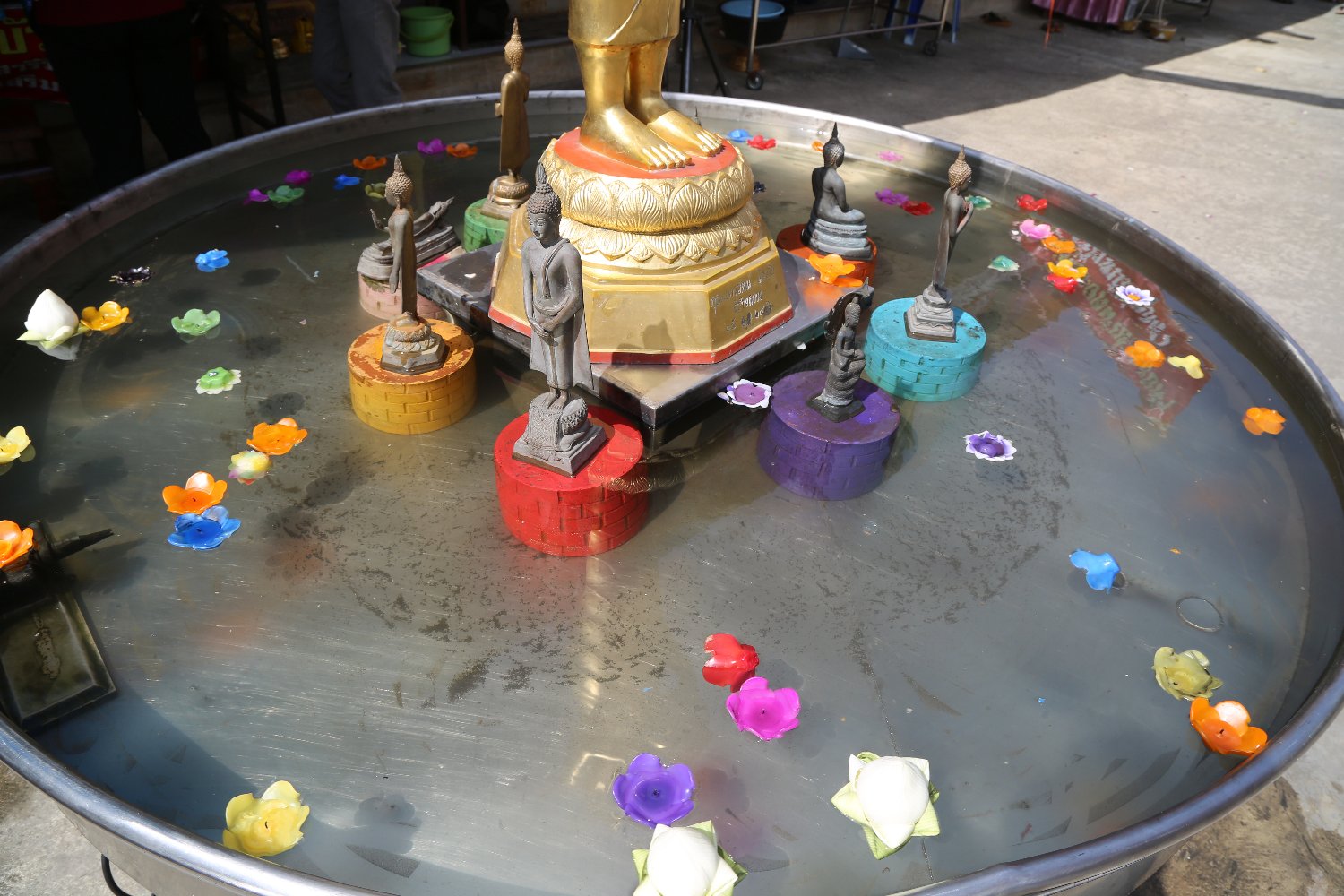
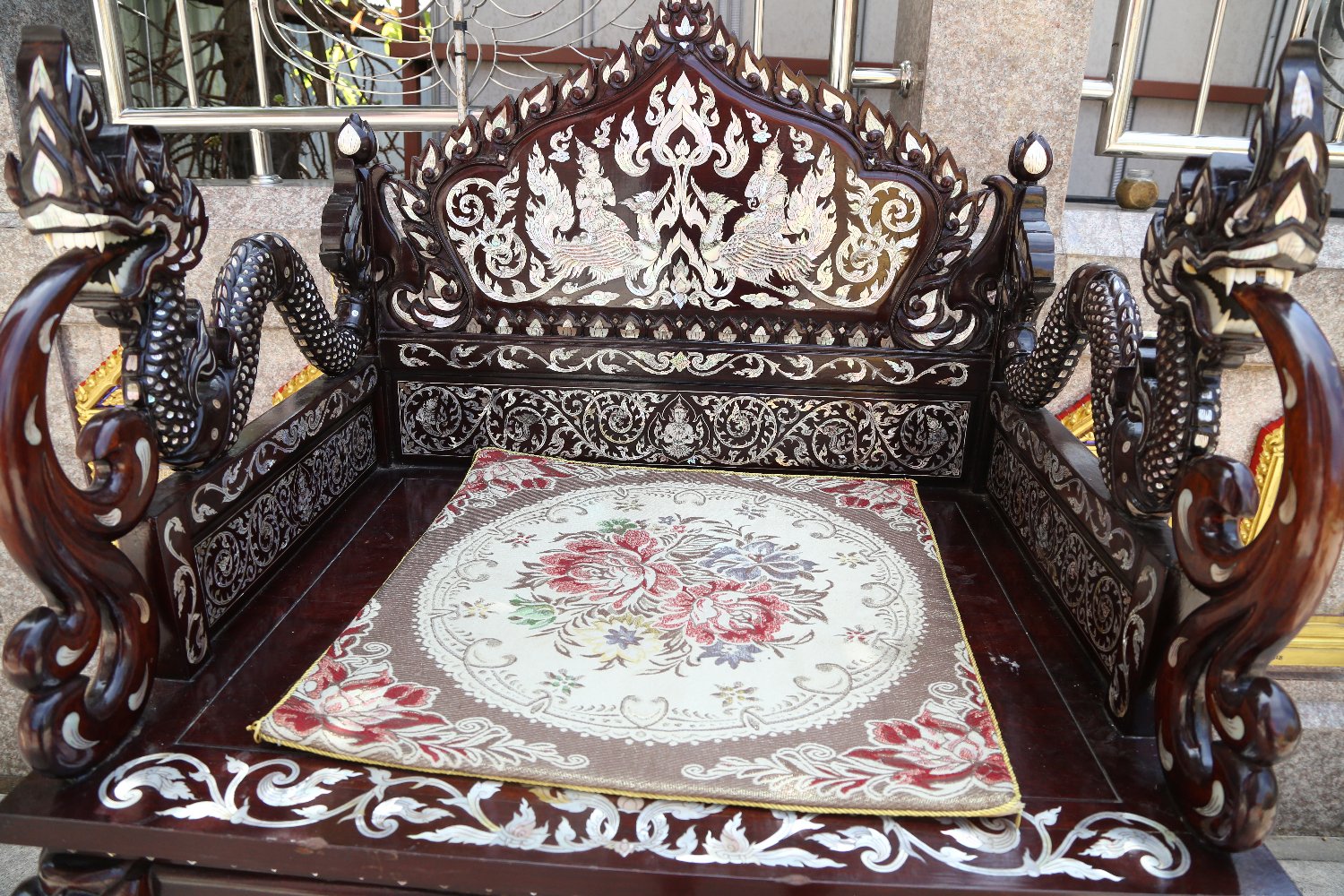
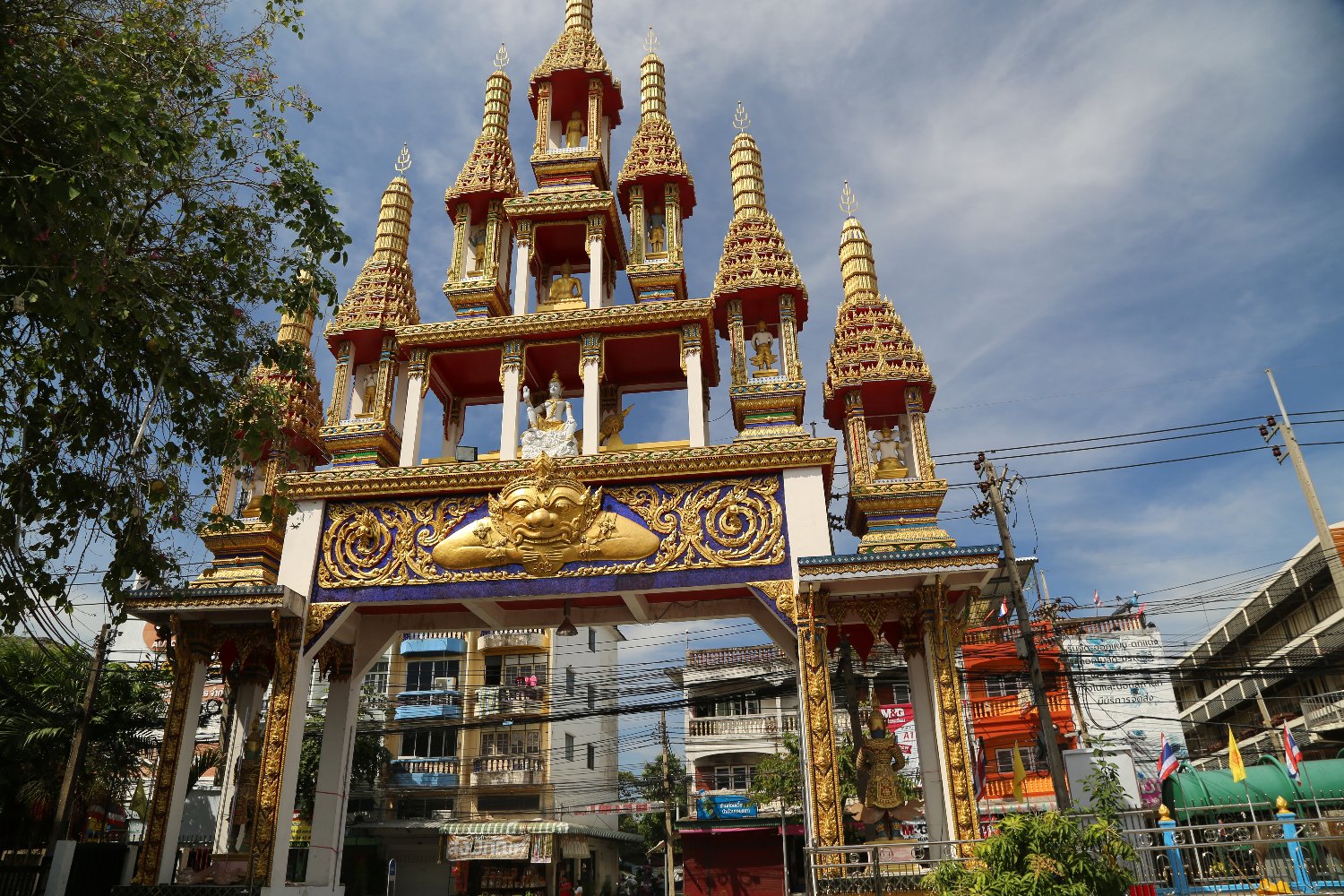
Wat Mahabut is a gorgeous temple complex highly recommended and worth taking a special trip out here. This temple is located alongside the prominent Phra Khanong chanel – located about a 10-minute drive from the On Nut Skytrain stop. Or one can access this temple via the river boats that traverse the nearby canal (the stop is right next to the temple grounds). The temple was originally constructed in 1762 – the inception came from Phra Mahabut a monk who came to live with his relatives alongside this canal.
Together he and the villagers built the temple named in his honor. This temple is also well-known among locals by the name, Wat Maenak Phrakhanong in tribute of a romance story involving a ghost called Maenak Phrakhanong. Sometime in the 1850s a couple lived along the canal, the man Mak and his wife Mae. He left to join the military, was wounded and while recuperating away from his wife – Mae went into labor and both she and her unborn baby died.
This sad state of events is one of the most powerful events tied to dangerous ghosts. Rather than cremate the body as was custom, Mae has quickly buried. Her husband returns home to find Mae and their child as if nothing ever happened. But in reality, she is a ghost, and no one has informed him of this. Eventually he does discover the truth – through a series of events and flees to the nearby Wat Mahabut where the local monks protect him.
One of the highlights of this temple is visiting the Mae Nak shrine with a golden almost life-like haunting statue of Mae Nak surrounded by paintings of here as well as other gifts left by her ‘fans’. And fortune tellers capitalizing on the fears associated with this story are often found on the grounds or along the small soi leading to the temple.
So many details to see here – one should not rush but spend at least an hour or two walking the grounds including along the tiny concrete walkway that parallels the canals. Signs are here indicating high fines and jail-time for feeding pigeons – but we have seen vendors selling bread to feed the pigeons right in front of the signs. Good times!
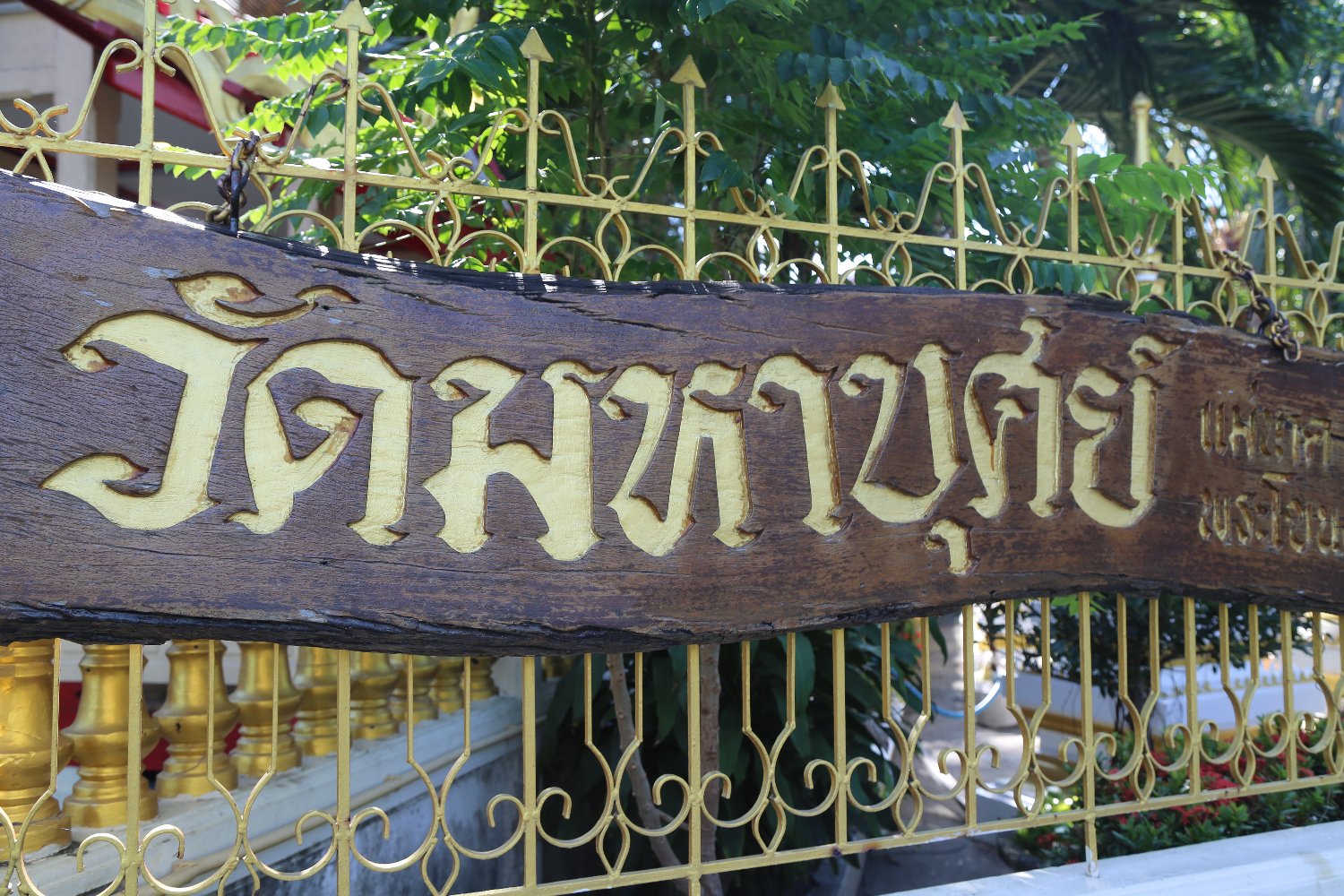

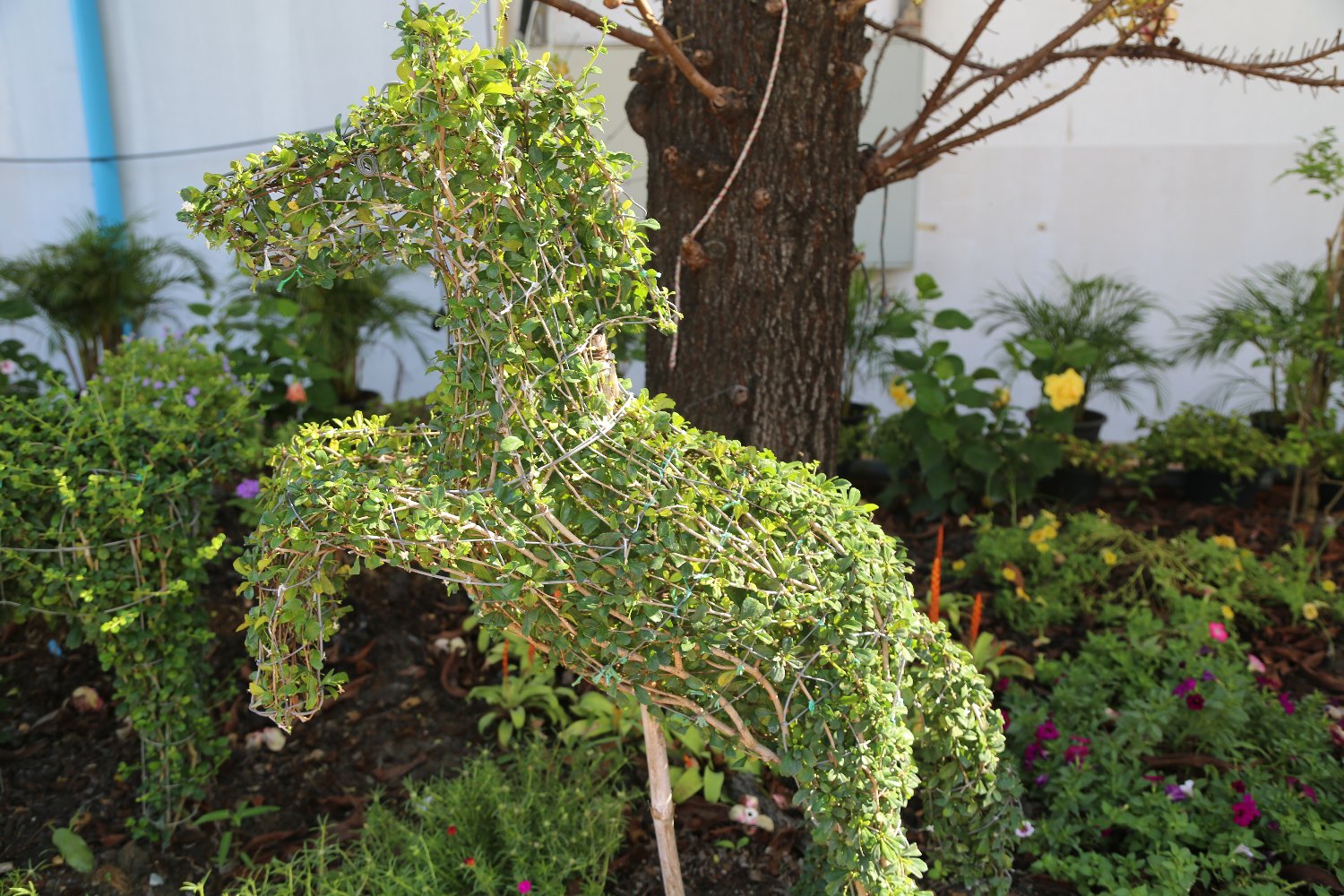


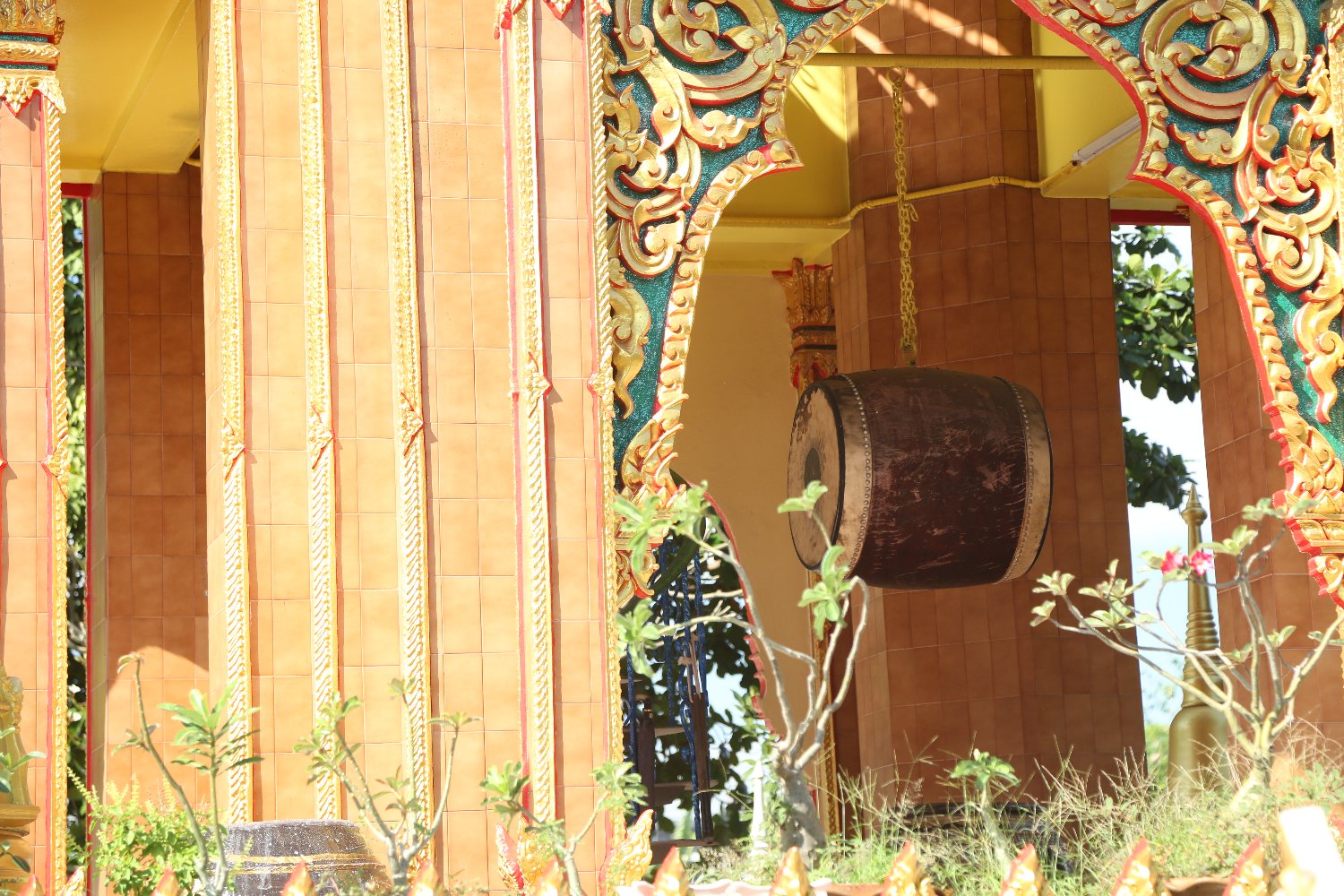
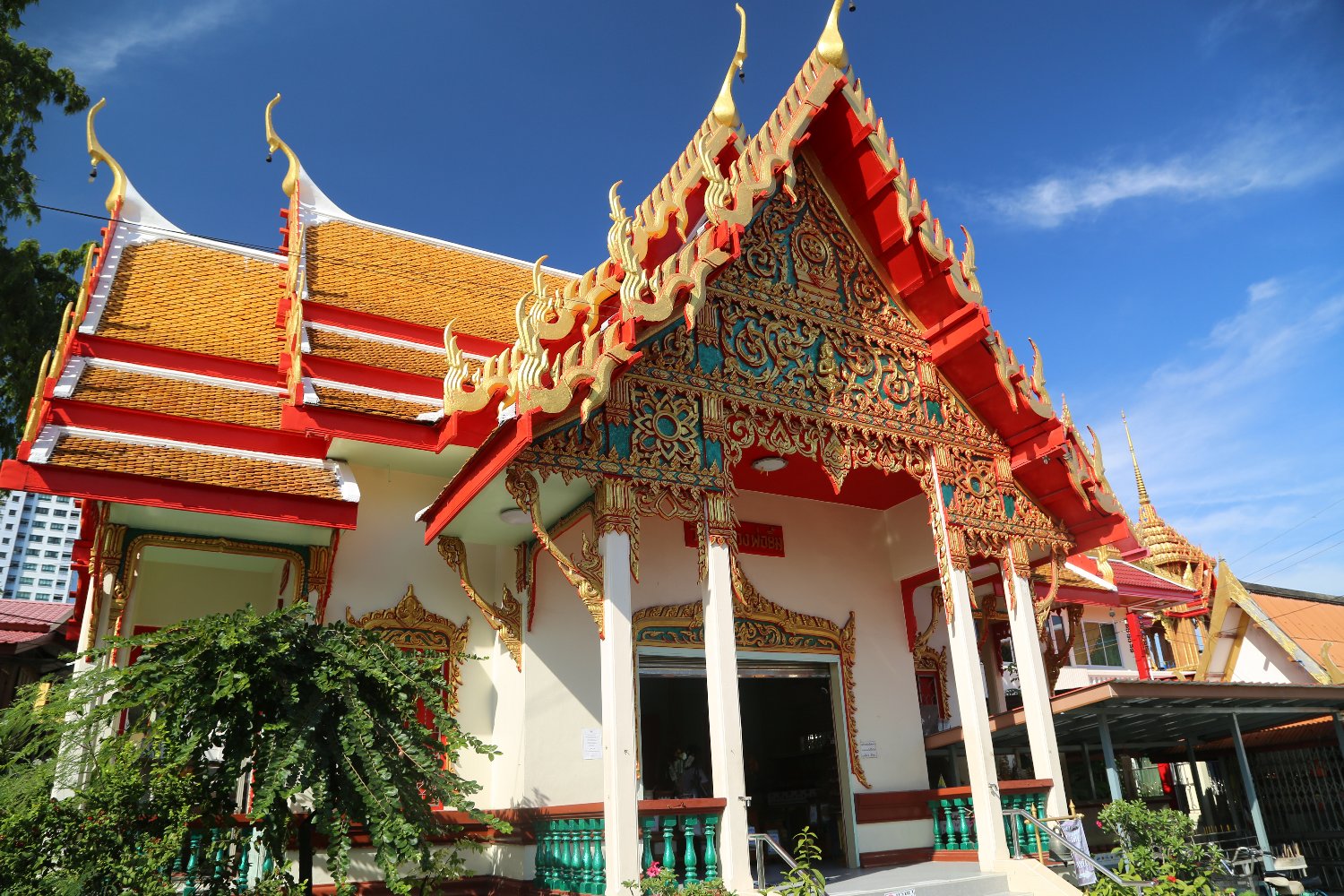
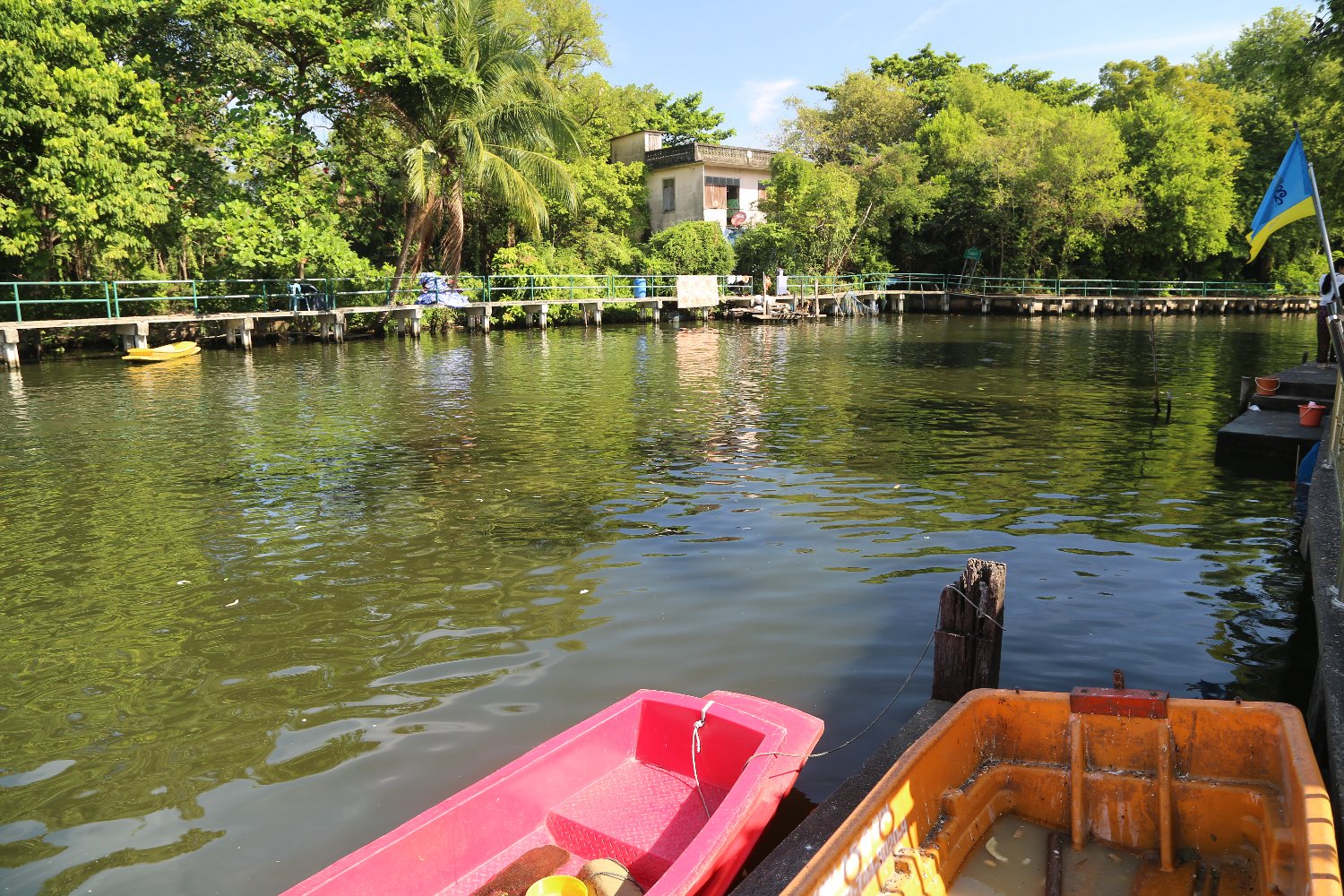


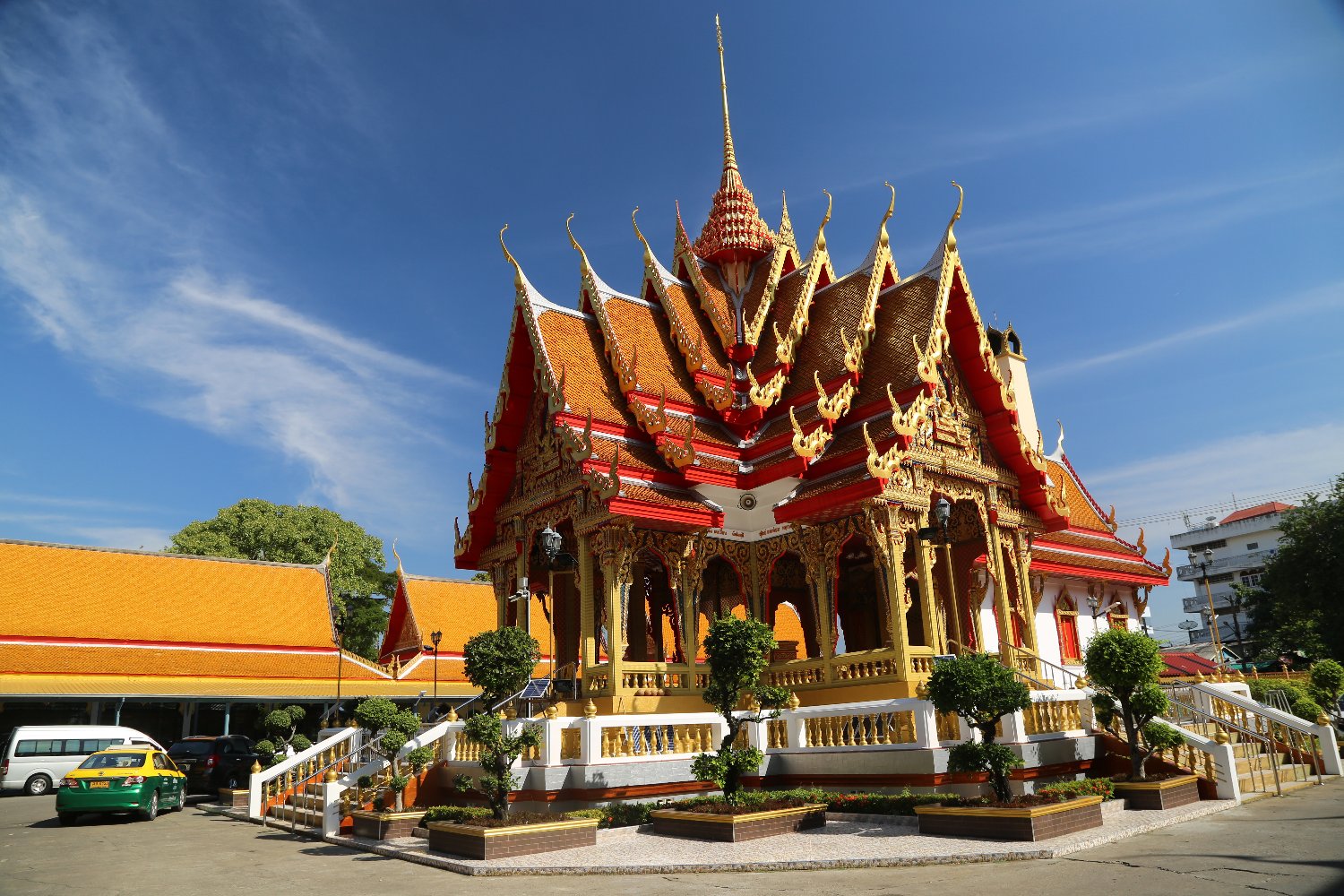
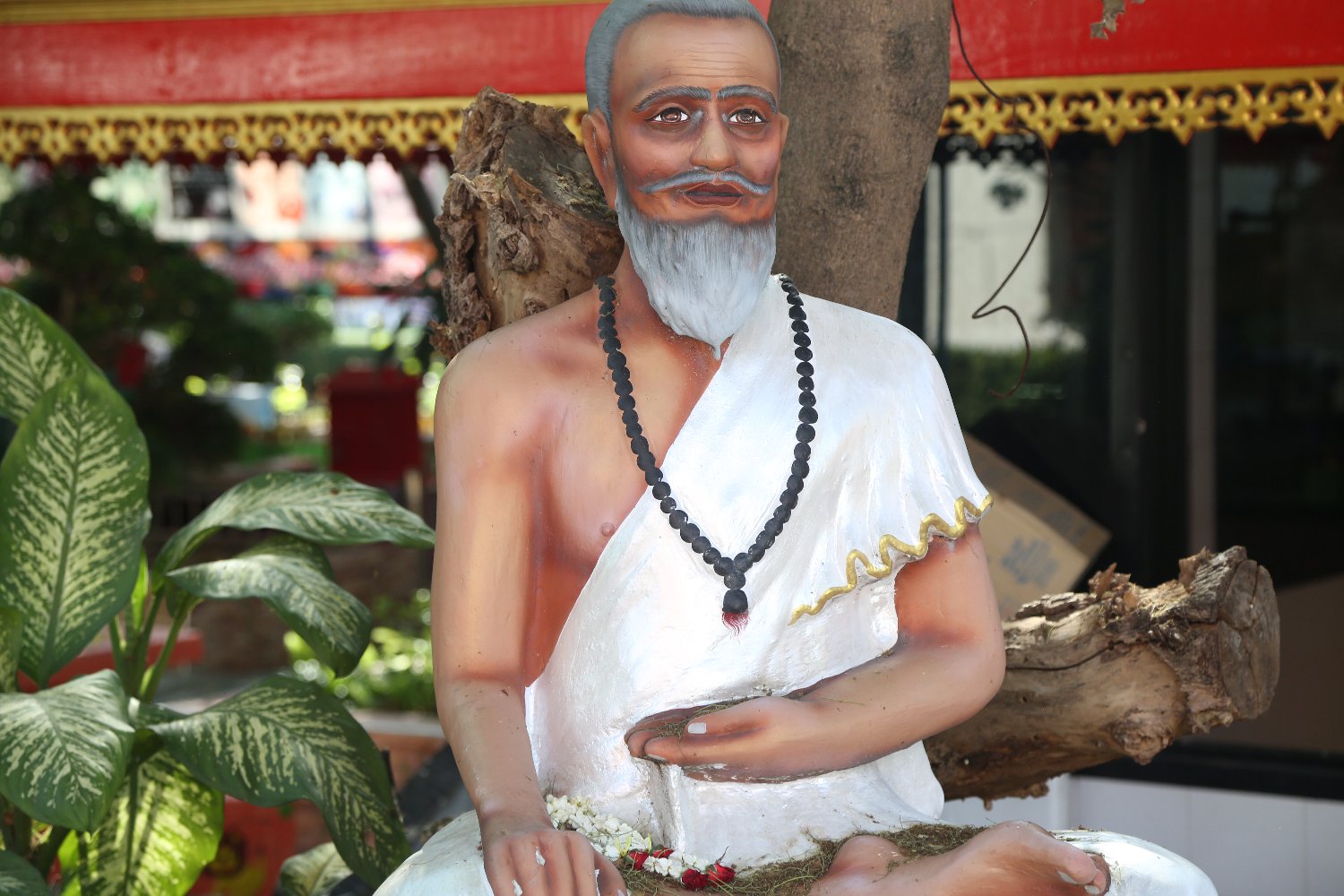

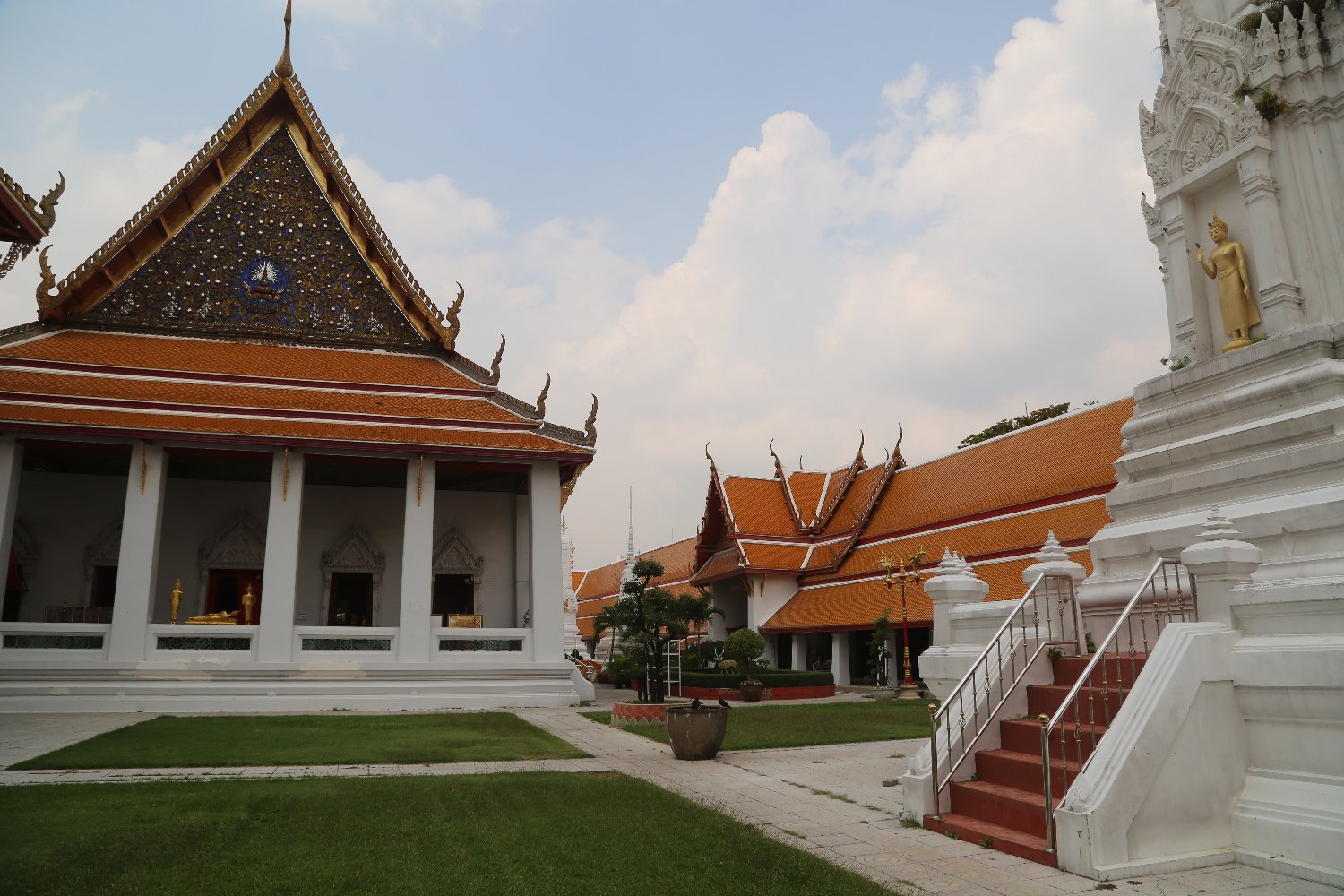
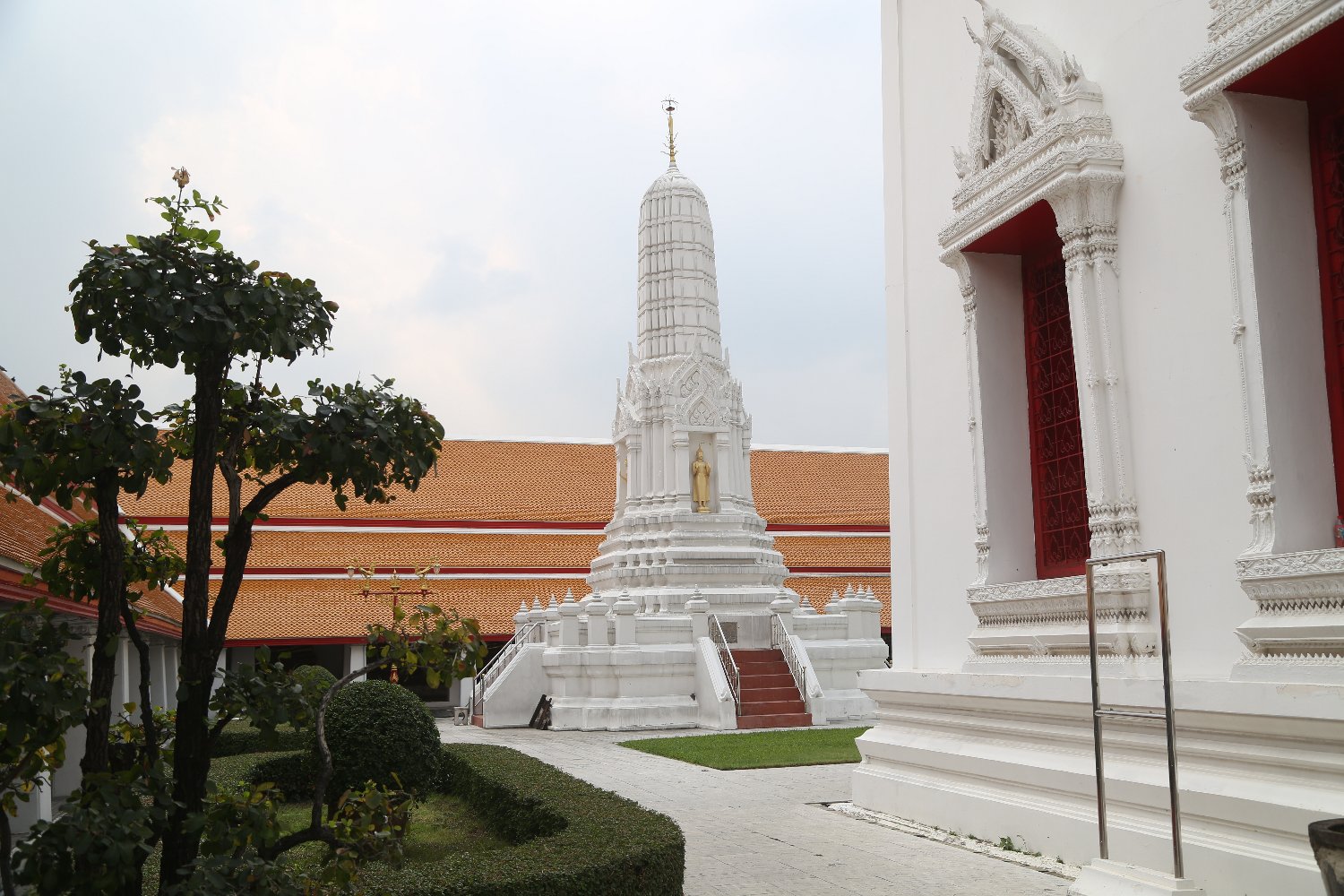
Wat Mahathat Yuwaratrangsarit Rajaworamahavihara (or simply Wat Mahathat for short) is a prominent temple located within a short walk of the Grand Palace. However, this temple is much less visited then the Grand Palace and is a peaceful place to duck away into for a short while – escaping the lines of tour groups and other visitors that often are walking outside on their way to and from the Grand Palace.
One of only 10 of the highest class of temples in the entire country. This sizable complex was originally constructed during the Ayutthaya period around 1782 and was known as Wat Salak (salak being a kind fruit). Its name was changed to Wat Mahathat of Bangkok in 1803 and the temple took its current name in 1996.
Wondering why there are so many monks on the grounds or nearby? Mahachulalongkornrajavidyalaya University is located within the complex – it is the oldest higher education institute for Buddhist monks in the entire country. Also houses the well-known Vipassana meditation center with classes given daily both in English and Thai. And on the Maharat roadside of the temple on Sundays, look for numerous vendors selling small religious amulets (one of the largest such markets in all of Bangkok).
Lastly, the Siam Cafe on the western border of the complex is small but serves up a variety of tasty drinks including a delicious Thai iced tea. often monks will be hanging out inside.
A prominent and large reddish building borders one side of the temple; this is the Thawon Wattu Building it was used as a royal crematorium and later as a library and research center.



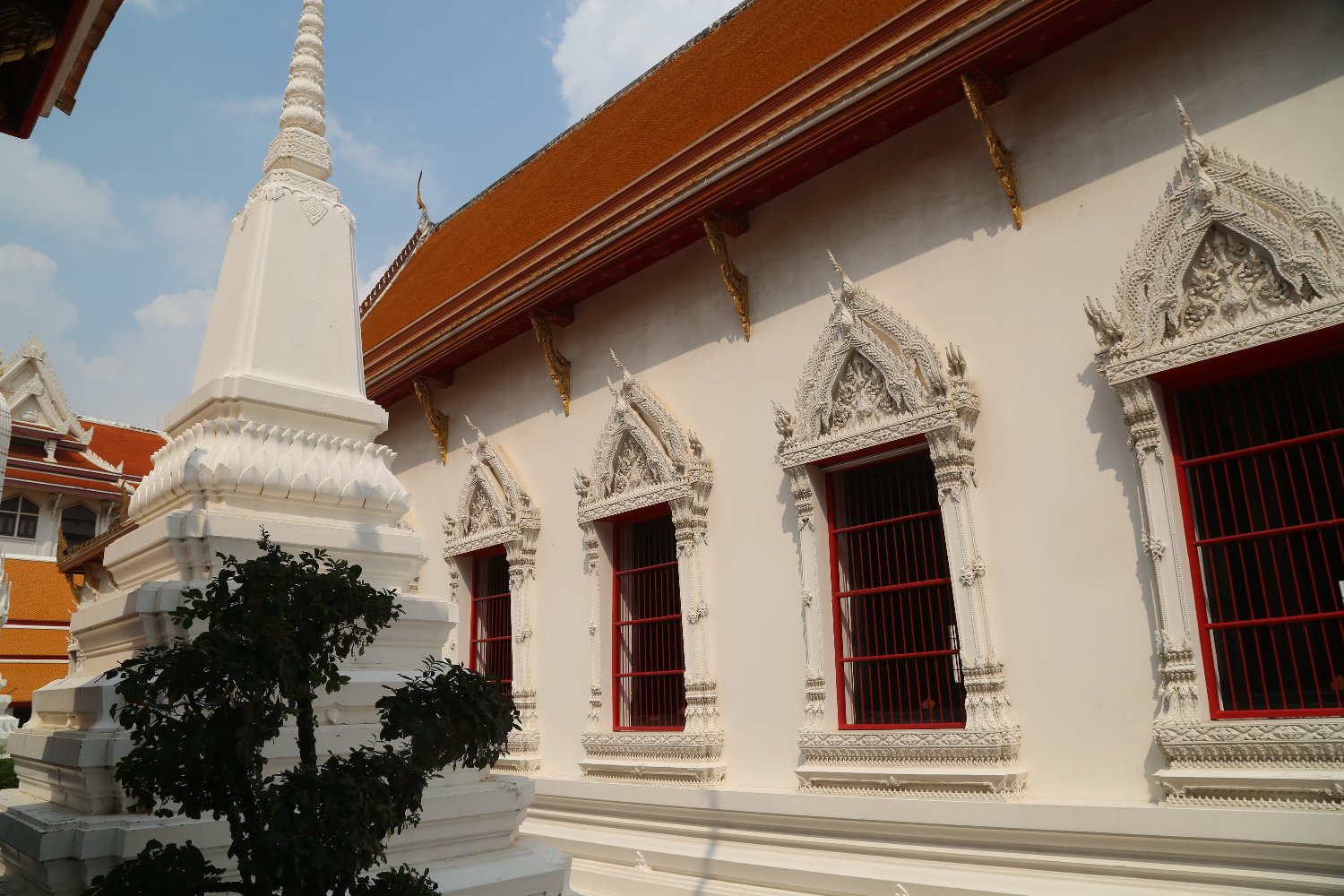

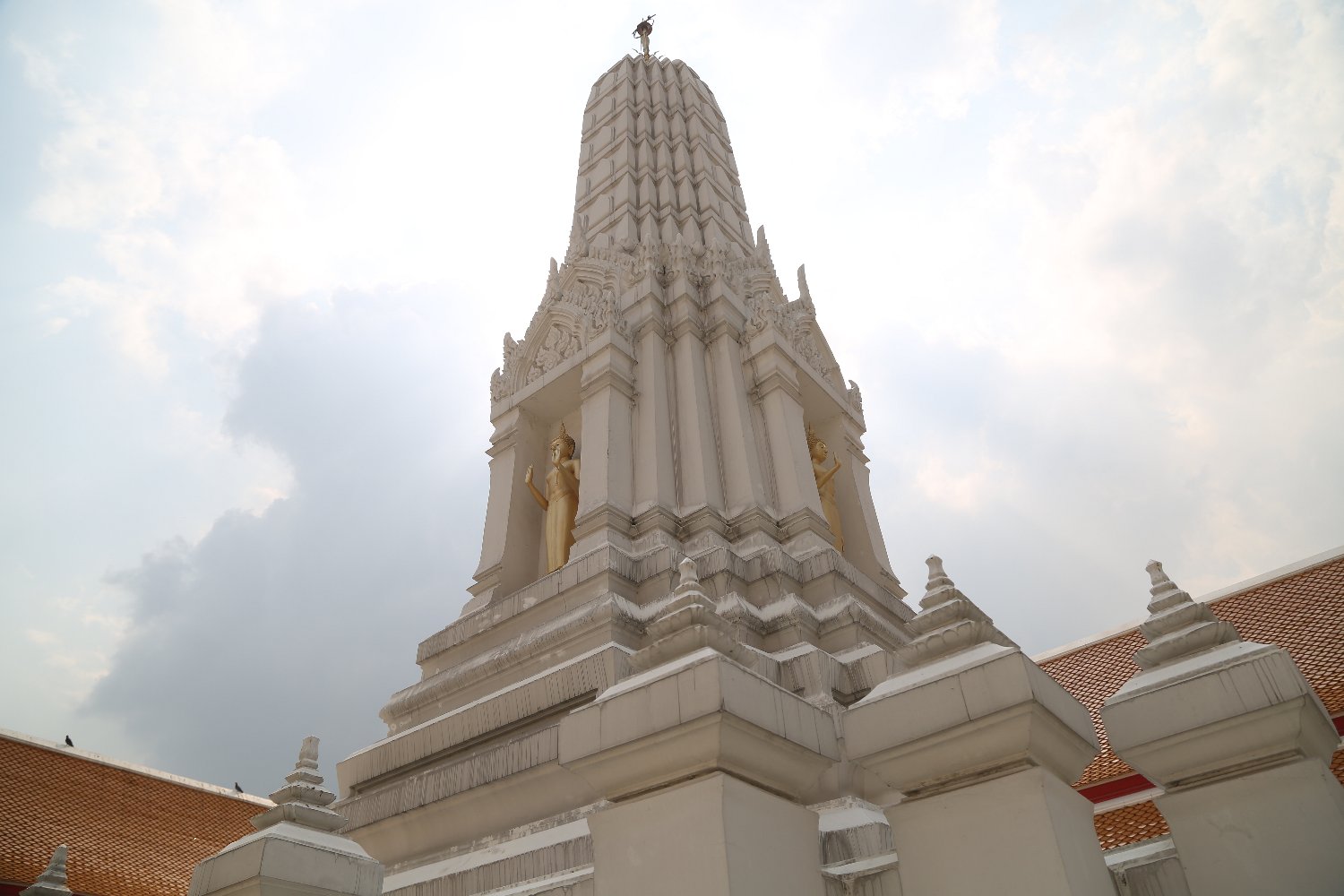

Wat Maha Wong is located about a 10–15-minute drive from the nearest Skytrain stop, Samrong. Located along a canal which flows directly into the Chao Praya River. A nice setting, this small temple is one you would purposely seek out a visit to as there are no immediate surrounding attractions. A covered car park is a perk to driving here. The interior walls of the Ubosot features an intriguing pattern of a praying golden Buddha. During our visit we did not see any unique architecture or art on site.


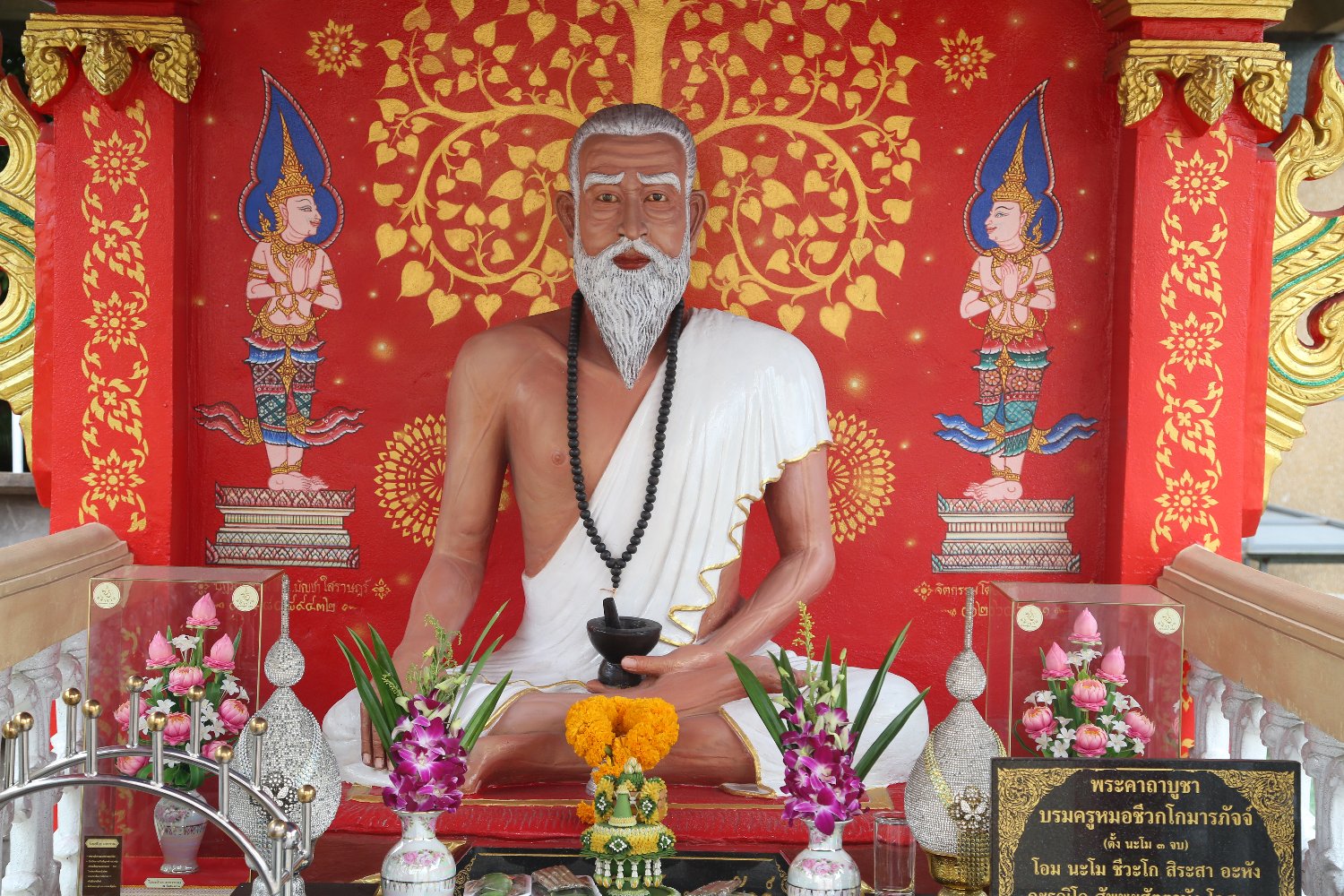

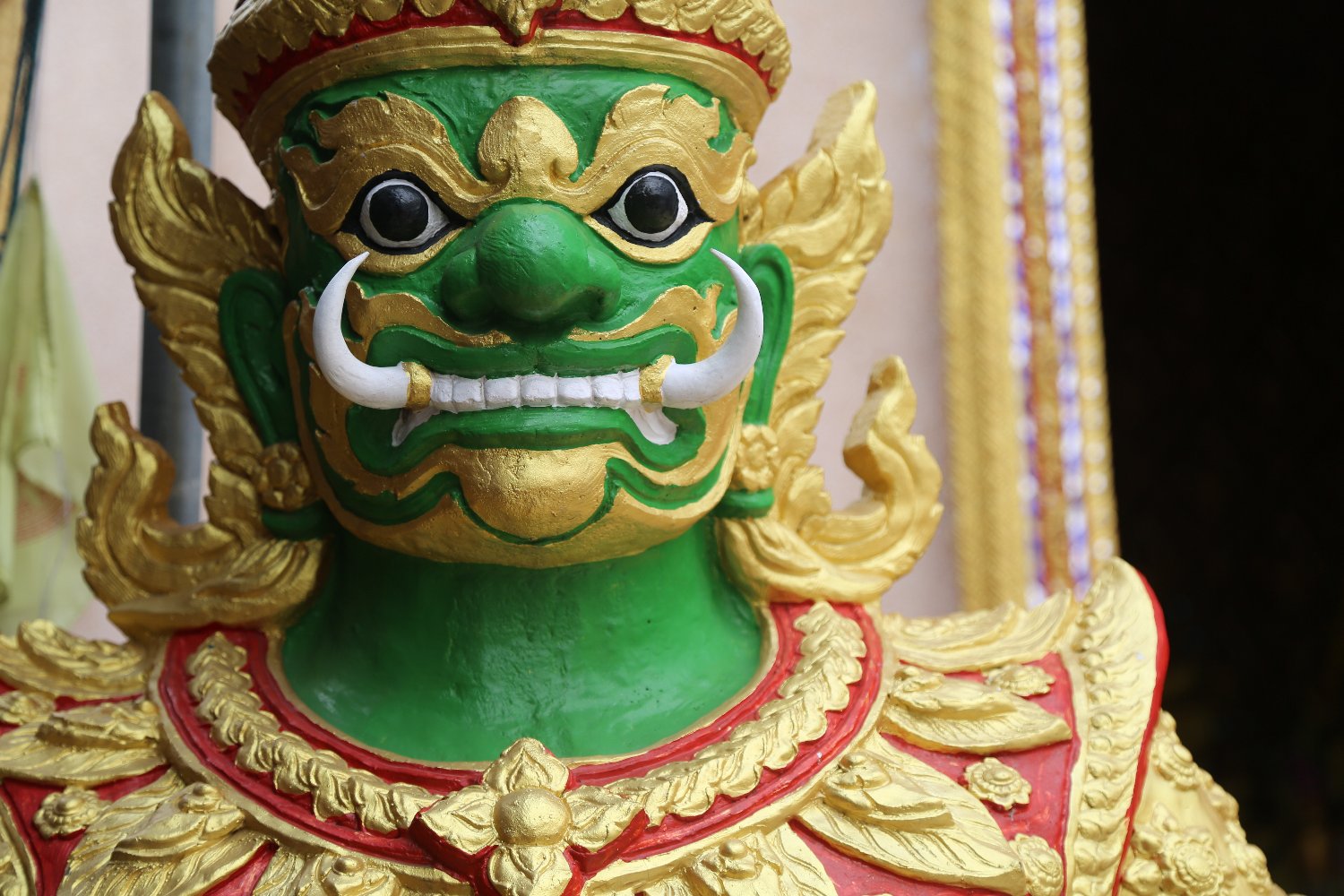
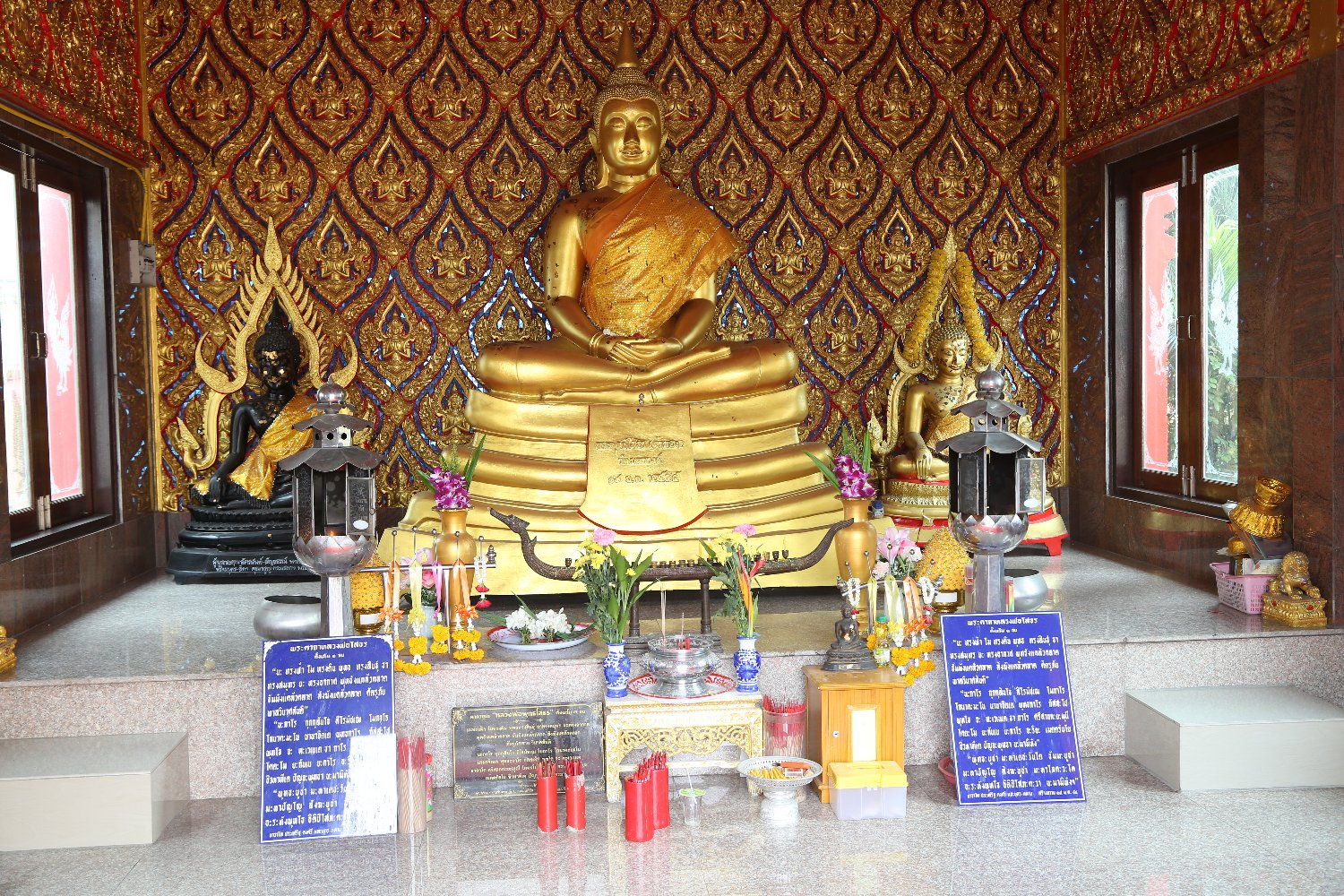
Wat Mai (Yai Paen) is located within a very short walk of teh Bang Khun Non metro station located along the edge of Bangkok Noi, a sizable khlong (canal) that connects to the Chao Phraya River. As a result, from this temple one can often see long tail boats racing up and down the canal.
Chances are when you visit this very tiny temple you will be the only tourist here. Known for a number of chickens often roaming the grounds. A couple of animal statues including one of a tiger, a few small Buddha statues, a golden stupa and a wall containing some interesting sculptures. Located in a residential neighborhood.


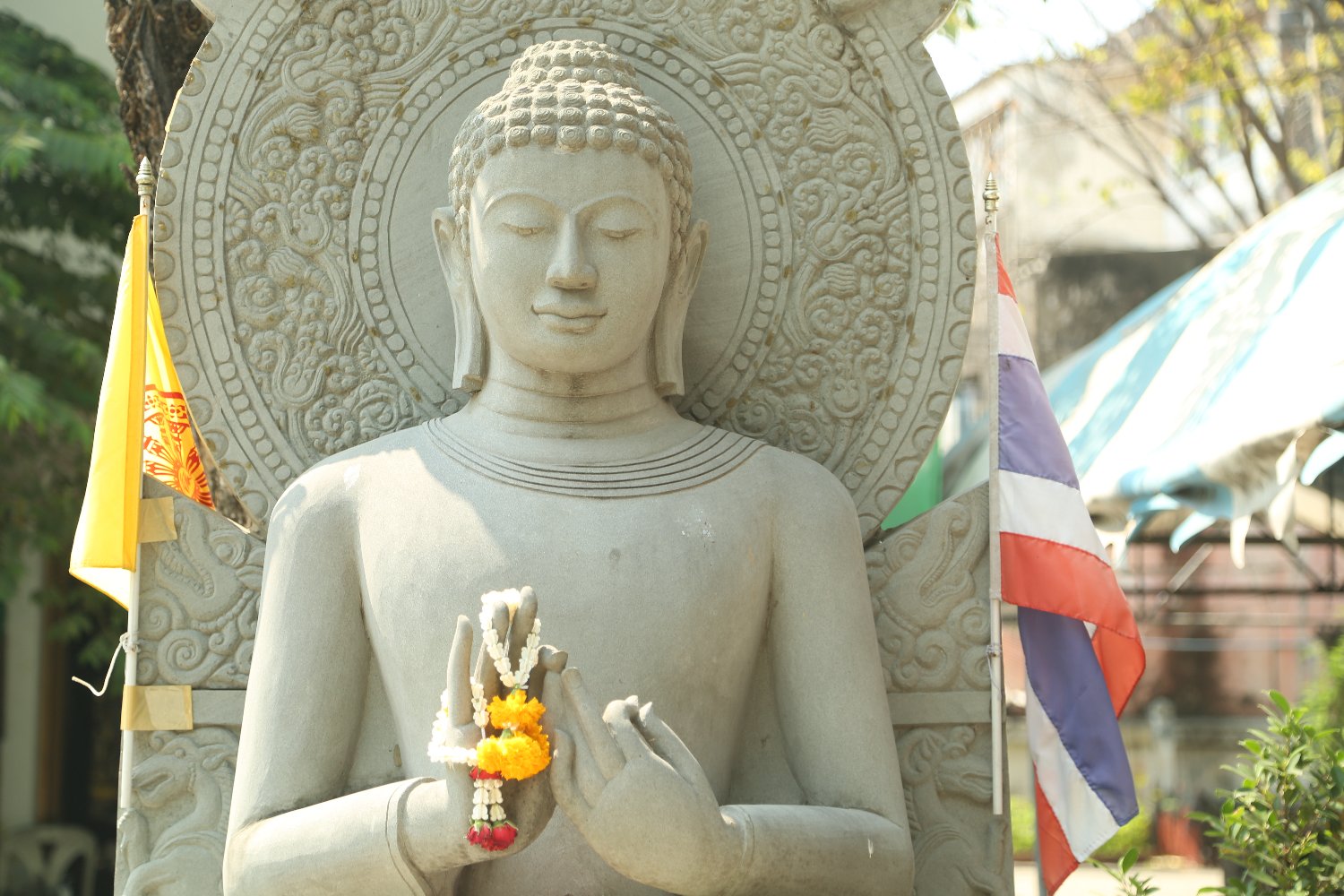
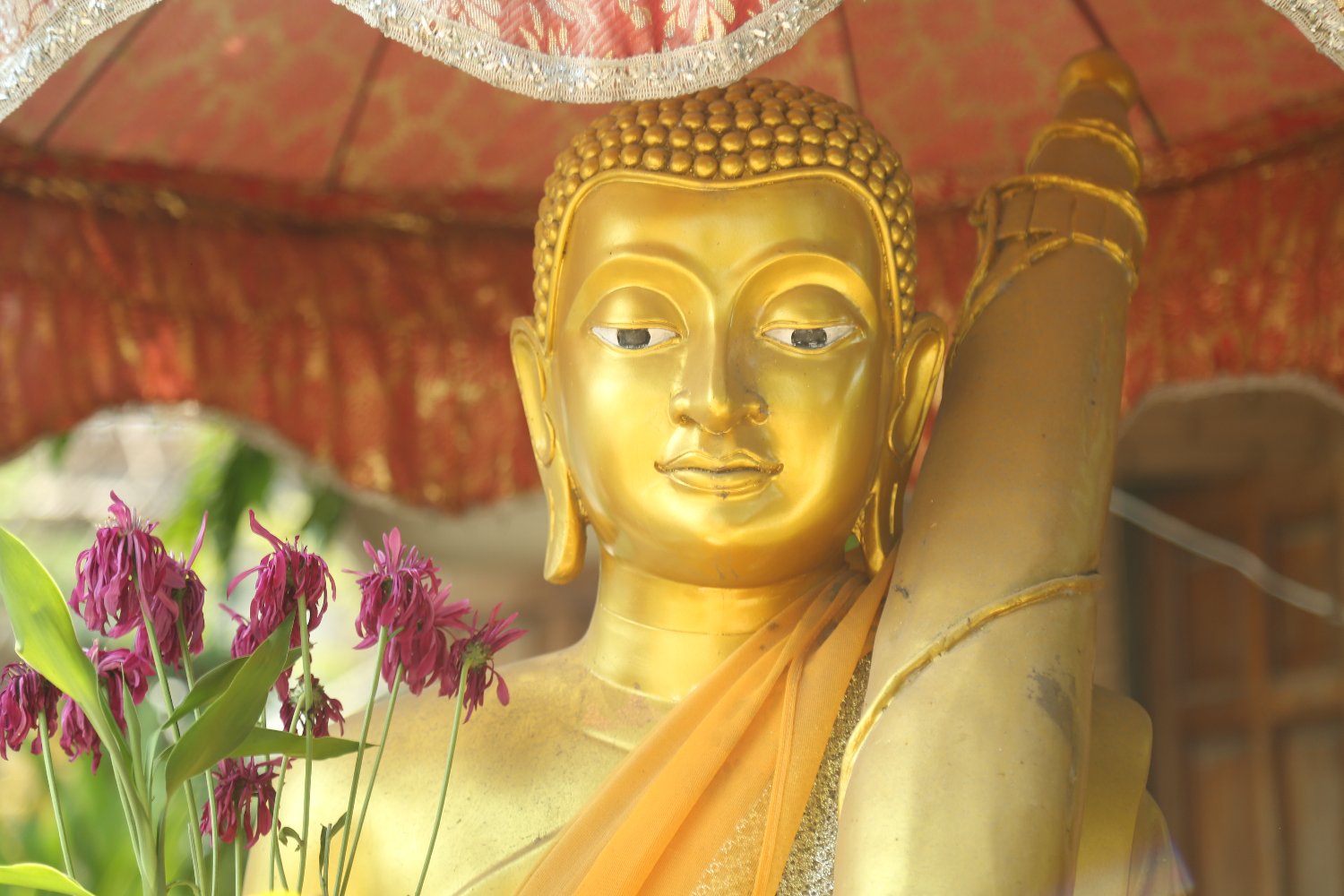
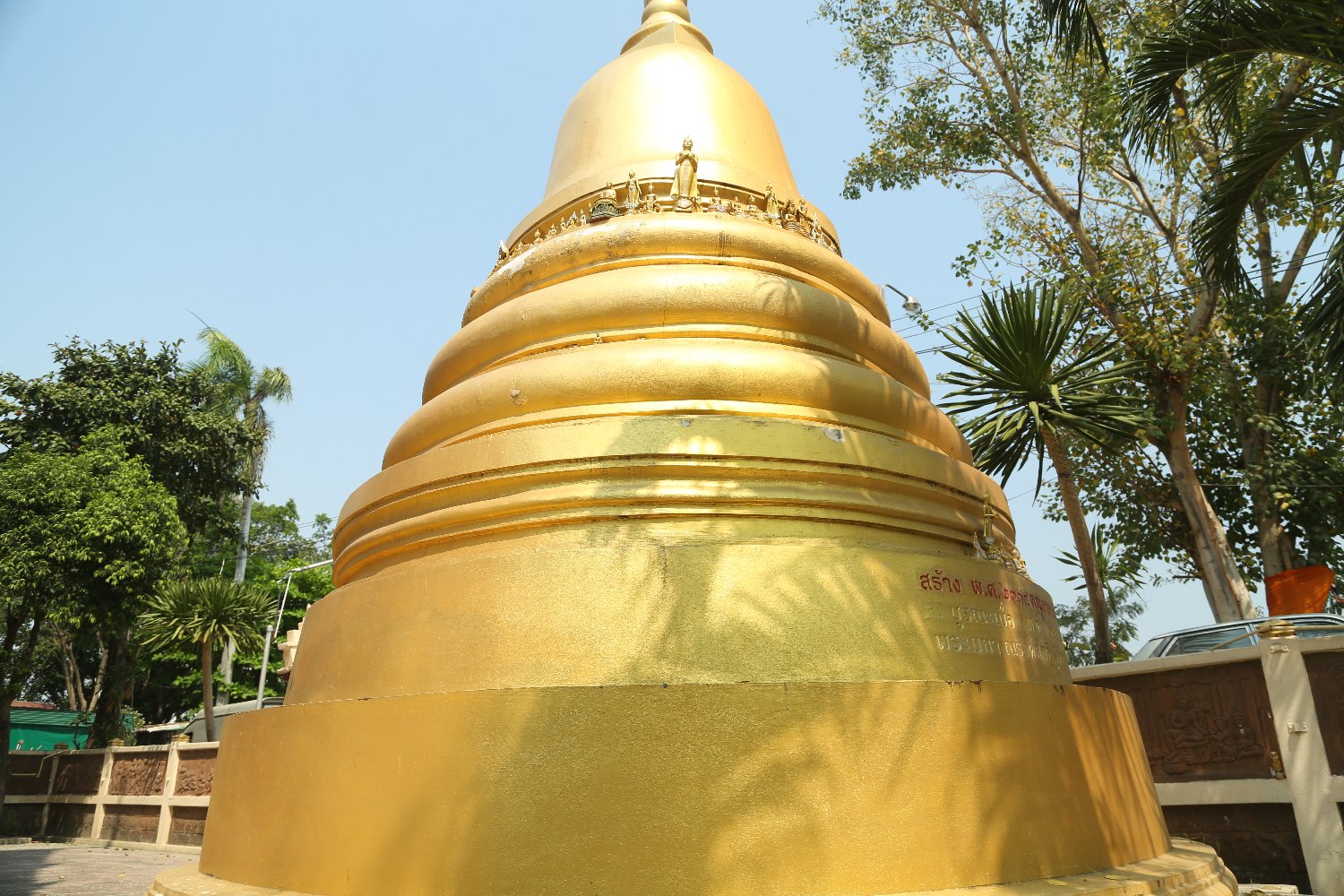
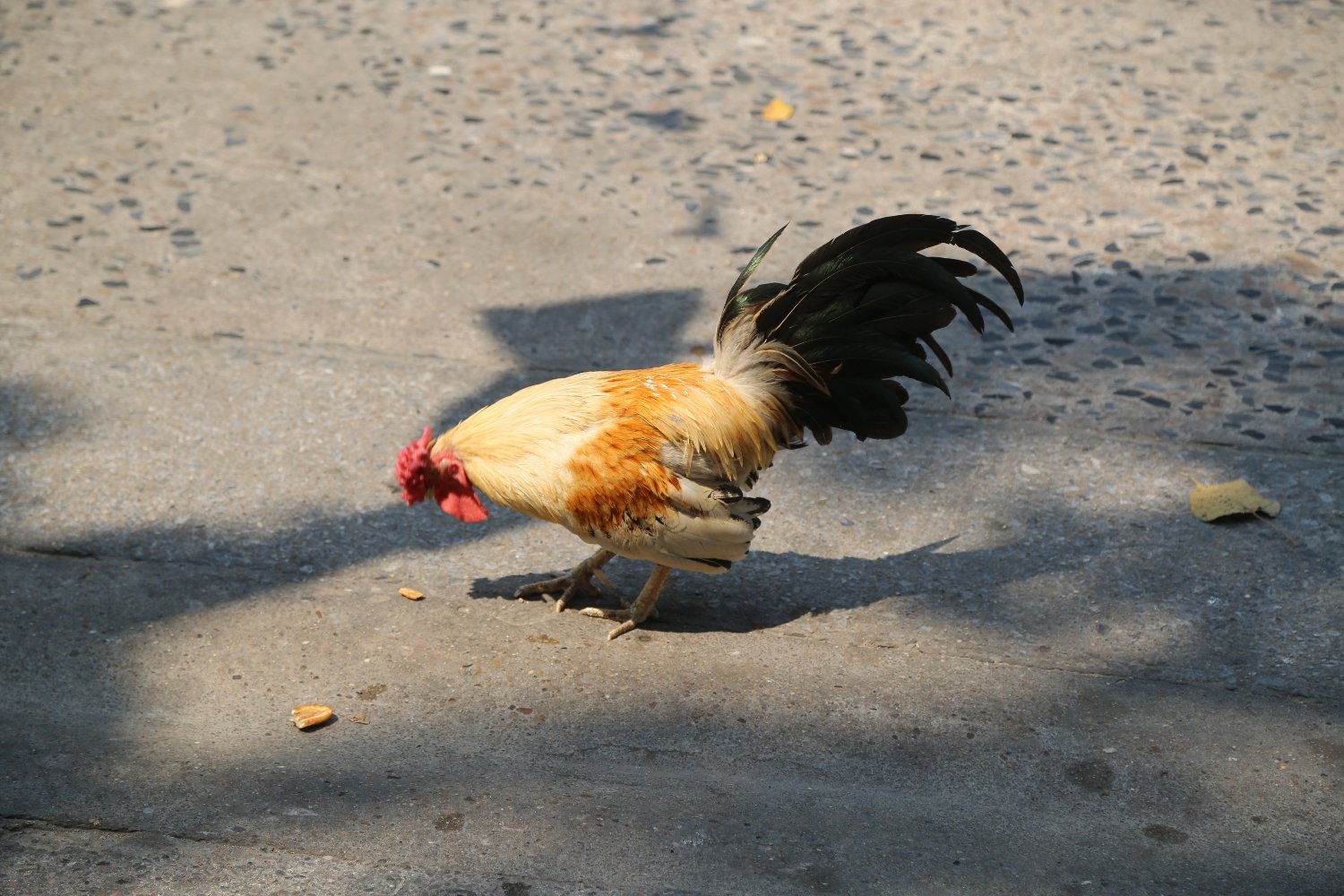
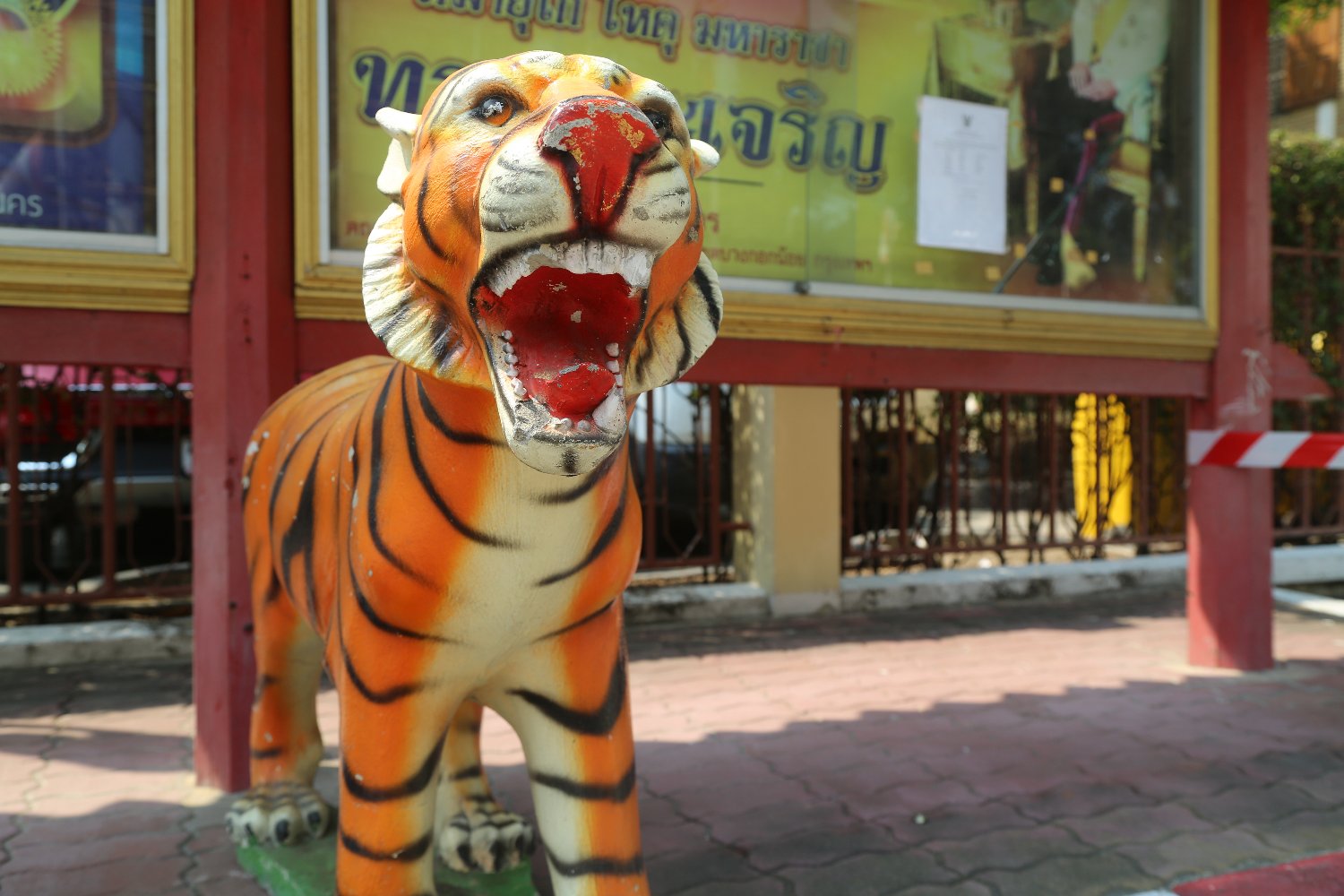
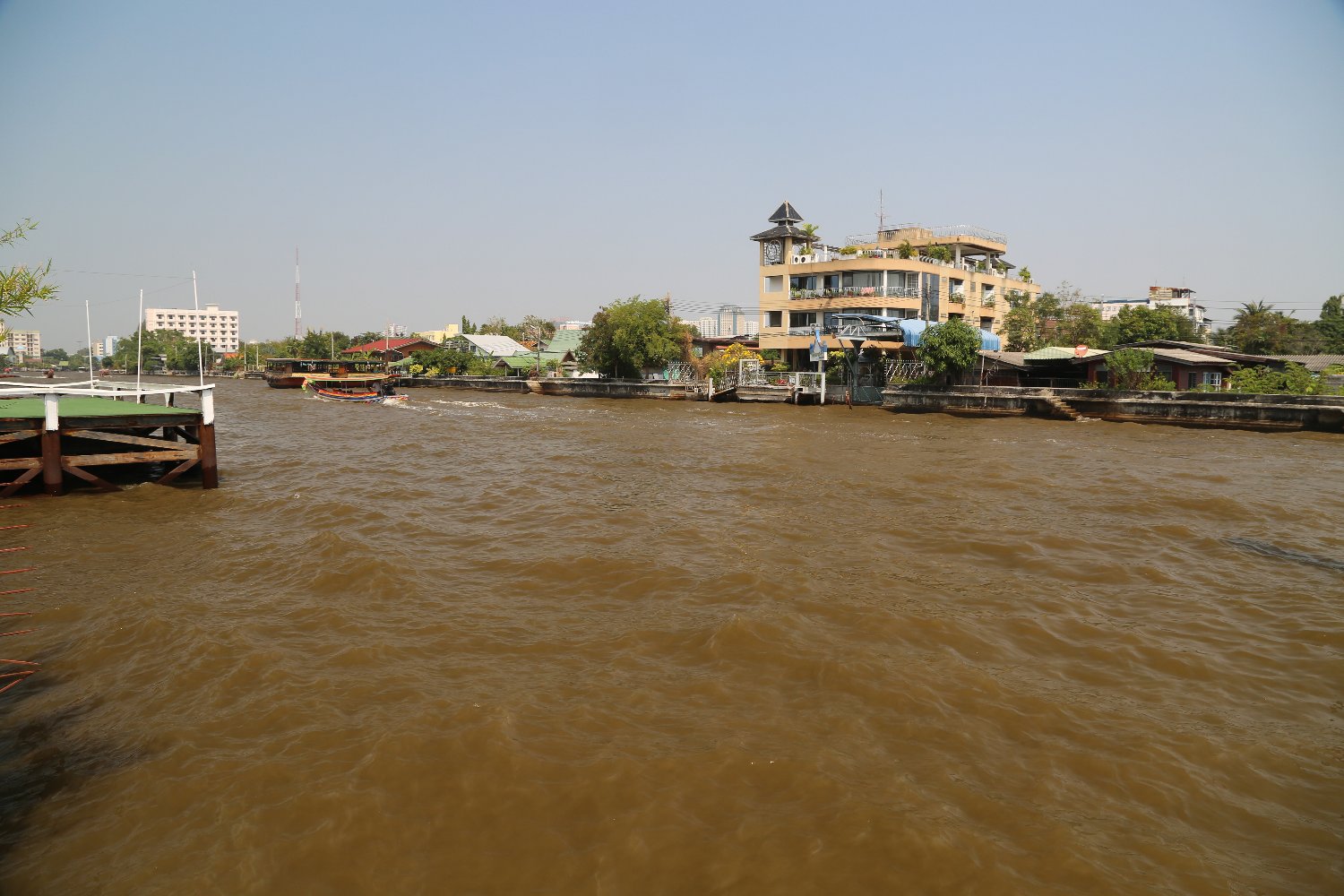
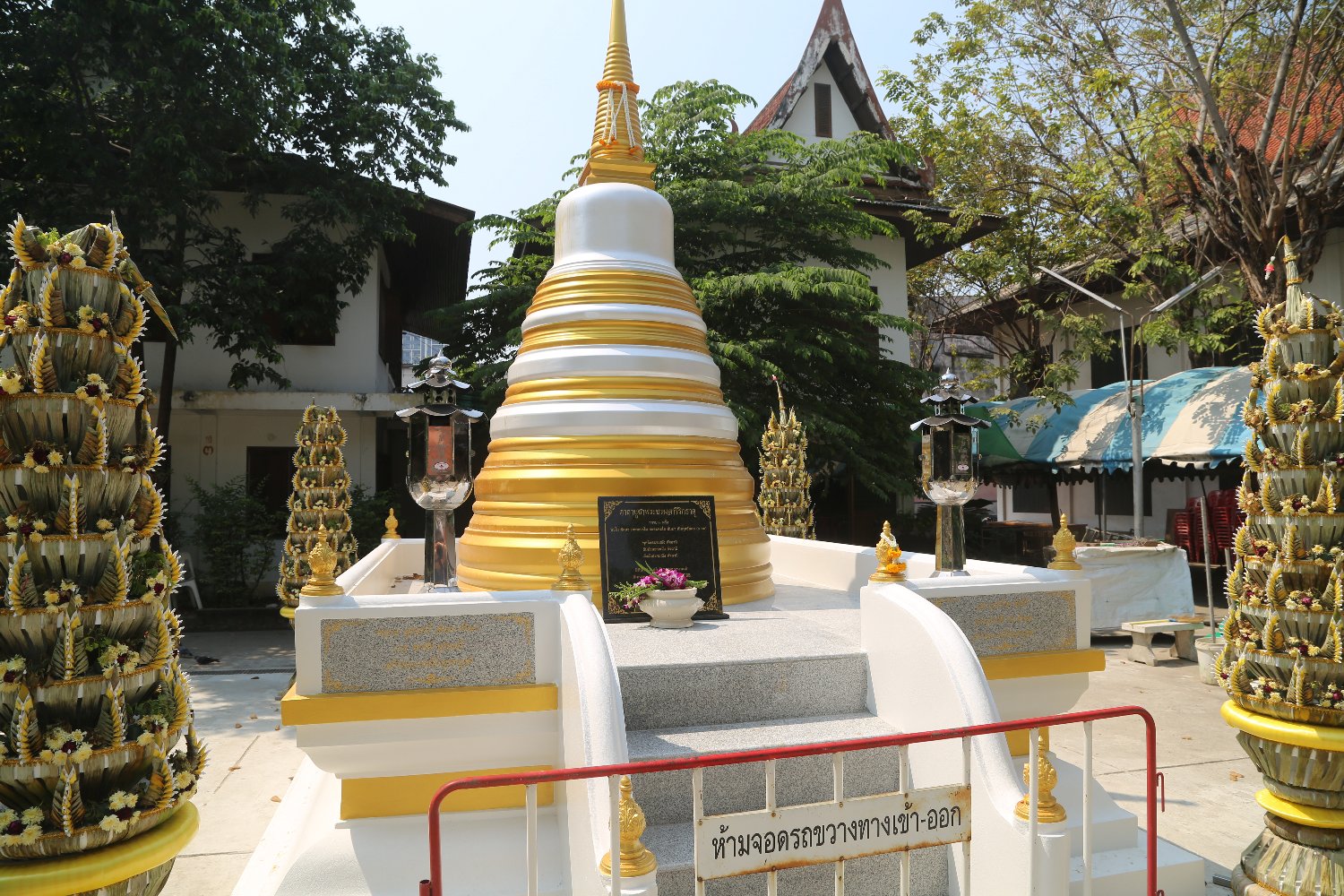
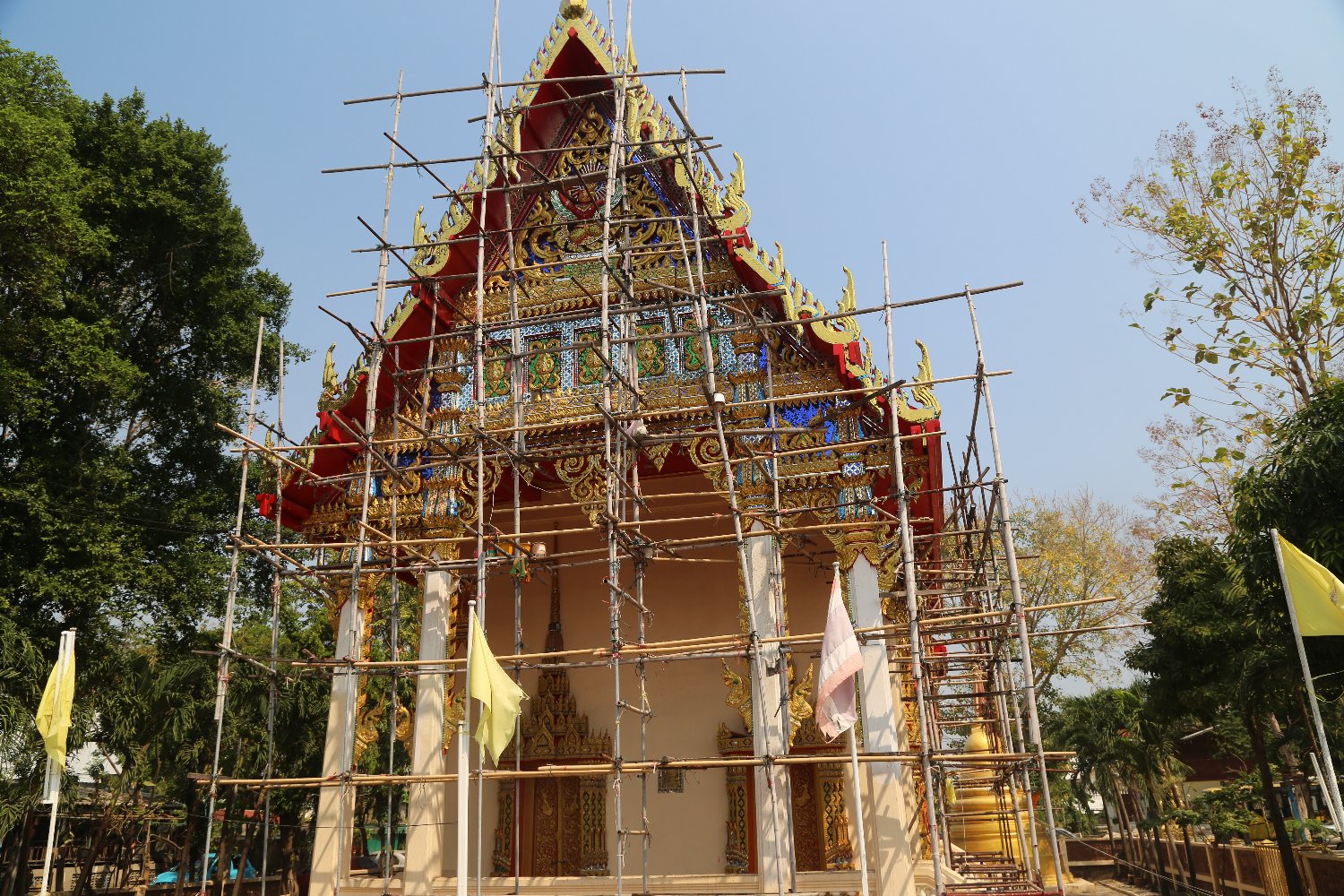
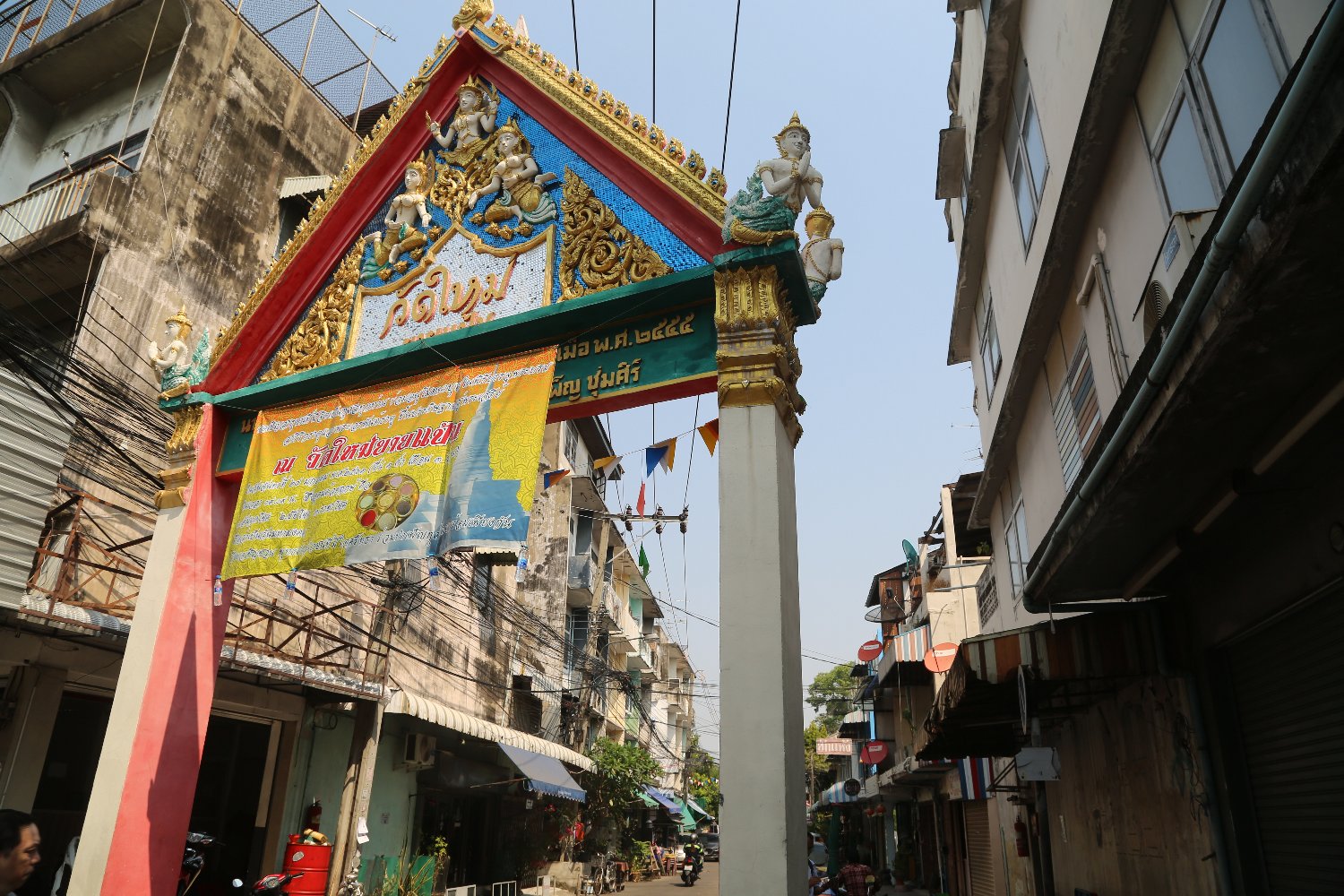
Wat Mai Phiren is a very tiny temple not on the list of tourists visited temples. It is located off of the busy Itsaraphap Road. There is not really any easy way to get here for tourist via public transportation – the easiest would be to catch the Chao Praya Express boat to the Thai Tien pier and then catch the river crossing boat over to Wat Arun. From Wat Arun it is a less than a 10-minute walk to Wat Mai Phiren.
Very tiny Ordination Hall – typically not open. No unique architecture or art on site.
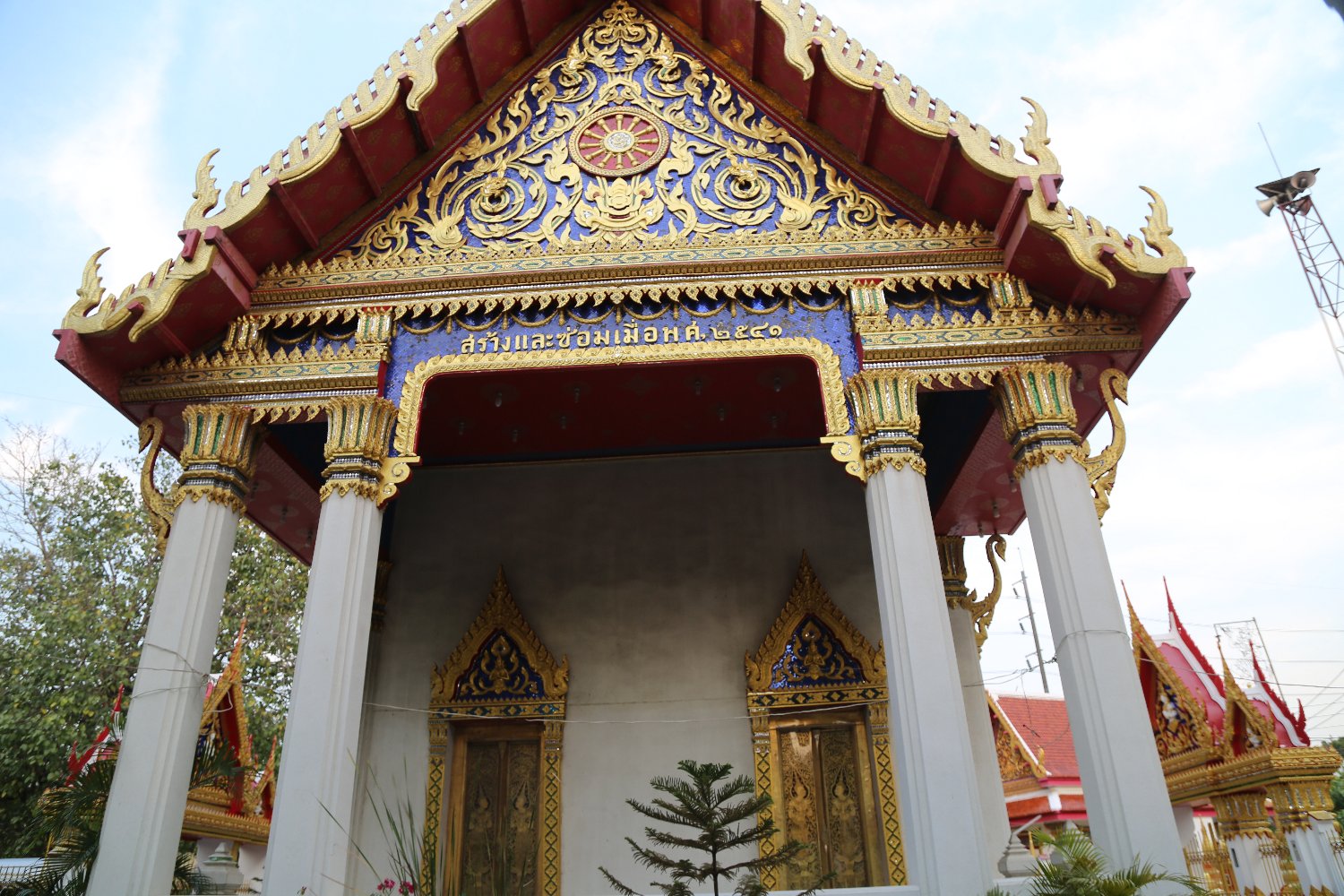
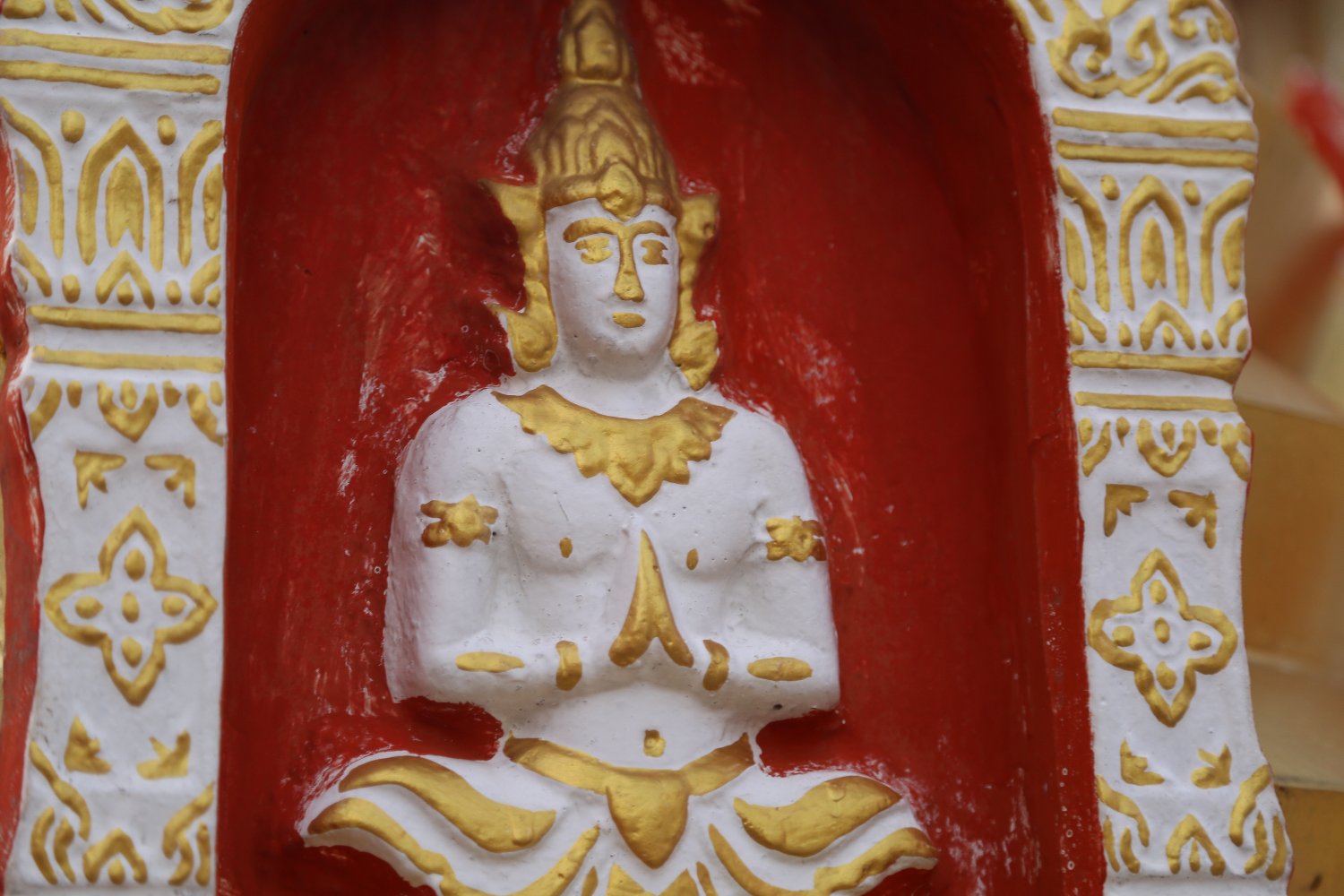
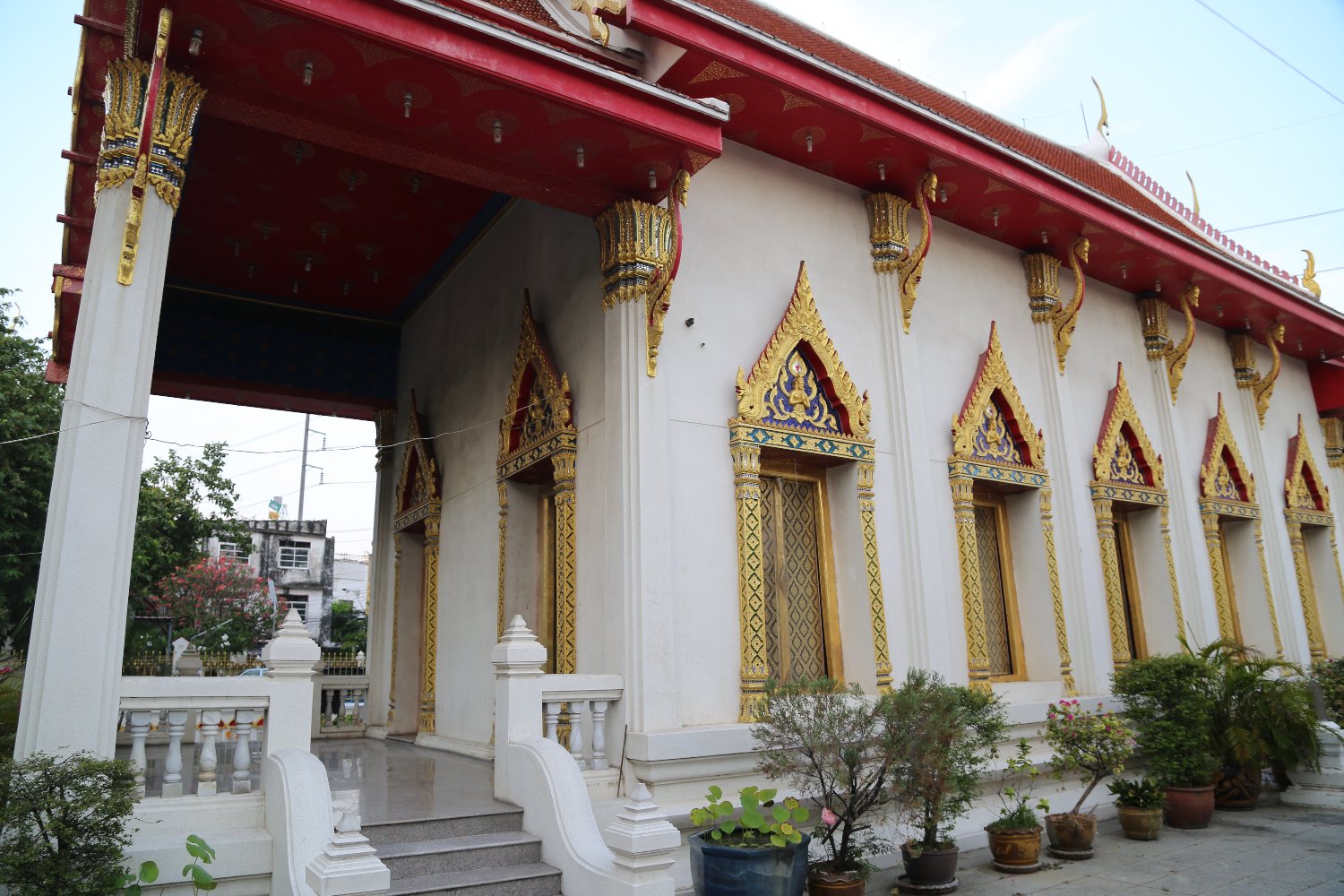
Wat Mai Thongsen is located at the end of the tiny Samsen Road – one can walk here from the Museu pier – accessed via the Chao Praya River boat express (about a 10-minute walk). This sizable temple was built in 1822 by Phra Thamma Udom as a tribute to his parents Thong and Sen (which is where the temple takes its name).
The name of the temple was originally Wat Yai Thongsen to reflect its size. The founder was a former deputy abbot at Wat Pho. Arguably the highlights of a visit here are the Ordination Hall and both the reclining and sitting Buddha statues. The tall Buddha statue is intriguing because of the way it is sitting – being offered bananas by an elephant and a bees hive by a monkey.
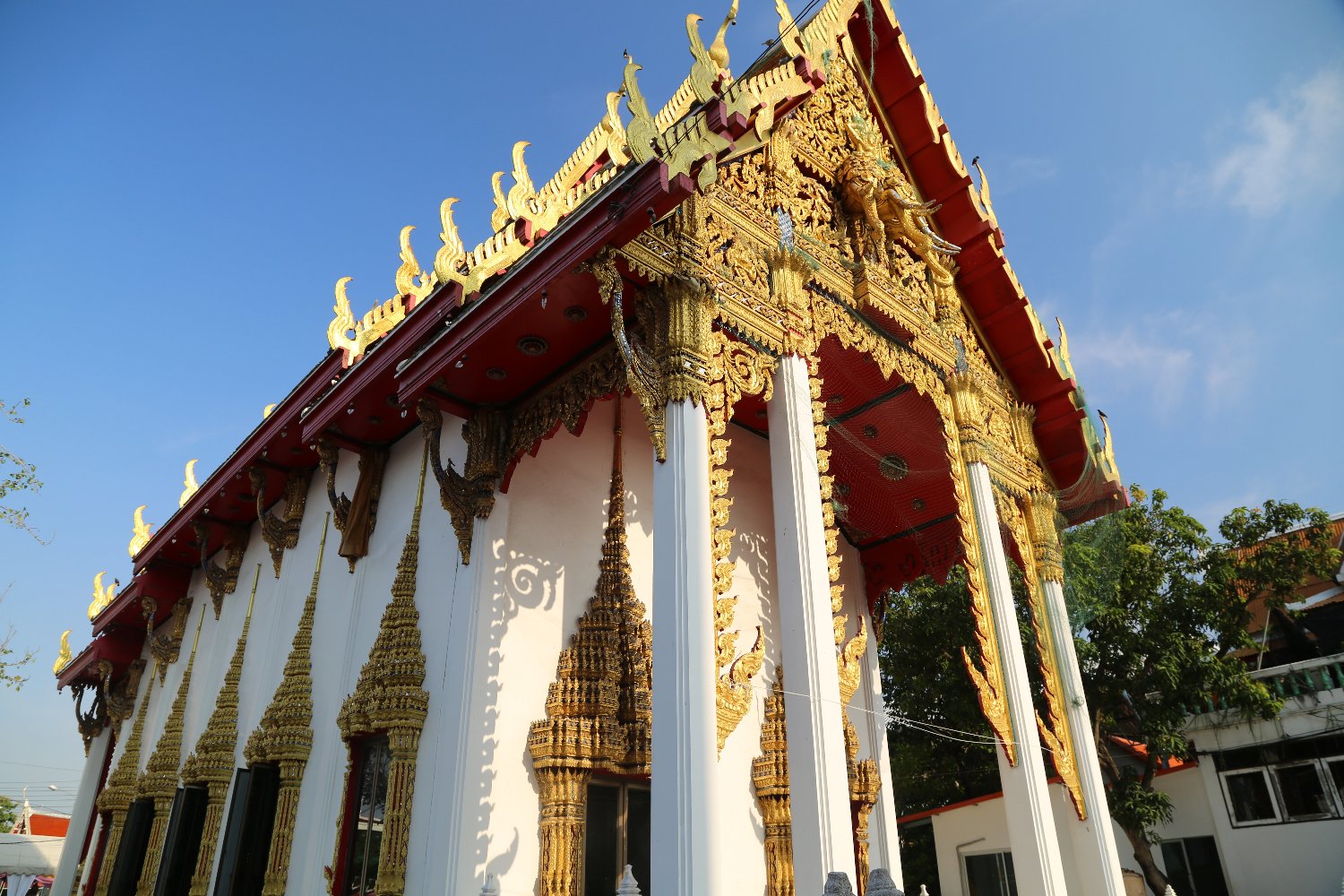
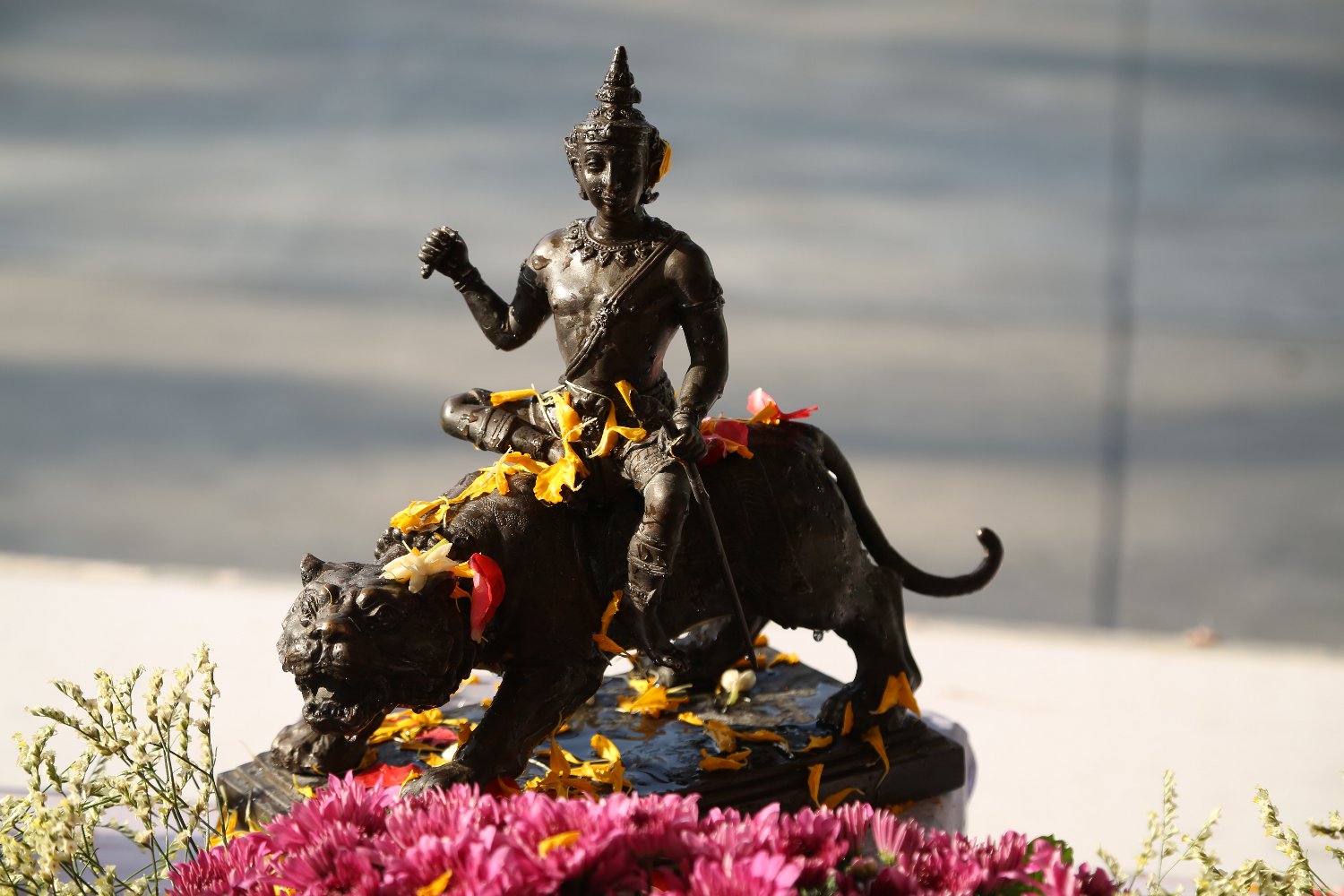
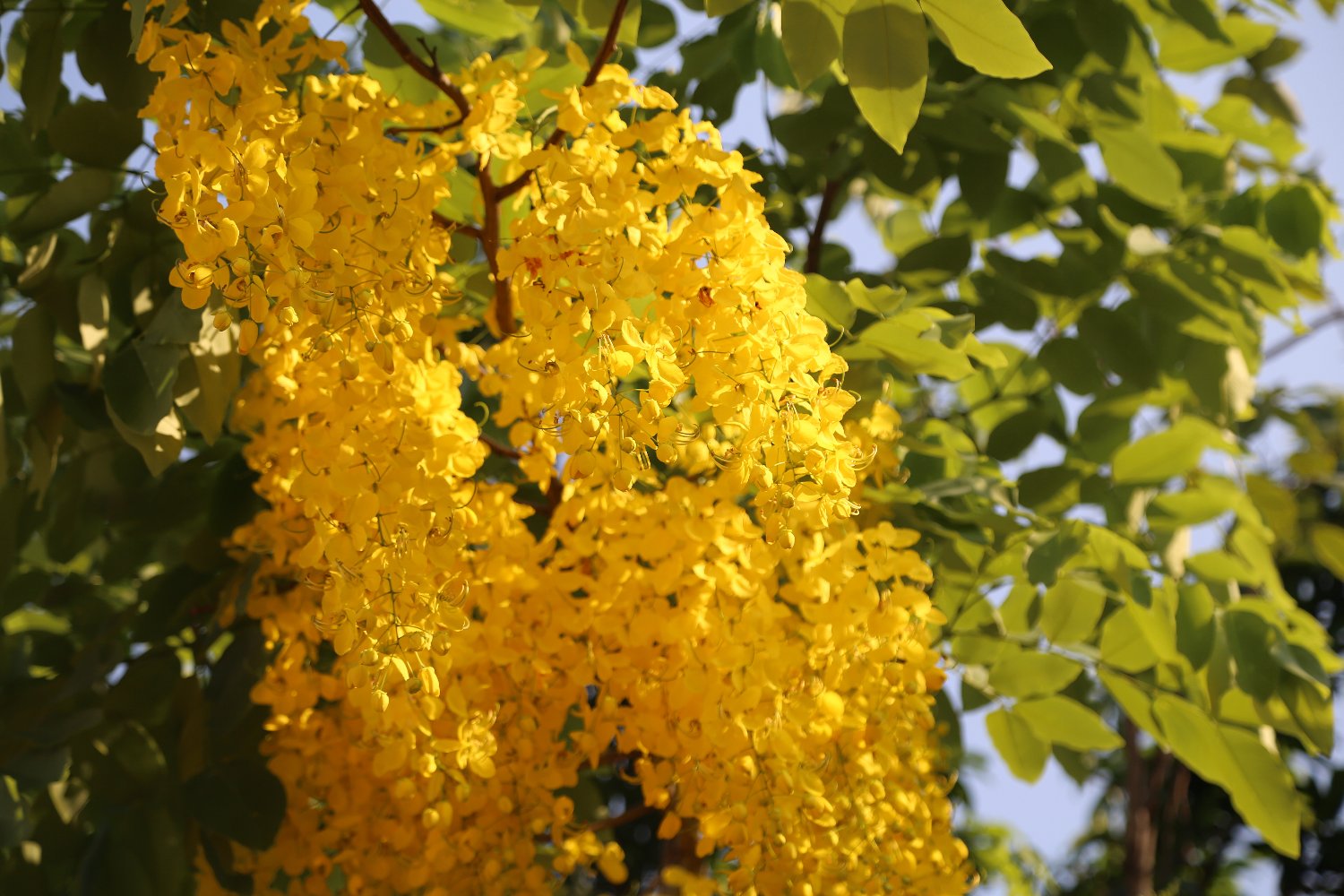
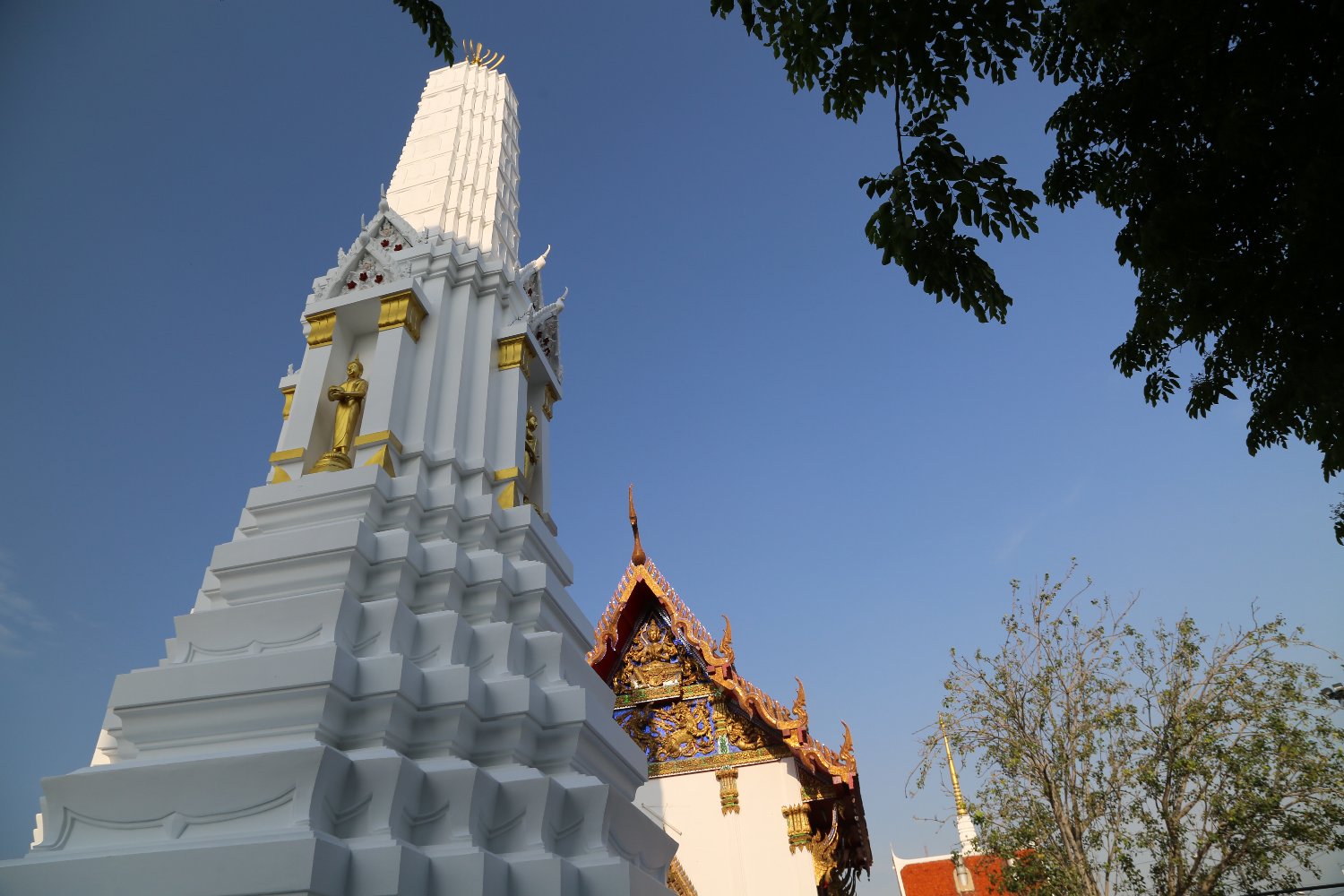
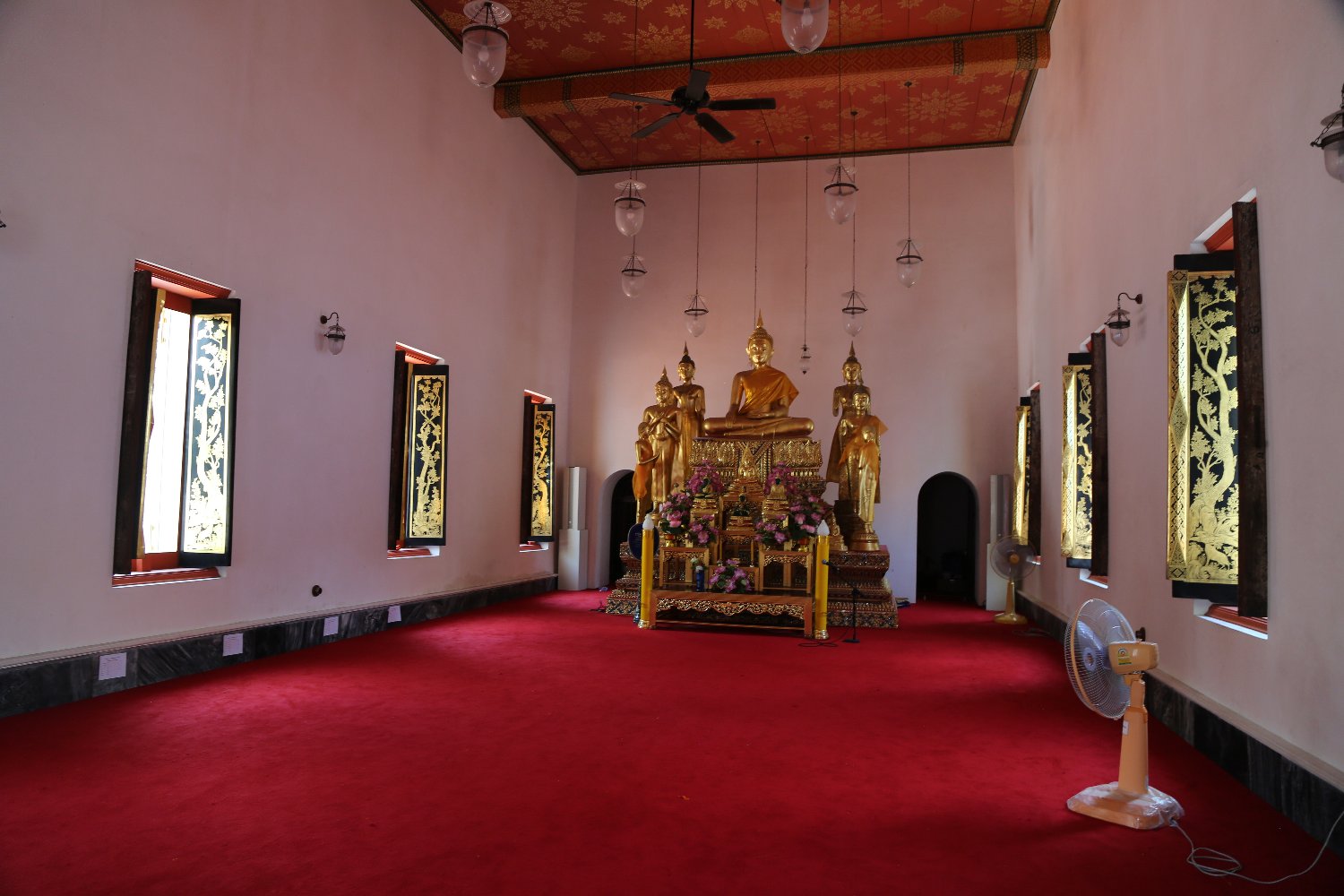

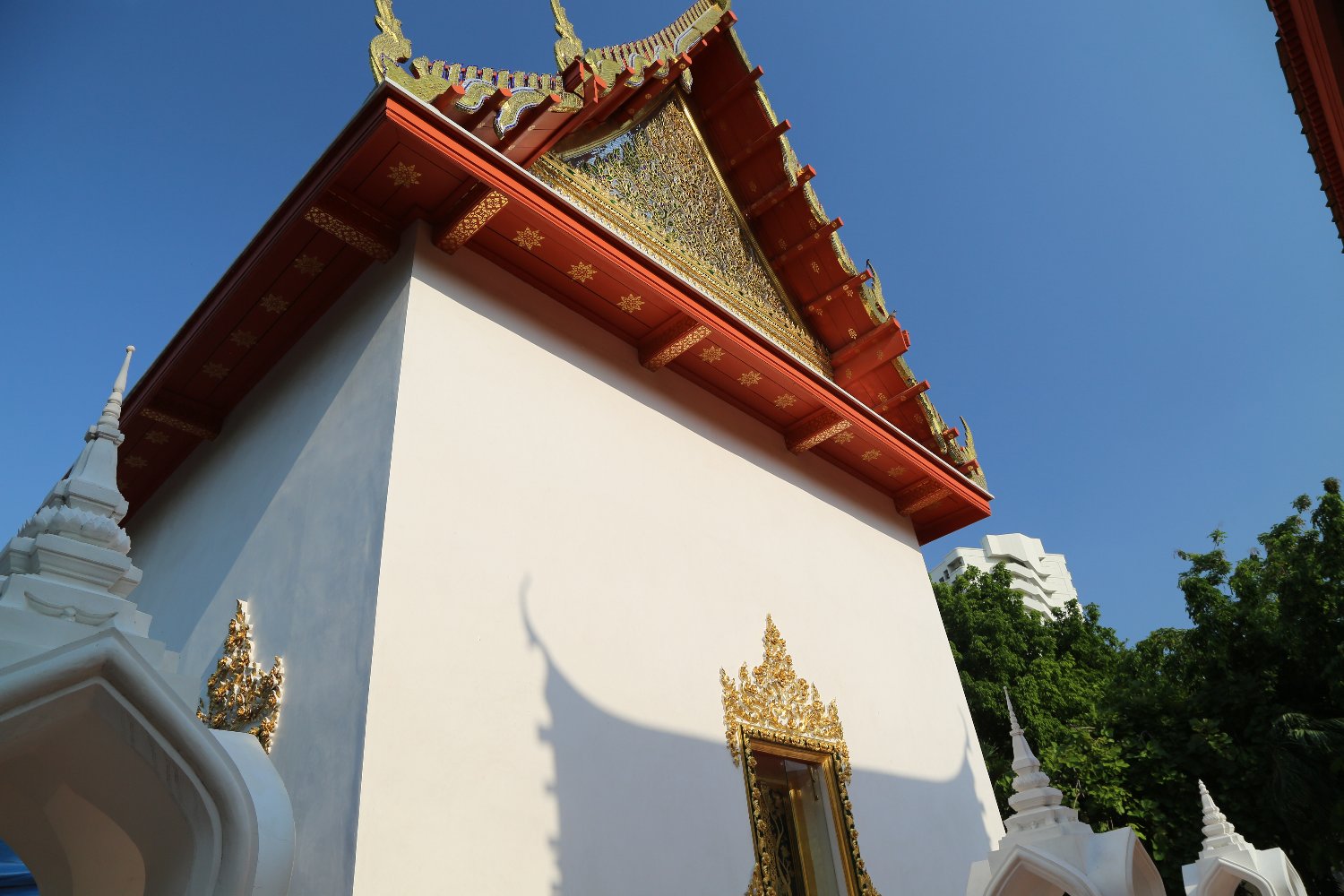
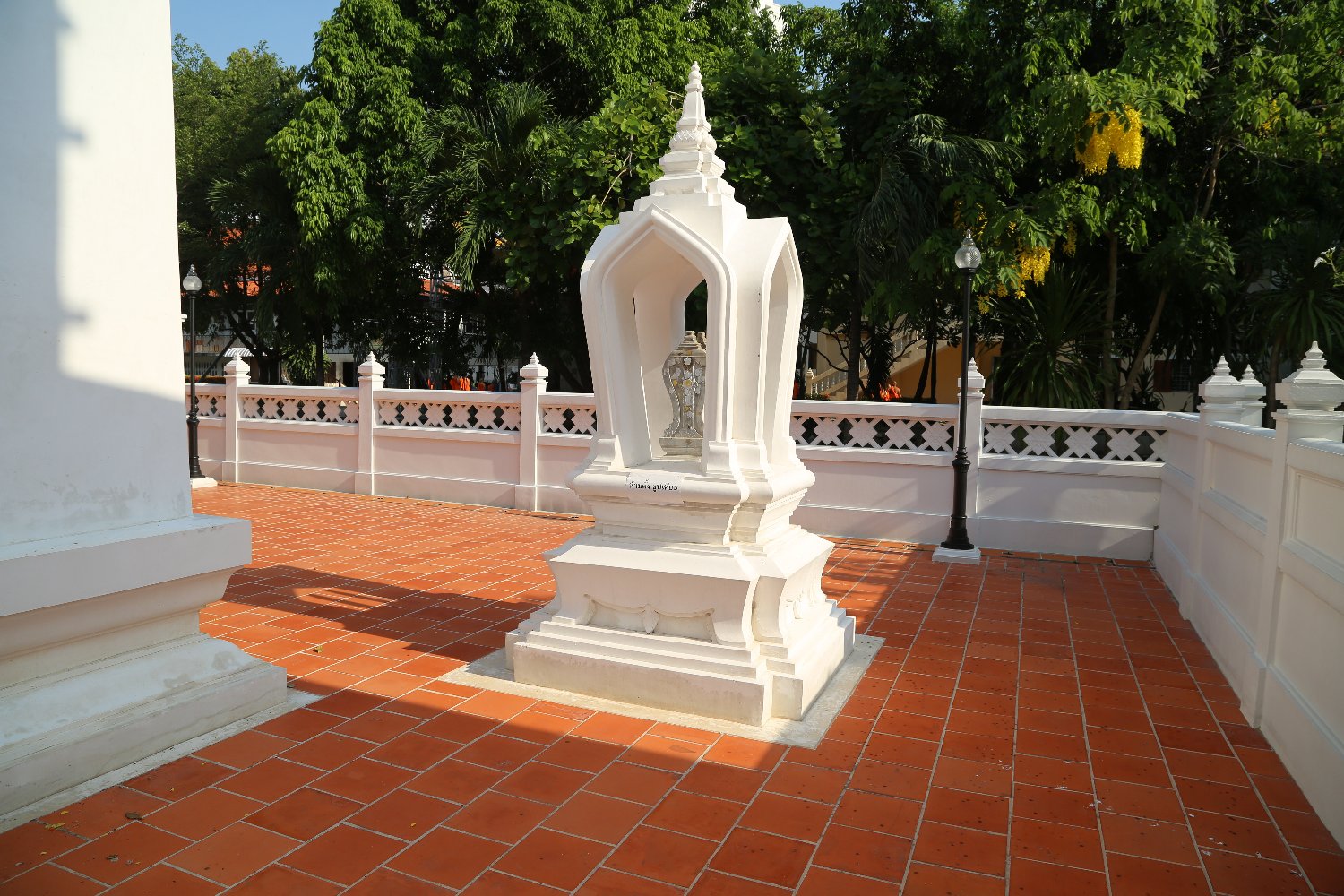
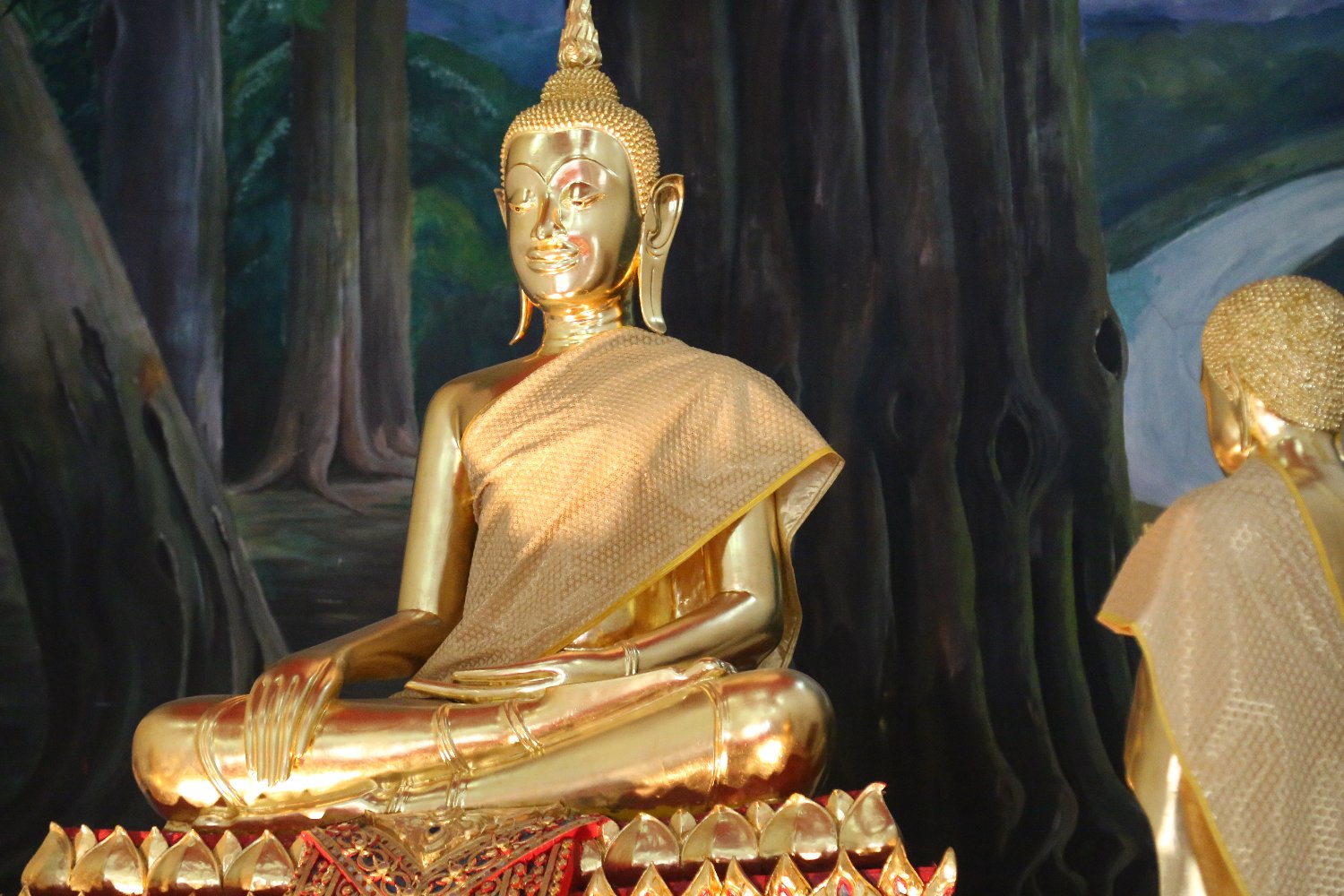
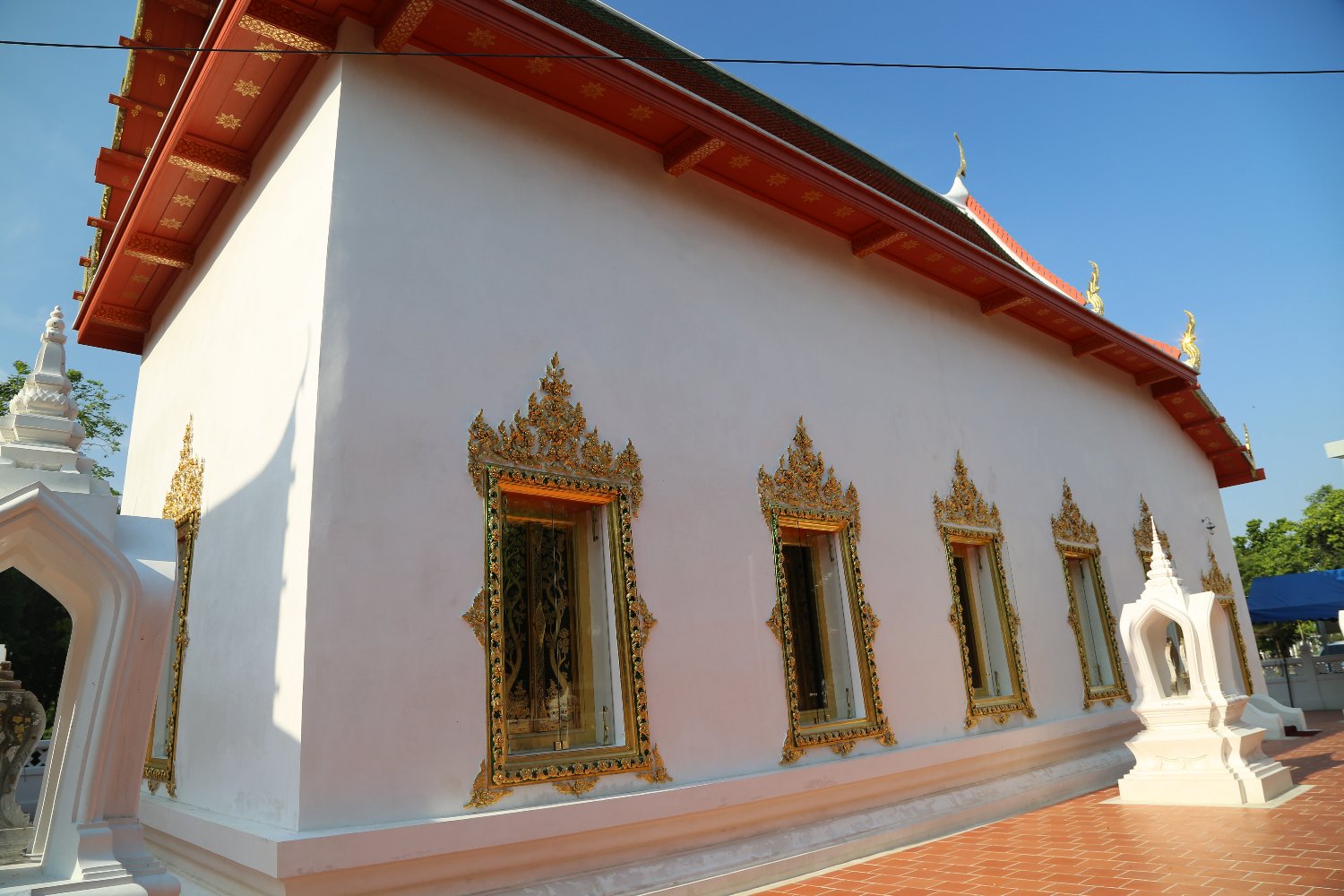
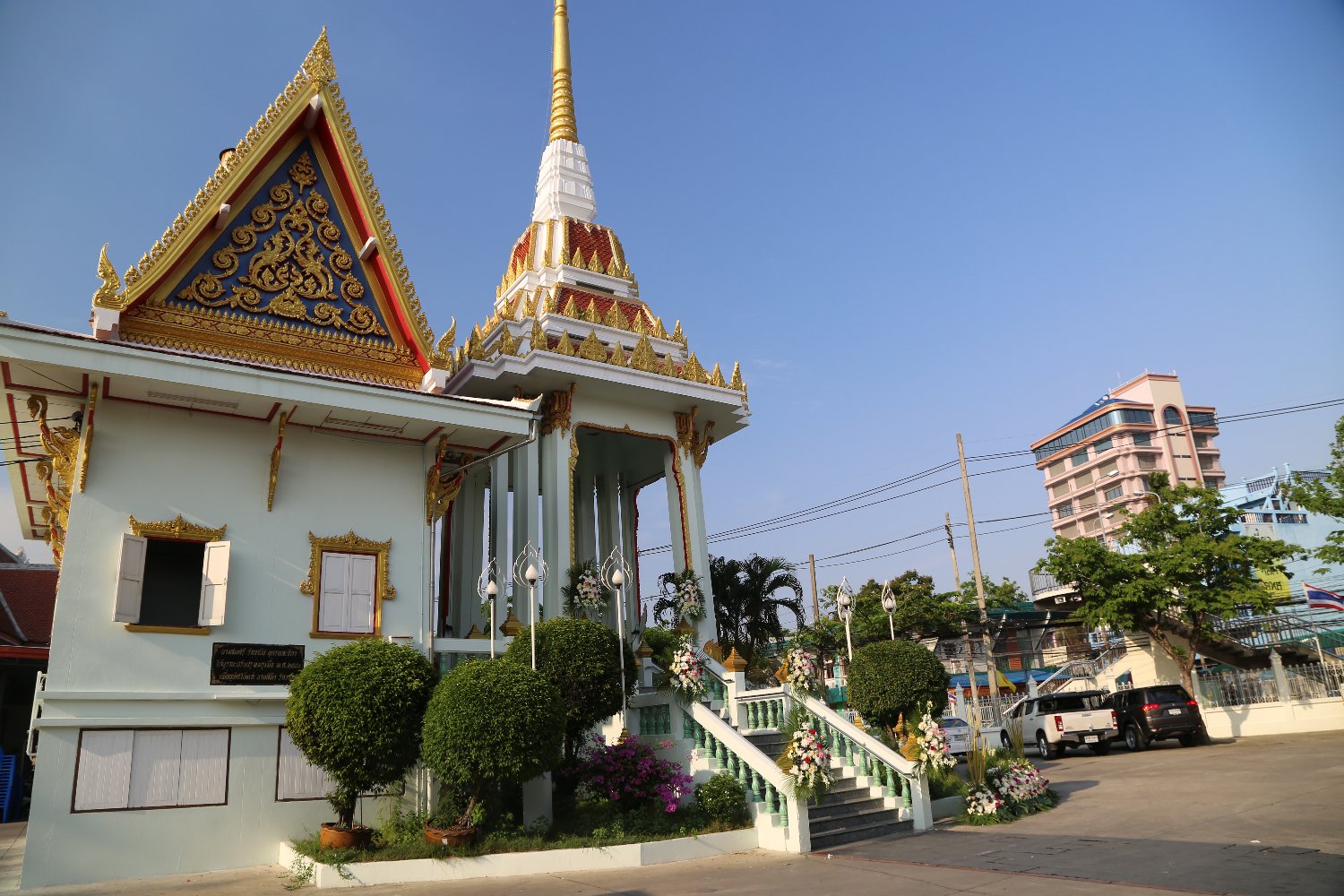
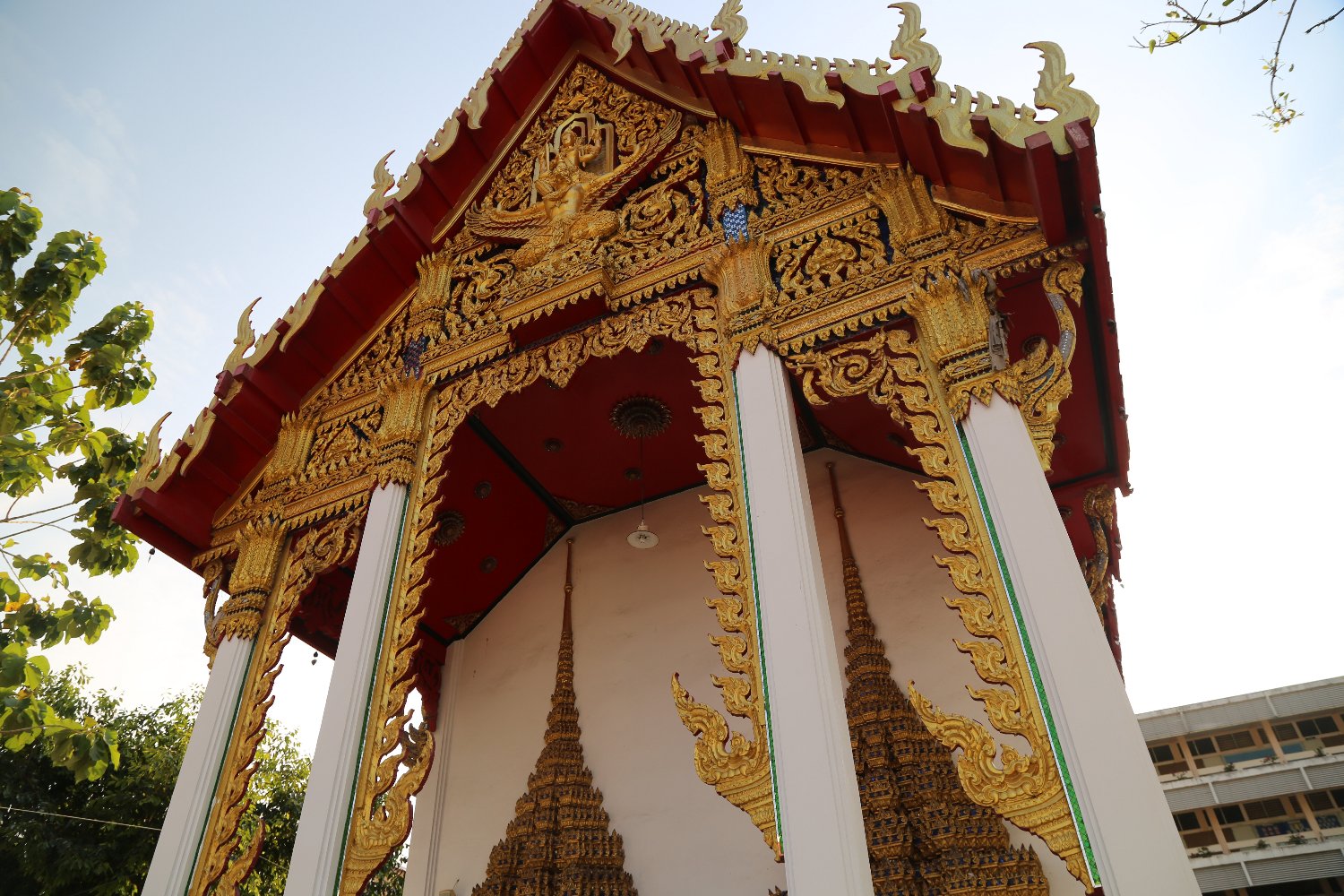
Wat Maiyainui. When one arrives at the Skytrain Wutthakat station and looks directly south one immediately sees a series of colorful roofs located along a small canal (Bang Khun Thian). On a clear day, looks like something out of a fairy tale. These are the temple buildings of Wat Maiyainui and accompanying school. Apparently very few western visitors ever make the walk over to this site as unlike all of the other temples we have visited in Bangkok – several monks came over to ask why we were there and if they could help us.
Very well manicured grounds with several colorful small statues and tiny homes on the grounds. The canal sometimes hosts long tail boats – during our visit we saw on carrying several tourists, but they did not stop at the temple.
A visit here is quite a contrast to the giant condominium buildings located directly across from the tiny canal.
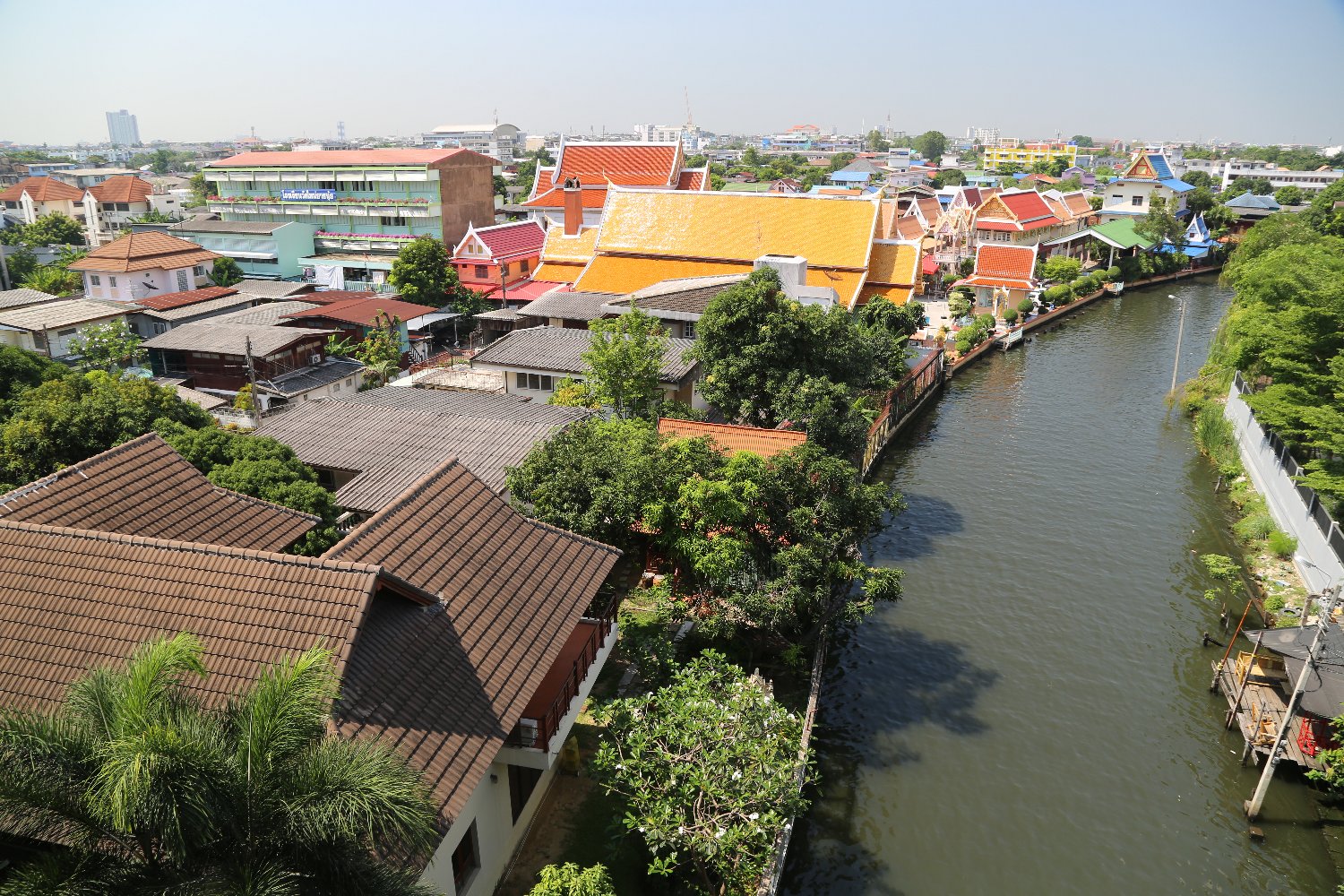
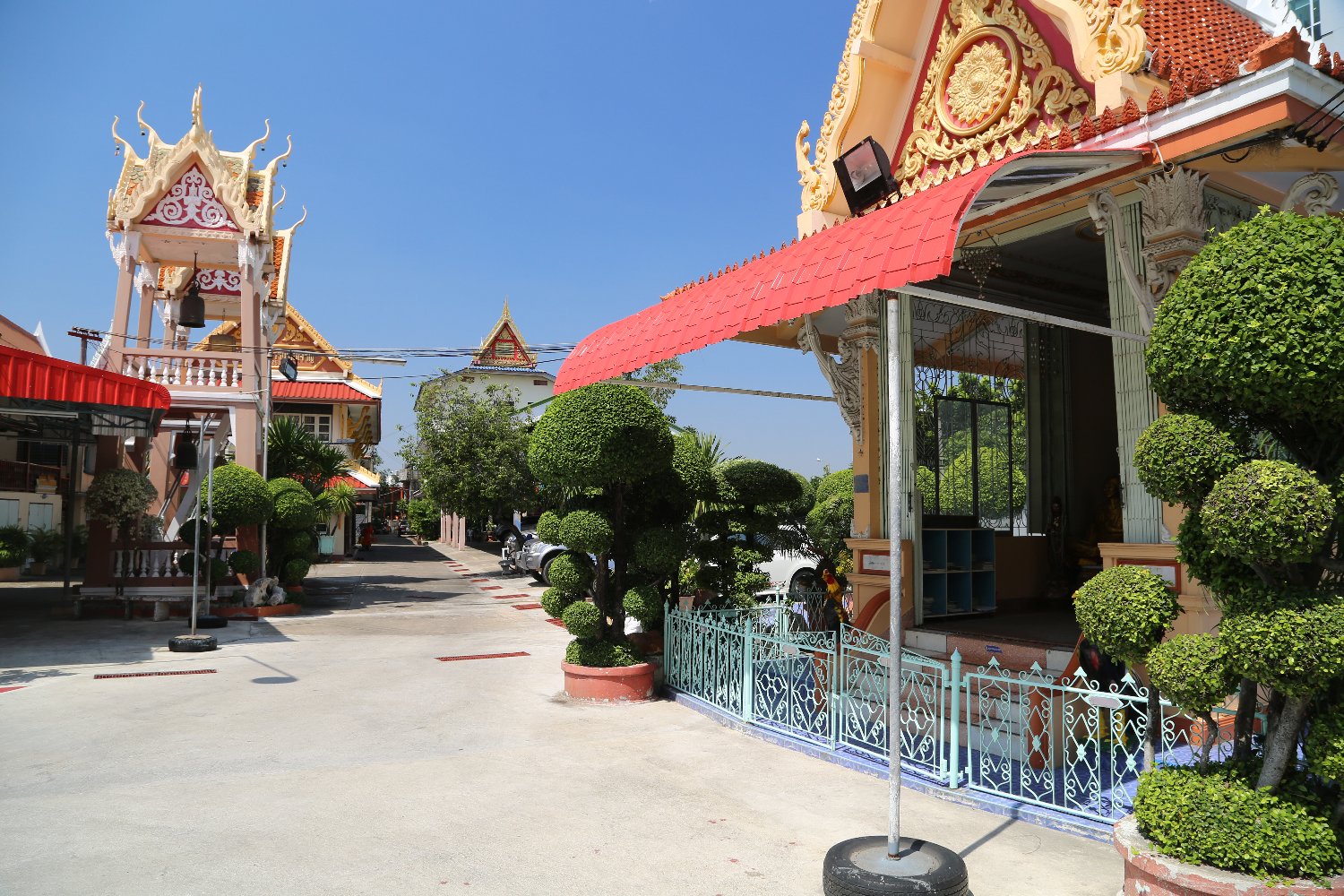

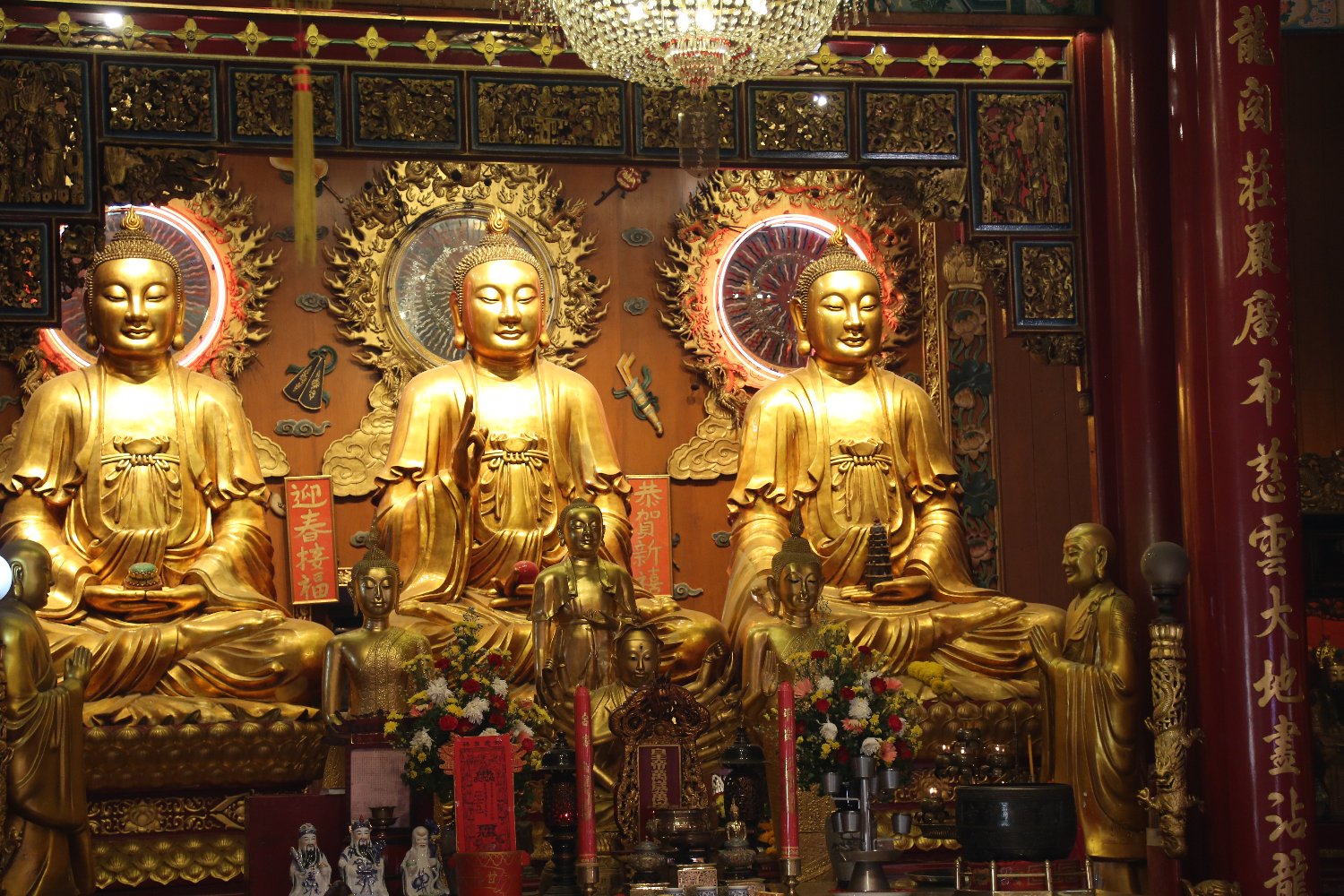
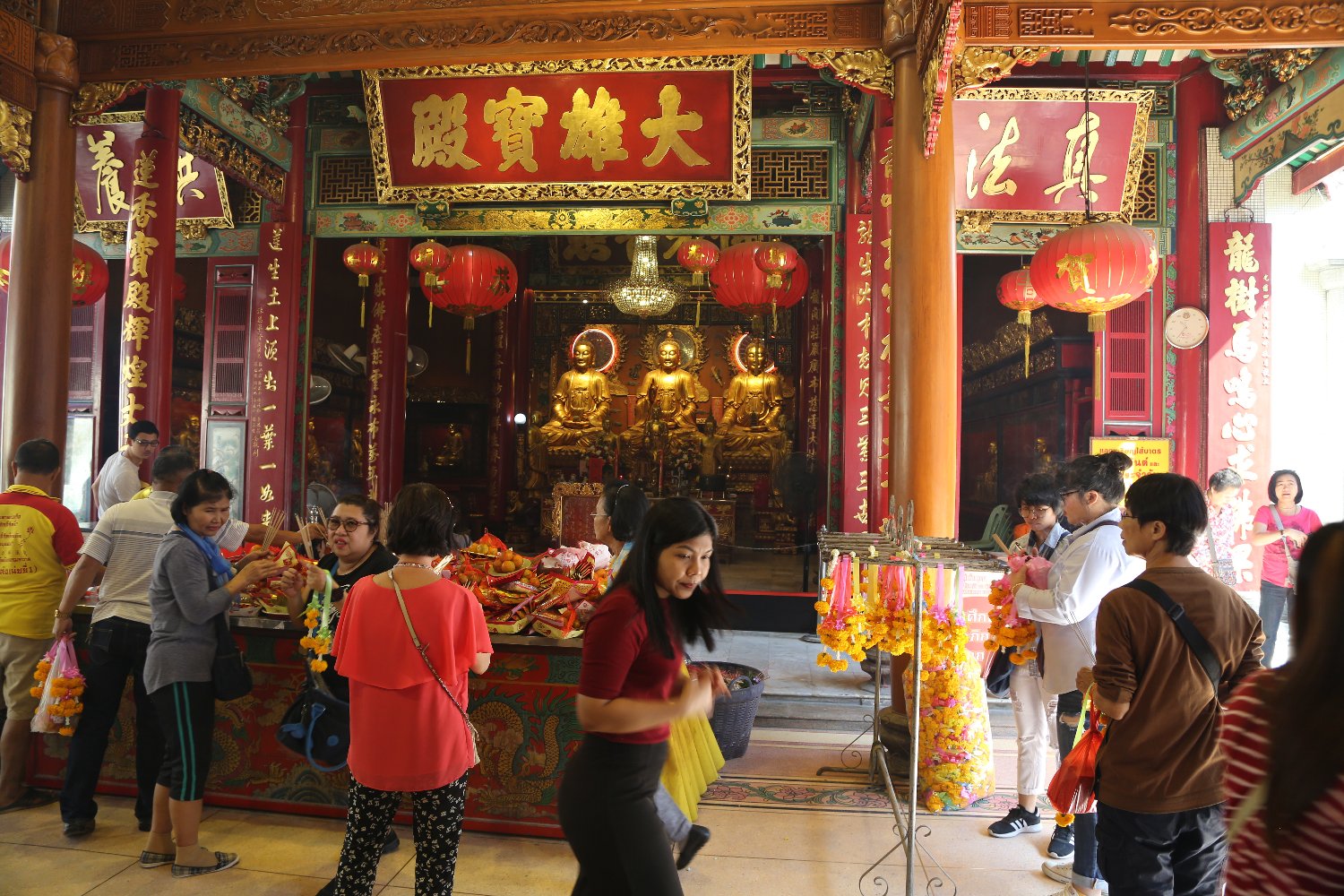
Wat Mangkon Kamalawat Temple was previously (and still sometimes referred to in Chinese) known as Wat Leng Noei Yi. This impressive Chinese temple is located in a part of Chinatown – old Bangkok that doesn’t see to many western visitors. This is the largest and most important Chinese Buddhist temple in all of Bangkok. During special ceremonies (including Chinese New Year) the temple can be extremely crowded with visitors and for those who don’t spend much time at temples – a very exotic experience. Even entering the temple is fascinating – the most intriguing entrance is via a narrow alleyway accessible from Charoen Krung Road.
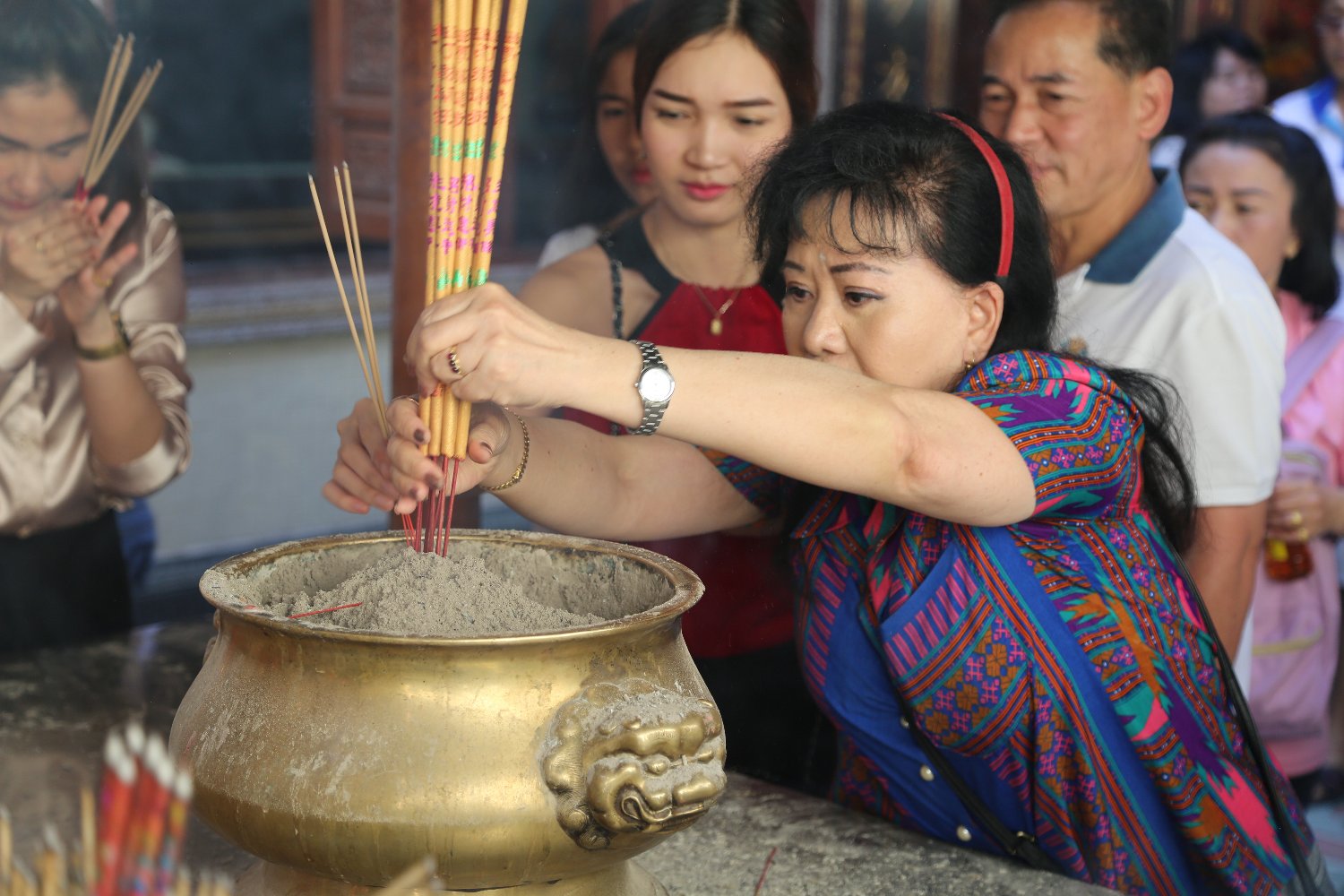
The temple was built in the early 1870s – its current name means “Dragon Lotus Temple”. Very Chinese visually including a number of colorful dragons. Various shrines are located at the temple – during a visit you will see people lighting and carrying burning sticks of incense which they continuously wave and hold while bowing to various statues. At times, in the small shrine rooms the smoke can become quite thick. Other gifts include fruits and paper money.
Don’t try to rush through this temple – rather meander slowly exploring the variety of courtyards and passageways. A visit here is a positive assault on the senses – with a variety of smells, red and gold colors, and the energy of hundreds of people coming to pay their respects and pray.
The closest public transportation stop to this temple is via the Chaophraya Express Boat to Ratchawong pier (about a 10–15-minute walk from the pier).


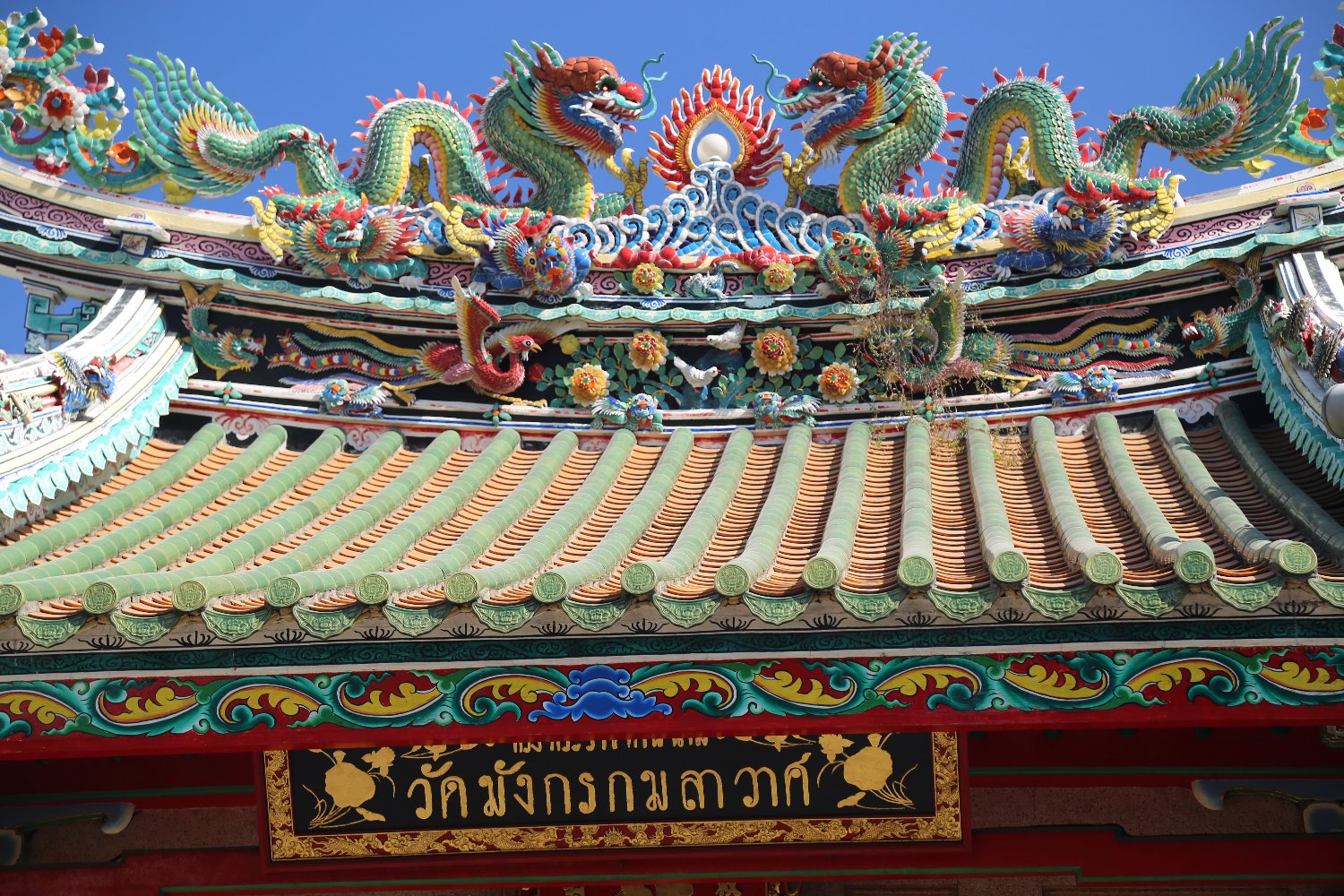
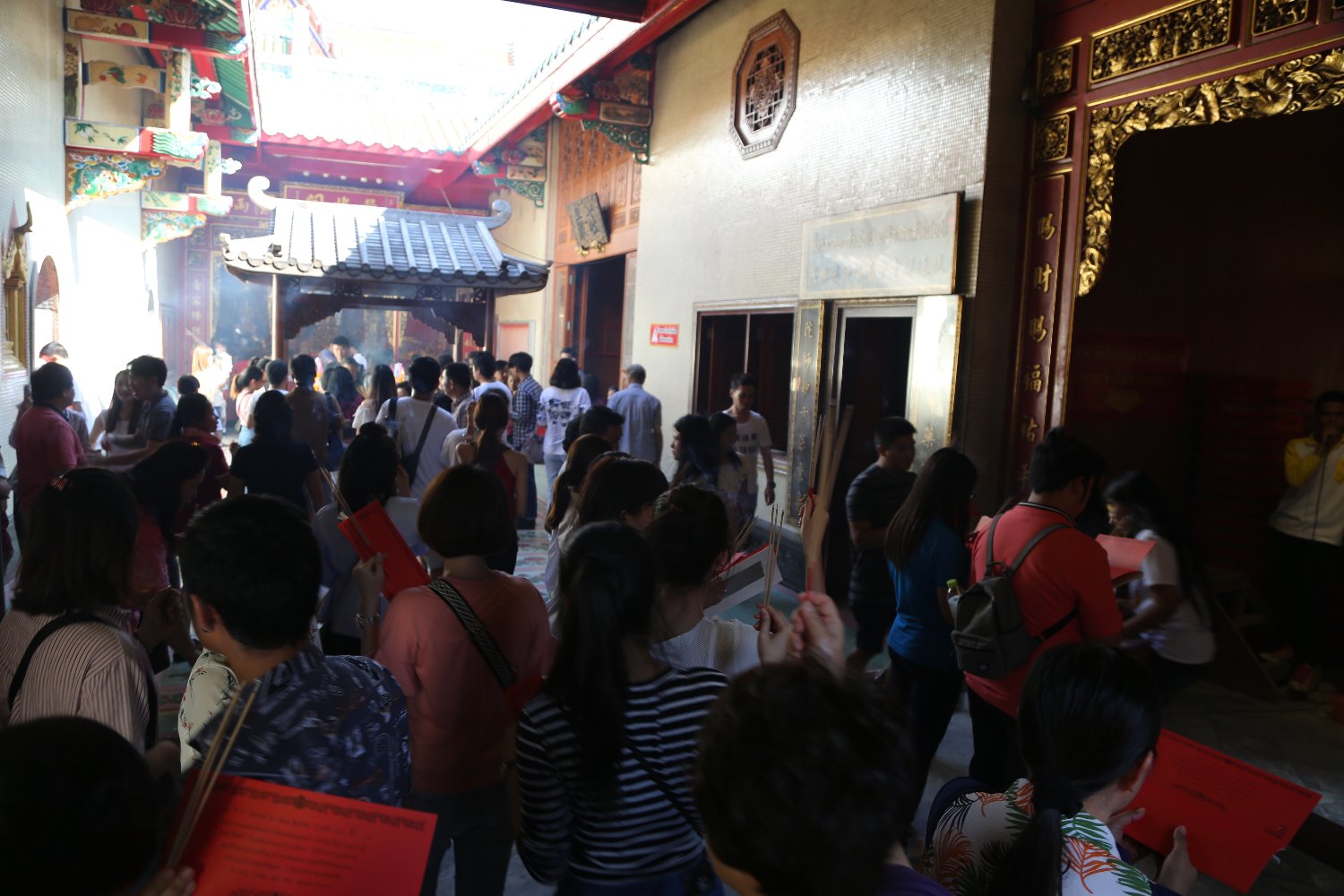
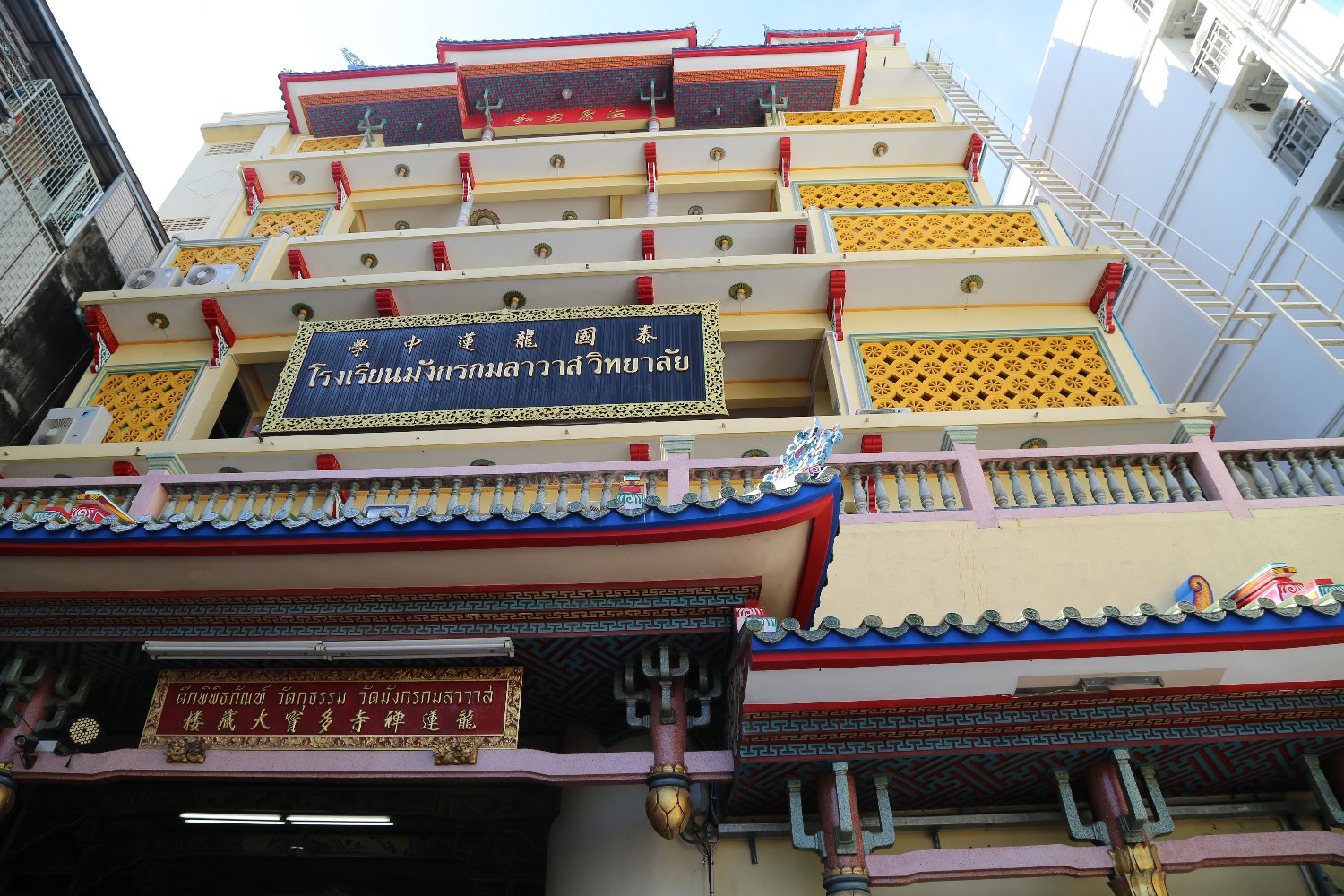
Wat Pariwat is well off the beaten path for most temple loving tourists but is well worth the extra effort to get here. Located within a short walk from the BRT, the nearest BRT station is appropriately titled Wat Pariwat. Or if you hire a taxi or motorbike driver in the area – chances, are they will have heard of this temple as it has a prominent reputation in this part of town.
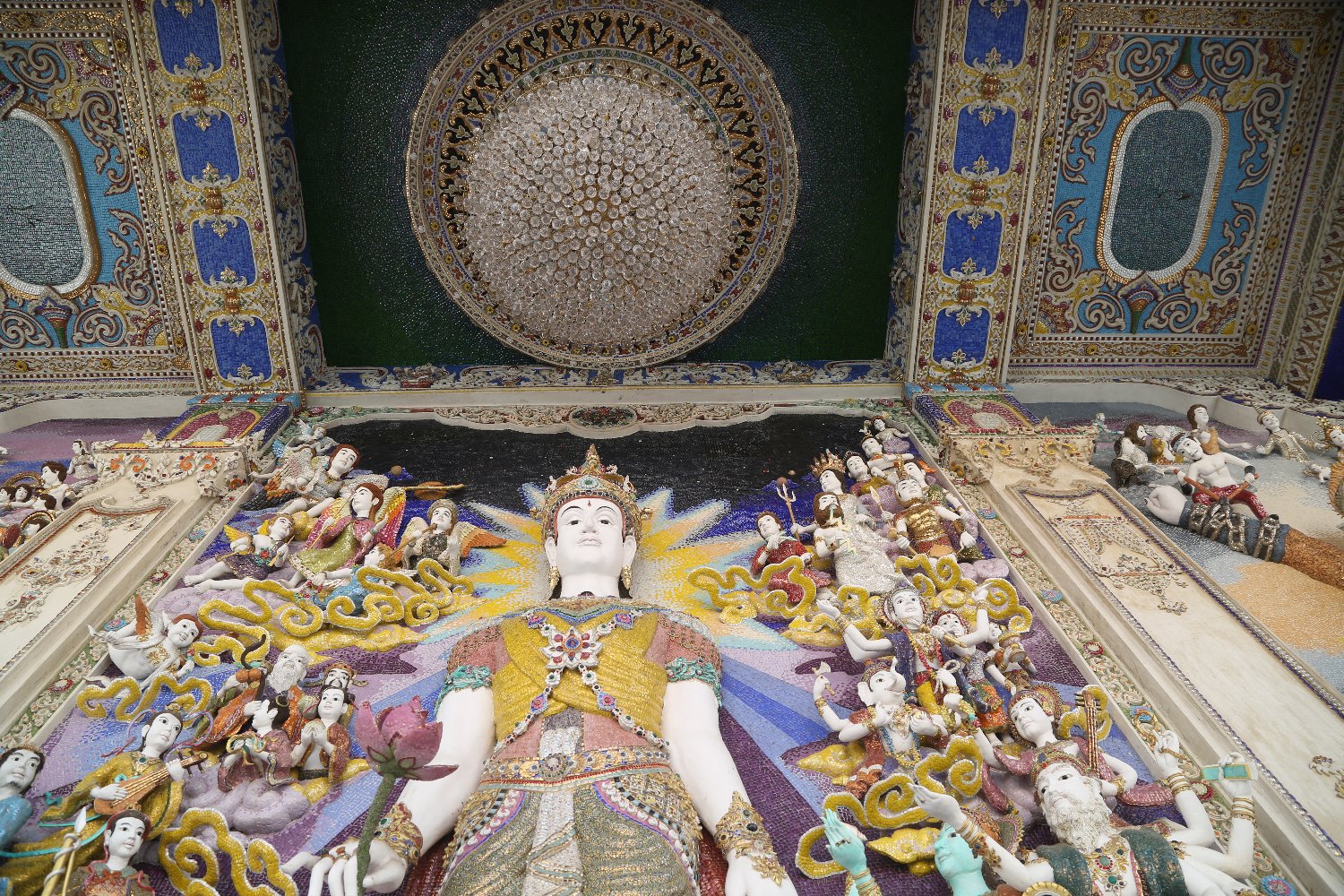
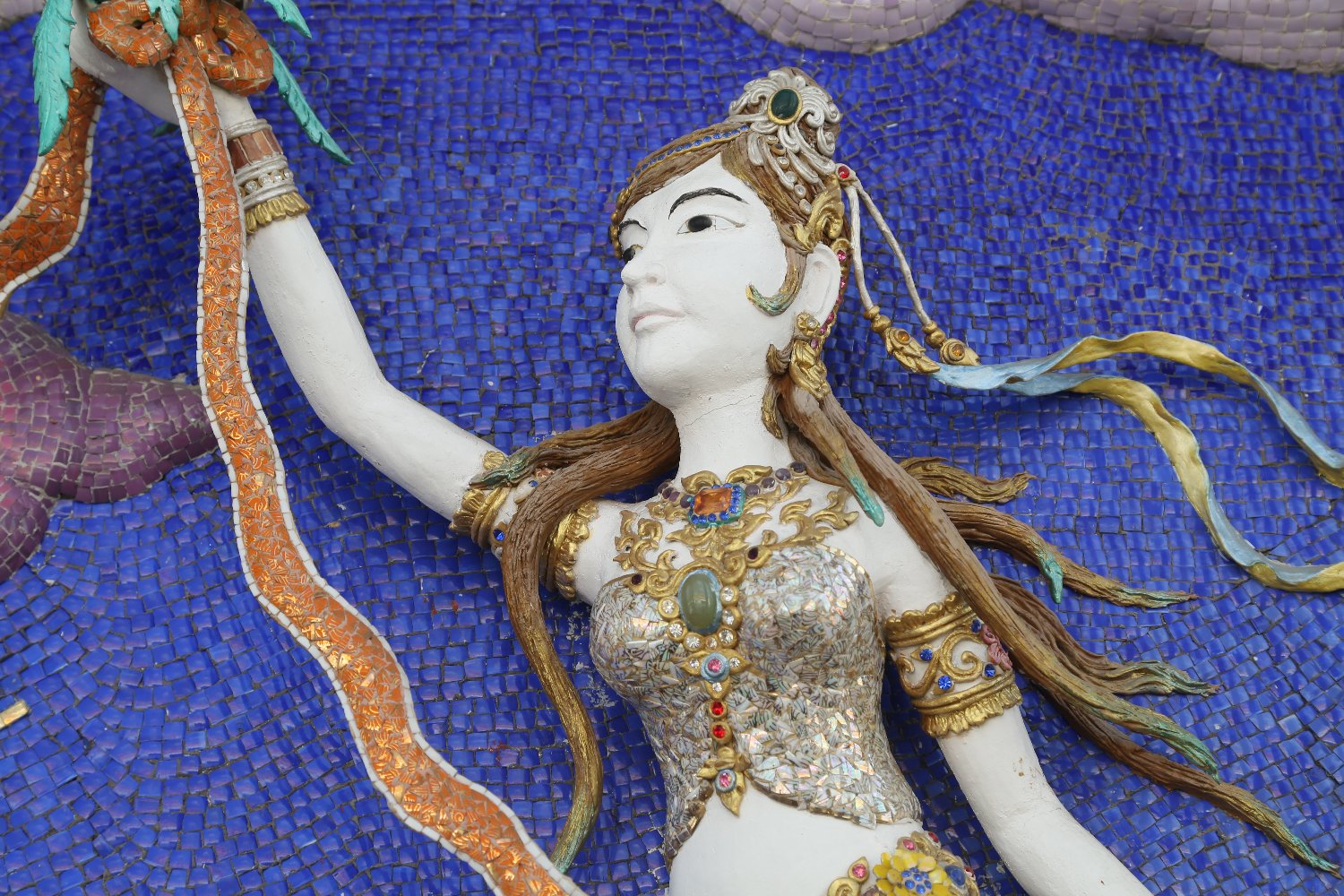
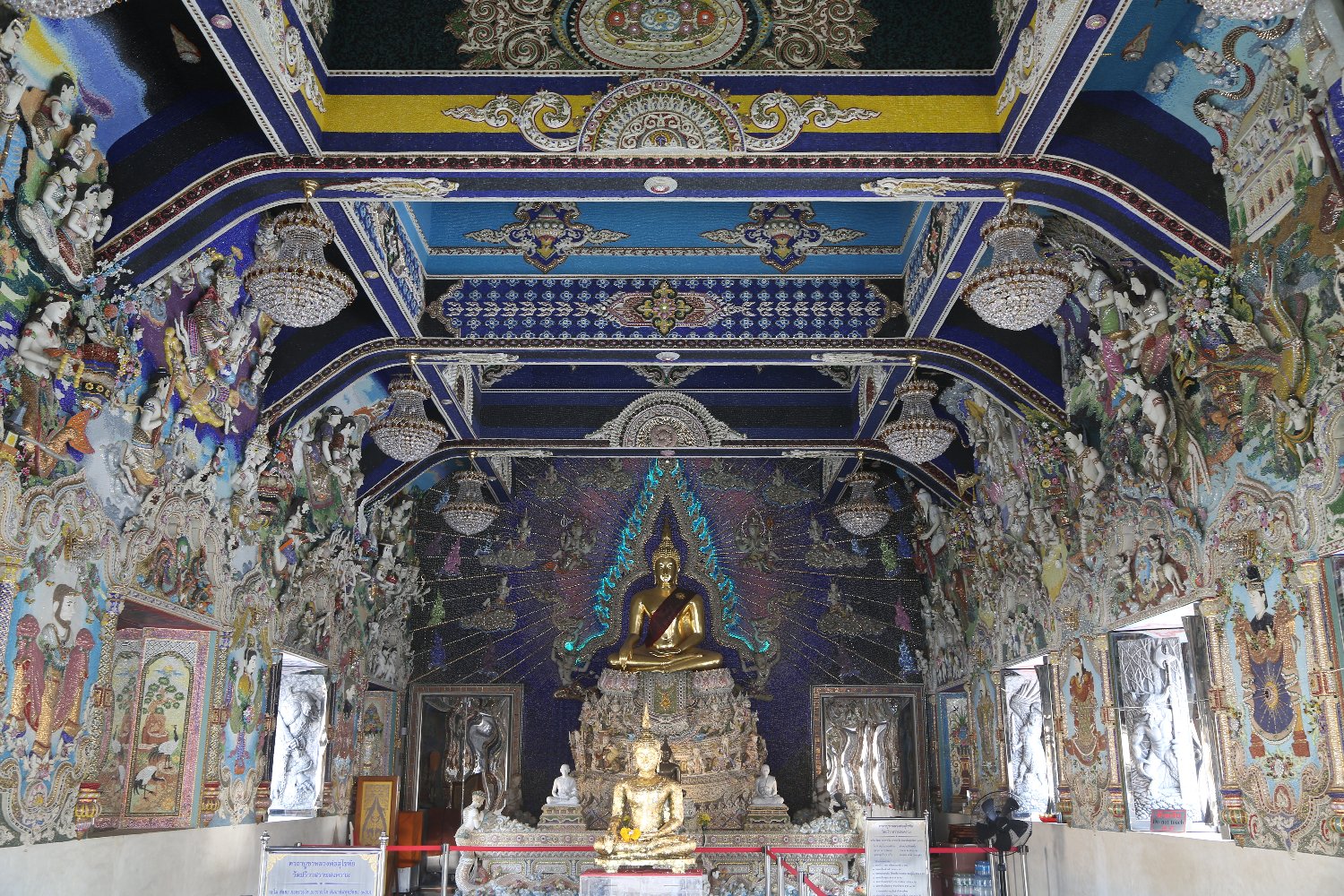
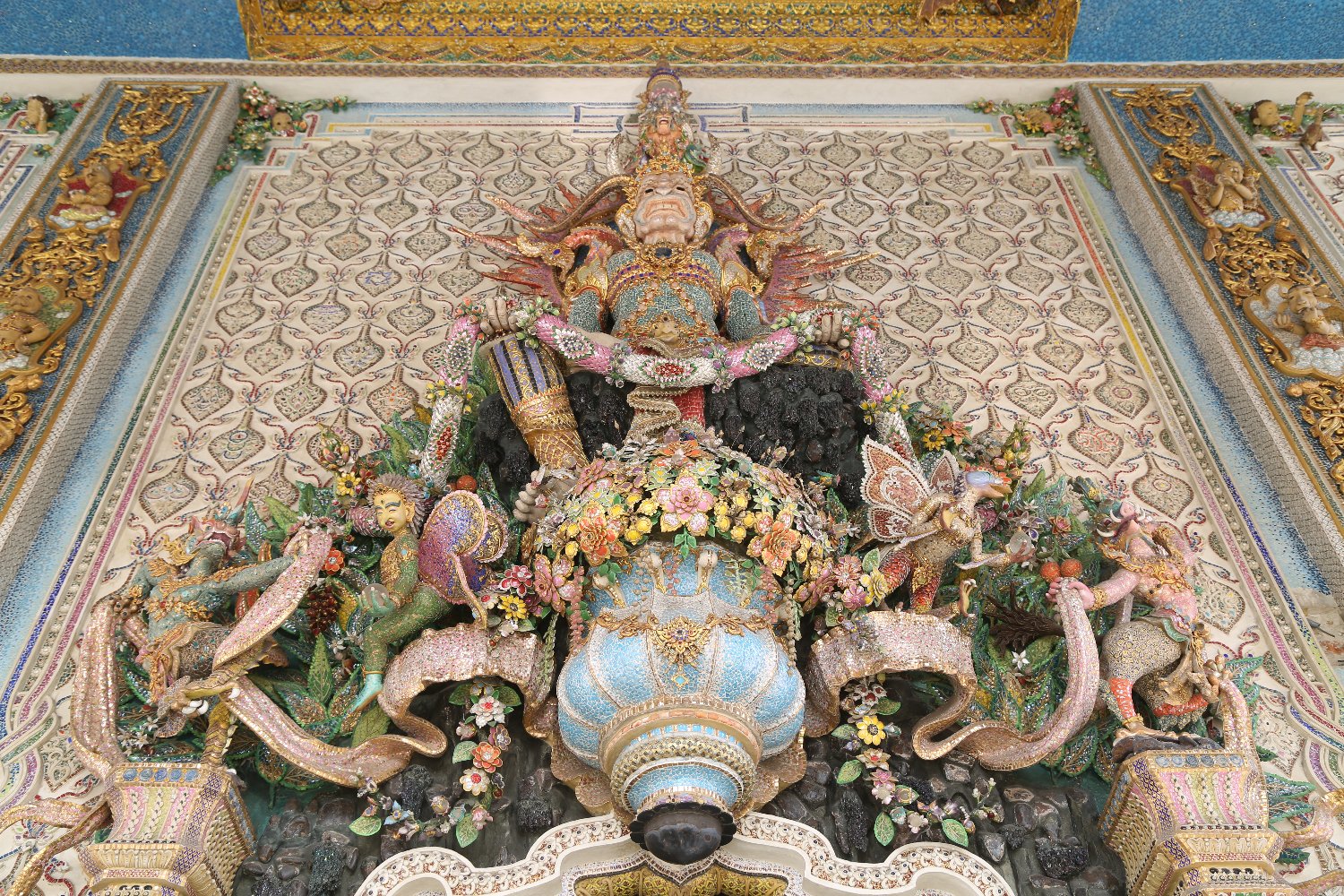
A decent sized complex with amazing and eclectic mosaic and tiny sculpture like decorations both inside and on the exterior walls of the temples.
From afar some of these decorations might look like old school yet opulent Thai artwork – look closer, you might spot some real surprises including some new themes mixed in with old such as the sculpture of someone taking a selfie, Mickey Mouse, a semi naked Minnie Mouse with ample sized breasts and even a portrait of Albert Einstein!
And one of the locked off buildings contains a small golden statue of David Beckham and as a result, this temple is sometimes referred to as the “David Beckham temple””. The artist(s) who designed some of these mosaics are incredibly talented and creative. Worth a visit – you just might spend a bit longer here than originally anticipated!
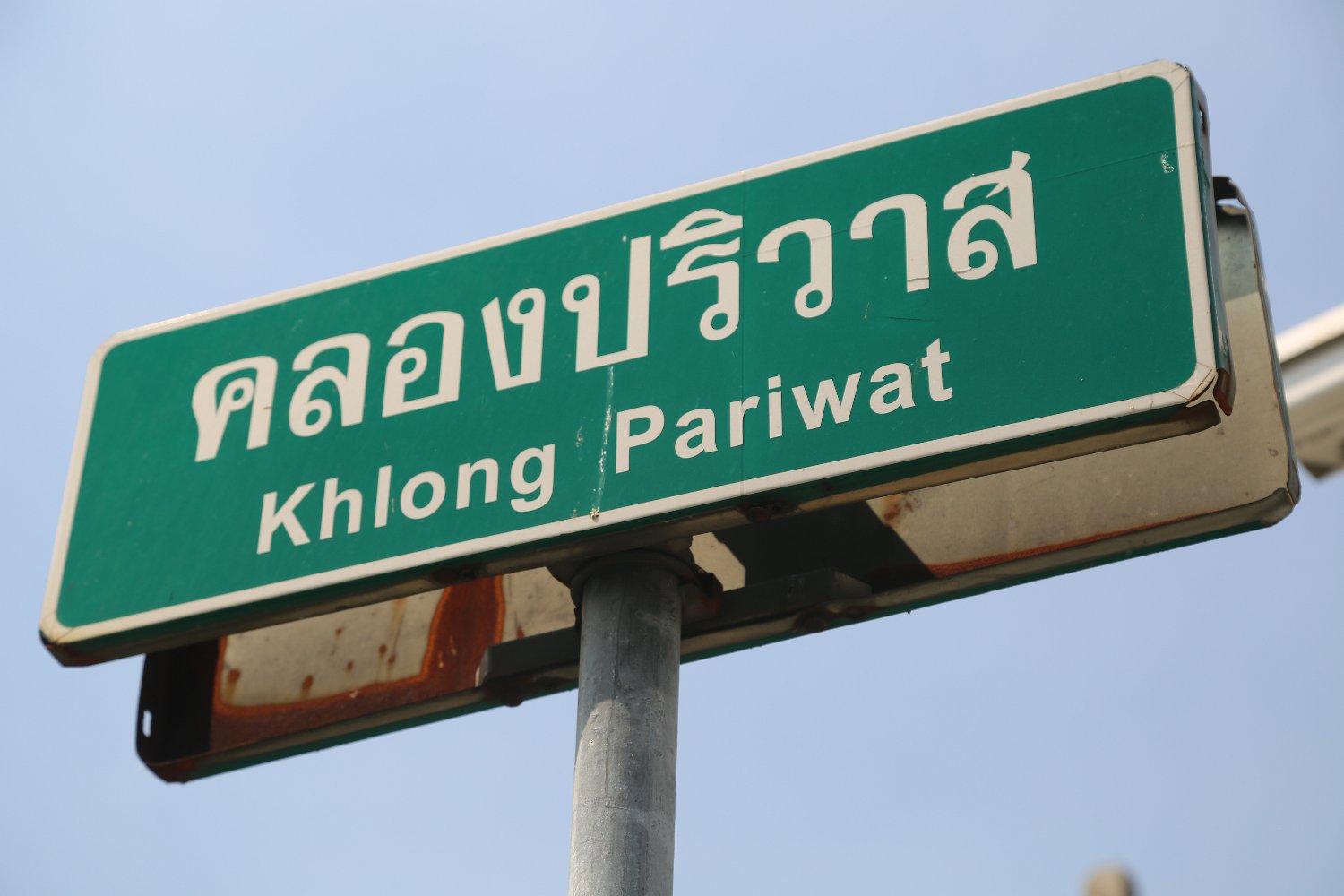
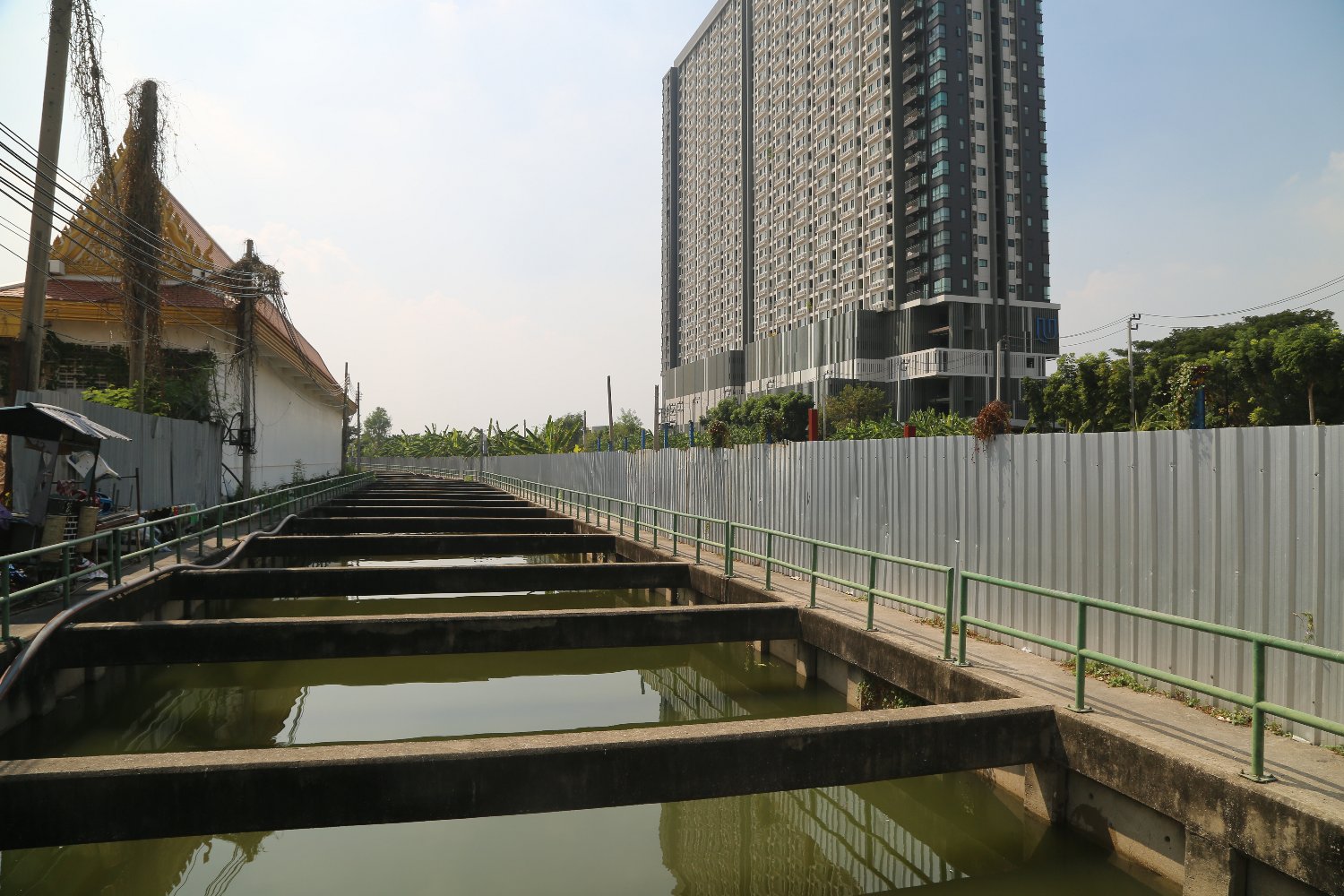
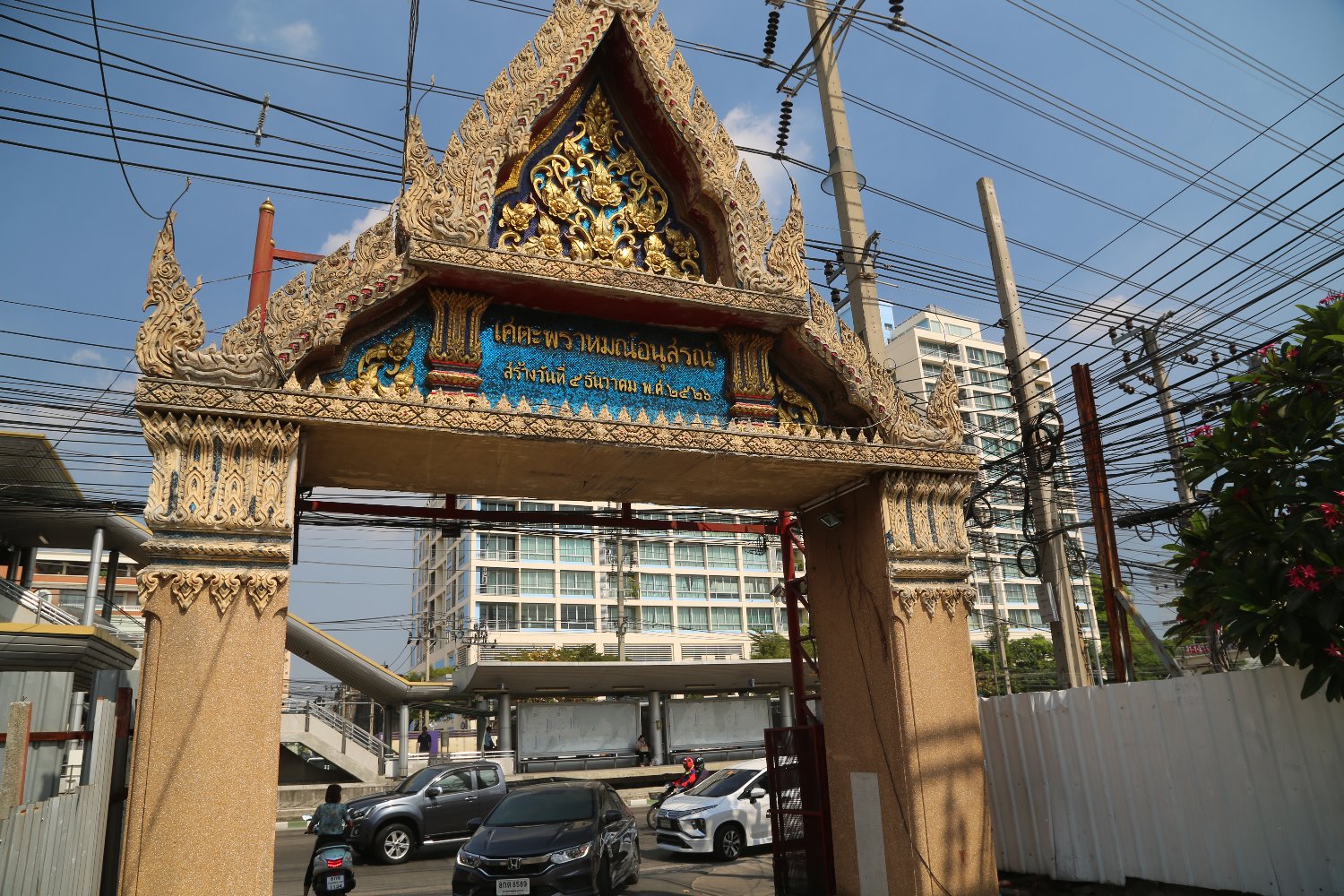
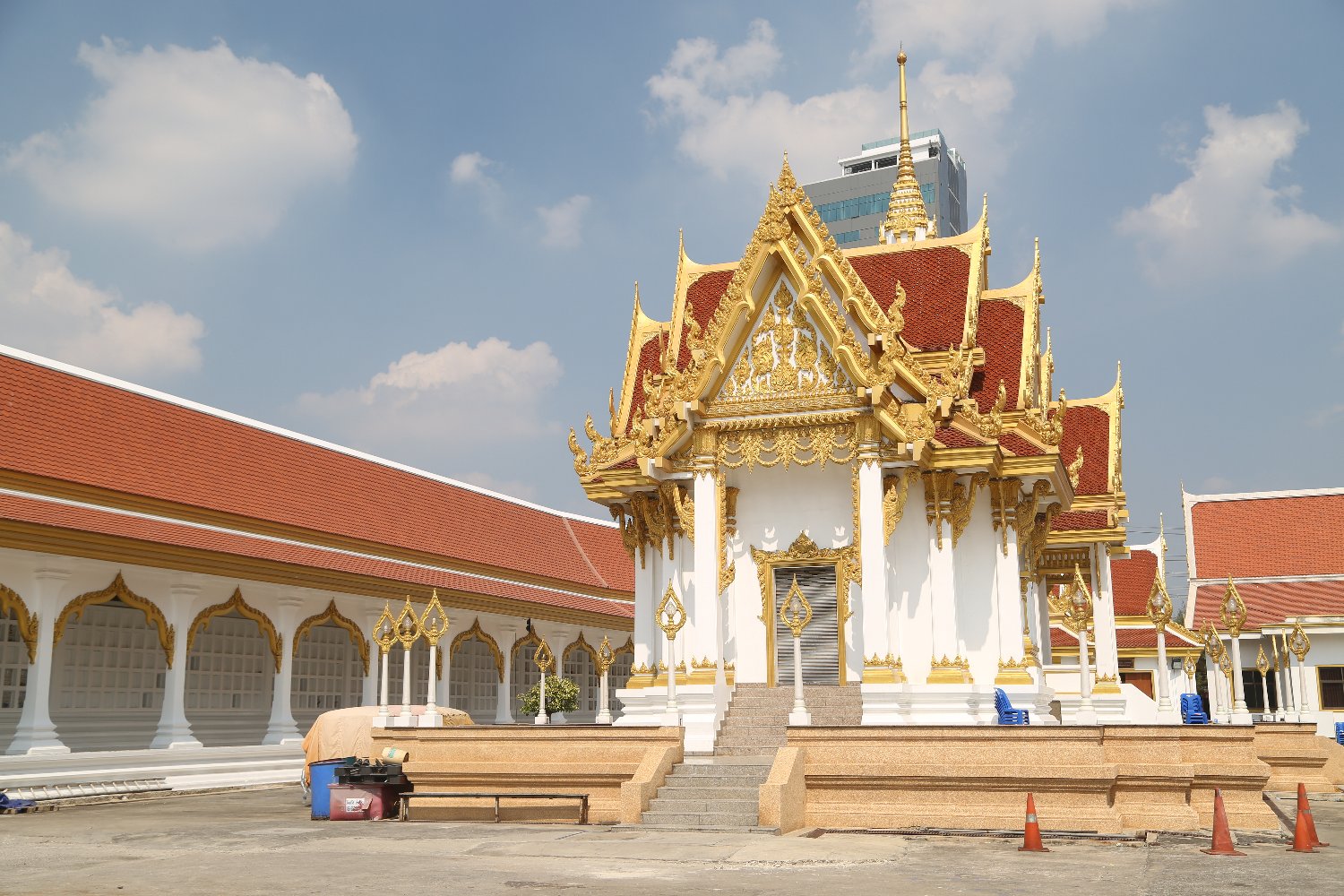
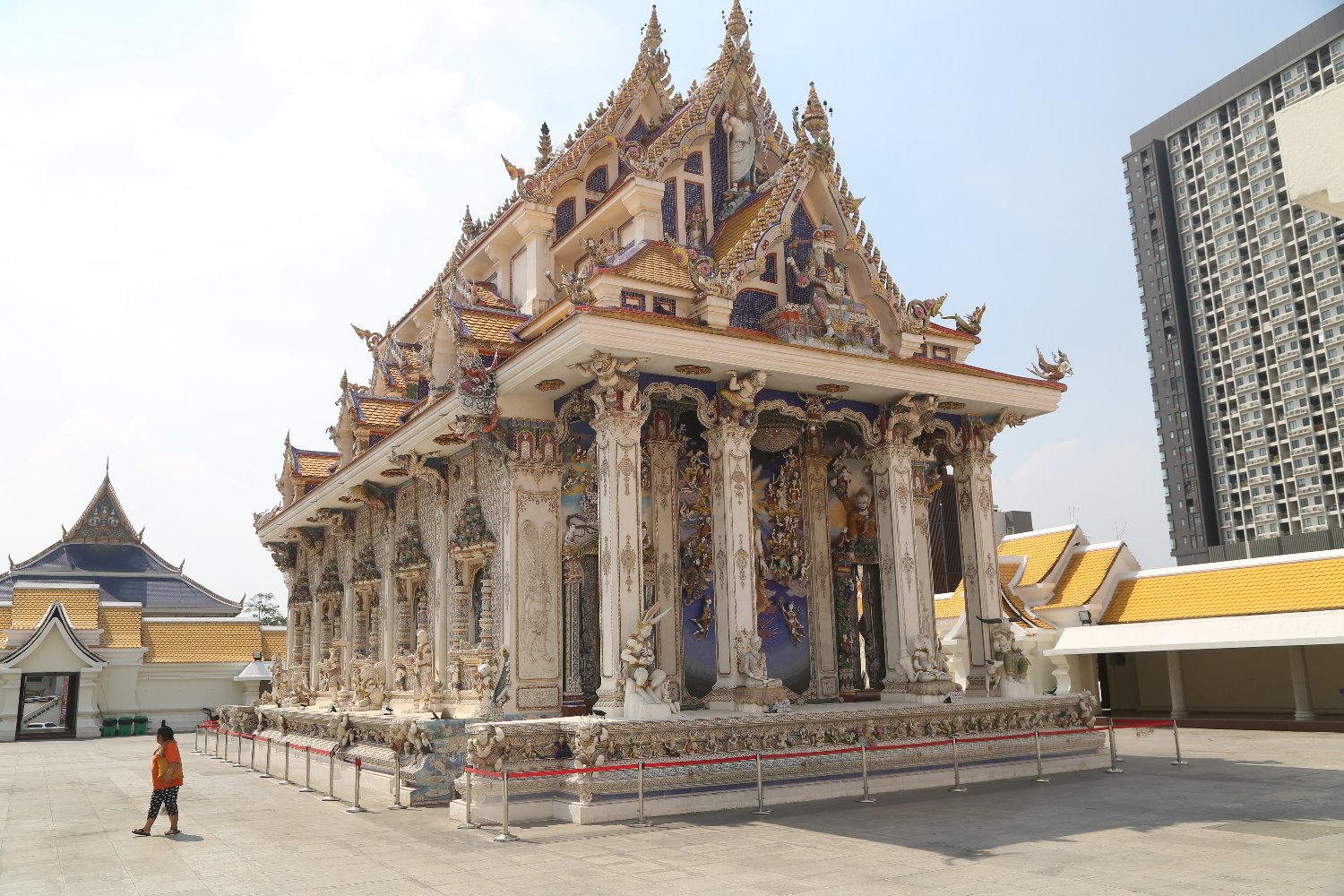
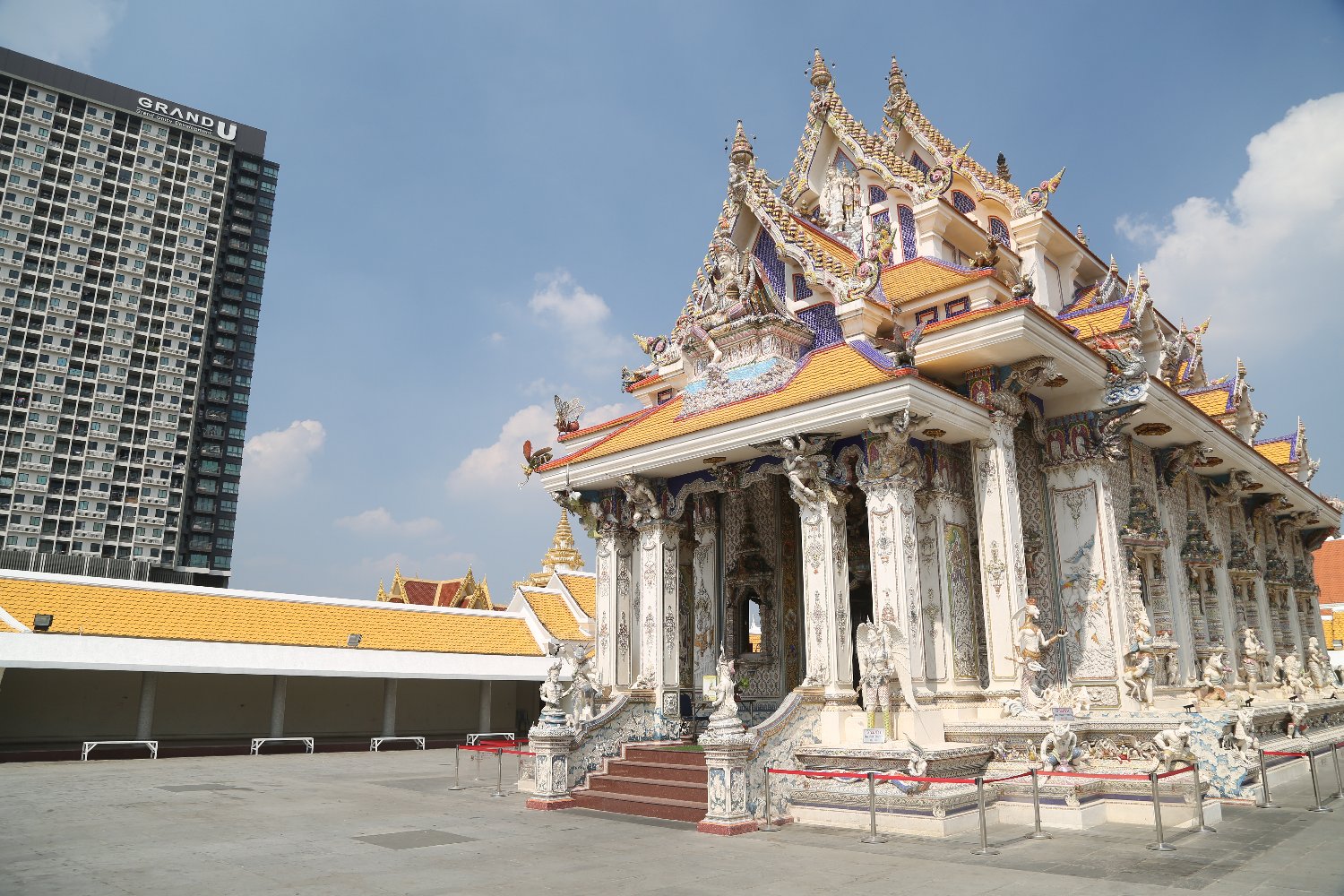

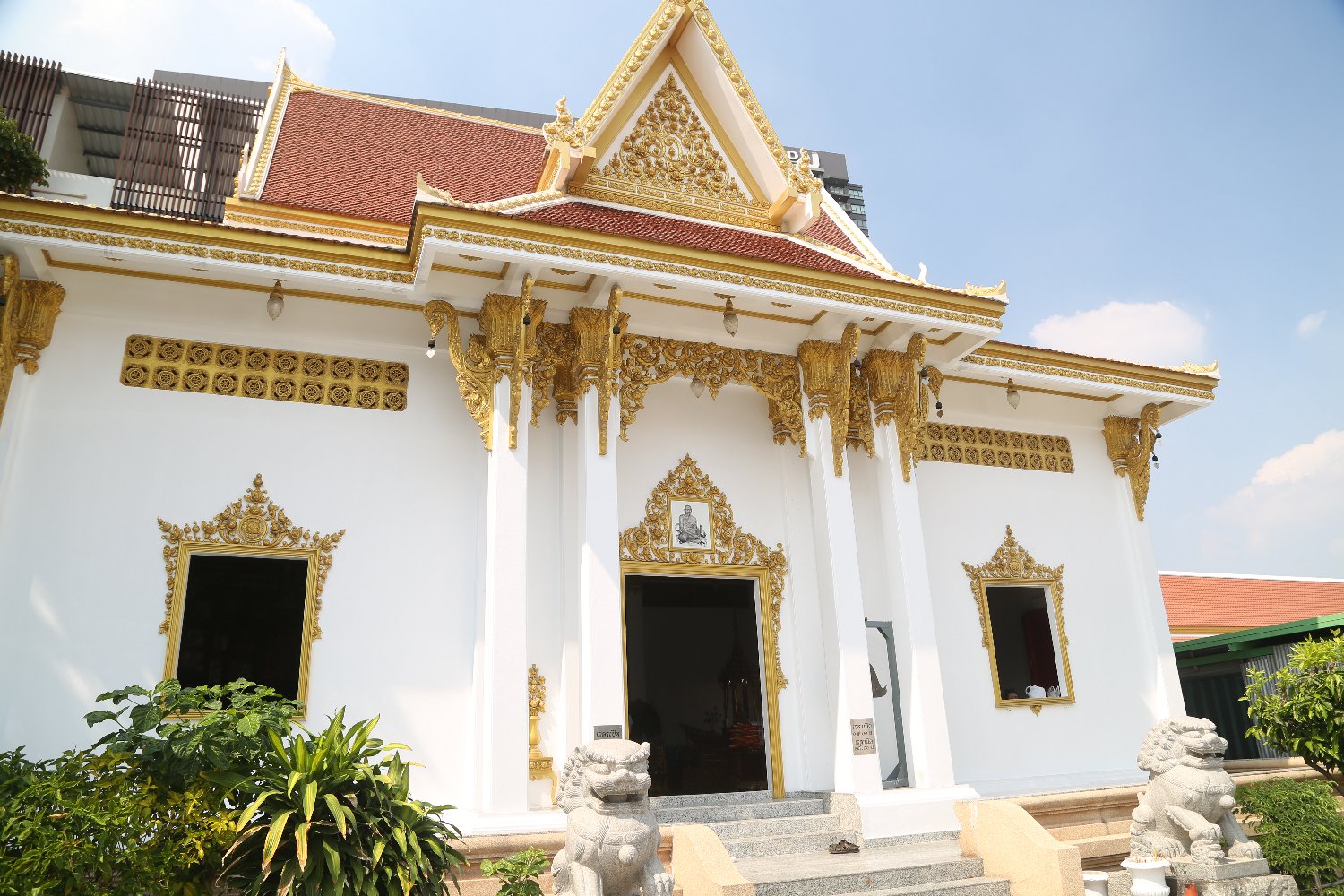
Wat Nak Prok is one of several extremely photogenic temples located within a short walk north of the Wutthakat Skytrain stop. Well worth making a trip out here just to see several traditional temples (including this one) which are very much off the beaten path. A photographers dream destination.
The temple was originally built in 1748 in the Ayutthaya period. A Chinese merchant named Phuk helped build the various buildings on site and the Sermon Hall was built in tribute to his wife while the Ordination Hall was a tribute to himself.
One can spend at least an hour here looking at all the colorful details from the ornate ceilings inside the building, to the bright artwork on the exterior. Mostly Thai style architecture but also some Chinese influence. Several statues of gods and goddesses are located around the grounds often site of worshipers. Be sure to duck into Ubosot (Ordination Hall) to see the old hand painted murals on the walls.
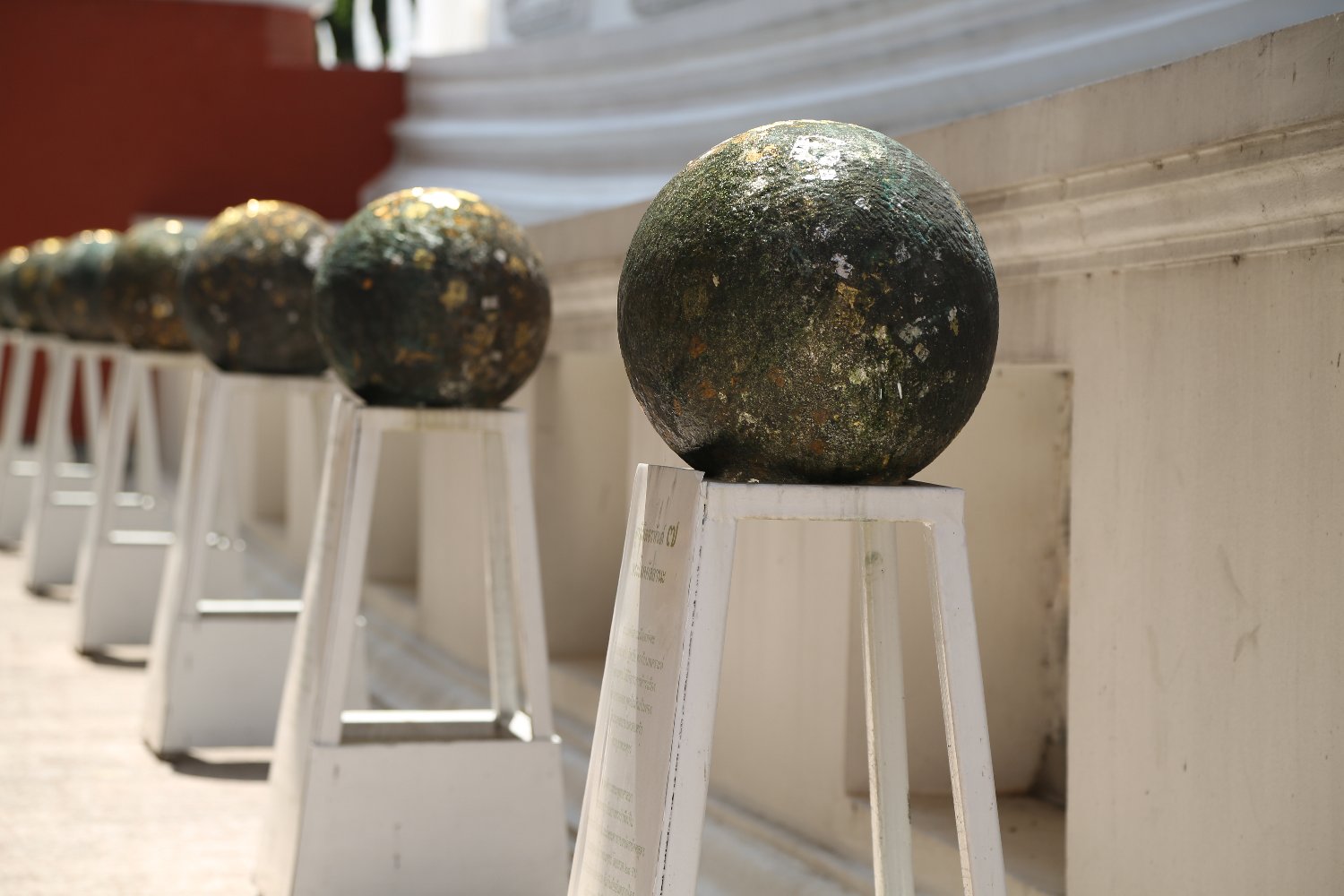
Other highlights include the belltower (hor rakang), a beautiful golden reclining Buddha, a small water fountain, a Chinese style pagoda and a series of hanging bells and 8 impressive Luk Nimit balls on pedestals.


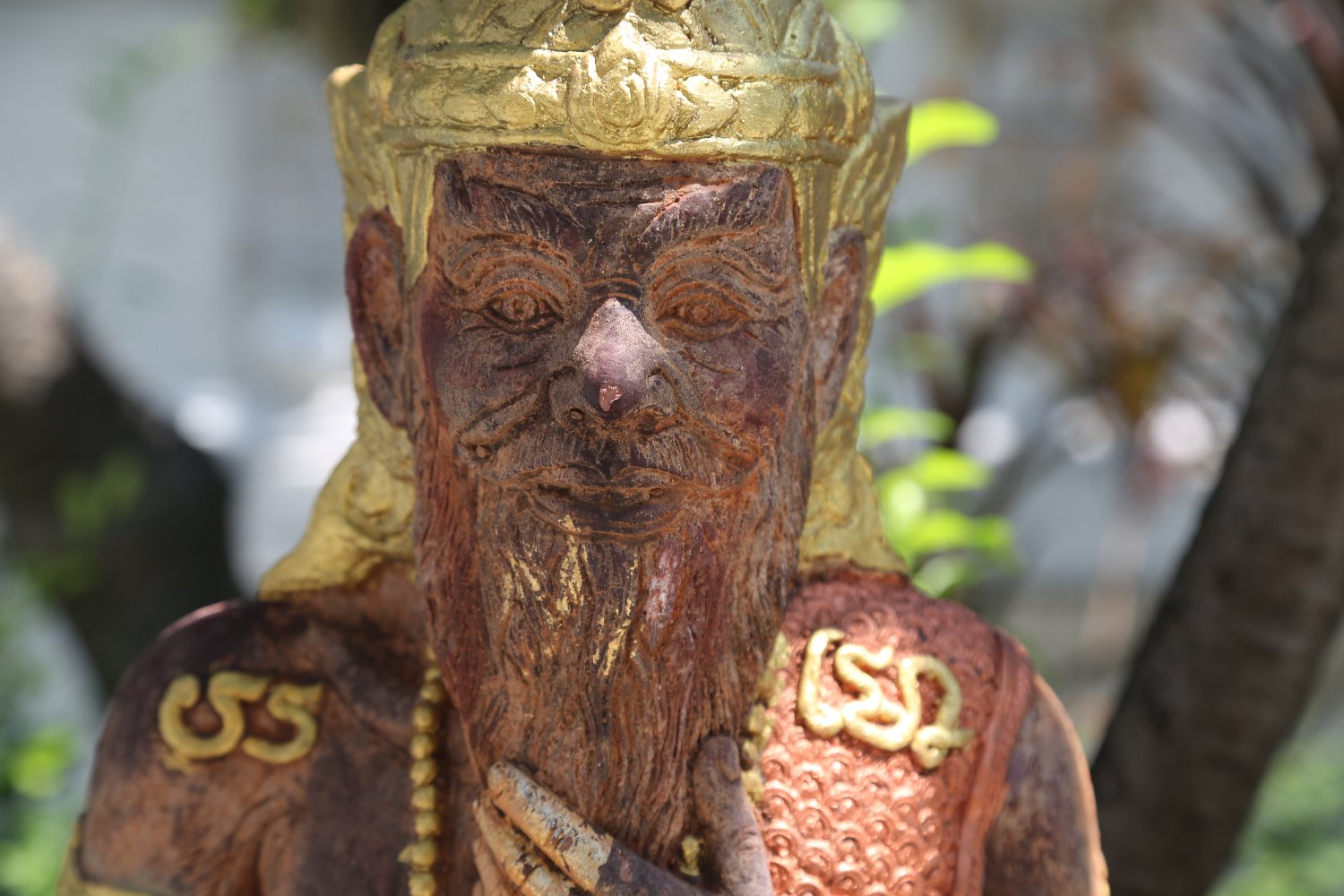
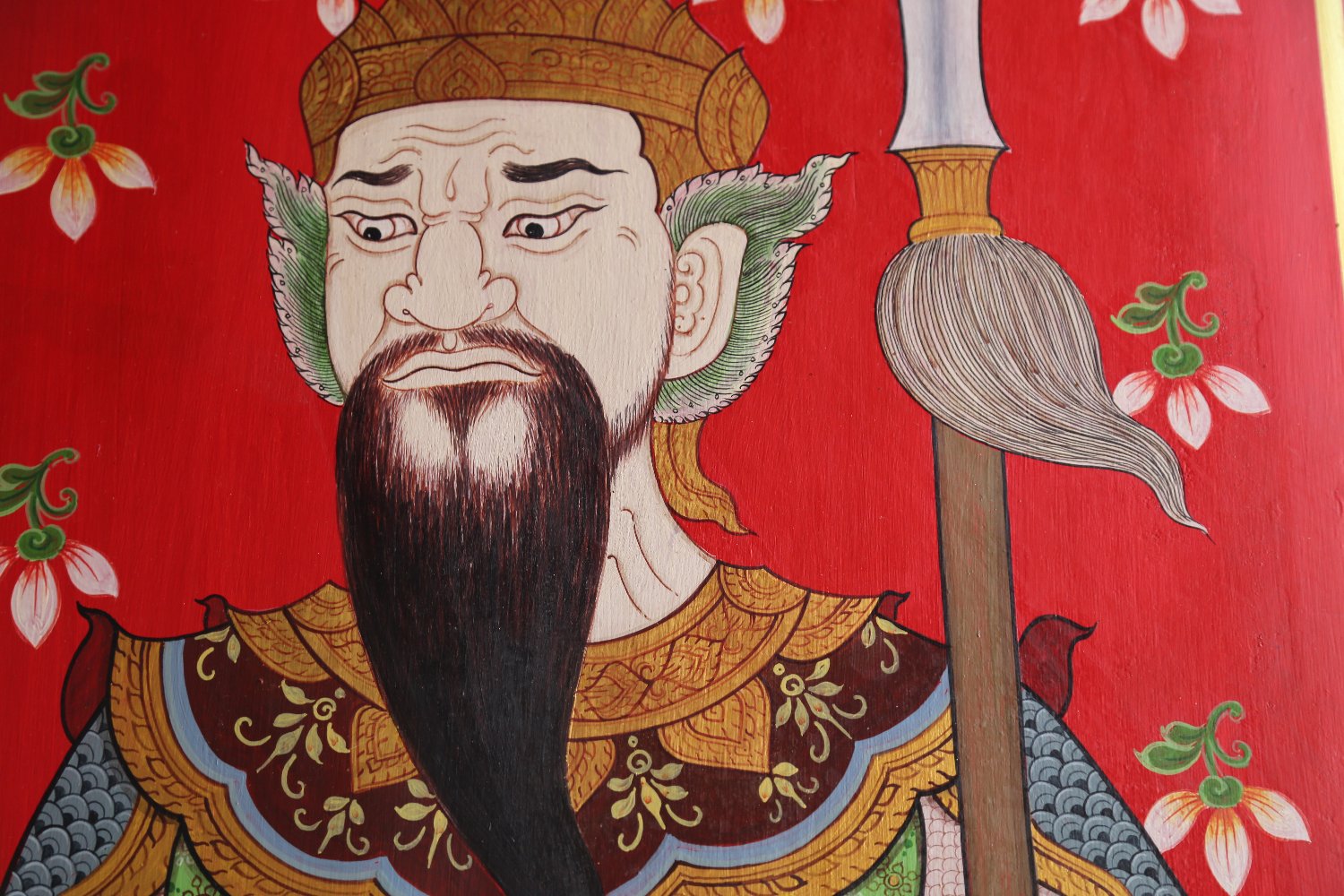


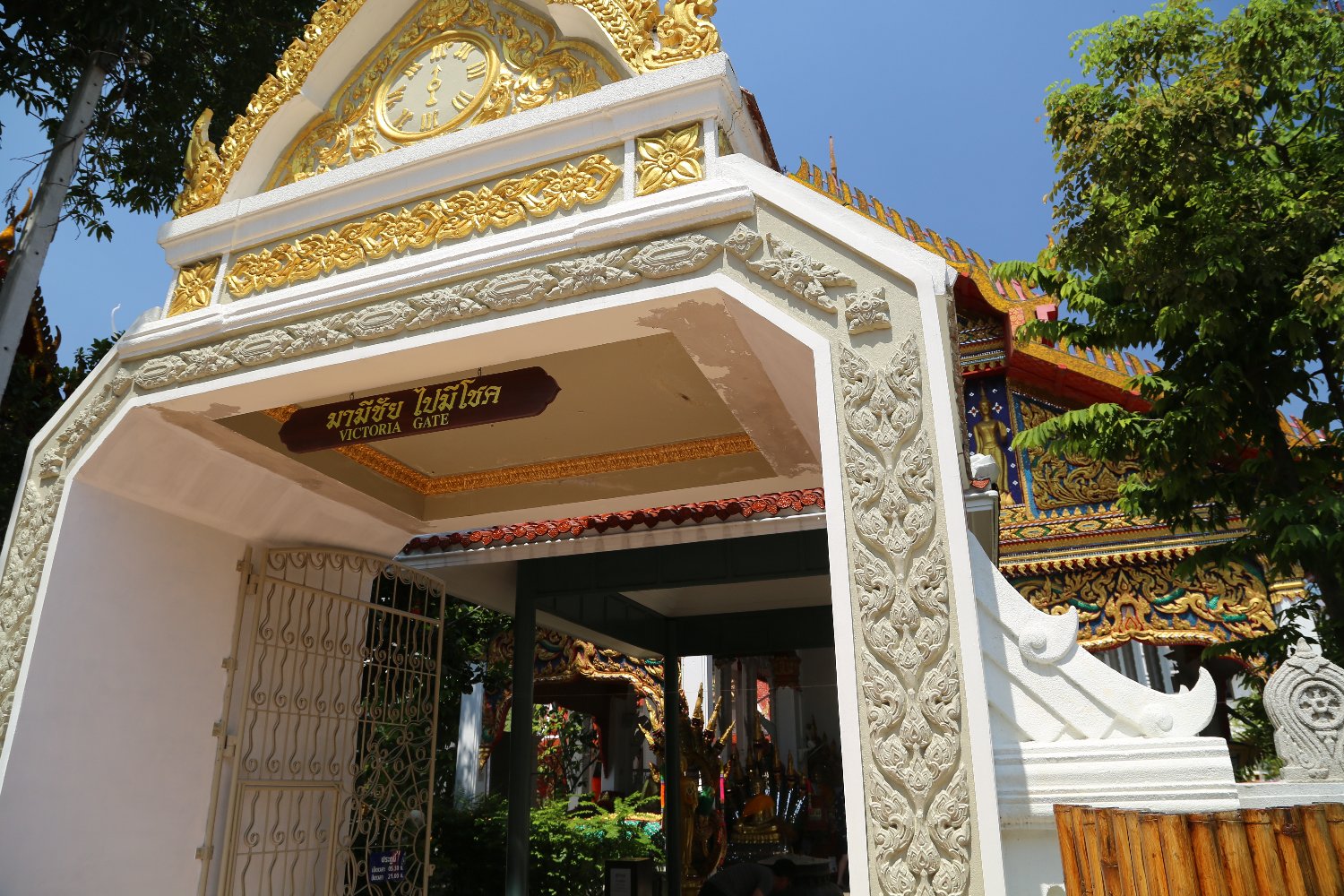
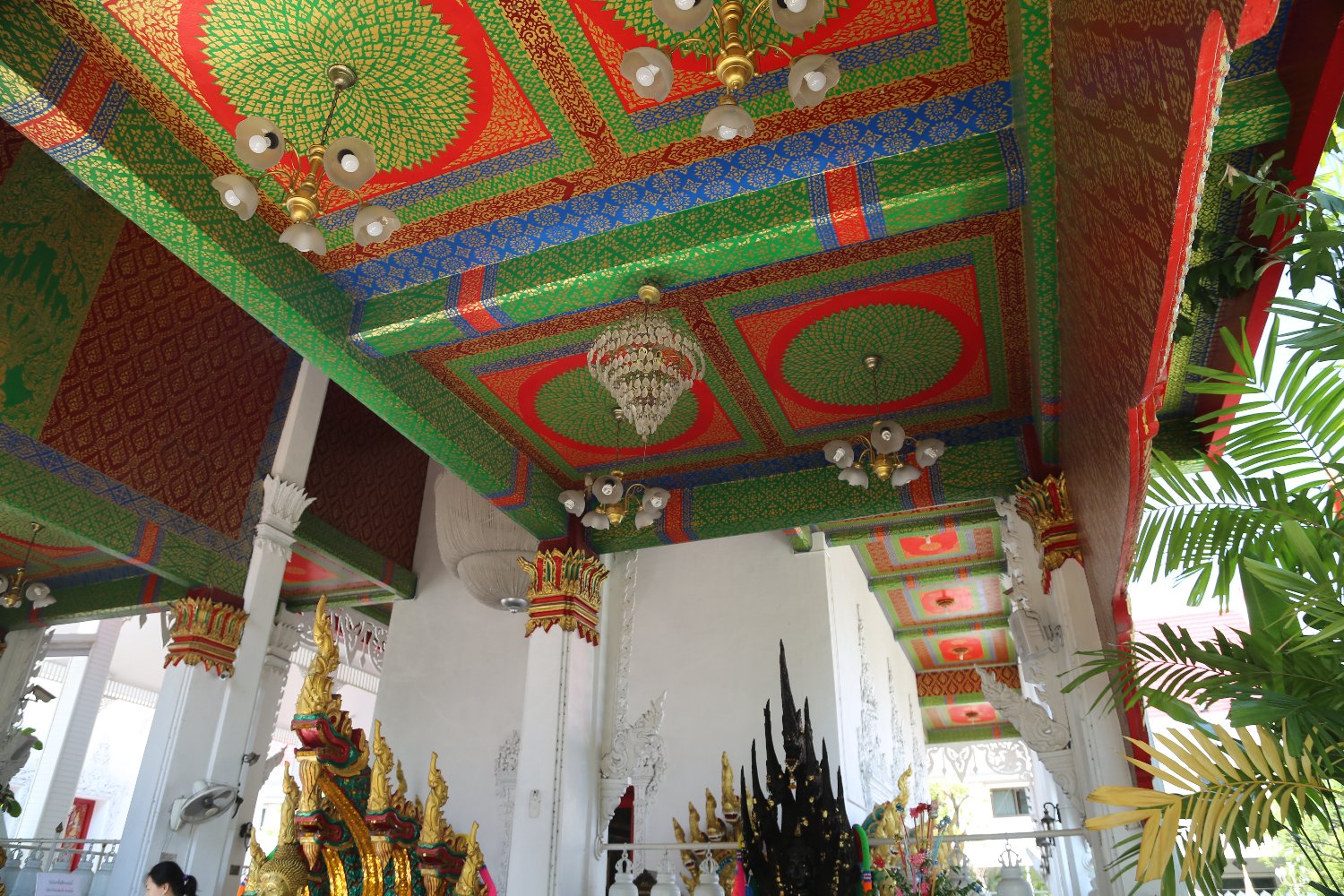
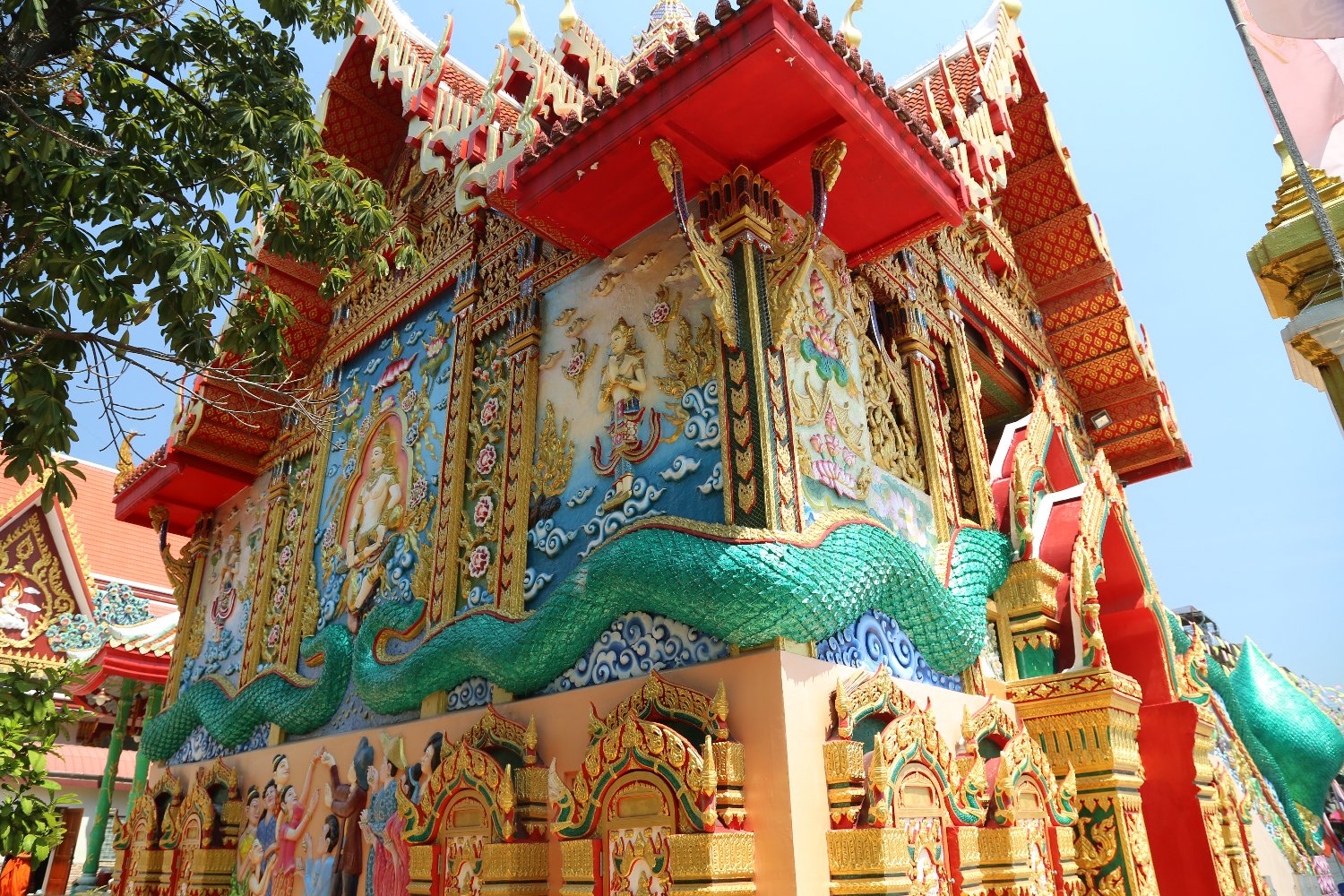

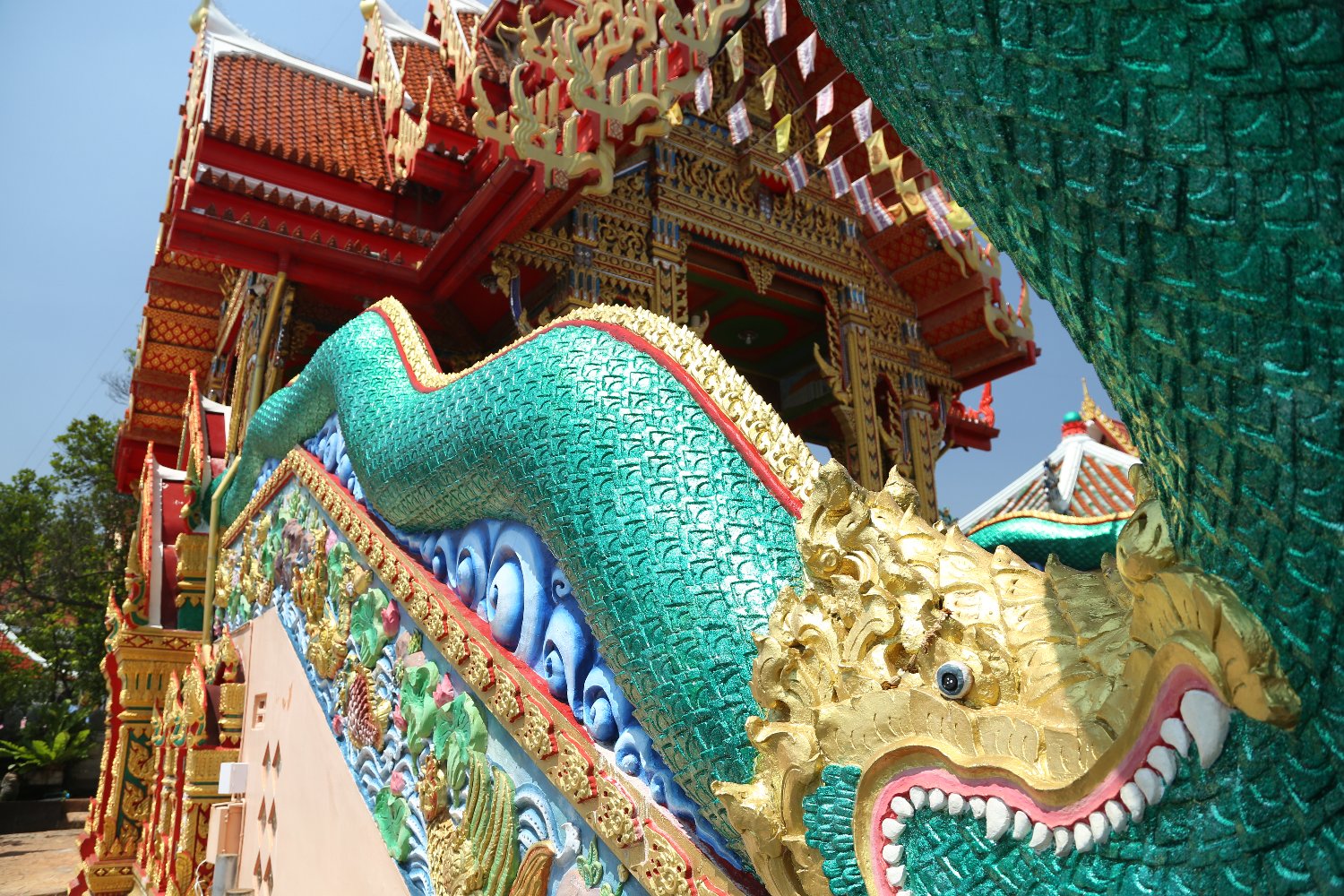
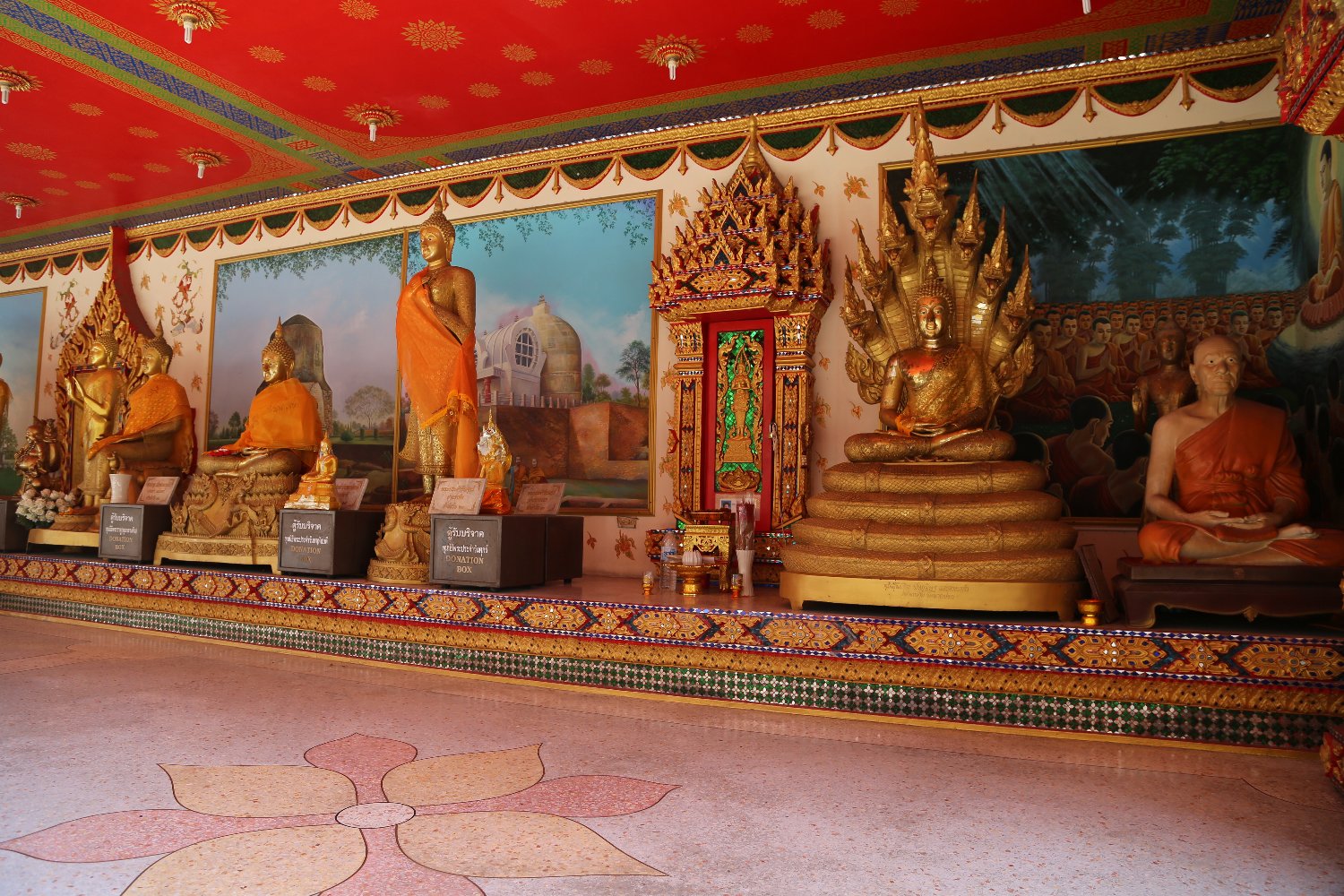
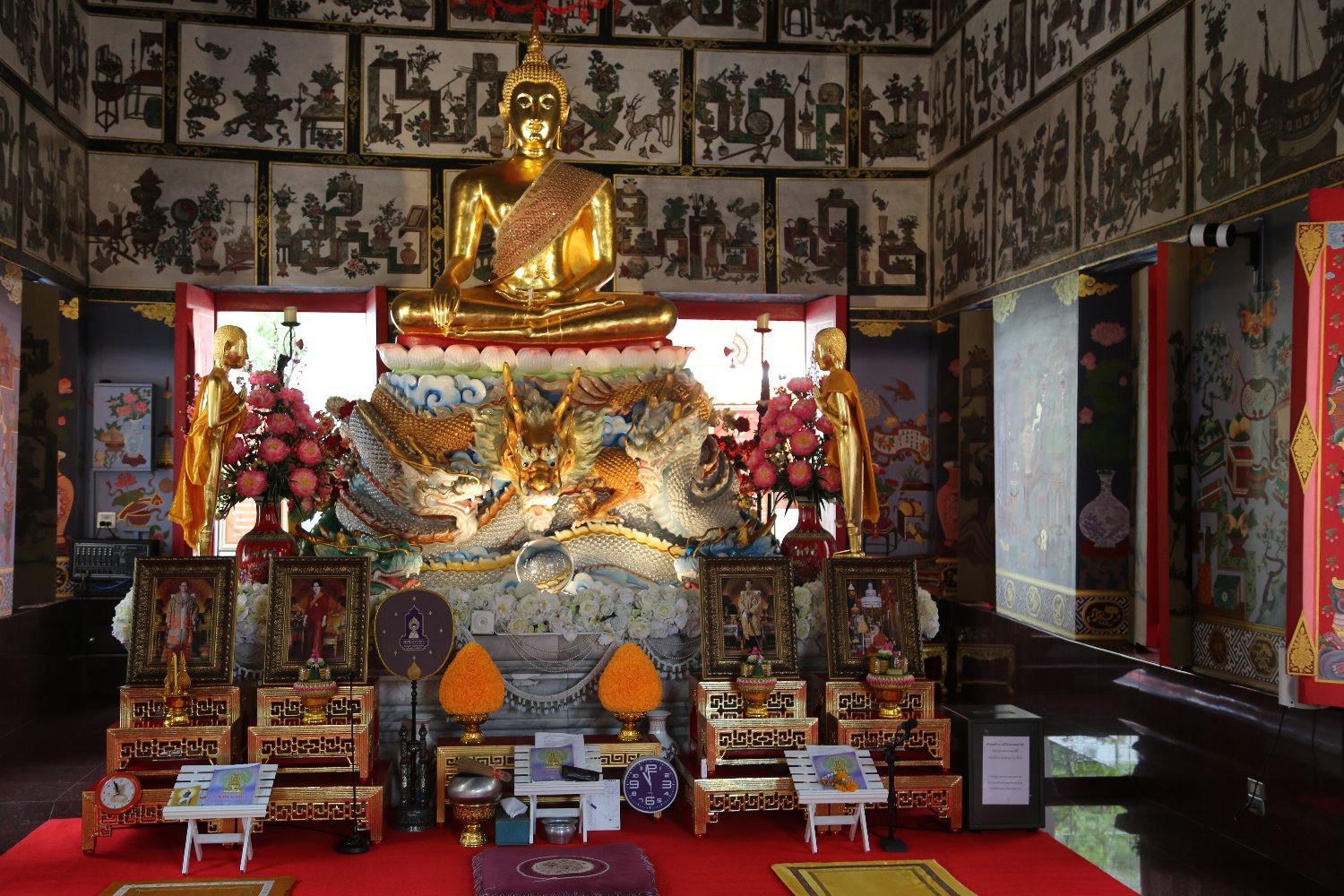
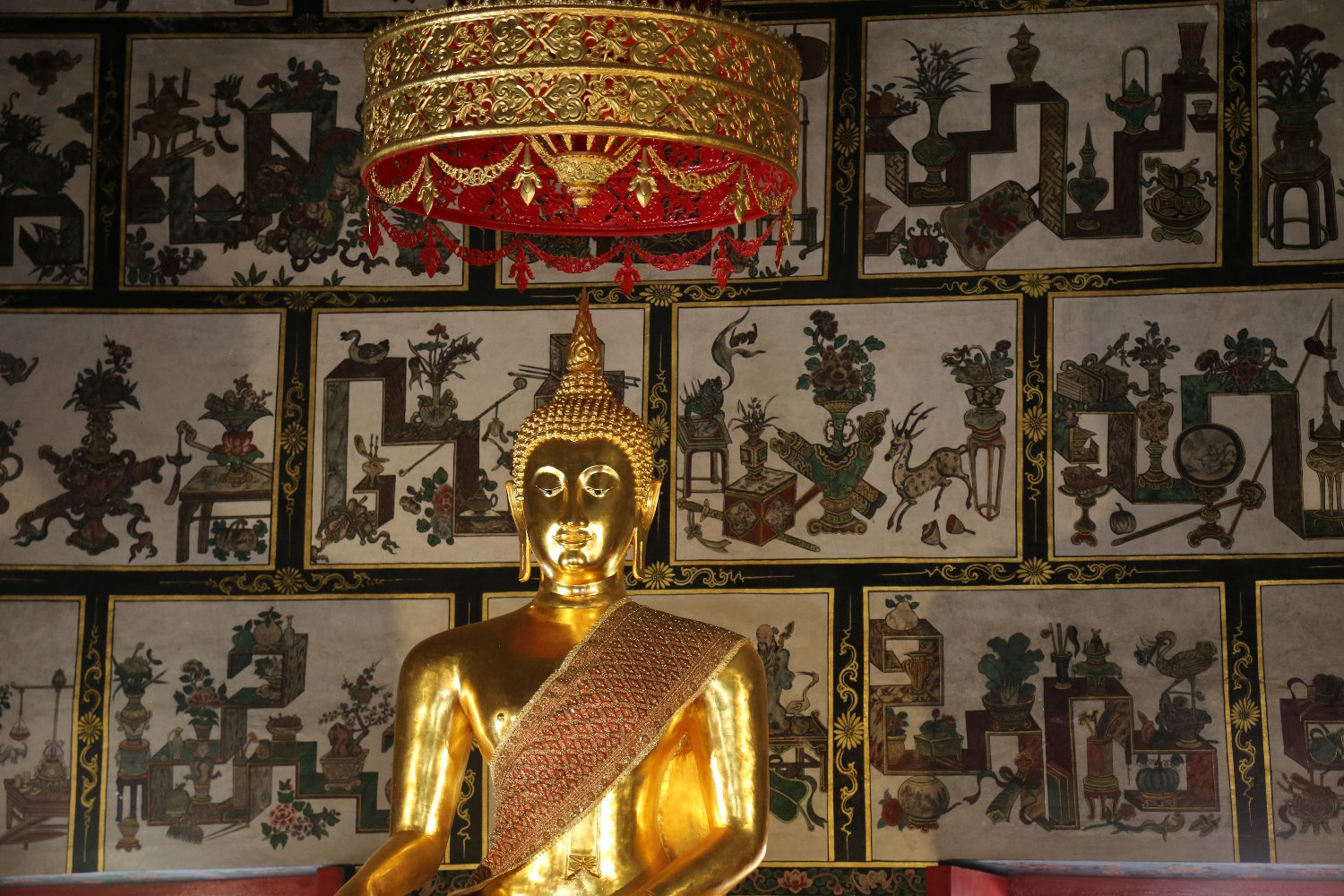
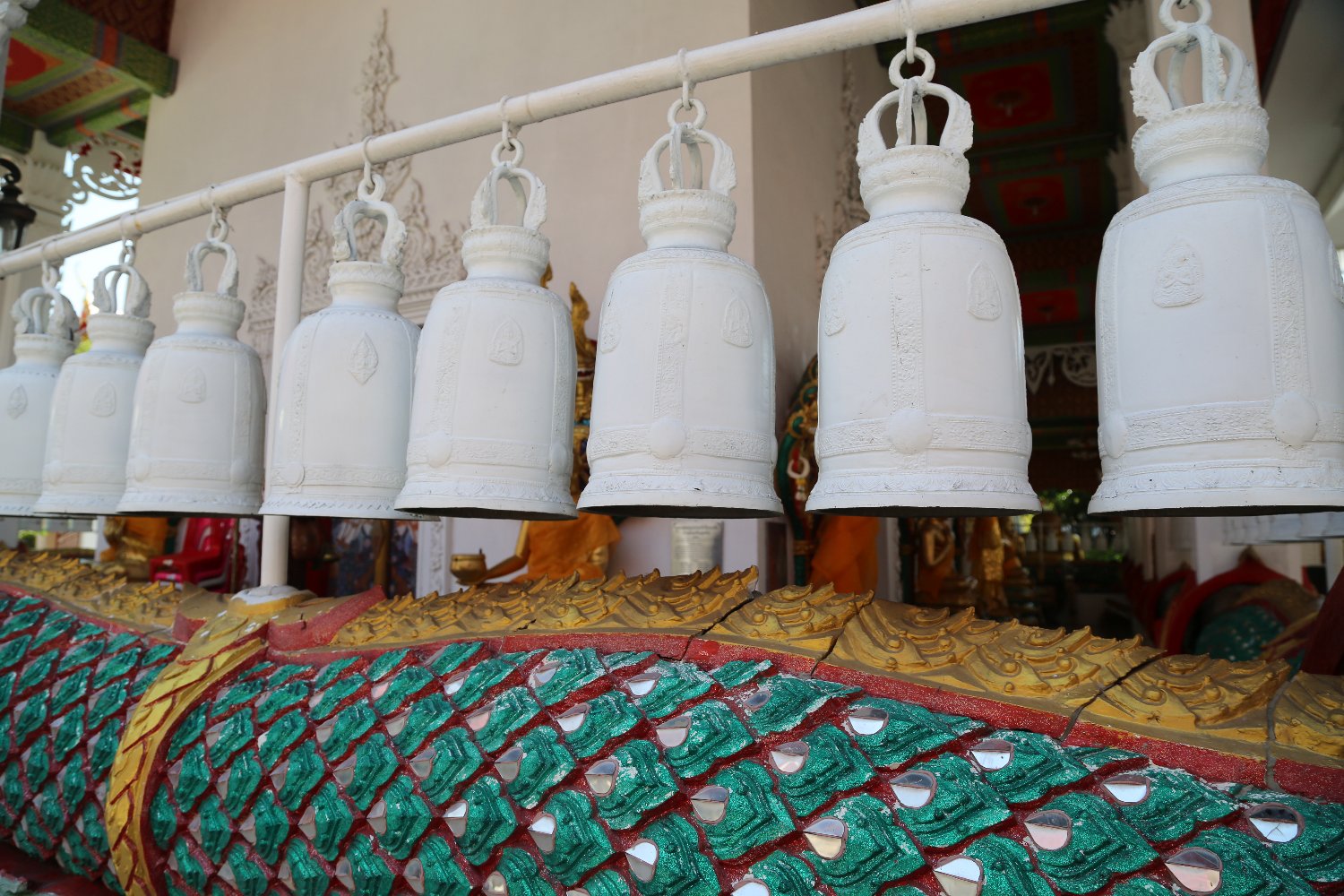
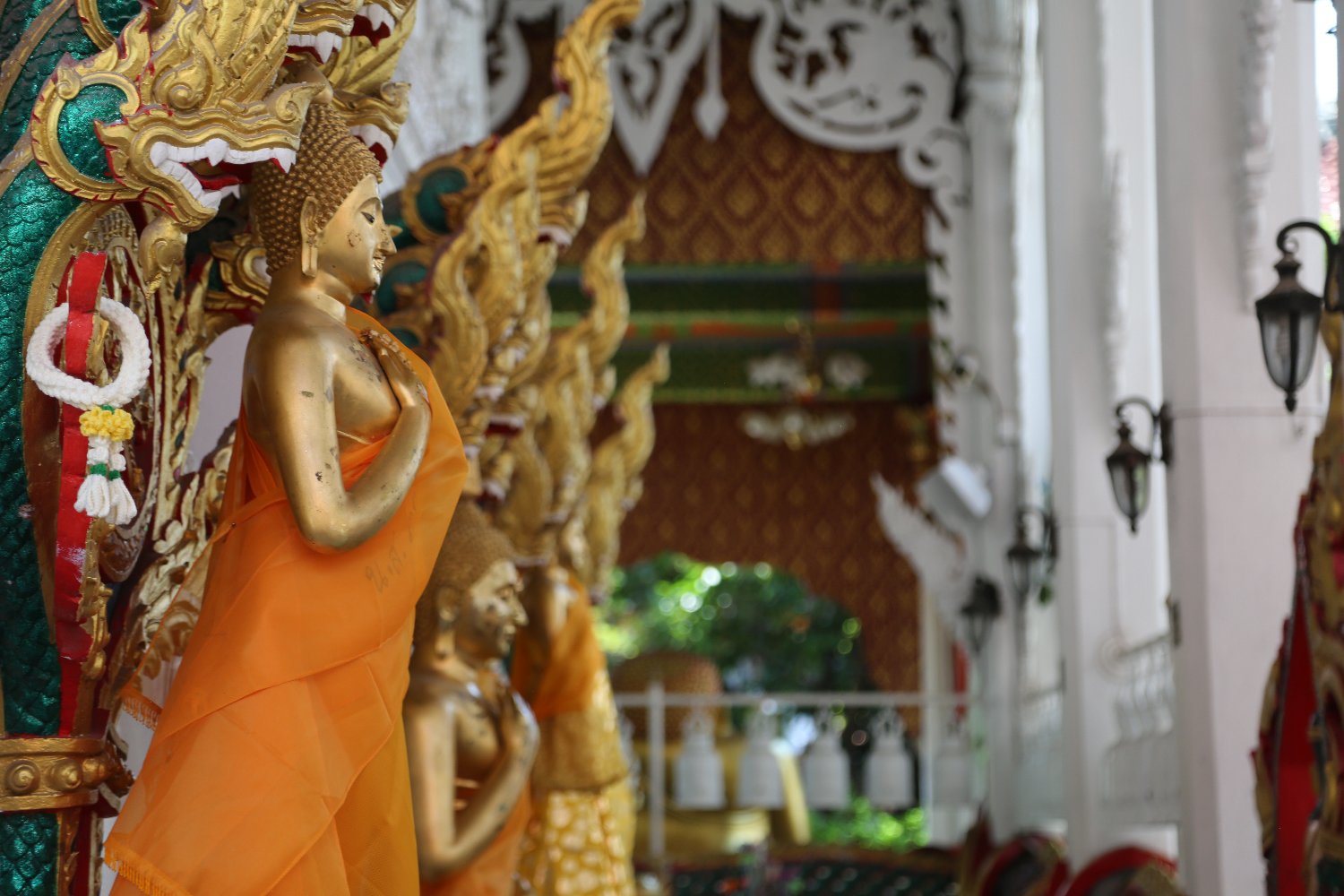
Wat Nang Chee Chotikaram is located within a fairly short walk, north of the Wuthakat Skytrain stop. Not as large, busy or as visited as the next-door Wat Nak Prok – still worth spending a few minutes checking out the buildings and tiny grounds. Small paths running through residential neighborhoods surround this tiny temple – it is also conveniently located next to the Phleng canal and the larger Bang Khun Thian canal.
This is a very peaceful and quiet part of town – one can spend some time relaxing in the shade of the Ordination Hall admiring the intricate paintings on the ceiling and the black and gold lacquer work on the main doors. If the Ordination Hall is open, worth ducking inside for a bit to check out the large golden Buddha and all the colorful murals which decorate both the walls and the ceiling.

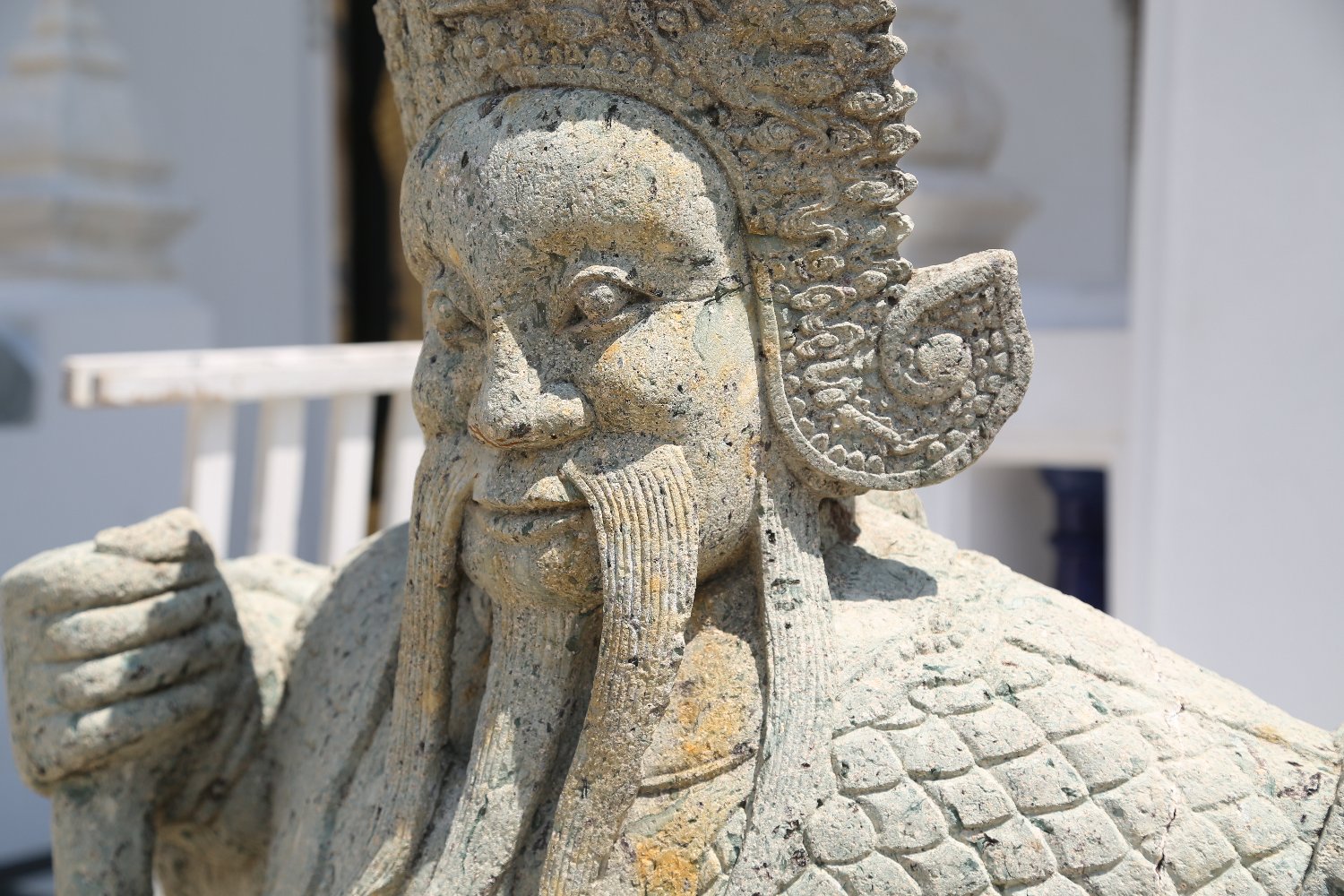
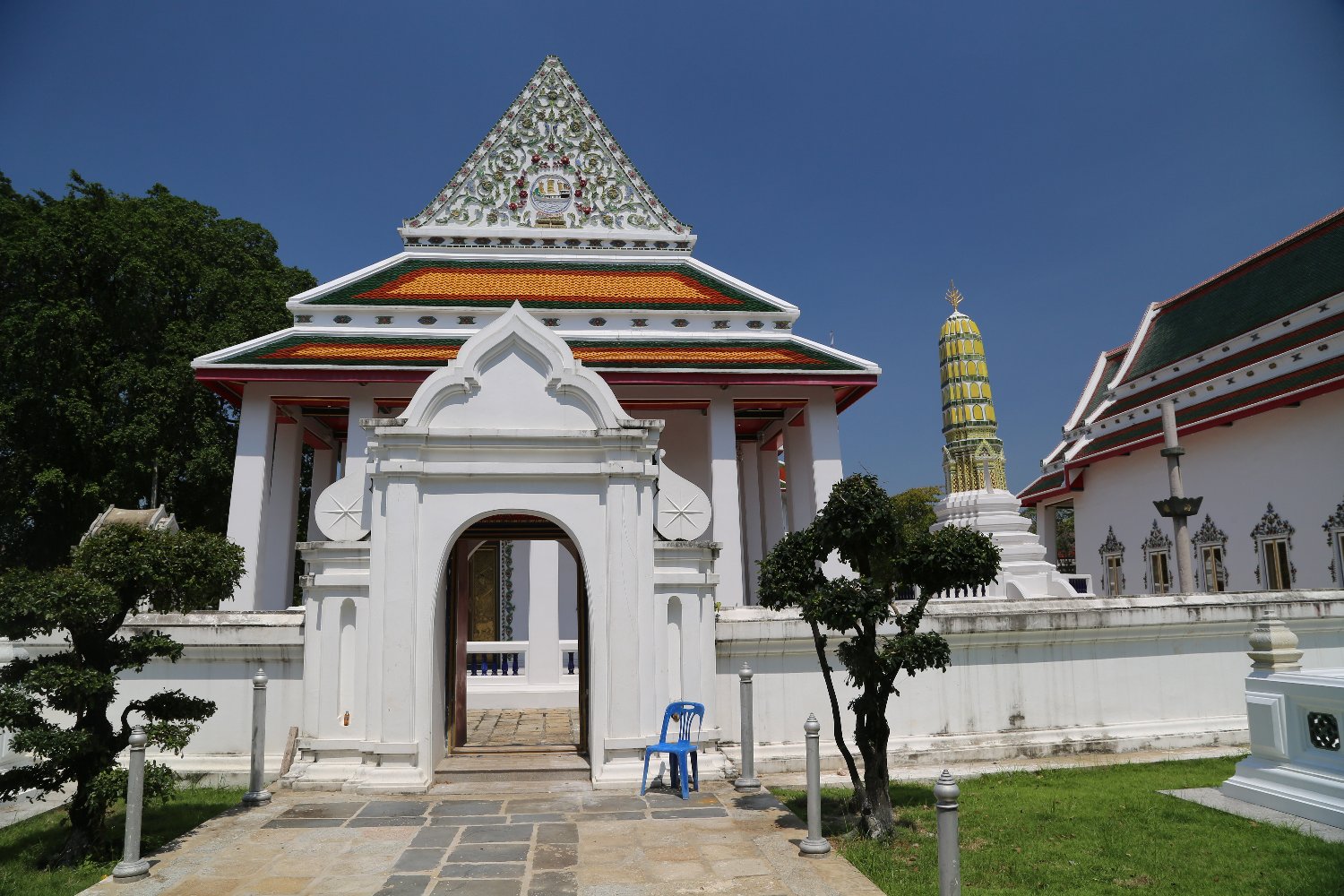
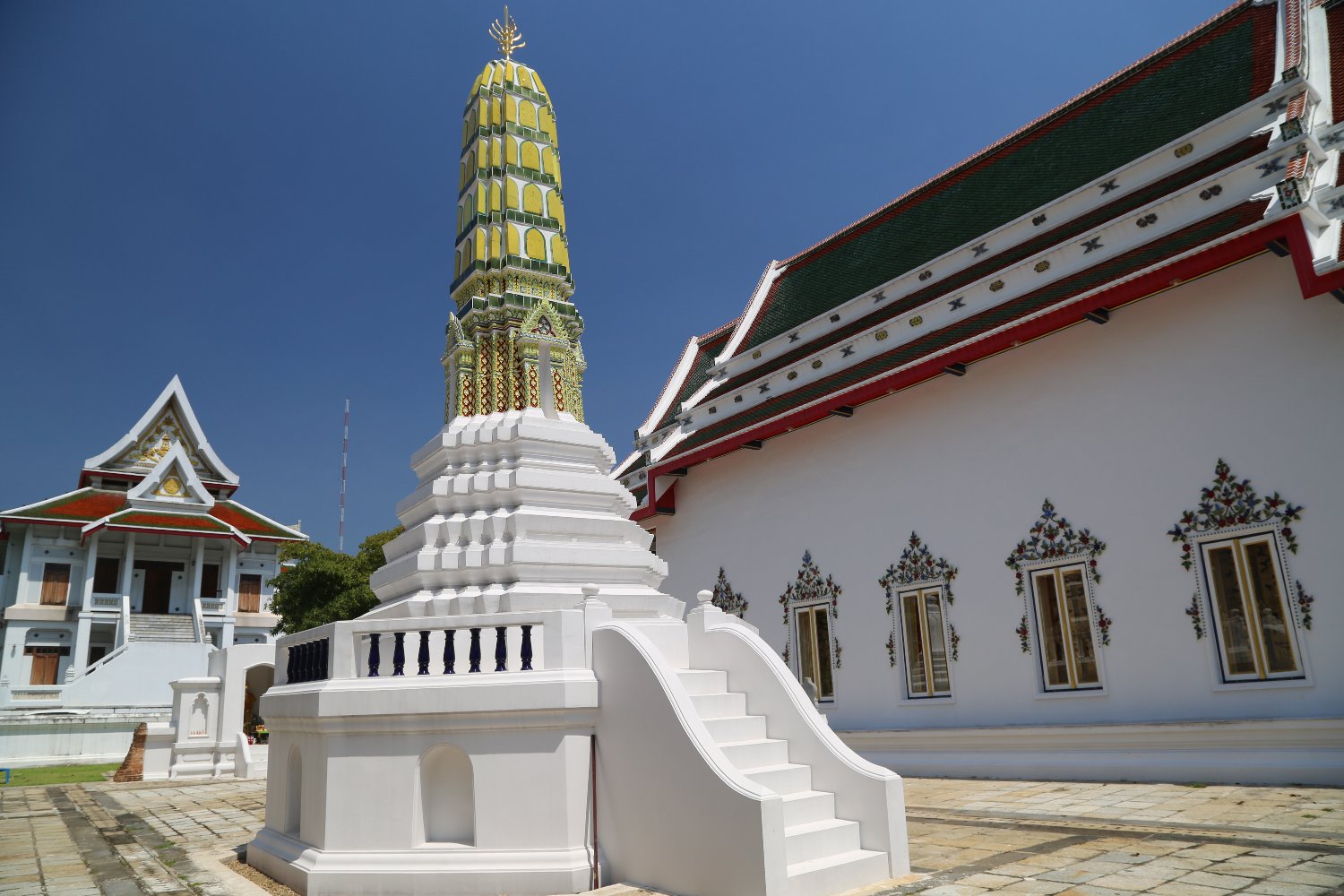
Wat Pak Bo is located along the Phra Khanong waterway – this canal features a peaceful walking trail; all stone is sometimes used by bicyclist coming from Bangkok out for a long scenic ride. Boats also stop along this canal including a ‘pier’ with stone steps a very short walk from this temple. One of several temples located along this part of the canal. Accessing them via the walkway is certainly more relaxing then using the nearby busy streets. Located about a 15-minute drive from the On Nut Skytrain stop.
A school is located across the small soi from the temple and during lunch hour, hundreds of students will be playing – their sounds of laughter easily heard from the temple. The roof of the Ubosot is dark – and along with its particular angle is more reminiscent of temples in Laos. This is not surprising considering Laotian villagers settled this area several centuries ago. Note some of the beautiful teak wood exterior trimmings. The primary golden Buddha inside with its halo dates from 200 years ago – made by Laotians.

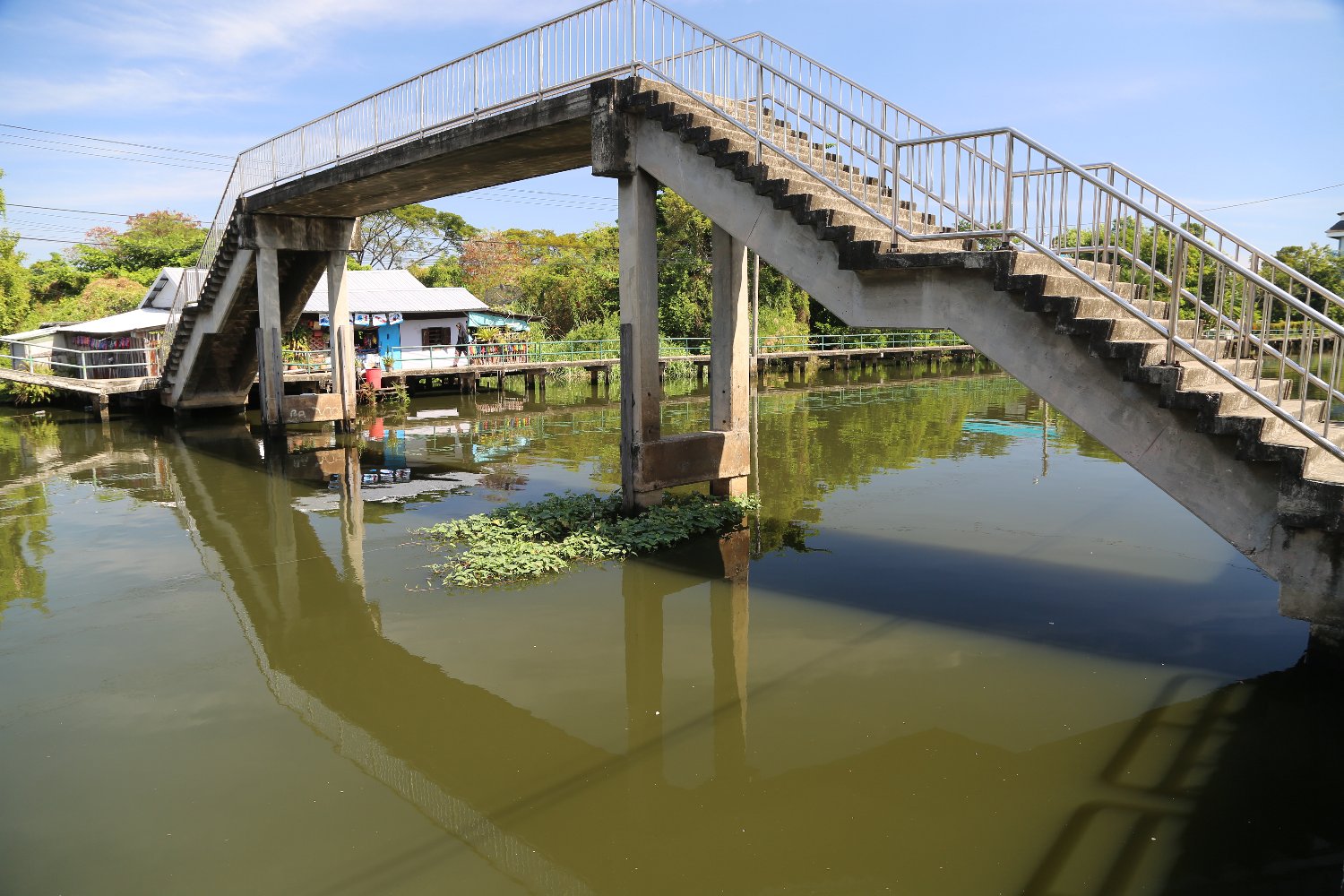

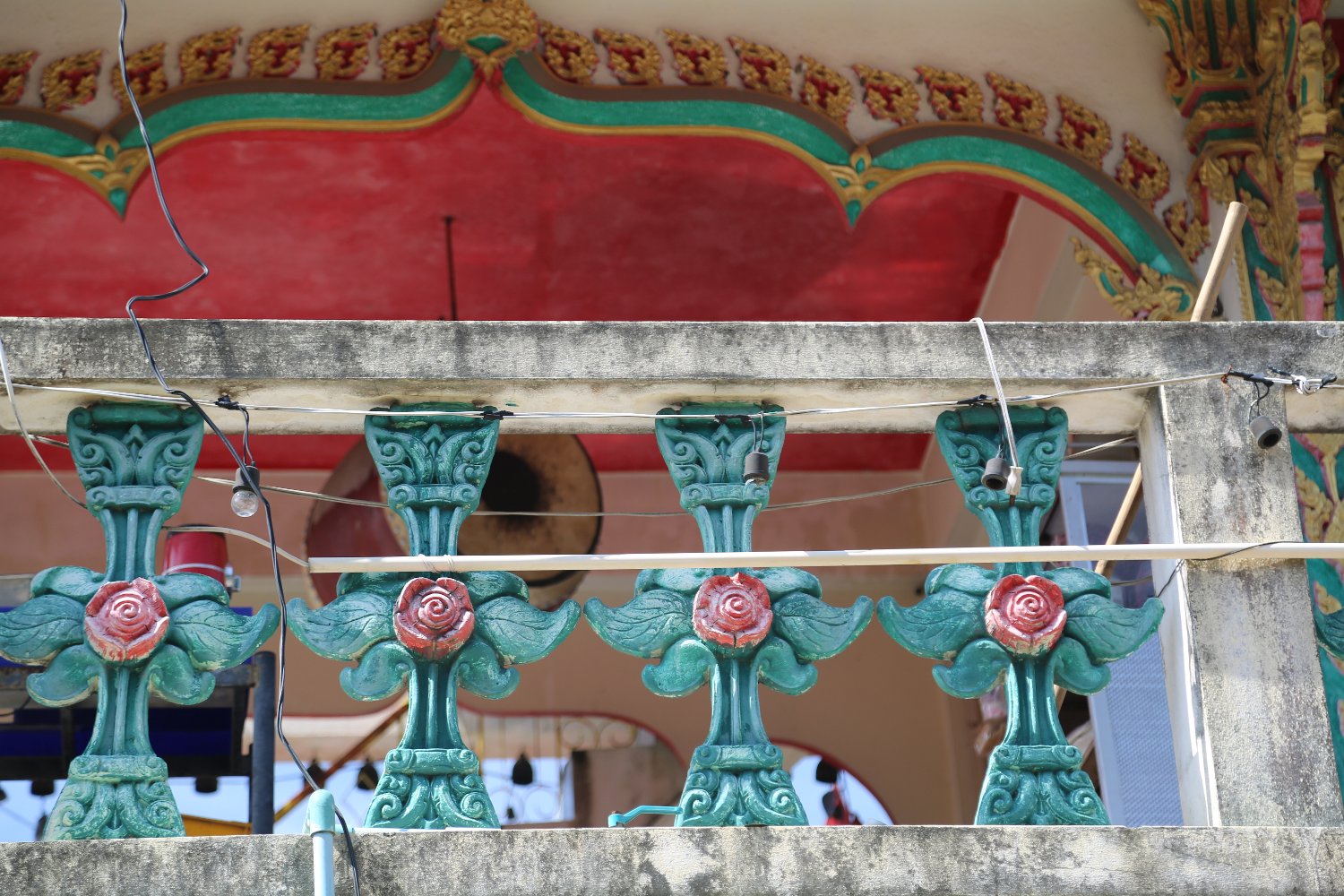
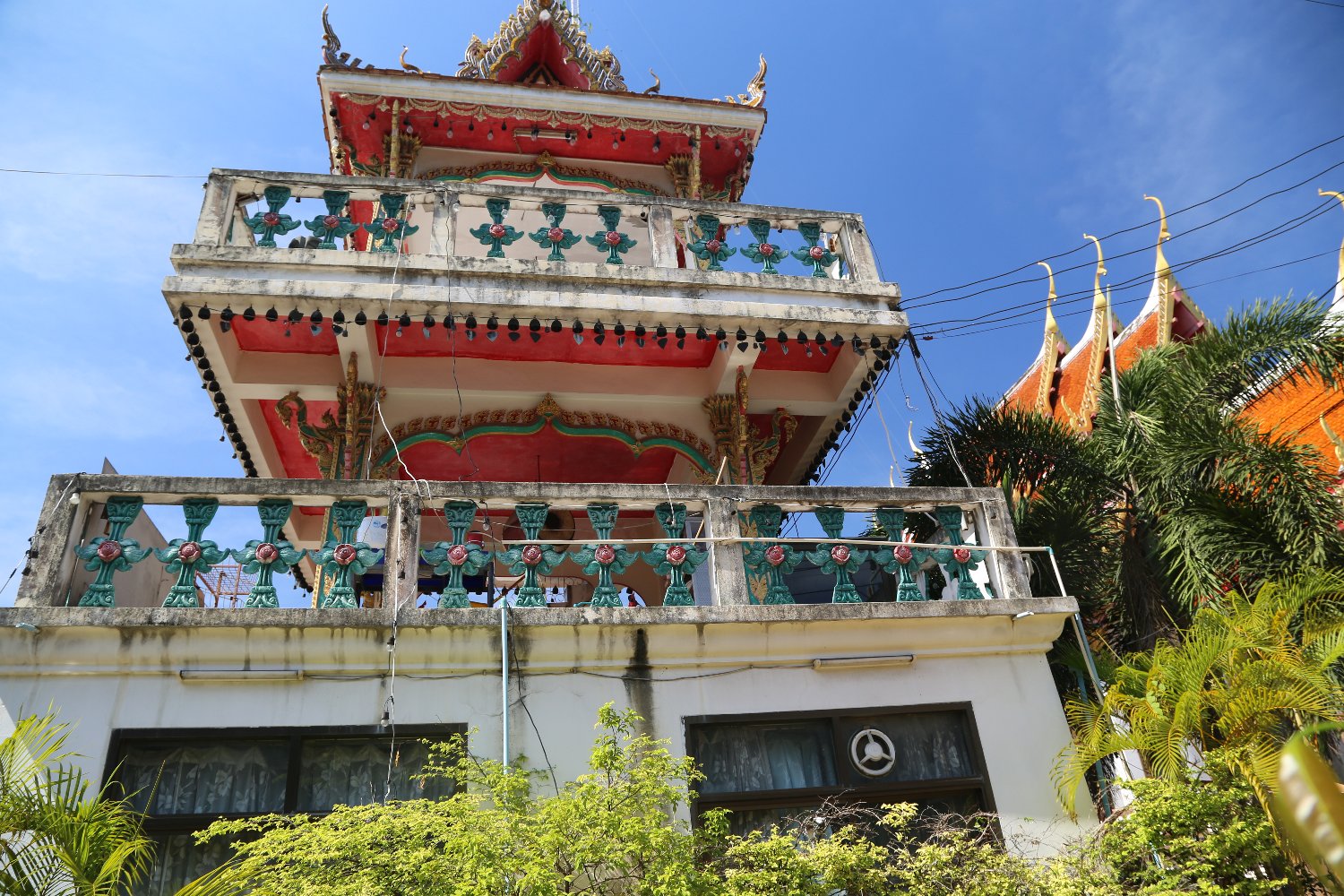
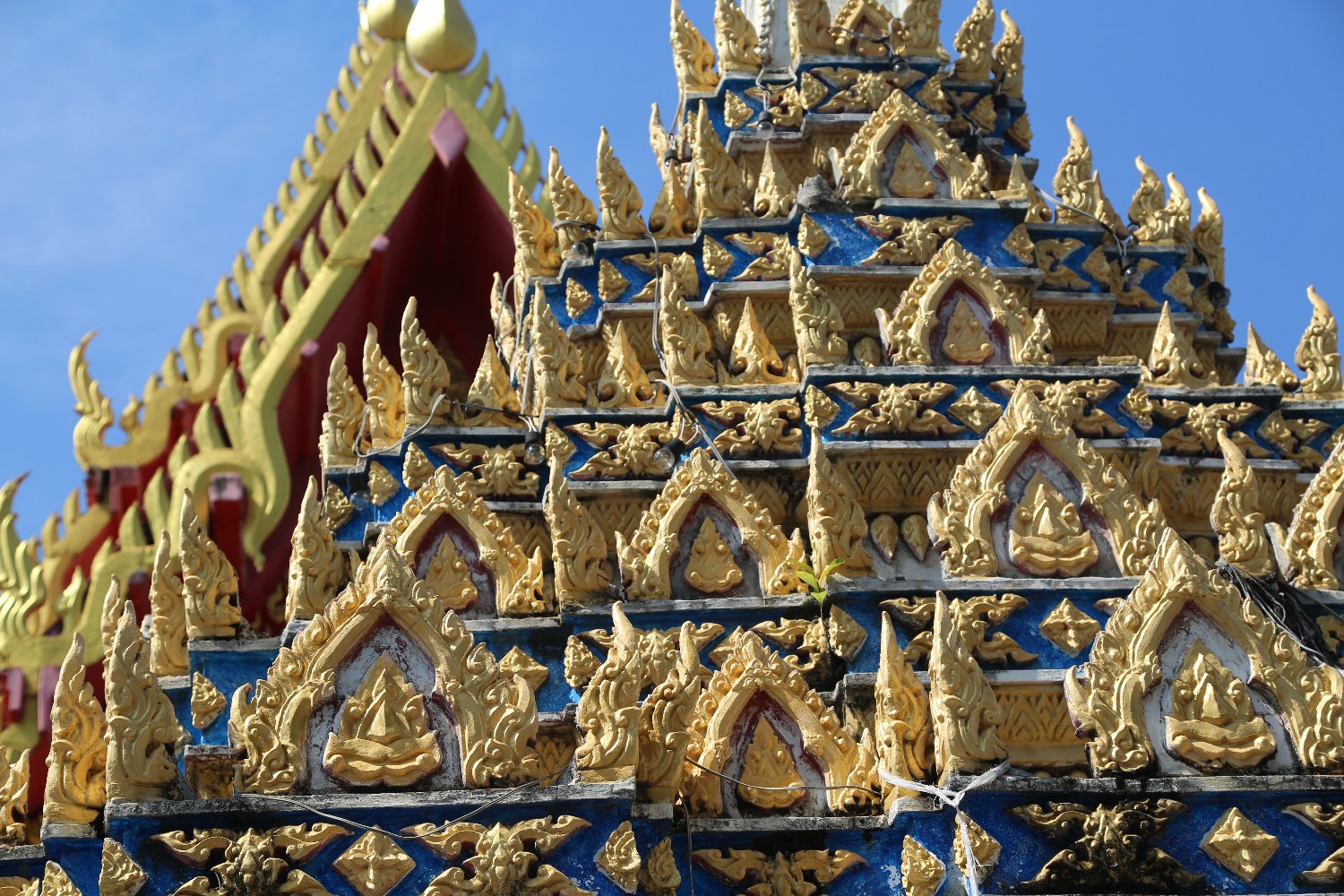
Wat Paknam Phasi Charoen is a major temple complex located about a 20-minute walk north of the Wutthakat BTS station. Located on a valuable piece of land surrounded by three canals (khlongs)including Phasi Charoen, Bangkok Yai and Klong Dan. Incidentally Paknam means ‘lock in canal’. Well visited, this temple is known for its giant white stupa (hollow inside) which can be clearly seen from a number of directions as visitors approach the temple (construction of this stupa was finished in 2012).
This temple was originally built in the Ayutthaya period and has been resorted and renovated over the years including a major renovation by King Rama III, which is when it became a Royal temple. It was also during his reign that several of the nearby canals were constructed. The main entrance leads one through the great hall, originally built to house the scriptures of Buddha). Unusual among Bangkok’s temples in that it is constructed of wood featuring giant wooden columns and other wooden works of art.
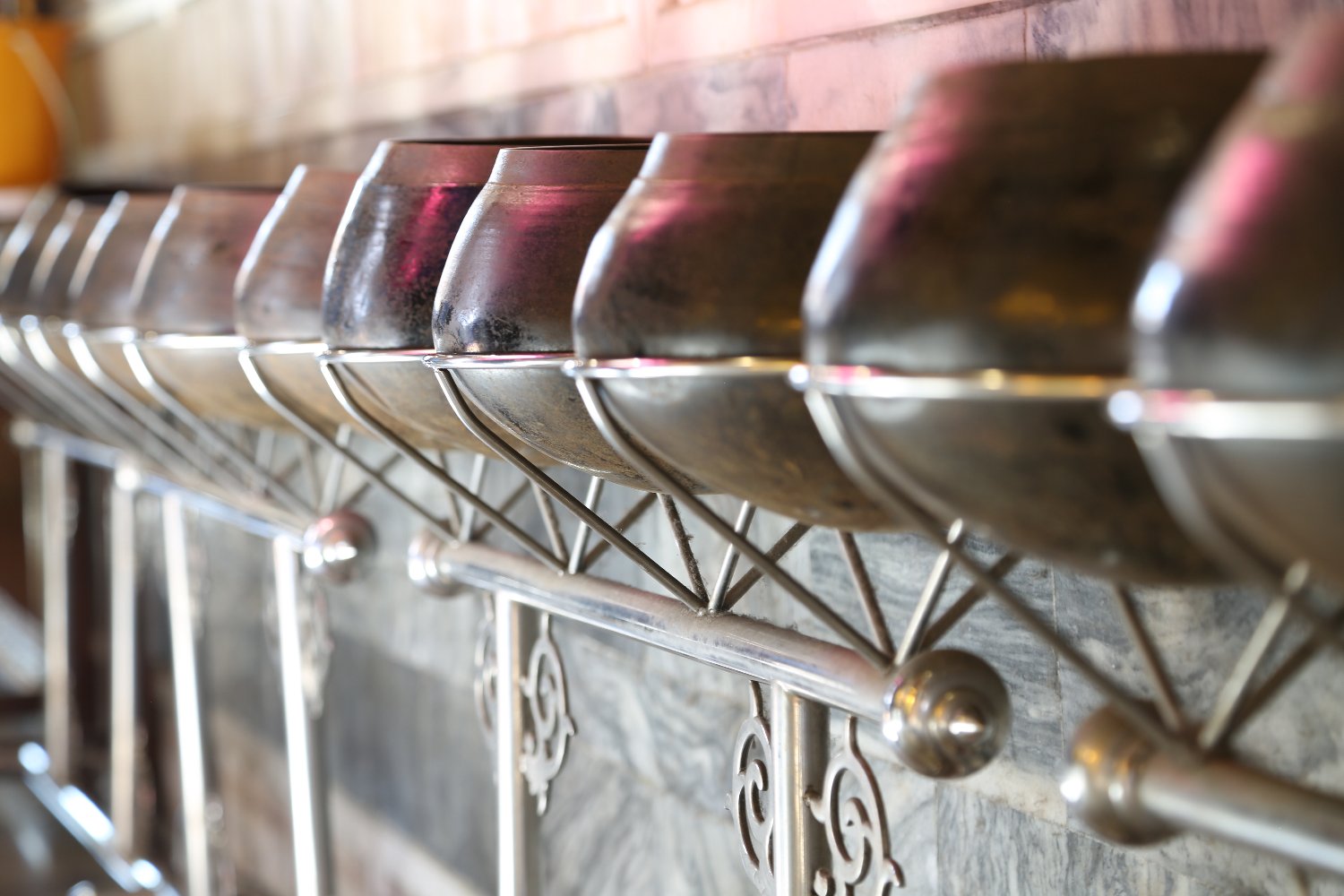
Another unusual feature is the temple maintains their own kitchen – and staff cooks for the monks – so they do not necessarily have to go out and ask for alms every day. And unlike many temples, visitors who keep a sharp eye open will notice western monks living on the grounds. And this temple has the largest population of mae chi in Thailand (Buddhist nuns).
The temple is very well funded, and they have established a presence in a number of countries overseas and are also known domestically for their charitable contributions.
One of the early abbots’ Luang Pu Sodh Candasaro died in 1959 and his body was never cremated. Rather he was laid to rest in a coffin and visitors still come to pay their respects to where his body lies.
Worth visiting are the gardens overlooking Bangkok Yai – very well kept they are a nice oasis for visitors. Also, a water wheel continues to turn in this vicinity; this is a nice photo spot.
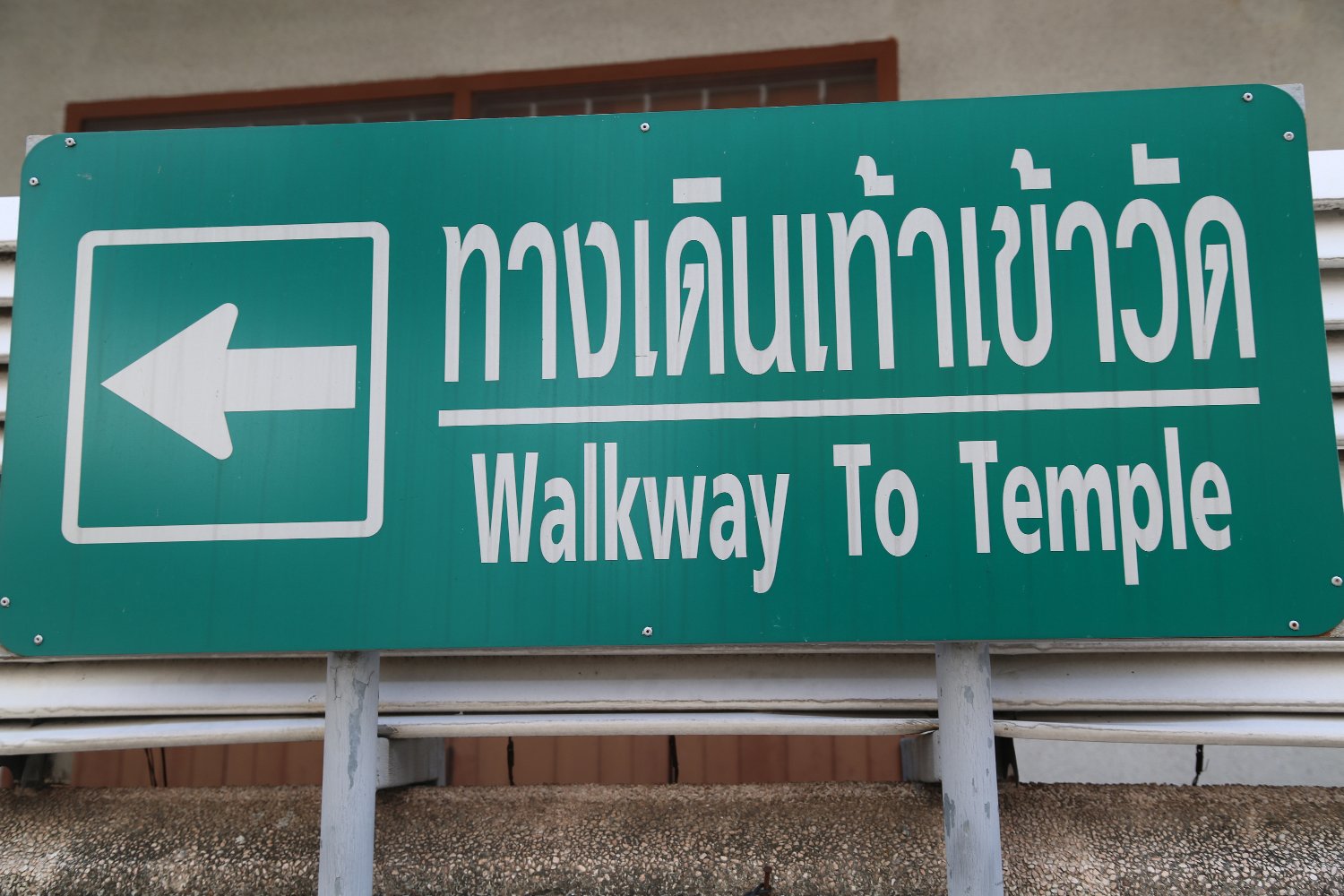
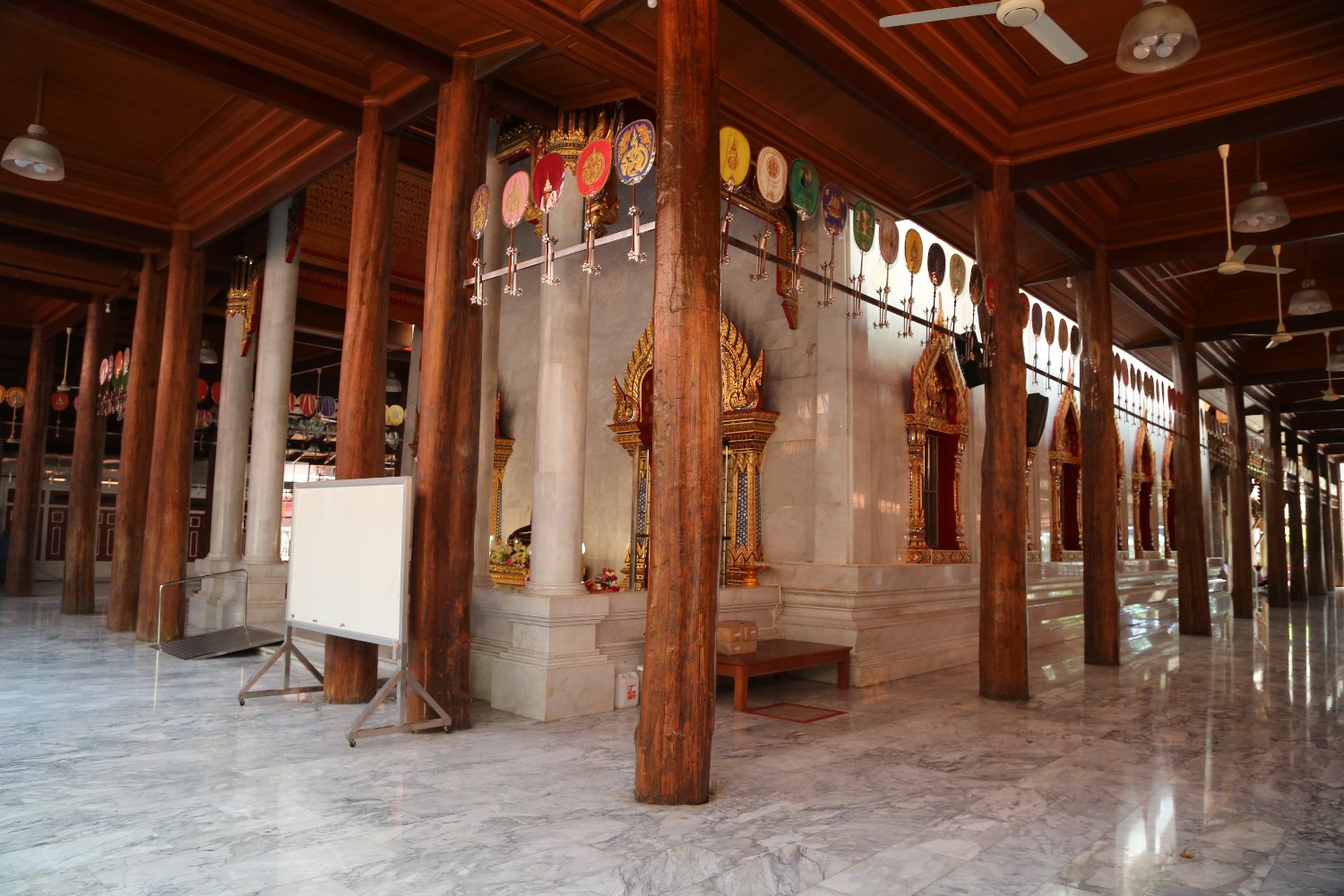
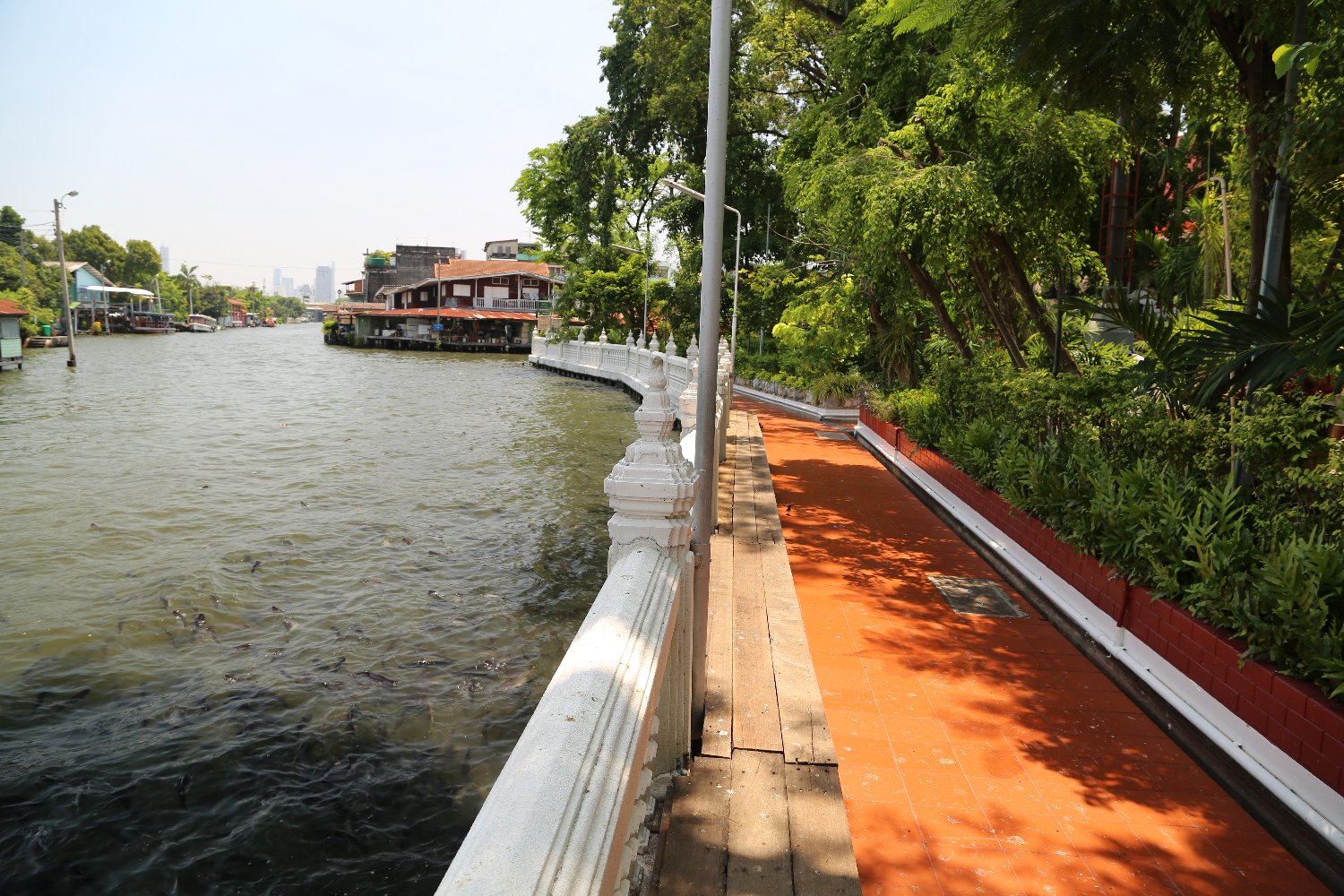
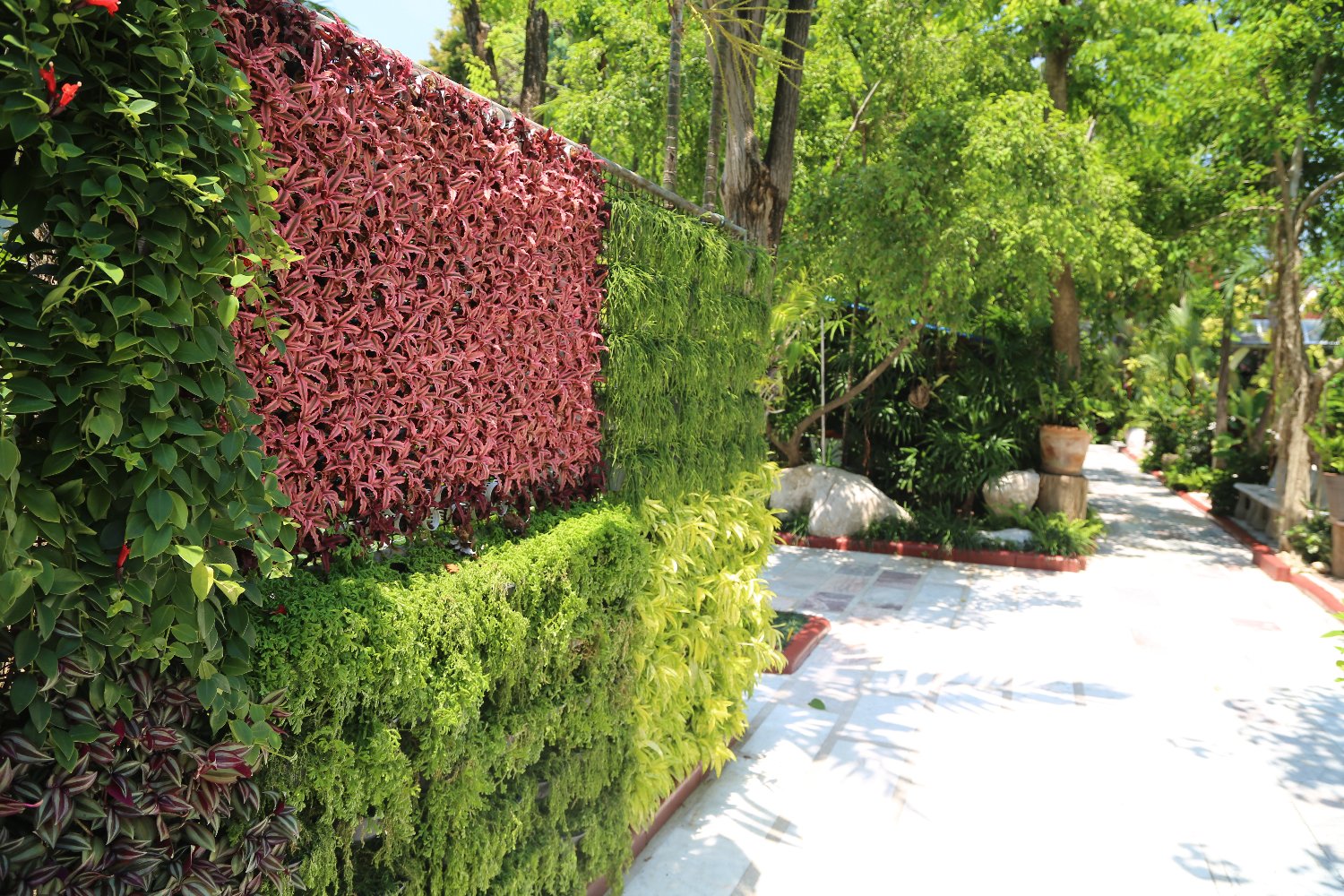

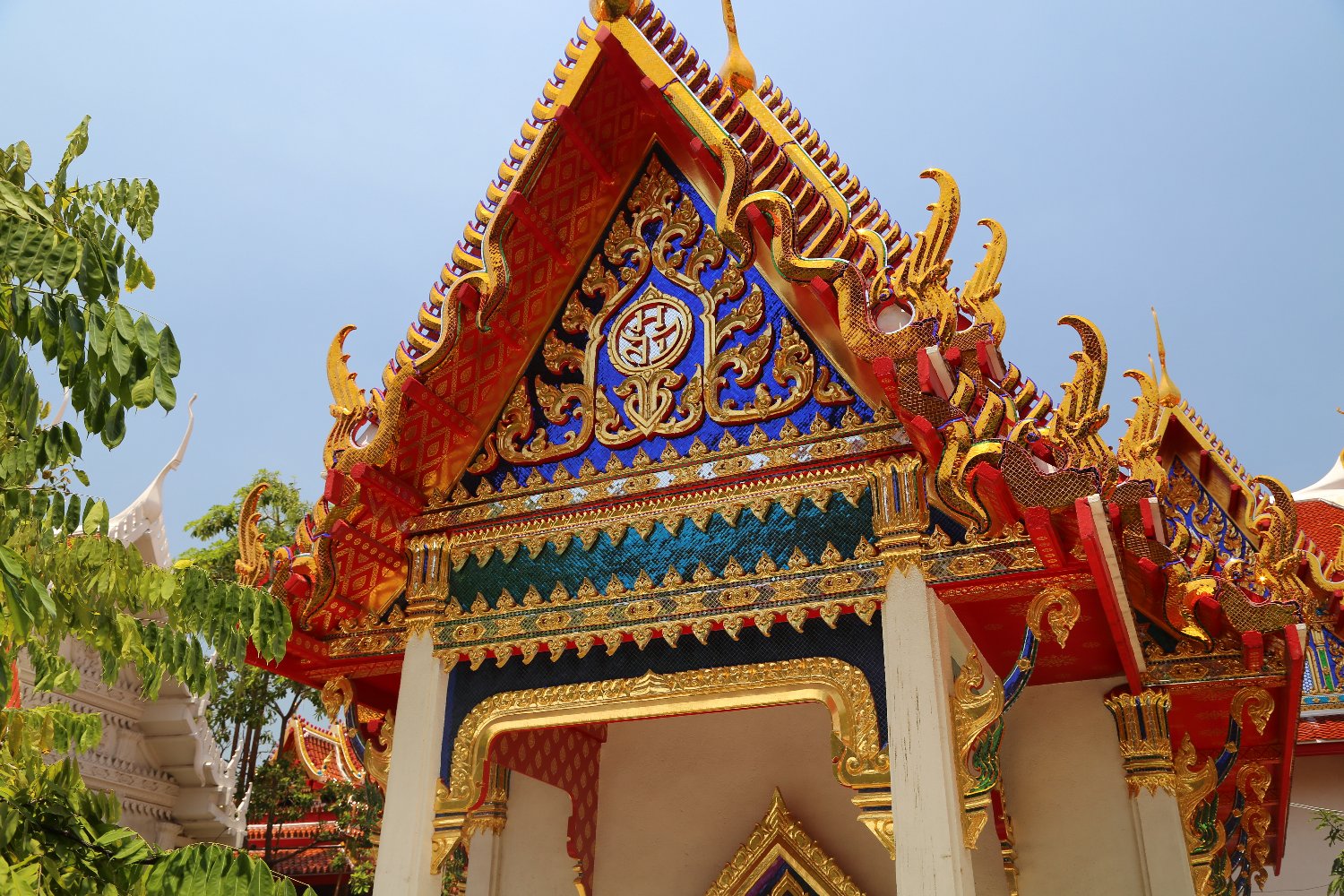
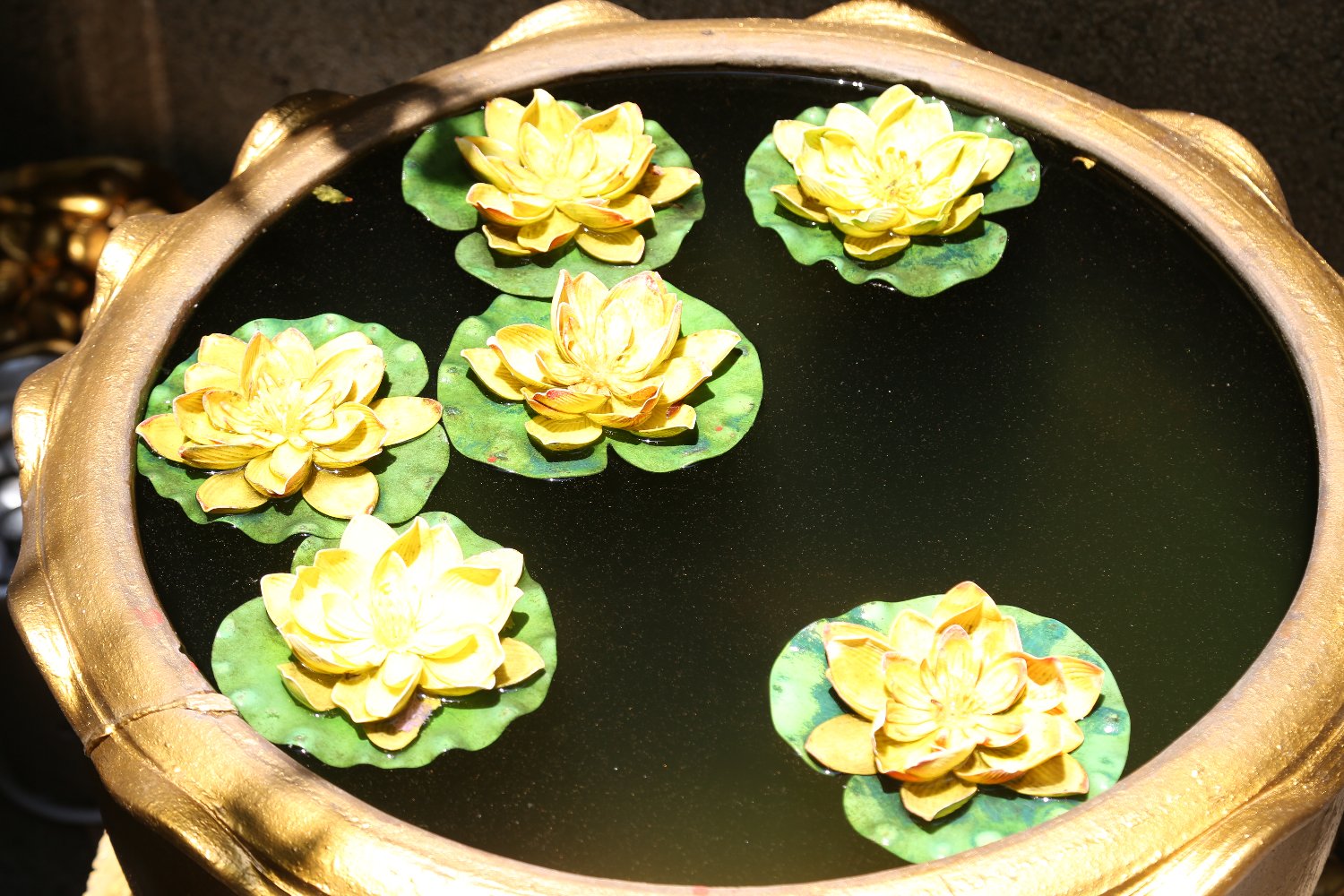

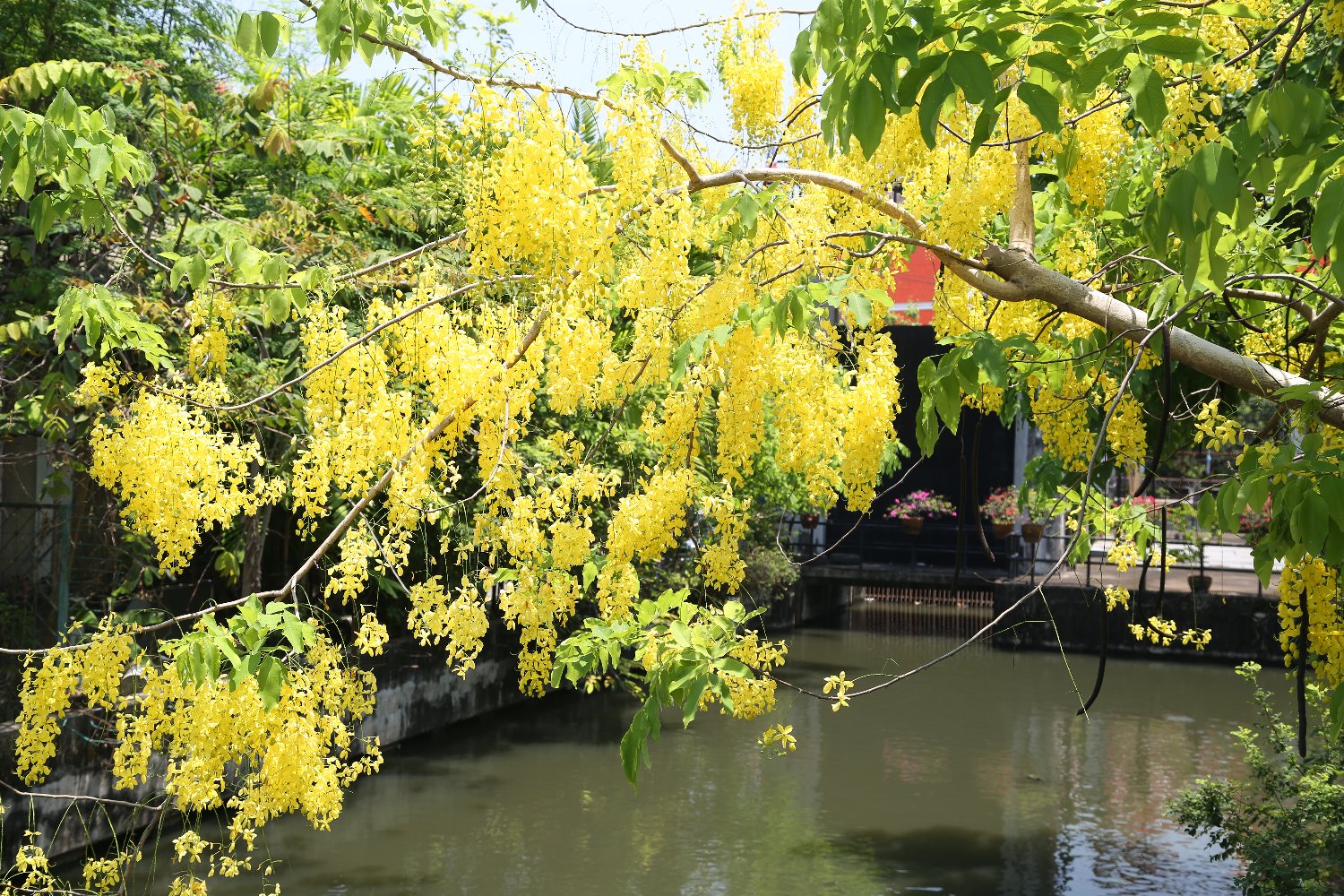

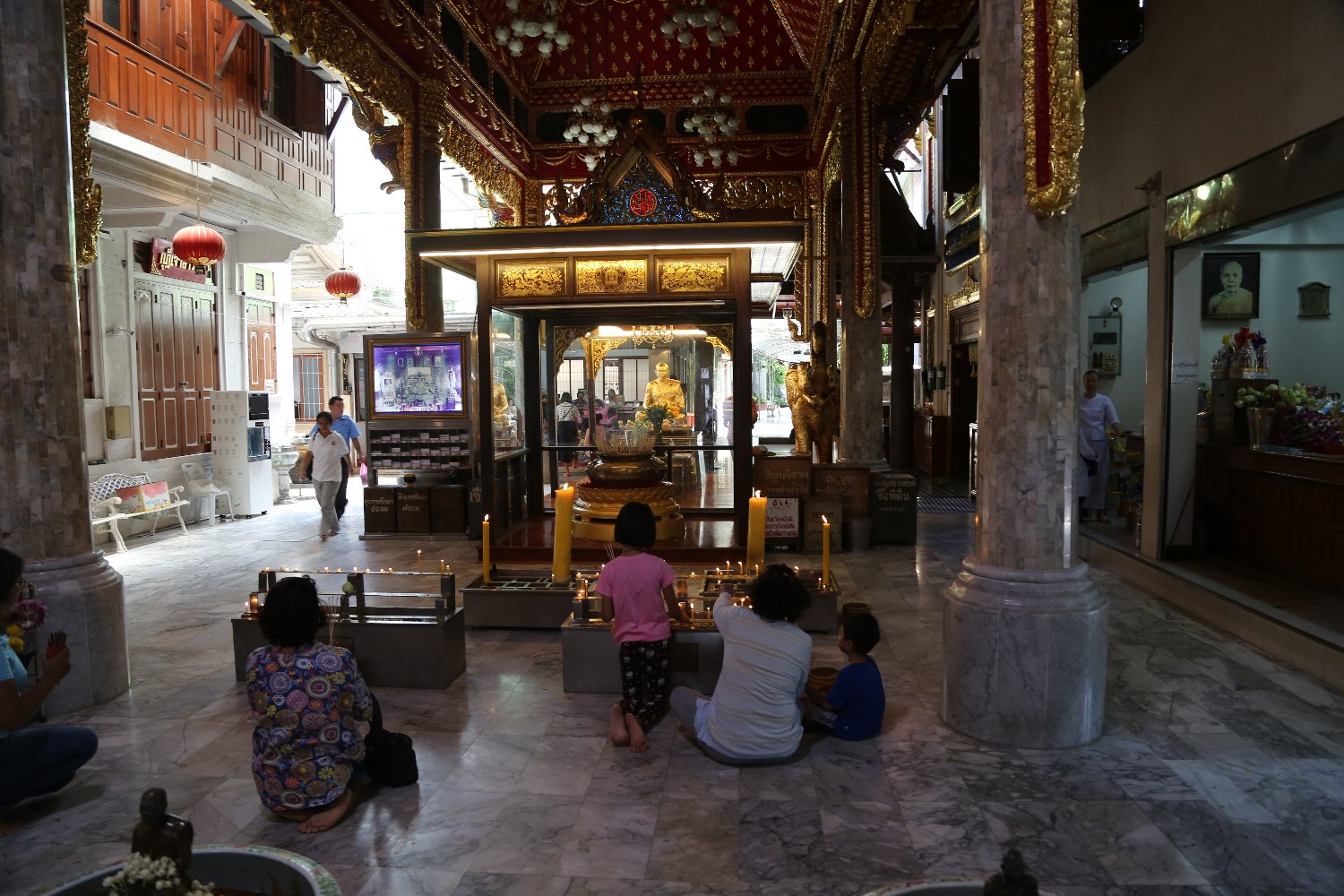
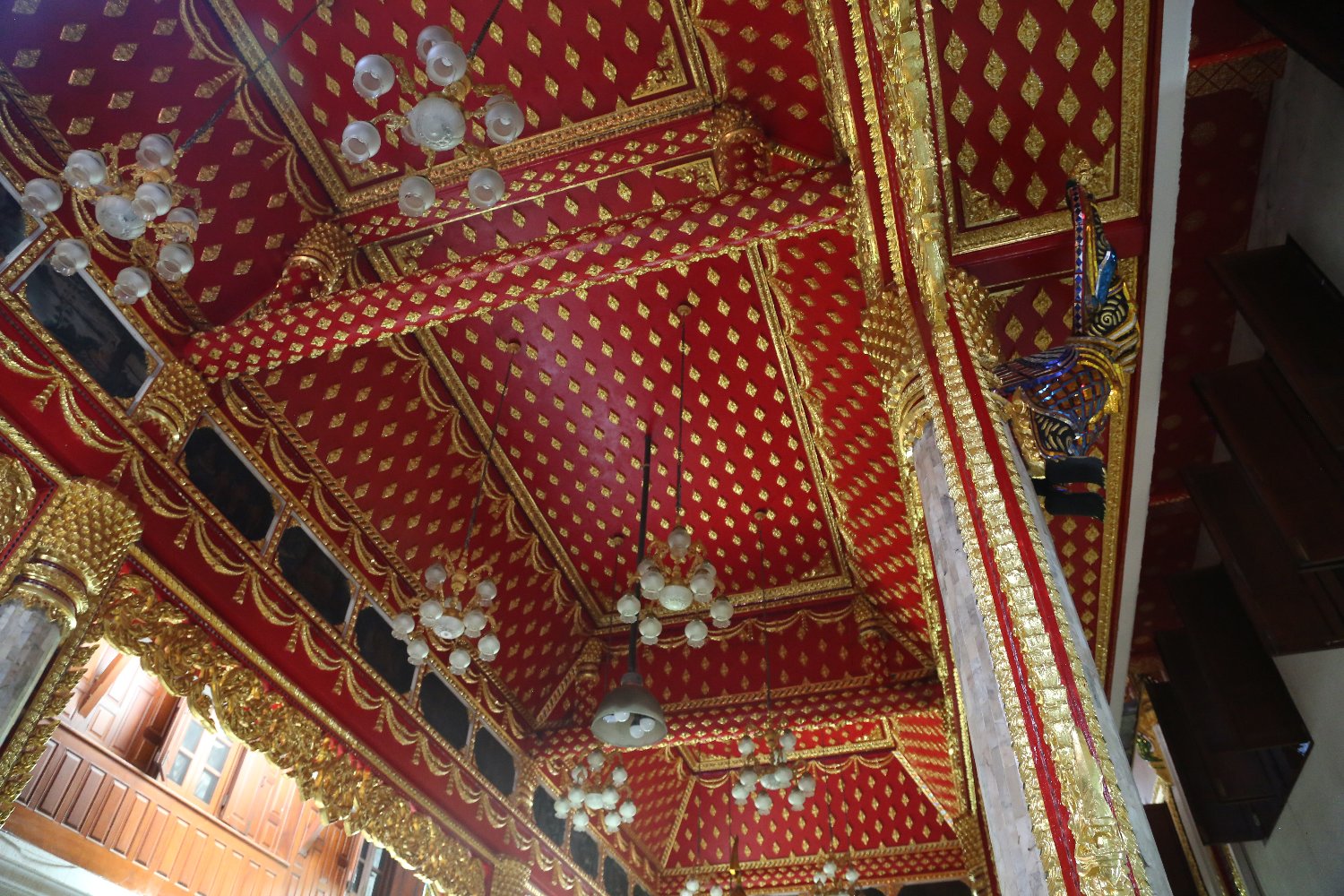
Wat Pasee was originally built in 1847 by a landowner who collected fees from nearby merchants. A cemetery on site has a rather dark history – it was used by the government to behead prisoners and later by execution (using guns). Located next to the raised intersection of Ekkamai Soi 63 and Phetchaburi Road – don’t go to this intersection but rather turn off on a small side soi just before entering this intersection as you drive north on Ekkamai Soi 63.
Very noticeable because of the newer extremely golden hall that was more recently built next to the main temple. Also, several very tall buildings located nearby contrast dramatically with the temple buildings. The Ekkamai BTS Station is about a 20-minute walk (or hire a taxi from there).

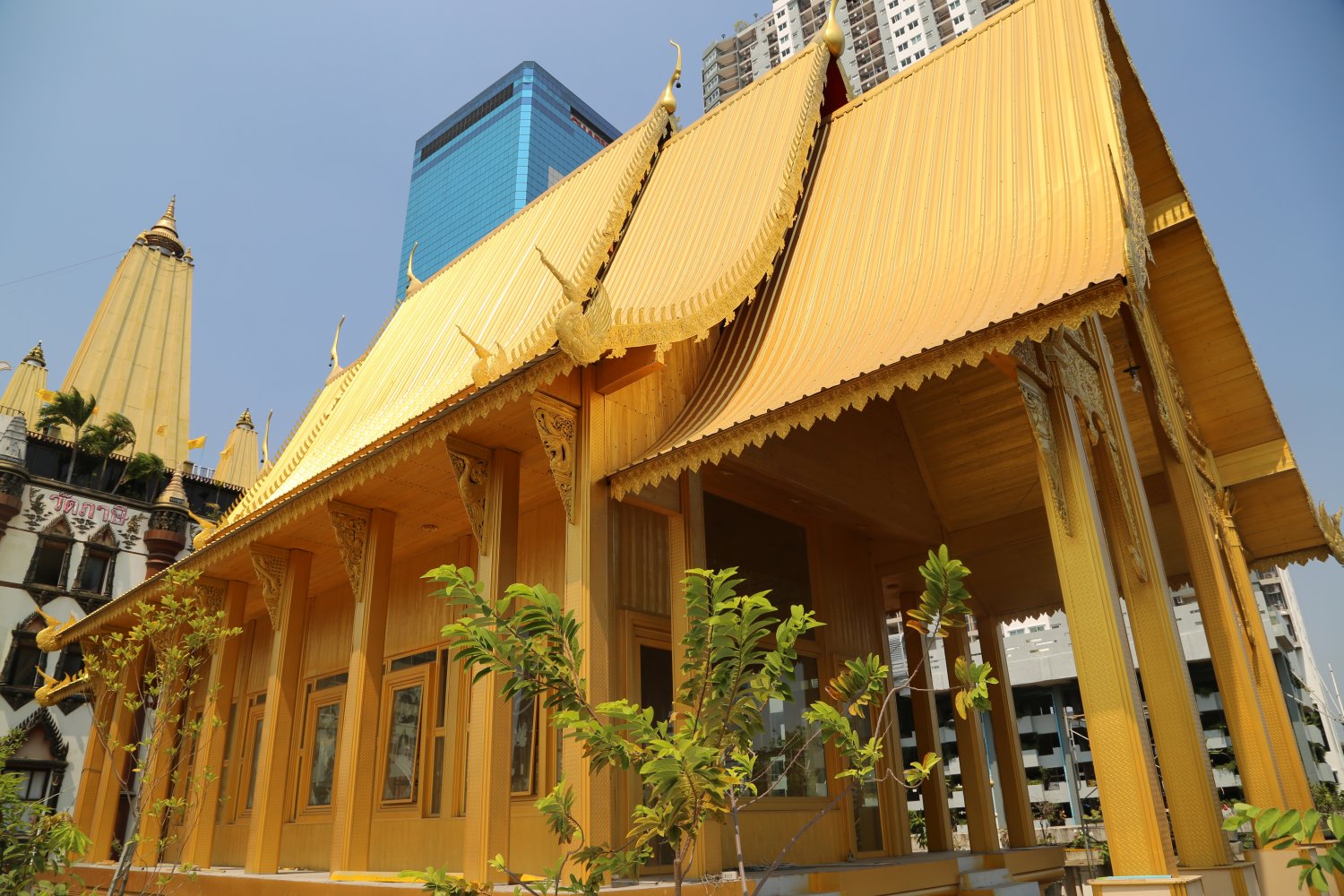

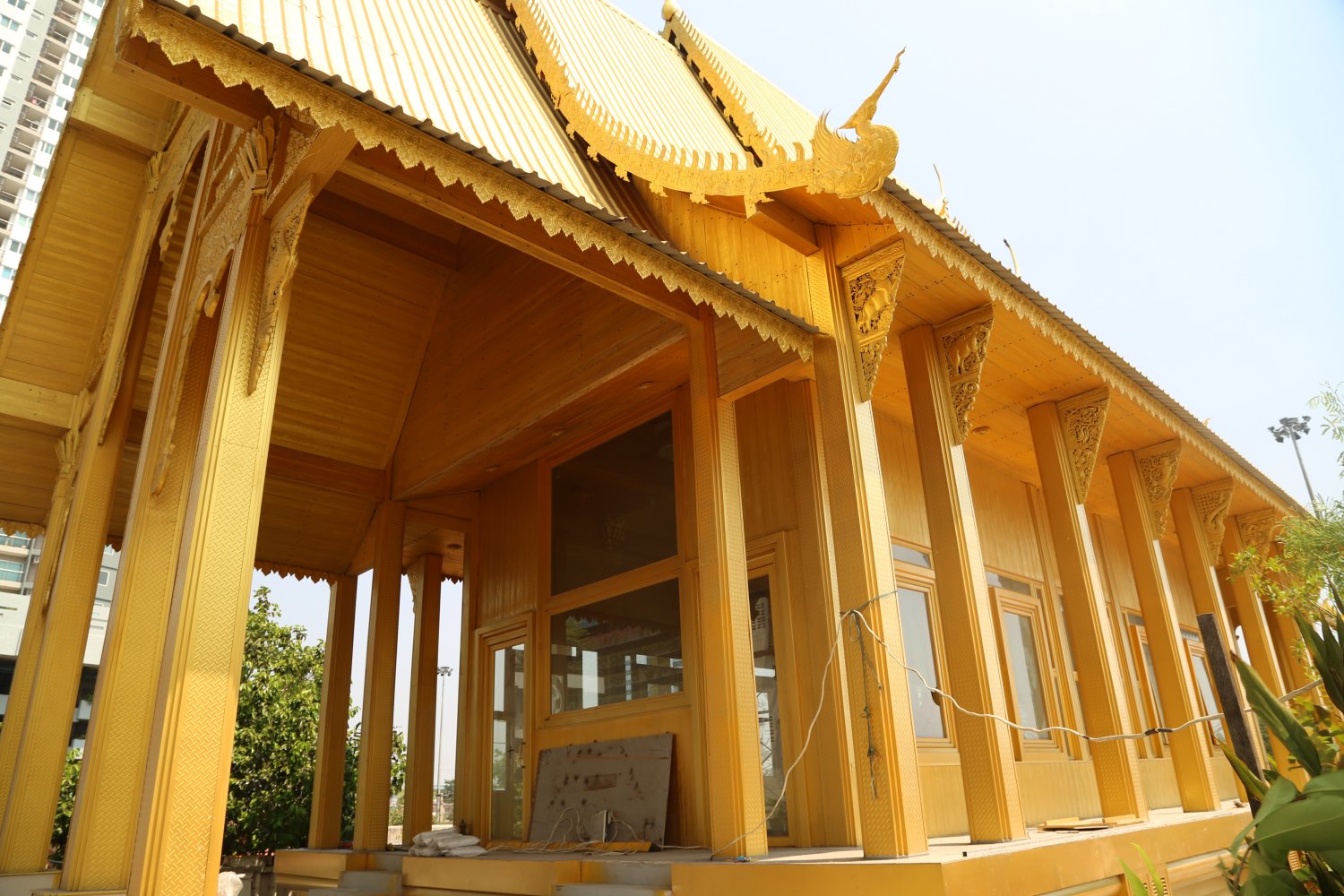
Wat Pathum Khongkha Ratchaworawihan is a very picturesque wat located near the banks of the Chao Praya River at the edge of Chinatown and within a short distance of Wat Traimet (the world’s largest solid gold Buddha) in the Talat Noi part of town. This is the much lesser known and smaller of the two temples.
This temple is also known as Wat Sam Pheng and was later renamed to its current name. Known for several ornate statues as well as glass covered displays of golden buddhas lined up. Also a very pretty ubosot building.
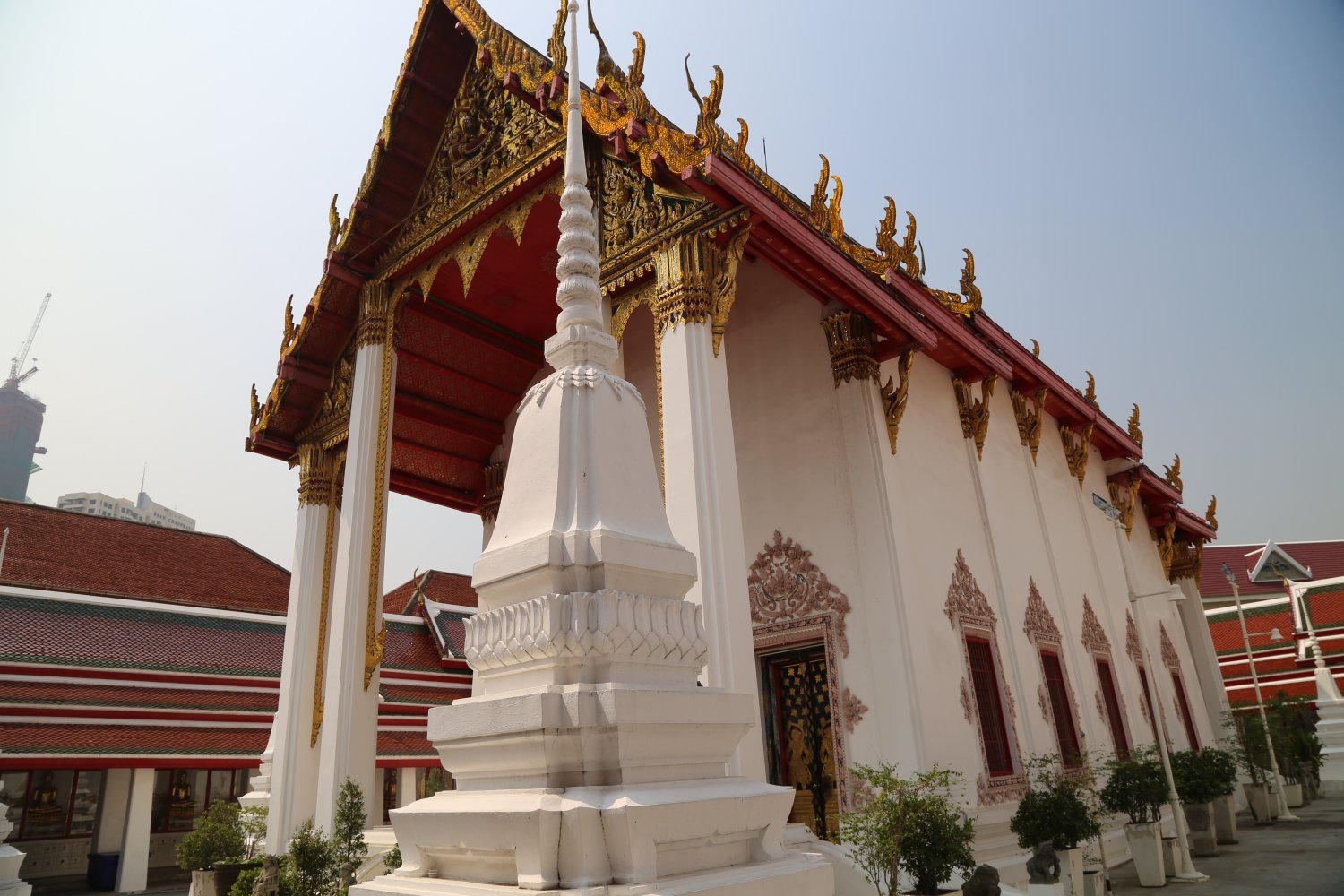
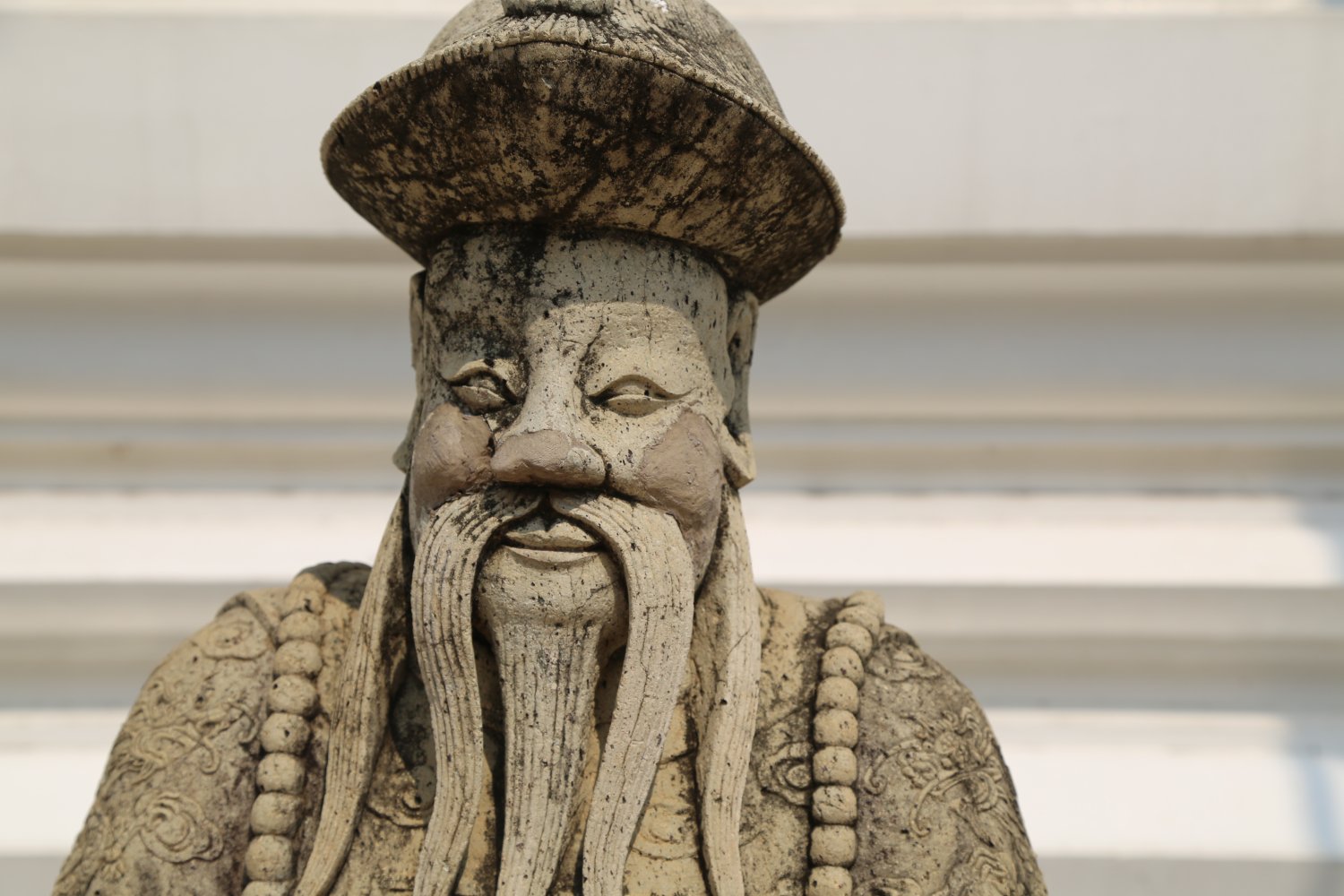
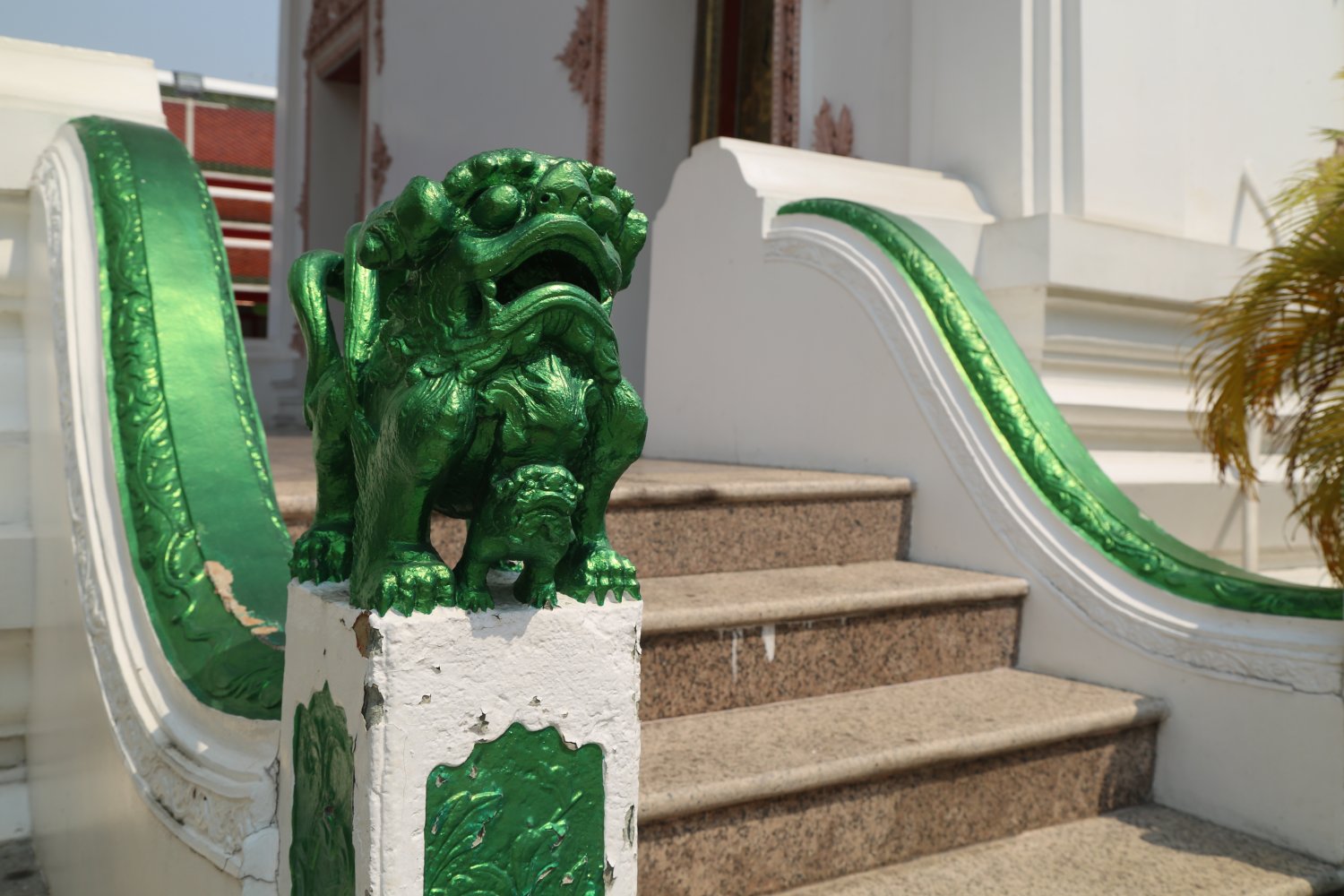
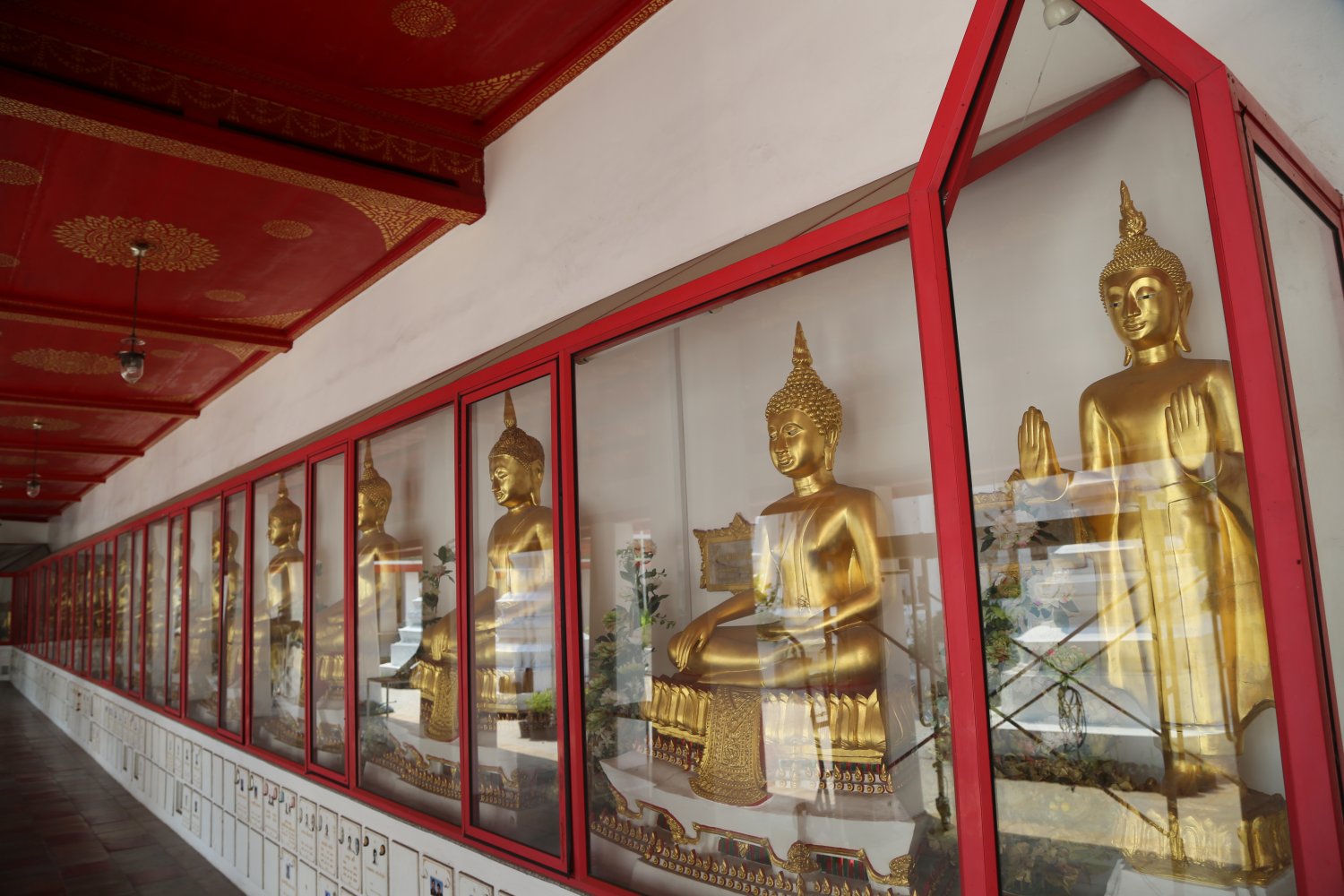

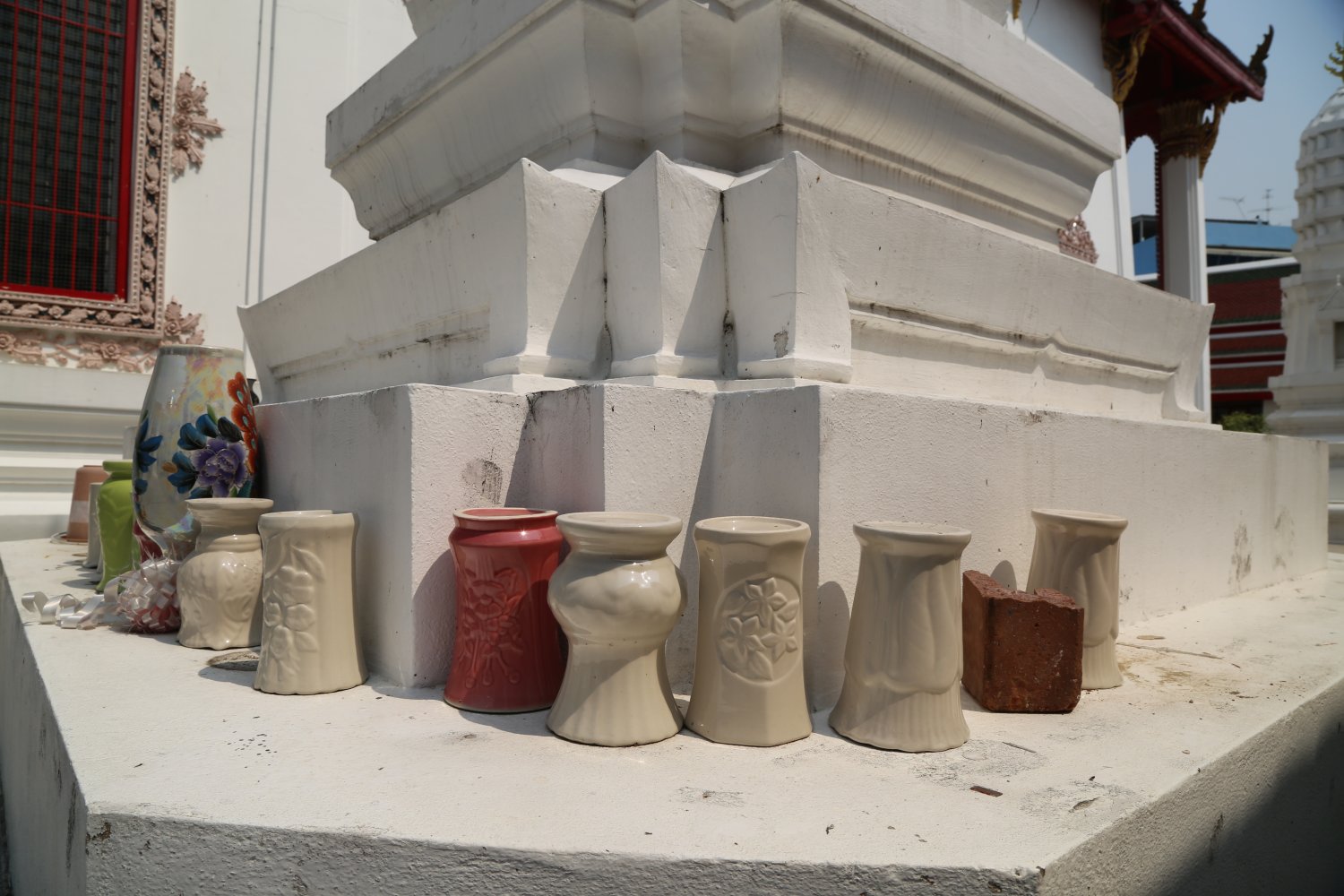
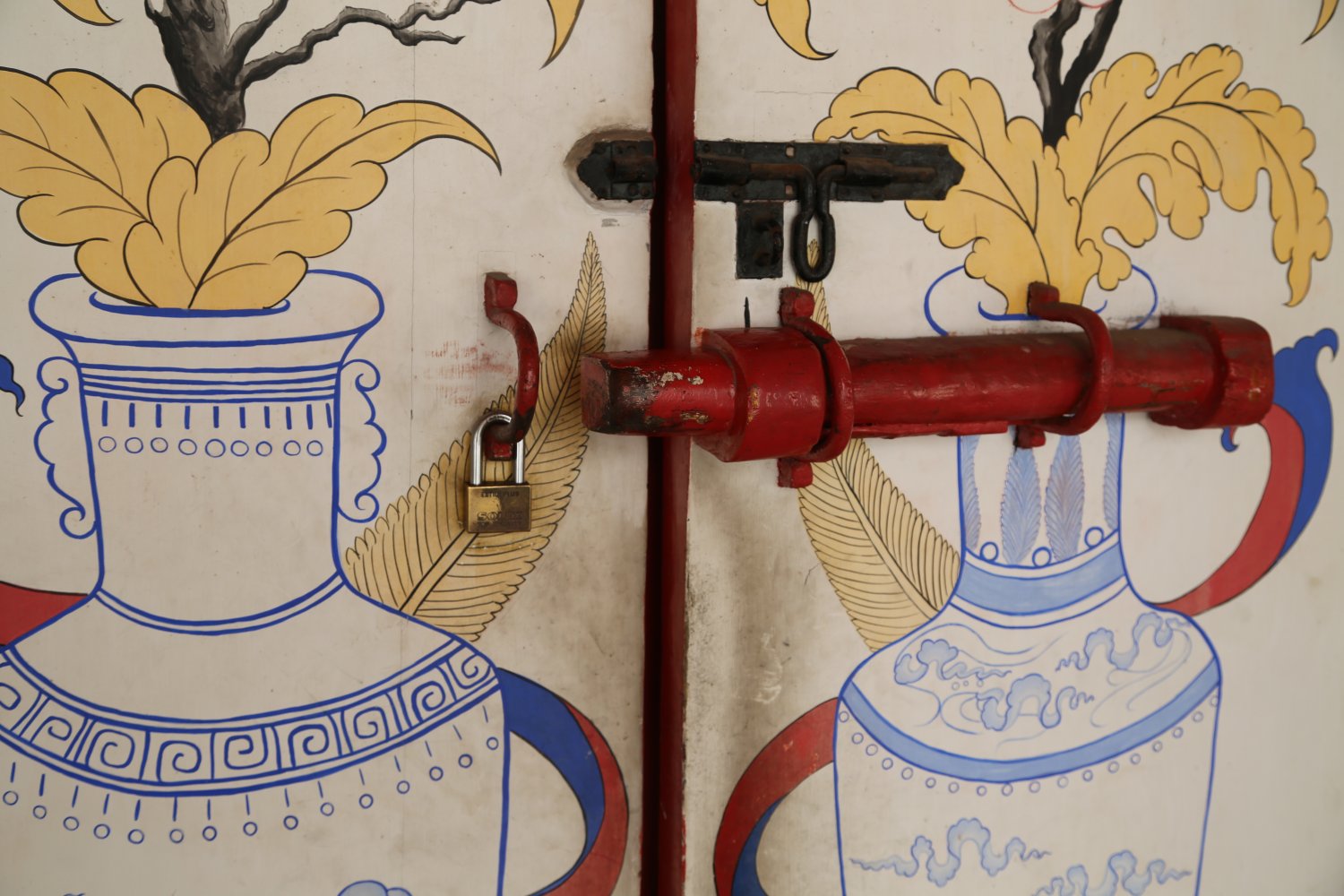
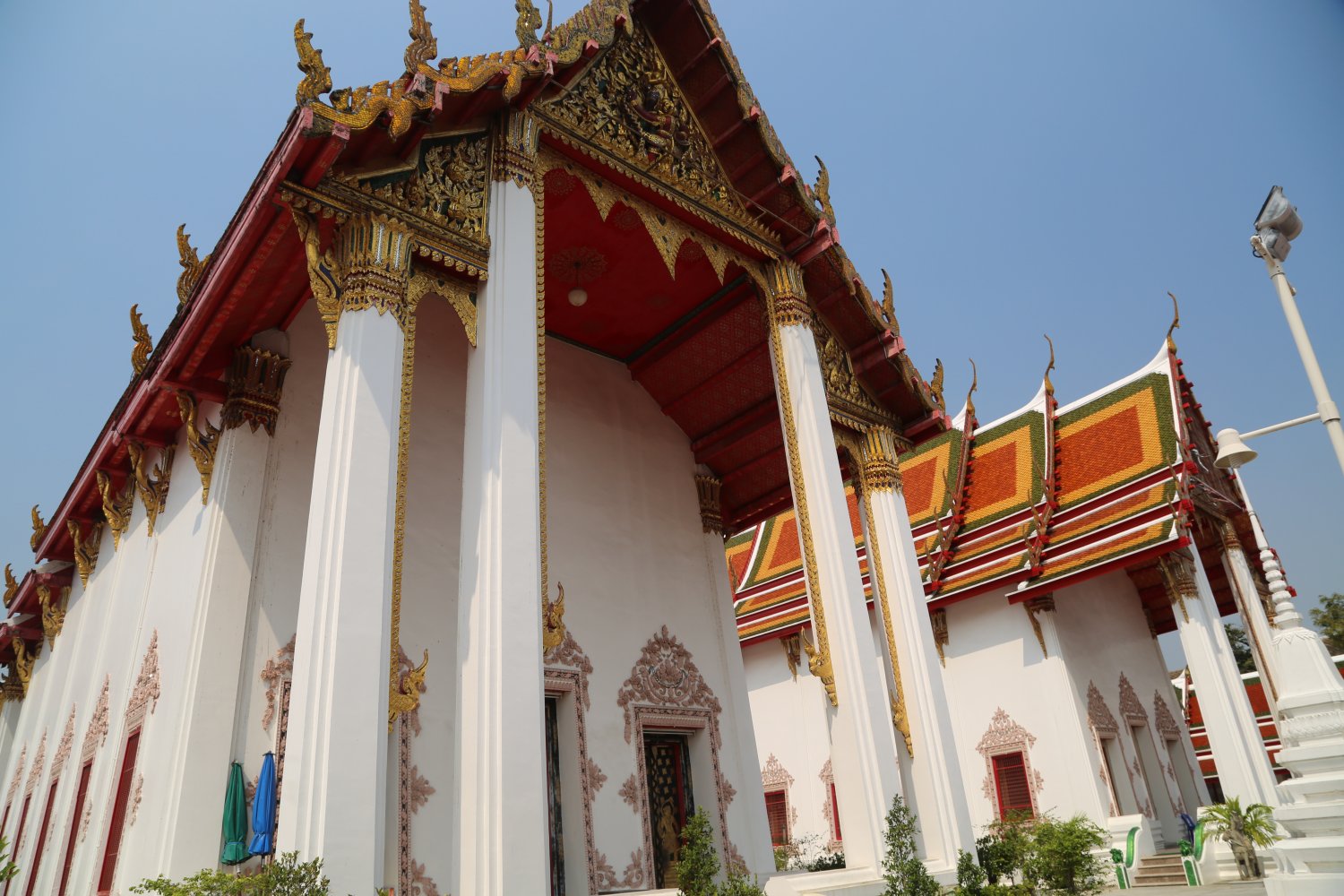
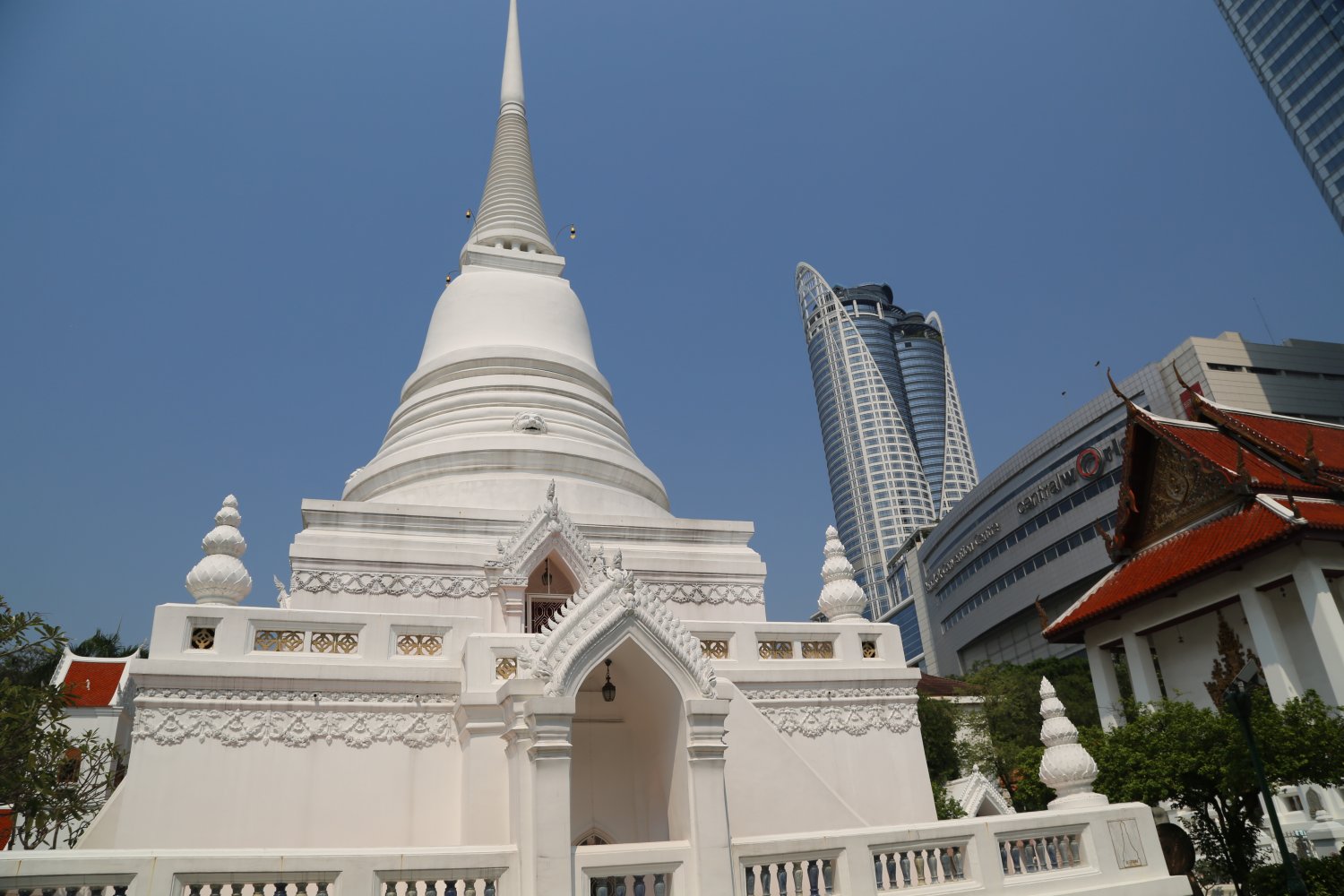
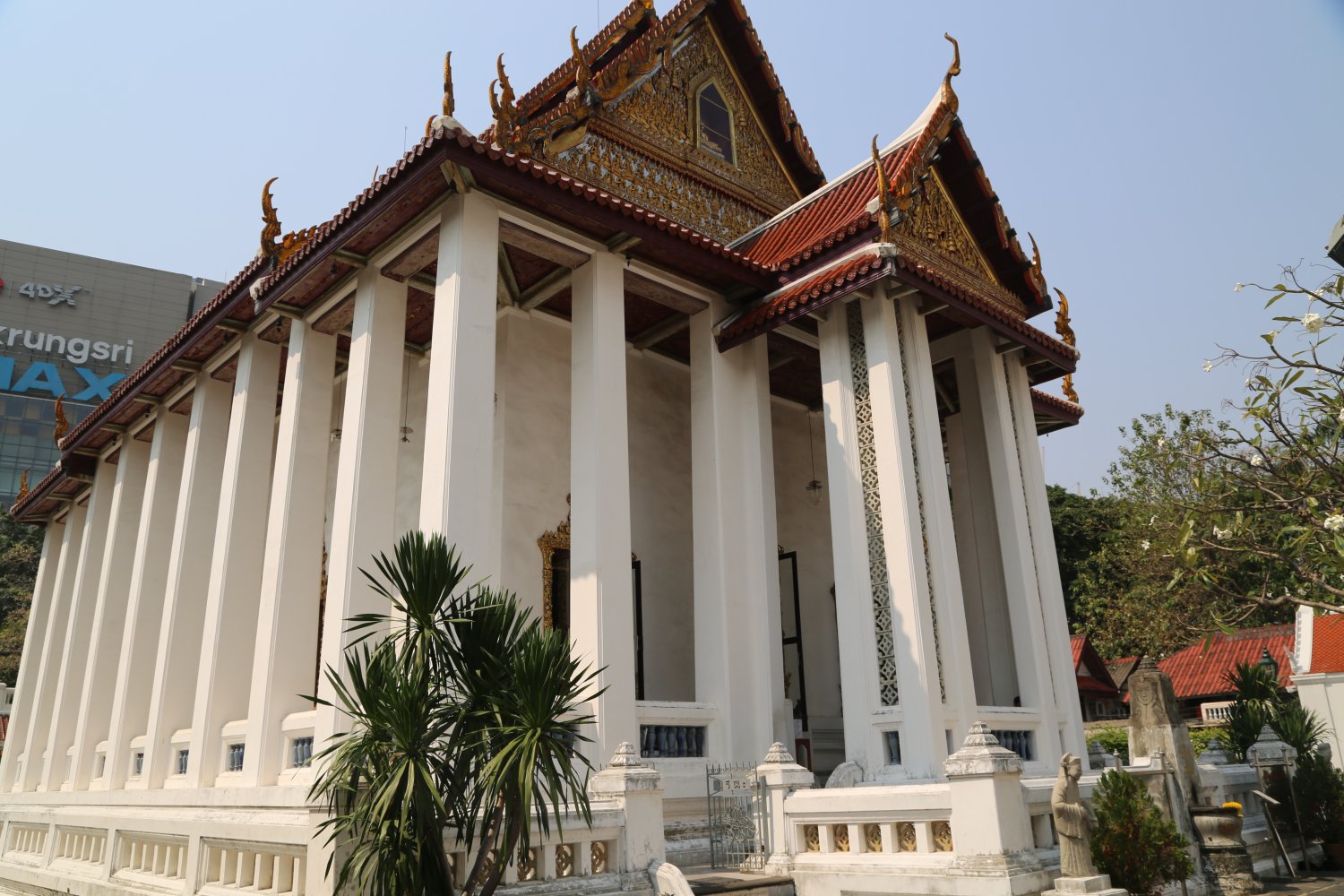
Wat Pathum Wanaram , also known as Wat Also, Wanaram – is a great place to stop if you are looking for some relaxation and quiet time after shopping in many of the huge shopping complexes that surround this wat. It is the temple of the King Rama the IV and is located between two major shopping complexes, Siam Paragon and Central world.
Despite being located in the middle of this concrete jungle, once you are in the temple – it’s like being in a totally different world. You are surrounded by trees, and it is much quieter than the nearby roads. Look for the elephants with long white tusks located on the grounds; they often contain temporary decorations.
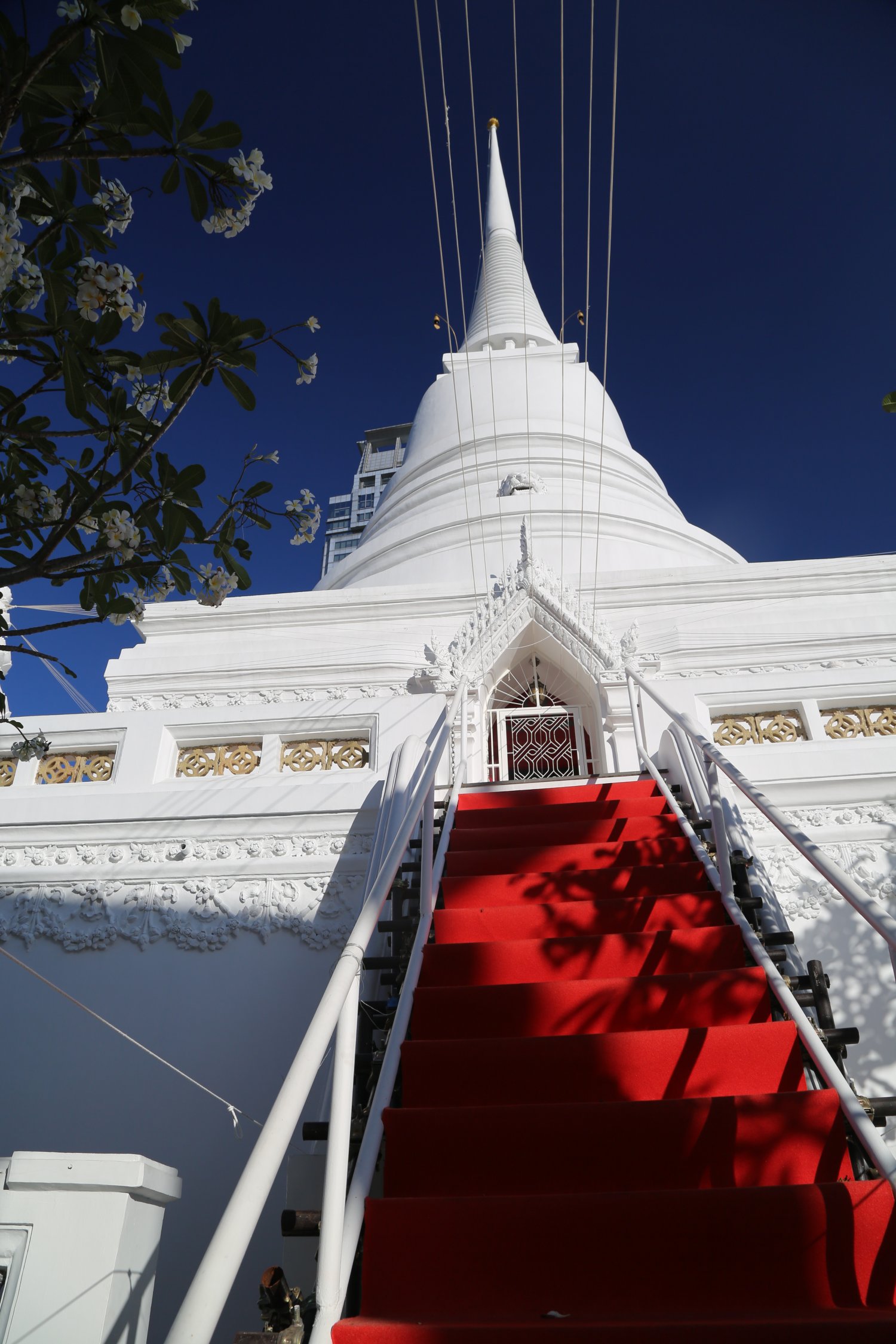
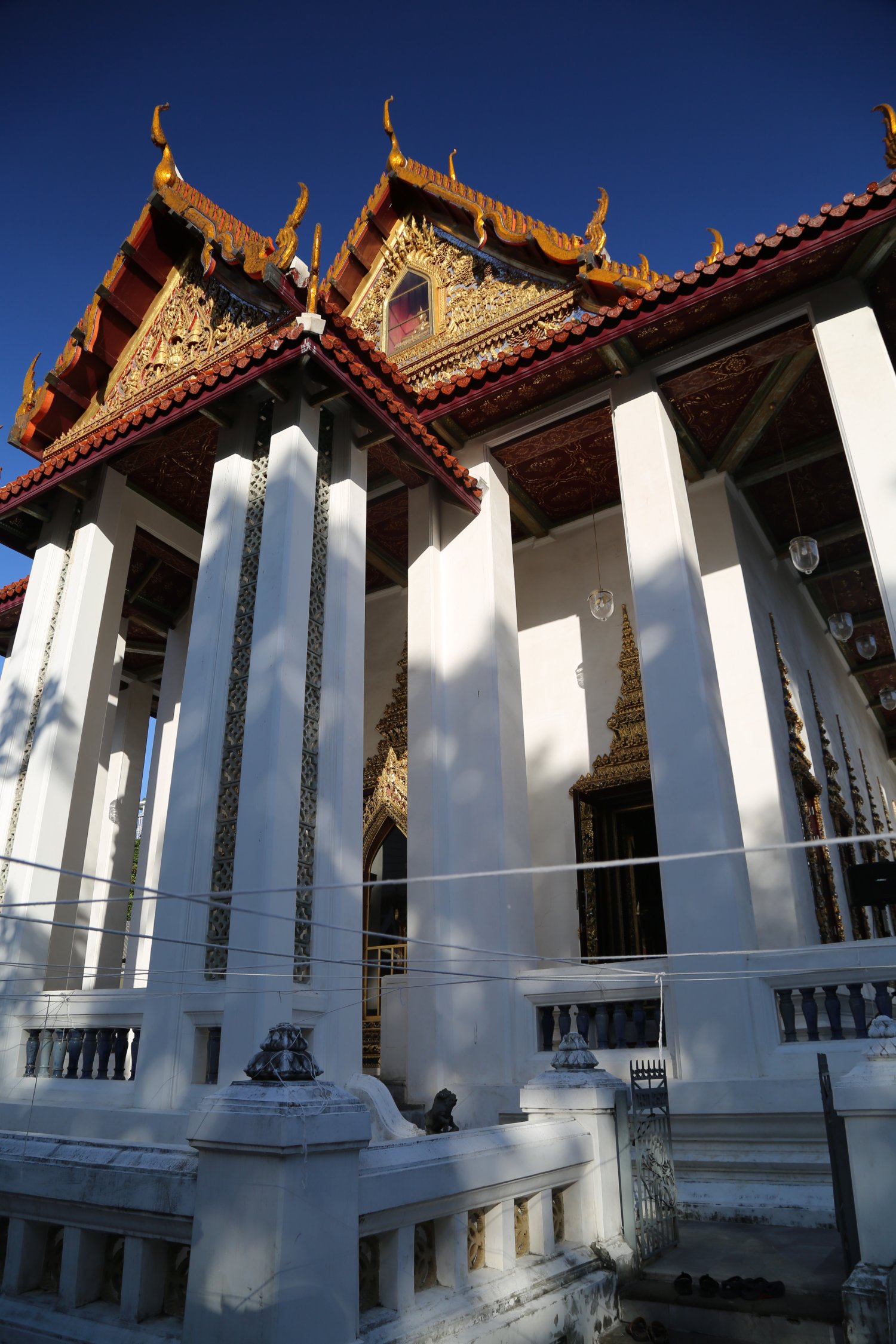
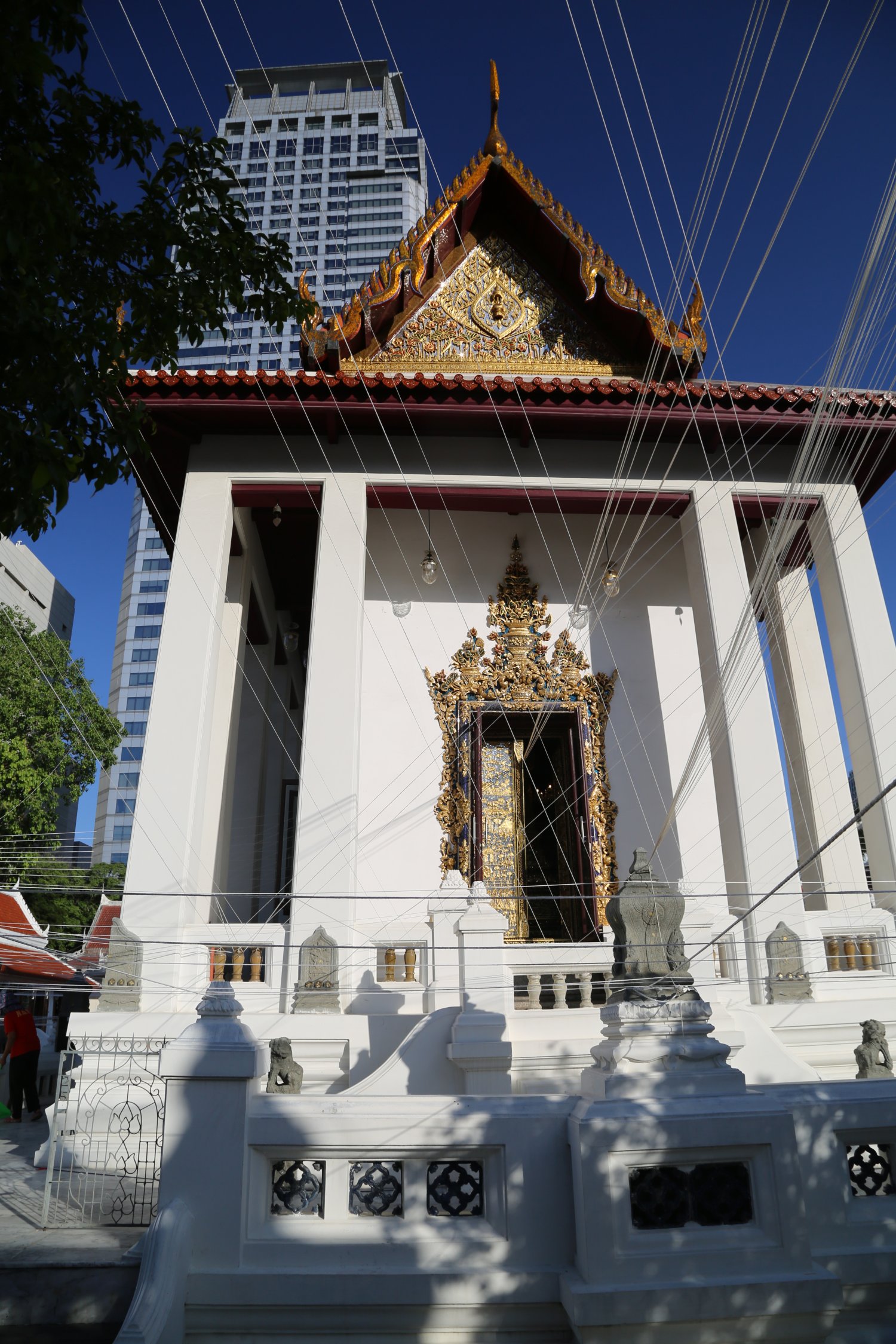
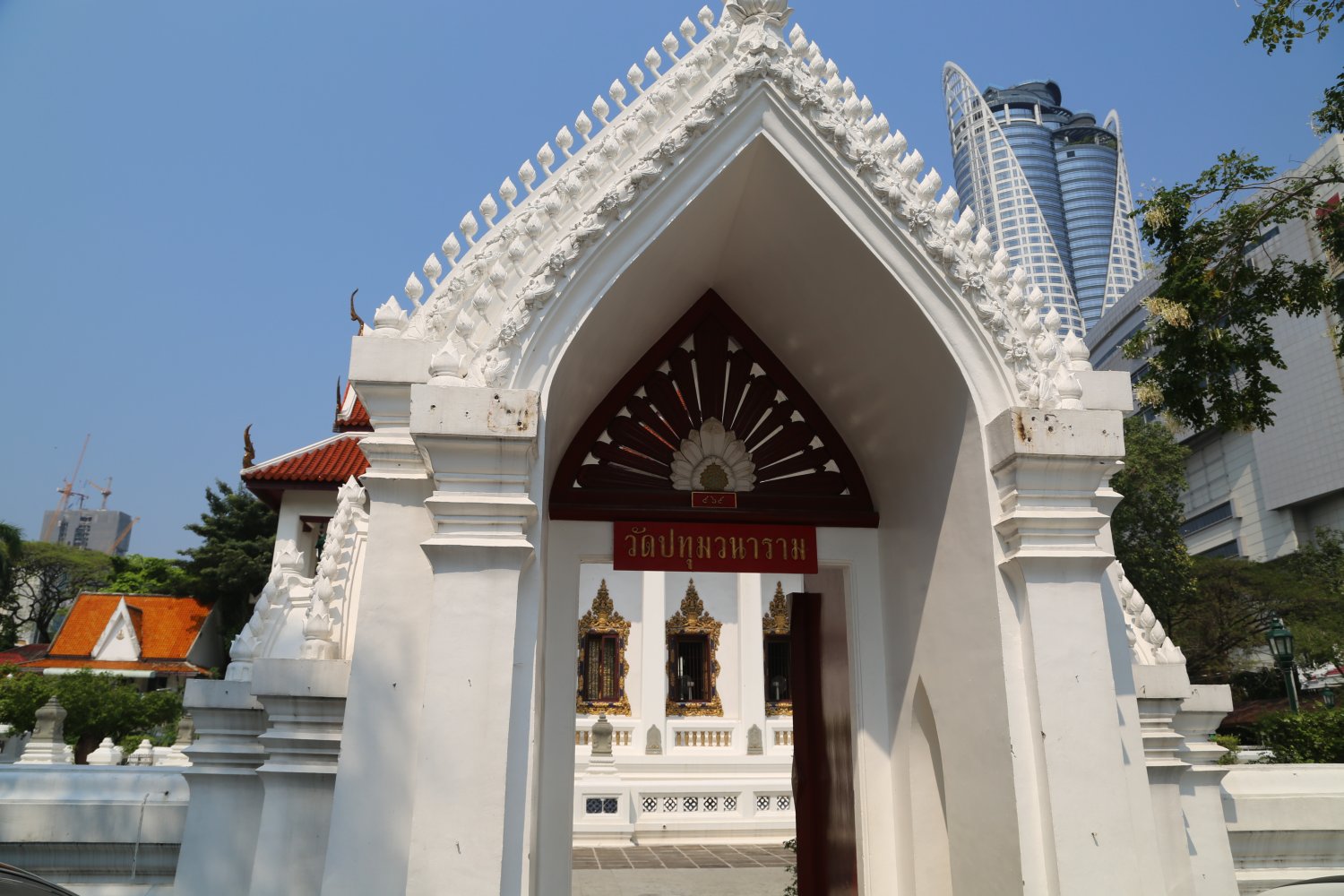
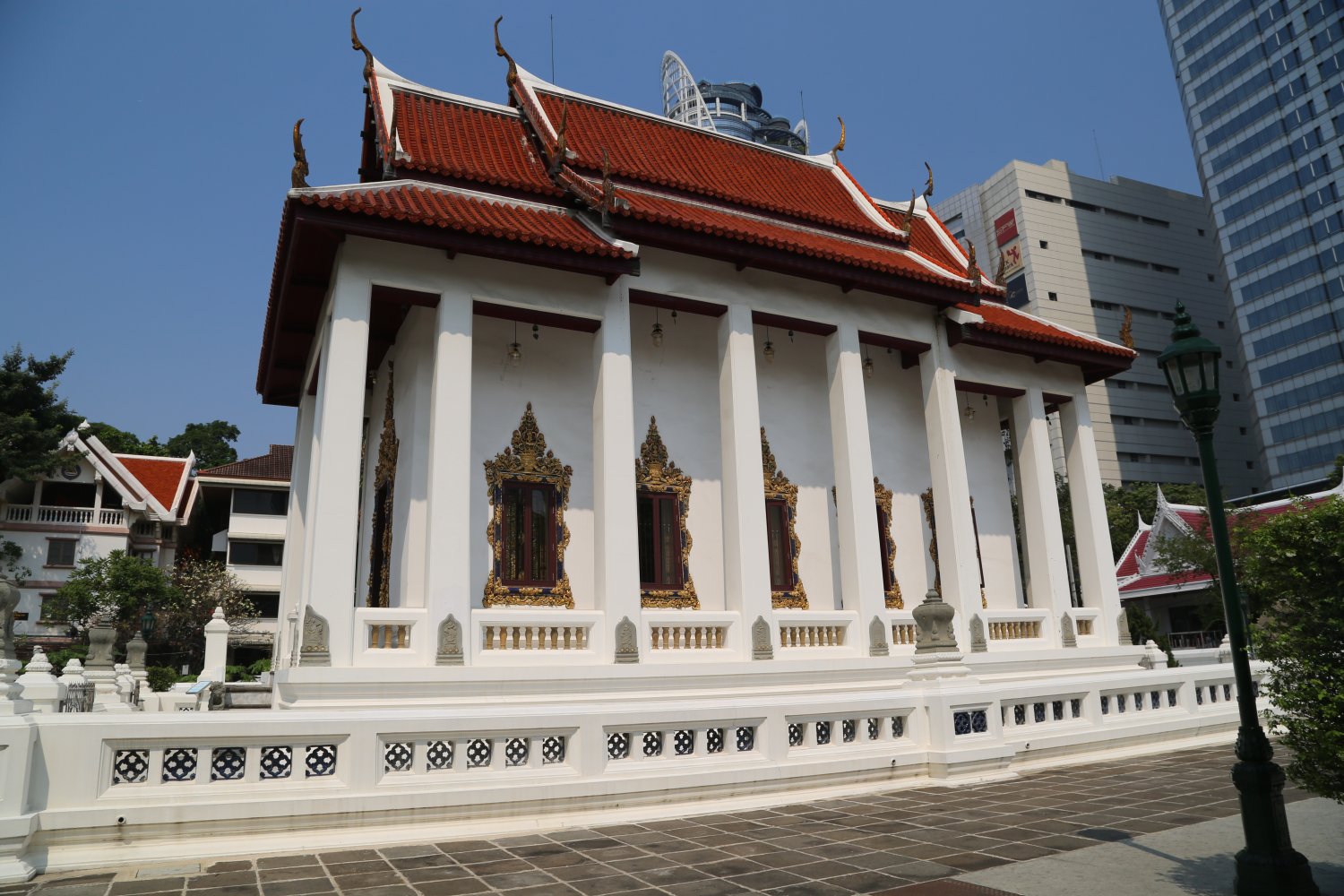
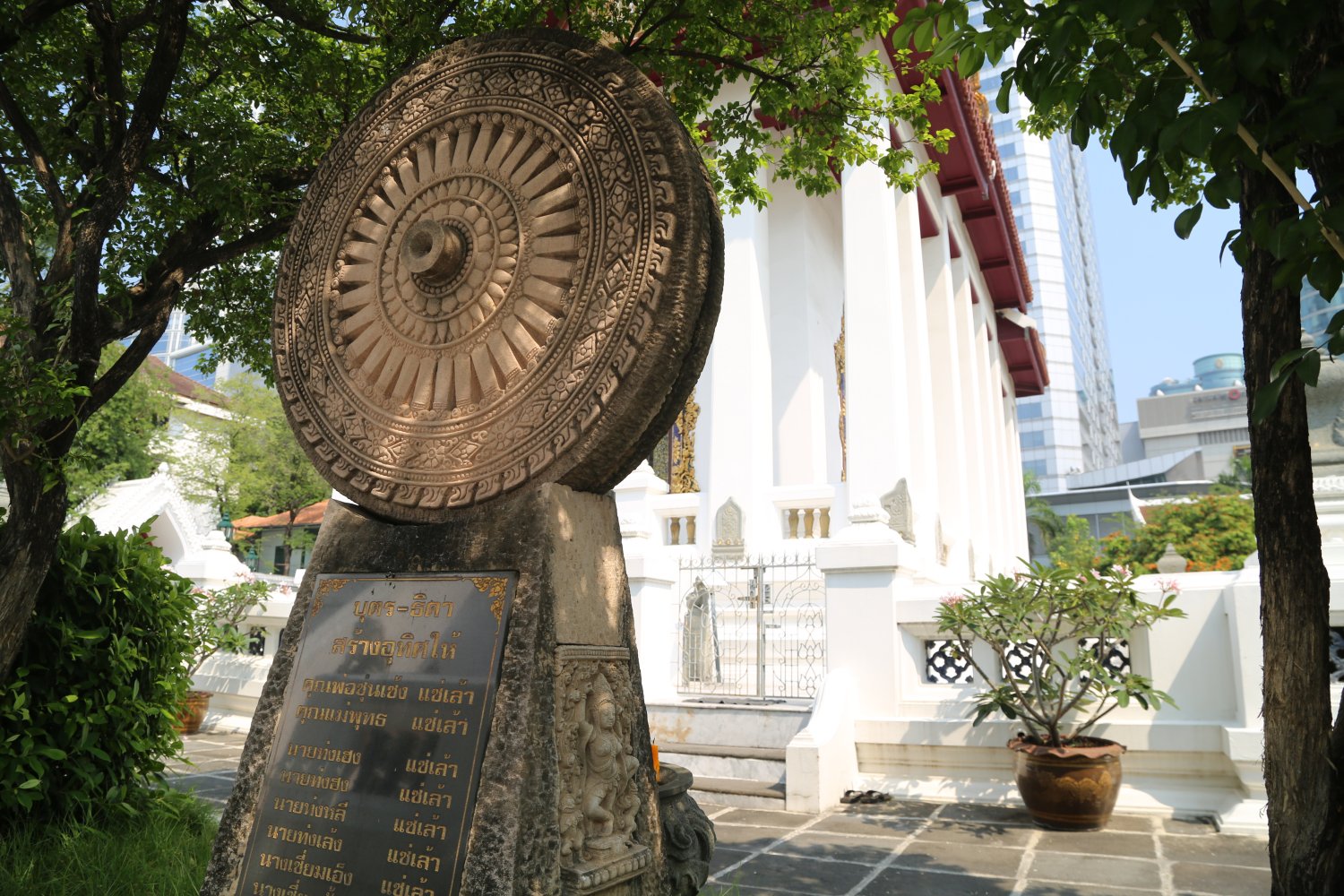
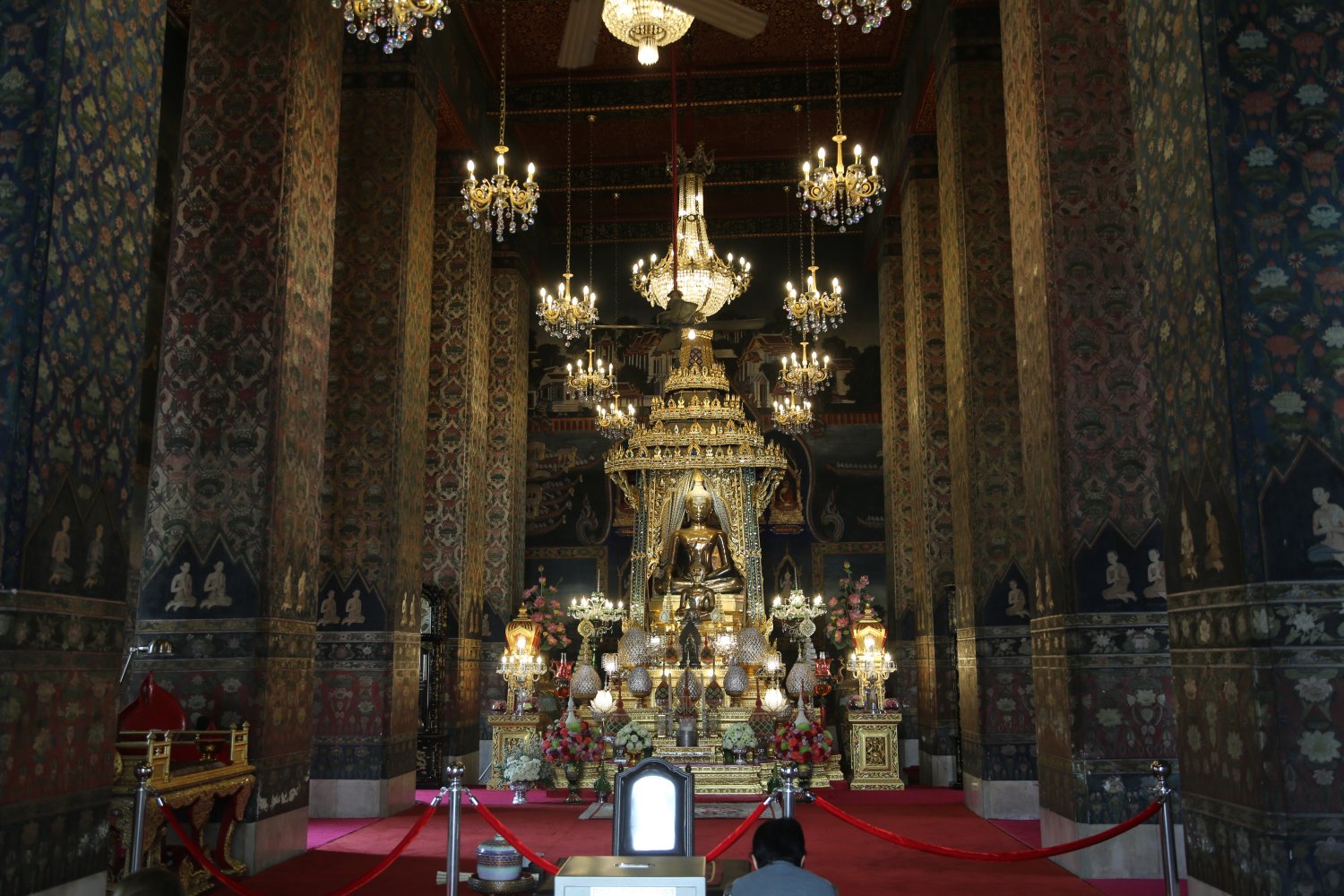
Wat Phichai Songkhram is located within a short walk of the Pak Nam Market Ferry Pier along the banks of the great Chao Phraya River – or visitors can also take a taxi or motorbike from the nearest Skytrain stop – Pak Nam (about a 10-minute walk). Not to be confused with the larger temple of the same name in Ayutthaya. Some small statues of Buddha scattered among the grounds. This is a temple that is not on any tourist temple map. And one has to seek it out if you want to visit – you don’t just ‘stumble’ upon this one. Also home the Wat Pichai songkram Kindergarten school.


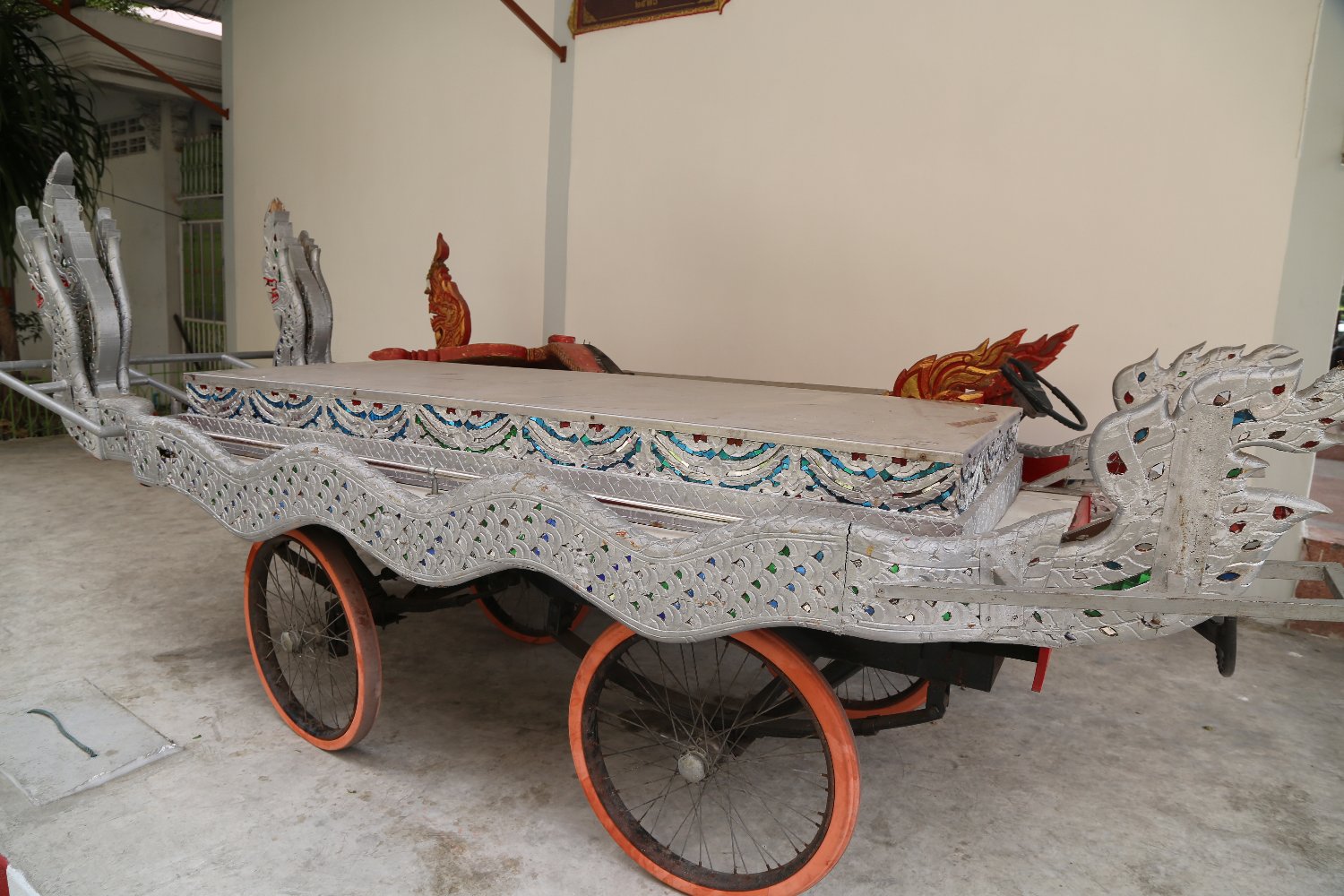
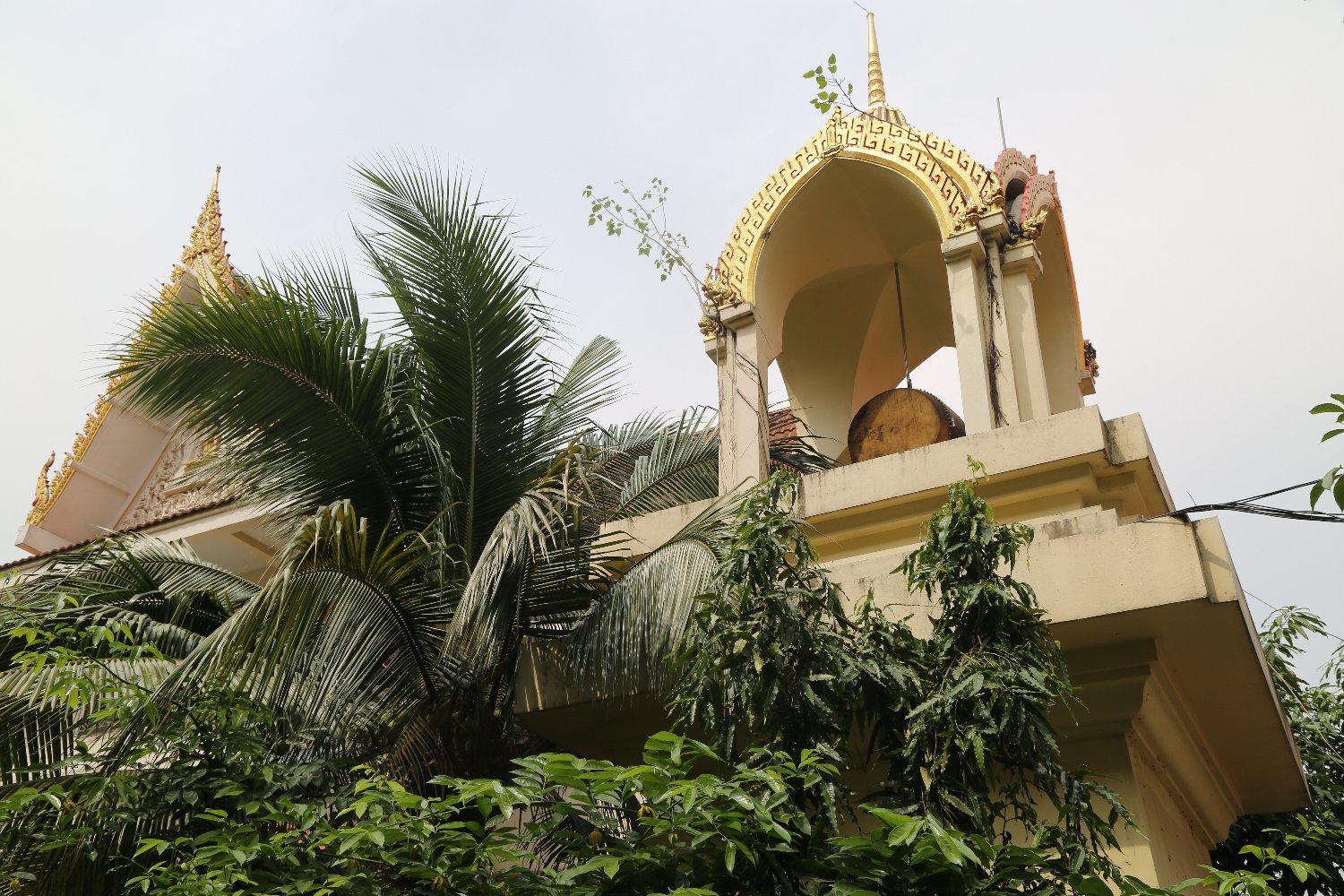
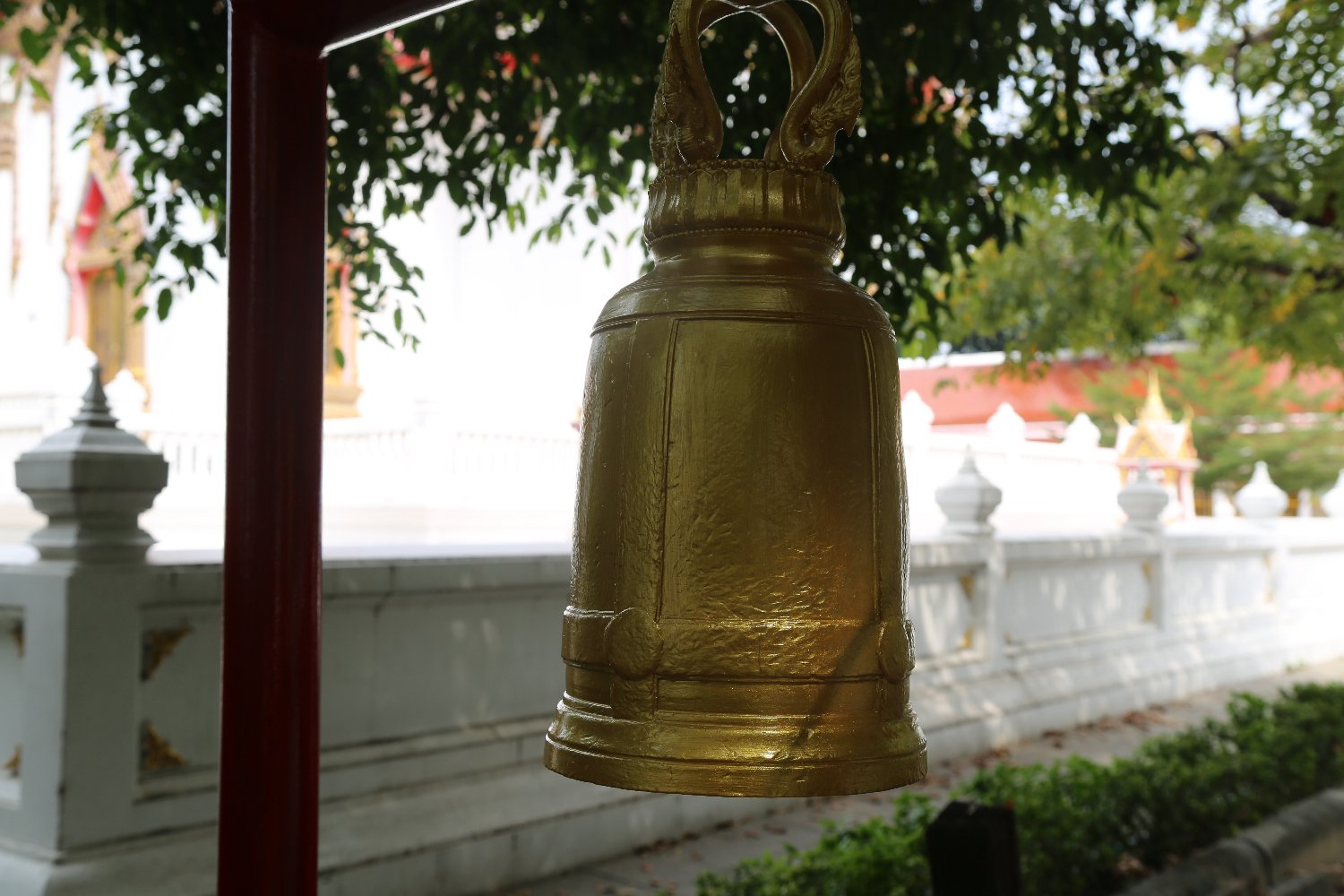


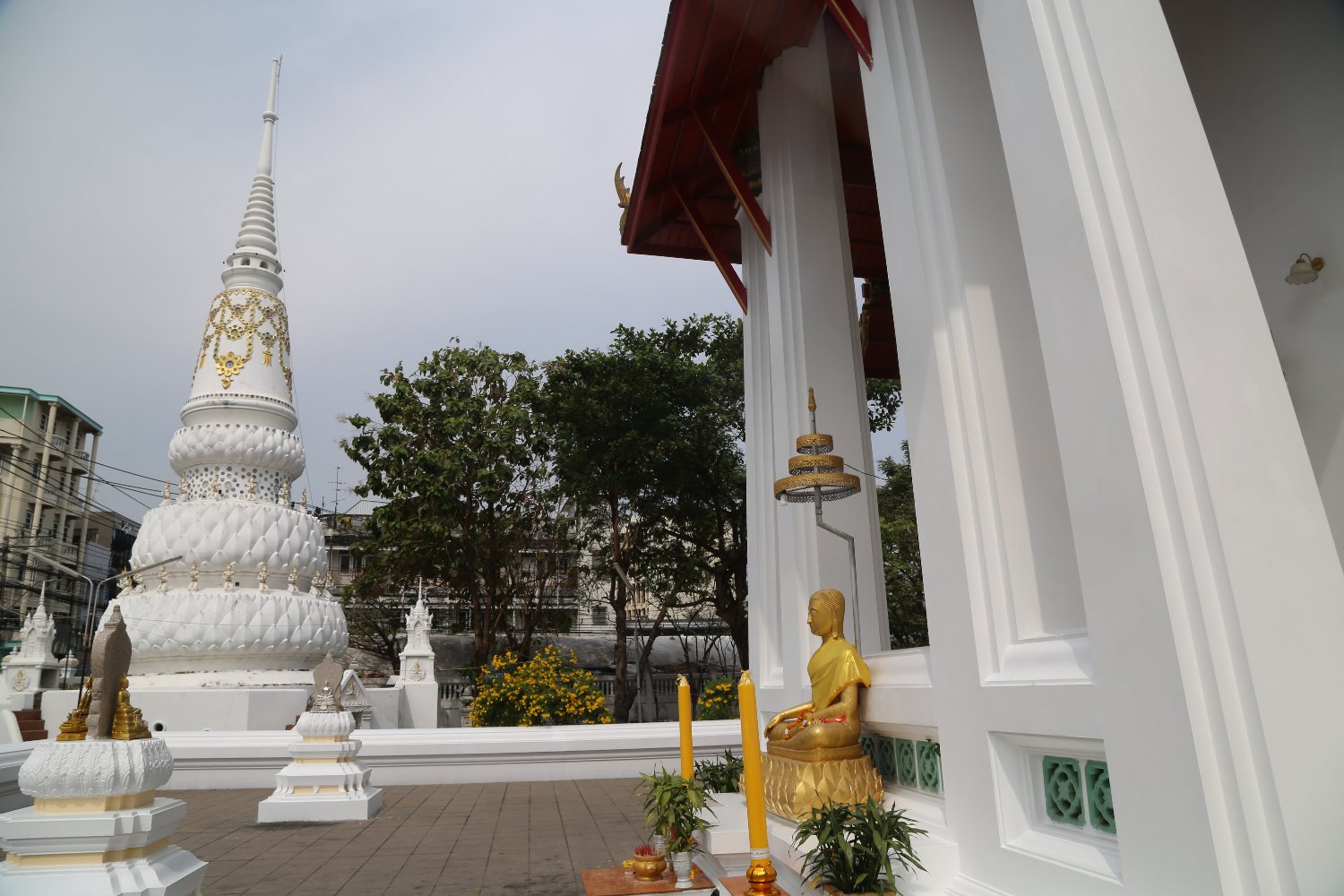
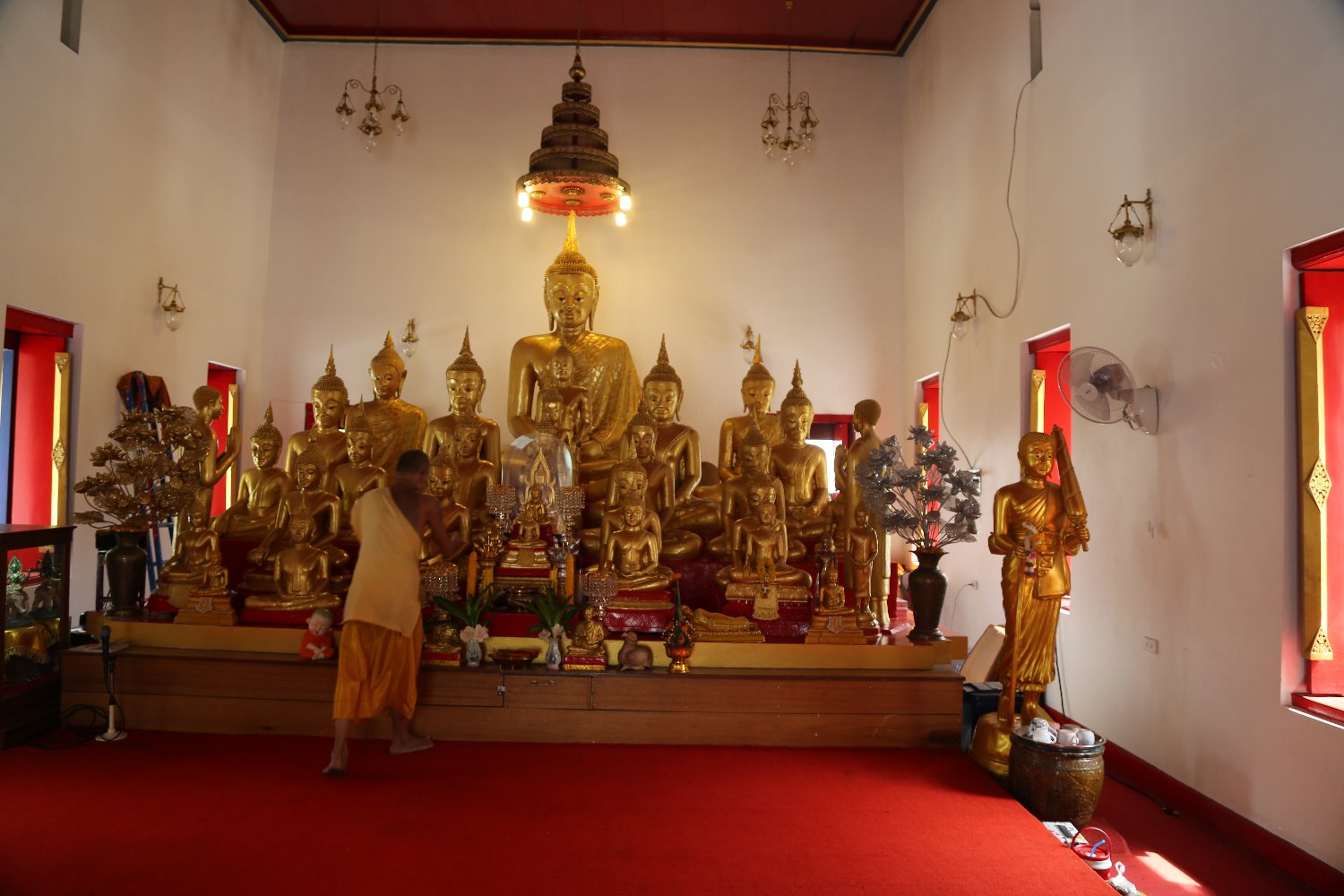
Wat Phitchaya Yatikaram Worahiharn is a medium to large sized temple located on the Thonburi side of the Chao Praya River – located near several canals and across the highway from Wat Anongkharam. Not many tourists visit this spot. If open, walk into the ubosot to check out the watercolor painting of a Chinese warrior. Also, some other nice murals inside including the ceiling and on the main doors. Noted for its several impressive stupas. A very photogenic temple. This part of the river has a number of worthwhile temples to visit – one can spend their day temple hopping as you move north as most of the major temples along this part of the river are within walking distance of each other.
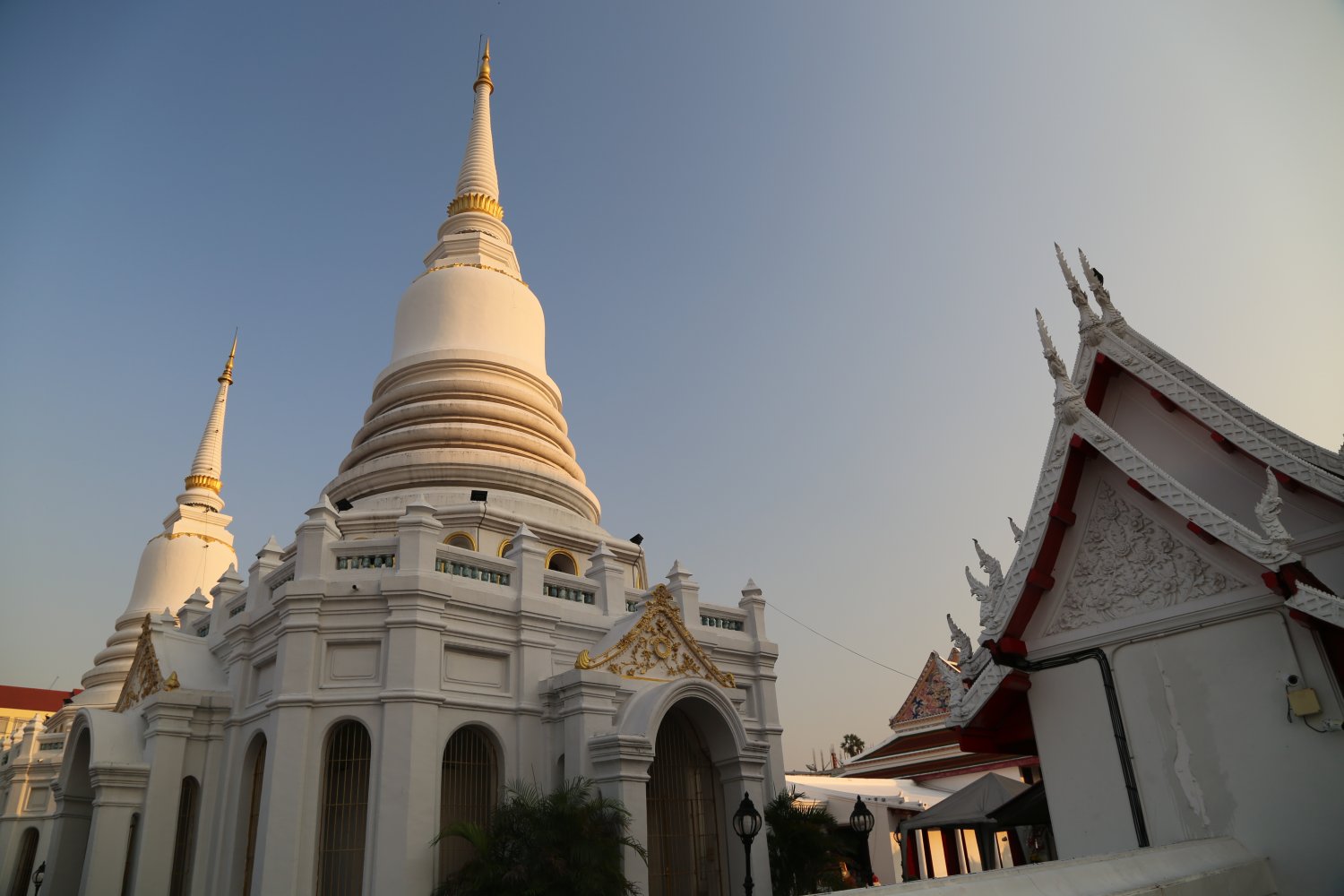

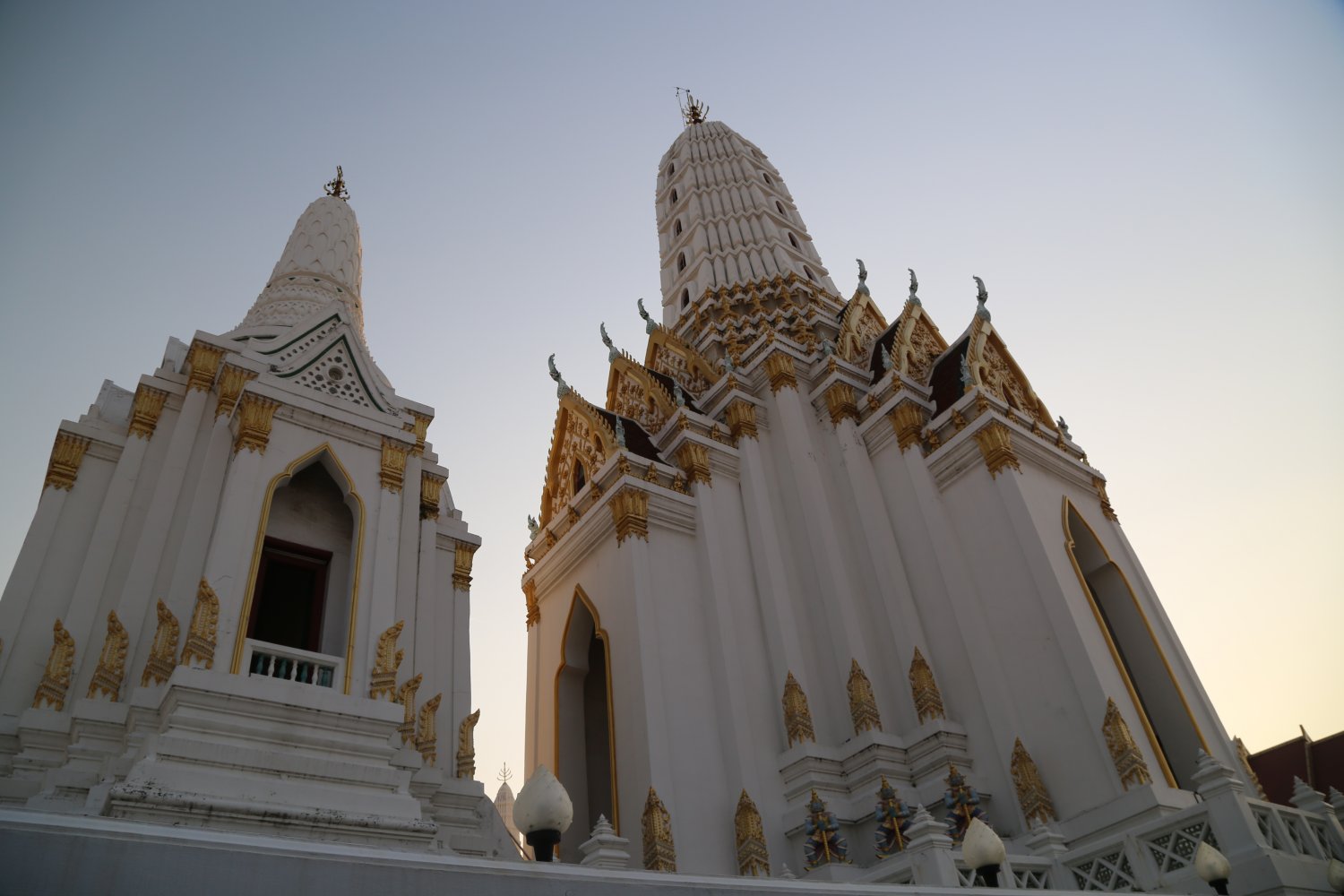
Wat Pho Nimit Sathit Mahasimaram is conveniently accessible via an approximately 5-minute walk from the Pho Nimit BTS station. This land was originally owned by Nai Pho and Nang Mi – when they died their son Somdet Phra Wannarat built a temple in their honor. In 1874 King Chulalongkorn named the temple Wat Phothinimit.
The Ordination Hall is well worth visiting to see the hand painted murals and the gold-lacquered primary Budda image. The principal chedi contains the ashes of Phra Wannarat.
And a somewhat unique feature are the stones marking the boundary of the temple; these are located a bit further from the ordination hall then usual so religious activities can also be conducted outside rather than just inside the building.
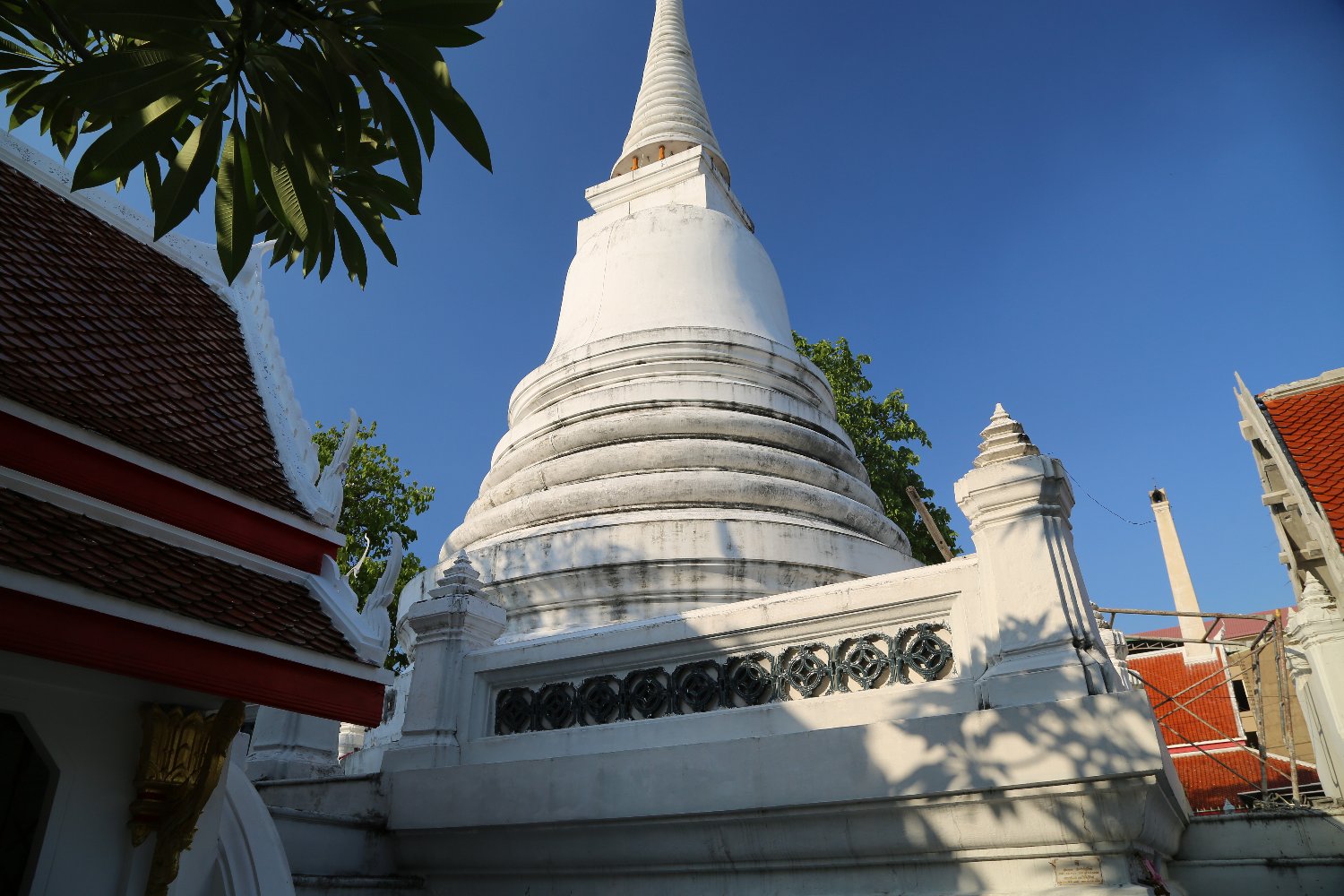


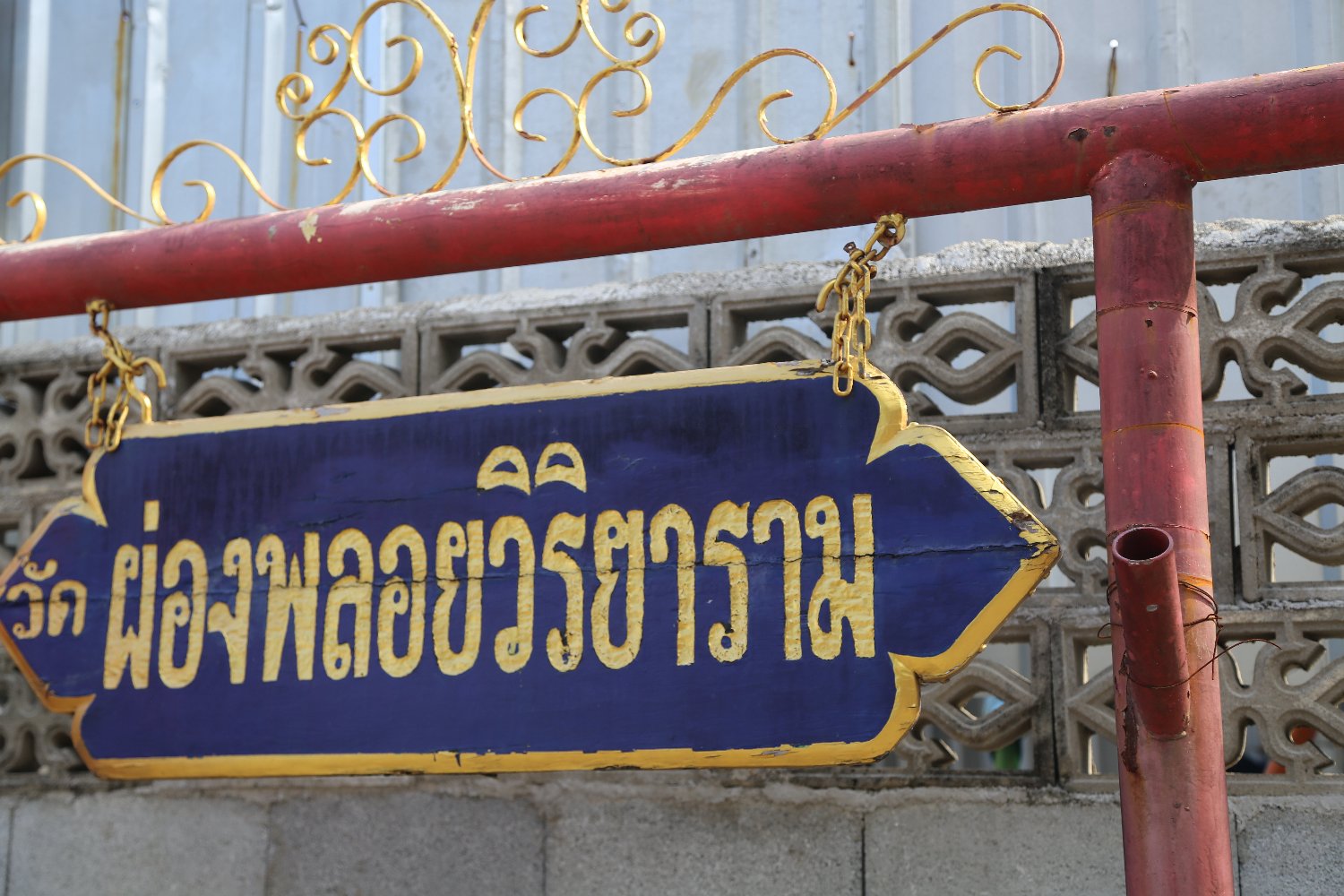
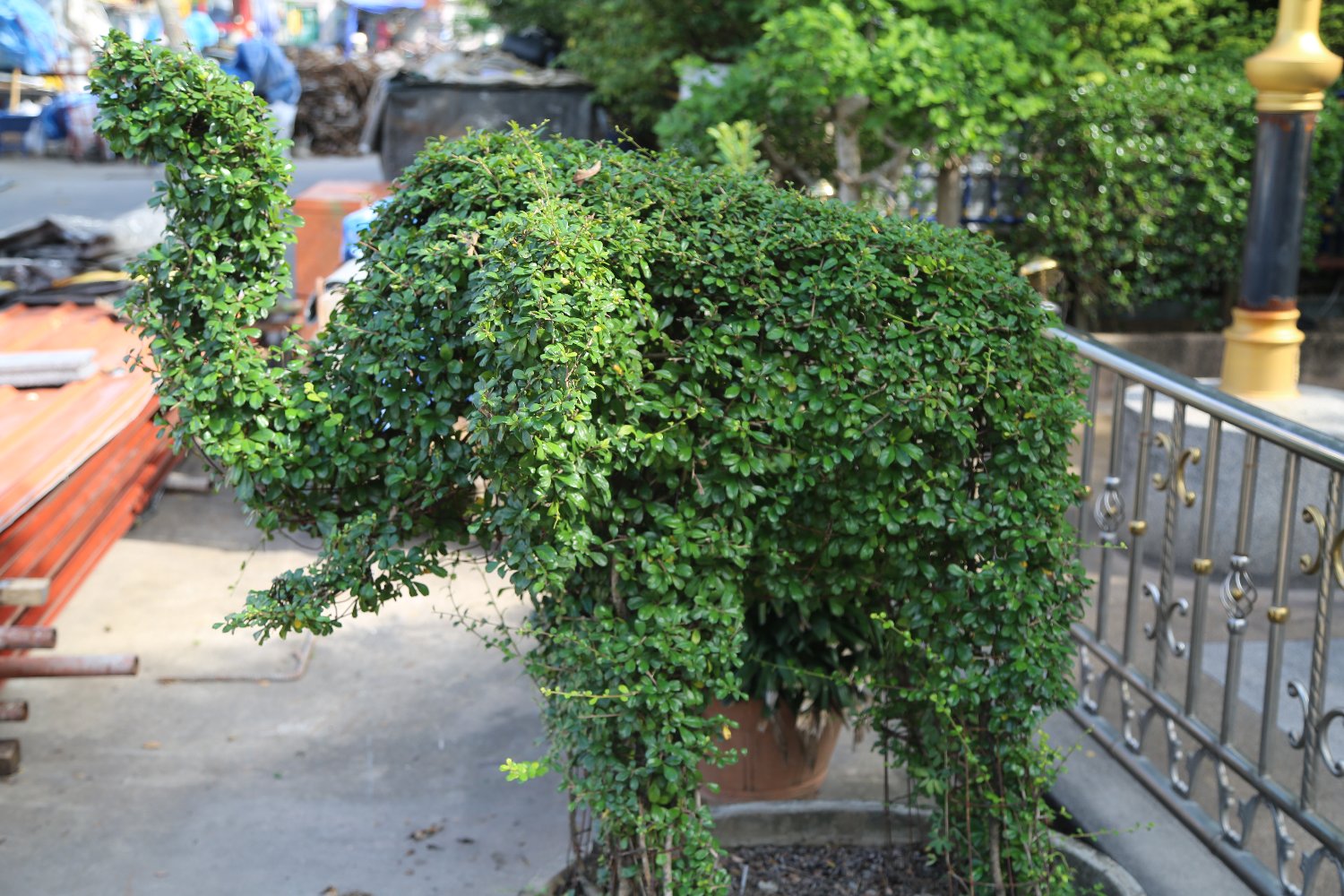
Wat Phong Ploy Viriyaram is about a 12–15-minute ride from the two closest Skytrain stop of either Bearing or Bang Na. A very interesting location – one has to drive through more modern clean residential neighborhoods with streets lined with modern homes to reach this temple. Not a huge temple but features some interesting colorful sculptures and some creatively cut plants in the shape of animals.
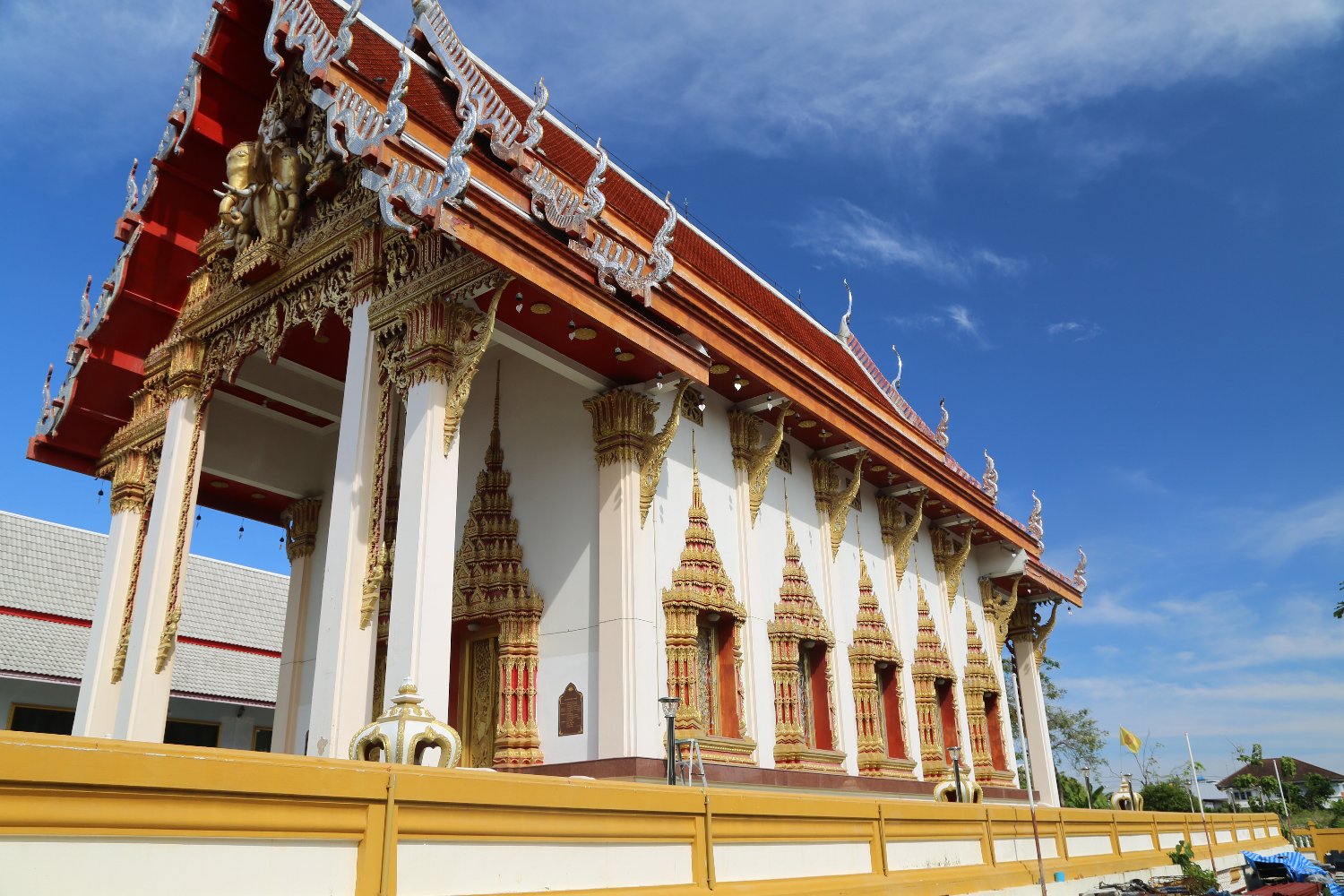
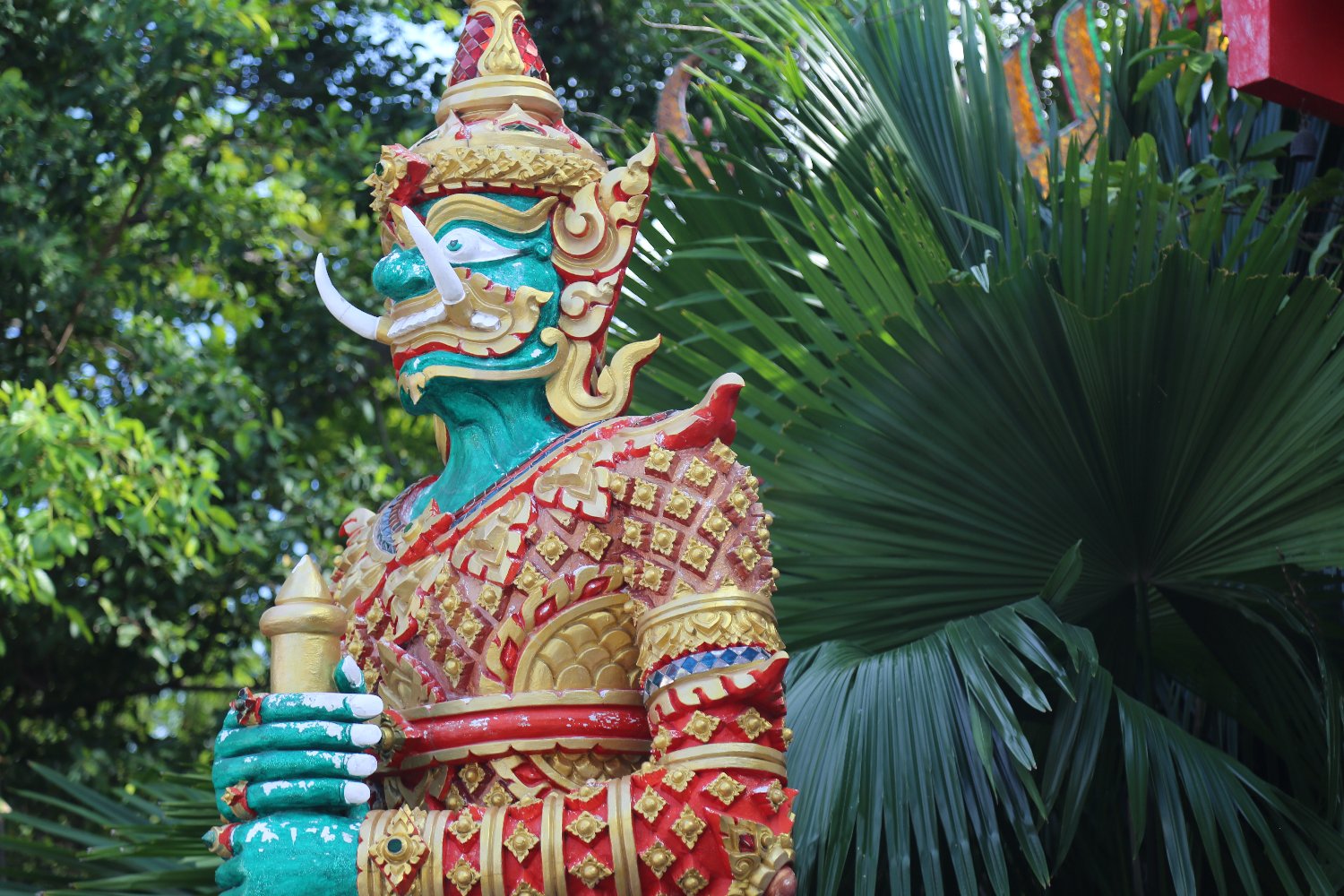
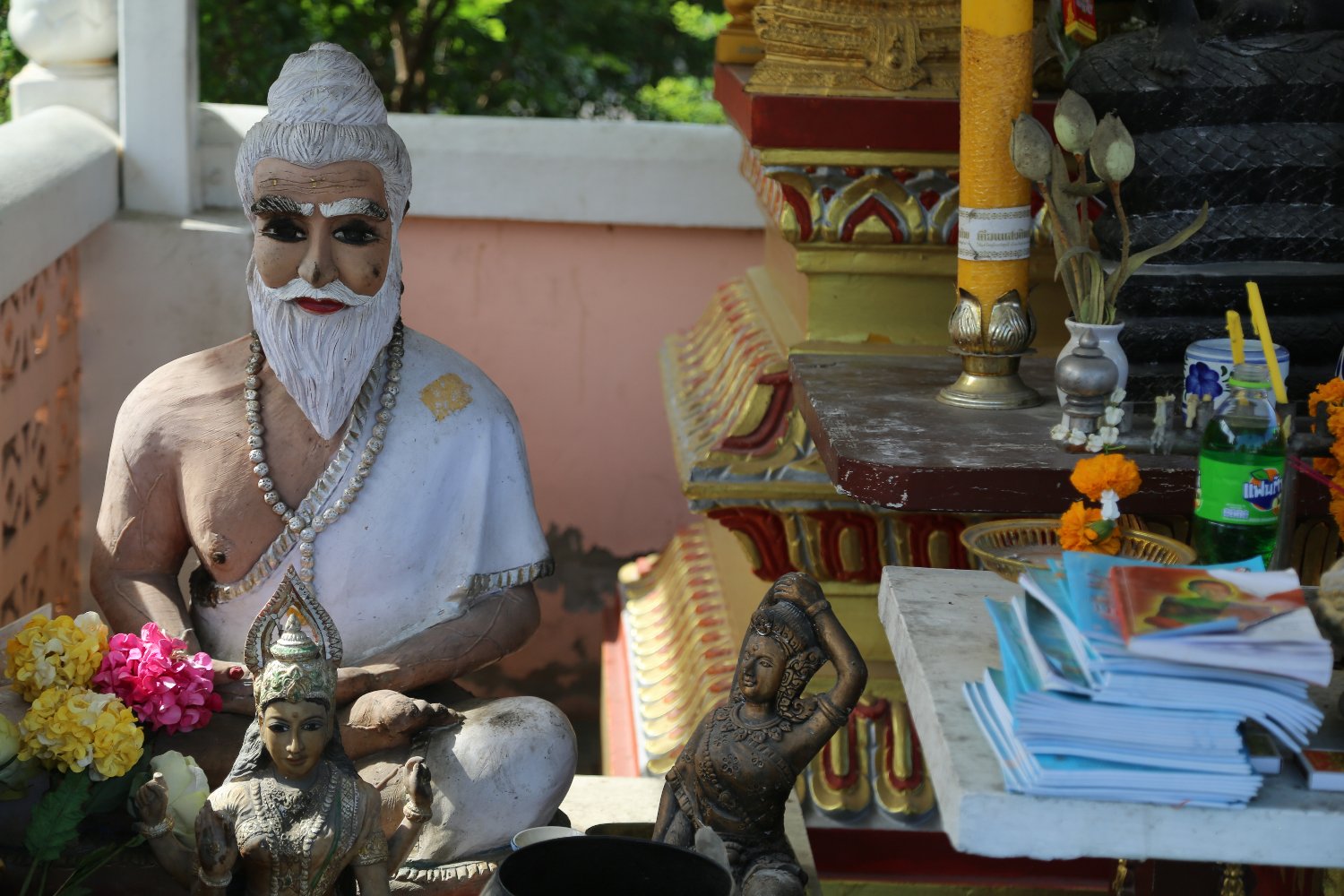
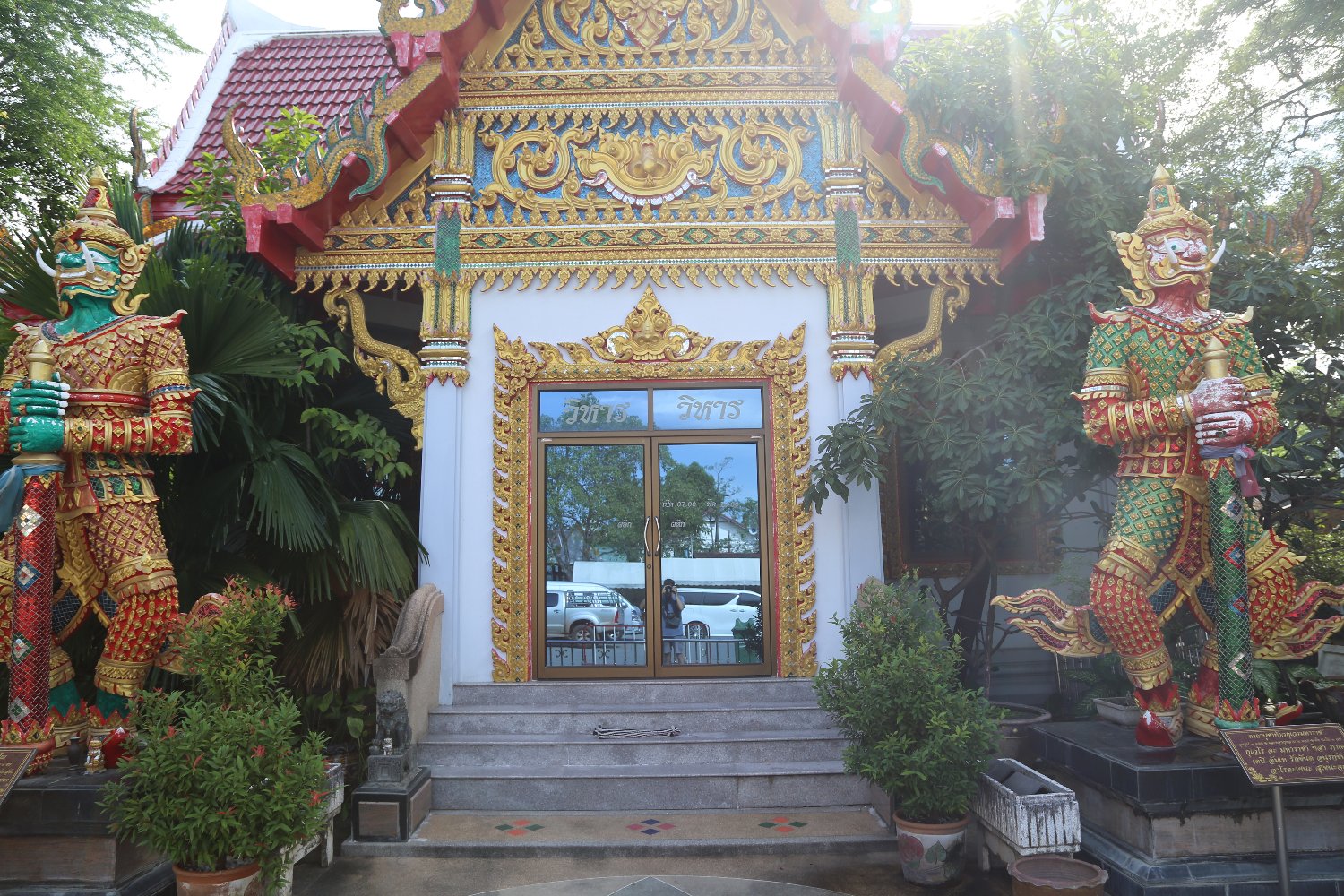

Wat Phra Si Mahathat Woramahawihan (temple of the holy relics) is a sizable temple located within about a 25-minute drive from Don Mueang Airport. Features a tall white chedi (38 meters) – visitors can enter the inside where often locals will be praying around the circular golden pagoda. Several prayer areas are also nearby with smaller statues. Also, a small park. We have seen chickens roaming parts of the grounds at times.
First built in 1941 this is a special temple because it contains relics from Lord Buddha including some soil from where he was born in India.
Located along the often very busy Phaolyothin Road. Foreigners rarely visit this particular temple – due to its far-removed location from the core of Bangkok. Due to its location near the airport, it is not uncommon to see Air Asia planes flying overhead.

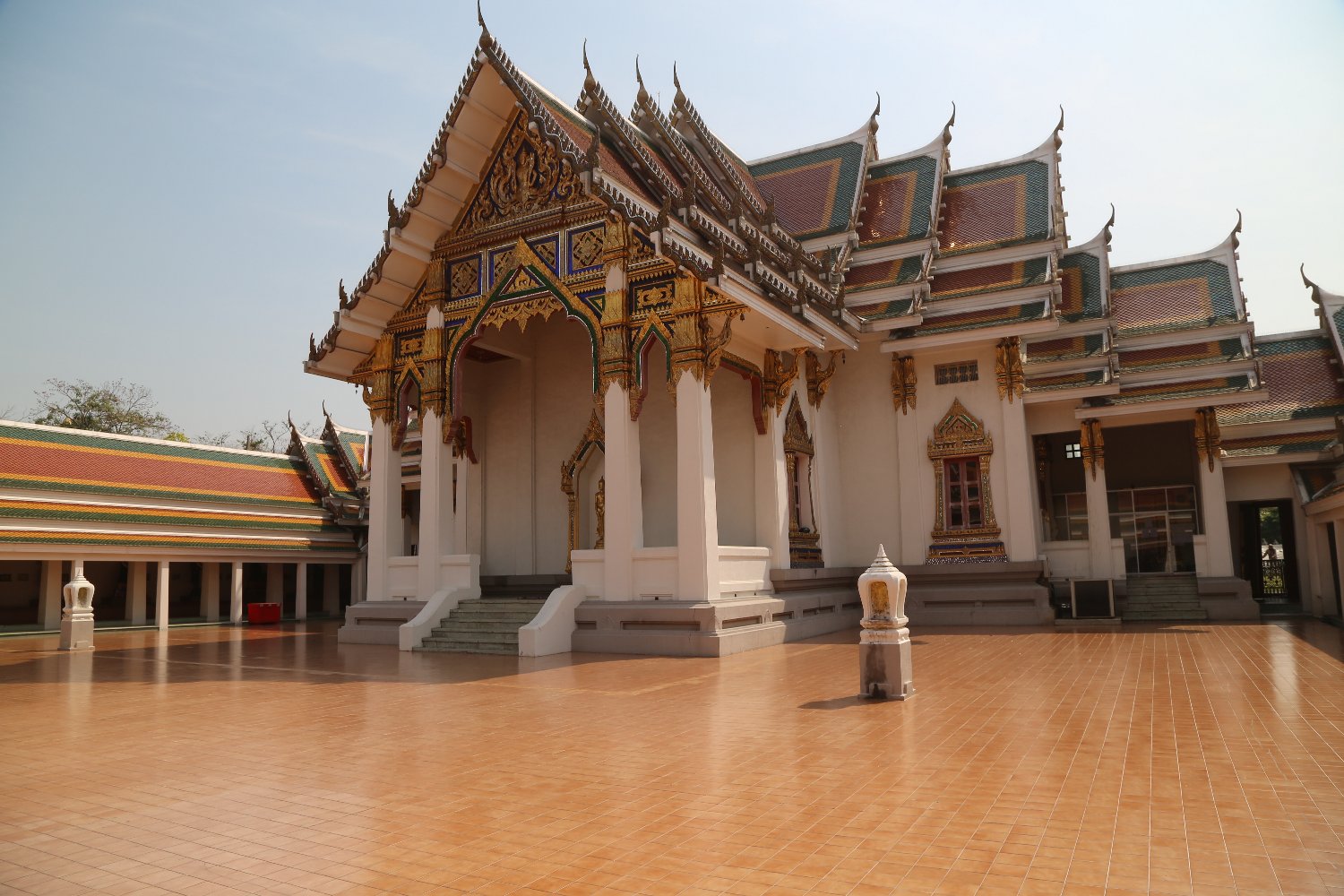


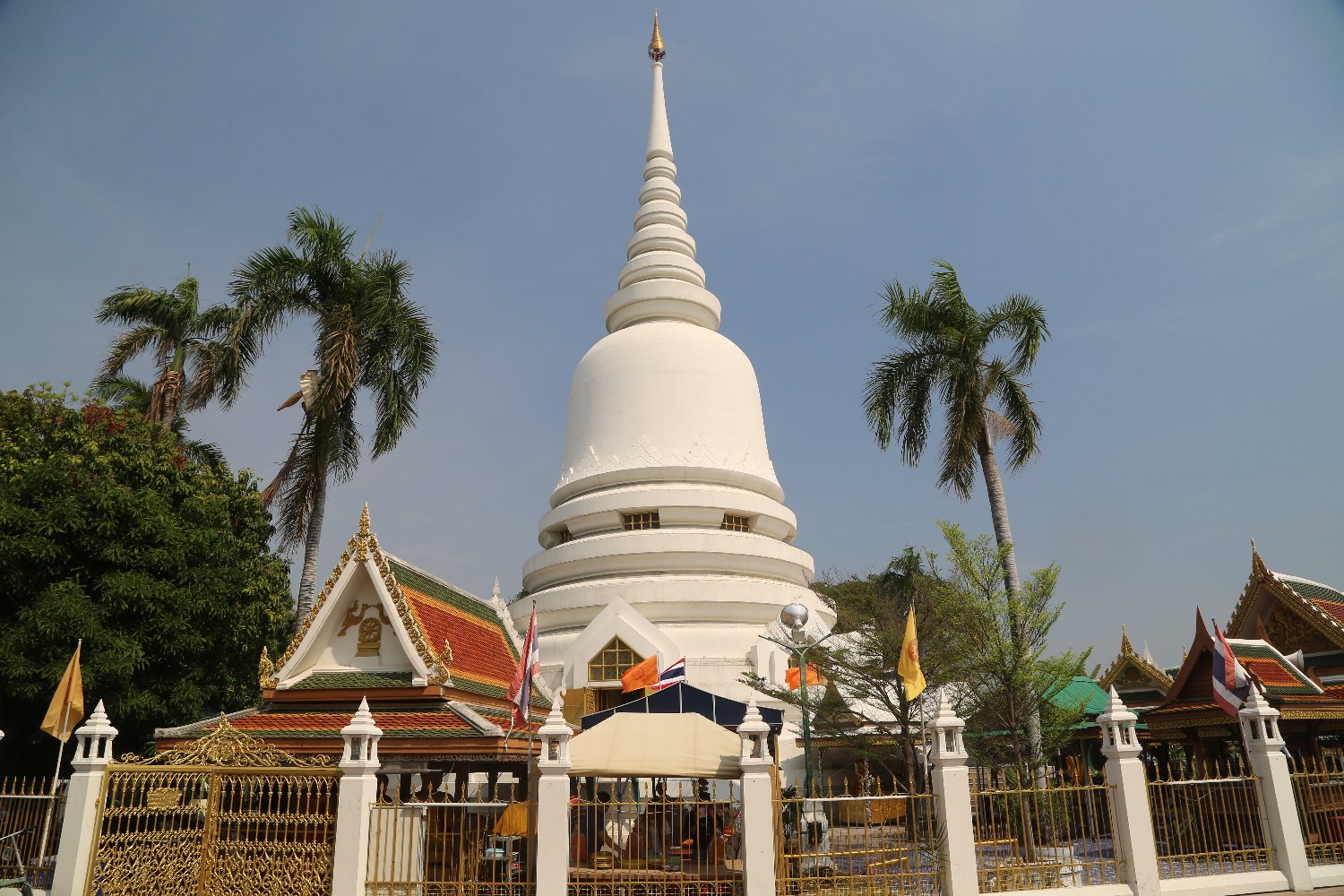


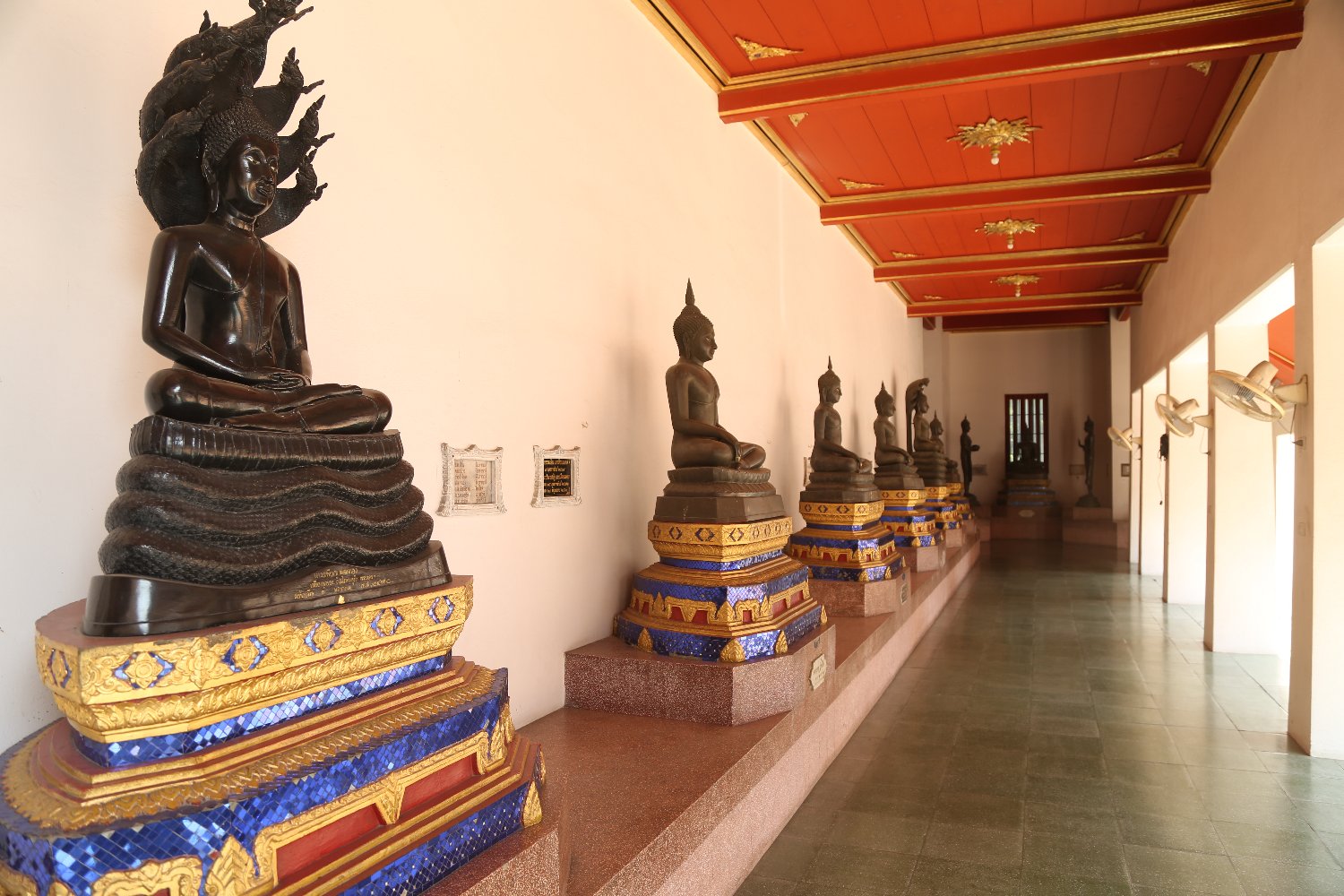

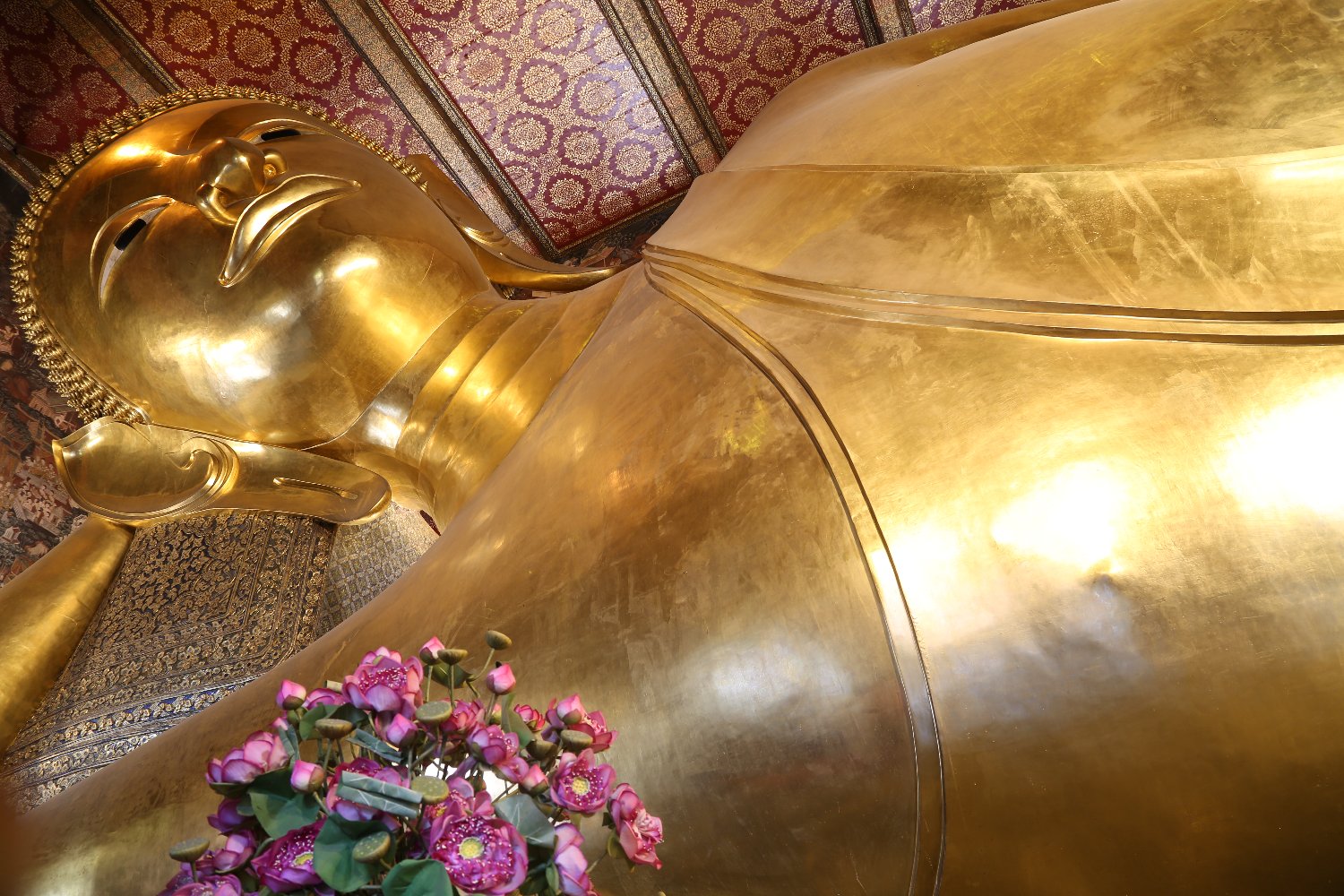
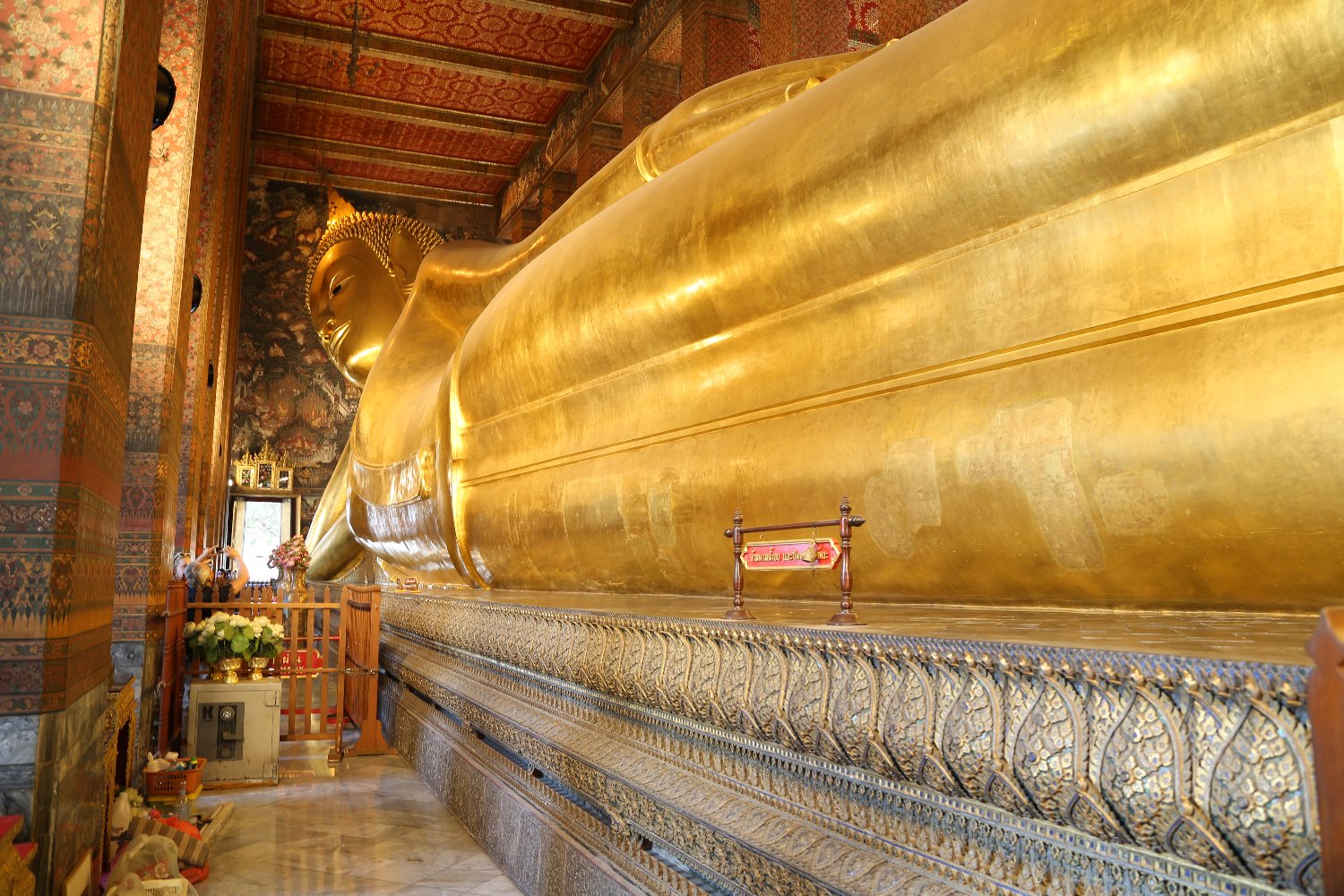
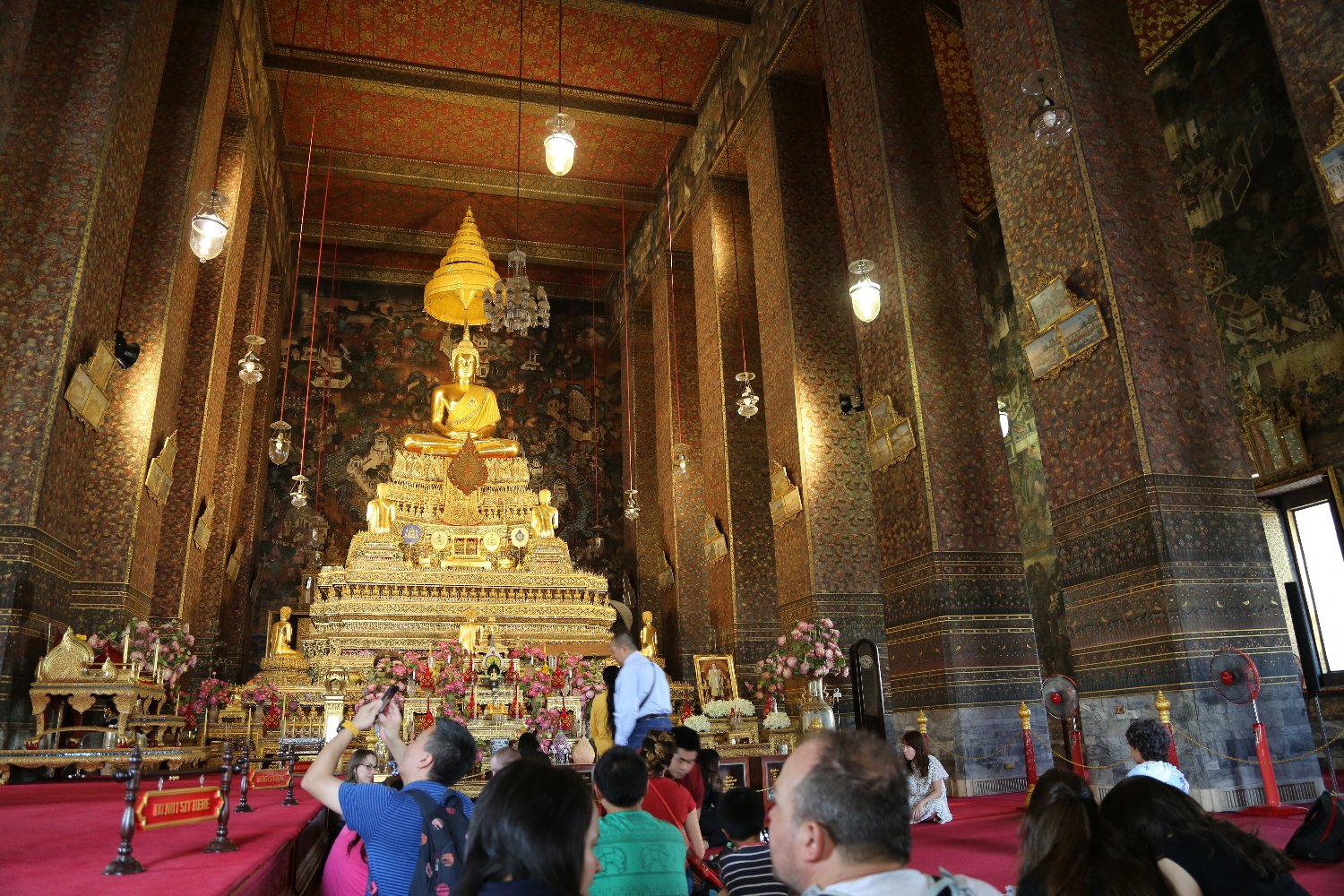
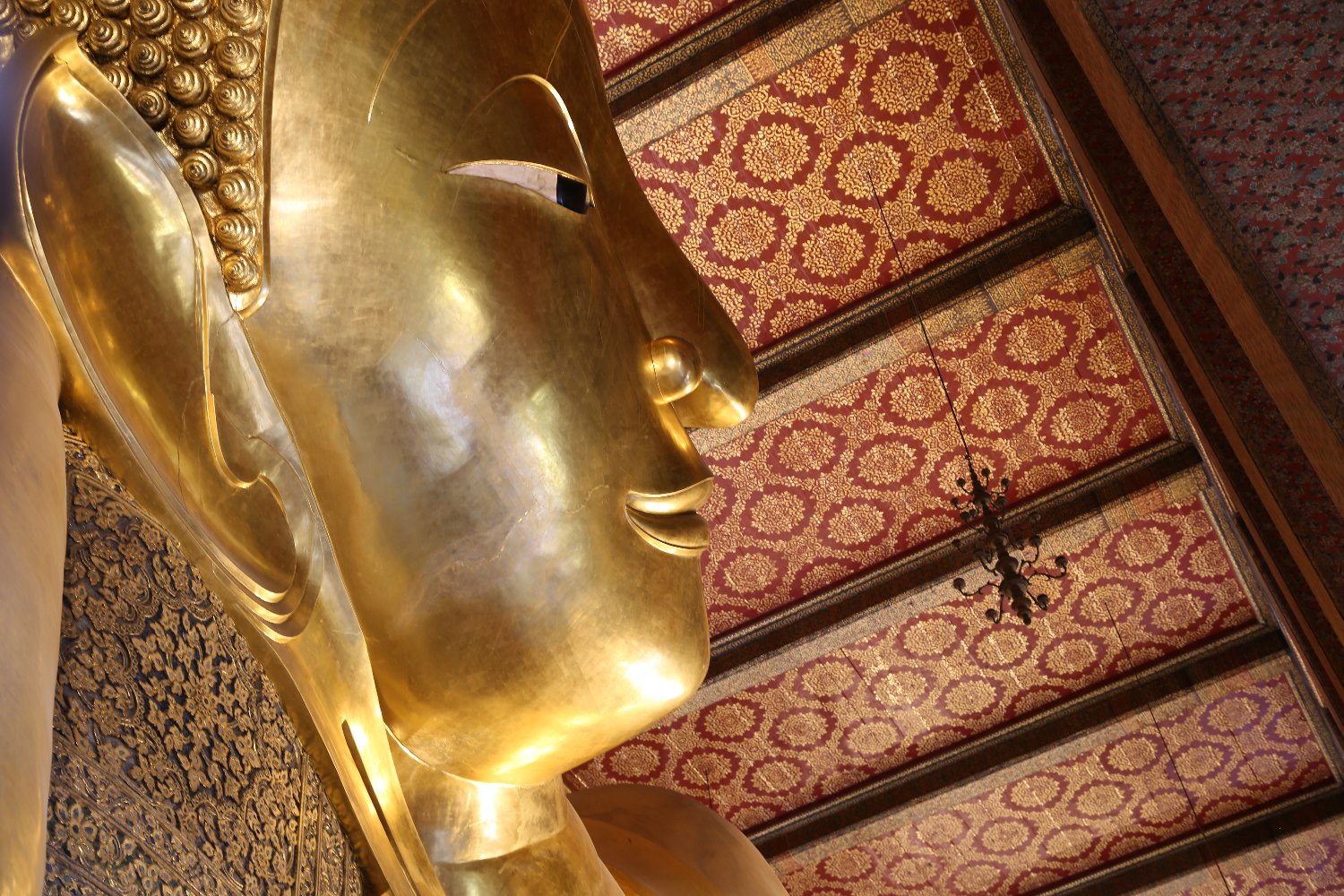 Wat Phra Chetuphon or also called by the name Wat Po is home to the reclining Buddha. This is the oldest and biggest temple in Bangkok – it is quite impressive and well worth your time to visit it (very photogenic). Unlike other temples in Bangkok, visitors must use the automated ticket machine (one small cold water is included with redemption of your ticket).
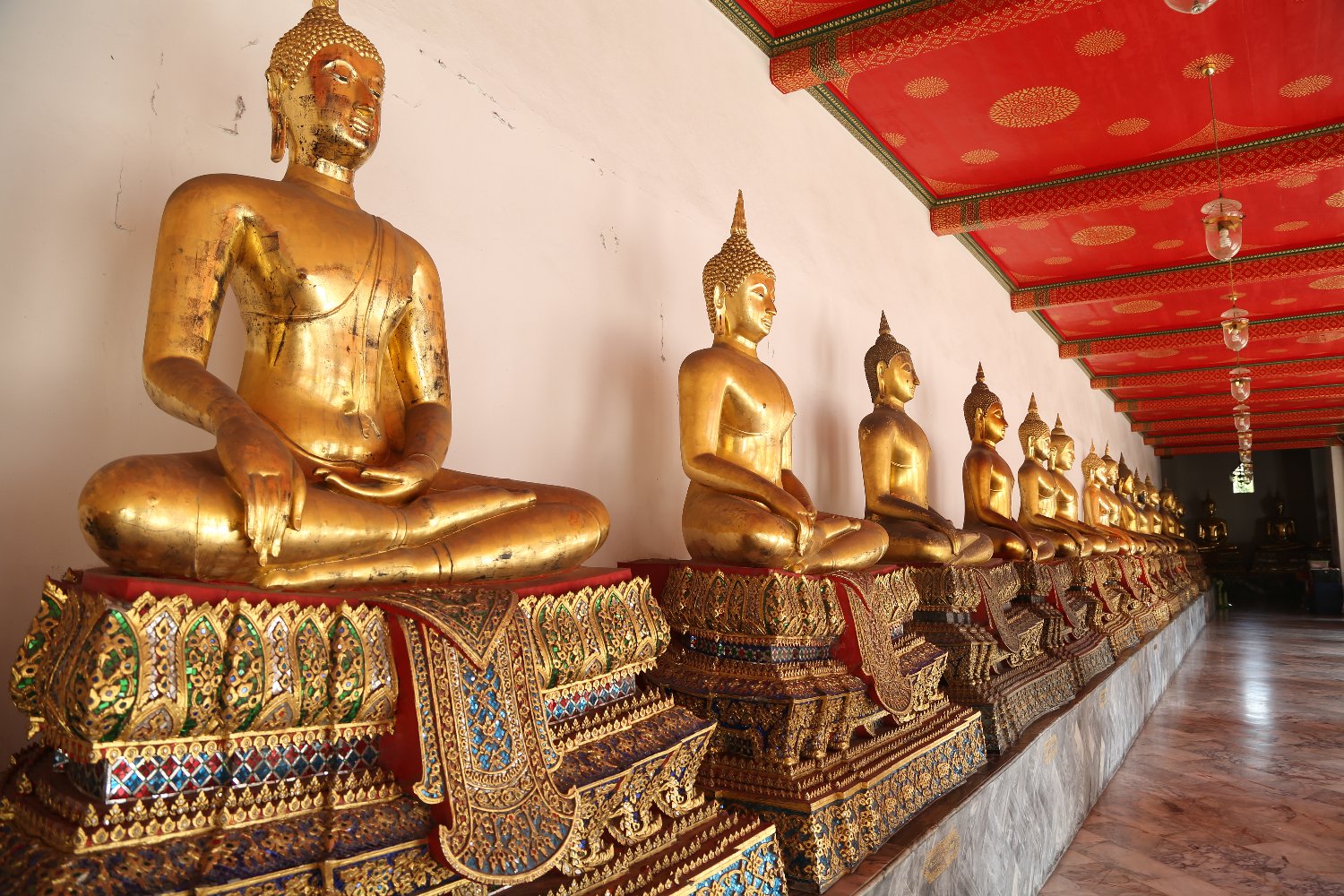
The grounds are full of colorful temples, tall spires and ornate artwork everywhere! Upon close inspection one will see colorful buildings, spires and statutes are decorated with thousands of small pieces of colored glass. Colorful paint is liberally applied to many of the statues.
The inside of Wat Po underwent a recent remodel including the reclining Buddha itself as well as the wonderful, detailed murals on the walls inside. As a result, when you visit this temple today everything is in excellent shape. This Buddha was created from concrete and bricks and is covered with a layer of real gold. The feet of the reclining Buddha are quite impressive – they are layered with mother of pearl. Also spend some time looking at all the very detailed murals on the walls as hundreds of these were painstakingly restored by very patient individuals.
 We have visited this temple many times – several times during the actual remodeling. We watched one of the workers work on a mural; it was almost too painful to watch – his progress was excruciatingly slow. Also note that if you arrive at this temple in the afternoon chances are the ticket attendants will yell at you and say “5 minutes, 5 minutes to closing” when in reality if you are there any time in the early to midafternoon you are nowhere near their closing time. We asked the guards why they say this, and they say it is to try and get people to hurry up and not wait around blocking the entrance!
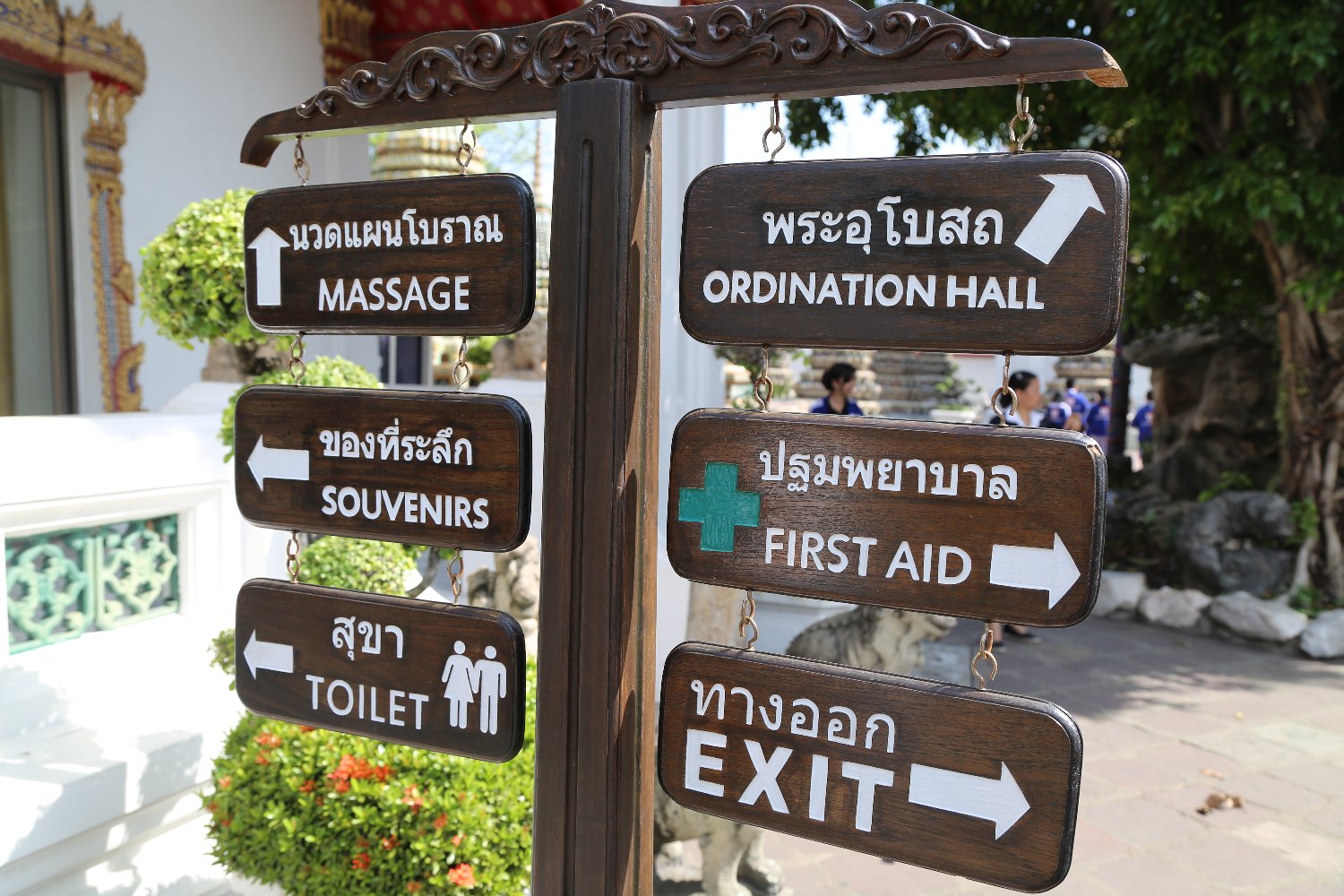
Also note, that Wat Po is famous for their massage school for both foreigners and Thais. You can come to Wat Po and pay for a massage. More information is available here: www.watpomassage.com Estimated visit time for entire temple 60 minutes.



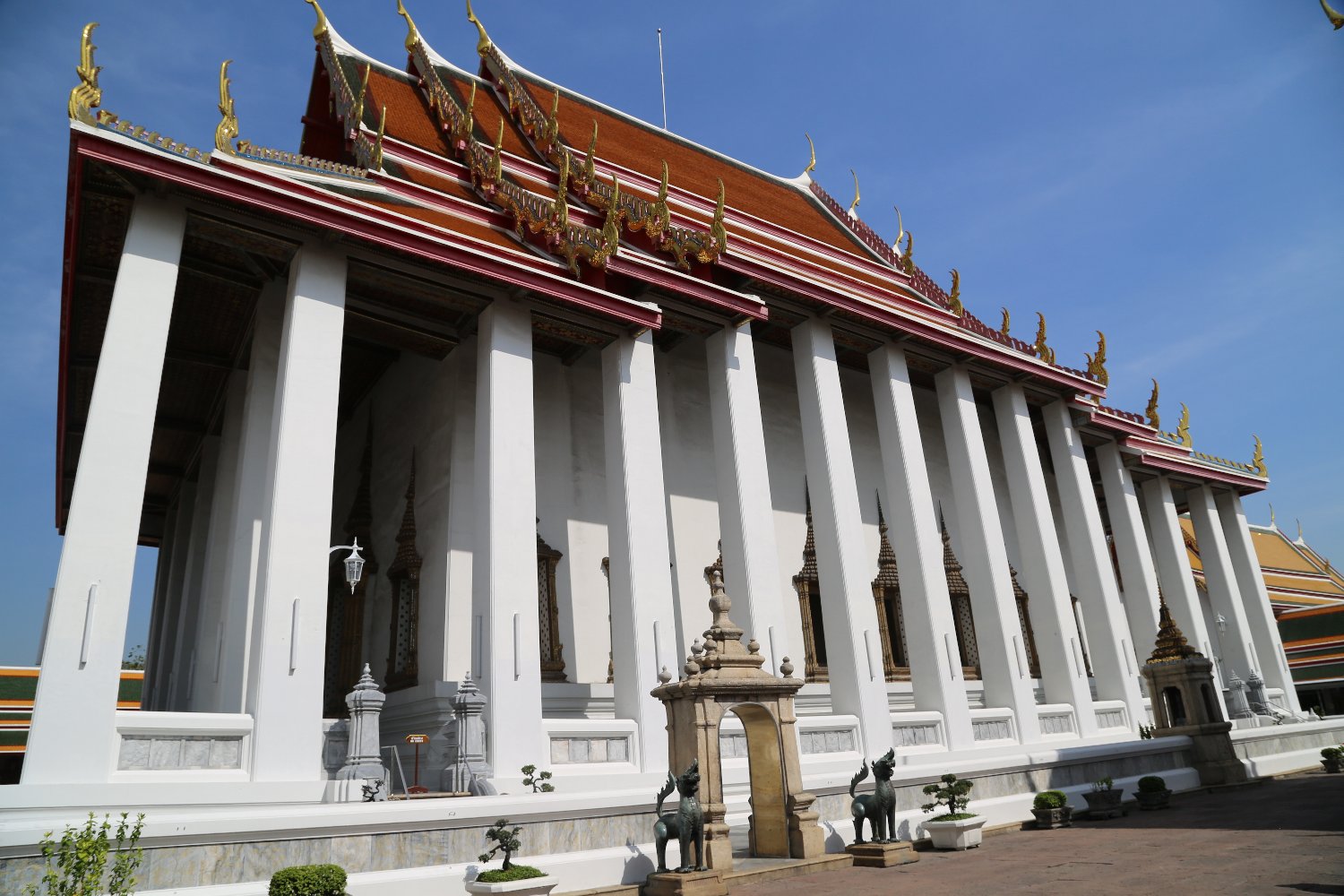



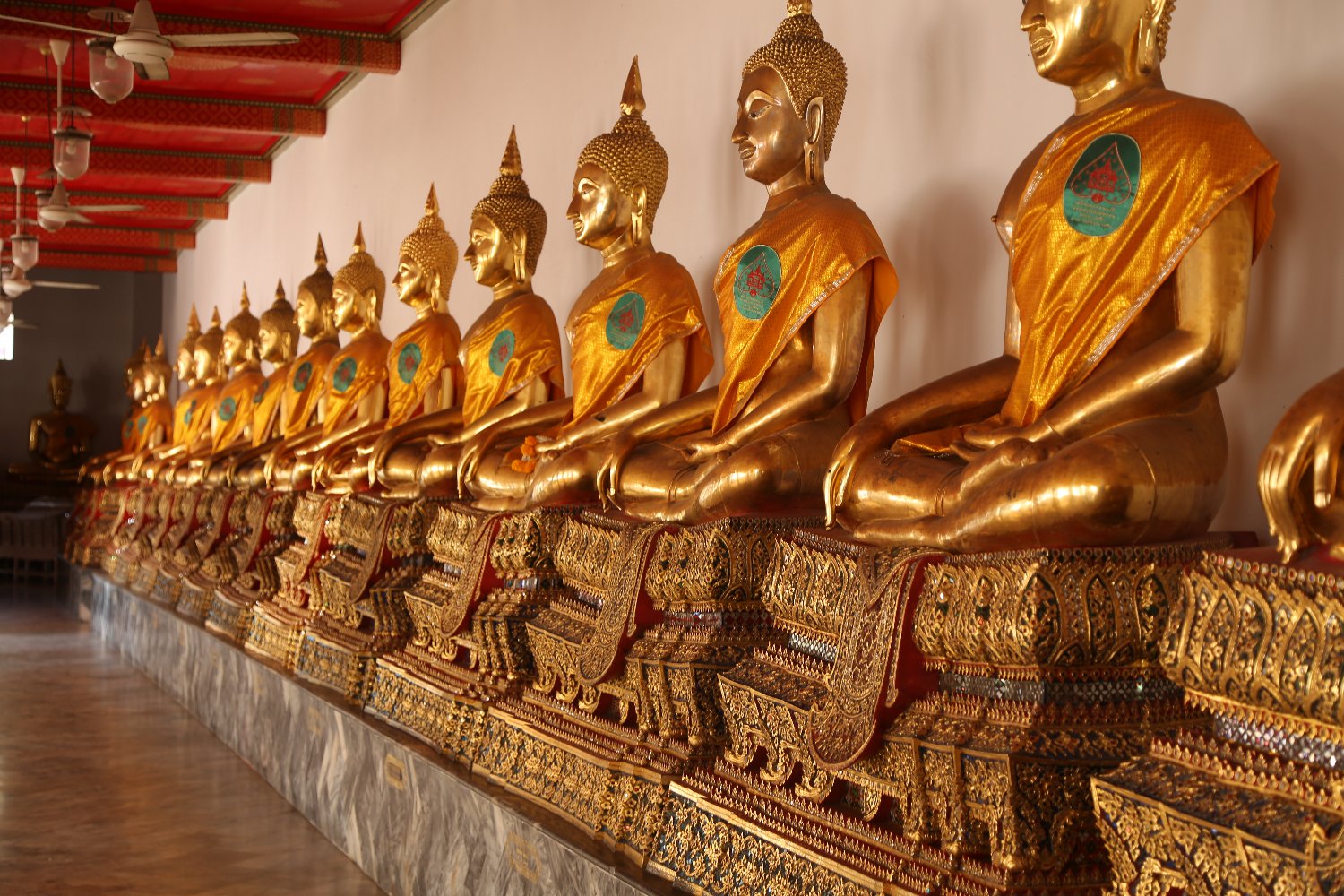

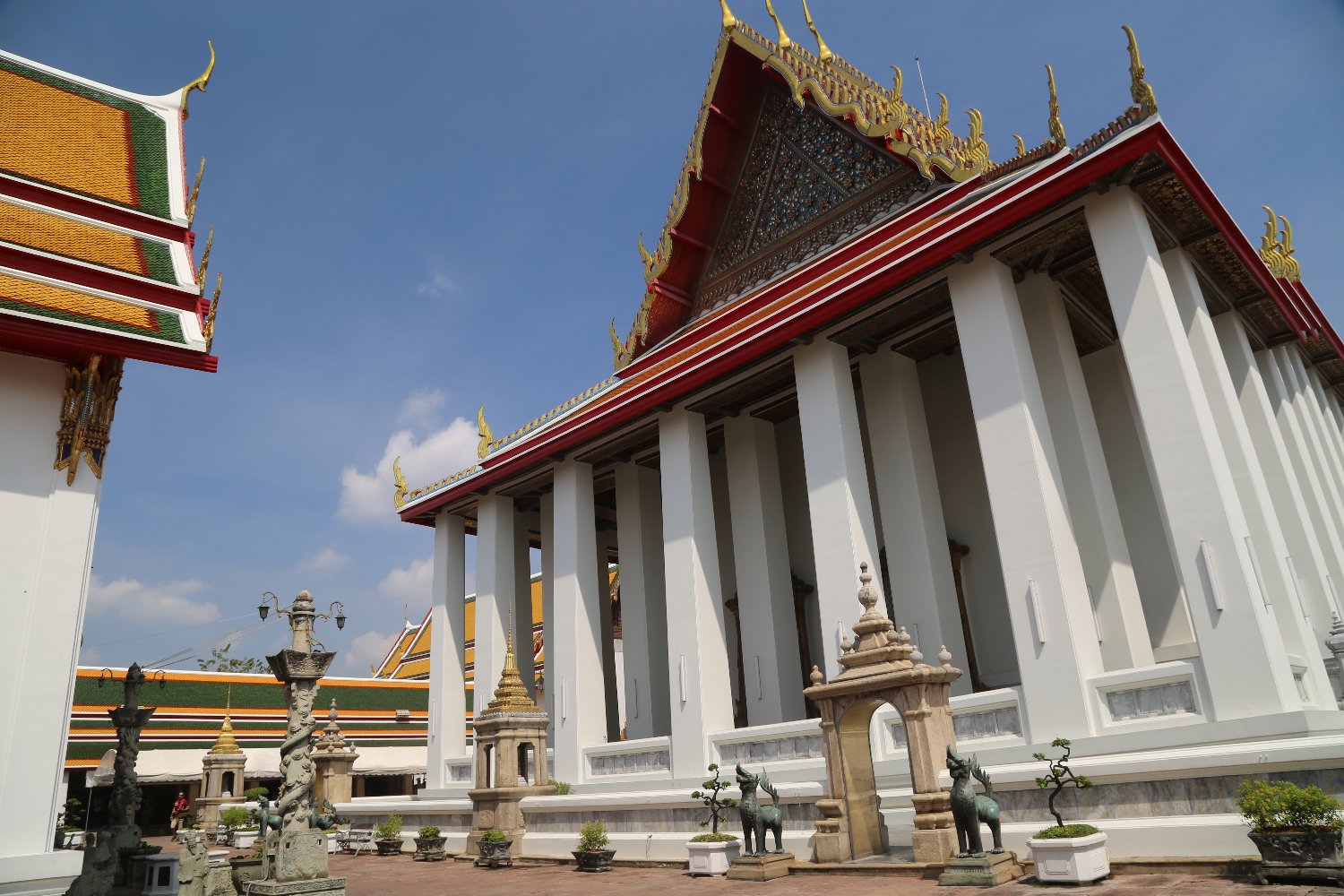
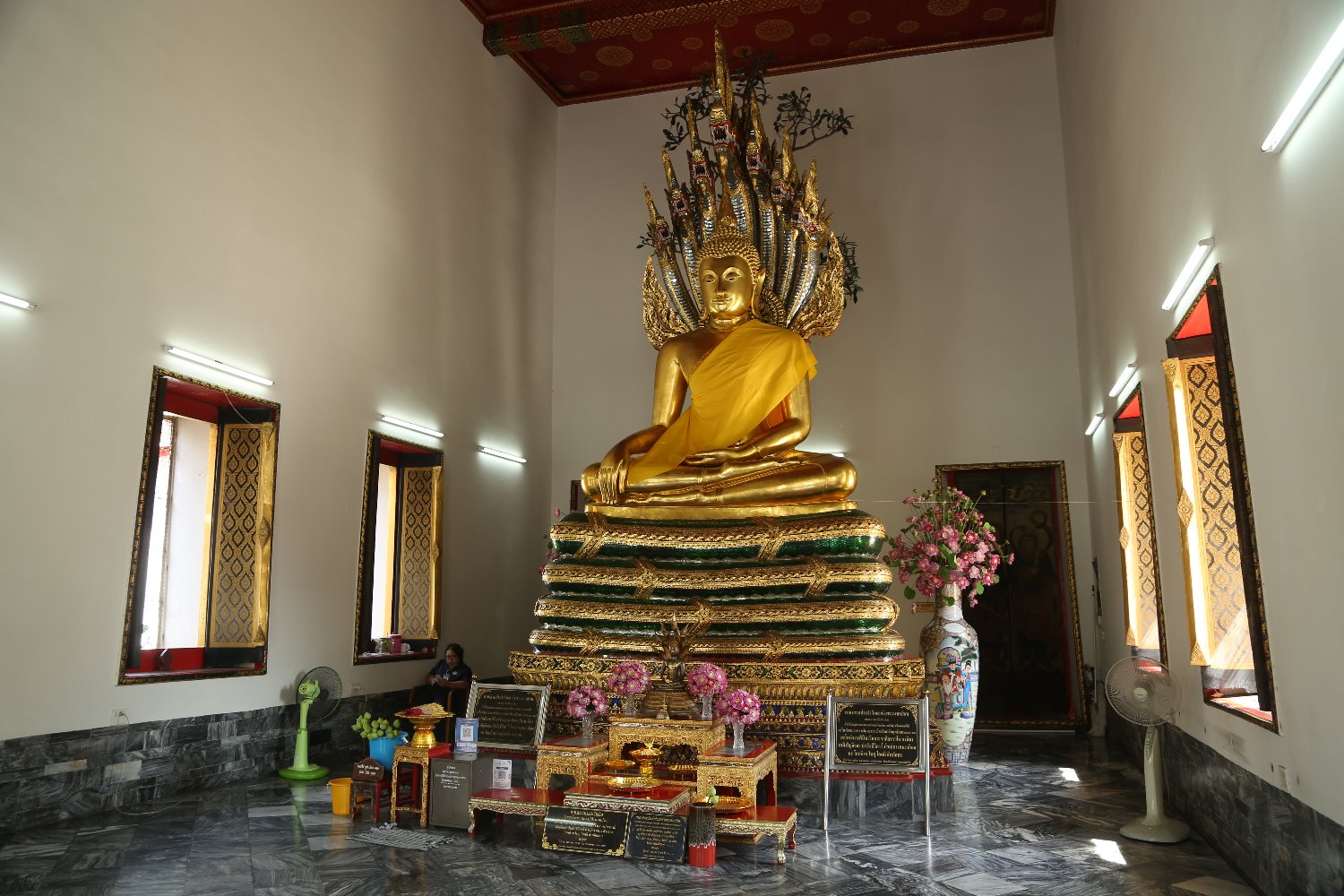
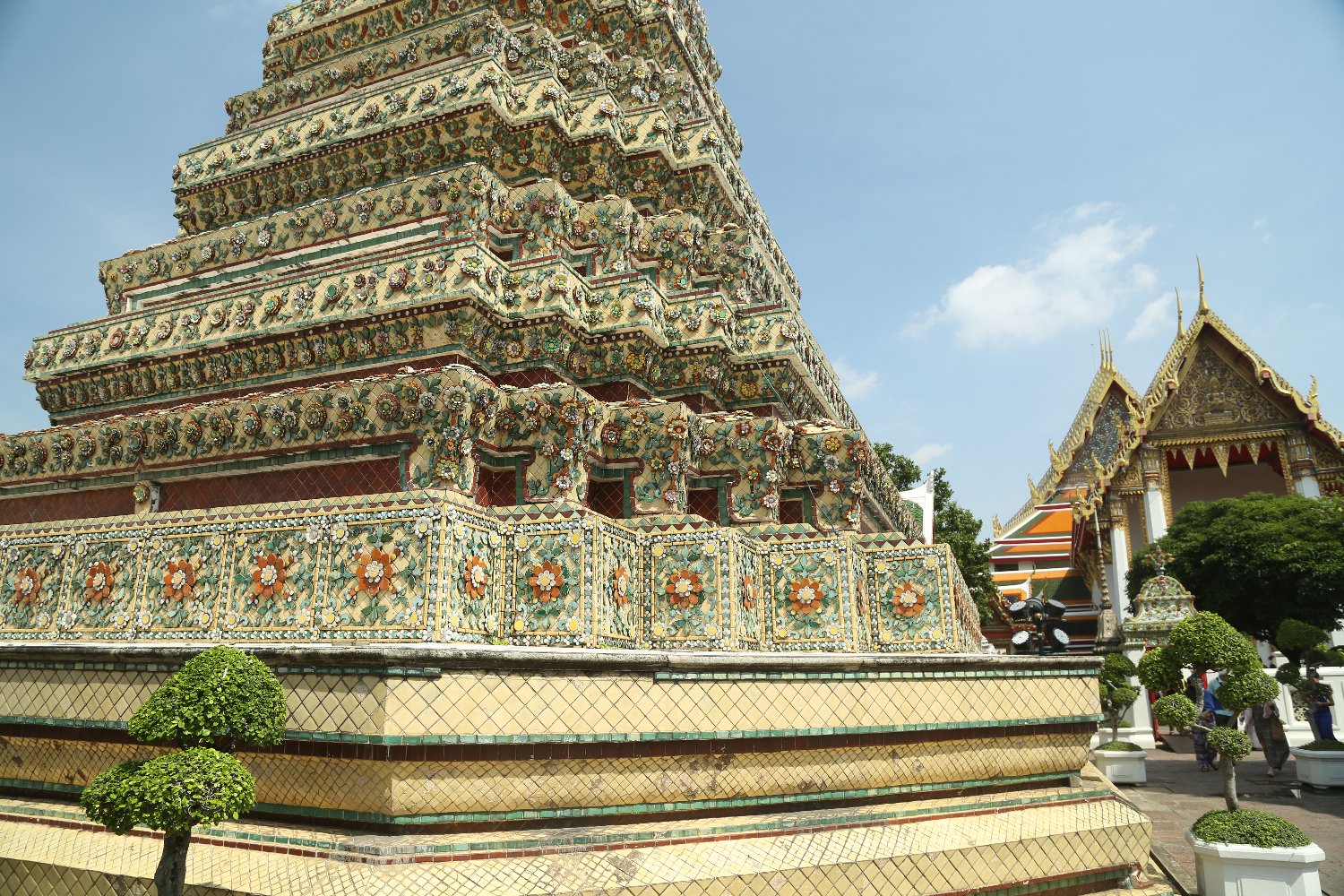
Wat Phrasri Mahathat Woramahawiharn is located in the northern reaches of Bangkok just south of Don Mueang Airport. Originally to be called Democracy Temple. But during construction in the early 1940s a military man involved took a trip to India and asked for some relics from where Buddha obtained enlightenment. The temple was later renamed to its current name.
Prominent for its gleaming white tall chedi which contains the above-mentioned relicts from Buddha. One can also walk inside this chedi if its opwn. Like at other temples, small squares in the wall contains ashes of family members (associated with this particular temple). Some have images of the dead person on the front – and sometimes you will see family members in front of these – more so on the weekends.
A well-known amulet has its origin here – the Phra Kring Saeng Chan dating from 1969. Three images on site are highly respected and are known as Luangpho Setthi Kao Na Than Chit Than Chai – those who come here to pay their respects do so with flowers, candles and incense with the intent in part to become wealthy.
Another highlight is the Bodhi tree located on an island in a small pond near the chedi. The original source wood was taken from the mahabodhi tree in Bodhgaya, India (about 6 hours from another extremely holy city, Varanasi).
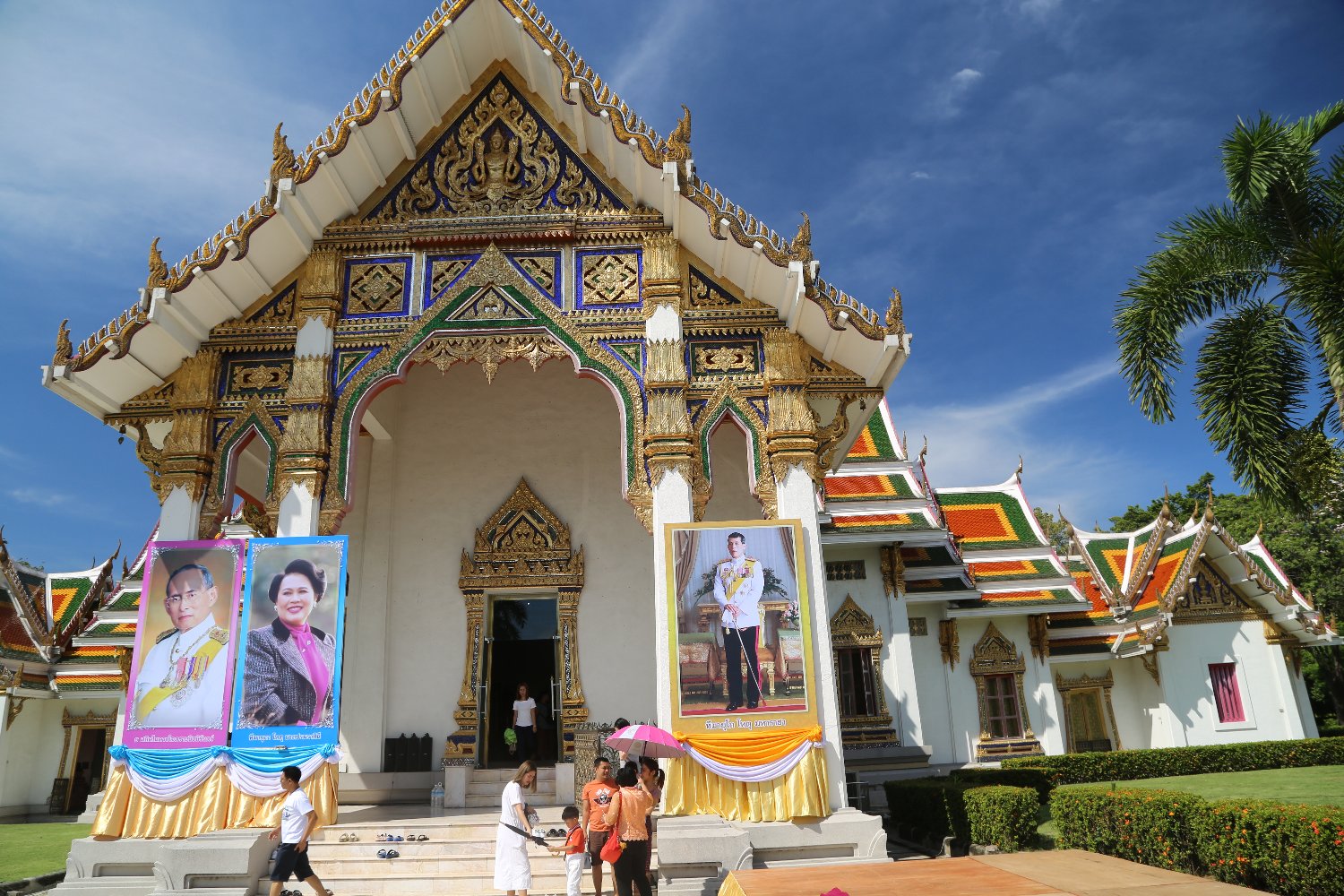
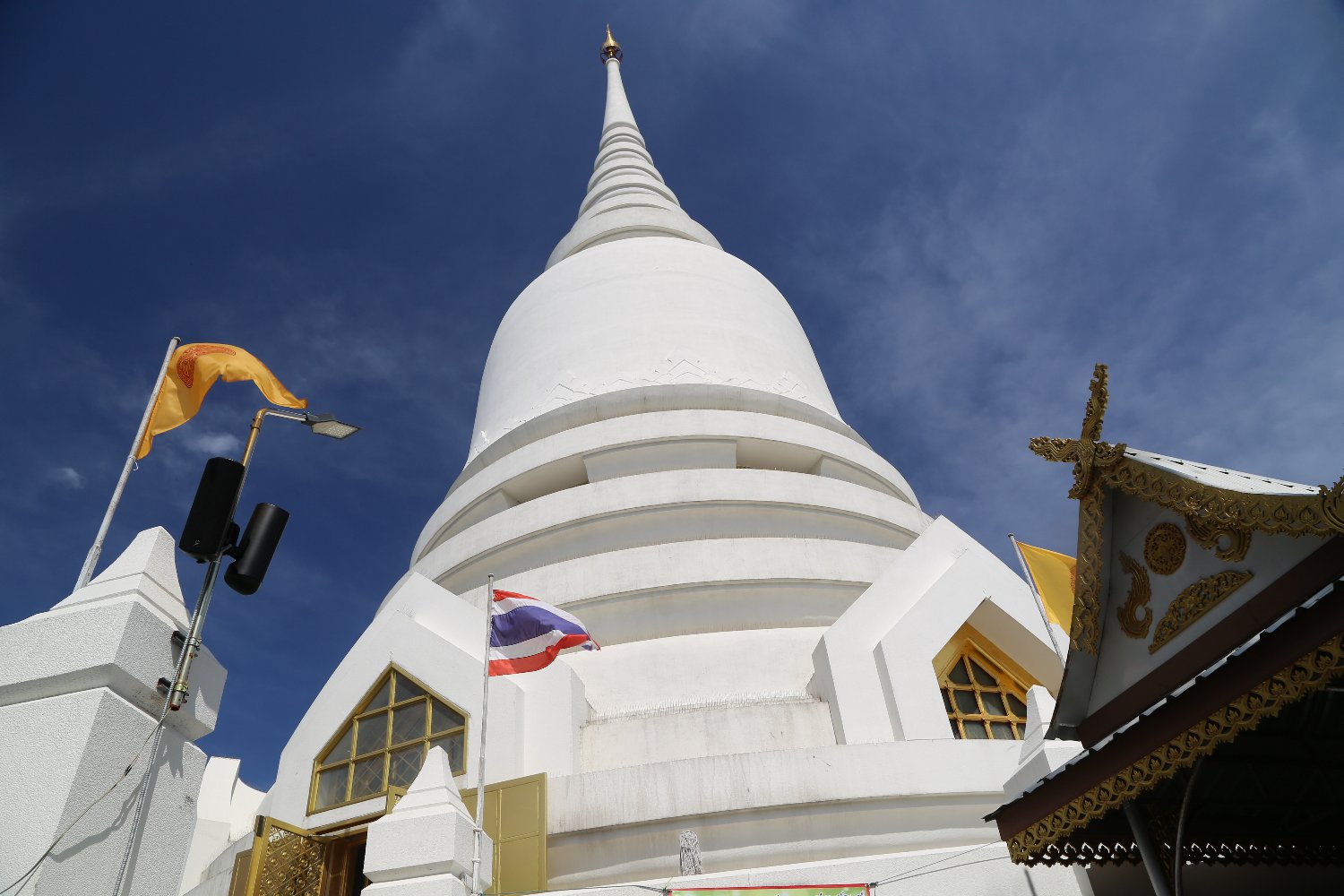
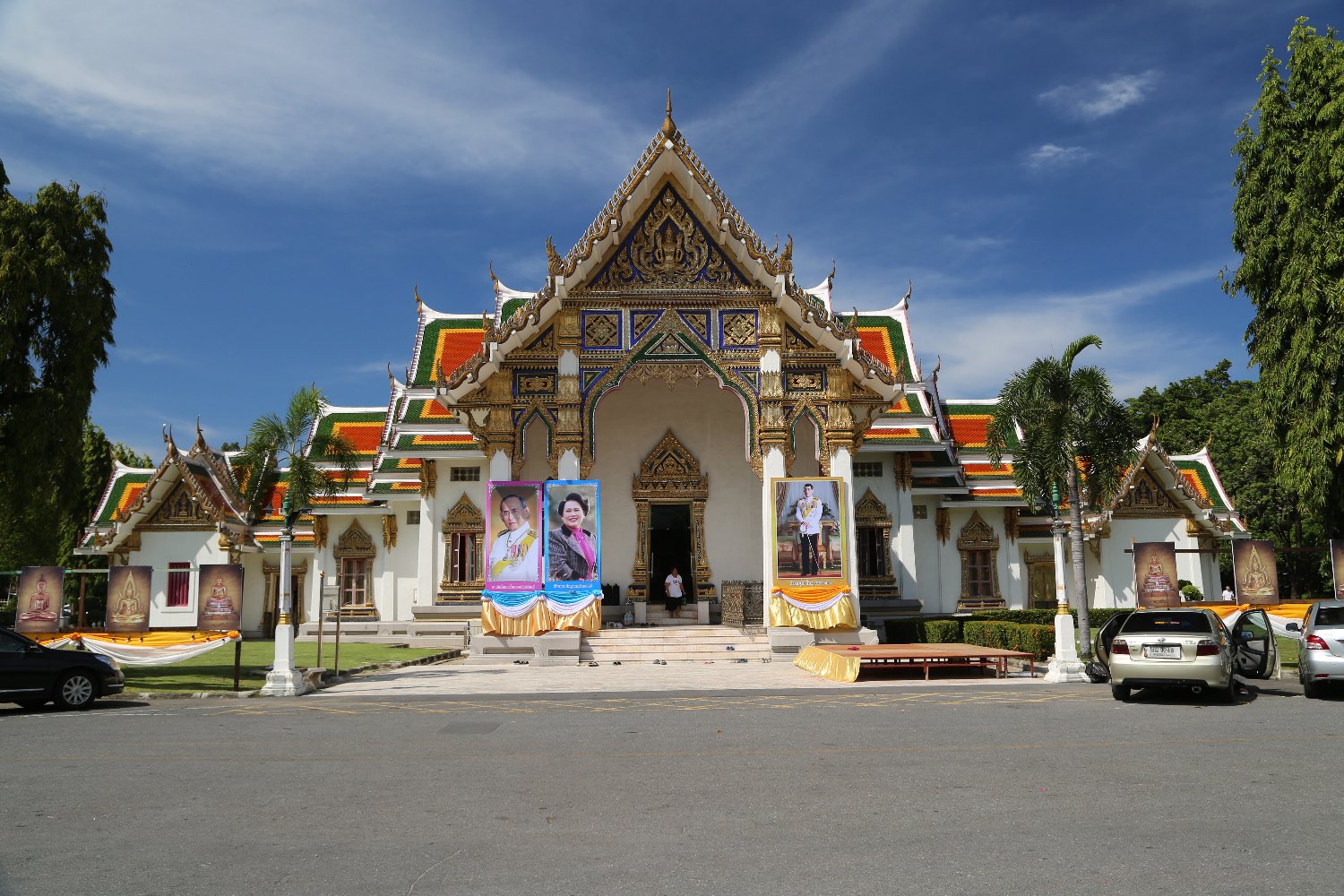
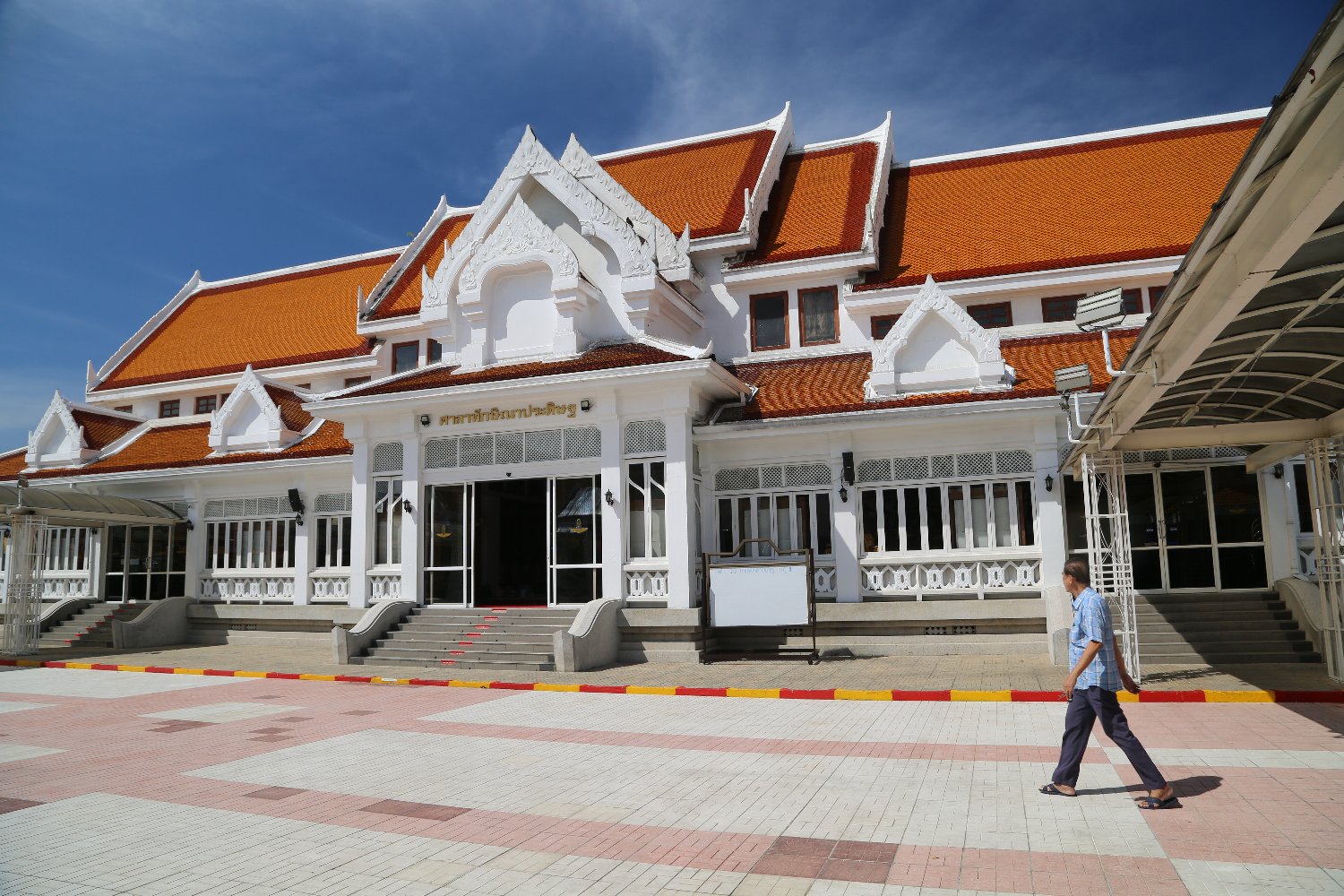
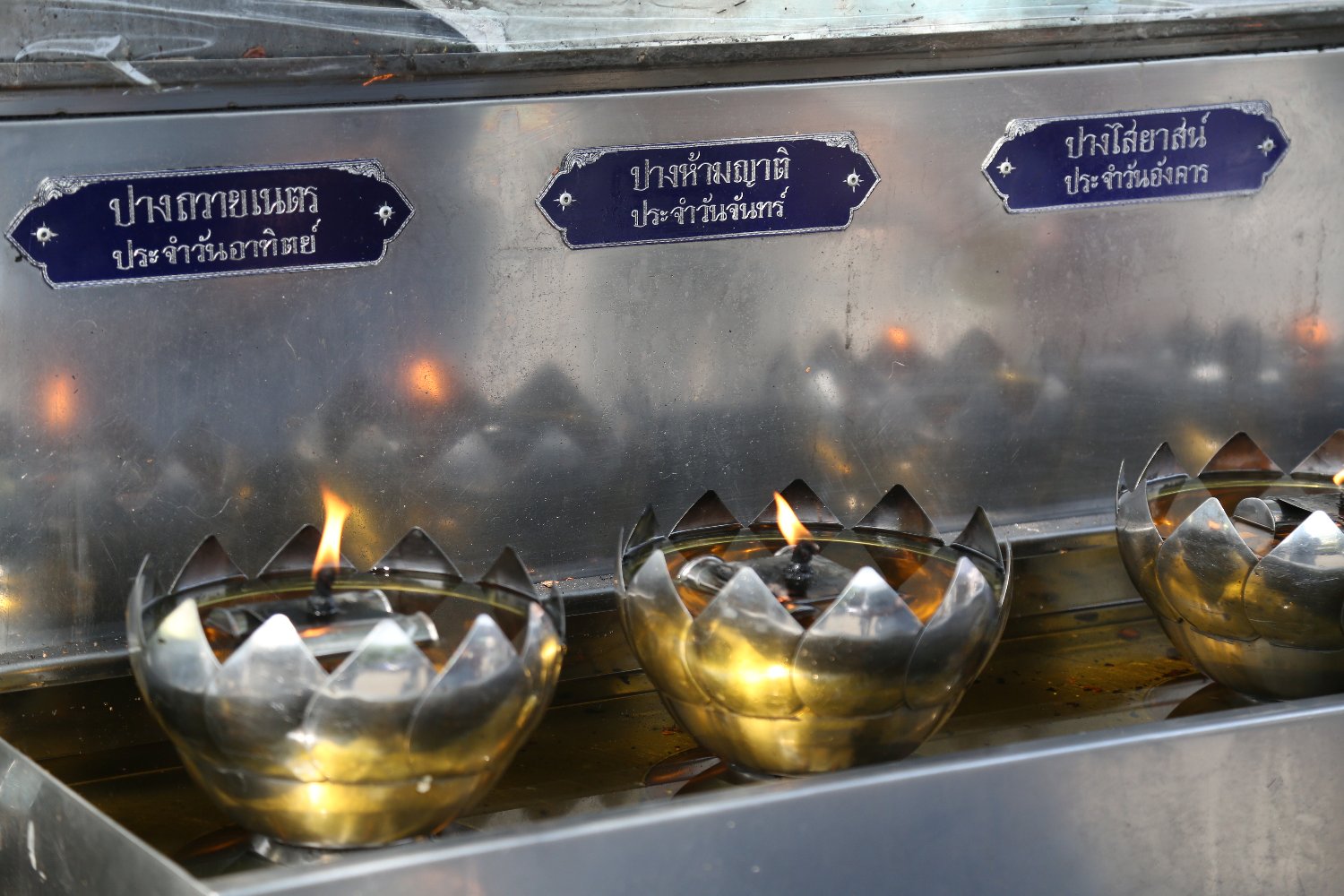
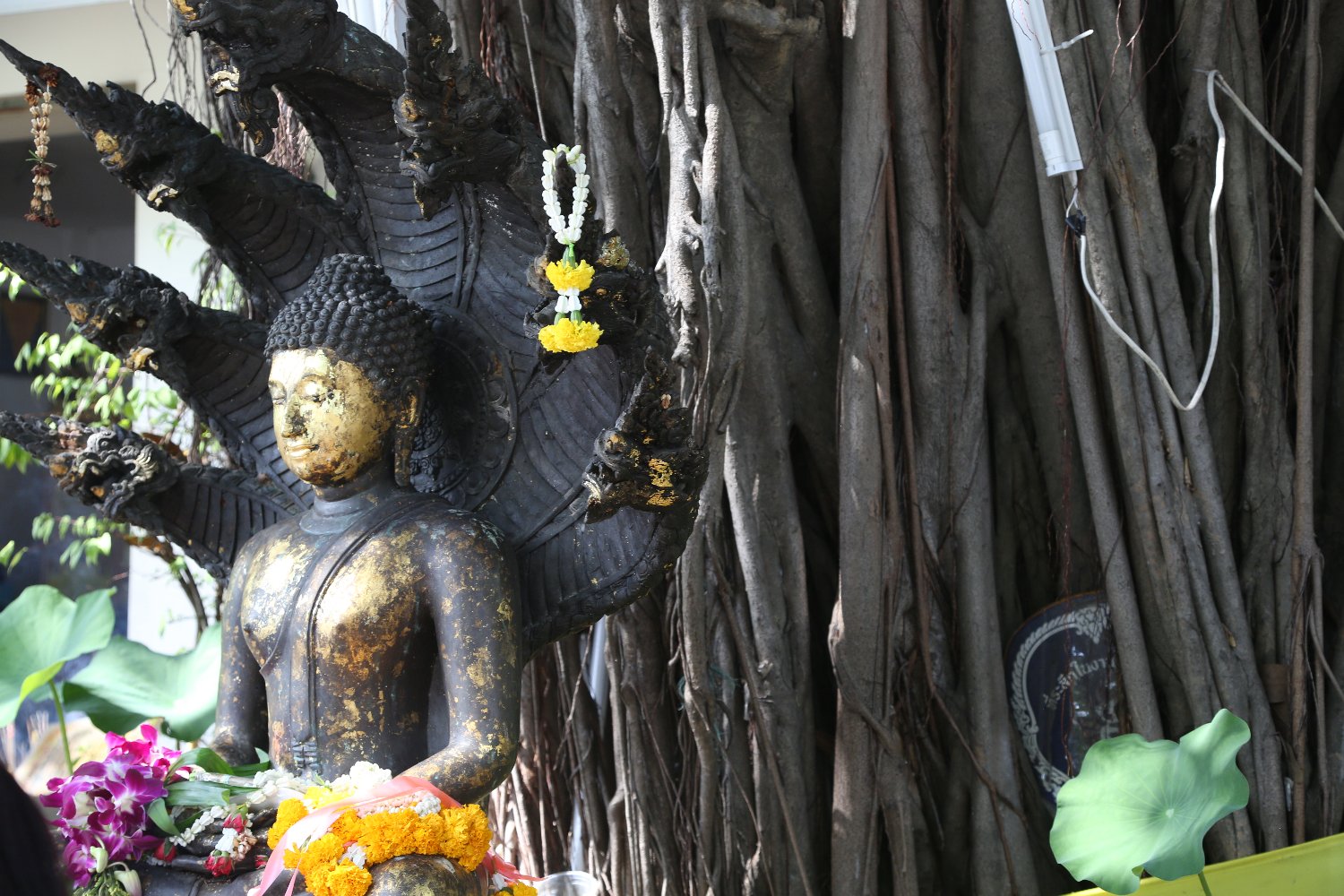
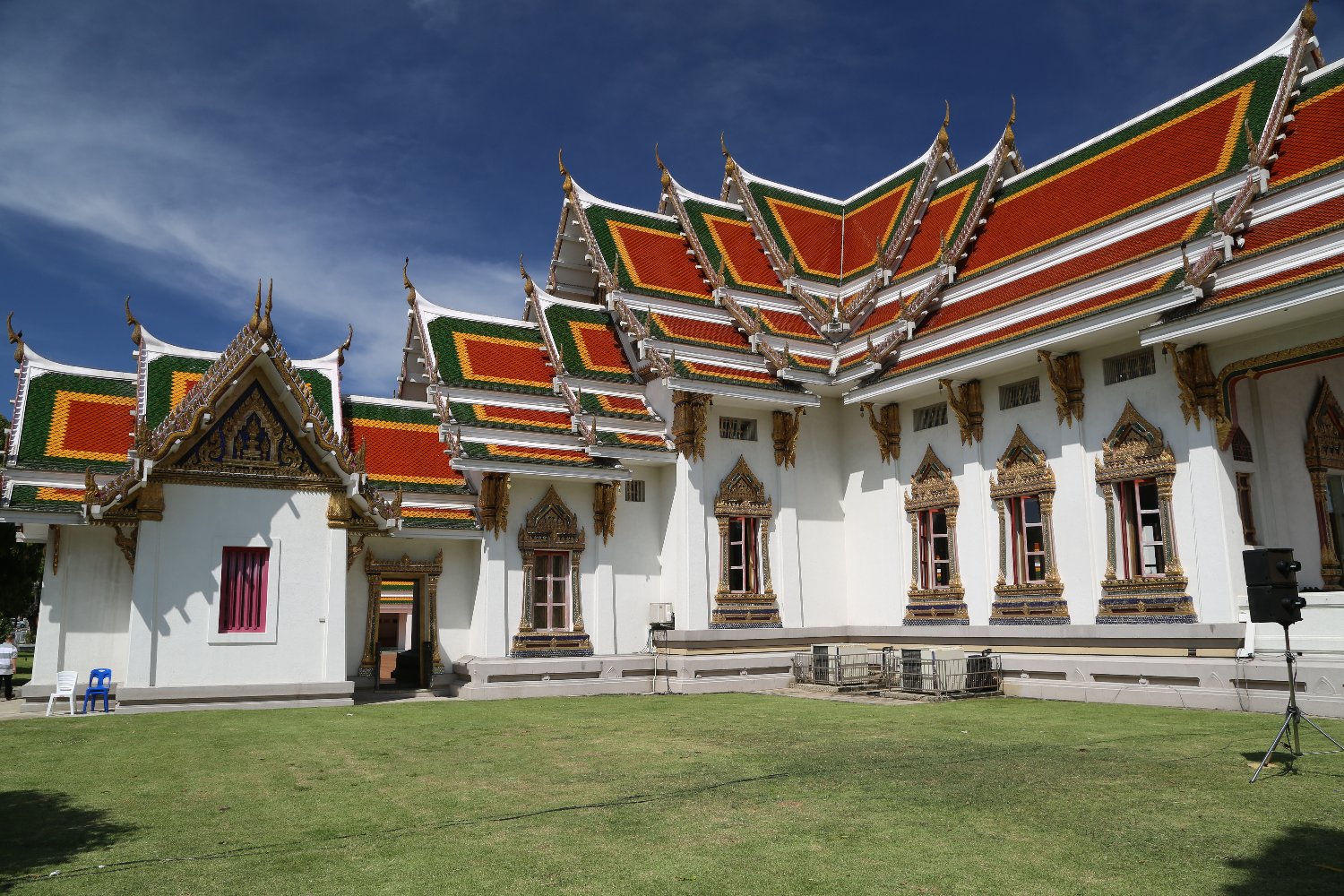
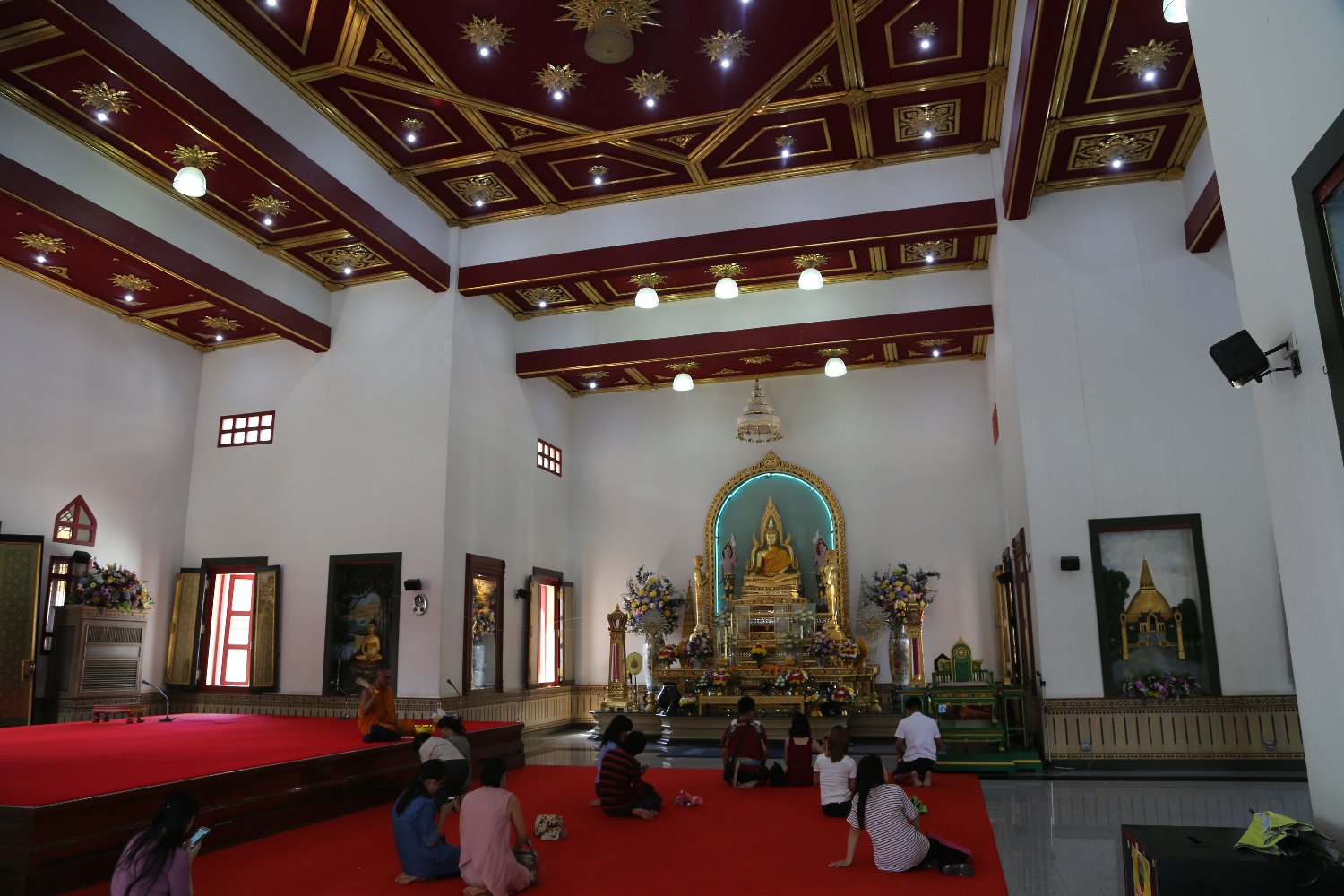
Wat Phrom Wongsa Ram is located about a 10-minute drive from the closest metro stop, Thailand Cultural Centre – or about a 30-minute walk from this same metro stop. A number of colorful statues on site and plenty of color in the exterior decorations. Also, a mini reclining Buddha – a tiny one compared to the giant one at Wat Po.
Also known as Luang Pho Nen Temple. A Buddhist teaching school is located on sites serving the local communities including the Din Daeng district.
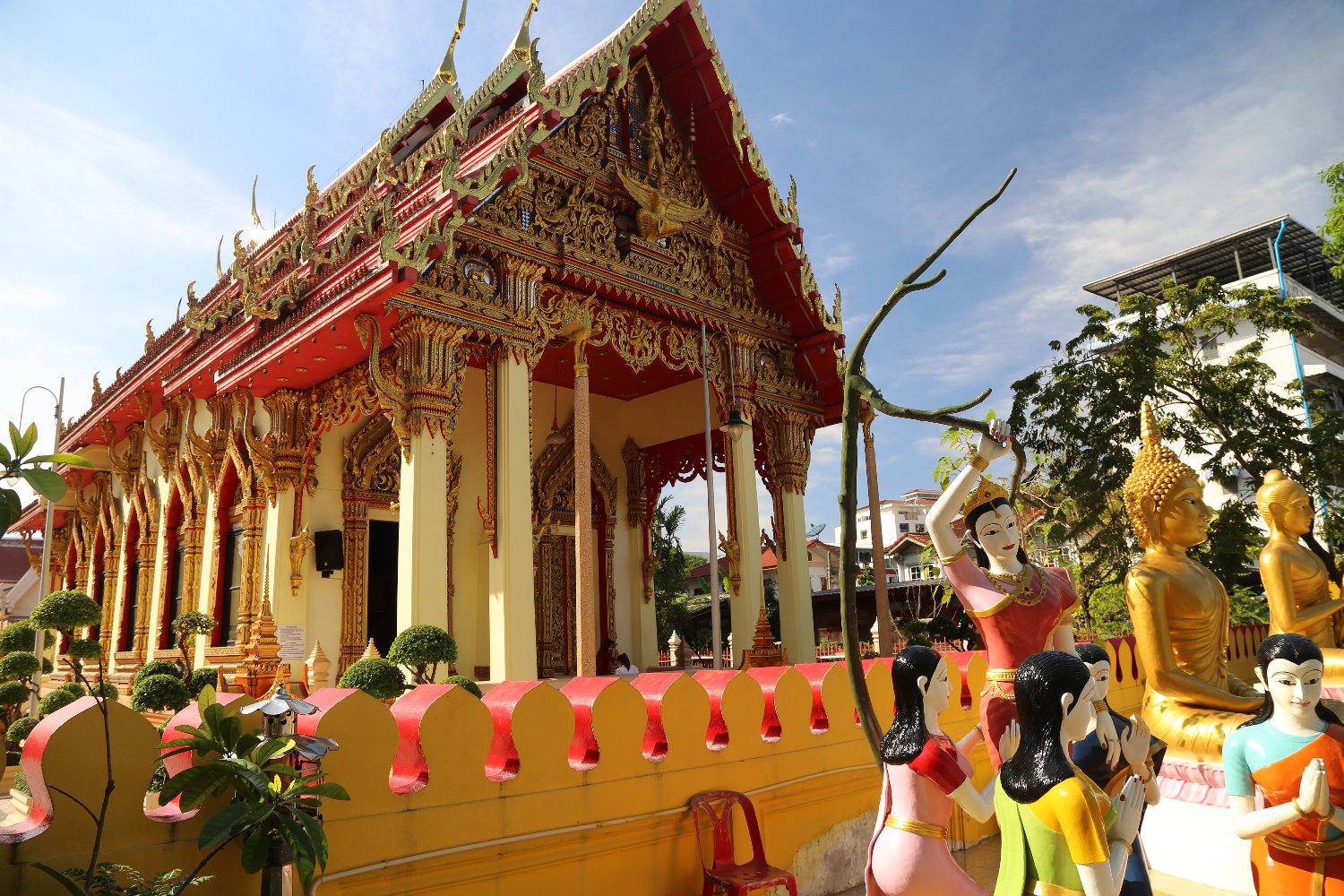
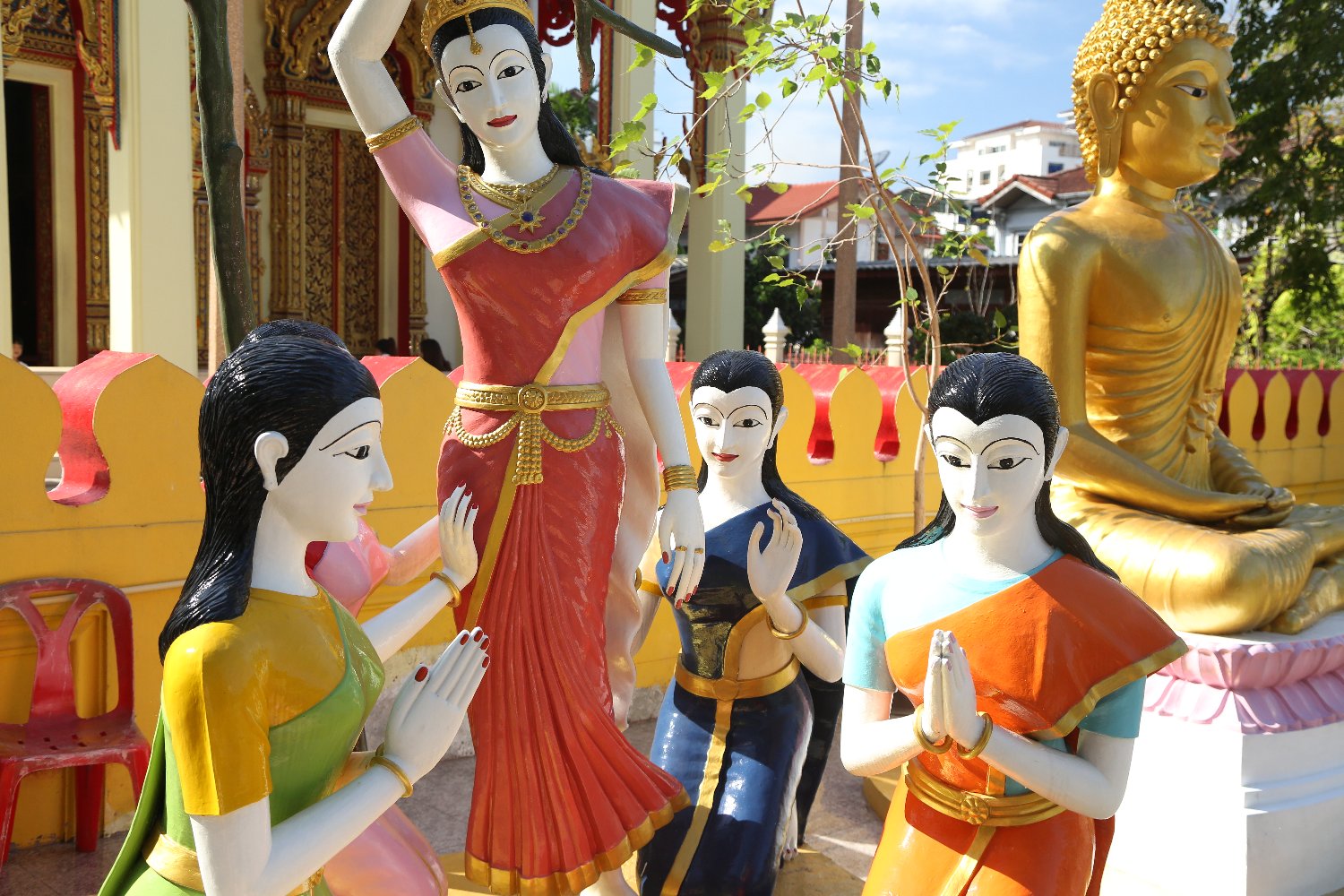


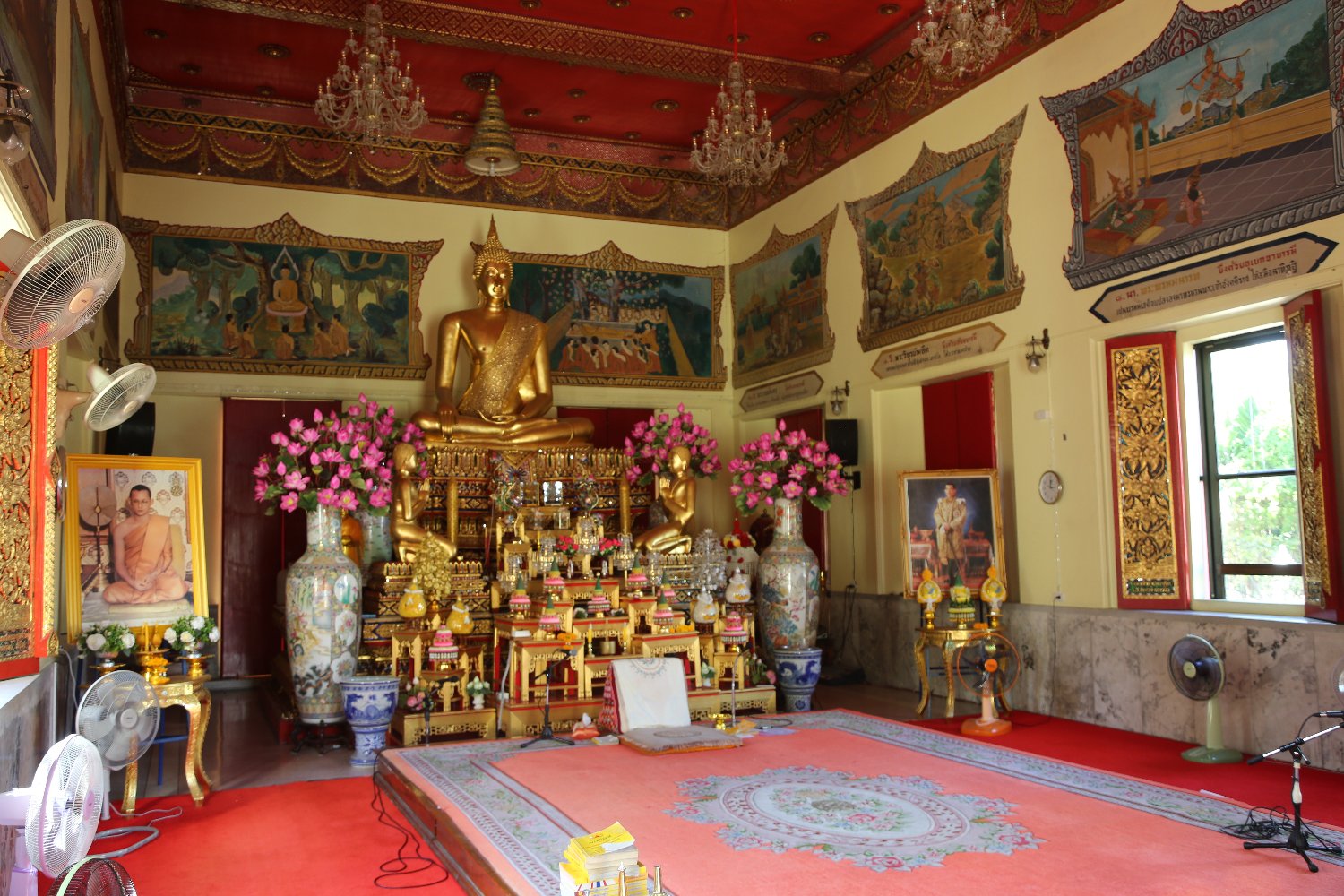
Wat Pradu Chim Phli is a small temple located near the Bangkok Yai canal (located within a short walk of the much larger more popular Wat Paknam Phasi Charoen). Home to former abbot “Luang Pu Toh” a much-respected monk. A temple known for its amulets. A fairly tall golden Buddha statue is contained within one of the halls.
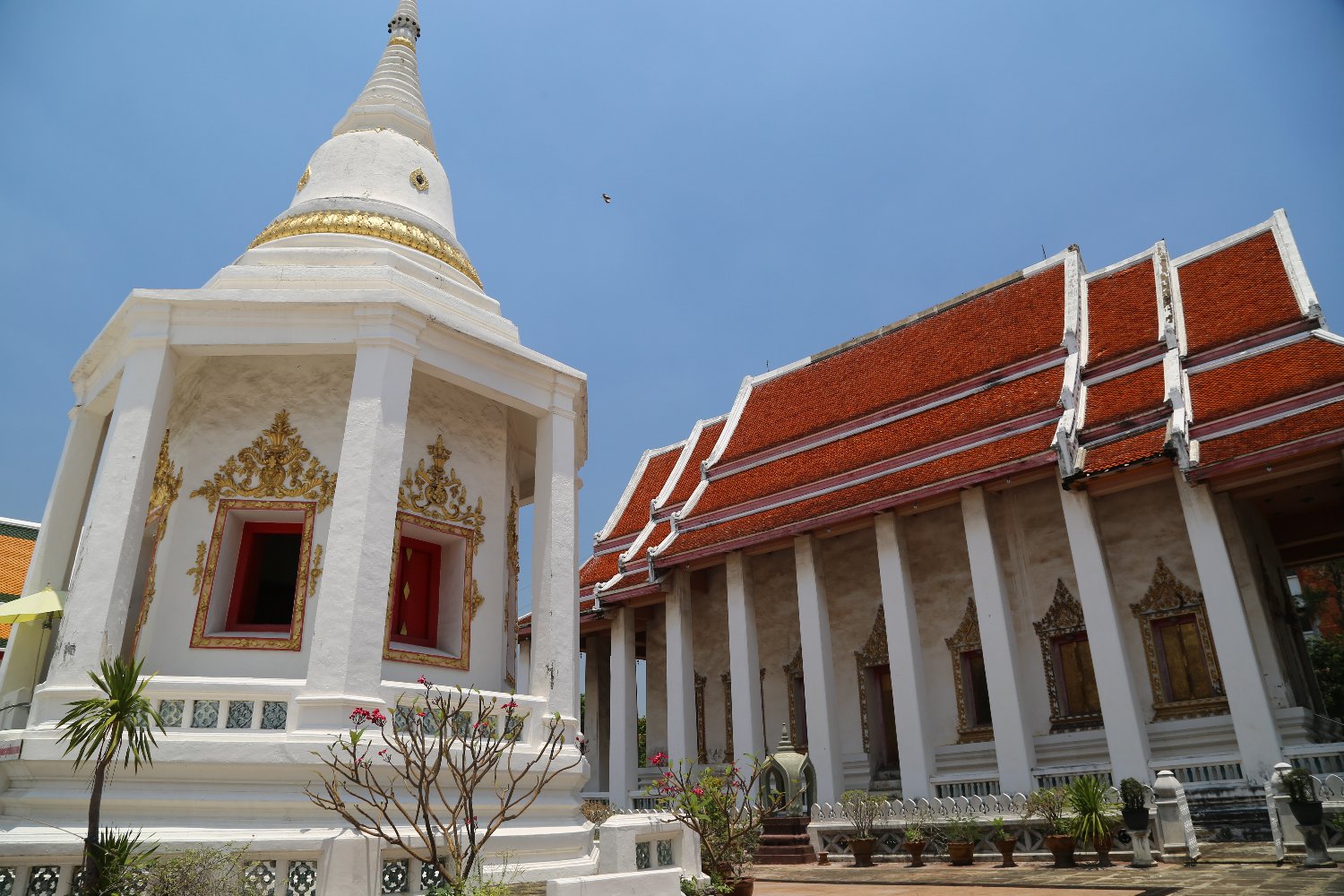
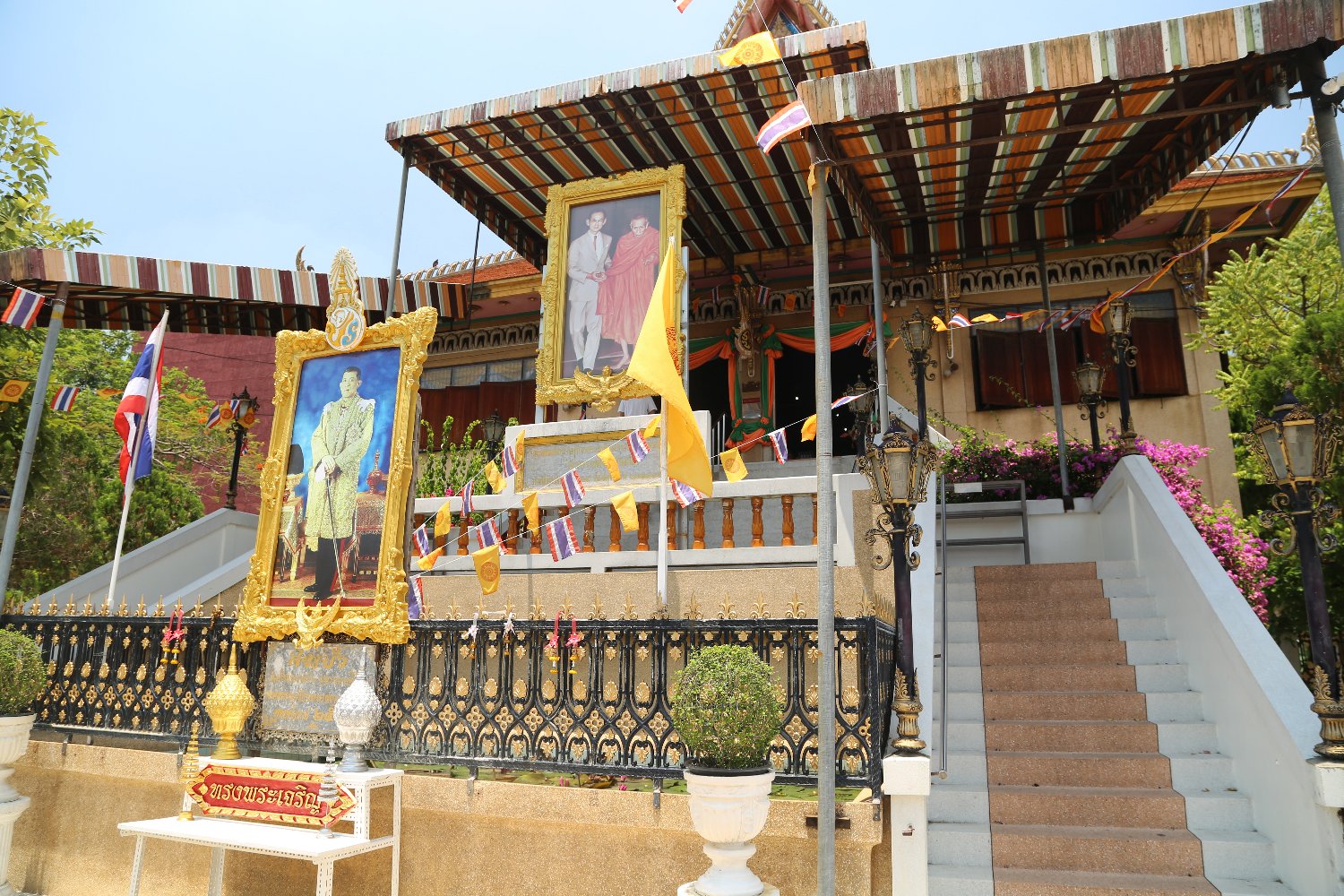
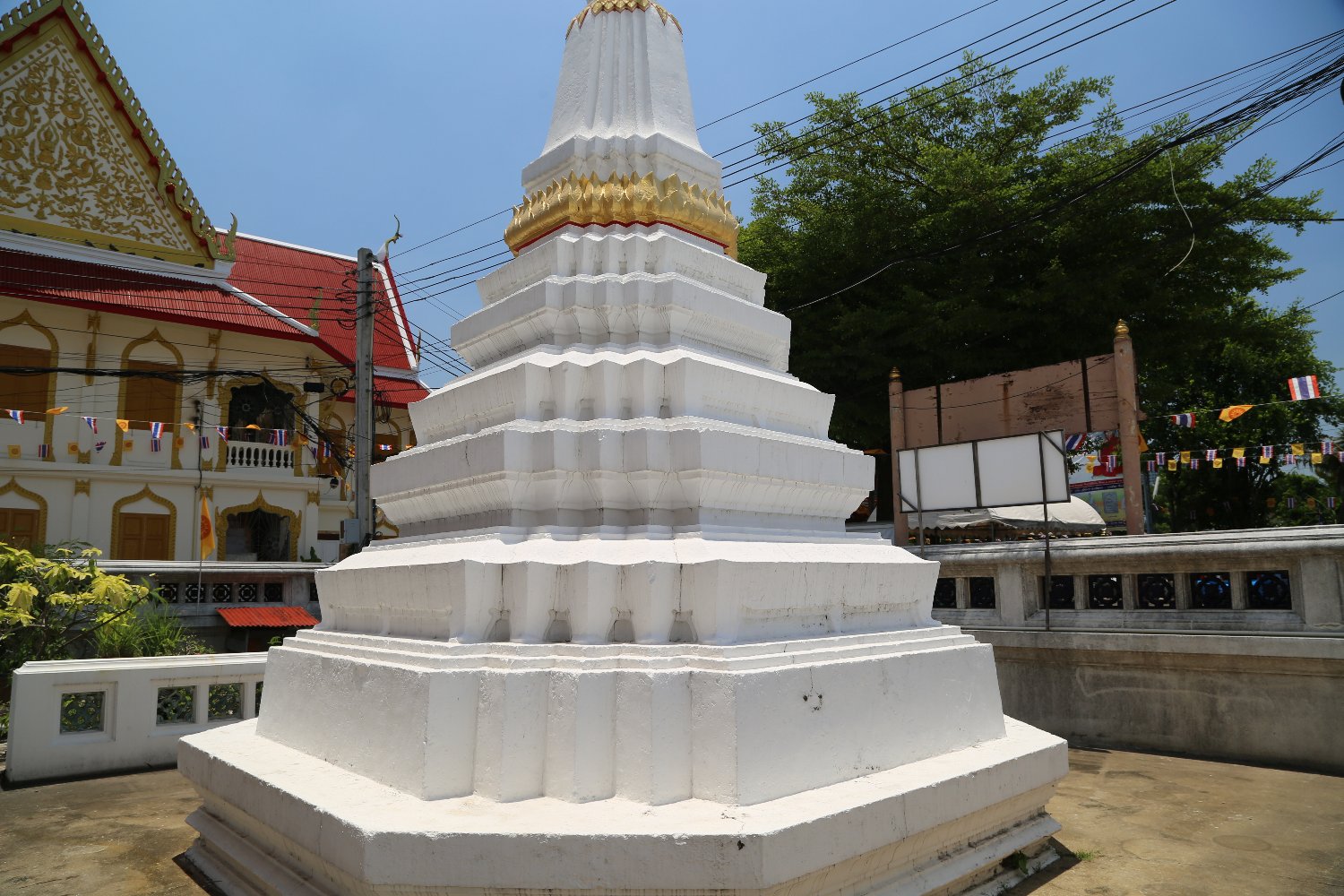
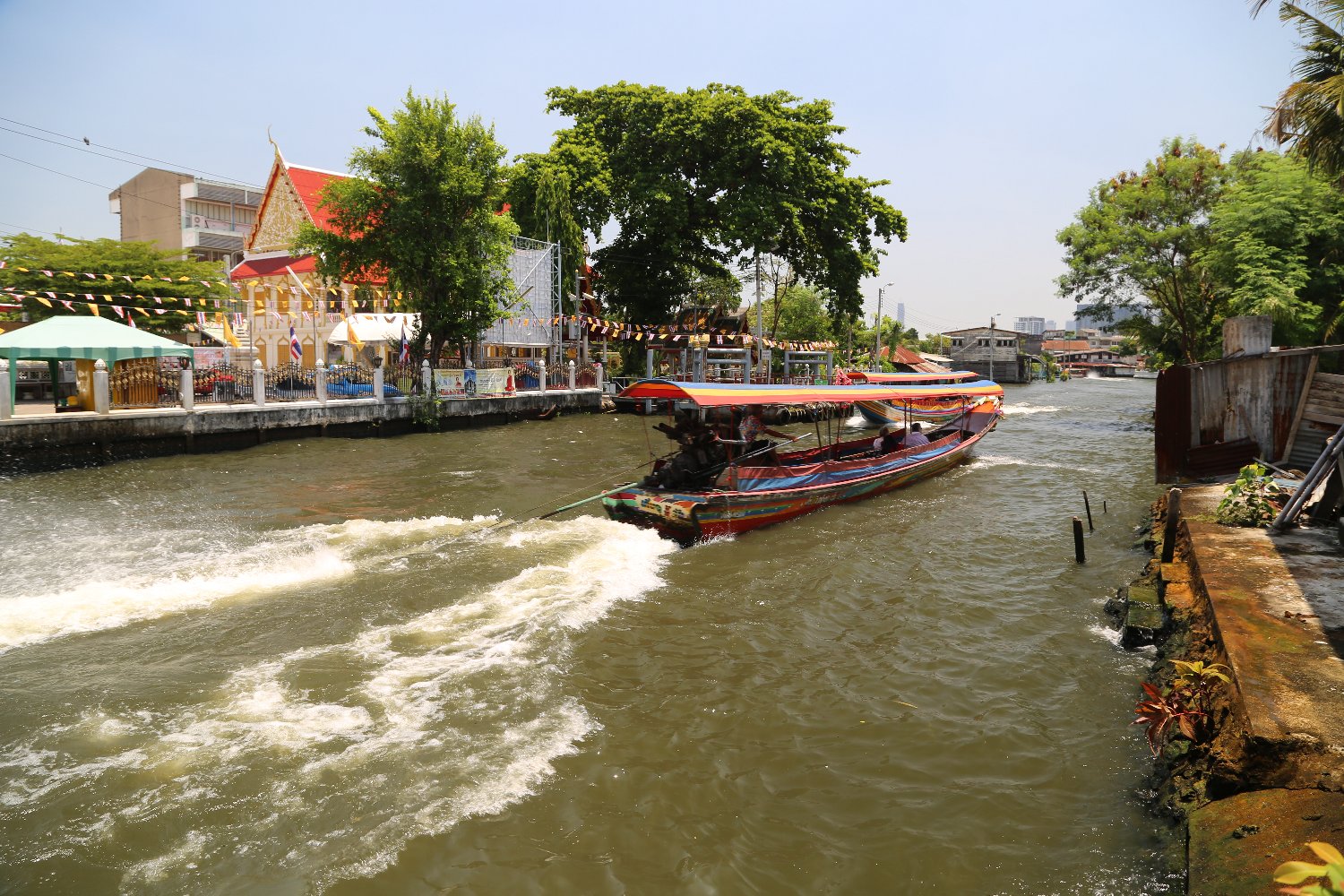
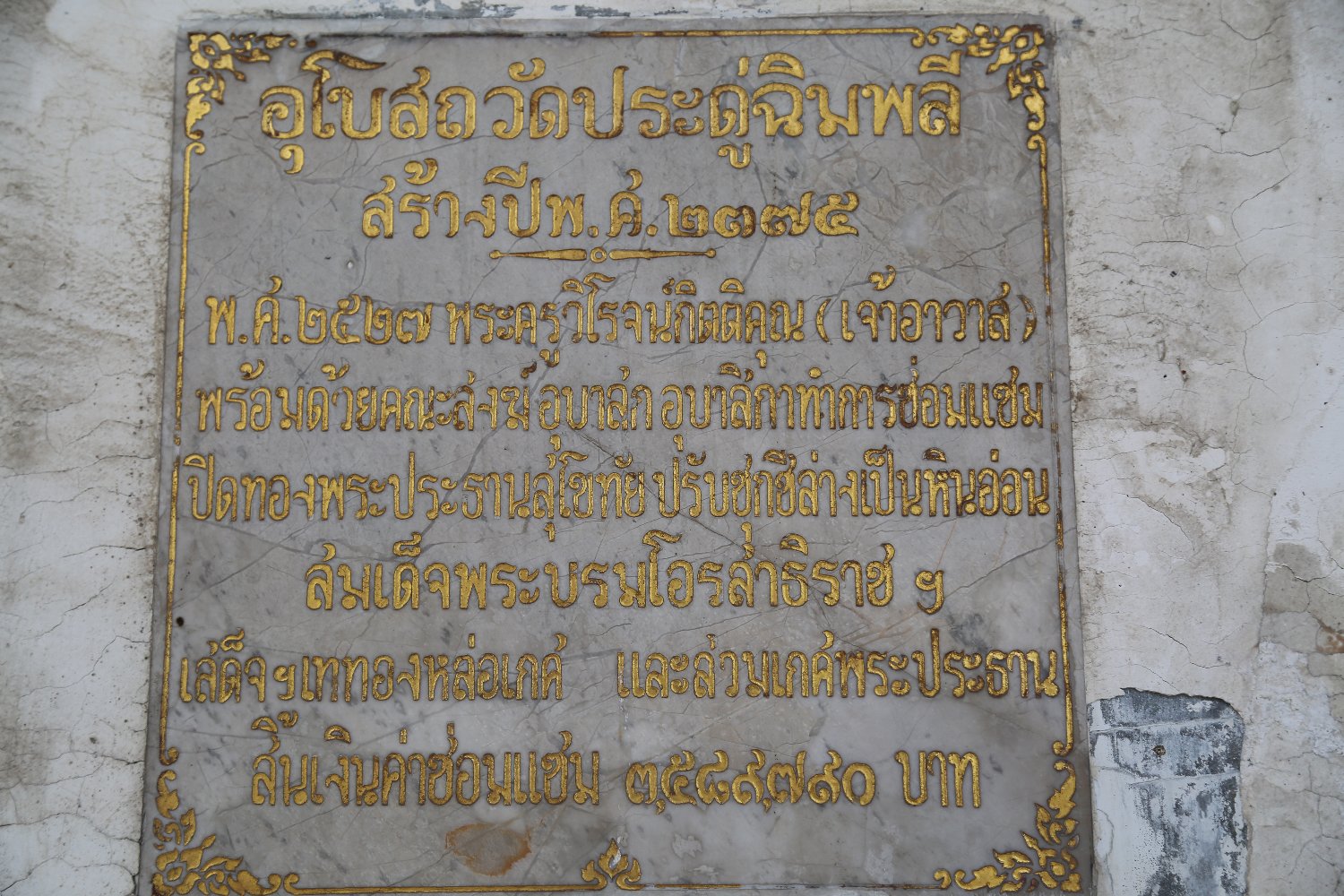
Wat Praya Siri Iyasawa is located on the Thonburi side of the river about a 15-minute walk from the Rama VIII Park at the base of the Rama VIII Bridge. Located in a quiet area with several other tiny temples nearby – one has more fun making the journey to this temple then perhaps hanging out at the temple itself. Walk through a maze of small neighborhoods and ultimately reach the temple via crossing over a small footbridge over a tiny canal.

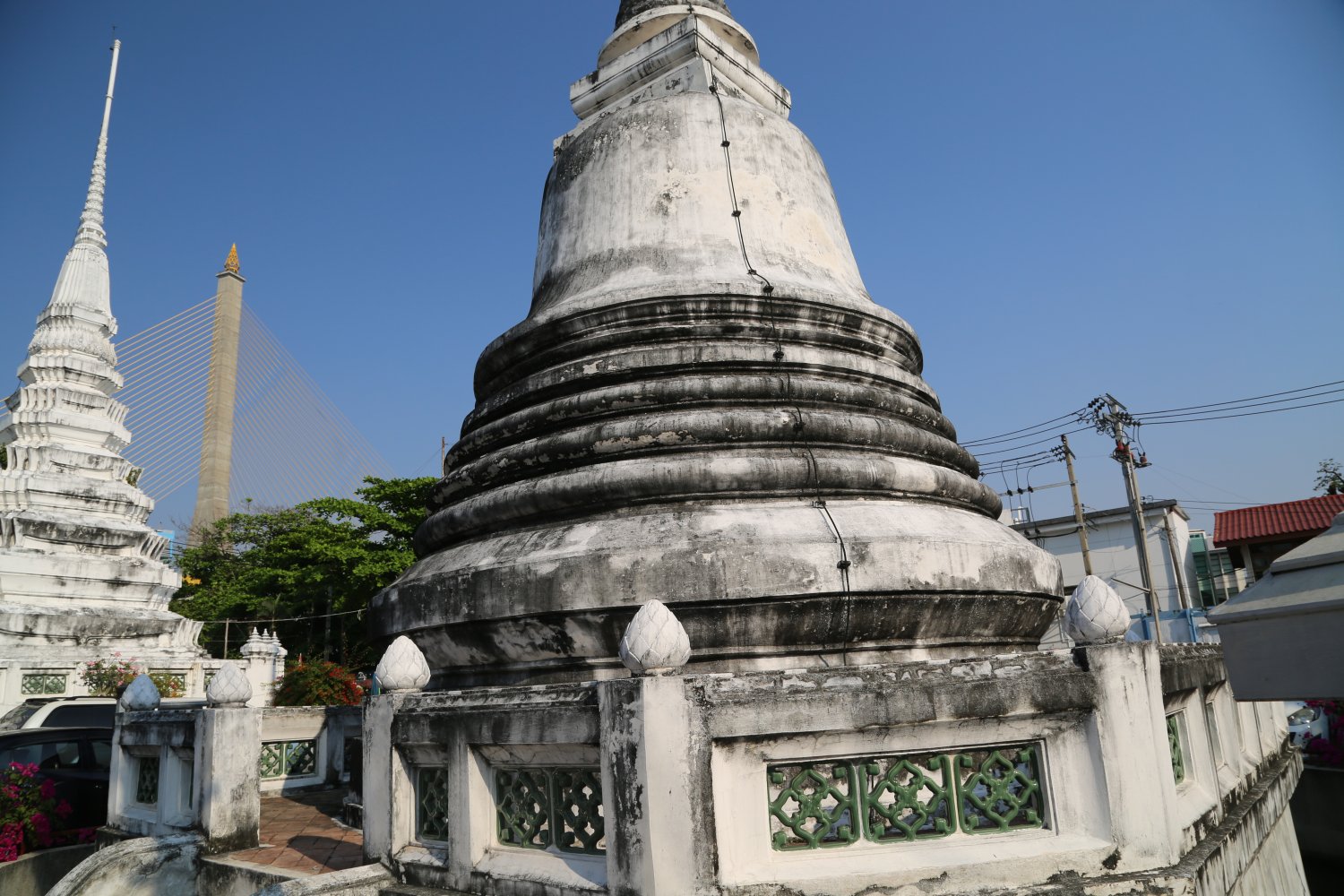
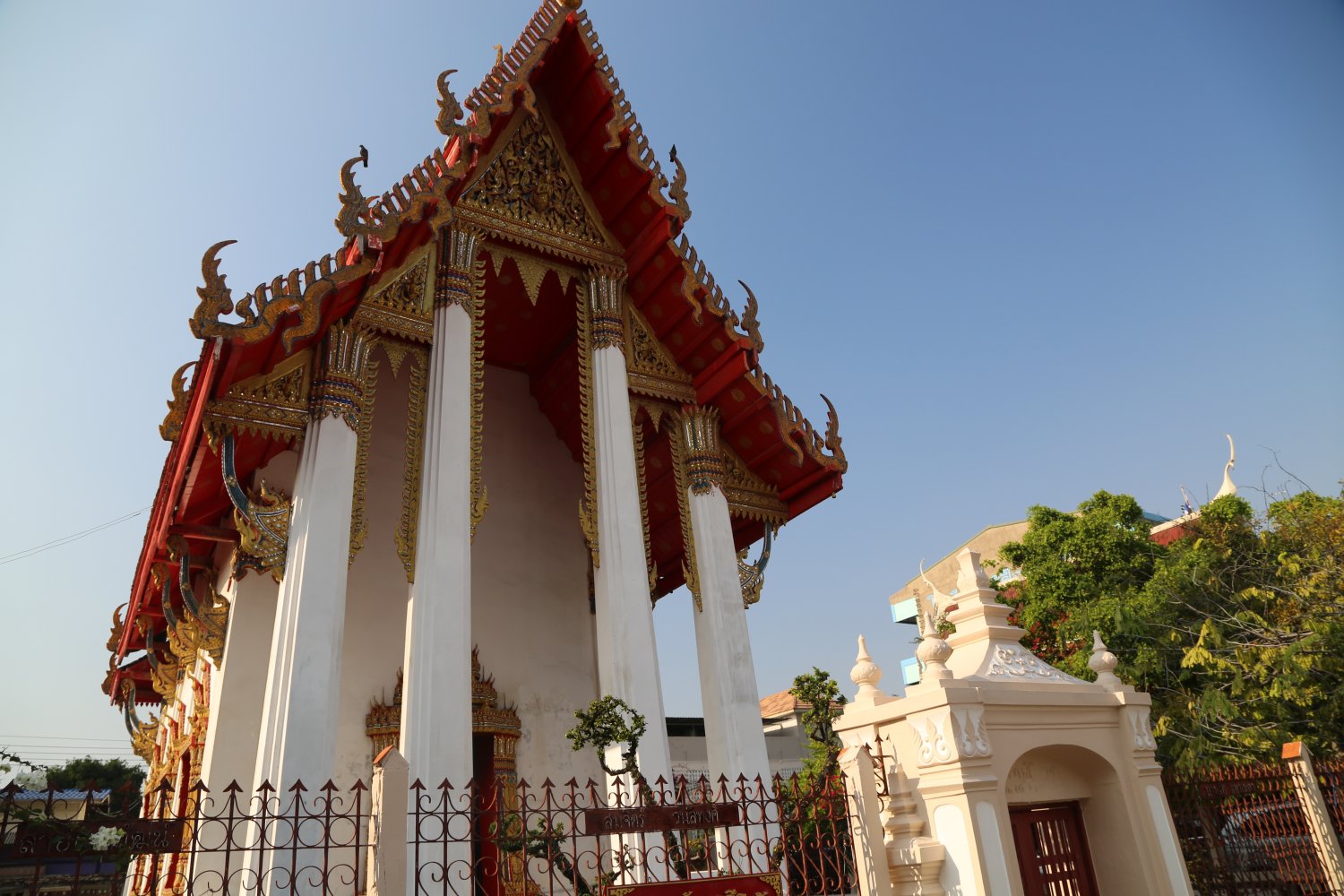
Wat Prayurawongsawas Waraviharn Temple (also known as Wat Prayoon) is a beautiful sizable temple complex where visitors could spend 30 to 60 minutes exploring. Known for several things including the brilliant white colored and giant chedi (great for serving in sunset photos), what is left of what used to be a giant fend built from ancient iron weapons including swords and a do not miss a short walk from the giant chedi – turtle ‘mountain’ with its calming pond and several small temples built into the side of the slightly elevated rock. Turtles live here and visitors can feed them. Simply purchase a variety of fruit from nearby vendors and what you cannot eat, give the turtles.
The mound of rock that forms this ‘mountain’ was inspired by King Rama III’s observation of dried wax left by a dripping candle and was built in the early 19th century. This temple was previously awarded a UNESCO Asia-Pacific Cultural Heritage Conservation certificate. Looking for a very unique and memorable temple that is not on the list of first-time visitors to Bangkok – this one is it!
Located near the King Rama I Memorial Bridge in a very historic part of town which used to be lived in by the Portuguese back when Bangkok was founded. Can access this temple by taking the Chao Phraya River Express boat and getting off at the Memorial Bridge Pier.
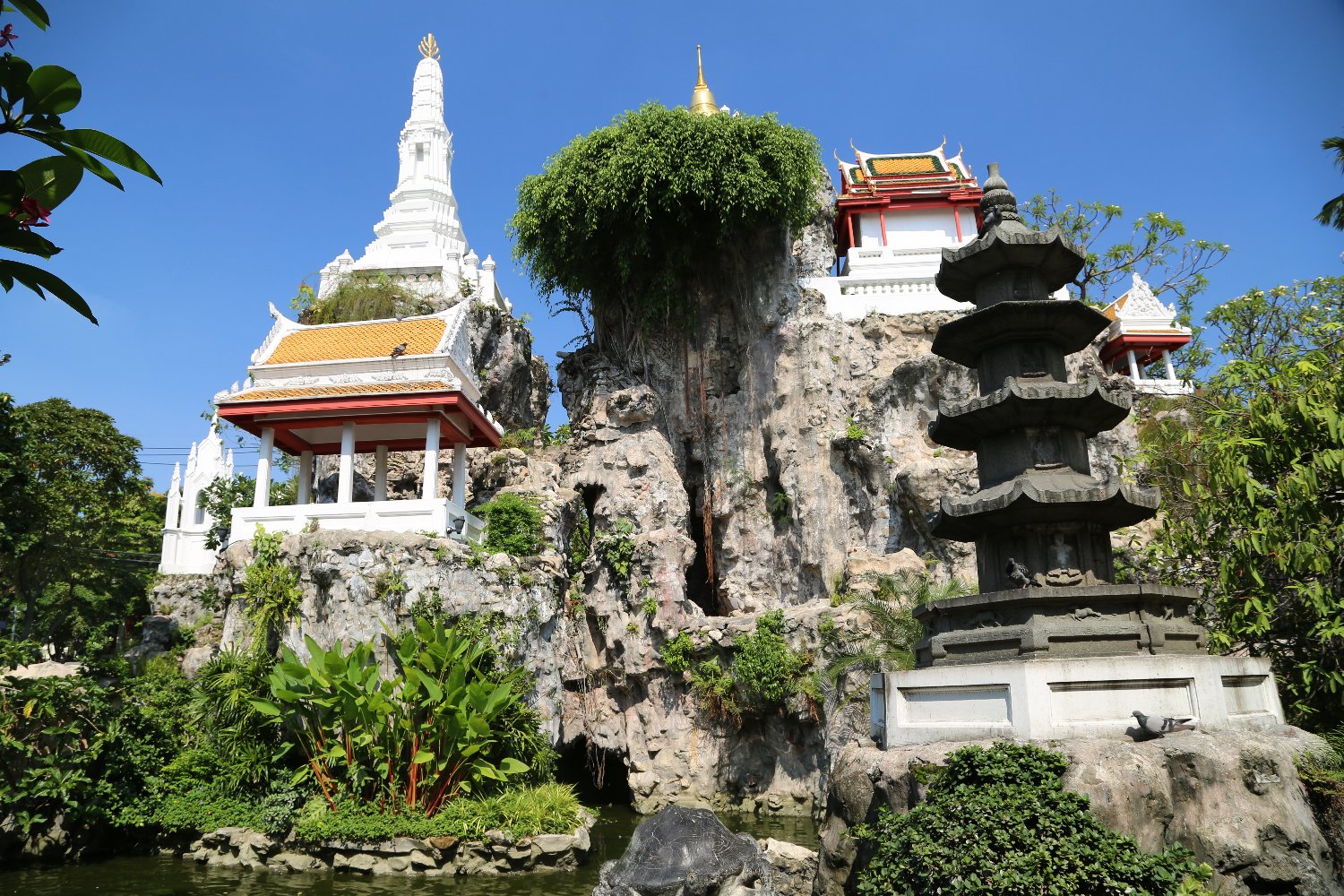

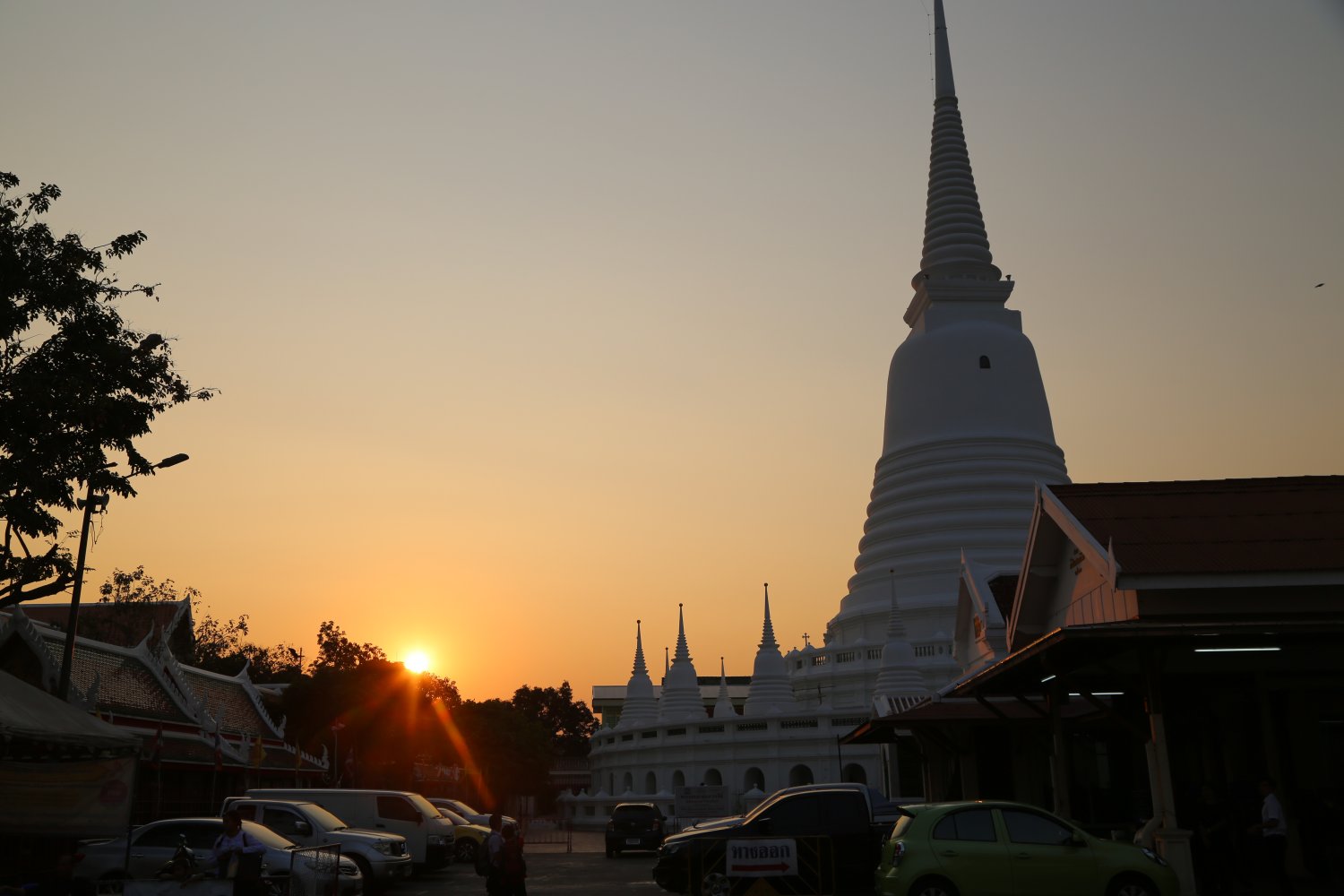
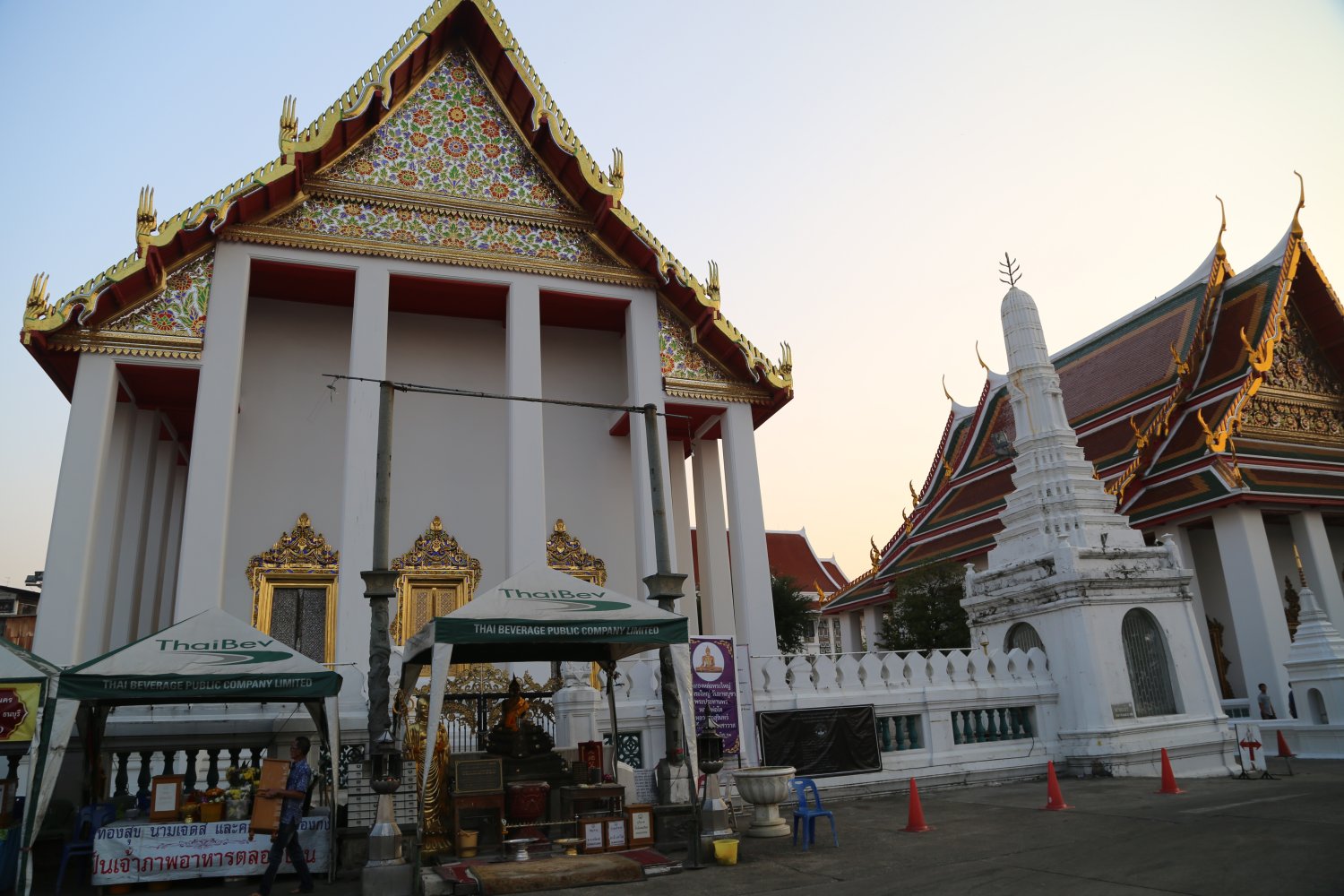
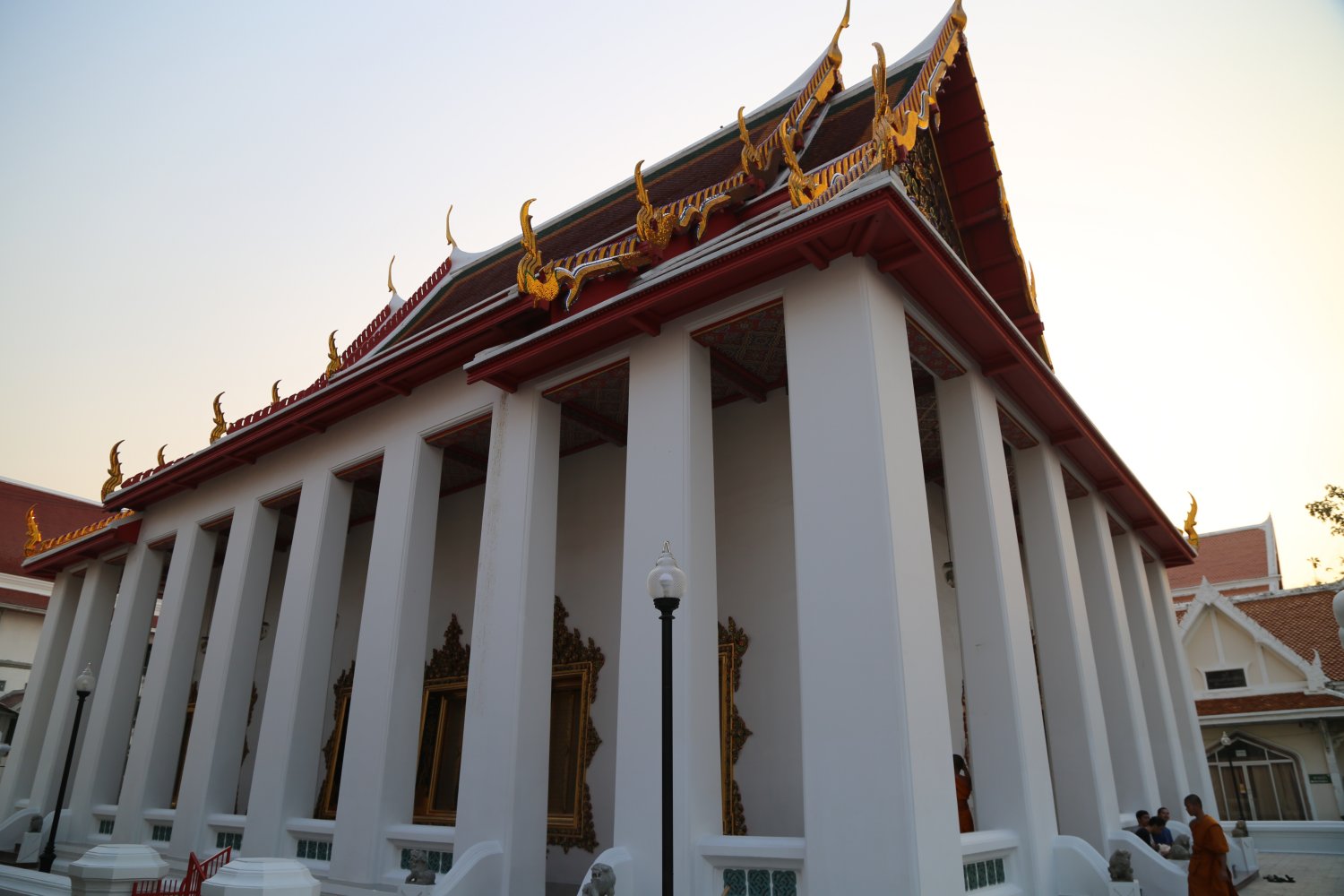
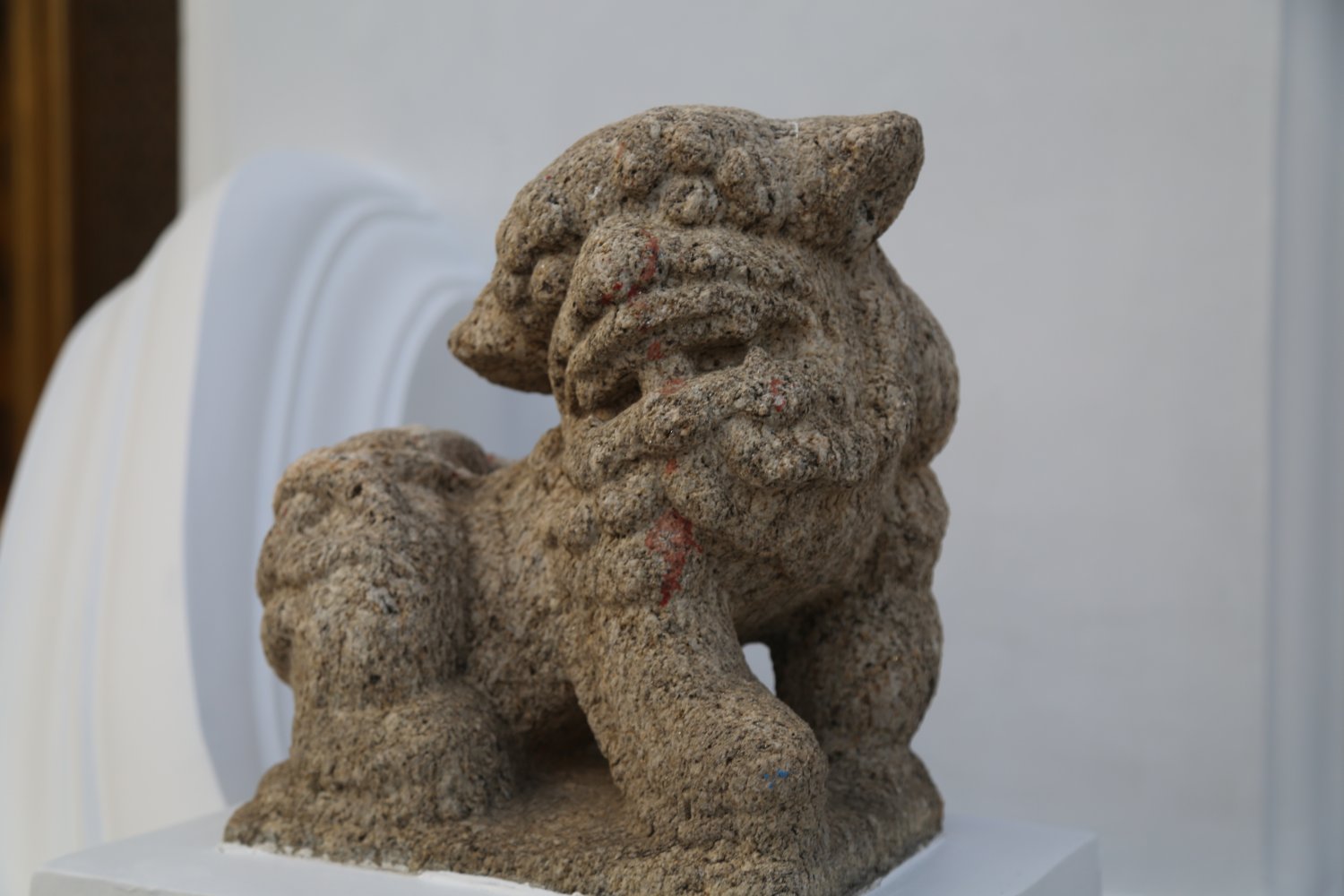
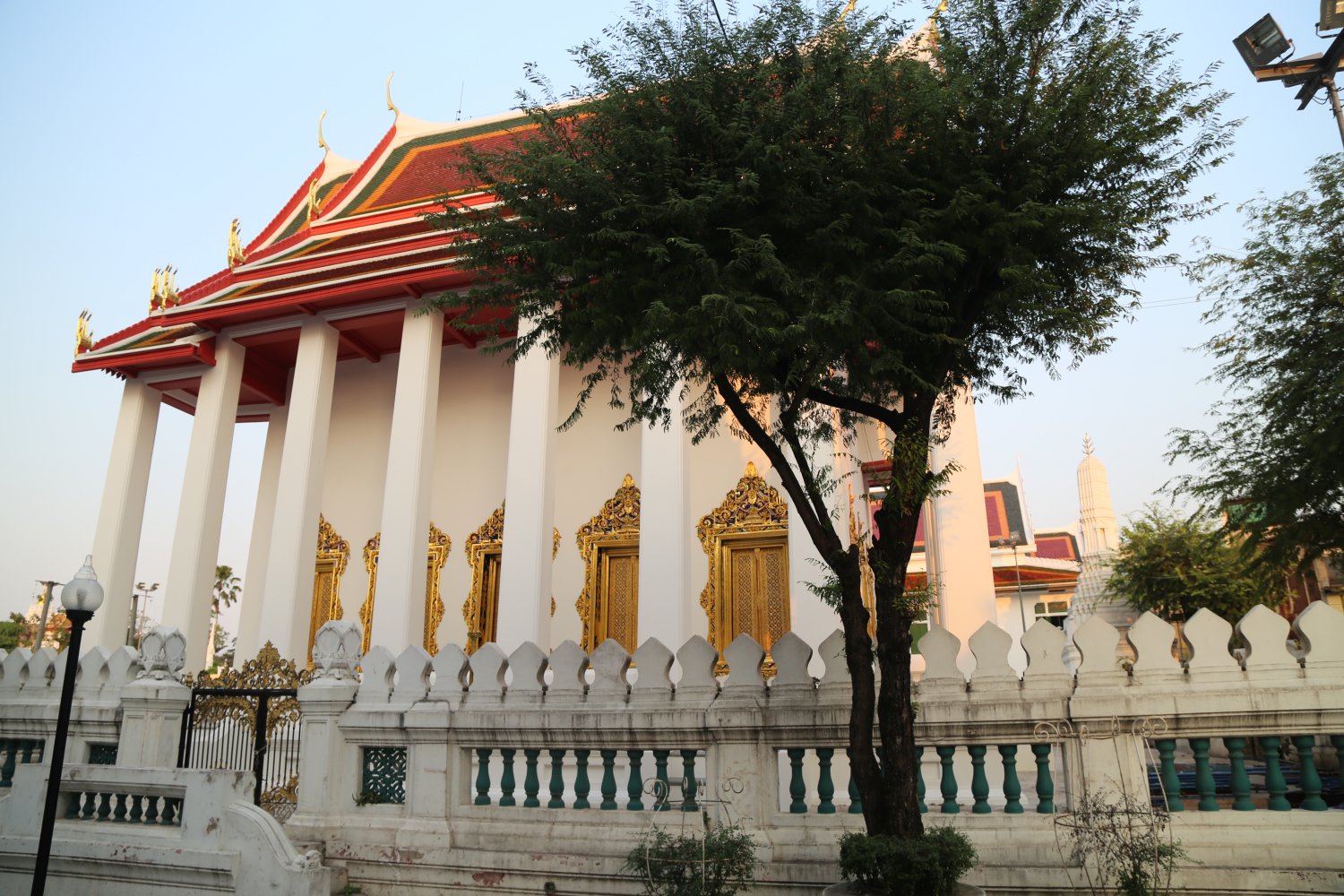
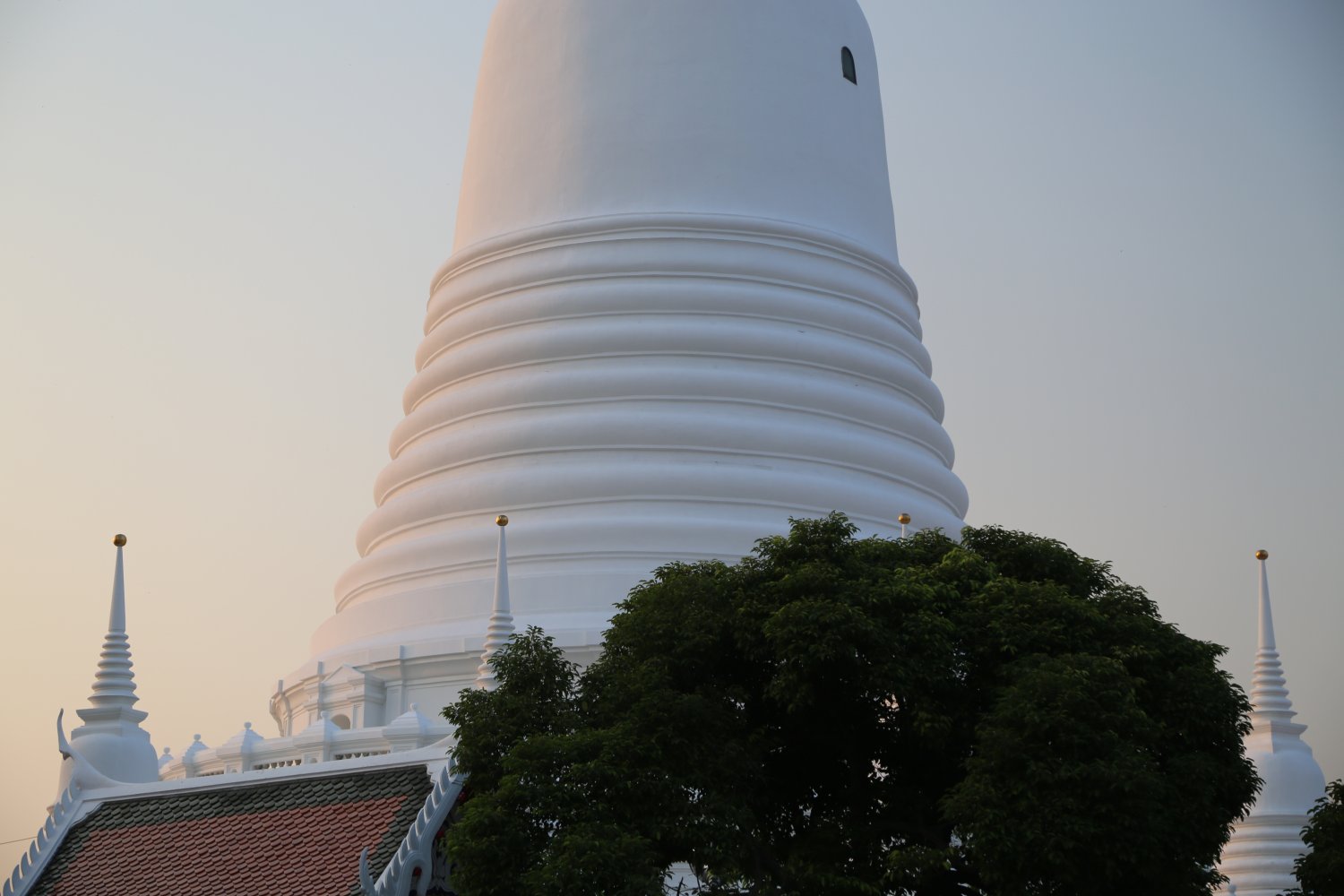

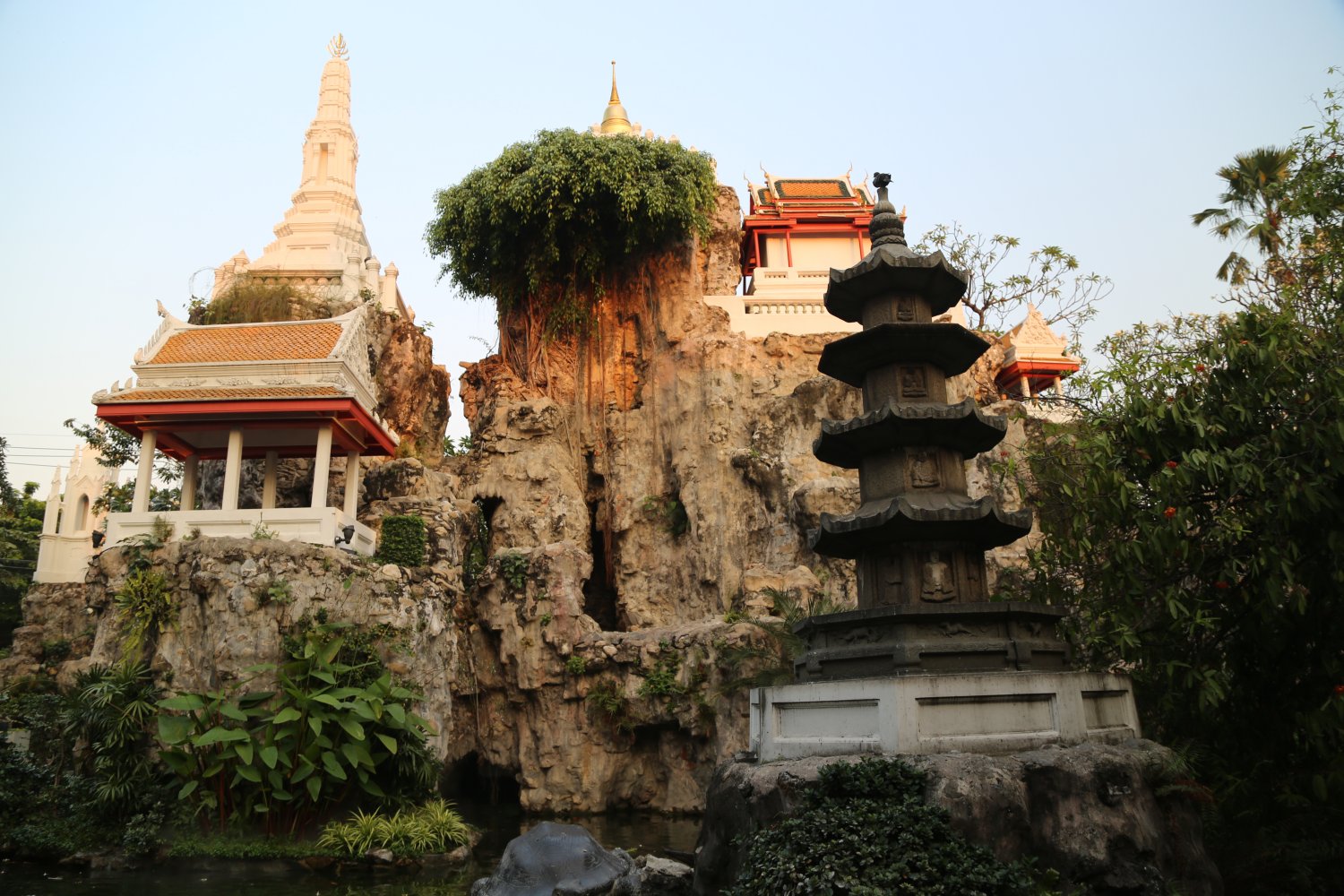

Wat Rachsingkorn (Royal Temple) is located ‘next door’ to Asiatique – there is no direct access from Asiatique but visitors may access it via Soi Charoen Krung 74 off of the main Charoen Krung Road – just a short walk down this soi and then across the temple’s own parking lot.
It is located close to the edge of the Chao Praya River. Features a pretty golden stupa (much smaller than the big one at the Grand Palace) and old bell and an ordination hall. We saw no other tourists here during our visit – some bathrooms in the far back hidden a bit behind some of the buildings on site.
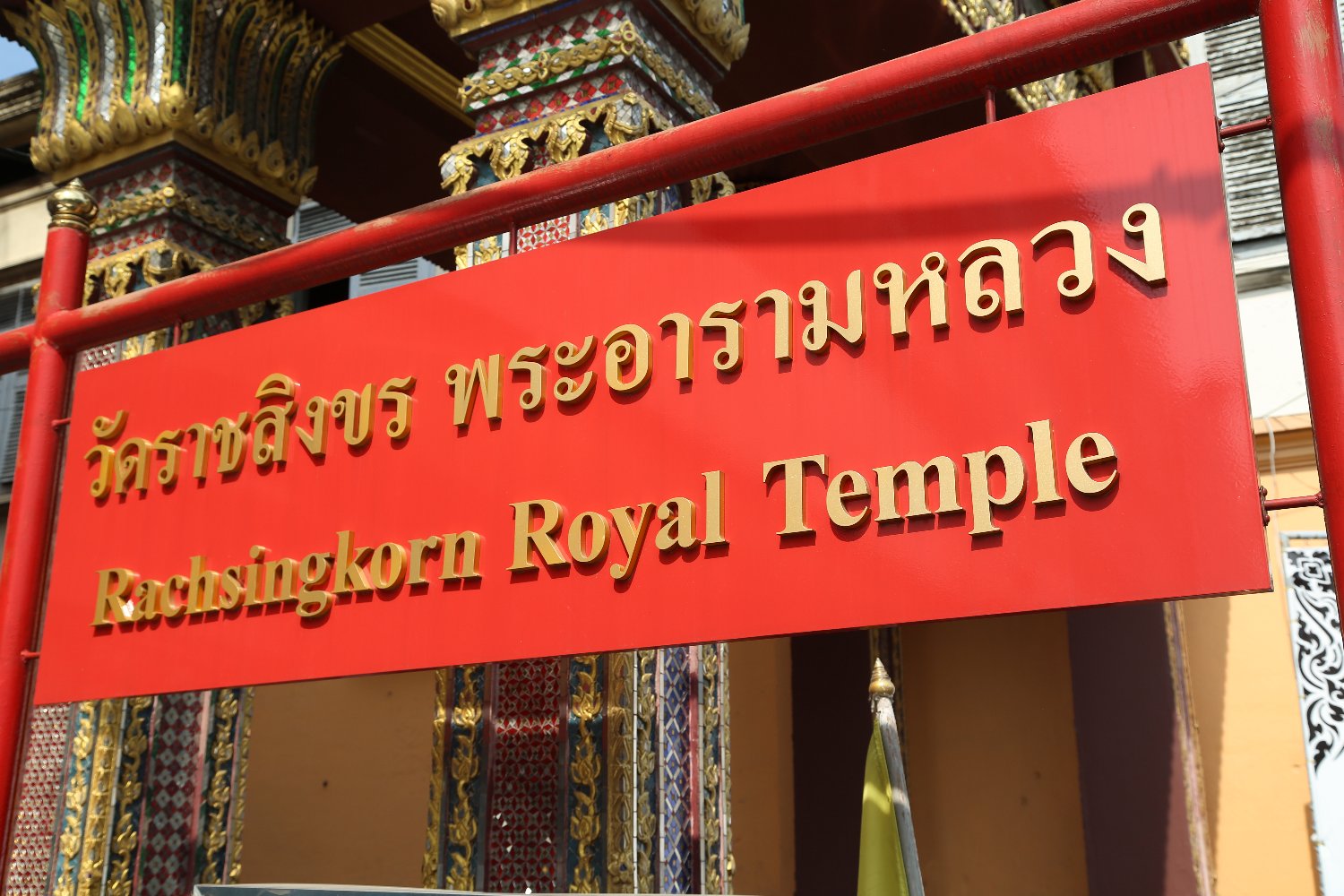
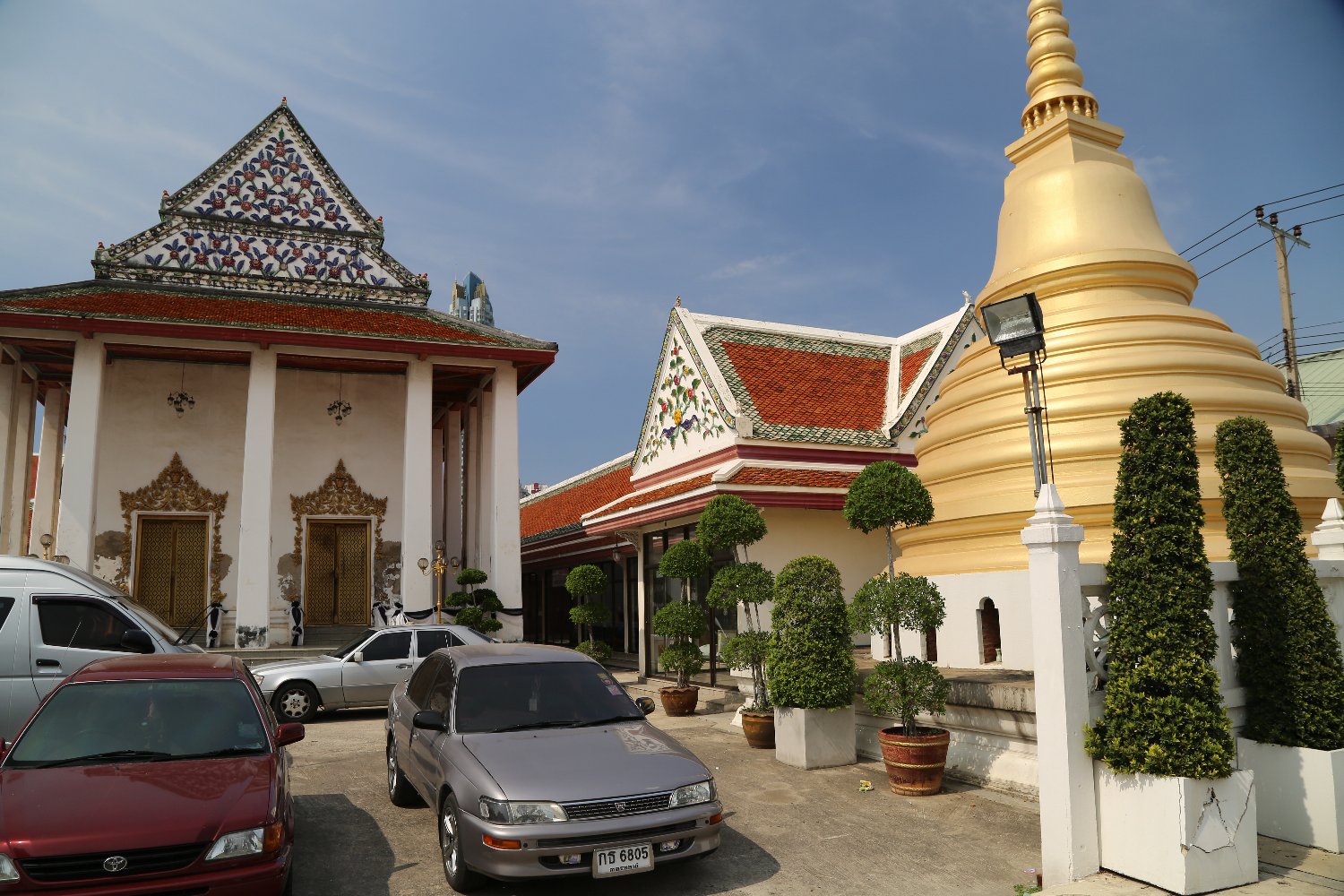
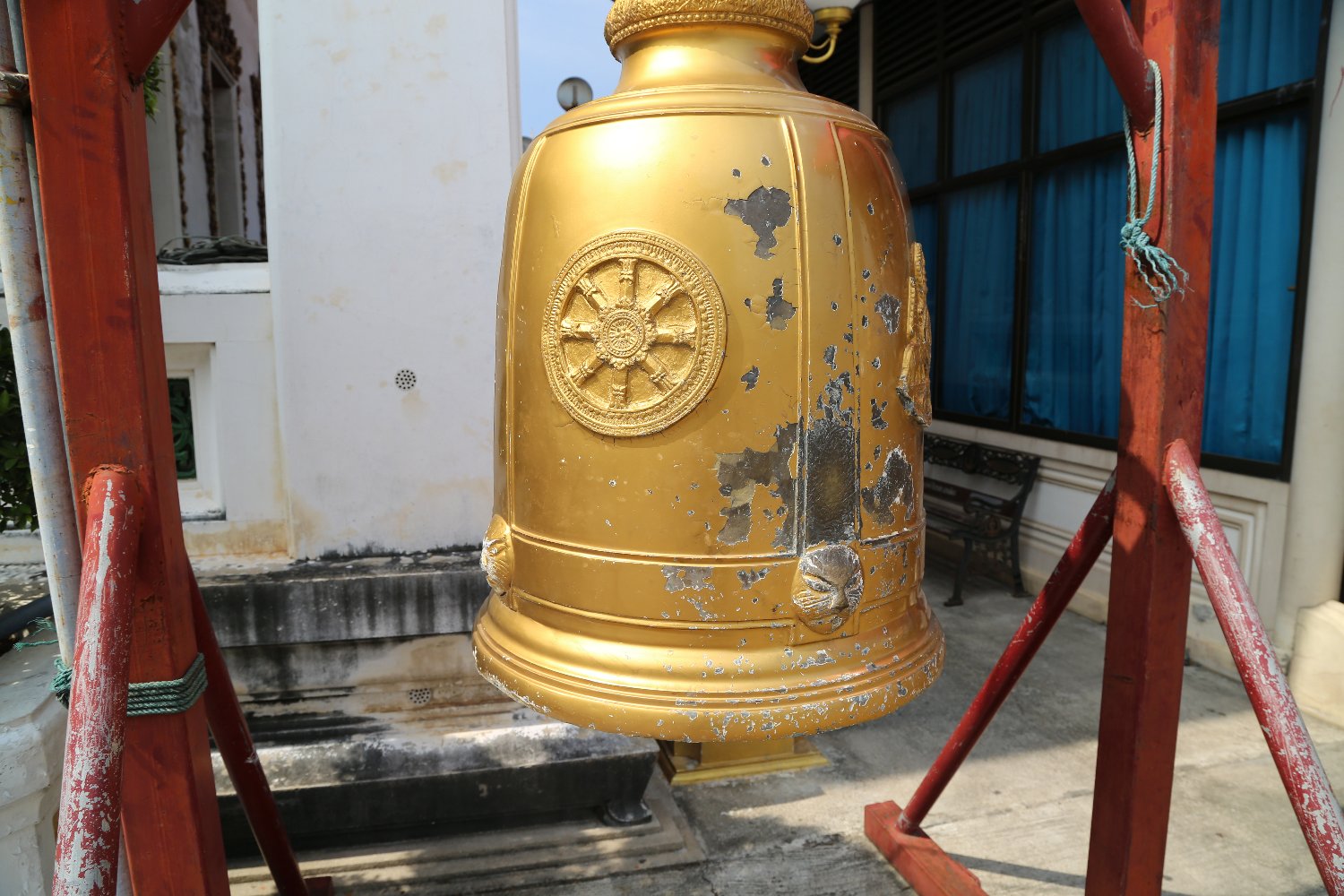

Wat Rakangositaram Woramahavihan is located on the Thonburi side along the banks of the Chao Praya River a bit north of the famous Wat Arun (Temple of the Dawn). This temple is known for its plethora of bells which decorate the grounds – therefore often known as the “temple of the bells”. Like many temples it has had multiple names – originally it was called Wat Bangwa Yai and was built in the Ayutthaya Period. During one period of renovation an ancient bell was found at the temple (moved to the Temple of the Emerald Buddha in the Grand Palace) and King Rama I then commissioned 5 bells to take its place.
Of historical significance, the old Tripitaka Hall on site was the original residence of King Rama I.
Not a temple to rush through – take your time and admire the unique bells on display, perhaps take in a chanting session later in the evening by monks and check out the hand drawings/paintings in the wihan building. Very popular with locals but we haven’t seen that many foreigners here. Prominent enough of a temple to warrant its own website (all in Thai), www.watrakang.com


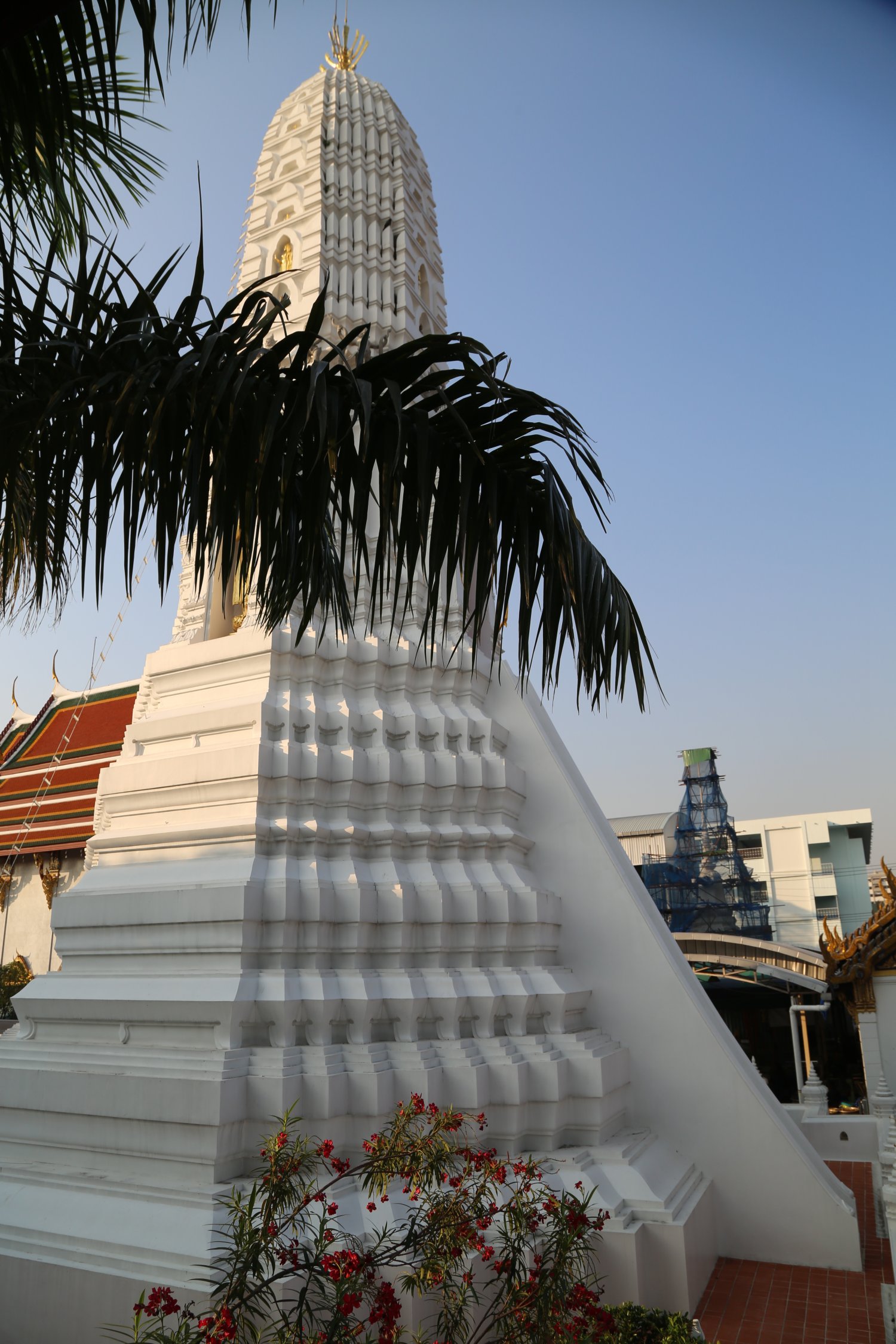
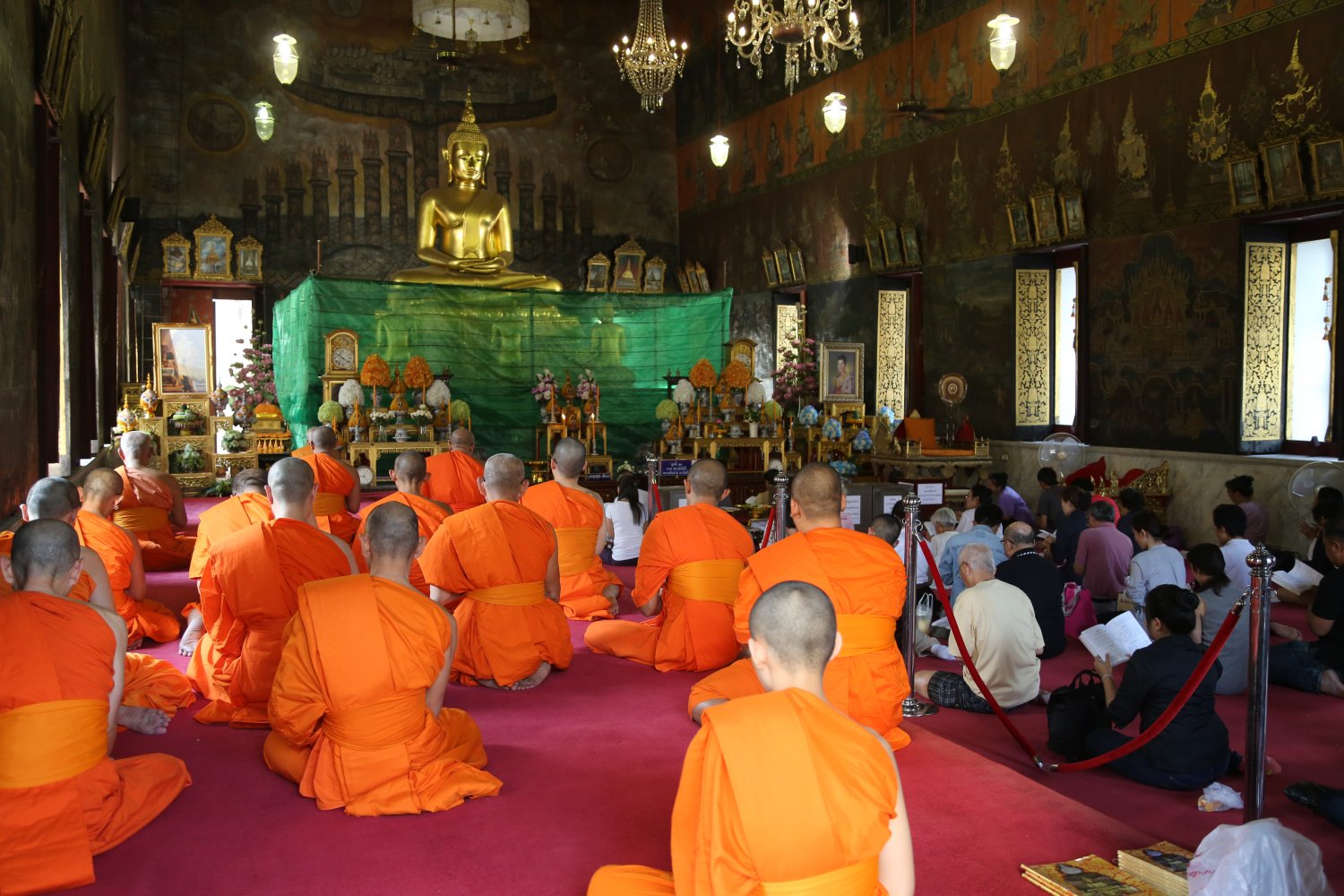
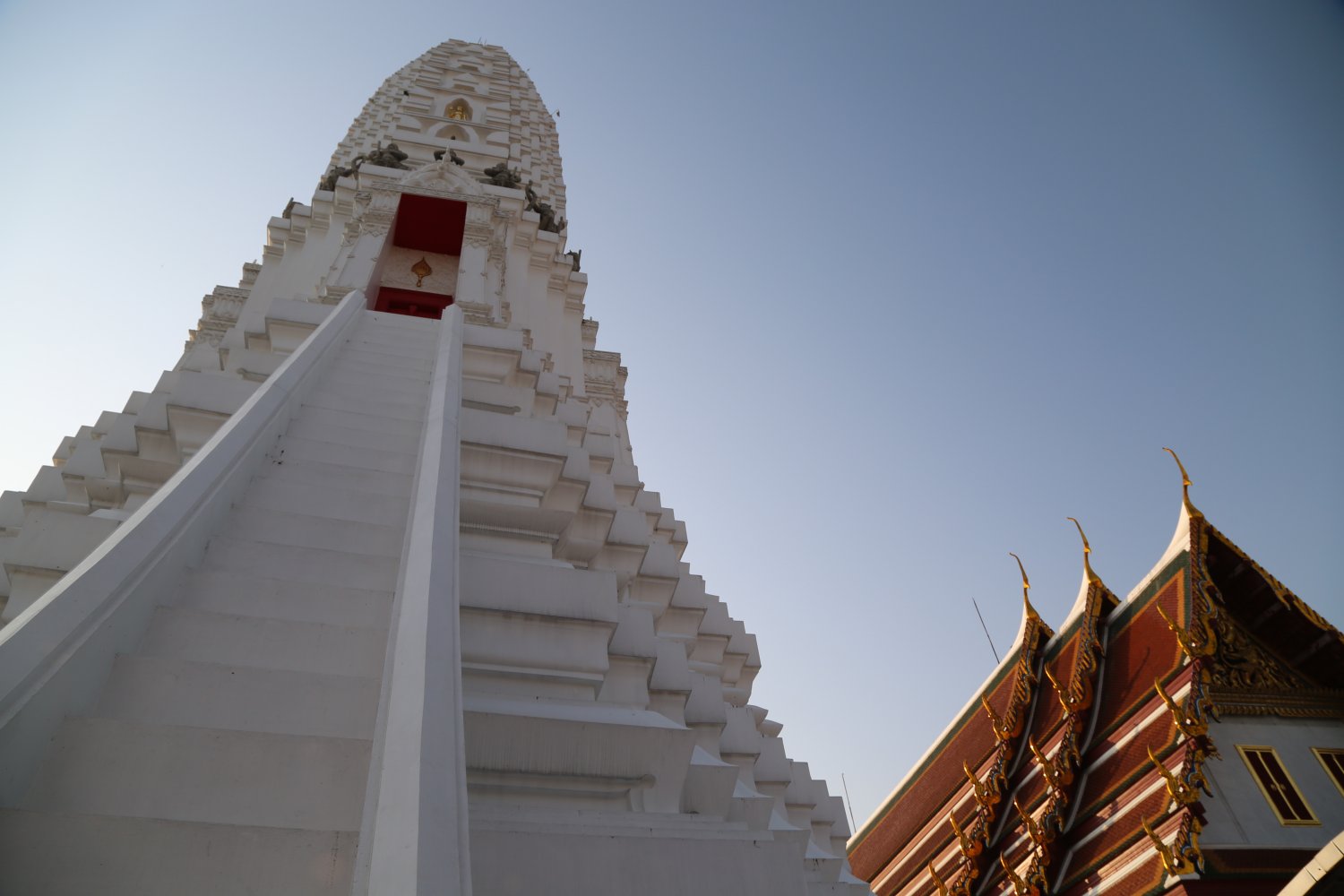
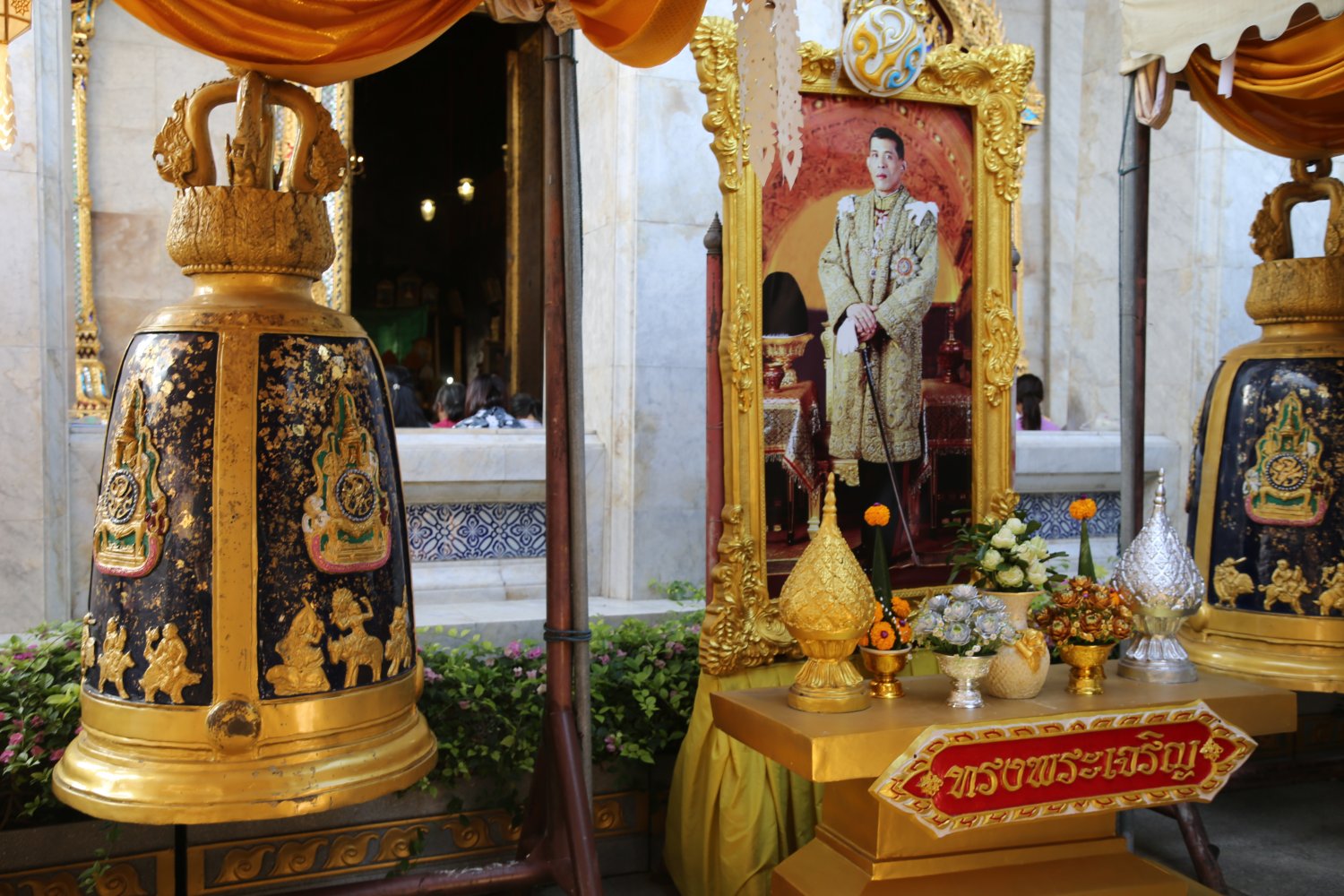
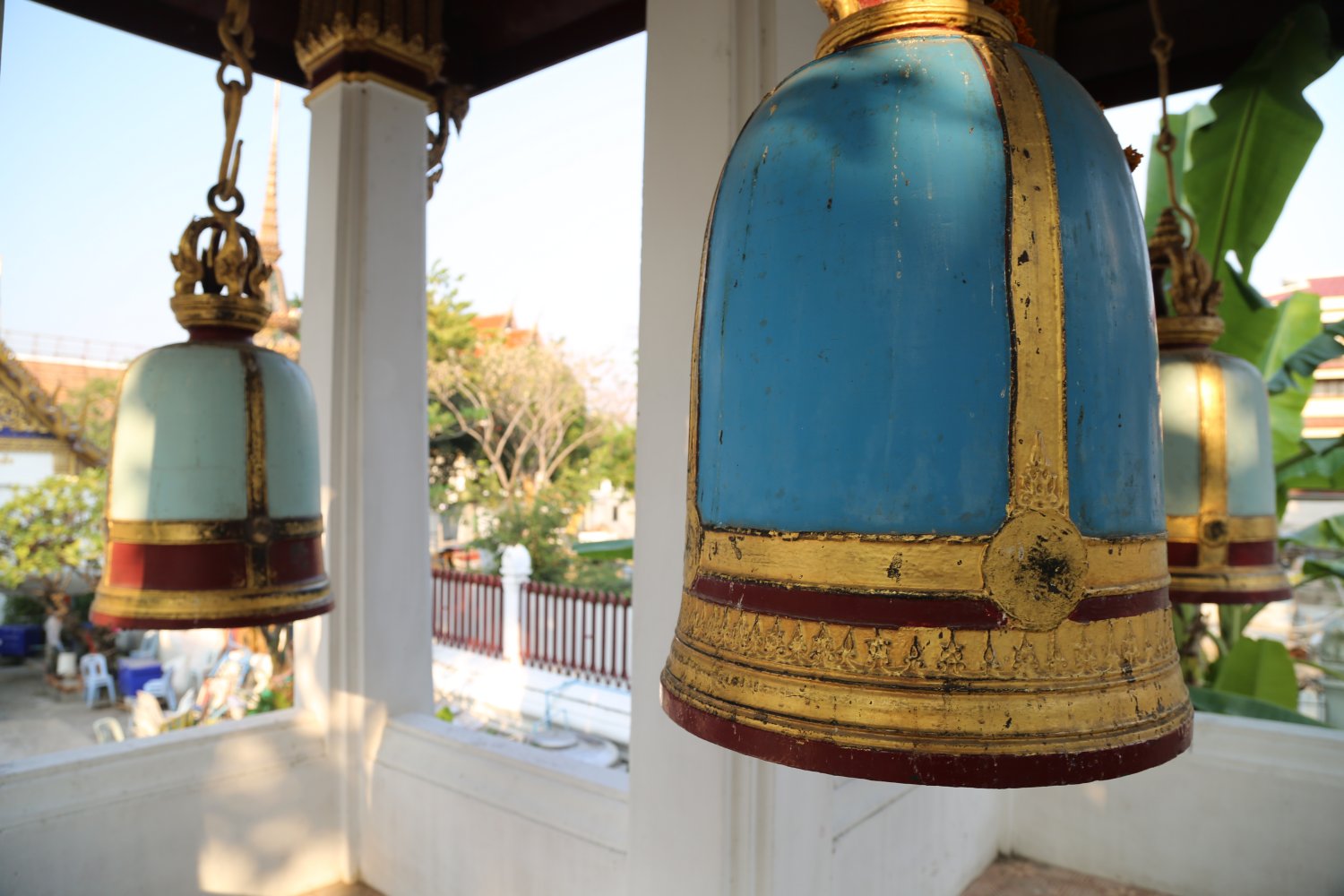
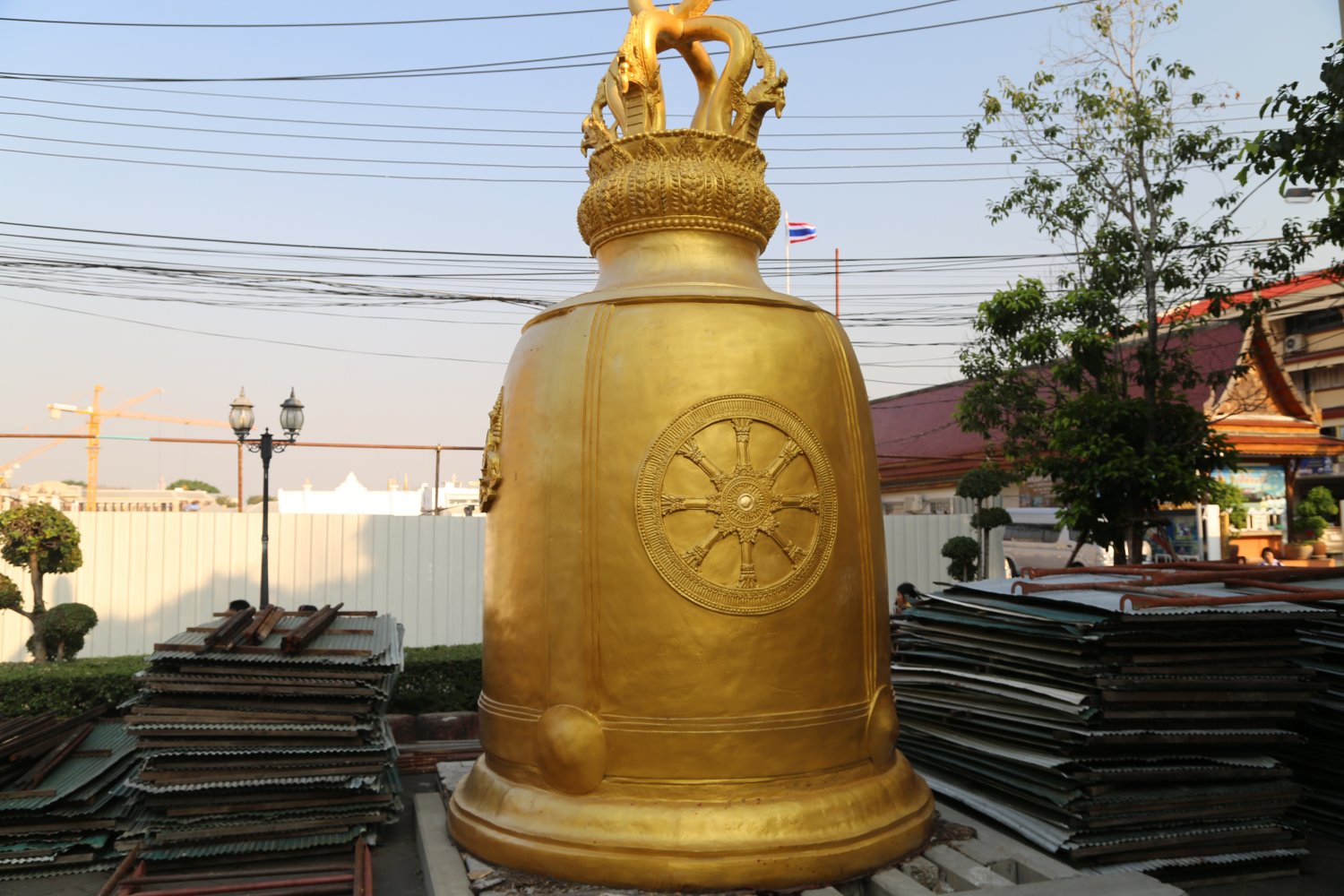
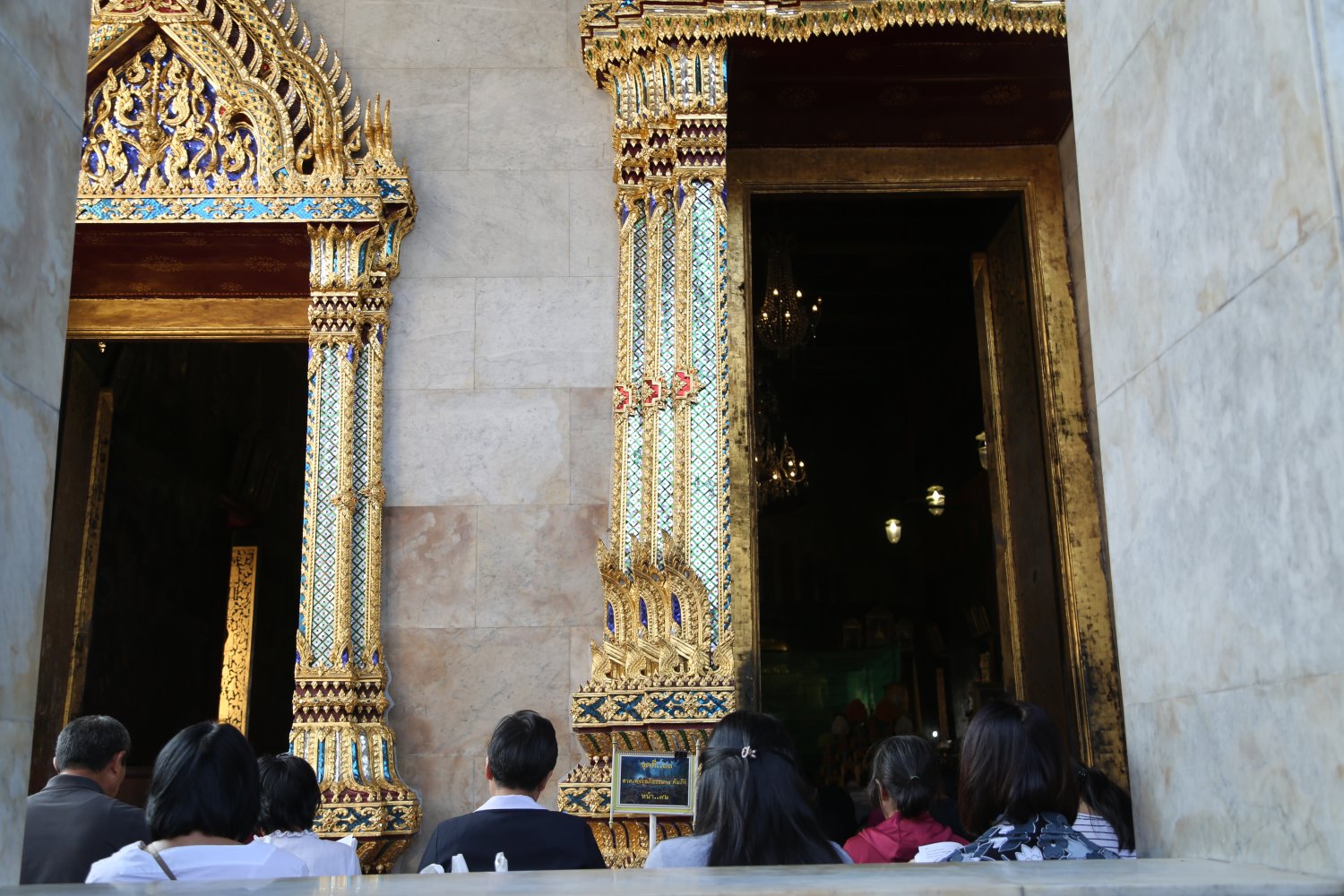
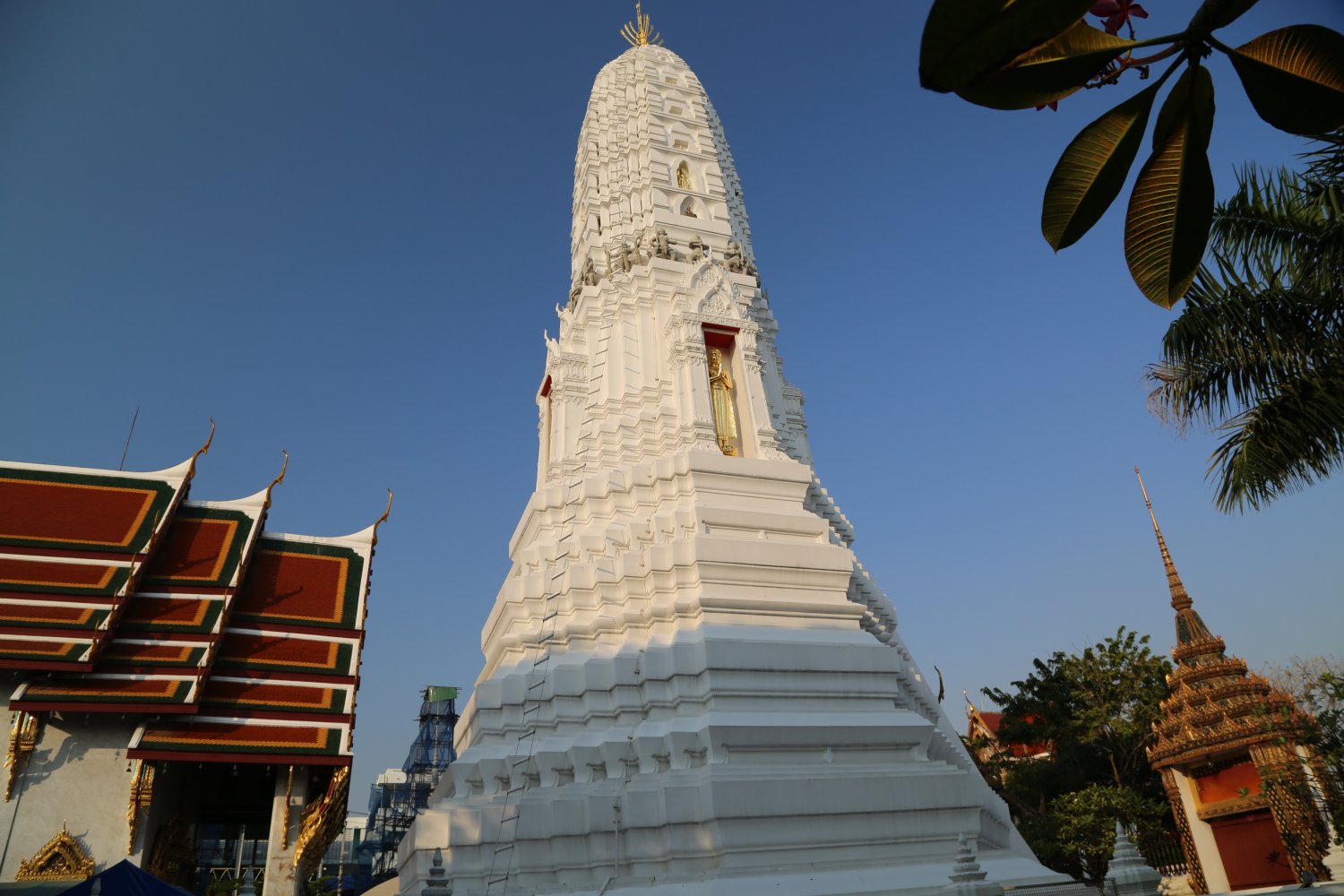
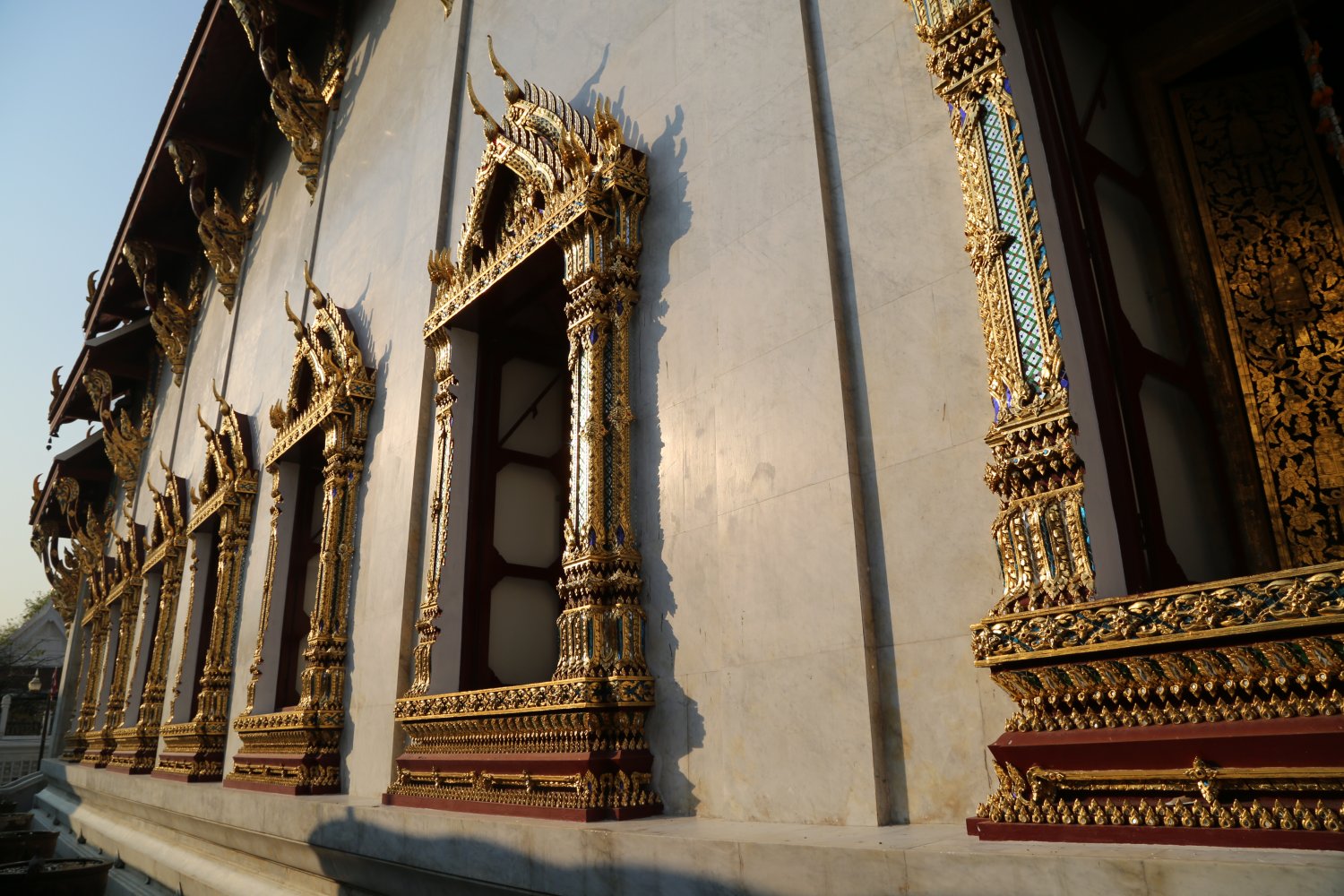
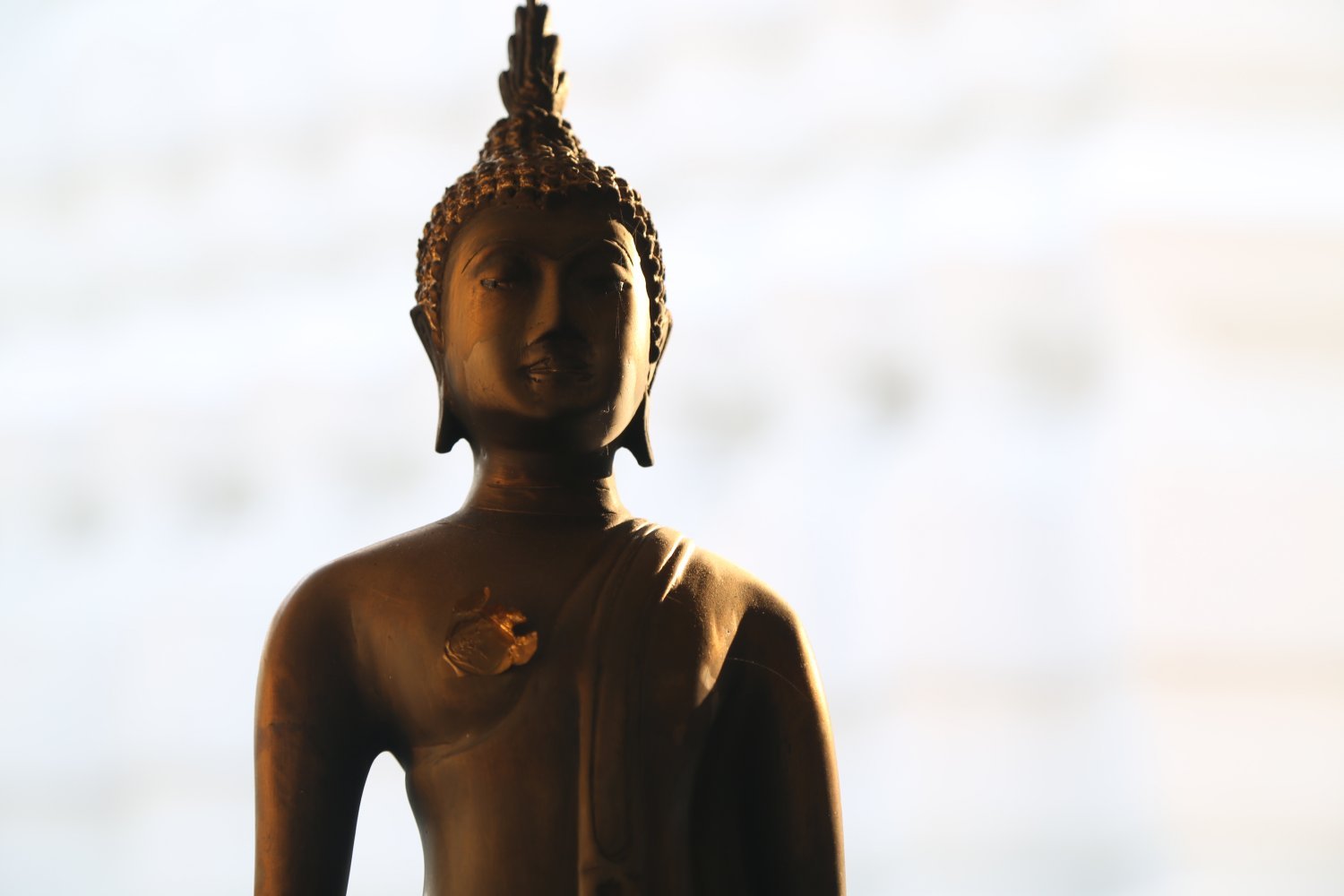
Wat Rama IX Kanchanaphisek or Wat Phraram 9 as it is often called for short is located within a short walk of the banks of the small Lat Phrao canal and within about a 10–20-minute drive of the Thailand Cultural Centre stop on the metro (depending on traffic of course). This is a Third class Royal Temple with the number 9 an auspicious and important part of its heritage. It is conveniently located on 999, Soi 9 Phraram 9 road. It was built in 1987; one of the Thai princesses visited the site and laid the original foundation stone.
The King of Thailand at the time named the temple. Small in stature if one is meandering through this part of Bangkok, worth a few minutes to stop. The ubosot is small and not covered in gold like many temples in Bangkok. Local materials were used in its construction. Also installed on site are the Bells of Promise – a tribute to the Thai King. 99,999 ‘resolution pho leaves’ were collected from Central Embassy department stores around the country. Citizens wrote down their thoughts on these leaves which then became part of nine silver bells located on site.
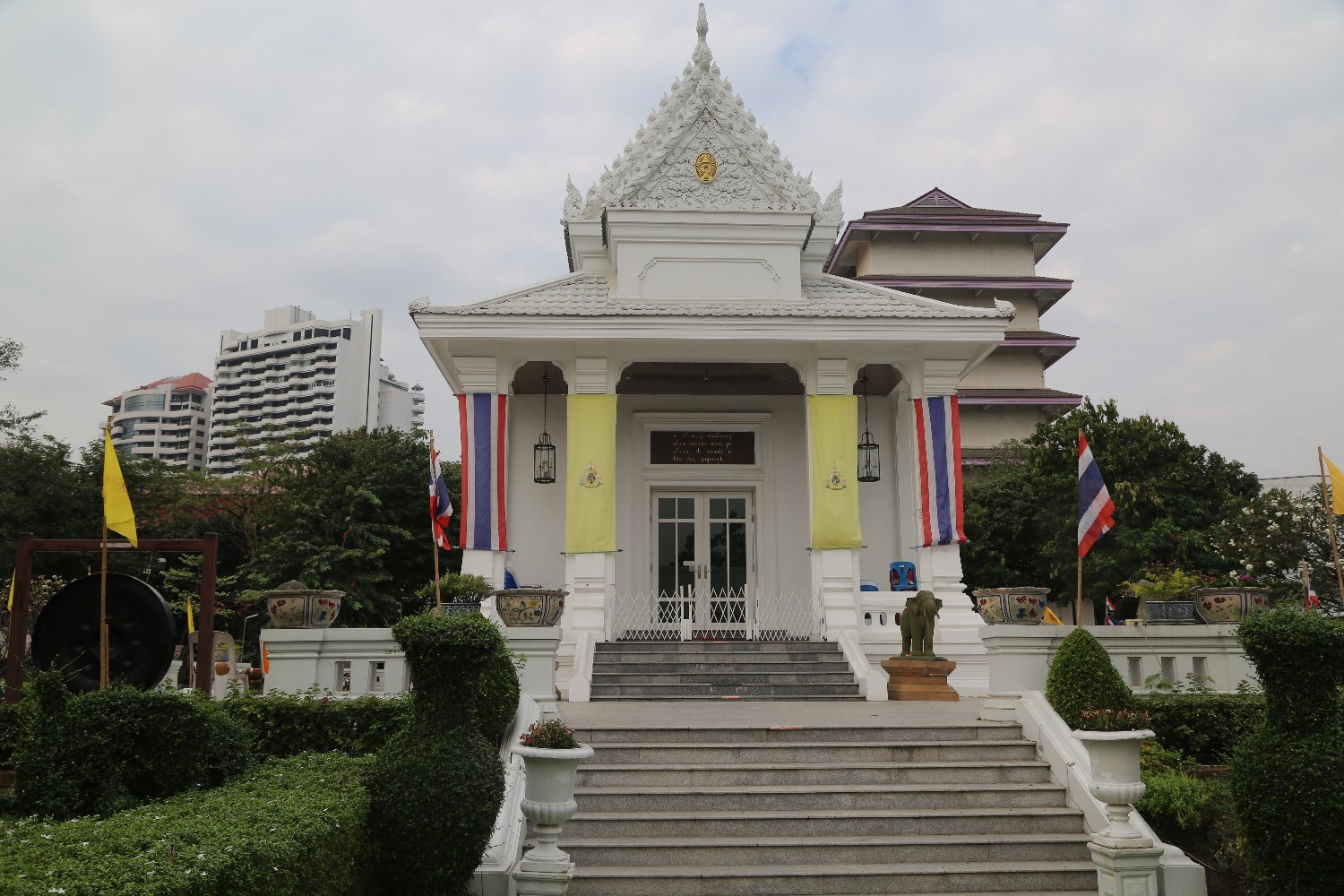
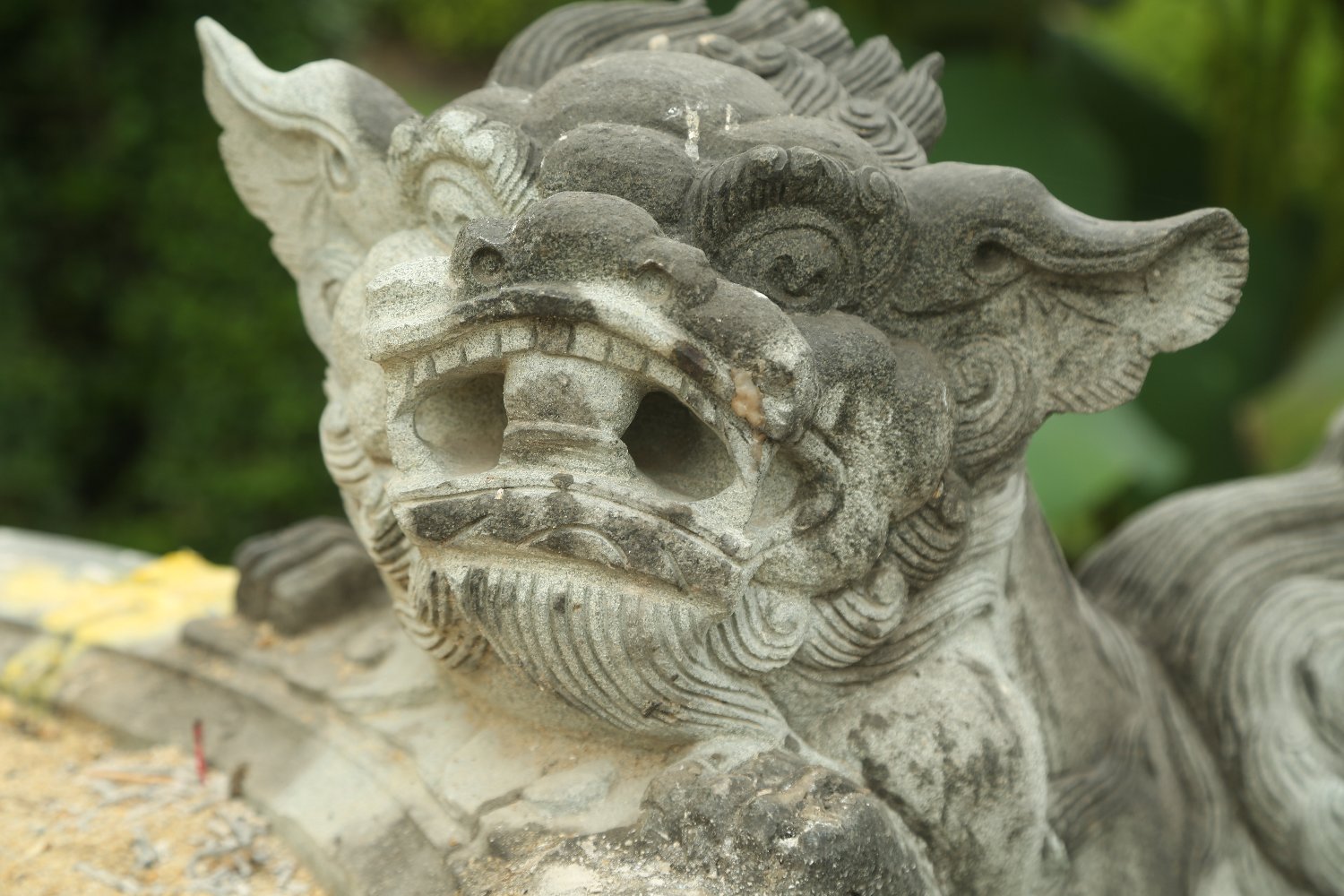
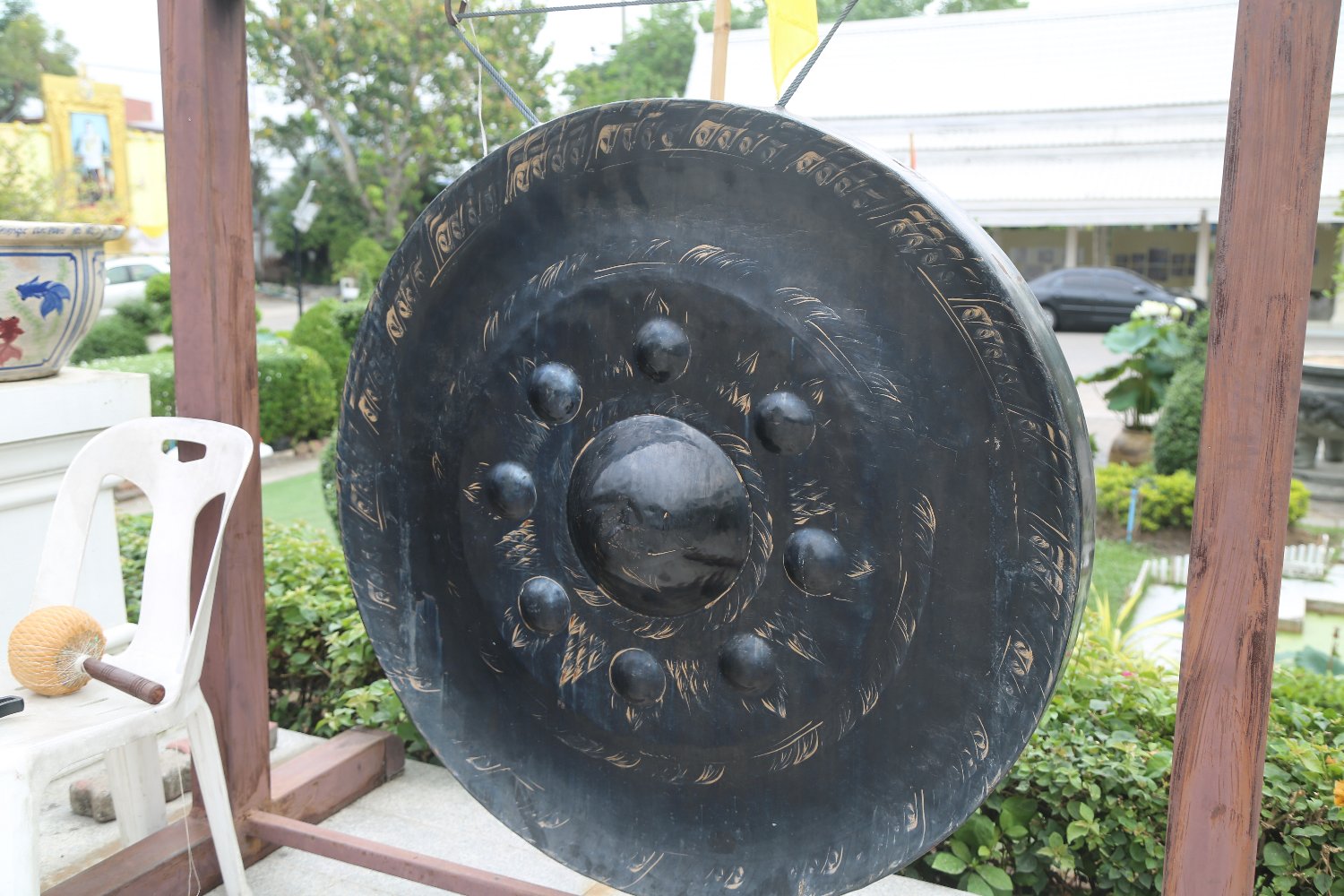

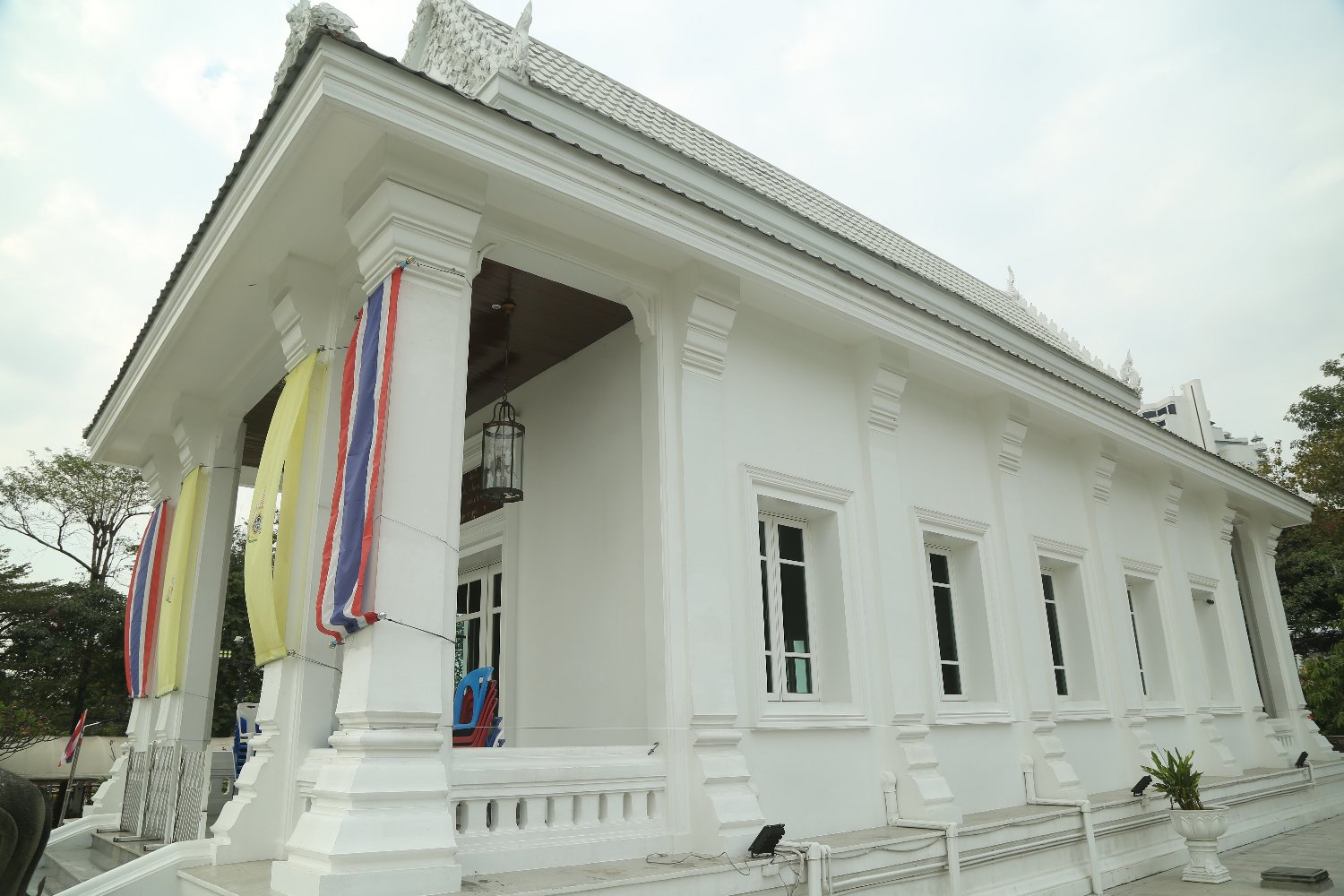


Wat Ratchabophit Sathit Maha Simaram is located within between two nice parks – within a short walk of either Rommaninat Park or Saranrom Park. Also next to a canal. This very pretty temple was built by King Rama V in 1869. A unique blend of both Thai and Western architecture (the interior). Somewhat off the most visited wat route – we don’t usually see many tourists here.
The Royal Cemetery is also located on site containing the ashes of some family members related to King Rama V. Also check out the cool looking watchmen built into the entrance doors. The interior of the main temple is very impressive with plenty of glittering gold used as decoration (somewhat inspired by Italian architecture). The primary Buddha actually rests on Italian marble.
Closest public transportation is the Tha Thien pier (using the Chaao Praya Express boat).
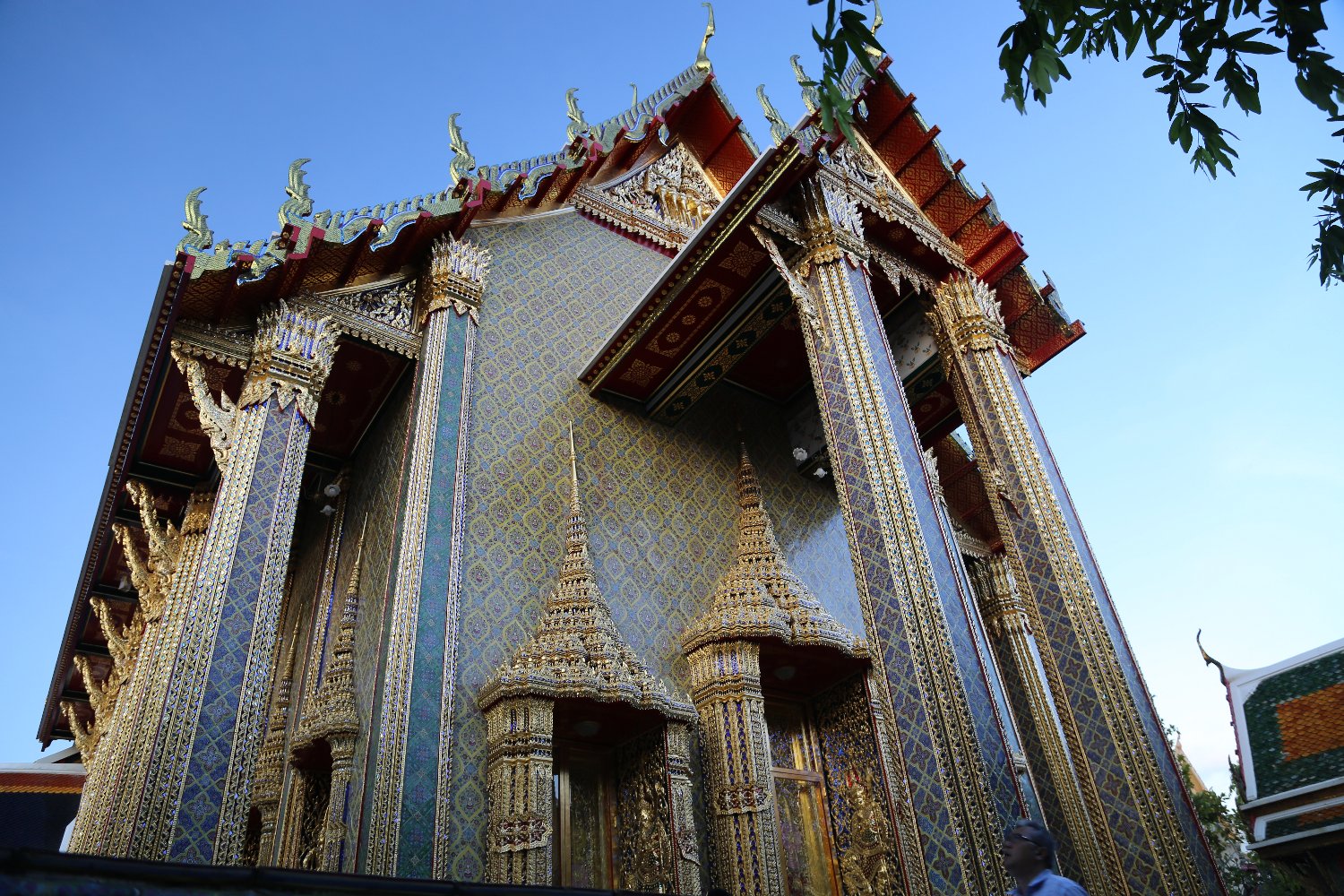
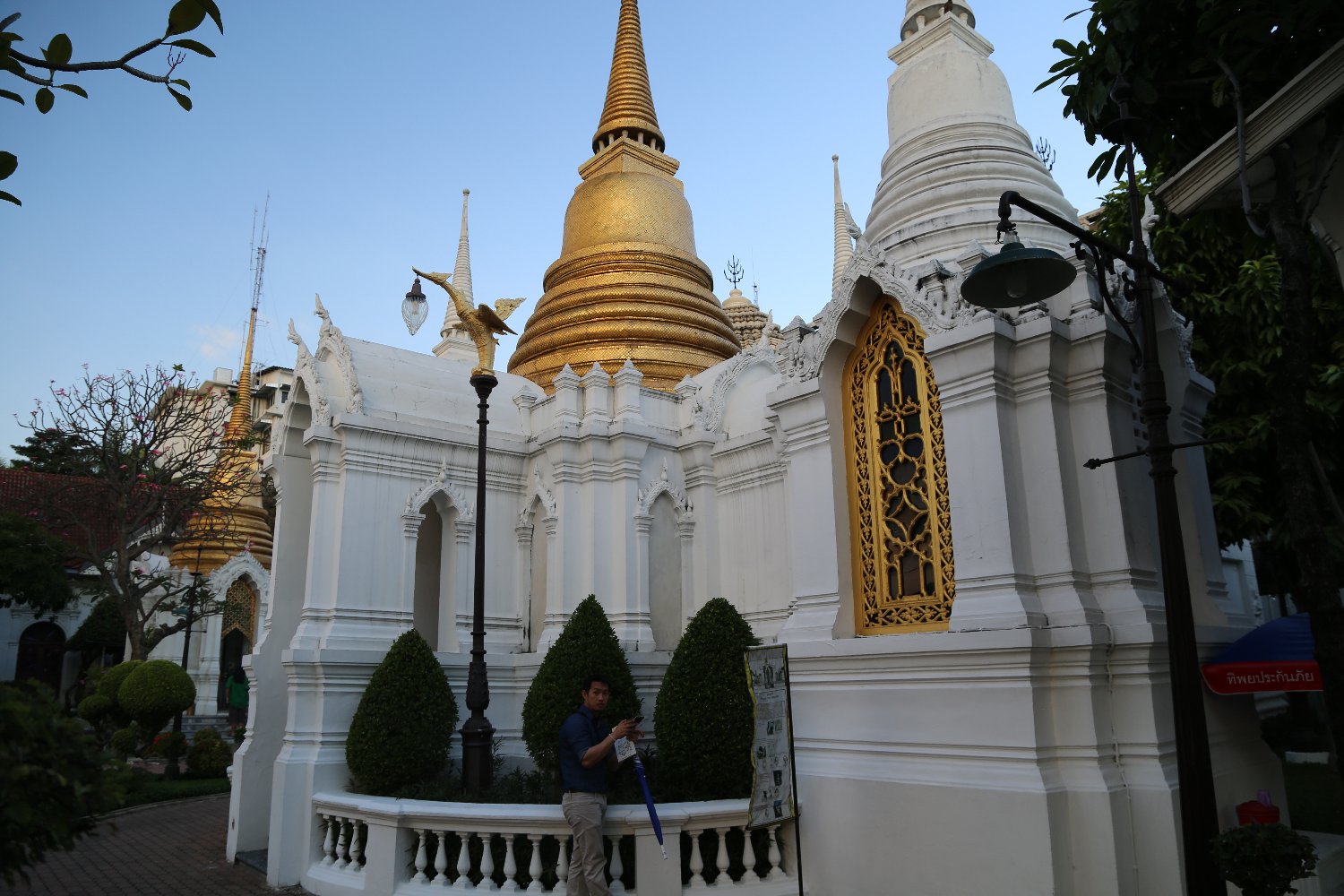
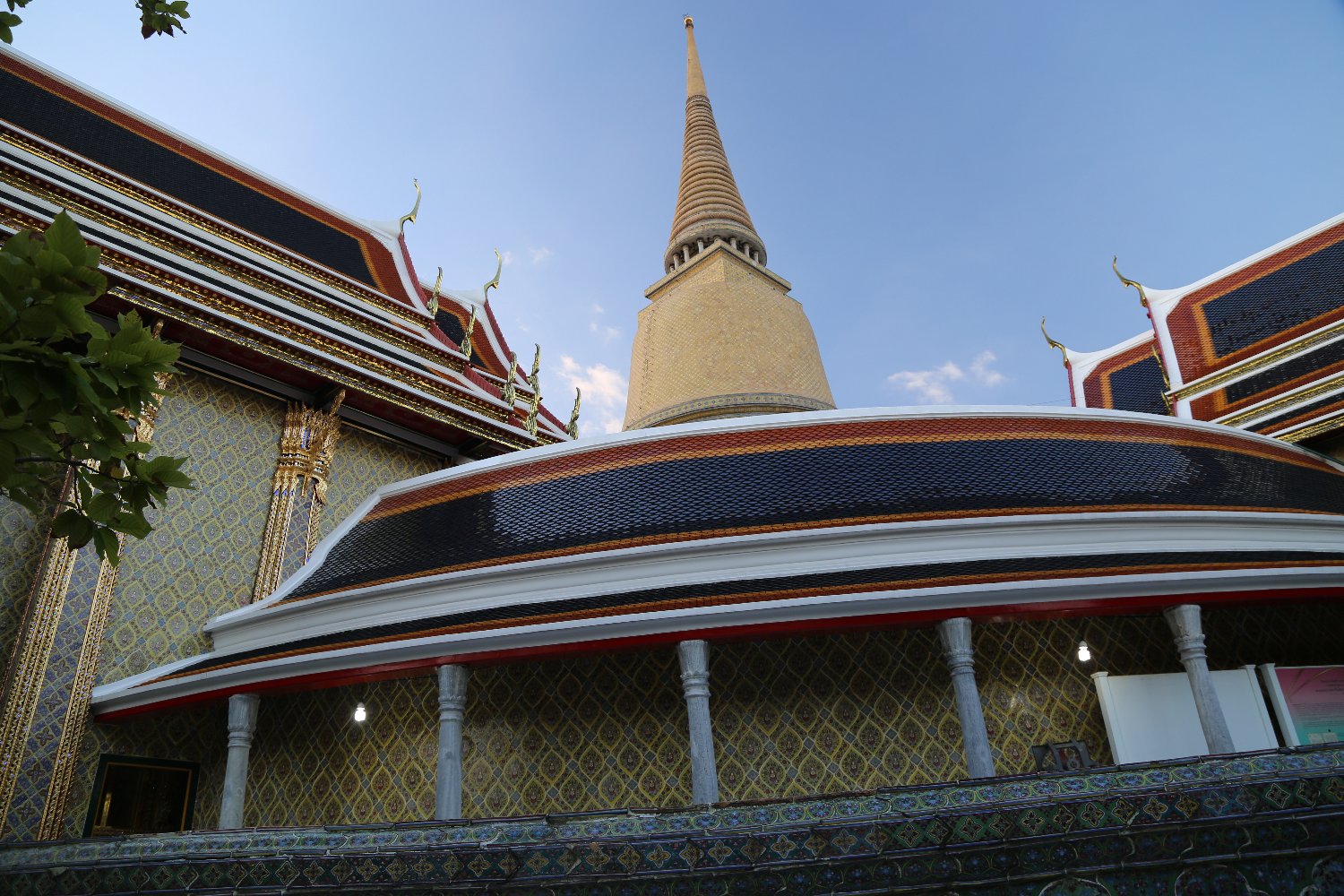
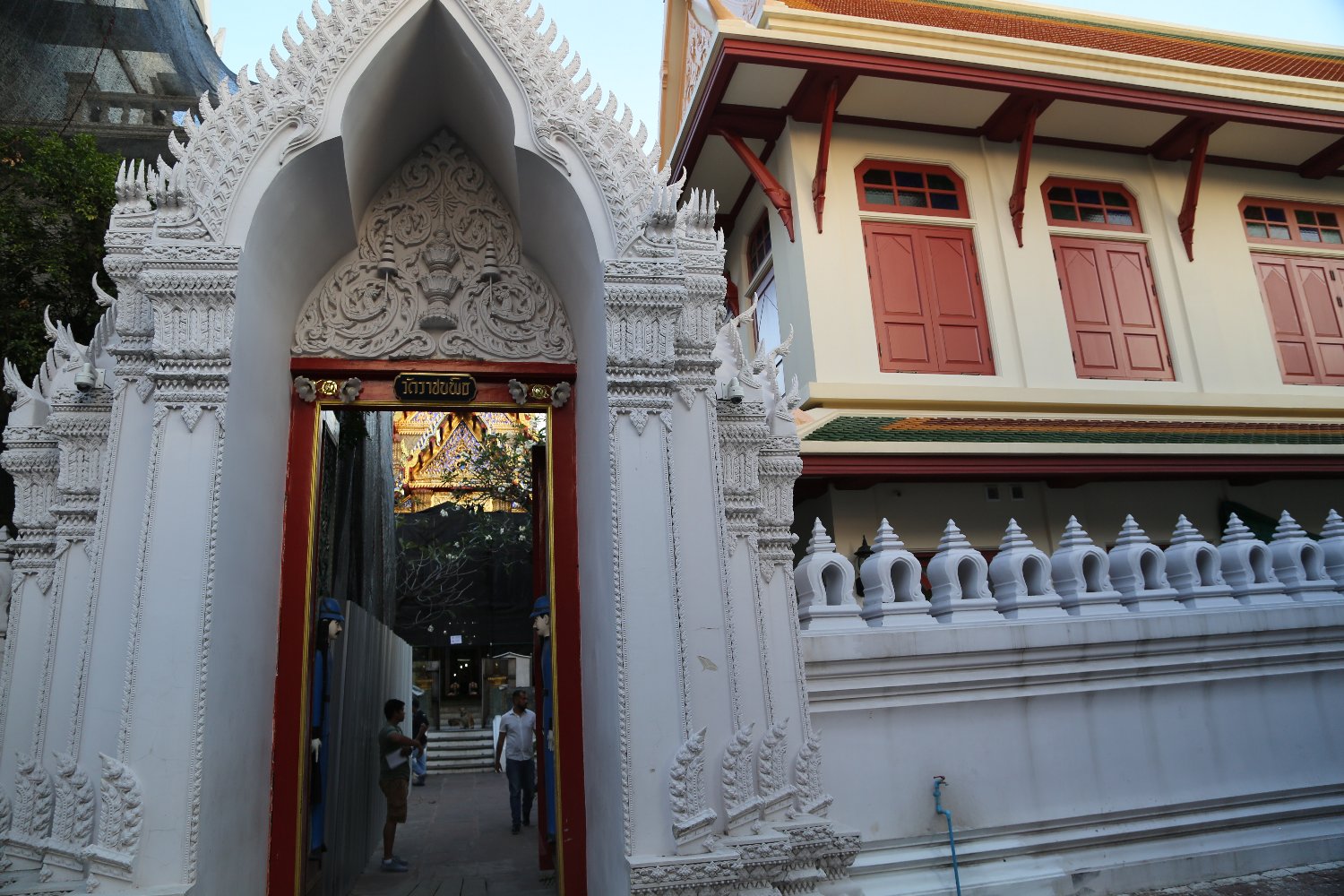
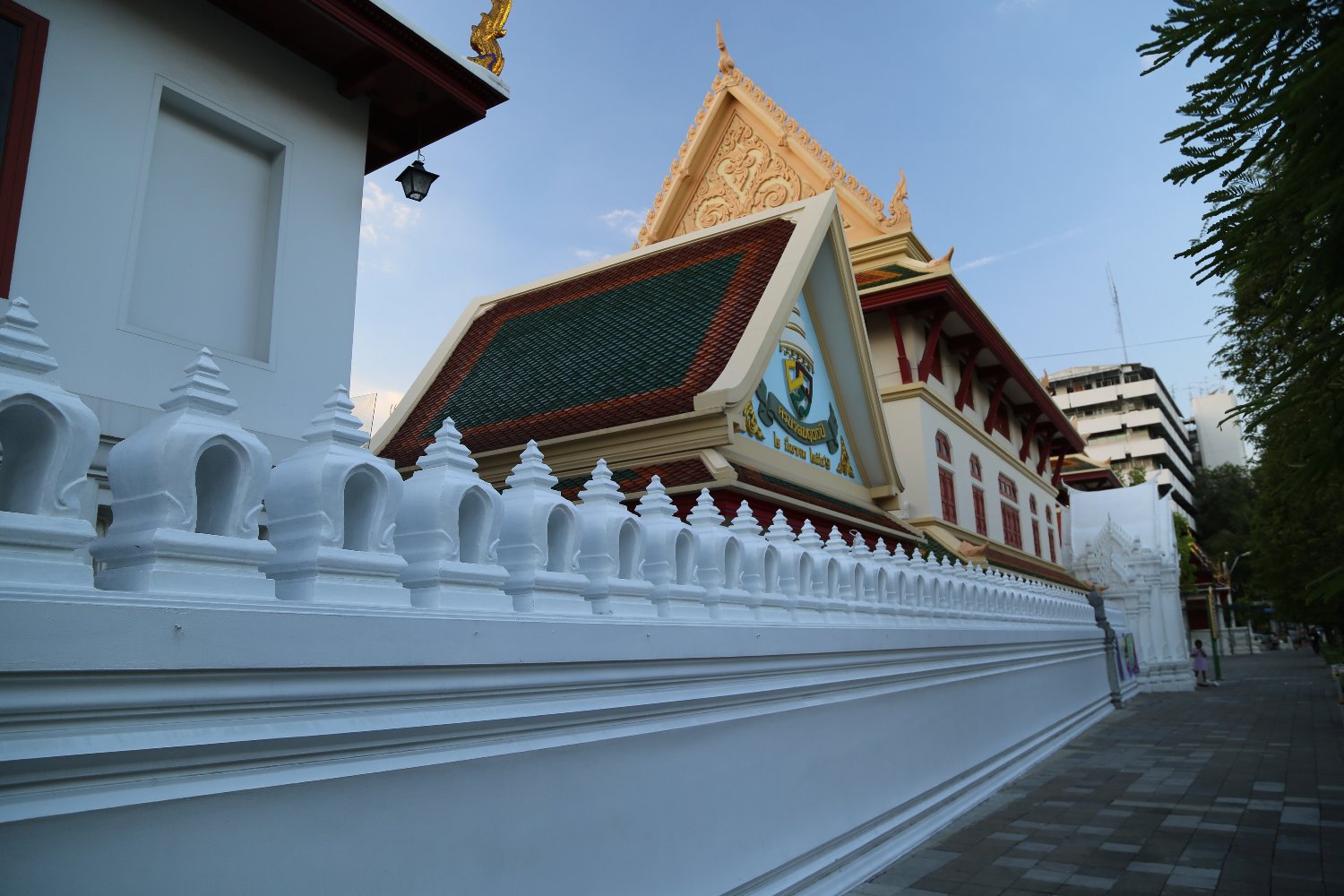
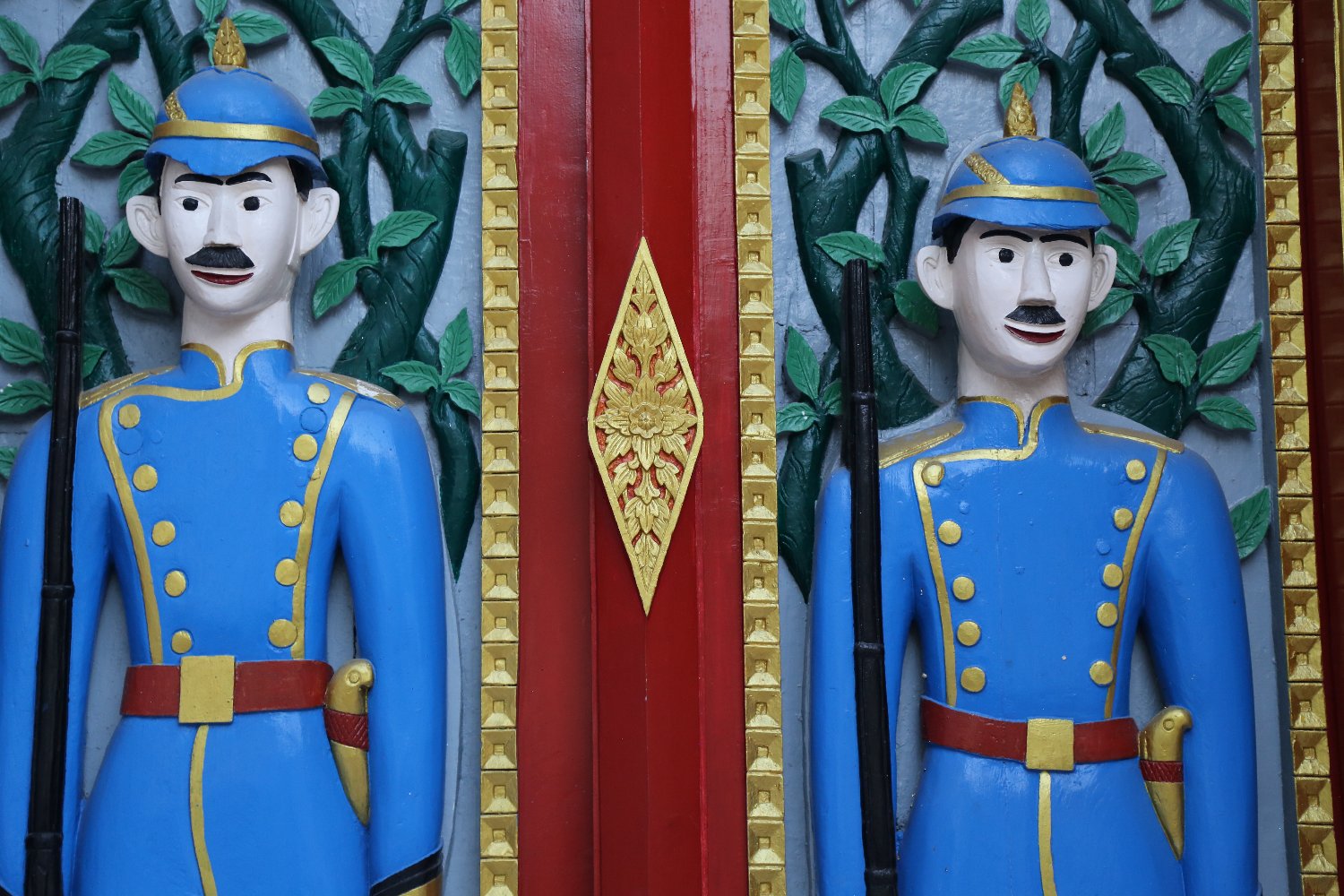
 Wat Ratchaburana Ratchaworawiharn was built by a Chinese man (Liab) who lived in the area – like other wats we have visited, this one also has gone through a number of name changes.
Housed numerous images of Buddha during one period. Was damaged by bombing during WWII and was subsequently rebuilt following the war. The present temple was rebuilt in 1960.
Located close to the Rama I Memorial Bridge and a sizable public park. Opens early! 6am.


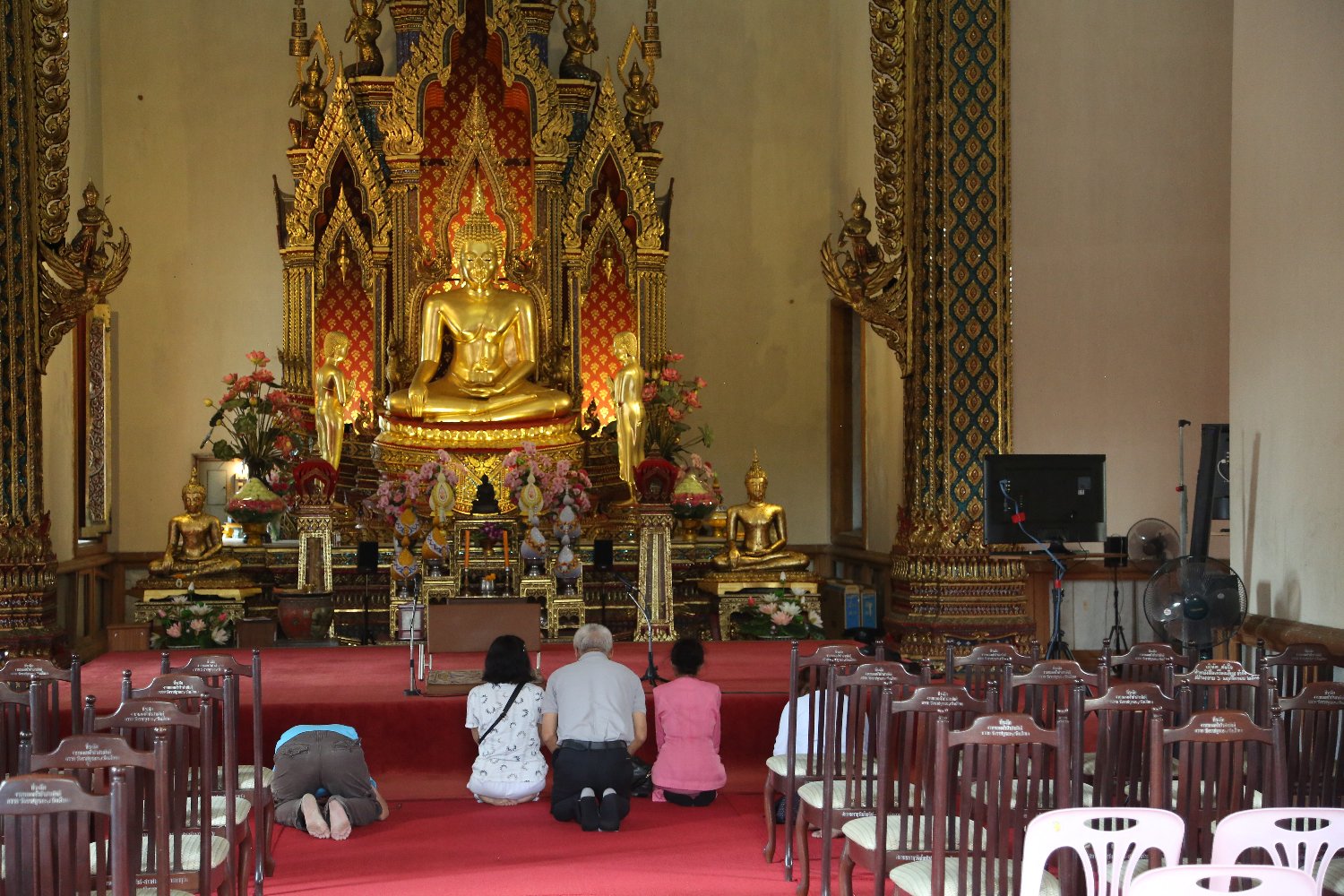
Wat Ratchanatdaram Worawihan (Loha Prasat) is one of Bangkok’s most revered and respected temples (and beautiful, we might add). Located within a short walk of the Democracy Monument and the nearby Wak Saket (Temple of the Mount). No BTS or MRT stops immediately nearby – best accessible via a taxi or Uber. Originally built in 1846, the name means Iron Castle in English – the roof is topped with bronze tiles. 37 black metal spires are built into the castle, each one represents a specific virtue required to obtain to reach enlightenment.
Modeled after only two structures which no longer exist – one in India and one in Sri Lanka.
Visitors will discover a number of exhibits and information in the “labyrinth” of the complex – a series of small corridors and rooms supported by thick walls containing prominent arches (the information is presented in Thai but during a recent visit here we observed plenty of photographs). This part of the complex is also home to small meditation rooms for the monks.
Spiral steps lead to the upper most levels (you can get off at any level to explore). Be sure to stop at the open-air walkway on the 4th level for good views of Loha Prasat and the nearby Wat Saket on the hill. The small shrine on top features a number of relics relating to Buddha.
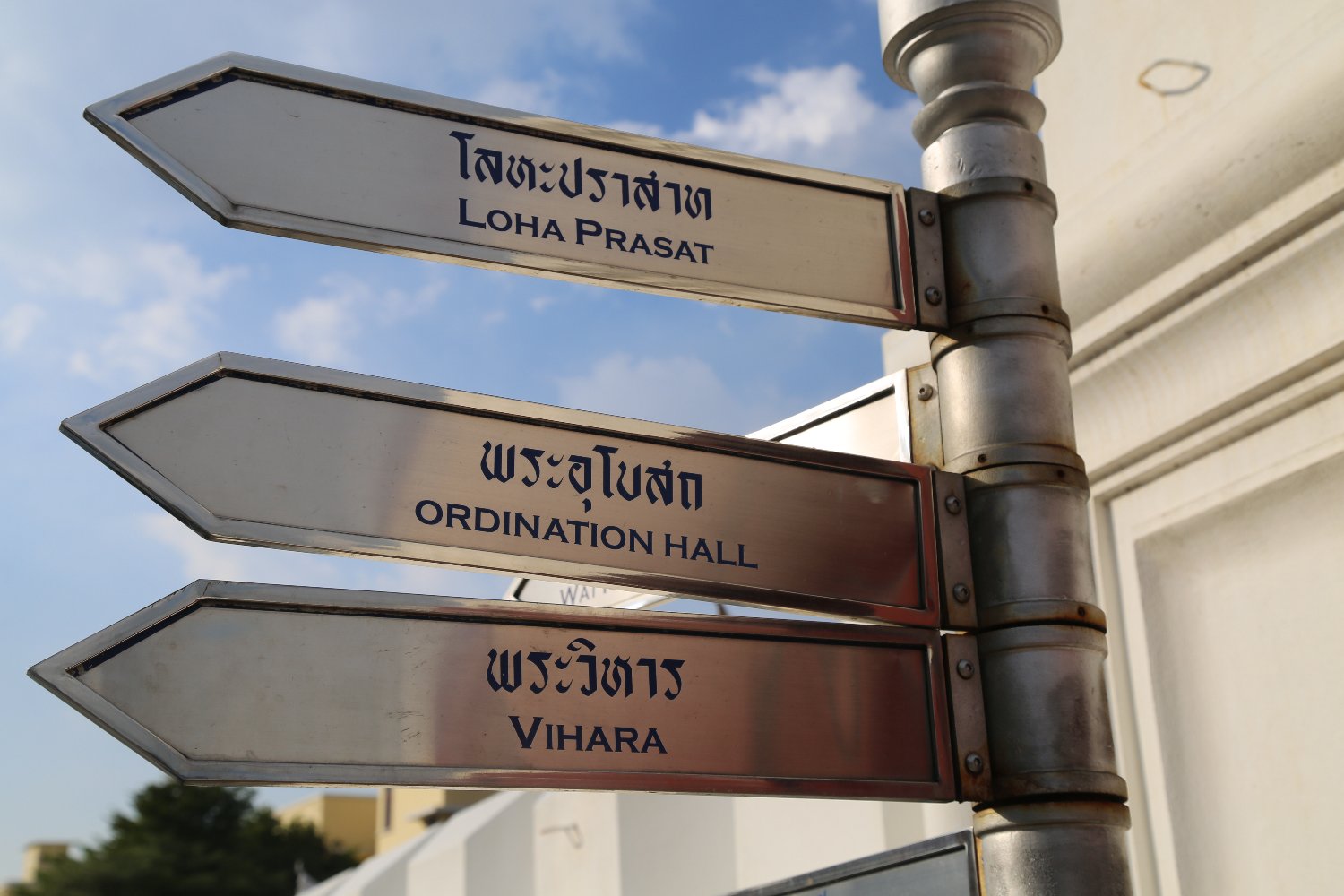

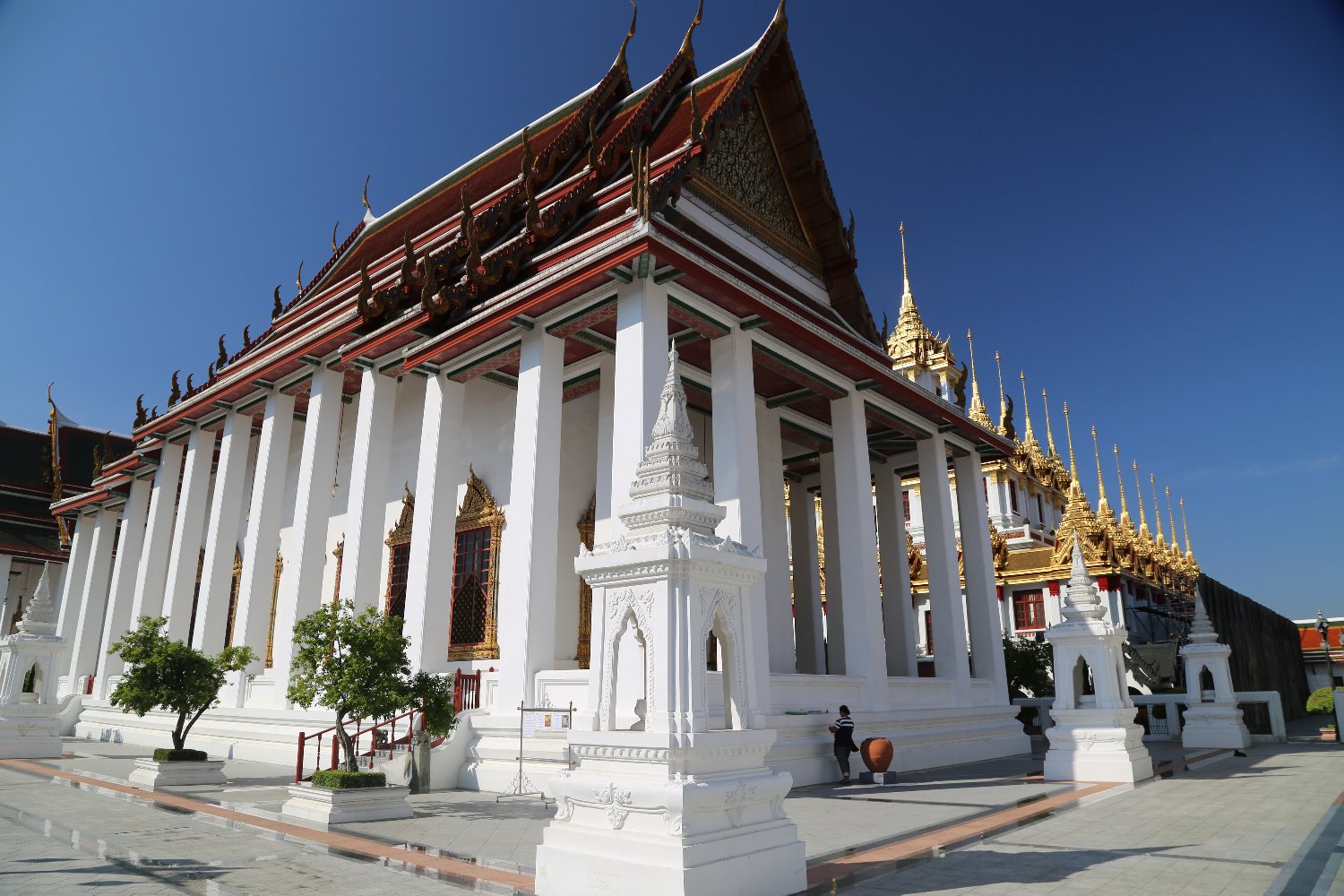
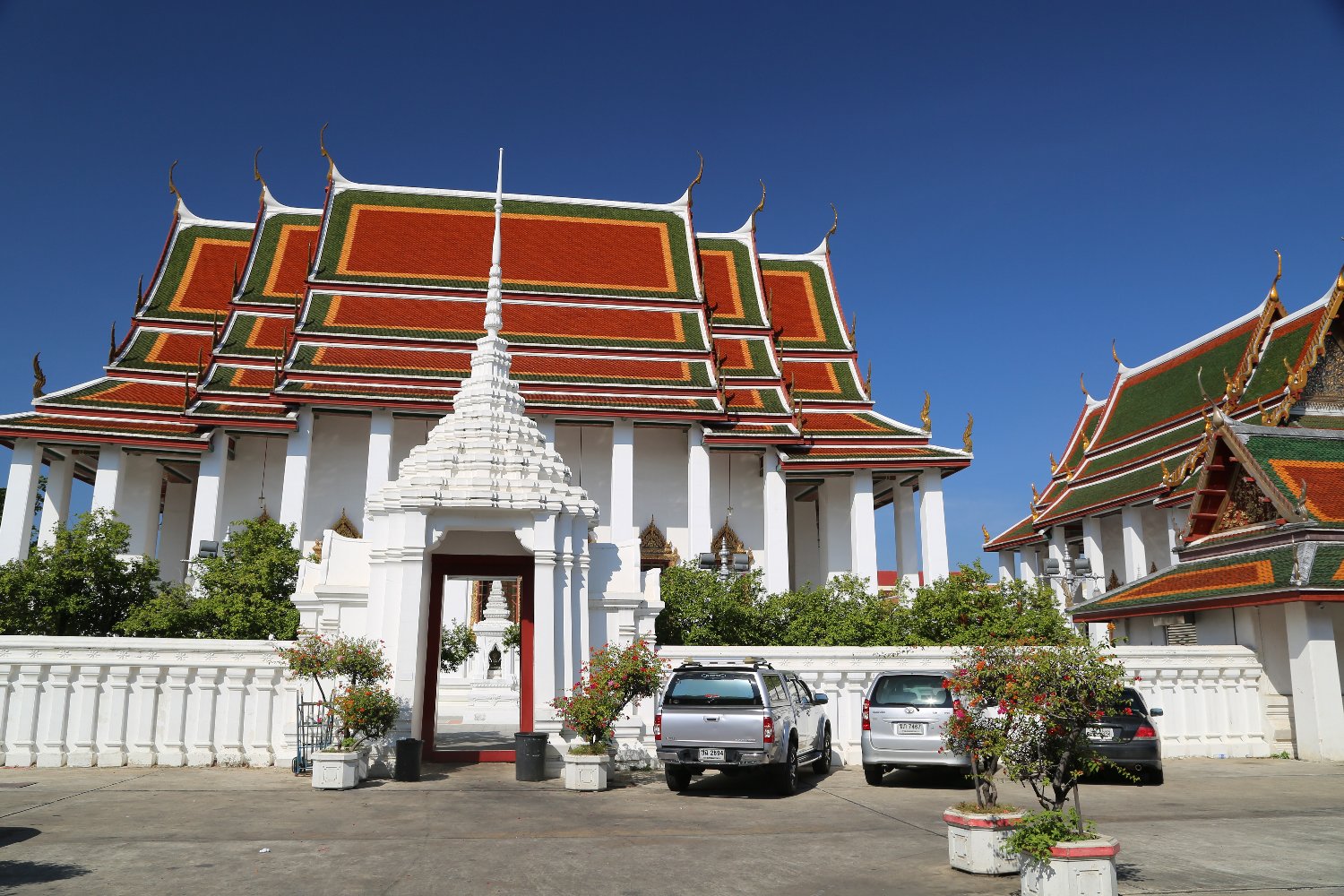

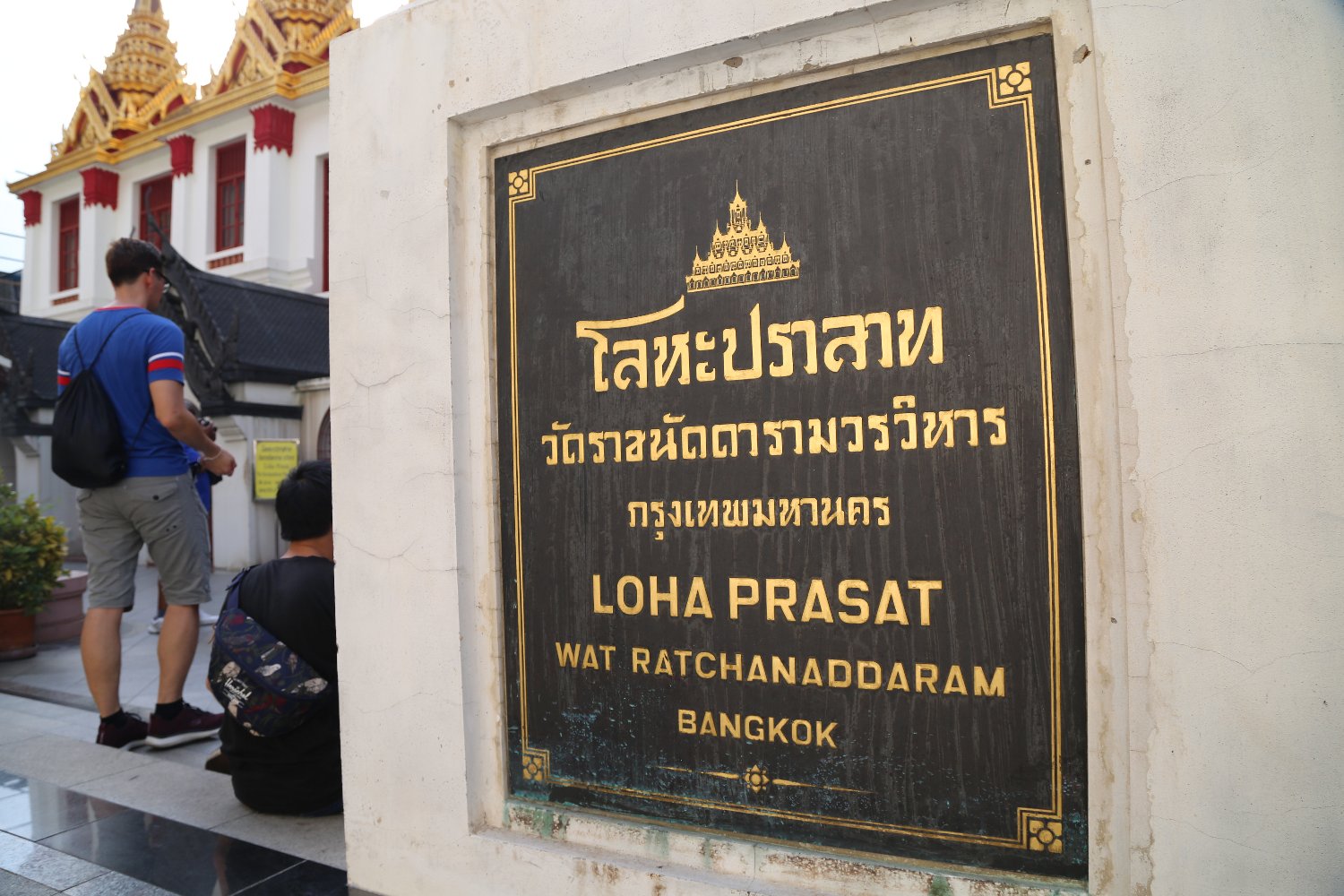

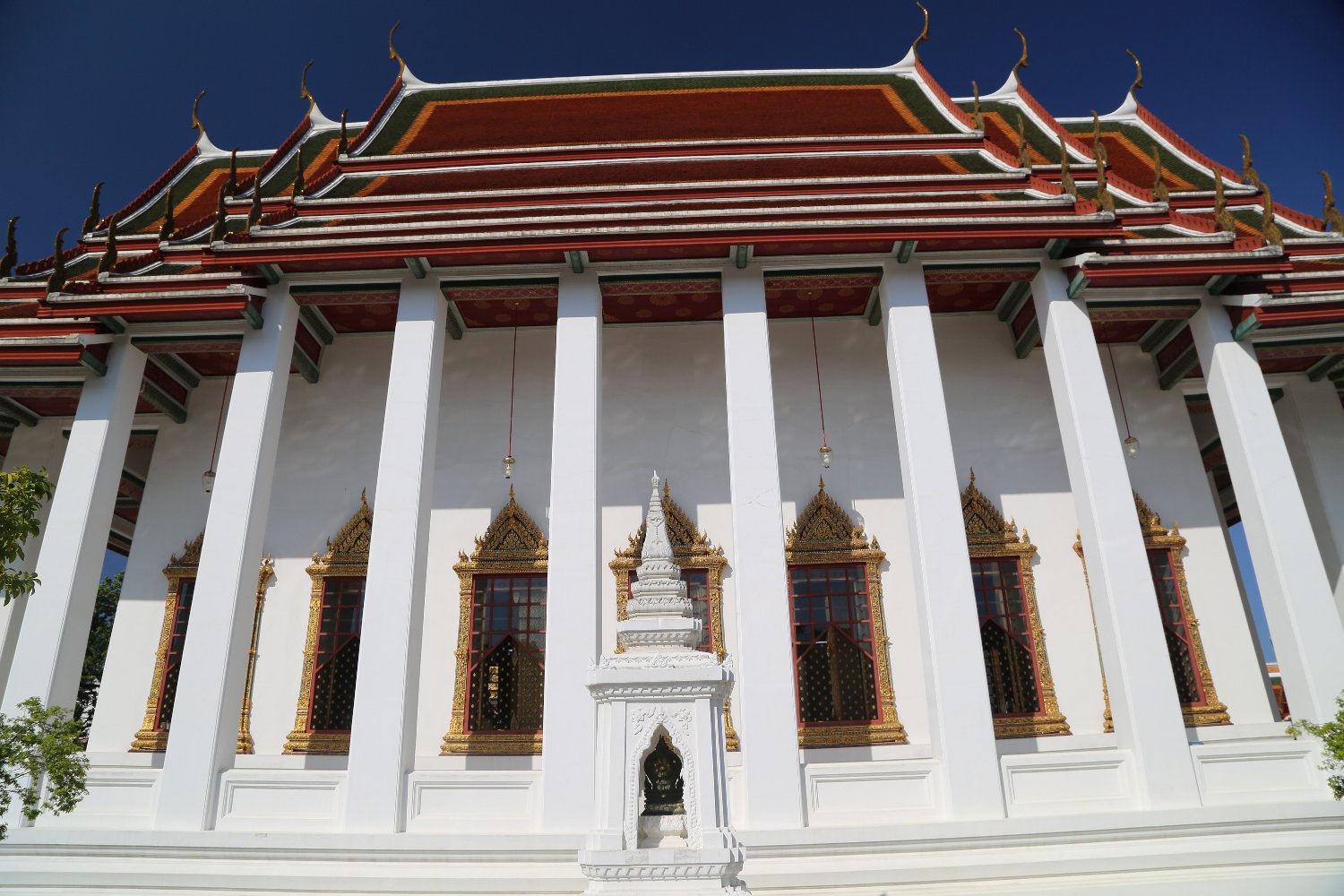
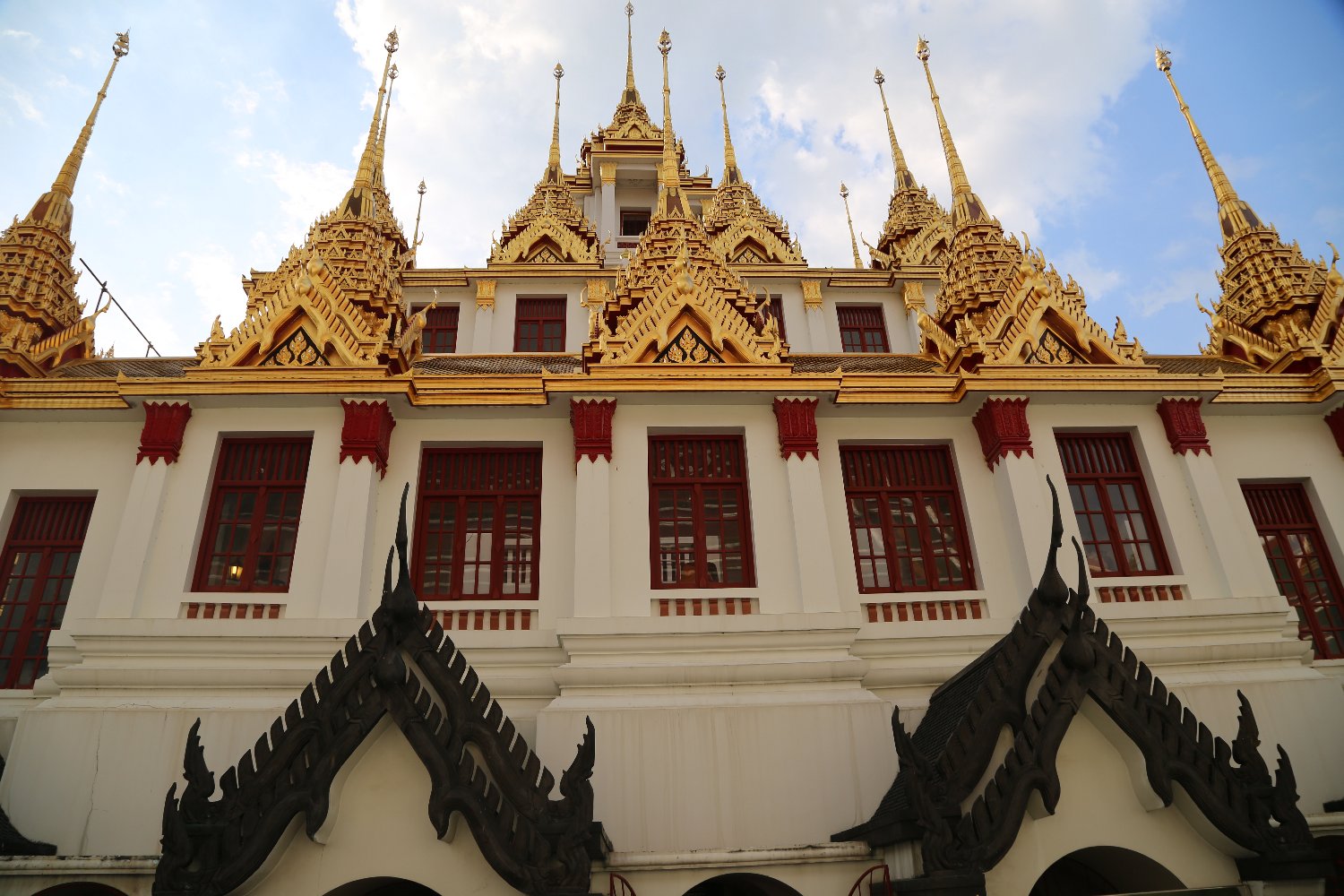
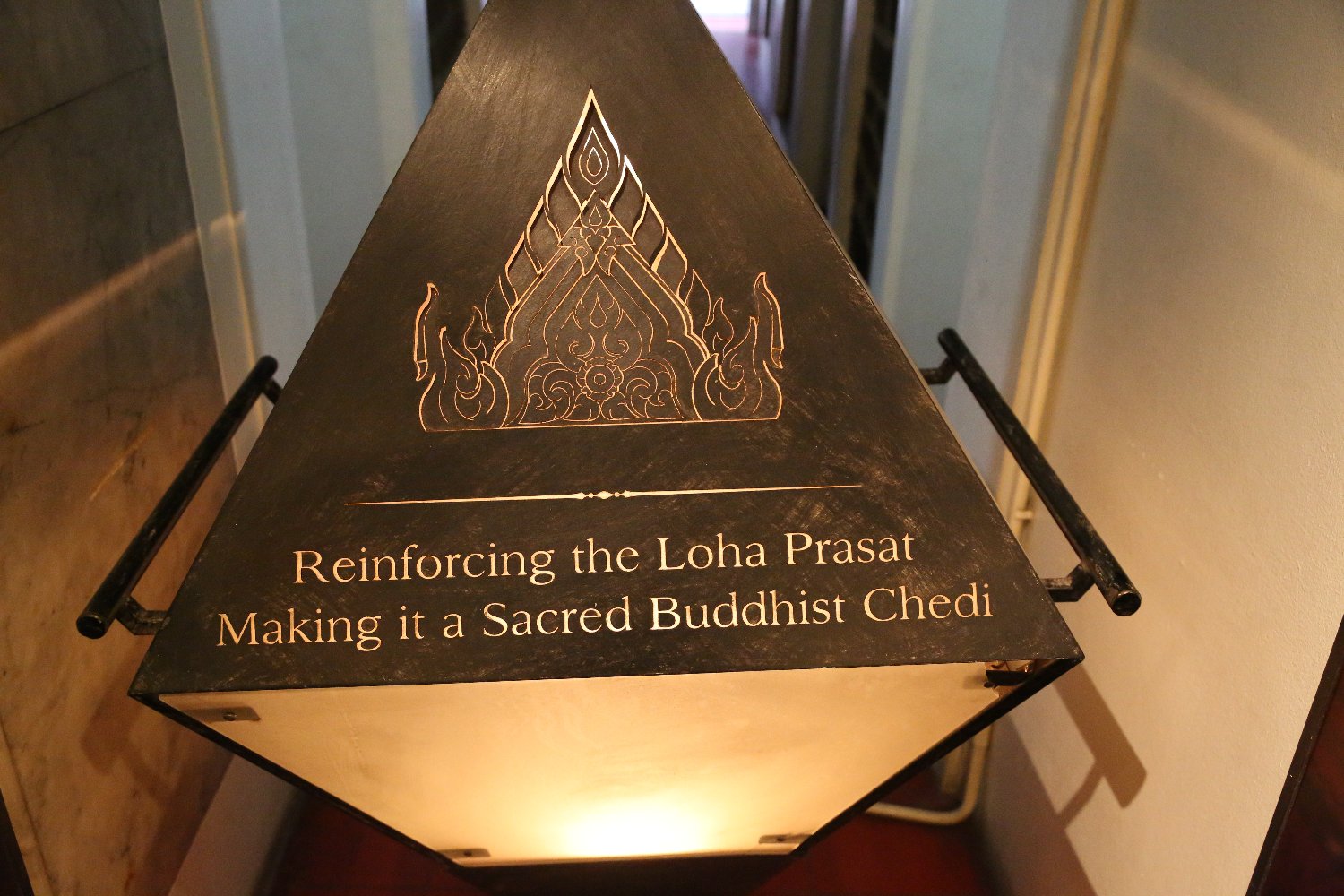
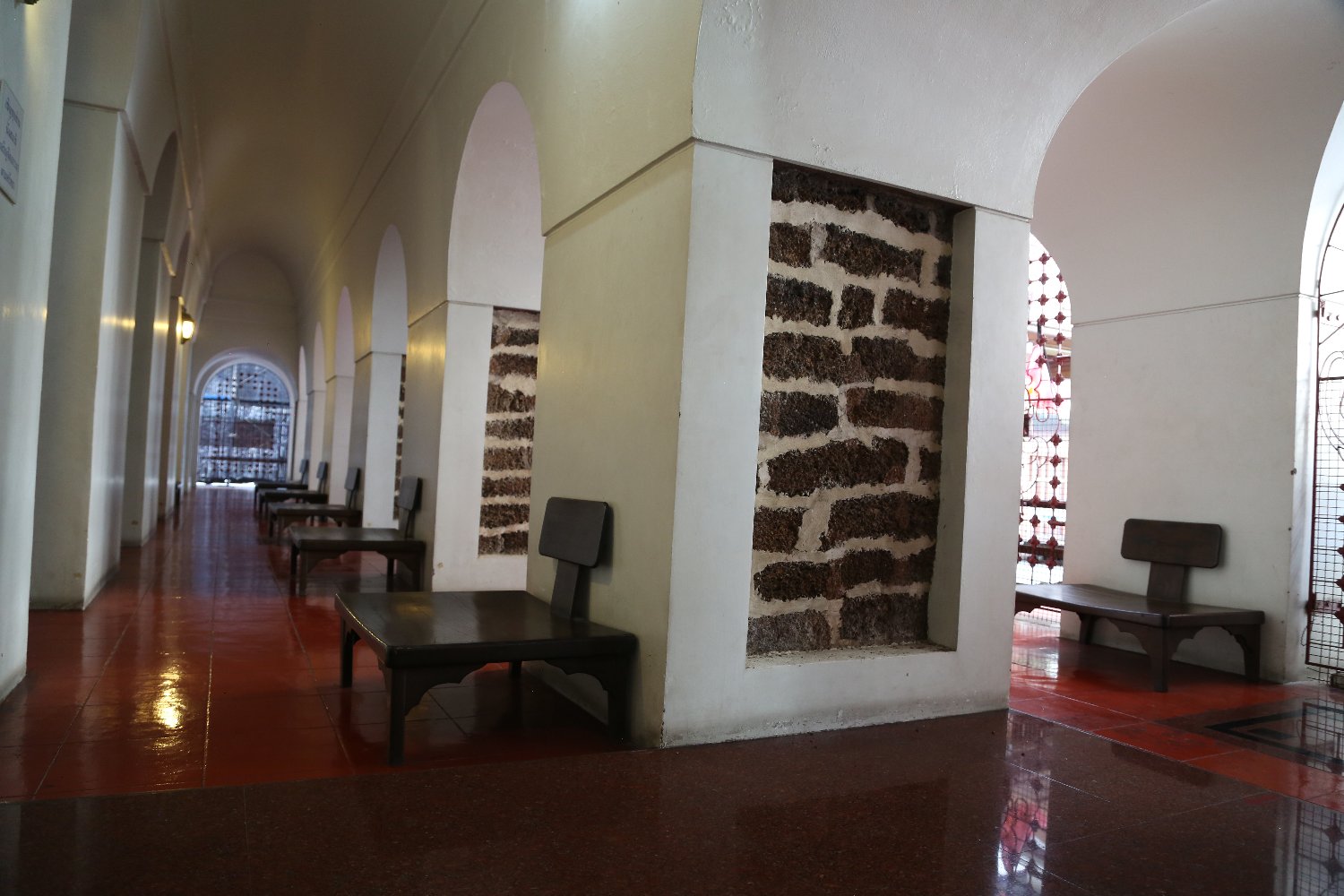
Wat Ratchasittharam is located on a small soi off of the busy Itsaraphap Road not far from the Bangkok Yai canal. For reference, it is located about a 15-minute walk from Wat Arun. This temple was founded by King Rama I – it was built close to the original temple (called Wat Phlab) and eventually this old temple and the new temple were combined.
Also, of historical significance – Kimg Rama II, III and IV studied Buddhism here. King Rama IV even used to live here. Arguably the highlight of a visit is to see the hand painted murals inside the Ordination Hall (depicting the three worlds of Heaven, Earth and Hell). The inside of the hall is also intriguing because the walls and the floors are built with marble. Also, a nice collection of white chedis.


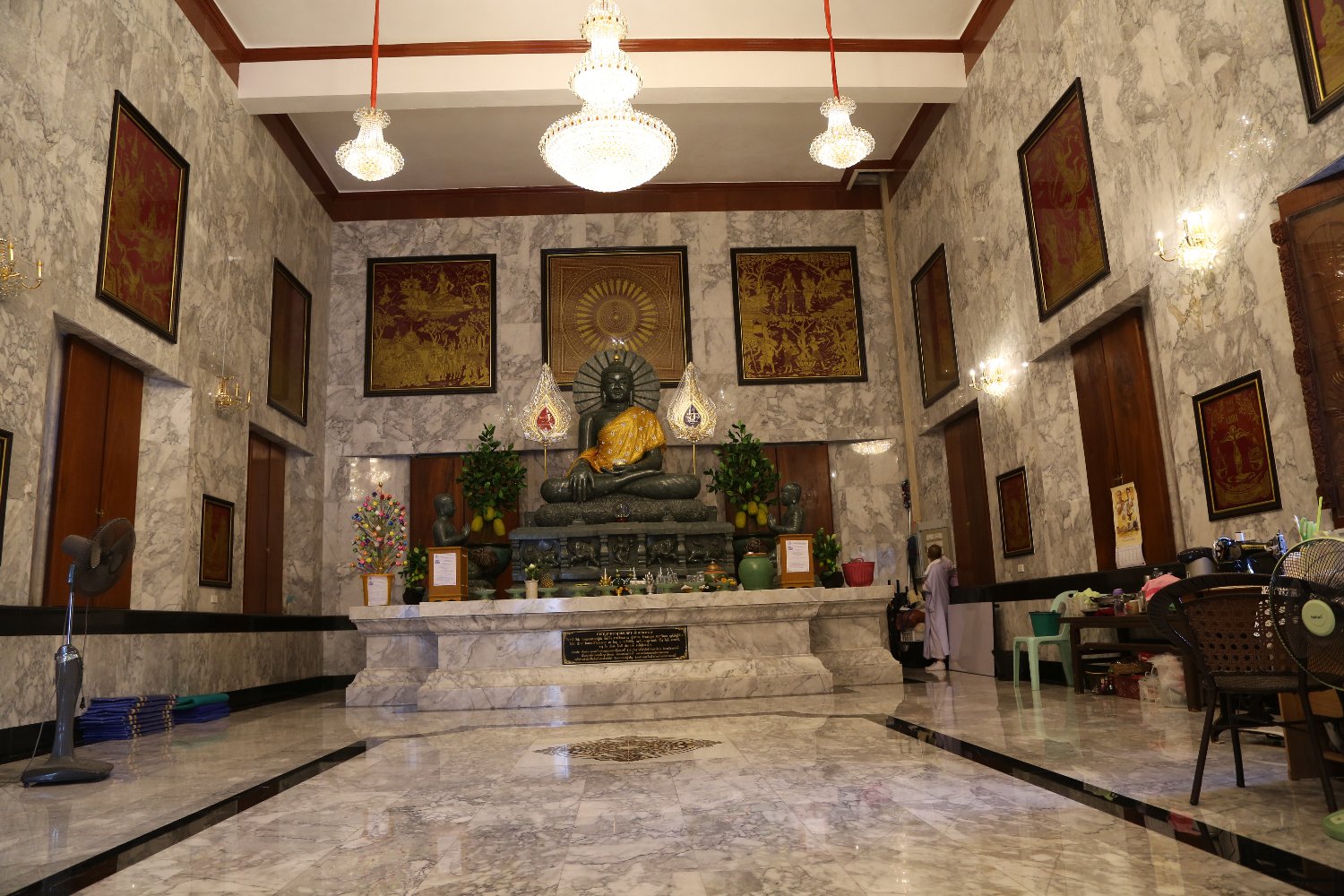
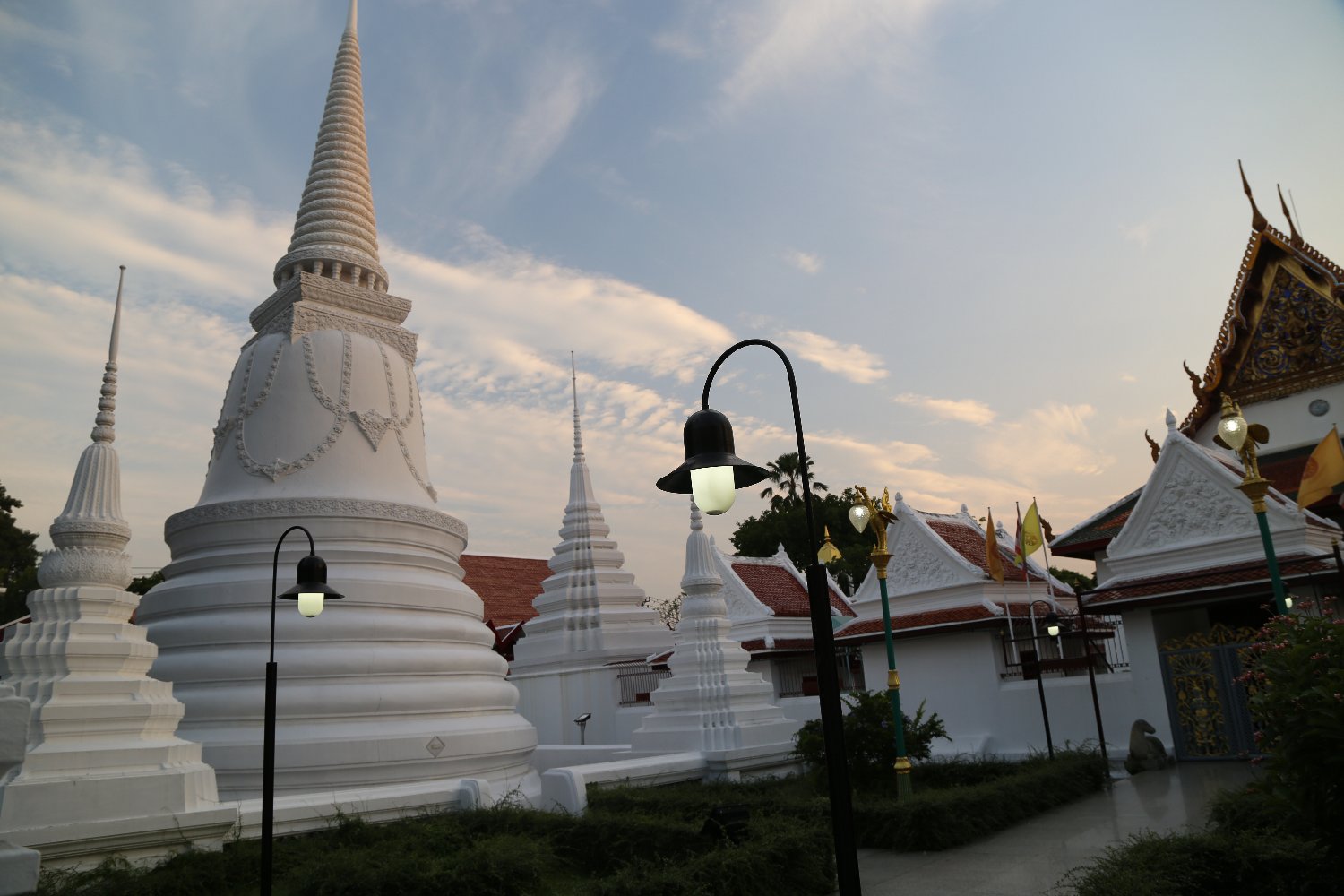
Wat Ruak Suttharam is located on the Thonburi side of the Chao Praya River nestled in between two villages – Chai Mongkhon Village and the Nakorn Luang Village. Located close to the tiny Thong canal. Known as the temple with the tree growing out of one of the walls. Very colorful and worth spending some time here wandering the grounds. Very liberal use of gold color. Well off the beaten path – definitely takes some work to find this temple.
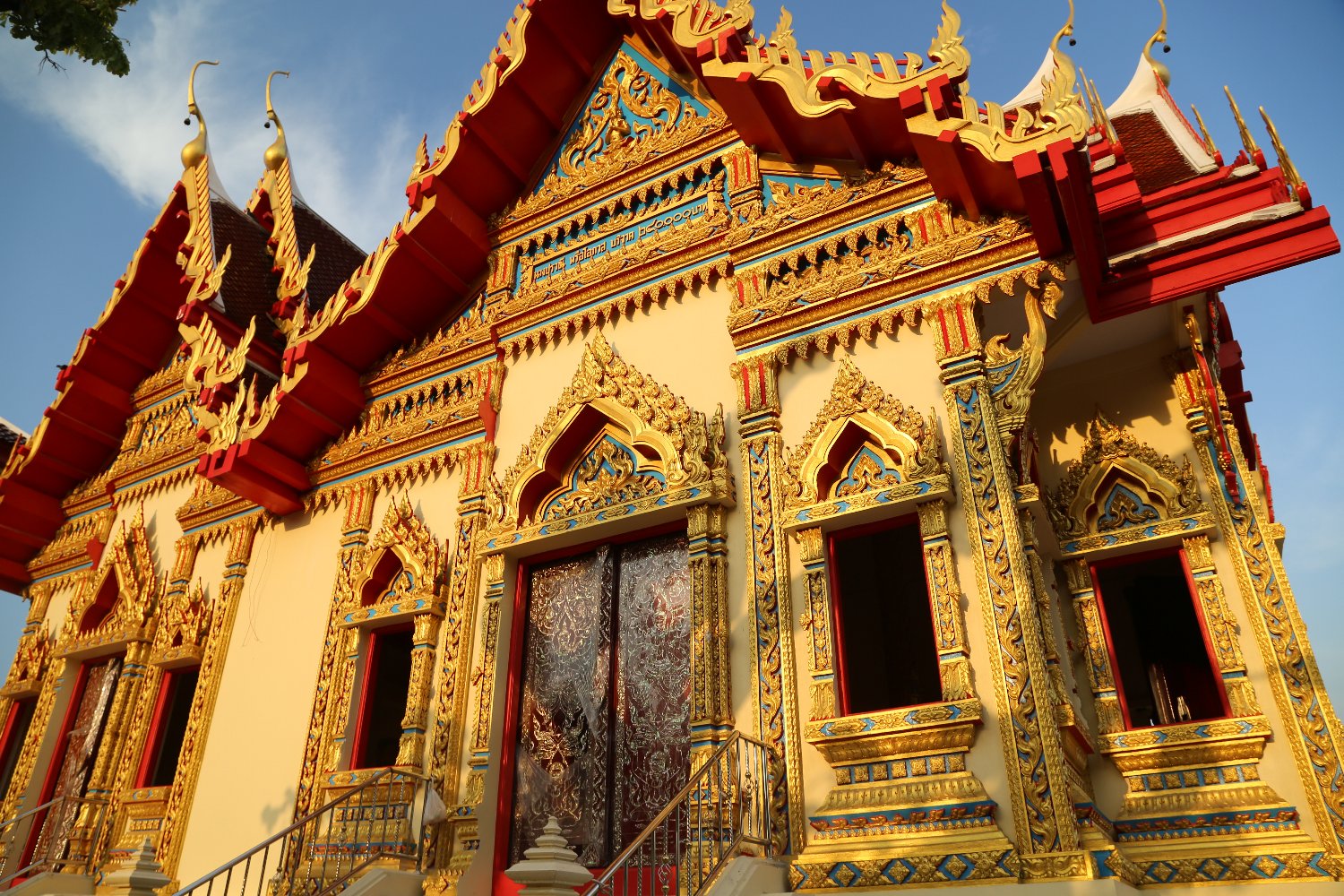


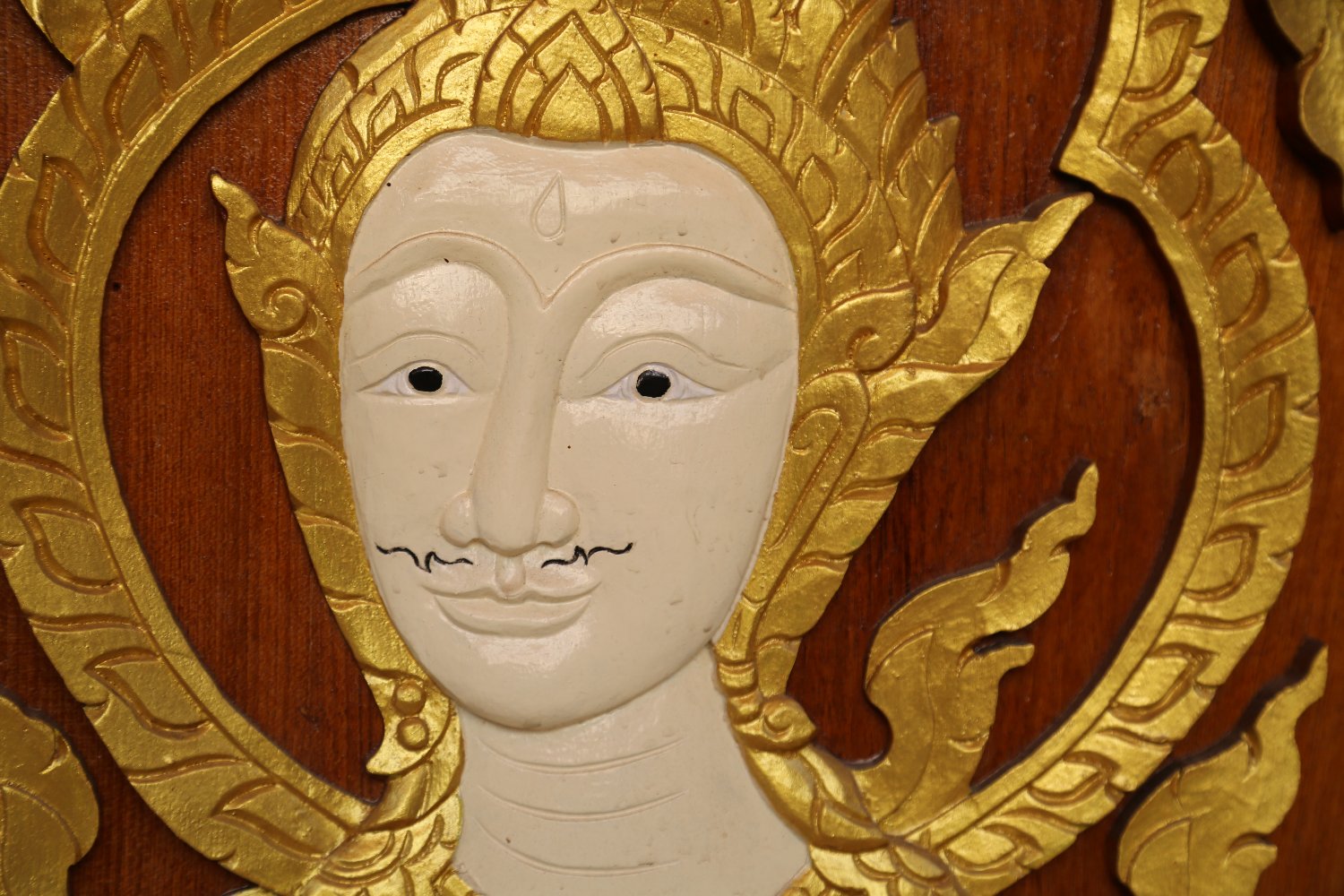
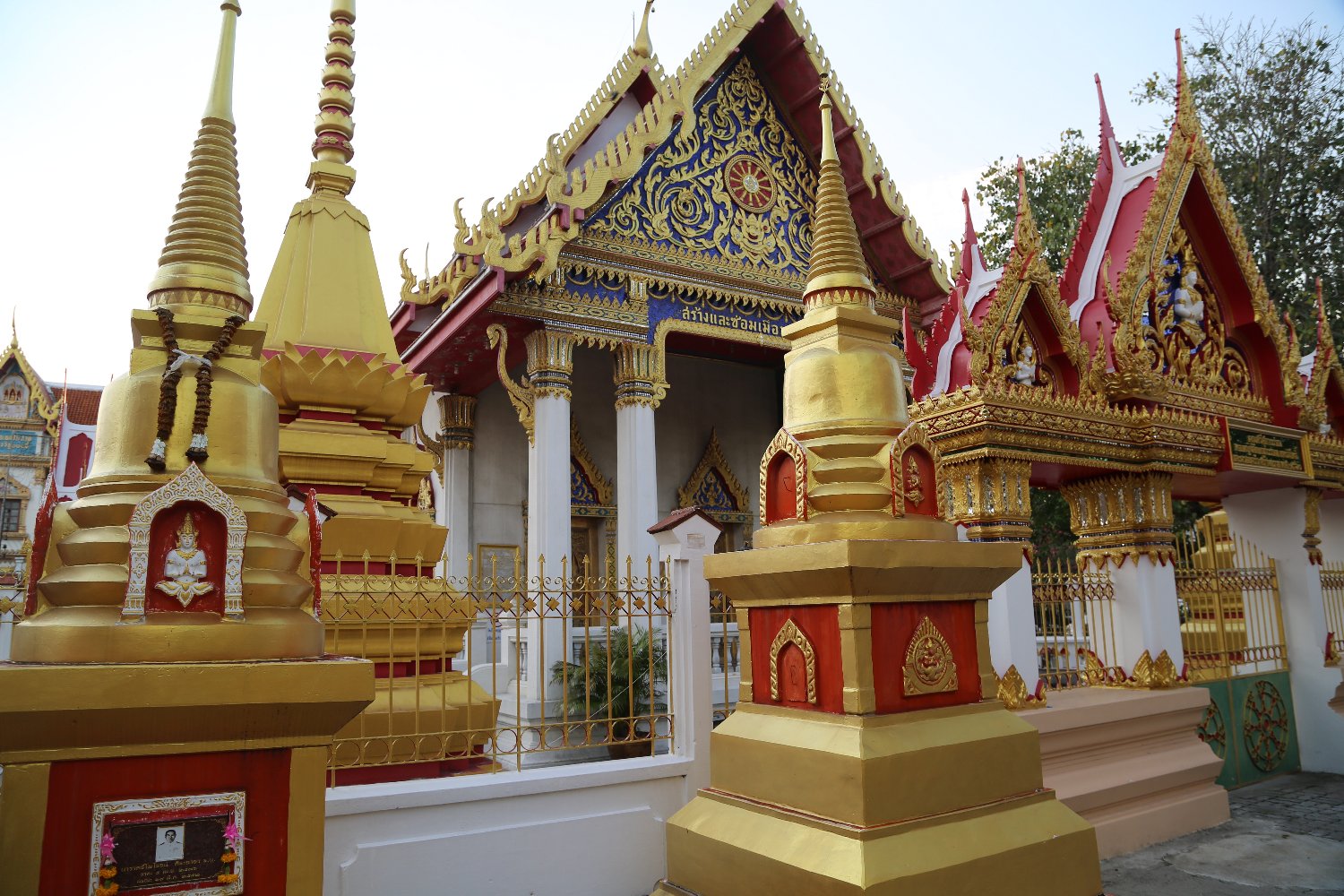

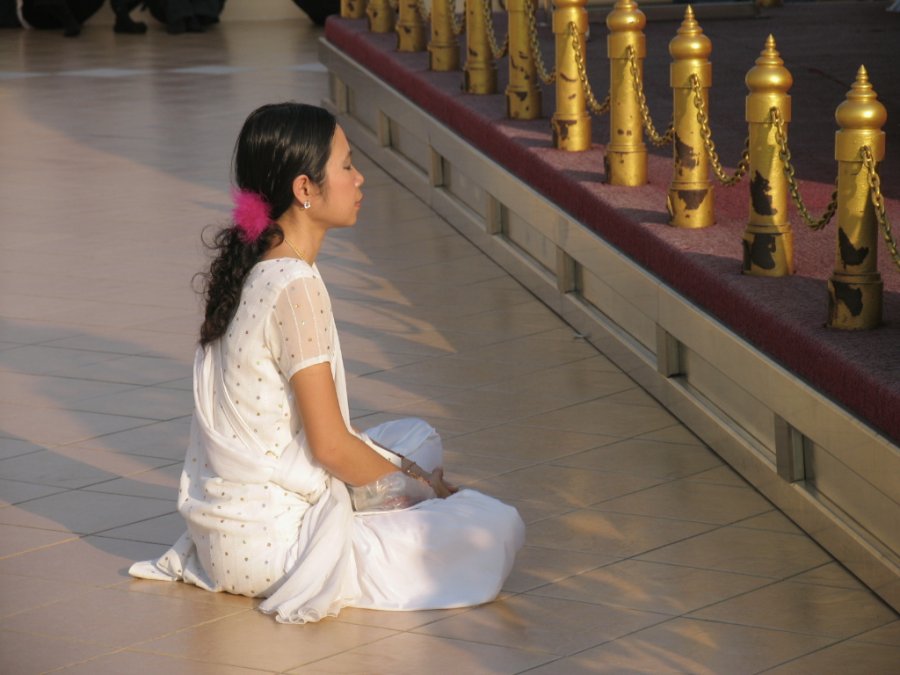
 Wat Saket or “the golden mount temple” is located in the heart of old Bangkok not far from some of Bangkok’s most well-known temples. What differentiates this temple from the others in the city, is its hilltop location featuring excellent views in all directions of the Bangkok skyline. This hill was artificially created and for many years was the tallest point in Bangkok. In addition, the sheer size and brilliance of the golden Stupa located in a small courtyard on top of the temple is worth making the climb for.
While the hill is not super tall – it is tall enough to give one an excellent perspective of the city – and this is one of our favorite places to watch the sunset in Bangkok. One has to climb nearly 350 gradual steps in order to reach the golden Stupa on top. The path is mostly in the shade and winds up a pleasant walkway – passing bells which you can ring one at a time as you walk by. This temple even has its own coffee shop located about 1/4 way up the walkway on a side alcove next to the path.
Unlike nearly all other temples we have visited in Bangkok – once you reach the uppermost level there is a sign indicating you can keep your shoes ON, rather than taking them OFF. As a result, you can visit the shrine on the uppermost level and the courtyard next to the stupa, wearing your shoes.
A temple roadway encircles the hill – visitors enter through the main entrance and pay the minimal entry fee. Often mist will be spraying from sprinklers near the entrance – a very welcome addition especially during the mid-day heat and humidity that Bangkok is known for.
This temple has a rather gristly past – dead bodies used to be placed out in the open air and vultures would congregate by the hundreds to dine on the rotting meat. The surrounding neighborhood has never shed its name of “Ghost Gate” still referring to the long-ago corpses that would be stacked up at the temple.
This temple can become extremely crowded during National Holidays such as Songkran and Loy Kratong. Estimated visit time: 45 minutes
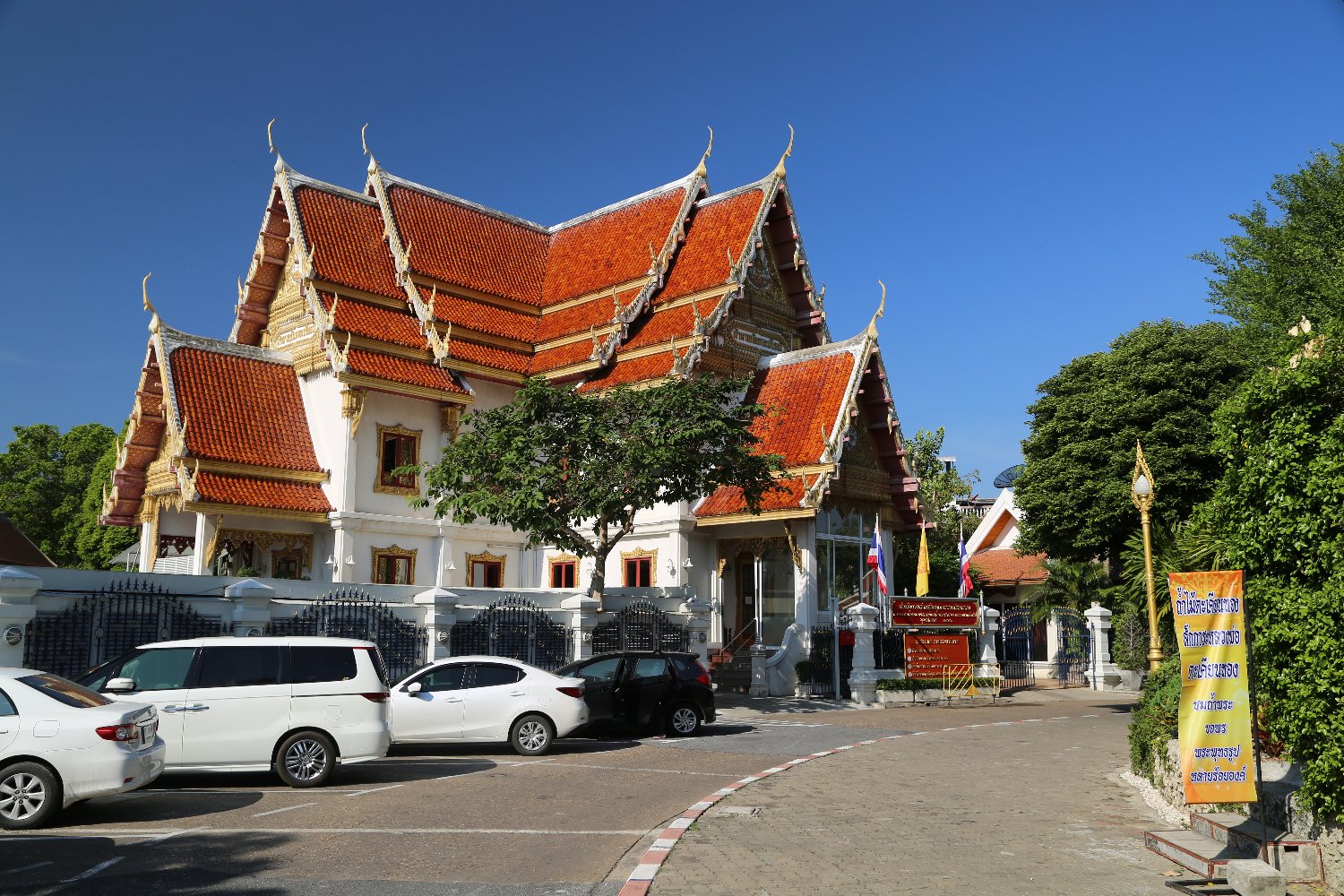

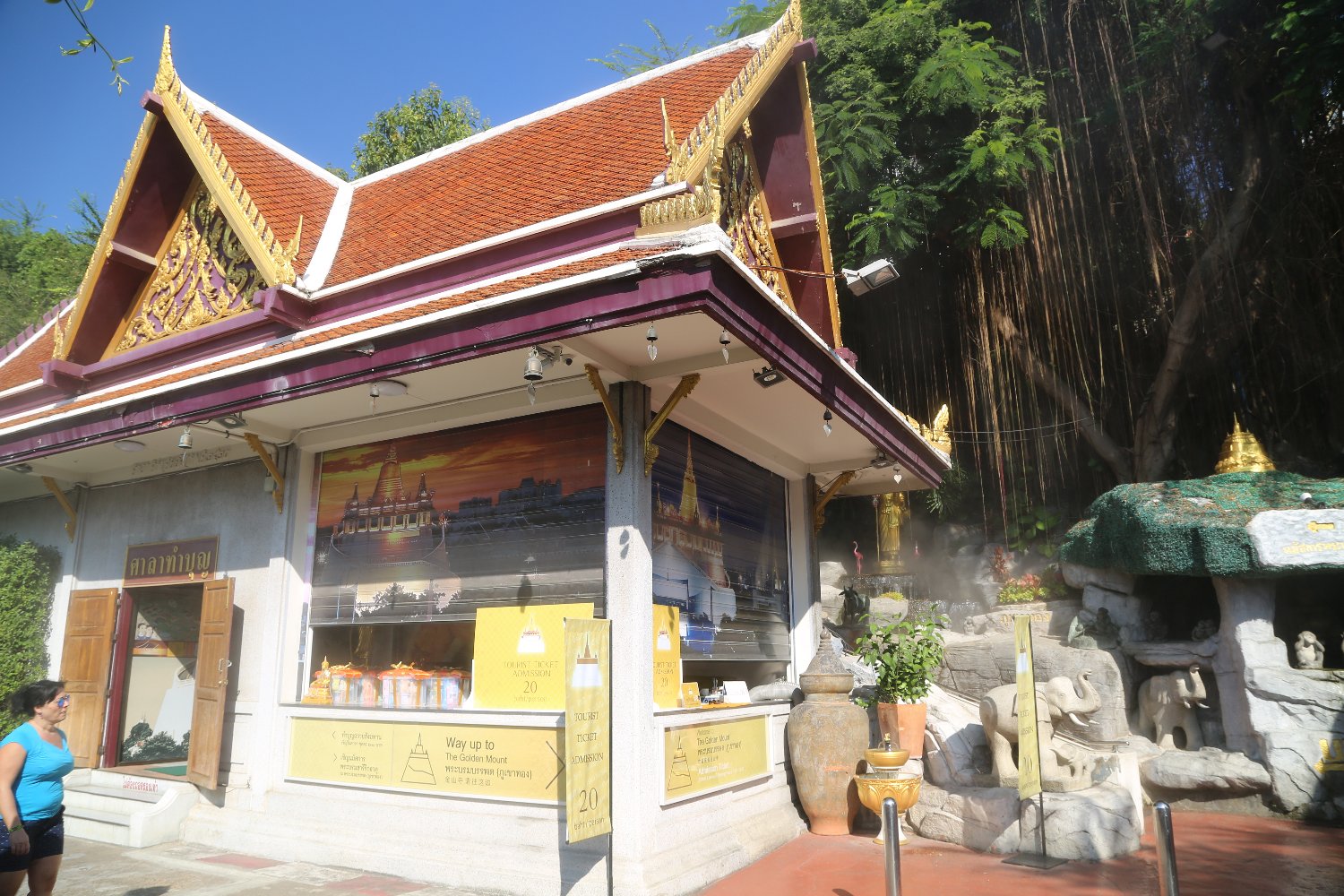


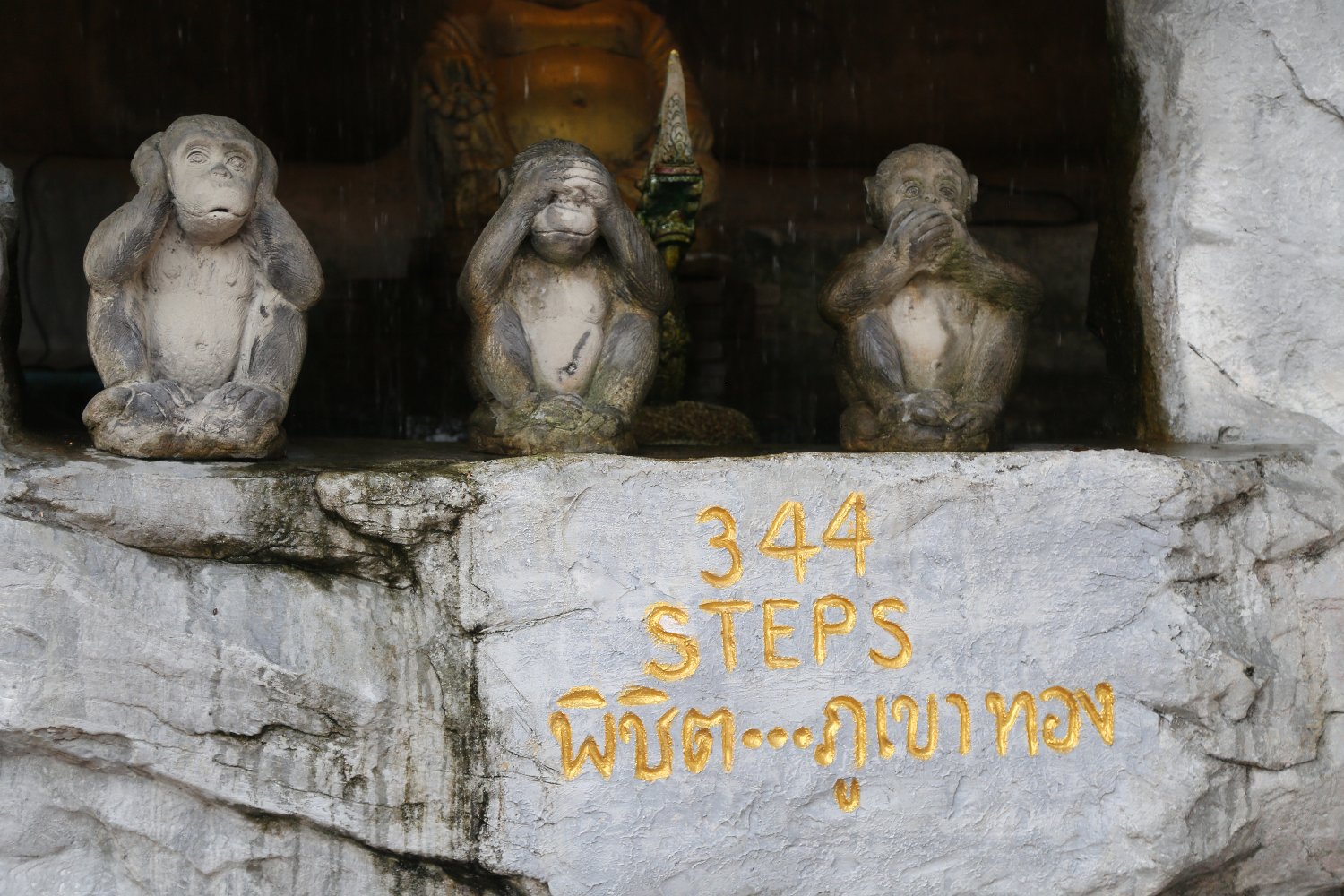


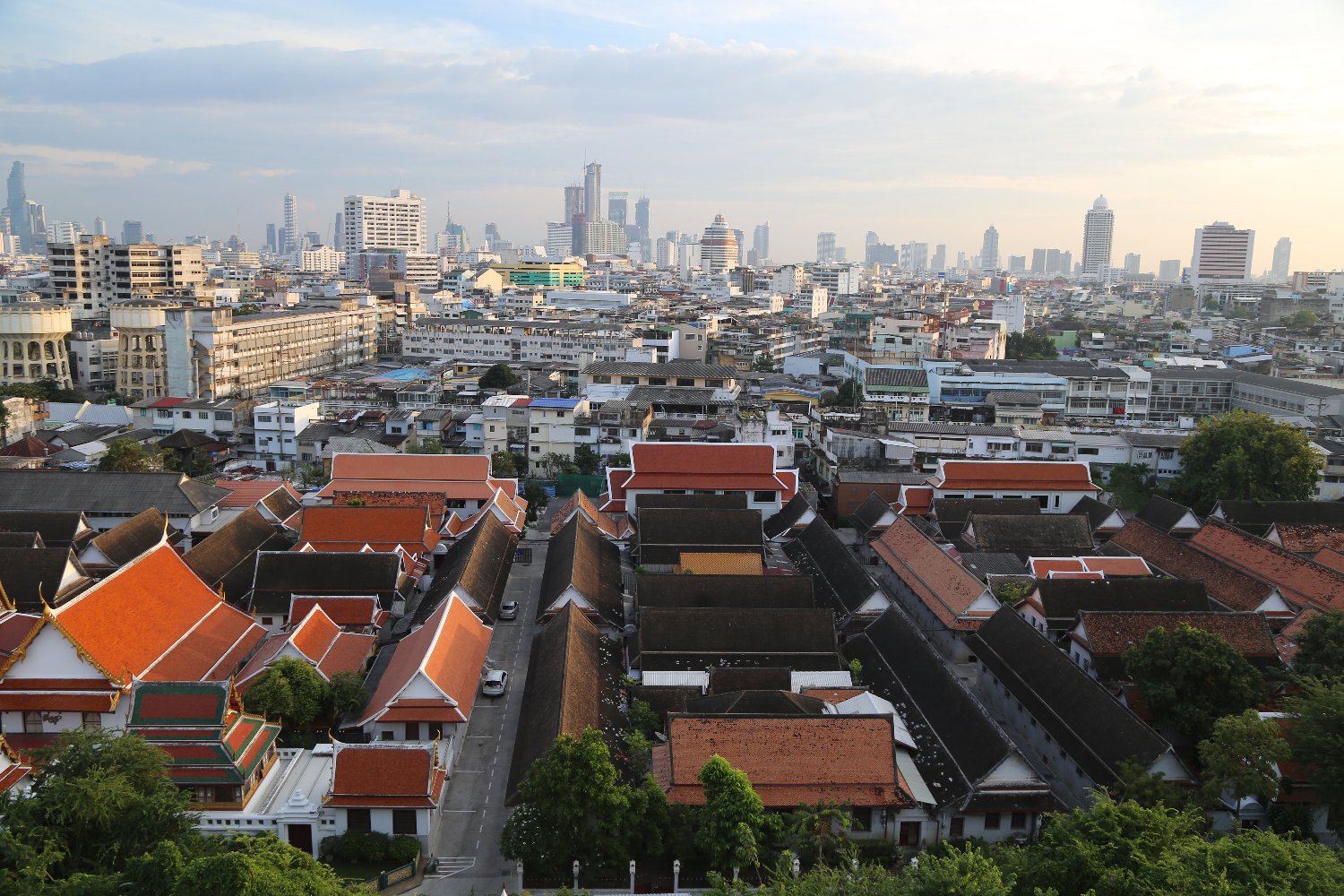
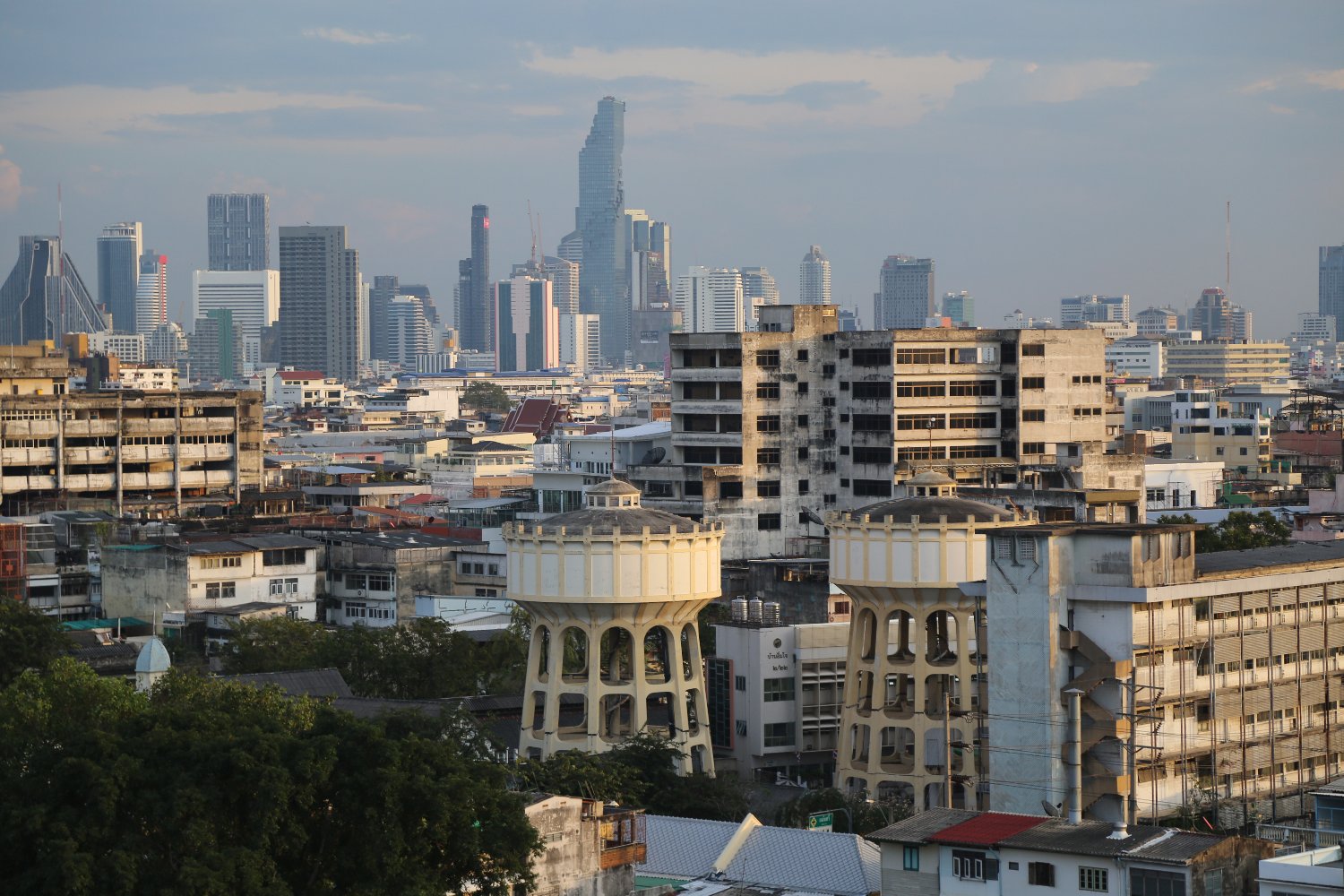
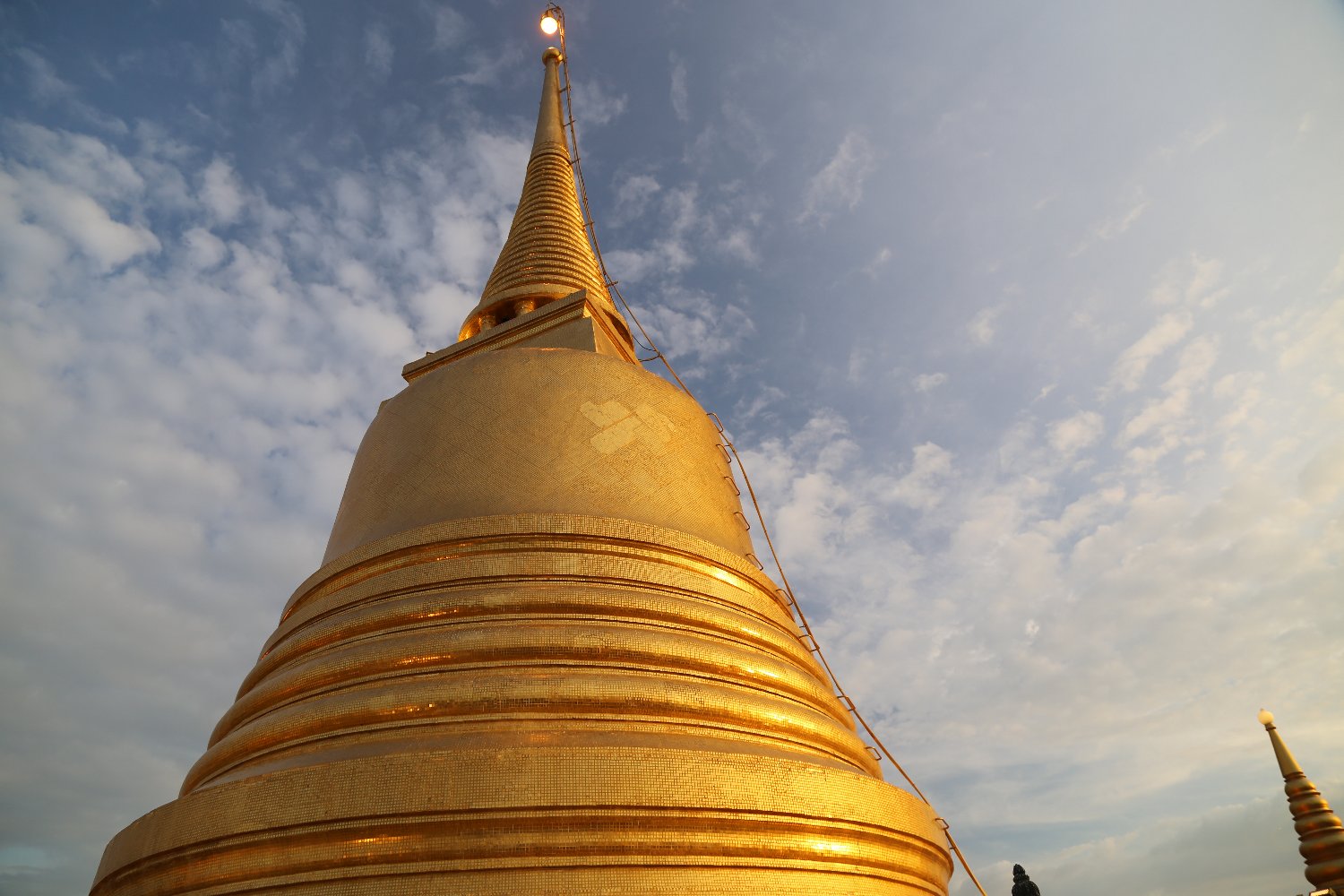
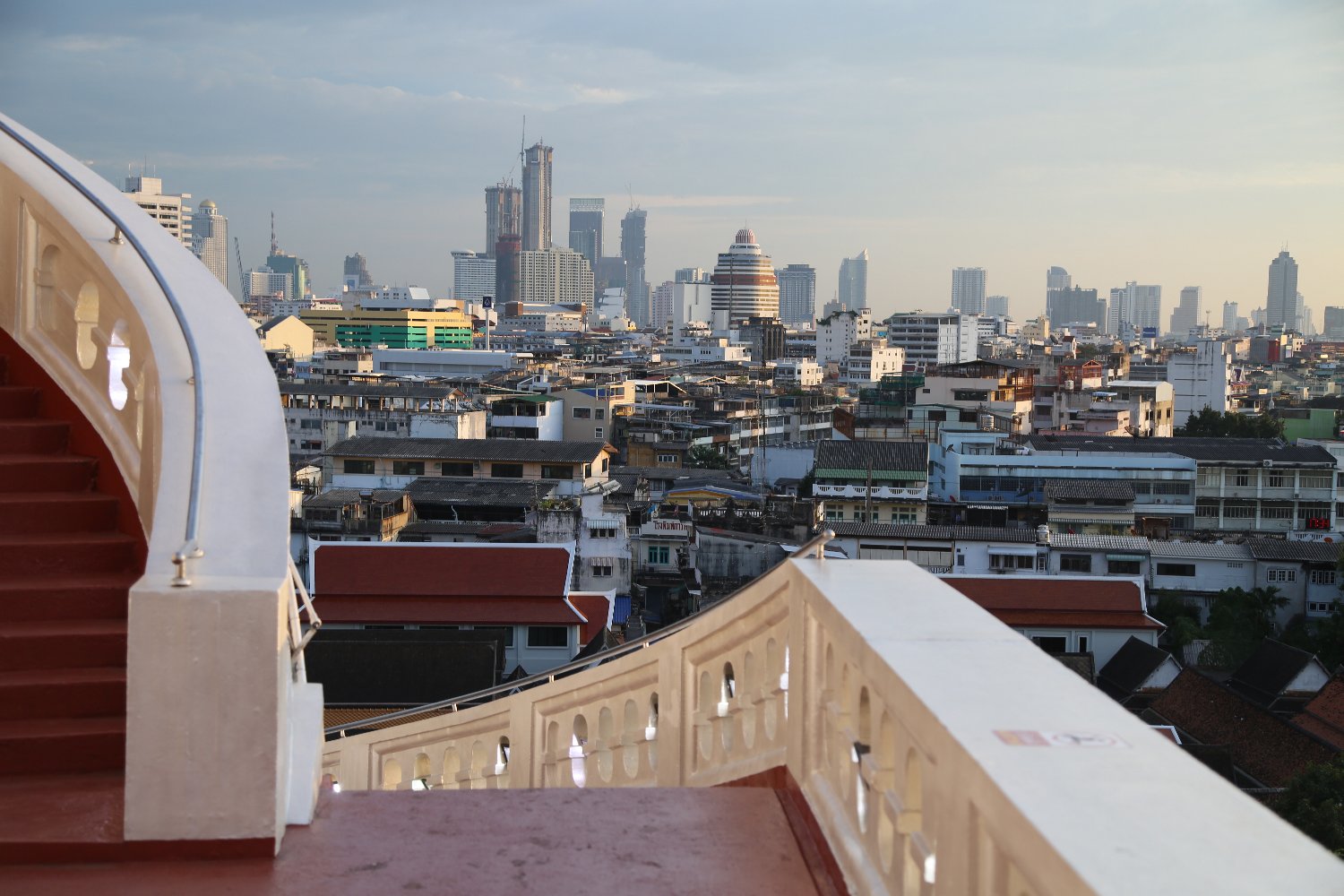

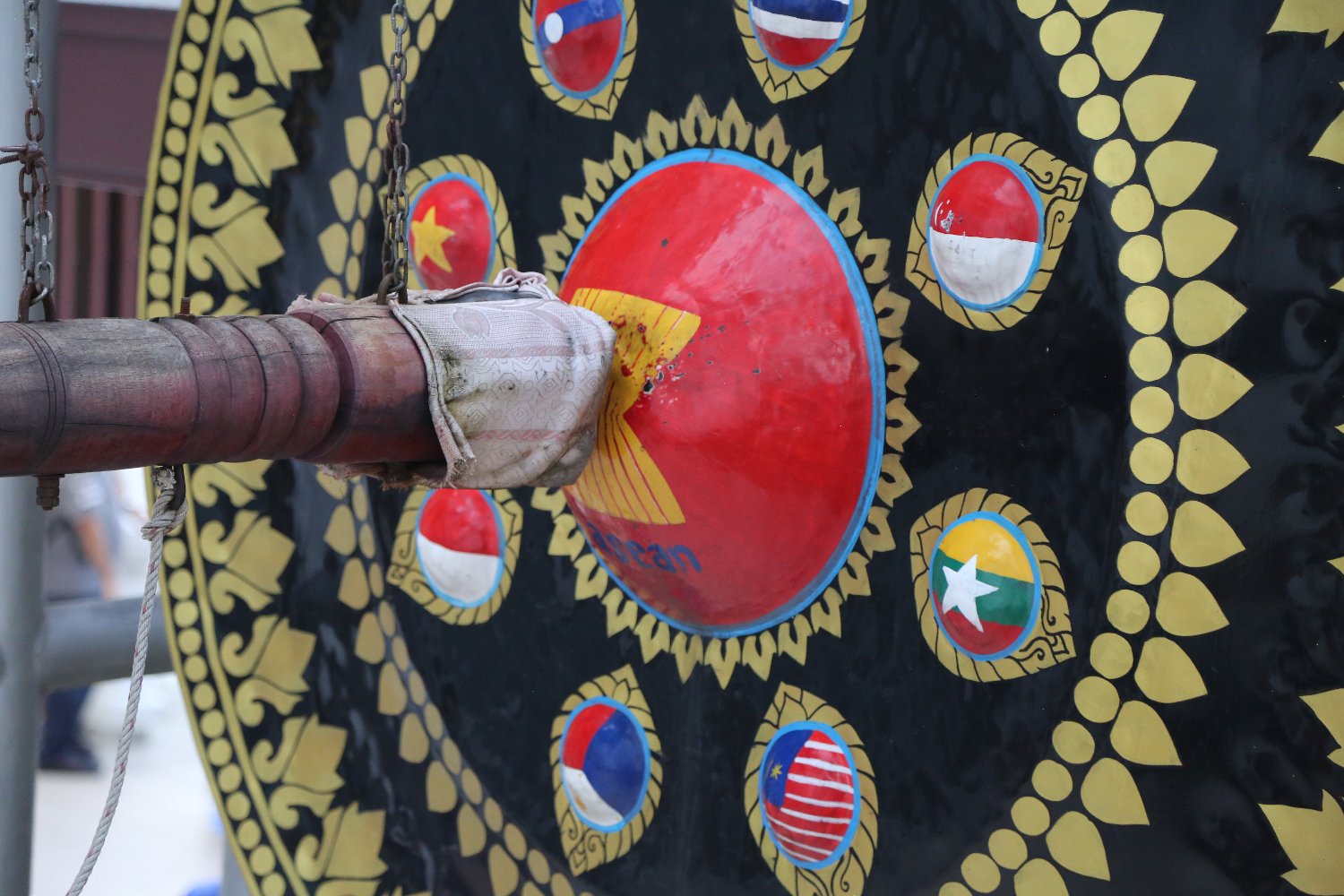
Wat Sam Phraya Temple (Wat Bang Khun Prom) – part of the attraction of this temple is finding it! One should make a special note to start your journey underneath the King Rama VIII Bridge and walk through a maze of narrow paved alleyways through very local looking neighborhoods with small homes – until you come out near the Green Garden Cooking School – from here it is a very short walk to the temple. Note that sometimes maps will show this temple as being on the other side of the Rama VIII Bridge on the grounds of the Bang Khunphrom Palace which walk-in visitors are not allowed (and that is NOT the temple we are referring to here).
Features a number of brilliantly white chedis, a small pond (that usually is covered with some sort of plant life) and several small buildings. A quite place to rest if you find yourself in this immediate neighborhood.


Wat Samananam Borihan (Chua Canh Phuoc) is the only Thai/Vietnamese temple we have ever visited in Bangkok – we suspect there are not that many. It was originally built by Vietnamese immigrants; its original name was Wat Kiang Phueak Tue but was changed to its present name in 1906 by King Chulaongkorn (King rama V).
Highlights of a visit are the golden Buddha – a statue of ample portions which is outdoors, and a small but impressive tower covered in intricate mosaics with memorials to deceased people including photographs. Steps wind their way up this tower and one can climb it for elevated views of this temple complex.
The temple’s primarily hall is worth visiting if open; it contains a portrait of Vietnamese emperor Gia Long – the founder of the Nguyen dynasty and who helped unify modern Vietnam.
Located about a 10–15-minute taxi or motorbike ride from the Victory Monument Skytrain station.
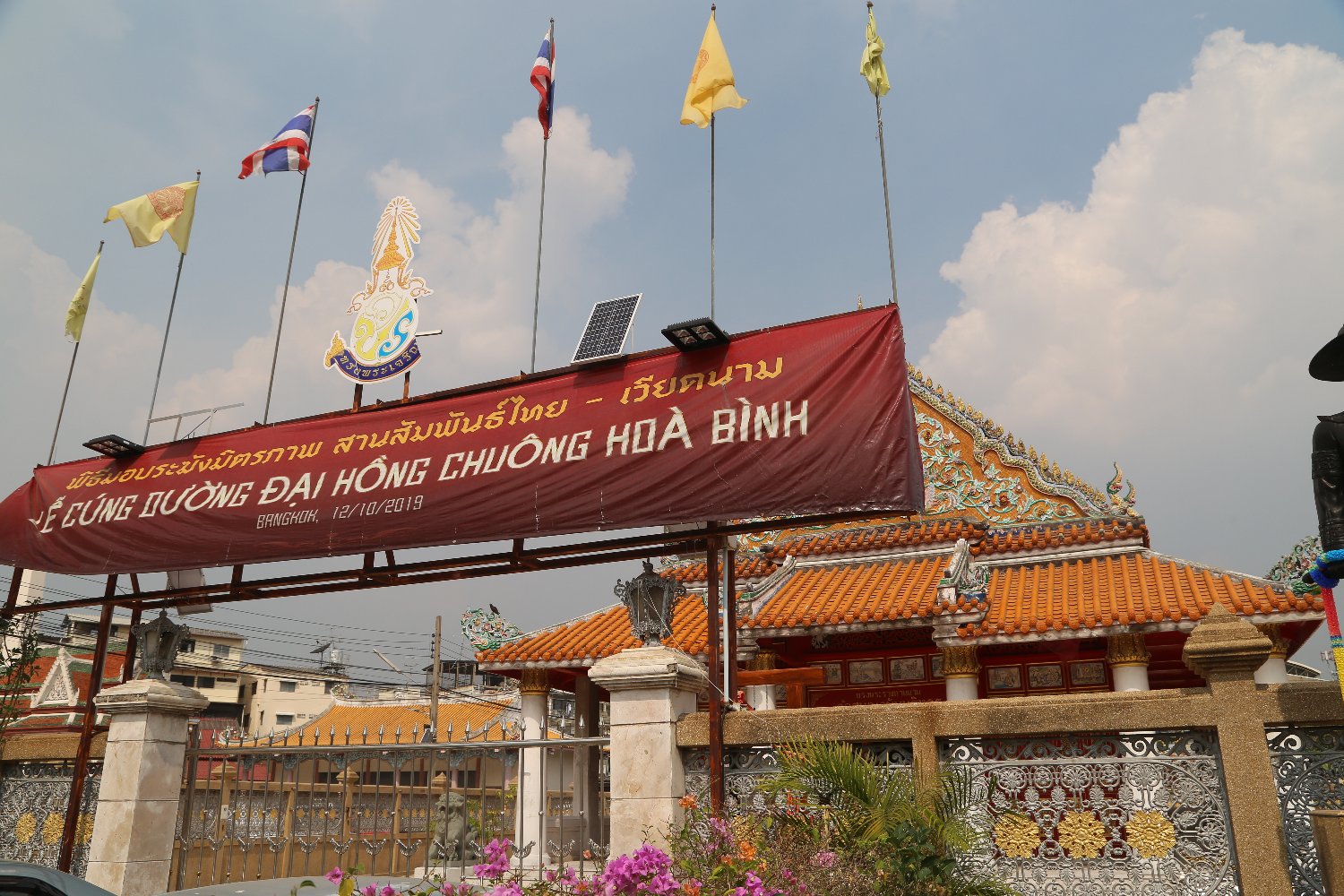


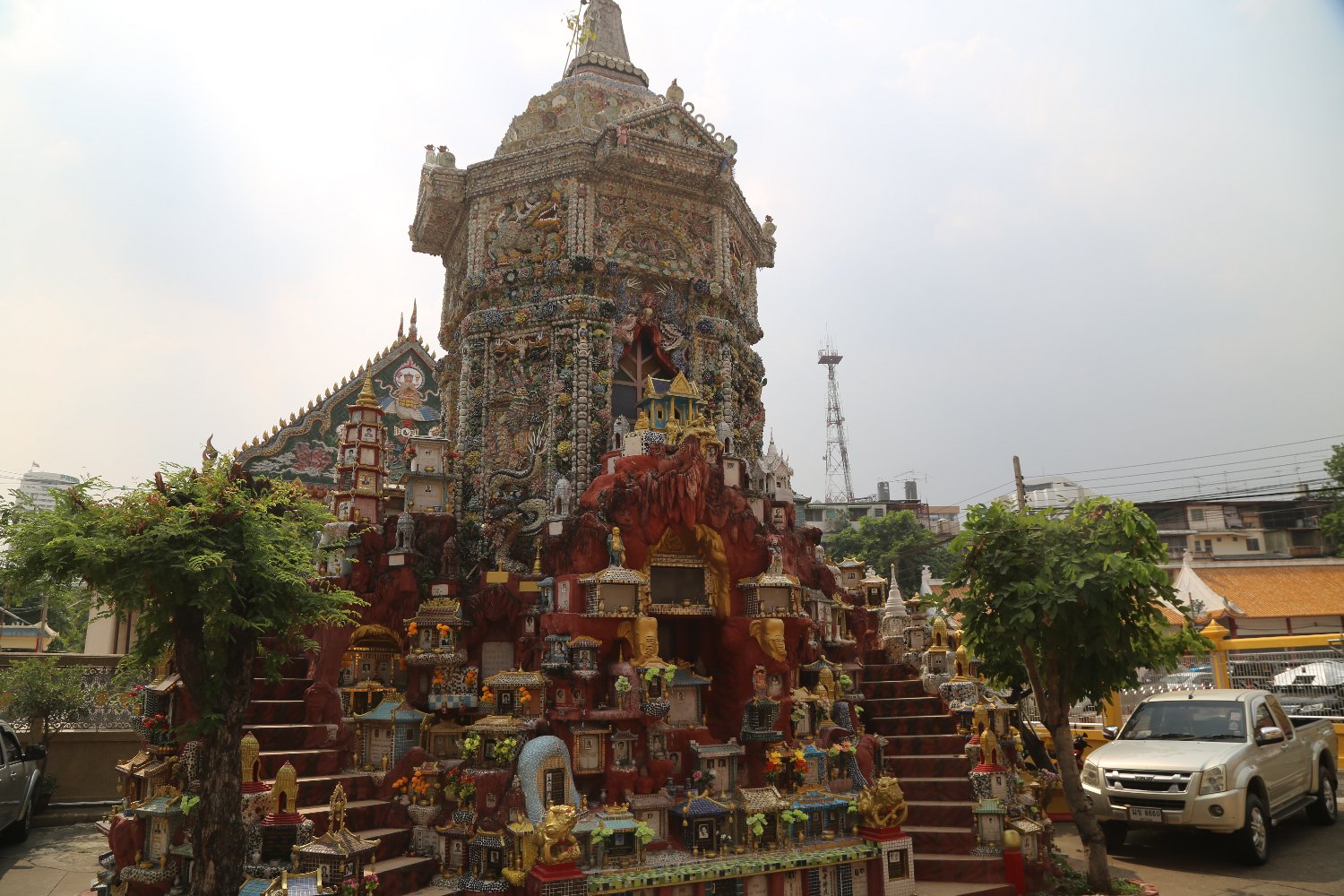


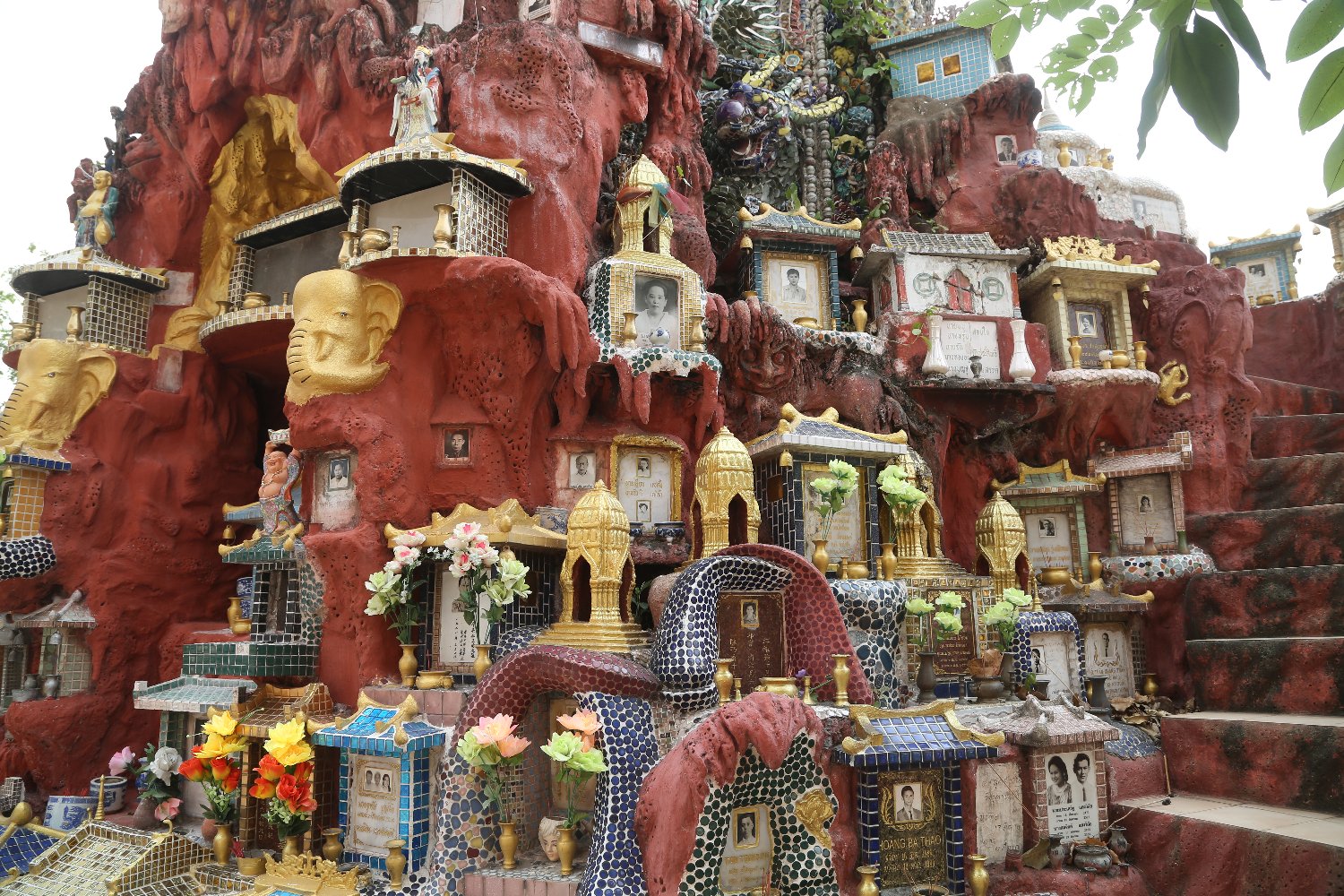


Wat Samphandhawongs (Wat Koh) is located in Chinatown – a visit here makes for a relaxed time away from the crowds of some of the larger wats. Like many of the wats we have visited, this one also dates from the Ayutthaya period. Was called Wat Koh at one point. The main hall was locked when we visited but nice monk indicated we could walk around at our leisure. A picturesque small wat that is certainly off the beaten path.
Located along the one-way Song Sawat Road near the edge of Chinatown.


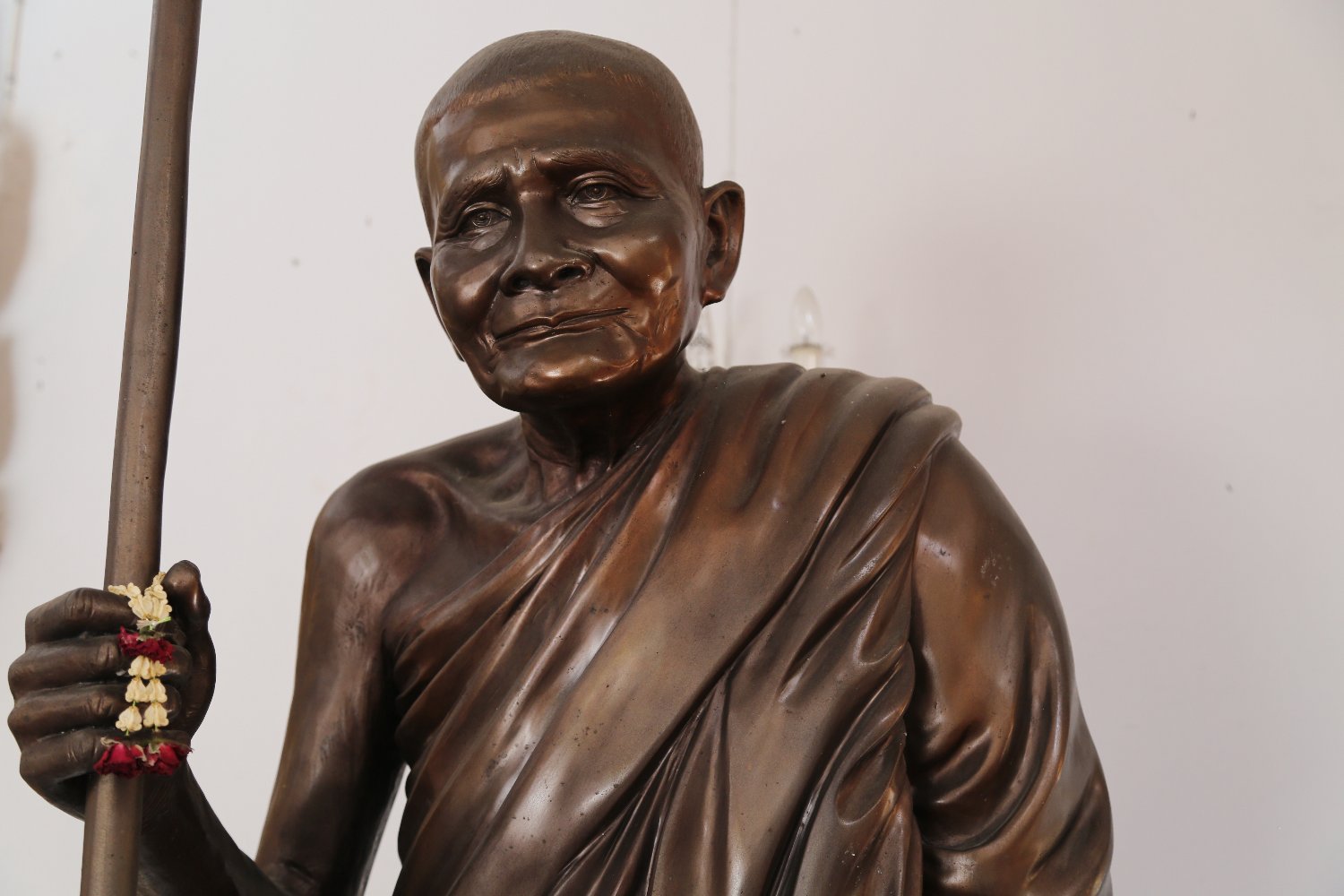
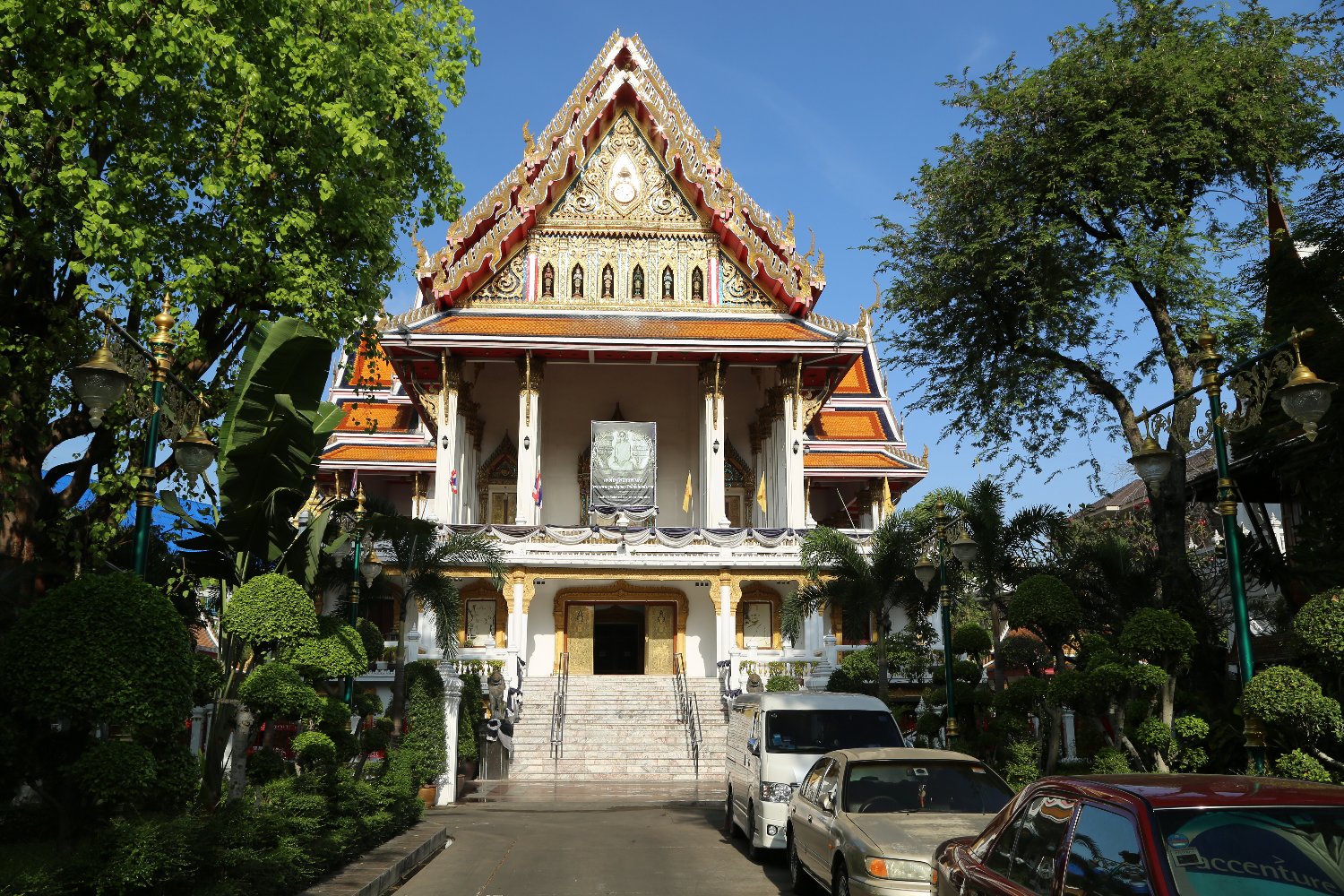
Wat Samrong Nuea is located directly next to the Chao Phraya River – closest Skytrain stop is Samrong – with no traffic about a 10-minute taxi ride away. This is one of the few temples we have visited in Bangkok where children immediately gave us a wai when they saw us. A school on site. A crematorium and a bell tower with a drum are located on site. And unlike most temples, well-marked bathrooms.
A pier stands near the temple on the edge of the Chao Praya River but does not look like it is actively used. Worth walking into the temple to see the hand painted murals on the interior of the walls.
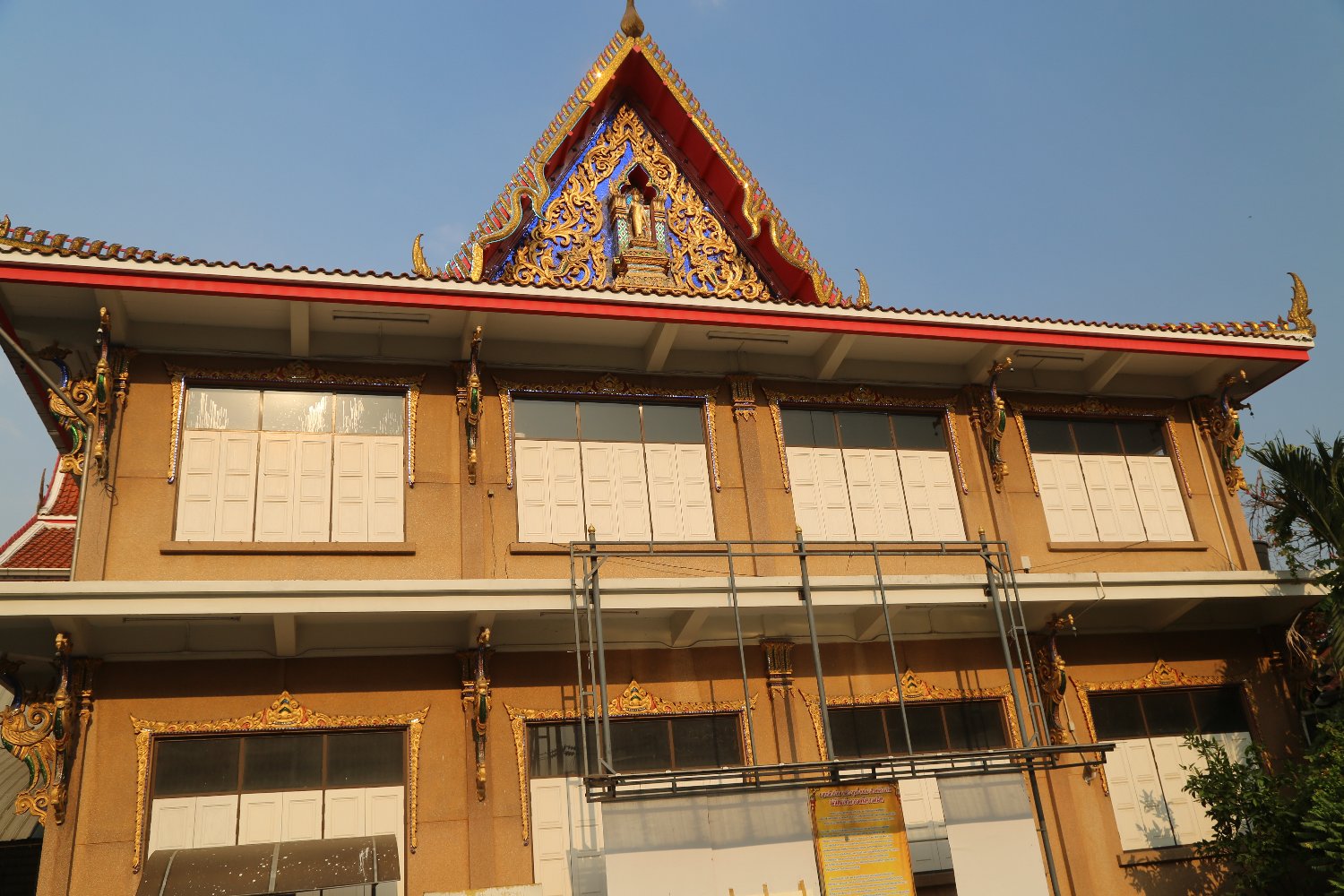
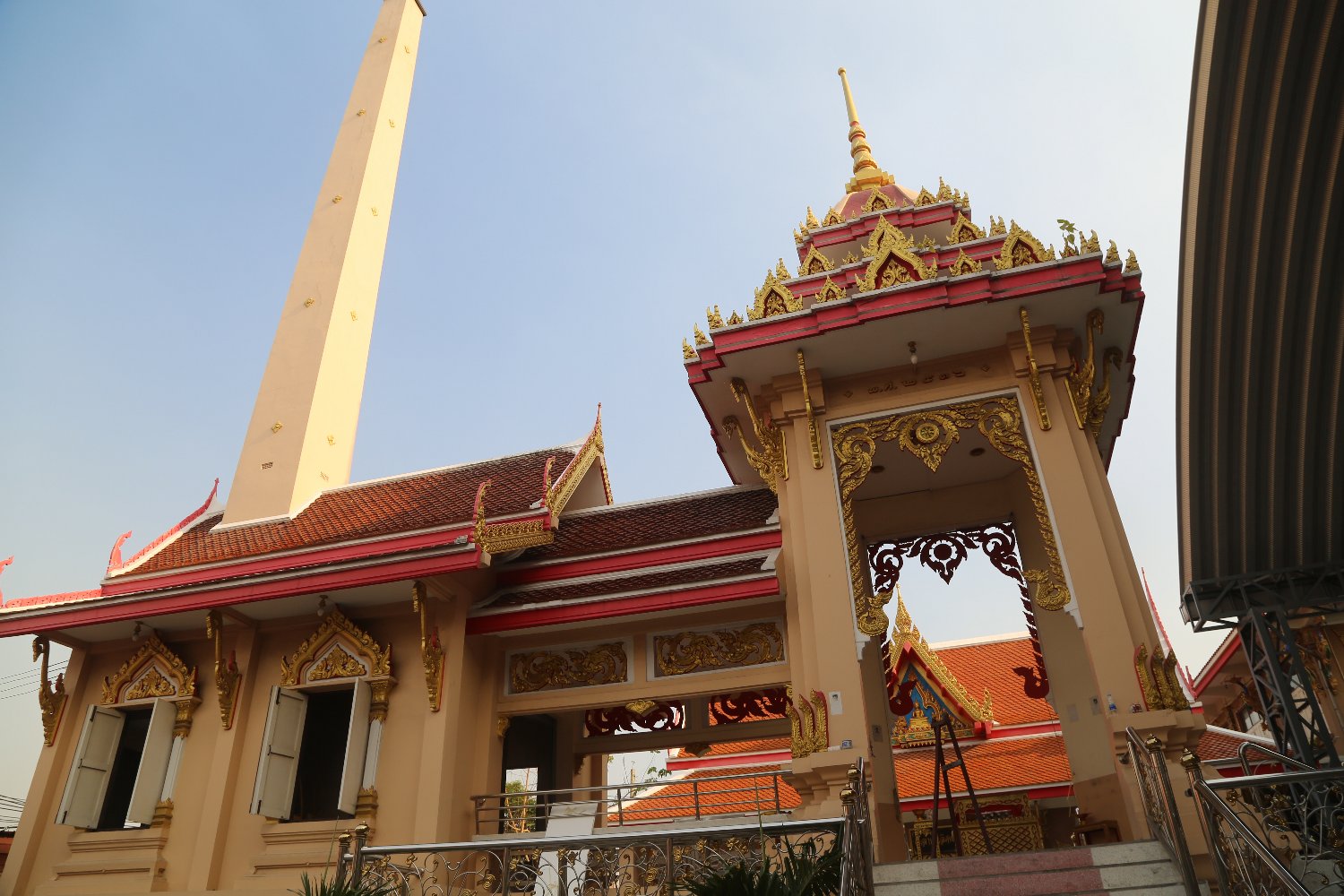
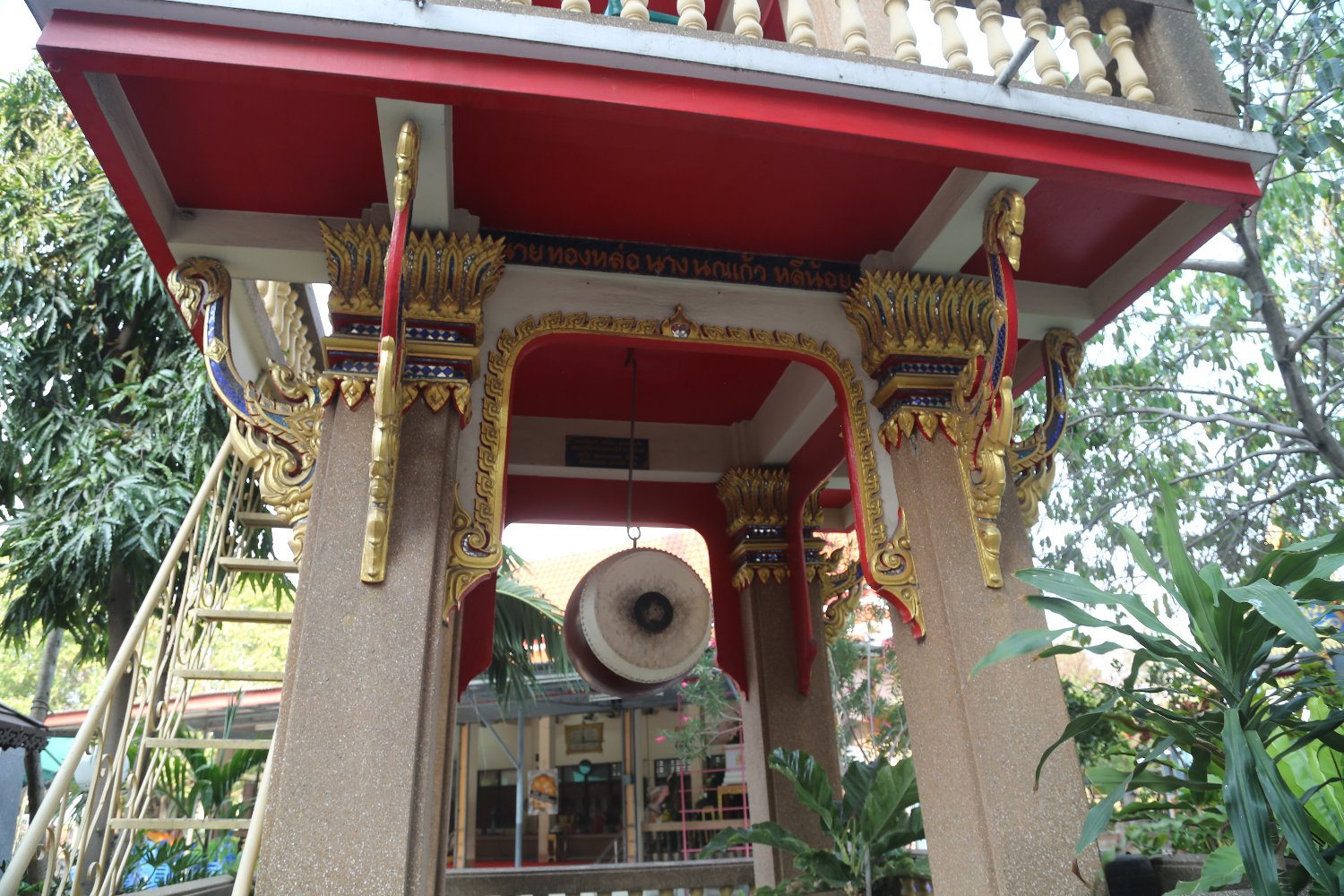
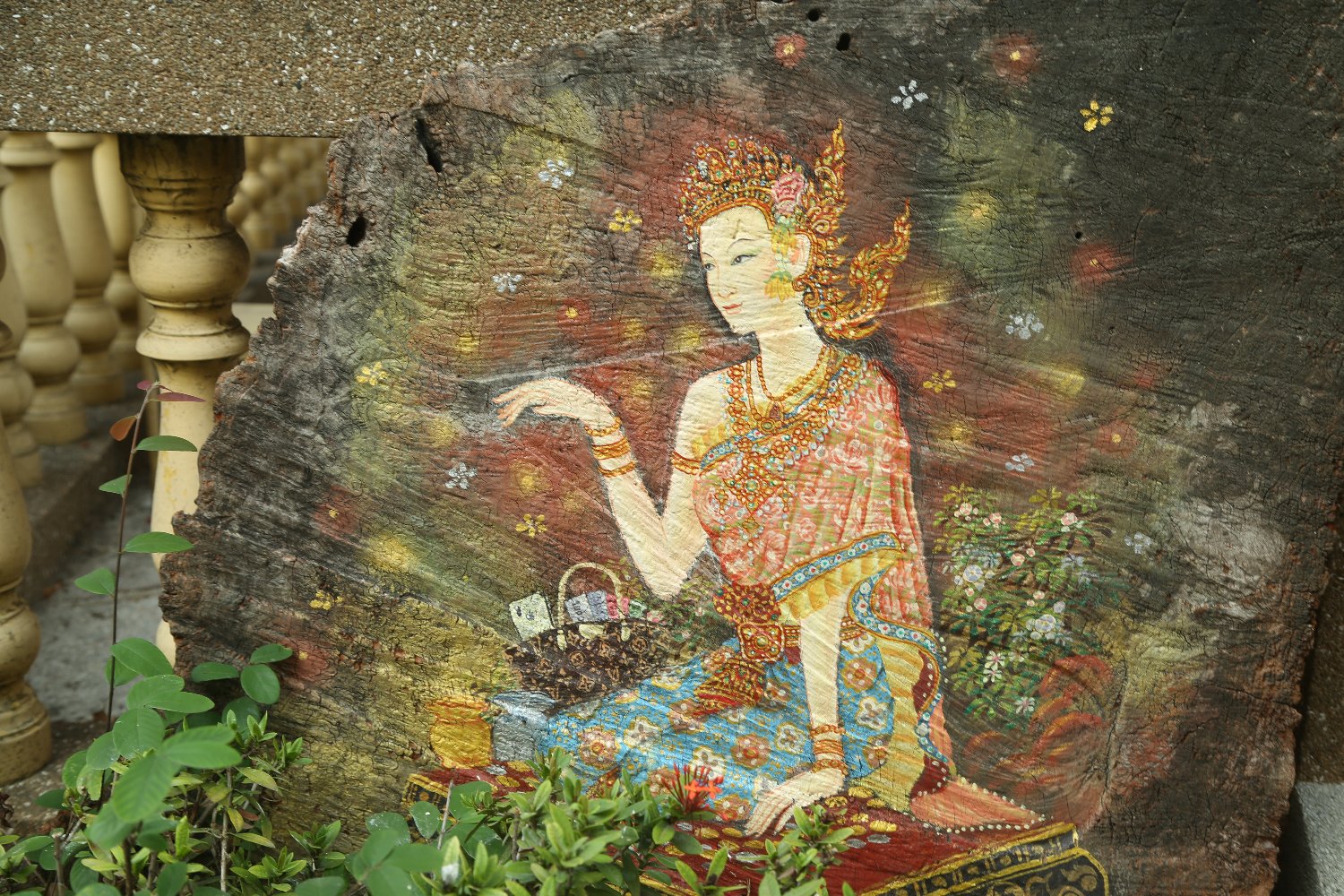
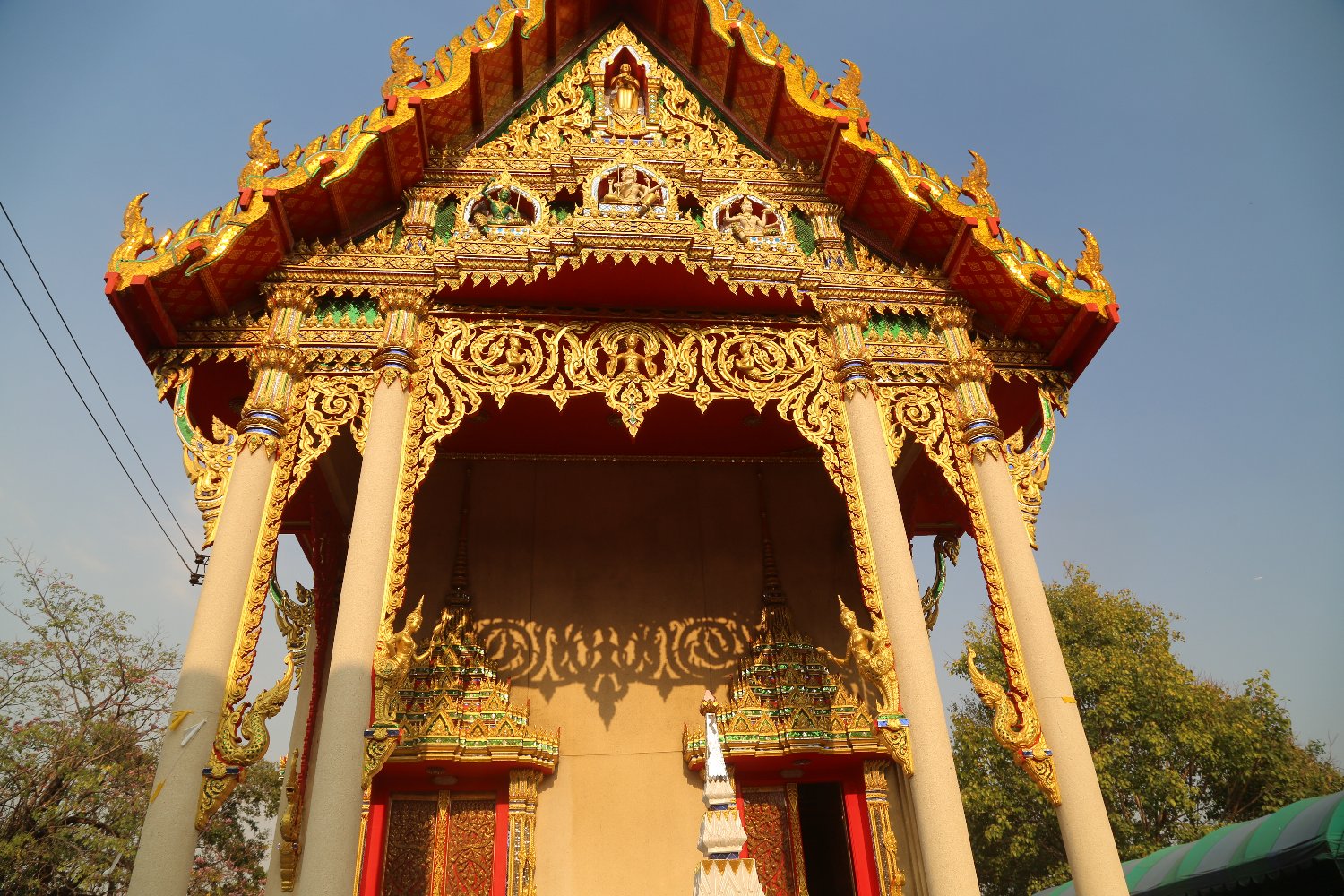
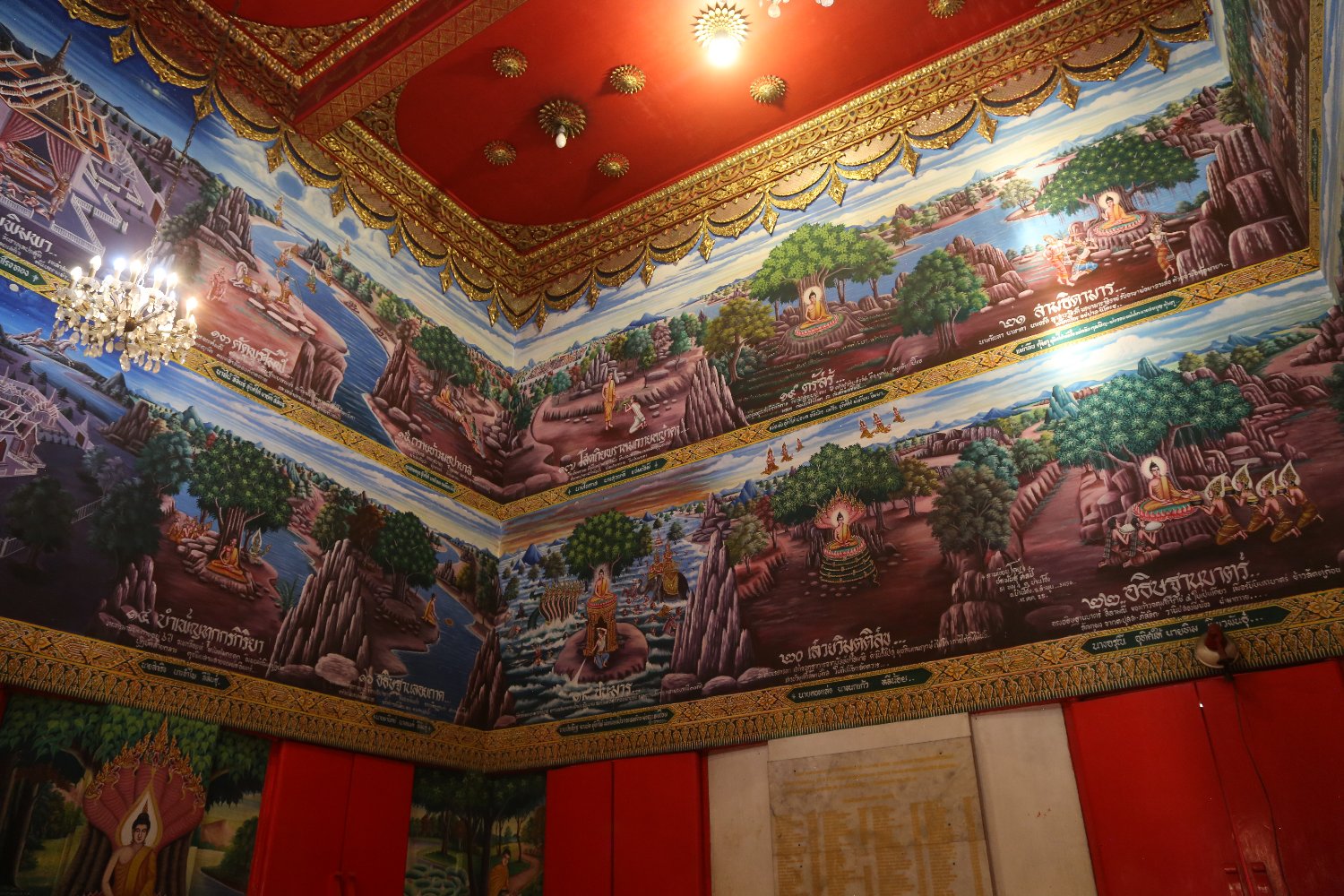
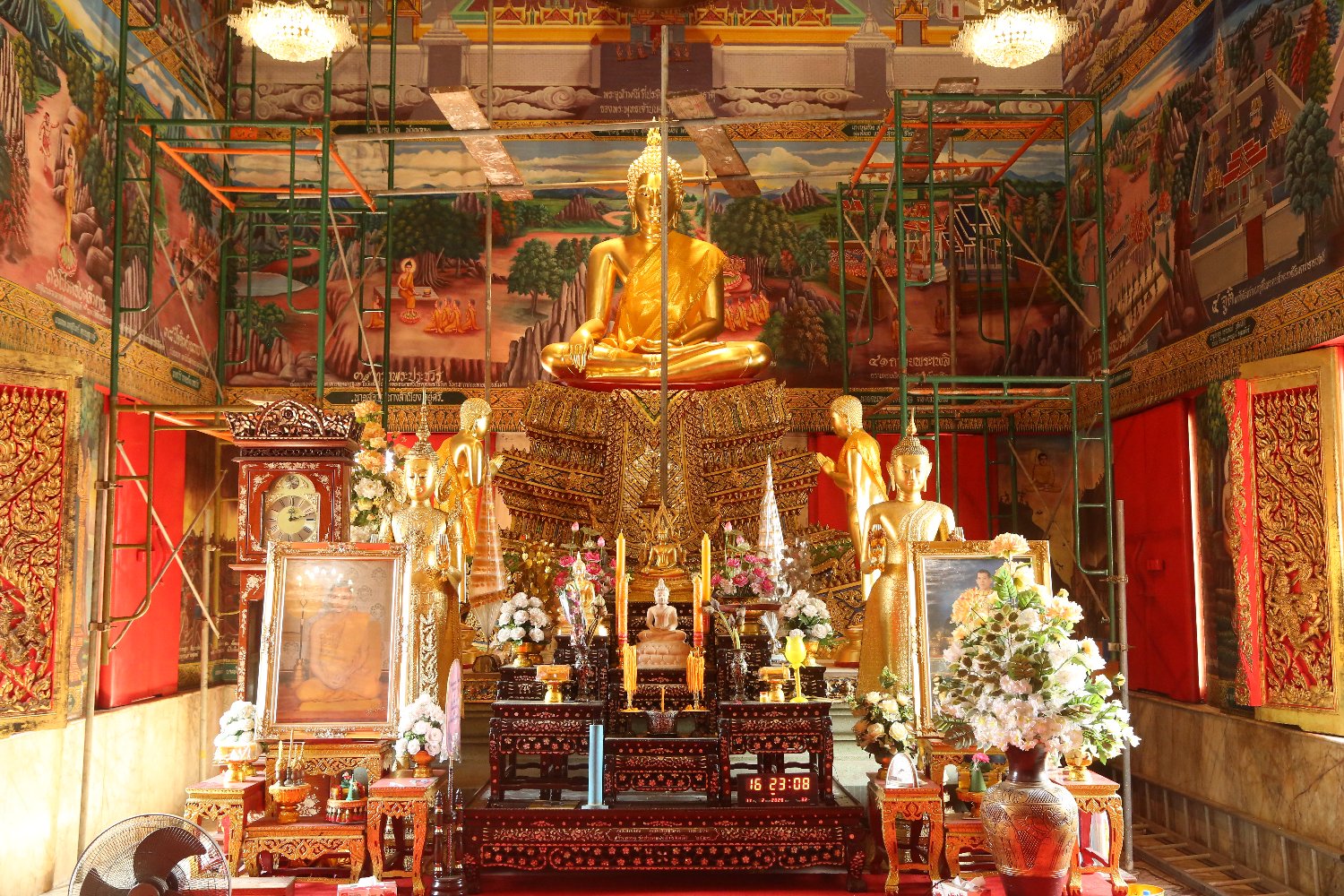
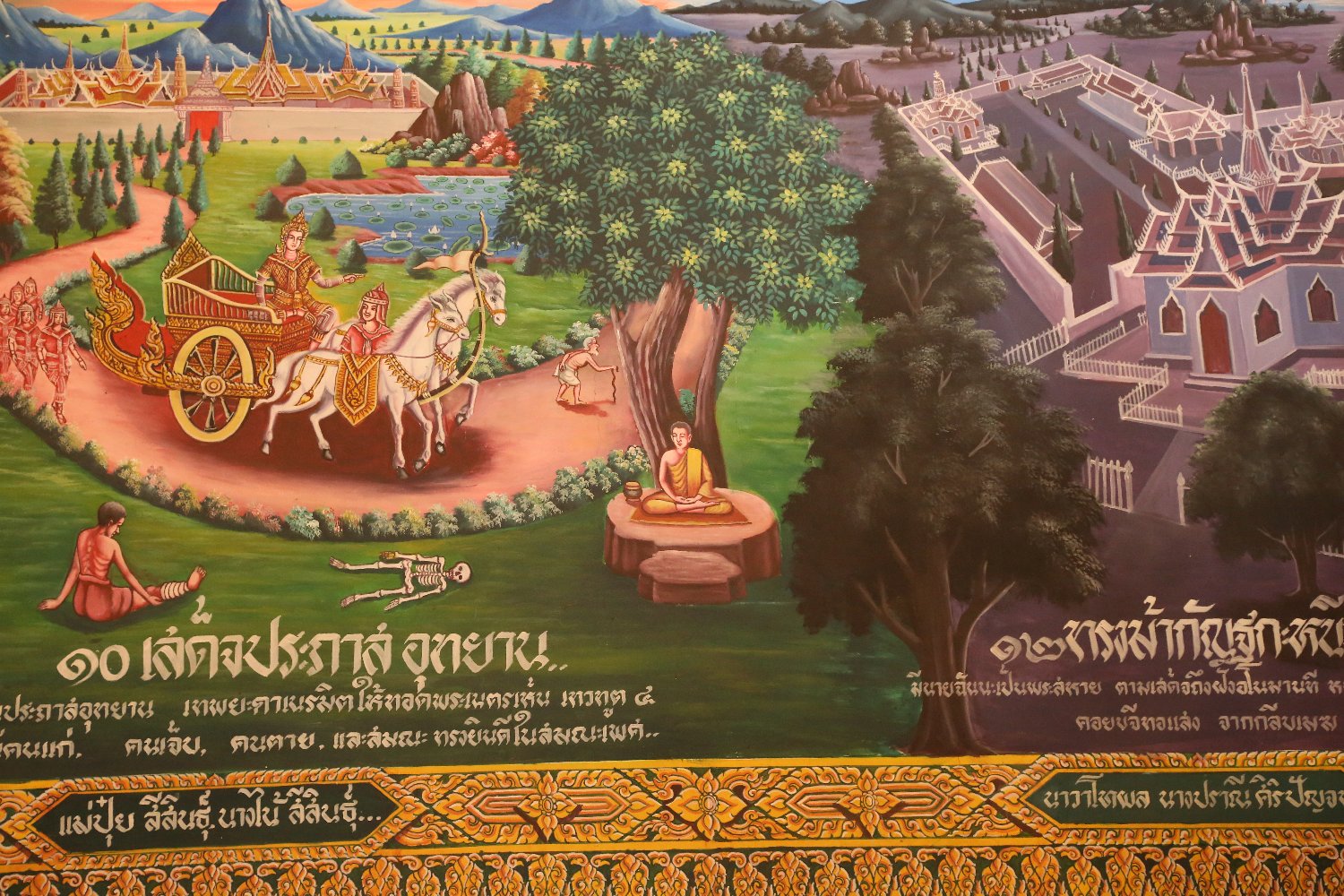
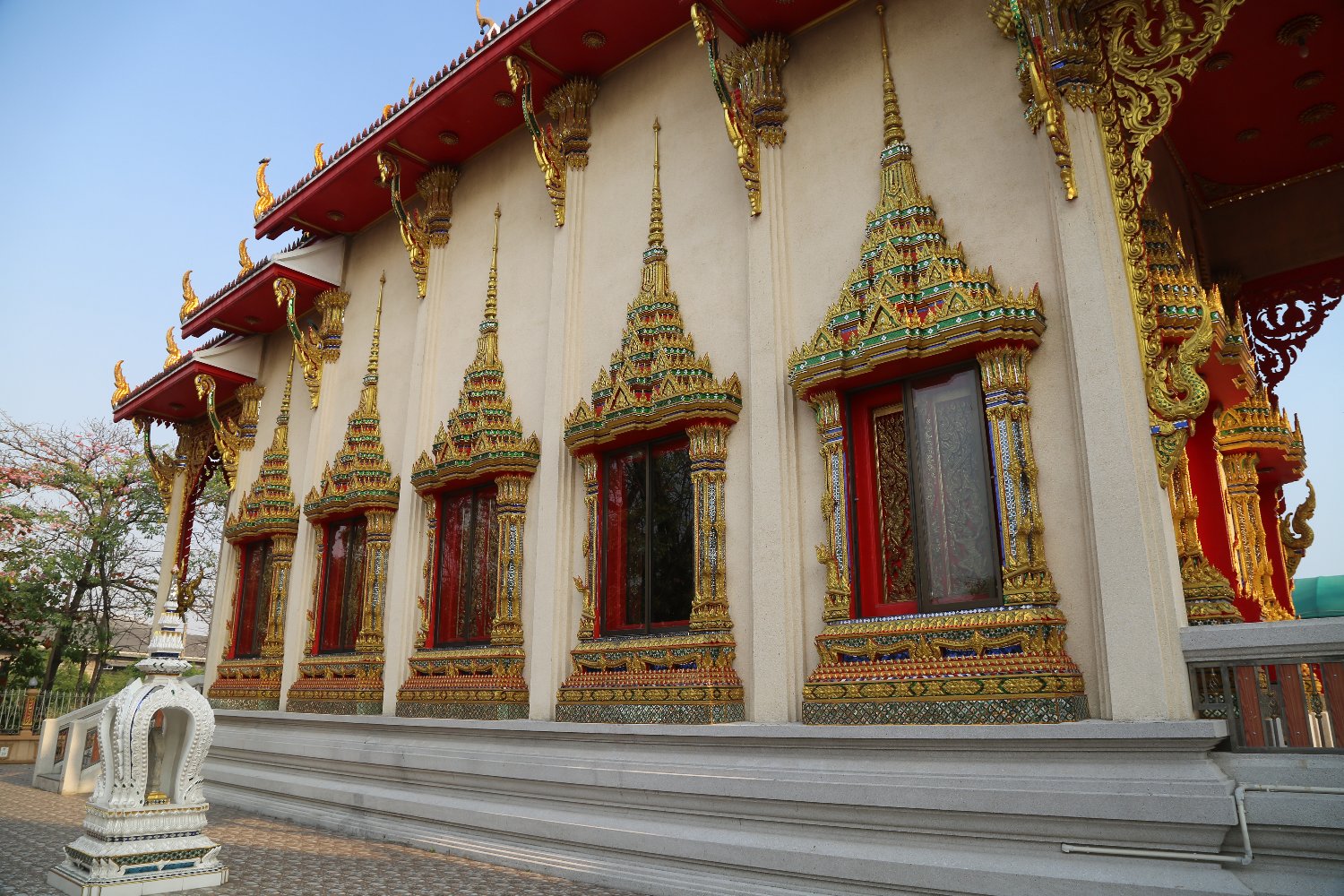
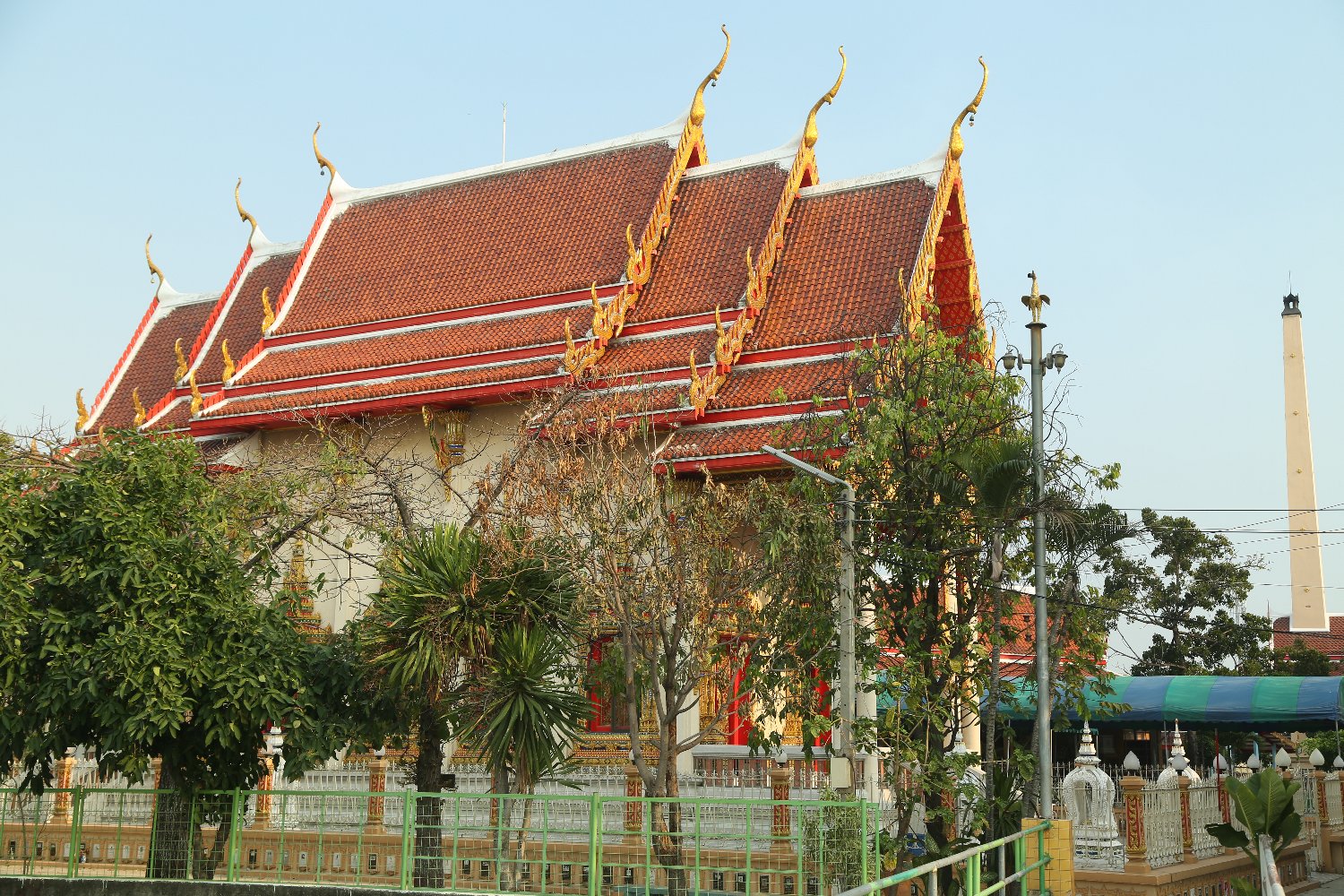
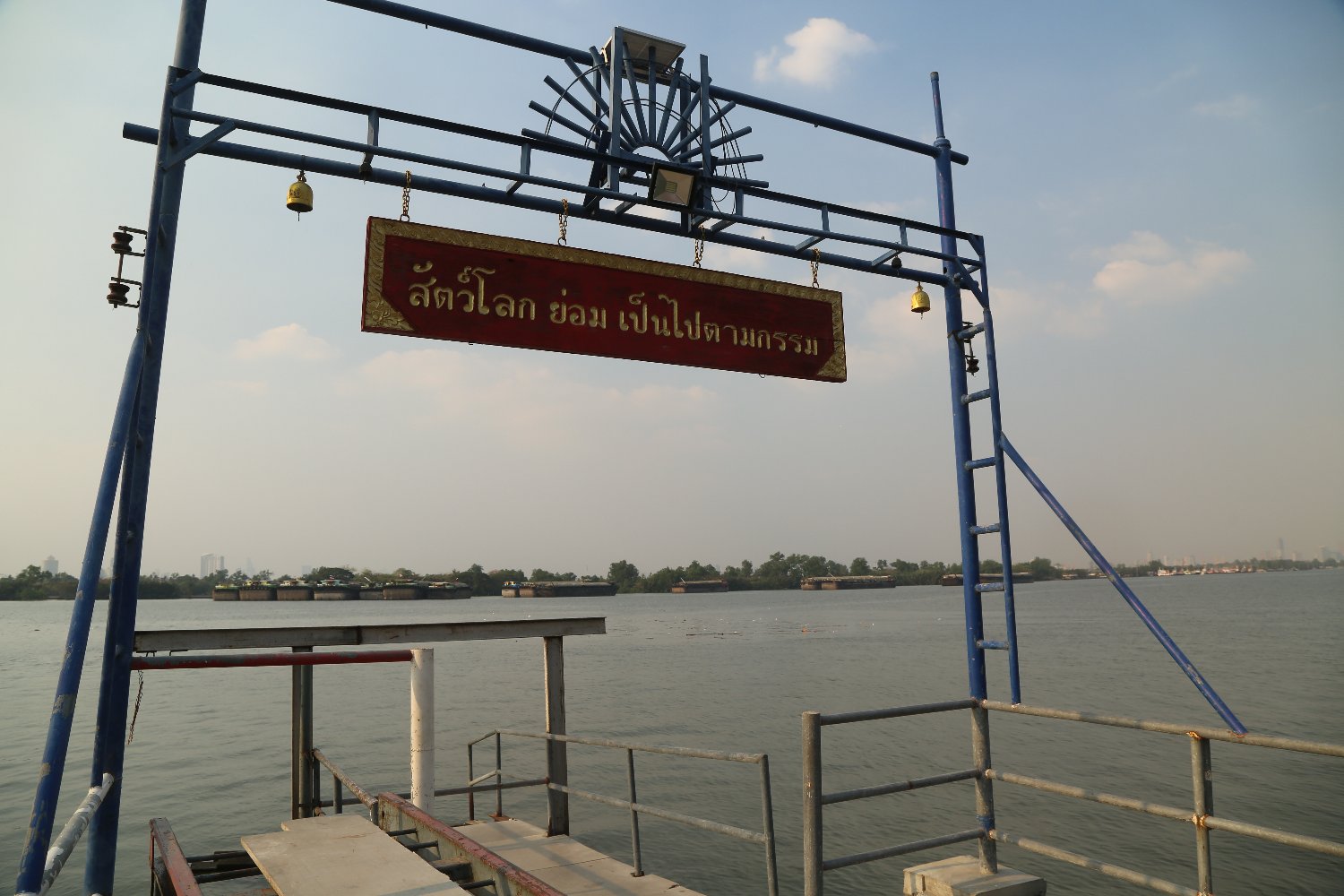
Wat Sangkha Racha is located on a small soi off of the much larger Lat Krabang Road – a short distance from the Paseo Mall. Located next to the Prawet Burirom Canal. This canal was constructed in the late 1800s totally some 46 kilometers running all the way from Chachoengsao to the Chao Praya River near Sukhumvit. The canal took over 3 years to dig and facilitated water transportation of both goods and people.
A small temple – but if in the area is worth stopping by – visitors who have an extra day before flights or need to arrive a day early before a flight often stay at the reasonably priced hotels in this part of town.
The Ubosot building is generally closed – but is worth seeing from the outside due to its colorful and golden facade along with the visually appealing pillars. Also, we spotted a cannonball tree – the flowers are gorgeous. Sometimes one finds these at temples because it is the tree that Buddha sat under during meditations.
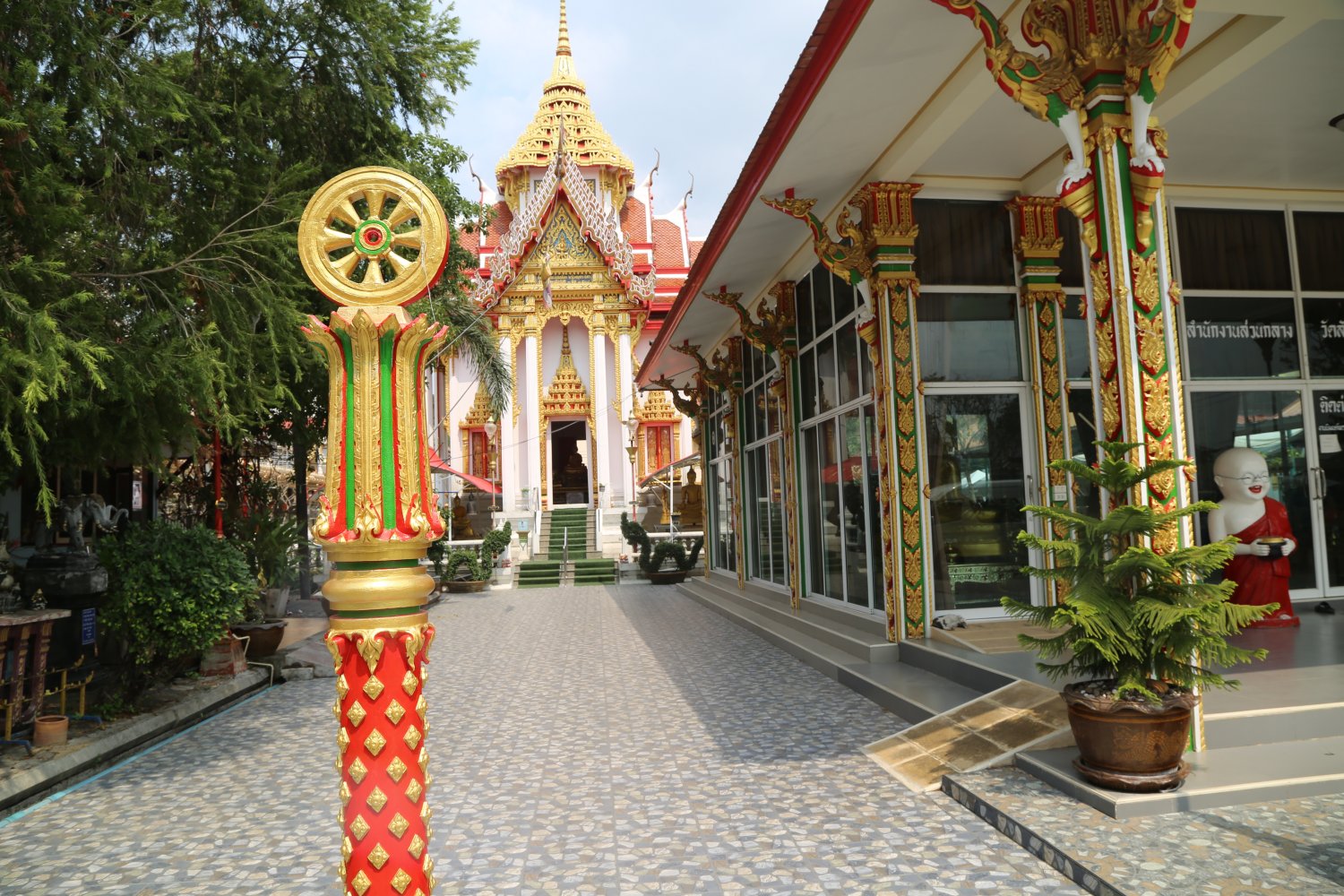



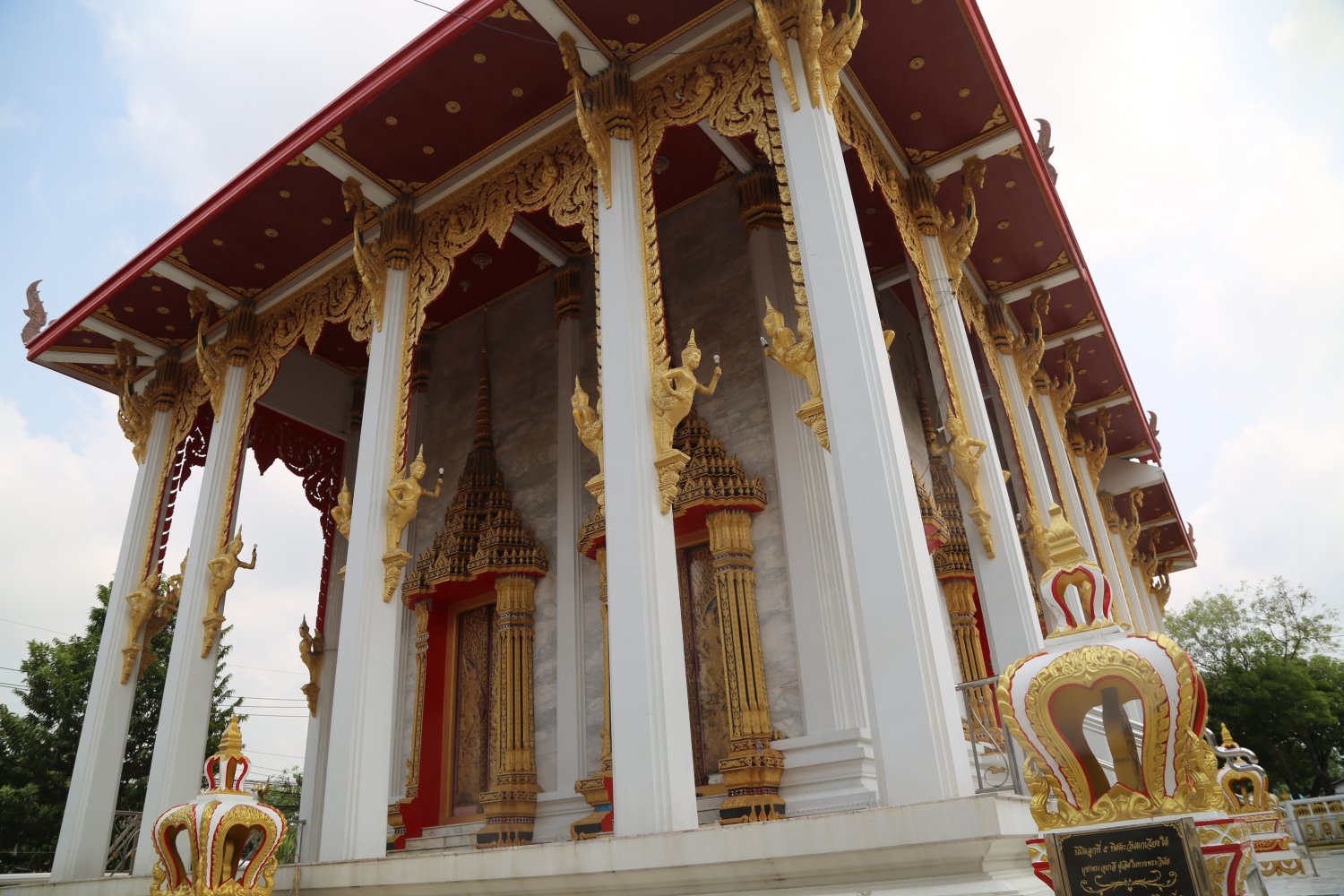

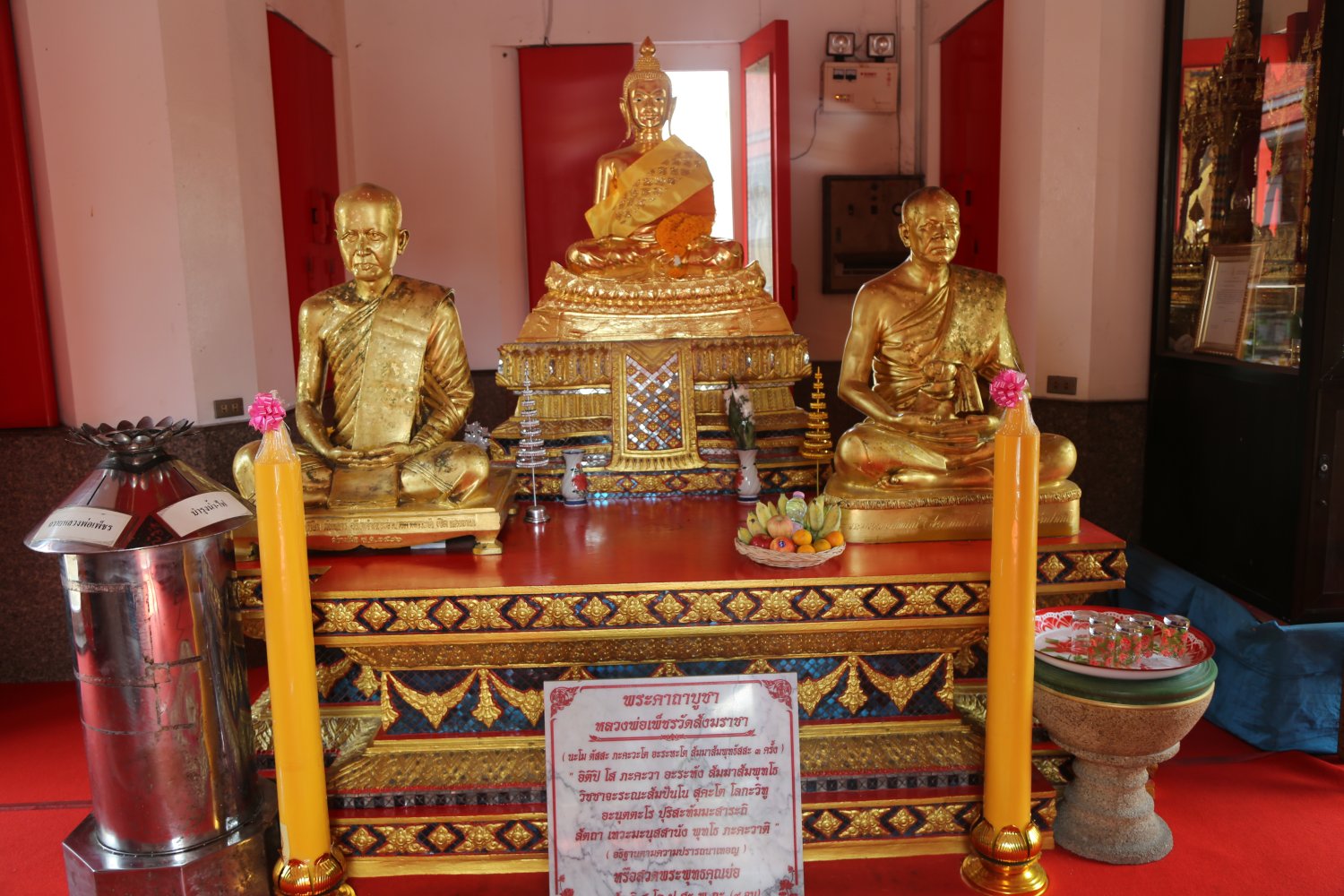
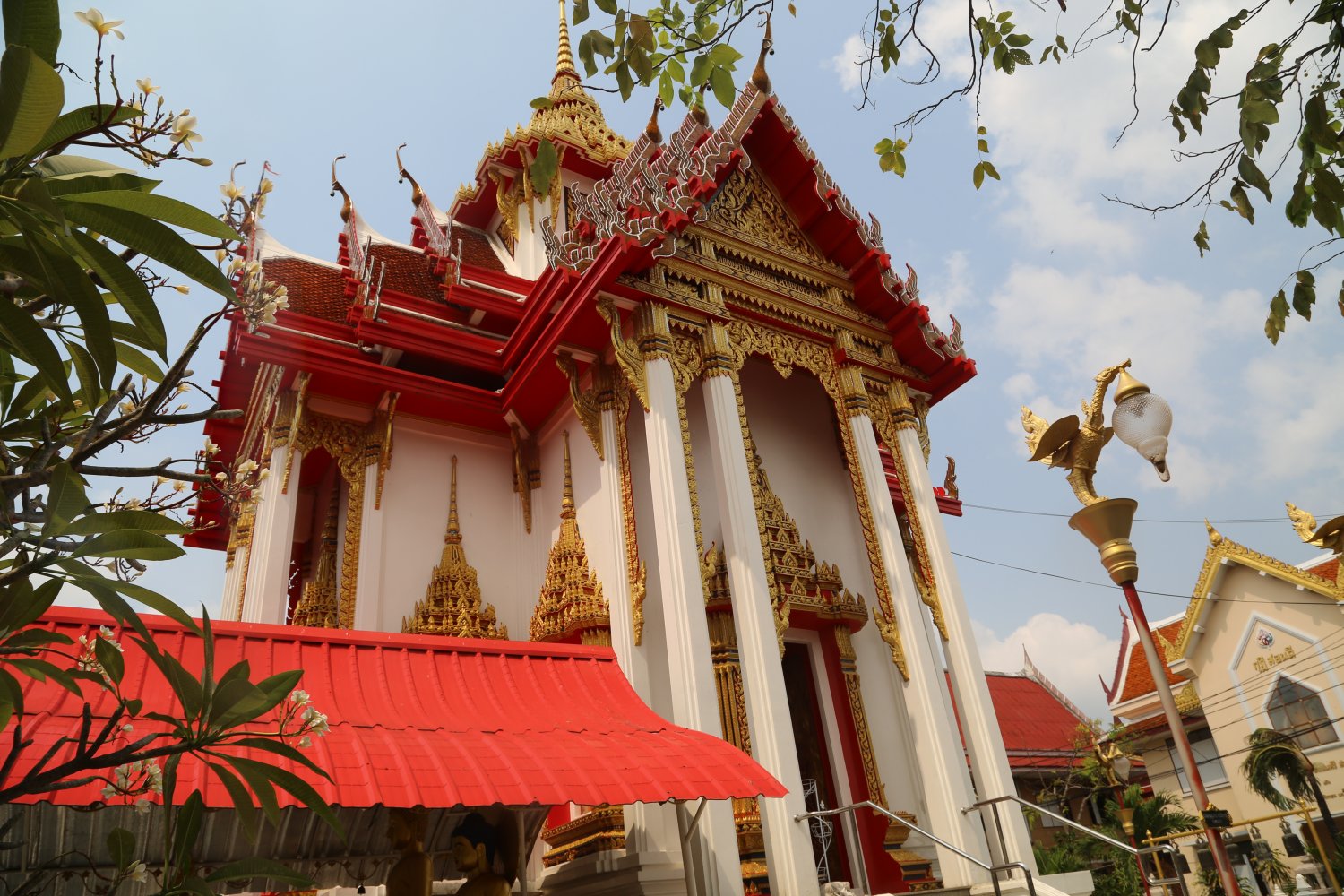
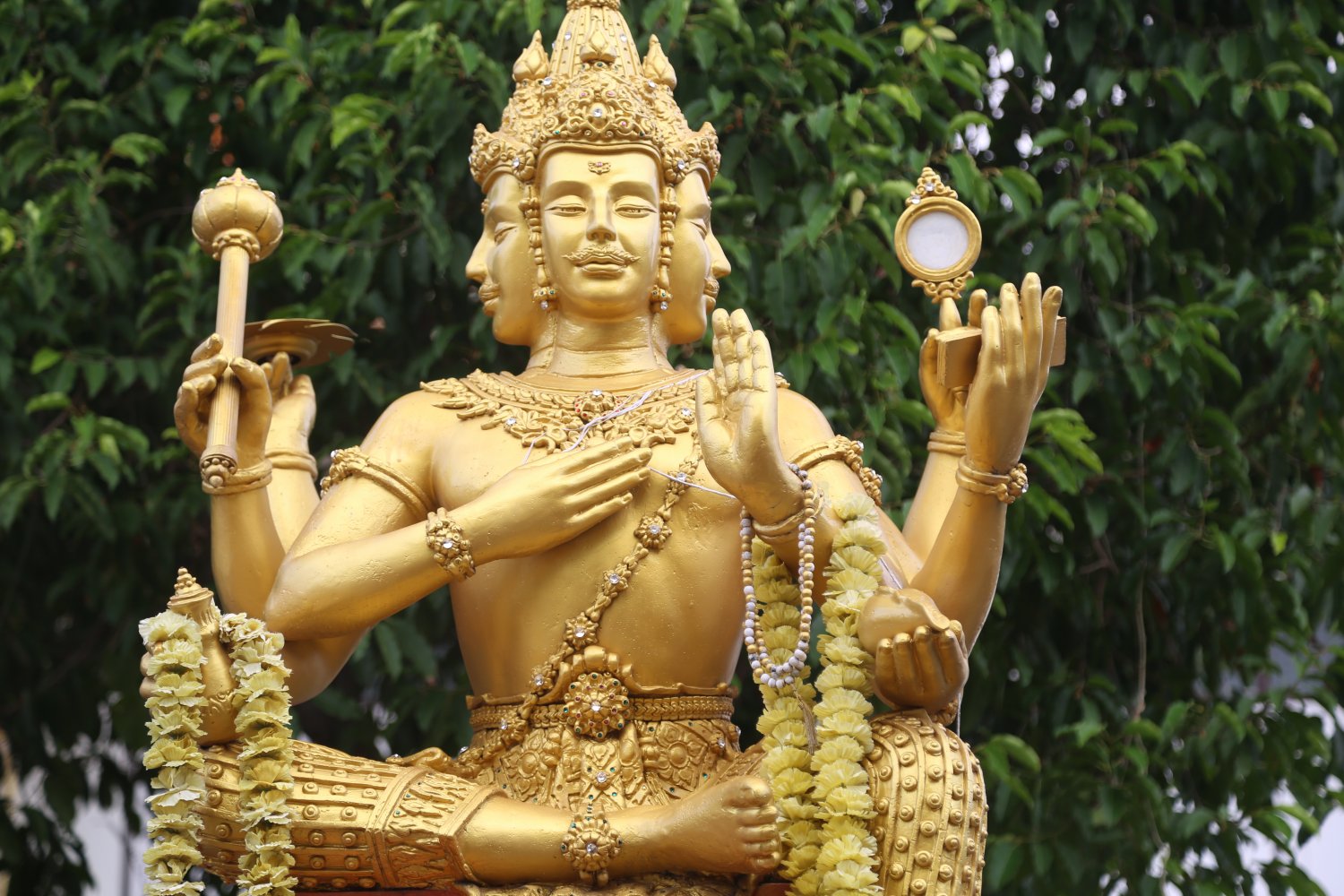
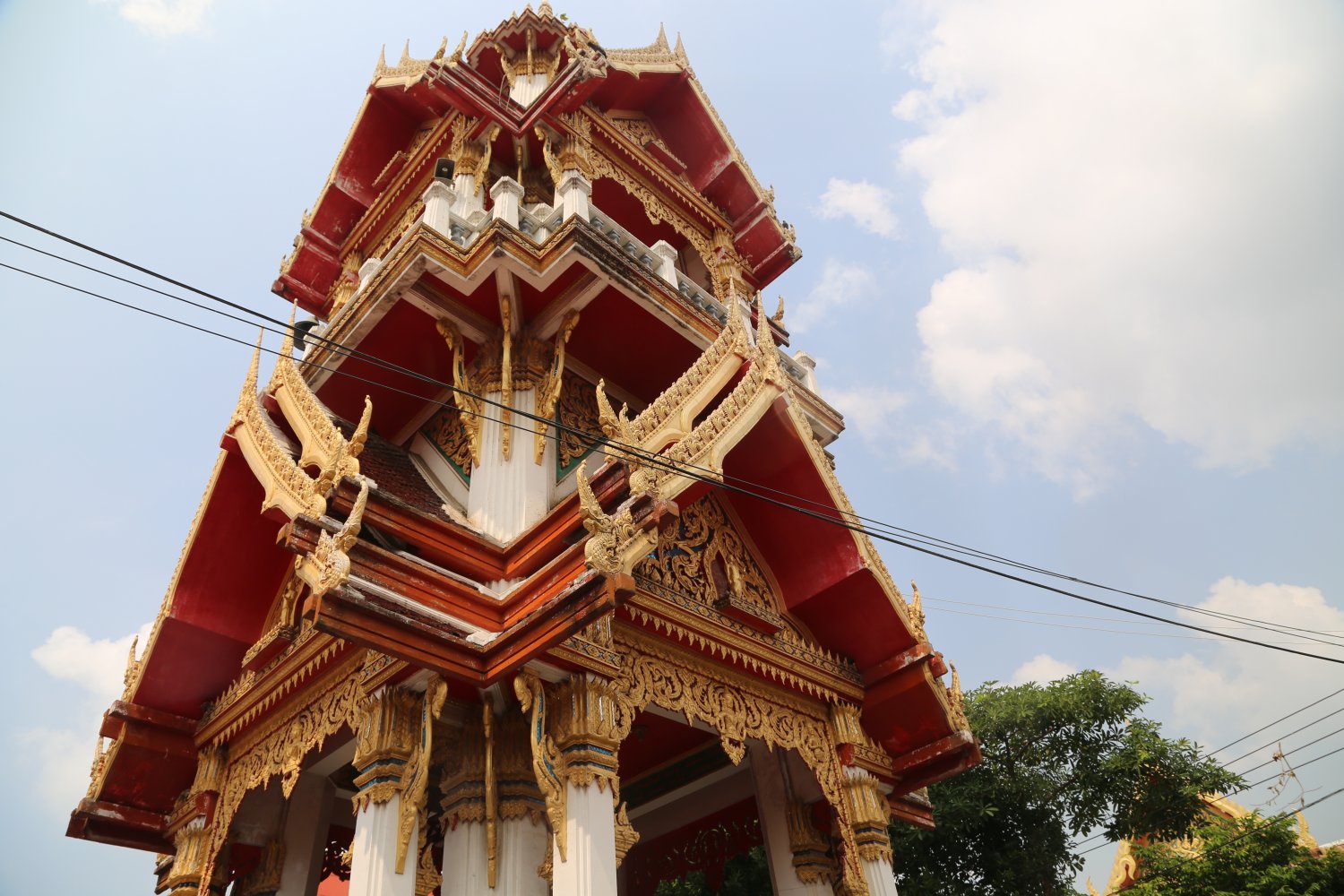


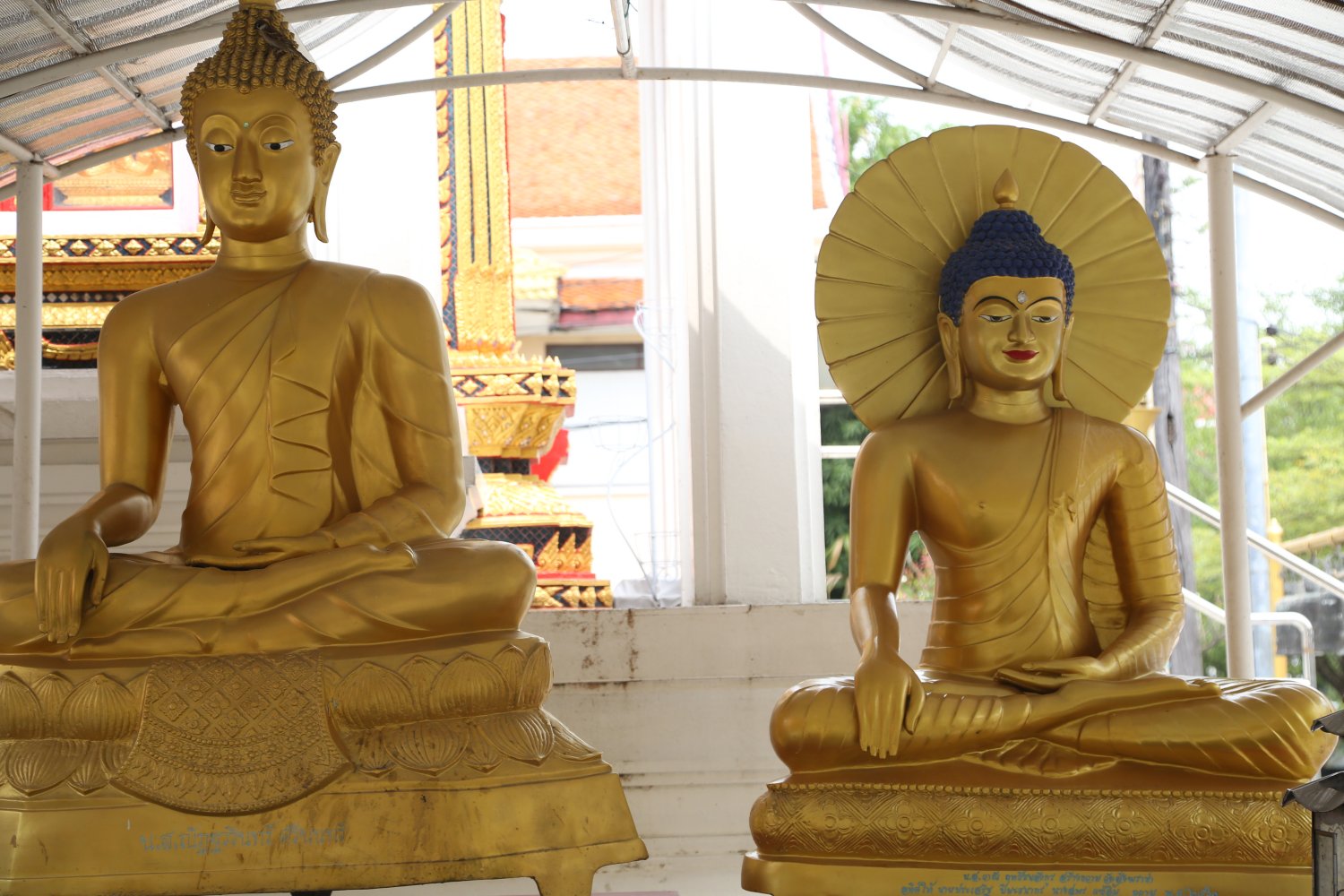

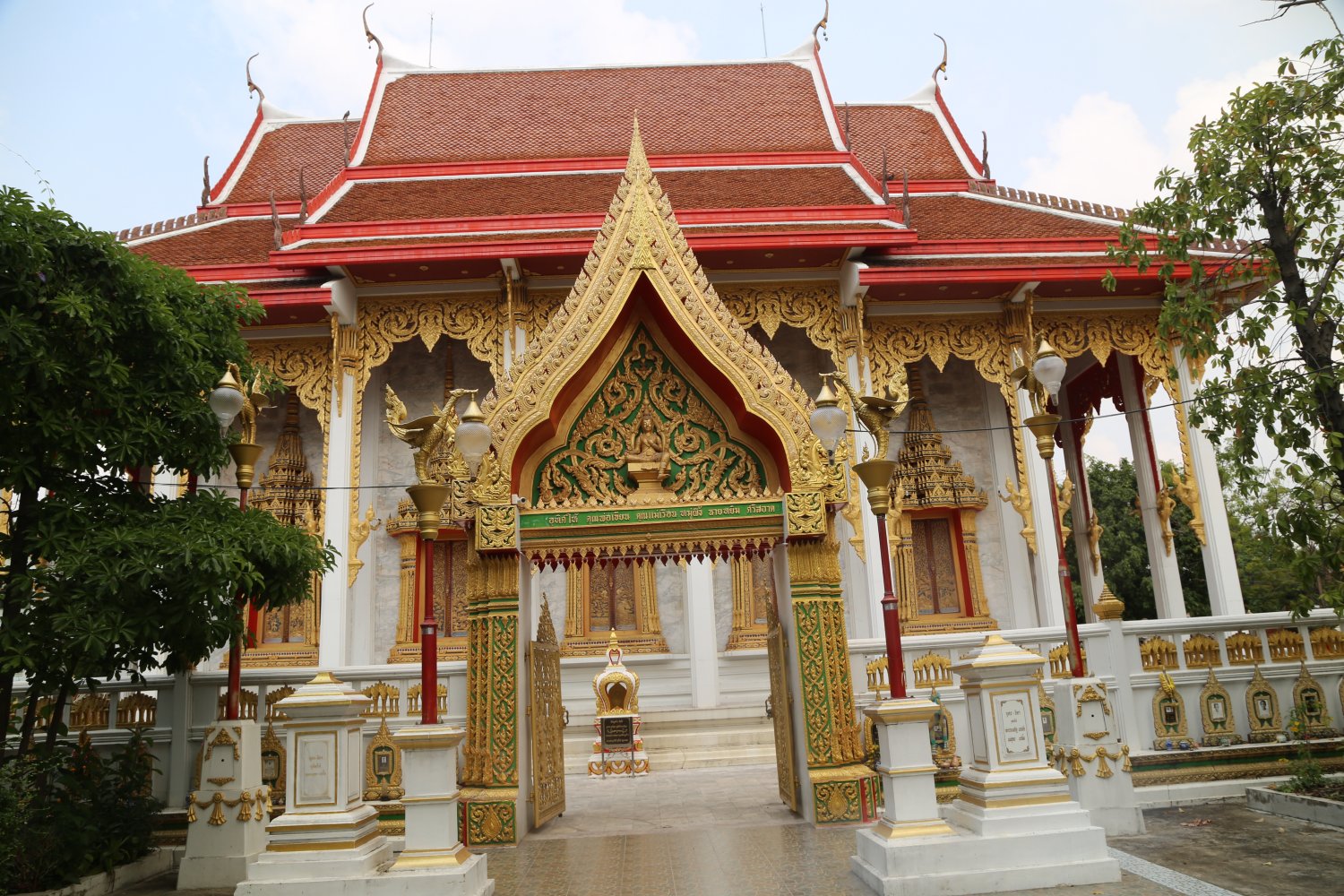
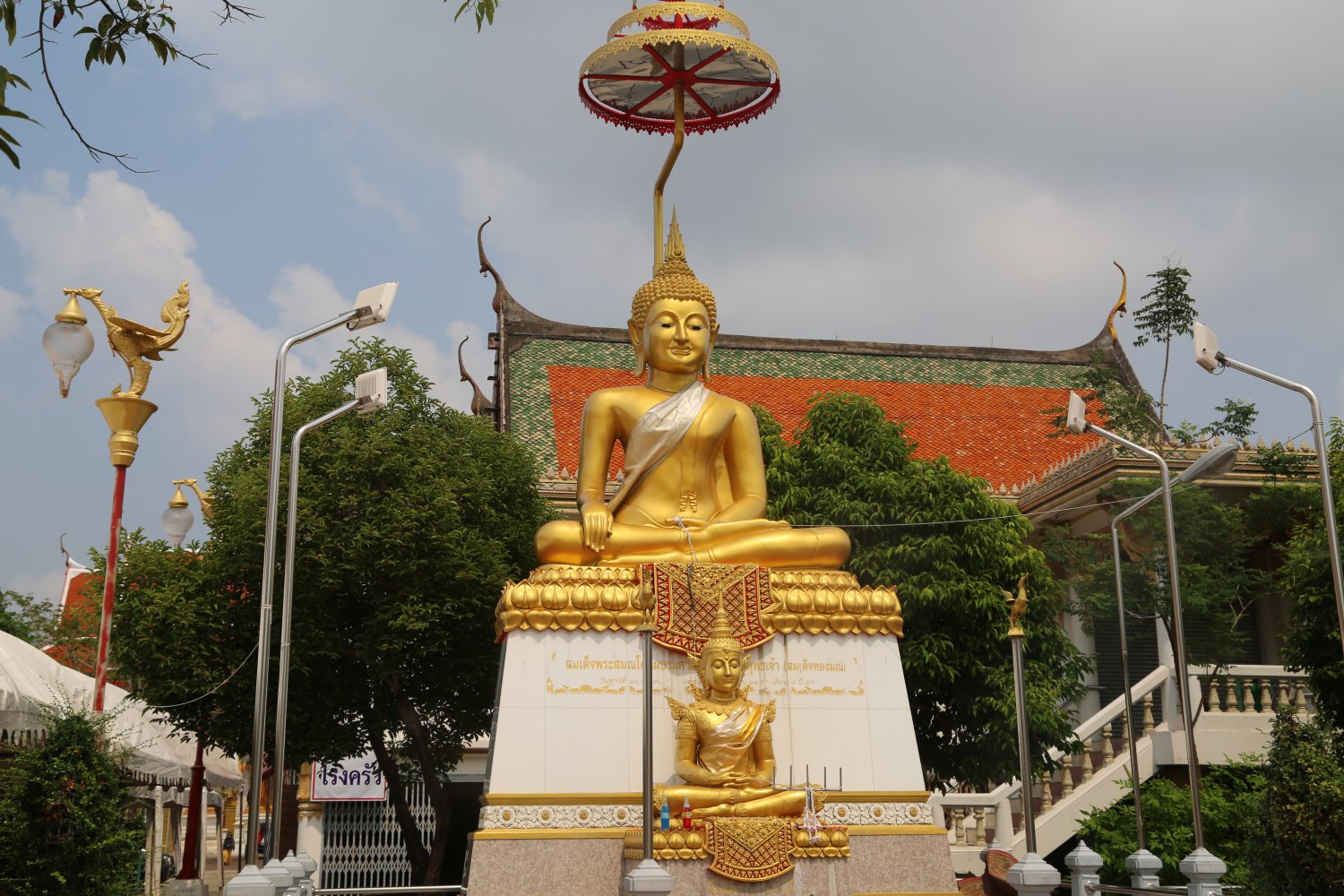


Wat Sapan is located on the Thonburi side (west) of the Chao Phraya River – on the way to Taling Chan (a part of town known for its weekend floating market). There is also a much smaller floating market near this temple called the Wat Saphan Floating Market. Located in a part of town that used to be known for its fruit orchards.
A bit difficult to find – located along a one way at times busy street – but motorbike taxis usually ignore the one-way flow of traffic and will ride on the side of the street against the opposing traffic.
Not a large temple – during our visit we saw some cows on site eating hay. Also, containers in a wall containing the ashes of loved ones – during their life had a strong connection to this particular temple. Well off the beaten path for tourists – chances are you will not see any other tourists during a visit to this particular temple.


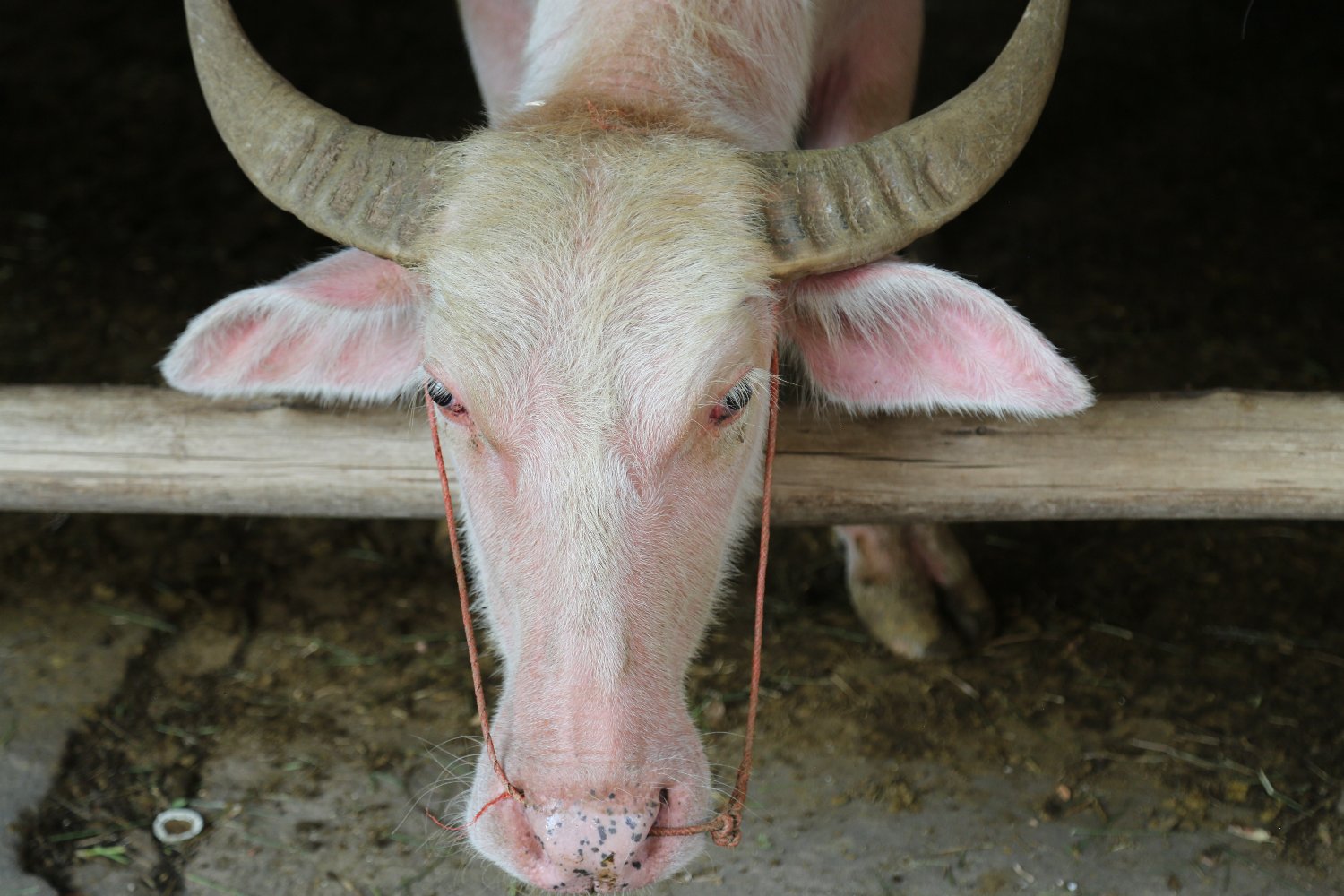
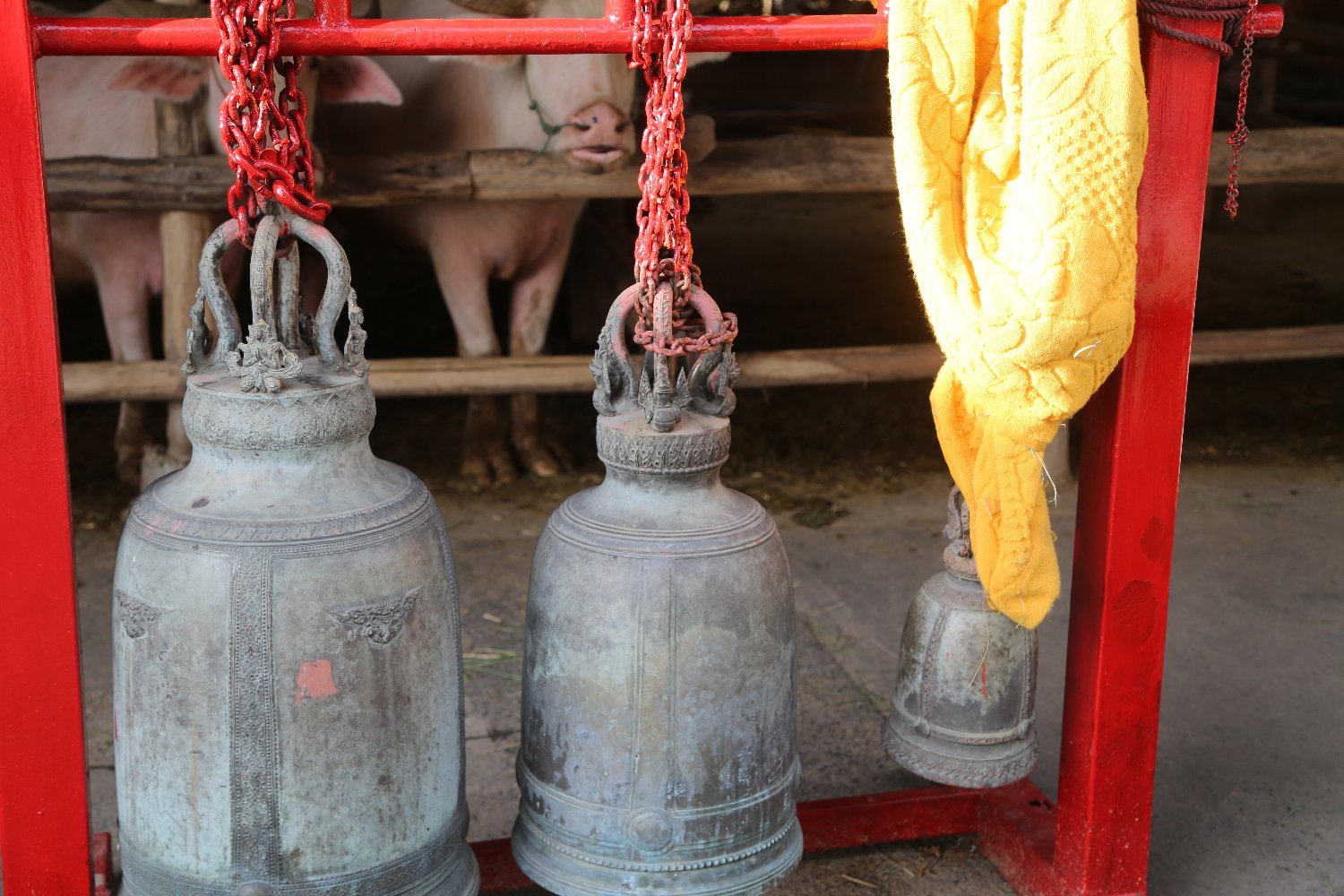
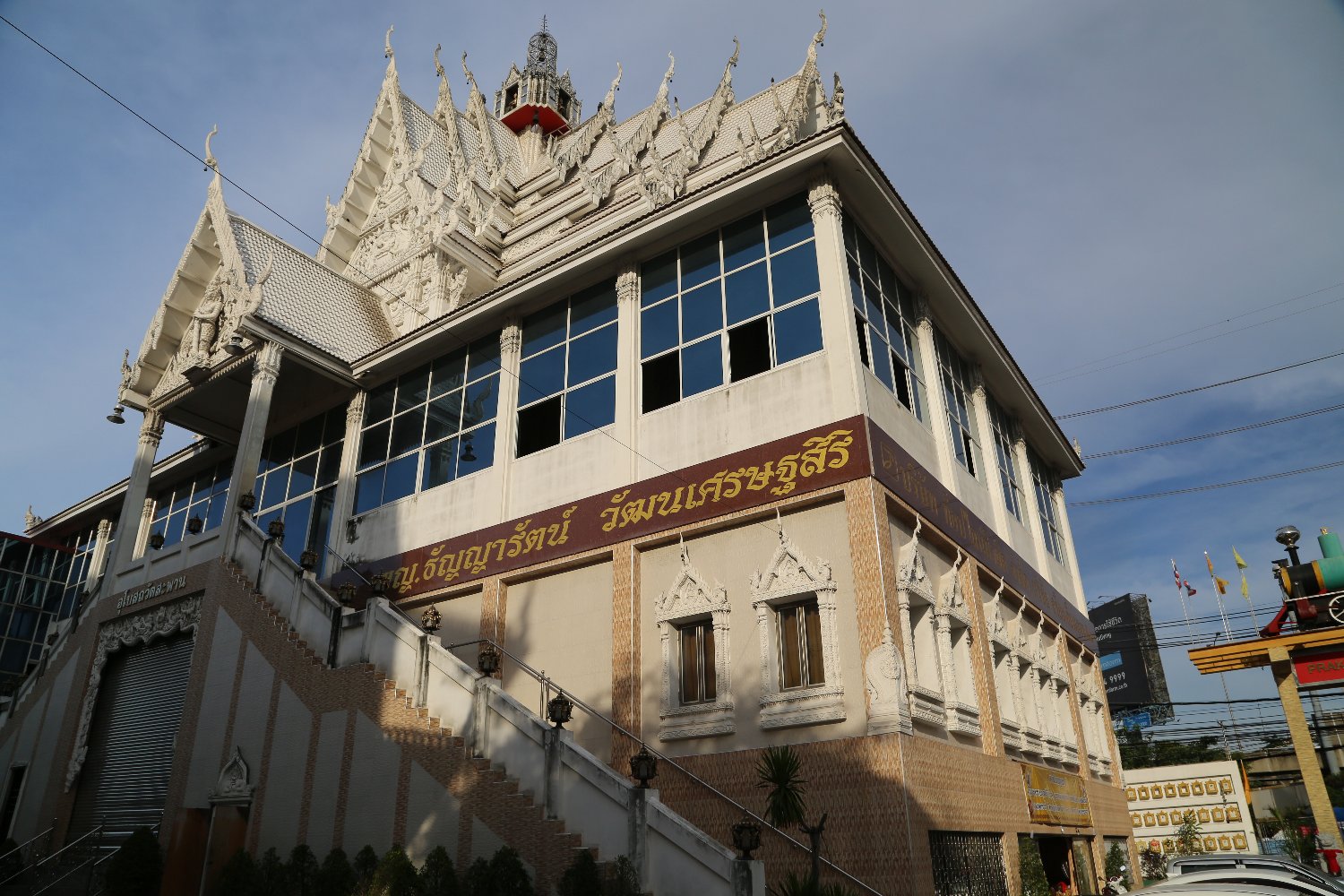

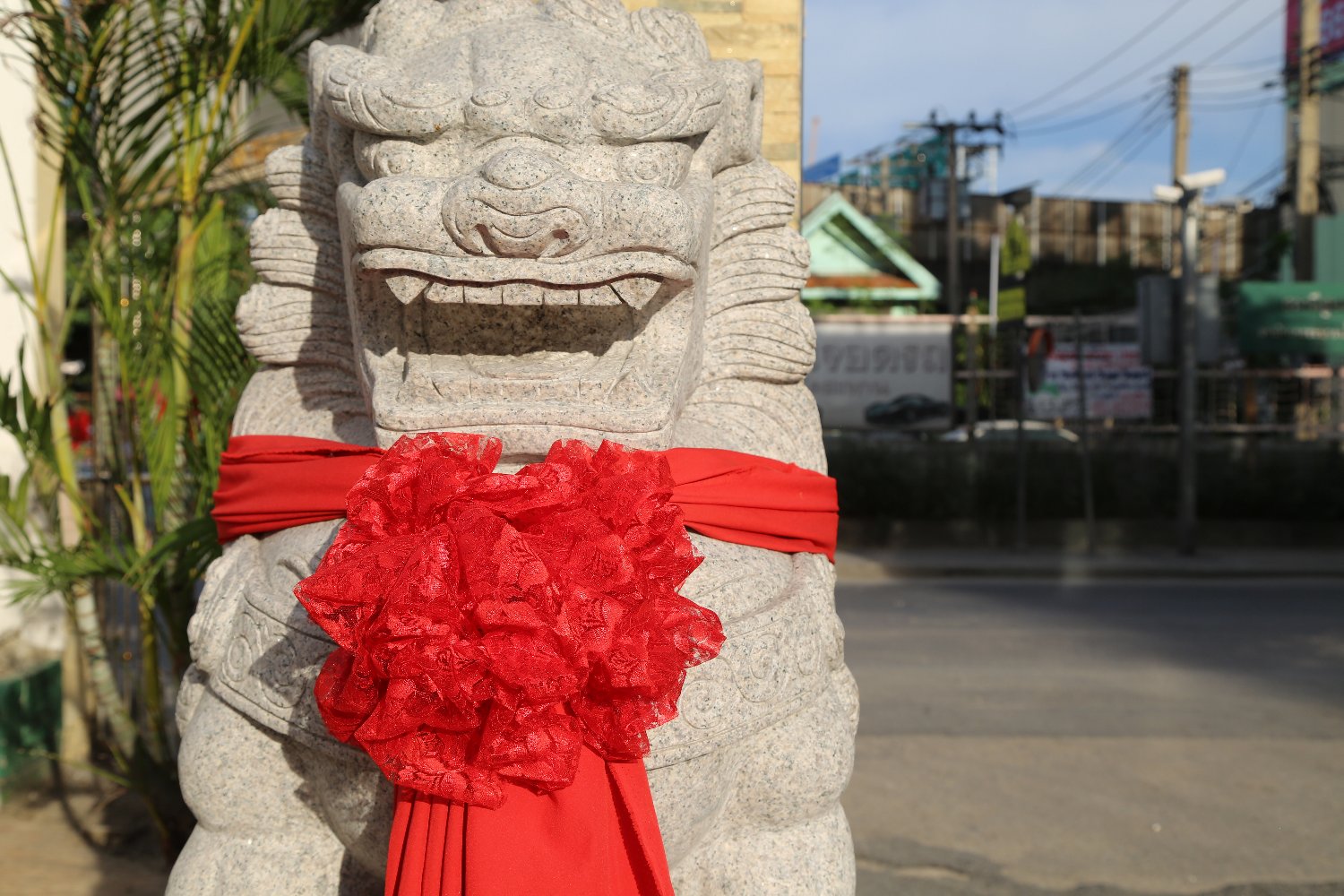
Wat Siri Kammalawat is a small well-maintained temple located about 20 minutes from the Lat Phrao Metro station. Located near the Lat Phrao canal – a walking path along the canal leads one directly to the same soi as the temple. The Ubosut may not be open during the daytime but rather only during special events. Another small temple well off the main tourist beaten path.
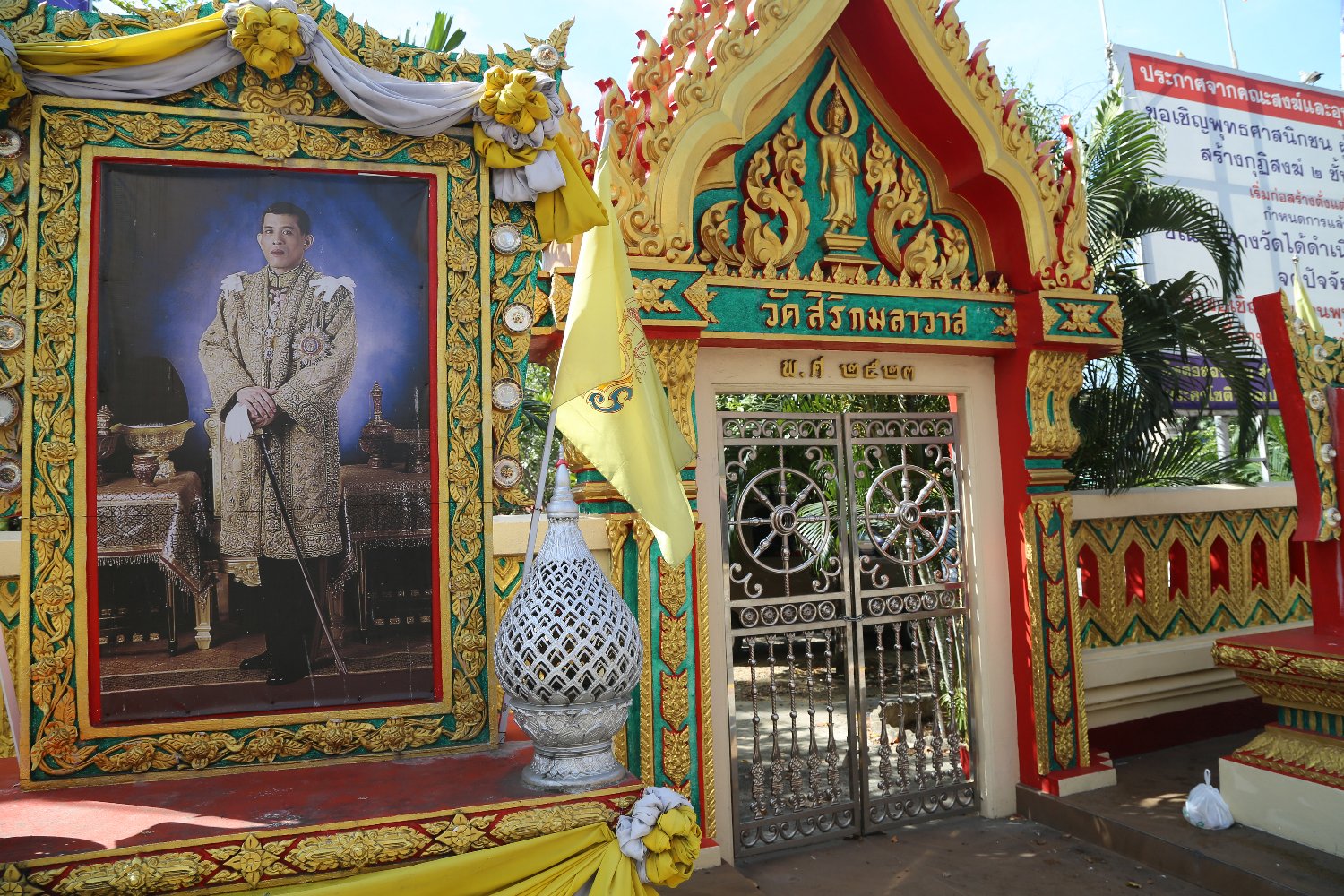
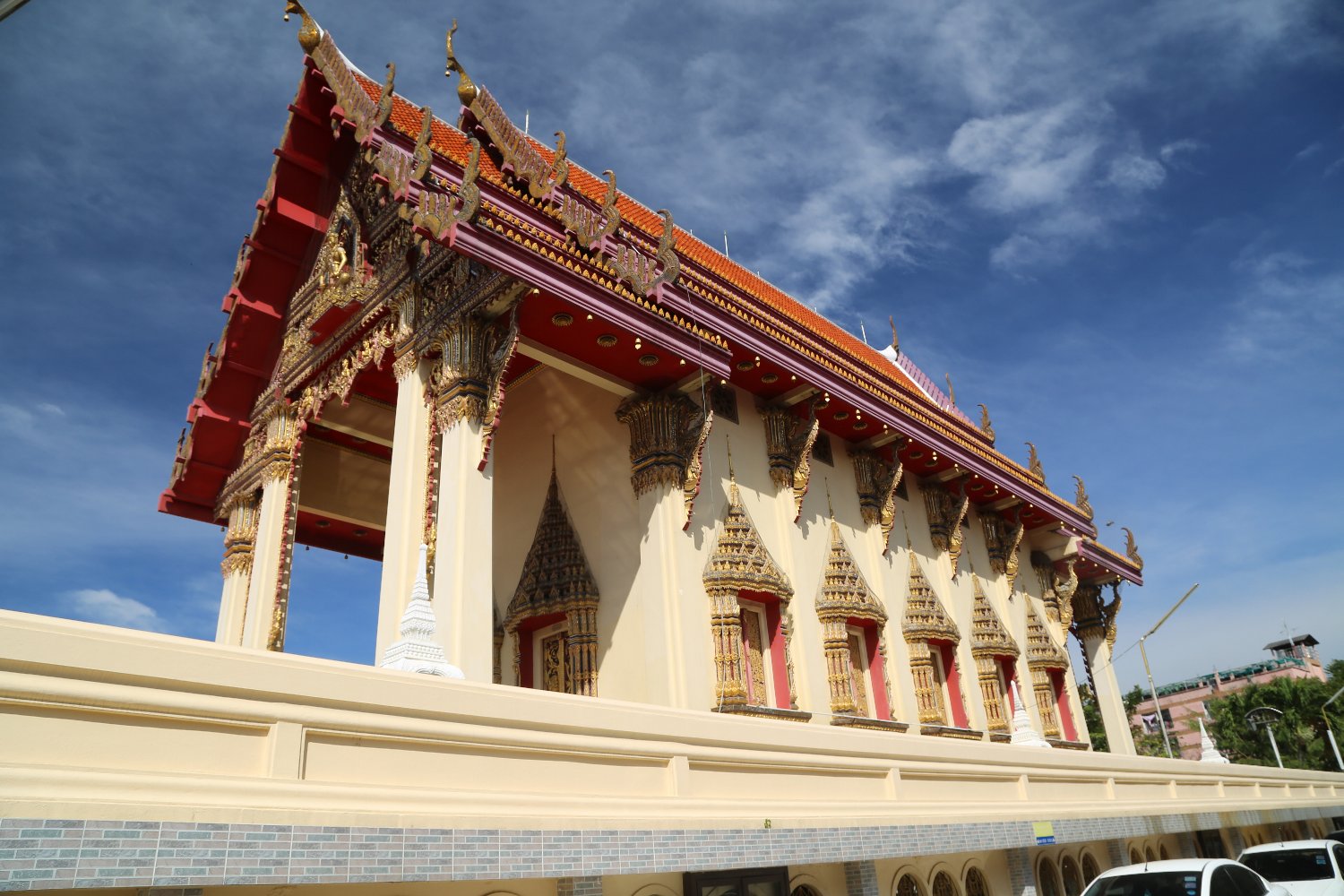
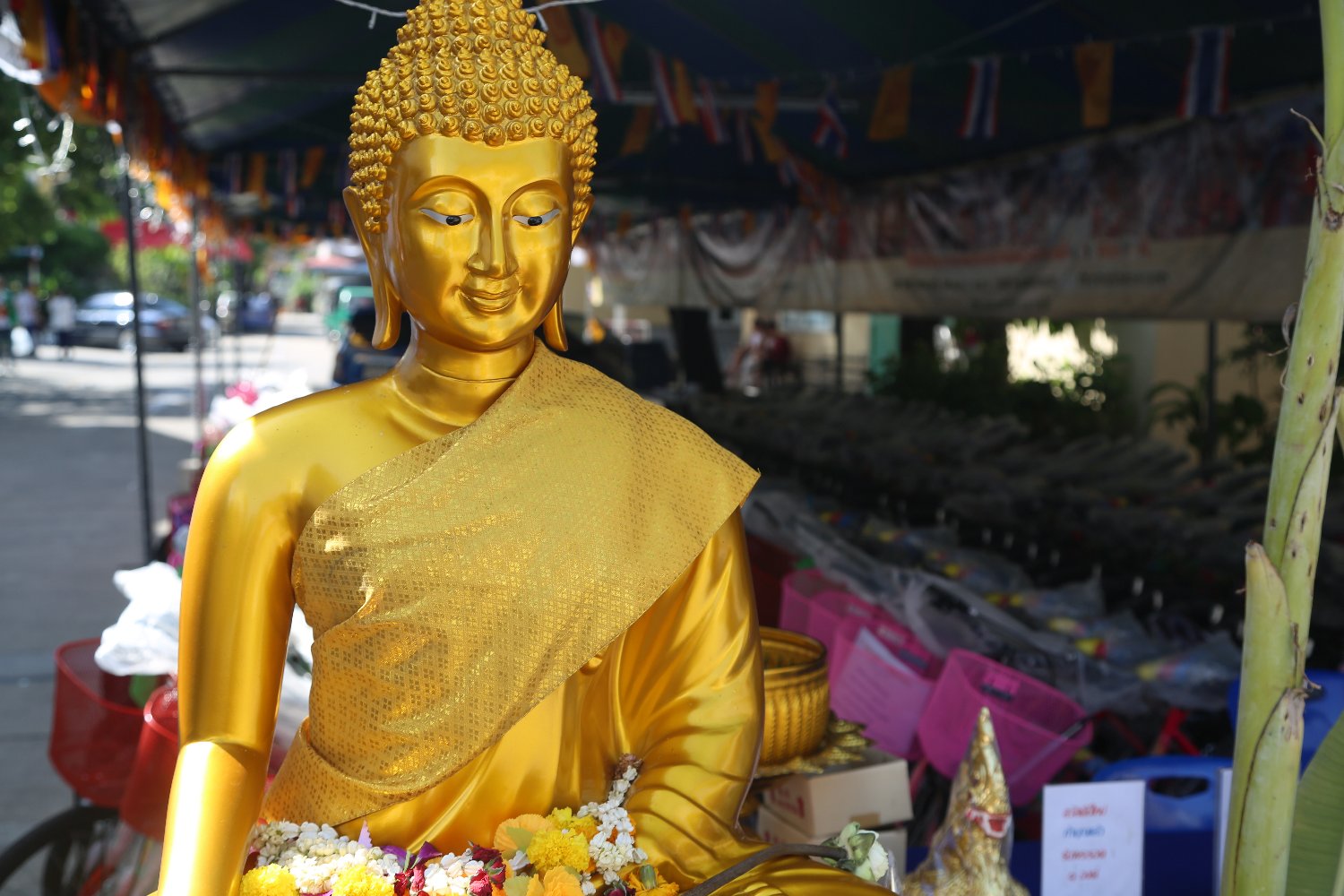

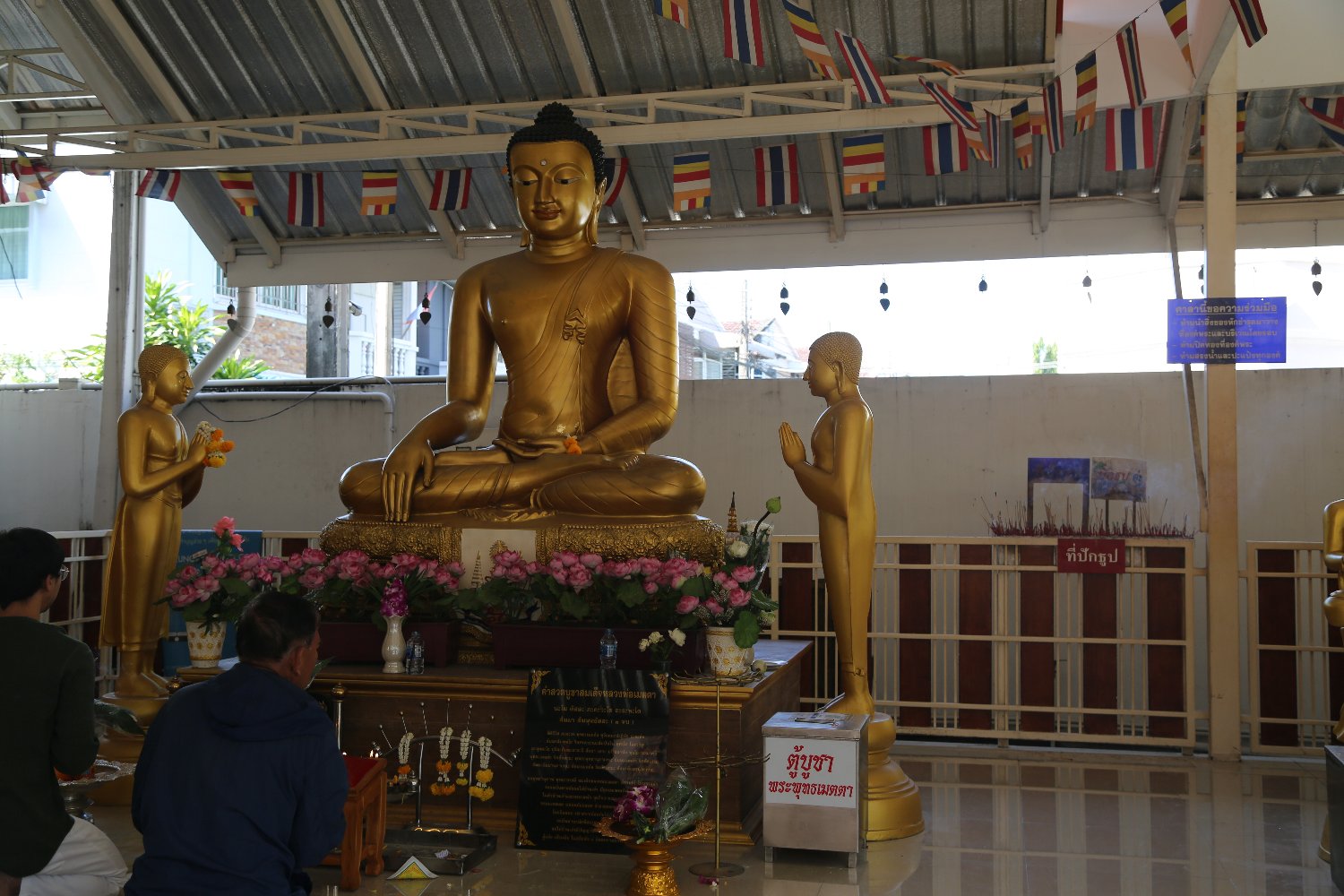

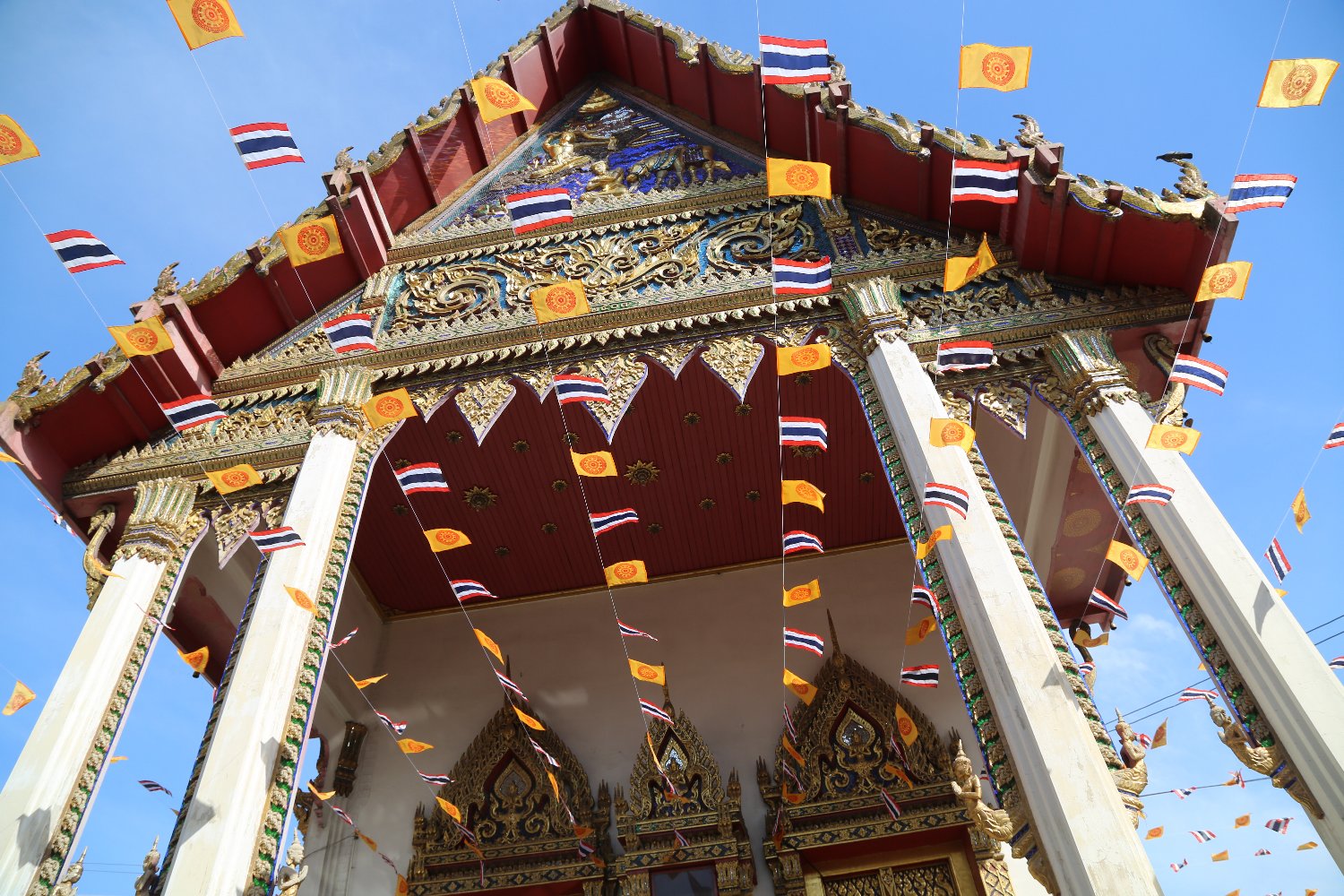

Wat Sommanat is located near the busy Nakhon Sawan Road but accessible via the much smaller Soi Wat Sommanat road. The temple grounds are clean with colorful buildings. The temple was built in 1853 – ordered by King Rama IV as a dedication to a Thai queen. A very pretty ubosot building – both outside and inside. Worth a stop if you find yourself in this part of Bangkok with not much else to do. For reference is a very short walk from the Rajadamnern Boxing Stadium.
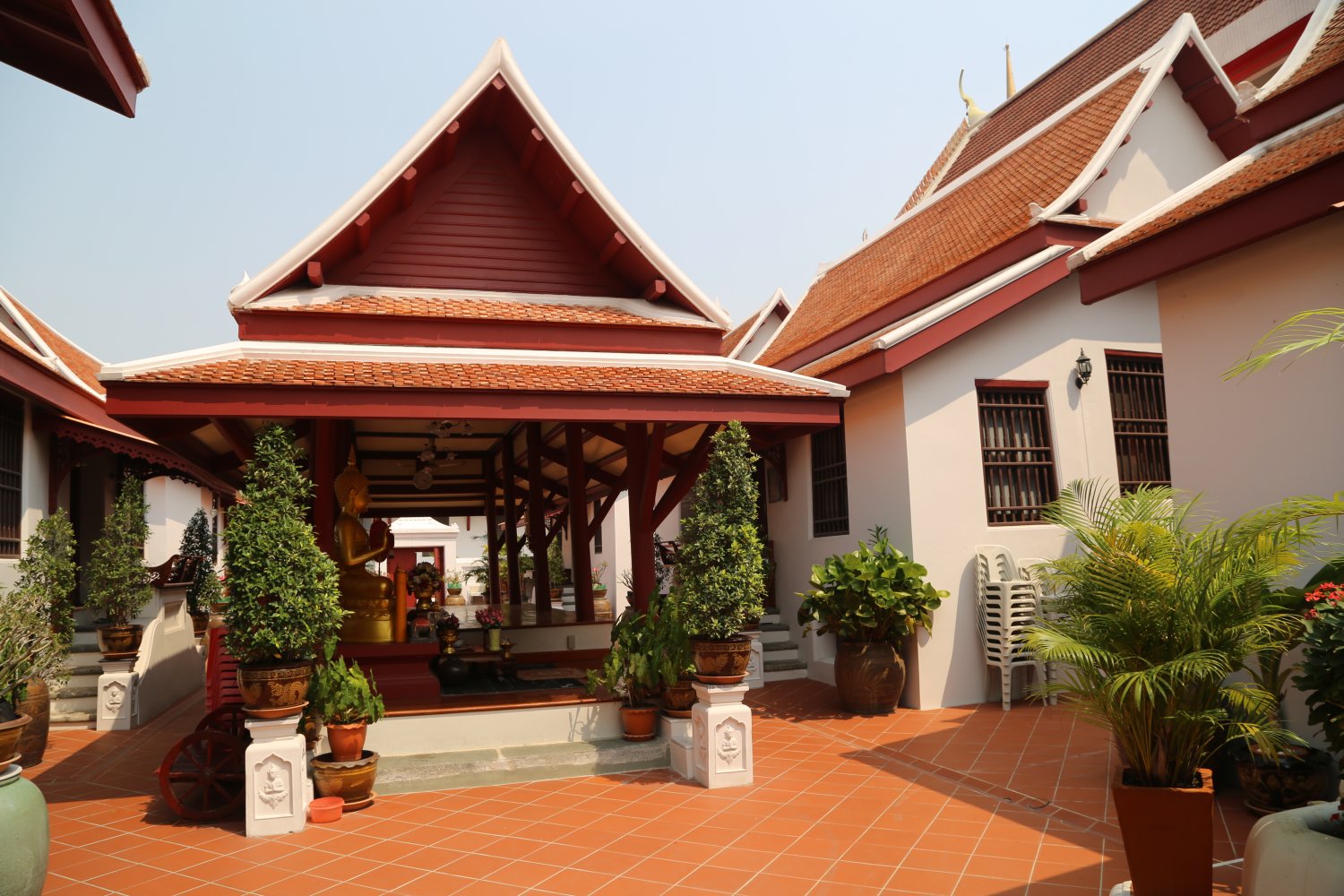
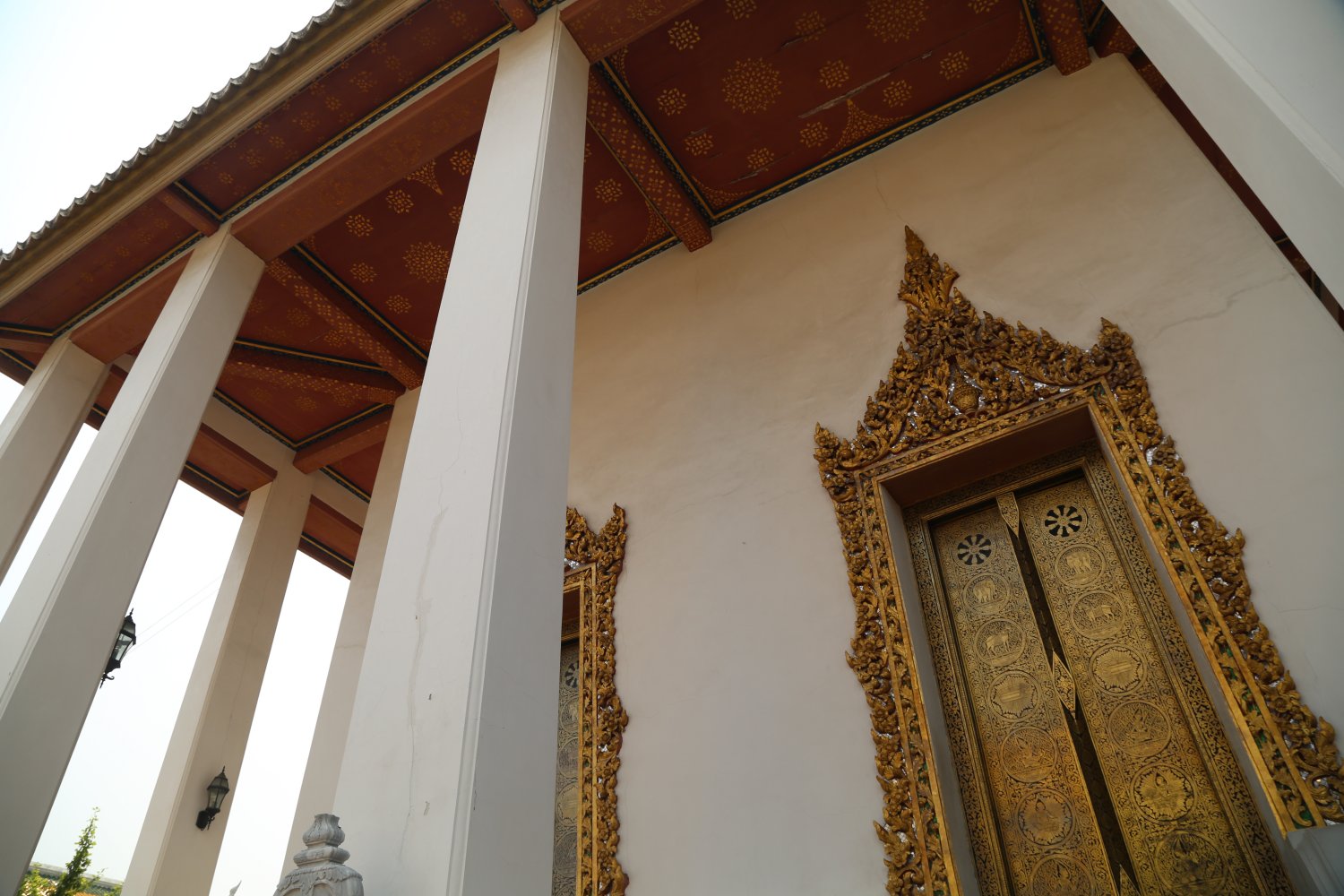


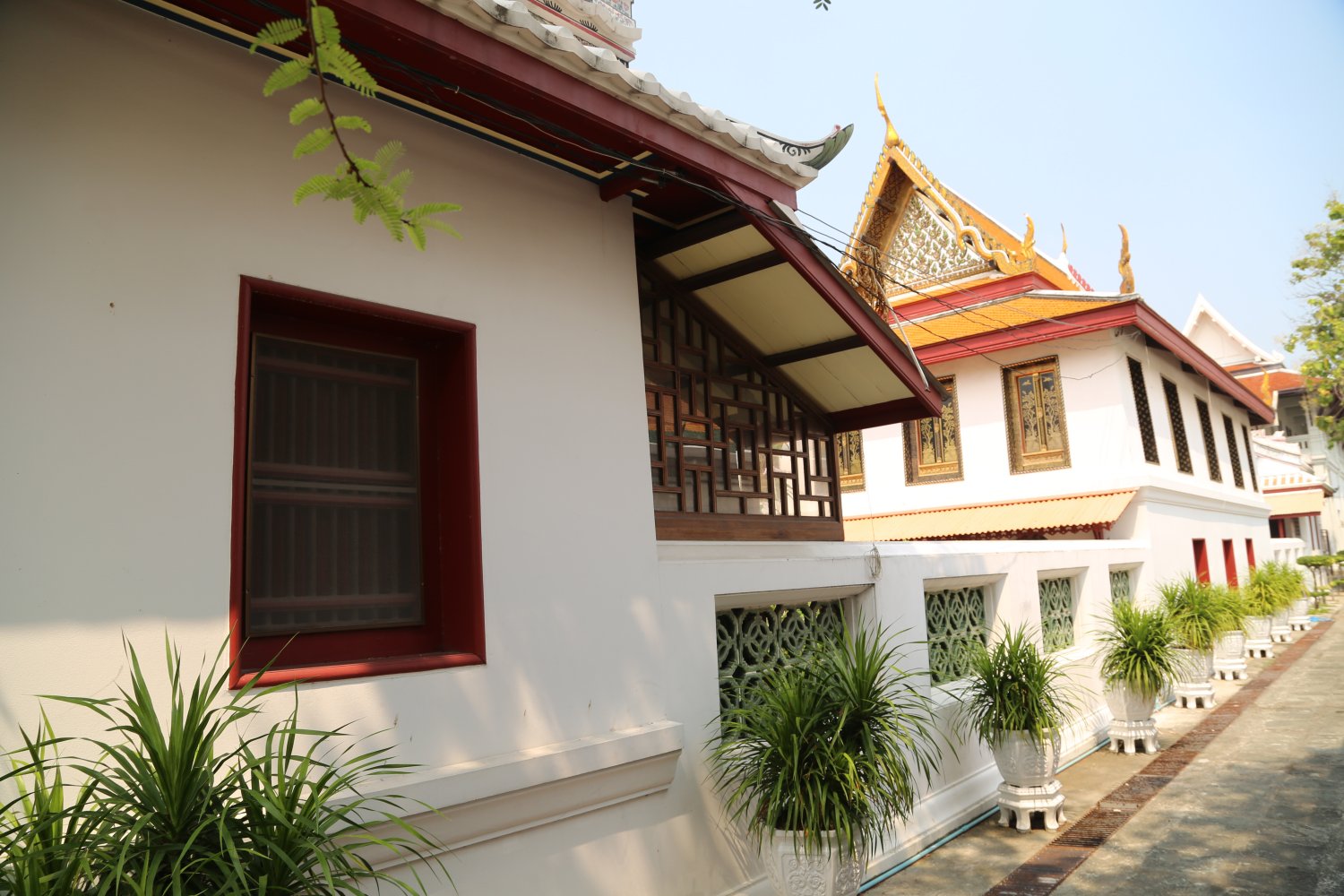
Wat Sri Iam is best accessed from either the Udom Suk or Bang Na Skytrain stops. This fascinating temple should be on the list of any Bangkok temple enthusiast – it is gorgeous both on the outside and on the inside. What immediately attracts one when entering the grounds are the bright white exterior of one of the buildings and the gleaming silver mirrors covering the outside of the main Ubosot. And when entering the ubosot – visitors are greeting by colorful murals including mythical scenes from the life of Siddharta Gautama extending up the walls to the ceiling. Looks fairly new compared to many of the temples in town. Not a temple to rush through but rather take your time and be dazzled by its opulence.


Wat Sri Sudaram Worawiharn is an impressive temple for a number of reasons. It is an ancient temple and classified as a third-grade royal temple built prior to the Rattanakosin period during the Ayutthaya period (estimated to have been originally built sometime in the late 1600s). Its original name was Wat Chi Pa Kaho. The temple was rebuilt many years later after the original during the reign of King Rama I. The temple was restored during the reign of King Rama IV and took its current name then.
Local legend recalls that the temple was built and named after Than Chi Pakhao was last seen alive. Pakhao supposedly played a role in helping a Thai congregation visit France and King Louis XIV in the year 1686.
Well-known for being the temple where famous Thai poet Sunthorn Phu (1786 – 1855) studied during his childhood (reference Wat Thepthidaram Worawihan, also listed on this page which contains the Sunthorn Phu museum). There is even a Sunthorn Phu day in Thailand – held every year on June 26th. A two-story wooden building contains a library of Sunthorn’s works. And along the banks of Bangkok Noi one can visit a giant golden statue, perhaps mistaken as the likeness of Sunthorn Phu but in reality, is of Phra Buddha Charn Tok. Although there is a small statue dedicated to Sunthorn directly behind the giant golden statue.
This temple also contains an adjoining school which takes the name of the temple (as is common with schools located next to wats).
Located a fairly short walk from the closest MRT (metro) station, Bang Khun Non, this temple is built on the banks of Bangkok Noi – a sizable klong (canal) which connects to the Chao Phraya River. If one walks to the temple – note the bench next to the entrance tower on the small soi leading to the temple. This is a good place to take a breather. One can hang out along its banks and watch the numerous long tail boats race past. A pier, appropriately titled the Wat Srisudaram Pier is located on the temple grounds – one use this to arrive and depart from the temple via the canal. Plenty of fish swim in the canal and will jump out of the water with great excitement if one throws some bread there way.
And highly unusual at any temple in Bangkok is to have massage services located on a temple grounds. But there is a small house which offers a variety of affordable massage services to visitors. Often several masseuses will be hanging out on benches near the massage studio.

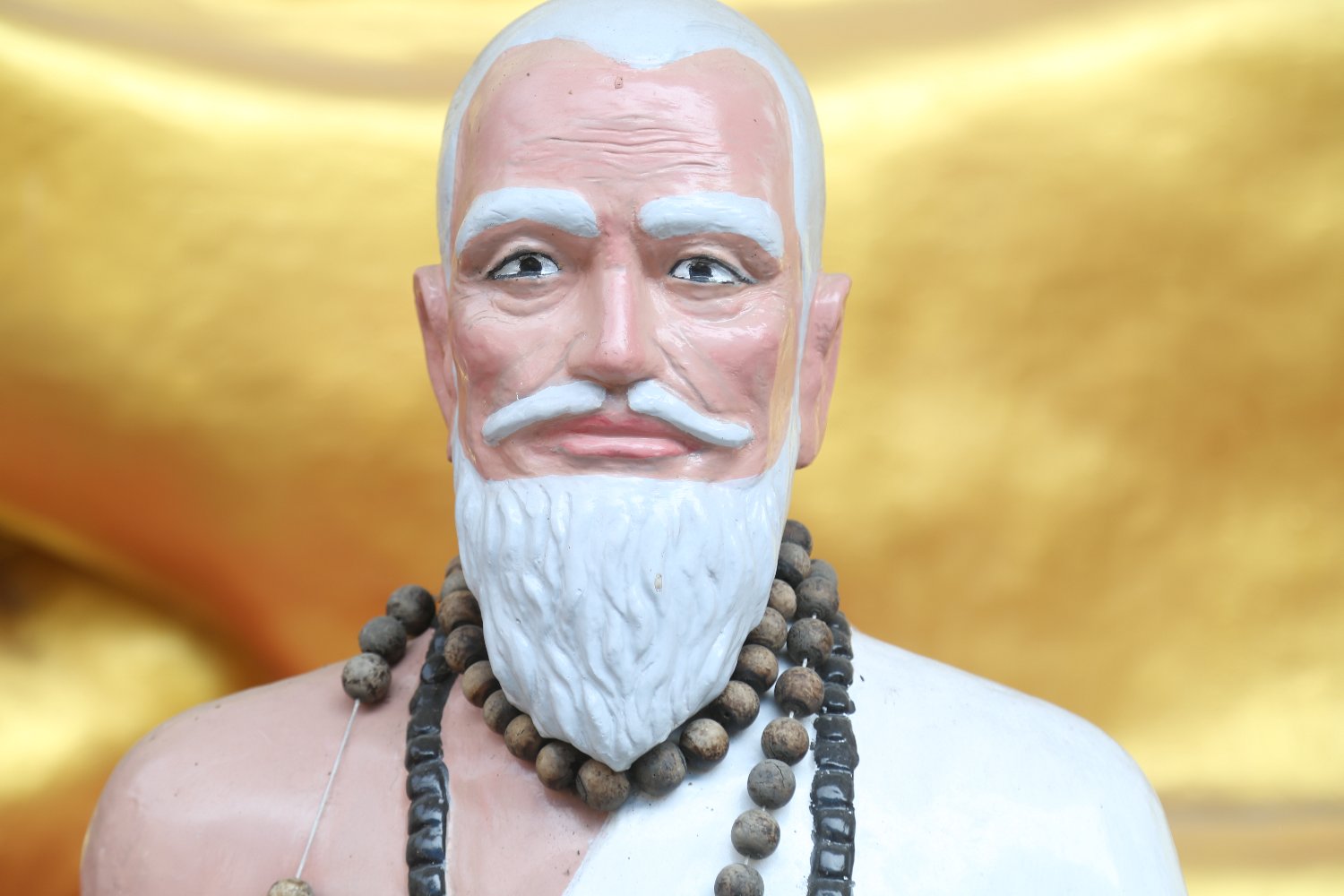

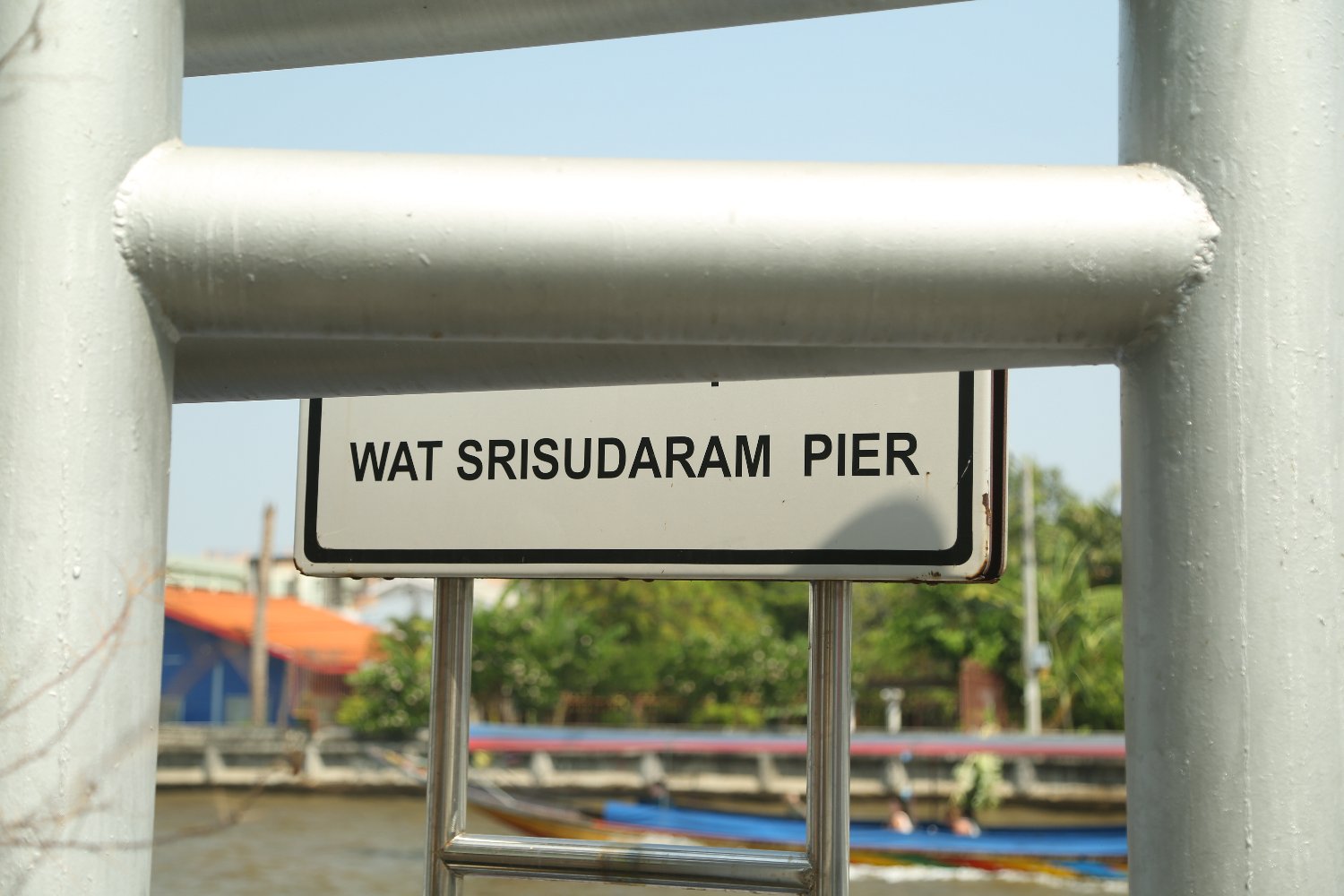
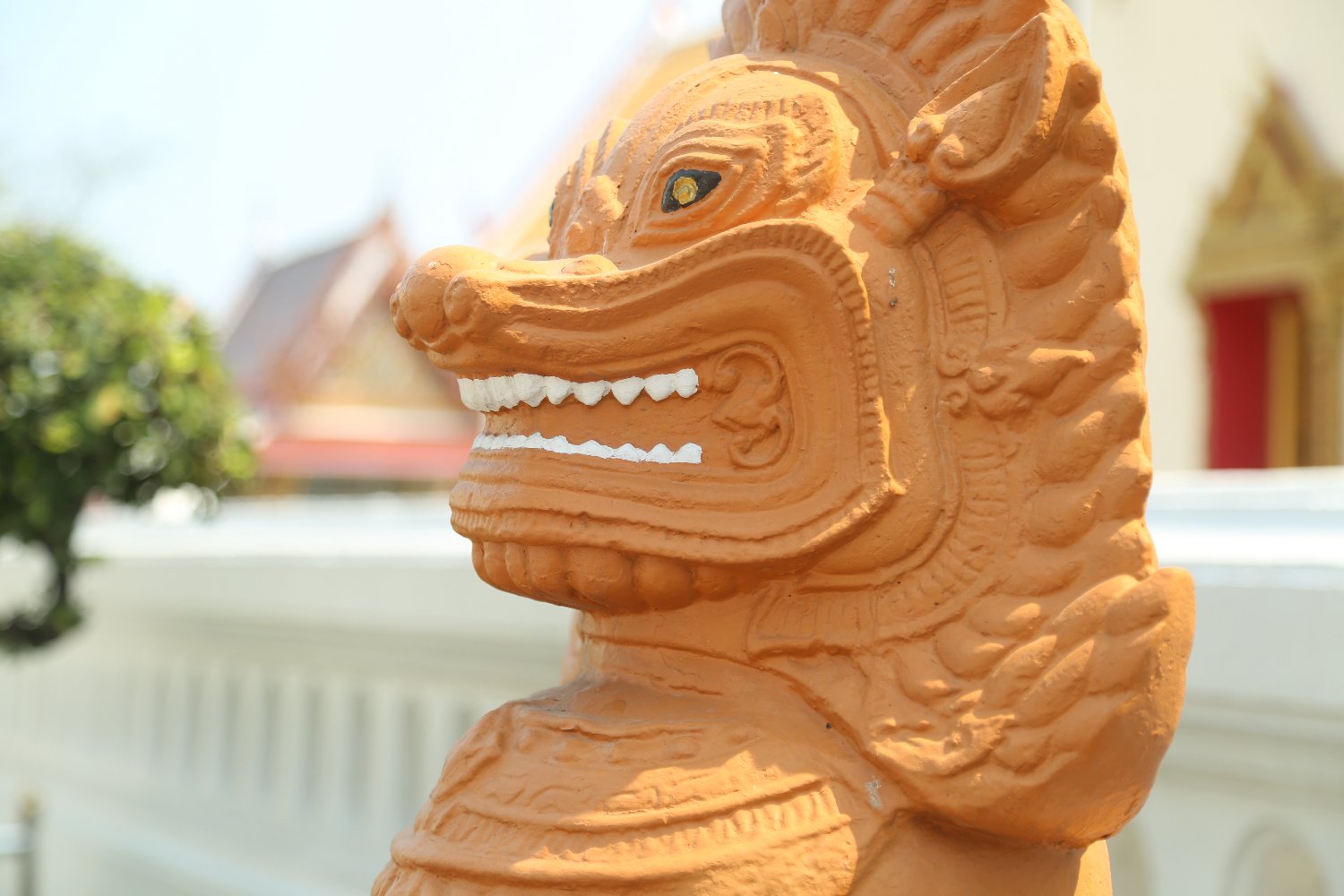
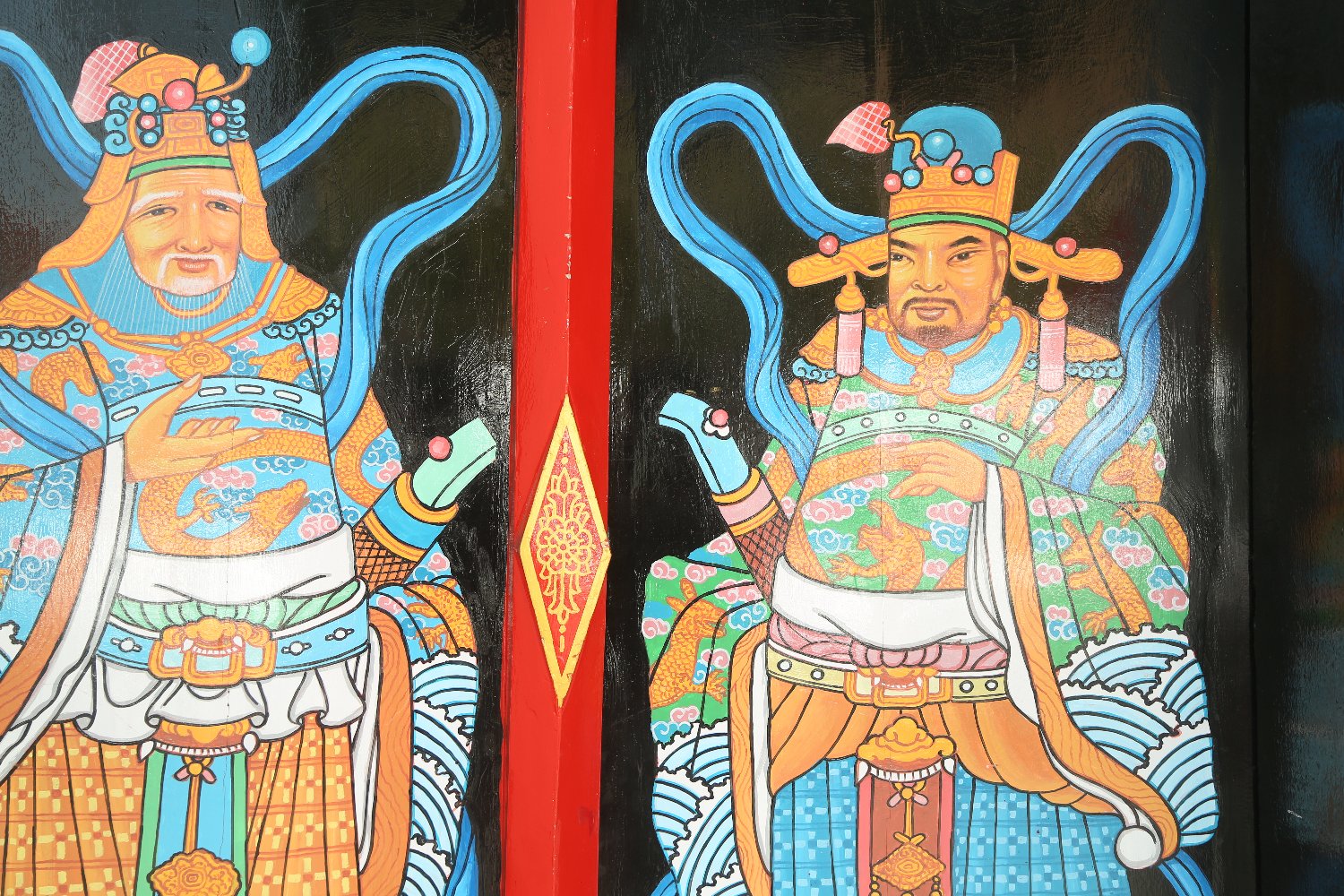


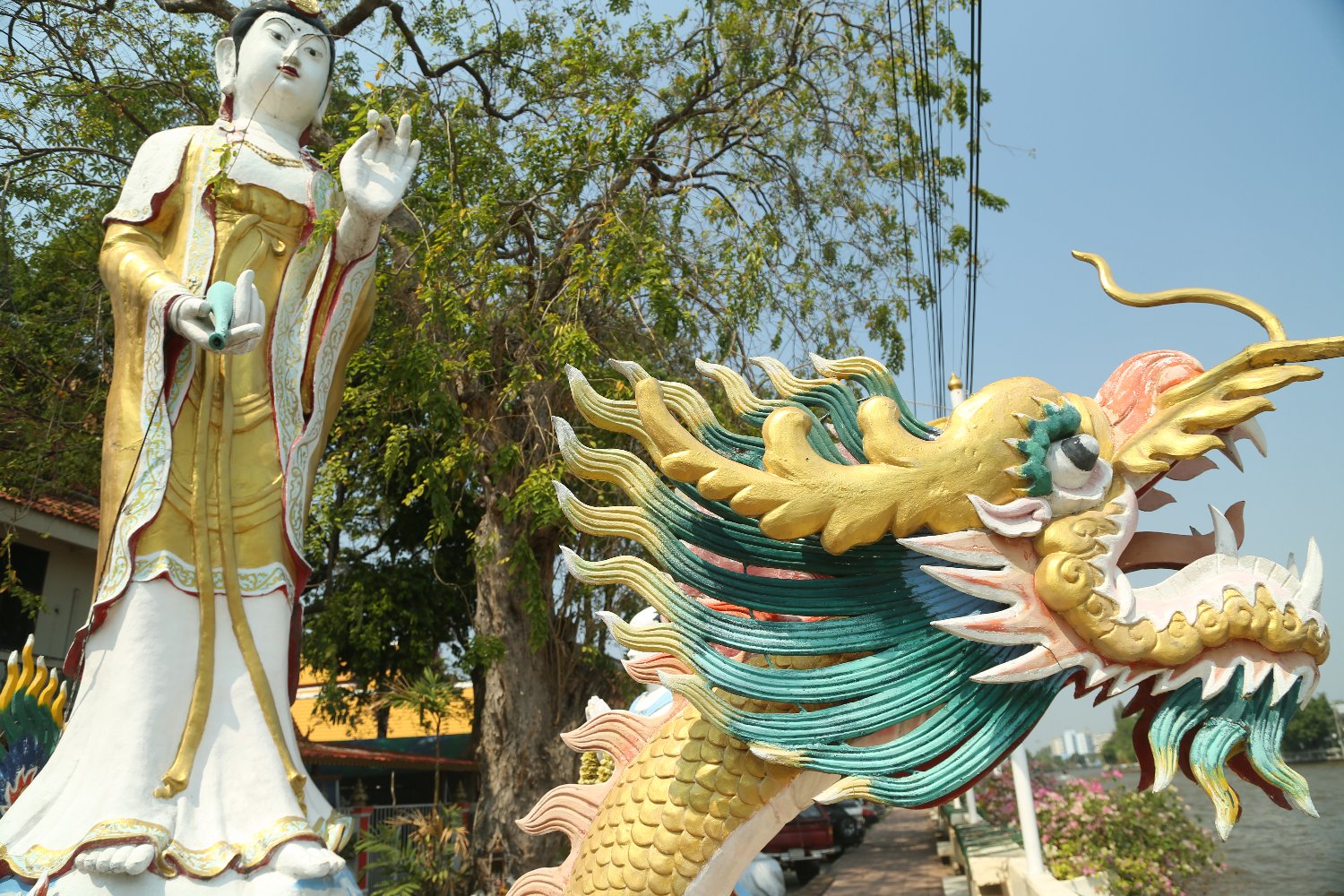
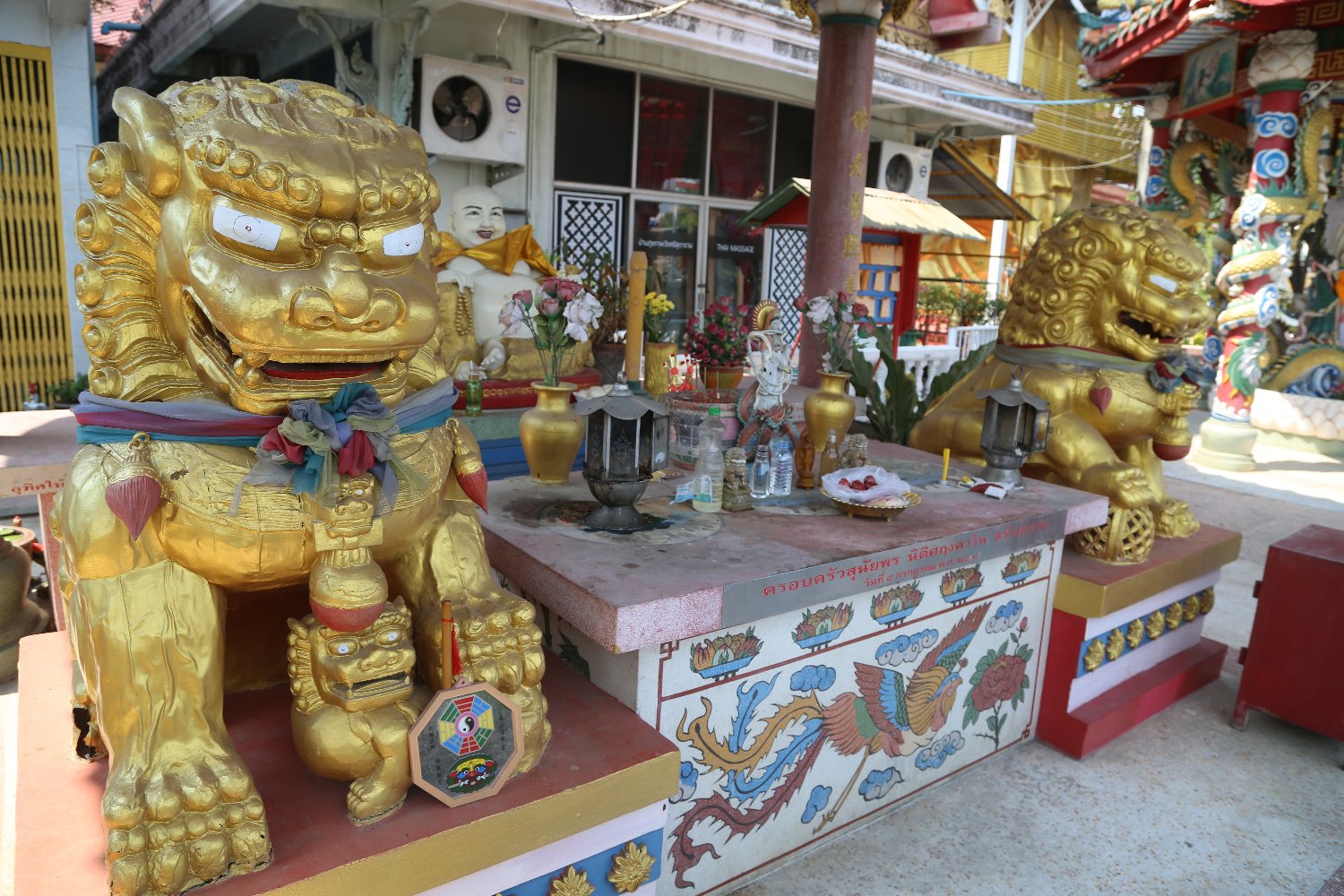
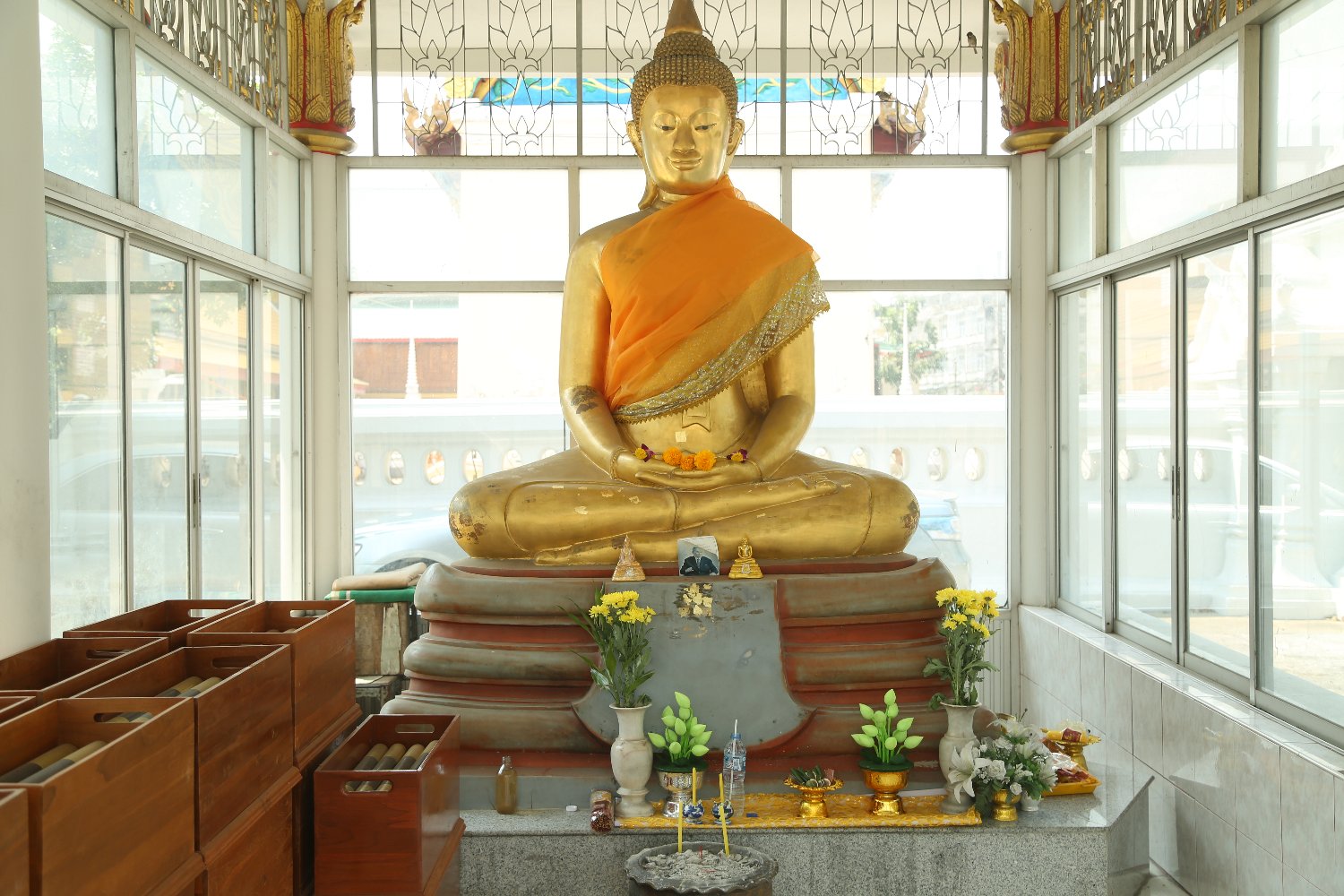
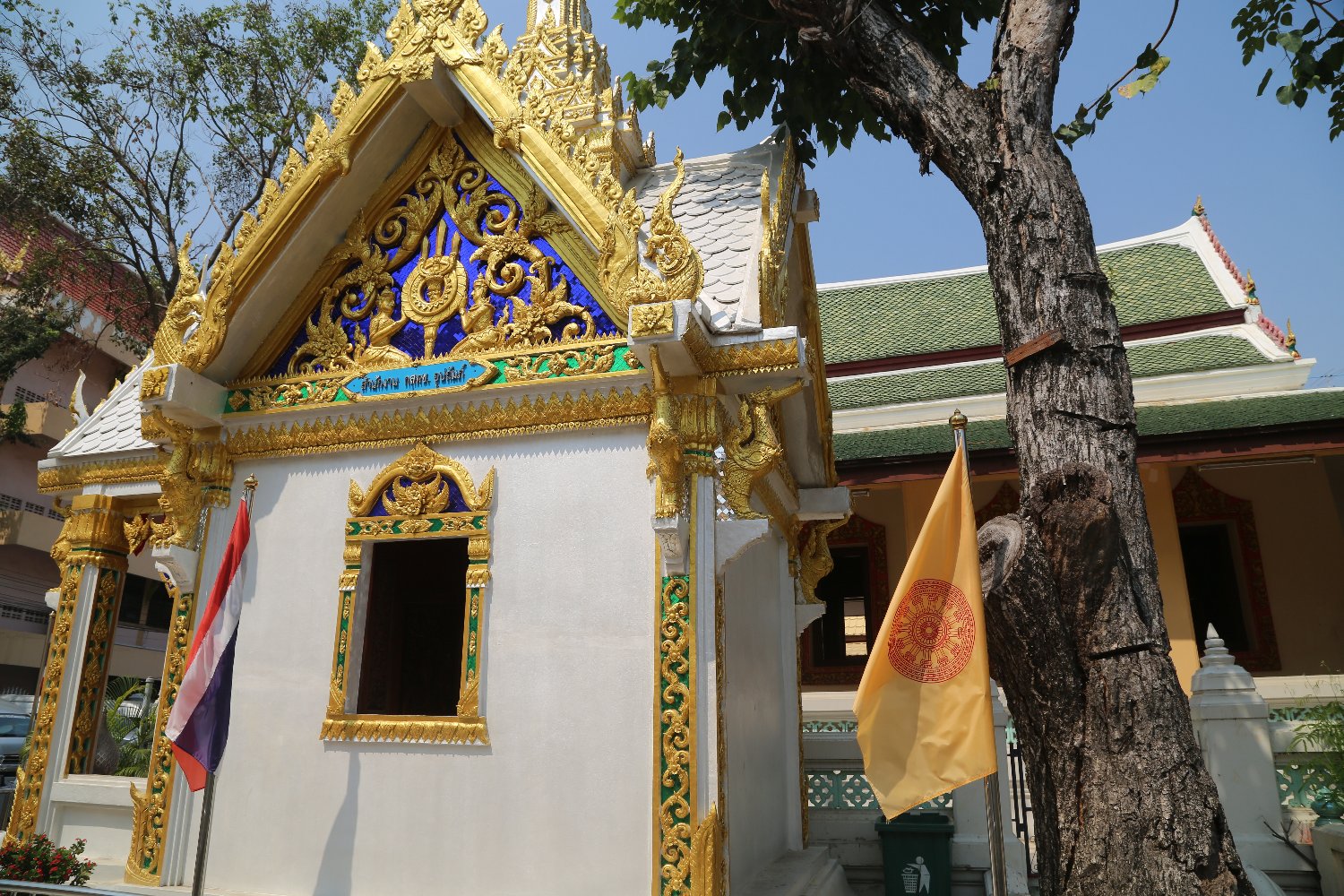
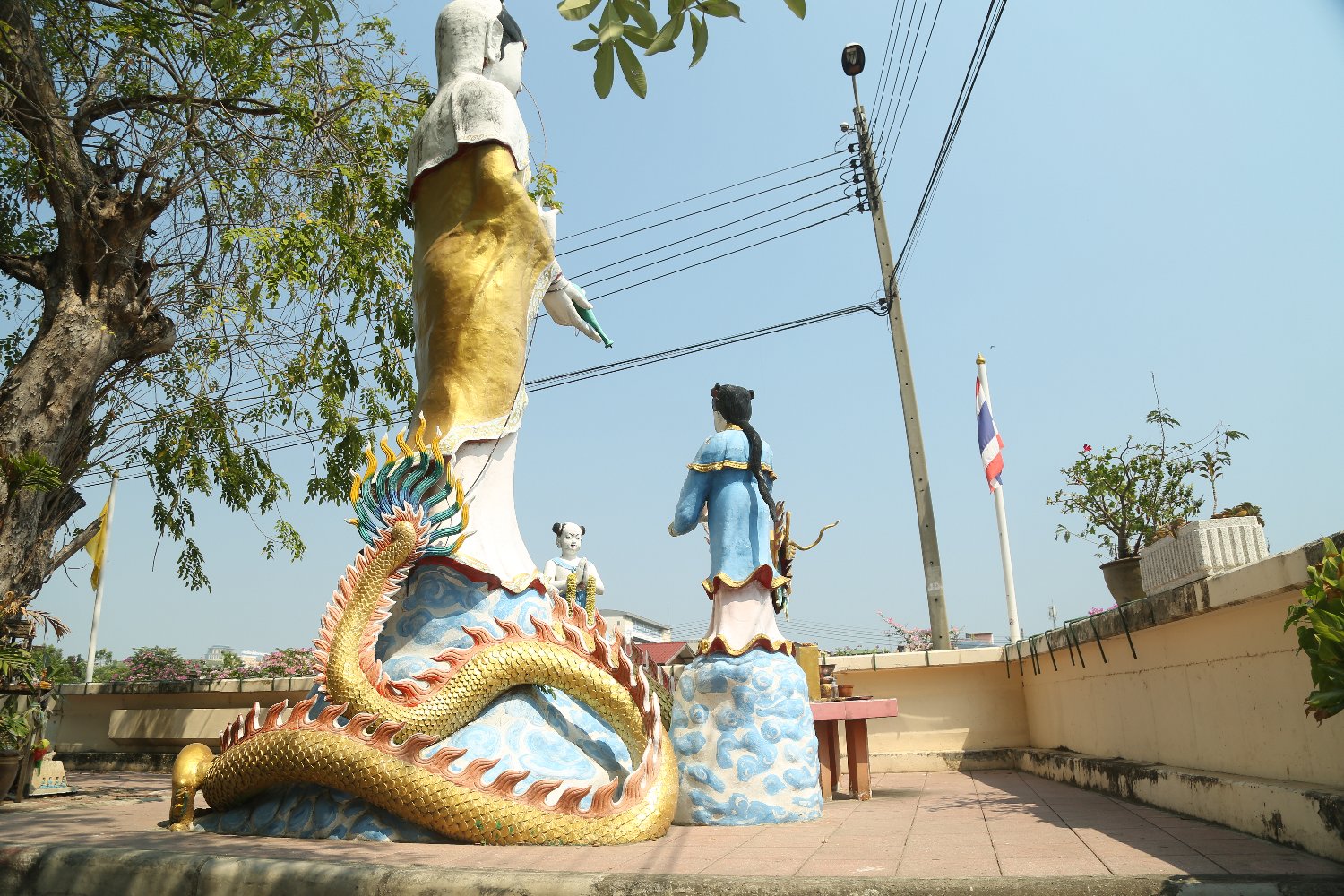

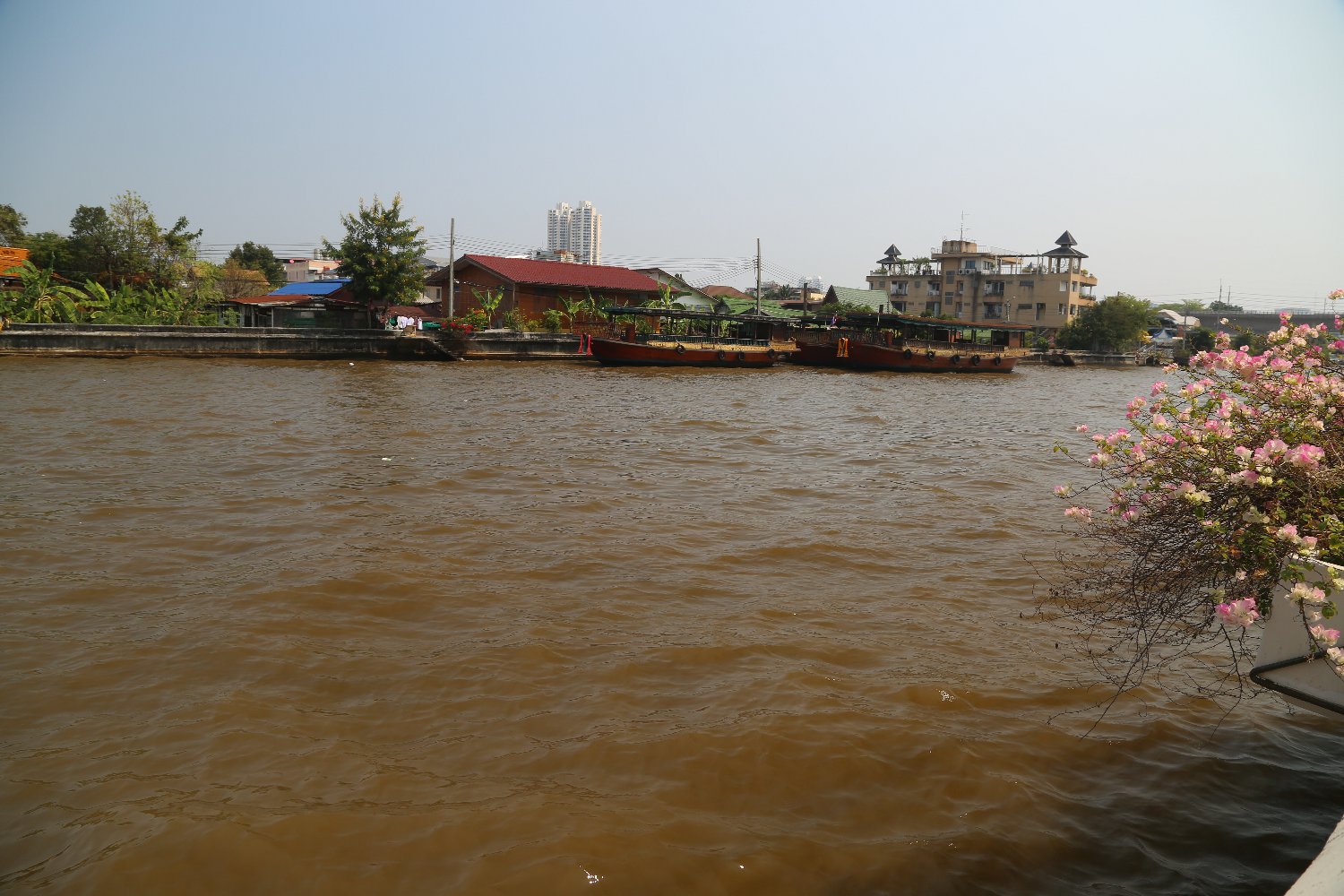
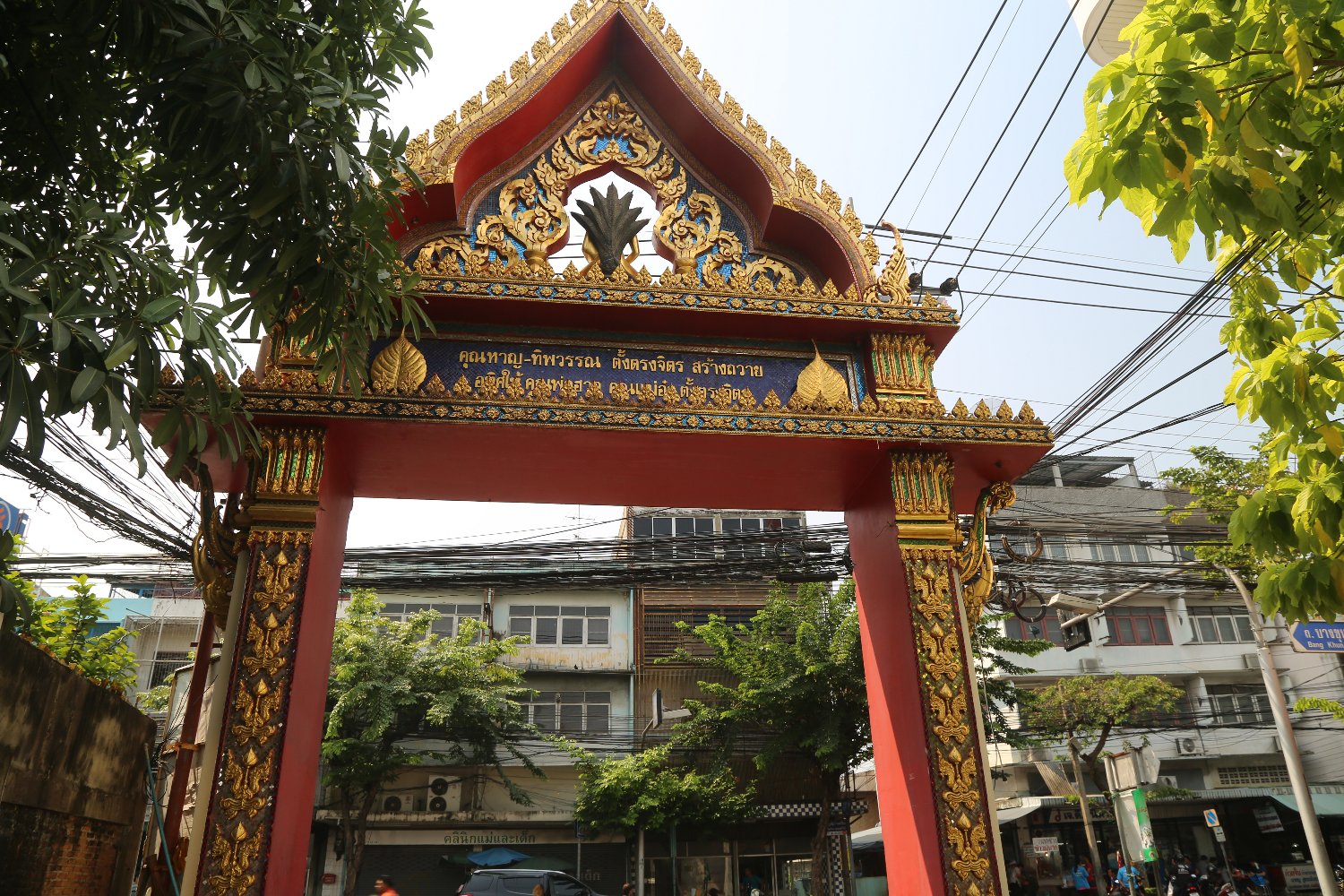
Wat Suan Phlu is easily accessible by walking from the Saphan Taksin Skytrain stop – meander along small sois heading north from the skytrain parallel to the Chao Phraya River. This temple is located near the Assumption Cathedral and very close to the famous Lebua Skytower. A number of high-end hotels dot this part of the river including the Oriental, Shangri La and the Peninsula. This part of town is also referred to as the Creative District.
Features a moat of sorts around one of the spiritual spaces – with some of the largest koi we have ever seen. Also, somewhat unusual in contemporary temples (of which this not one) but nonetheless are a number of buildings are made of wood including where the monks live. As a result, there are some intruiging looking carved wooding decorative items on the exterior of some of the buildings. The entrance to the ubosot has always been locked during our several daytime visits here.
A school is also located on the grounds and can be busy with kids running around, especially during lunch time weekdays visits. Unlike a number of other temples in town that scream golden, this temple is a bit more subdued, with its mainly blue exterior tiles.


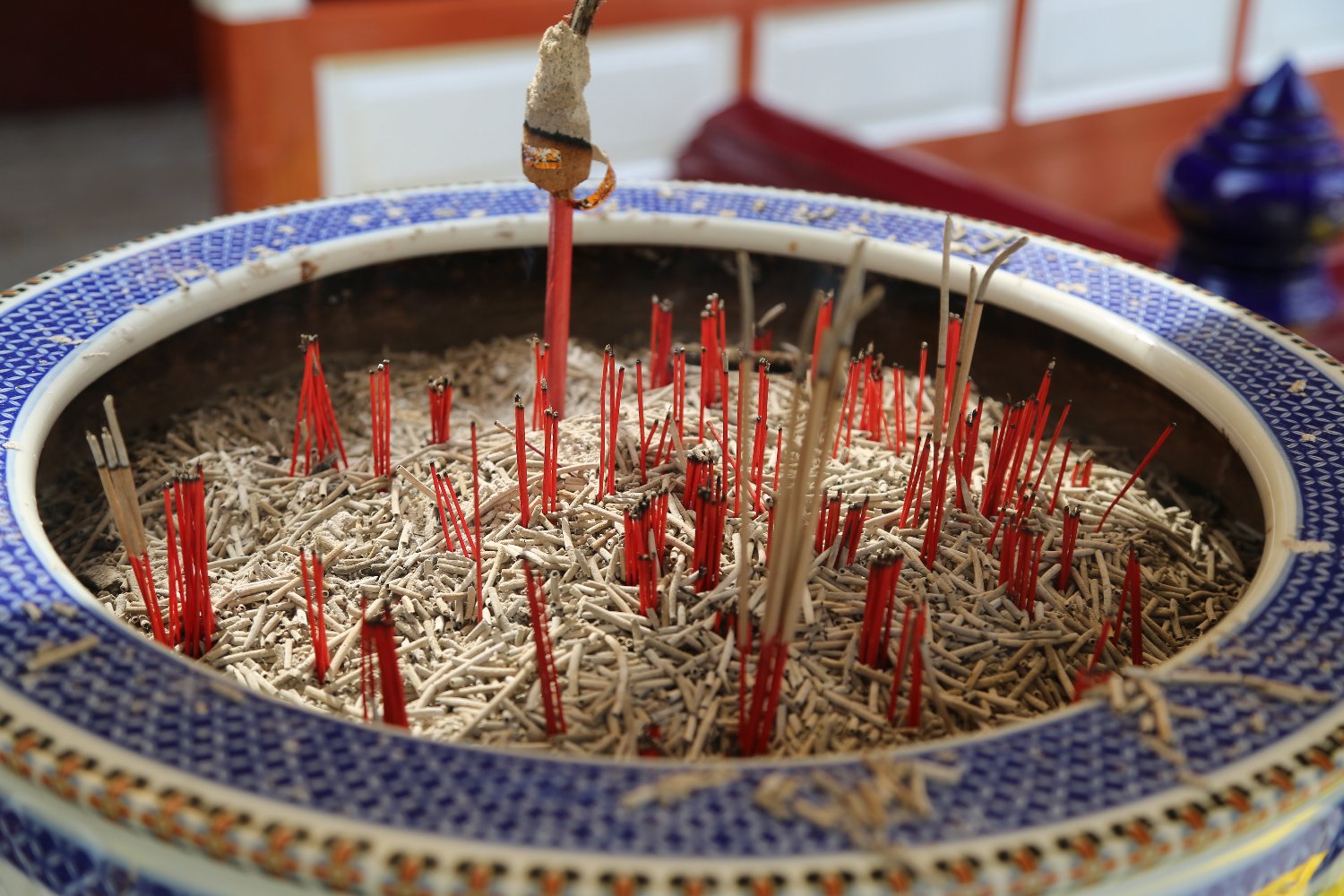


Wat Sukhontharam is located about 15 minutes by walking from the Dusit Zoo or about a 10-minute car ride from Victory Monument. Not many temples located in this immediate part of town. Located on a side canal tributary off of the main Samsen canal. A very colorful temple with lots of statues and ornate details to keep curious visitors satisfied in their choice to visit this very off the beaten path temple.
While not a large complex, the temple grounds are fairly spread out. A relic of the past, several old phone booths are still located on site.
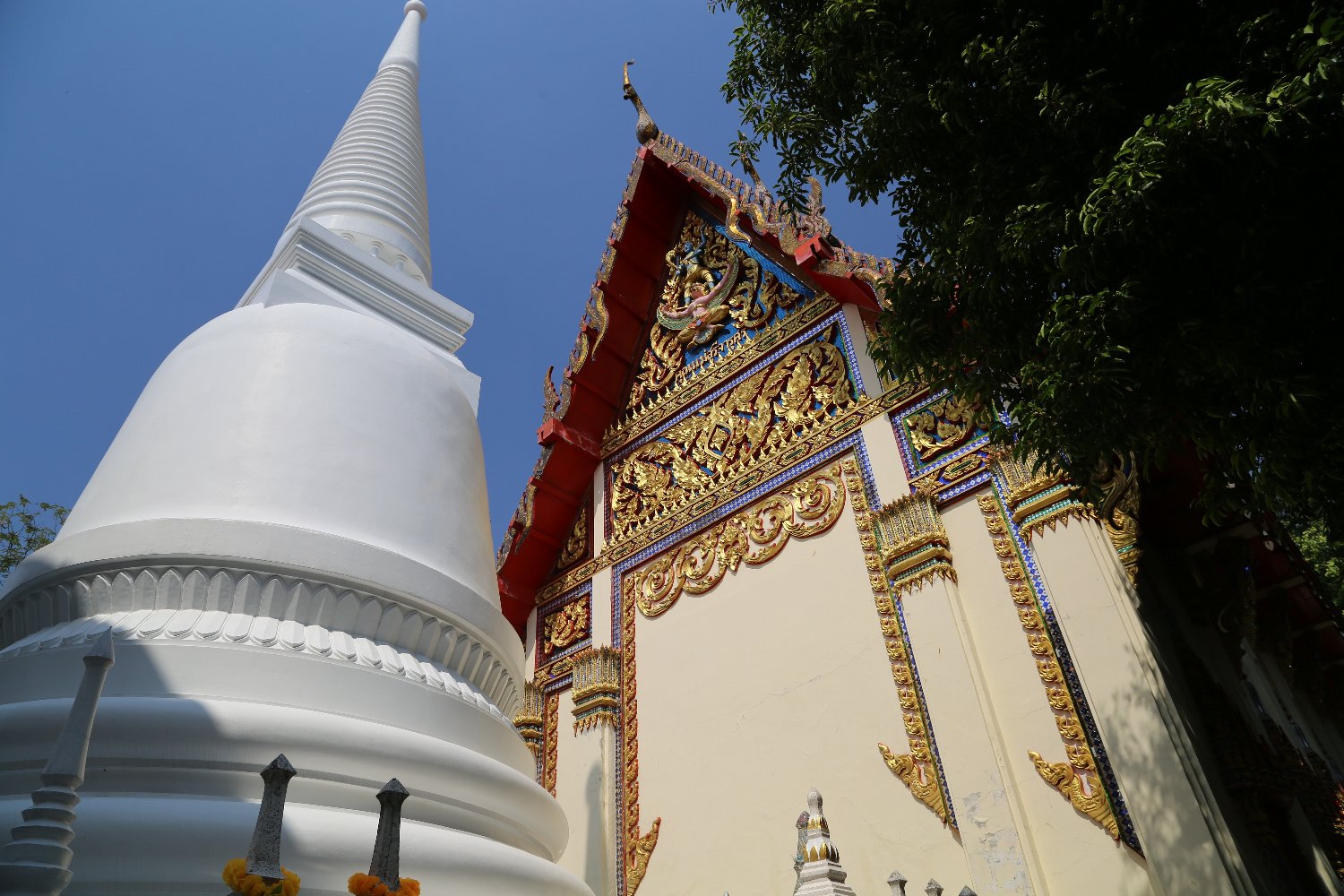
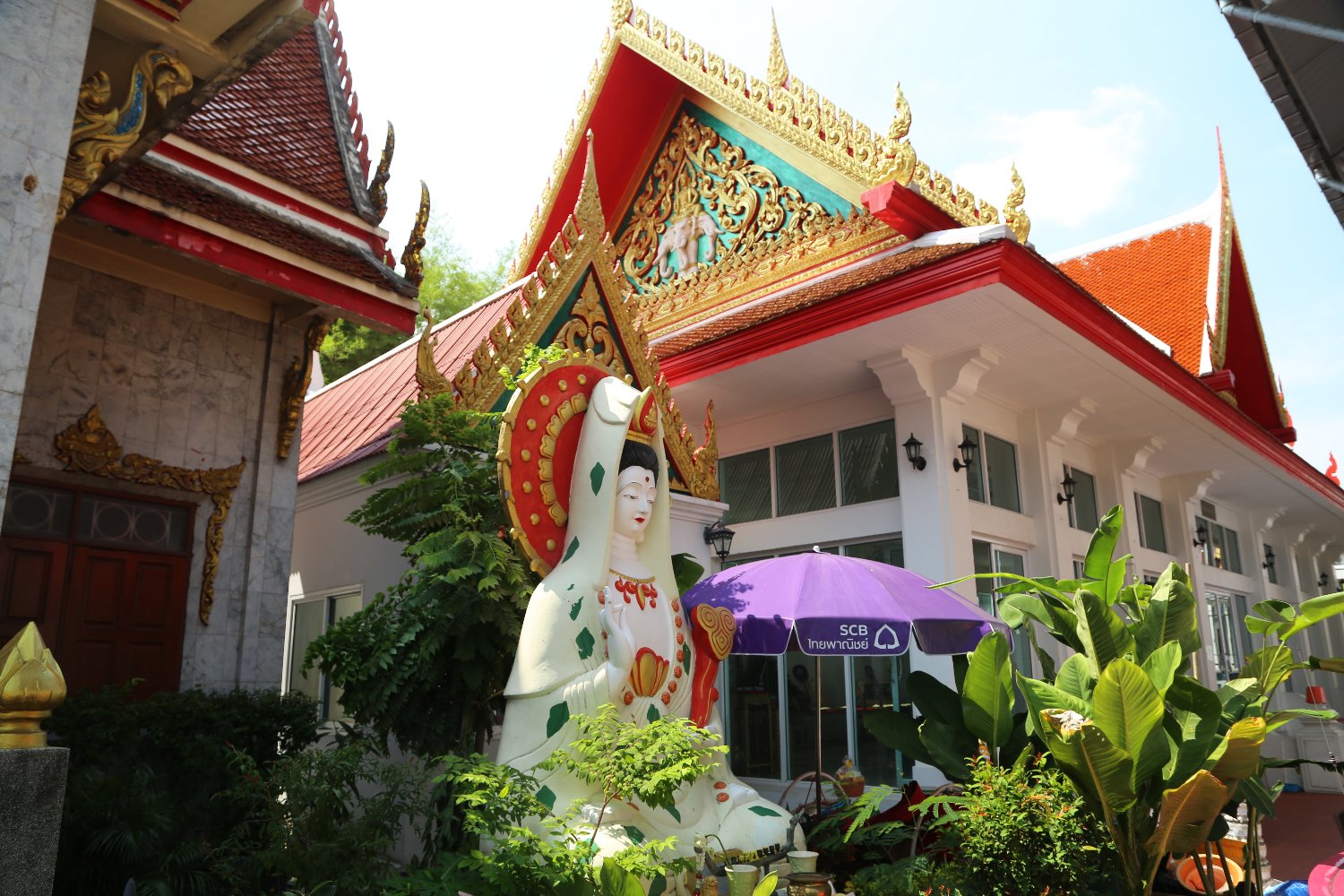
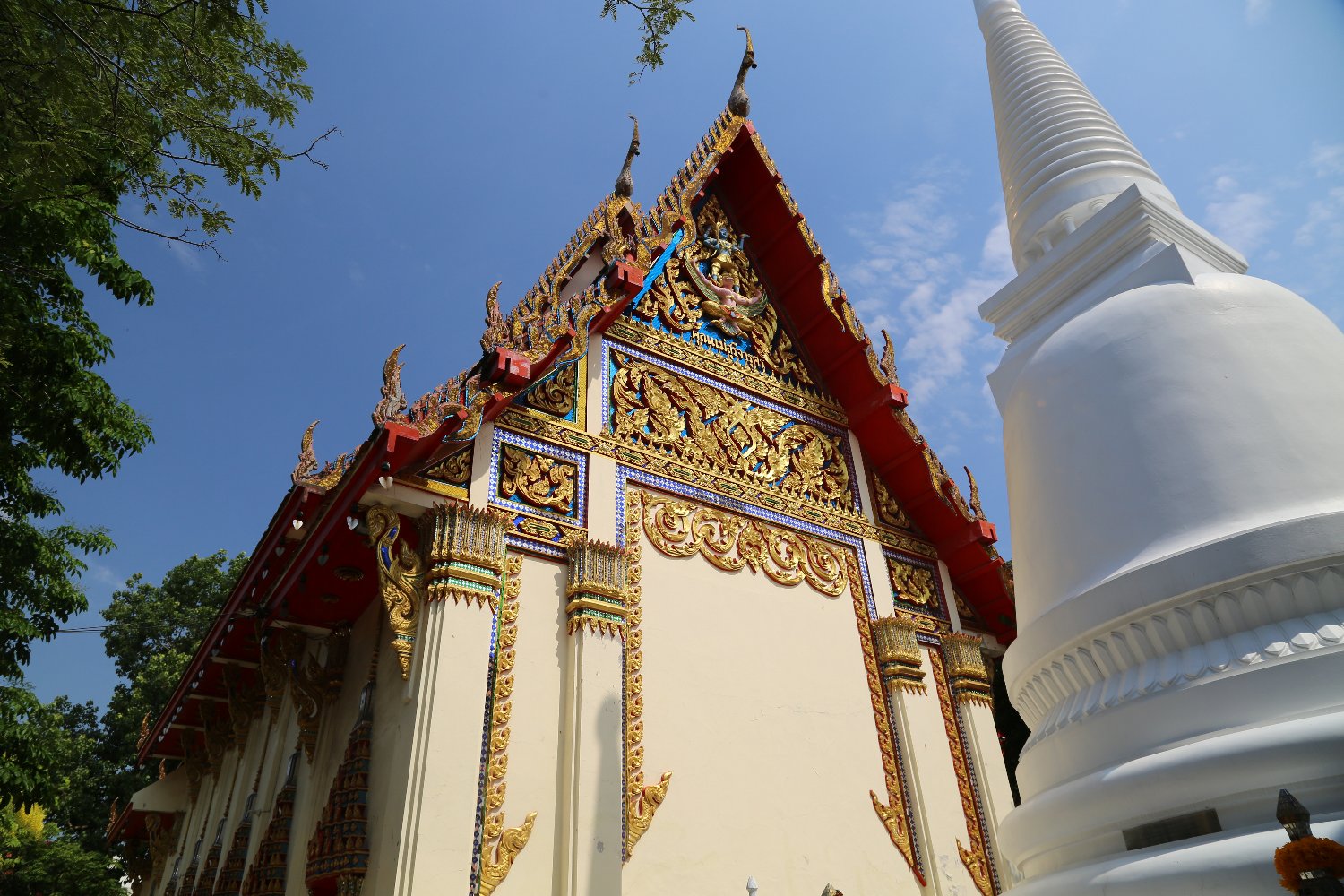


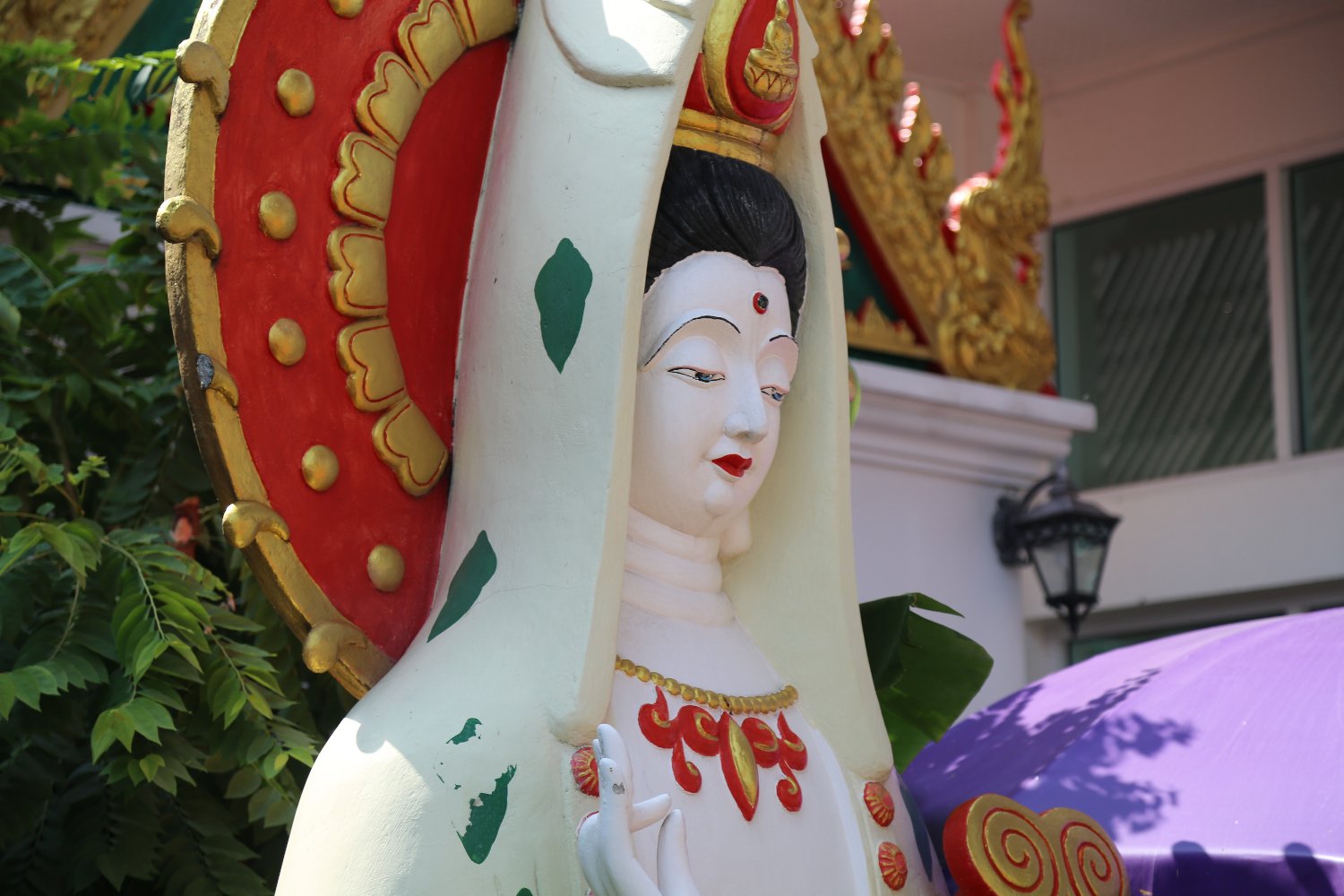
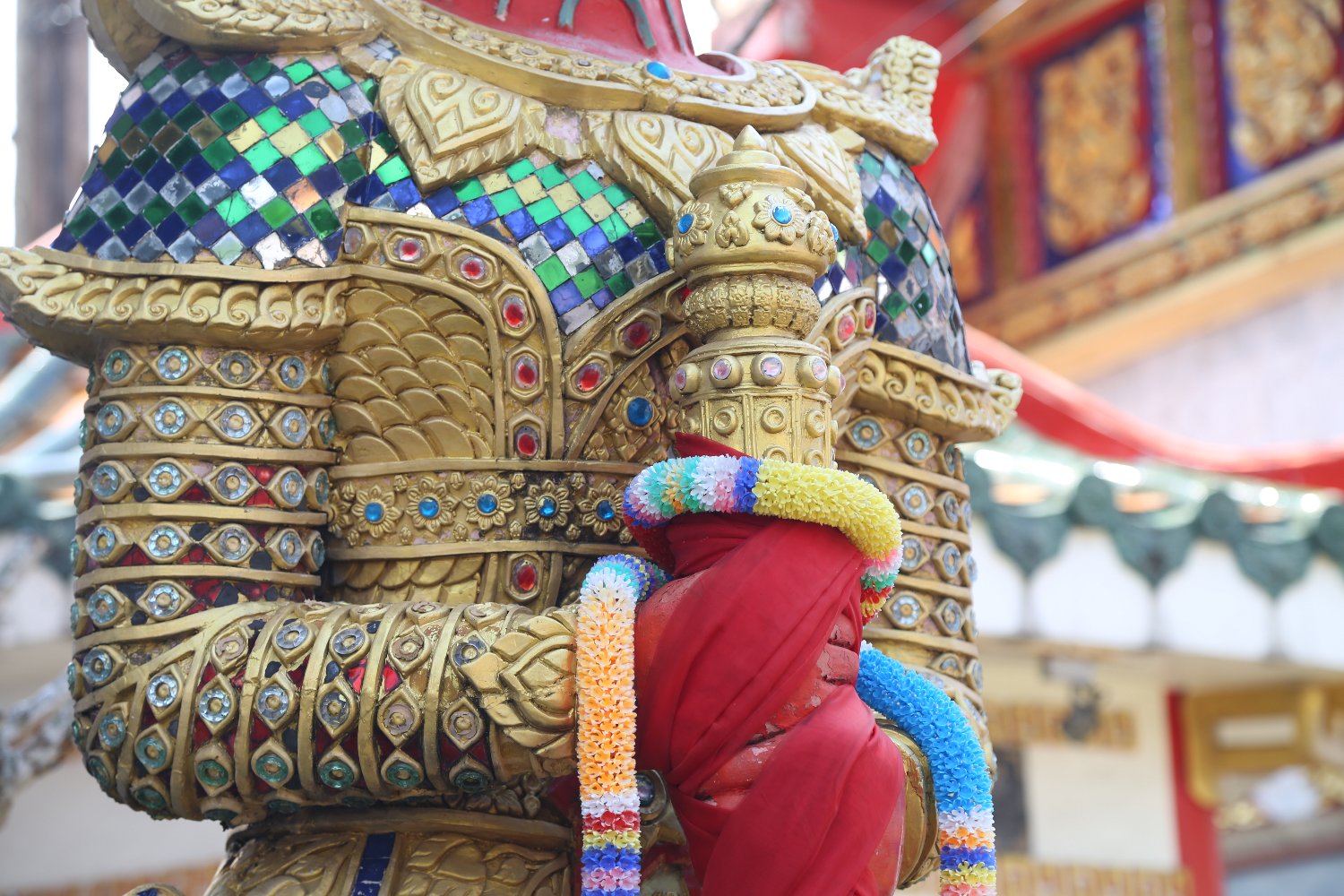
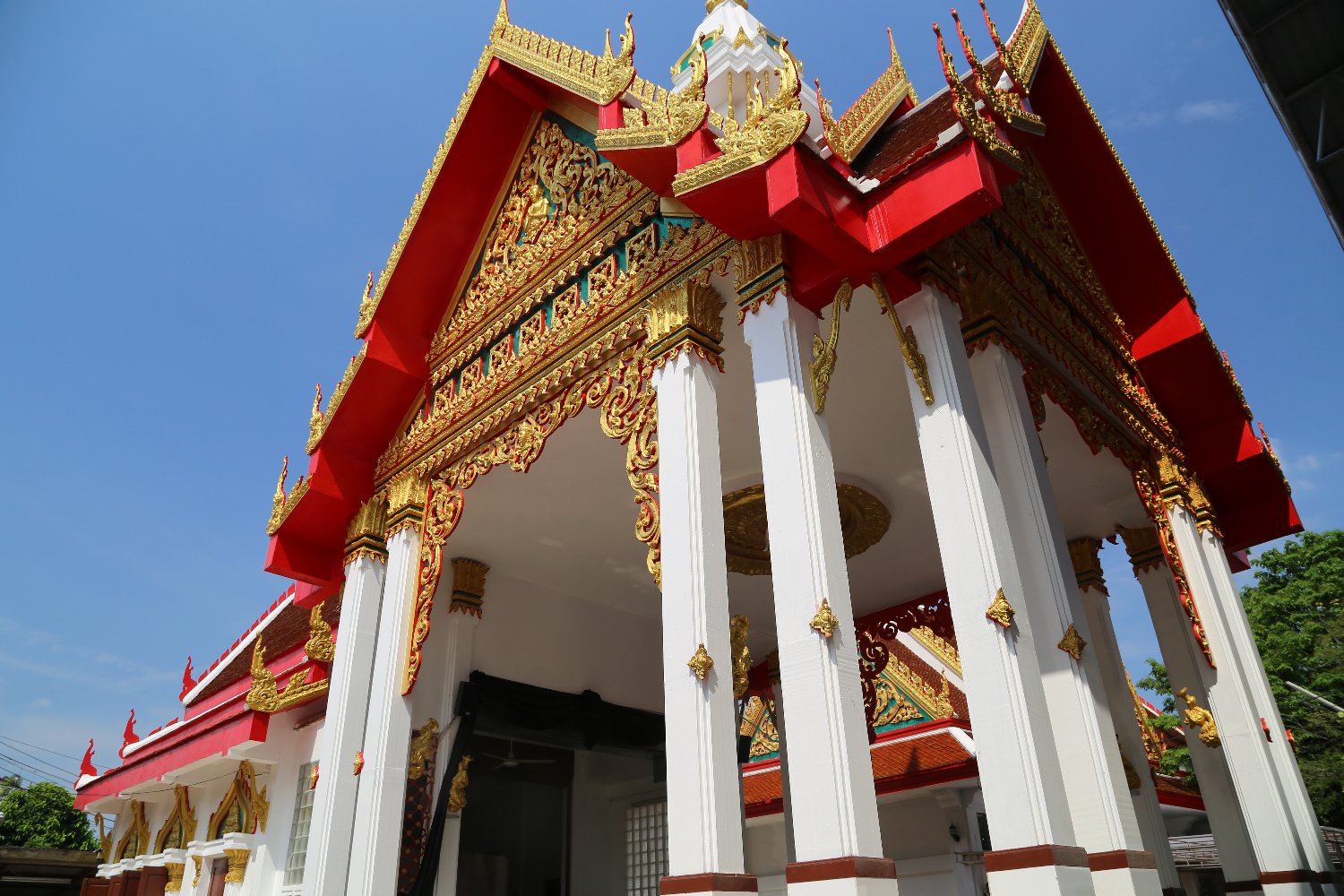
Wat Suthat Thepwararam Ratchaworahawihan is located about a kilometer from the Tha Tien Pier along the edge of the Chao Phraya River – you can either walk or catch a taxi nearby this pier. This is one of the older temples in Bangkok with construction having first began in 1807 but not finished for another 40 years. The “giant swing” is located in front of this temple. Admission to the temple for foreigners at last update was 20 baht – payable on the entrance closest to the Giant Swing.

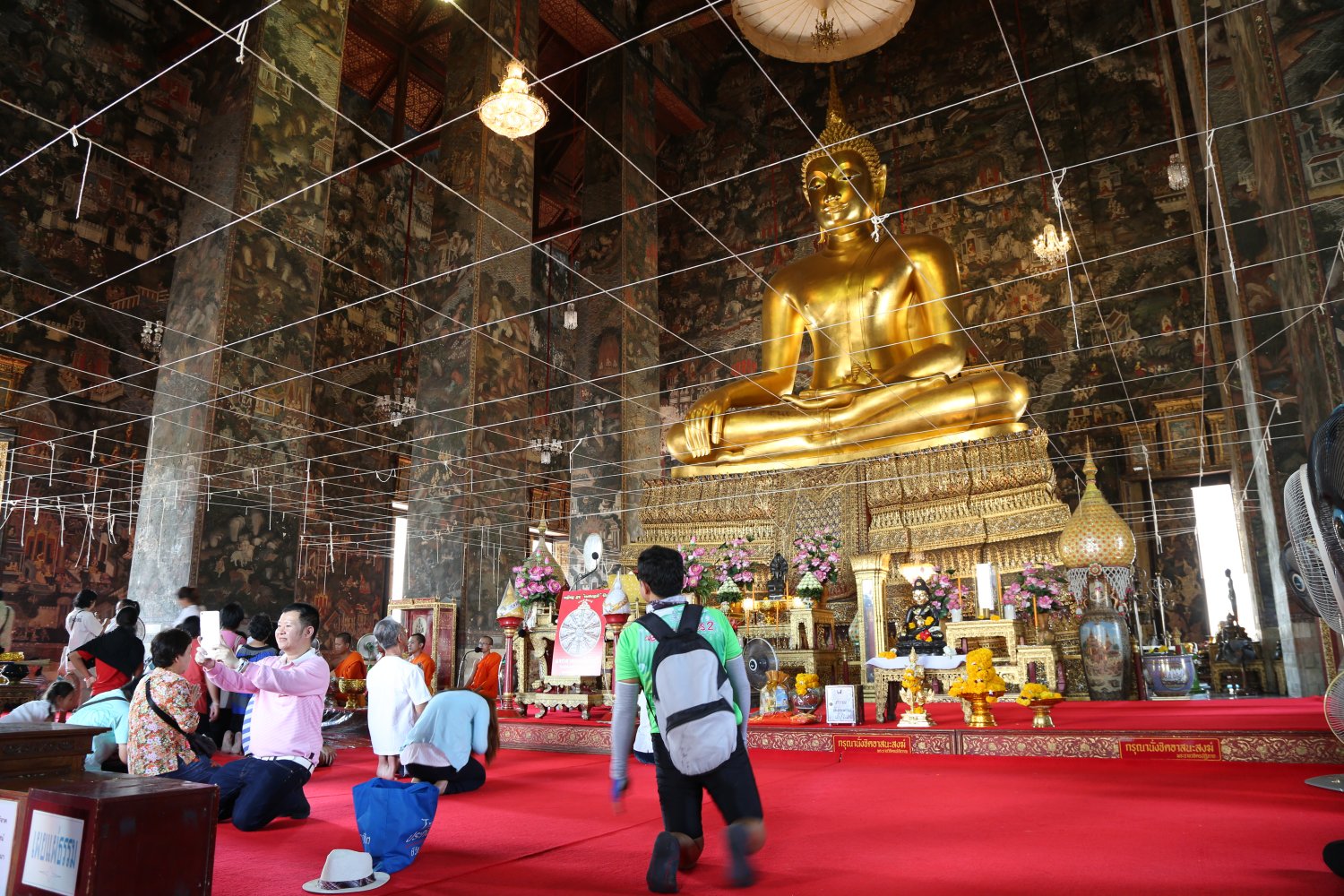


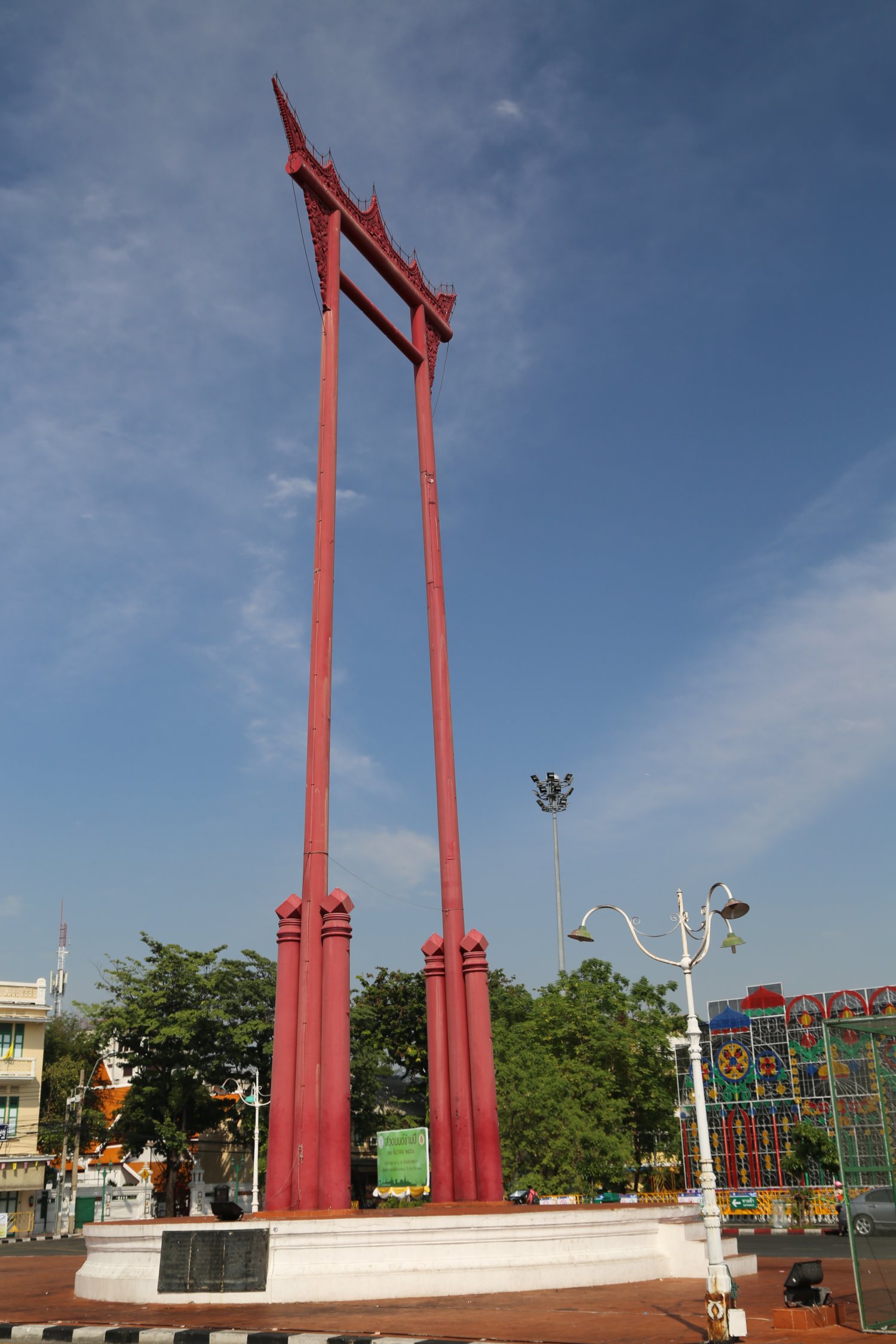
Wat Sutthi Wararam is a wat located along the river side of Charoen Krung Road – about a 20-25 minute walk south of the Saphan Taksin BTS Skytrain stop and about the same distance walk north of Asiatique.
This was originally named Wat Lao and was deserted for many years. It is also known as Wat Chong Lom. This temple was restored in 1885 and today features an ordination hall, bell tower, crematorium and cemetery, a pavilion and a school. Several beautiful statues are located in the front of the temple. This wat is known for its white statues, some of which are outside, and some are inside. Totally off the tourist map, this is good example of a temple that is not busy with tourists every day!
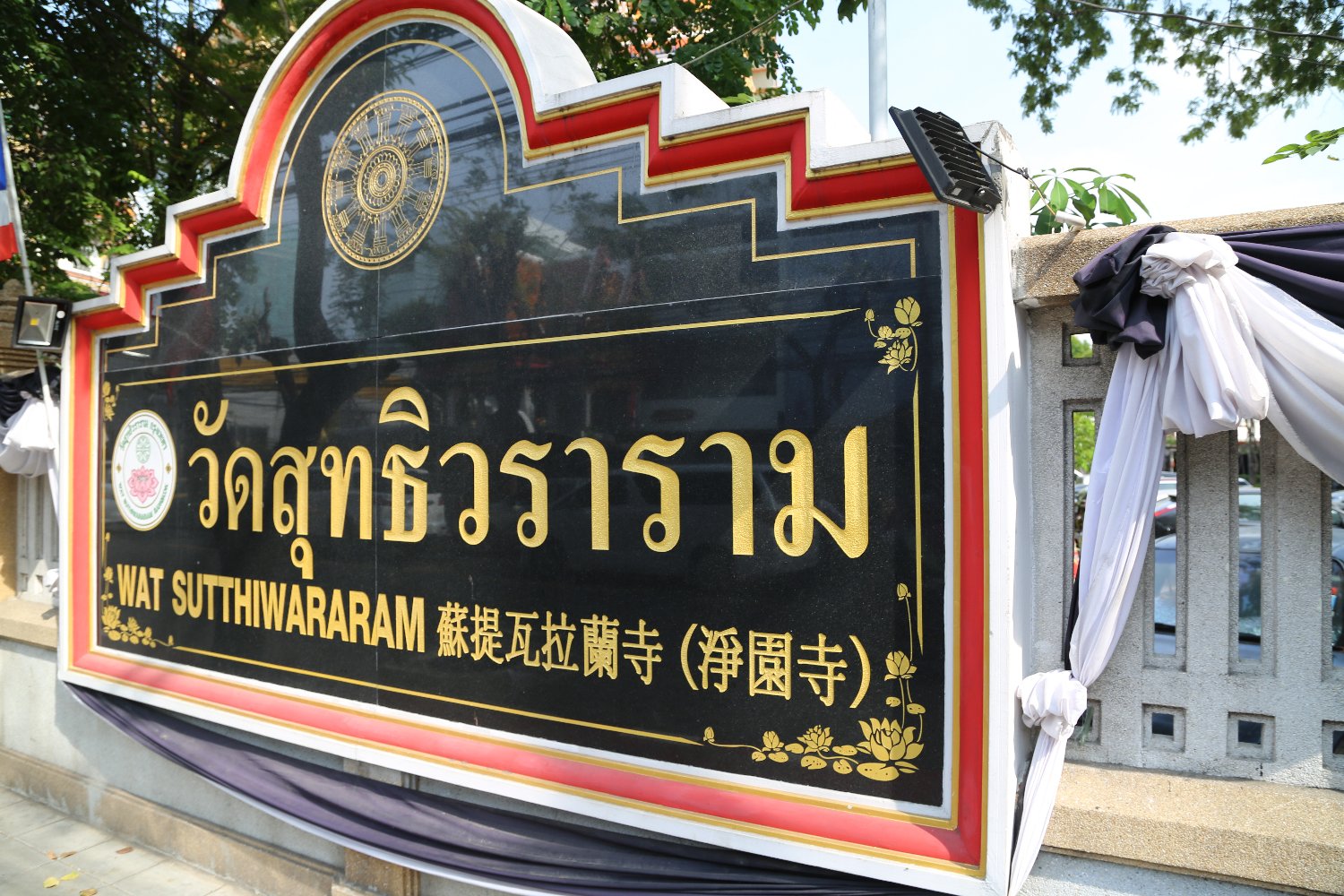
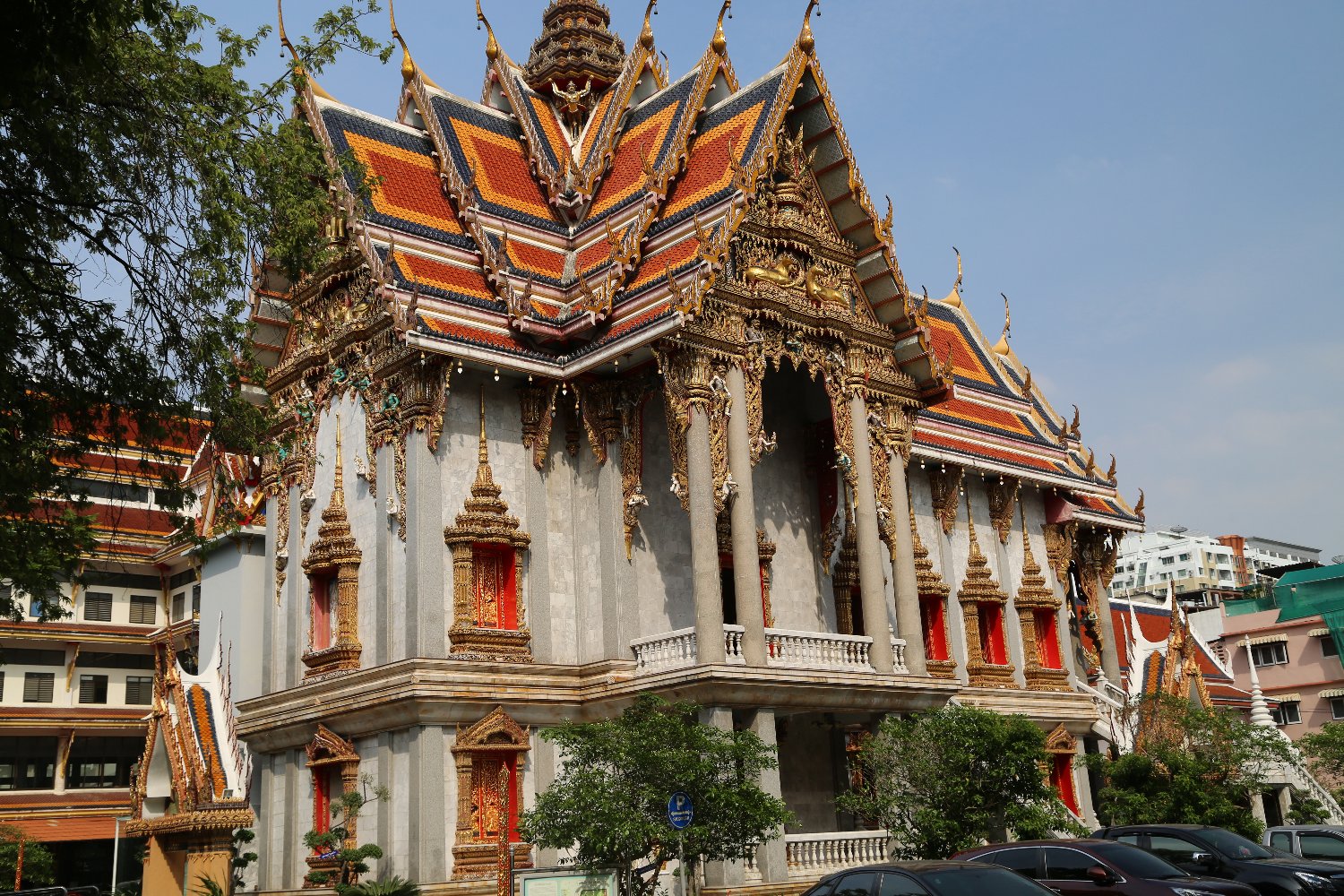
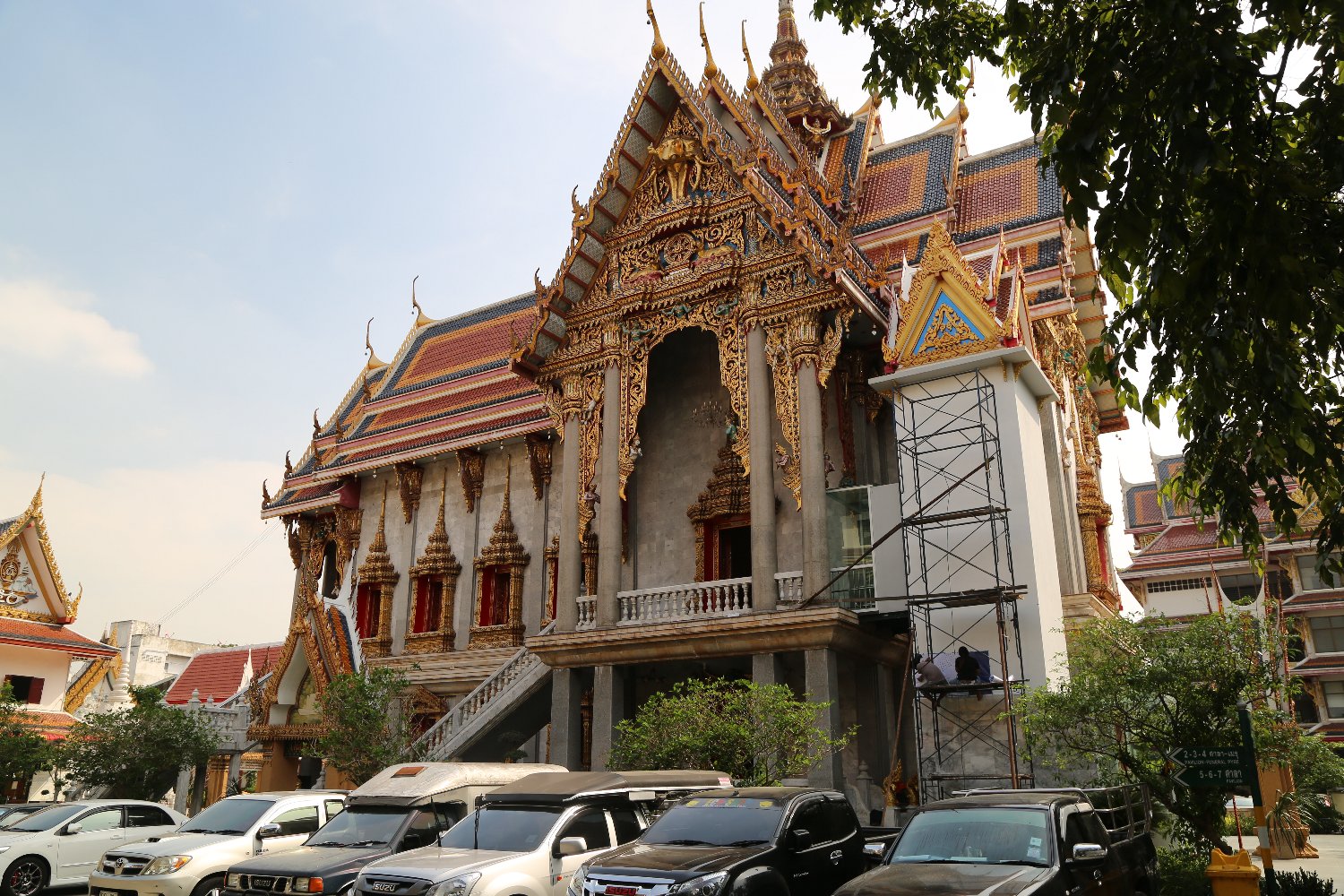


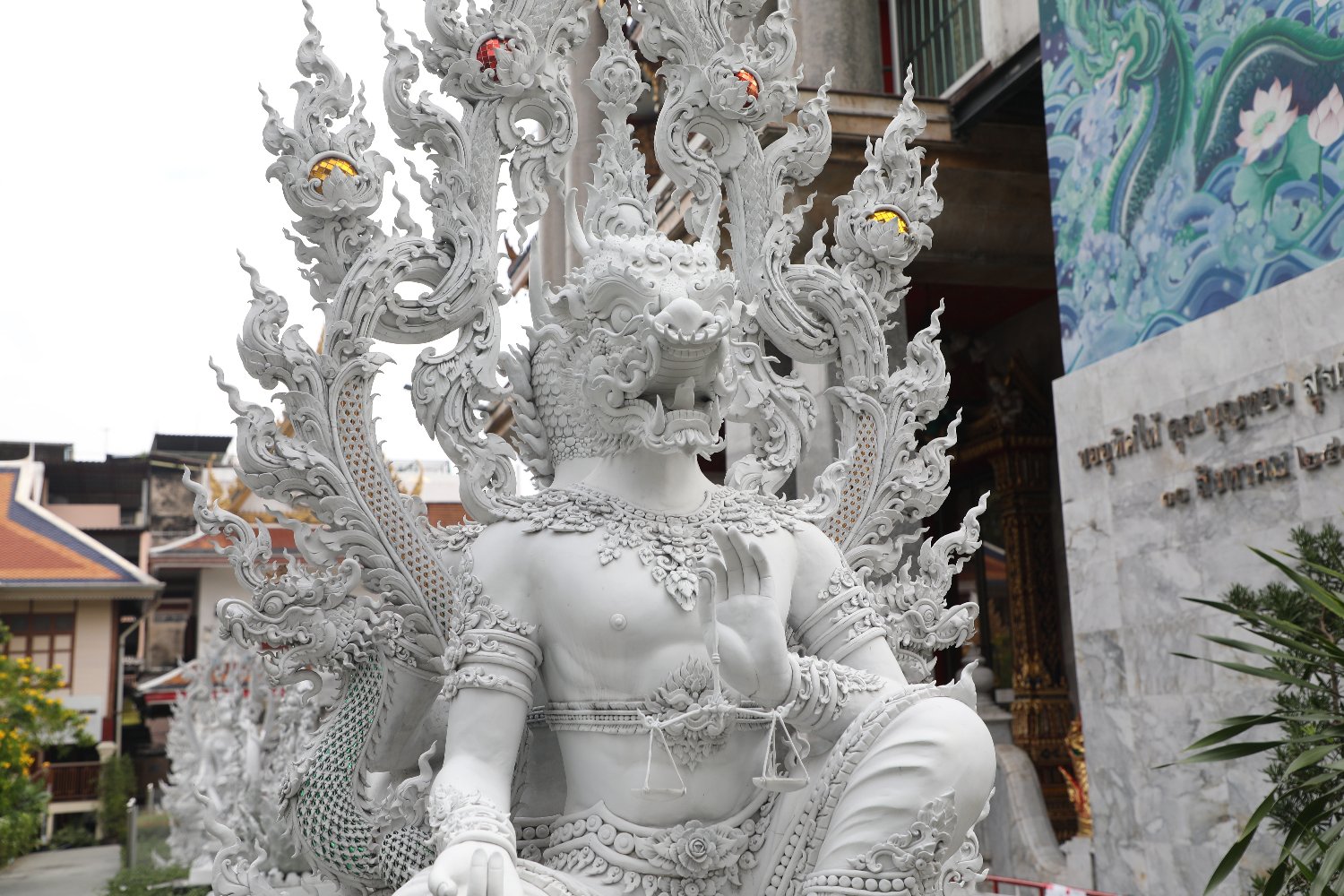


Wat Suwan is located off of the busy Charoen Nakhon Road on the Thonburi side of the Chao Praya River just down from one of the world’s top hotels, the Peninsula Bangkok. The closest Skytrain stop is the Saphan Taksin station on the other side of the river.
This temple was built during the Ayuthaya period and was extensively renovated under the reign of King Rama I. A Royal crematorium is located on site and used until the Rama IV period.
Beautiful craftsmanship on the doors and statues – and excellent hand painted murals inside.
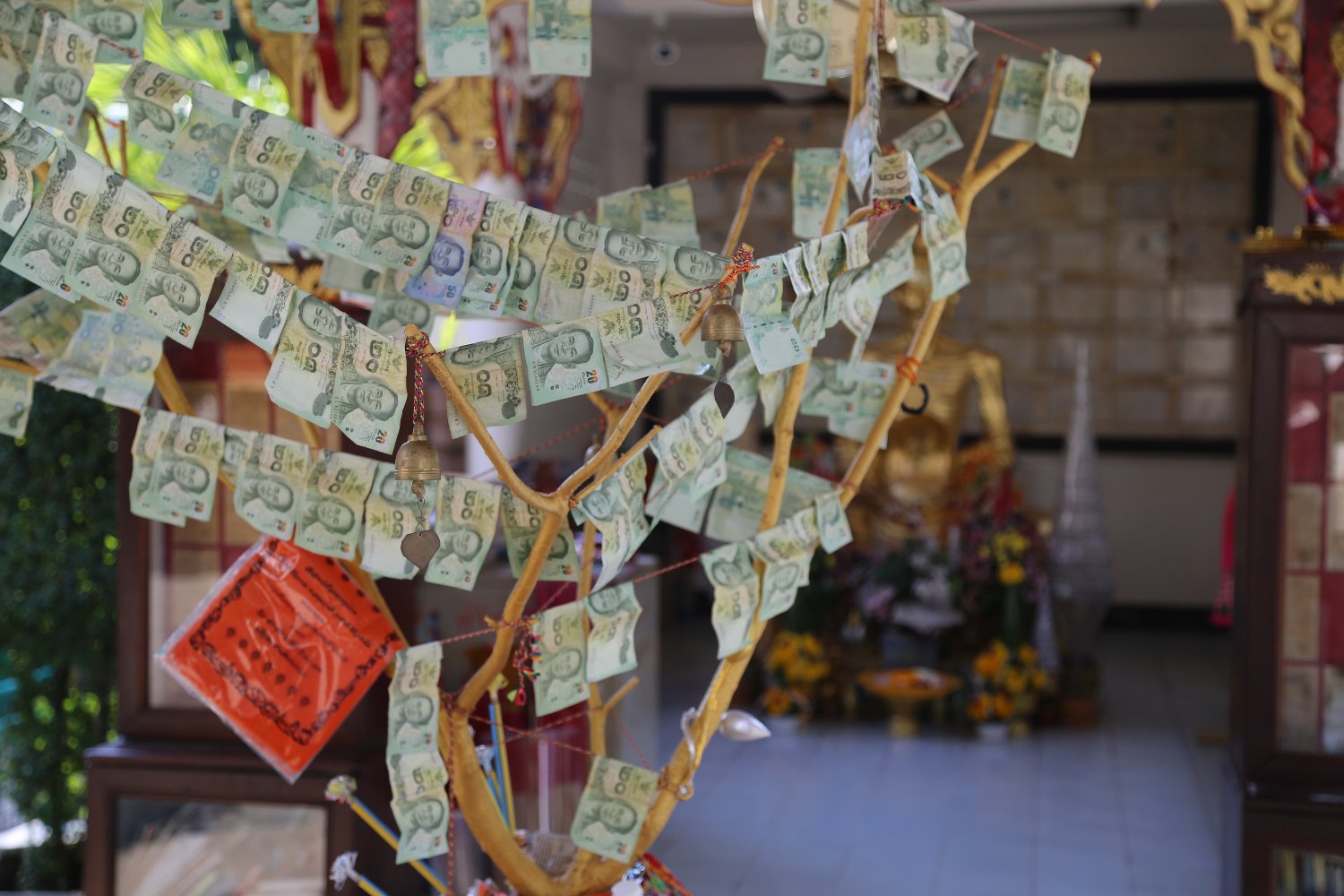
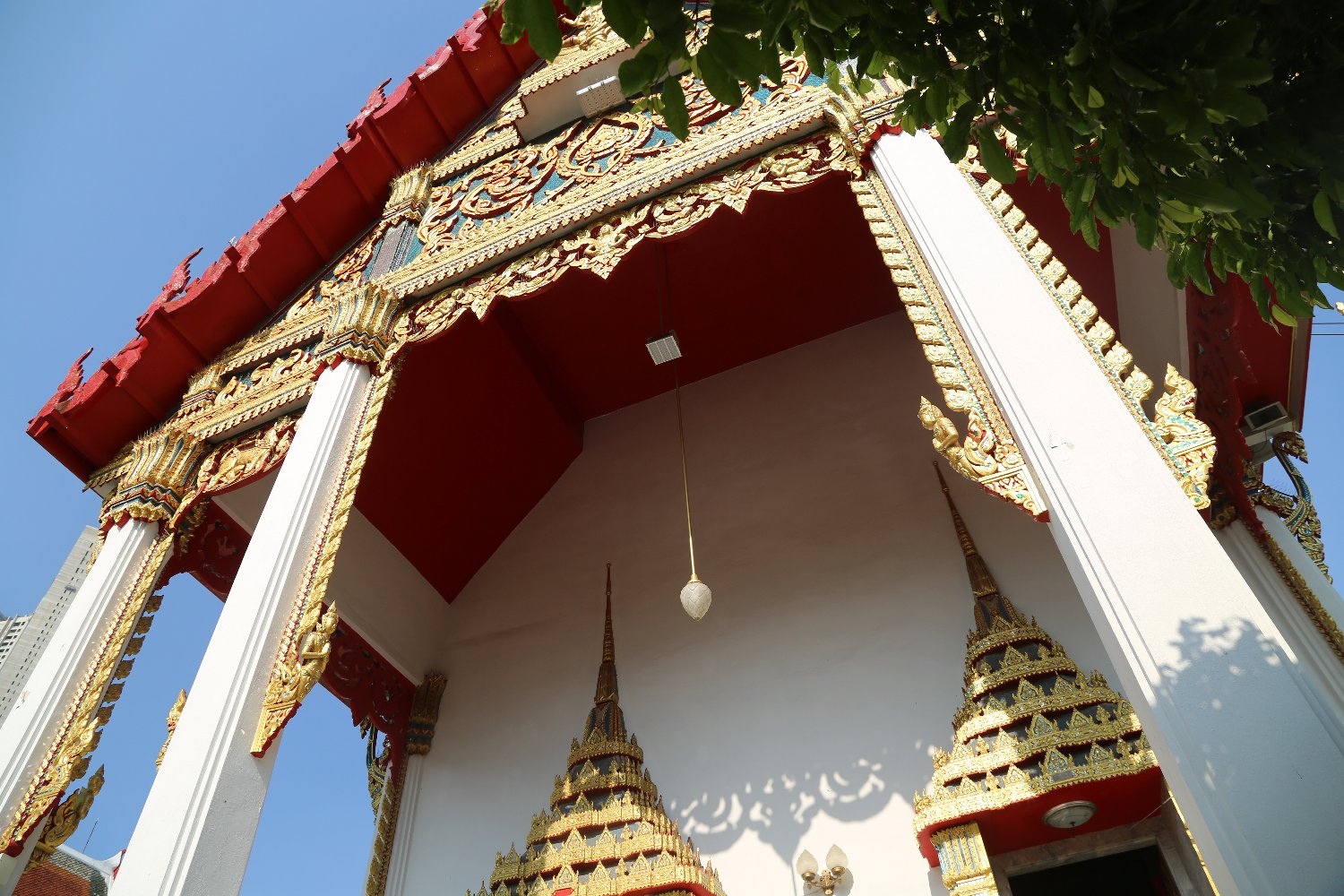

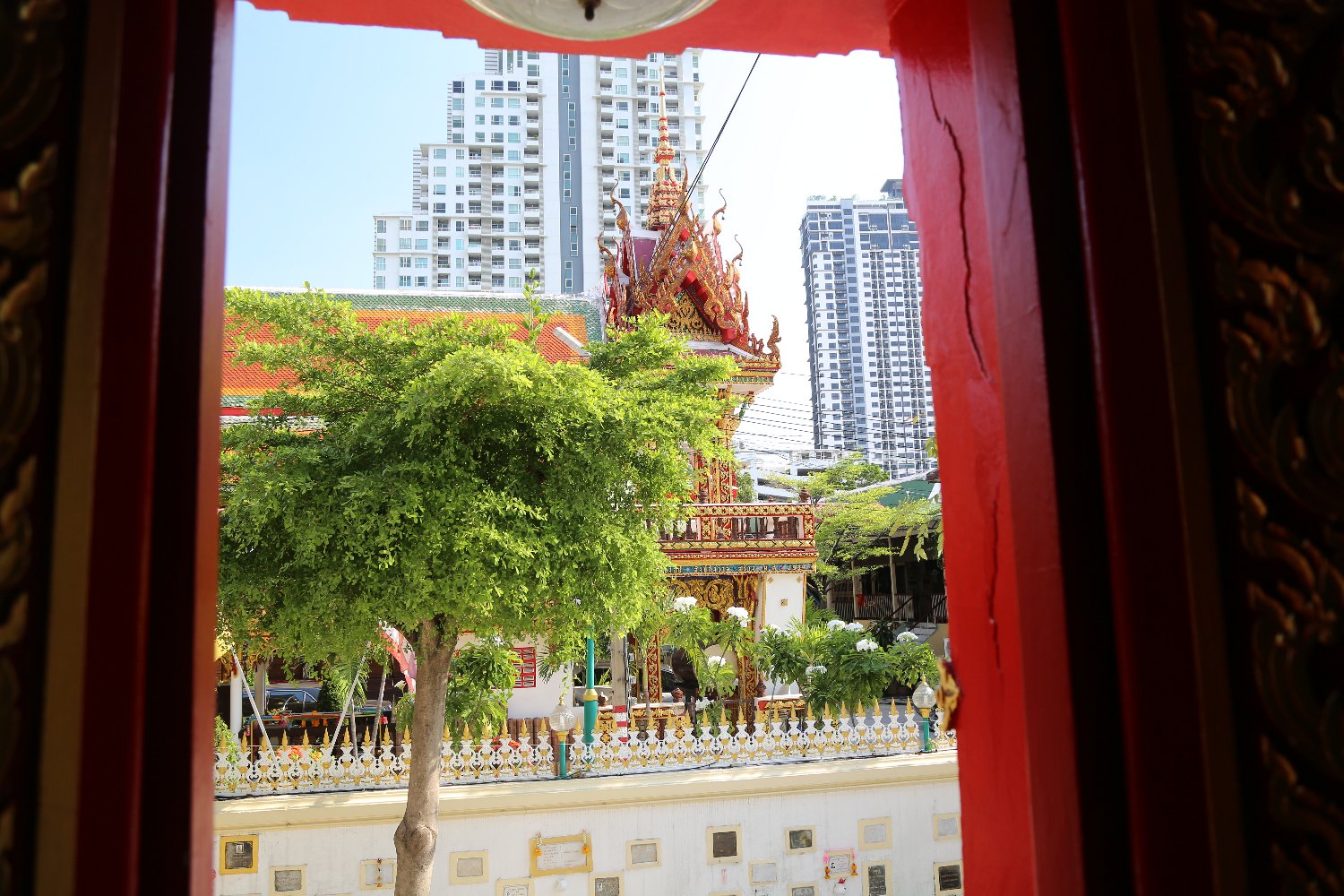


Wat Suwannaram Ratchaworawihan is worth making the effort to visit especially if you are on a long tail boat. Located right on the banks of the Bangkok Noi River canal (up from the Chao Praya River) there is even a small pier in front of the temple on the canal. Highlights are the beautiful original hand-painted ancient murals – some are extremely detailed in their visual presentation. These murals were painted by famous artists Thong Yu and Pae Khong (this is not the only temple in town where we have come across their religious artwork). Located on the Thonburi side of the Chao Praya river – this temple is little visited by tourists. Let’s keep it that way!
An interesting past including at one point serving as an execution site for Burmese prisoners. Over time this temple has been restored several times including during the reign of Rama I and Rama III. It has also served as the Royal cremation site for members of the royal family.
Very appealing ubosot building from the outside with lots of colorful decorations and mosaics. Worth checking out are the prominent gleaming golden Buddha statues inside the wihan building.
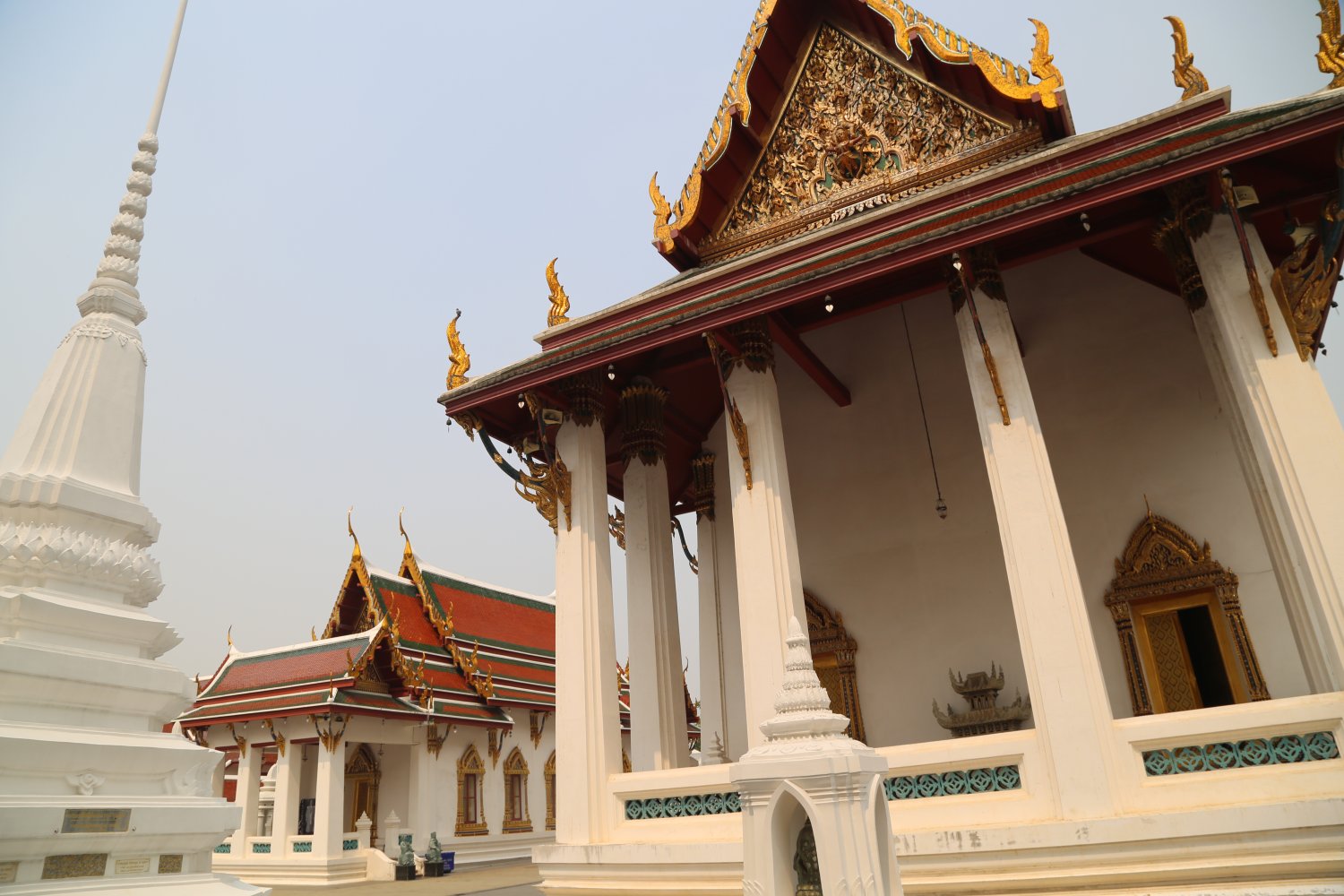
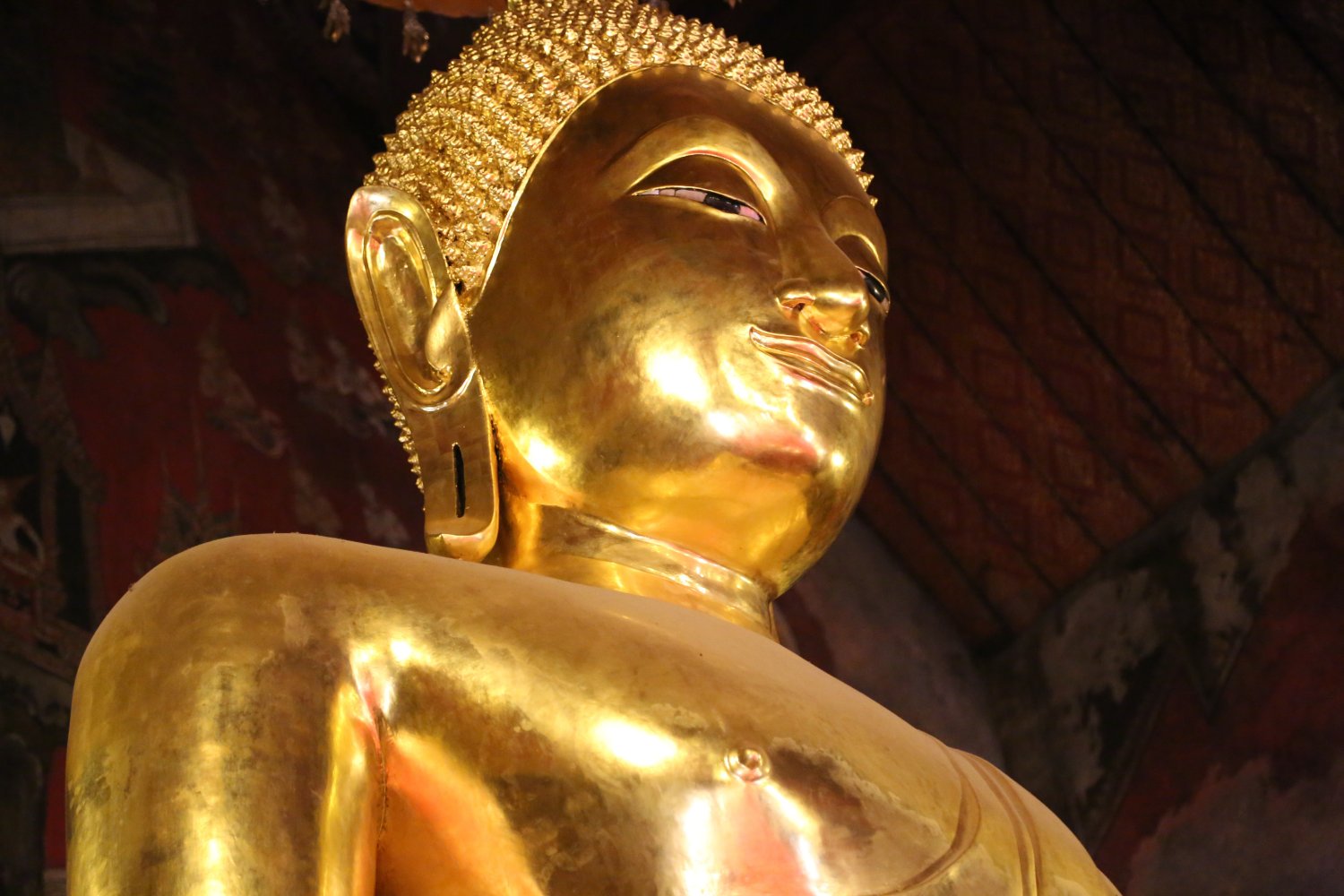
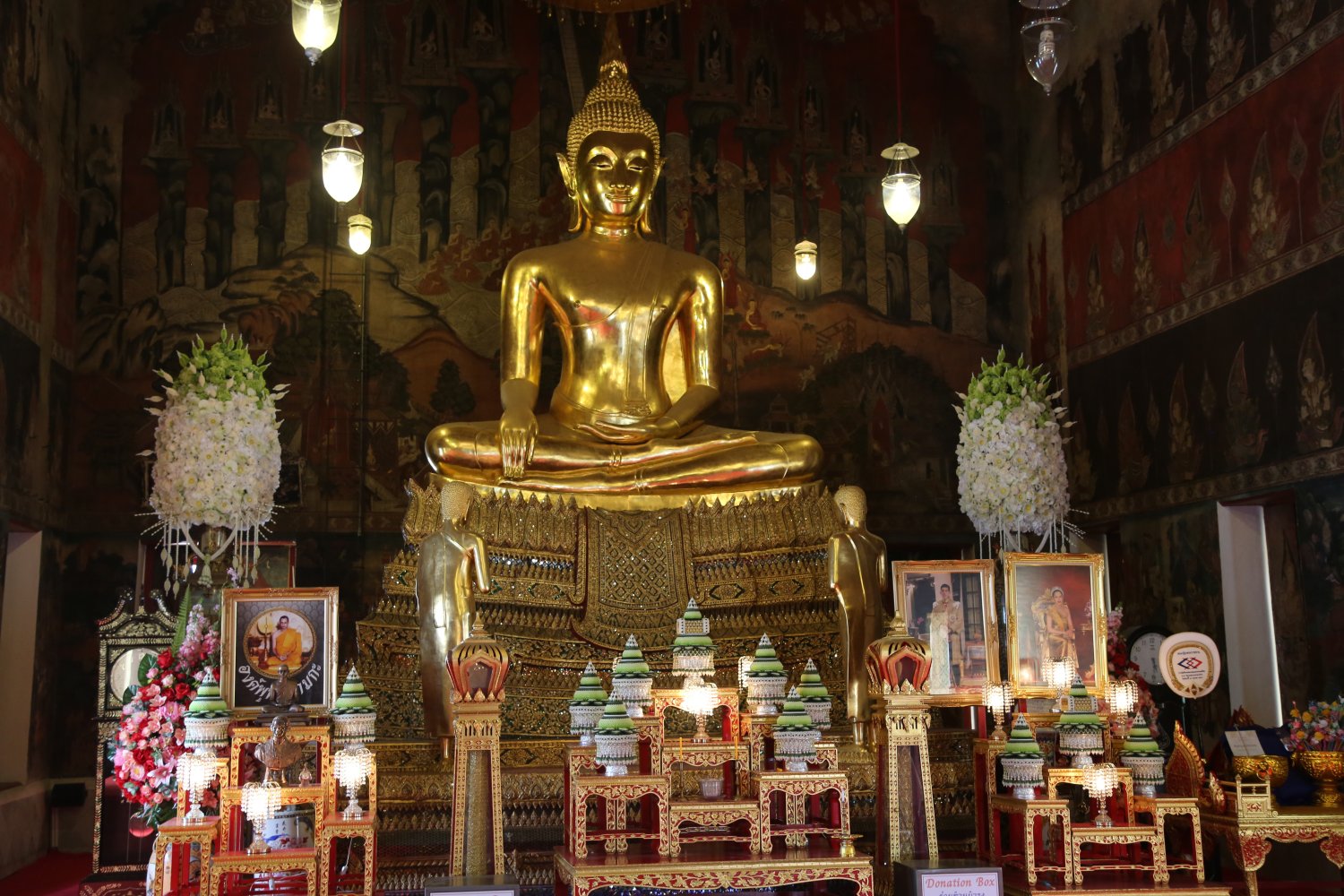
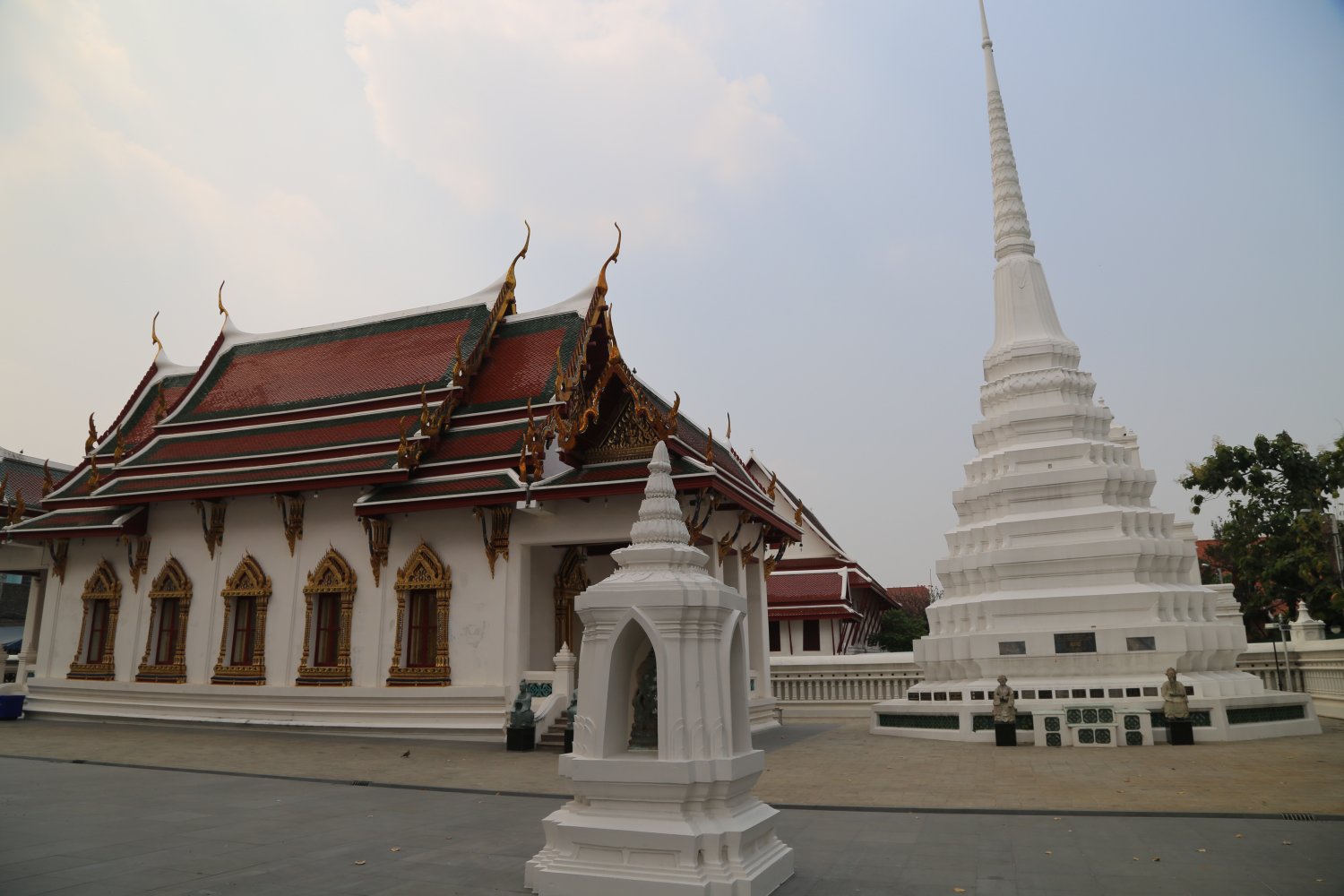


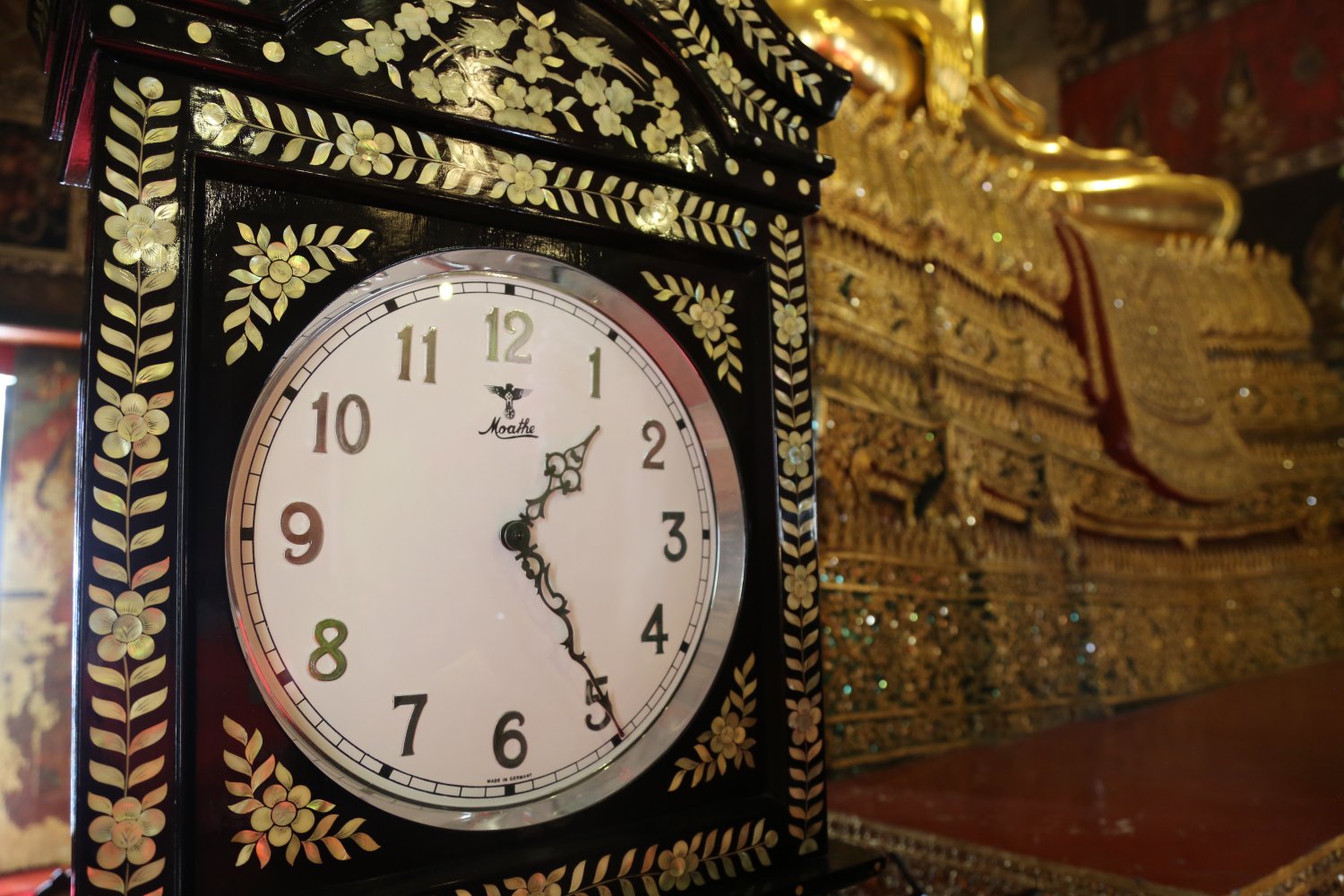
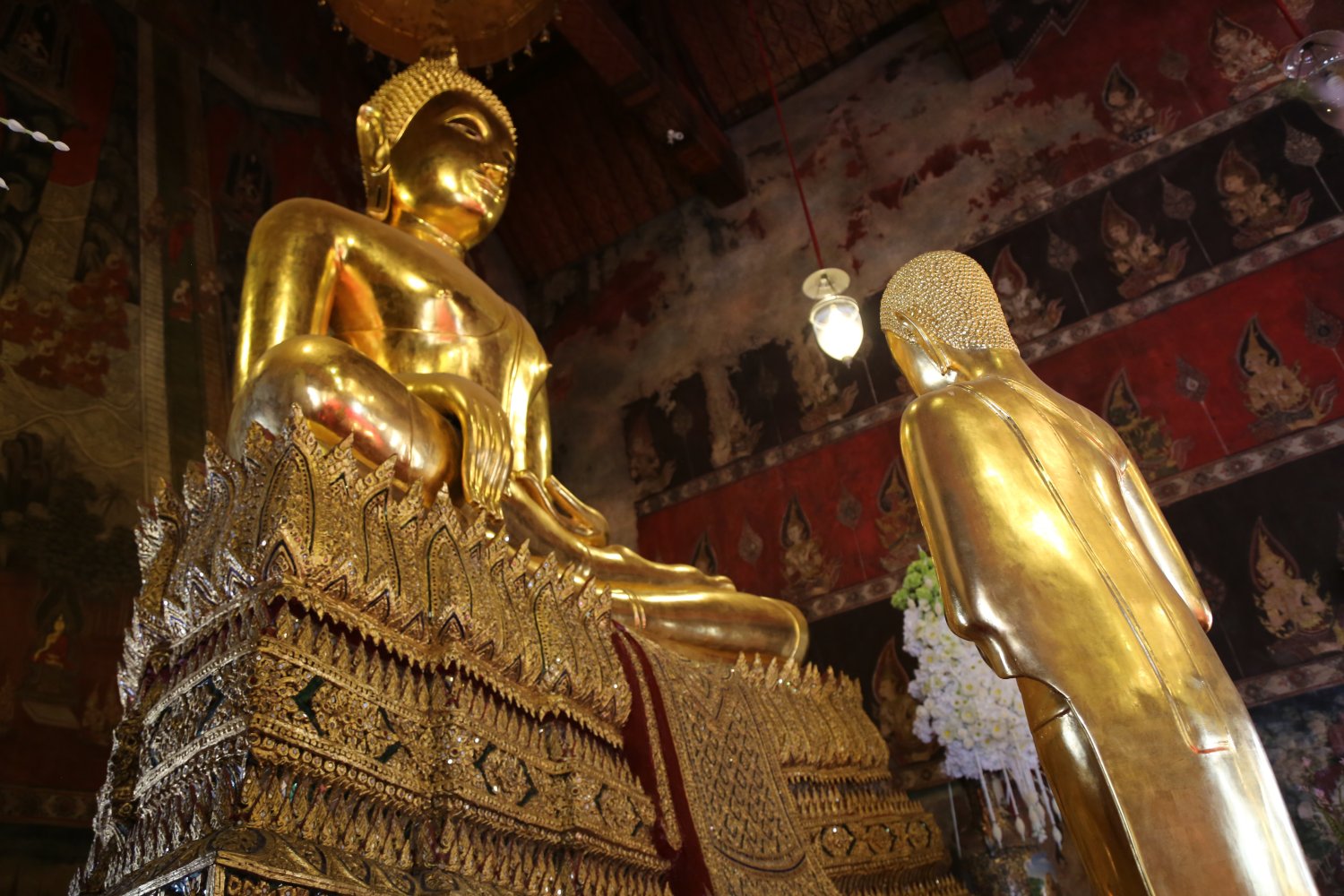

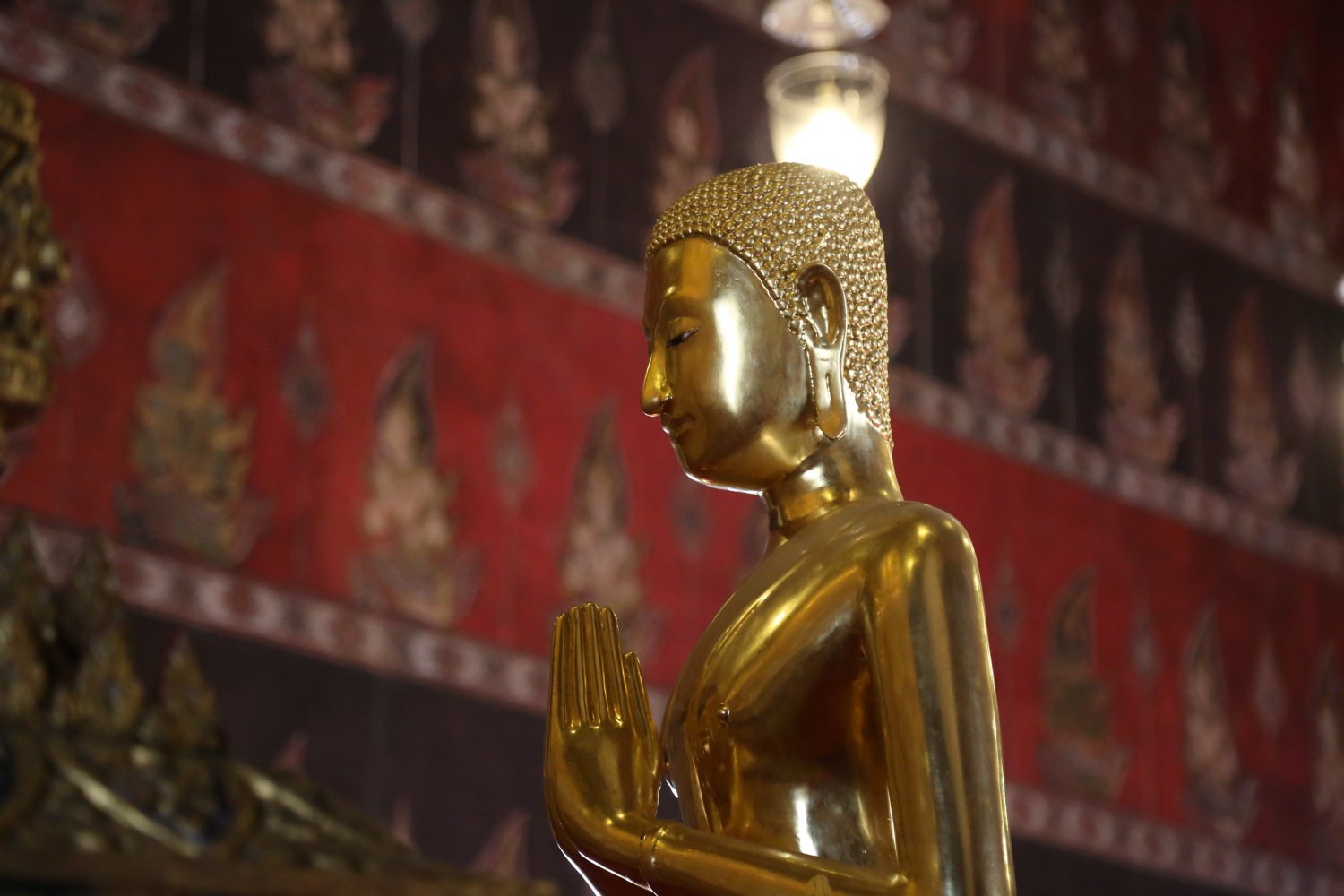
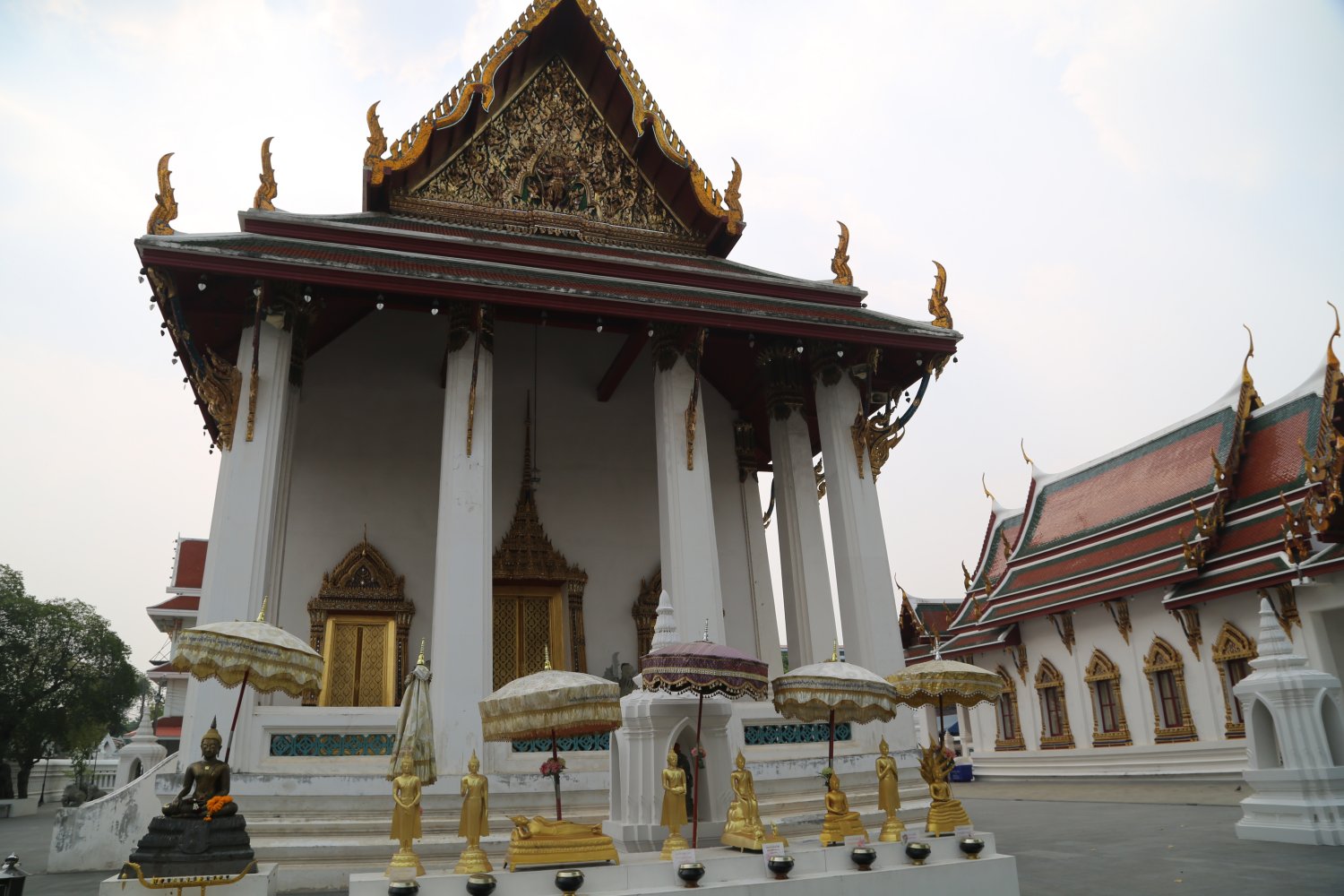

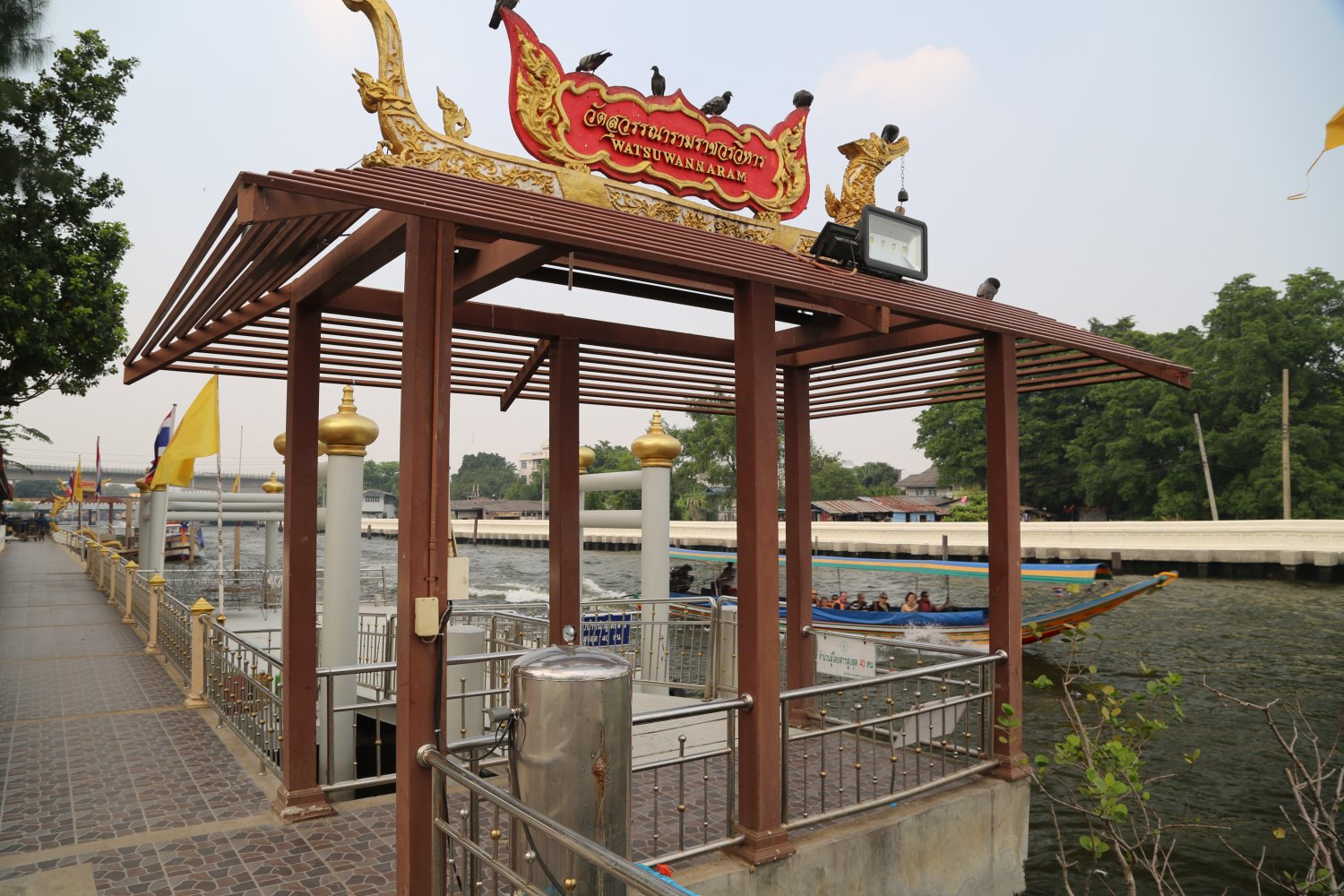


Wat Tai is located about a 15-minute walk from the On Nut Skytrain stop – or only about 5-to-10-minute drive depending on traffic. A tiny, picturesque temple is located at the end of a small soi; this is not on any tourist maps or even remotely on the radar of anyone other than the neighboring local community. Temples like this are worth seeking out – off the beaten path in a part of Bangkok that is well connected by Skytrain yet seems worlds away from some of the busy Skytrain hubs. The ubosot was closed at the time of our visit.
Wat Tai was built approximately in 1803 but the founder’s name has been lost over the decades. Meaning southern temple, it was originally located on the southern side of the small community that was built along this canal. Also of note is the match-box label collection with pieces dating back to the King Rama V period. Also, some old terracotta alms bowls and ancient manuscripts housed here. Plant lovers take note of the miniature tree garden. Also, there are monk’s residences on site.

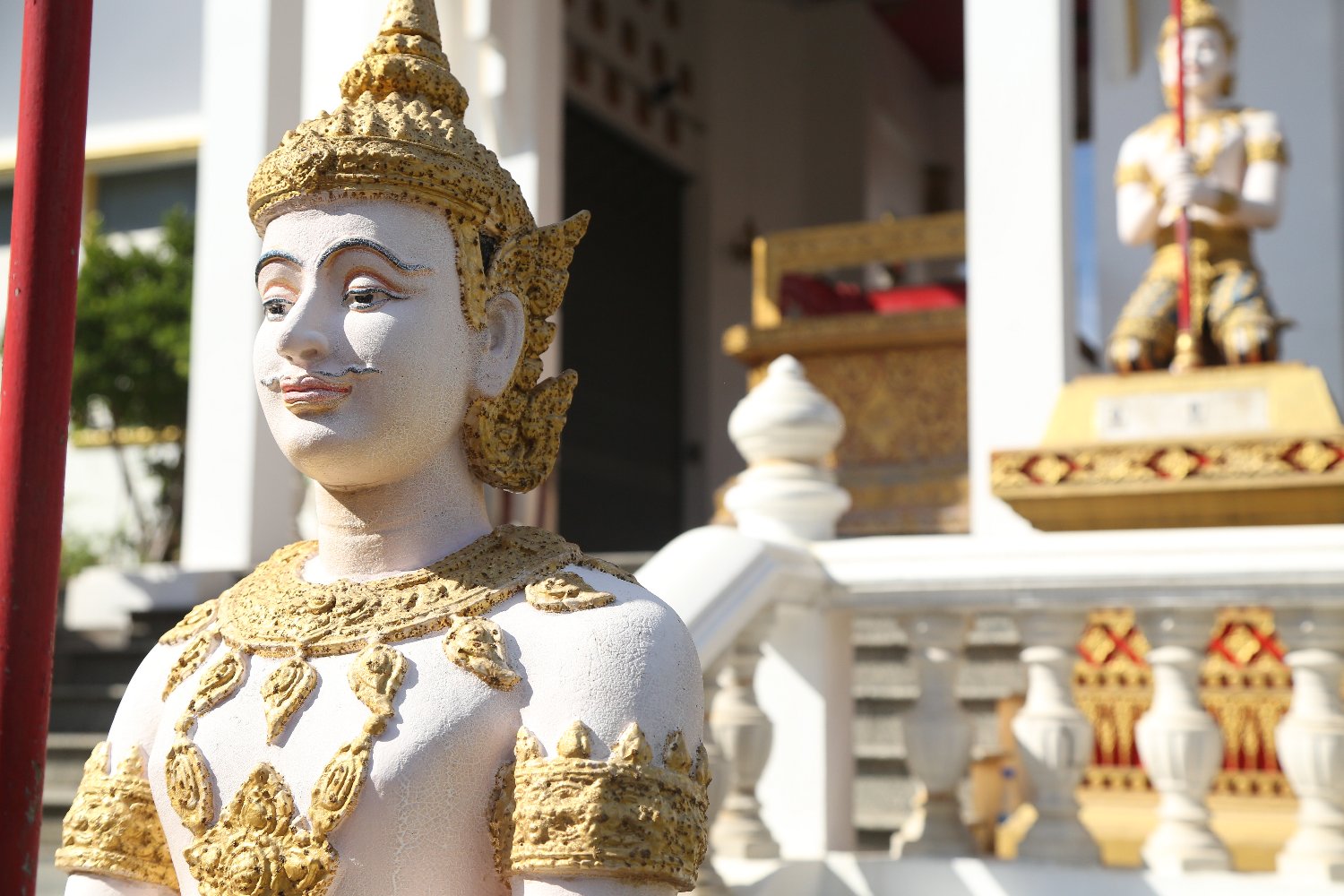

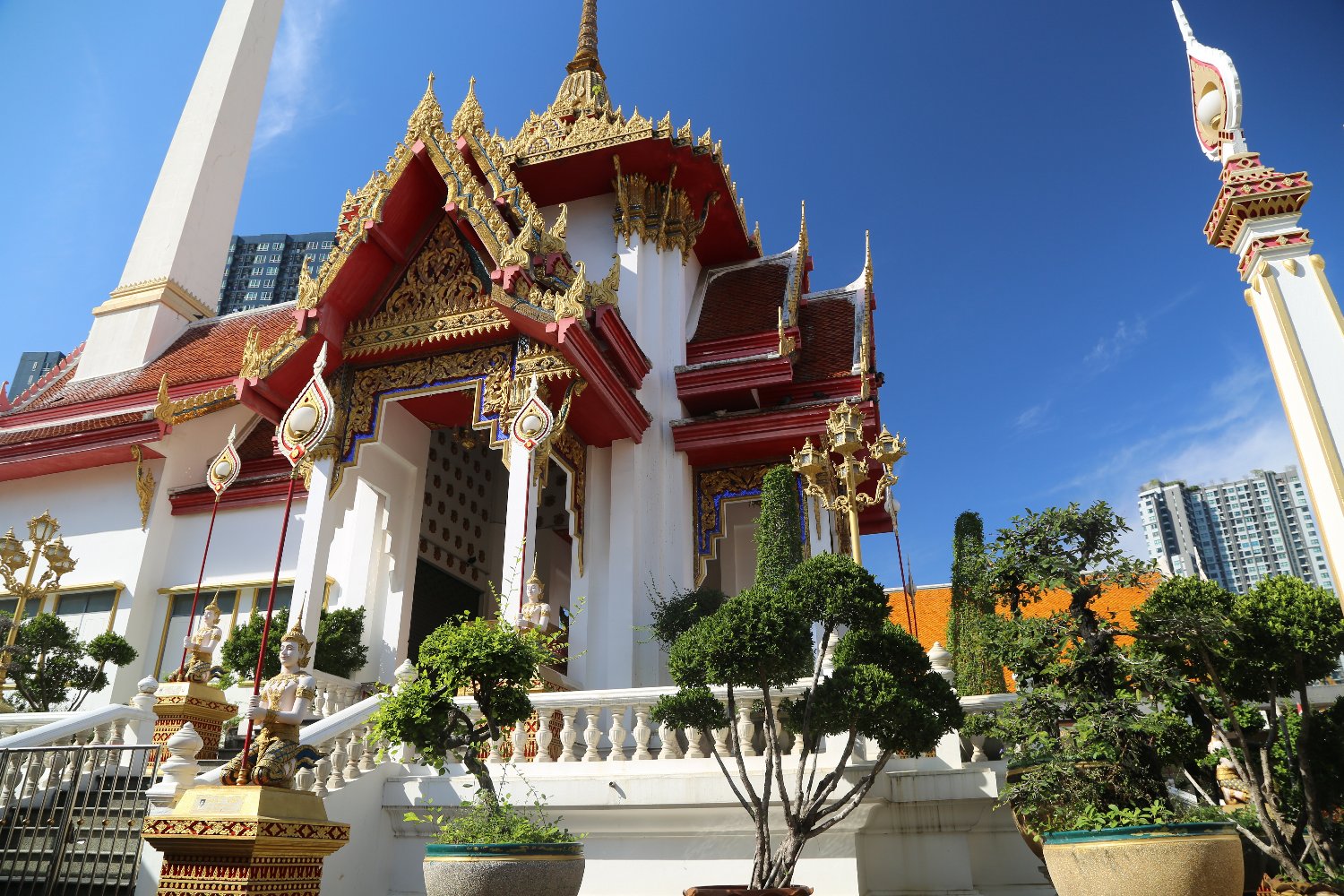


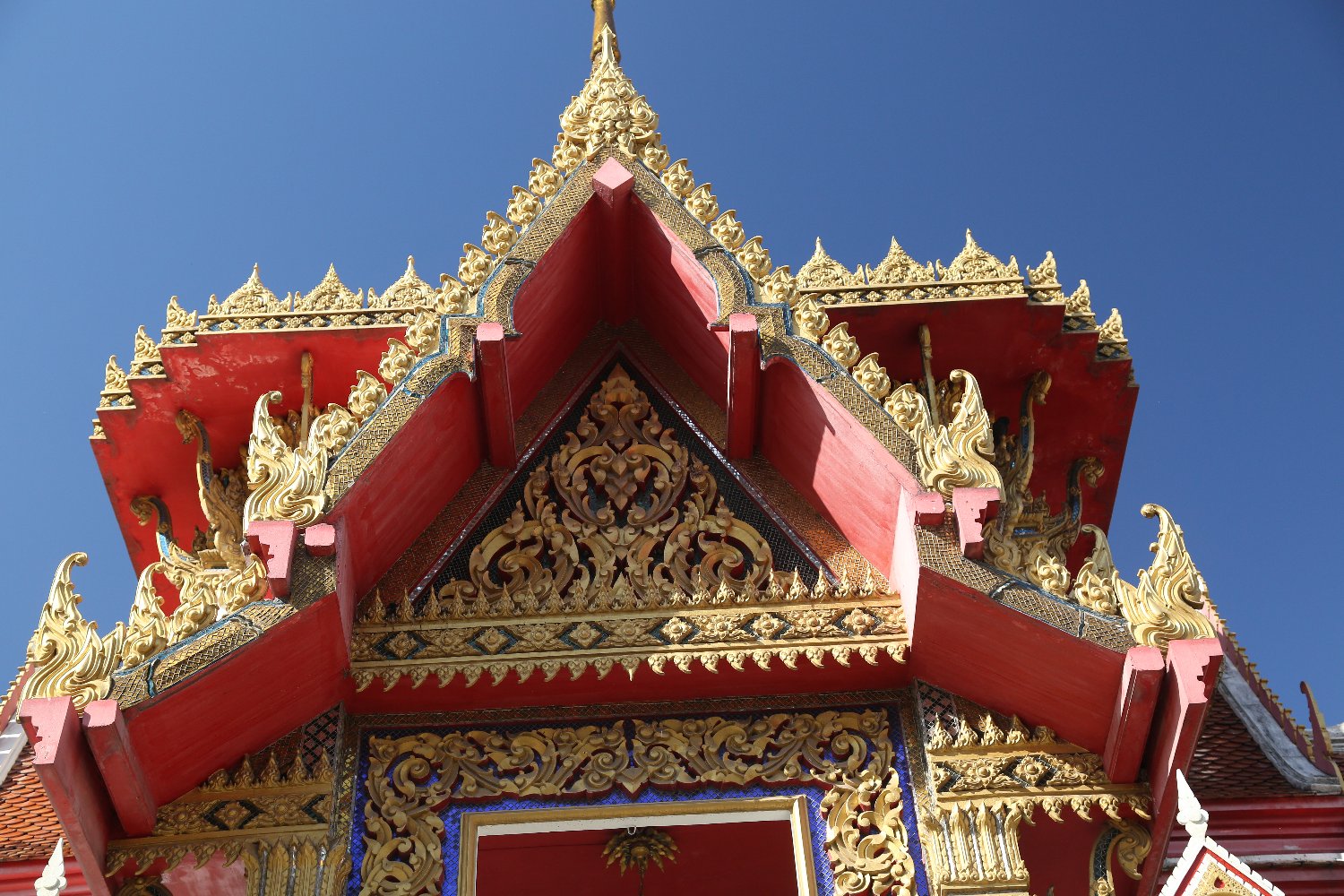
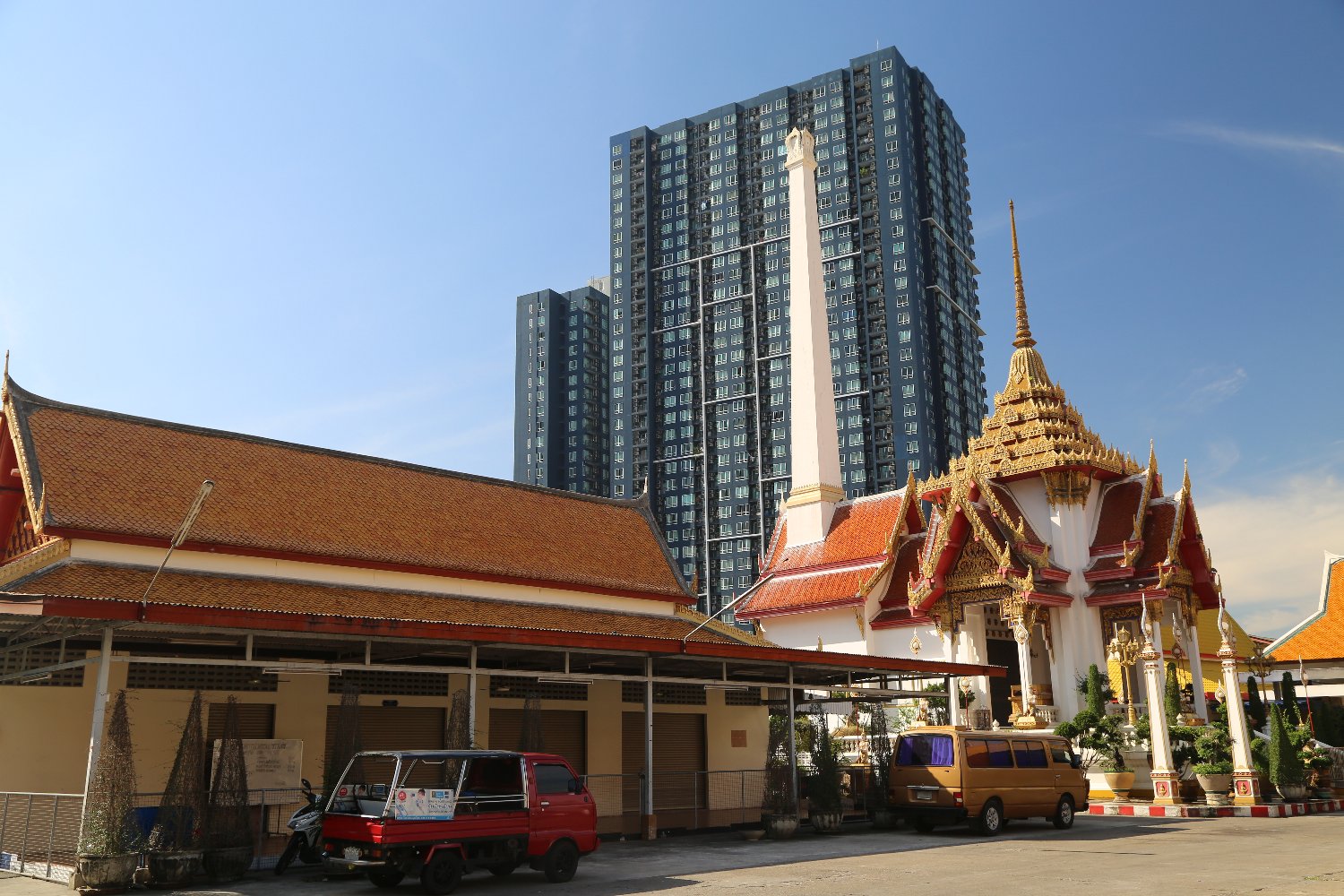
 Wat That Thong dates from a site where two ancient temples stood – more recently an original civil temple was built in 1937. Originally was intended to be used to build a Bangkok port. The temple today stands in place of the original two temples and takes its name by combining parts of the names from these two temples.
Located almost directly across from the Ekkami BTS Station and near the Eastern Bus Terminal – it allows for very easy access on foot. To make sure you are on the correct side of the street as the temple when you exit the BTS station – choose exit number three.
Nice place to walk around leisurely among the buildings – a school is next door and can be crowded in the early am with students coming to school. A pretty golden Buddha is contained inside the main temple. Visit: www.facebook.com/pages/Wat-Pasee/243856929057199
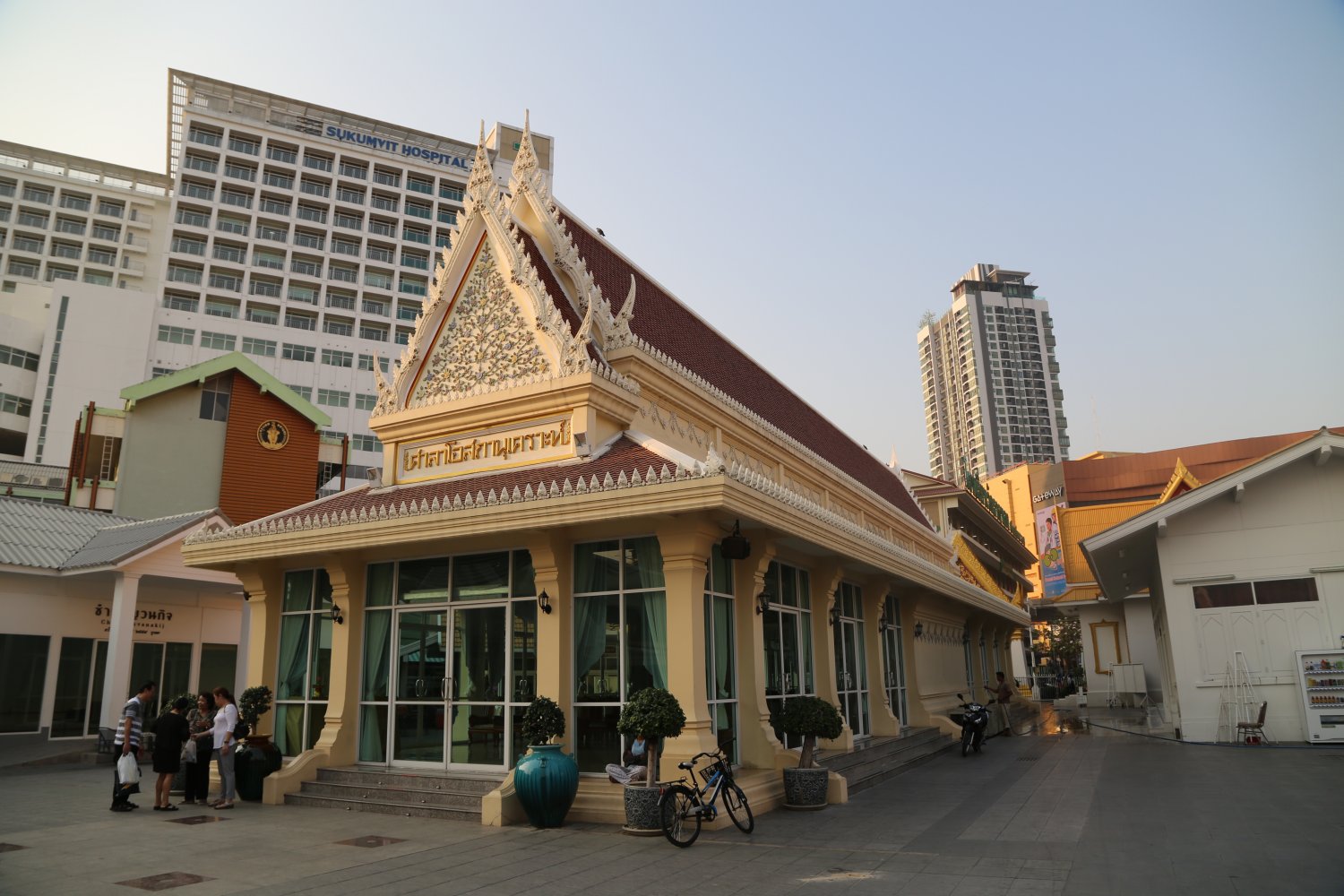
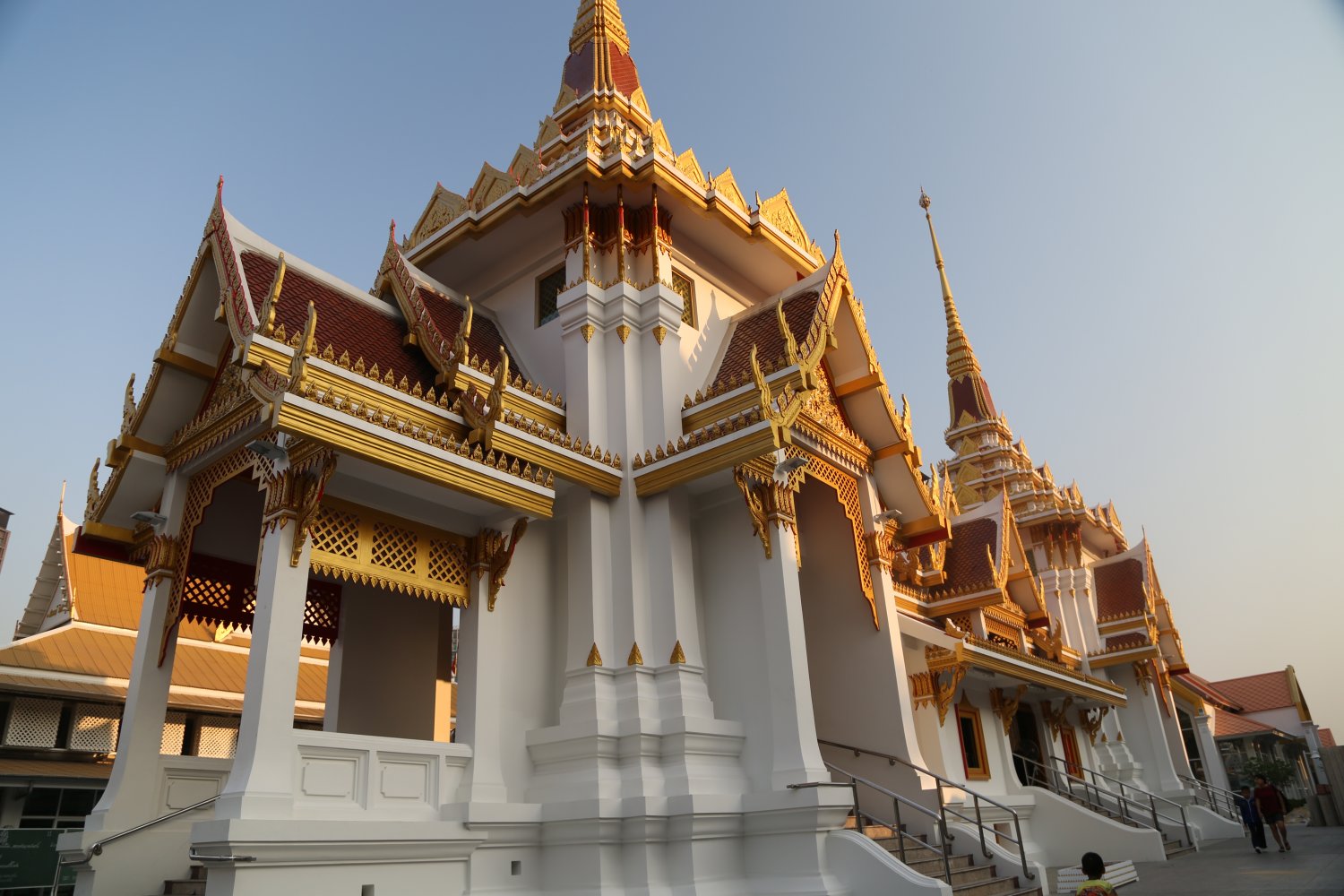
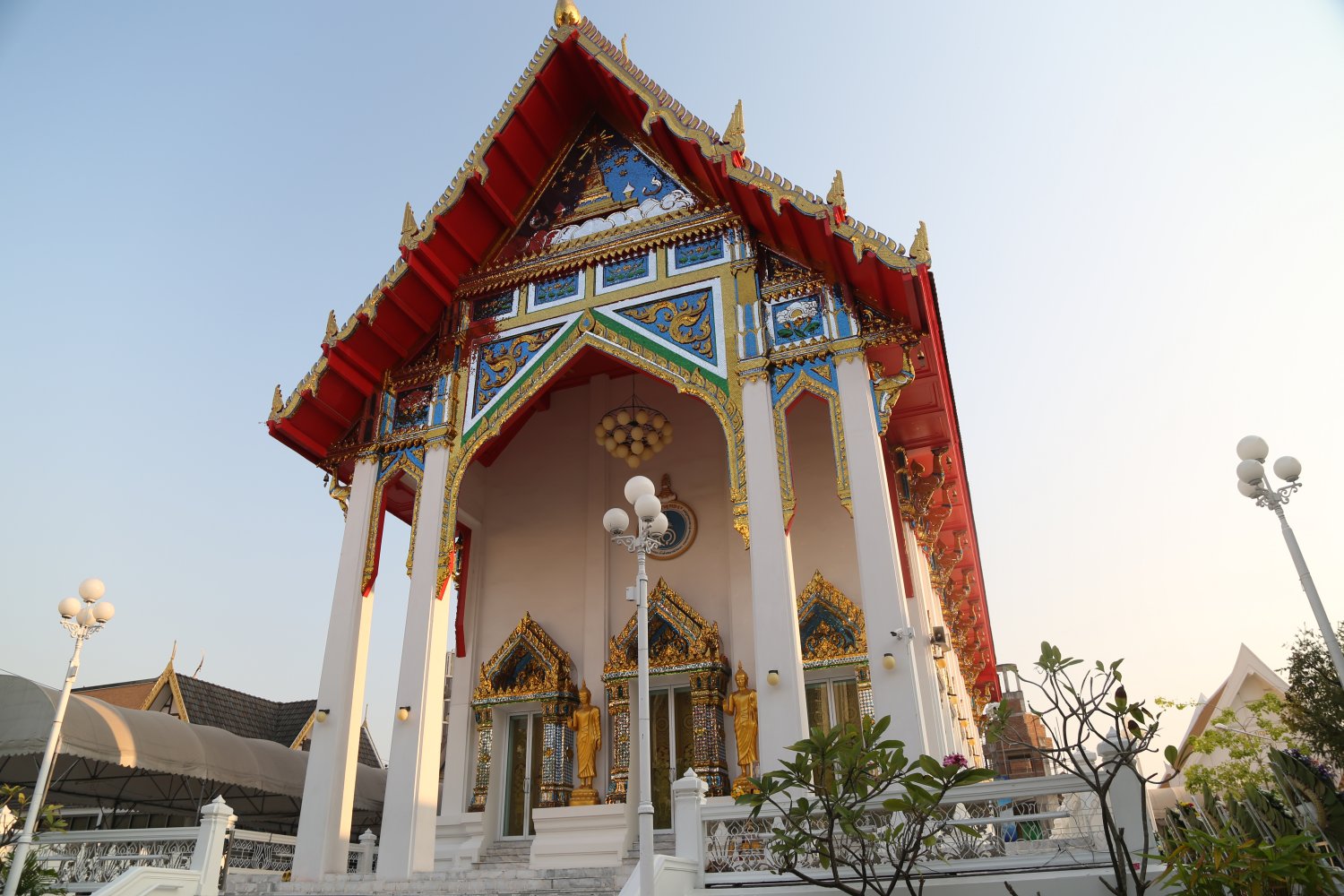
Wat Theplila (also called Wat Thepleela) is an old Royal temple that used to be called Wat Tuek Khlong Ton. Not a lot of temples in this immediate part of the city, is located near Ramkhamhaeng University. No immediate public transportation stop – the closest would-be Phra Ram 9 on the metro or Ramkhamhaeng station on the Airport Rail Link. Although within a short walk of the temple at the end of a small soi is a pier with boats that regularly stop and drop off passengers along the Wat Sri Bunruang Water canal. The pier is conveniently called Wat Thepleela.
Like at other temples several shops in the vicinity of the temple sell a variety of gift baskets and other items that can be purchased and the brought to the temple for merit. This is a large temple with numerous attractions for wayward visitors including some intriguing statues and prayer areas. Practitioners are Theravada Buddhism so meat can be eaten inside this temple versus Mahayana Buddhists who are only vegetarian. A very popular temple – especially during special events and public holidays. Also used for funerals. And a popular place for visitors to write their name on bells as part of prayer and also to take sortilege (the practice of future telling while drawing cards at random).
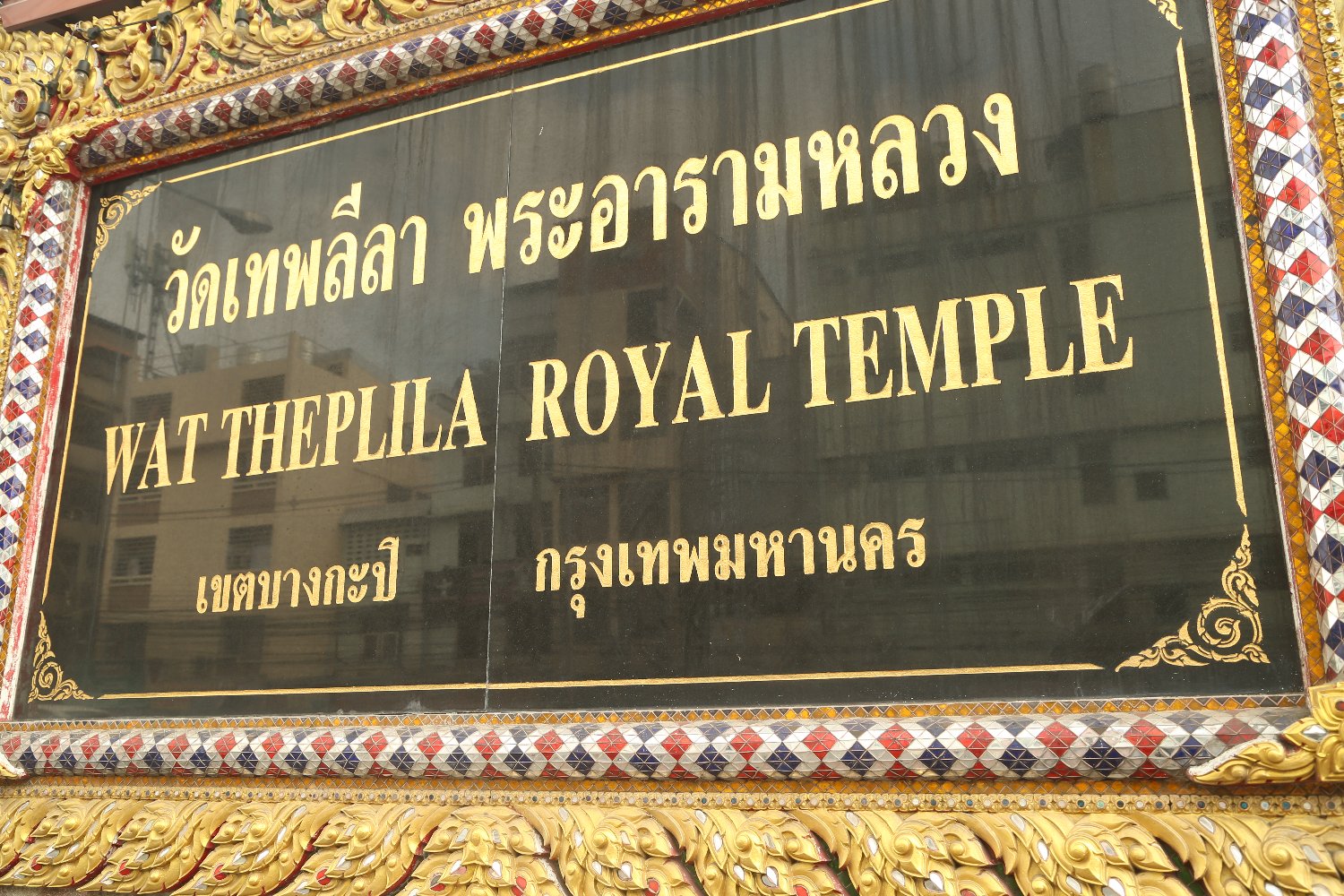
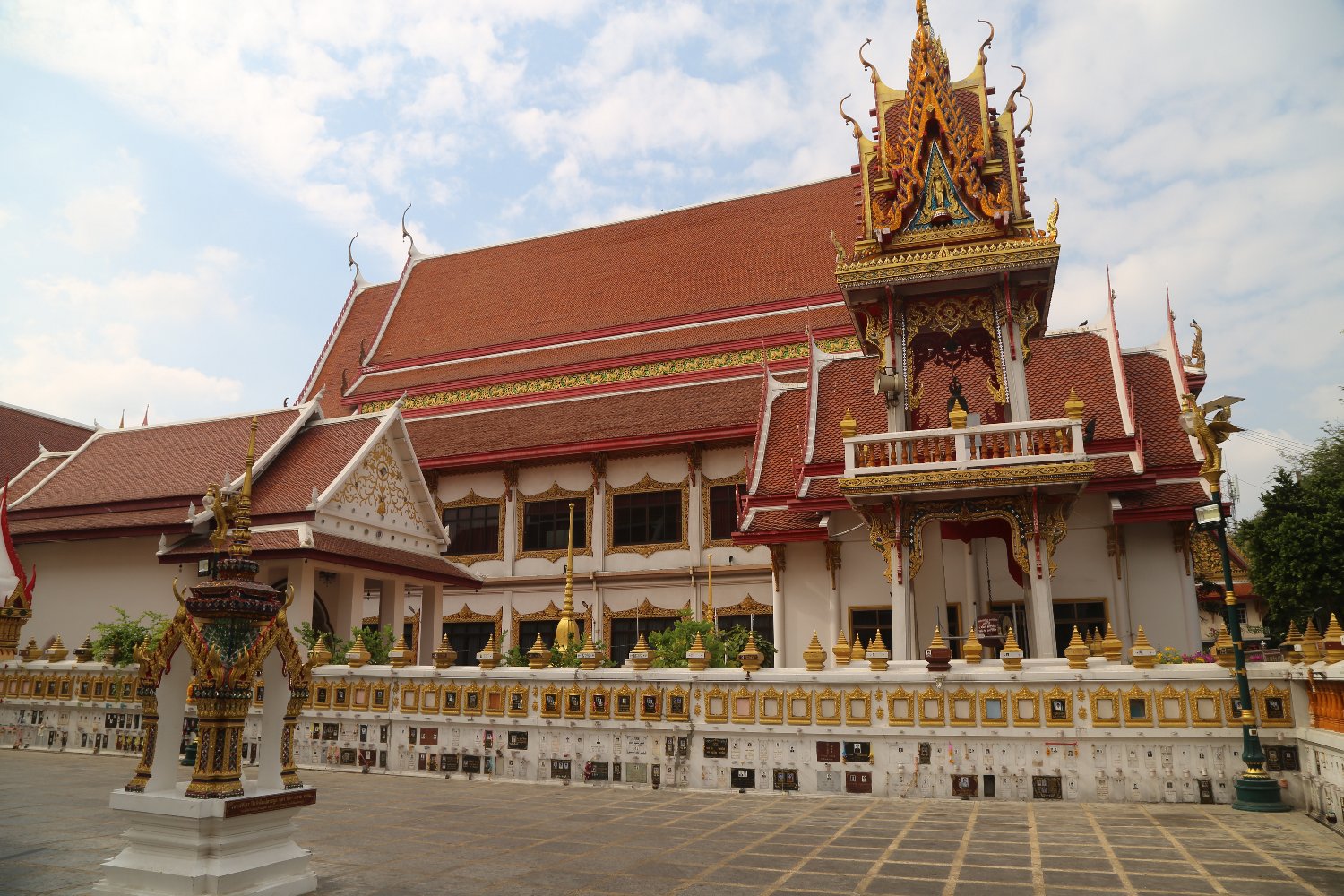
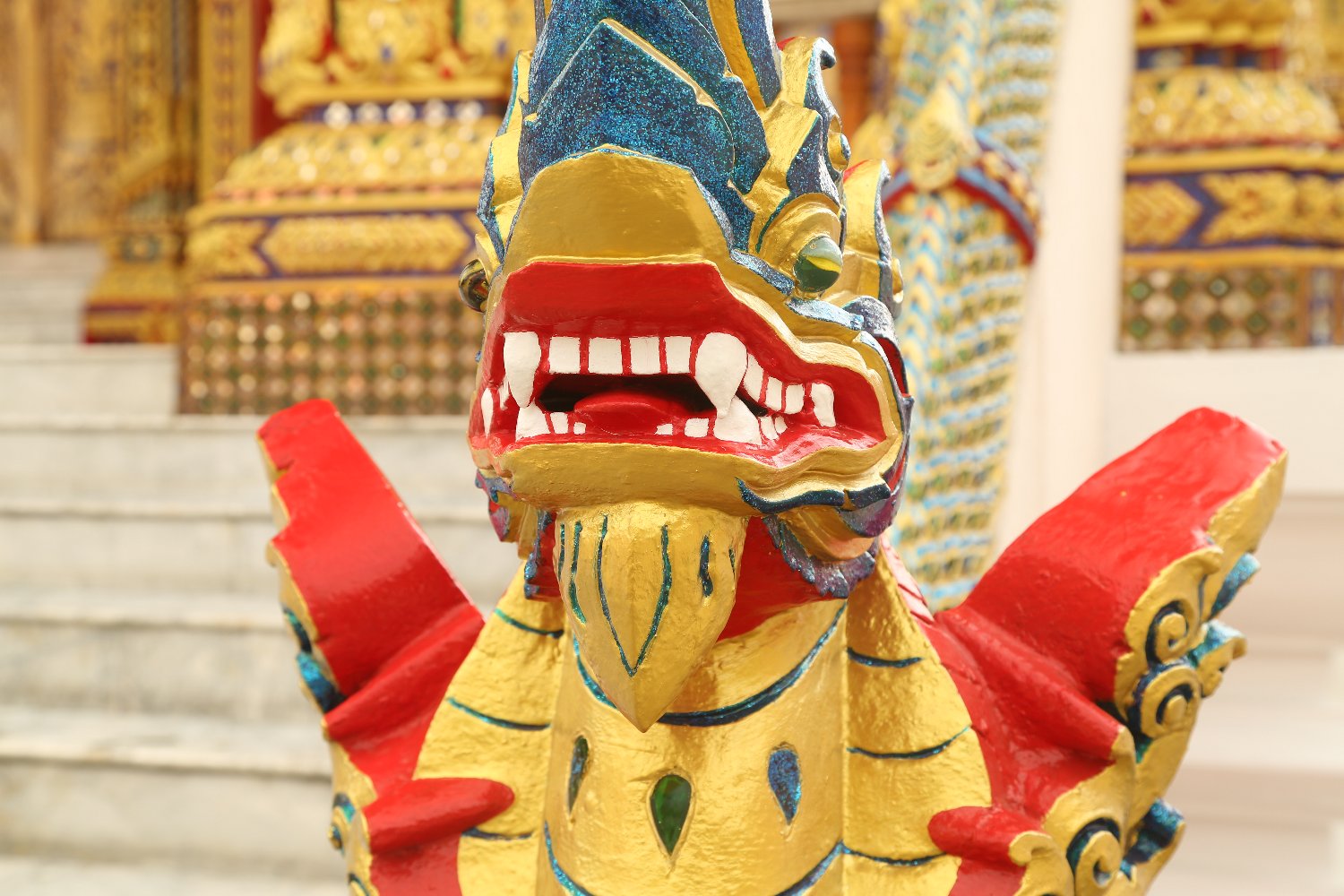


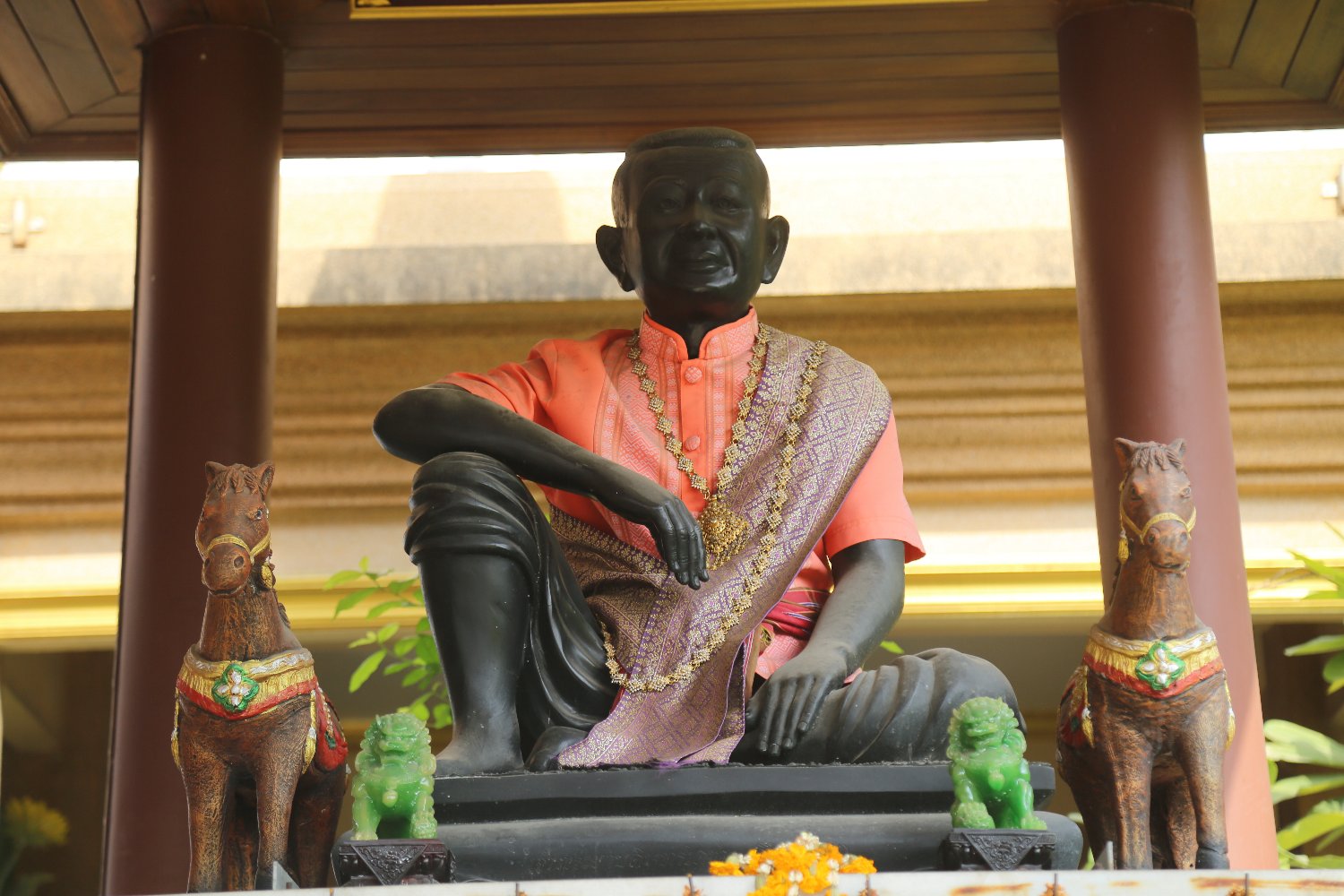
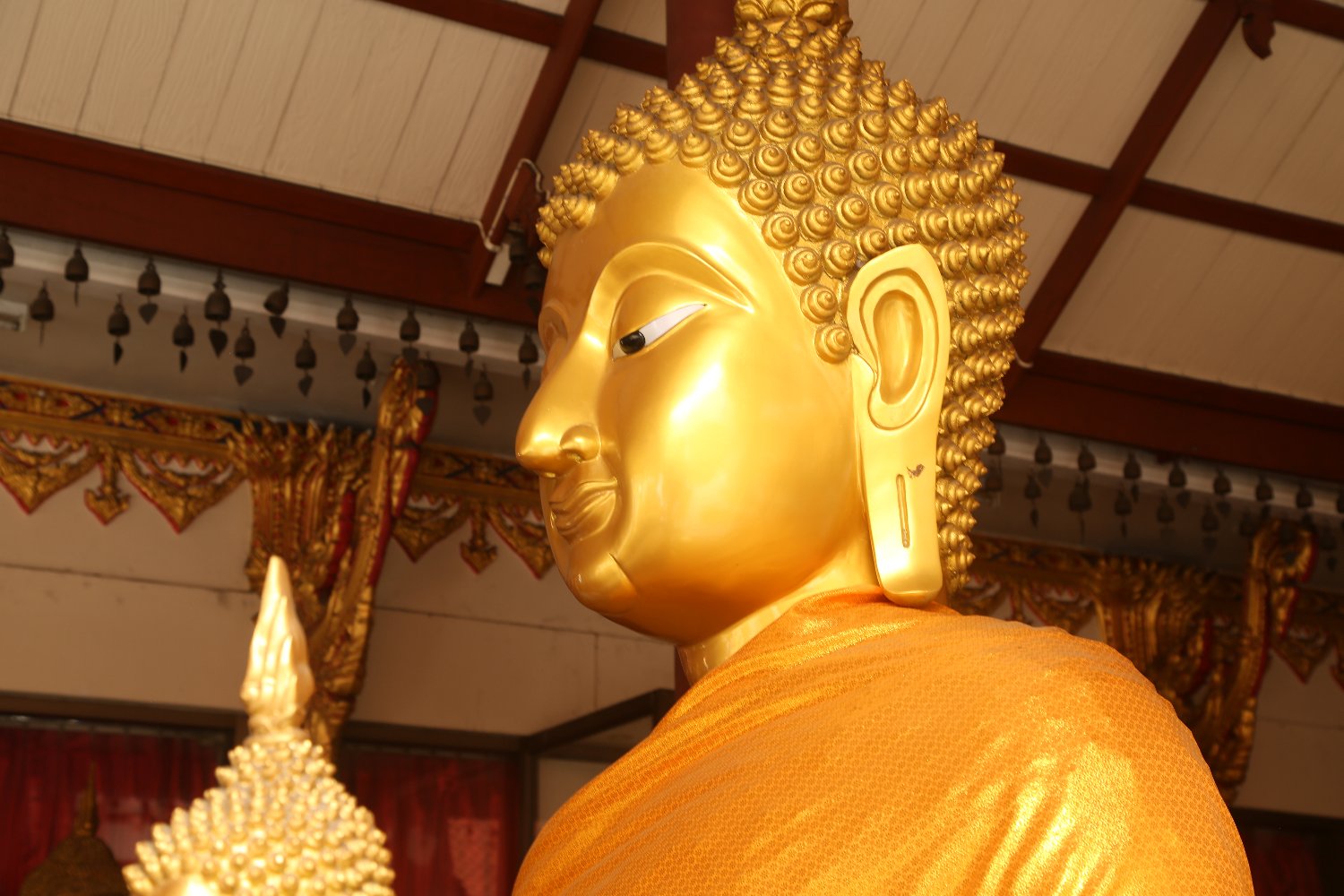

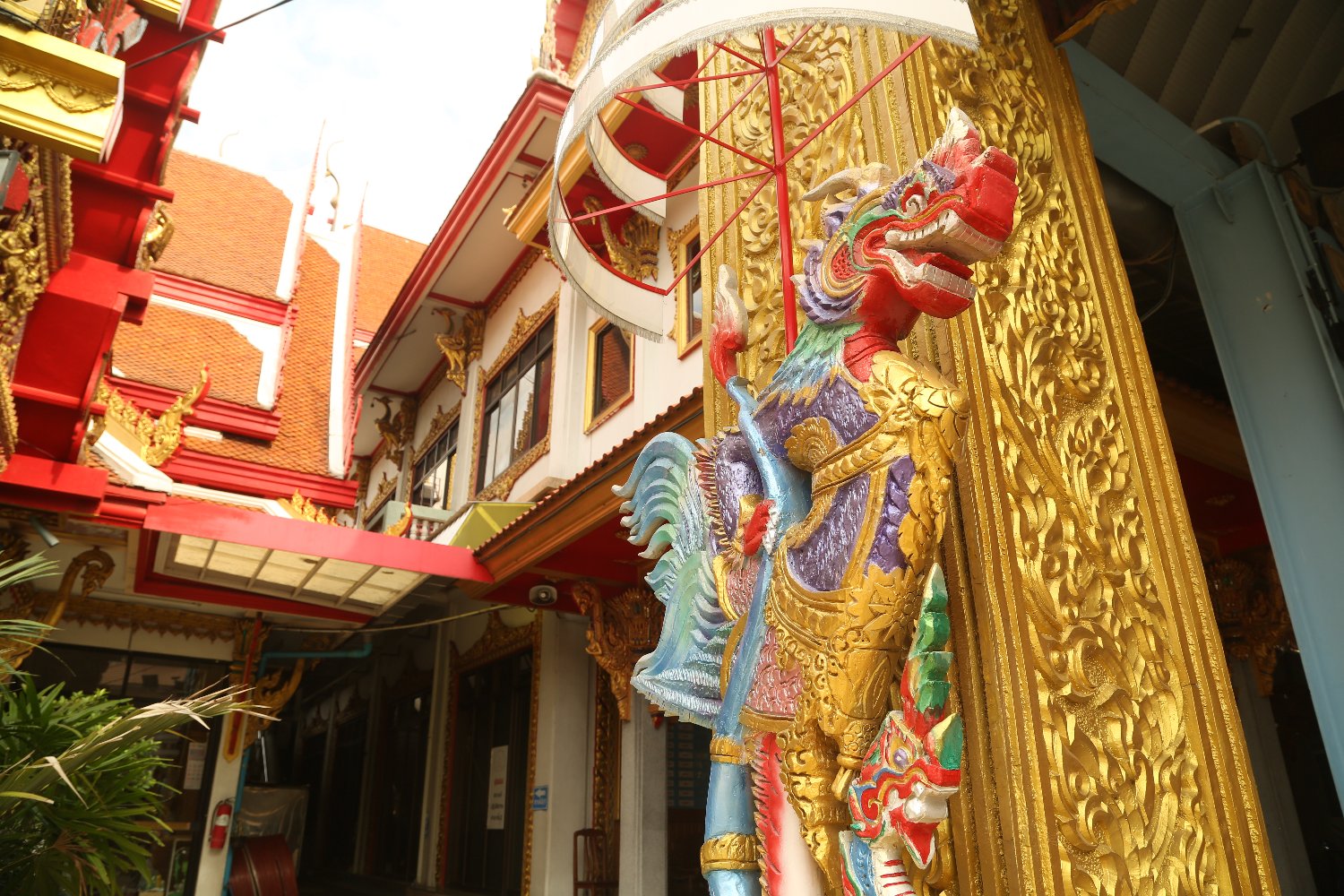

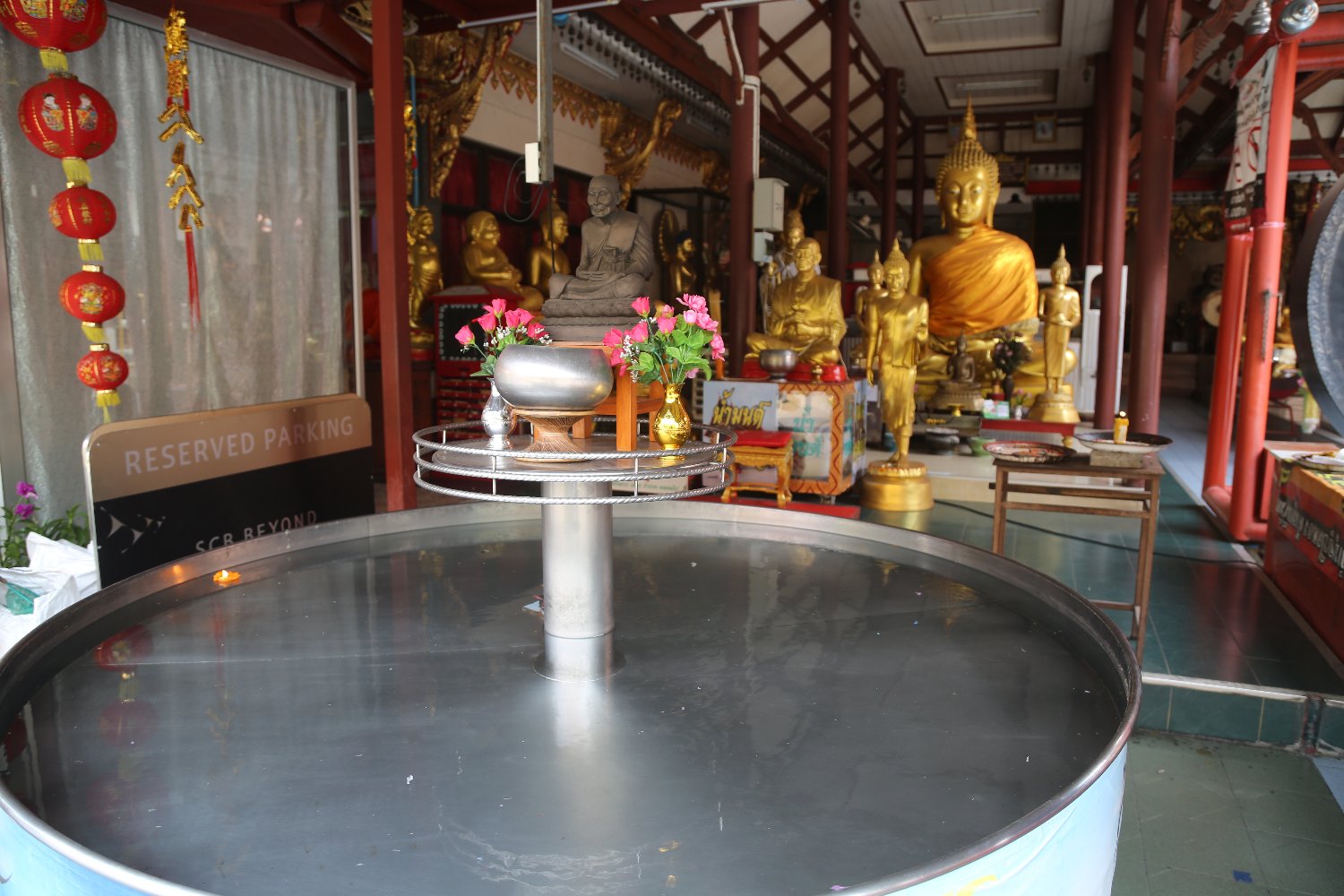
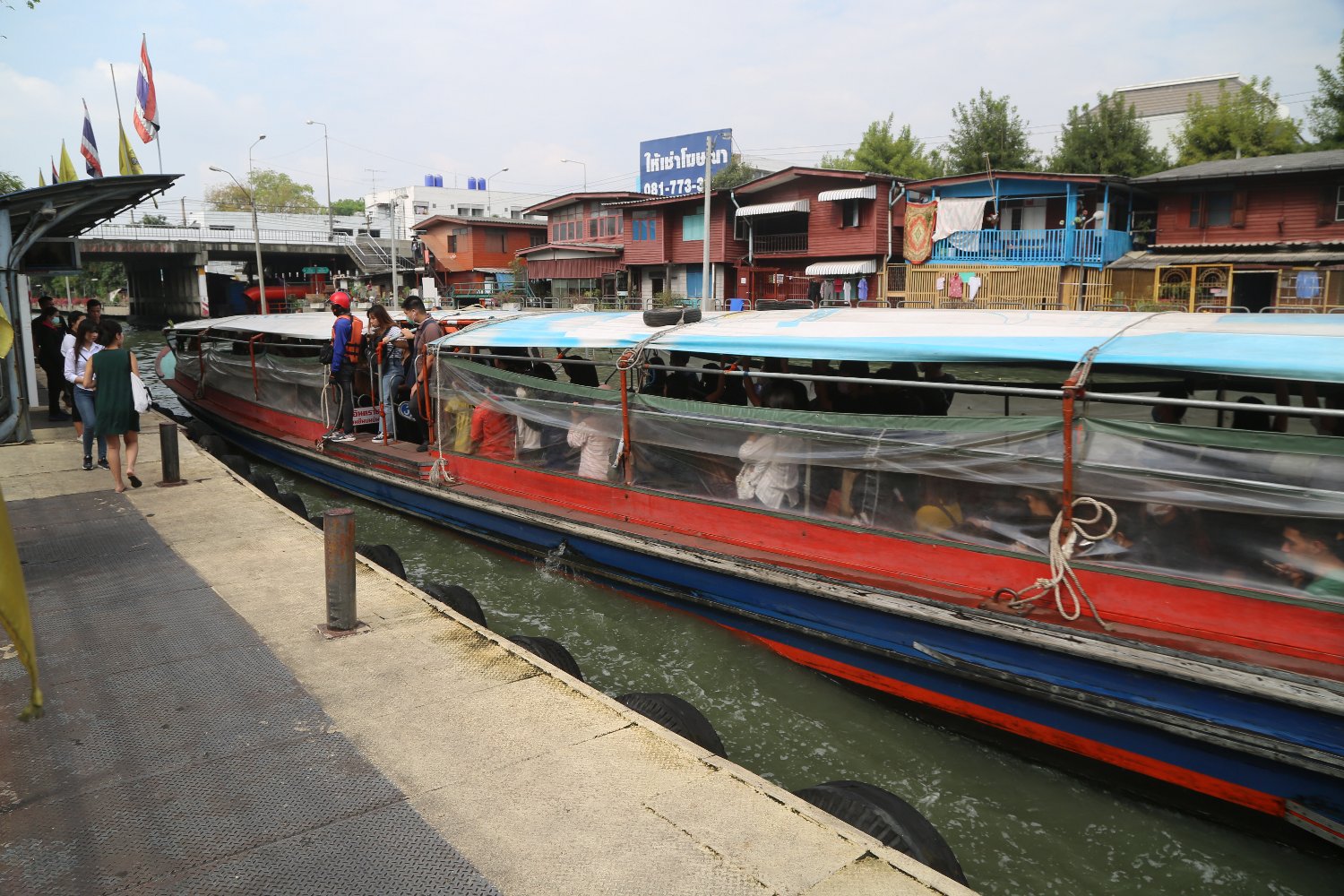
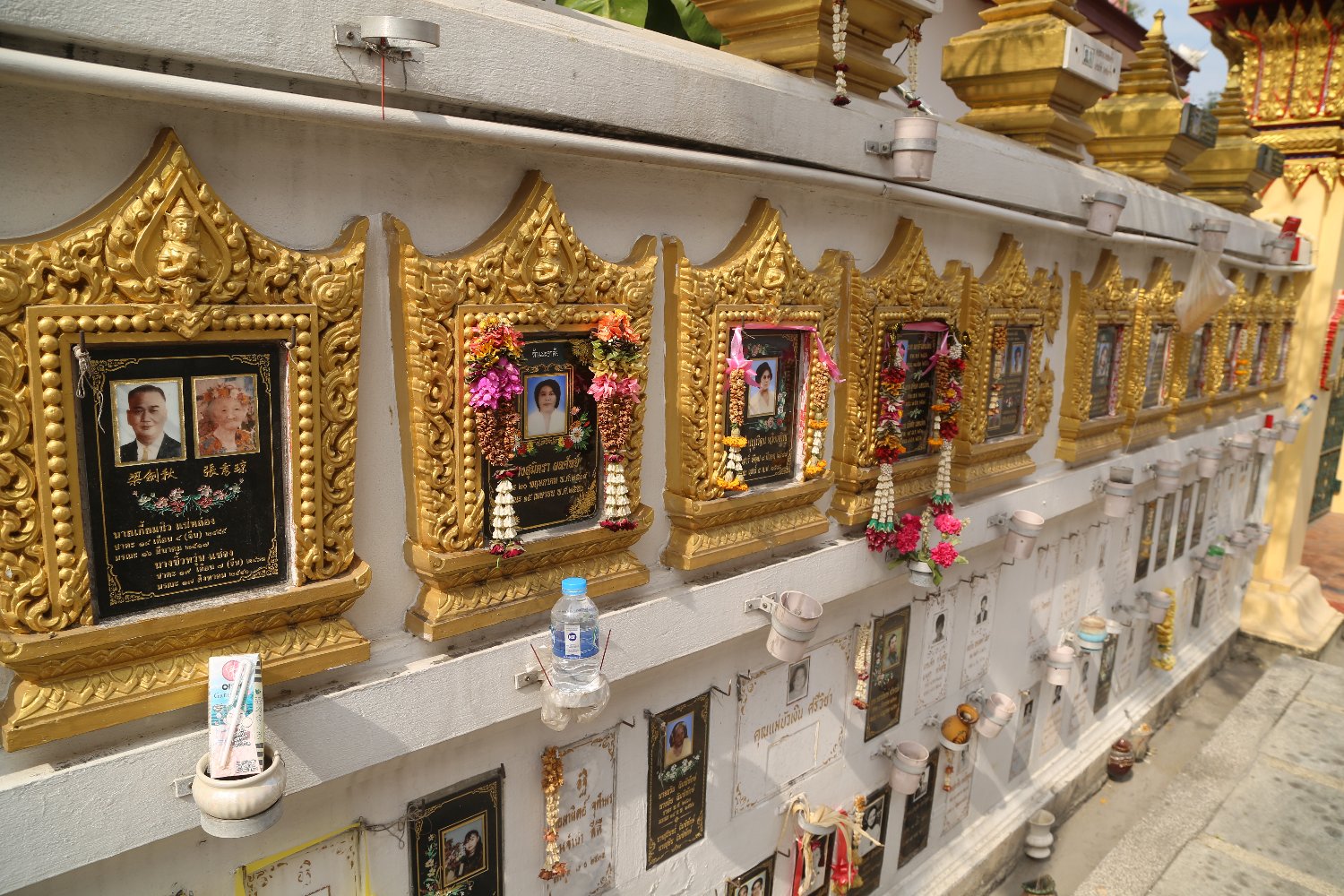

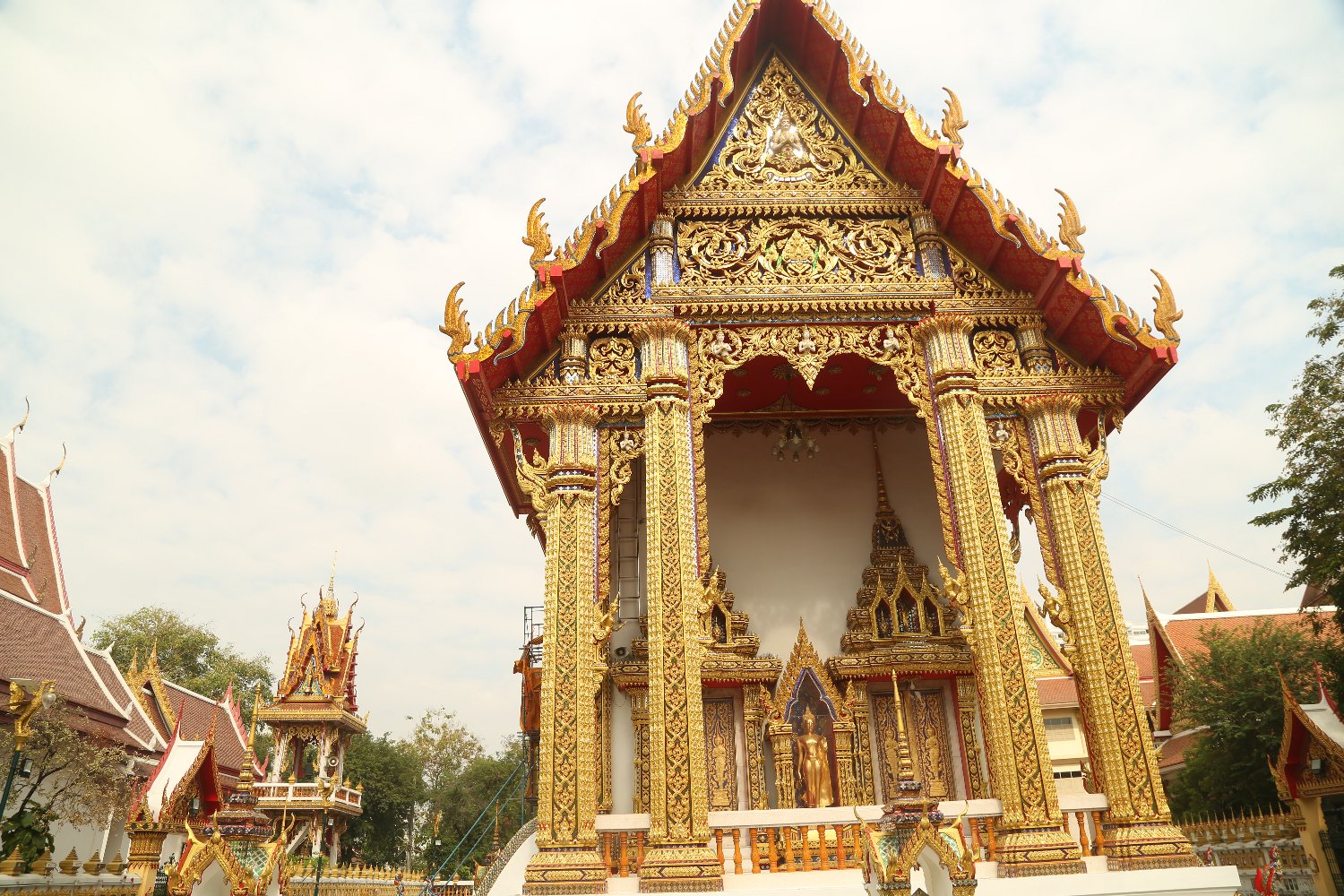
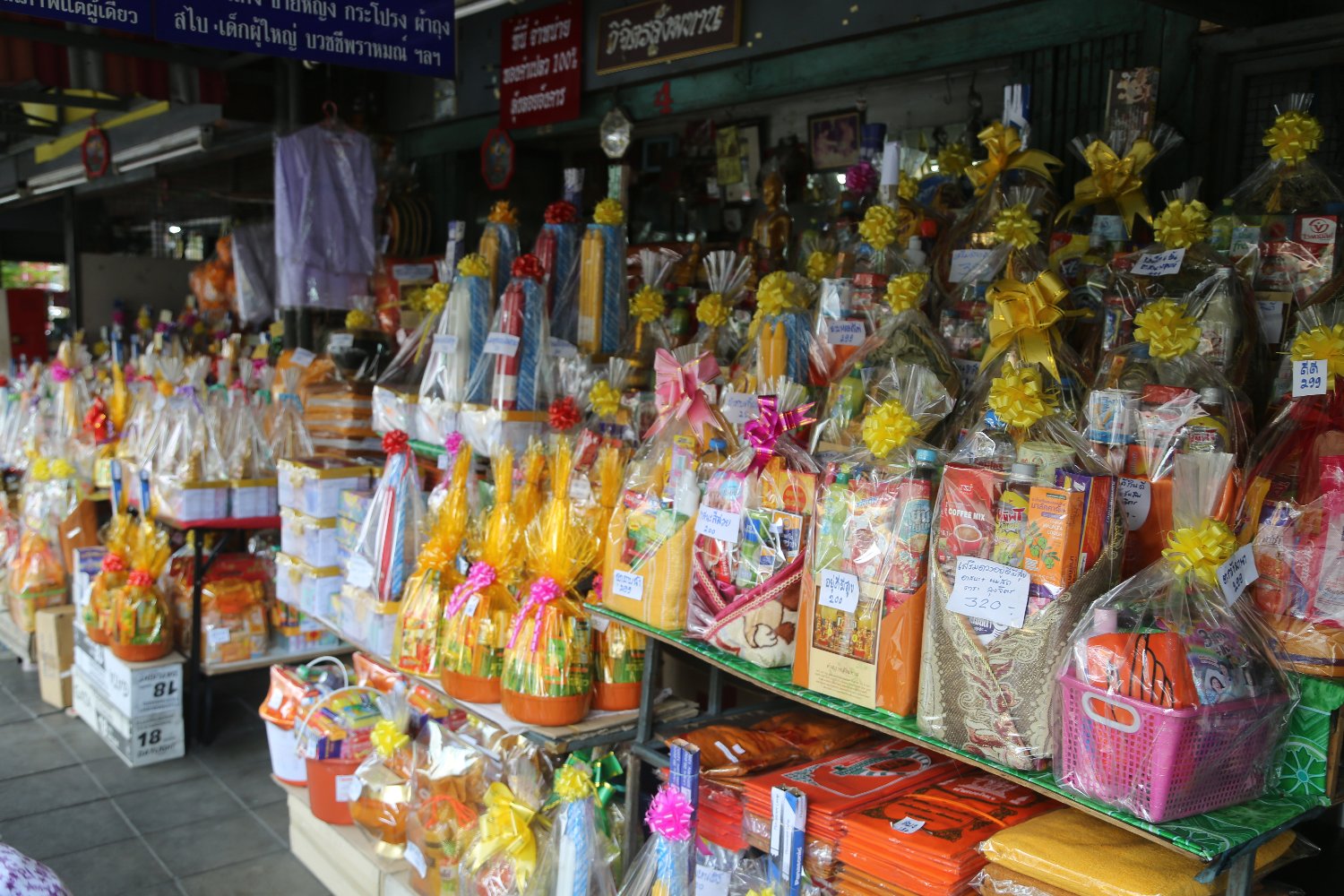
Wat Thep Siran Thrawat (also known as Wat Debsirindrawas Ratchaworawiharn) is located next to a picturesque canal and a short walk from the Nopphawaong Bridge. This temple was ordered built in 1876 by King Rama V as a dedication to his mother – Queen Debsirindra (hence its name). Construction within 2 years. Beautiful buildings including the ubosot with its marble and door decorations (lacquered gold painted leaf). Look up when you are in the ubosot – you will see detailed carvings. And look up when you are standing in the pavilion for more beautiful golden decorations.
This temple also used to be a royal crematorium for members of the royal family and King Rama V had a special pavilion built here to house his son’s body. The pavilion is still used by the royal family during certain cremation ceremonies.
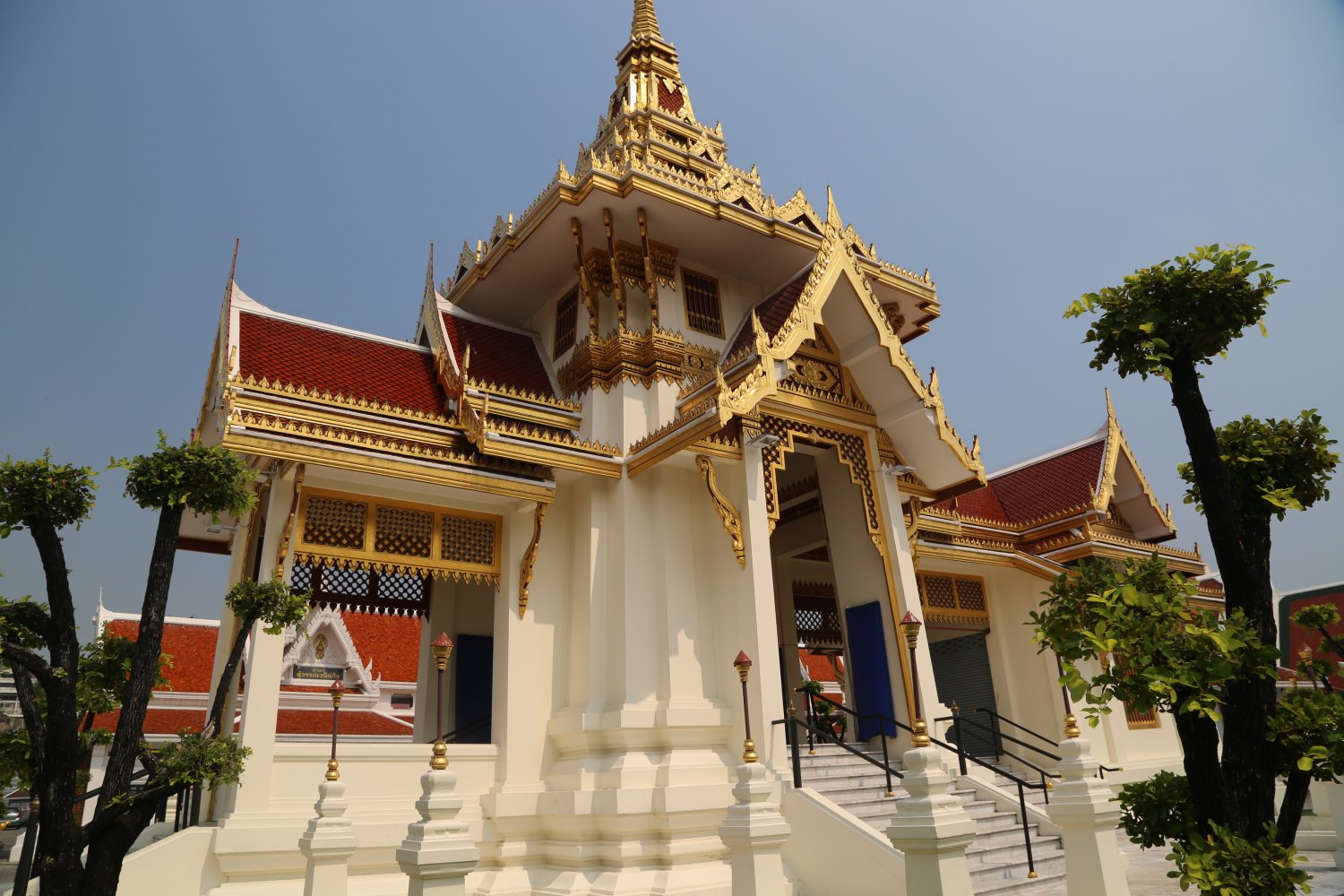


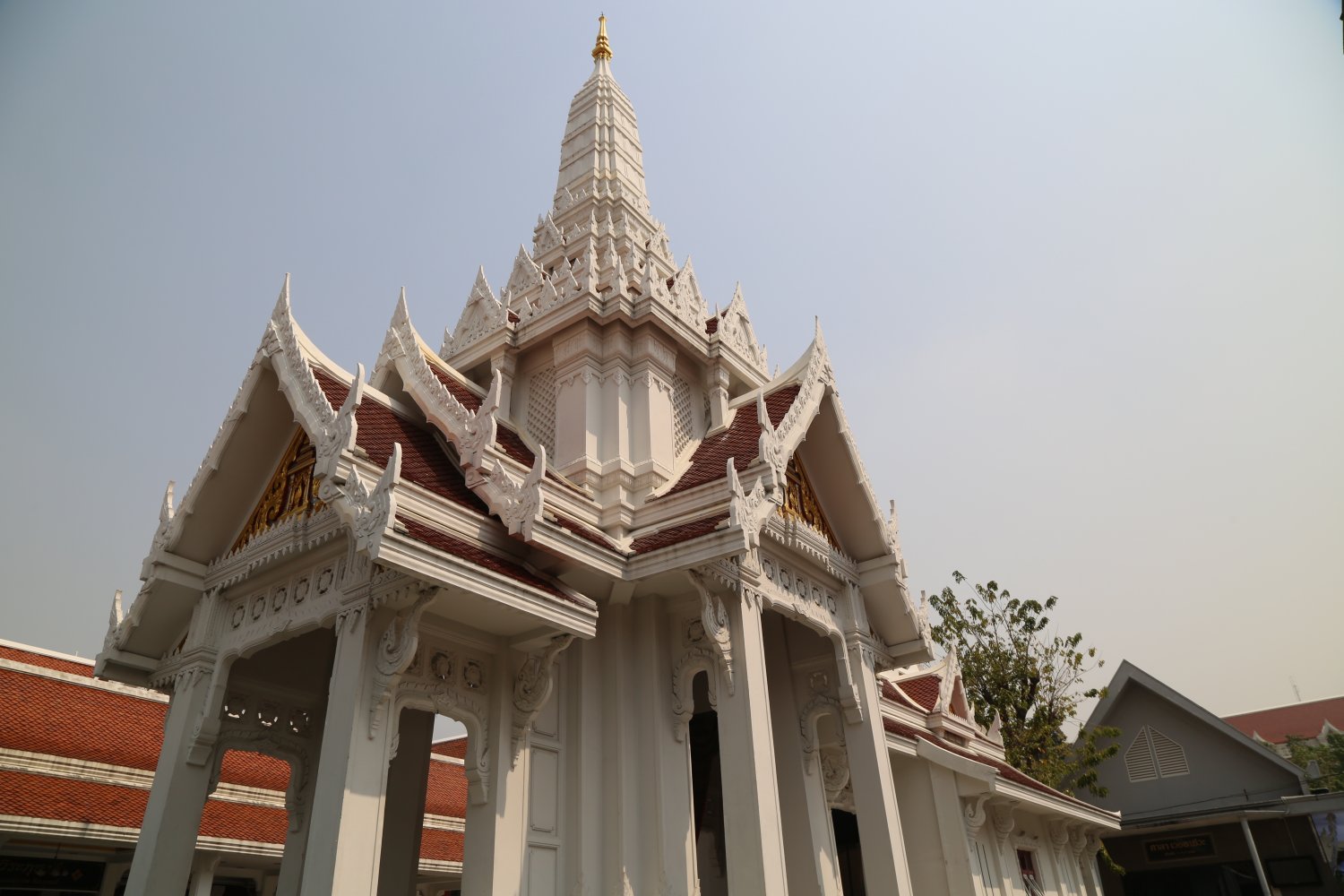
Wat Thepthidaram Worawihan was originally constructed between 1836 and 1839. Located next to the impressive Loha Prasat complex and within a short walk of the beautiful Wat Saket. Features a number of Chinese artifacts due to historical trading between China and Thailand including porcelain pieces and statues. The primary Buddha statue on site was carved from white rock.
This temple is also home of the Sunthon Phu Museum – located towards the back of Wat Thepthidaram Worawihan. The museum is a collection of small rooms centered around a small courtyard honoring the life and times of poet Sunthon Phu. Sunthon, often called the “Shakespeare of Thai Literature” or “the Bard of Rattanakosin” he ordained at this temple and spent several years of his life here. The museum rooms are where he lived during his time here.
The Adventure of Sudsakorn was Thailand’s first animated film (dating from 1979). This film was was based on a character from Sunthon’s nearly 50,000-line poem, Phra Aphai Mani.
A monk will often give you a highly personalized tour of the museum guiding you through each of the rooms within the museum. One room contains story boxes – open up one of them to read more about Sunthon (in Thai and English). Despite Sunthon being born in 1786, technology plays a role here – during your tour if you stand in certain areas, you will be superimposed into a digital image (which can then be emailed to you by one of the monks).
Another highlight of a visit is singing some of Sunthon’s versus with a monk. The monk will set the tone and you will follow suit, verse by verse. The acoustics in the room will make you sound like a Thai opera star!
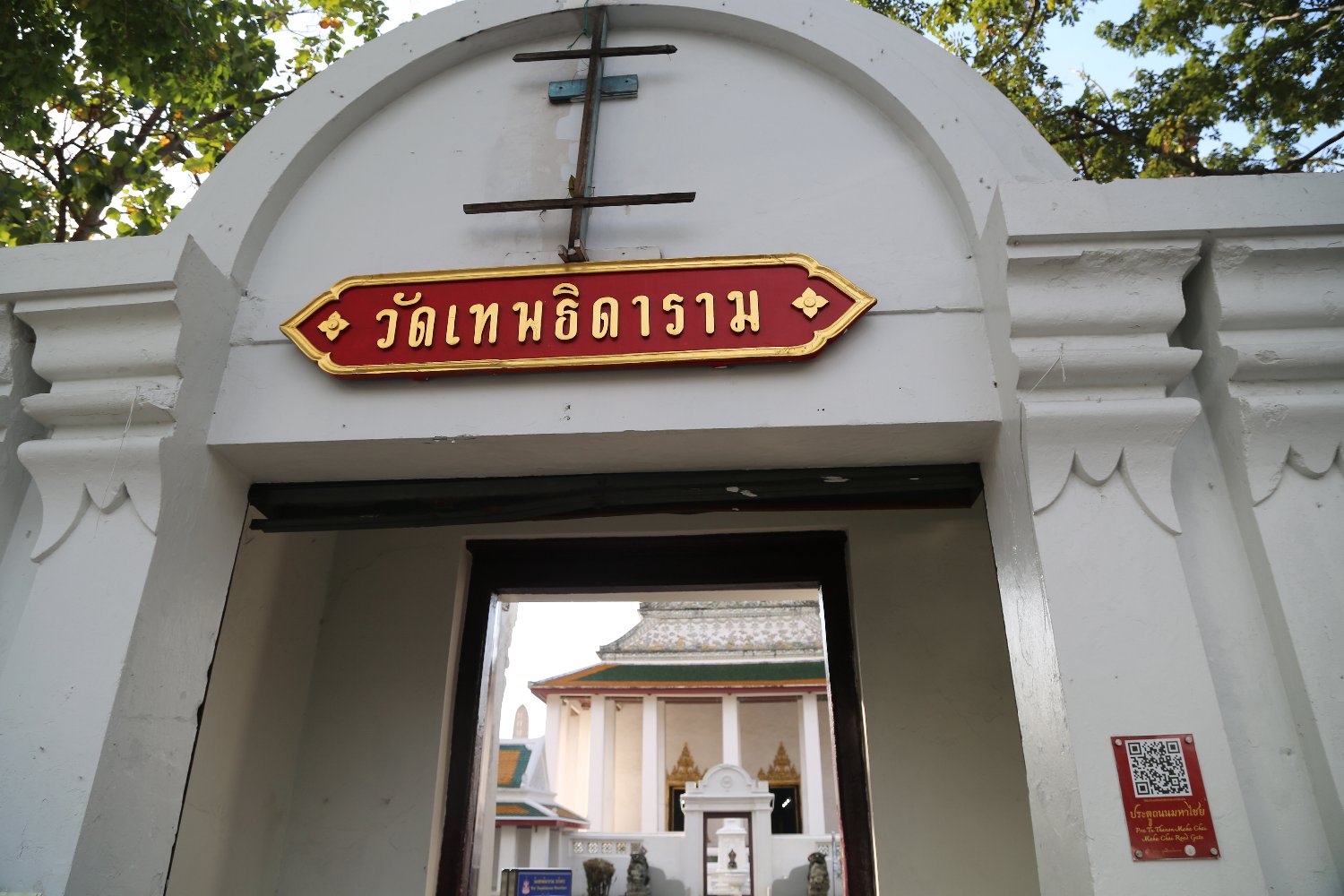
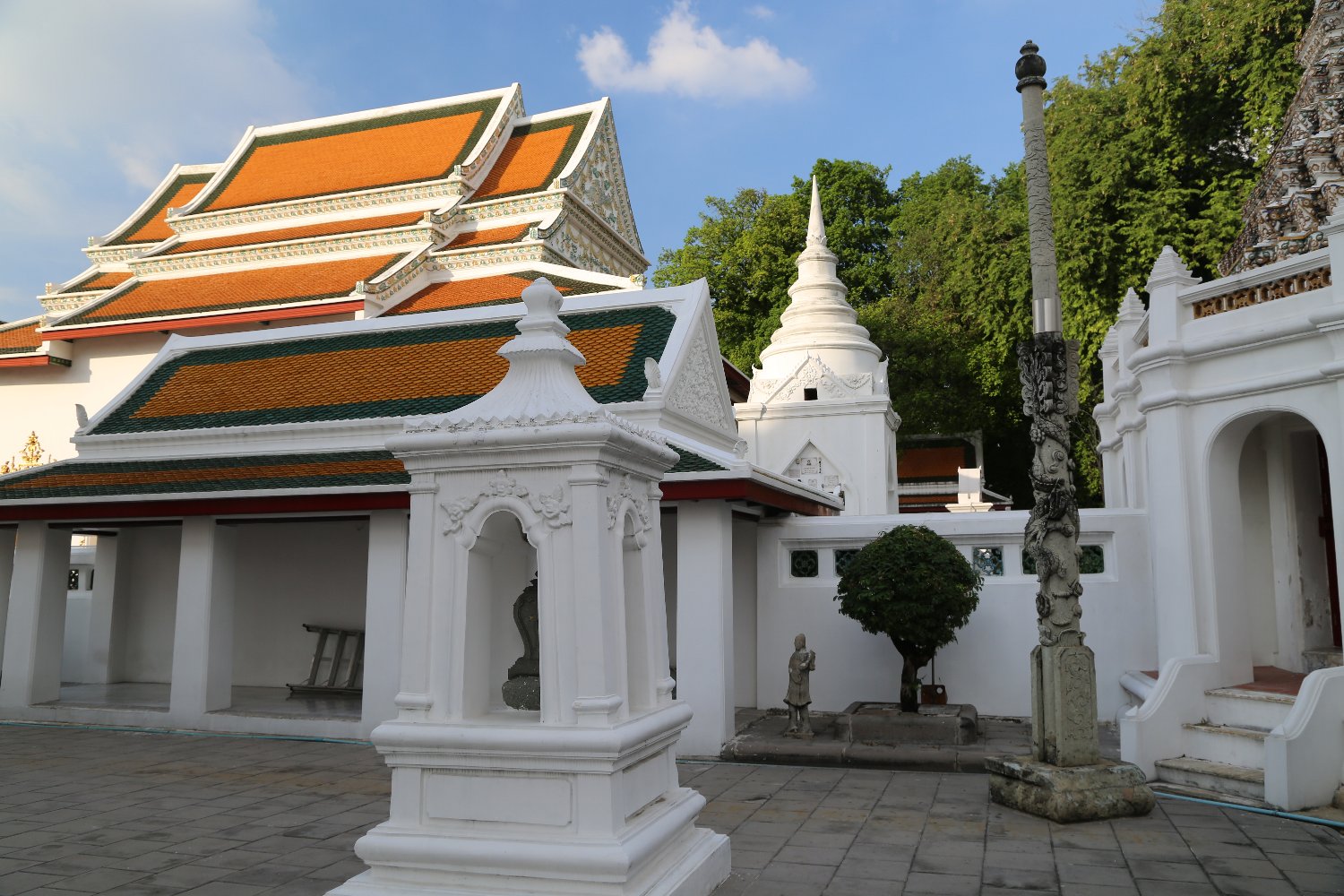
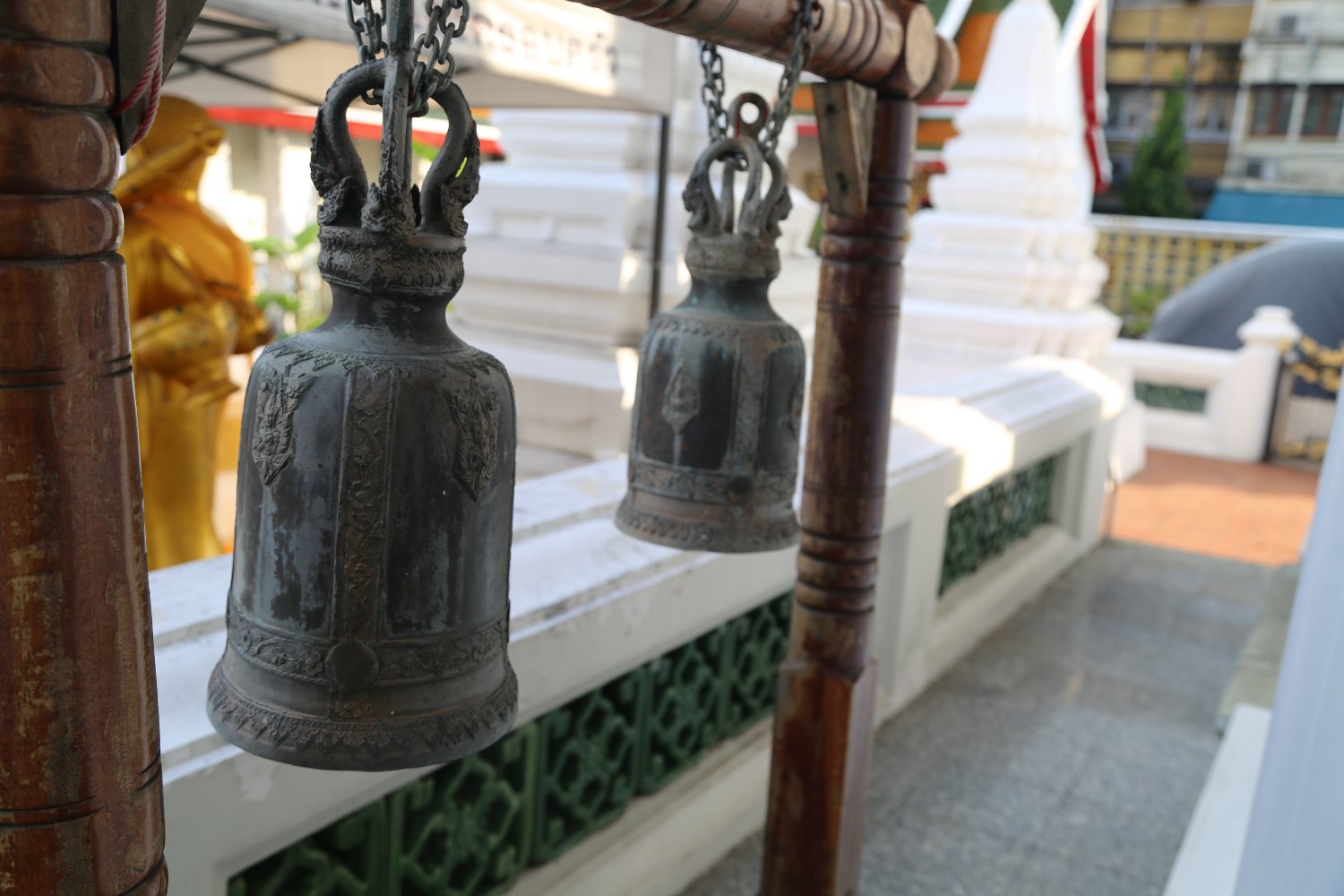
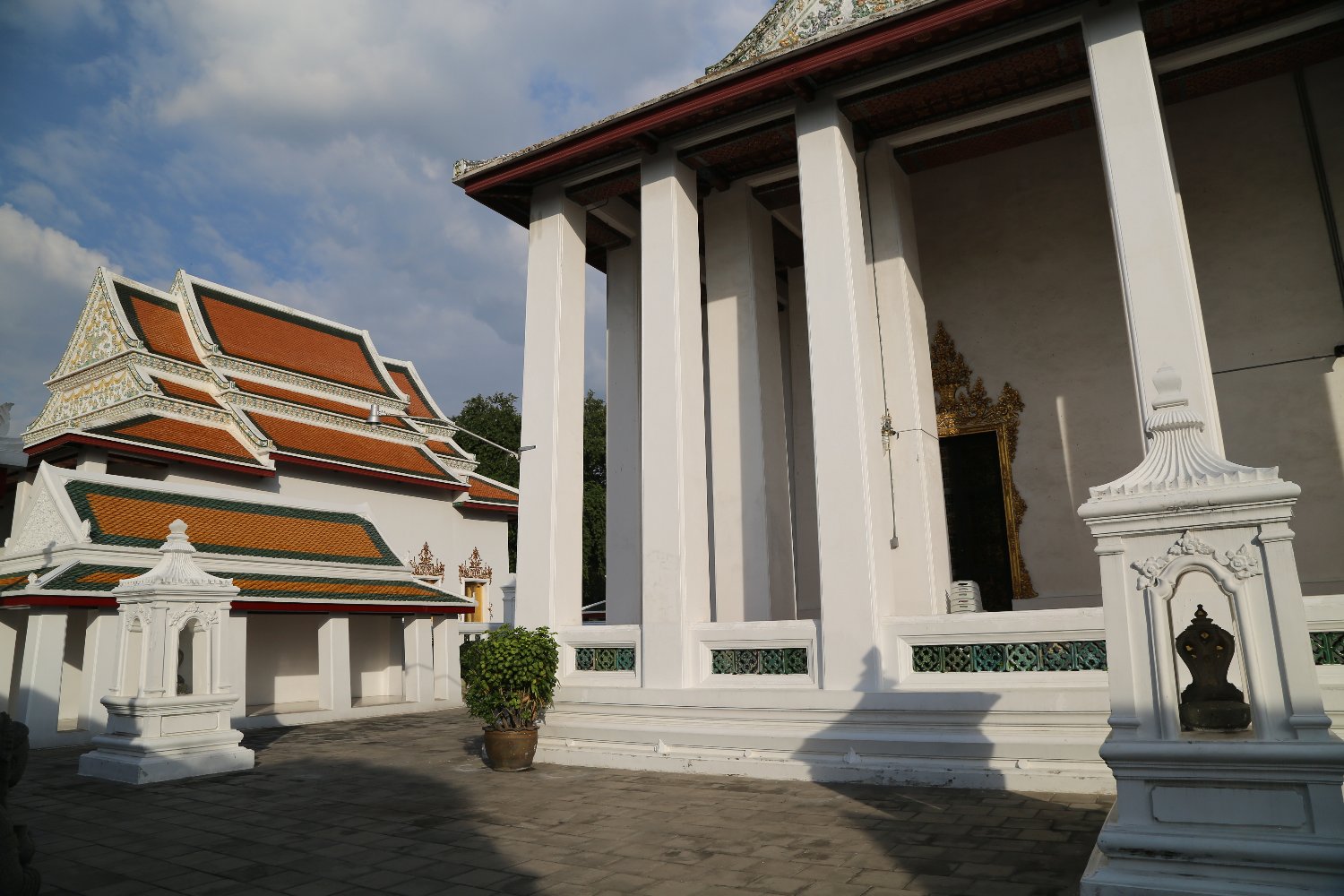
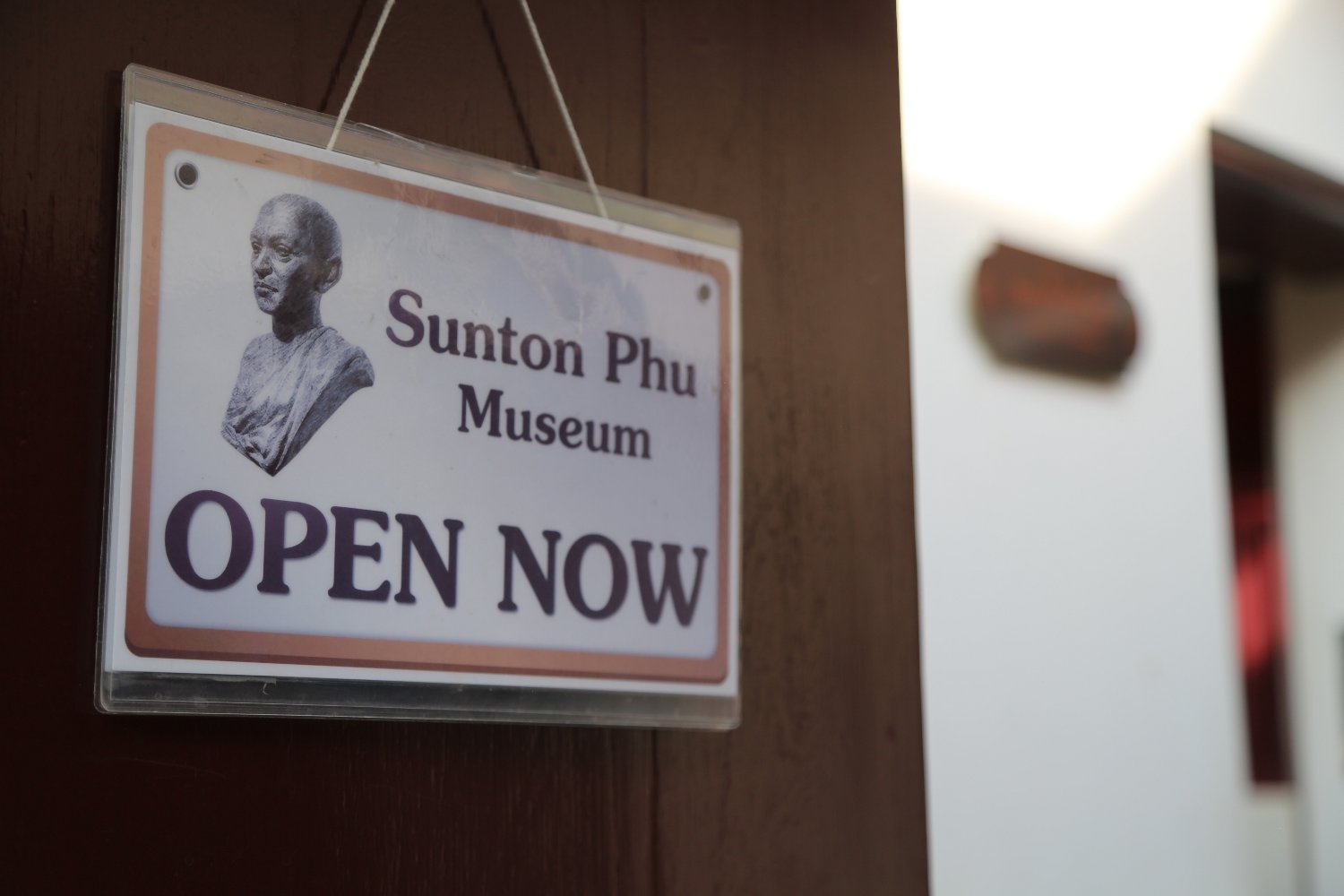
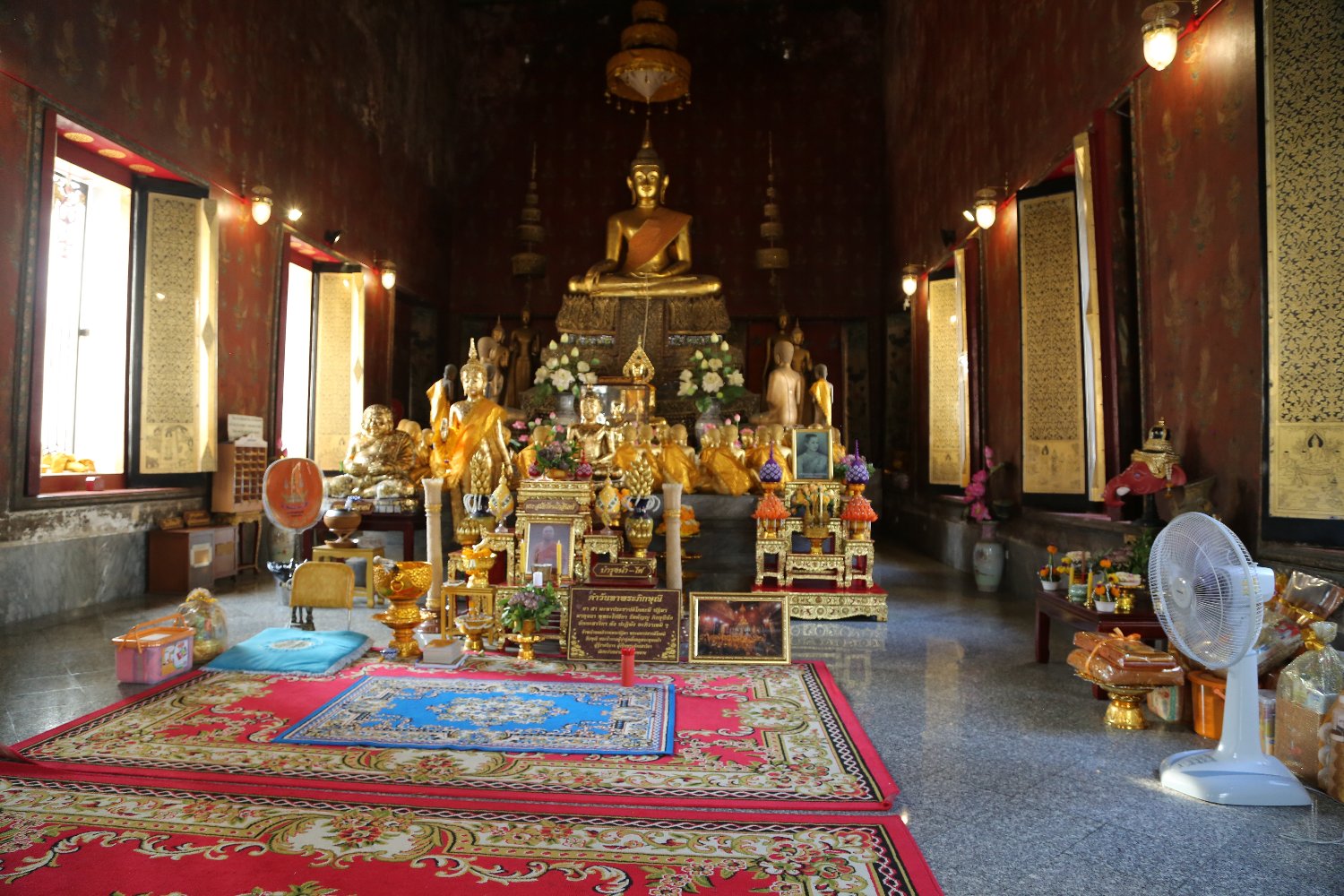
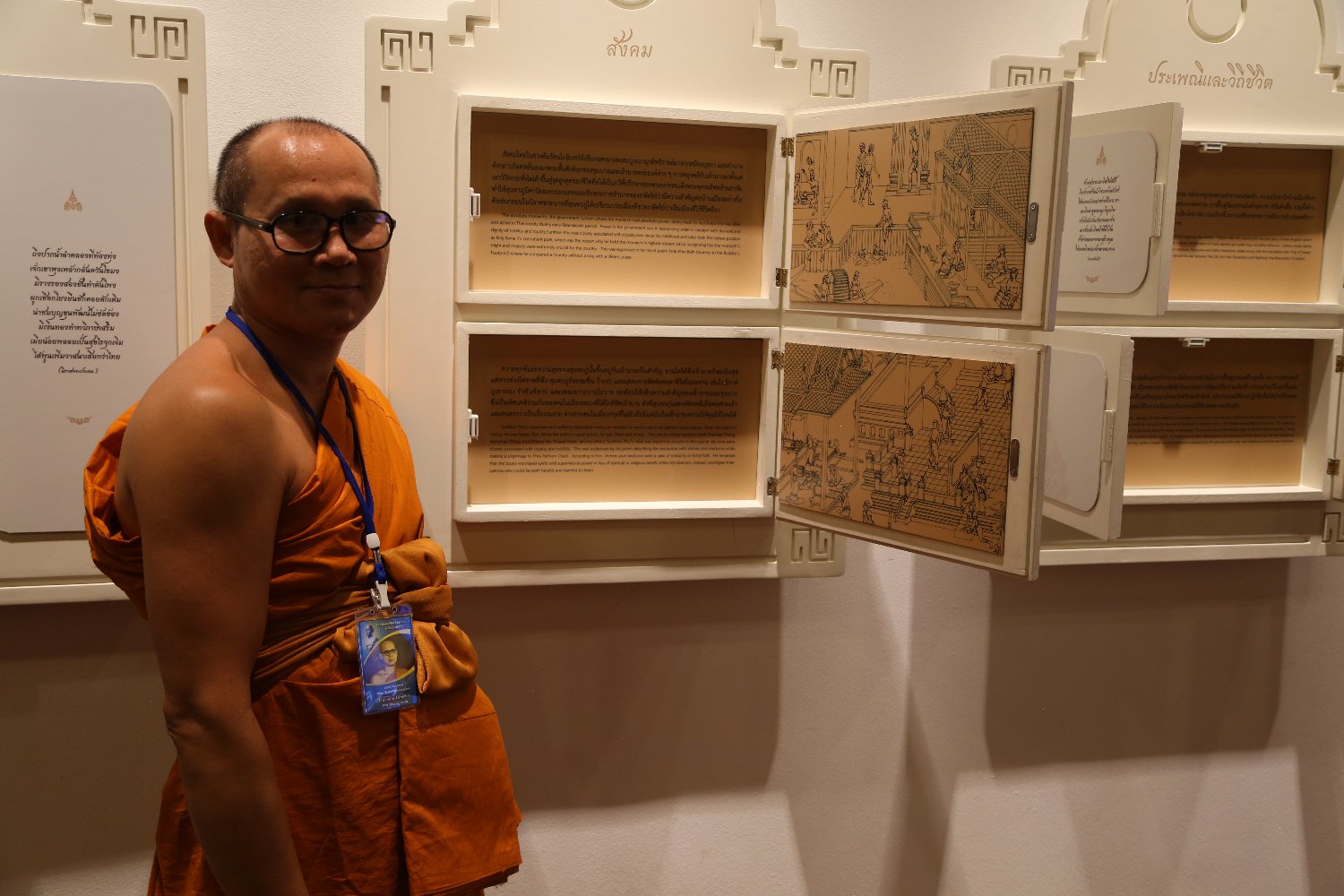
Wat Thong Bon is located directly next to the banks of the Chao Phraya River and a small canal just off of Rama III Road in the Yannawa District of Bangkok. A very relaxed well off the beaten path temple. Even features a floating temple in the Chao Phraya River just offshore from the steps which lead down to the water. The complex contains several very colorful and ornately decorated buildings – all in the shadow of a major residential high-rise nearby. With no traffic, about a 10-minute taxi ride from the closest Skytrain station of Surasak.
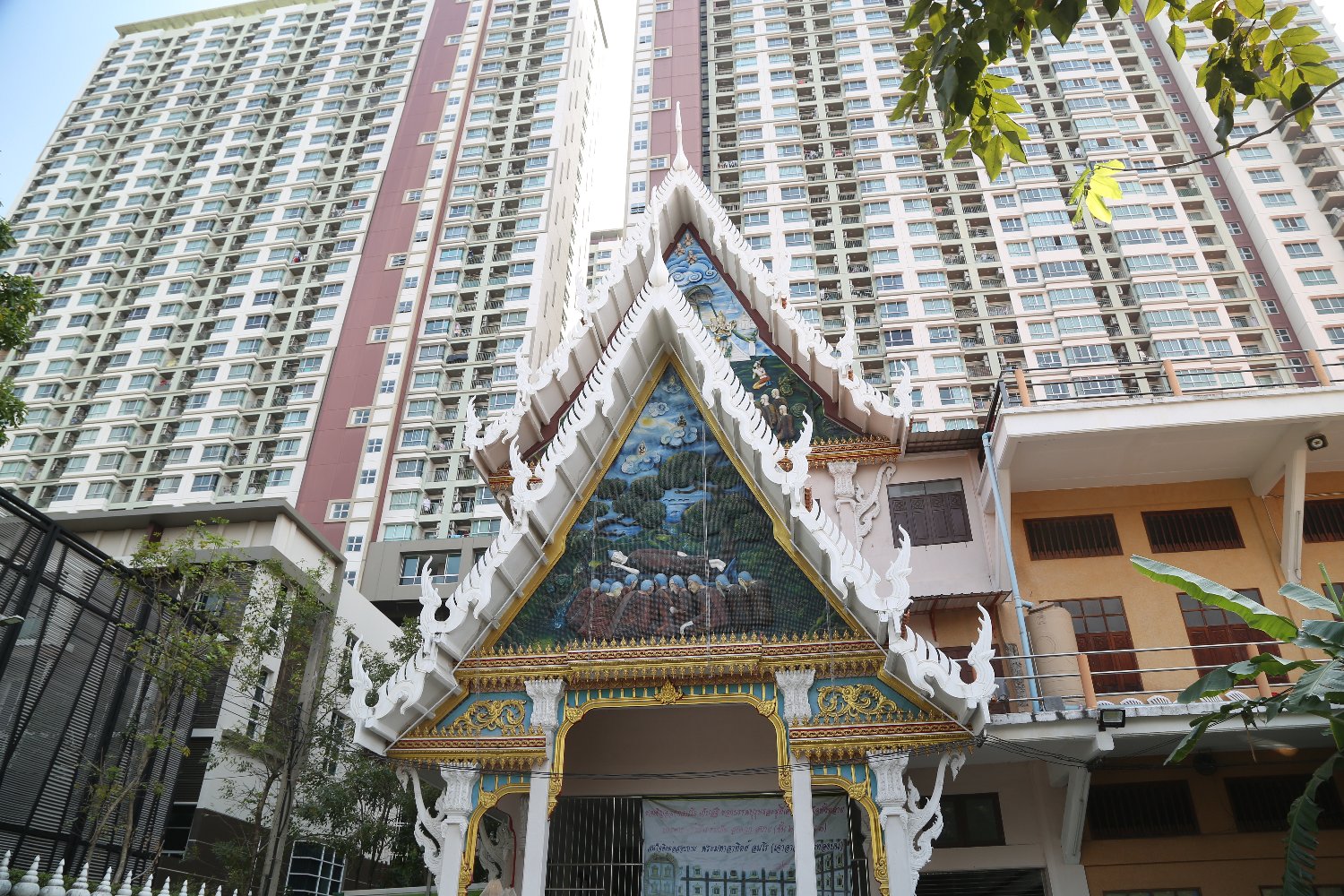
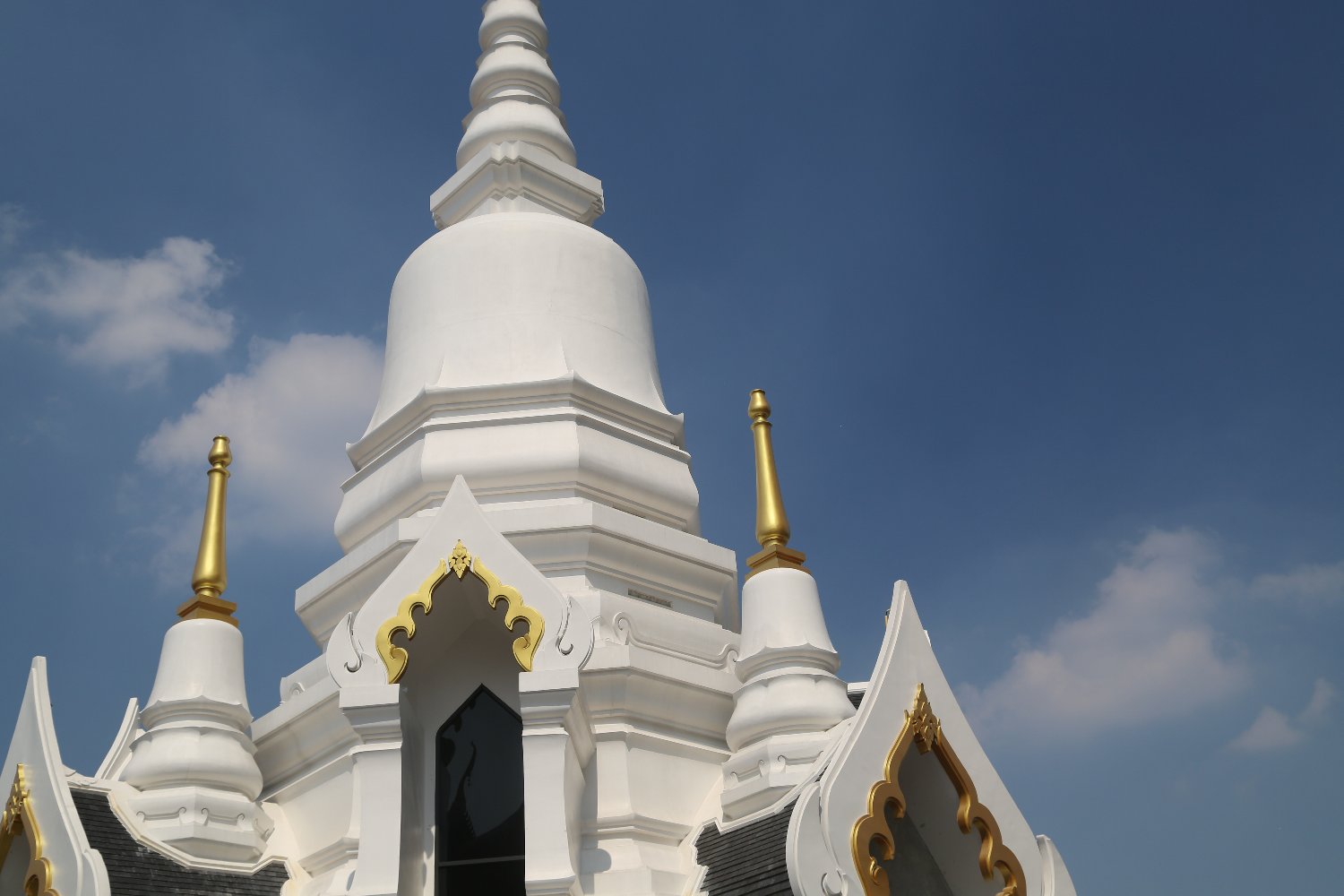
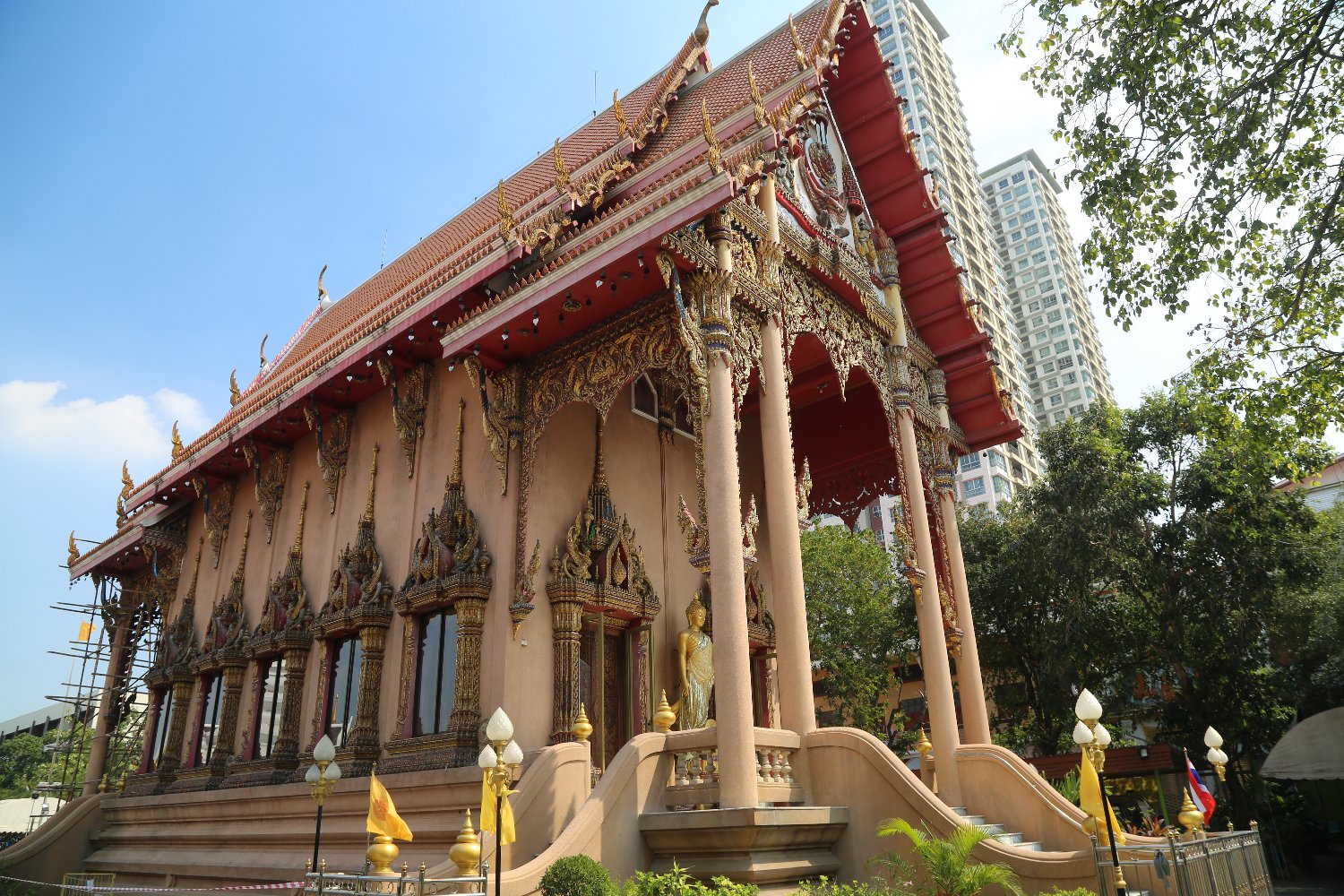

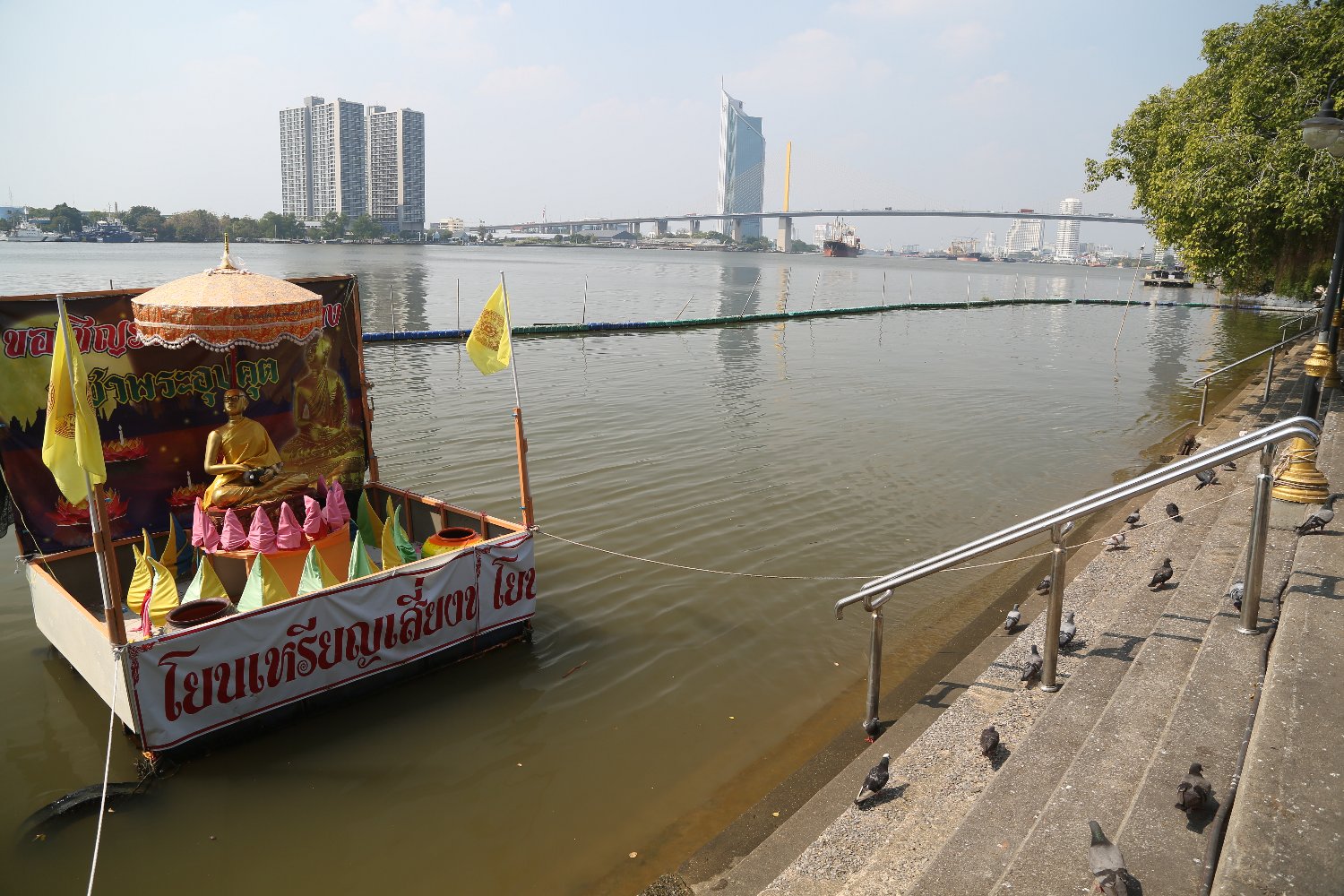

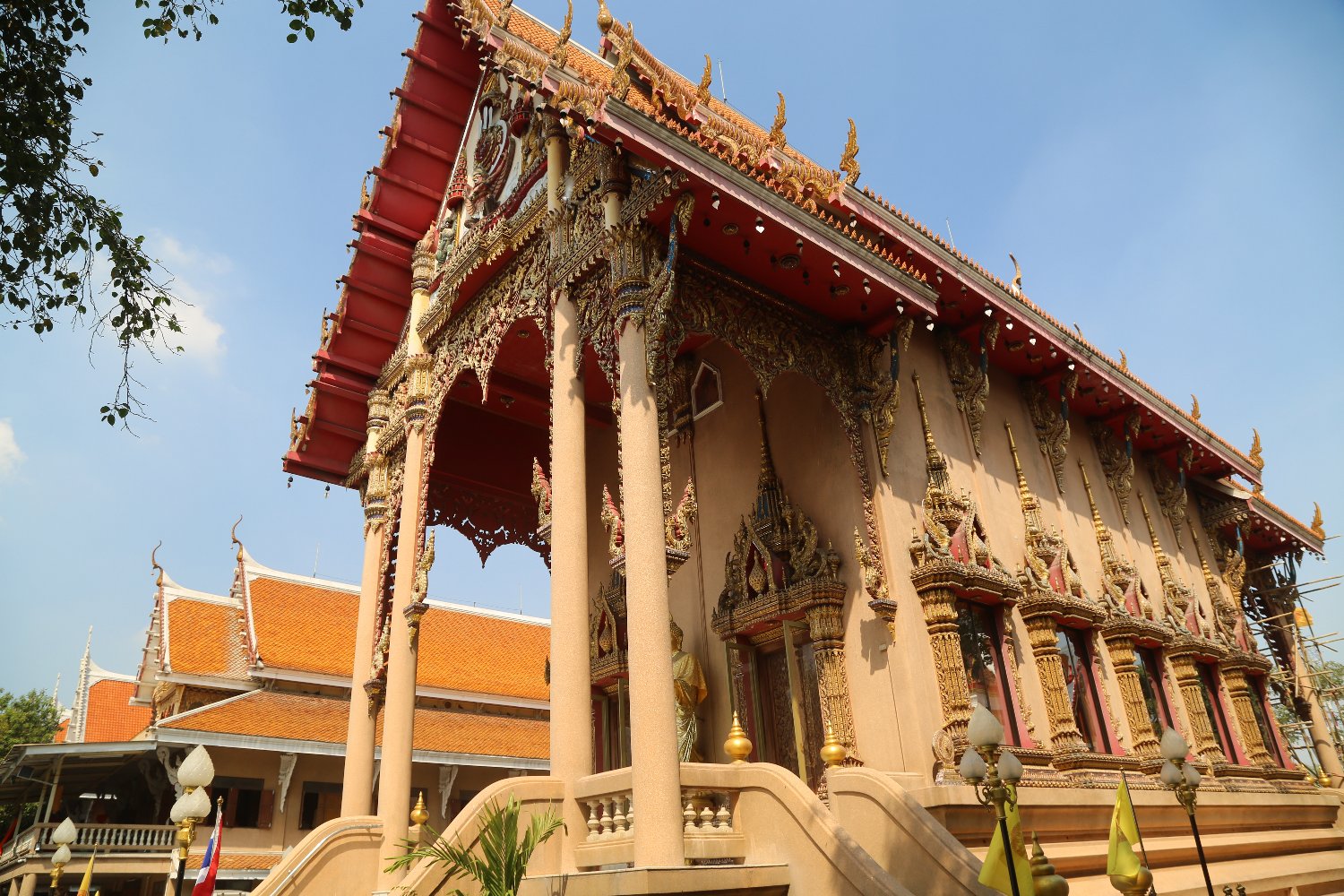
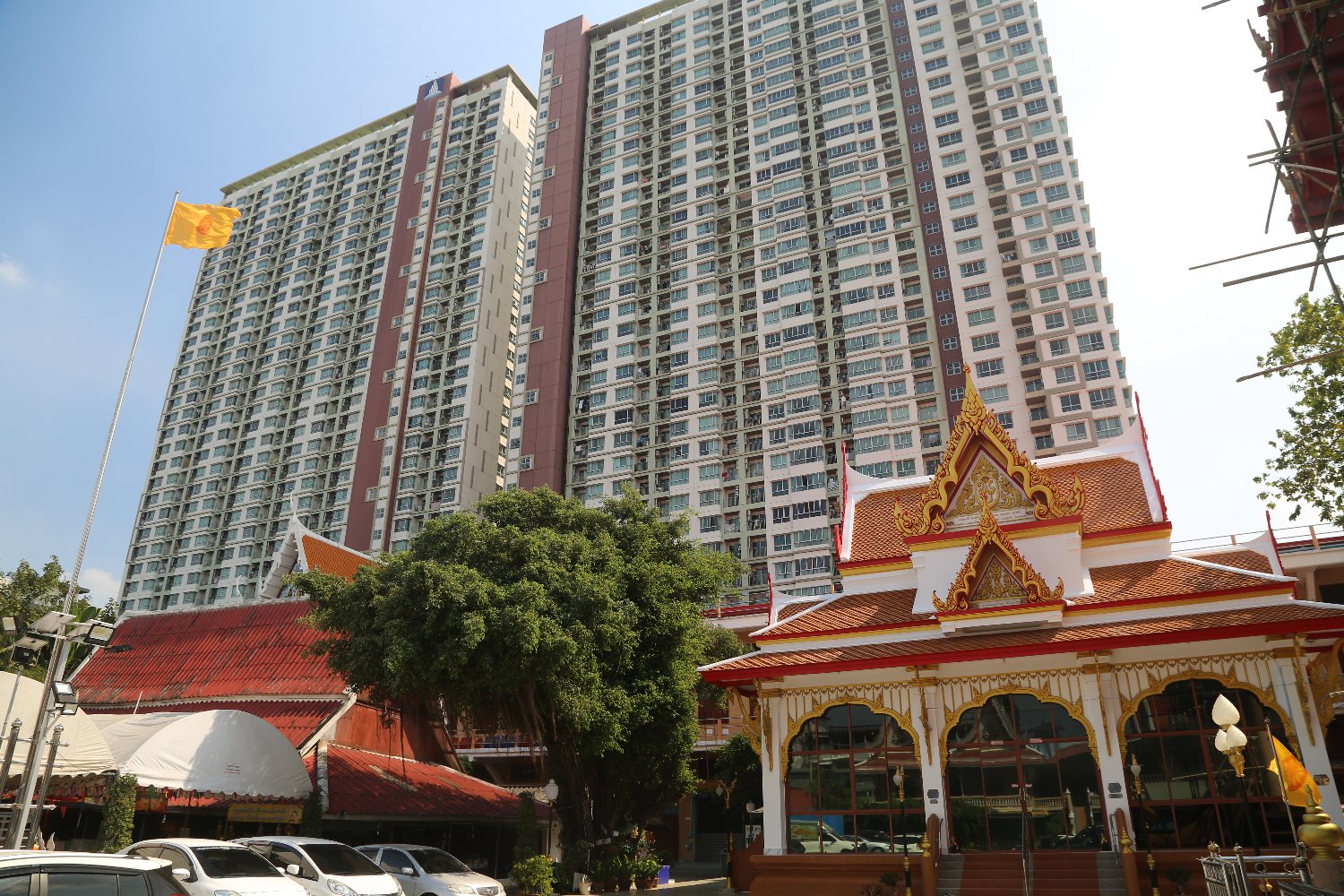
Wat Thong Thammachat is about a 10-minute walk from the Taksin Hospital not far from the King Rama I Bridge which crosses over the nearby Chao Praya River. The temple dates to the Ayutthaya period and was originally named Wat Thongbon. The temple has been restored several times during its history including by Rama I’s sister and her husband. The last major restoration was in 1915 – keeping the original shape of the temple. Eventually it was granted status as a Royal temple.
The temple is very well maintained and shows wonderfully on a bright blue sunny day. Features a well laid out brick tile courtyard surrounding the Ordination Hall.
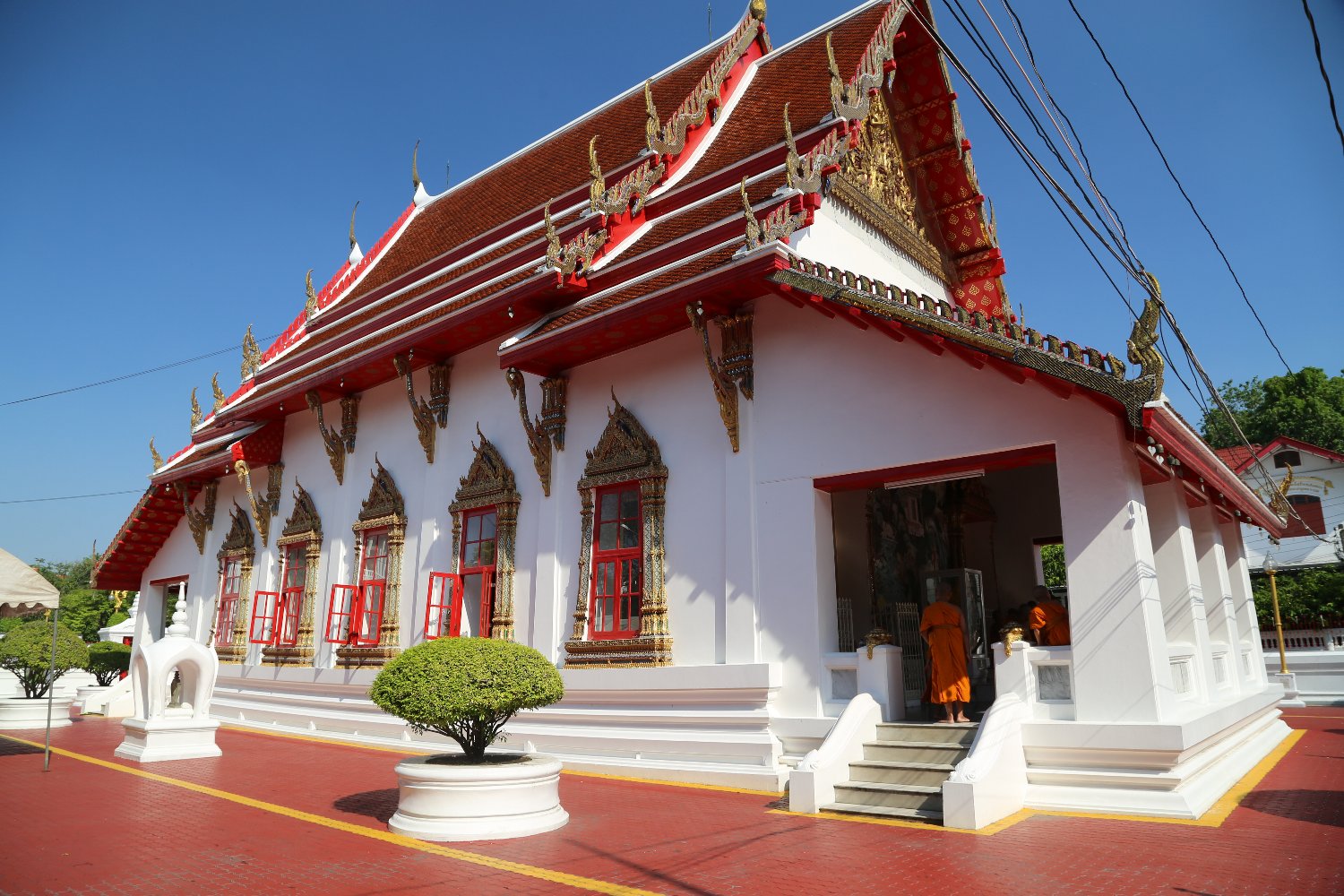
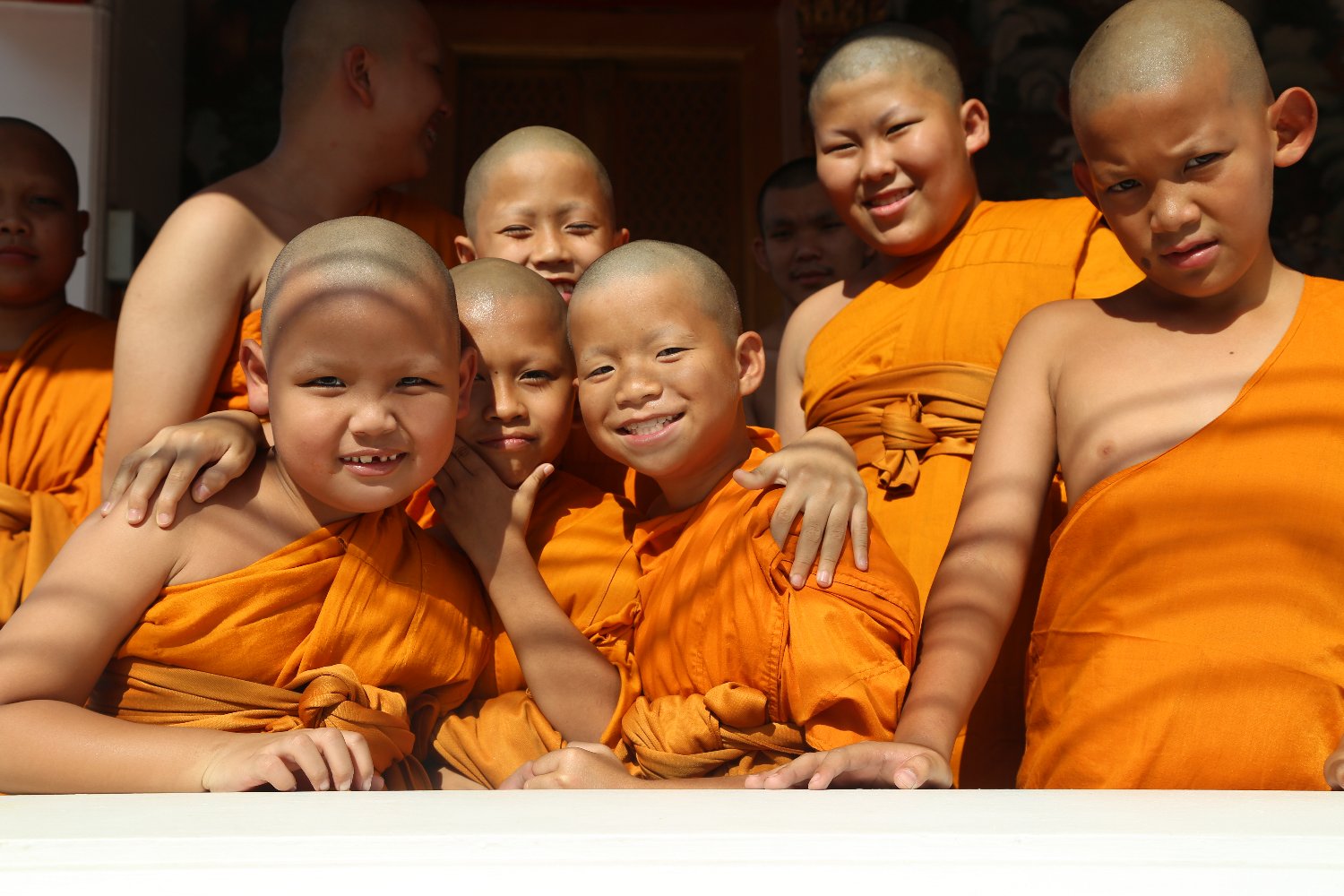


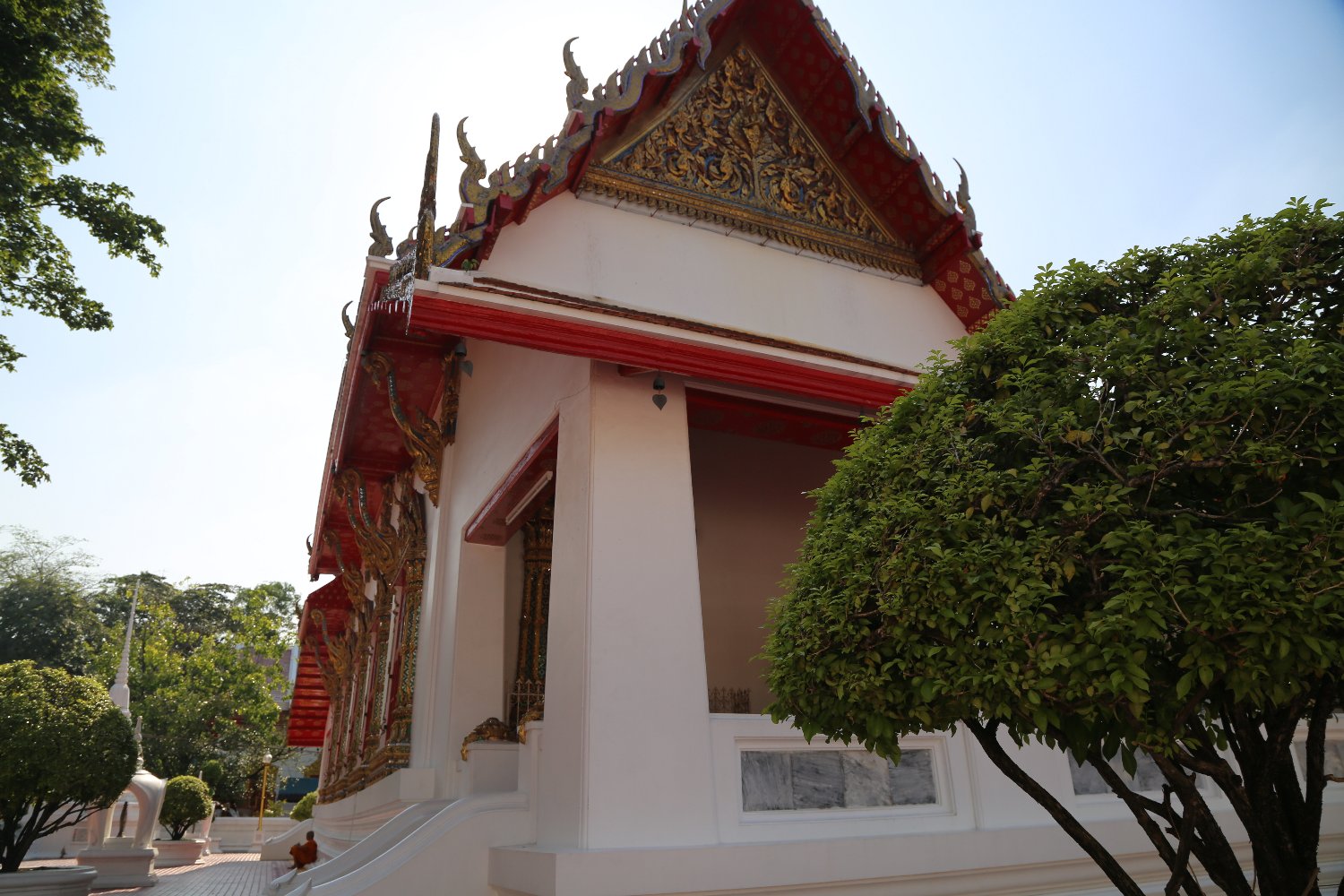
Wat Ton Sai is best accessed from the On Nut Skytrain stop. But the real cool access along with several other nearby temples is on foot or bicycle along the bike/pedestrian path the parallels the Phra Khanong Iam Sombat Market canal – and one can get off at the tiny stop along the canal; from here it is a very short walk to the temple with the back entrance directly facing the canal. The temple is small but features a number of colourful and intricately designed statues. The ubosot was closed at the time of our visit.


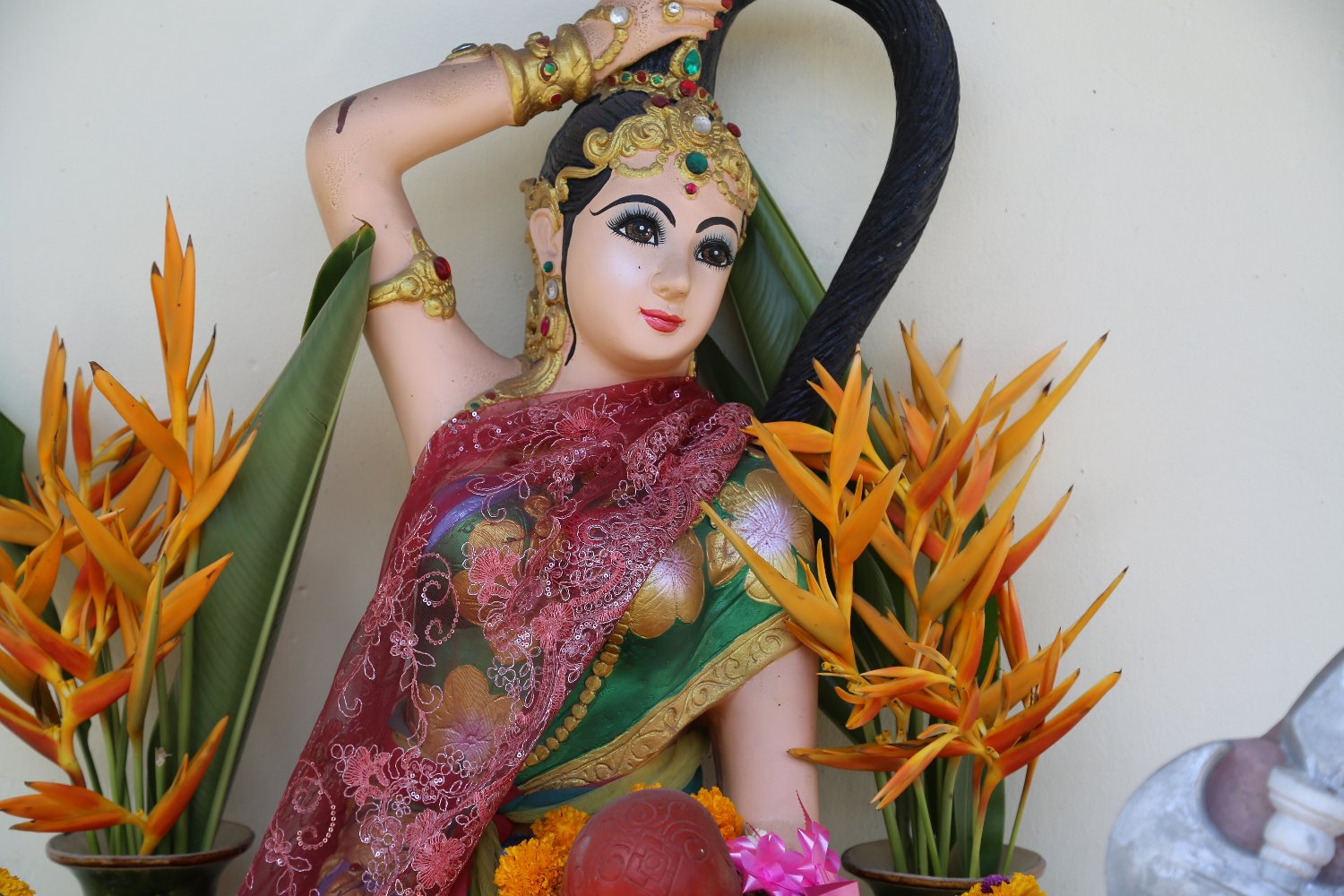

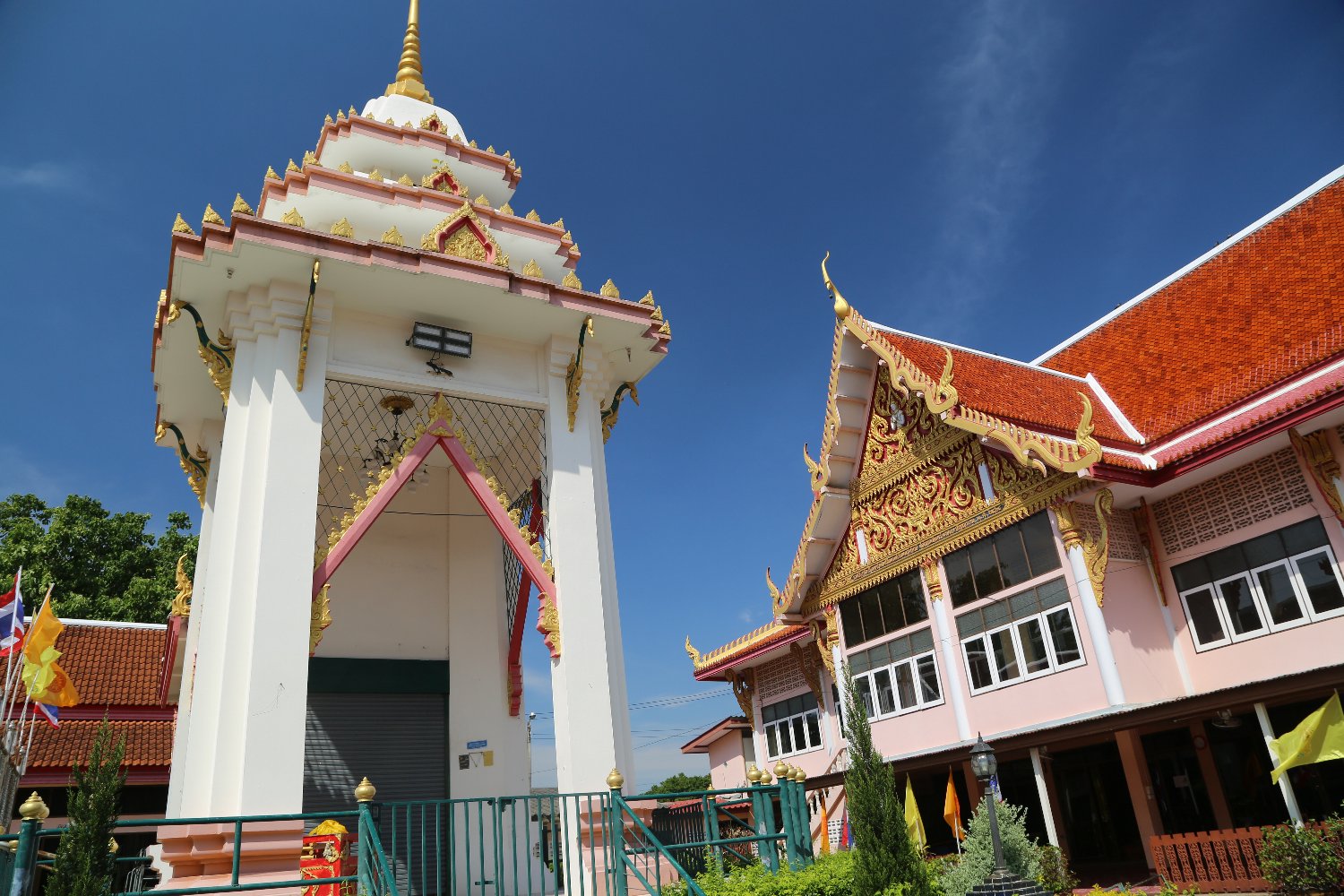

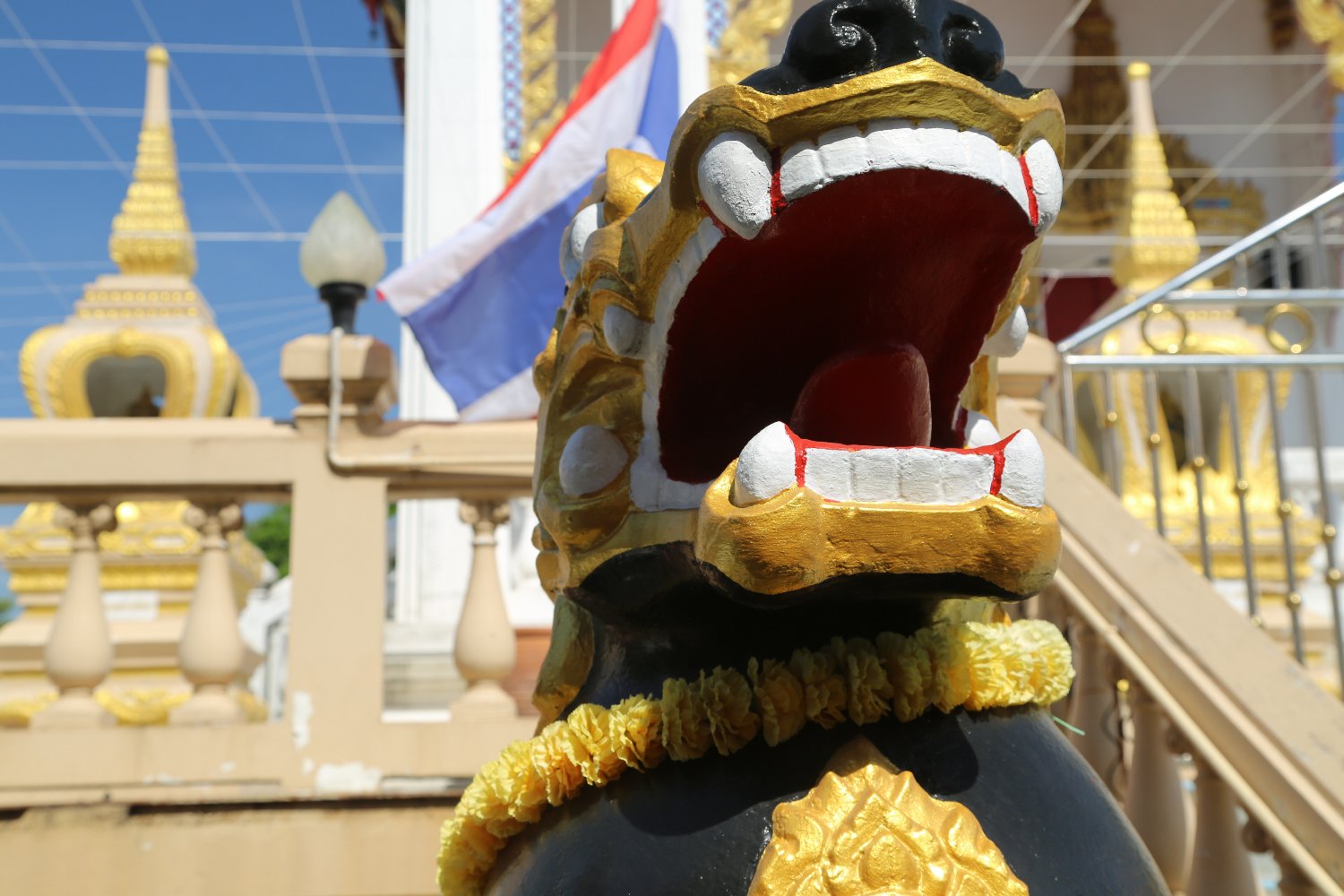
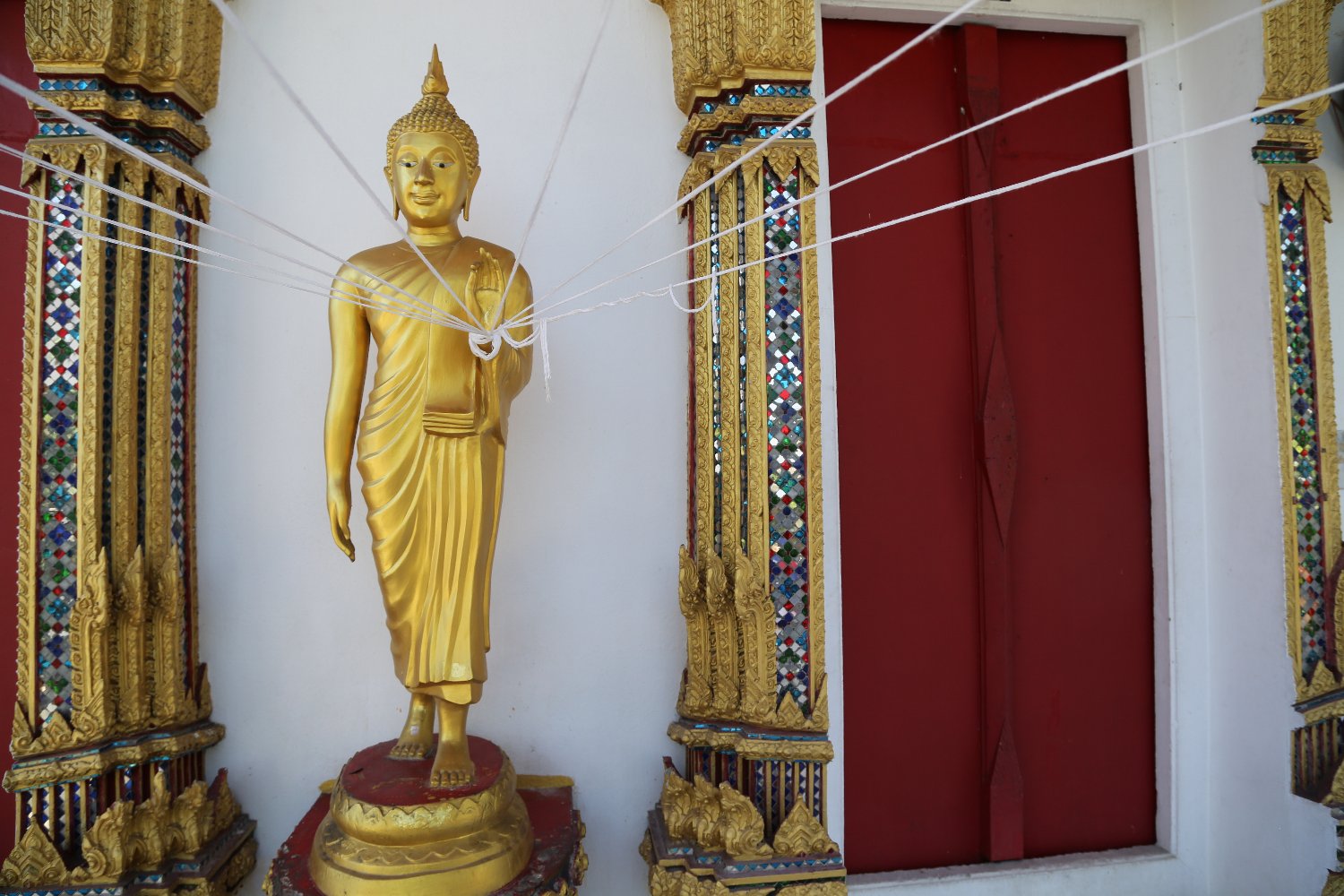
Wat Trai Trattanaram is located north of the center of Bangkok with public transportation access coming from the Mo Chit Skytrain stop near the Chatujak Weekend Market. Tiny temple, not a lot to see – the ubosot was closed during our visit.
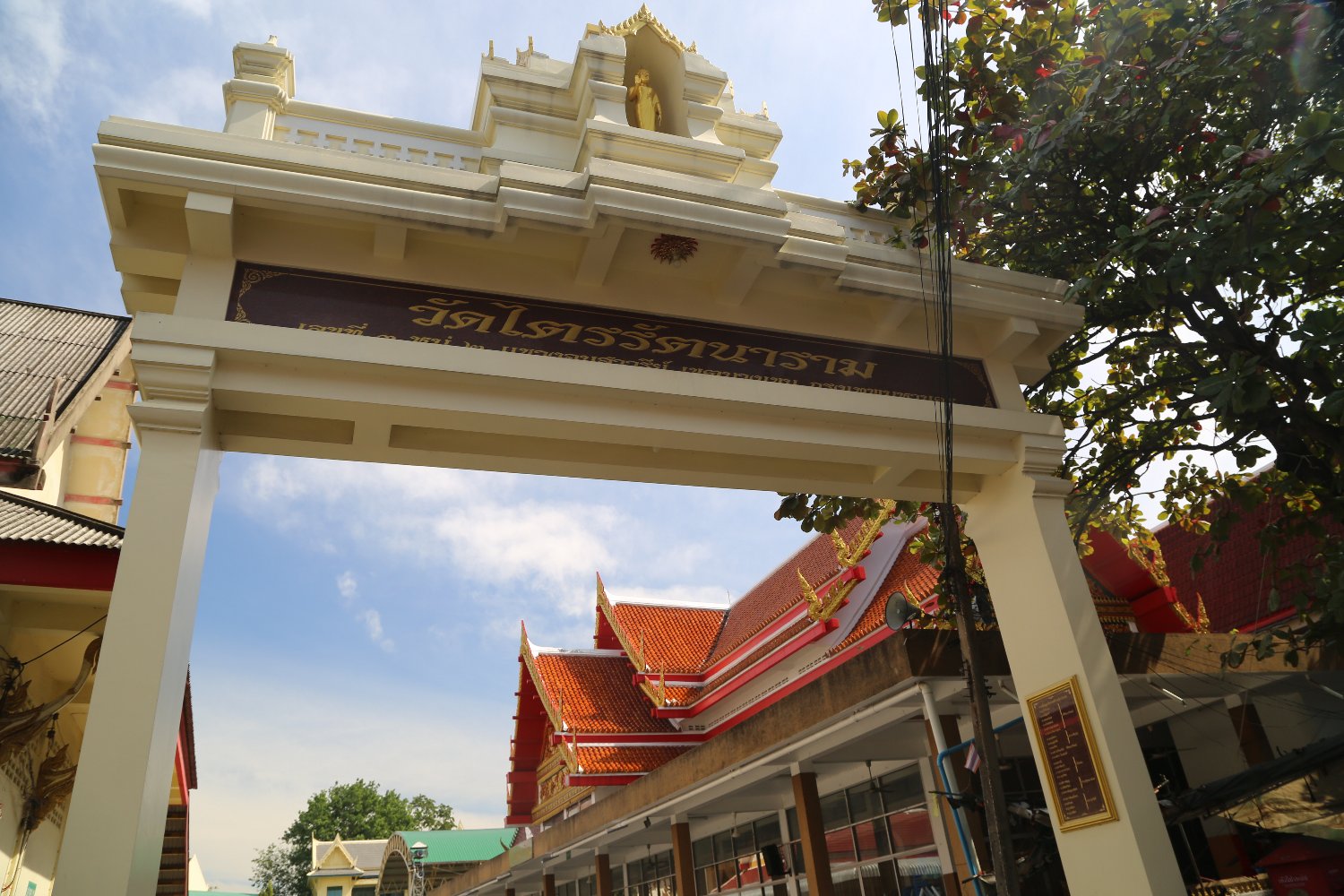
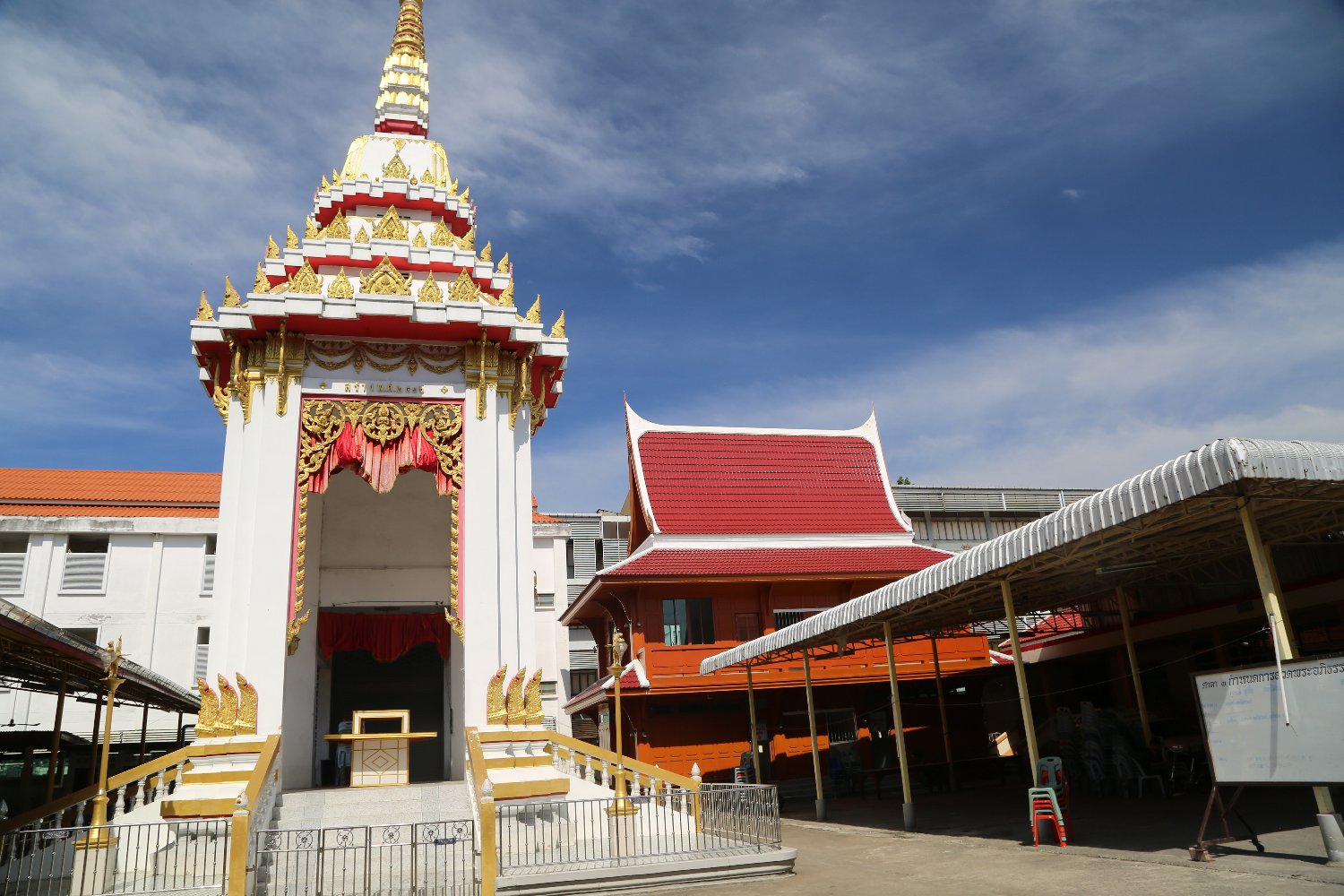
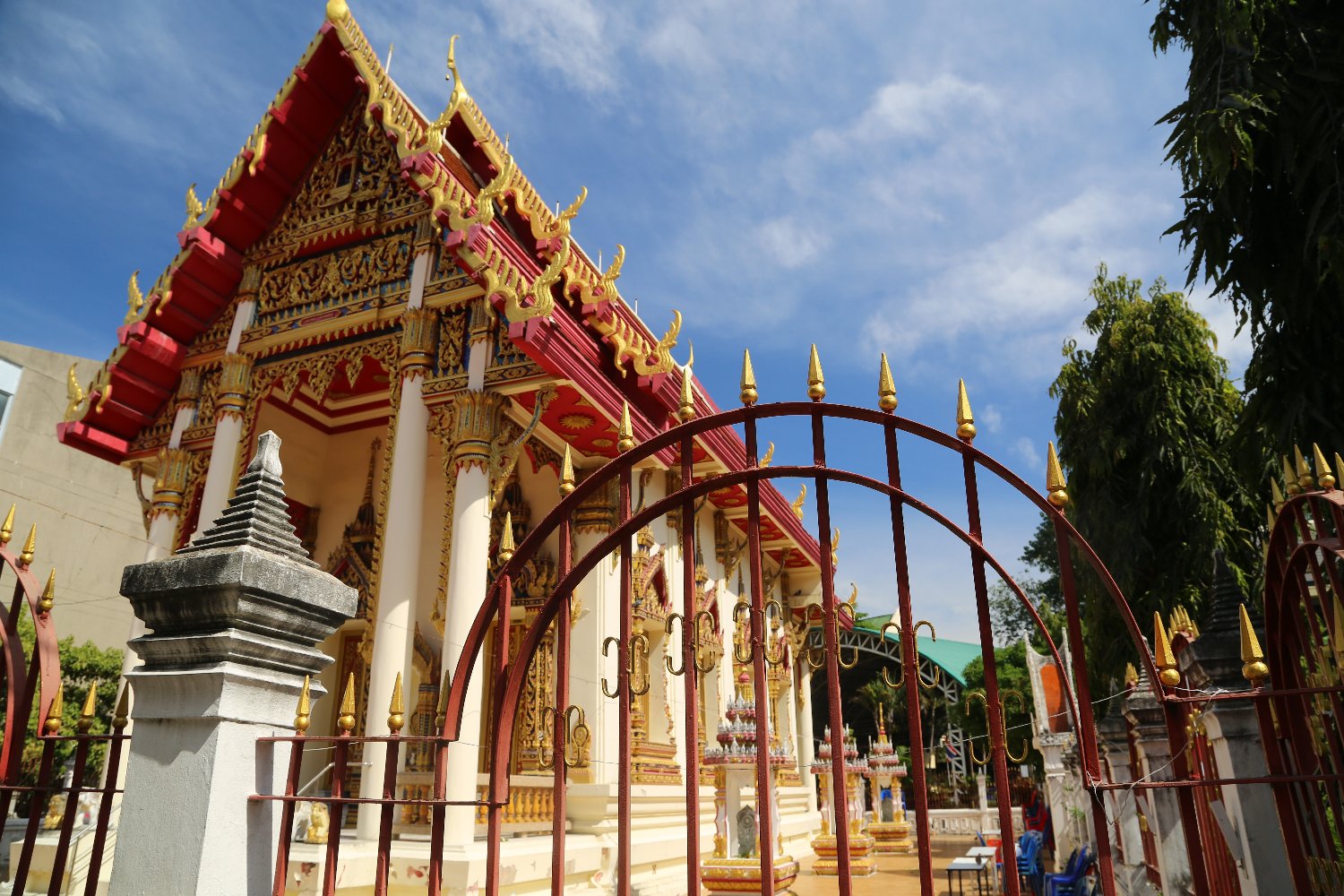
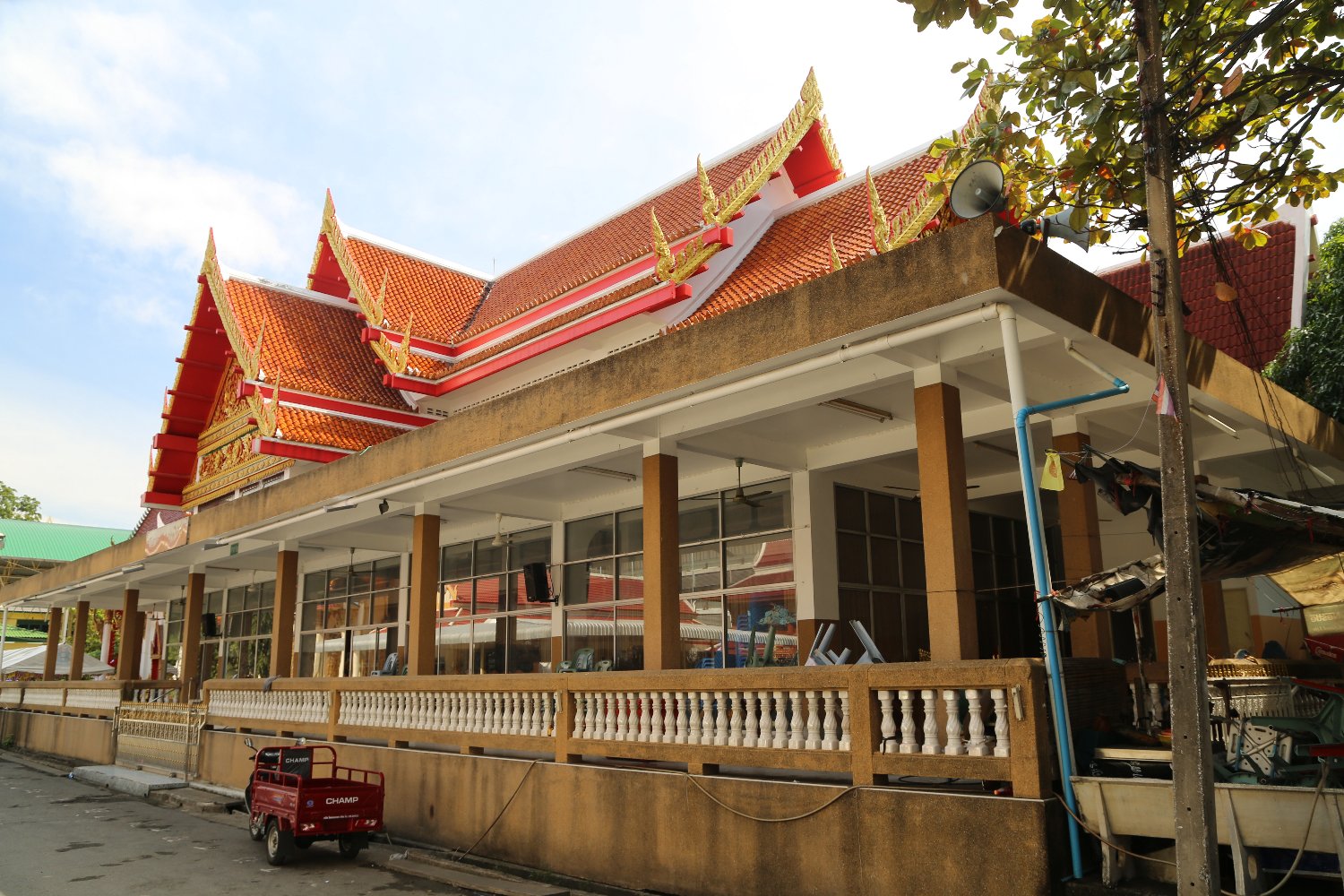

 Wat Traimit is home to The Golden Buddha, the world’s largest solid gold statue of a Buddha (somewhere between 700 and 800 years old). It weighs over 5.5 tons and is quite impressive. It was originally covered in plaster to conceal its true value from enemies invading Thailand many years ago. It is 15 feet tall and measures over 12 feet in diameter.
If it is crowded, you may need to hold up your camera over your head in order to get a decent photograph. And it most often is very crowded – this is a popular stop with buses and tour groups and as an independent traveler you most likely will have to weave your way through them to reach the ticket counter. Open daily from 8 until 5pm – we’ve been here soon after 8am on a weekday and it was already crazily crowded!
This wat is located close to the Hua Lampong Railway Station (the main train station in Bangkok). If you know where to look there are faucets and hoses just off some of the main paths leading into this wat – these are a good source for splashing cold water on one’s face and clothes.
Also notice the neat trees in which the branches are thin and cordlike and hang almost to the ground level. Several of the vendors have tied some of their goods to the ends of these branches. Be sure to pick up a free brochure which describes the history of this great stature. Estimated visit time 30 minutes

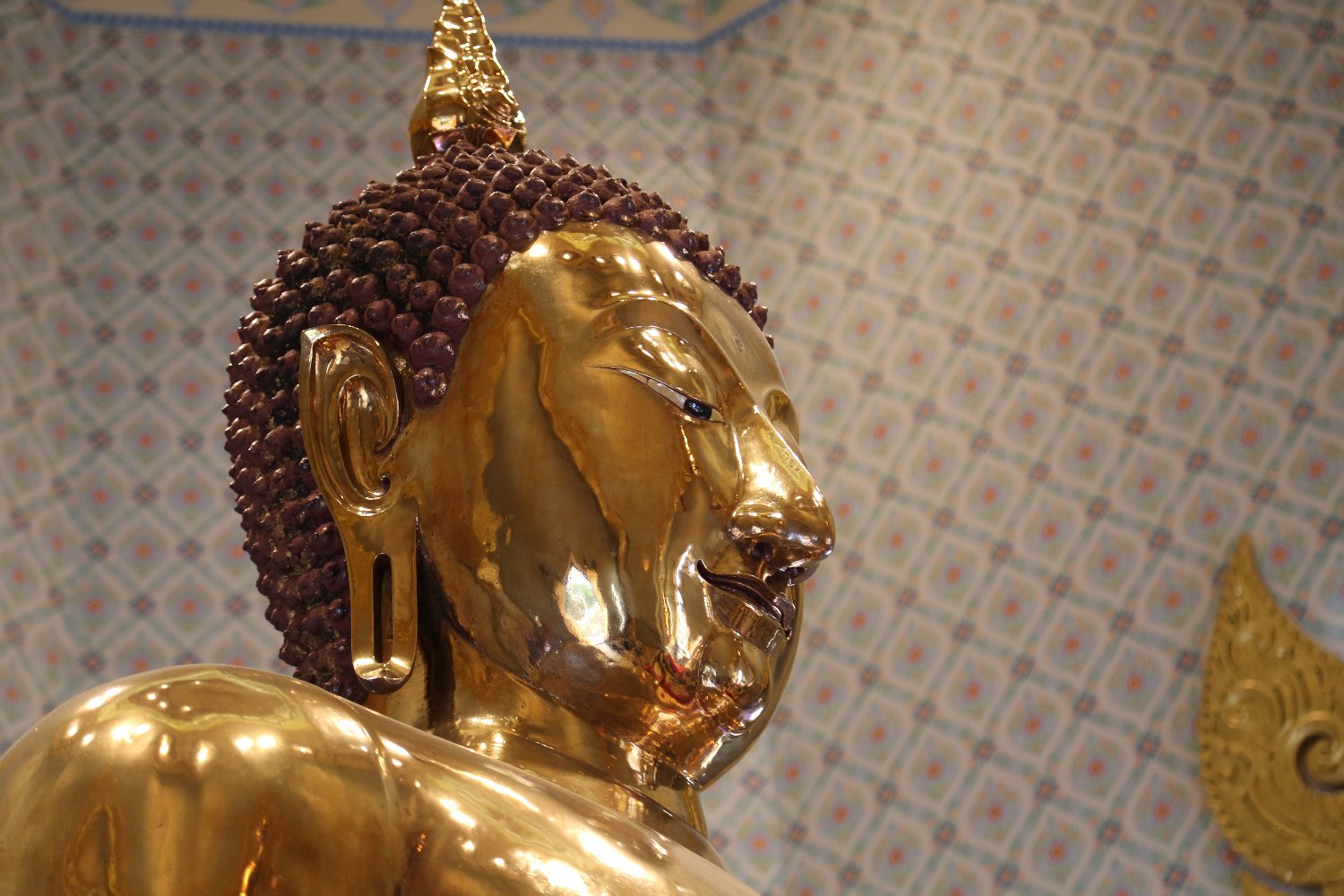


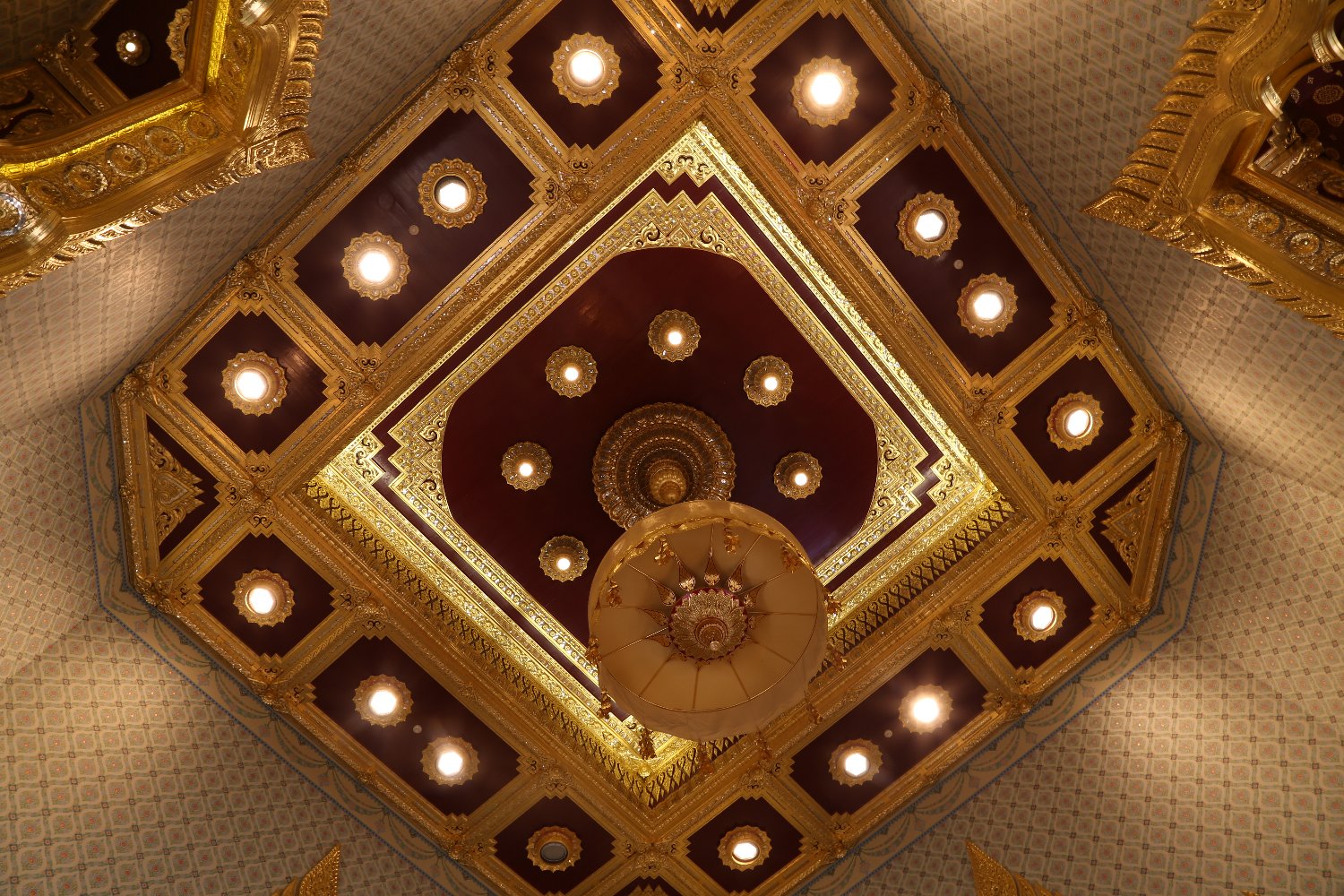
Wat Tri Thotsathep is about a 10–15-minute walk from the main part of Khao San Road. Worlds away in feel, this temple sits among very quiet Thai style old residential areas. Not a touristy temple at all – chances are you will be among the few foreigners visiting this temple. This temple was planned to be built several times by three members of the royal family but never came to fruition until King Rama IV had it built himself.
In English its name translates to “built by three gods” in homage those in the royal family who conceived and or worked on building this.
Highly recommended are the interior of the buildings with their detailed, hand-painted and very colorful murals many of which have been recently restored.
We have been told by one of our readers, that this wat is very popular for funerals of government officials, police, and military people.
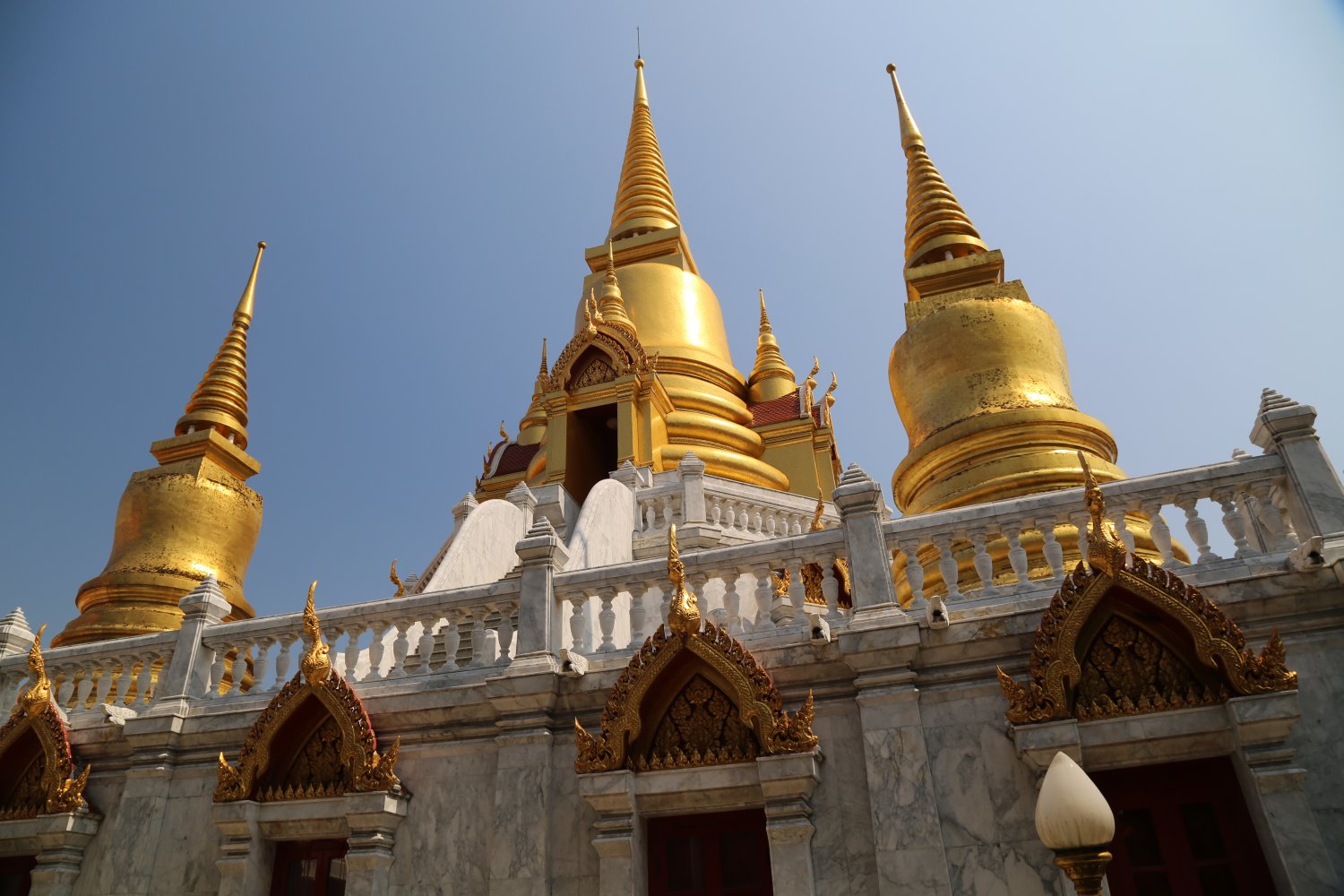

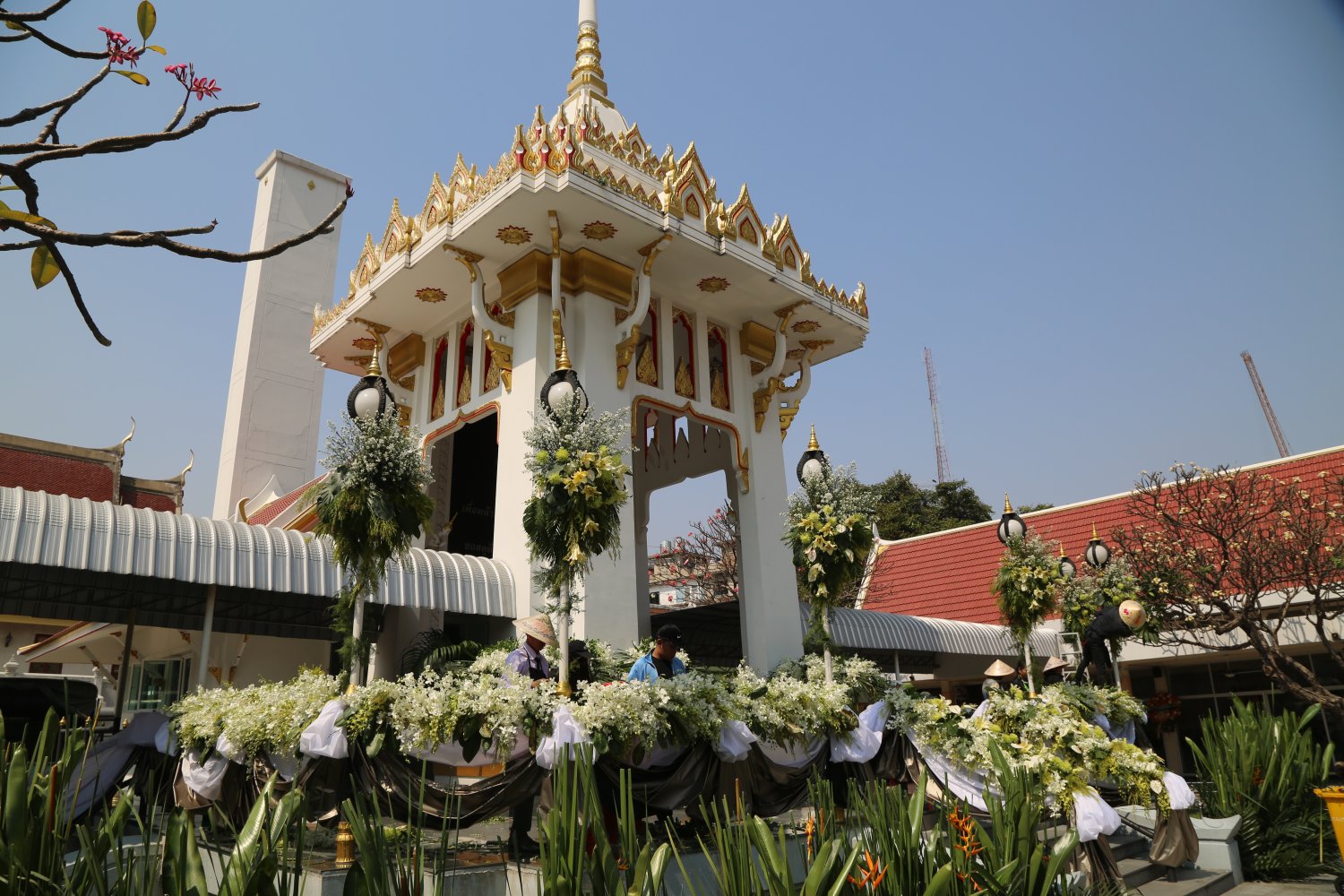
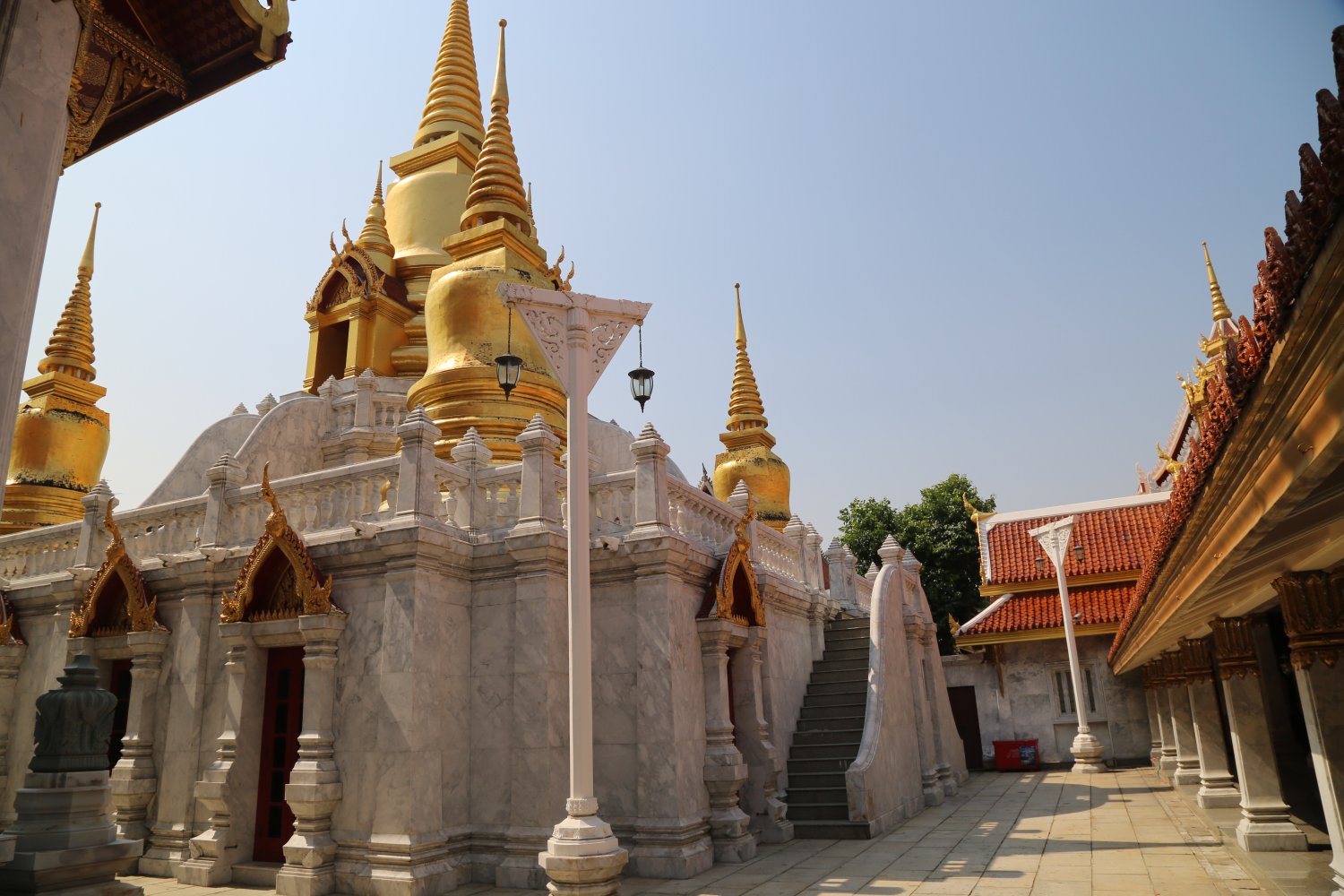


Wat Uthai Tharam is a small temple located about a 12-minute walk from the Phetchaburi Metro stop. Often called the Bang Kapi Temple due to its location along the Bang Kapi Canal. This ancient temple was restored in the Ayutthaya period. Later this temple was expanded, and a larger pagoda was created. A number of valuable and treasured objects are located in the pagoda. During World War II nearby bombing caused the Chedi to collapse. Today the large golden chedi is an obvious landmark on the temple grounds.
Worth spending some time walking the grounds to see the colorful buildings including the Ubosut building, and several Buddha statues housed under an open-air roof.

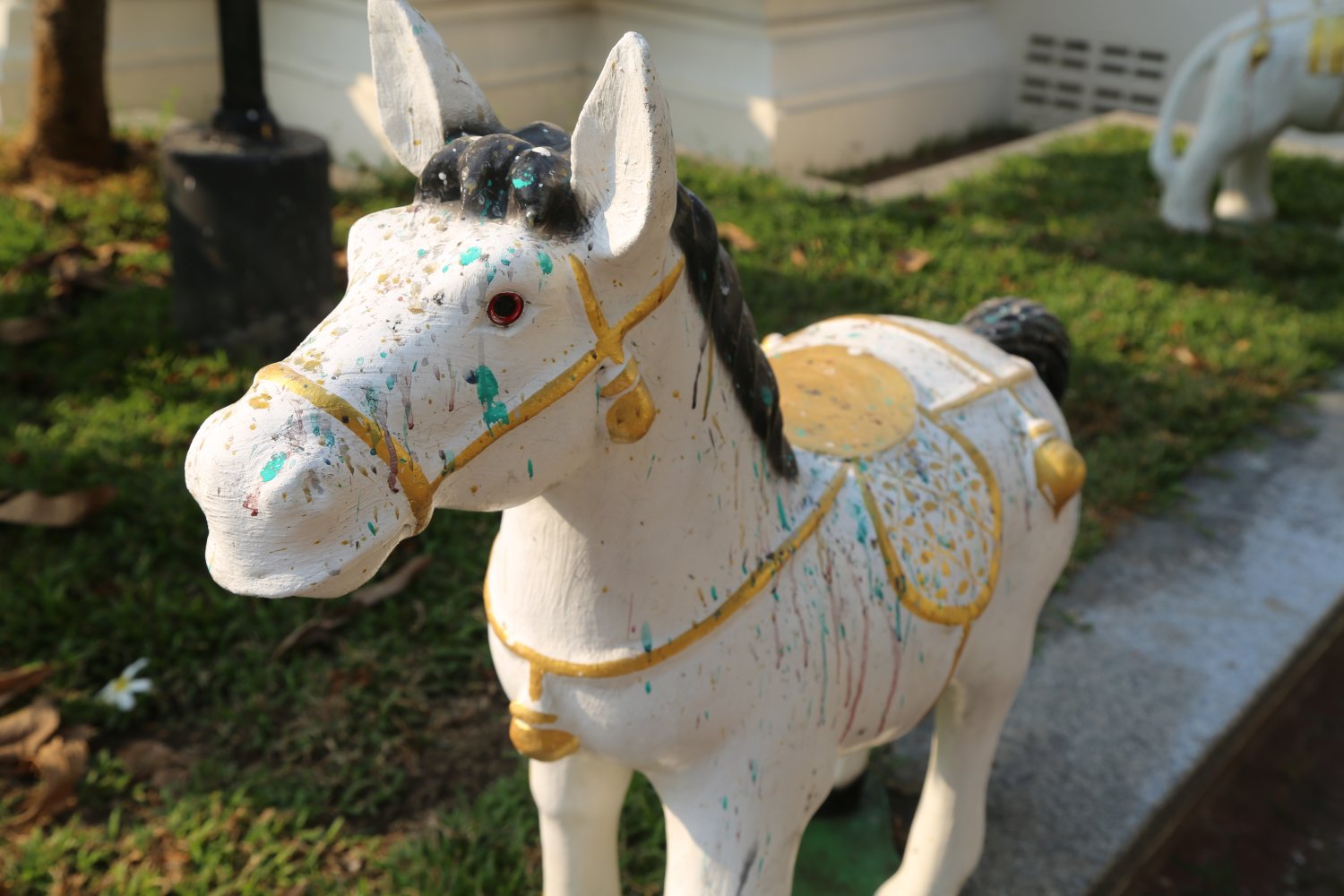


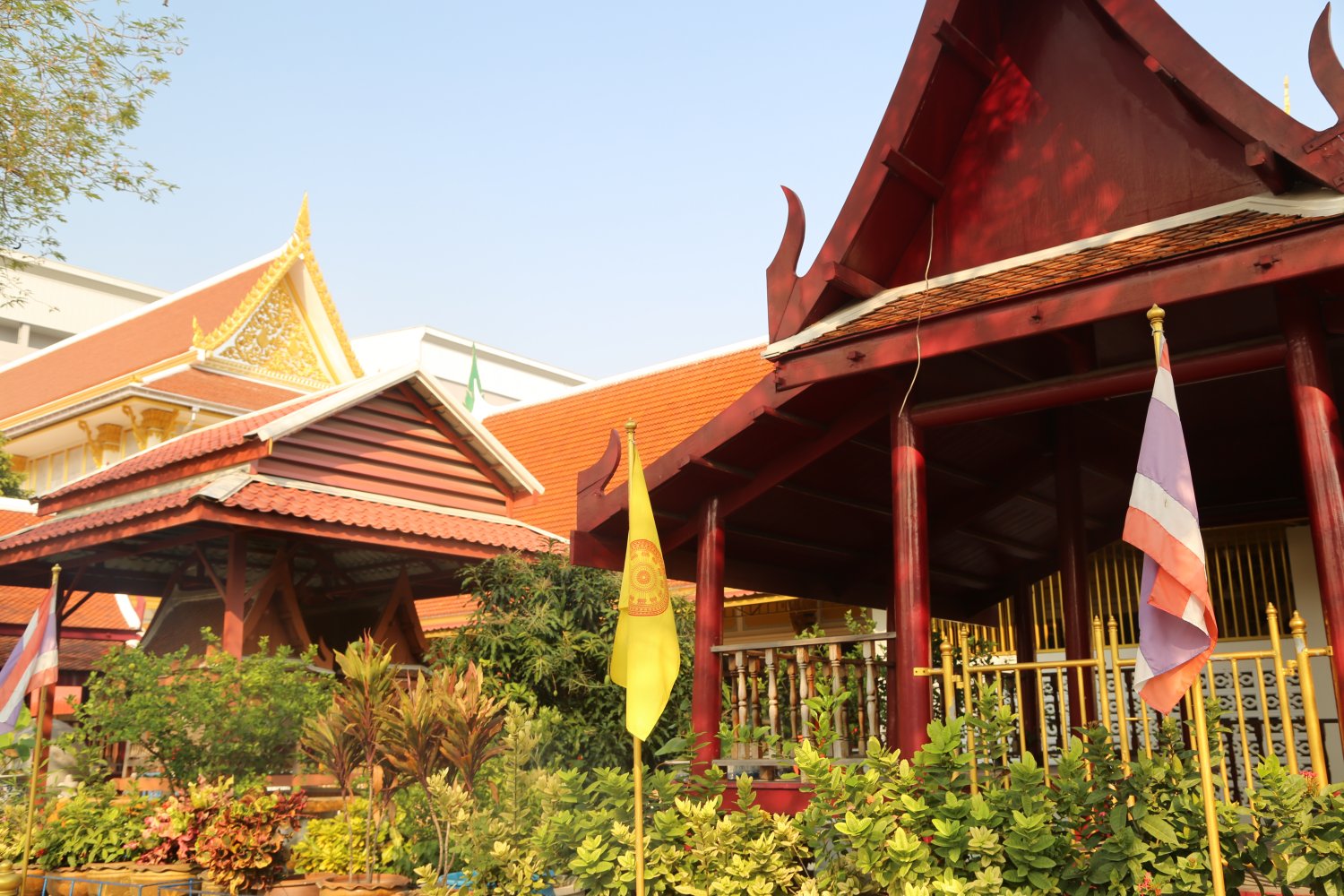


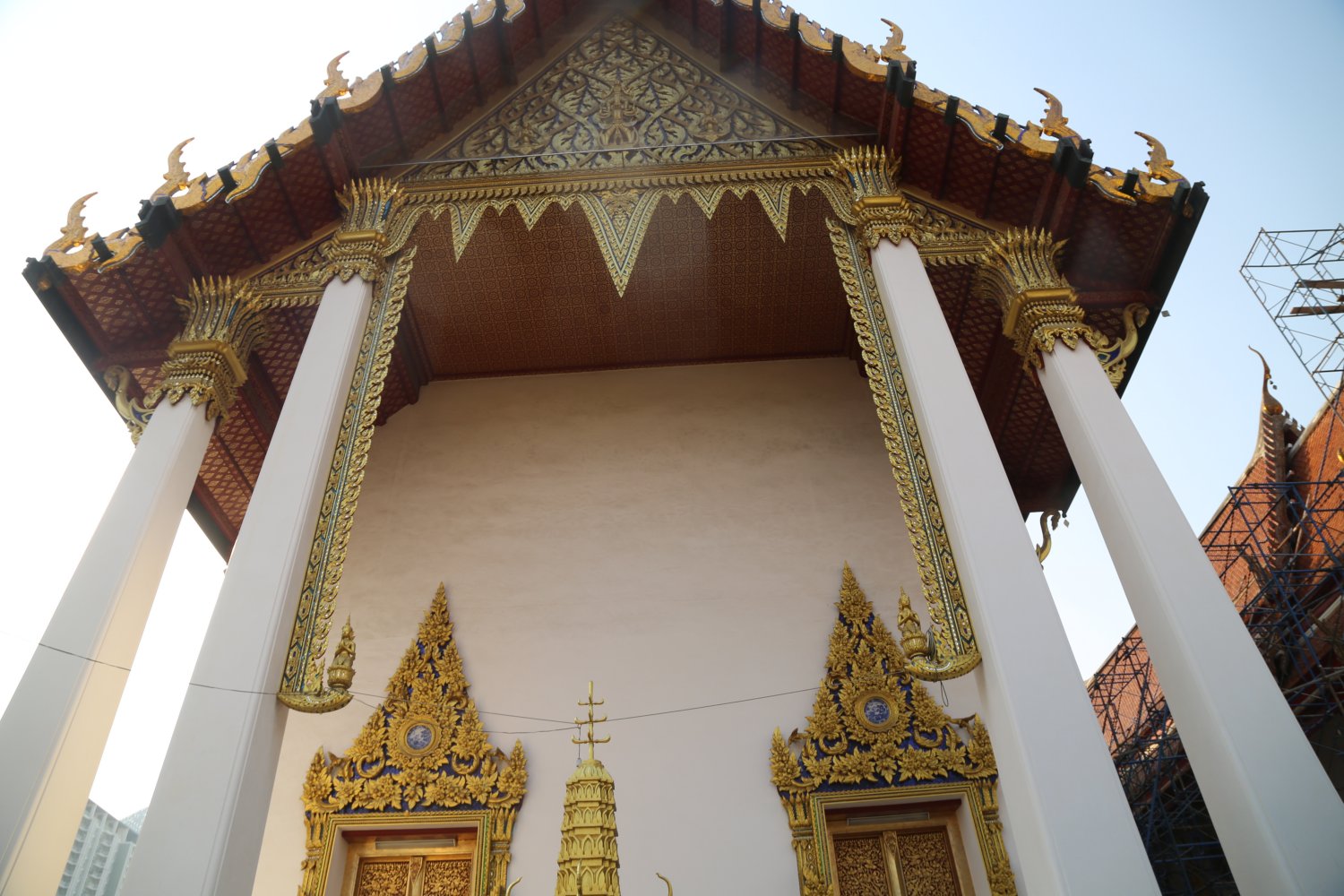


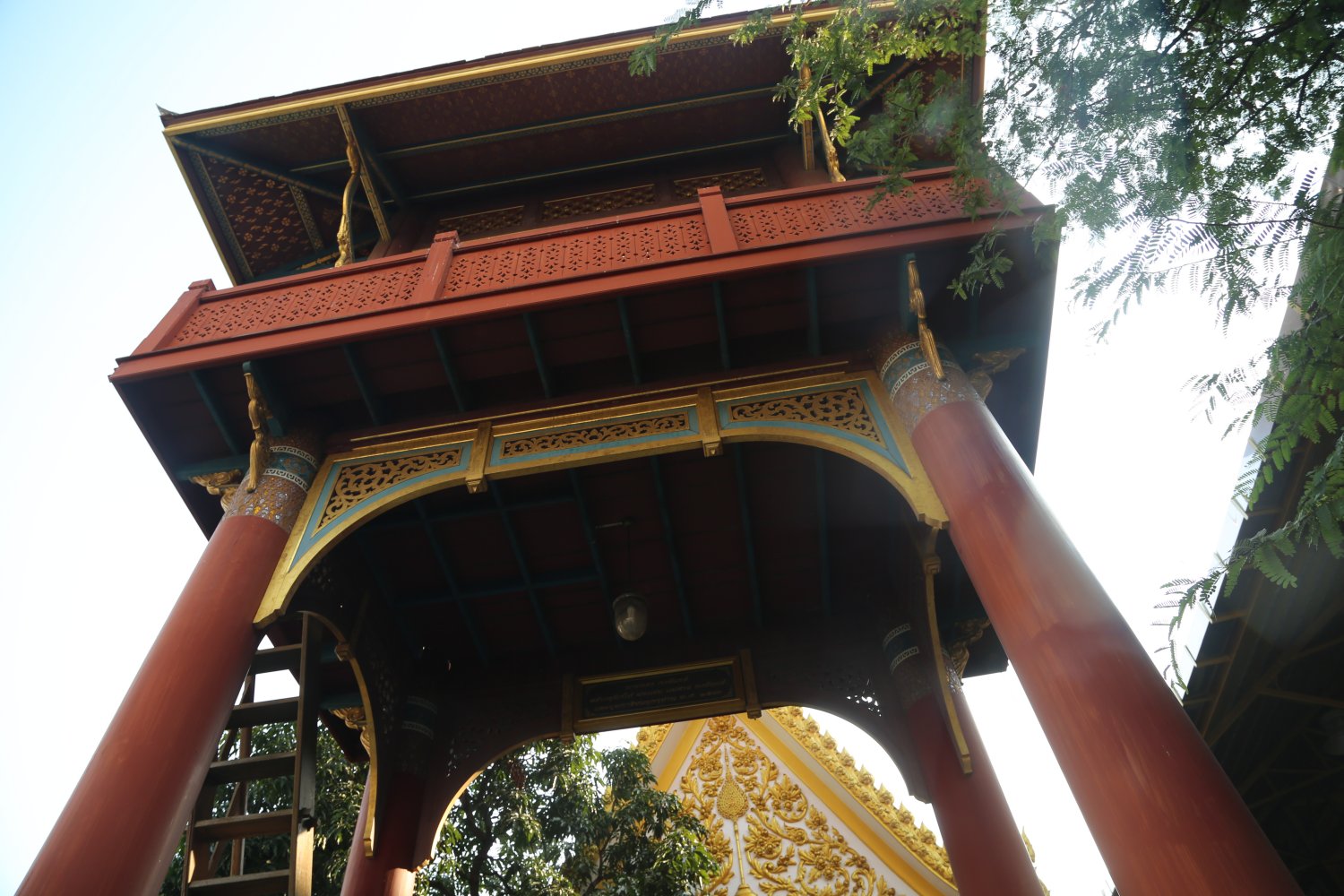
Wat Wachiratham Sathit Worawihan accessible via the Bang Chak or Punnawithi Skytrain stops along the Sukhumvit line – grab a taxi from the bottom of either of these skytrain stops or for the more adventurous, flag down one of the motorcycle taxis. With so many small temples that in town all of which present limited appeal for most tourists – it is always a pleasant surprise when we stumble into a temple that exceeds our expectations.
Well worth a visit – highly recommend for those wanting a much off the beaten path temple experience with grounds that feature a number of intriguing sights – as well as being a highly photogenic temple. The temple was built in 1965 by a Laotian who moved here from Vientiane. The stupa contains relics of Buddha along with two gold Buddha images.
Not all temples have accessible bathrooms – the ones here are standalone small buildings and are located towards the back of the temple. A koi pond on site as well as a section for fenced off cows (grazing on dried grass at the time of our visit).
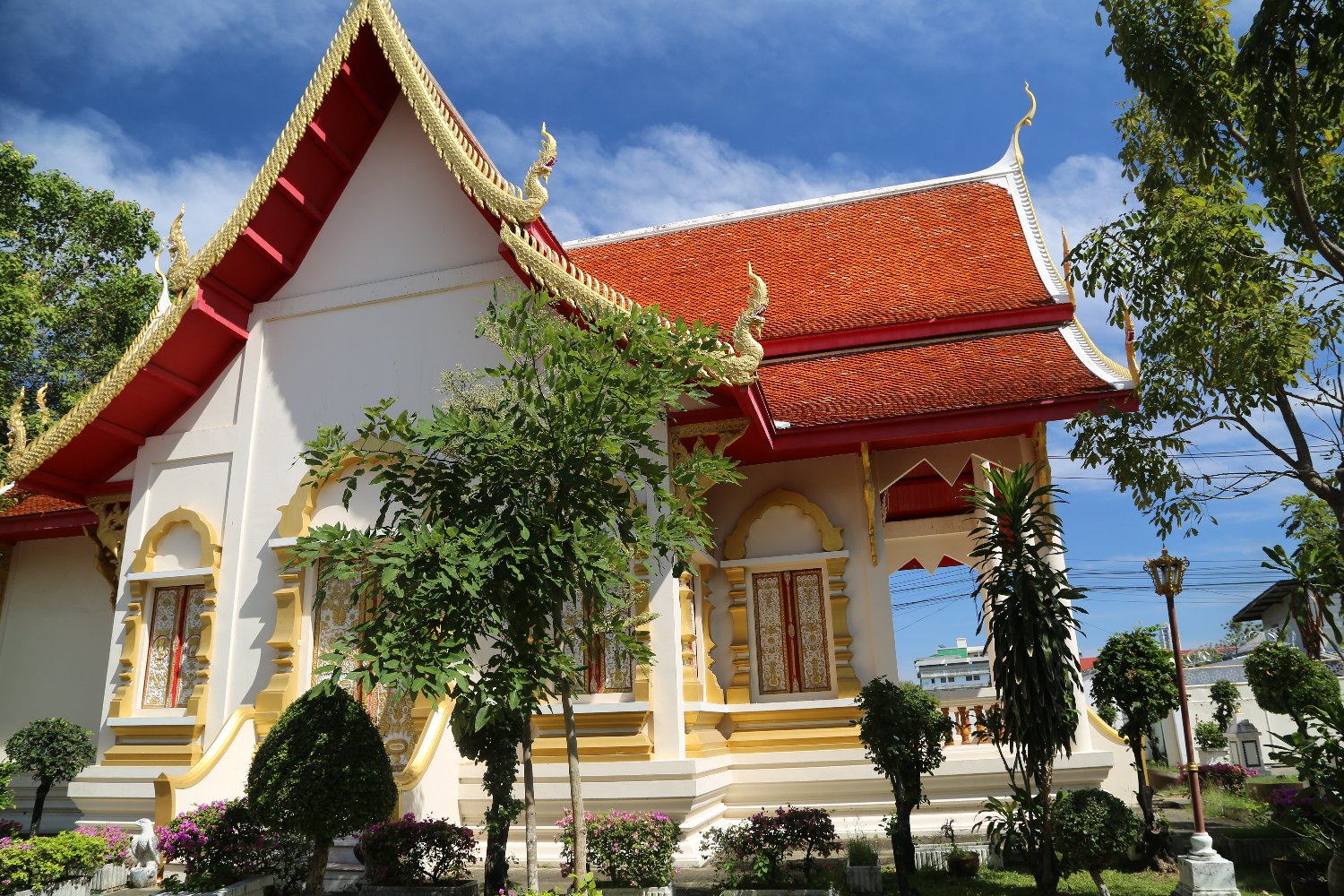


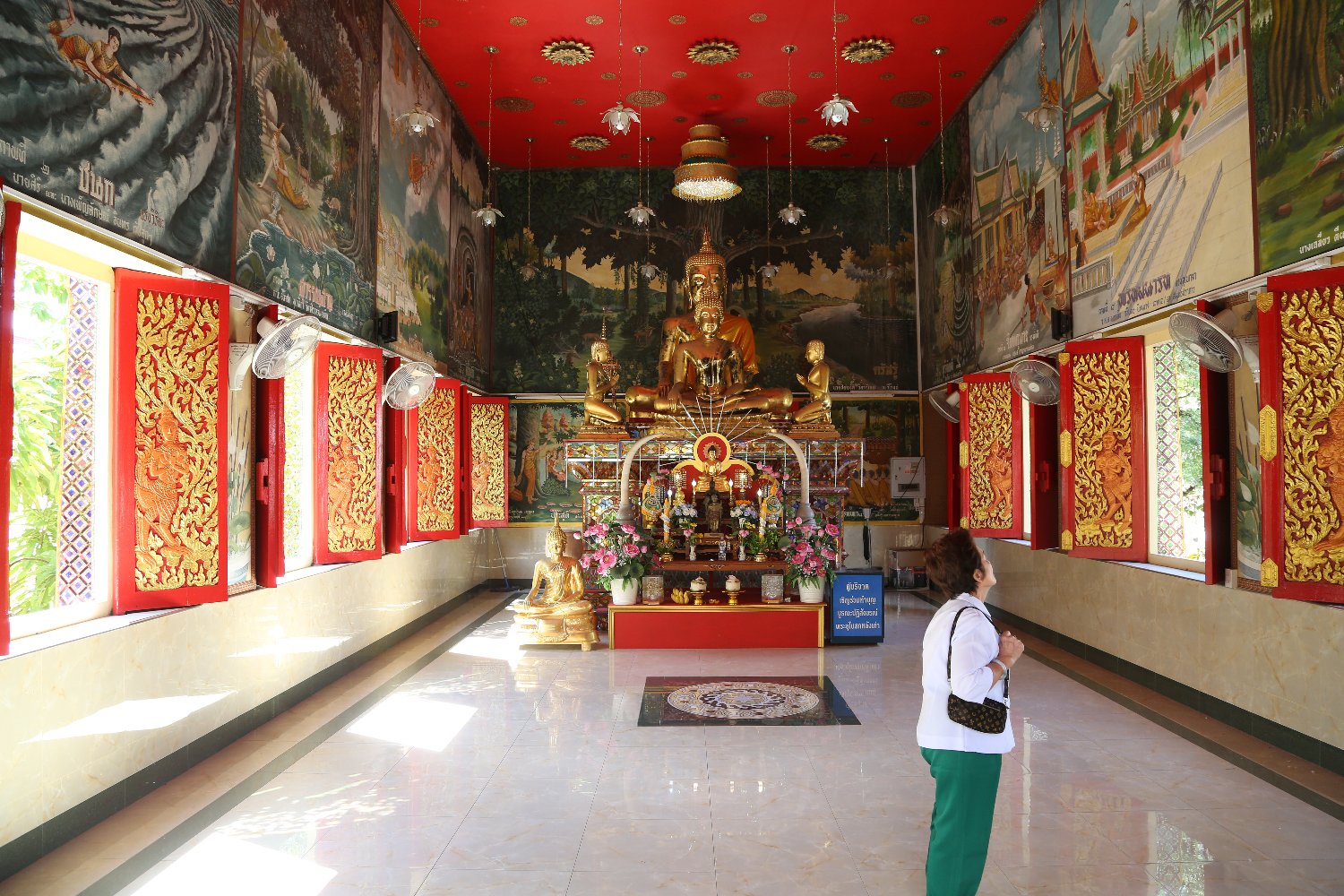


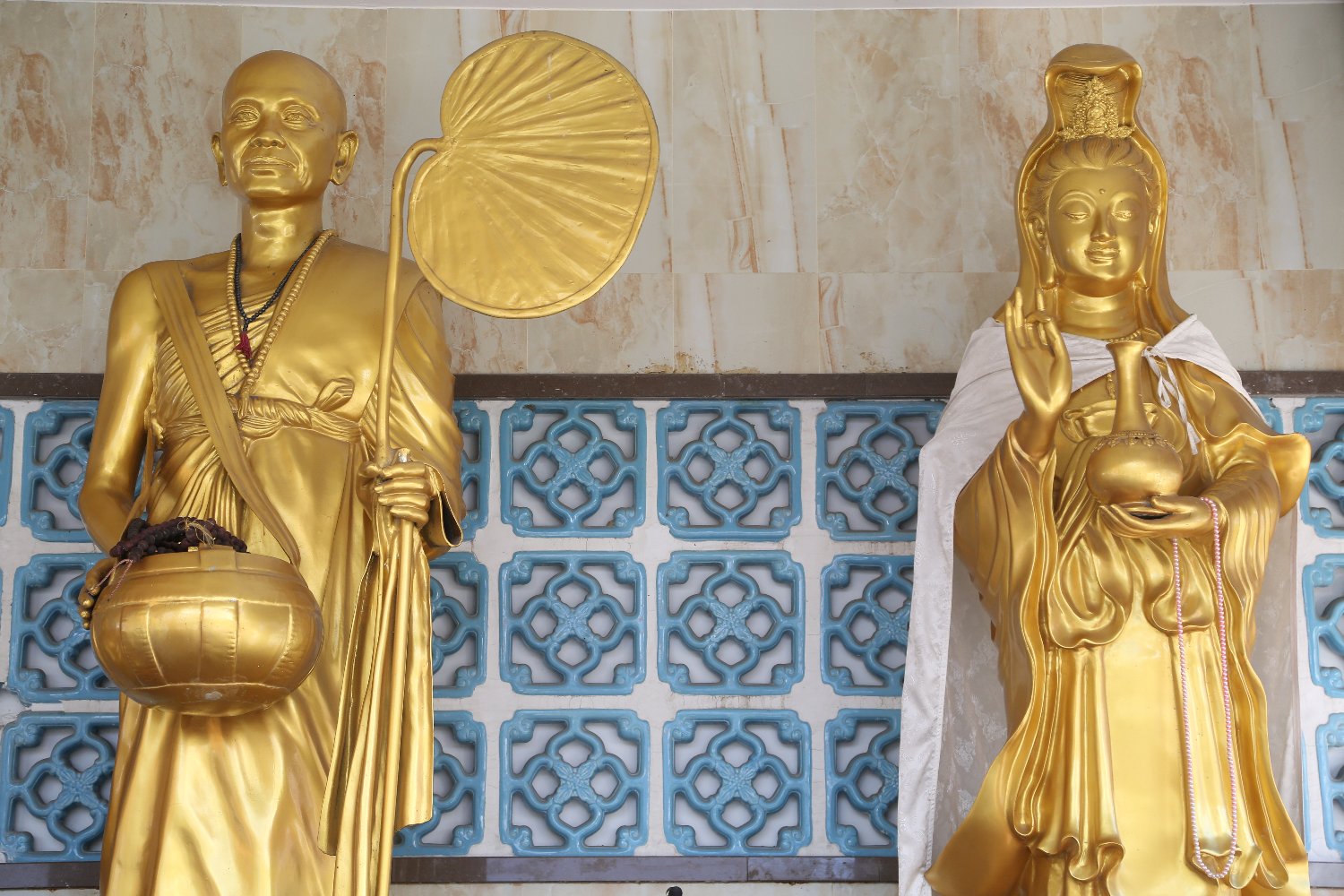


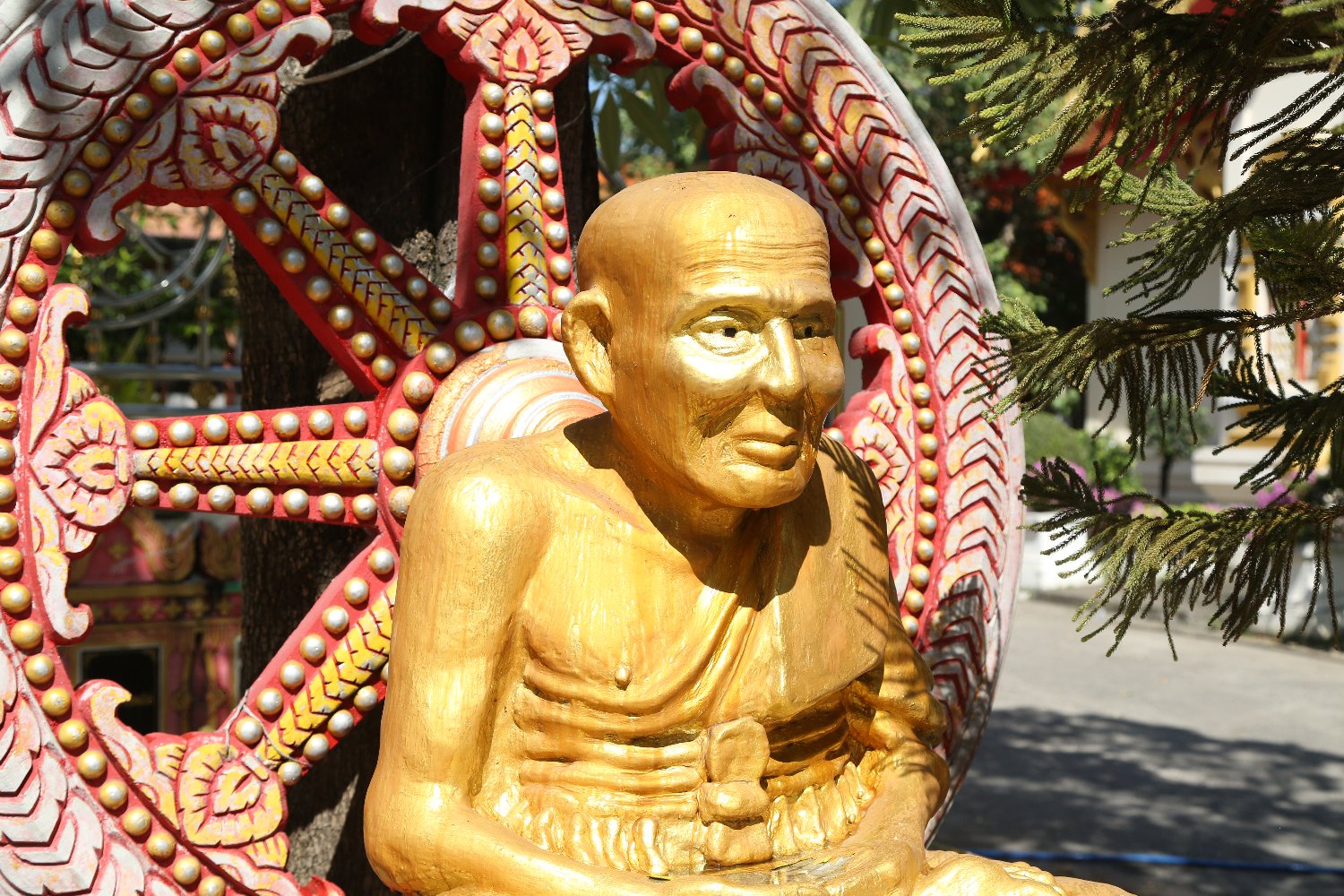


Wat Werurachin is located along the banks of the Bangkok Yai canal north of Pho Nimit, the closest Skytrain stop. This temple was constructed during the reign of King Rama III (in the early to mid 1800’s) and was named Wat Mai Thongkhung after a bend in the canal. Was once a Royal temple. Money for the temple came from taxes on bamboo.
Like many old temples in Bangkok, this temple has been restored a number of times. Very picturesque highlights include the bell tower – which if you are here in the early morning or late afternoon you can watch a monk climb up to the bell and start ringing it. Also features a very tall white Chedi with a ladder leading all the way to the top (we haven’t often seen ladders on Chedis).
This temple is also well-known for its hand painted murals. Well worth a visit for those seeking a beautiful off the beaten path temple.


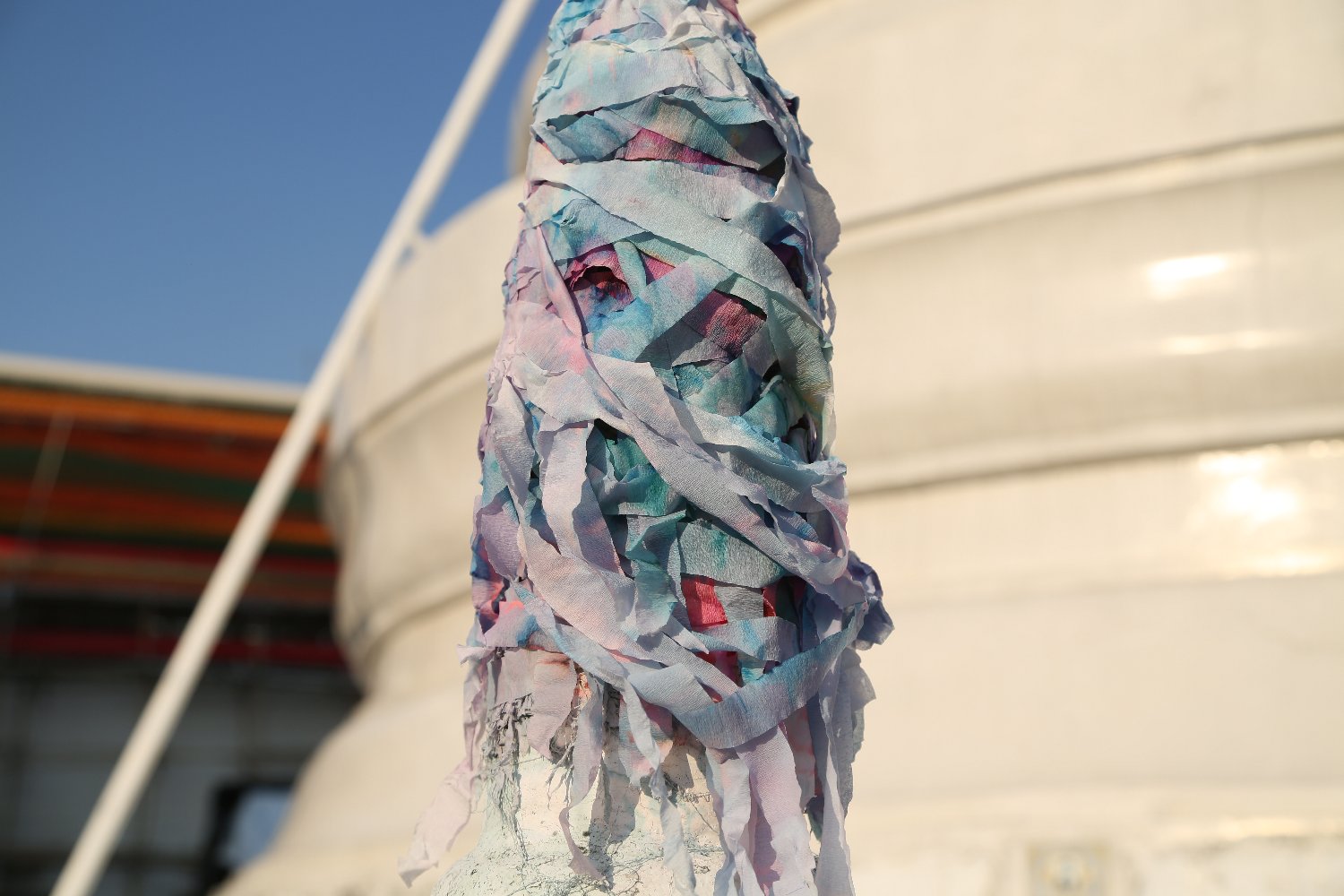

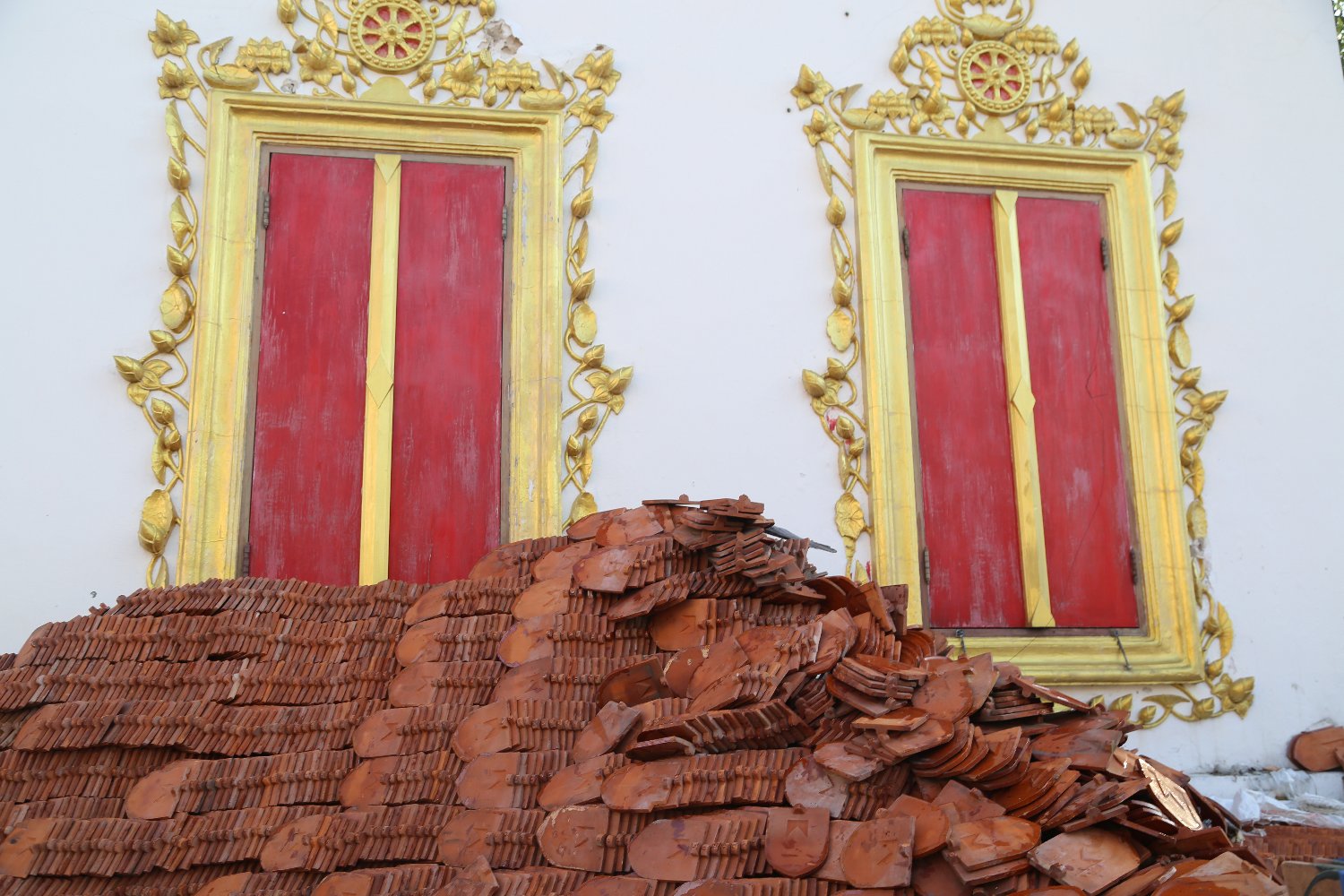

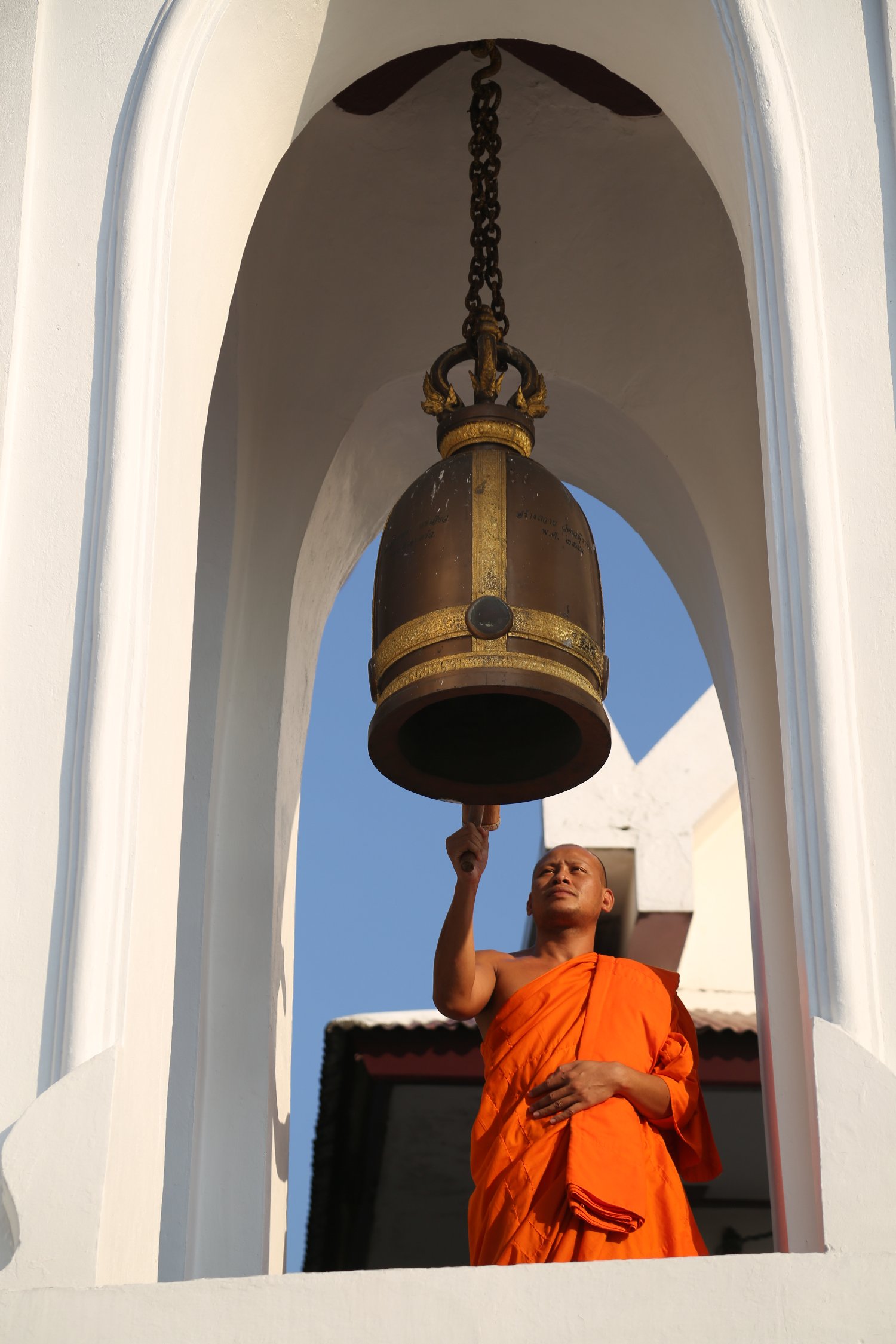

Wat Yang is a very photogenic small temple located off of a small soi on On Nut Road (accessible via the On Nut Skytrain stop). Take advantage of this temple’s location along the Phra Khanong canal and access it from the backside via the canal – a stop brings one within a very close walk along the concrete walkway which parallels the canal.
This temple was built in 1851 – the name of the founder has long since been lost. It was constructed on a vegetable garden and fishery – the land was donated by large local plantation owner. This temple formerly was known as Wat Yung earning its legal temple status in 1857.
This temple also contains rows of apertures, spaces built within a wall containing the bones and ashes of the cremated dead. Visitors can ring the bell and or the gong on site. Plan to spend some quality time here exploring all the nooks and crannies.


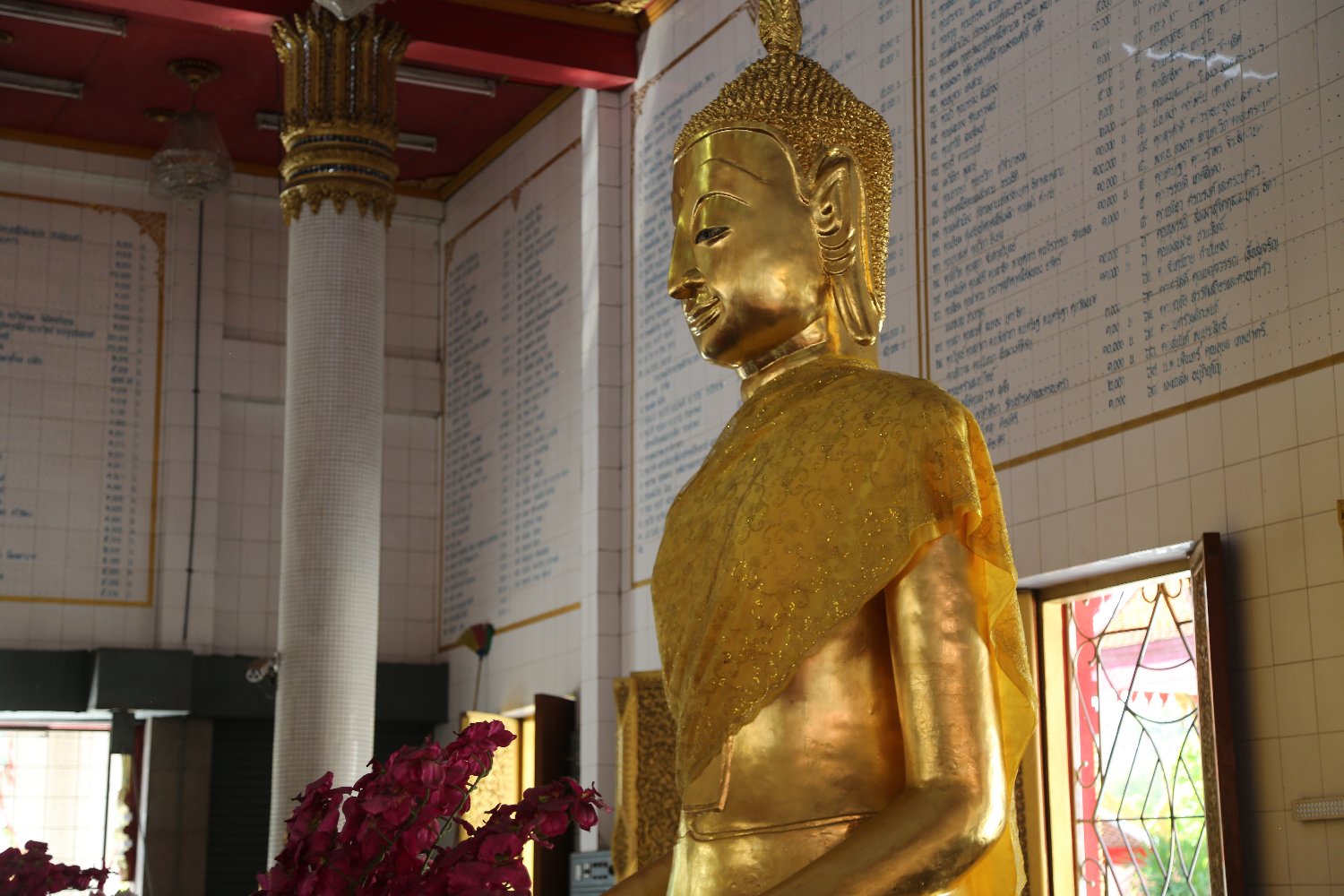


 Wat Yannawa or simply called the ‘boat temple’ is located just a few minutes’ walk south of the Saphin Taksin BTS Skytrain stop (on the river side of Charoen Krung Road). If you stand in front of the entrance, you can actually see this skytrain stop not far down the street. Wander in the short distance it takes to enter the grounds past the imposing gatehouse, and you will soon discover why this temple has its name. A prominent boat modeled after a 19th century Chinese sailing vessel serves as this temple’s viharn (sermon hall).
The old feel of this temple contrasts dramatically with some of the newer buildings in the area. A dramatic view of the nearby Ghost Tower is also available from the temple grounds – with giant ads draped down this never finished skyscraper also contrasting dramatically with the temple.
This temple seems to be under most tourist’s radar – during our visit we saw only a couple of other curious tourists on the grounds.


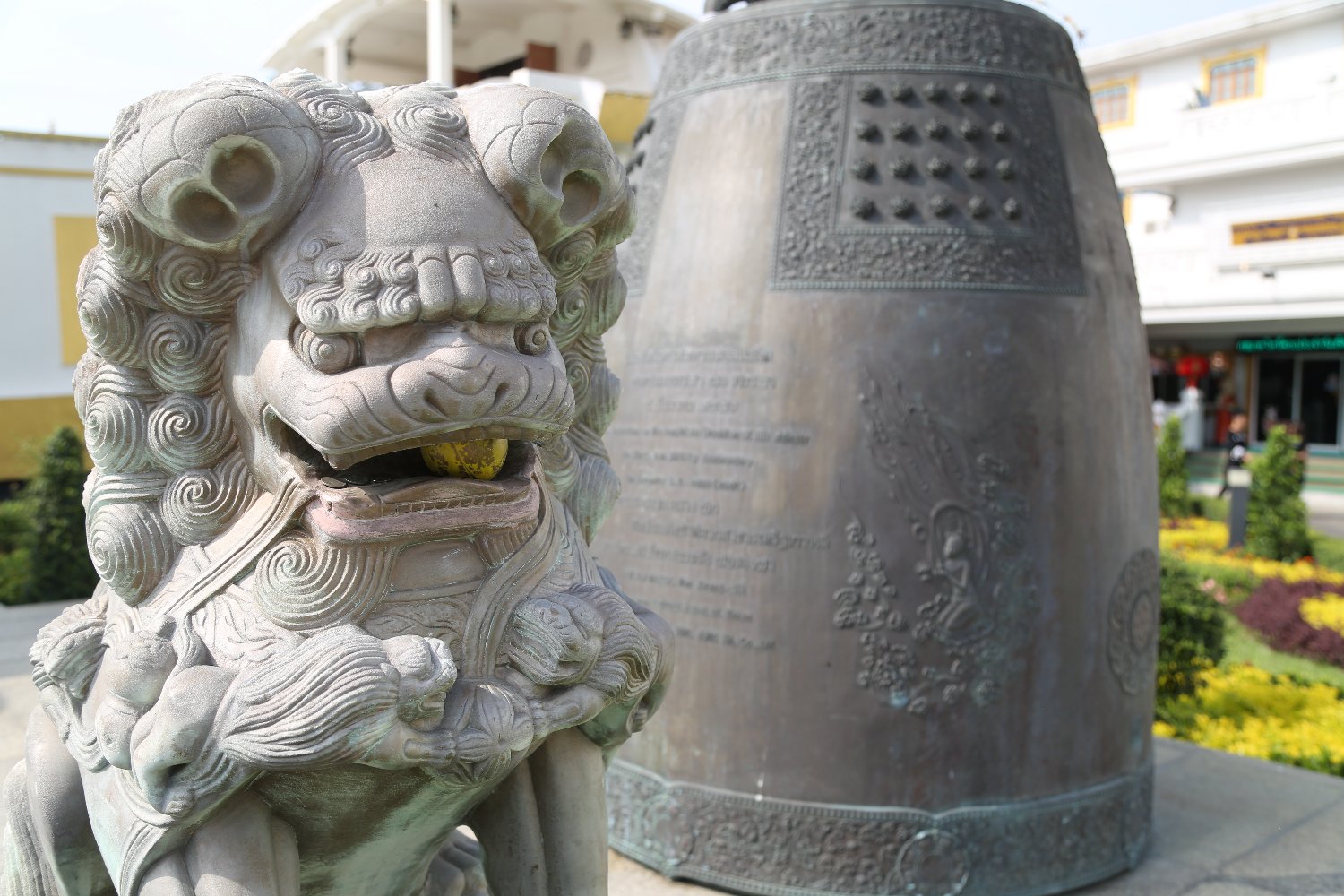

Leave a Reply