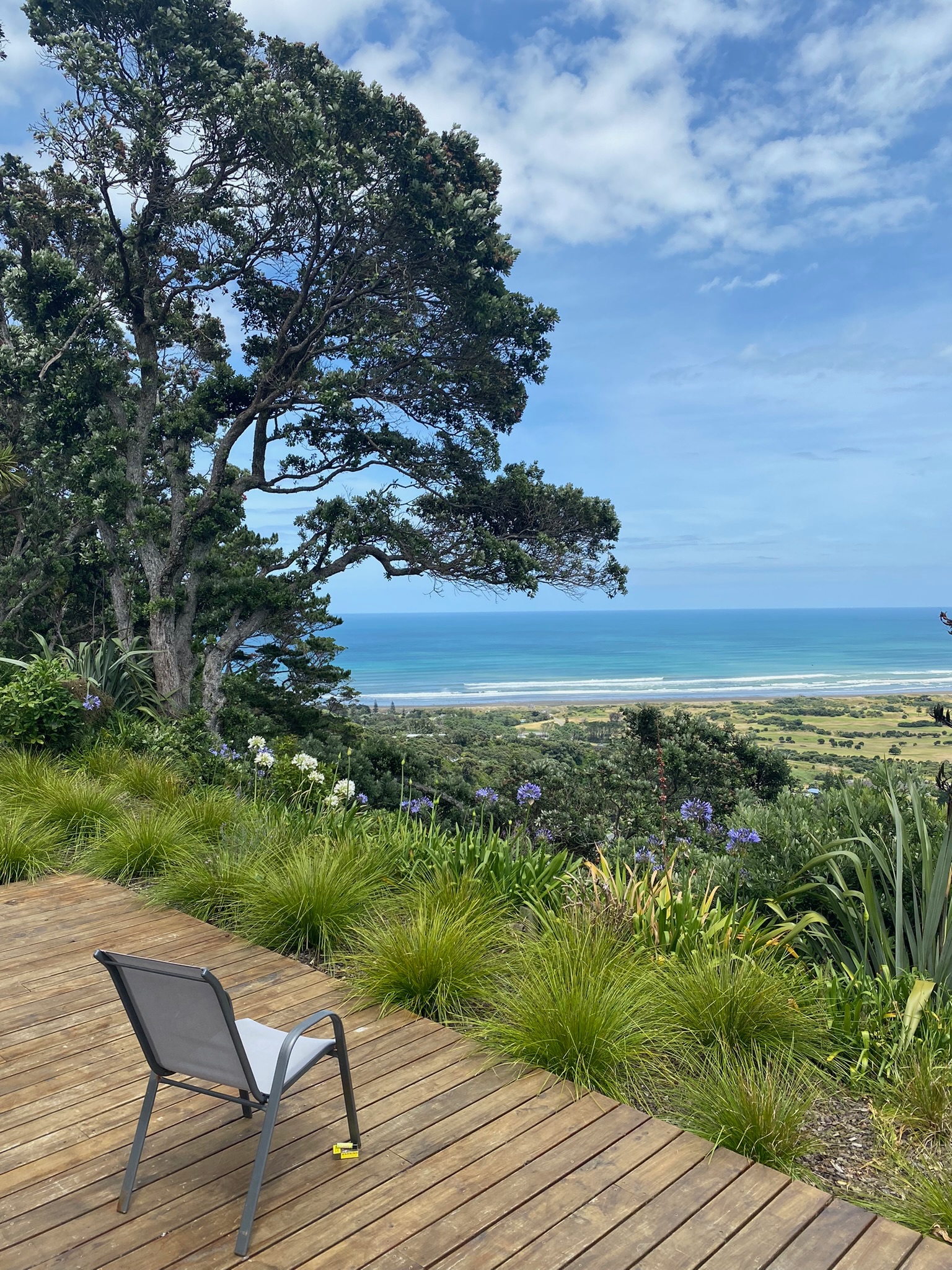
New Zealand pulls remote workers like nowhere else.
The fibre broadband reaches further than you’d expect, the time zones work surprisingly well for Asian and Australian clients, and the scenery makes a 9am Zoom call feel almost bearable. But there’s a catch. Most places you’ll stay, from a Coromandel bach to a Queenstown Airbnb, were not designed with your spine in mind.
Here’s how to work through Aotearoa without arriving home with a sore neck and a physio bill.
The Bach Problem
The classic New Zealand holiday home is a national treasure.
Weatherboard walls, a deck with sea views, and furniture that was last replaced sometime during the Muldoon era. That dining chair you’re sitting in? It has no lumbar support, sits too low for your desk height, and was built for Saturday night card games, not eight hours of spreadsheets.
The fix is simple and it fits in your carry-on. A portable lumbar roll sits behind your lower back and restores the natural curve your spine needs. A firm seat cushion raises your hips slightly and reduces pressure on your tailbone during long sessions. Neither weighs more than half a kilogram. Both make a genuine difference when you’re working from a bach in Mangawhai or a lodge outside Te Anau.
Pack them with your laptop. You’ll thank yourself on day three.
The Eye-Level Rule
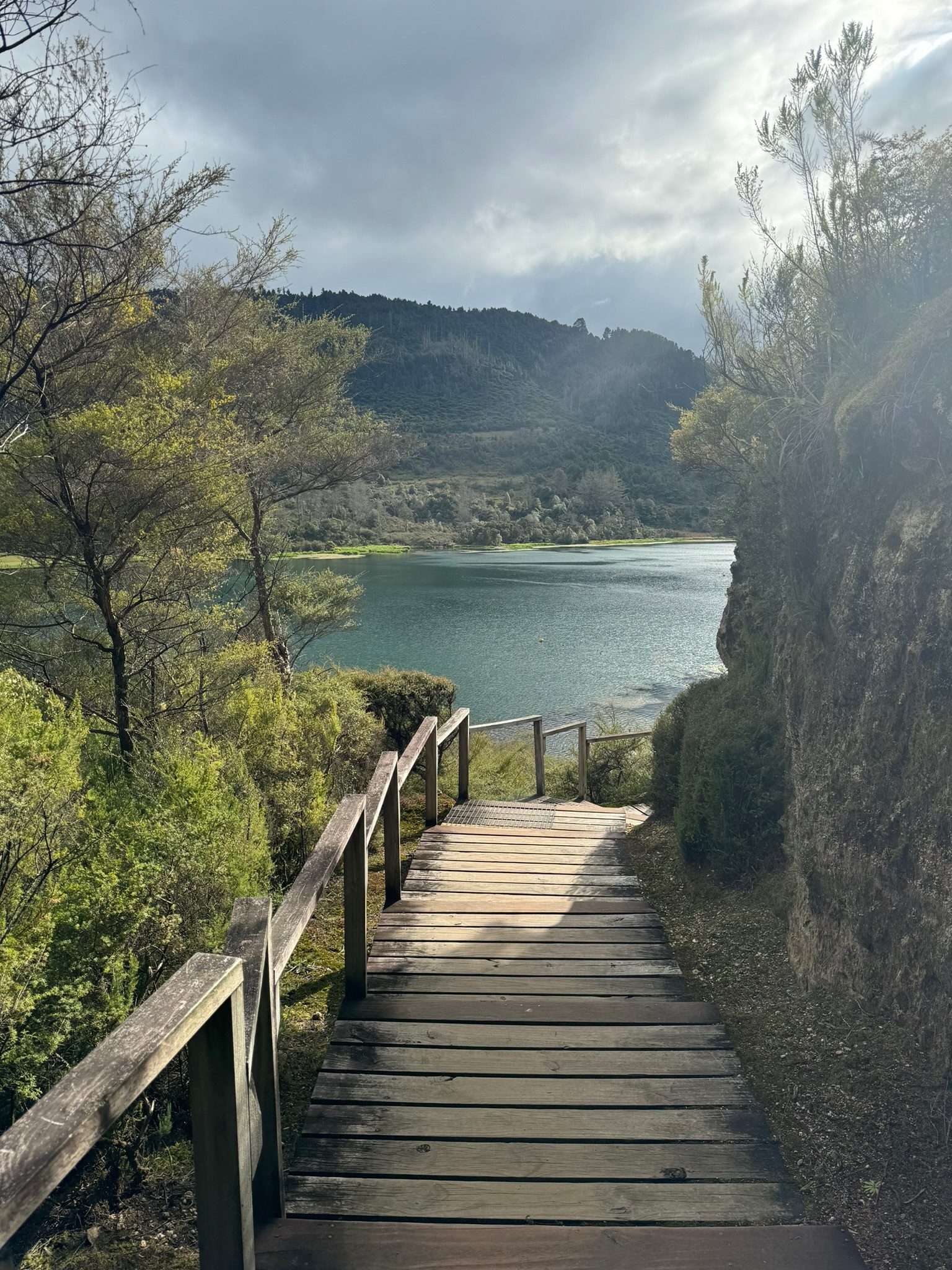
Picture this. You’ve found a picnic table in a Queenstown park, the Remarkables are right there, the coffee is good, and you open your laptop. Thirty minutes later your chin is drifting toward your chest. Two hours later, your neck hurts.
This is “tech neck,” and it’s one of the most common complaints among remote workers who travel. Looking down at a flat laptop screen forces your head forward, which places significant load on the muscles and joints of your cervical spine.
The rule is straightforward.
Your screen should sit at, or just below, eye level. A collapsible laptop stand solves this immediately. Pair it with a Bluetooth keyboard so your hands stay at a comfortable height while your screen goes up, and you have a proper ergonomic setup that folds flat into a day pack.
This combination weighs under 500 grams total and works equally well at a cafe, a co-working desk, or a picnic table.
The Campervan Setup
Travelling New Zealand by campervan is one of the great experiences.
But working from one presents specific challenges. The table in a Maui or Jucy rental is small, fixed at an awkward height, and surrounded by things that move when you don’t want them to.
The key is compact, adjustable gear.
A small adjustable laptop desk with a stable base can sit on the van bench and tilt to whatever angle works for your posture. Some models fold completely flat and slide under a mattress when you’re driving.
A few practical rules for the van setup?
Always park on a level surface before you start working, position your back against the van wall or a firm cushion for support, and take a proper break every 45 minutes.
The road will still be there when you close the laptop.
Also it’s worth noting that mobile data in New Zealand is reasonably reliable on main routes, but plan your intensive work sessions around locations with strong signal or access to wifi. Coromandel Peninsula and Fiordland are stunning, and patchy.
Active Recovery: Sitting Right After a Big Day Out
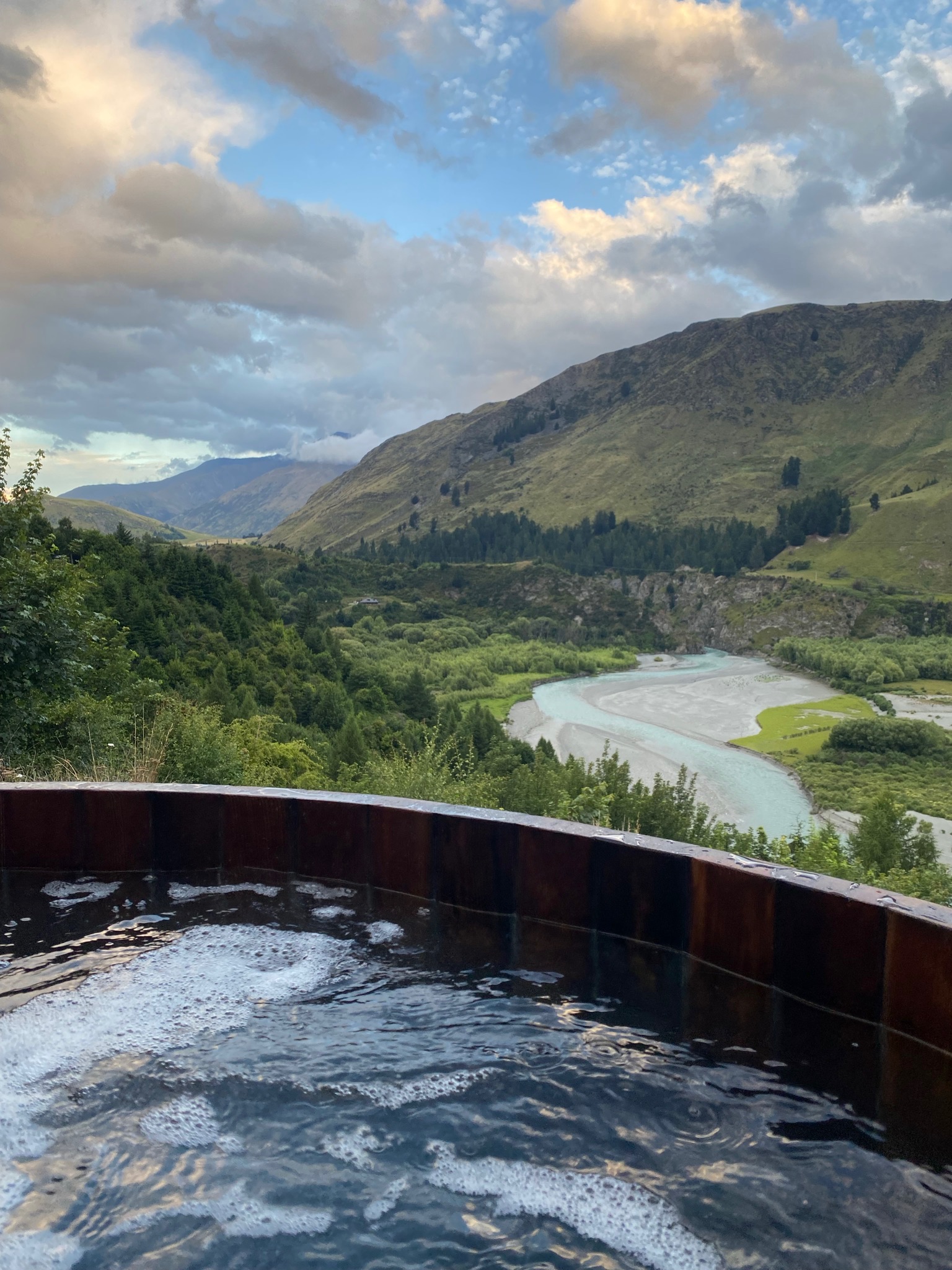
New Zealand demands physical effort.
If you’ve spent six hours on the Mueller Hut Track above Aoraki Mount Cook, your legs, hips, and lower back have been working hard all day. Sitting down at a laptop and slumping forward after that is one of the worst things you can do for your recovery.
When your muscles are fatigued, your body relies more heavily on passive structures like ligaments and spinal discs to hold your posture. Poor sitting after high-effort activity accelerates that load.
So, here’s what to do instead.
When you sit down to work after a big day, set a timer for 20 minutes. Sit with your feet flat on the floor, hips slightly higher than your knees if possible, and your lower back supported. When the timer goes off, stand, move around for two minutes, and reset.
This active recovery approach keeps circulation moving through tired muscles while you get your work done.
A light stretch before you open the laptop also helps. Hip flexors tighten fast after long descents, and releasing them before you sit makes maintaining good posture significantly easier.
…
New Zealand rewards slow travel.
The best remote workers who come here tend to build their days around the country rather than fighting against it. Work in the mornings, explore in the afternoons, recover properly in the evenings.
Getting your ergonomics right is part of that.
A few small tweaks or even a piece of portable office furniture like a desk riser can make a real difference.
It’s not about turning your bach into a corporate office. It’s about being comfortable enough to do good work, protecting your body from the small daily strains that add up over weeks on the road, and arriving home feeling better than when you left.
That’s the goal. Aotearoa will handle the rest.


![[AITUTAKI]-Taking-off-from-Rarotonga](https://www.davestravelcorner.com/wp-blog/wp-content/uploads/2016/10/AITUTAKI-Taking-off-from-Rarotonga-150x150.jpg)

Leave a Reply