This is information that was not able to find a home in any of the other categories in this article.
Bathrooms
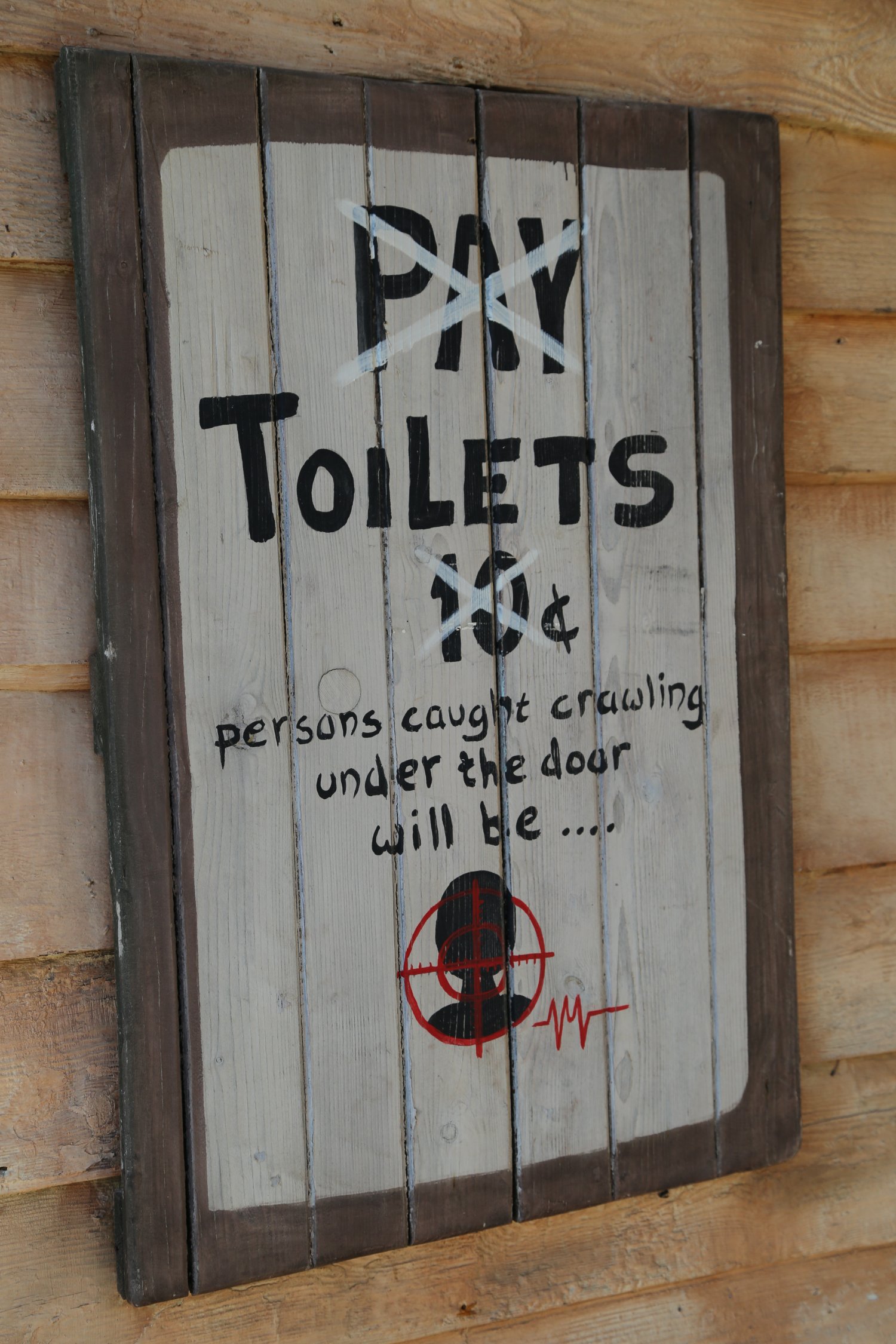 Just about all the public bathrooms in Europe have an access charge. Usually this runs from several cents to several dollars depending on the country and the location. Bathrooms insides places that require an admission fee to enter (such as museums) are usually included in the price of admission. One advantage of paying an admission fee for bathrooms is most of the bathrooms are extremely clean.
For those wanting to use free restrooms there are several places to look. One is McDonalds which have over 26,000 locations all over Europe. Another place you might want to consider looking for a bathroom is in large stores, and especially large stores in malls. As a last resort for using the bathroom one can always find several bushes in a park and hide. On several occasions I saw some of the locals doing this, although they were not hidden very well.
Drinking Fountains
First of all there are continuously running drinking fountains in most of Europe but especially in Greece and Italy. This is very good considering the extremely hot weather that often times plagues parts of Europe in the middle of the summer.
I drank out of all fountains from Italy northward. I had no dire results. I even drank out of fountains in Rome and in Venice. I found Rome to have some of the best tasting water. It was also very cold and clear. The only country that I did not drink the water from was Greece. I met some North Americans that consumed water from outdoor fountains in Greece and became sick. It may have been just fine, but I stuck to bottled water and soft drinks. A particular soft drink that you find all over Europe is Fanta, a product of coca cola, that slowly is becoming more popular in the United States.
European Travel Books
 The tagline for this book is “a journey through every country on the continent” and this is certainly an appropriate description. Lonely Planet, long known for their detailed country guide books has put together a wonderful coffee table sized book organized by specific geographical locations within Europe. Each country is then highlighted with individual reviews and accompanying photos. This is part of their “continent” book series. Find out what each country is known for, learn about “essential experiences”, cuisine, festivals, history, culture and much more. Also look for the “surprises” section listed under some countries; this lists items that perhaps most people do not associate with that particular country. This book makes a great gift especially for those armchair travelers as well as those embracing the “staycation” philosophy of travel.
Purchase Book
 This is the ultimate book for adventurous independent travelers looking to spend considerable time overseas on a “big” trip. The economy or your “normal” job have you down? Pick up this book, start dreaming and then make this dream a reality. This book contains real life stories from seasoned ‘on the road’ travelers, top tip lists, and big trip experiences and favorite spots are highlighted. This is the perfect book for gap year travelers, high school or college grads who are looking to take a year off, or anyone wanting to get away for a while. The book is divided into four easy to read chapters. Highlights of the book also include trip planning, types of trips to consider, where to go, and much more!
Purchase Book
Also consider these other guidebooks to Europe.
“Lets Go Europe” is almost 1000 pages of Europe information. It provides some general Europe information as well as gives information about particular countries and other travel information. It sells for about $30 US. It has some street maps.
An excellent book which lists all type of information for traveling through Europe by train is called “Europe by Eurail“. This book includes maps, updated information on fares, updated every year, tips on keeping costs down, and pre planned itineraries. This book has been published every year since 1976.
ID Cards
For students, usually under the age of 24 years of age, or senior citizens, those above age 60, having an ID card is needed to get a discount on attractions and museums. For students, purchasing the International Student Identity card is a waste of money. A school ID with your age listed worked in all the museums and attractions that I visited. I even forgot my card several times and I was still able to convince the cashiers that I was a student. However, this didn’t work all the time and I was forced to go back to my hotel to retrieve the card at one museum.
If you are planning on renting a vehicle or motor cycle/scooter for a short while, usually a day to several days, plan on giving up your drivers license or passport. The rental company will hang on to this until you return their vehicle.
Consider photocopying your passport, drivers license, credit cards, and other important information. Take several copies and put one in your money belt and another somewhere in your luggage or backpack. Also leave a photocopy of at least your passport with someone in your home country.
Internet Access
Internet access is widely available all over Europe. Internet cafe’s started creeping up in the early 1990s and by the late 90s the physical infrastructure had been built to support internet access almost everywhere. We often keep our phone on when walking down streets to find free WiFi (although this can open your phone up to severe security risks).
Some cities have more open free networks then others (provided by the cities rather then individuals who haven’t locked down their networks) – especially as you move towards southern and south eastern Europe.
While internet cafes are no longer the industry standard for accessing the internet – one has several options for using the internet while traveling throughout Europe. Home data providers often provide a roaming package – a set amount of data is available for a set amount of time. These can be expensive. The worst mistake is to take your phone overseas and continue to use your home provider with data roaming turned on – the charges will add up very very quickly, even for simple text messages or Whatsapp use.
Often the cheapest option is to purchase a local SIM cards at airport locations or numerous other convenience stores or phone shops. Plans are available for various data amounts and for a certain amount of time. And coverage often includes other European countries as well.
Student Travel Organizations
- Council on International Educational Exchange (CIEE):
205 E. 42nd Street
New York, NY 10017-5706.
Their TELEPHONE NUMBER is 888-268-6245.They are geared towards student travelers, and they have worldwide academic and volunteer work opportunities. www.ciee.org
- International Student Travel Confederation:
Bredgade 25H DK-1260
Copenhagen K, Denmark
Their TELEPHONE NUMBER is 45-33-33-96-00This is an international organization promoting travel for young adults. You can visit their web page at: www.aboutistc.org
Airlines
- www.wikitravel.org/en/Discount_airlines_in_Europe all you need to know, listed right here!
Budget
- www.backpackeurope.com a must visit site for budget travelers to Europe
- www.bargaintraveleurope.com links and information about “deals”
- www.enjoy-europe.com the original Do It Yourself travel guide to the Old World
- www.eurocheapo.com expert reviews of budget accommodations throughout Europe/em>
General
- www.autoeurope.com Europe travel & driving info – including car rentals & reservations
- www.davestravelcorner.com/links/destinations-europe for a list of our specific Europe Country links visit this page
- www.europeforvisitors.com good source of travel articles about Europe
- www.inyourpocket.com is your one-stop travel & information portal for Central & Eastern Europe
- www.travelnotes.org/Europe Europe travel forums & info
- www.visiteurope.com the European Travel Commission – the starting point for your personal European experience
Tours
- www.busabout.com adventure coach travel within Europe
- www.ricksteves.com see Europe “through the back door”
Transportation
- www.eurail.com is a great source for information about train schedules and other European rail information
- www.raileurope.com rail passes & tickets
Leave a Reply