 A Short Walk
One day I decided to walk due west and see where I ended up. I left the phone at the hotel, I didn’t research anything. I just began walking. I passed by Mercado de Abastos (a market) and then drifted by an extremely polluted river, an ecological disaster so to speak. I spent some time watching people wade back and forth through the water. I witnessed several people use the soil behind small bushes as a bathroom. I watched the wind whip up plastic bags, towels, and paper and send them flying across and into the river.
Trash was everywhere. I had purchased a tropical fruit called a cherimoya at the mercado earlier. I decided this was as good as any spot to eat the fruit. I sat down among the filth and proceeded to cut open what I thought was going to be a delicious snack. I opened the inside and upon quick inspection decided that it looked good to eat. I proceeded to eat it and several minutes went by before I finally noticed that something was crawling out of the white flesh.
Then I soon noticed something was flying out of the skin of the fruit. The fruit was infected with maggots, worms, and flies and I quickly decided I had consumed enough and continued walking.
I crossed a long yellow bridge leading from the back side of the Mercado de Abastos to the other side of river. Apparently people used the banks below the river as their trash can for it to was littered with plastic and garbage. I kept walking west.
Once across the river, the roads soon began to ascend steep hills. I continued on one road until it became narrower and narrower and soon it turned into a well-traveled foot path. The dirt path finally reached a dirt road which cut across the hills on the western most limits of the city. Near the intersection of the path and the road I spotted four elderly men drinking beer. They were sitting next to a gated wall blocking an opening into the side of the hill. They saw me, offered me a beer and when I politely refused, they told me that they would let me into their cave instead.
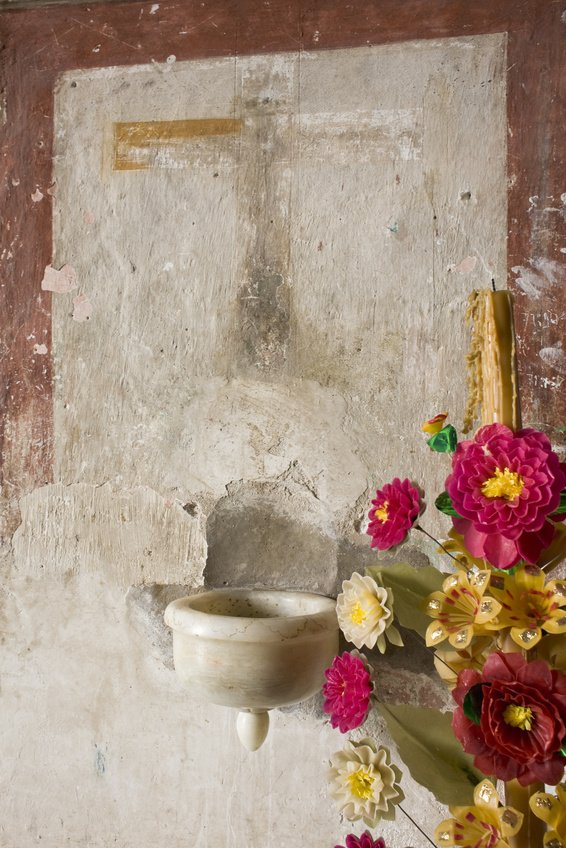
I was slightly curious and accepted their invitation. Once past the gate I entered a long cave which ended about 50 feet into the mountain. Inside were sculptures of various Oaxaca patron saints including pictures and flowers. This grotto was well worth the hike and I stumbled onto something that was not listed online or in any of the travel books. After I left the cave I soon met several school children dressed in uniforms; they were extremely pleased to have their pictures taken.
Excursions such as the one mentioned above are spontaneous and are a good way to create random unplanned experiences while traveling, while simultaneously meeting locals.
El Árbol del Tule (the tree of tule) is located about 7 miles west of Oaxaca along the road that leads to Mitla. My tour driver first showed my the grandchild of this large tree and then he led me to believe that another tree was actually the El Tule. I was quite impressed but then he informed me that this large tree was just the child and as he rounded the corner I saw the largest tree that I have ever seen.
Even the Moreton Bay Fig tree in Santa Barbara, California is dwarfed by this one. This tree is not the tallest in the world. That distinction belongs to the great redwoods in the western United States. It is also not the oldest, that distinction belongs to the Bristlecone Pine Trees in California’s White Mountain range.
Although this tree is quite tall and very old – its most impressive characteristic is its incredible girth. Its age is also quite remarkable. It is estimated to be around 1500 years old. This tree can easily be viewed from the surrounding streets but in order to get the best pictures you have to enter a courtyard surrounding the behemoth. In order to do this, an entrance fee of several pesos is charged by a local attendant.
 Teotitlan Del Valle is a small town known for its beautiful hand-crafted rugs; it is one of Mexico’s most famous villages hand-woven rugs. It is located about 19 miles west of Oaxaca and then about 2 miles off on another road. A small farm and several homes on the left side of the road are located near the turnoff for this village.
A stop here is a must. Ask the owner to give you a tour of his dye farm. This farm is one of the last in Mexico that still use insects to make cochineal dye for their rugs. Most of the other rug makers use synthetic dies and polymers. As one walks through the rug makers home, gardens, and work areas you will see how the ancient art of rug making is still being preserved.
The owner grows numerous prickly pear cactus plants. Upon close examination of these leaves, you will see small grayish looking round insects. Pick one of these off of the leaves and squeeze it; purple liquid will immediately squirt out. This is the color of the dye before it is processed.
Have the owner also show you where he cultivates these insects. He picks the leaves from the cactus and brings them into a small breeding room. The insects are then placed on the leaves and allowed to reach maturity. There are literally hundreds of cactus leaves hanging in this room. Pots containing liquid from the insects are located next door. The colors are all different based on pH. Some are quite alkaline and some are quite basic.
The owner’s display room is located directly next to his workshop. He will present a number of rugs on the ground to any visitor who shows interest. Remarkably considering the significant work needed to create these rugs – his prices are comparable to synthetic rugs.
Teotitlan Del Valle is slightly more prosperous then other small towns in the vicinity Oaxaca. This is because people come from all over to purchase rugs here (based on their excellent reputation). Like most of the towns in this area only the main street is paved. The main street is home to most of the rug vendors but it is worth exploring some of the side streets to visit other vendors. If you don’t immediately spot rug shops you will certainly be seen by the vendors and they will invite you in.
Tlacolula is located about 25 miles east of the city of Oaxaca. It’s center-point is a beautiful church built in a Moorish style dating from the 16th century. It is known as the Chapel of Silver and the interior contains some intricate carvings. Sunday markets held in this town are well-known and are almost as big as some of the Oaxacan markets.
El Mirador is a scenic observation deck overlooking the city of Oaxaca. It is located on Fortin Hill which is within walking distance of the zocalo. This walk will probably take about 25 minutes due to its location of 12 blocks from the zocalo.
Travelers walking to this observation deck will also have the opportunity to walk up Las Escaleras del Fortin, hundreds of steps that pass by homes and picturesque looking trees.

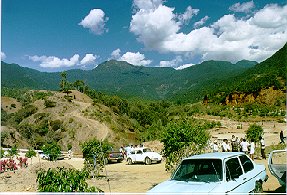
Al Parque Comunal is located north of the city of Oaxaca. It is about a 1.5 hour walk from the zocalo. Just keep heading north towards the tallest mountain seen in the distance. Alternatively, buses run to this park or simply take a taxi.
One gets a real feel for the countryside here – the park is entirely outside of the city limits with no surrounding homes. Its amazing that by car, after only 15 or 20 minutes one is completely removed from the busy city and surrounded by nature. The only people I met at the park’s entrance were several goat herders who had come down from the nearby hills. Several trails located in the park lead towards the base of the tallest mountains. Aside from being a relaxing place to read a book and enjoy nature there are not a lot of sights or attractions here. And that is about exactly what we were looking for when we made the trek out here 🙂
Leave a Reply