Some journeys are shaped by roads, cities, and landmarks. Others are shaped by weather, tides, and the gradual movement of the sea itself. Along the East African coastline and across the islands of the western Indian Ocean, travel still carries that older rhythm. Wind determines direction, currents influence pace, and entire days unfold according to the conditions of the water rather than the pressure of schedules.
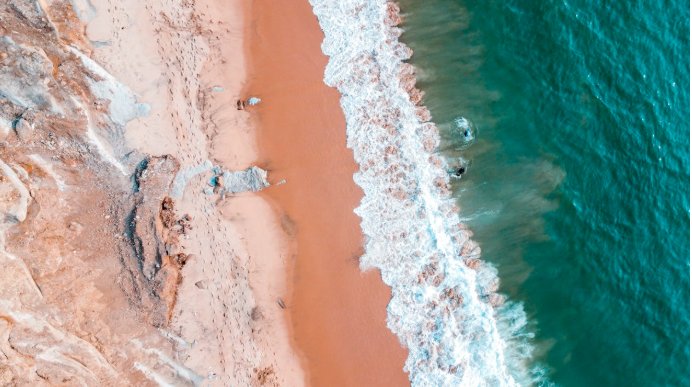
Credit Pexels / Stunning aerial view of a beach with crashing waves and sandy shores.
The Ocean as a Living Landscape
The ocean doesn’t act like some kind of still backdrop. It keeps shifting, and you can feel it all the time. Light slides across the water through the day, tides reshape the beaches, and weather systems move across the horizon like they’re not waiting for anyone.
Going on a Tanzania cruise, for example, makes those small changes hard to ignore. Mornings can start in calm turquoise lagoons, then later, the afternoon winds get steadier and darker textures show up over the open water. Some islands look severe, rocky, and almost unfriendly from far away, but once boats get nearer, the view changes, and you notice sheltered beaches and quiet anchorages, almost instantly.
That constant transformation builds a deeper bond with the whole environment. Travelers stop treating the places as isolated stops. Instead, they start understanding destinations as pieces of one bigger marine landscape, stitched together by water, weather, and constant motion.
Following the Rhythm of the Wind
In this region, one of the defining characteristics of ocean travel is the role of the wind. Seasonal monsoon patterns historically formed trade routes.
Nowadays, modern yachts do not depend entirely on those winds for survival, yet the cadence still stays in the experience. Sailing conditions, the choice of anchorage, and the routes themselves still react to changing weather patterns, sometimes fast and a bit unsettling. Travelers soon realize just how strongly the ocean shapes movement here.
That realization produces a pace that feels completely unlike land-based tourism. Days are not rigidly governed. Schedules stay pliable because the surroundings remain lively, and frankly unpredictable. You go with it, not against it, most times.
The Seychelles and the Art of Isolation
Among the islands scattered across the western Indian Ocean, the Seychelles stands apart for its combination of dramatic landscapes and genuine seclusion.
Granite islands rise sharply from clear water, creating coastlines unlike almost anywhere else in the world. Dense tropical vegetation spills toward beaches framed by enormous rock formations sculpted over millions of years by wind and sea.
Yet the real appeal of the Seychelles often lies in the spaces between islands rather than the islands themselves.
Traveling by yacht reveals how scattered and isolated the archipelago truly is. Short passages lead from developed islands toward remote anchorages where there are no roads, no crowds, and sometimes no visible buildings at all. Travelers move through marine parks, coral reefs, and open stretches of ocean where the surrounding environment feels almost untouched.
Beyond the Resorts
Coastlines contain far more diversity than many travelers initially expect. Beyond well-known beach destinations lie historic ports, fishing communities, mangrove systems, and stretches of coastline that remain relatively undeveloped.
Zanzibar, for example, carries centuries of layered maritime history. Stone Town still reflects influences from African, Arab, Indian, and European trade networks that once crossed the Indian Ocean. Arriving by sea provides a different perspective on the island, especially when old waterfronts and traditional sailing vessels come into view from offshore.
Further south and north along the coastline, quieter regions emerge where tourism infrastructure becomes sparse and natural scenery dominates. Sandbanks appear and disappear with the tide. Coral reefs create protected lagoons near shore. Small villages remain closely tied to fishing and maritime life.
Traveling through these waters creates a stronger sense of regional continuity than isolated resort stays often provide. The coastline feels connected through the ocean itself.
There is also an important visual contrast between mainland East Africa and the islands offshore. Coastal forests, mangroves, and low sandy shores gradually give way to volcanic islands, coral atolls, and granite formations farther into the Indian Ocean.
Life at Sea Changes Perspective
One of the most powerful aspects of extended yacht travel is the way it alters a traveler’s relationship with time.
On land, days are usually fragmented by transportation, schedules, notifications, and constant transitions between locations. At sea, time stretches differently. Mornings begin slowly. Distances are measured in nautical miles rather than in traffic conditions. The horizon remains open for hours at a time.
This slower rhythm encourages observation. Travelers notice weather patterns, water conditions, bird movements, and changing coastlines in ways they might normally overlook. Even silence becomes more noticeable.
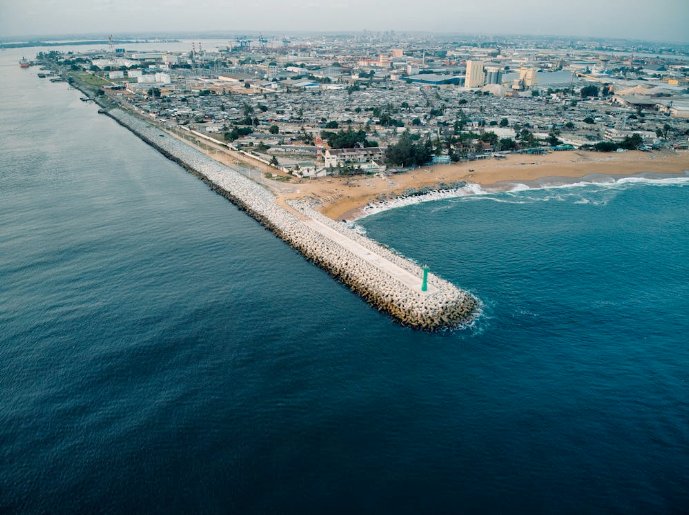
Credit Pexels / Aerial shot capturing a city near the coastline.
Wildlife, Reefs, and Open Water
Nature remains central to nearly every journey through the western Indian Ocean and East African waters.
Coral reefs support extensive marine ecosystems filled with tropical fish, rays, sea turtles, and reef sharks. Snorkeling and diving often become daily activities because conditions can be exceptionally clear in protected areas.
Birdlife is also significant throughout many islands and coastal zones. Seabirds circle above cliffs and remote beaches, while mangroves and coastal forests support additional species inland.
The Luxury of Distance
Luxury travel is increasingly shifting away from excess and toward privacy, space, and meaningful experiences. Few regions reflect that shift more clearly than the Indian Ocean and East African coastline.
Here, the real luxury often comes from distance — distance from crowded tourism, constant noise, and rigid schedules.
Private yacht journeys create access to remote anchorages, empty beaches, and quiet stretches of water where travelers can spend entire days without seeing large crowds or urban development. The surrounding environment provides the atmosphere rather than artificial entertainment or excessive infrastructure.
A Journey Shaped by the Elements
Wind, water, and coastline continue to define travel across this region just as they have for centuries. The sea determines movement. Weather shapes decisions. Islands emerge slowly from the horizon before disappearing again behind the yacht.
That elemental quality is what makes journeys through the Seychelles and along East Africa feel so different from modern tourism built around speed and convenience.
Travelers do not simply visit destinations here. They move through an environment shaped constantly by nature itself.
The experience becomes less about checking locations off a list and more about the gradual accumulation of moments: calm anchorages at sunrise, strong winds during open crossings, coral reefs beneath impossibly clear water, and coastlines that feel untouched by time.
Related posts:
 Bunbury, Western Australia
 The Utopia in the middle of the South Atlantic Ocean – Interview with Shirley Squibb, Deputy Head of the Tourism Department of Tristan da Cunha
 Learn the Ropes to Cruise the Waterways of France
 Here Be Dragons: The “Sacred Terror” of the Alps of Switzerland
 A Journey In The Gold Coast:In Ghana
Leave a Reply