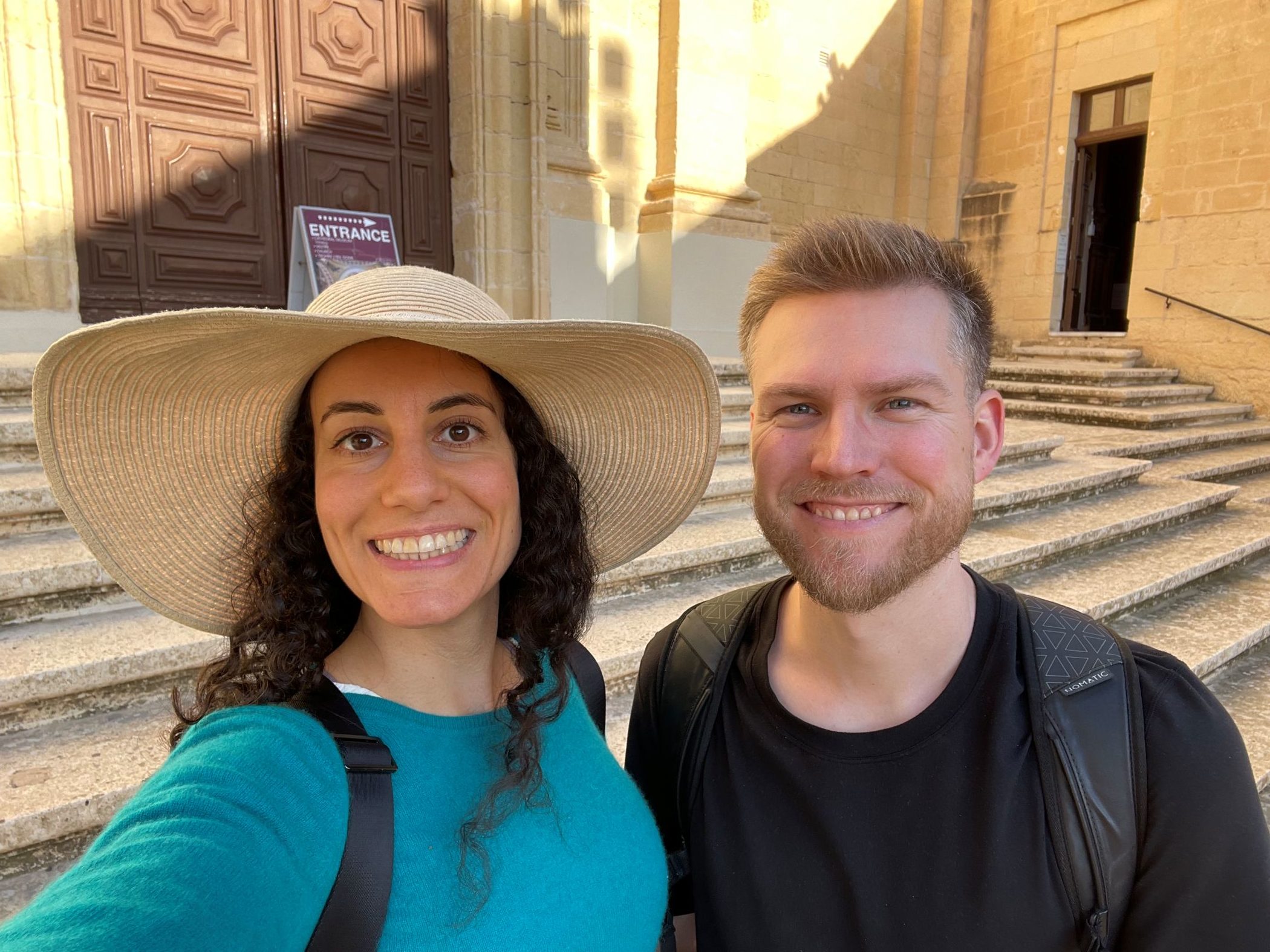
Tobias Sweijen and Katarina Bagherian are the founders of Swaphouse, a free home-swapping platform helping people travel more affordably by exchanging homes with others around the world. Tobias is a product manager with a background in digital products, growth and user experience, while Katarina is a product, UX and customer insights leader who helps founders and teams build products people truly need. Together, they started Swaphouse after experiencing first-hand how difficult and expensive it is to find accommodation that was both affordable and suitable for longer, more flexible stays. What began as a personal solution has since grown into a global community with thousands of homes listed across more than 90 countries.
Q. The idea of Swaphouse came during 2020. But way before that, what was your most frustrating experience working remotely from another country?
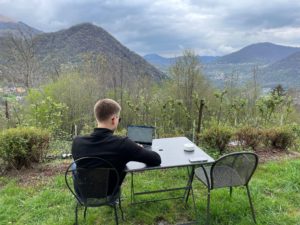
The most frustrating experiences we had were actually during a few workations with Airbnb’s in Tuscany and around Lake Como. On paper, the places looked perfect. The listings would say things like “dedicated workspace” and “reliable, fast Wi-Fi”, which sounds exactly like what you need when you’re planning to work from there.
But then we would arrive and the reality would be very different. The “dedicated workspace” turned out to be a wobbly stool at a kitchen table, or a tiny corner where you could technically open a laptop but definitely not spend eight hours on video calls. And the Wi-Fi was often even more stressful. Sometimes the router would be in a bedroom, while the only place that could pass as a workspace was somewhere else in the apartment where the signal barely reached. Even sitting next to the router, the speed was sometimes not strong enough for proper video calls.
So instead of arriving and enjoying the first days, we’d spend hours testing the internet, moving chairs and tables around, trying to find the one spot where the signal was strongest. We’d do this kind of awkward “remote work gymnastics”: laptop on a kitchen counter, video call from the bedroom, mobile hotspot as backup, then trying to make it all somewhat ergonomic. Often we ended up draining our mobile data packages just to get through the workday. And in some places, even the mobile connection wasn’t strong enough, so we had to turn parts of what was supposed to be a workation into actual PTO. That felt frustrating, because those were precious vacation days that we had planned to spend elsewhere.
The second frustration was the cost. Working from another country is amazing, but if you’re paying for your own home and also paying for accommodation abroad, it quickly becomes expensive. We were still paying for our apartment in Amsterdam, and because of local regulations it was not easy to rent it out for short periods. At the same time, we were paying for these Airbnbs abroad, and those nightly prices had gone up a lot over the years. So we were basically paying double housing costs, while not even being on a full vacation because we were working during the day.
That combination really stuck with us. We loved the idea of working from somewhere else and exploring new places in the evenings and weekends, but the reality was often unreliable, uncomfortable, and expensive. Swaphouse came from wanting to solve that exact problem: what if people could swap homes with each other for free, and stay in places that are actually suitable for both living and working?

Q. Home exchange has been around for some time through platforms like HomeExchange and Intervac. How do you see Swaphouse being different from those earlier models?
We built Swaphouse from a user experience-first mindset, and very much from our own frustrations. We were not trying to copy the traditional home exchange model, but to build the version we wished existed ourselves: easier to use, more intentional, more transparent, better suited to the way many people travel today, and free to join without required memberships or swap fees.
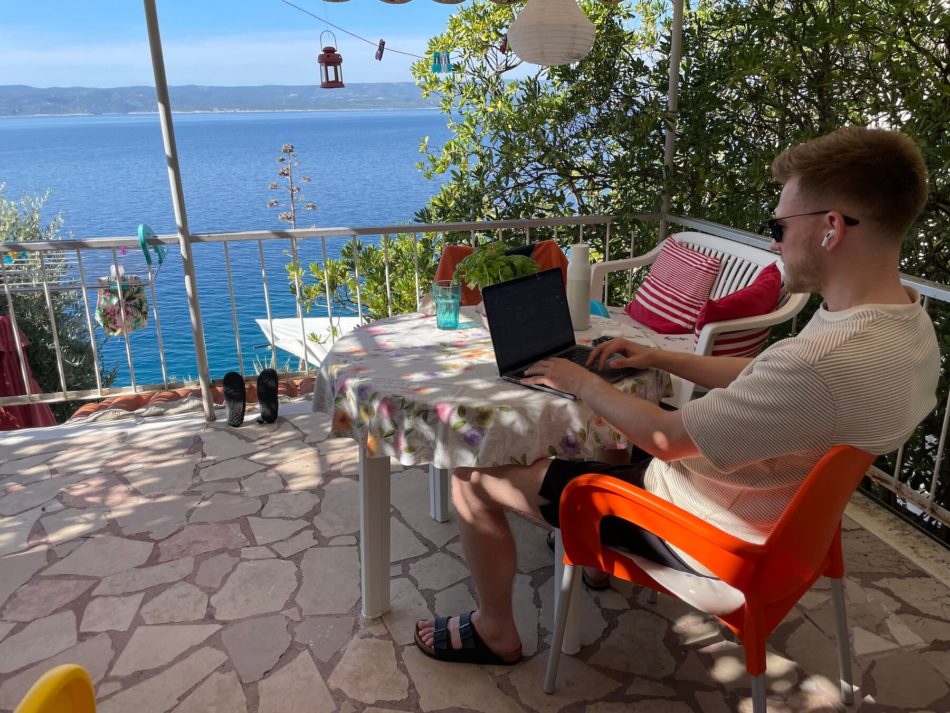
One of the clearest differences is the focus on remote work-friendly homes. Every home on Swaphouse needs to have at least Wi-Fi and one available workspace. Of course, we do not force anyone to work during their swap. Many people use Swaphouse for holidays too. But the possibility should always be there. If you need to take calls, answer emails, or work for a few days during your trip, you should know what to expect before you arrive.
That is why our listings go into the details of each home’s workspace setup. We ask what type of desk is available, whether it is in a dedicated room or a shared space, whether there are external monitors, how many workspaces are there, and what the Wi-Fi download and upload speeds are. We also built a Wi-Fi speed tester into the platform, so members can test the actual Wi-Fi speed in their home and receive a verified Wi-Fi badge. That may sound like a small thing, but for people who need to work during their stay, it can make a huge difference. It gives them the peace of mind confidence to know they can reliably work during the stay, not just hope for the best.
The second big difference is the matching system. Swaphouse works like a match-based platform: you like homes you would be interested in, other people can like your home, and only when both sides have “liked” each others’ homes are they matched and the option to start chatting opens up. That makes the time spent messaging much more meaningful. It also helps prevent popular homes or destinations from being flooded with requests from people they’re not interested in swapping with.
We also like to humanize the swapping experience by shedding light on the people behind the homes. In each home listing’s profile section, members can share more about who they are, where they work, how often they work remotely, and who they usually travel with. That helps you understand the home, and build trust in the person you’ll be swapping with. And because everyone on Swaphouse also has their own home listed, there is a shared understanding: you are both entrusting each other with your homes.
The third big difference is that Swaphouse is free. There is no required membership fee and no cost to arrange a swap. We can do that because we are a very small, bootstrapped team, and we still build Swaphouse alongside our full-time jobs, mostly in the evenings and weekends. This allows us to keep the barrier to entry low and make home swapping accessible to more people.
A lot of the money we personally save by swapping homes, roughly a few thousand euros a year, goes straight back into Swaphouse. It helps us cover essentials like web hosting, maintenance, product development, and some marketing. We may introduce optional paid services in the future, for example around verification, insurance, or extra support, but the core experience of finding and arranging a home swap should remain free.
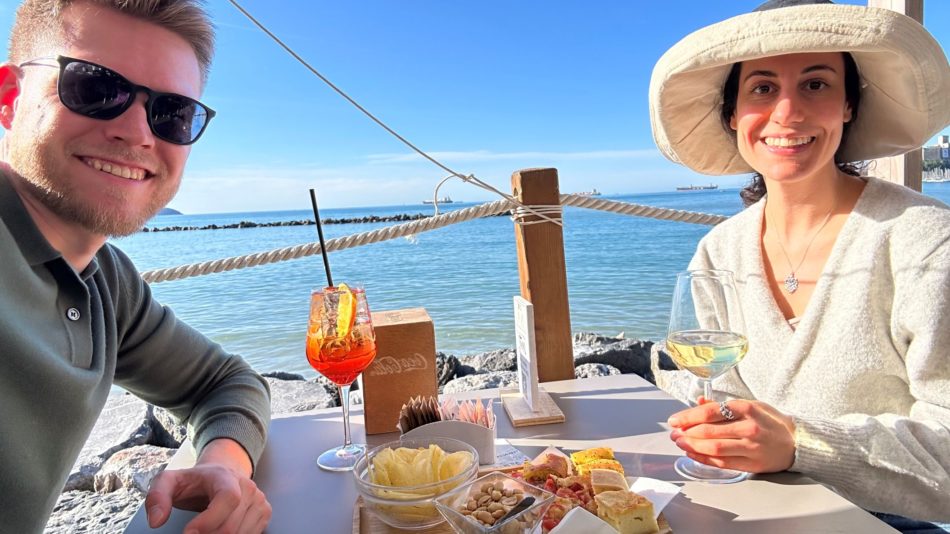
Q. When first started out, how did you convince someone to hand over their house keys to a complete stranger or, like, reassure them that what they were about to do was actually safe?
At the very beginning, we could not rely on many reviews or years of proof, so trust had to be built in a much more personal way.
We never tried to “convince” people with a sales pitch. Instead, we tried to explain the benefits and make the process feel as transparent and human as possible. We explained that home swapping is very different from simply handing your keys to a stranger. It is mutual. You are staying in their home, and they are staying in yours. Both sides have skin in the game, and both sides have the same motivation to treat the other home with care. That mutual responsibility is a big part of why home swapping works.
In the early days, a lot came down to conversation. We encouraged people to chat properly before confirming anything, ask practical questions, share expectations, and ideally do a video call. Once you have spoken to someone face to face, maybe shown each other around the home, and talked through the details, it starts to feel much less like “a stranger from the internet” and much more like someone you are making a personal agreement with.
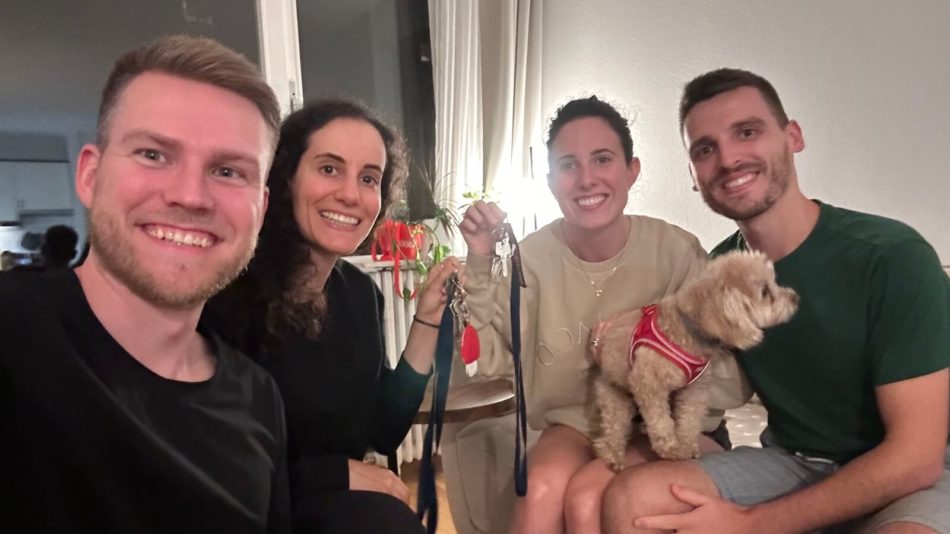
We experienced that ourselves during one of our swaps in Munich. We matched with a couple through Swaphouse and decided to do the key exchange in person. When we arrived, they cooked us a lovely dinner, and we spent the evening together before they took the train the next morning. That changed the whole feeling of the swap. We had shared a meal, talked, laughed, and got to know each other. It made us feel more connected to them, more respectful of their home, and much more comfortable knowing that our own home was in the hands of new friends rather than strangers.
It also helped that we were doing it ourselves. We were not asking people to do something we would never do. We swapped our own home too, so we understood the nerves very well. The first time you leave your keys for someone else, it feels like a big step. But then you come back, your home is cared for, you had a great experience in someone else’s home, and you realize: this actually works.
Over time, we started adding more product features to enhance that trust: fuller profiles, reviews after swaps, address verification, clearer swap planning tools, and more guidance around communication. But the foundation is still the same as it was in the beginning: trust is built through transparency, mutual respect, and getting to know the person behind the home before you say yes.
Q. When did you realize that Swaphouse was growing something bigger than you had initially anticipated?
The first sign came before we even built Swaphouse.
Before investing a lot of time and energy into building a full platform, we wanted to first test how appealing the idea would be to others. So we started with what is sometimes called a “painted door experiment.” Basically, you create a simple version of the idea on the outside, almost like a door people can choose to open, before the full product exists behind it. The goal is to see if people are genuinely interested before you build everything.
For us, that meant creating a simple one-page website explaining the concept of home swapping for people who wanted remote work-friendly homes. There was no full platform yet, no matching system, no profiles, no chat. Just the concept, a few examples, and one button to sign up for the waitlist. We then ran a few small Instagram ads to see if anyone would care.
Within a couple of months, more than 1.000 people had signed up for the waitlist. That was the first moment where we thought: we are on to something here. Maybe more people are looking for a way to travel longer, work from new places, and avoid paying so much for accommodation. That gave us the confidence to take the idea more seriously and start building the first real version of Swaphouse.
The next big realization came soon after we launched in November 2023, when people we did not know started joining and listing their homes at a rate that was much higher than we had hoped for. In the beginning, it still felt very personal, like we were building a tool for ourselves and for people like us. But then strangers from different countries found Swaphouse, understood the idea, and started using it in real life. That was very special.
Since then, we have grown to more than 3500 listed homes in just two and a half years, without a big marketing budget or a large full-time team behind it. Swaphouse is still bootstrapped and built by a very small team, mostly alongside our full-time jobs, so seeing it grow through word of mouth, community feedback, and people genuinely believing in the idea has been one of the clearest signs that it is bigger than just us.
What also surprised us was that people started using Swaphouse in broader ways than we originally imagined. Some people wanted to work remotely from another country, which was our original use case. But others wanted to visit family abroad, travel for longer without spending thousands on accommodation, escape winter for a few weeks, or simply experience a place in a more local and personal way.
So there was not just one big dramatic moment where we suddenly knew Swaphouse would take off. It was a gradual realization, with every new home, every new country, and every message from someone saying Swaphouse helped them travel in a way they otherwise could not.
Q. Looking back, what were some of the biggest mistakes you guys made, and what did you end up learning through all that trial and error?
Looking back, one of the biggest lessons from the first year was learning when to listen to feedback, but also when to stay close to remain steadfast to our convictions.
A good example is our match-based system. From the beginning, Swaphouse worked in a way where you only start chatting after both sides have “liked” each other’s home. Not everyone liked that at first. Some people told us they would prefer to message every home directly, like on more traditional home exchange platforms. And in the early days, when we had fewer homes, we understood that feedback. If there are not many options yet, a match-based system could feel limiting.
But we also kept hearing the other side of the problem: people did not want to be flooded with messages from homes or destinations they were not interested in. Especially for more popular homes or locations, that can quickly become overwhelming. So instead of immediately changing the product, we tried to understand the real problem behind the feedback. Was the matching system wrong, or did we simply need more homes and better ways to surface relevant ones?

We decided to keep going with the match-based approach, and are happy we did. As the platform grew, more and more members started mentioning it as one of the unique aspects they love about Swaphouse. It makes conversations more intentional, because both sides already know there is mutual interest. That was a big lesson for us: user feedback is extremely important, but you still need to interpret it carefully. Sometimes people describe a symptom, not the root cause.
Another important lesson was that not every marketing opportunity that looks good on paper actually moves the needle. In the beginning, we tried paying a few influencers, bloggers, or websites to mention Swaphouse, talk about the platform, or include a link in an article. Most of the time, it did not lead to many visitors or signups. Of course, brand awareness is not always easy to measure perfectly, but we could see that the impact was limited.
Over time, we learned that Swaphouse grows better when the story comes from real users. Instead of paying people to mention us, we now put more energy into speaking with actual home swappers, collecting feedback, sharing their real stories (view them on our social media accounts!), and improving the product based on what members experience. That feels much more aligned with what Swaphouse is about.
We also experimented more with advertising in the first year than we do now. It helped to some extent, especially in testing demand and reaching early users, but we never wanted Swaphouse to grow only by sending more money to Google or Meta. We wanted to build something that people would genuinely recommend to others. So we shifted more towards organic growth, content, SEO, community stories, and product improvements.
For us personally, the lessons were slightly different too. For Tobi, a big learning was around prioritization: not every idea, request, or growth channel deserves attention, even if it sounds promising. For Kat, a lot of the learning was around trust and user experience: home swapping can look simple as a product flow, but emotionally it is a big decision for people. The platform needs to feel clear, human, and reassuring, not just functional.
Q. What have been some of the interesting observations, especially in terms of the cultural difference, that you have seen the way people approach Swaphouse in different countries?
Swaphouse now has homes on all continents and in more than 90 countries, but the majority of our listings are still in Europe and North America. That is interesting in itself, because we have never only targeted those regions specifically. It may be that home swapping is already a more familiar concept there, or that the combination of flexible travel, remote work, and high accommodation costs makes the idea extra appealing.
One pattern we have noticed is that members in the United States often ask more questions around liability, damage protection, and insurance. That comes up more often than it does in many European conversations. In Europe, people also care about trust and safety of course, but the questions are often a bit less focused on the legal or insurance side and more on the practical details of the swap.
Another funny observation is that we have a lot of homes in Berlin, Germany. Berlin has almost three times more homes listed on Swaphouse than the second most popular city, Amsterdam. We’re not entirely sure why, but it does seem like a city where the idea naturally resonates: international people, creative workers, a strong sharing economy, remote workers, freelancers, and people who often like to travel in a more flexible way.
But beyond those patterns, we actually see fewer clear cultural differences than you might expect. The biggest differences are usually more personal than cultural. Some people are very open and trusting by nature. Others need more time, more information, or an extra video call before they feel comfortable. Some care most about the work setup, others care more about the neighborhood, the travel dates, pets, children, or house rules.
So in the end, what we see is that trust is very personal. Culture may play a role, but it is not the whole story. Across countries, most people want the same thing: clear communication, respect for their home, and a feeling that the person on the other side is reliable.
Q. Where do you see Swaphouse heading in the next few years, what are some of the vision from both of you?
Our vision for Swaphouse is to make home swapping feel like a normal, trusted, and accessible way to travel, especially for people who have more flexibility in how and where they spend their time.
In the next few years, we want Swaphouse to grow into the go-to platform for people who want to travel more often and for longer, work from different places, visit family abroad, escape winter for a few weeks, or simply experience a city in a more local way without spending thousands on accommodation. We see more and more people wanting to travel differently. Traditional accommodation like hotels and Airbnbs take a massive toll on the environment and liveability of cities for locals. We’re betting that most people don’t necessarily want to travel more luxuriously, but with more freedom, time, flexibility, and often more meaningful stays.

A big part of that is making the experience easier and more intuitive. Home swapping can feel complicated at first, because it is not like booking a hotel. There are two homes, two calendars, two sets of expectations, and two people who need to trust each other. So a lot of our work goes into making that process on Swaphouse feel clear and intuitive: better matching, better availability tools, clearer profiles, more trust signals, more reviews, and eventually more optional protection around swaps. The goal is not to make home swapping feel transactional, but to remove the unnecessary uncertainty around it.
At the same time, we never want to lose the human side of it. A home is not just accommodation. It is personal. It houses someone’s books, coffee mugs, plants, favorite chair, and daily routines. That is what makes home swapping so special, but it also means the experience needs to feel respectful and trustworthy. We want Swaphouse to be a community where people feel comfortable opening their homes to each other, and where the platform helps set the right expectations from the beginning.
If we look a few years ahead, we would love to see travel accommodation become more accessible. We’ll see this through thousands of more successful swaps happening through Swaphouse, across many different countries and lifestyles. Not only digital nomads moving from one hotspot to another, but also families, couples, solo travelers, creatives, founders, remote workers, and people who simply want to explore more of the world.
Ultimately, our vision is that Swaphouse becomes a more sustainable, affordable, and human alternative to traditional travel accommodation. A way to unlock the homes that already exist, instead of always building or booking more short-term rentals. One of the most frequent feedback we get from users is that Swaphouse restored their “faith in humanity.” If we can help more people build cross-cultural trust in an increasingly polarized world, then we consider ourselves successful.
Q. Your message to our readers?
Our message to readers is: travel does not always have to mean booking another hotel room or paying for another expensive short-term rental. Sometimes the most meaningful way to experience a location is to stay in a real home, in a real neighborhood, and live like a local.
Home swapping can feel a bit scary at first, and we completely understand that. You are opening your home to someone, and someone else is opening theirs to you. But that is also what makes it special. It is based on trust, respect, and a shared understanding that homes are personal. The benefit of this personal nature is experiencing authenticity: you get to step into another person’s life and experience it from their perspective –something that has become increasingly rare with short term accommodation.
So we would encourage people to be open to it. Start with a conversation. Ask questions. Get to know the person behind the home. Be clear about your expectations, and treat someone else’s home the way you would want them to treat yours.
For us, home swapping has made travel feel more personal, more affordable, and often more memorable. It has allowed us to stay longer, work from different places, and experience cities in a way we never would have from a hotel. And we hope more people get to experience that, too.
What has been really special for us is seeing those same experiences reflected in the stories and reviews from our community. People write to us about the homes they stayed in, the neighborhoods they discovered, the money they saved, but also about the people they met along the way. Many stay in touch after the swap and end up becoming friends. That says a lot about what home swapping can feel like in real life, and readers can find some of those inspiring stories here.
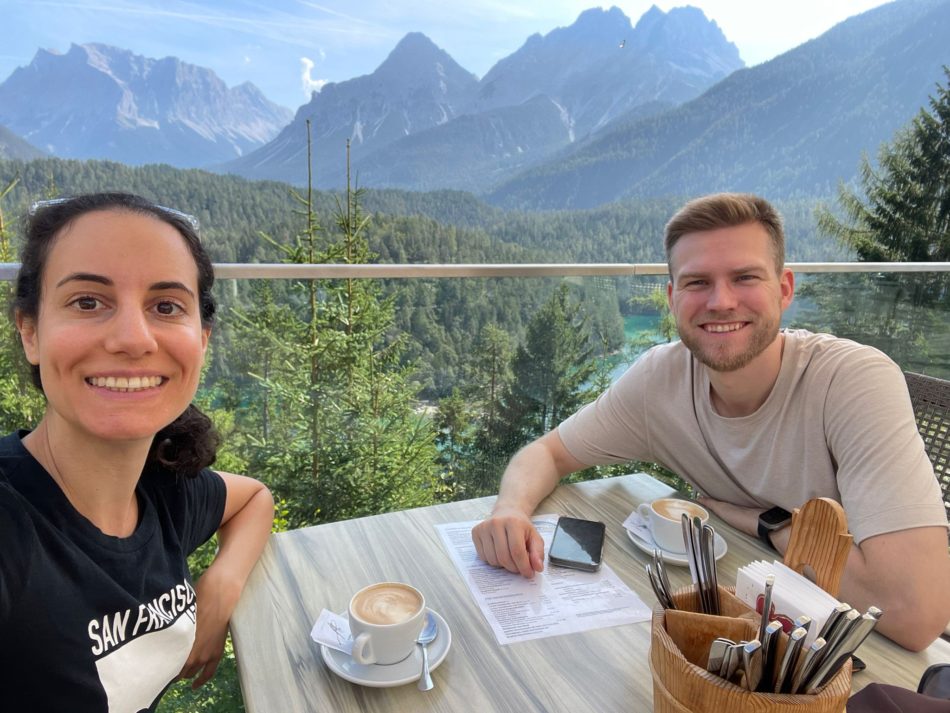
All photographs credit: Swaphouse / Tobi & Kat





Great interview! Swaphouse is a refreshing take on travel – making it more affordable, sustainable, and personal. Love the focus on building trust and genuine connections between travellers. Looking forward to seeing the community continue to grow!