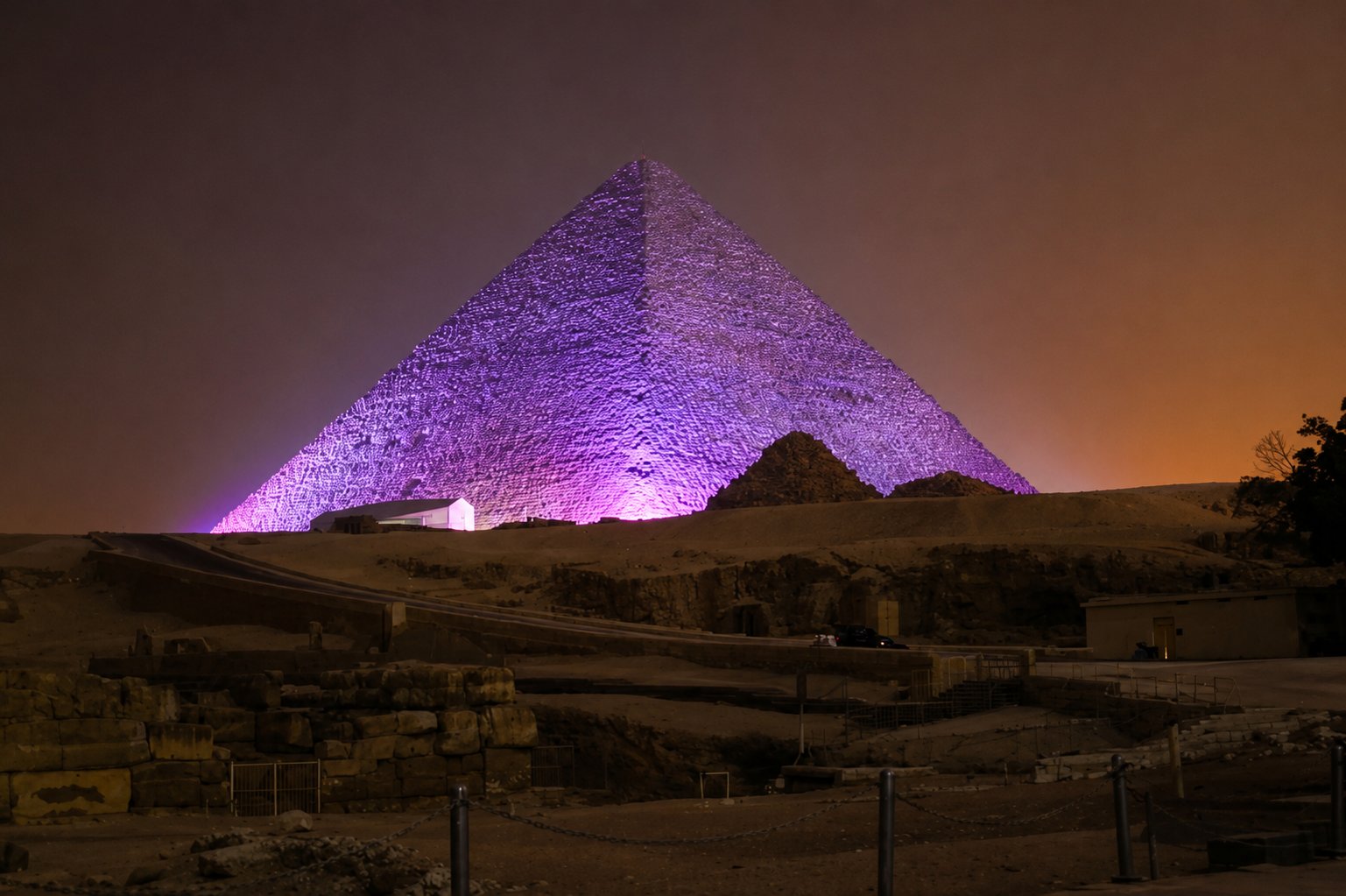
Stand at the foot of the Great Pyramid of Giza just after sunrise, before the coaches arrive, and you’ll understand why humans have been telling stories about this place for four thousand years. The scale of it rearranges something in your brain.
Egypt does that to people — the temples at Luxor, the felucca boats drifting down the Nile, the sheer weight of history pressing in from every direction. It’s little wonder that of all the world’s destinations, Egypt is the one storytellers of every kind keep returning to.
And travel is, at its heart, a story we tell ourselves. The best destinations aren’t just coordinates on a map; they’re moods. Las Vegas is a place of neon optimism and midnight breakfasts. The
Amazon is a green mystery and the hum of a million unseen things. The Scottish Highlands are a blend of mist, myth, and single malt. Tokyo is sensory overload in the best possible way – a city that somehow makes vending machines feel poetic.
Why Some Places Become Legends
Certain destinations earn a kind of cultural shorthand. Say “Route 66”, and people picture chrome diners and open desert highway, whether or not they’ve ever driven it. Say “Machu Picchu“ and the mind conjures cloud forests and stone terraces hanging in the sky.
These places have crossed over from geography into imagination — and once a place lives in the imagination, it starts showing up everywhere: in films, in novels, on restaurant menus, and yes, in games.
Game designers have long understood the concept. Walk through the lobby of any online casino, and you’ll find the world’s most evocative destinations staring back at you — pharaohs and scarabs, Aztec gold, Mediterranean escapes, and Nordic fjords.
The most popular slots online are essentially travel postcards with spinning reels: designers borrow the colours, music and iconography of a destination because those places already carry a story players instantly recognise.
Ancient Egypt alone has inspired hundreds of titles, which says as much about our collective fascination with the Nile as it does about game design.
It works in the other direction too. More than a few travellers have admitted that a jungle-temple game or a Venetian-themed evening inspired their first real trip.
Inspiration is promiscuous like that — it doesn’t care whether it arrives via a documentary, a novel or five idle minutes on a phone during a rainy afternoon in a Lisbon café.
Chasing the Real Thing
Of course, no reel, screen or postcard can replicate standing in the place itself. The pixel-perfect pyramid can’t give you the heat shimmer over the Giza plateau, the call to prayer echoing across Cairo at dusk, or the mint tea pressed into your hands by a stallholder who insists you sit. Themed experiences are the trailer; travel is the film.
So perhaps the healthiest way to see it is this: every travel-themed game, film or book is an invitation. If a Norse-mythology theme keeps catching your eye, maybe Iceland’s black-sand beaches are calling.
If you’re drawn to anything Aztec, Mexico City’s Templo Mayor is just a flight away, and it will ruin fictional versions for you forever – in the best way.
The world builds the stories. Everything else just borrows from them. And the ultimate version of any destination is always, without exception, the one with your footprints in it.




Leave a Reply