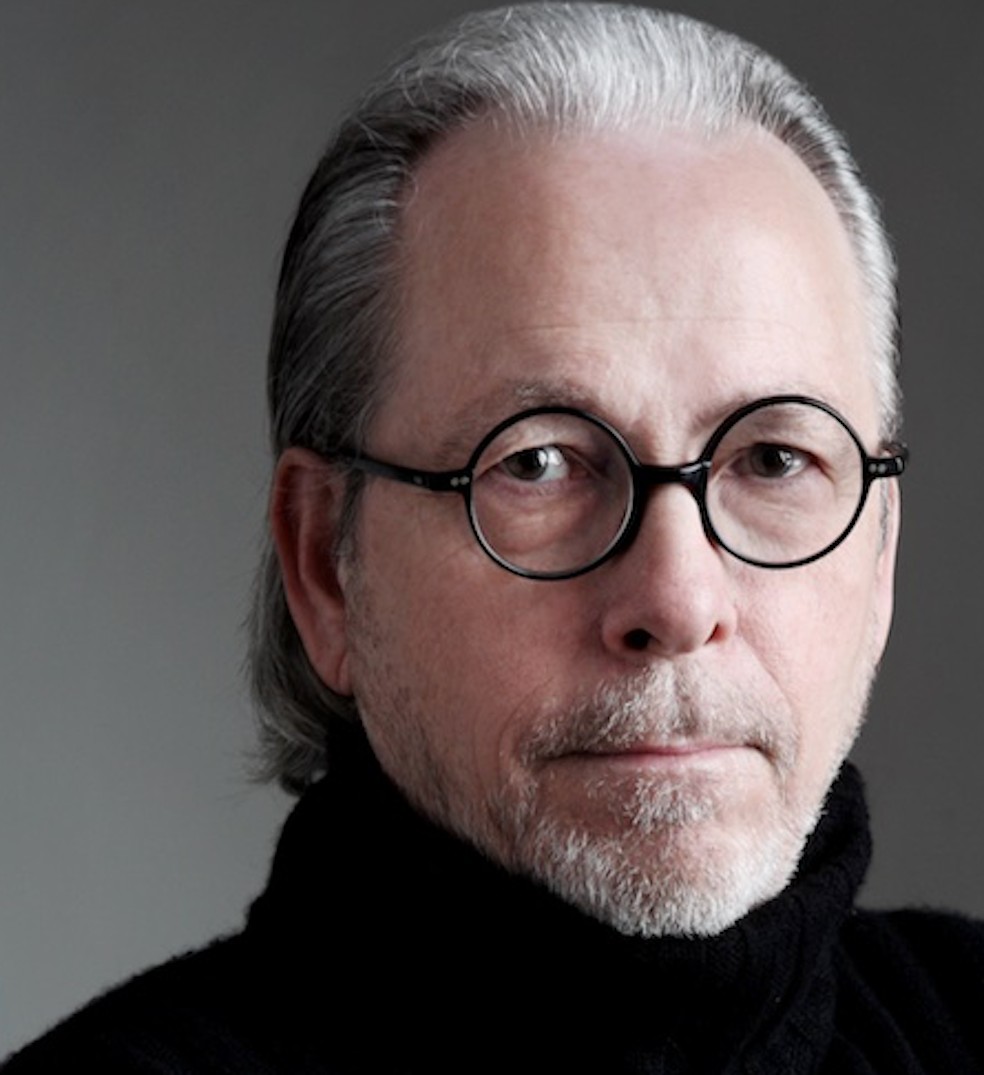
 Jake Needham is an American-born novelist and former screenwriter who has lived in Asia—mainly Thailand and Singapore—since the early 1980s. He has published 18 books and has been nominated for the Barry Award three times. His seventh book in the Inspector Tay series — Who the Hell Is Harry Black? — won the Barry Award for Best Paperback Mystery of 2024.
Q. You are originally from Houston, Texas, but you have been living in Asia since the 80s. That is a long time in Asia. Tell us what first drew you here, particularly to Bangkok, which at the time was probably not as popular with foreigners as it is today?
I first came to Bangkok in the 70s, but I didn’t really live here until the early 90s. I lived in Sydney from 1981 and had spent a decade traveling all over Asia as a lawyer and company director involved in guiding international corporate mergers and acquisitions, so I knew Bangkok pretty well, but living here in the normal sense of that phrase came about just as many things in life do: mostly by accident.
Back in the late 80s, I had ended up as the less than happy owner of a small film and television production company in LA. The company mostly made low-budget movies for television, which was the shit end of the film business, so you really couldn’t consider it much of a Hollywood player.
Like every other lawyer who has ever gotten involved in Hollywood, however, I figured I might do something with the company by making it function on what I thought was a more businesslike basis. That was just a conceit, of course. What everyone who comes to Hollywood learns eventually is that nobody in Hollywood really wants anything to run better. They like it the way it is. And if you try to change anything, you define yourself as a threat to their well-being.
Anyway, I sketched out a couple of rough outlines of the kind of films to which I thought the company could better apply its resources and circulated them to the development people. Then one day, one of my guys came in and announced that he had great news. It seems he had sent one of my little outlines to a contact of his at HBO, and HBO had agreed to fund production of the film. My God, I told him, that wasn’t a film. That was a business plan. Doesn’t matter, he said. HBO will fund it, so sit down and write the damn thing. I did.
It turned out to be an okay script, I guess, because on the strength of it, we talked Ali McGraw into signing onto the cast, and that brought in some other good cast members. Ali hadn’t made a movie in some time, but a certain aura still clung to her after those huge films she’d done like Love Story and The Getaway that had become classics of a sort, so having Ali gave the production a bit of heat. We filmed in Bangkok in the very early 90s, and our being there got a fair amount of attention locally because of the Hollywood glitz that Ali’s involvement gave it.
One of the major Thai magazines at the time was a local edition of the British society magazine Tatler, and my wife was the editor. She had been born in Bangkok, but she grew up in the UK and graduated from Oxford, and she had just come back to Thailand because of the magazine.
Of course, she wasn’t my wife yet when she came out to the set one day to interview me, but a year or so later she was. After we married, we established a residence here in Bangkok as well as kept my occasional residence in LA going. Aey had all sorts of obligations here, family and otherwise, that required us to be around Bangkok quite a lot, so we were.
And that, friends, is how I came to be living in Bangkok.
See what I mean? Just another of life’s accidents.
Q. Before you became a novelist, you were a screenwriter and television producer. Can you walk us through the moment you realized you wanted to write a novel instead of another script?
Writing my first novel was just something I did on a whim, really. I guess the truth was I never particularly liked movies, so turning into an accidental screenwriter was really deeply weird. From a business standpoint, I thought the process of getting movies made was a fascinating exercise in management, but I just wasn’t much of a movie fan.
Anyway, in the mid-90s, I sat down one day and thought I’d see if I could figure out how to write novels instead. There was a lot less money in it, of course, I knew that, but I thought there might be other compensations.
Now, you have to understand that I didn’t have the first idea how to go about writing a novel, and absolutely no guidance from anyone who did, so the book I wrote came out pretty much like a screenplay rendered in prose rather than as a screenplay. Which wasn’t necessarily a bad thing.
Over the next fifteen or twenty years, that book must have been optioned for films at least a dozen times by everybody from Tom Cruise to James Gandolfini. The movie never got made, of course. Almost none of the novels optioned for movies ever are. But all those option fees spread out over a couple of decades made it a very nice little earner for me.
Q. You have been called Asia’s most popular English-language crime novelist. What is it about Asia, Bangkok especially, that makes it such a fountain of inspiration for your crime stories, even more than the traditional Western settings we usually see in mainstream media, and what potential do you see for the English-language novel in Asia?
I had a friend who was CIA station chief in Bangkok quite a while back, and he called me up one day and read me the riot act about a novel I had just published. He was furious that I had revealed details of some recent operation and demanded to know who had told me about it.
It took me a while, but I finally convinced him that nobody had told me about anything. Every word he read was something I had just made up. I had no idea any of it was actually true.
Finally, he laughed and said, “I guess that’s the thing about Asia. You can’t really make up anything. Whatever you try to make up, somebody is either going to come up to you and tell you it’s actually true, or they’re going to come up to you and tell you that it’s about to be true.”
Years after that, I wrote another novel which turned on a Prime Minister of Thailand being smuggled out of the country to prevent her being detained and even possibly imprisoned by the military. Within a few weeks of the book’s publication, more or less exactly what I had described actually happened. I had to insert a note in subsequent editions of the book, saying, “I made this all up, honest. I had no idea it was actually going to happen.” I think very few people believed me.
And that ought to tell you exactly why I have published sixteen novels set in contemporary Asia.
Q. One of your novels, The Ambassador’s Wife, got tangled up in distribution issues with the Singapore authorities. During your years in Asia, did you have to be particularly sensitive when creating your characters and settings?
The Ambassador’s Wife was the first of what eventually became a series of nine novels featuring Inspector Samuel Tay of Singapore CID. It never occurred to me when I was writing the book that it was in any way controversial, but leave it to the government of Singapore to find something to be offended about.
I had pretty good contacts in Singapore in both the police and the intelligence services, but after The Ambassador’s Wife was published, I lost them all.
You see, Singapore doesn’t look kindly on the portrayal of any Singaporean as anything other than fifteen feet tall and filled with limitless virtue. There are no lazy, inept, or — God forbid — dishonest cops. Not a one. I’m sure you’ll find the portrayal of the local cops in The Ambassador’s Wife to be pretty benign, even laudatory, but the merest hint that an investigation could be influenced by political considerations is utterly unacceptable in Singapore.
Here’s how seriously they take that. A year or so before I published that book, an elderly British writer and academic named Alan Shadrake had actually been arrested when he visited Singapore to deliver a lecture and was sentenced to a year in prison. He had once written about some court case in Singapore, and he had offered the view that the decision had been influenced by the government. For that, he was convicted of the offense of “bringing the government of Singapore into disrepute.” Seriously. He was.
After The Ambassador’s Wife came out and a few people in the police and government read it, pressure was immediately put on my local publisher to withdraw it from distribution in Singapore, and they did without so much as a whimper. Outside of Singapore, however, it was quite a different story. The Ambassador’s Wife became one of my all-time bestselling books. It even made it all the way to #1 on Amazon bestseller list.
But there’s a little more to this than just having my book effectively banned in Singapore.
The British Ambassador to Singapore back then was a friend, and he told me that his local MI6 people had asked him to pass along to me that they thought it wasn’t safe for me to return to Singapore. If I did, they said, I would likely face arrest by the Internal Security Department, a Singapore government agency that has draconian powers to detain people without charges. I would have just laughed the whole thing off, but Alan Shadrake was sitting in prison for a similar reason right then, and I doubted he was laughing.
The whole threat was probably a bit of melodrama, but if you can’t trust MI6 who can you trust, right? Then, too, being told you can’t return to Singapore is rather like being told you can’t have another colonoscopy. Not all bad news.
Anyway, that’s the only problem I’ve had in Singapore — none in Hong Kong, none in Thailand.
Q. Even to this day, Western media tends to misinterpret Southeast Asian culture. It is always the same clichés—like women must wear qipao, and men are supposed to be doing some martial arts stunts. Then the recent BBC documentary Thailand: The Dark Side of Paradise presents a misleading portrayal of the country. When you write your novels, do you describe your settings exactly as you experienced them in real life, and how do you dismantle stereotypes?
All of my books draw heavily on the reality of contemporary Asia, and I take pride in that. I think the greatest compliment I get is when people say, “It felt so real it was as if I was right there.” I’m very careful about details. If a character is moving around a city, I check a map to make sure that the left turn he takes is really a left turn.
A few years back, a fan of my Inspector Tay series took a vacation in Singapore and set himself the task of finding locations I had described in the novels. After that, he sent me a photograph of the house he had decided was the one in which Inspector Tay lived. And it was. He had found the exact house I had actually been describing in the novels by simply following the descriptions and directions in the narratives. I thought that was pretty cool.
As far the issue of stereotypes and dismantling them, that’s not my job. I tell stories I hope people find entertaining. I’m not trying to teach anybody anything.
Yes, I know, a lot of publications, particularly the UK media for some reason, try to draw in readers by portraying Bangkok as little more than a whorehouse with traffic lights, and of course that’s bullshit, but it’s simply not my job to try to teach people the truth.
I entertain. I don’t lecture.
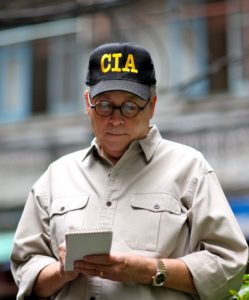
Q. What’s one memorable story you could tell from your travels in Southeast Asia?
Back in the 70s, when I made my first trip to Thailand, I was working my way through law school by lecturing in history and government at a women’s college in Washington DC. One of my student’s father was the CIA station chief in Bangkok, so she naturally insisted I look him up when I was there, and I did.
He was wonderfully hospitable to me, and even made arrangements for me to go up to Chiang Mai, where he had one of his guys meet me and show me around. Now remember, this was back in the early 70s, five years before the fall of Saigon, and Chiang Mai was still pretty much behind the moon then.
My guide was something of a cliché, dressed all in black with dark aviator sunglasses, but I remember him as a delightful fellow who seemed quite happy to fill me in on all sorts of things he probably shouldn’t have, some of which eventually found their way into novels I would eventually write years later.
One day he came around in a jeep to pick me up and drove me somewhere only about an hour outside of Chiang Mai. We parked the jeep and walked up a dusty trail to the top of a ridgeline, and when I looked down from there, I could see fields of opium poppies in full bloom stretching for what appeared to be miles over the rolling hills. It was a remarkable sight.
This was when presumably the cultivation of opium poppies had been completely eradicated in Thailand, and everyone said that the only sources for opium in the area were in Burma and the area known as the Golden Triangle.
That was my first lesson in how things worked in Thailand. Seldom is anything actually what you’re told it is.
Q. What would be your advice to authors who write fiction based on their travels?
If you’re going to set your stories in real places, you have a responsibility to keep those places … well, real.
Write fantasy or sci-fi if you want to make up worlds, but keep whatever real worlds you write about absolutely true to life. So true that people could use your narrative as a map to walk around them.
Your readers will thank you for it.
All photographs credit: Jake Needham




Jake Needham’s journey from screenwriting to becoming an acclaimed novelist in Asia is both fascinating and inspiring. His insights into the intricacies of writing about culturally rich settings, alongside the unexpected consequences of his storytelling, reveal the depth of his experiences. It’s refreshing to see an author so committed to authenticity, making his narratives resonate with readers on multiple levels.
I hope to bump into Jake at Bangkok Louie’s one of these days 🙂