The morning mist clung to the steep rice terraces as our jeepney wound its way through the mountain roads of Kalinga province. We had departed Tabuk City, the provincial capital, before dawn, aiming to reach the remote village of Buscalan by midday. The journey was as much a destination as the village itself—every hairpin turn revealed breathtaking vistas of emerald terraces carved into mountainsides, a testament to the agricultural ingenuity that has sustained life here for centuries.

Kalinga, one of the six provinces that make up the Cordillera Administrative Region in northern Luzon, remains one of the Philippines’ final frontiers of traditional culture. Despite the encroachment of modernity, many of the province’s indigenous communities maintain their ancestral ways of living, creating a compelling tapestry of the ancient and contemporary that draws travelers seeking authentic cultural experiences beyond the country’s beaches and colonial cities.
The Road Less Traveled
“The road to Buscalan wasn’t always this accessible,” explained our driver, Ruel, as he skillfully navigated a particularly steep section. “Ten years ago, you would have had to hike for hours from the last passable point. Now, if the weather is good, we can get much closer.” Despite these improvements, our journey was far from effortless. During the rainy season, landslides frequently render these mountain passes impassable, isolating villages for days or even weeks.
We stopped at a small roadside store perched on the edge of a cliff to stretch our legs and drink strong, sweet coffee from thermos flasks. The panorama before us seemed to extend infinitely—layers of mountains fading into the distance, their steep slopes transformed into stair-like terraces through generations of careful farming. The rice terraces of Kalinga may lack the UNESCO recognition of their counterparts in Banaue and Batad, but they are no less spectacular, and certainly less crowded with tourists.
Buscalan: Home of the Last Mambabatok
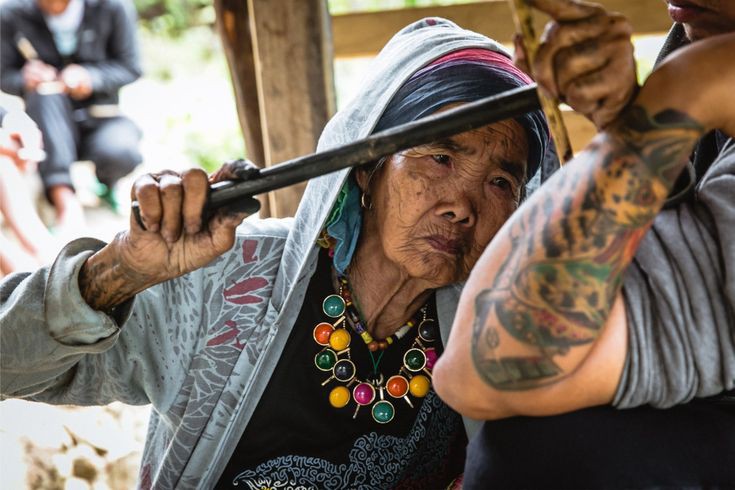
Our destination, Buscalan, has gained international recognition in recent years as the home of Whang-Od Oggay (also spelled Apo Whang-od), believed to be the last traditional Kalinga tattoo artist, or mambabatok, of her generation. Born sometime in the 1910s, Whang-Od has practiced the ancient art of hand-tapped tattooing for over eighty years, using a thorn from a pomelo tree, bamboo, and soot as her implements.
After parking at the trailhead, we began the final leg of our journey—a steep 30-minute hike down to the village. The narrow path, slippery from recent rain, wound through coffee bushes and banana plants. Local children raced past us with remarkable agility, some offering to carry our bags for a small fee.
Buscalan revealed itself gradually—a cluster of wooden houses with corrugated metal roofs nestled into the mountainside, surrounded by vegetable gardens and fruit trees. Chickens and pigs roamed freely, and the unmistakable aroma of woodsmoke hung in the air. Though electricity had reached the village in recent years, many aspects of daily life remained unchanged from generations past.
“Welcome to our home,” greeted Grace, our local guide and Whang-Od’s grandniece, who had arranged our homestay. “The elders say visitors are a blessing—they bring news and stories from the outside world.” As we settled into the wooden house where we would spend the night, I noticed the walls adorned with black and white photographs of the village from decades past, showing how little the fundamental character of the place had changed despite selective modernization.
Living History in Skin and Memory
In a small hut at the center of the village, we finally met Whang-Od, now well over 100 years old but still practicing her ancient craft. Her face and arms were adorned with intricate traditional tattoos, and her hands, though visibly weathered by time, moved with precision as she demonstrated her technique on a young woman who had journeyed from Manila to receive a traditional design.
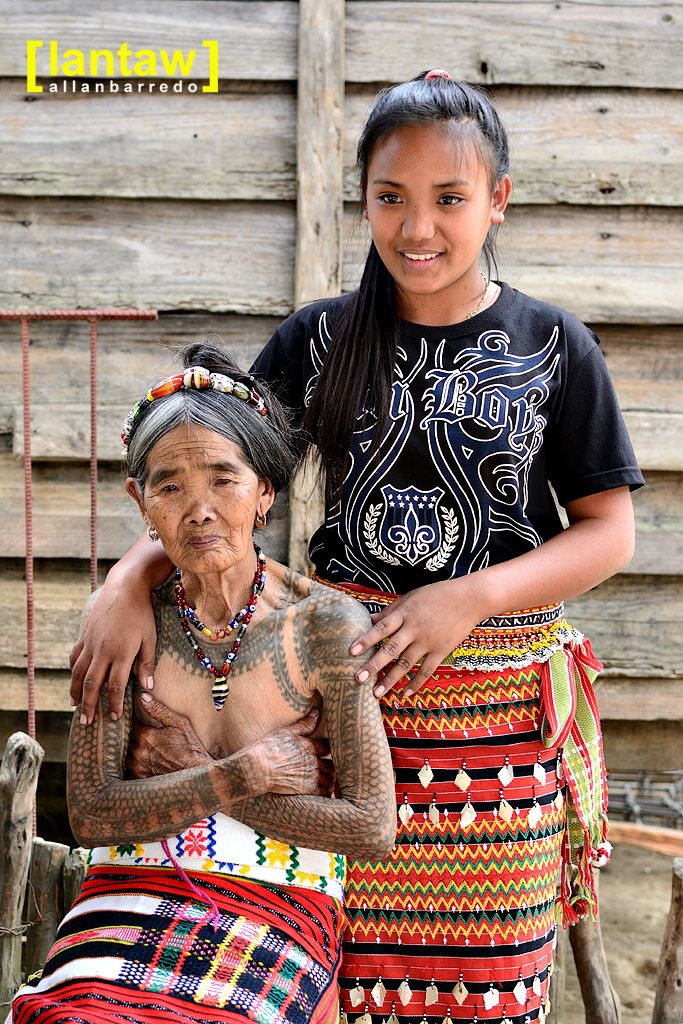
Whang-Od has now trained several young women from the village, including Grace, to ensure the tradition continues. “We are adapting to preserve our culture,” Grace told us. “We know that tourism has changed things, but it has also created a renewed interest in our traditions among the younger generation.”
The evening brought the entire village together for a small cultural presentation that had become a regular occurrence for visitors. Though partly arranged for tourism, there was an unmistakable authenticity to the traditional dance performances and music played on gongs and bamboo instruments. Elders shared stories of the village’s history, including tales of headhunting—a practice that defined Kalinga’s warrior reputation until the early 20th century but has long since ended.
Beyond Buscalan: The Heartland of Kalinga
After two days in Buscalan, we continued our journey through Kalinga, venturing to other villages less frequented by international travelers. In Tinglayan, we witnessed the Awong Wi cultural festival, a gathering that celebrates the agricultural cycle with traditional dances, games, and feasting. The elders, dressed in vibrant handwoven textiles and adorned with beaded accessories, led the younger generation in rituals that have marked the changing seasons for centuries.

The Chico River, which flows through the heart of Kalinga, offered another perspective on the province’s natural beauty. We joined a local fisherman for a morning on his bamboo raft, drifting along calm stretches and navigating occasional rapids. “This river is our lifeline,” he explained, casting a traditional net fashioned from plant fibers. “But it was almost our destruction.” He was referring to the controversial Chico River Dam Project of the 1970s, which would have flooded much of the Kalinga homeland. The successful opposition to the project, led by tribal leaders like Macli-ing Dulag (who was assassinated for his activism), remains a defining moment in the province’s recent history and in indigenous rights movements worldwide.
In the town of Lubuagan, once the center of Kalinga political power, we visited a small museum that preserves artifacts from the region’s past—traditional weapons, household items, and ritual objects. The curator, a young Kalinga scholar who had returned to his homeland after university studies in Manila, spoke passionately about the challenges of cultural preservation.
“Our greatest struggle is finding balance,” he explained. “We want the benefits of development—better healthcare, education, and economic opportunities—without losing what makes Kalinga unique. It’s not about rejecting progress but embracing it on our own terms.”
The Changing Face of Kalinga
Our final days in Kalinga were spent in Tabuk City, the province’s rapidly developing administrative center. Here, the contrasts between traditional and contemporary life were most apparent. Modern concrete buildings stood alongside traditional wooden houses; young people in jeans and t-shirts walked past elders in traditional dress; internet cafes operated a short distance from workshops where traditional weavers created intricate textiles.

At the local market, the rich agricultural bounty of the region was on display—unique rice varieties grown on the terraces, coffee from mountain plantations, and fruits and vegetables cultivated using techniques passed down through generations. “Kalinga has always been self-sufficient,” explained a market vendor as she measured out fragrant heirloom rice. “Even during the most difficult times, the land provided for us.”
This self-sufficiency has fostered a fierce independence that still characterizes the Kalinga people. Though now fully integrated into the Philippine nation, they maintain a strong sense of cultural identity and autonomy that distinguishes them from lowland Filipino cultures influenced by centuries of Spanish colonization.
Departing, But Carrying Memories
As our jeepney climbed the mountain roads leading out of Kalinga province, I reflected on what makes this region so compelling for travelers. It’s not just the spectacular landscapes or the opportunity to observe living traditions. It’s the remarkable resilience of a culture that has selectively embraced aspects of modernity while maintaining its essential character.
Kalinga offers no pristine beaches or luxury resorts. Its treasures require effort to reach, and comfort sometimes must be sacrificed. Yet for travelers willing to venture beyond the familiar, the province provides something increasingly rare in our globalized world—a place where ancient traditions remain living practices rather than museum displays.
The true value of Kalinga lies in its people and their ongoing story—a narrative of adaptation and perseverance that has allowed them to maintain their cultural identity despite centuries of external pressures. As we travelers pass through their homeland, we are privileged witnesses to a way of life that has much to teach our faster-paced, often disconnected modern world about community, sustainability, and the enduring importance of cultural roots.
When I look back at the small traditional tattoo I witnessed in Buscalan—three simple lines representing the mountains—I’m reminded not just of the breathtaking landscapes, but of the people who have shaped and been shaped by this remarkable corner of the Philippines for countless generations, and who continue to write their story on their own terms.




Leave a Reply