I landed in Barcelona with a broken suitcase wheel, a dead phone, and absolutely no idea what I was doing.
It was my first solo trip to Spain, and I’d spent weeks reading guides that all said the same thing: “Visit the Sagrada Familia before 9 AM for the best lighting.” Helpful? Sure. But not exactly the kind of advice that prepares you for the moment you step out of the metro into a plaza full of strangers, with the Catalan sun on your face and no plan beyond “find food.”
Five days later, I left Barcelona with a list of mistakes I wouldn’t make again — and a handful of moments I still think about years later. This itinerary is built from both.
No 9 AM lighting tips. Just the real stuff.
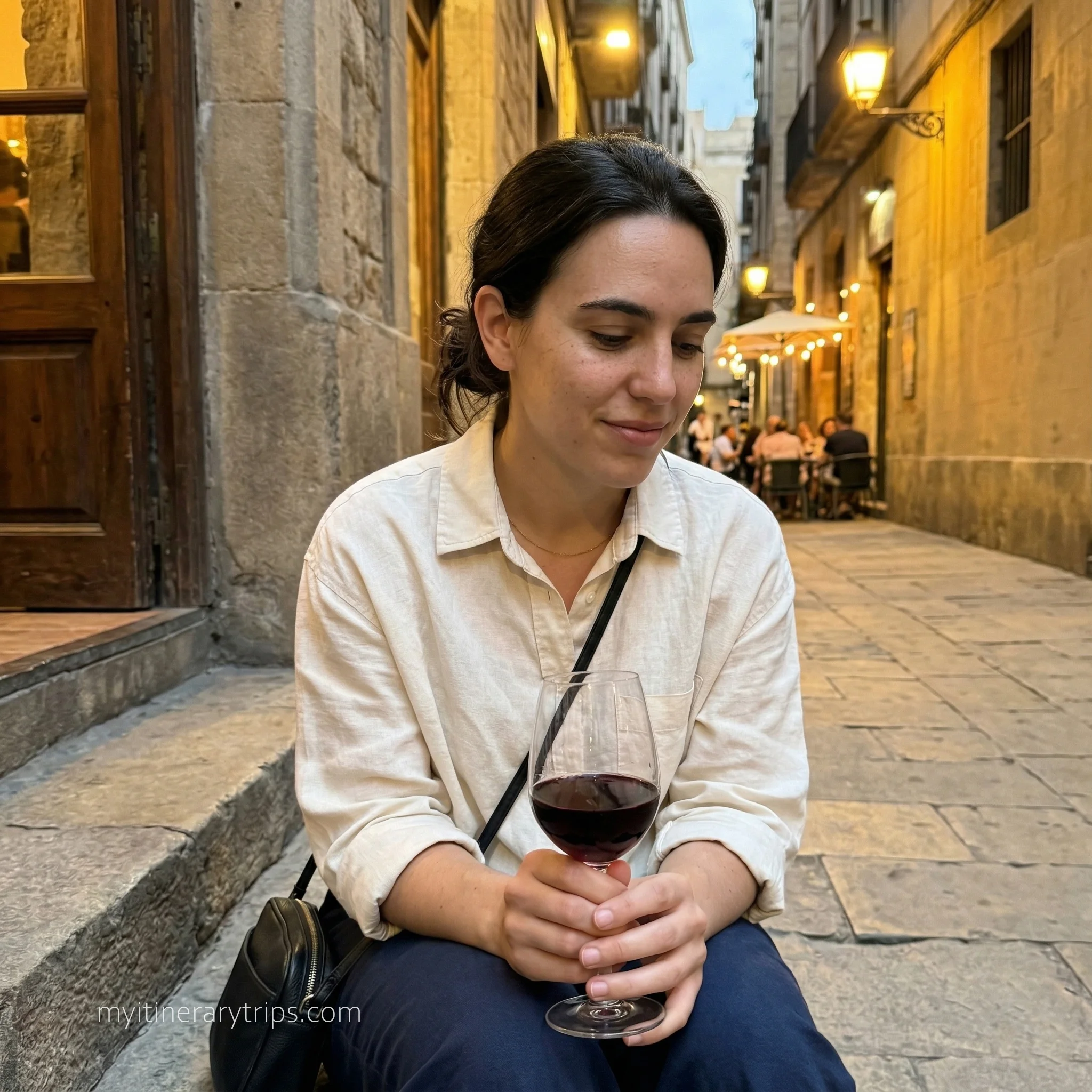
Day 1: Gothic Quarter, Las Ramblas & The Art of Getting Lost
Morning: El Born & the Gothic Quarter
Skip the map. Seriously. The Gothic Quarter is at its best when you’re slightly lost — the streets are so narrow and winding that GPS gives up anyway. Start at Basílica de Santa Maria del Mar in El Born, then drift south into the Gothic Quarter. You’ll stumble onto Plaça Reial, with its palm trees and Gaudi-designed lampposts, whether you mean to or not.
Coffee stop: Satan’s Coffee Corner in El Born. The name is aggressive but the flat white is excellent, and it’s a good spot to sit outside and watch locals argue about football.
Afternoon: Las Ramblas (Briefly) & La Boqueria
Las Ramblas is the most famous street in Barcelona. It’s also a tourist conveyor belt. Walk it once — it takes about 20 minutes — then step into Mercat de la Boqueria, the massive food market just off the strip.
Here’s the move: don’t eat at the first stalls by the entrance. They’re overpriced and designed for people who just walked off Las Ramblas. Push deeper into the market toward the back, where the prices drop and the crowds thin. Grab a cone of jamón, some fresh fruit, and a €2 empanada, and you’ve got lunch for under €8.
Evening: Dinner in El Born
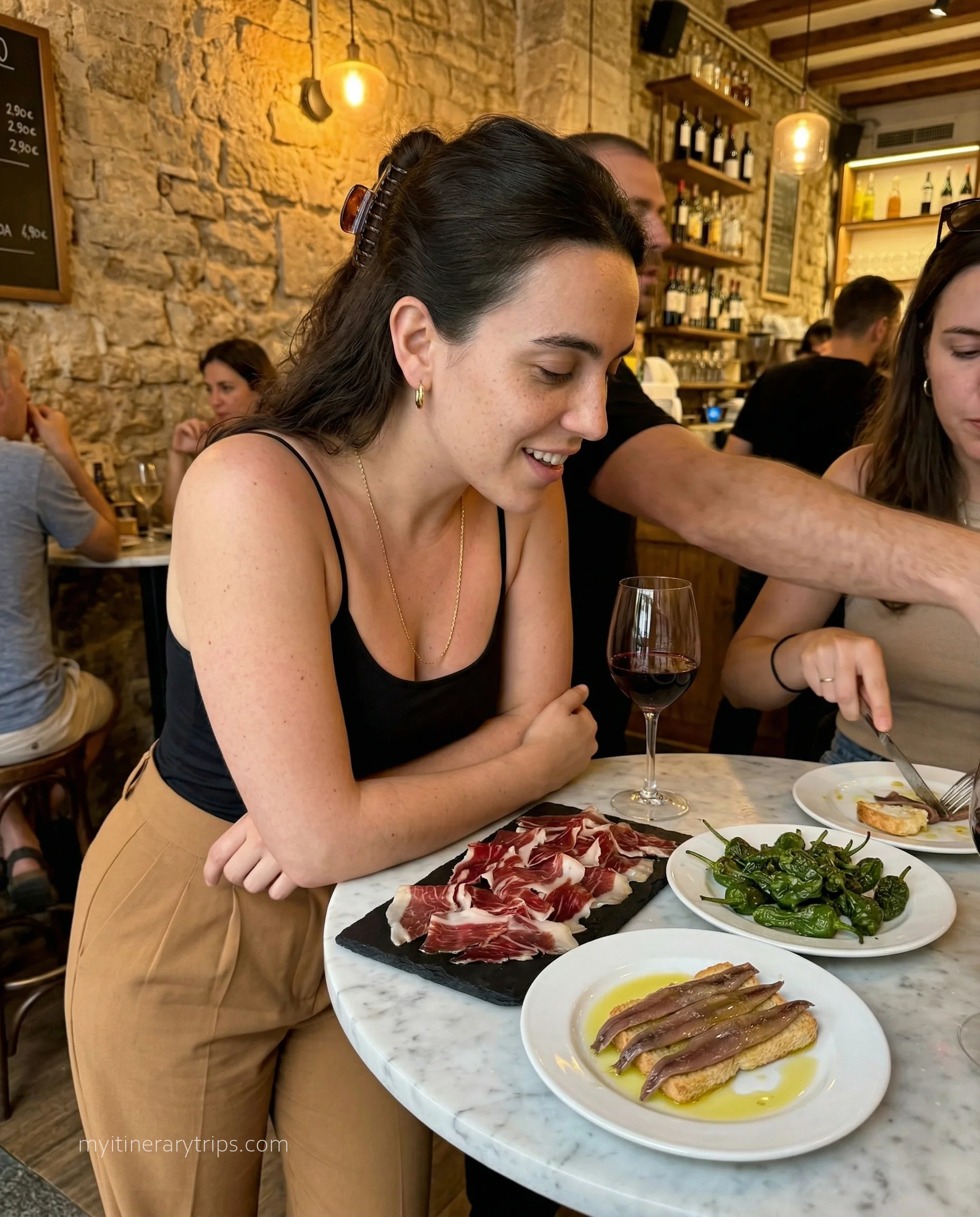
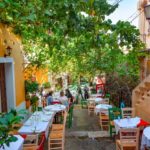
Barcelona eats late. Restaurants don’t fill up until 9 PM, and if you show up at 7, you’ll be dining alone with the staff. Use this to your advantage — wander El Born in the early evening when the streets are quiet, then grab dinner at Cal Pep or El Xampanyet, two legendary tapas spots within spitting distance of each other. Both are loud, crowded, and absolutely worth the wait.
Day 1 budget: €35–50 including coffee, market lunch, and tapas dinner with wine.
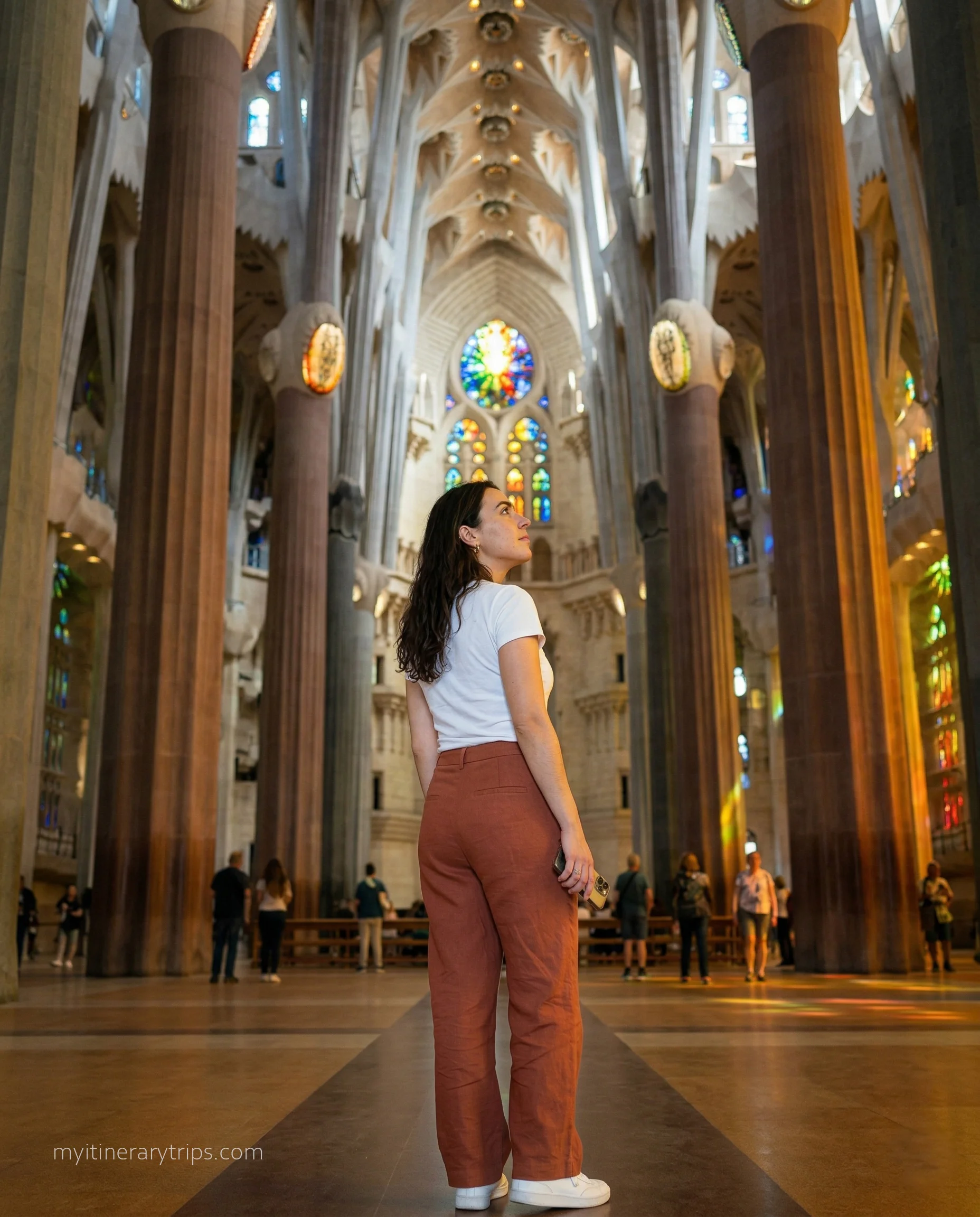
Day 2: Gaudí Day — Sagrada Familia, Park Güell & Passeig de Gràcia
Morning: Sagrada Familia (Yes, It’s Worth It)
You’ve seen the photos. You know it’s unfinished. None of that prepares you for standing inside.
The light through the stained glass is the thing nobody adequately describes — one side is cool blues and greens, the other is warm oranges and reds, and the whole interior shifts color as the sun moves. Book tickets at least 3–4 days ahead online. The basic entry is €26, and the tower access (€36) gives you a view of the city plus a slightly terrifying spiral staircase descent. I did both. The staircase made my knees shake. I’d do it again.
Midday: Passeig de Gràcia
Walk up Passeig de Gràcia, Barcelona’s most elegant avenue. You’ll pass Casa Batlló and Casa Milà (La Pedrera) — two Gaudí-designed residences that look like they were built by someone who’d never seen a straight line. You don’t need to go inside both. Pick one. Casa Batlló is the more trippy experience; La Pedrera has the better rooftop.
Afternoon: Park Güell
Park Güell is the colorful hilltop park Gaudí designed, and it’s technically free — except for the famous mosaic bench area, which requires a €10 ticket. Is the ticketed section worth it? Honestly, yes, but only if you book the first or last time slot. Midday in summer is a furnace packed with selfie sticks, and that ruins the magic fast. The free section is also beautiful and far less crowded.
Dinner: Gràcia Neighborhood
Skip the tourist restaurants near Park Güell and walk 10 minutes into the Gràcia neighborhood. This area used to be a separate town, and it still feels like one — full of small plazas, local bars, and barely any English menus. Find a seat at a terrace on Plaça del Sol or Plaça de la Vila de Gràcia, order patatas bravas and a glass of vermut, and watch the neighborhood come alive around you.
Day 2 budget: €60–85 including attraction tickets, lunch, and dinner.
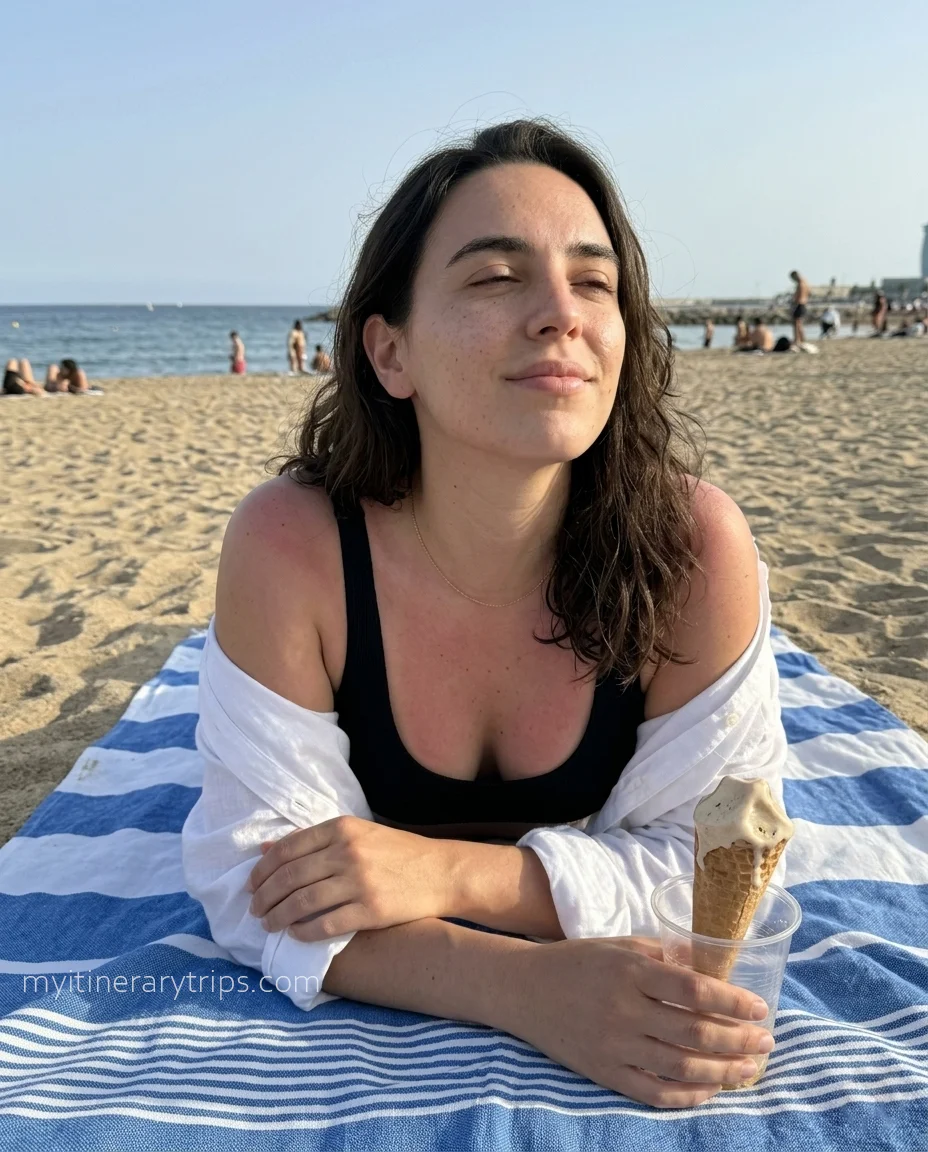
Day 3: Montjuïc, the Beach & Barceloneta
Morning: Montjuïc Hill
Montjuïc is Barcelona’s green escape — a hill overlooking the city with gardens, museums, and the Castell de Montjuïc at the top, an old military fortress with sweeping views of the port. The Montjuïc cable car from the port costs €16.50 round trip, but you can also walk up through the gardens for free and catch the same views with more sweat equity. I walked. My calves are still recovering.
Afternoon: Barceloneta Beach
Barceloneta is Barcelona’s city beach, and it’s exactly what you’d expect — crowded, lively, and not the cleanest stretch of sand you’ll ever see. But on a hot afternoon with a cold drink in hand, none of that matters. Rent a sun lounger (€10), take a swim, and let the afternoon dissolve.
Warning: The restaurants right on the beachfront in Barceloneta are tourist traps. Walk two blocks inland to Carrer de l’Almirall Aixada or Carrer del Baluard for better, cheaper seafood.
Evening: Sunset at a Chiringuito
Find a chiringuito — a beach bar — and order a €4 caña (small beer) and a plate of grilled sardines. Watch the sun drop behind the city. It’s simple, it’s cheap, and it might be the best evening of your trip.
Day 3 budget: €30–50.
Day 4: Day Trip to Montserrat
Barcelona is great. But after three days of urban intensity, your soul might need a mountain.
Montserrat is a jagged mountain range about an hour outside the city, crowned by a Benedictine monastery. The rock formations look like they were carved by giants with bad tempers. It’s one of the most surreal landscapes I’ve ever seen, and it’s accessible by a €26.60 round-trip train + cable car combo ticket from Plaça d’Espanya.
What to do there:
- Visit the Black Madonna inside the basilica (free, but the line can be long)
- Hike to Sant Jeroni, the highest point — it’s about 2.5 hours round trip with incredible panoramic views. Bring water. The café at the top was closed when I went, and thirst at 1,236 meters is not romantic.
- Listen to the boys’ choir (Escolania) perform in the basilica — they sing at 1 PM daily except Saturdays and during school holidays
Pro tip: Take the first train out (around 8:35 AM) to beat the crowds. By noon, the monastery plaza is shoulder-to-shoulder tour groups.
Day 4 budget: €35–50 including transport and food.
Day 5: Slow Morning & Your Own Barcelona
Day 5 is yours. Not mine. Not a checklist’s.
Here’s what I did on my last day: slept in, found a café in Sant Antoni — a neighborhood most tourists never see — and wrote in my journal for two hours while old men played dominoes at the next table. Then I walked to the Museu Nacional d’Art de Catalunya, sat on the steps outside (free, no ticket needed), and watched the city stretch out below me. I bought a €3 ice cream from a cart. I wandered back through Poble-sec and found a tiny restaurant where the owner spoke no English and served me the best paella I’ve ever eaten, entirely through gestures and mutual goodwill.
That’s the Barcelona worth finding. Not the one in the guidebooks.
Day 5 budget: Whatever’s left in your pocket.
What I’d Skip Next Time
| Skip This | Why |
|---|---|
| La Sagrada Familia museum in the basement | It’s mostly construction history. You just saw the real thing upstairs. Save your time. |
| Las Ramblas restaurants | €14 for a mediocre paella photographed on a menu board? No. |
| Casa Milà interior (if you already did Casa Batlló) | Both are great, but doing both in one trip is Gaudí overload. Pick one. |
| Overpriced flamenco shows on Las Ramblas | Go to Tablao de Carmen in Poble Espanyol or Los Tarantos in Plaça Reial instead. |
Quick Budget Summary
| Day | Estimated Cost |
|---|---|
| Day 1: Gothic Quarter | €35–50 |
| Day 2: Gaudí | €60–85 |
| Day 3: Montjuïc & Beach | €30–50 |
| Day 4: Montserrat | €35–50 |
| Day 5: Slow Day | €20–40 |
| Total (5 Days) | €180–275 |
That’s about $195–300 USD — very manageable for a major European city if you avoid the tourist traps and eat where locals eat.
Final Thought
Barcelona is not a city that reveals itself through bullet points. It’s loud, it’s chaotic, it’s occasionally frustrating, and it’s absolutely worth it. The best moments I had weren’t at ticketed attractions — they were on random corners, in random bars, talking to people whose names I never caught.
So use this itinerary as a skeleton. Then let Barcelona fill in the rest.
Buen viaje.



Barcelona has so much to offer. Did you include any local spots for authentic tapas?
Hi! I did mention a couple — Cal Pep and El Xampanyet, both in El
Born, are as authentic as it gets. El Xampanyet is my personal
favorite: tiny, always packed, and they’ve been pouring their
house cava the same way since 1929. Get there right when they
open or be prepared to wait.
One I didn’t include but wish I had: Quimet & Quimet in Poble-sec.
It’s standing room only, walls lined with bottles, and they serve
these incredible montaditos — little topped toasts — that’ll ruin
regular tapas for you. The salmon, yogurt, and honey one sounds
wrong but trust me on it.
Thanks for reading!