Cruise ship headlines can make ocean travel feel a lot riskier than it actually is. Most ruined vacations stem from ordinary, entirely preventable problems that get handled far too late. The CDC Vessel Sanitation Program typically logs only 10 to 14 total notable norovirus outbreaks across the entire cruise industry in an average year, and when you board a ship, you’re entering a busy, highly managed environment where everyday issues like stomach bugs and slippery decks require basic, practical preparation.
Unusual stories grab attention, but standard travel illnesses are what you actually need to prepare for. More than 100 passengers and crew members were affected in a major Caribbean Princess norovirus outbreak. Similarly, a gastrointestinal illness outbreak recently affected 13.6% of passengers on the National Geographic Sea Bird. These common issues spread or escalate more quickly at sea due to shared spaces and delayed access to land-based care. Knowing what to do in advance will genuinely save your vacation.
The Cruise Health Risks Most Travelers Should Actually Worry About
Why rare diseases make headlines, but common problems ruin more trips
News outlets understandably rush to cover highly unusual, severe diseases that sound terrifying to the general public. The World Health Organization officially confirmed 13 cases of Andes hantavirus linked to a cruise event, which tragically included three deaths, before declaring the outbreak fully contained and the public risk low—as documented in the official WHO Disease Outbreak News Alert. The point isn’t to ignore rare illnesses, but you should avoid overcorrecting your travel plans based on highly unusual cases. You’re significantly more likely to face familiar risks like dehydration, heat exhaustion, bad sunburns, and slips on wet decks than anything making international news. Preparing for these routine hazards keeps you out of the ship’s medical center and lets you spend your time actually enjoying the sun.
A simple risk comparison you can actually use
Comparing your real risks side by side takes most of the anxiety out of pre-trip planning. You might be surprised to learn that slip-and-fall incidents, such as a typical Royal Caribbean cruise injury, are a leading category of injury claims by filing volume against cruise lines. The data consistently shows that common accidents and routine viral bugs deserve the most attention, not the scary headline scenarios. I keep a mental checklist of these risks to make sure I pack the right prevention tools. Use the comparison table below as a straightforward guide to prioritize your safety on board.
| Risk | How common/likely | Typical cause | Best prevention move | When to act fast |
| Norovirus/GI illness | Relatively common in shared travel settings | Contaminated hands, food, surfaces | Handwashing with soap and water | Vomiting, diarrhea, dehydration |
| Dehydration | Very common | Heat, alcohol, activity, not drinking enough water | Hydrate early and often | Dizziness, dark urine, confusion |
| Slips/falls | Common | Wet decks, stairs, poor footwear | Non-slip shoes, slow down in wet areas | Head injury, severe pain, swelling |
| Hot surface burns | Common in sunny climates | Decks, metal fixtures, barefoot walking | Sandals or water shoes | Blistering or severe pain |
| Rare headline illness | Very low for most travelers | Specific outbreak conditions | Follow official health guidance | Fever, breathing issues, official notice |
How to Lower Your Risk Before You Even Board
What to pack for a healthier cruise
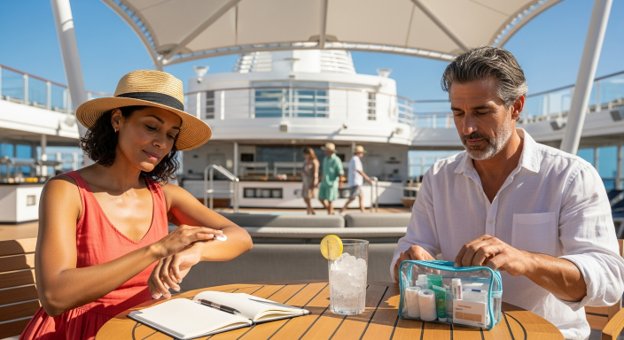
Building a reliable travel medical kit saves you from hunting down overpriced supplies in the ship’s gift shop at the worst possible moment. Packing smart means focusing on items that handle the most likely physical ailments you’ll encounter on the water. Medical professionals stress that washing your hands thoroughly with soap and water remains a primary defense against gastrointestinal illnesses. Packing portable soap sheets ensures you stay protected during shore excursions if local restrooms run out of supplies. I always pack the following essentials to keep my family healthy while sailing:
- Prescription medication in original containers
- Small OTC kit: anti-diarrheal, motion sickness remedy, pain reliever, oral rehydration salts
- Reef-safe sunscreen
- Reusable water bottle
- Hand soap sheets or access to soap when possible
- Alcohol-based sanitizer for backup, keeping in mind it’s not the best defense against norovirus
- Non-slip sandals or deck shoes
- Basic bandages and blister care
- Copies of insurance cards and emergency contacts
Choose your cabin and itinerary with health in mind
Your cabin location and daily schedule play a bigger role in how your body handles the stress of travel than most people expect. If you’re prone to motion sickness, booking a midship cabin on a lower deck often helps stabilize the ride considerably. If you’re highly sensitive to heat, avoid overloading your port days with intense midday excursions, especially on Caribbean or Mediterranean routes where temperatures routinely top 90 degrees by noon. Experts also remind older travelers that cruise ships have limited medical resources compared to modern land-based hospitals, so taking an honest look at the intensity of your planned excursion before finalizing your booking is time well spent.
Know your own risk factors before sailing
A little self-awareness goes a long way toward preventing serious medical complications when you’re miles away from your primary care doctor. Travelers dealing with immune suppression, pregnancy, recent illnesses, severe food allergies, or mobility limitations face a steeper challenge at sea, and those conditions deserve a real conversation with a clinician before you pack your bags. Health officials continue to monitor widespread norovirus activity in community settings, which makes shared shipboard environments a clear risk for vulnerable passengers in particular. Knowing your physical limits isn’t about being overly cautious; it’s about relaxing safely once you’re onboard.
Smart Habits Onboard: Food Safety, Hand Hygiene, and Heat Protection
Buffet strategy without becoming paranoid
You can absolutely enjoy the vast cruise ship buffet without spending the whole meal worrying about foodborne illness. The key is choosing freshly replenished hot foods and being cautious with lukewarm eggs, seafood, or anything that looks like it’s been sitting out for a while. A buffet-linked suspected norovirus event in New Zealand serves as a reminder that buffet settings remain vulnerable due to shared utensils and high passenger turnover. Wash your hands thoroughly before you pick up a plate, every single time, without exception.
Why soap and water beat hand sanitizer for stomach bugs
Hand sanitizer stations are installed everywhere on modern ships, but they’re not a complete solution, and relying on them alone is a mistake many passengers make. It takes a remarkably small amount of norovirus—somewhere between 10 and 100 particles—to make a person sick. When you consider that the virus can live on surfaces for several days, communal touchpoints like buffet serving spoons become major sources of rapid cross-contamination. Because the virus can persist on environmental surfaces for multiple days, shared high-touch items—such as cruise ship buffet utensils—present a significant vector for transmission. Medical professionals stress that thorough handwashing with soap and running water is your best defense against this bug. You need to wash your hands after touching buffet utensils, casino chips, or stair railings, or after pressing elevator buttons. Hand sanitizer still has value as a backup, but it’ll never replace the mechanical action of scrubbing with soap.
Heat, sun, and the “I didn’t realize I was dehydrated” problem
Sun exposure on the open ocean is genuinely deceptive because the sea breeze constantly cools your skin even as you’re absorbing serious UV radiation and sweating more than you realize. You need to start hydrating long before you hit the pool deck or head out for a tropical shore excursion, not after you already feel off. Alternating alcohol with water is a smart habit in warm weather that experienced cruisers swear by. Dehydration symptoms like headaches, fatigue, dry mouth, dizziness, and unusually dark urine mean you’re already in trouble. Staying ahead of it helps your body cope with heat and the general physical demands of travel days that start at 7 a.m. and end well after midnight.
When to Use the Onboard Medical Center and When to Stay in Your Cabin
Symptoms you shouldn’t “wait out”
Deciding when to visit the ship’s doctor can be confusing, but certain symptoms need immediate professional evaluation regardless of how inconvenient the timing feels. Persistent vomiting, severe diarrhea, chest pain, and significant falls or head injuries should never be left unattended. A gastrointestinal illness outbreak recently left nearly one in seven passengers sick on the National Geographic Sea Bird, prompting swift CDC monitoring. Small physical problems can escalate into major emergencies at sea when treatment options are limited. Act fast if you experience fever combined with respiratory issues, or deep cuts that won’t close.
What to expect from onboard medical care
Ship medical centers are well-equipped to handle many common travel issues and stabilize severe injuries, but they aren’t cheap, and you should expect to be billed out of pocket first. The CDC reported five notable outbreaks of gastrointestinal illness on cruise ships earlier this year, so these clinics deal with contagious situations fairly regularly. Save all receipts, medical records, and incident paperwork for your insurance claims back home. Plan to follow up with a doctor on land if your symptoms continue after you disembark, even if the ship’s staff cleared you.
If you’re sick, protect the rest of the ship, too
Keeping a virus from spreading across a crowded vessel is a shared responsibility, and the math is simple: one contagious passenger who keeps showing up at the buffet can make dozens of others miserable. If vomiting or diarrhea starts, self-isolate in your cabin immediately and notify the medical staff right away. On the Ruby Princess, enhanced cleaning, self-isolation protocols, and food-service changes helped manage a recent illness response and kept things from spiraling across the ship. Don’t try to return to buffet lines, theaters, or swimming pools too soon. Cooperating with public health instructions is the fastest way to let the rest of the passengers get back to enjoying their vacation.
If an Injury Happens Onboard, Document It Before the Details Disappear
The first 30 minutes matter more than most passengers realize
Due to the rapid operational pace aboard a cruise liner, critical physical evidence following a shipboard mishap can be cleared away or lost almost immediately. Spilled drinks get mopped up, wet floor warning signs get relocated, and crucial witnesses head back to their rooms or to the next shore excursion. Slip-and-fall incidents represent a significant share of onboard injury claims, which makes quick action especially important. Your memory of the hazard will fade faster than you expect, making those first few minutes critical for establishing the facts of what actually happened.
The steps worth taking right away
Taking the right actions after a cruise ship accident protects both your physical well-being and your right to compensation. First, notify the crew and insist on getting a copy of the official accident report. Use your smartphone to take several pictures of the danger zone from different distances, and make sure to quickly write down the names and phone numbers of any onlookers before they walk away. Keep a dedicated folder for all cruise papers, tour tickets, doctor’s notes, and expense receipts. Above all, visit the ship’s medical facility right away; this ensures you receive treatment immediately and establishes an indispensable timeline of the event.
Why this matters even for “minor” injuries
Many travelers brush off a painful fall because they don’t want to cause a scene or lose a few hours of vacation time. Unfortunately, minor pain can quickly develop into a serious medical issue requiring expensive treatment back home, and by then the documentation window has long closed. A recent lawsuit alleged that a passenger slipped on a wet Harmony of the Seas walkway and sought over $75,000 in damages, which is a real-world reminder of how quickly these situations escalate. If you’ve been hurt at sea, it’s worth understanding your options: an attorney familiar with Royal Caribbean cruise injury cases can help you figure out where you stand before you sign anything or disembark. Proper documentation protects you if those seemingly small symptoms worsen once you’re back on land.
Personal Safety Is Part of Health Too
Staying aware without becoming anxious
Personal safety directly affects your overall well-being, meaning basic situational awareness is an important travel skill that doesn’t require you to be paranoid about every corner of the ship. Avoid overdrinking in unfamiliar environments and always keep a close eye on your beverages, especially in busy nightlife areas. Federal statistics compiled under the Cruise Vessel Security and Safety Act (CVSSA) indicate that the U.S. Department of Transportation logs a relatively small number of open ocean criminal allegations per quarter across all major fleet lines combined, highlighting the importance of maintaining basic personal awareness while traveling at sea. Use the buddy system late at night, teach your teens exactly where to go for help, and avoid isolated areas of the ship after dark. Millions of people cruise safely every year, so stay alert without letting anxiety eat into your fun.
Why situational awareness matters on big ships
Today’s mega-ships hold thousands of passengers, effectively creating small floating cities that require the same standard urban caution you’d apply in any crowded destination. Publicly available Department of Transportation cruise crime data shows that allegations are low, given the millions of travelers who sail annually, with sexual assault consistently representing the most frequently reported category across all major operators. These figures should encourage responsible travel habits, not panic about stepping aboard; context matters, and the passenger volume those numbers are measured against is enormous.
A Little Preparation Goes a Long Way at Sea
Cruising remains a highly manageable and enjoyable way to experience multiple destinations in a single trip, and the vast majority of passengers return home with nothing worse than a slightly sunburned nose. The most meaningful cruise health risks are familiar and preventable if you take proactive steps before and during your voyage.
While statistical updates under the CVSSA show fluctuating numbers from year to year, those totals remain tiny compared to the massive volume of global passengers who sail safely every year. Remember to wash your hands with soap, protect yourself from the sun, hydrate before you’re thirsty, and document any illness or injury immediately. Health guidance and outbreak information are current as of June 2026, so always check official cruise line and public health sources before you sail. What health item do you never cruise without, or do you have a favorite onboard wellness habit you swear by?





Leave a Reply