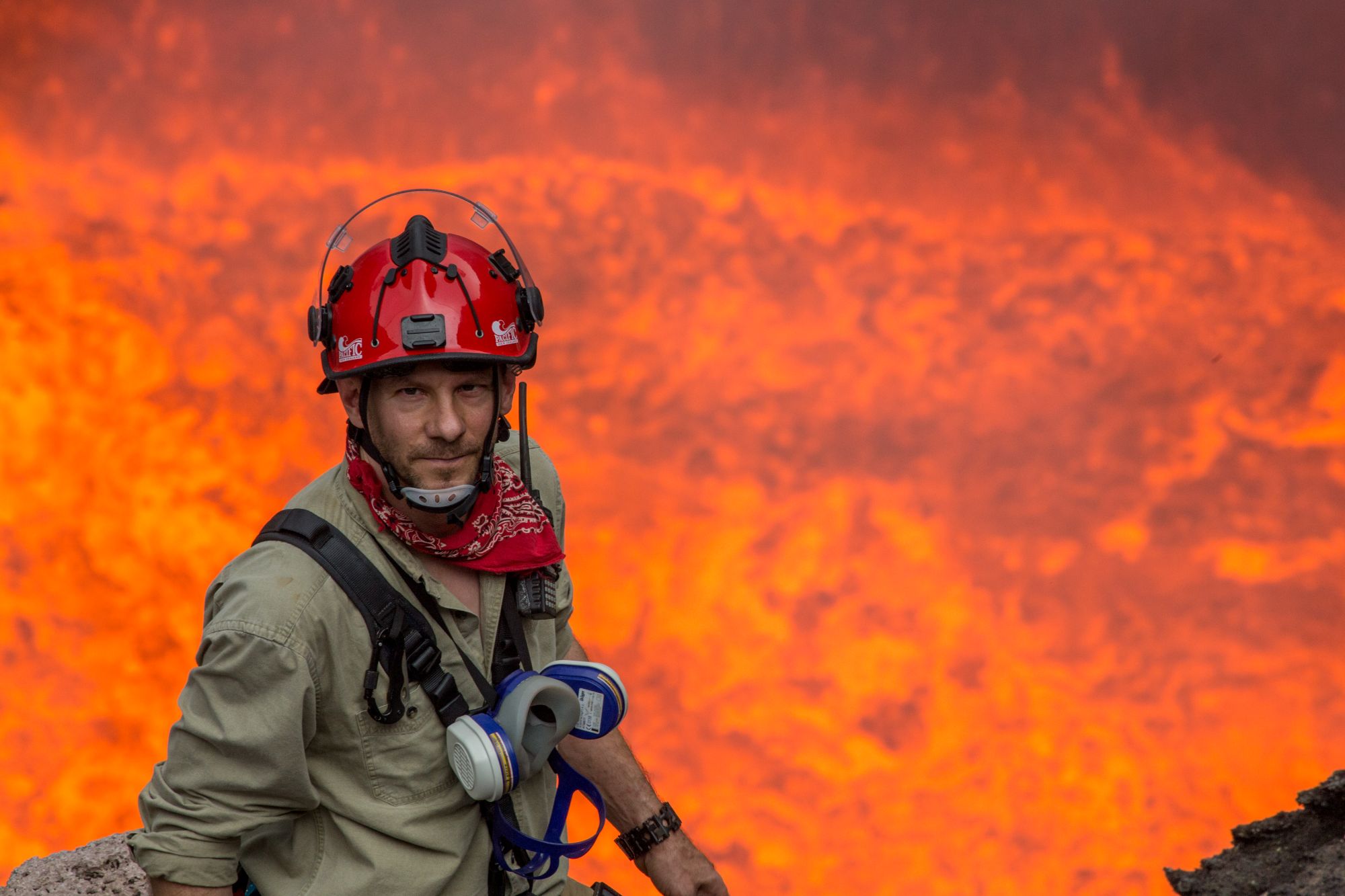
George Kourounis is a Canadian explorer, adventurer and popular TV host best known for his work on Angry Planet, where he traveled around the world documenting extreme forces of nature and some of the planet’s most dangerous natural disasters.
Q. You have spent most of your life doing things most people are trying to get away from. What is it about danger and risks that keeps you hooked after all this time?
Haha. I don’t think it’s so much about the danger and risks involved in what I do, I don’t consider myself an adrenaline junkie. I’m more of a nature junkie, specifically nature at its most extreme ends of the spectrum. I love the feeling of awe that I experience whenever I watch a tornado grinding its way across the landscape, or feeling the intense wind in a hurricane, or feeling the heat on my face after going to great effort to climb down inside an active volcano. Yes, all those things are dangerous, but I try to do these dangerous things in a safe a manner as possible, and so far, I’ve been able to do so without serious injury.
I get to see things and experience aspects of nature that most people never get to, or quite honestly don’t want to, and I’m willing to absorb some of that risk myself in order to showcase the beauty and power of nature. In our modern world we’re quite isolated from nature and we easily forget that we are as much a part of the natural world as anything else, and sometimes Mother Nature you can get pretty intense.
The goal of my life is to travel the world, document the wildest and most extreme natural phenomena, and then share what I’ve seen with as many people as possible to get them more connected with nature, and especially to get kids interested in careers involving science, nature, and conservation. The hook that I use is the dramatic visuals of these forces of nature. People love watching them even though they don’t want to experience them themselves, and I can’t say I blame them.
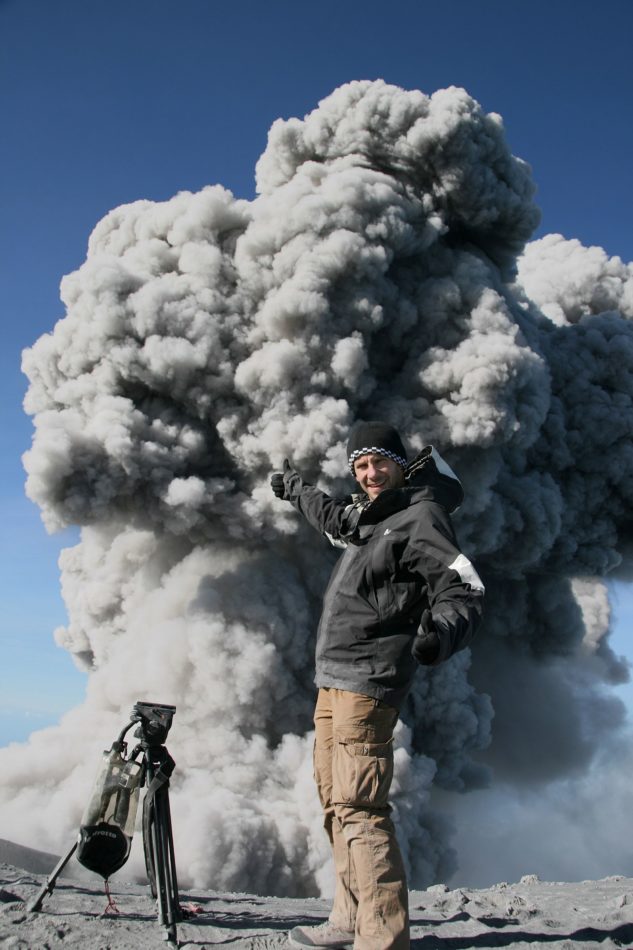
Q. What is the hardest part of storm chasing that people don’t see on TV?
TV shows only show you the highlights of storm chasing. The viewer sitting at home doesn’t want to watch me sitting in a gas station parking lot for seven hours waiting for the storms to form. The hardest part is the waiting and the uncertainty. Oh, and the day after day of long haul driving. We have to try to be in position long before the storms ever form, so we have to forecast where to go, drive there, and then wait in our target area with the hopes that we got the weather forecast right. Sometimes we don’t, and it is extremely frustrating to see a storm on the horizon that looks amazing, but is just out of reach and too far to drive to.
Social media has added an extra layer of difficulty because there are a lot of people out there these days chasing storms, not like when I started back in the 1990s. Everyone immediately posts to social media the amazing photos and video they got, and it’s impossible to compete with dozens or hundreds of other storm chasers spread across the countryside. Somebody is always going to catch something that’s more photogenic than you. The say comparison is the thief of joy, and I can attest to that.
A big part of storm chasing is learning how to manage expectations and crafting the skill of going from disappointment to disappointment without losing enthusiasm.
Q. Was there one specific storm you chased that completely changed how you look at climate change?
It’s hard to pin any one individual weather events on climate change. Each weather event itself is a point on a graph, and what you really need to do is take a step back and study the overall trends over time to get an understanding of what the climate is doing.
Having said that, Hurricane Katrina was a life changing experience. I was in a steel reinforced concrete parking garage in Gulfport Mississippi, on the strong side of the storm as it made landfall. The whole town came apart, the wind was so strong I had to crawl across the ground, and the streets were filled with shipping containers and boats that had been carried there by the violent waves and storm surge.
My big concern is that coastal cities will be subjected to more and more storms of this intensity in the future. Warm seawater is the fuel for these hurricanes, and the warmer the oceans get, the more fuel is available for these storms. There are more complicated processes involved of course, But fundamentally I expect there to be more and more extreme weather in the coming decades.
Q. What was it like being down inside Marum in Vanuatu, so close to the active lava lake, knowing that what you were seeing might not exist just a few years later? What was going through your mind at that moment?
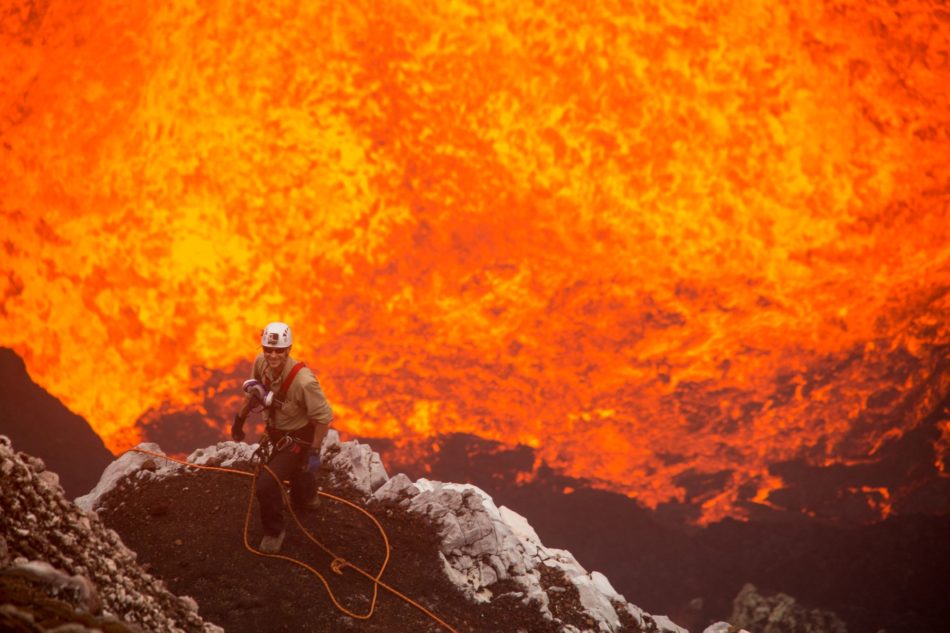
So, Marum volcano is one of the places in the world that I had been fascinated with for years. It’s on Ambrym Island in Vanuatu, and is very remote and hard to get to. At the bottom of the gigantic crater, 1200 feet down, lives of violently boiling lake of lava. This liquid rock churns away like a witch’s cauldron 24 hours a day, seven days a week. It’s absolutely spectacular.
Over the years I’ve been to the bottom of that crater 11 times, and it’s so difficult to get there that it feels like you’re on a space mission to another planet. The air is toxic, so we have to wear gas masks, and the acid rain is so strong that there’s almost no life whatsoever. It looks and feels like another world. In order to get up close to the lava I have to wear a special protective heat-resistant suit that feels like putting on a space suit.
Standing next to the lava, looking into it, is like you’re staring at a window to the center of the earth itself, which is kind of not far from the truth! This whole landscape is active, dynamic, and temporary. It’s one of my favorite places in the world. The volcano could have a violent eruption at any time, and there’s not a single thing that you could do about it. The trick is to limit your time in the extreme danger zone.
Interestingly, that did happen in 2018. The volcano had a massive eruption, and the lava lake disappeared. I’m glad I wasn’t there when it happened that’s for sure! It appears that the lava might be coming back, so I may have to return to see my old friend Marum.
Q. When you are on an extreme expedition, do you get a chance to explore the country as a tourist, or does the mission totally take up your time?
I definitely try to. There’s lots to see, and a lot of these more tourist friendly sites are popular because they are so amazing, so yes, I do try to “see the sights” If I have the chance to.
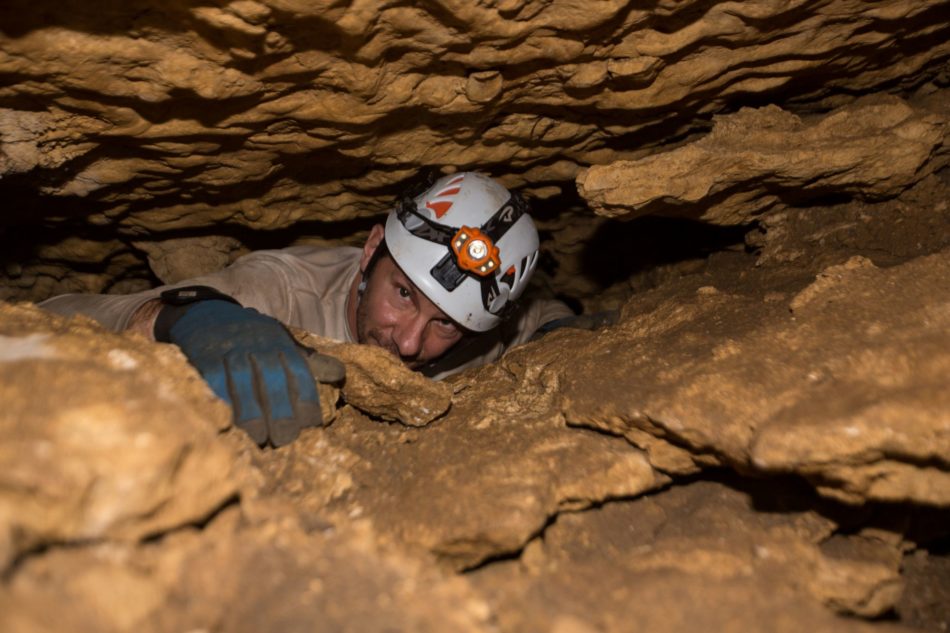
For example, I was part of a big expedition in Madagascar to a place called the Tsingy de Bemaraha which is a giant ” forest” of extremely sharp spires of ancient limestone. The place is full of caves, and part of my role on the expedition was to help discover, explore, and map some of these caves. When the official part of the expedition was over, some of us took the opportunity to go to the National Park area that has public access, and it was amazing. That was one of my fondest memories from that expedition.
It’s funny, I’ve been to India three times now, and I STILL haven’t seen the Taj Mahal.
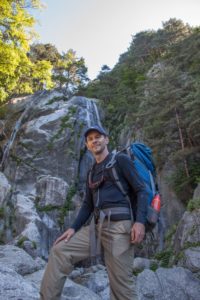
Q. When you started Angry Planet , you were mostly known as a storm chaser. But it took you way beyond weather down into active volcanoes, deep caves, wildfire zones and extreme places. How did making that show change the way you see the world?
It sort of happened in the opposite order. Yes, I started off as a storm chaser, while still working a full time job as a sound engineer in Toronto, But after a few seasons of chasing storms, I started to branch out into other natural phenomena… Documenting the aftermath of wildfires in British Columbia, driving into the eye of hurricanes, I’m going on my very first volcano expedition in a remote part of one of the world’s hottest deserts in Ethiopia.
It was this diverse interest that helped me make Angry Planet happen. If I had just been chasing storms, I don’t think that would have been enough to get the attention of the television networks. It was this diversity that I already brought to the table that they found appealing.
In the process of making that show we filmed on all 7 continents across countless countries, and it really opened my eyes and allowed me to see how the world works in different places. Fundamentally we’re all more or less the same, but it’s the little differences that make travel so interesting. The food, the languages, the culture, and the geographies of these obscure corners of planet Earth keep making me want to travel more and more.
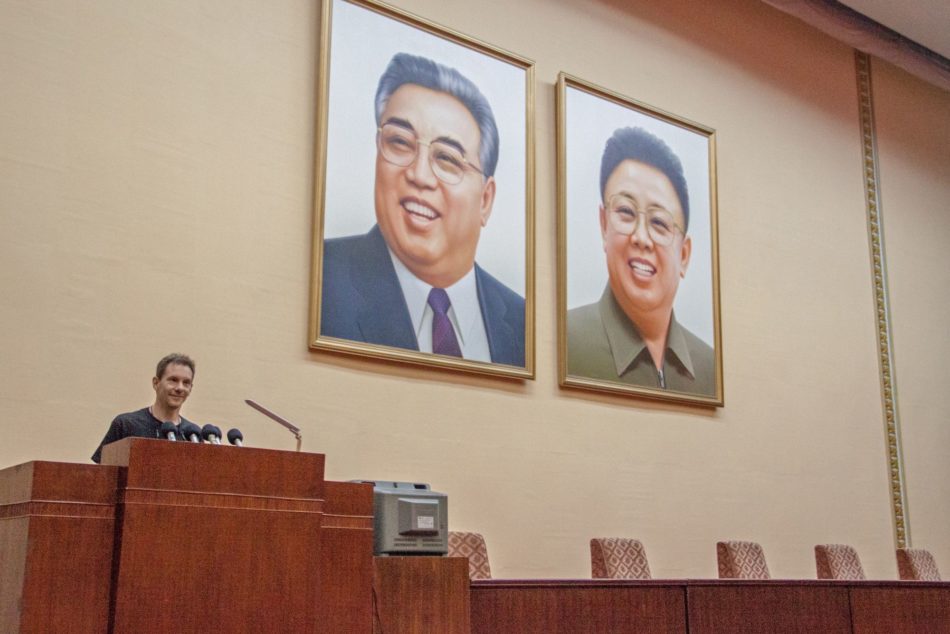
Q. You have traveled to some of the most extreme places on Earth, but North Korea must have been a very different kind of adventure. Did those restrictions in the country make you more aware of what you were shooting through your lens?
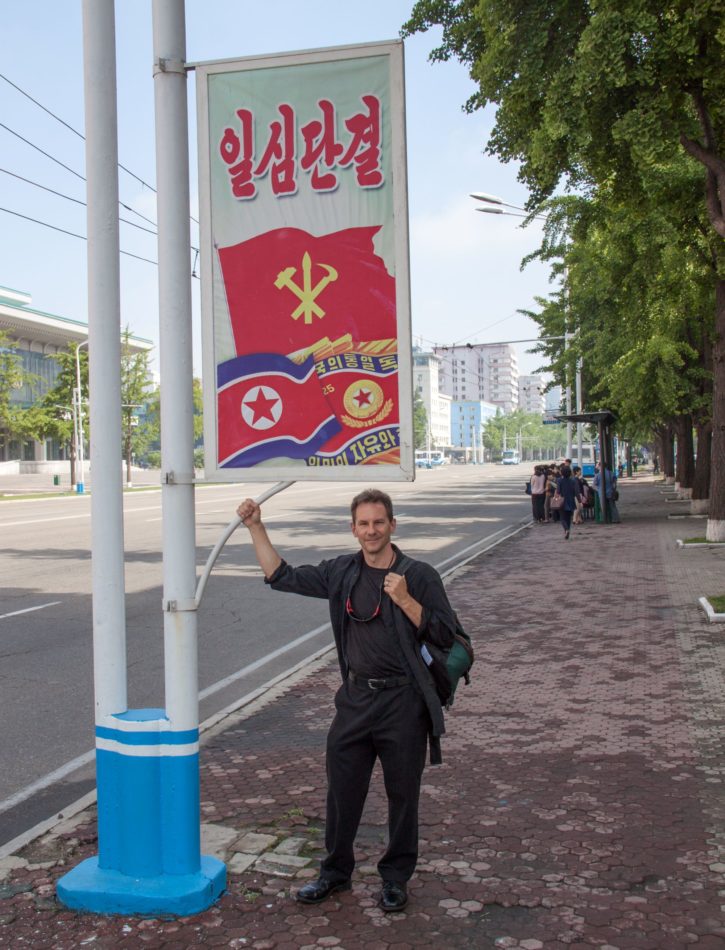
I spent 10 days in North Korea back in 2017 when the tensions between them and the U.S. were very high. I was there doing some mountain trekking in parts of the country that few outsiders get the opportunity to see. Of course, there are a lot of rules and restrictions there, and I didn’t want to cause any troubles with the authorities, so I had to scale back.
I wasn’t filming for a TV program while I was there, that would have been exceptionally difficult. I didn’t bring my main phone with me, I only took an older camera, and I didn’t bring my long lenses for fear of than being confiscated. There were times when our government appointed guides would come up to us and say that we had to delete a photo that we had just taken. No explanation, no reason given, and we’d have to delete the photo in front of them so that they could see what we were doing. There often seemed to be no rhyme or reason to it at all.
I had to be careful not just for my own concerns, but if I got into trouble, my guides could potentially get into trouble with the government as well, so now you’re worried about someone else and their family at the same time.
Q. Your message to our readers?
The world is an amazing place, go see it!
While I don’t recommend you go climb inside an active volcano or drive straight after a hurricane or tornado, what I do suggest is that if you’re curious about some place or something, take a “let’s go see” attitude.
The more you do things that you’ve never done before, the more capable you are to do even more things. Don’t collect stuff… Collect experiences and skills. Each one builds on the previous and the next thing you know you’re doing things and going places that you never possible.
Oh, and wear sunscreen.
All photographs credit: George Kourounis


Leave a Reply