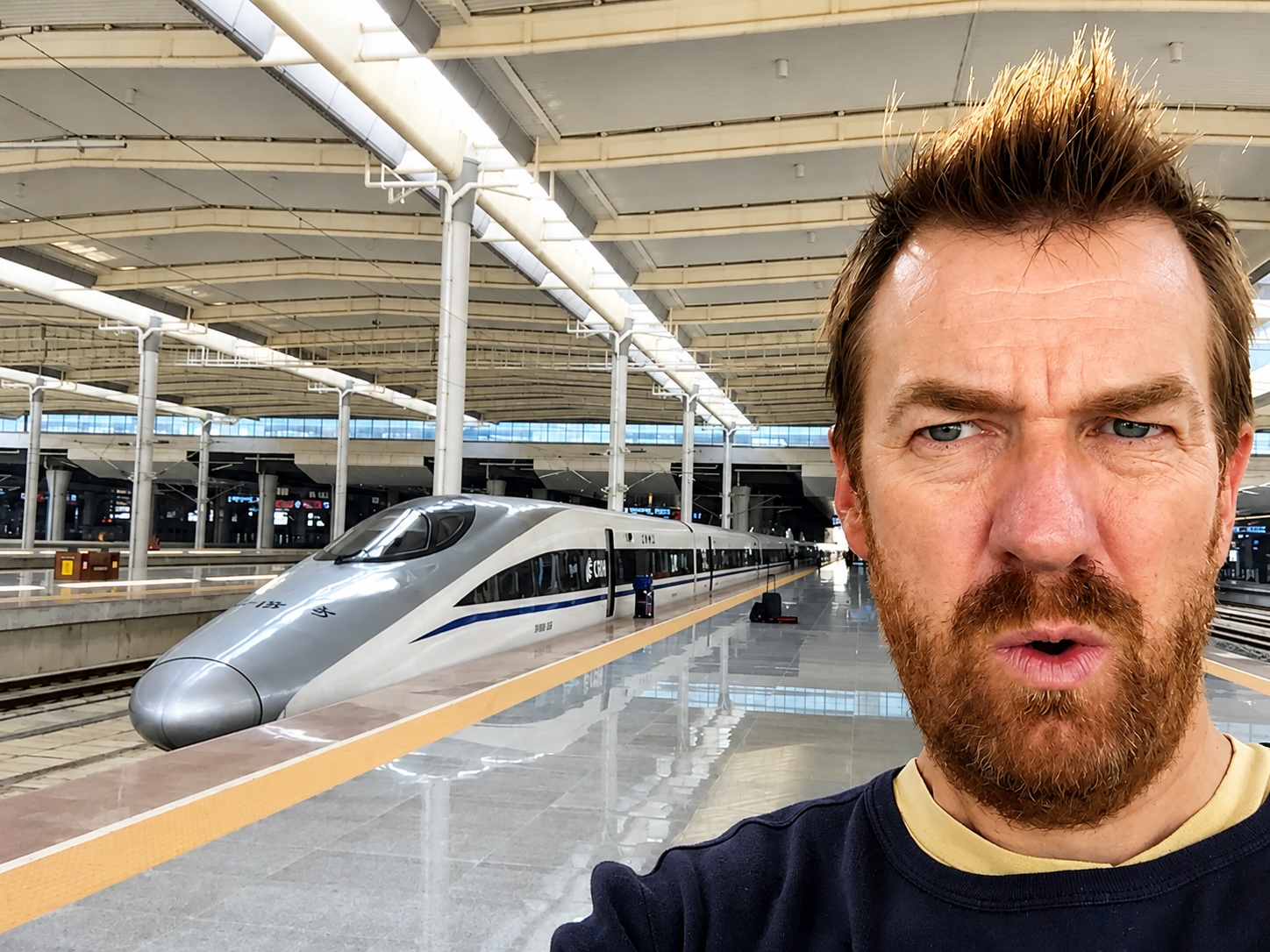
Wuhan Railway Station, China – Location scouting for Wonder Woman (2017)
Steve Mortimore is a London-based supervising location manager with nearly 30 years of experience, known for his work on Napoleon, Venom: Let There Be Carnage, Wonder Woman 1984, and Paramount’s MobLand. His credits also include blockbuster productions such as World War Z, Kingsman: The Secret Service, All the Money in the World, and Tinker Tailor Soldier Spy.
Q. Tell us a little about yourself and explain how you got into this line of work and walk us through what location scouting actually involves?
I’m a London-based Supervising Location Manager and, for almost 30 years, I’ve had what I genuinely believe is one of the best jobs in the film industry, working on productions such as Napoleon, MobLand, Wonder Woman 1984, World War Z and House of the Dragon.
Like many people in film, I never actually planned to end up here. I was working for Kodak when I happened to meet someone involved in the locations department, and before long I was helping out on film shoots. It didn’t take long for me to realize I’d found something that combined everything I enjoyed – travelling, problem-solving, meeting people and being outdoors. I was hooked from day one.
For readers who may not be familiar with the role, location scouting is about finding the places where a story comes to life. Once I’ve read a script, I’ll sit down with the producers, director and production designer to understand exactly what they’re looking for. Sometimes the brief is very specific – perhaps everything has to be filmed in the UK, or we’re looking for one particular country because of tax incentives, logistics or simply the director’s creative vision. More often than not, budget plays a huge part in those decisions too.
From there, my team and I begin the search. We can spend weeks, and sometimes months, traveling thousands of miles looking for the perfect locations. Every option is photographed, researched and presented to the filmmakers before we organize a series of recces with the production designer, director and producers. Eventually, each scene finds its home.
People often think that once filming begins, the Location Manager’s work is done, but in reality that’s when another huge part of the job starts. My responsibility is to oversee every aspect of filming on location – obtaining permissions, managing access, consulting with local residents and authorities, arranging parking, unit bases, facilities and making sure hundreds of people can arrive, work safely and leave without disrupting the area more than necessary.
On a production like MobLand, we filmed in close to a hundred different locations, while on Napoleon it often felt like we were running a traveling city. We regularly moved three times a week, transporting around 60 horses, hundreds of supporting artists in full costume, enormous quantities of props and equipment, and a crew that could easily total close to a thousand people. Watching all of that move seamlessly from one end of the country to the other is an incredible logistical challenge, and when it all comes together, it’s immensely satisfying.
What I love most is that no two days are ever the same. One morning I might be standing in a remote Scottish glen looking for an untouched landscape, and the next I could be closing a busy London street for a major action sequence. Every script presents a completely different puzzle to solve, and after nearly three decades, I still get the same buzz from finding that perfect location that makes everyone on the recce stop, smile and say, “This is it.”
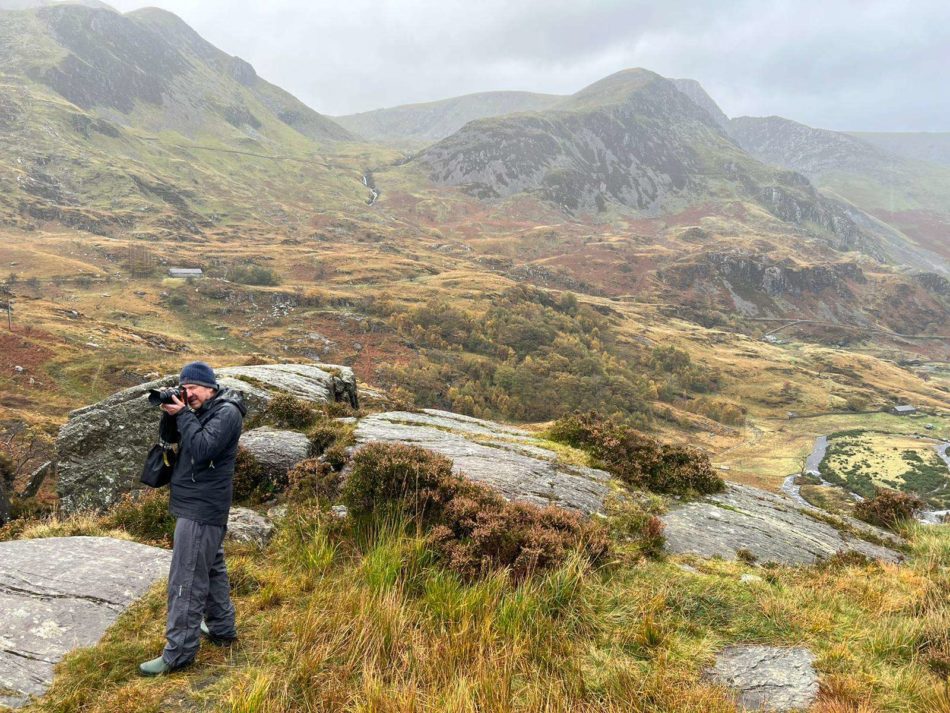
Caption: Ogwen Falls, Gwynedd, Wales – Location scouting for House of the Dragon
Season 2
Q. People usually think scouting happens before filming, well, at least that’s what I thought. But is that always true, and how do you line up with the vision of a director, especially working with an A-list director like Ridley Scott?
One of the biggest misconceptions is that location scouting finishes when filming starts. In reality, that’s rarely the case. On most productions we’re still scouting throughout the shoot, whether it’s because the script has changed, a location has fallen through, the weather has affected our plans, or the director suddenly has a new idea. Sometimes we’re even scouting right through to additional photography after principal filming has finished. Every production is different, so you have to stay flexible.
I’ve been doing this for almost 30 years now, and I think after all that time your brain becomes permanently wired to see the world differently. Wherever I go, whether I’m working or simply walking the dog, I’m constantly looking at places and asking myself, “What could this become?” Can this street double as New York? Could that valley be rural France? Could this old warehouse become a futuristic laboratory?
I remember walking near Paddington Recreation Ground in North London one summer when I suddenly stopped in the middle of the pavement. There was an ordinary residential street, but in my mind it instantly became New York. Add a few yellow taxis, a fire hydrant, some American street signs and a little movie magic, and suddenly you’re in Manhattan. My wife is used to me disappearing into that world for a few minutes!
Working with directors like Ridley Scott is all about understanding how they see the story. Ridley has an incredible visual imagination, so your job isn’t simply to find beautiful places; it’s to find locations that help tell the story exactly as he sees it.
One of my favorite examples came while we were making All the Money in the World. There was a scene set in 1960s Marrakech featuring a young John Paul Getty. We initially searched around central London, but recreating 1960s Marrakech in modern-day London proved incredibly difficult.
Eventually I was given permission to widen the search, and I came across the former Guinness family estate in Suffolk. It had been built with strong Indian influences for a Maharaja, and while it certainly wasn’t Morocco, I felt the architectural styles shared enough similarities. The domes, the geometric detailing and the pointed arches all gave me confidence that, with the right production design, it could work perfectly.
Our Production Designer, Arthur Max, wasn’t immediately convinced, so I had to really sell the idea. Eventually we visited the location together, and Arthur completely transformed it with Moroccan rugs, furniture, colors and dressing.
The day before filming, Ridley arrived by helicopter to look at the finished set. He walked through the building, paused for a moment, looked around and simply said, “This is Marrakech.”
For me, that was one of those wonderful moments in my career. Arthur looked across at me and gave me a little wink. It was a reminder that location scouting isn’t just about finding places; it’s about imagination, collaboration and helping create worlds that audiences completely believe in. When everything comes together, people watching the finished film never question where it was shot—and that’s probably the biggest compliment a Location Manager can receive.

Caption: Port of Gibraltar, Gibraltar – Location scouting aboard RFA Argus for World
War Z (2013)
Q. You have worked on big films like Napoleon, Wonder Woman 1984, Venom: Let There Be Carnage, and World War Z, covering everything from historical epics to superhero blockbusters to action thrillers. What is your way of working across different genres, and how do those demands make you rethink your usual process?
That’s one of the things I love most about this job. One project I’ll be researching Napoleonic French architecture and trying to recreate it somewhere in the UK, and the next I’ll be looking for San Francisco streets in central London, or an aircraft carrier off the English coast that’s about to become overrun with zombies. Every production is completely different, and that’s what keeps it so exciting.
Over the years you also build up an understanding of what’s realistically achievable for different genres. Every film becomes an education. You immerse yourself in the architecture, landscapes and culture that the story requires, and those experiences often prove invaluable later in your career.
For example, after spending well over a year working on Napoleon, I went straight onto House of the Dragon. Although the productions couldn’t have been more different, there were certain landscapes and historic locations that overlapped. I’d already spent months traveling around the UK learning exactly where to find the right forests, ancient buildings and dramatic landscapes, so that knowledge immediately saved time and opened up possibilities we may not otherwise have considered.
One of the more unusual jobs I had was on The Infiltrator, starring Bryan Cranston. The producer called me with an unusual request. Rather than asking me to find locations, she simply handed me the script and said, “Spend a week reading this and tell me what percentage of the film you think we can shoot in the UK.”
The film was set in 1980s Florida, so I spent an entire week researching every location mentioned in the script. I’d look at old photographs of streets, hotels, restaurants and neighborhoods, then ask myself where in Britain I could convincingly recreate them. By the end of the week, I went back with my answer: around 90%.
That became our target, and remarkably we achieved it. If you watch The Infiltrator today, I think most people would assume it was filmed almost entirely in Florida. Very few would guess that around 90% of it was actually shot here in the UK.
World War Z presented another fascinating challenge. At the time, it was one of the first Hollywood blockbusters to be filmed almost entirely in the UK while doubling for locations around the world. The opening scenes are set in Philadelphia, with Brad Pitt caught in enormous traffic jams as the zombie outbreak begins.
Our first thought was to shoot it in London, but the Second Unit Director wanted around 17 consecutive days of road closures. That simply wasn’t achievable in the capital on the scale we needed, so we widened the search across the UK.
That’s when I discovered Glasgow.
Around George Square, much of the city is laid out on a grid system, just like many American cities. We replaced the street signs with American ones, filled the roads with US vehicles, added visual effects to extend the skyline and even created the illusion of the Benjamin Franklin Bridge disappearing into the distance at the end of the streets. Watching it on screen, it’s incredibly difficult to believe you’re actually just a few minutes’ walk from Glasgow Central Station.
That’s what I enjoy most about location management. Every project asks you to solve a completely different puzzle. You’re constantly learning, constantly adapting and constantly looking at familiar places in entirely new ways. Even after nearly 30 years, that challenge never gets old.
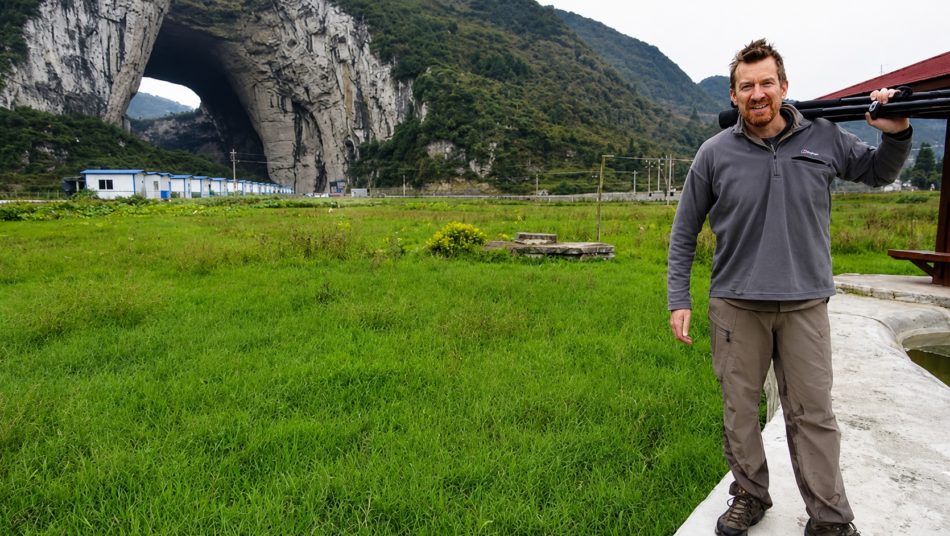
Caption: Qingxudong, Guizhou Province, China – Location scouting for Wonder Woman
(2017)
Q, Of all the places and countries you have scouted, which was the toughest so far, and which one felt the easiest and most seamless?
Without question, China was one of the toughest, but also one of the most unforgettable scouting trips I’ve ever done.
For the first Wonder Woman film, the filmmakers wanted to create the mythical island of Themyscira with a more exotic feel than the Italian island they had actually filmed on. My brief was to travel across China searching for spectacular landscapes that could become the visual foundation for the island.
It became an extraordinary four-week journey. I started in Chengdu in the west and eventually finished in Shanghai in the east, crisscrossing countless provinces along the way. I was photographing towering waterfalls, dramatic limestone karsts, mountain ranges, vast cave systems and beautiful travertine terraces. In many ways, I wasn’t just finding locations—I was effectively shooting the visual effects reference photography that would later help create the finished world on screen.
One day we arrived at a place called Qingxudong, home to an enormous limestone cave. To get the right angle I wandered a little too far and suddenly found myself waist-deep in a flooded paddy field. We eventually reached the nearest town where I sat on the back of our vehicle, taking off my boots and pouring out what felt like gallons of muddy water.
As I looked up, I noticed around twenty local people slowly walking towards me. They simply stood there staring. My fixer explained that no western visitors had ever passed through that particular village, which is why everyone was so curious. Looking back now it’s a wonderful memory, although I must admit it felt slightly uncomfortable at the time!
That entire trip was an adventure from start to finish. I genuinely believe I saw parts of China that many Chinese people will never have the opportunity to visit. Those memories will stay with me forever.
At the opposite end of the scale, Malta has always been one of the easiest and most enjoyable places to work.
Many countries now have well-established film commissions and local production service companies that understand exactly what international productions need, and Malta is a perfect example. It’s a relatively small island, incredibly film-friendly, and the local crews are exceptional.
I’ve been fortunate enough to work there with Winston Azzopardi, who knows virtually every corner of the island. Having someone with that level of local knowledge is invaluable. If you’re looking for a hidden cove, an old fort, a harbor or simply the quickest way to solve a problem, Winston almost always has the answer.
Because of that, every trip to Malta feels incredibly smooth. Everyone works together, solutions are found quickly, and you can concentrate on the creative side of the job rather than battling logistics.
Ironically, those two experiences perfectly sum up location scouting. One month you can be waist-deep in a Chinese rice paddy in the middle of nowhere, and the next you’re effortlessly moving around one of the world’s most film-friendly islands. You never quite know where this job is going to take you next, and that’s one of the reasons I still love it after nearly three decades.
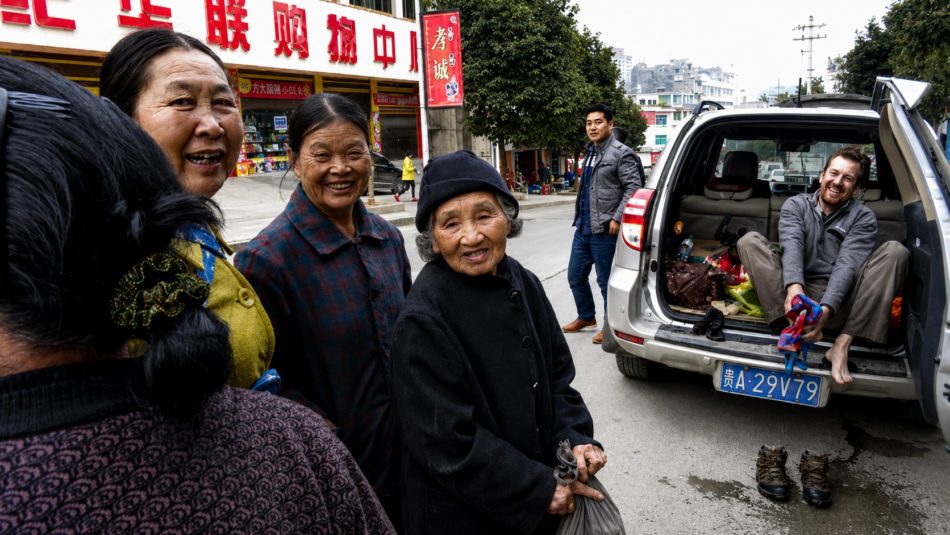
Qingxudong, Guizhou Province, China – Location scouting for Wonder Woman (2017)
Q. When you are overseas scouting locations, do you ever mix in a bit of your own traveling to get to know the place better. If so, what have been the most memorable ones?
That’s an interesting question because, for me, work and travel have always overlapped.
Sometimes I’ll take a holiday simply because I want to visit somewhere, but quite often there’s a little bit of location scouting in the back of my mind as well. If I’m lucky enough to find myself in a new country, I can’t help wondering what it could double for if a script ever landed on my desk. It’s probably a busman’s holiday, but I genuinely enjoy it.
Iceland is a perfect example. I once took a long weekend to Reykjavík with no production to work on and no brief to follow, yet I spent most of the trip exploring potential filming locations. Volcanoes, glaciers, ice caves, black sand beaches, moss-covered lava fields and dramatic coastlines – it felt like every corner of the country could become the backdrop to an epic film. It’s a location scout’s dream because the landscapes are unlike anywhere else on Earth.
The truth is, wherever I am in the world, I’m always wondering what’s over the next hill, through the next jungle or beyond the next valley. It’s just part of who I am. Curiosity has always driven me, and I don’t think that switch ever turns off.
I’ve spent a great deal of time scouting in Thailand over the years. Back in the late 1990s and early 2000s, it became one of the world’s great filming destinations because it could convincingly double for so many other South-East Asian countries while offering an outstanding production infrastructure.
One memorable trip was for Fire from Heaven, an epic about Alexander the Great that, unfortunately, never made it into production. I ended up scouting huge areas of Thailand, and on one of my days off I read about Phanom Rung Historical Park, an ancient Khmer temple built on top of an extinct volcano close to the Cambodian border.
I simply couldn’t resist.
Standing there felt like walking onto the set of an adventure film. The temple rises dramatically above the surrounding countryside, and the views stretch for miles towards Cambodia. It was one of those places that makes you stop for a moment and simply appreciate where you are. Thailand is full of hidden gems like that, which is one of the reasons filmmakers love working there.
One of my favorite travel memories happened completely by accident. While scouting southern Thailand in the late 1990s, I took a boat trip on a rare day off and visited a small bay on the Phi Phi Islands called Maya Bay.
At the time it was virtually deserted.
As my boat drifted into the bay there was just a single local fisherman asleep on another boat. I remember thinking I had never seen anything quite so beautiful. The white sand was almost untouched, towering limestone cliffs rose vertically from crystal-clear turquoise water, and the whole bay felt like a perfectly formed natural amphitheater. It remains one of the most beautiful natural places I’ve ever seen.
A few years later, I went to the cinema to watch The Beach, starring Leonardo DiCaprio, and there it was. My little secret paradise had suddenly become one of the most famous beaches in the world.
When I returned years later with my family, it had changed beyond recognition. Dozens of speedboats were arriving every day, hundreds of tourists filled the beach and the tranquility that had made it so magical had largely disappeared. It was genuinely quite sad to see. I even wrote to the Thai Tourist Board afterwards because I felt such a special place deserved better protection.
Thankfully, Maya Bay has since been managed much more carefully, with visitor numbers restricted to help preserve its fragile environment.
Moments like that remind me why I still love traveling. Sometimes you’re scouting for the next great film location, sometimes you’re simply exploring for yourself, but either way you never know when you’re about to discover somewhere truly unforgettable.
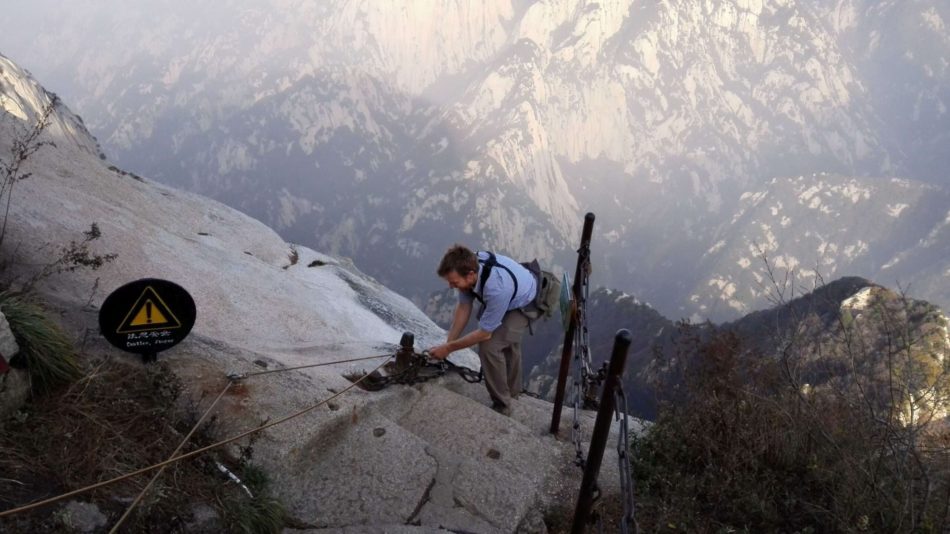
Caption: Mount Huashan, Shaanxi Province, China – Location scouting for Wonder
Woman (2017)
Q. How much creativity goes into a location scouting project, and do you think traveling teaches you a lot about being creative?
Every project is different, and one of the biggest misconceptions is that location scouting is always about finding the most beautiful place. Sometimes it isn’t. Quite often it’s about budgets, logistics, access, parking, permissions and simply making a production work. Those practical considerations can often dictate the creative decisions.
Thankfully, on many of the films I’ve worked on, creativity still plays a huge part.
I remember reading the script for Napoleon and naturally assuming I’d be spending months traveling around France. Instead, the producer said, “We’d like to try and film the majority of it in the UK.”
That immediately became an exciting creative challenge.
How do you recreate France in 1815 without leaving Britain? How do you find landscapes, villages, forests and architecture that can convince audiences they’re somewhere completely different? Those are the sort of puzzles that genuinely excite me. They’re also the sort that wake you up at three o’clock in the morning with another idea! Your brain never really switches off.
Travel has played a massive part in developing that creative way of thinking. Of course, today we have Google, online image libraries and endless digital resources. When I first started, I was researching countries using books and photographs, which seems almost unbelievable now.
But no amount of technology can replace actually experiencing a place for yourself.
Walking its streets, understanding the architecture, seeing how the light falls during the day, absorbing the atmosphere, meeting local people and experiencing the culture all stay with you. Years later, when you’re asked to recreate that country somewhere else, those memories become incredibly valuable because you’re not simply copying photographs – you’re recreating a feeling.
A good example was a Michael Keaton spy thriller I worked on in 2017, which included scenes set in Istanbul. I’d been fortunate enough to spend time there previously, so I already had a strong sense of the city’s character, its colors, its streets and its atmosphere.
In the end, those scenes were filmed…
…in Croydon, South London.
That always makes me smile.
If I’d never experienced Istanbul first-hand, I’m not sure I could have visualized the transformation quite as clearly. Because I’d been there, I knew what we were trying to recreate. We weren’t simply matching buildings; we were trying to capture the essence of the city.
That’s what travelling gives you. It expands your visual memory and your imagination. Every country you visit, every landscape you explore and every culture you experience becomes another reference point that you carry with you throughout your career.
In many ways, that’s what location scouting is all about. It’s taking everything you’ve seen around the world and using those experiences to help tell someone else’s story.
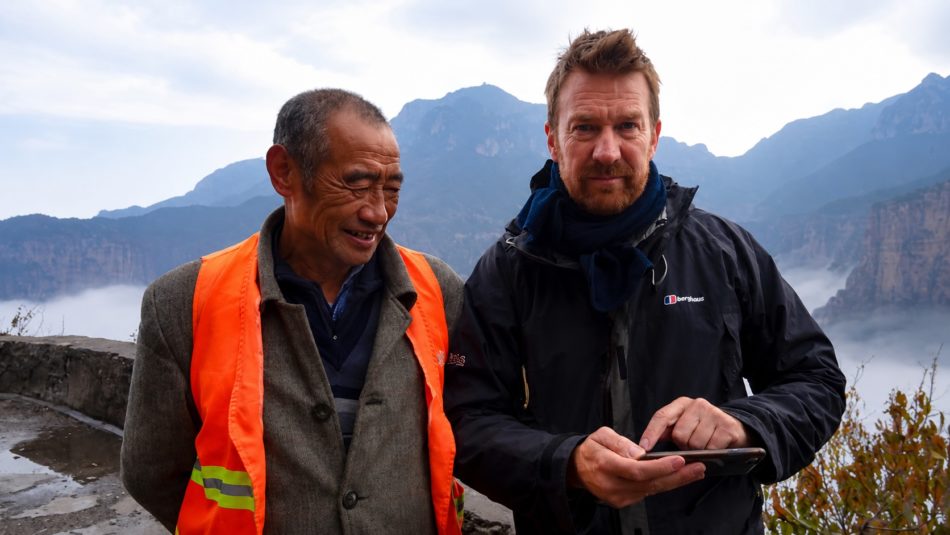
Caption: Guoliang Tunnel Road, Henan Province, China – Location scouting for Wonder
Woman (2017)
Q. What are the top three things you can’t travel without when you pack for either a personal trip or a work trip?
That’s become a much more difficult question to answer over the years because technology has changed the way we all travel.
Without doubt, my smartphone is now number one. Fifteen or twenty years ago I would never have considered using a phone to photograph scouting locations because the quality simply wasn’t good enough. Today it’s remarkable. The cameras are excellent, and alongside that you’ve got maps, GPS, a compass, tide times, weather forecasts, translation apps and pretty much everything else you could possibly need, all in your pocket. I honestly don’t know how we managed without them.
The second thing is a good set of waterproofs. They might not sound very exciting, but they’re invaluable. When you’re scouting, you’re often in the middle of nowhere and the weather doesn’t care that you’ve got a deadline. If the perfect location is at the top of a mountain, halfway through a forest or out on a windswept coastline, you simply put your waterproof on and keep going. The shot still has to be found.
Finally, my drone. I always travel with my DJI Mini 5 Pro, and I honestly wouldn’t want to be without it. It’s completely changed the way I work. Years ago, if I wanted an elevated photograph of a location, I’d have to find a nearby hill, climb a church tower or somehow gain access to the upper floors of a building. Today I can launch the drone in a matter of minutes and capture every angle imaginable. It gives directors and production designers a completely different perspective on a location before they’ve even visited it themselves.
For me, it’s been one of the biggest advances in location scouting during my career and an absolute game changer.
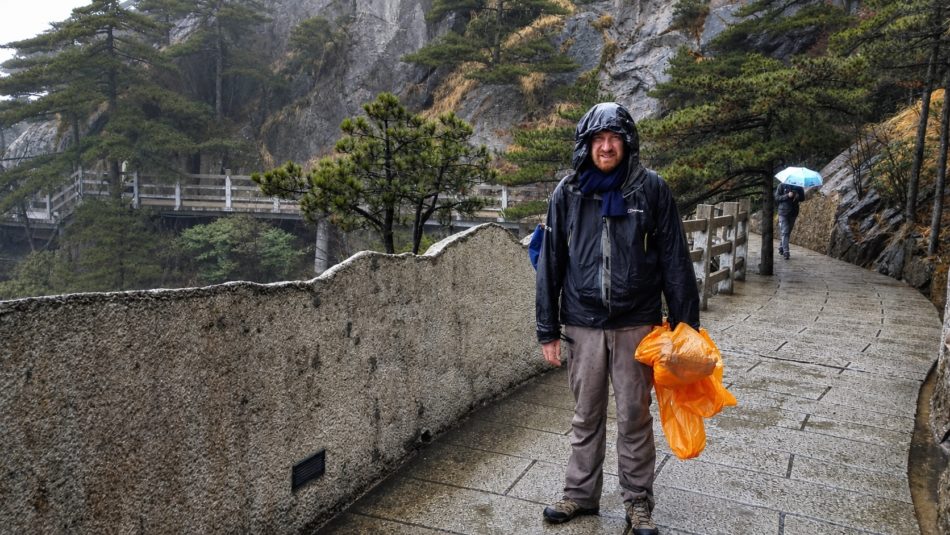
Caption: Huangshan, Anhui Province, China – Location scouting for Wonder Woman
(2017)
Q. Your message to our readers?
I’d simply encourage people to stay curious.
Whether you’re traveling to the other side of the world or just exploring somewhere an hour from home, there’s always something fascinating waiting to be discovered if you keep your eyes open. Some of my favorite locations have been found completely by accident, simply because I decided to take one more road, climb one more hill or see what was around the next corner.
Travel has given me far more than a career. It introduced me to incredible people, cultures and places that I never imagined I’d experience, and it’s taught me that the world is full of surprises if you’re prepared to look for them.
So my advice would be this: travel whenever you can, explore with an open mind and never lose that sense of curiosity. You never know where it might lead. I certainly didn’t when I accidentally found my way into the film industry nearly thirty years ago, and it’s taken me on the adventure of a lifetime.
All photographs credit: Steve Mortimore
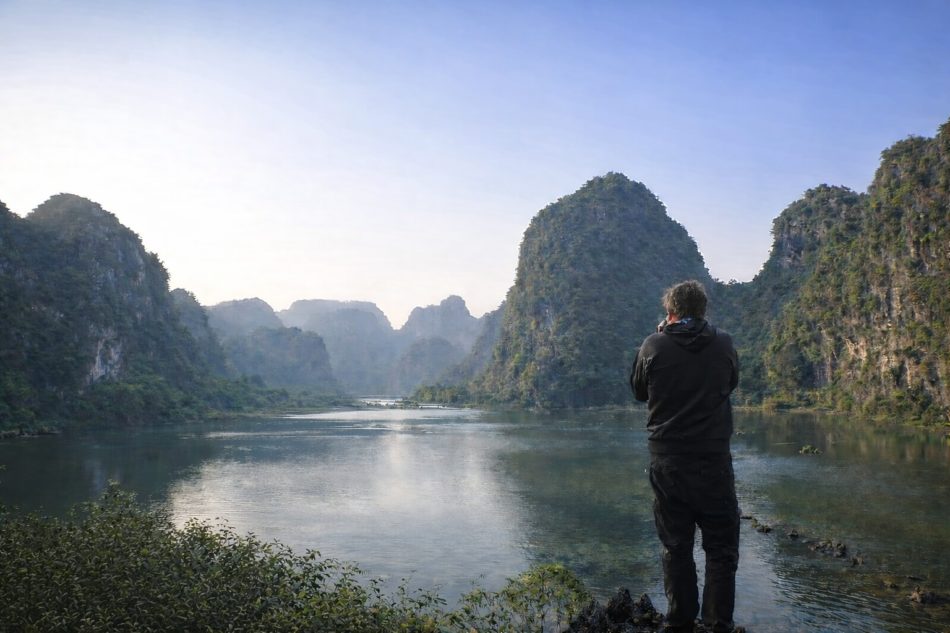
Caption: Ninh Bình Province, Vietnam – Location scouting for Pan (2015)


Steve is a remarkable guy and by reading his story I’ve learned so much about another person’s outlook on such an exciting life that has not been wasted with more to come. Well done Steve