 Lizeth Yarlequé is a Peruvian documentary filmmaker, producer, fixer and founder of Humana Films. Her works have been featured on major international platforms including Warner Bros, ARTE, ZDF, Al Jazeera, the United Nations, CNN, Business Insider, The Goldman Environmental Prize among others on projects deeply connected to indigenous communities and cultures.
She is passionately committed to environmental causes and her major participation as Fixer and protagonist has been for the coming Documentary this 22nd October ´An Optimist’s Guide to the Planet with the host and the actor of the Games of Thrones, Nikolaj Coster-Waldau.
Her most acclaimed documentary, Two More Weeks, won The Best Documentary Short at the Independent Shorts Awards in July 2020.
Q. You have a degree in Architecture, but you are a documentary filmmaker now. What made you want to make that switch?
Back in university, I studied Architecture without really knowing what I was going to do with it. I’d always loved painting and drawing, so my dad told me that with Architecture, I would be able to do that.
I still remember my first day of class when the teacher had us design a beach house but I had never even been in one before. I grew up in an average family renting apartments most of the time so designing something luxurious like a beach house made me feel out of place on my first day.
My parents were working hard to pay for my studies, and there I was, chasing a career that seemed to mostly serve rich people. Deep down, I knew it wasn’t for me, but I was only 16 and I had to choose a career at that moment.
By the age of 22, I was already a project manager working on three construction projects with a life with no good sleep, no weekends and no social life. I remember thinking in those days, So, this is it? That was the moment when I began to question life and its meaning. I knew that there had to be something more than just working endless hours without a real purpose.
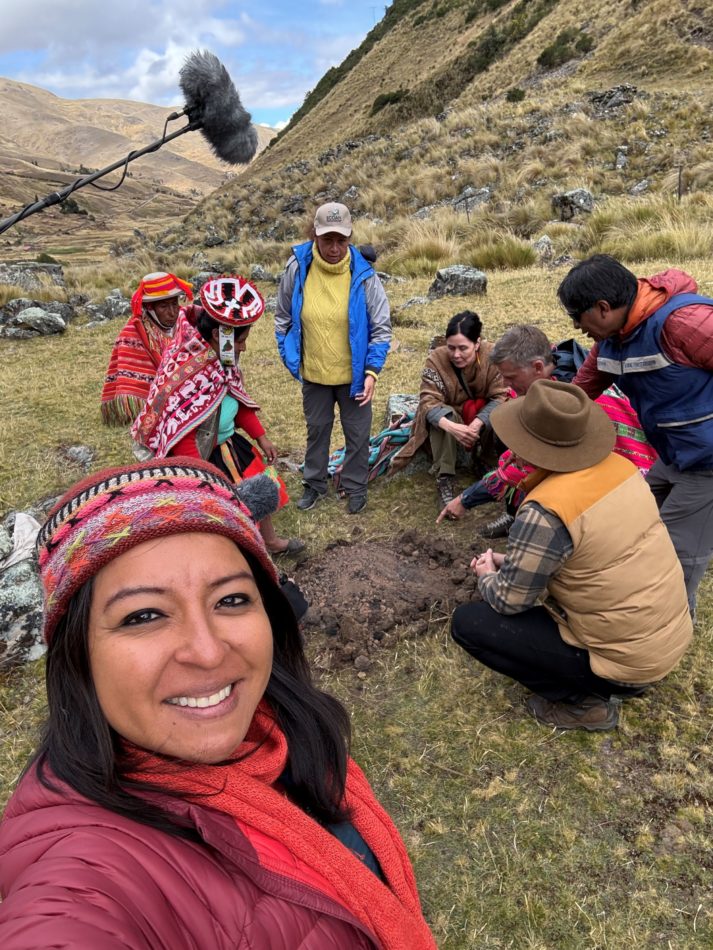
I tried different things in search of my passion. My last job before filmmaking was as a Logistics Manager for an environmental company in Peru. That was when things started to make sense. We used to travel to remote places, mostly in the jungle, spending weeks collecting samples of water and soil and in those days, so we really depended on local people to help us get by.
Living with them for many weeks brought out my fascination and curiosity on the way they lived, how they thought, how they addressed challenges so far away from the cities, and I started writing blogs about them but soon after it hit me the idea to make documentaries.
A few months later, I bought my first camera, mainly for photography, but soon I started making videos and fell in love with it. I did small projects for fun with friends, and then, I entered a film competition and guess what, I won, and the next thing I knew, I was on my way to the University of the Arts London to study English for three weeks.
For me, that was the biggest sign in my life! That same year in 2017, I did my first internship at a documentary production company in Belfast, Northern Ireland, where I spent six months working along with filmmakers, journalists and even helped in some programs at BBC Studios.
Living in Belfast made me realize how little people abroad knew about Peru and when they did, it was usually negative stuff. So, when I returned home, I knew I wanted to share positive and inspiring stories about my country.
From the very beginning, my greatest motivation has always been to tell the story of my culture, my people, and my homeland from a perspective a few others can´t see, and that’s exactly what I continue to do to this day.

Q. Can you tell us a bit about your upbringing in Peru? Are there traditions you think are fading but worth preserving?
Peru is the mecca of natural resources. Every time I travel abroad, I see how challenging it is for other countries to import food, and I feel so blessed to have been born in Peru. The variety of products we have here from the different regions is incredible and that’s why Peru has become a must-visit destination for food lovers!
However, I would say that the one thing we are slowly losing, especially in the biggest cities, is the use of medicinal plants. I remember as a child, our main first-aid kit at home was made of plants. We used to buy those little magazines about medicinal plants, and you’d find them in almost every Peruvian kitchen but today, that’s much less common in urban families.
I truly believe that we have a huge natural pharmacy in Peru, and if we understand it better, we can truly value and harness its power.
Beyond that, I think Peru, in general, is trying to revive many of the traditions we had in the past. Things like solstice, the equinox, the sun, or the moon are now becoming more important celebrations in our calendars and are helping us to reconnect with our ancestral wisdom.

Q. Your work focuses on human, environmental, and cultural issues in Peru. How do you choose which stories to tell. Do they find you, or do you seek them out through your own research?
For me, a project must have a purpose, that is to teach or inspire people. That’s why I never focus on negative stories. All my work aims to bring hope to the world, which I believe is something we all need to hear more.
With this perspective, I have been working for a variety of channels and directors around the world like Warner Bros, ZDF from Germany, Cream Productions from Canada, Metropolis from Netherlands, etc. We share a common mindset on the projects. Most of the time, they come to me with just an idea, and we build it out together into a full project with real people to interview, real locations, and a solid shooting plan.
In other cases, I am the one who pitches stories to the channels and film for them.
Q. Your award-winning film, Two More Weeks, was made during 2020. How did going through lockdown in Lima influence the way you told the story in Two More Weeks?
During those days, I was probably one of the few and luckiest people who was able to travel anywhere I wanted with a journalist permit, and I felt like I had to do something meaningful with that privilege.
I started filming my days without any real plan; I just wanted to capture what was happening in my country. In the end, it turned into a very informative and touching piece, so I decided to submit to an online festival, and to my surprise, it won.
Suddenly, people who were stuck in Peru started sharing it with their families abroad, calling it one of the documentaries that depict the real situations of the pandemic. I was really deeply moved by the way people responded to it.

Q. What is one beautiful memory you have had while filming the local communities?
It would be unfair to choose just one beautiful memory. Every community has its own energy and its own way of taking care of me and the crews I work with. But one of the greatest gifts I receive from them is the pride they feel in sharing their lives, their worldviews, their traditions, and overall the blessings they send us off with when we leave.
For me, that is one of the most valuable things in life, knowing they were happy to have been filmed and to share their story. And this can only happen through an honest and genuine connection with them.

Q. Being a fixer, what do you think are the most common challenges foreign filmmakers face when filming in Peru, and how do you usually help them smooth out the process?
The main challenge for any director or filmmaker, I think, is finding the right people to film and interview, the ones who can really bring out the message you want to share in your documentary.
Companies usually give this job to a fixer, but in fact, the right person for it is a researcher. In many cases, fixers just focus on finding someone who fits the profile, but they don’t really connect with the person.
Since I am not just a fixer but also a filmmaker myself, I do have a knack for identifying the different elements required for a documentary and researching is one of my biggest skills.
On the other hand, as my fixer work, I connect the international film companies directly with the local logistics teams and in this way, the locals get paid fairly, and clients don’t get hit with extra fees from a middleman.
Q. What is your storytelling style, and how do you make your films feel more immersive for your audience?
My storytelling style is rooted in authenticity and human connection. I never see people as “subjects”, instead, I see them as individuals with stories and wisdom to share.
I spend time with each community, building trust and creating bonds long before I turn the camera on them. The bond of trust among us allows me to capture their lives in a way that is natural and intimate.
To make my films immersive, I focus on the small details, the way people prepare food, the sound of the forest around them, the laughter in a family gathering. Those are the moments that make audiences feel like they are right there with us.
For me, a documentary is not just about observing, it is about inviting the audience into a shared space where they can feel the emotions, and the beauty of the people I film.

Q. When people visit Peru, they usually head straight to places like Machu Picchu, Cusco, and Lake Titicaca. As a Peruvian, what are some lesser-known or underrated places that you think are worth visiting?
Definitely the treks here. Many places are promoted only as destinations to visit, but people forget that Peru is not just about places, it’s about experiences.
We have incredible treks that will get you physically and emotionally in tune with your body and the nature.
These trails take you through mountains and glaciers that rank among the most breathtaking in the world. Many are in Cusco, like Salkantay, Ausangate, and Waqay Willka, but we also have the Cordillera Blanca in Ancash, home to Huascarán, Huandoy, Alpamayo, and more. Without a doubt, we have some of the most stunning mountains to climb as well.
Q. What impacts do you hope your films have on people outside of Peru?
I want people to feel inspired. I see my documentaries as tools for transformation, to bring hope and to highlight the best in people. I believe we can all learn from one another, and that is my mission.
All photographs credit: Lizeth Yarlequé



Leave a Reply