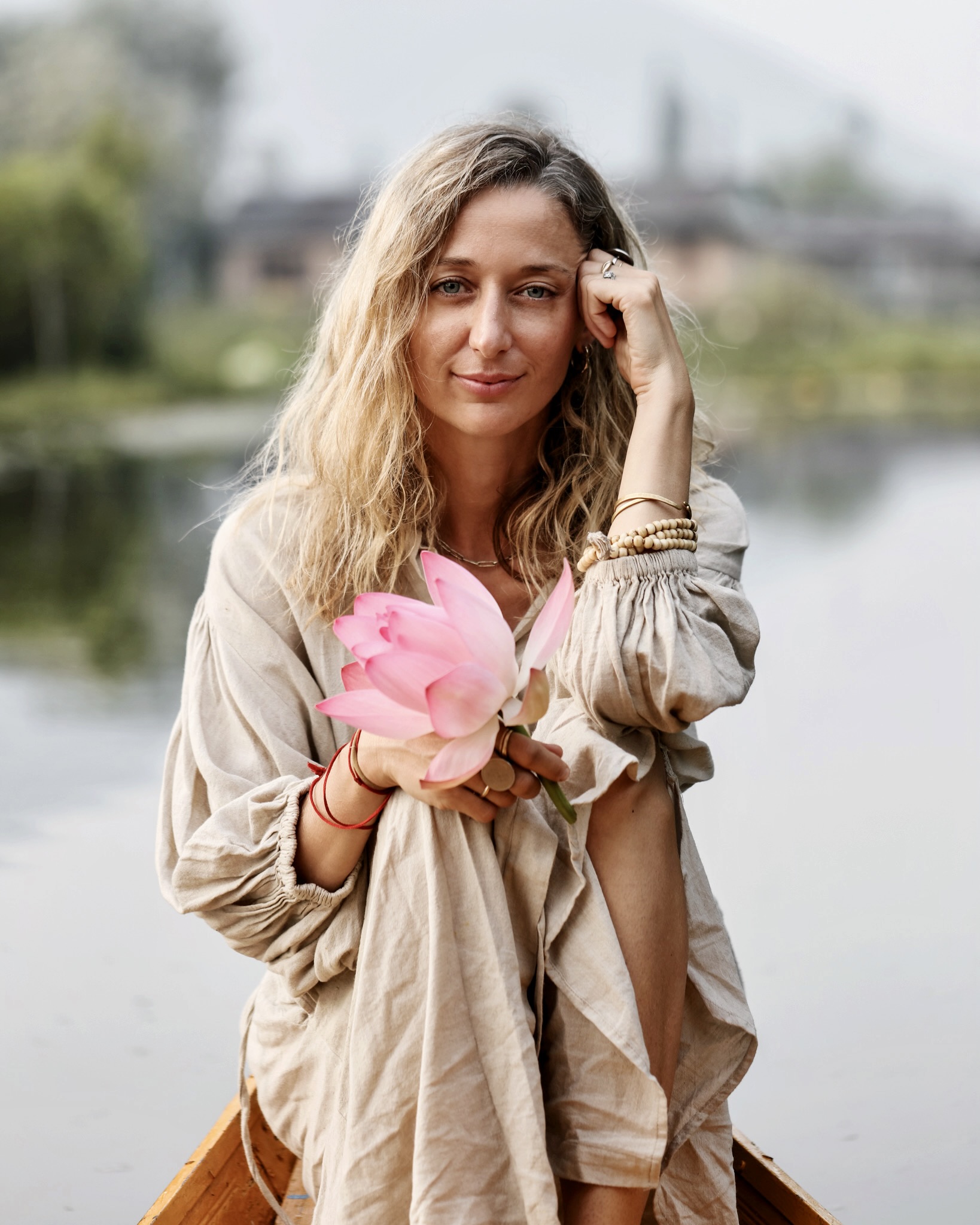
Nina Karnikowski in Kashmir – by Peter Windrim
Q. I read a story about your trip to Churchill in Manitoba, Canada – the “Polar Bear Capital of the World” – back in 2019, a journey that changed your relationship with travel forever. Can you take us back to that moment. Where were you, what were you seeing, and what was it that hit you so deeply?
I was in Churchill, a tiny town in the Canadian Arctic, where there are famously more polar bears than people. I remember standing on a boat there watching these huge, impossibly majestic animals moving across a landscape that was literally disappearing beneath them.
Of course, I already knew about climate change intellectually. But seeing it embodied in a living creature, and hearing firsthand from a local guide about the melting sea ice disrupting the bears’ breeding and hunting cycles, it stopped being abstract.
I came home from that trip and calculated my own carbon emissions for the first time. As someone who’d built a career around frequent international travel, it was confronting. I realized that the thing I loved most, travel, was also one of the heaviest things I was personally doing environmentally. That trip forced me to ask harder questions about how we move through the world, what kind of travel is actually valuable, and what reciprocity looks like in an era of ecological breakdown.
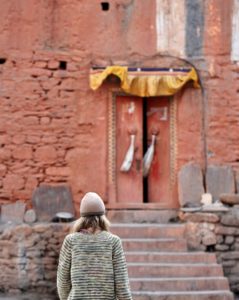
Mustang monstery-by Peter Windrim
Q. Not long after that trip, parts of the world suddenly shut down. What changed in you by the time travel came back?
One statistic I learned during that time is that less than 20 percent of the world’s population has ever set foot on a plane. That really reframed things for me, and helped me remember that travel is not a right, it’s an enormous privilege.
When travel returned, I found I no longer wanted to travel in the same way. I became more intentional, craving longer stays, and a deeper understanding of community, ecology and culture.
The pandemic also revealed how extractive parts of the tourism industry had become, and how entire economies had been reshaped around serving visitors rather than local people. So my work increasingly shifted toward asking: how can travel genuinely benefit the places we visit?
Q. You have spent time with Indigenous communities in Australia, India and Nepal. What are some of the biggest lessons they inspired in you about community, something the modern world could really learn from?
One of the biggest lessons has been the understanding that we are not separate from one another, or from nature. In many traditional and indigenous cultures I have spent time with, there is often a much deeper sense of interdependence. People understand themselves as embedded within a community and ecosystem, rather than existing as isolated individuals.

Nina Karnikowski in Tibet-by Peter Windrim.jpg
I remember walking through a small village in Ladakh a few years ago when two little girls raced up to my husband and I. I braced myself for the familiar “toffee, toffee” often heard in heavily touristed places, but instead they reached into their own pockets and offered us their candy. It was a small moment, but it stayed with me because it spoke to a kind of generosity and openness that can still exist in cultures less shaped by hyper-individualism and consumerism.
I have also just returned from the Kham region of Tibet, where I spent time with nomadic yak herders living at over 4000 meters in an environment many of us would find unimaginably harsh. What struck me most wasn’t hardship, but the strength of community and their deep relationship with the land and animals around them. There is a humility in that way of living, an understanding that humans are not masters of the natural world, but participants within it.
In Australia too, I’m always profoundly moved by Indigenous concepts of Country, land not as a commodity but as kin, as something alive that we belong to and are responsible for caring for. Modern Western culture often celebrates hyper-individualism and endless economic growth, but many traditional cultures remind us that wellbeing actually comes from connection. It also comes from knowing how to make things, grow things, and repair things. There is wisdom there that feels urgently relevant in our age.
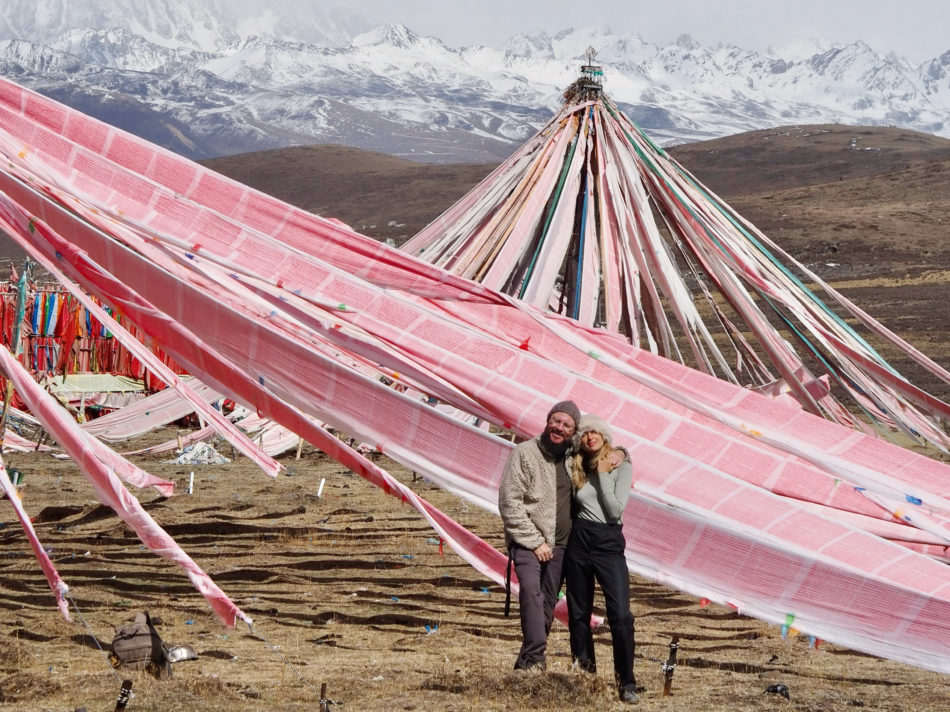
Nina Karnikowski in Tibet
Q. Your book Go Lightly is a sustainable travel handbook. In practice, what does “going lightly” actually look like for a normal traveler?
When I wrote Go Lightly, I focused a lot on practical individual actions like carrying a reusable cup, flying less, avoiding unnecessary waste and packing lighter. I still think all of those things matter, but I have become increasingly aware that we can’t individualize our way out of systemic problems.
Too often, the burden gets placed entirely on ordinary people to “consume better”, while governments and large corporations avoid making the deeper structural changes we urgently need.
So for me today, “going lightly” is less about perfection and more about relationship. It’s about traveling in a way that deepens our understanding of the places we visit and the systems shaping them. That might mean traveling more slowly, staying longer in one place, seeking out genuine cultural exchange rather than staged experiences, understanding where your travel dollars are actually going, and supporting locally owned businesses and tourism models that strengthen communities instead of hollowing them out. Ultimately, it is about shifting from a mindset of consumption to one of reciprocity – moving from asking, “What can I get from this place?” to “How can my presence here contribute positively?”
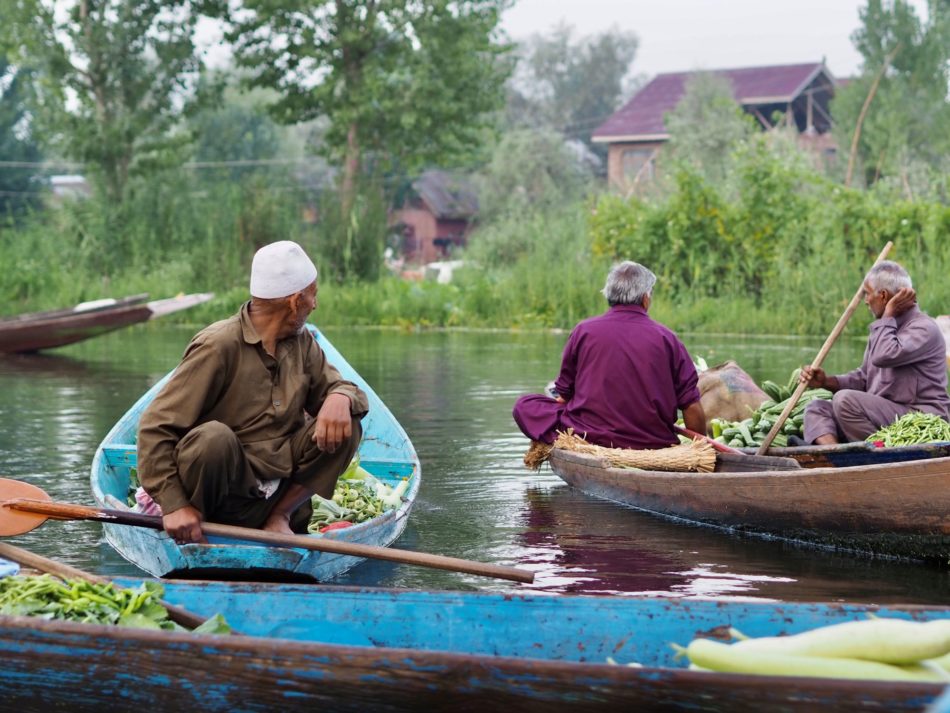
Kashmiri floating market – by Nina Karnikowski
Q. They say sometimes the best adventures are right in your own backyard. After all your travels abroad, how has it changed the way you see Australia?
One of the great gifts of travel is that it teaches you how to pay attention. And once you learn to look at the world with curiosity and wonder overseas, you can bring that same lens home.
Australia is an astonishing place ecologically and culturally, but I think many of us grow up disconnected from the land we stand on. A really pivotal experience for me was attending a “deep listening to nature” retreat at Uluru a few years back. The facilitator invited us to stop thinking about Uluru merely as something to look at or photograph, and instead imagine that the rock itself was observing us. That immediately moved me out of the mindset of being a consumer of nature and into a feeling of relationship with it.
Adventure doesn’t always have to mean going further away. Sometimes it is about learning to see more deeply what’s already here, and rebuilding a sense of reverence and belonging to the places we call home.
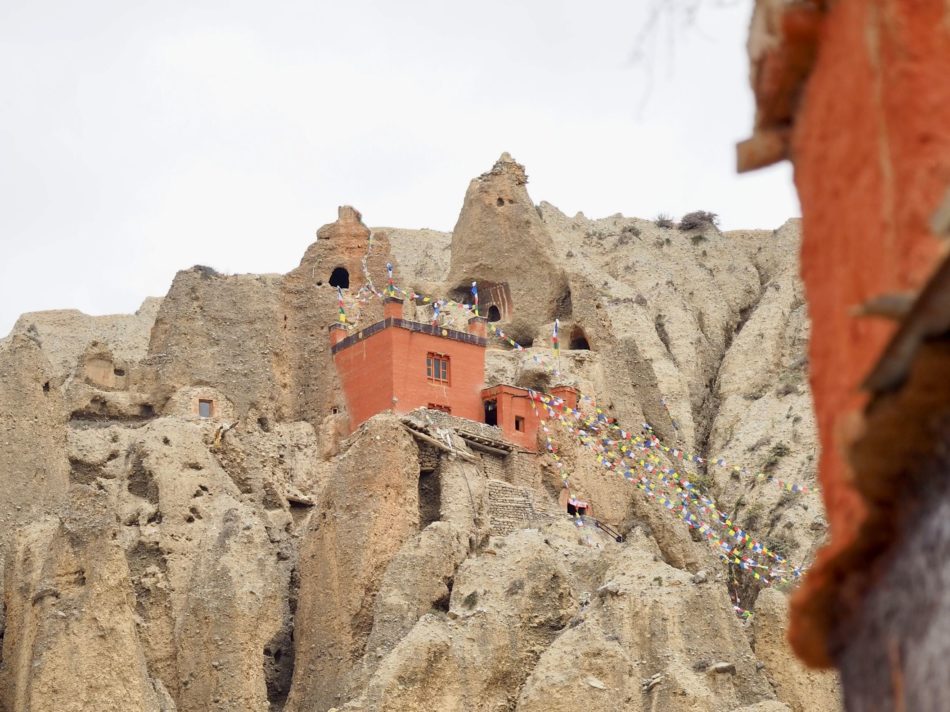
Mustang monastery – by Nina Karnikowski
Q. Looking back, did you have to unlearn the way people usually think about travel before you became a more mindful traveler?
Like many people, I grew up with this idea that travel was about accumulation: more countries, more experiences, more movement, more items ticked off the bucket list. There was almost this subconscious belief that the “best” traveler was the one moving the fastest and furthest.
Over time I realized that some of my most meaningful travel experiences came not from constant movement, but from staying still long enough for a place to properly reveal itself. So I guess I had to unlearn the idea that travel is about escape or performance.
Increasingly, I see travel as a practice of attention, and of humility. Mindful travel isn’t about being perfect or morally pure. It is really about approaching the world with more awareness – awareness of your impact, of privilege, and of the people and ecosystems hosting you while you travel.
Q. You describe yourself as a Creative Mentor and also run writing retreats. Do retreats really help people unlock creativity?
Travel can be one of the greatest catalysts for creativity because it interrupts the habitual mind. When we are in the same routines every day, we stop noticing things. Travel wakes us up. Suddenly we are paying attention to color, language, scent and other humans, and we become more alive to the world. That’s why retreats can be so transformative creatively. People step outside their ordinary lives and into a shared space devoted to reflection, conversation and observation.
On my Go Lightly retreats in Nepal, we spend a lot of time immersed in nature, hiking through forests, walking to monasteries, and camping beneath the Himalayan stars. Nature immersion is one of the most powerful ways to reconnect people to creativity because it gently pulls us out of the overstimulated, hyper-productive mindset that so many of us live in.
The Happy House, where the retreat is held, shows rather than tells sustainability in action. It is not performative or preachy, it is just a beautiful place grounded in community, local food, craftsmanship and connection to the land. People really feel that when they are there, and it changes the way they walk in the world.
We also do a lot of deep writing work and discussion, and something powerful happens when people feel safe enough to be vulnerable and curious together in a new environment. Often the creativity was already there, it just needed space and permission to emerge.
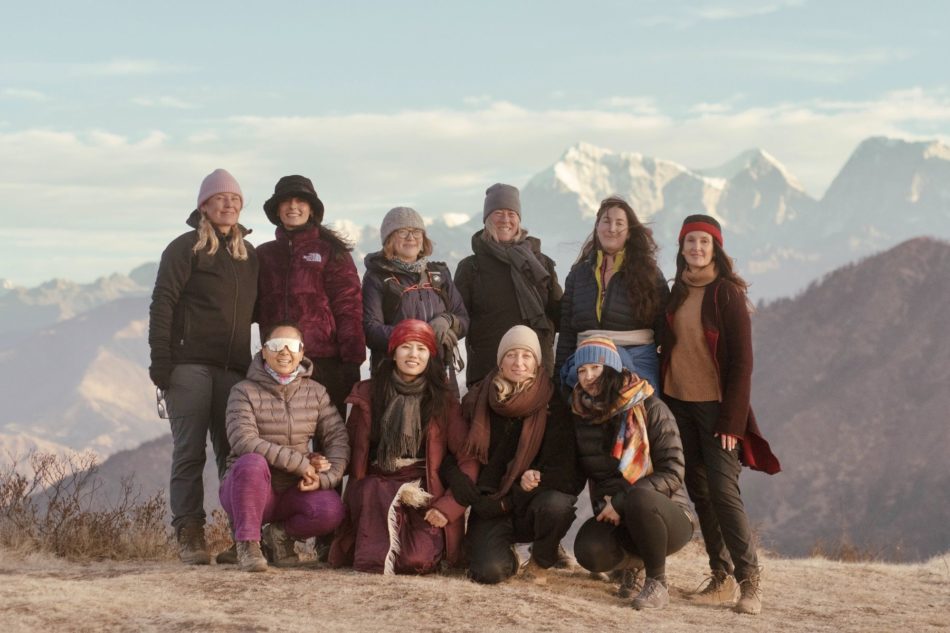
Happy House retreat guests – by Mukul Bhatia
Q. We can plan carefully to avoid travel mishaps, but many things go wrong and are out of our control. How do you balance being mindful with letting go?
Surrender is one of the great lessons of travel. I recently wrote a story about being stranded in an airport with retreat guests. I watched some of the women become frustrated because things weren’t unfolding according to schedule, and I realized how deeply conditioned many of us are to believe we should be able to control everything. But travel constantly reminds us that life doesn’t work that way.
Planes get delayed, weather changes, you get sick, you miss things. Often the moment you stop resisting reality is the moment the experience opens up again, and I love helping others realize that. Which, by the way, I was able to do that day with an impromptu journaling session on the airport floor!
I think all the time I have spent in the Himalayas, particularly in Buddhist communities, has deepened that understanding for me. They understand impermanence intuitively, and the connected ideas of flow, uncertainty, and adaptability. Modern neoliberal culture often asks us to optimize every second and cling tightly to plans, but being in that part of the world always reminds me how to be present again.
Q. Your message to our readers?
The real invitation of travel isn’t simply to see more of the world, but to deepen our relationship with it. To move beyond consumption, and into connection.
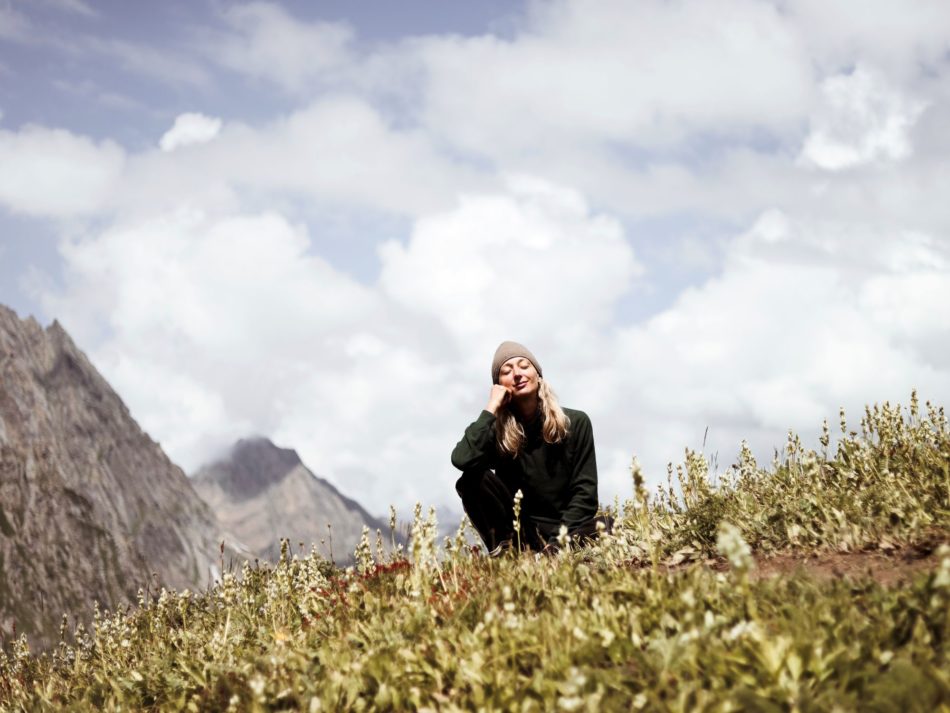
Nina Karnikowski trekking in the Himalayas – by Peter Windrim




Leave a Reply