
Hawai’i, the Big Island (June 22, 2011) -You know what breaks our heart? Hearing about visitors to Hawai’i Island who are staying in Kona, and who drive two or three hours over to Hawai’i Volcanoes National Park, then drive around the park for a couple of hours, dashing through the visitors center, taking a snapshot of the steaming summit crater, maybe a quick walk through Nāhuku Lava Tube, then off they go again all the way back to Kona.
This breaks our heart because we know that this amazing park – a 333,000-acre UNESCO World Heritage and World Biosphere Site – is a wonderland of active volcanoes, lush rainforests, rare native flora and fauna, and Hawaiian culture.
How long do visitors need to really experience the park? Well, it depends on their interests, but the $10 vehicle pass is good for a whole week.
If they’re intrigued by the earth-shaping force and beauty of an erupting volcano (and who isn’t?), visitors will want at least a couple of days just to gape in awe at the steaming summit crater, to hike the still-steaming floor of Kīlauea Iki, where a record-breaking 1900-foot lava fountain lit the sky in 1959, and to stroll through a lava tube or two. They’ll also want to take the short hike to the top of Pu’u Huluhulu to peer into the lush crater alive with native birds, and gaze across the slopes of neighboring Mauna Ulu, with its multi-colored exquisite ropy pāhoehoe lava rock.
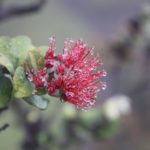
The sprawling wilderness is full of rare native flora and fauna, endemic tree ferns, mosses, insects and birds found only in Hawai’i and some, like hau kuahiwi, (hibascadelphus giffardianus), a flowering tree, are found ONLY in the park, and nowhere else on earth! Visitors can see these plants and animals and identify them thanks to the many interpretive signs throughout the park, and the guidebooks available in the Kīlauea Visitor Center and Thomas A. Jaggar Museum.
The park is about natural history and human history, and it is profoundly important in Hawaiian culture. Halema’uma’u crater atop Kīlauea volcano is the traditional home of Pele, the volcano goddess. This is why hula hālau (schools) from around the island, the state, and the world make pilgrimage to Kīlauea to pay respects to the goddess who seems so present in the voluptuous plumes of steam arising like a potent hula. This presence is acknowledged in the park with hula performances and festivals celebrating traditional Hawaiian crafts. Meanwhile, the ancient power of this place is literally carved in stone on the lava rock plains down Chain of Craters Road where thousands of petroglyphs hundreds of years old are a window into life here long ago.
Kīlauea also has historical importance as the place where Dr. Thomas A. Jaggar developed the early scientific principles and techniques of volcanology. His work lives on at the museum named for him at the edge of Halema’uma’u, where you can see real-time seismograph readings of our living planet that is still giving birth.
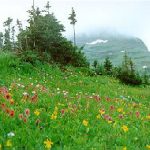
Hawai’i Volcanoes National Park is also a hiker’s paradise. Trail hounds can spend a day or a month exploring the park’s 150-plus miles of trails that curve through lush forests and rocky deserts. They go to the sea and to the top of 13,250-foot Maunaloa. They range from short, easy strolls to demanding back-country treks. Avid hikers will want at least two full days to explore Kīlauea Iki, Mauna Ulu, Pu’u Huluhulu, Kīpukapuaulu (also called “Bird Park,” this is where you can spot hau kuahiwi) and the Ka’u Desert trail where ancient footsteps are still stamped into the volcanic clay. For serious back-country trekkers there are camping trips to places like seaside Halapē or even up to the icy summit of Maunaloa.
You can also see much of the park as you drive along Crater Rim Drive and down Chain of Craters Road to where lava flows have covered the asphalt. Or go up into the beautiful native koa tree forests along Mauna Loa Strip Road to see native birds, and beyond to where the tree line ends and the trail to the remote summit of the volcano begins.
The park also has good camping. Besides the back-country sites for serious trekkers down at the seashore and up in the cold, thin air at the summit of Maunaloa, there are sites for car campers. They can pull up at Nāmakanipaio and set up their tent where there are bathrooms and fresh water. Or there’s primitive drive-in camping at Kulanaokuaiki.
But you definitely don’t have to rough it to spend the night in around the park. The park’s venerable Volcano House Hotel is closed for now, undergoing renovation, but there are excellent inns, B&Bs and vacation homes around Volcano village, just outside the park. And the park is only 45 minutes or less from the many lodging choices in Hilo, and Puna.
Which brings us back to our question: How long do visitors need to really experience this park that’s open every day, 24/7? We’re going to go out on a limb here. At Hawai’i Volcanoes National Park countless adventures await from mauka to makai (from the mountains to the sea), so a curious visitor will want somewhere between three days and … the rest of their life.
Getting Here: It’s easier than ever to get to Hawai’i Volcanoes National Park. Two new non-stop flights began service to Hilo in June 2011. United Airlines(newly merged with Continental Airlines) offers daily nonstop service from Los Angeles (LAX) to Hilo International Airport (ITO) and weekly flights from San Francisco (SFO) to ITO on Saturdays. Rates and information at www.united.com. The Hilo airport is about a 40-minute drive to the park. Other direct flights on major carriers serve the Kona International Airport, a three-hour drive to the park. All major carriers and interisland aircraft provide connecting flights from Honolulu and the neighbor islands.



About Dave's Travel Corner
 Dave's Travel Corner is a travel content, resource provider and community (founded 1996) providing travel Guides written about Dave's personal travel experiences and Journals, pages that contain trip summaries and experiences written by fellow travelers. We spotlight locations and attractions with an article linked directly from our homepage including content across our blog, photo and video galleries. We use a combination of social media, written content, photography and videos to promote locations. Not only does the content appear on this site but we have direct partnerships with other well visited travel sites for placement of the content. Since 1996, we have also established hundreds of relevant link exchanges with other travel sites.
Visitors to Dave's Travel Corner will also find thousands of travel related links organized by categories on the Resources Page, a Photo Gallery containing International travel photos, Book Reviews, and Product Reviews focusing on products useful for travelers, fully automated Forums, Tour Bookings offering over 4400 unique tours around the globe, Interviews with those making news in the travel industry and Videos - specializing in International travel videos as well as home of the Dave & Jim Show.
Dave's own travel blog is Above the Clouds which focuses on International Travel & Lifestyle.
For information on advertising please choose from a variety of advertising options here.
Contributors are welcome
 Learn how you can contribute About www.davestravelcorner.com/about
Leave a Reply